Offered by Ars Antiqua

Old Masters paintings, furniture, sculptures and modern art
Maximilian Pfeiler (active from 1683 – c. 1721)
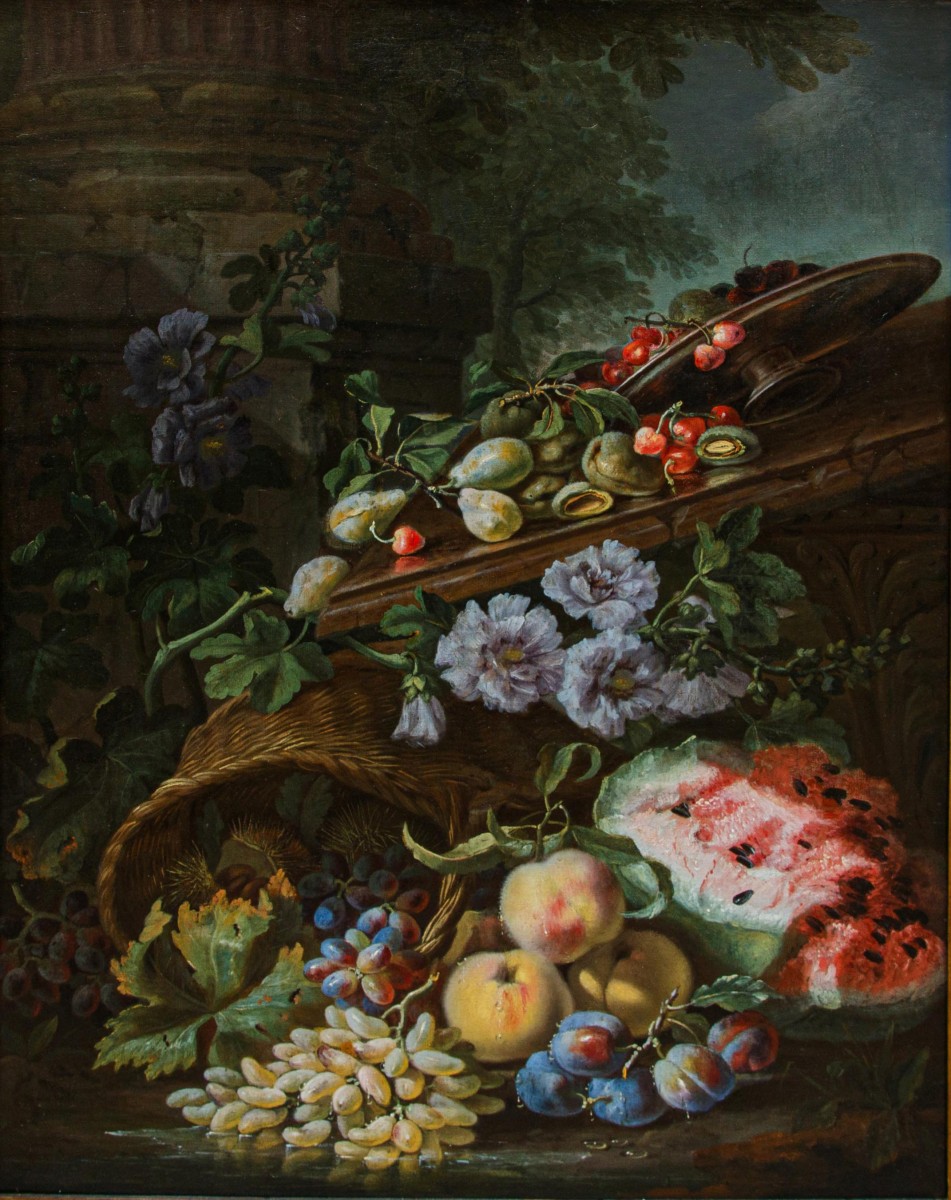
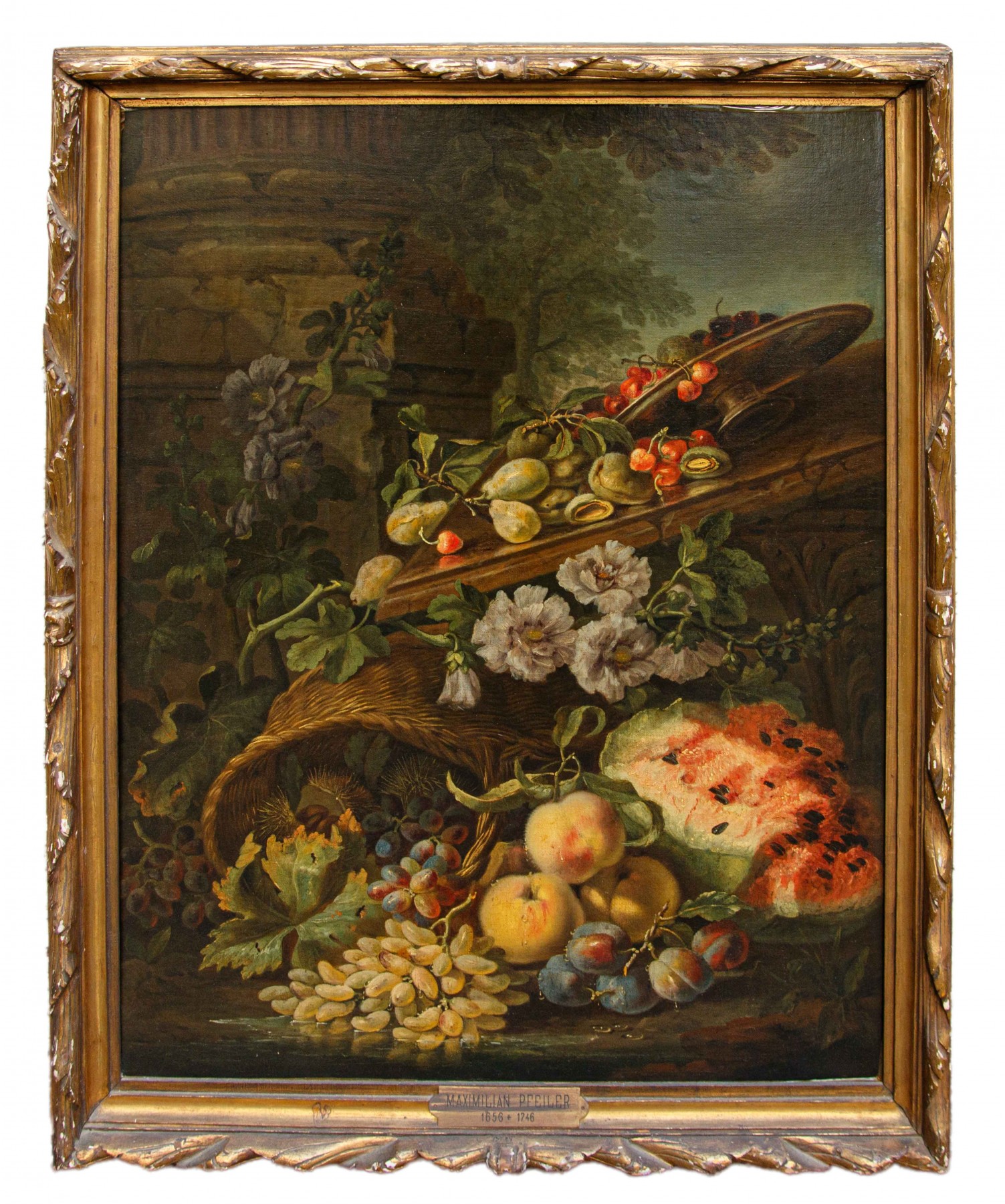
Still Life with Flowers and Fruit
Oil on canvas, 98 x 73 cm – With frame, 109 x 84 cm
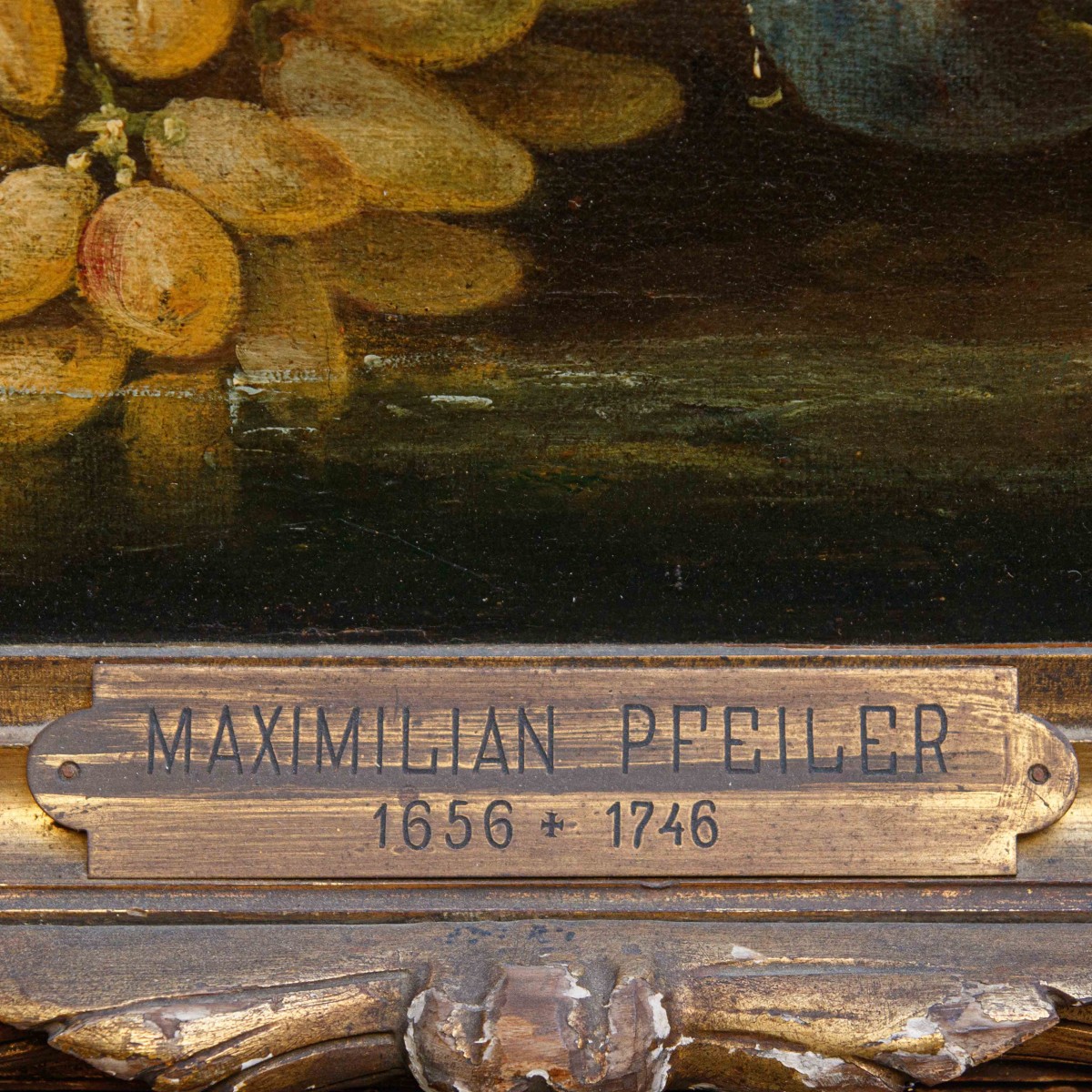
The life of Maximilian Pfeiler is not extensively documented, and chronological references regarding his activity are scarce. The few existing sources inform us that in 1683 he was a member of the Painters' Guild in Prague, his hometown, and a pupil of Christian Berentz (1658–1722)—a painter of German origin who first traveled to the Netherlands before settling in Rome, where he introduced Northern European still life conventions, a genre in which he specialized.
It remains unclear whether Pfeiler’s apprenticeship under Berentz took place in Rome, where the Czech artist was certainly active from 1694 onwards, forging collaborations with Francesco Trevisani and Michele Rocca. Pfeiler thus carved out a prominent role for himself in the Roman art scene of the late 17th and early 18th centuries, producing extravagant and recognizable compositions of fruit and flowers that were highly appreciated by distinguished patrons; for instance, several of his works were part of Cardinal Fesch's collection.
The present painting exemplifies the typical quality of Pfeiler’s output and demonstrates his debt not only to his master Berentz, but also to other foreign artists specialized in still life who had settled in Rome.
As seen in the compositions of Franz Werner von Tamm or Karel van Vogelaer, an architectural fragment serves as the backdrop for the flowers and fruit, introducing an early taste for ancient ruins that would fully consolidate in the 18th century.
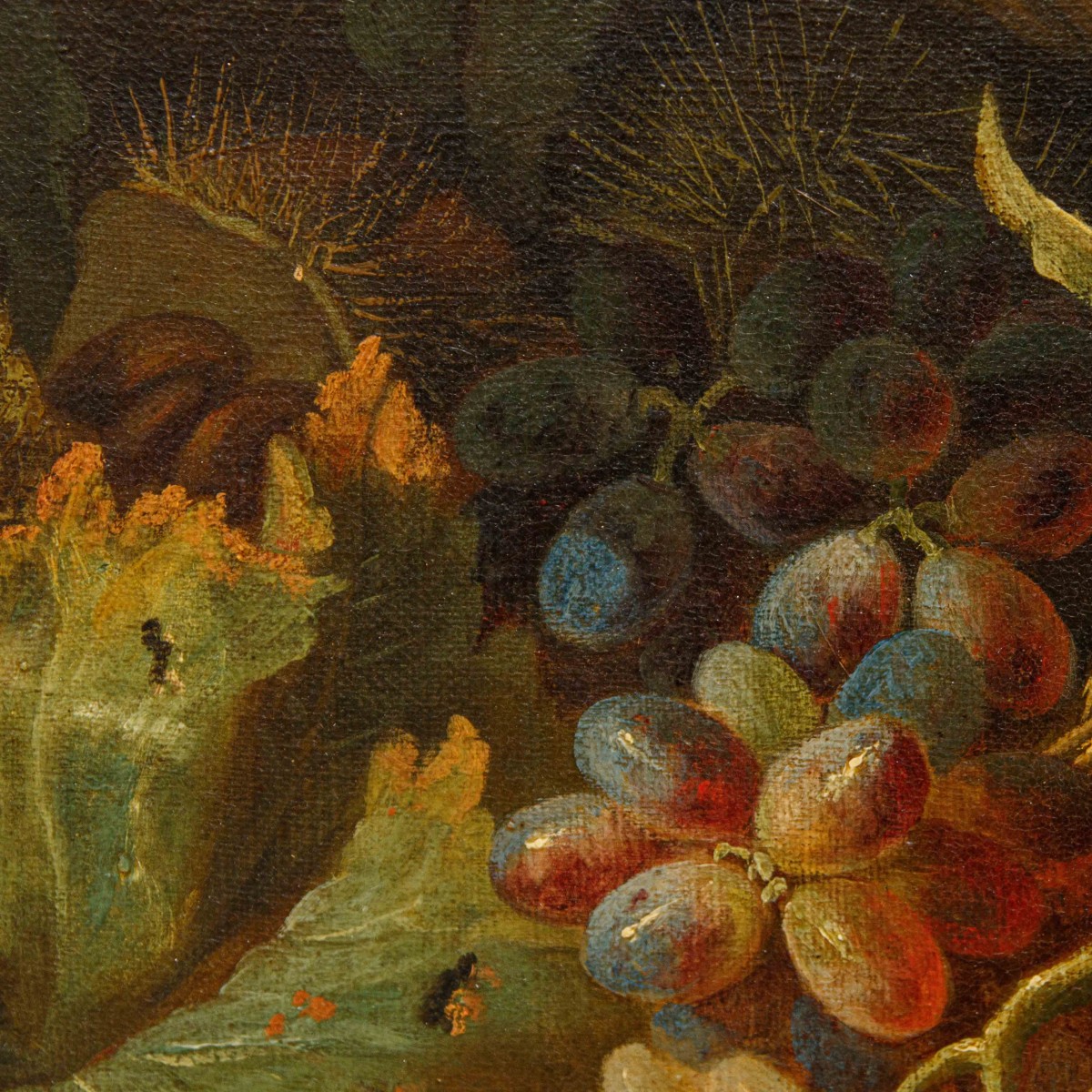
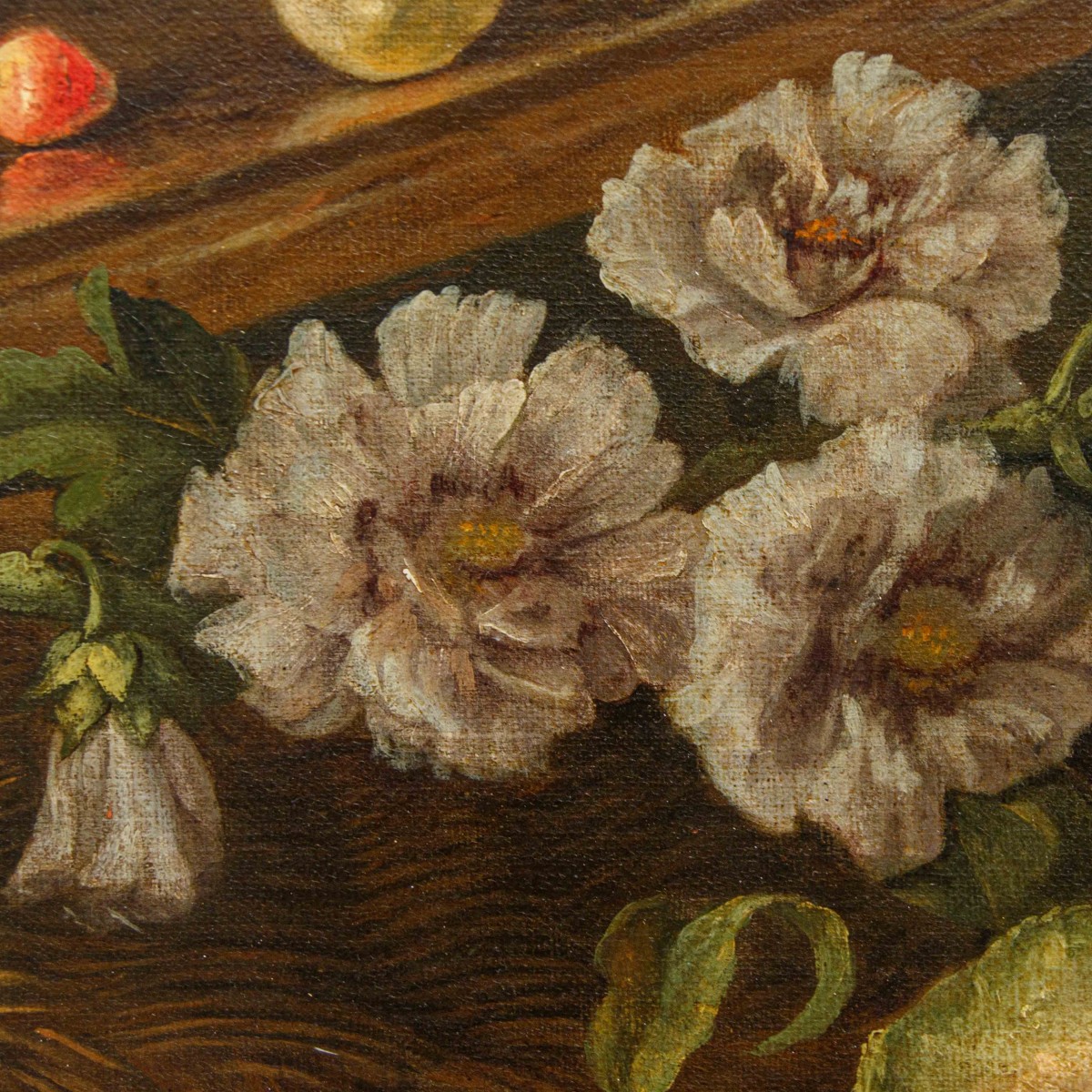
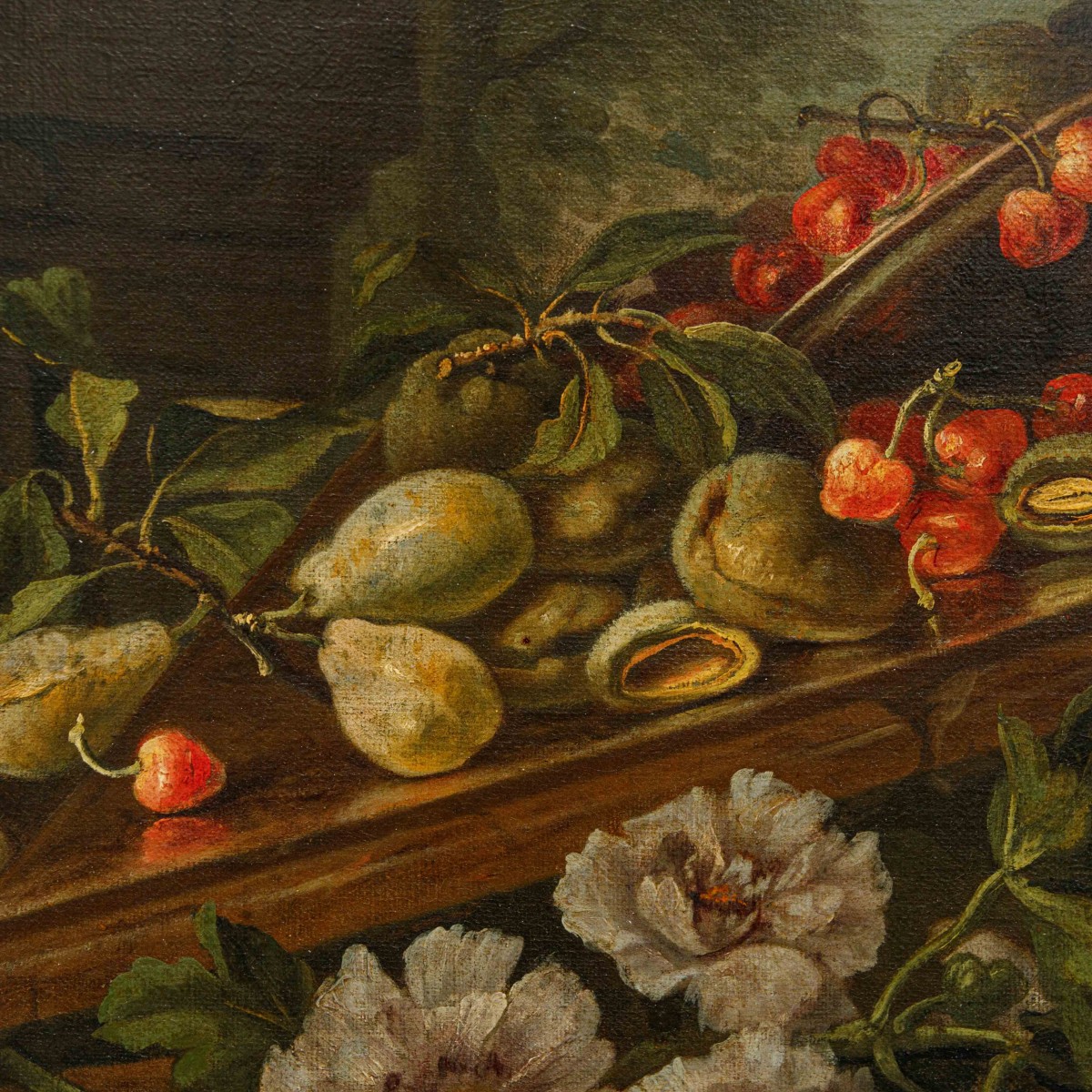
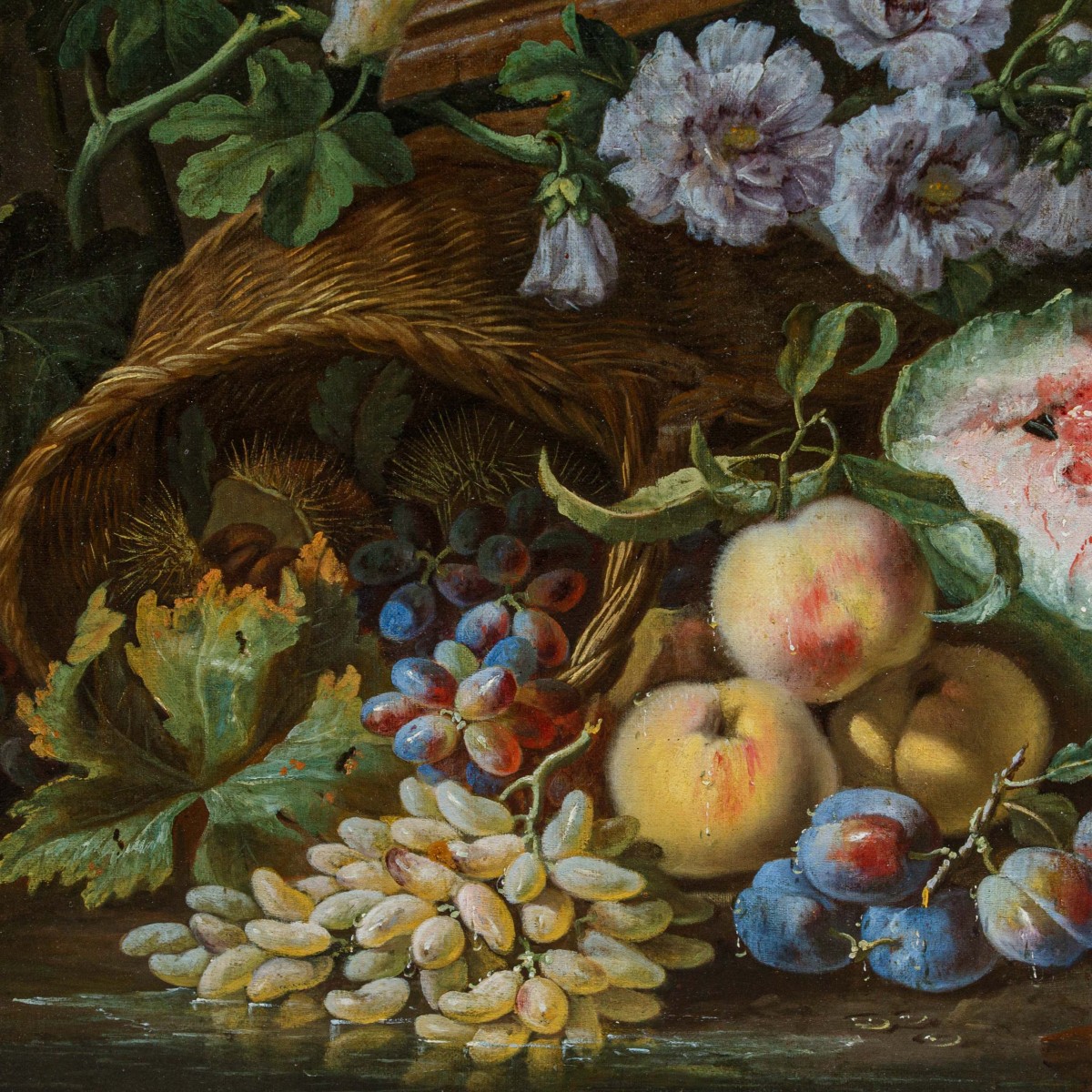
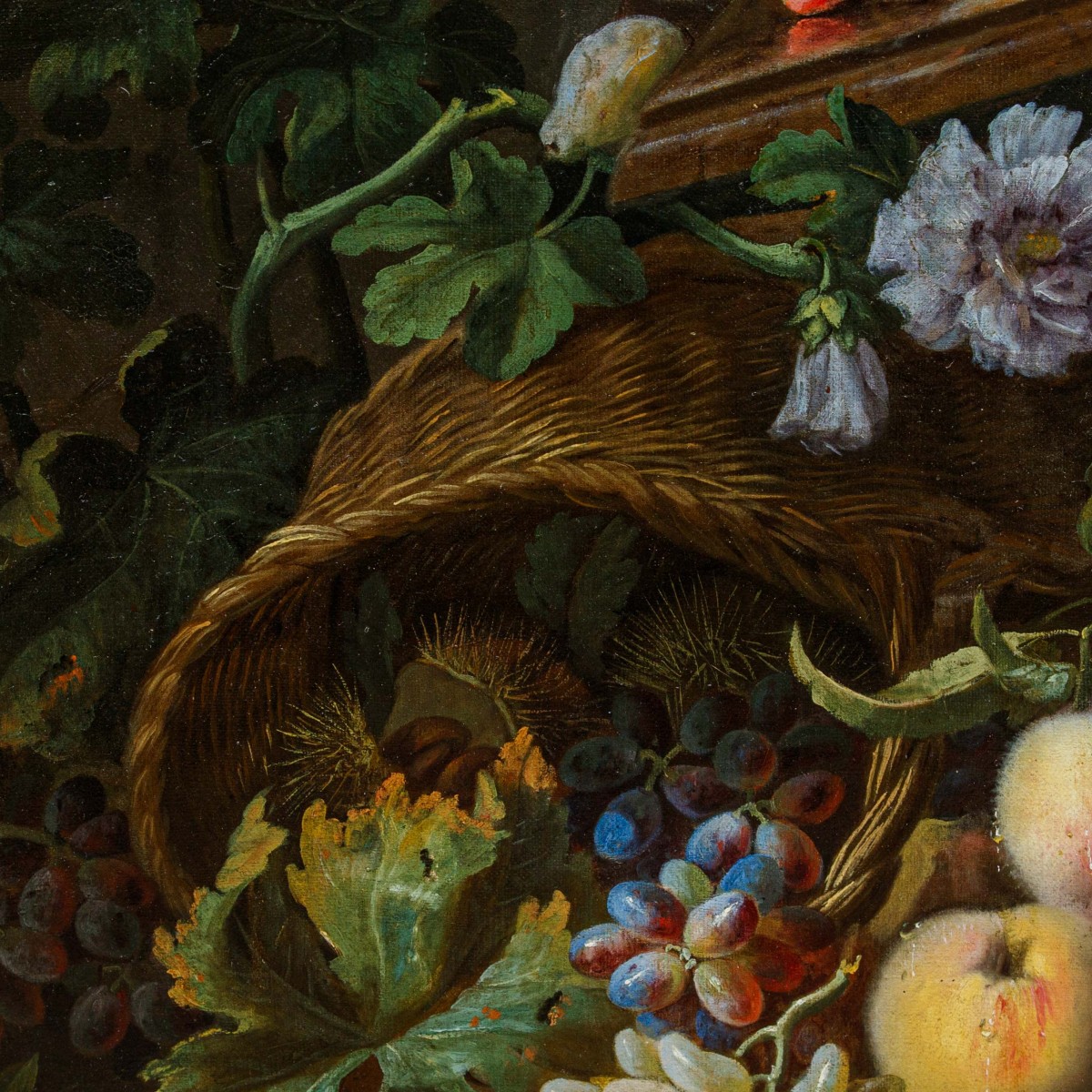
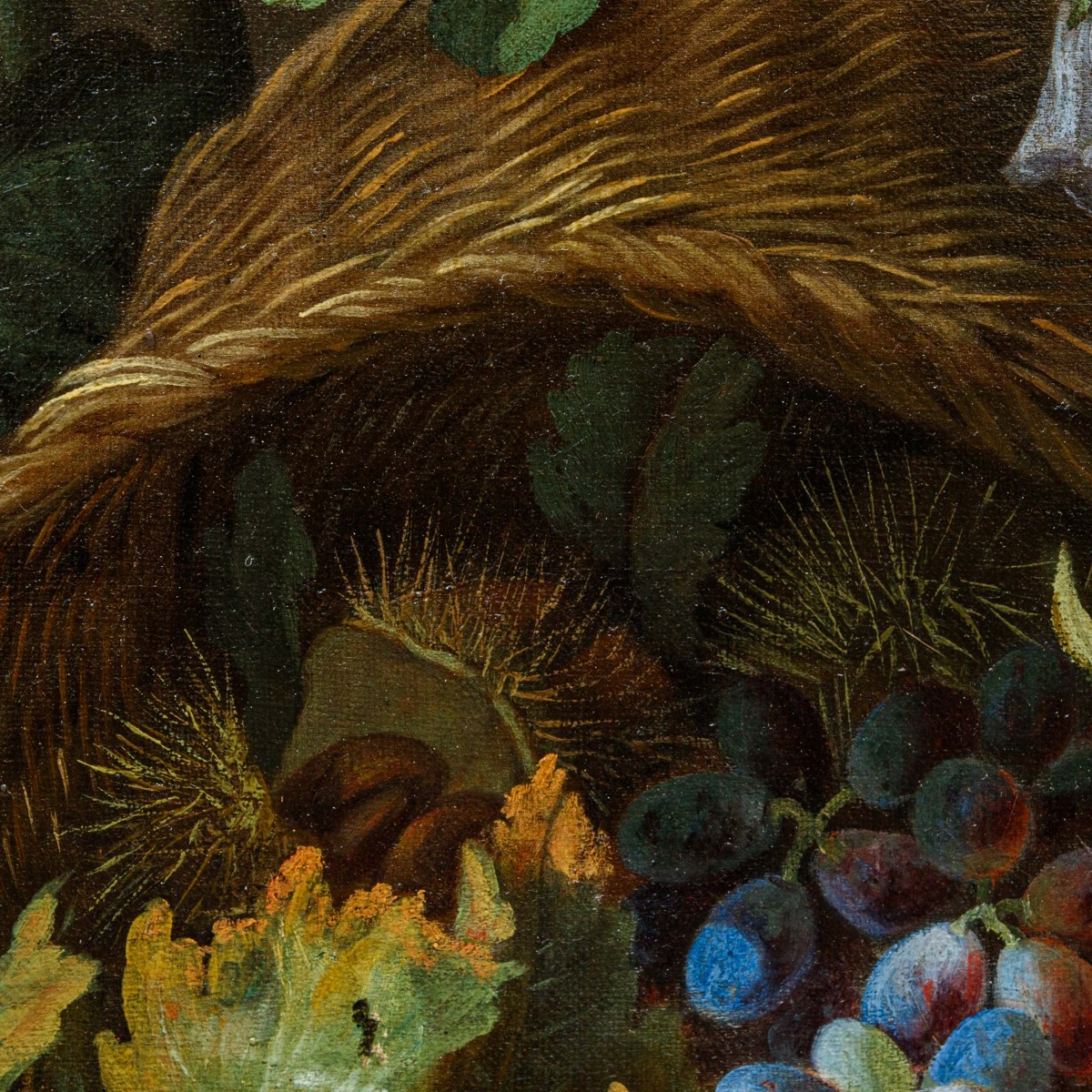
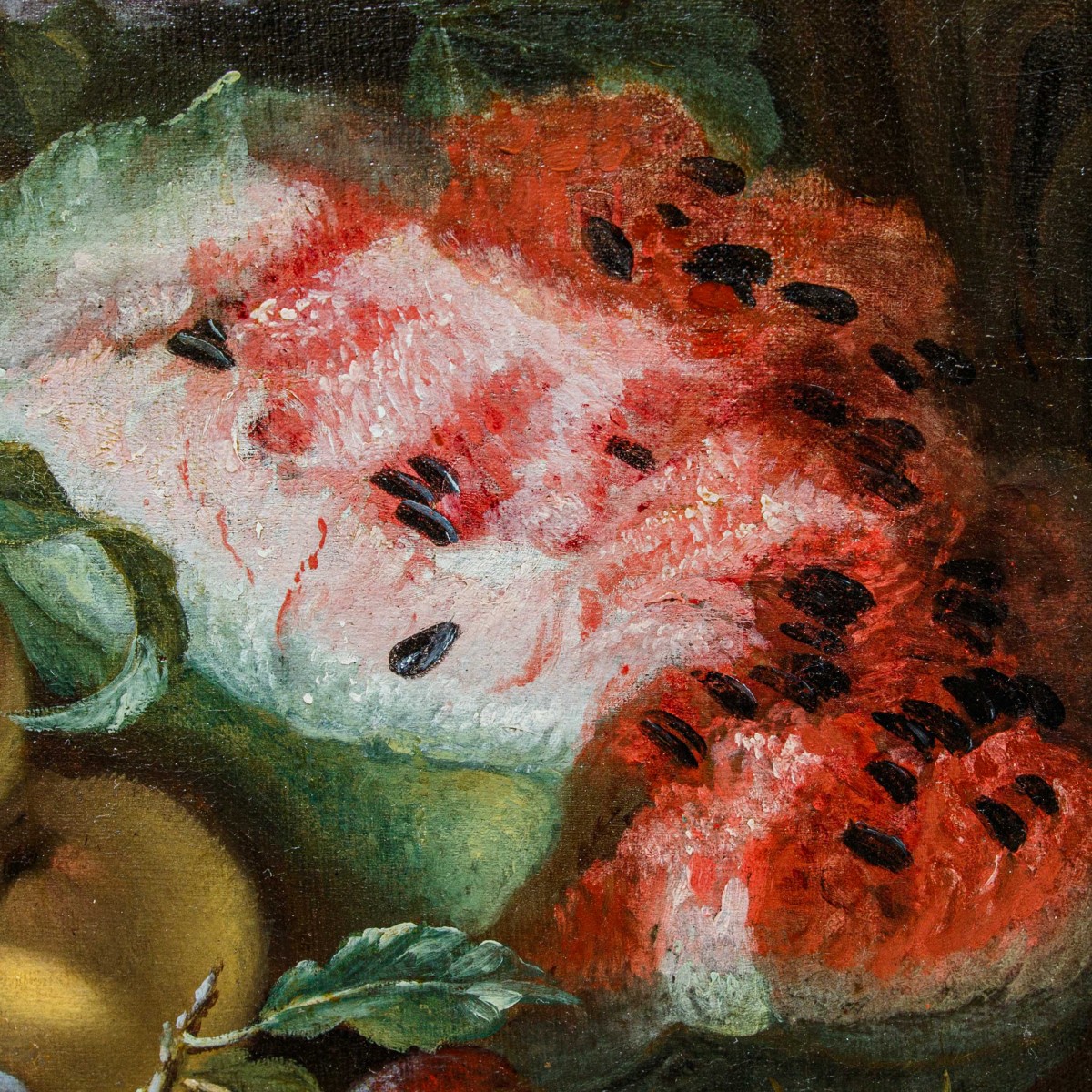
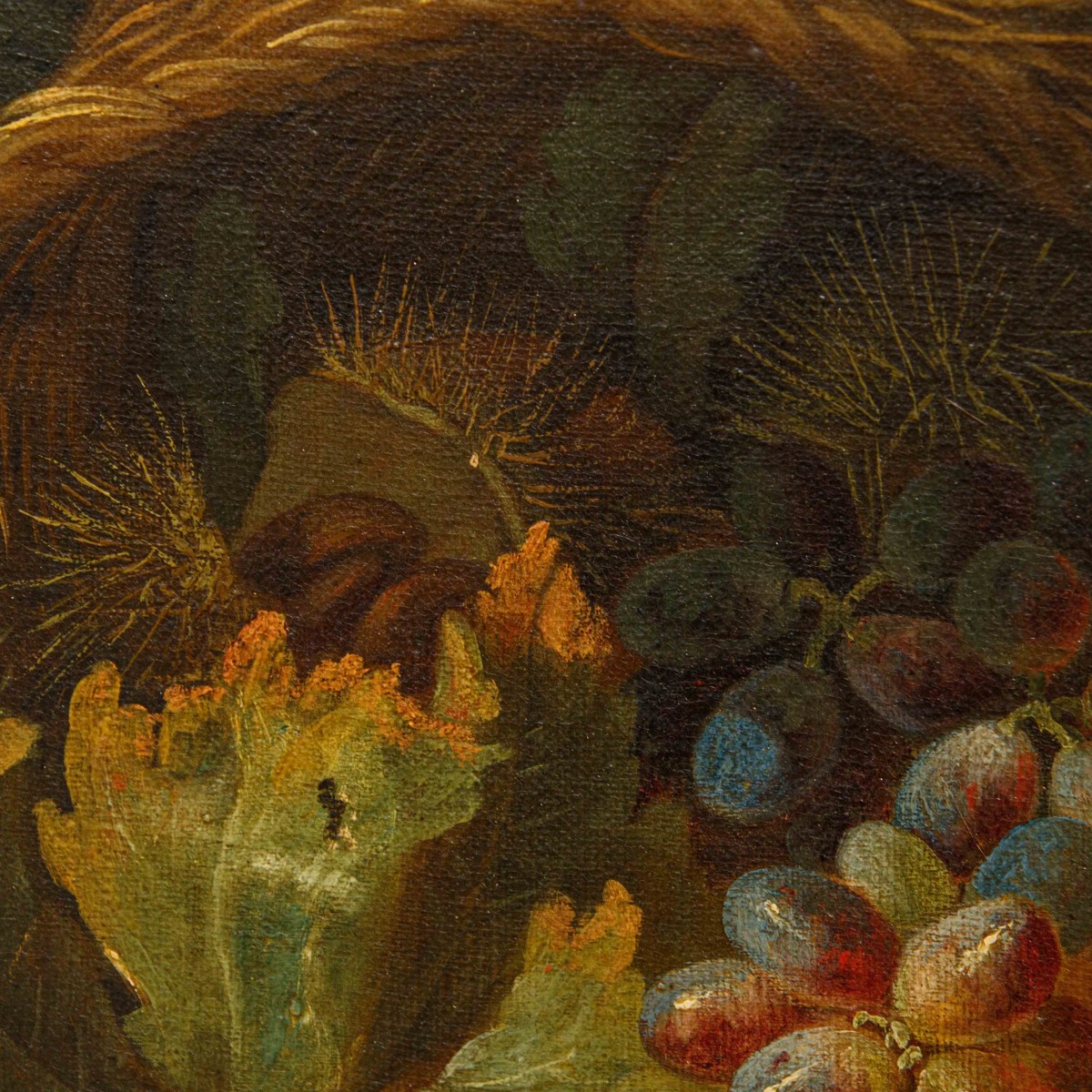
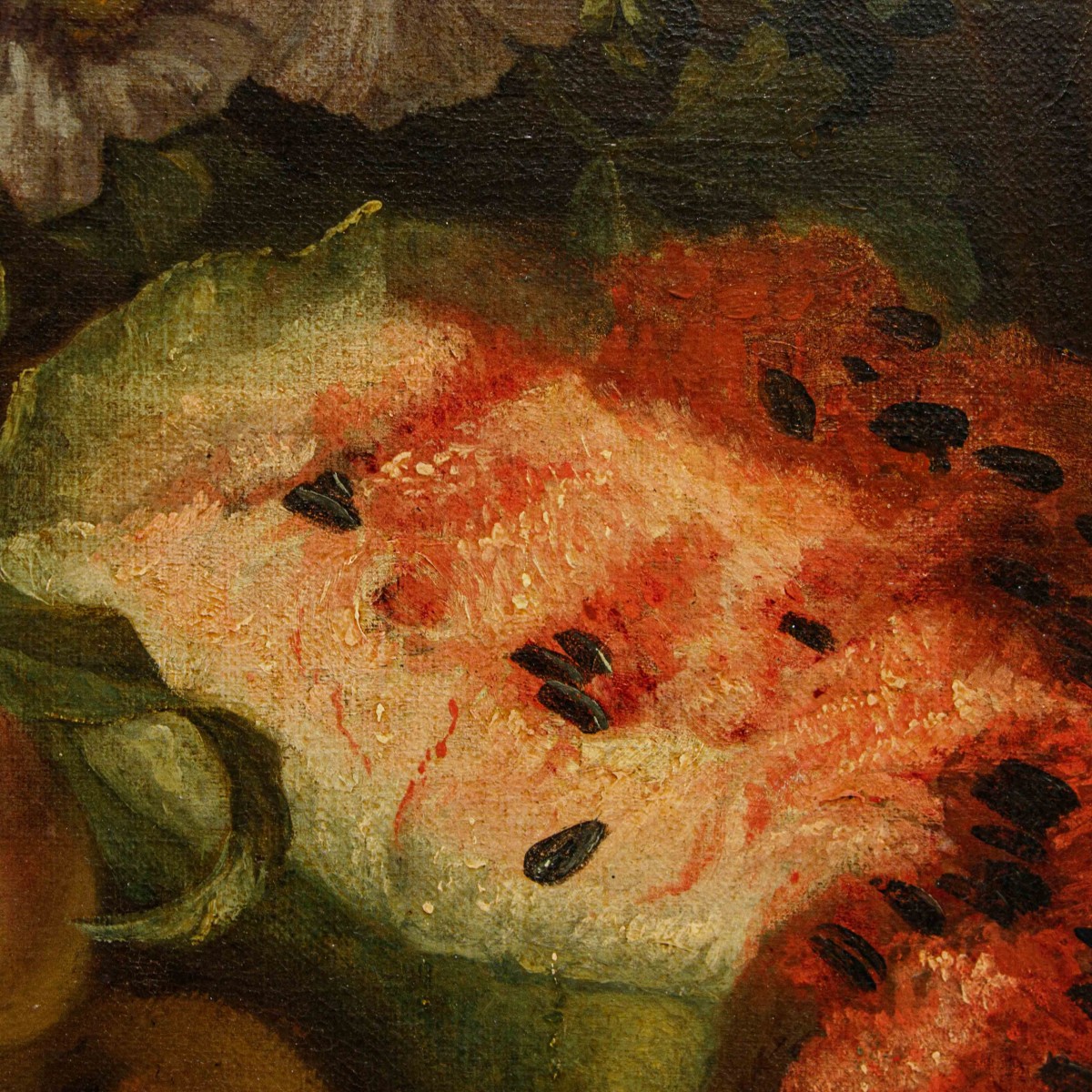
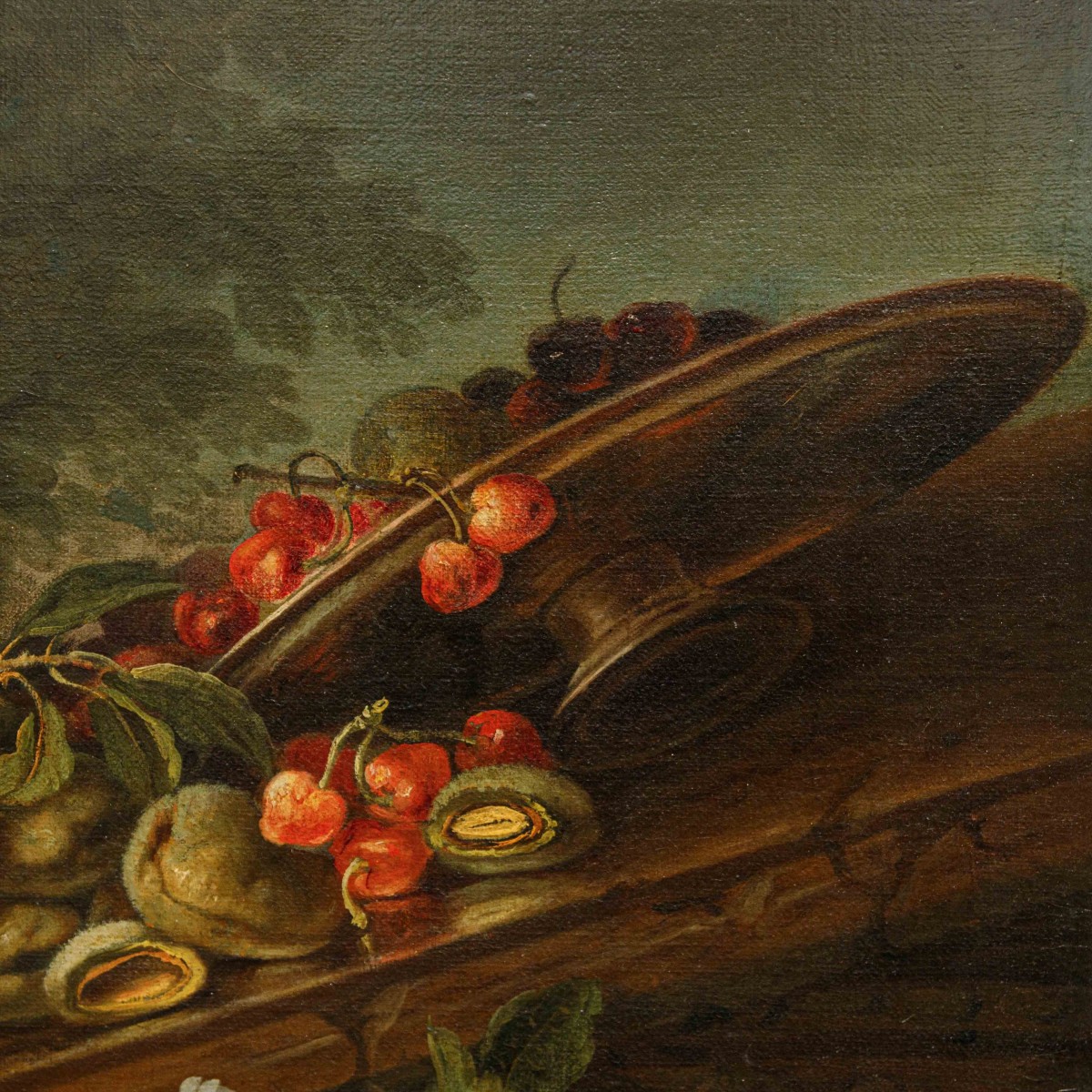
The various types of fruit are arranged in overlapping clusters that pile on top of one another along diagonal axes. Starting from the bottom, we see a bunch of white grapes alongside peaches, plums, and a halved watermelon. Positioned slightly further back is an overturned wicker basket containing chestnuts still in their burrs, partially covered by large green leaves mottled with orange. Lilac-petaled flowers—identical to those winding around the base of the column in the midground—bisect the canvas. Hanging diagonally above them is a wooden surface from which pears spill forth, while cherries cascade from an overturned tazza (alzatina).
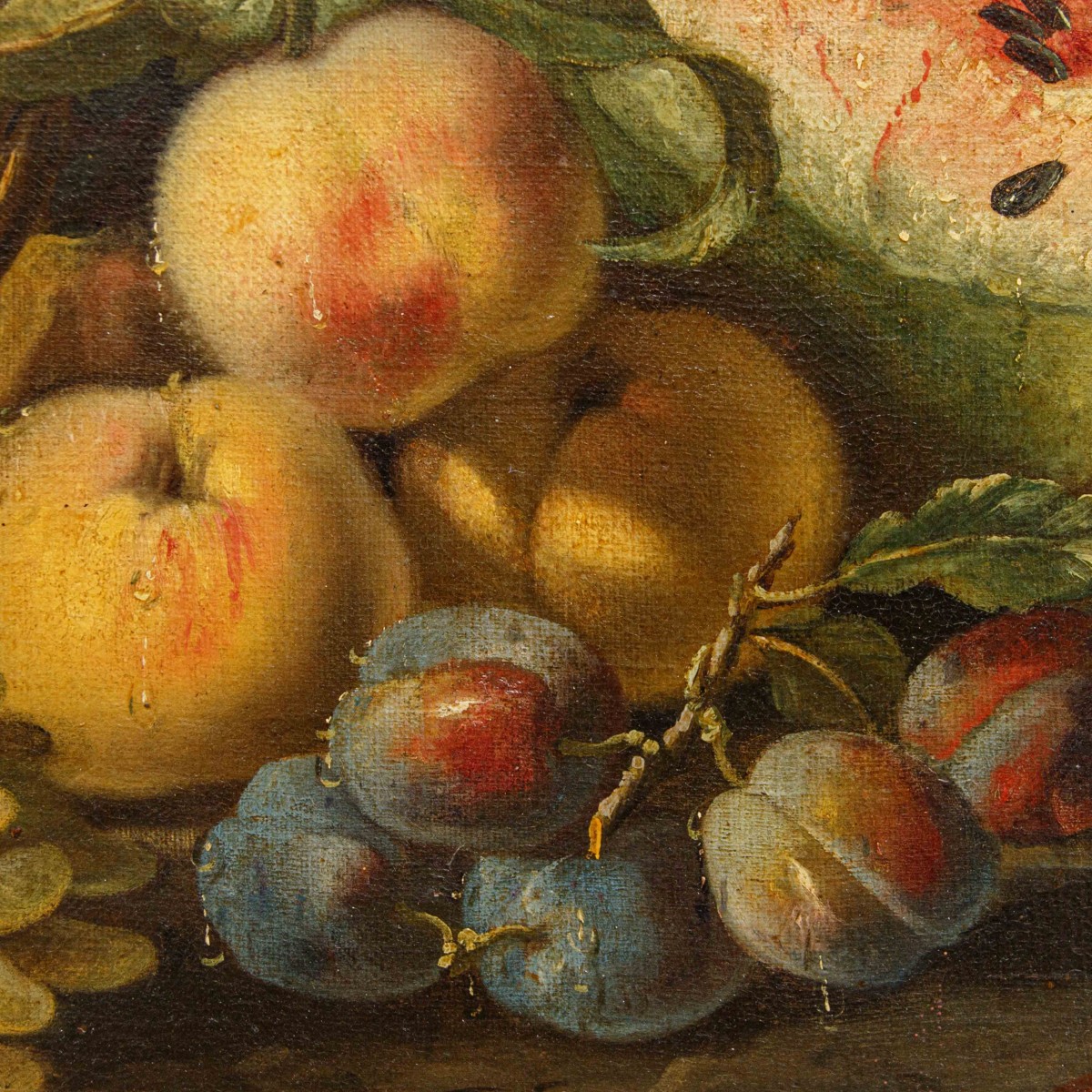
Every element is rendered with supreme technical skill and meticulous attention to detail: note the dew drops resting on the plums and grape berries, the hollowed-out flesh of the watermelon shading from the green of the rind to a deep crimson red at its center, or the realistic curling of the leaves.
It is also worth noting that the various fruits depicted do not belong to the same season, suggesting that the artist painted some of them from memory rather than from life, while still achieving an overall effect of remarkable naturalism. Equally noteworthy is the Czech artist's mastery of color harmonies: the red accents of the cherries and watermelon are heightened by the complementary green dominating the leaves and pears, while the violet of the flowers and plums responds to the yellow of the peaches and grapes. These chromatic pairings enhance the illusion of three-dimensionality, already established by chiaroscuro contrasts that expertly balance the brighter hues.
In this work, as in other compositions such as the still life in a private Genoese collection, Pfeiler displays his debt to his master Berentz. This is evident in the rich variety of fruits and flowers depicted and, above all, in the way they occupy almost the entirety of the available space.
The last records of Maximilian Pfeiler date to 1721. He presumably spent most of his life in Rome, enjoying considerable success and appreciation among both contemporary artists and collectors.
Delevery information :
Les frais d'expédition seront calculés au moment de la commande en fonction de la destination, des dimensions et du poids du tableau, ainsi que de l'assurance couvrant la valeur totale de l'œuvre.
For paintings purchased from abroad: following payment, the application process to obtain the export license (ALC - Attestato di Libera Circolazione) will be initiated. All antiques shipped abroad from Italy require this document, which is issued by the Ministry of Cultural Heritage. The procedure may take 3 to 5 weeks from the date of request; therefore, the painting will be shipped as soon as the document is obtained