Offered by Galerie Lamy Chabolle
REQUEST INFORMATION

Decorative art from 18th to 20th century
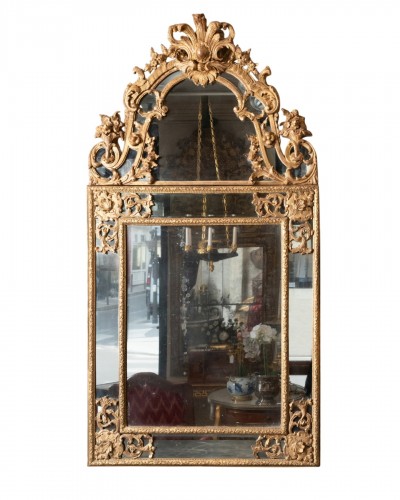
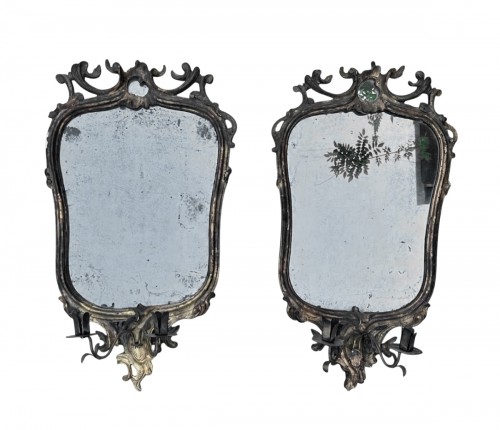
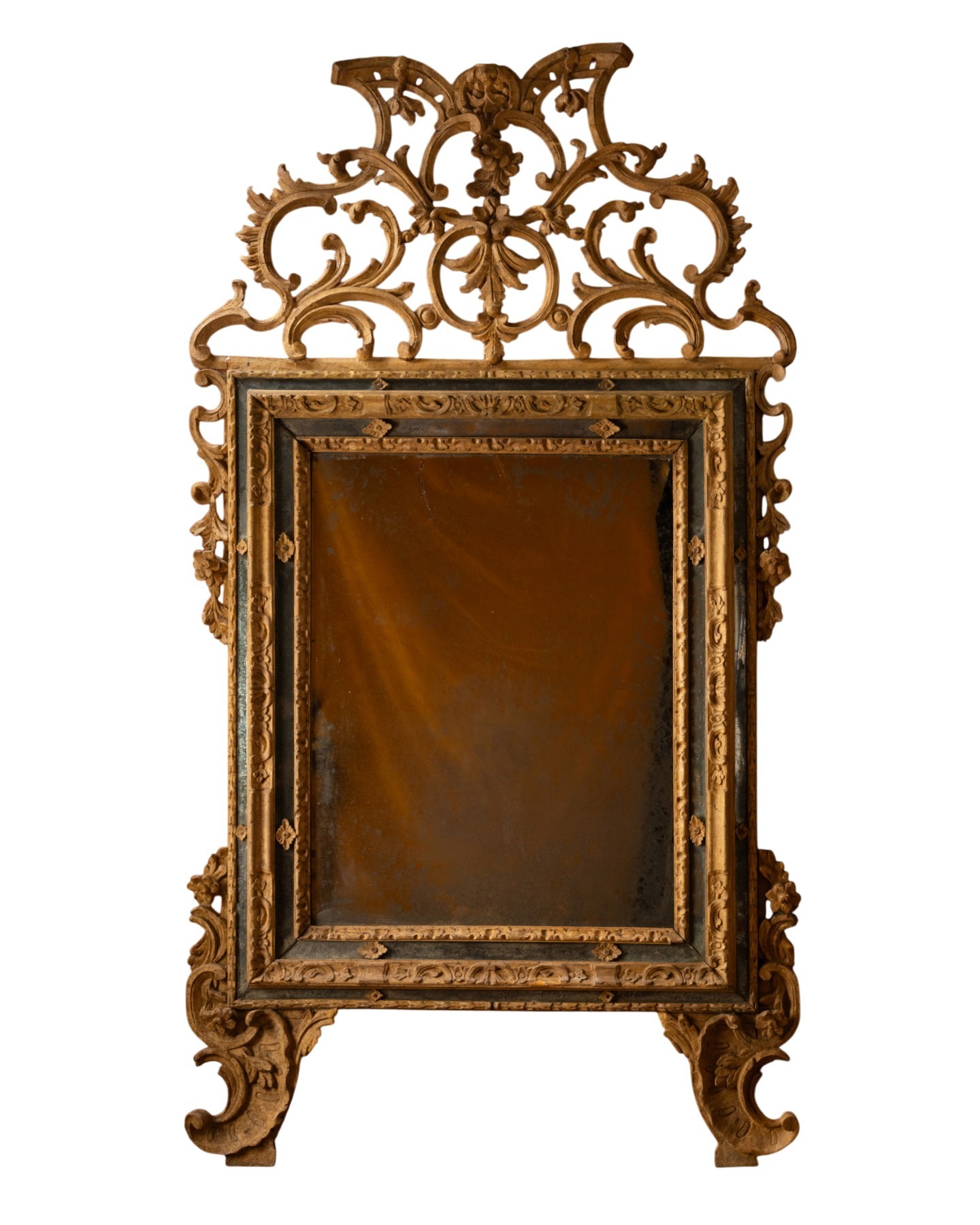
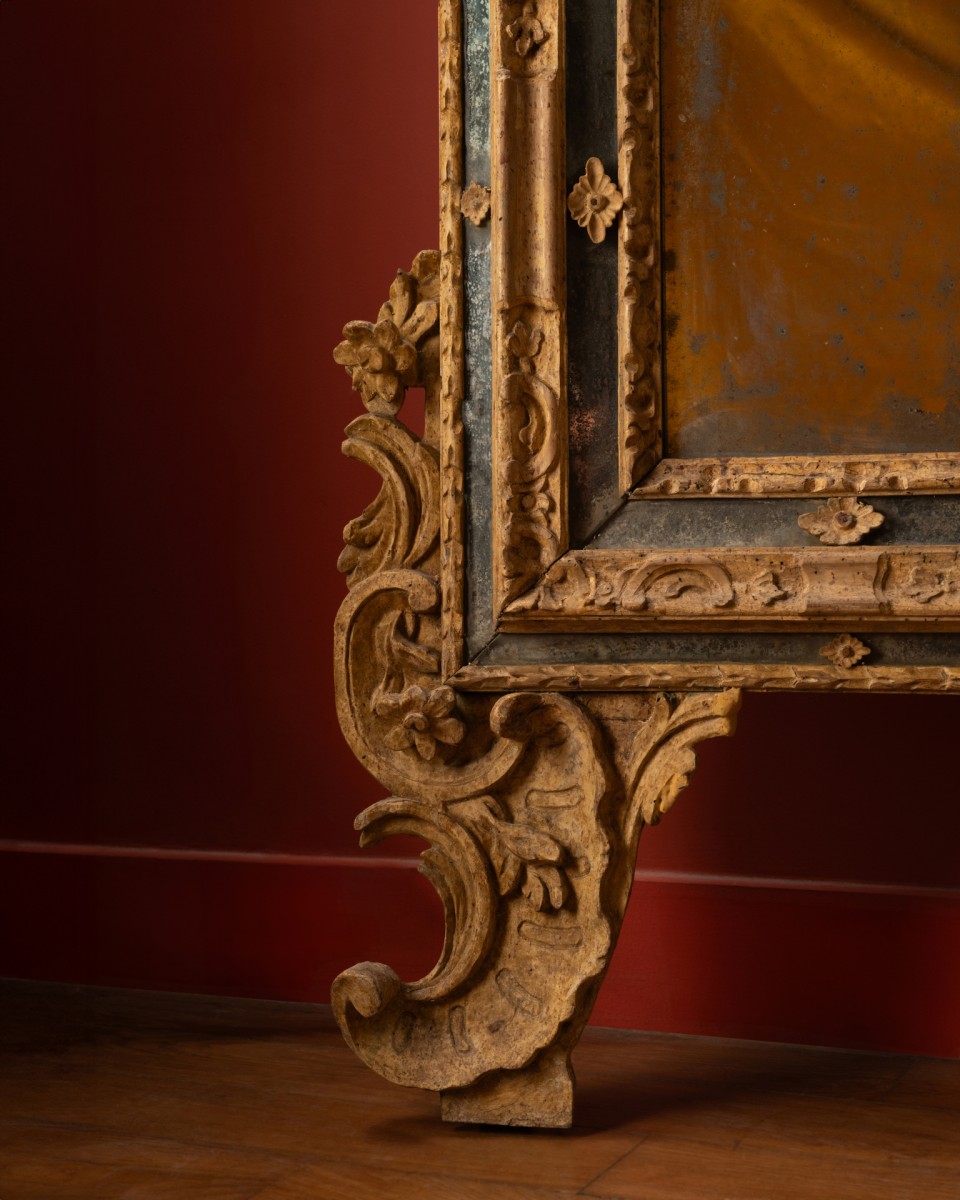
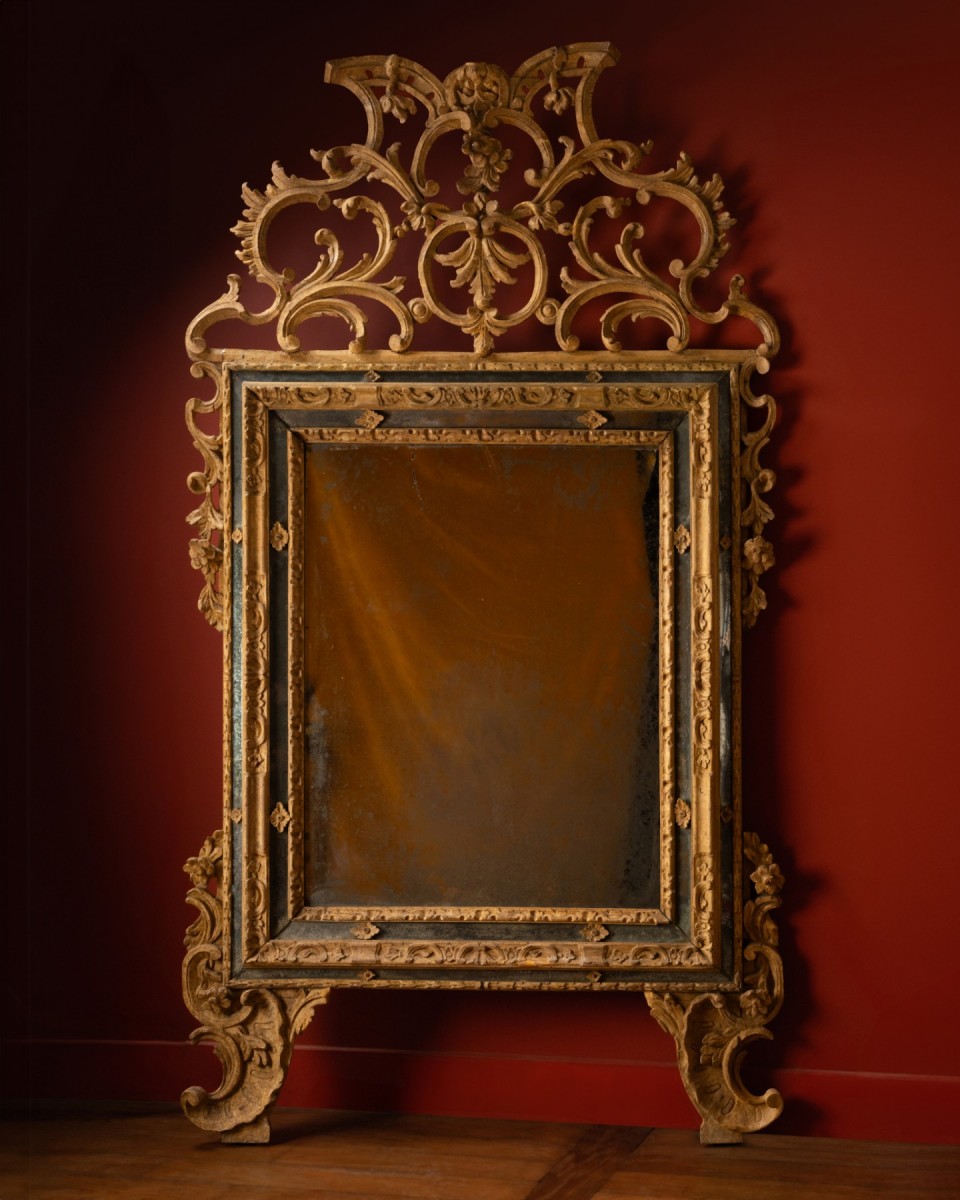
Tin-mercury mirror, intagliato poplar wood, in so-called giallo polenta lacquer
Piedmont
ca. 1750–1767
165 x 90 cm (65 x 35.4 in.)
At least two similar mirrors are located respectively in the apartments of the Duke of Chiablese and in the antibiblioteca of the famous Stupinigi hunting lodge built for Victor Amadeus II of Savoy in Stupinigi.
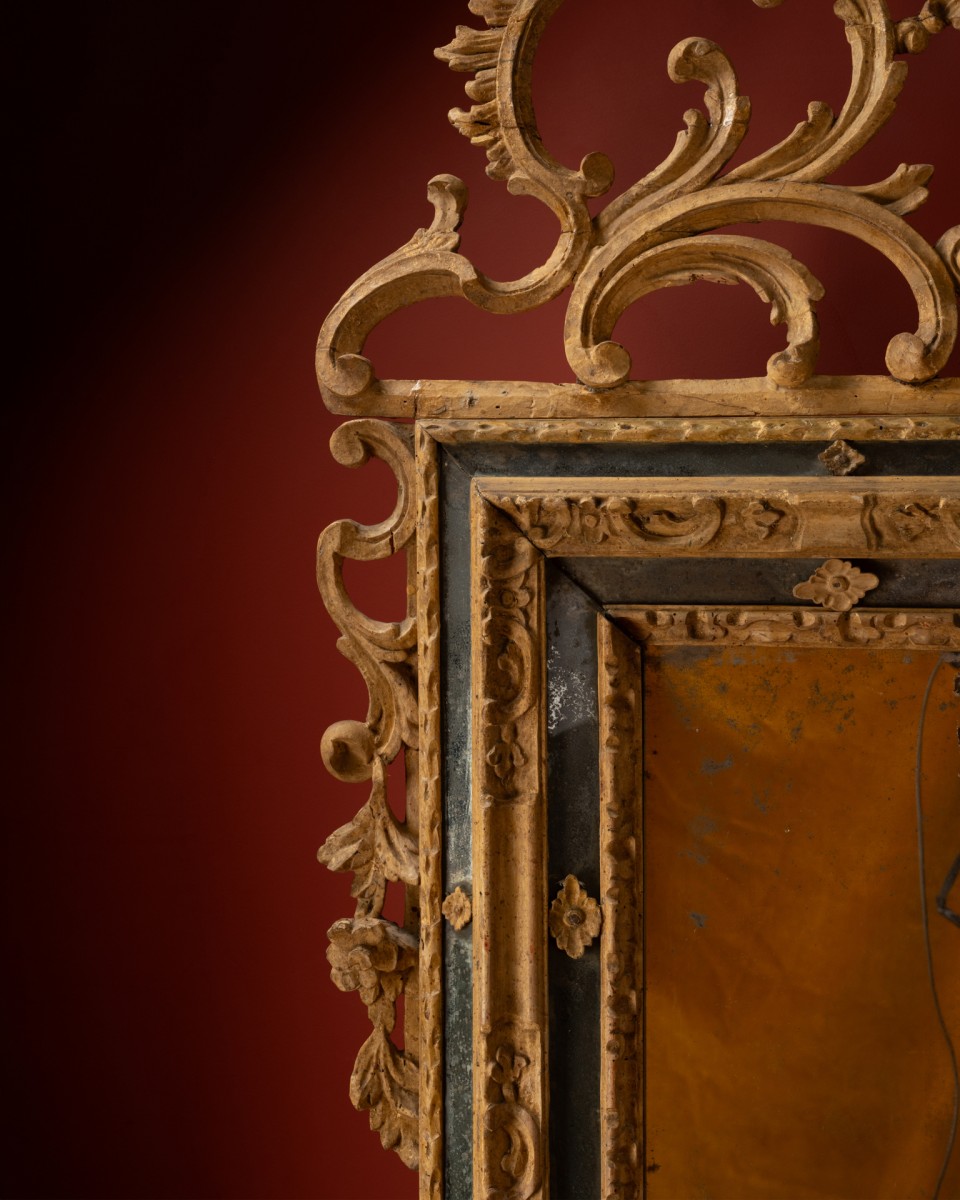
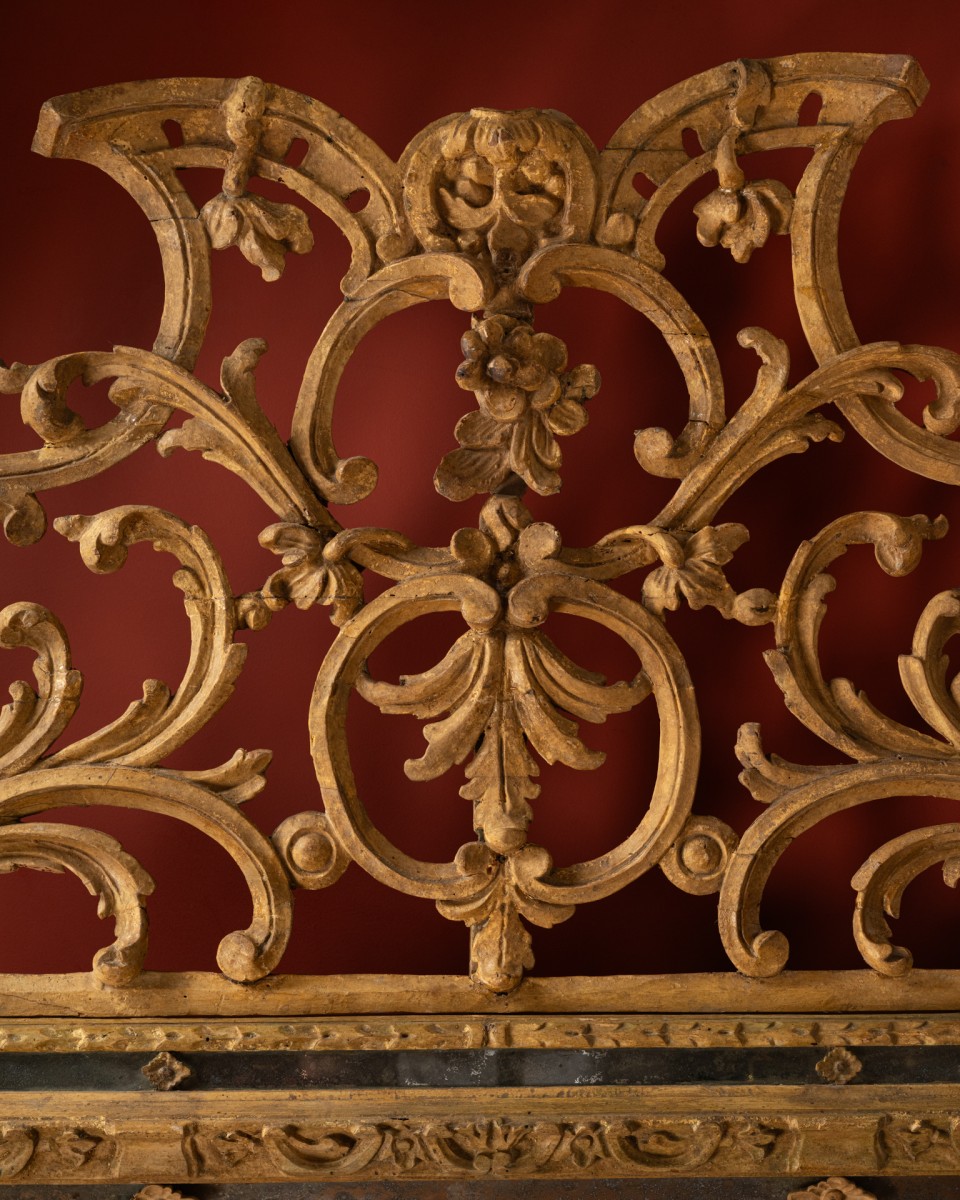
These mirrors, characteristic of the Northern Italian school of woodcarving or intagliato, consist of a mercury looking-glass framed by carved wood friezes and double row of parcloses mirror plates adorned with rosettes. Furthermore, they are framed by a cresting ajouré in carved wood, flower garlands whose carving style is characteristic of Piedmontese workshops, and rocaille feet, which serve as a reminder that these mirrors were designed to be placed atop console tables.
Their decoration thus incorporates the foliage scroll and cartouche ornaments designed by the Piedmontese architect Benedetto Alfieri for the House of Savoy and their court. Specifically, they echo the stuccos, frames, and paneling created after Alfieri's designs by Turinese craftsmen between 1753 and 1767 inside the Palazzo Chiablese in Turin.
See Graham Child, World Mirrors. 1650-1900, London, 1990 and Enrico Colle, Museo di arti applicate. Mobili e intagli lignei nel Castello Sforzesco, Milan, 1996.