Offered by Gregory Redding
REQUEST INFORMATION

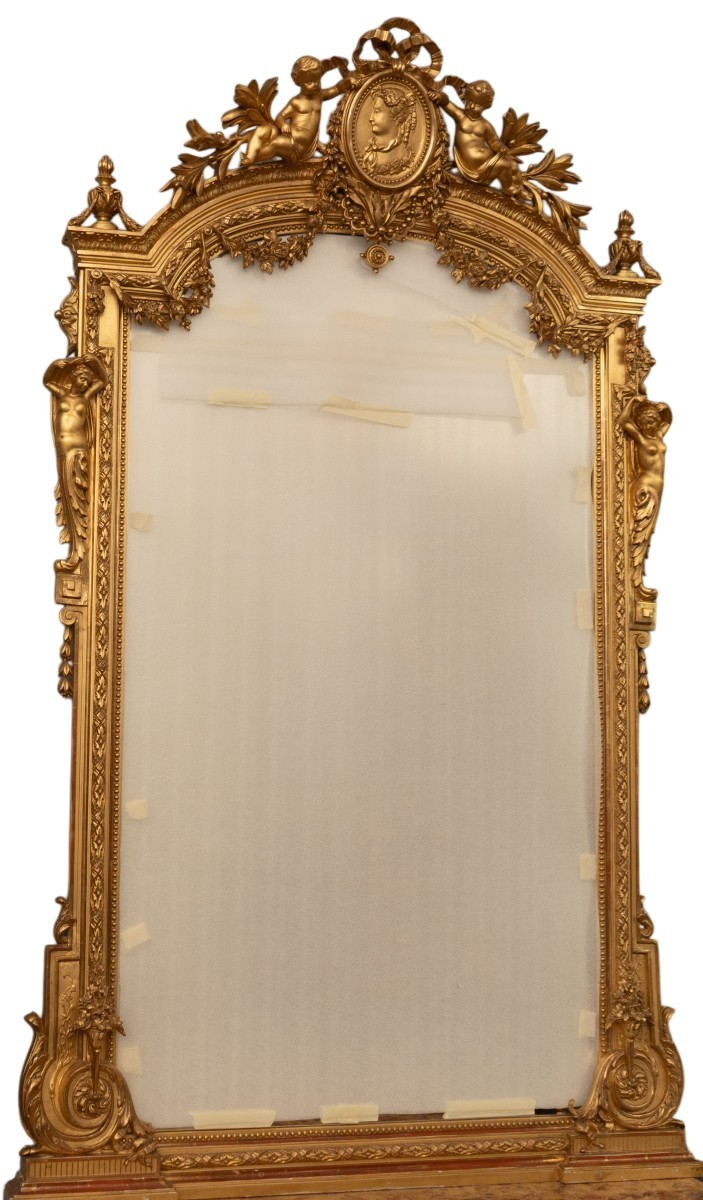
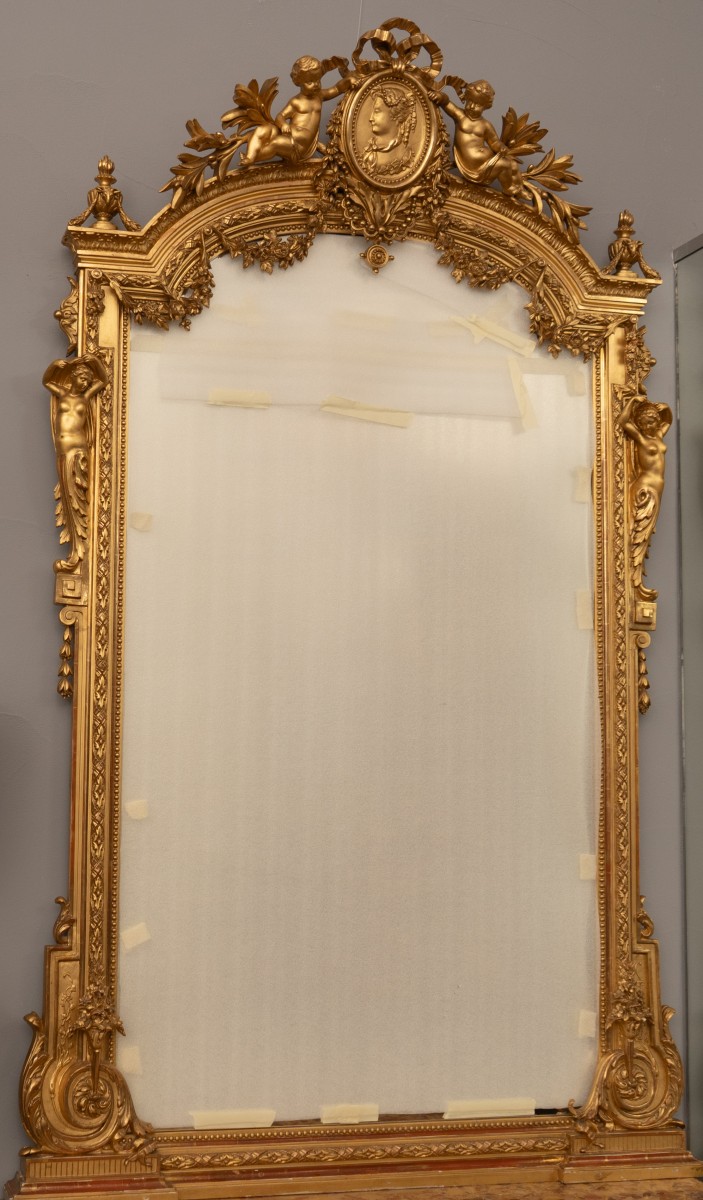
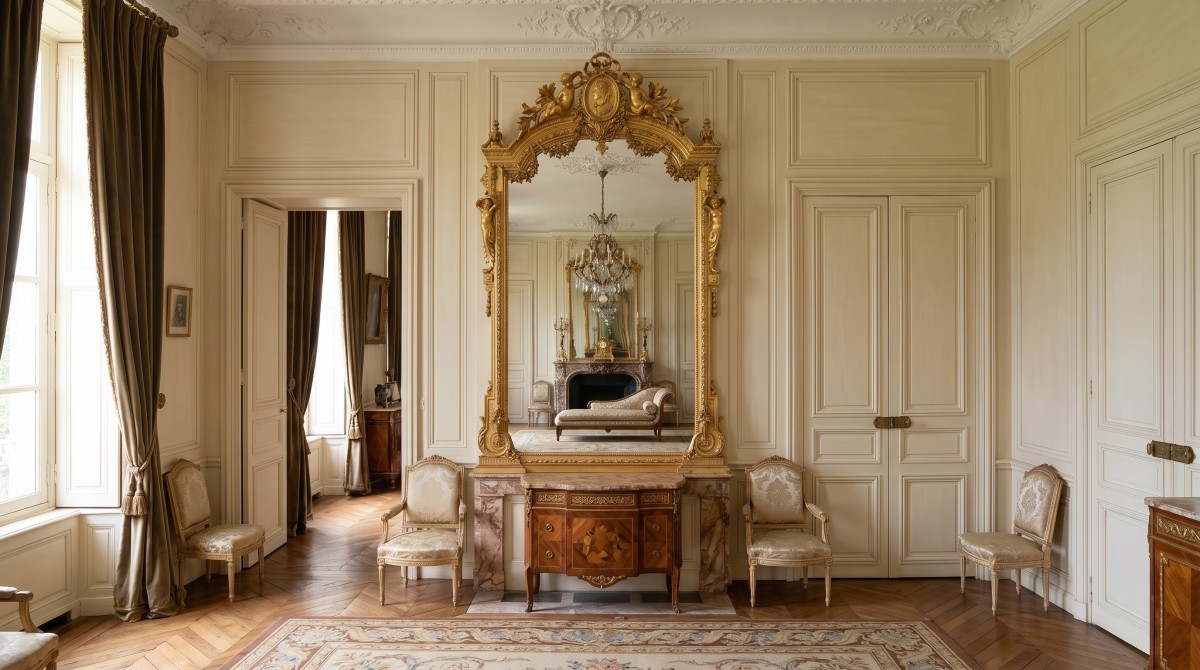
Important Napoleon III Giltwood and Composition Pier Mirror with Caryatids and Putti, France, circa 1865 to 1875
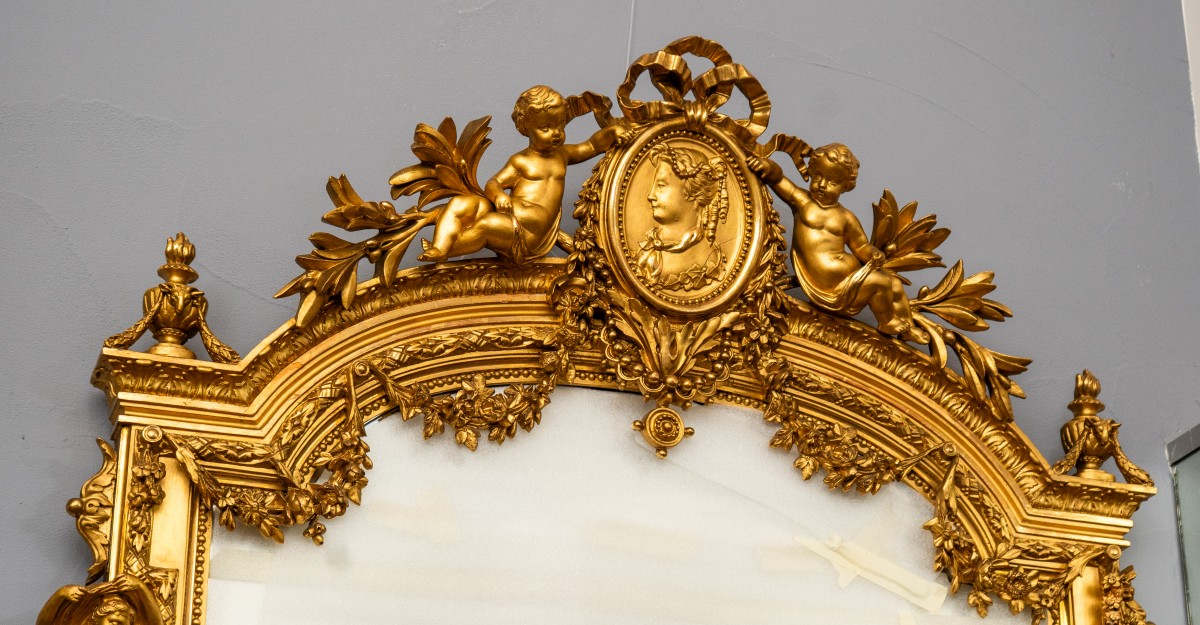
A large and architecturally conceived pier mirror in giltwood and moulded composition (stuc), water gilded with the customary contrast of burnished and matt areas (or et or mat), in the Louis XVI revival taste of the Second Empire. The rectangular bevelled plate, retaining its original mercury silvering, is set within an arched cresting elaborately modelled with a central oval beaded medallion bearing the profile bust of an idealised classical female facing left, suspended from a fluttering ribbon bow and flanked by two reclining putti holding palm branches, all above a moulded entablature dressed with rinceaux, beaded astragals, and pendant swags of flowers and fruit. The cresting is bracketed at either side by flame urn finials on socle plinths hung with husk chains.
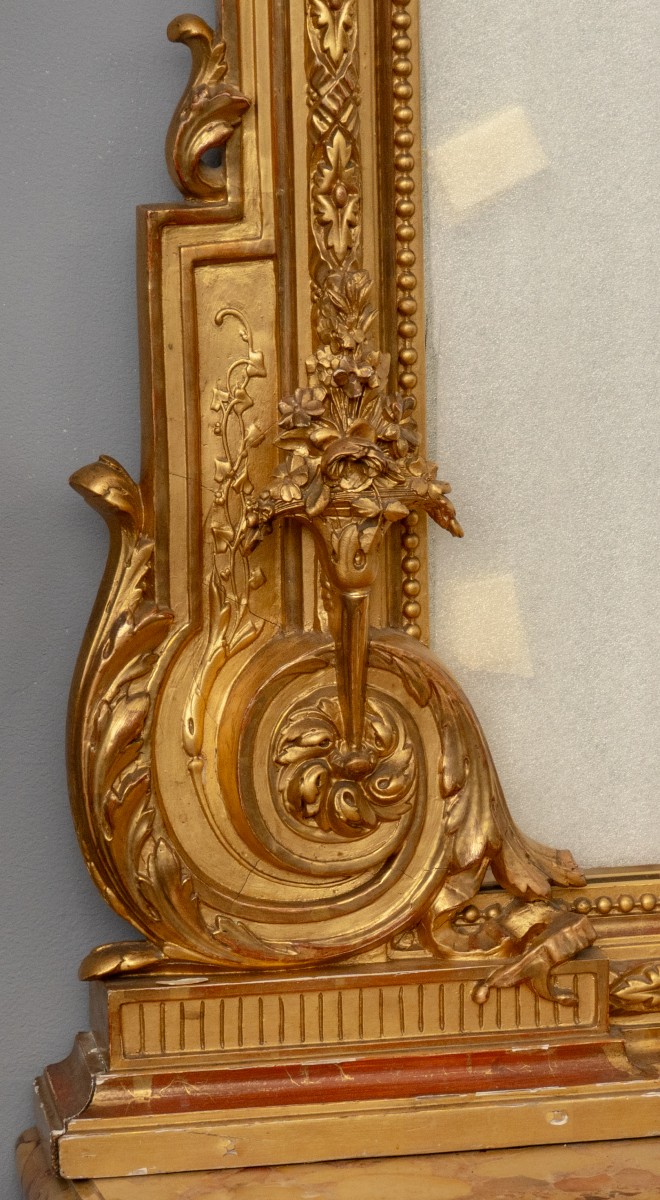
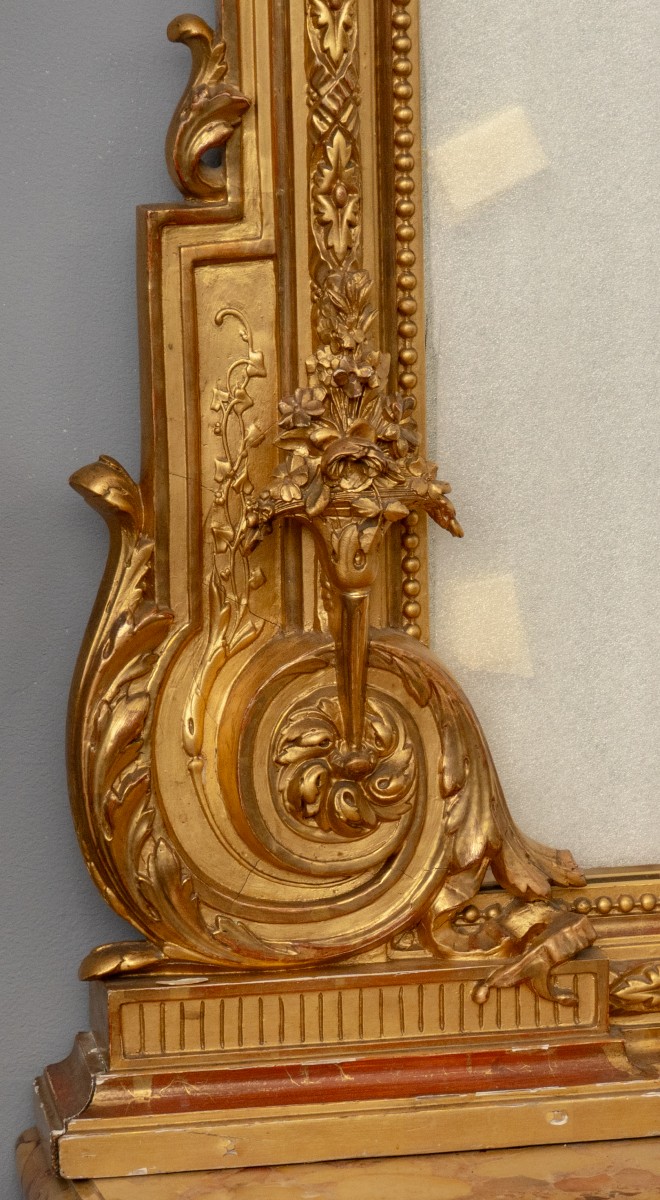
Each upright is mounted at the upper third with a finely modelled standing female nude in the manner of an architectural caryatid, arms raised and hair gathered, terminating en gaine in an acanthus volute. Beneath each figure runs a Greek key panel, then a long ribboned guilloche infill flanked by beaded mouldings. The lower corners feature large scrolled volutes with central rosettes of stylised acanthus, applied with bouquets of flowers tied at the throat, all above an architectural fluted plinth.
Frame 130 x 215 cm. Plate 92 x 165 cm.
A textbook example of the mode néo Louis XVI of the third quarter of the nineteenth century, in which the ornamental vocabulary of the 1770s and 1780s (ribbon bows, beaded medallion, putti, husks, urn finials, Greek key) is reinterpreted at theatrical scale and with sculptural exuberance characteristic of the great Paris workshops of the Faubourg Saint Antoine. Comparable pier mirrors were supplied for the hôtels particuliers and provincial châteaux being decorated under Napoleon III and the early Third Republic.
Original mercury silvered plate present, with foxing and oxidation entirely consistent with the period of manufacture. Some minor losses and craquelure to the composition at the lower volutes and pin sized flaking, all consistent with age and wholly stable.
Literature: Denise Ledoux Lebard, Le mobilier français du XIXe siècle, Paris, Editions de l'Amateur, 1989; Camille Mestdagh, L'ameublement d'art français 1850 1900, Paris, Editions de l'Amateur, 2010.