Offered by Galerie Thierry Matranga
REQUEST INFORMATION
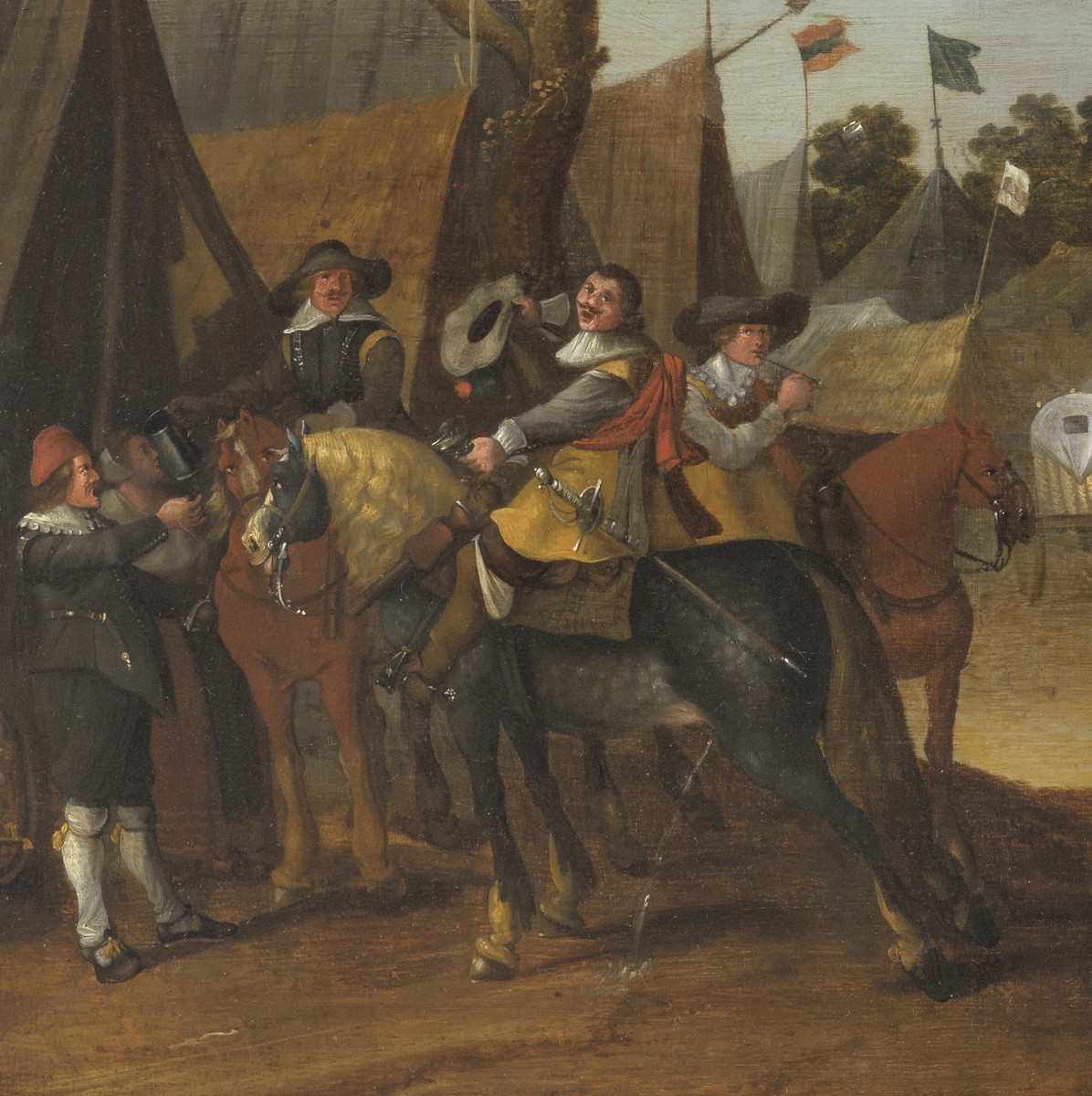
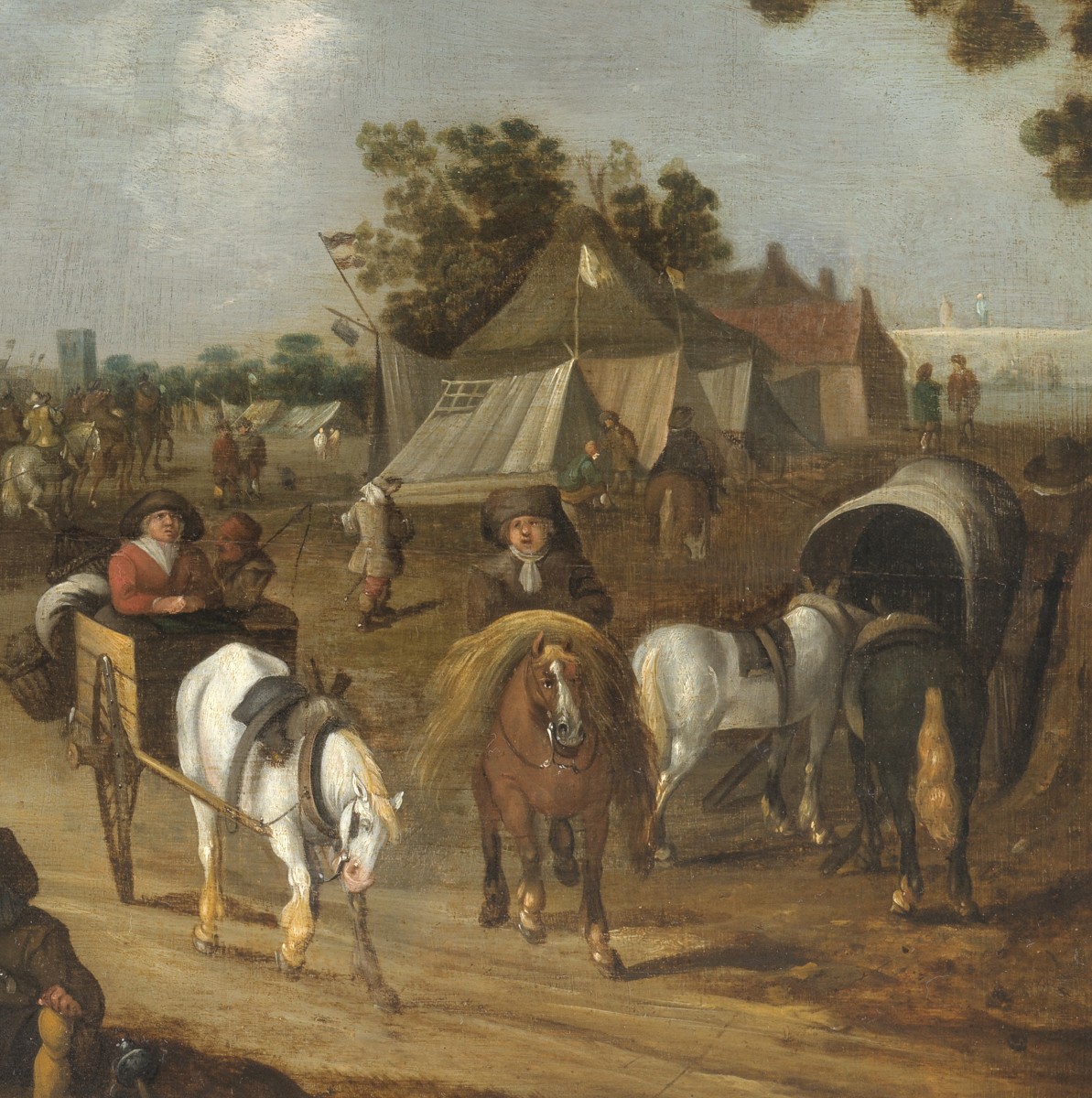

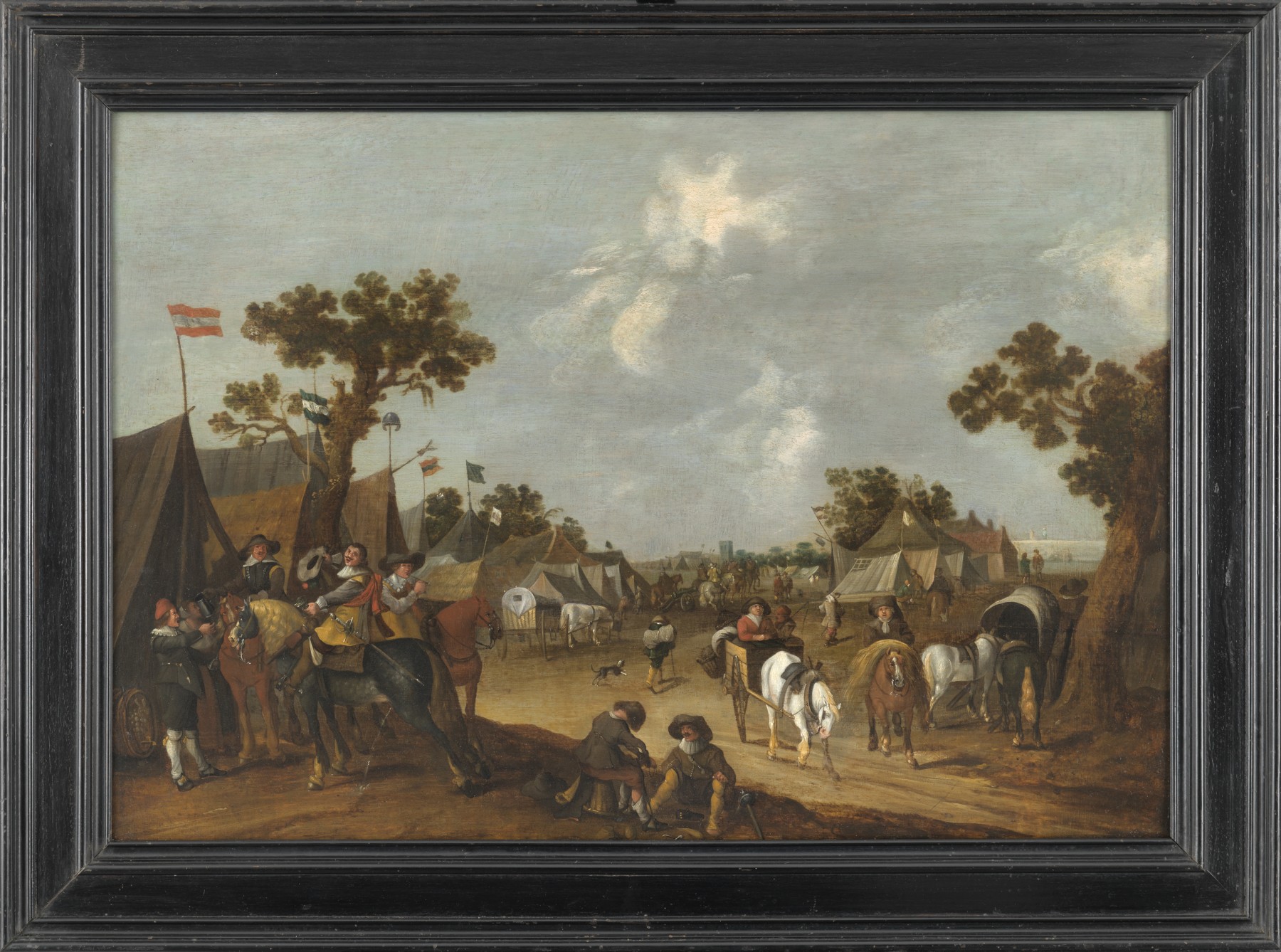
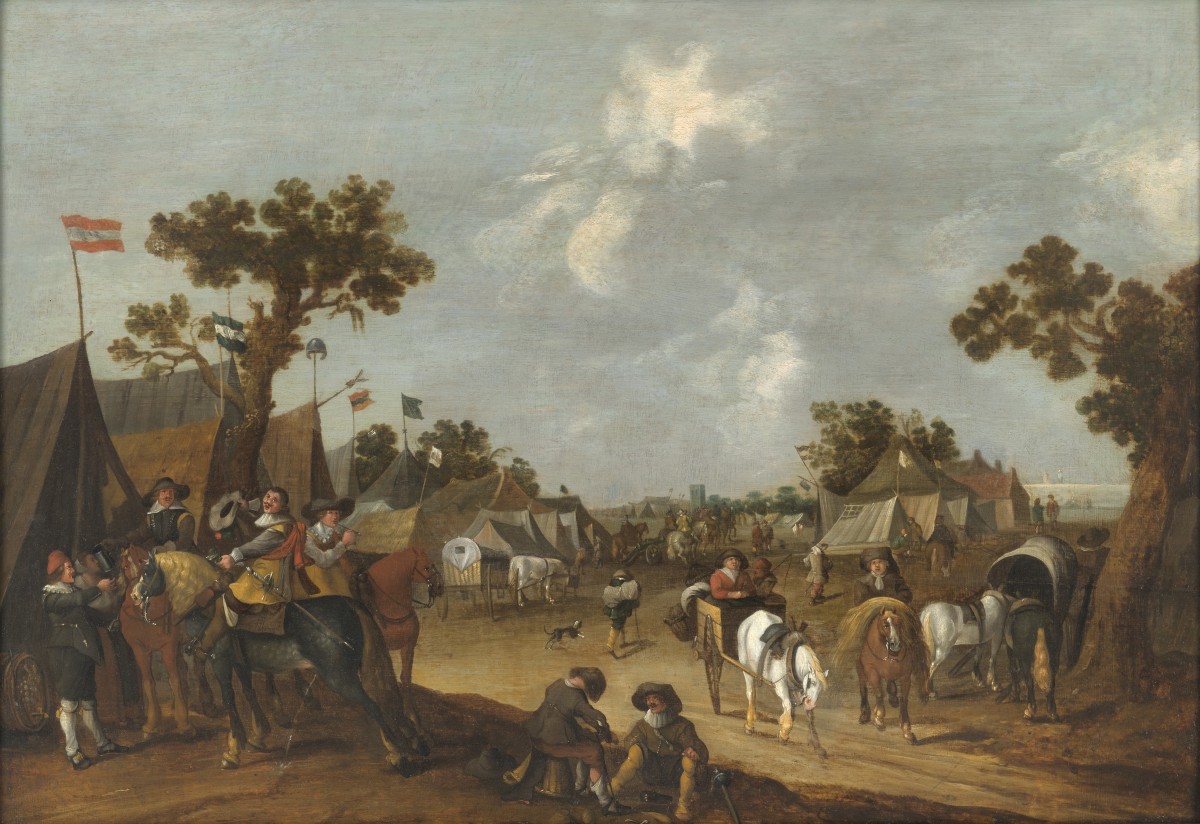
Oil on cradled panel. Dutch school of the 17th century, Hendrick de Meijer and workshop circa 1640.
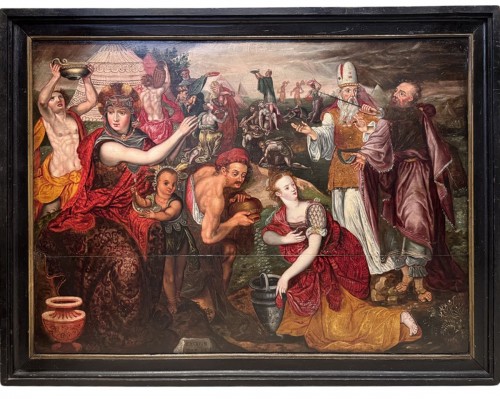
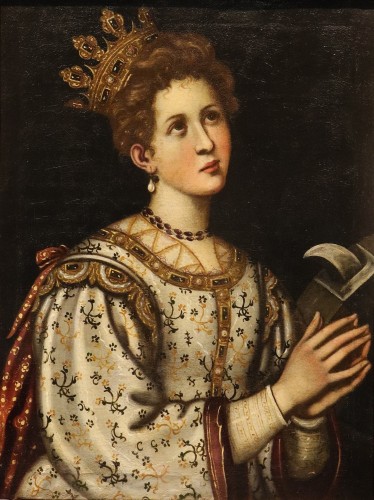
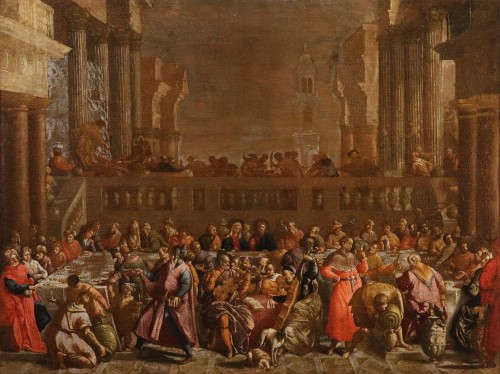
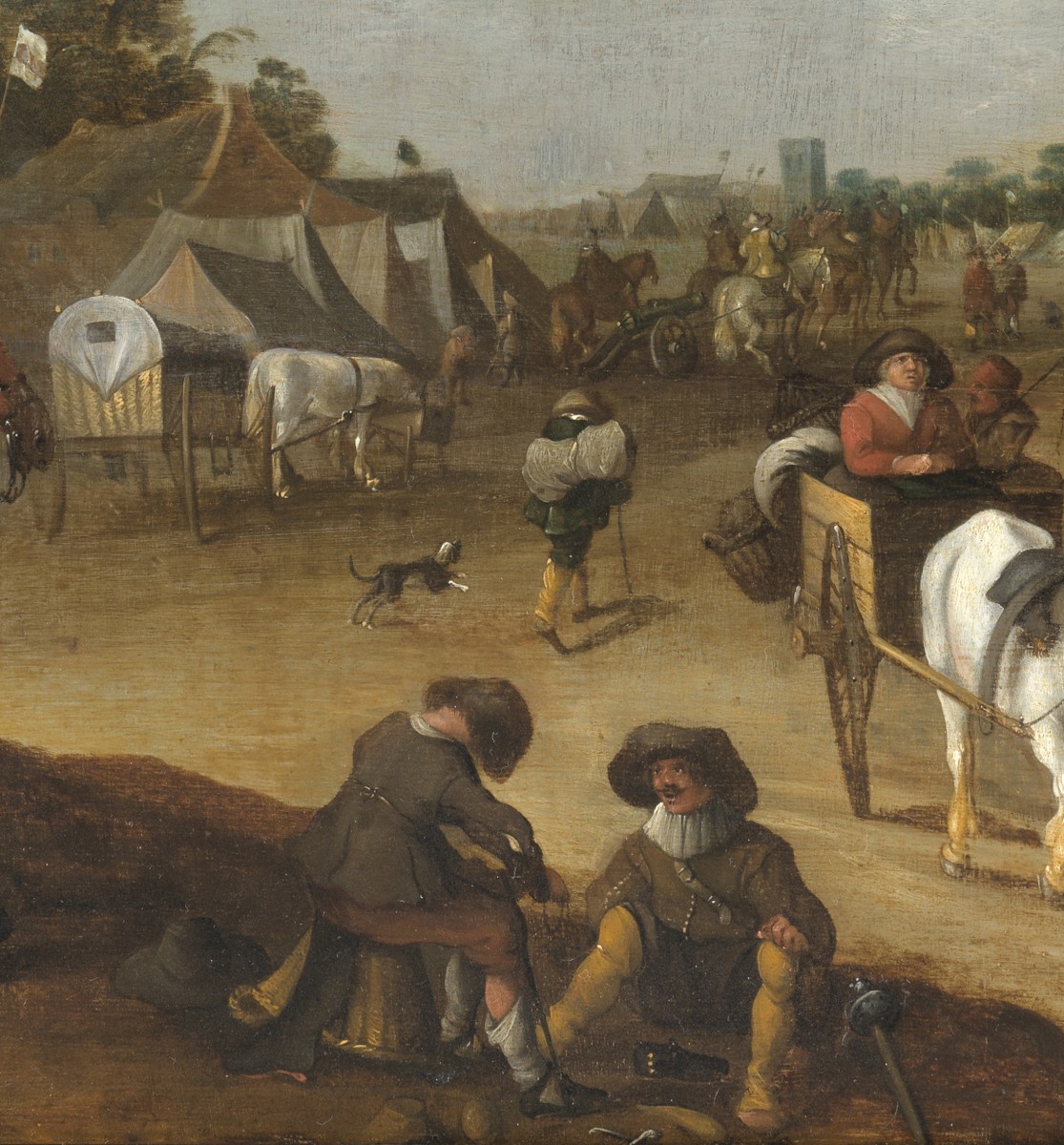
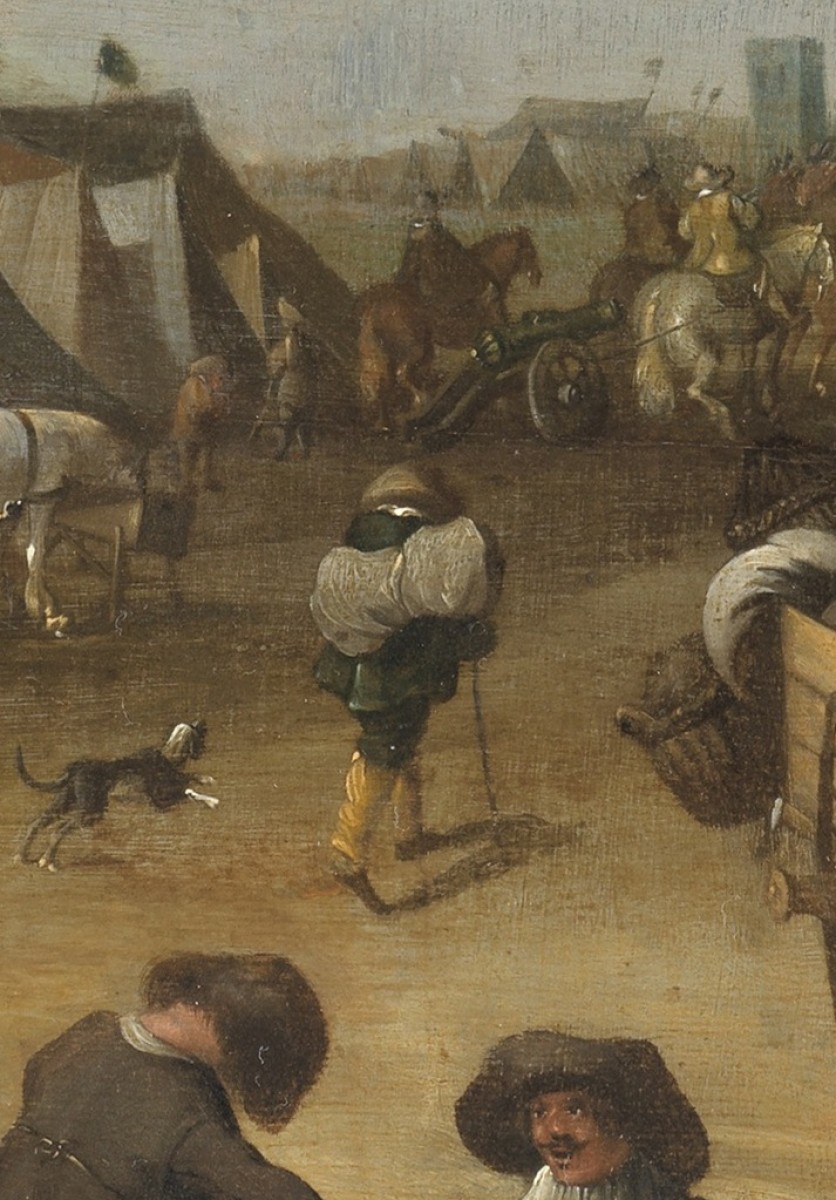
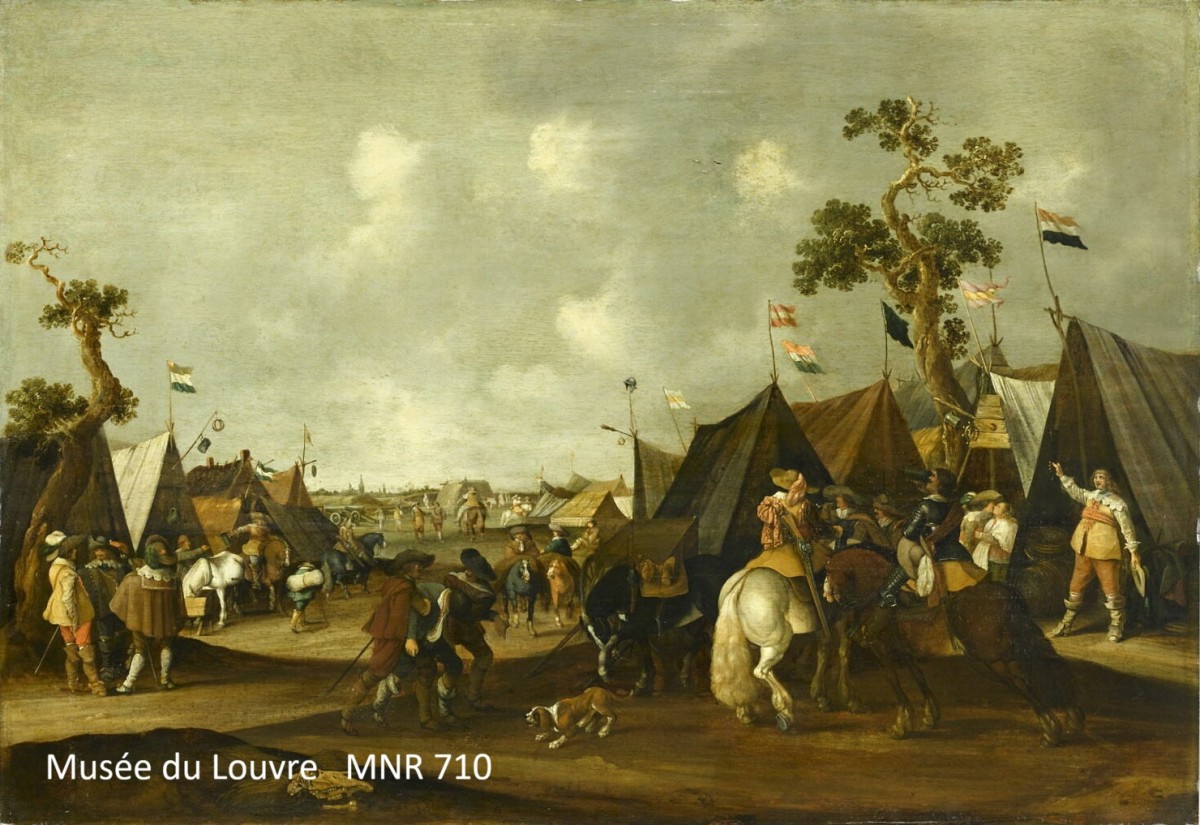
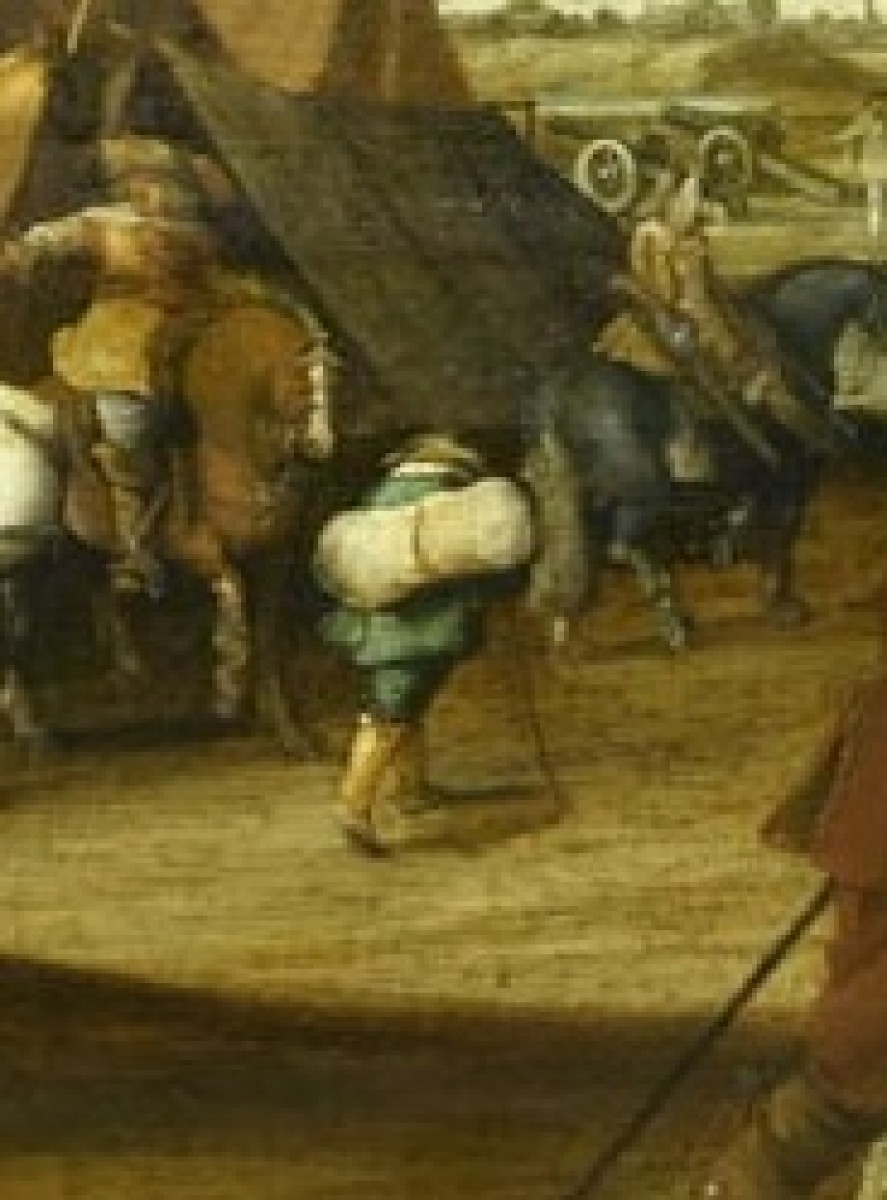
In this vast encampment scene, Hendrick de Meijer deploys a military composition combining topographical precision and atmospheric poetry. Under a silvery sky, the tents, riders and wagon are arranged in a succession of shots that naturally to a low horizon. In the foreground, a group of riders and seated soldiers, creating Meijer's signature narrative breathsuspended gestures, quiet conversations, expressive silhouettes that tellthe tumult of war.The relationship with Meijer's youthful work in the Louvre, painted in 1638 (see photos) is immediate: the same deept, the same muted palette of bluish greys and ochres, the same diagonal distribution of tents, the same silvery sky structured by large clouds and the same way of punctuating the composition with small, autonomous scenes. On closer inspection, the common thread of the two works becomes obvious: similar anatomy of the horses, the same variety of tortured trees, the same expression of the figures and a detail that marks the authorship of our painting: the figure with the with his back to us in the center of the composition is strictly identical to the one in the Louvre composition (see detail photos). In terms of atmosphere, style and organization, our painting is in the vein of Meijer's great compositions. It offers both a strong decorative presence and a direct proximity to the museal works. This makes it a piece that is sure to appeal to collectors sensitive to the narrative landscapes of the Golden Age.
An elegant casseta frame in blackened wood highlights the composition.
Dimensions : 57 x 82.7 cm - 72 x 97 cm with frame
Sold with invoice and certificate of authenticity
Biography: Hendrick de Meijer (Rotterdam, c. 1620 - before 1690) was a Dutch painter of the Golden Age, who established himself as one of the leading specialists in large-scale military scenes and lively landscapes. Active in Rotterdam in the XVII? century, he developed an immediately recognizable style: low horizons, silvery skies, lively silhouettes and a gentle atmosphere that gives his compositions a very contemporary presence. Close to the aesthetic of Albert Cuyp, Meijer excels in narrative panoramas, where horsemen, soldiers and tents make up a rich but always legible. His works, now conserved in major institutions, including the Rijksmuseum and the Louvre, are sought-after for their decorative strength, luminous balance and ability to portray military life with elegance and humanity.
Bibliography:
- Seymour Slive, Dutch Painting 1600-1800, Yale University Press, 1995.
- Mariët Westermann, A Worldly Art: The Dutch Republic 1585-1718, Yale University Press,1996
- Peter C. Sutton, Masters of 17th-Century Dutch Landscape Painting, Museum of Fine Arts Boston / Abbeville Press, 1987
- Seymour Slive, Dutch Landscape Painting of the Seventeenth Century, Yale UniversityPress, 1989
- Jeroen Duindam, The Military in the Dutch Golden Age, Amsterdam University Press, 2016
- Foucart-Walter, Élisabeth (ed.), Foucart, Jacques, Catalogue des peintures flamandes et hollandaises du musée du Louvre, Gallimard / Louvre éditions, 2009
- Rijksmuseum Amsterdam, Catalogue of Paintings, Rijksmuseum Publications