Offered by Ars Antiqua
REQUEST INFORMATION

Old Masters paintings, furniture, sculptures and modern art
Giuseppe Ruoppolo (c. 1630 – 1710)
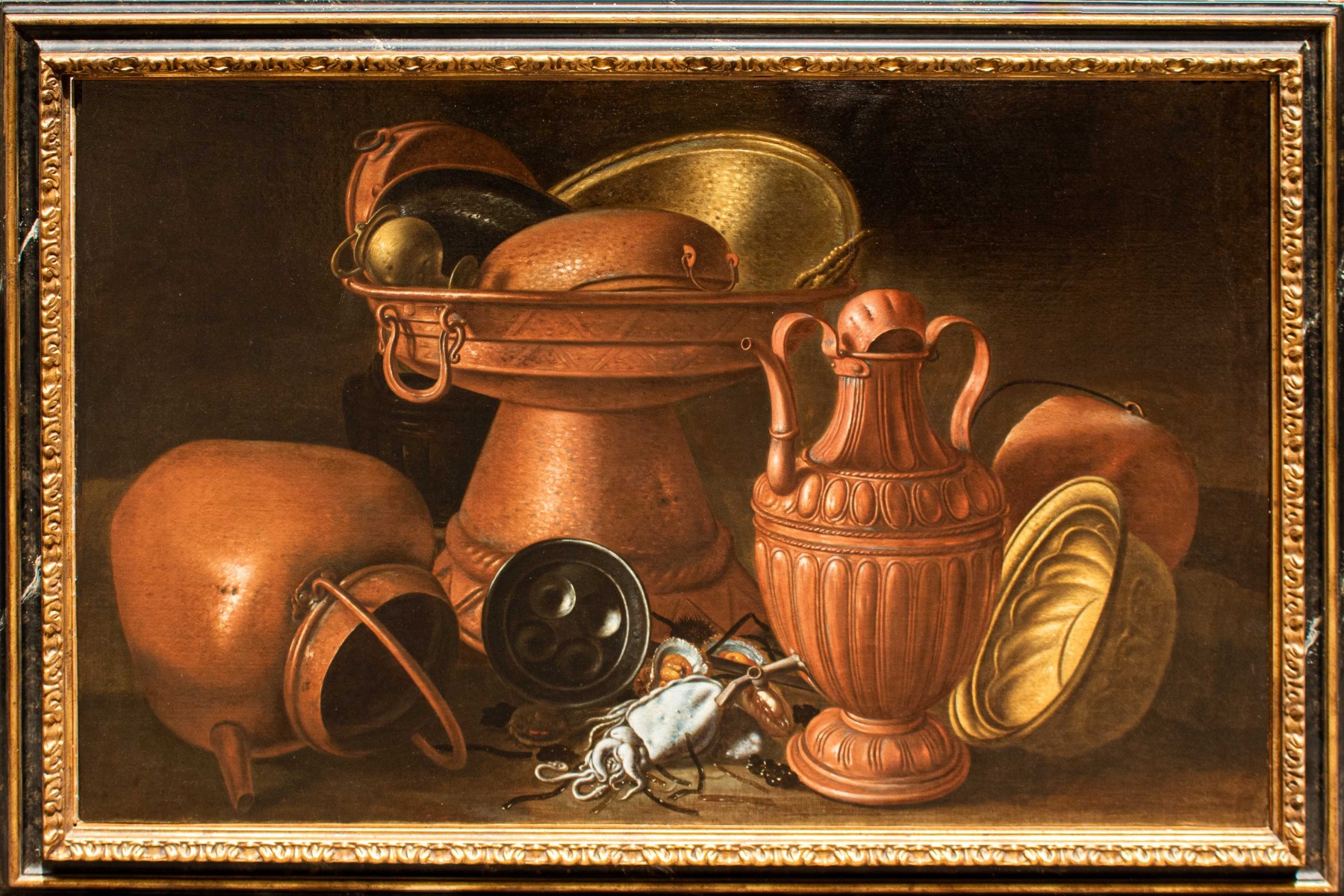
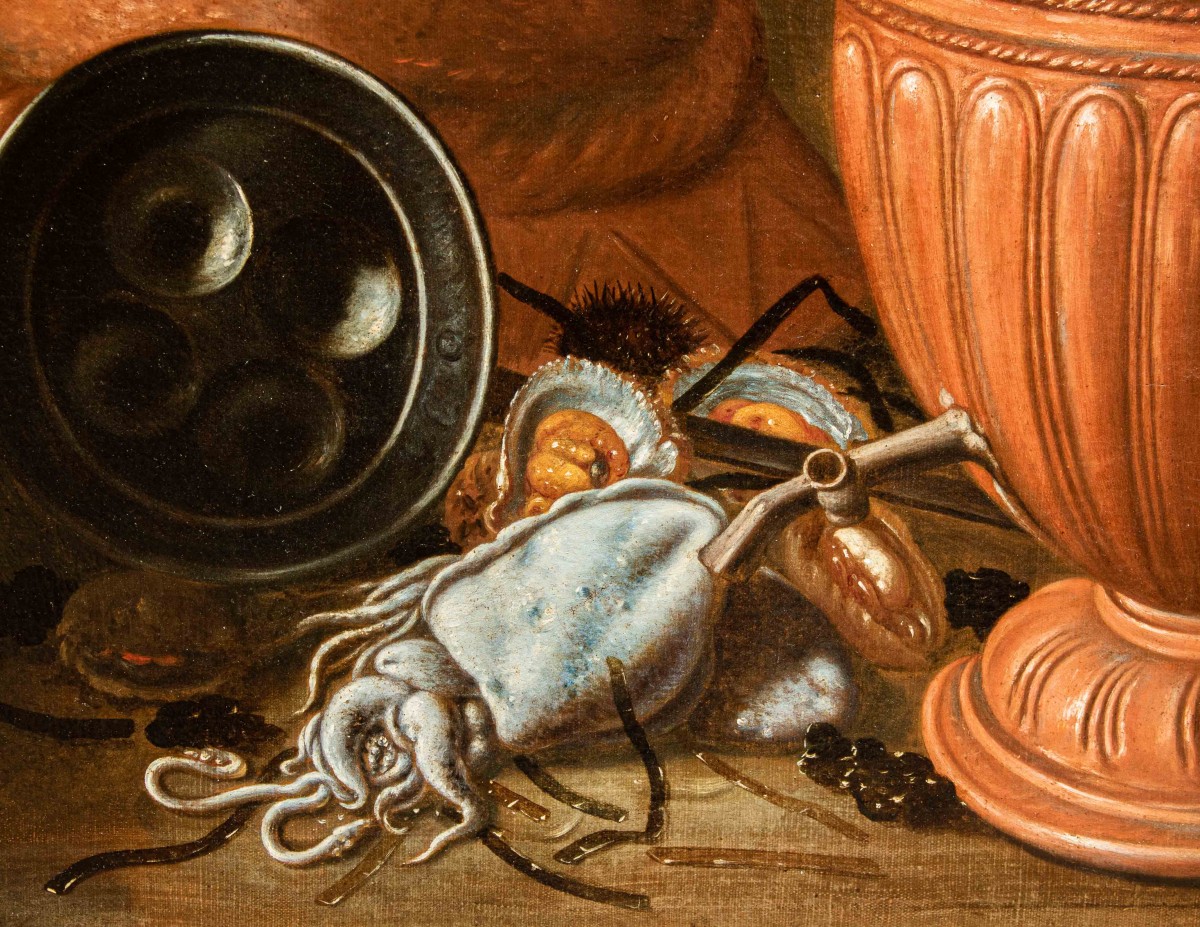
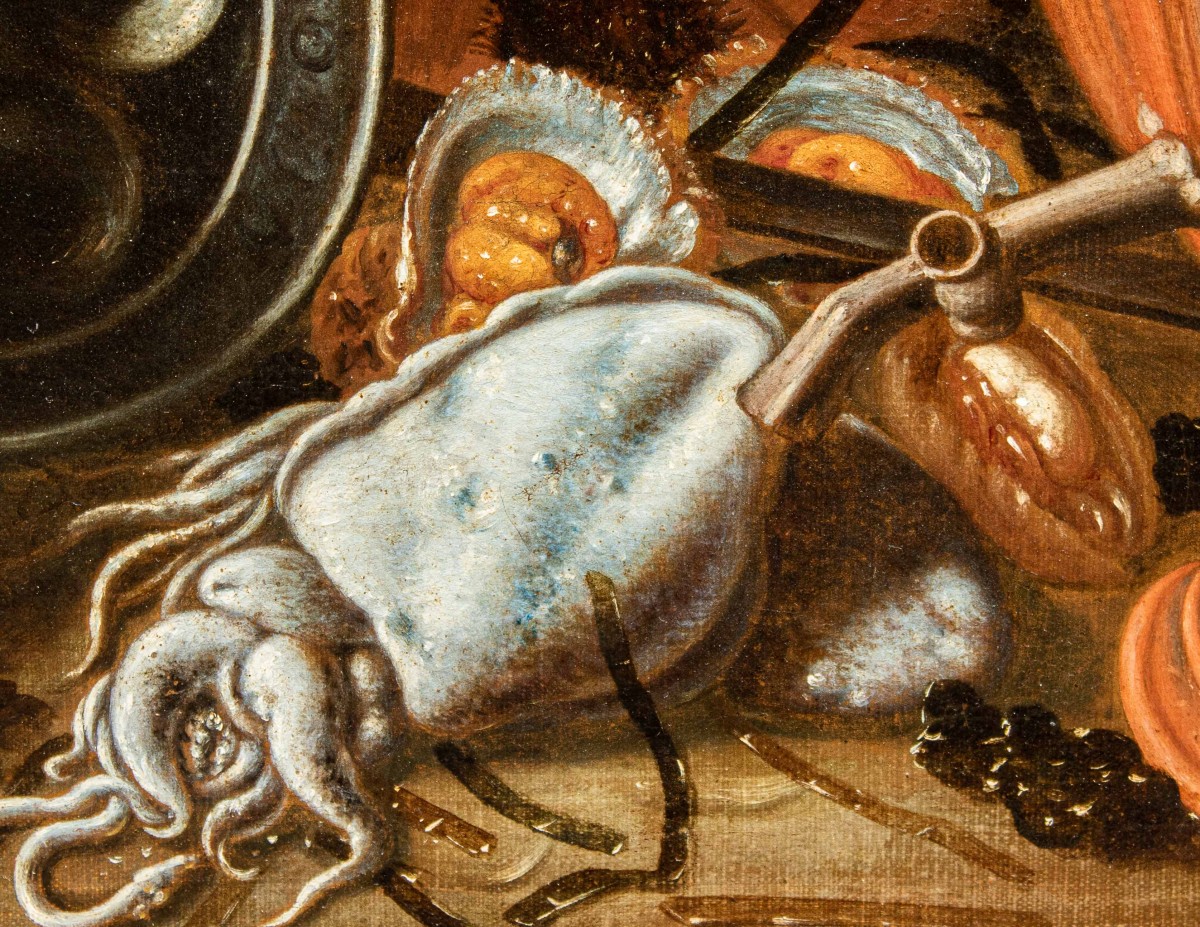
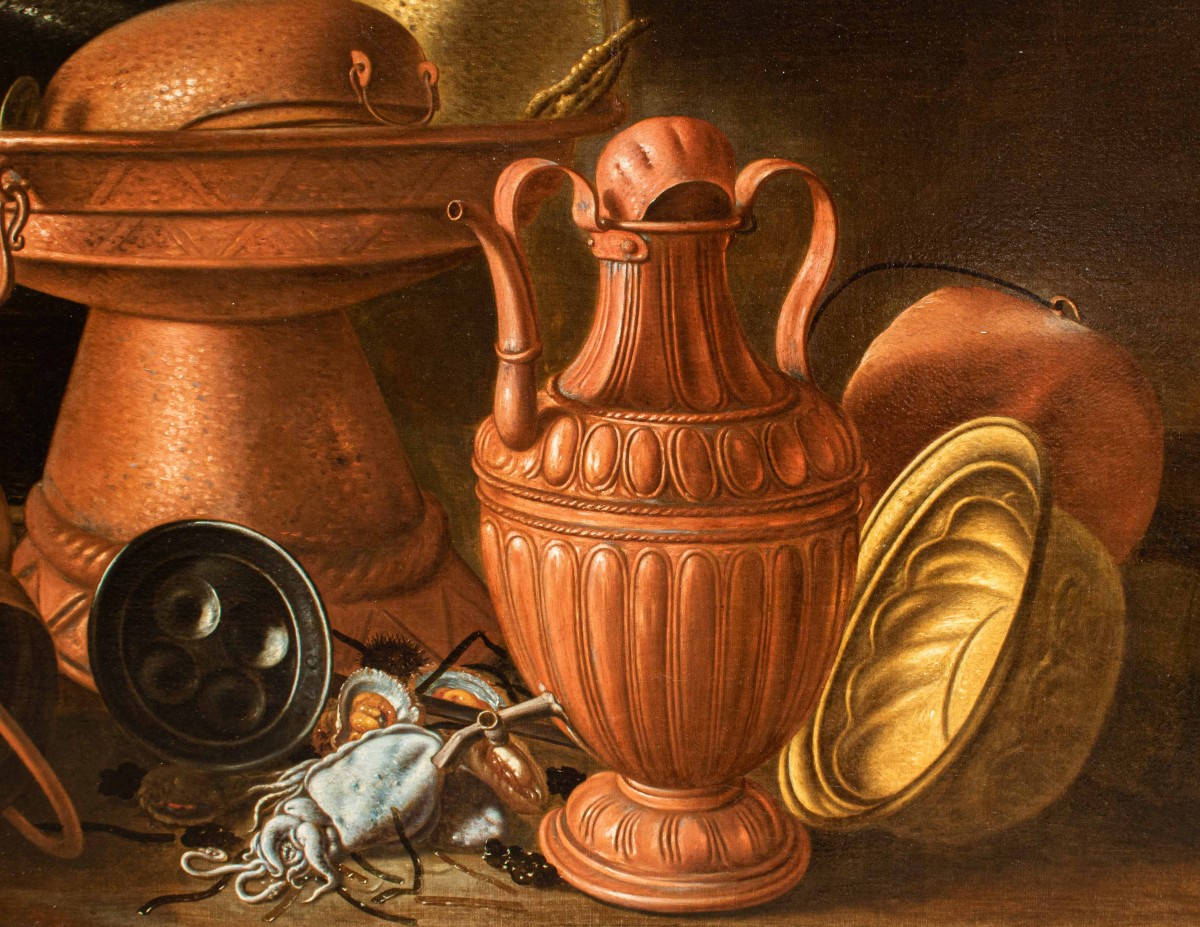
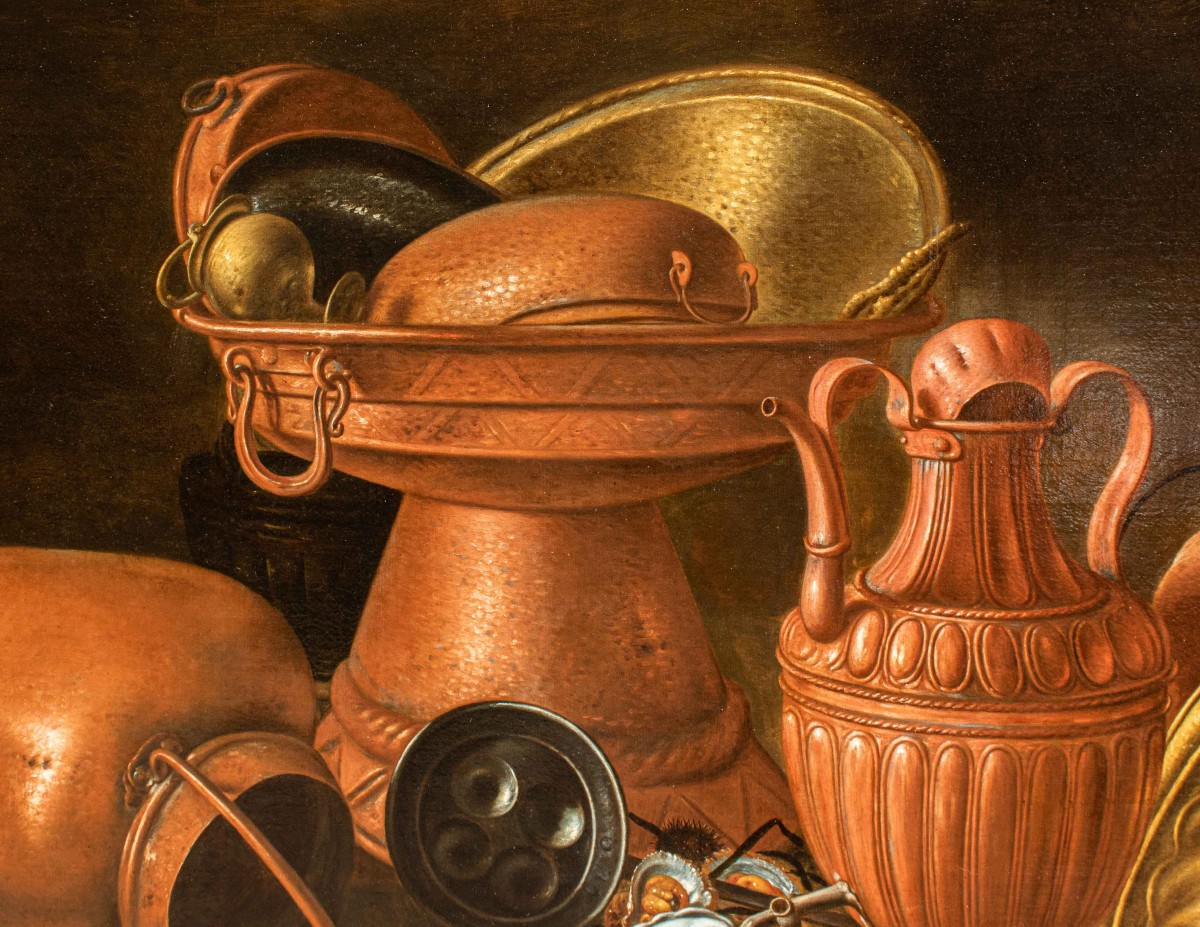
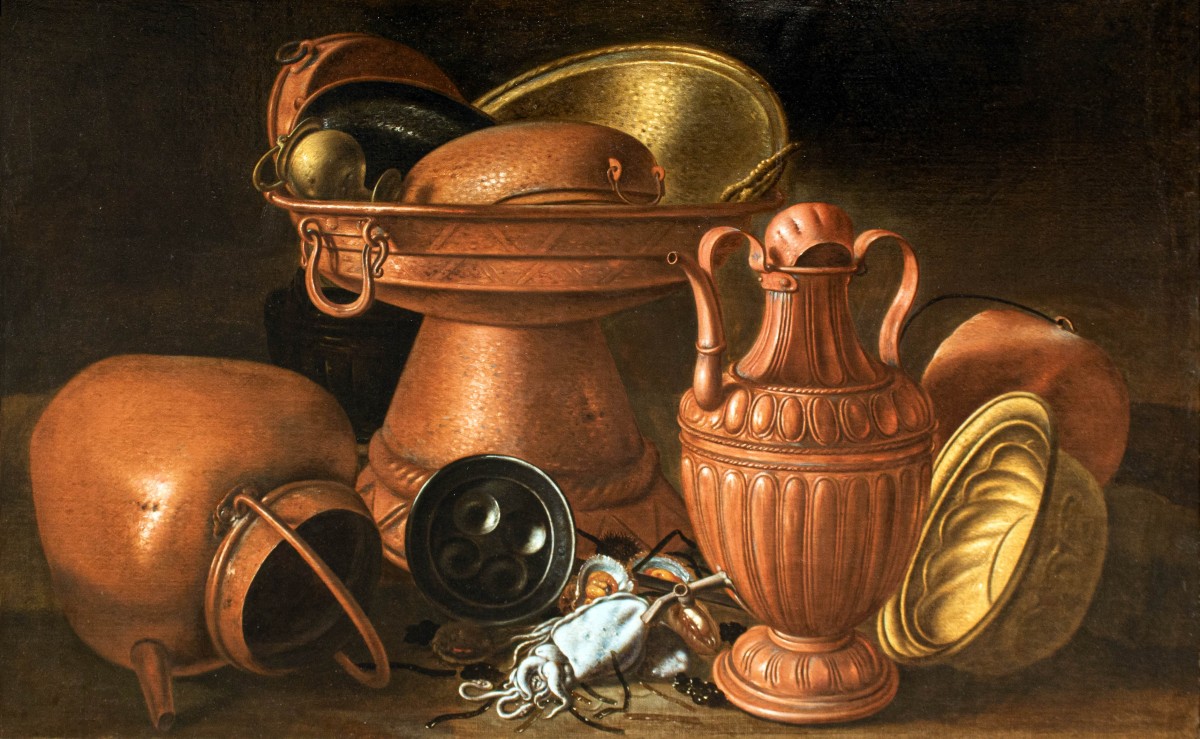
Still Life with Copperware, Cuttlefish, and Oysters
Oil on canvas, 102 x 152 cm – with frame, 122 x 172 cm
Expertise by Professor Alberto Crispo
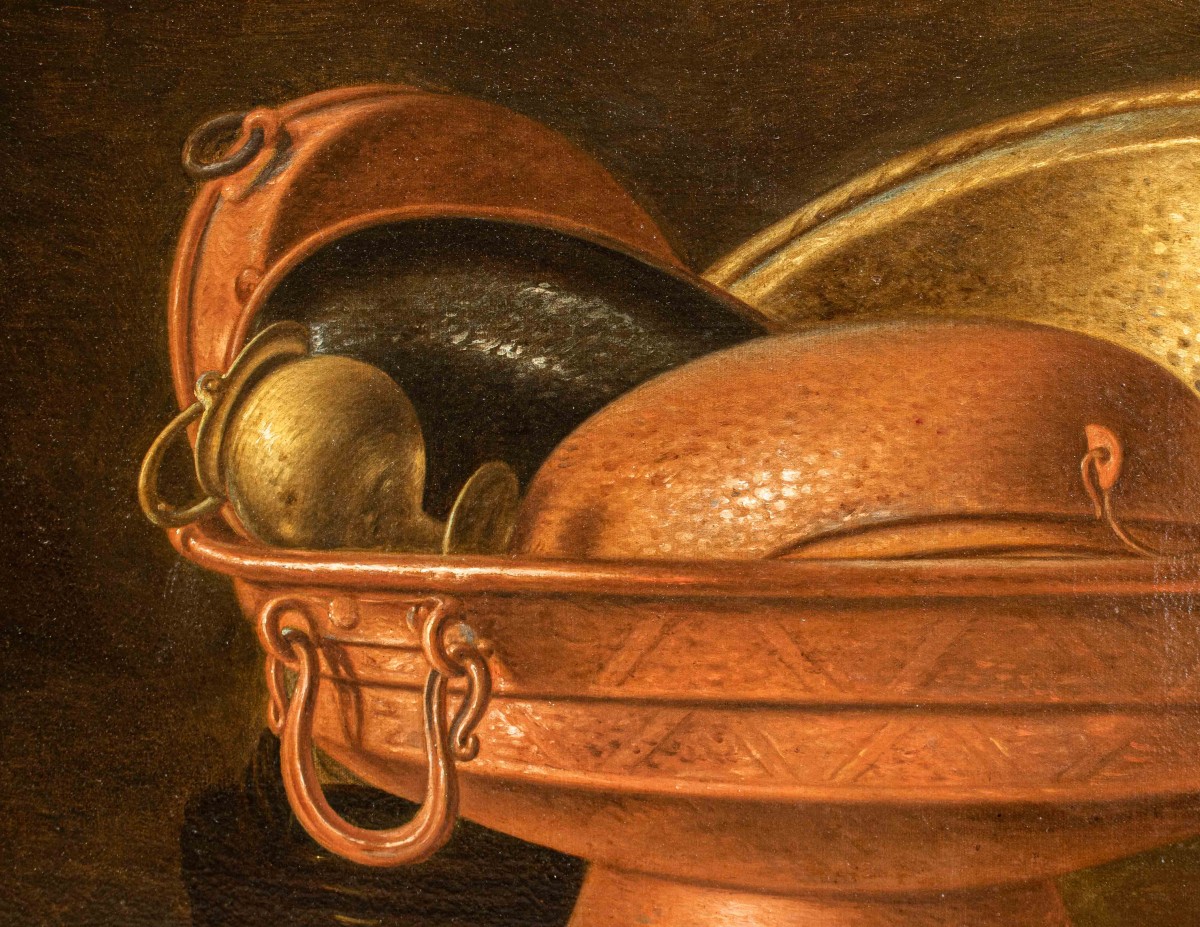
The absolute authorship of this unsigned painting by Giuseppe Ruoppolo is confirmed by its companion piece, which was indeed monogrammed and is now lost to private collections. The two canvases were held together until the 1970s in the collection of the art dealer Algranti, before being separated through various market transactions. Both illustrate a display of copperware arranged with spectacular flair, illuminated by resilient rays of light that accentuate the volume of each vessel.
Bernardo De Dominici, a vital biographer, left a written record of Ruoppolo’s refined preference for copper utensils, testifying that the artist "also painted copper objects in imitation of his uncle Gio. Battista" (Vite de’ pittori, scultori, ed architetti napoletani, III, Naples 1743, p. 299). This reference to Ruoppolo's uncle serves as a fundamental documentary anchor in reconstructing Giuseppe's artistic career. Historical sources record only that he died in 1710 at the age of eighty, from which we infer he was born around 1630, and that the monogram "GRU"—once attributed to a separate, homonymous monogrammist—in fact belongs to Giuseppe himself, who used this signature in the painting Kitchen Interior with Copperware and Provisions (formerly in the Dalla Vecchia collection in Naples). The artist served his apprenticeship under his uncle, who was almost his contemporary (1629–1693) and a principal exponent of Neapolitan Baroque still-life painting, himself a pupil of Paolo Porpora and a contemporary of Salvator Rosa. Unlike his uncle, however, Giuseppe produced works closely aligned with early seventeenth-century still-life painting, paying homage to the dawn of the Neapolitan tradition. The influence of Luca Forte—who had trained in Aniello Falcone's workshop and whose still lifes were initially marked by a revivalist Caravaggism—remained decisive for the artist.
Ruoppolo's output of still lifes ranged from pantagruelian assemblies of early seasonal produce to modest clusters of the most immediate fruits of the earth, such as zucchini, tomatoes, and flowers. A Still Life with Vase of Flowers, now in a private collection, is signed "Giuseppe Rop" on the vase; however, fuller signatures are also known, such as in a second Still Life with Melons and Apricots in a private collection, where the artist's name appears on a chipped stone in the lower right corner of the painting.
The present work echoes the composedly crowded compositions seen in the signed Fruit and Vase of Flowers in a Landscape at the Musée de Nevers, as well as the signed Grapes, Peaches, Melon, Figs, Plums, and Flowers at the Musée des Beaux-Arts in Nantes. Oysters and seafood had previously appeared in his Still Life with Red Crab at the Museum of Fine Arts in Budapest, a work very close in manner to Elena Recco.
Delevery information :
Les frais d'expédition seront calculés au moment de la commande en fonction de la destination, des dimensions et du poids du tableau, ainsi que de l'assurance couvrant la valeur totale de l'œuvre.
For paintings purchased from abroad: following payment, the application process to obtain the export license (ALC - Attestato di Libera Circolazione) will be initiated. All antiques shipped abroad from Italy require this document, which is issued by the Ministry of Cultural Heritage. The procedure may take 3 to 5 weeks from the date of request; therefore, the painting will be shipped as soon as the document is obtained