Offered by Antichità Castelbarco
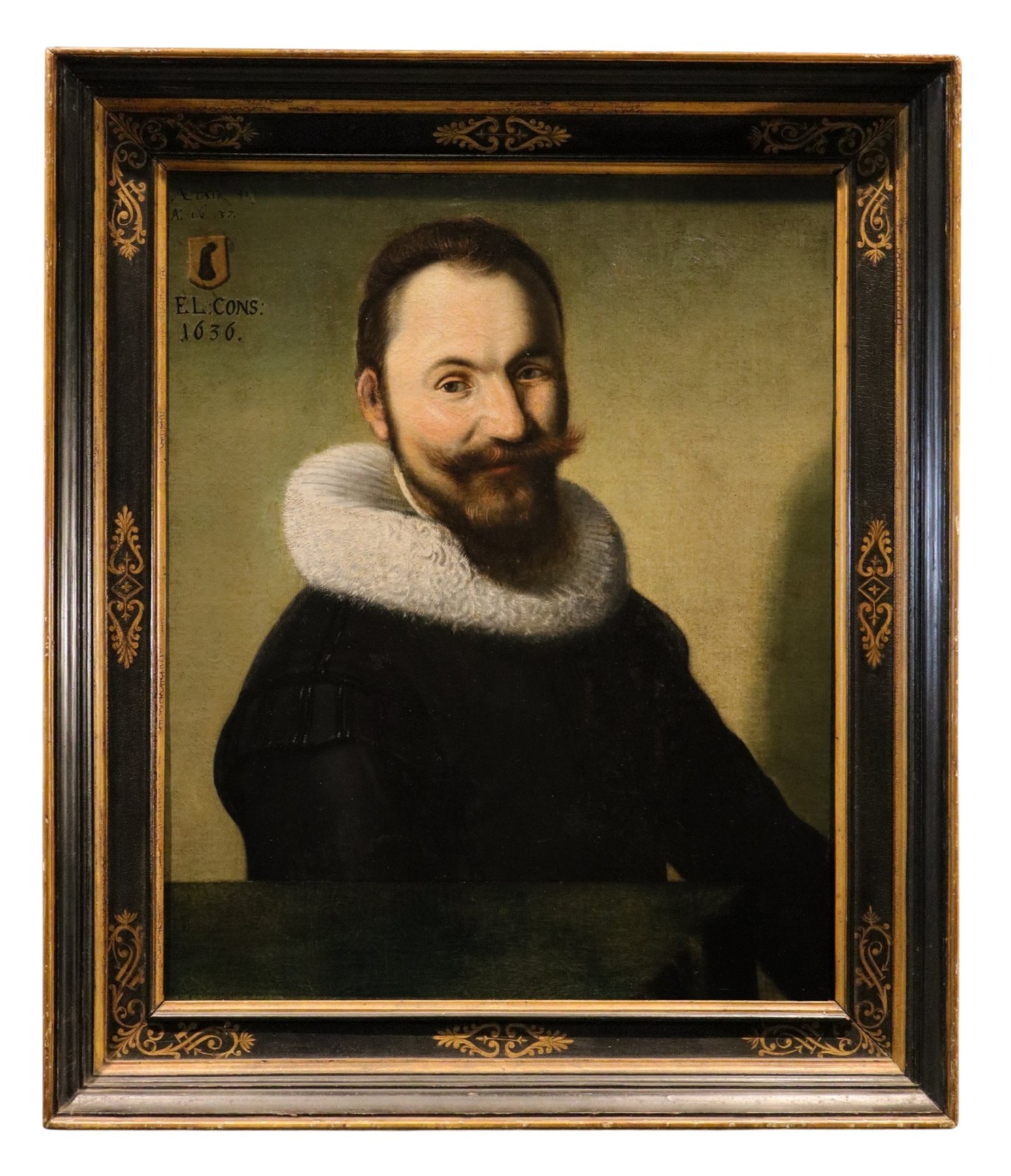

Samuel Hoffmann (Zurich 1591 – Frankfurt 1648) Attributed to
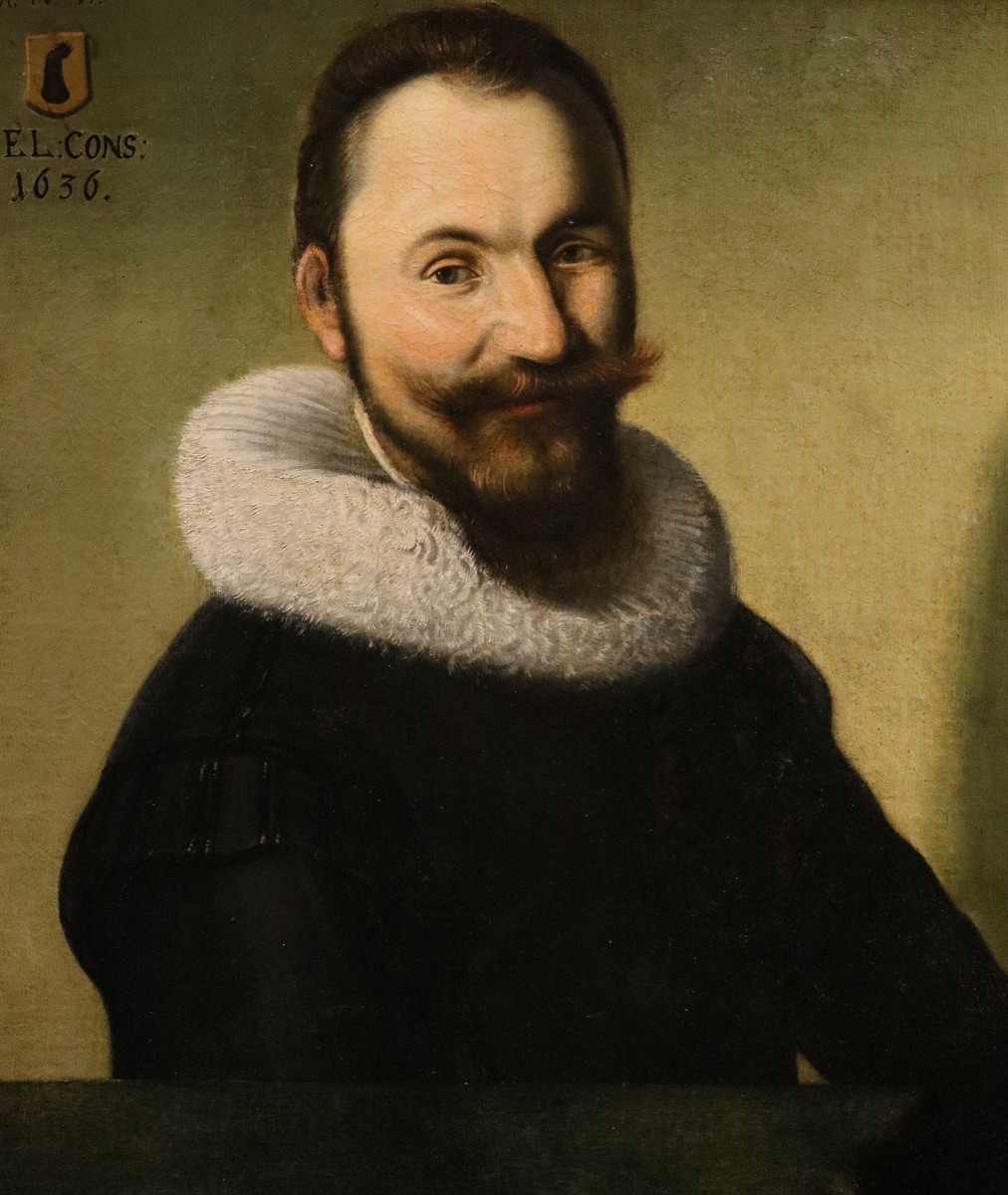
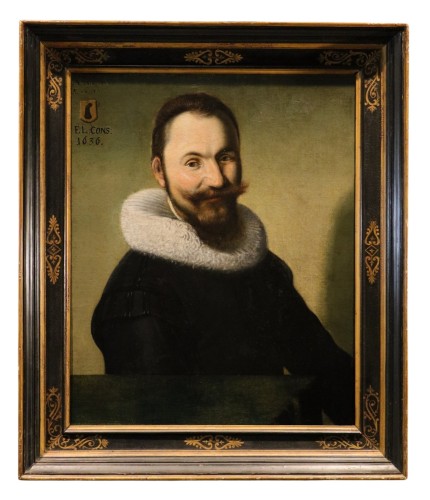
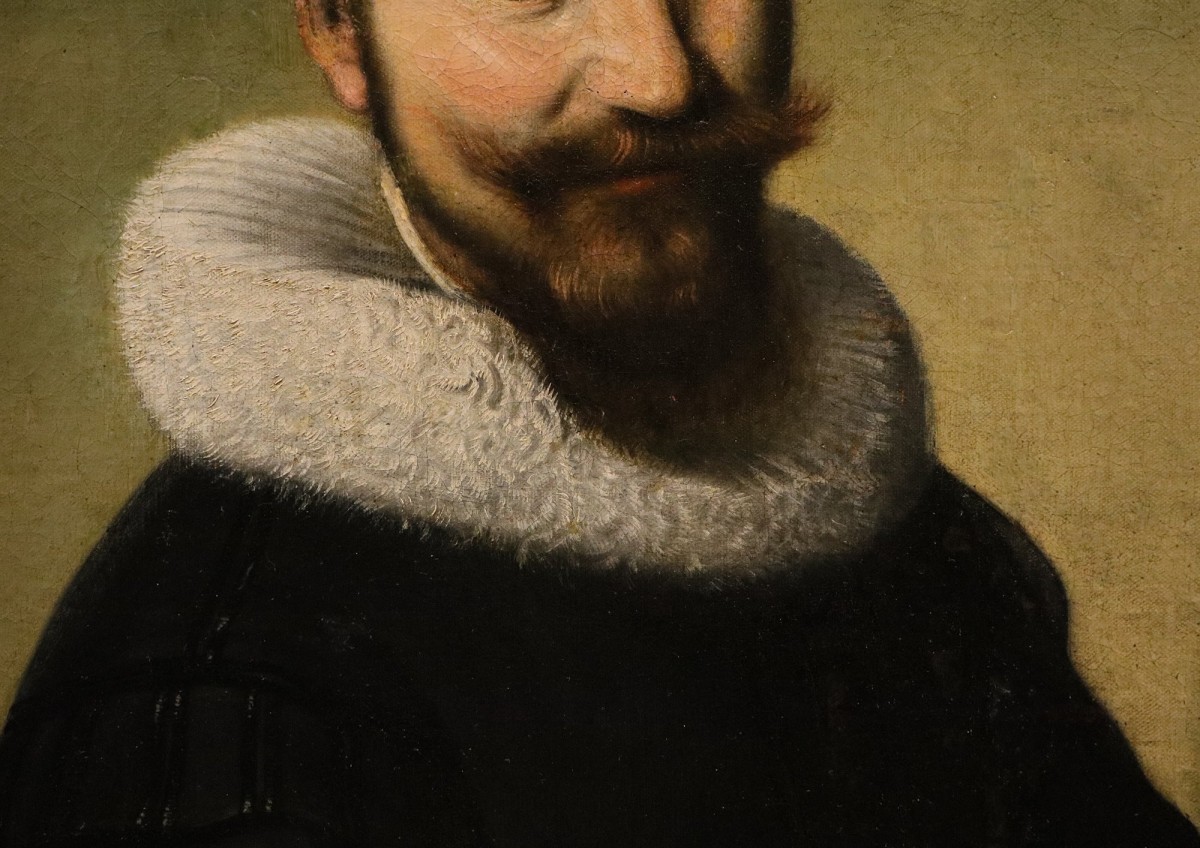
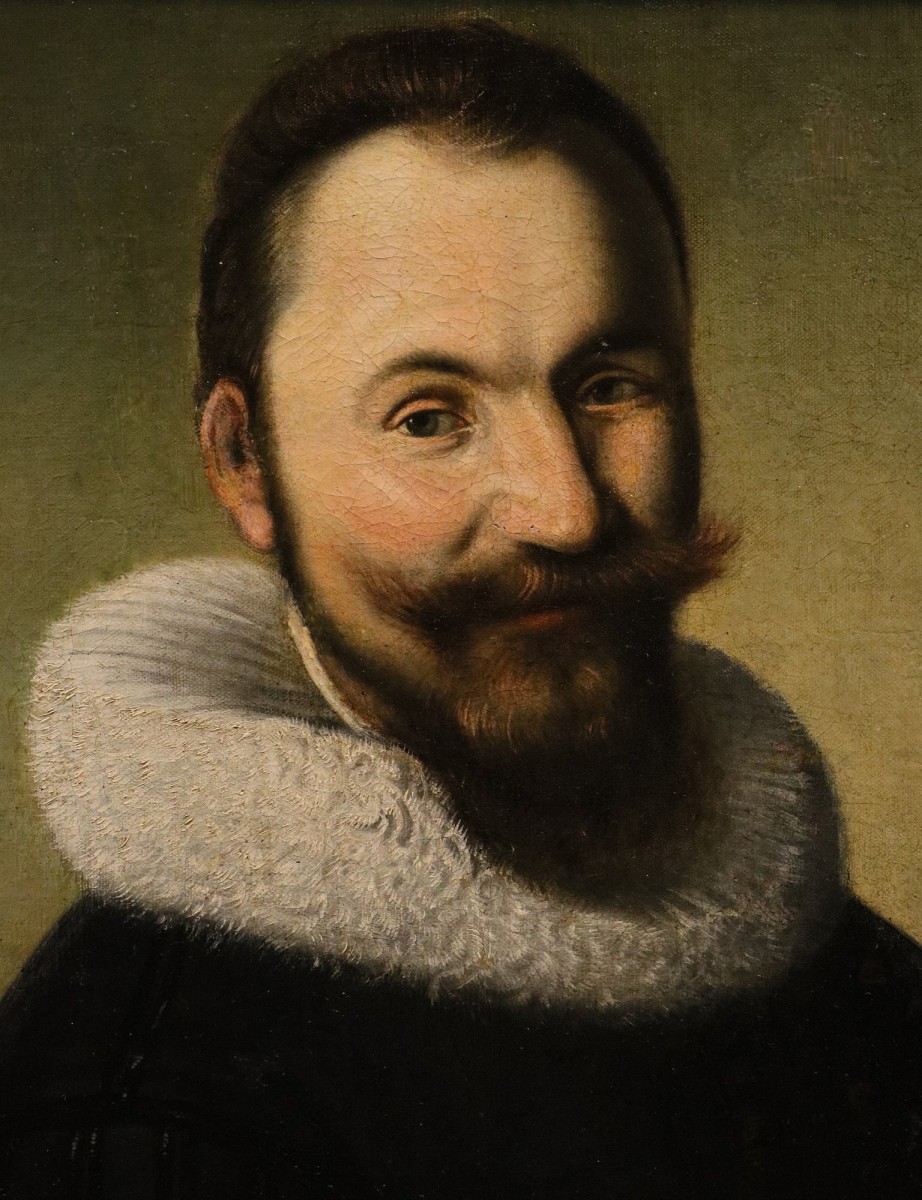
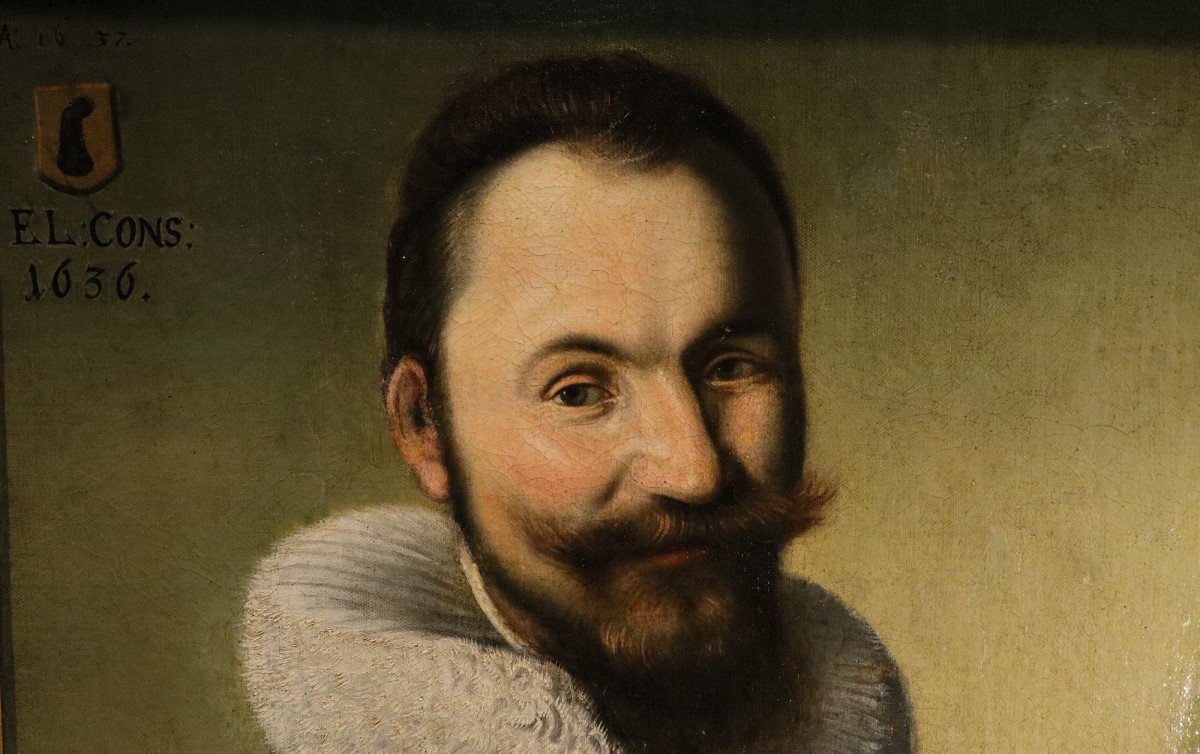
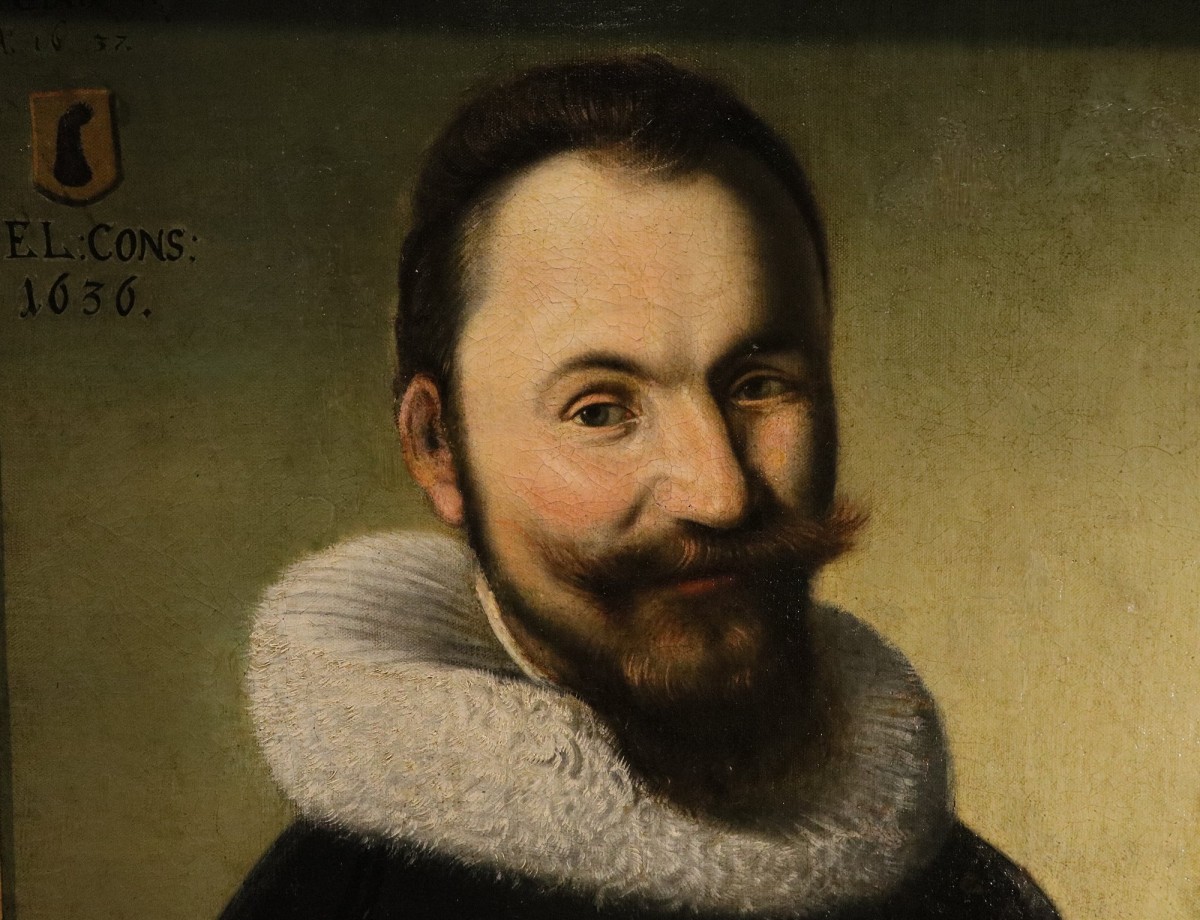
Portrait of Niklaus Dachselhofer (1595 – 1670) famous Swiss statesman, patrician, and Schultheiss (mayor/chief magistrate) of Bern
Oil on canvas 68 x 55 cm. In a box frame with gilded racemes, 82 x 70 cm.
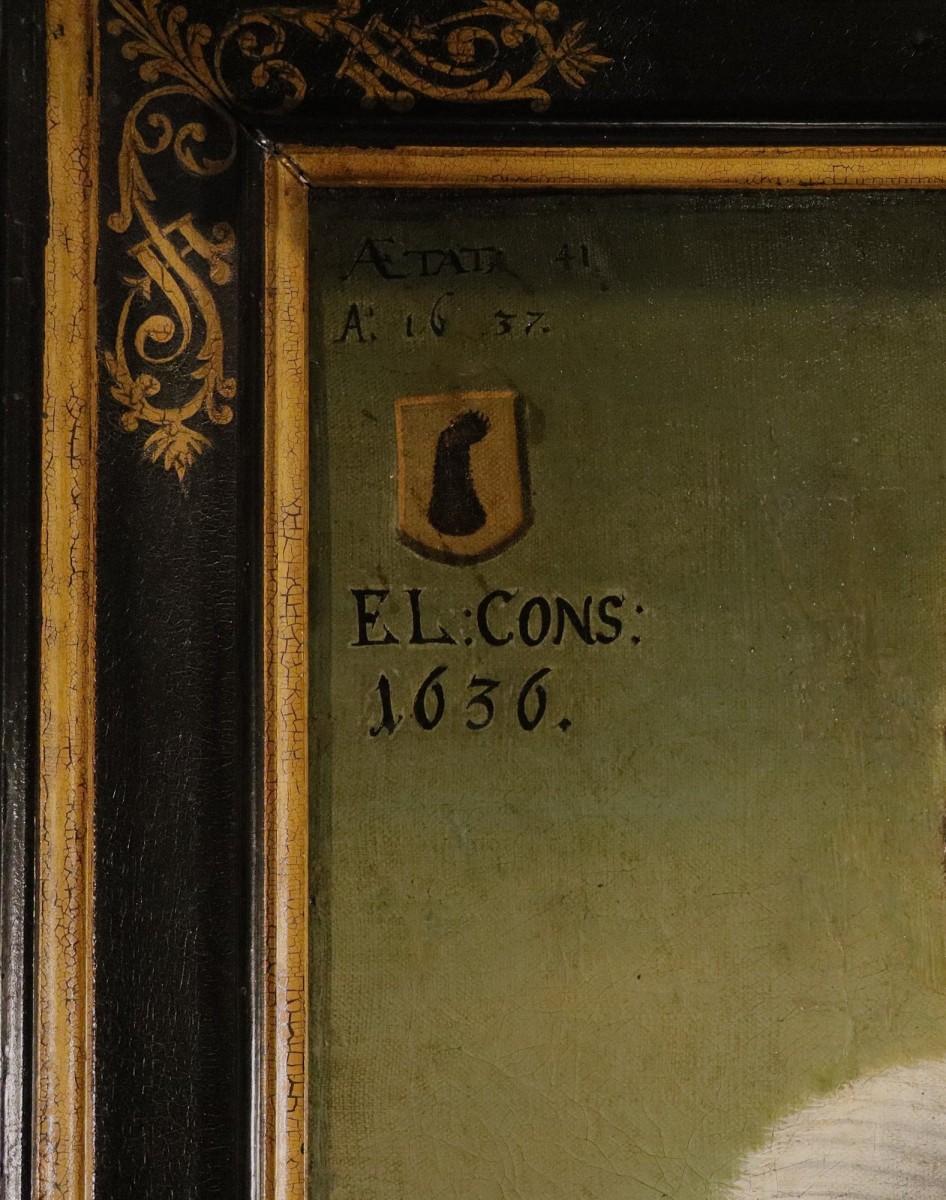
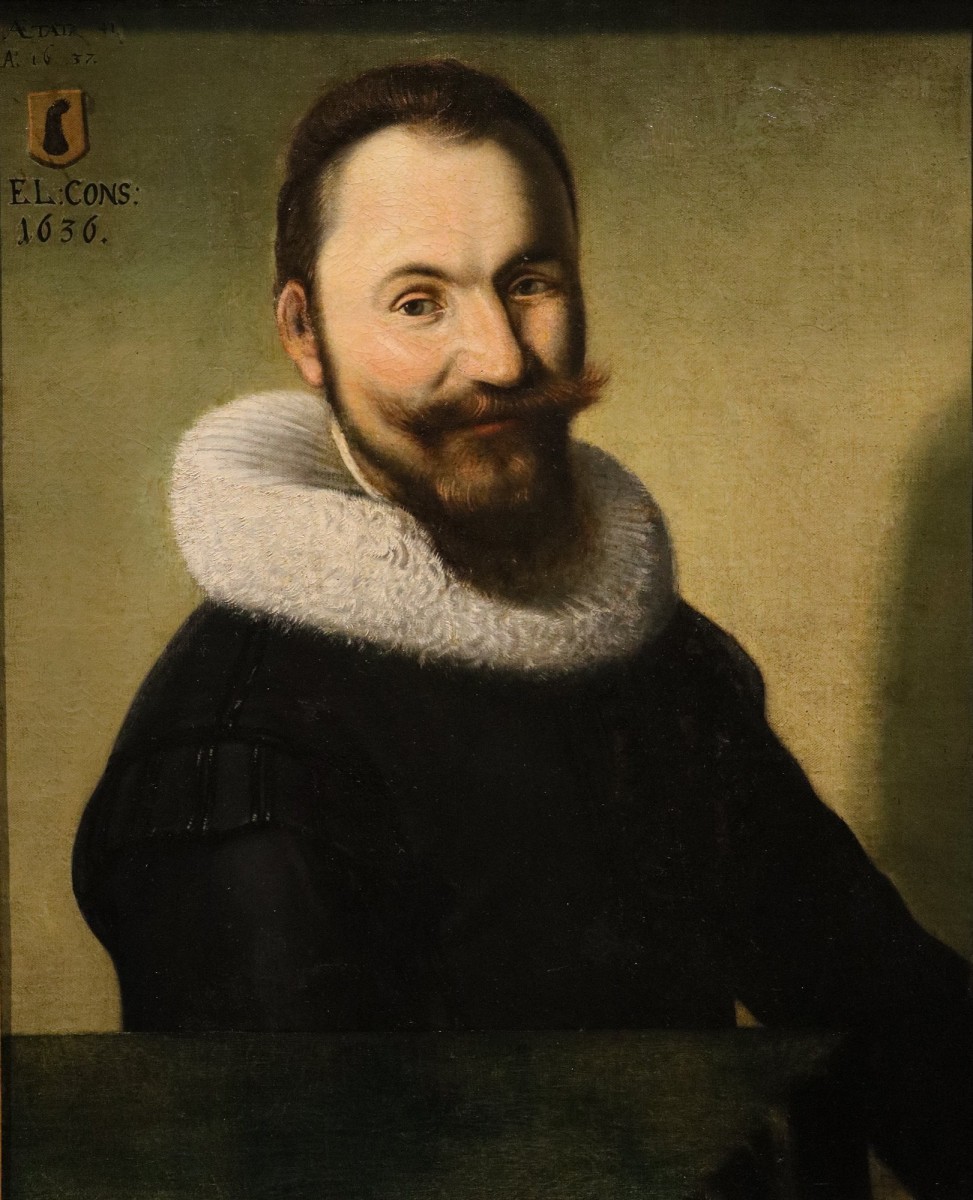
Documentary inscriptions: "Aetat 41/a: 1637/ EL: CONS: 1636" Age of the subject “41” (in 1637), Electus Consiliarius (Elected Councilor in 1636) Heraldic elements: The coat of arms of the Bernese patrician Dachselhofer family appears in the upper left corner (gold field with a black badger’s paw).
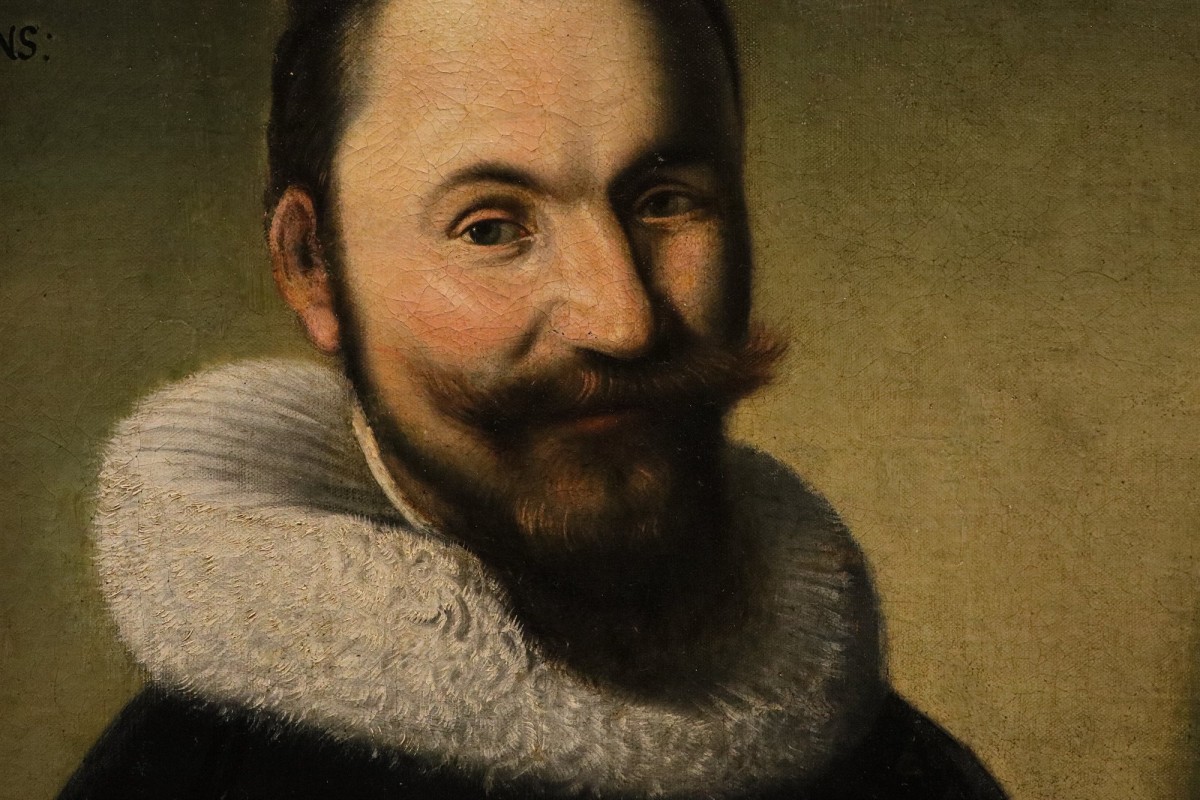
This is a work of historical significance, as well as one of excellent quality, depicting a half-length portrait of Niklaus Dachselhofer (1595–1670), one of the most influential and prominent political figures in 17th-century Switzerland, a magistrate and member of the Swiss patriciate, first as a member of the Small Council, which held executive power, and later as Schultheiss (Mayor/Avoyer) of Bern—the highest office in the Republic.
The painting was therefore conceived as a dynastic commemorative portrait marking his rise in rank and public office during the two-year period of 1636–1637: joining the select Council represented the true turning point in the career of a patrician nobleman—a milestone so significant that it justified commissioning a formal portrait featuring the family coat of arms.
The formal characteristics of the work, as well as its remarkable technical skill, lead us to propose Samuel Hoffmann (Zurich 1591 – Frankfurt 1648), a highly renowned portrait painter, as the artist.
The work indeed displays the characteristic features of the great 17th-century Flemish-Dutch school, which Hoffmann mastered while working directly in Antwerp as a student in the prestigious studio of Pieter Paul Rubens, and subsequently in Amsterdam until 1628.
Upon his return to Switzerland, Hoffmann became one of the most sought-after and successful portraitists for the wealthy bourgeoisie and the aristocracy of magistrates and politicians, portraying numerous Swiss dignitaries with the exact same solemn style.
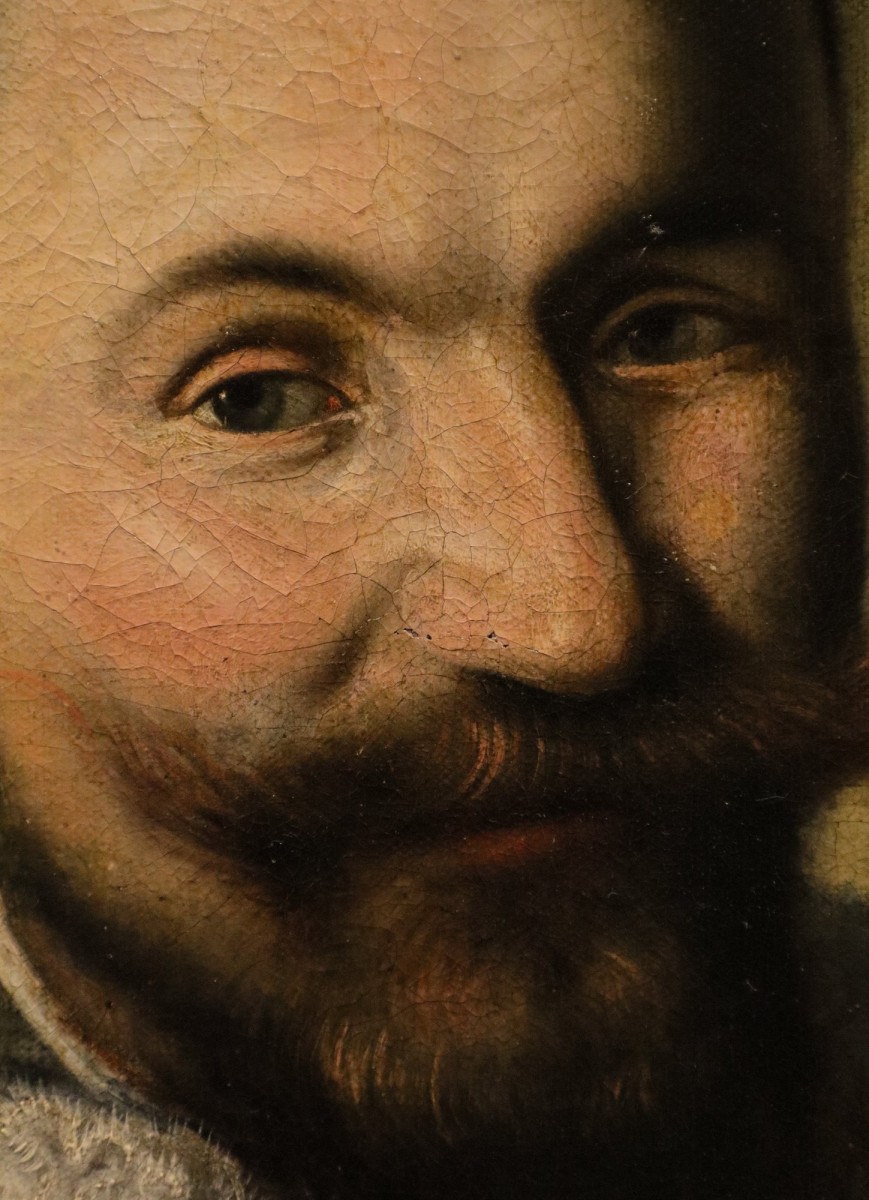
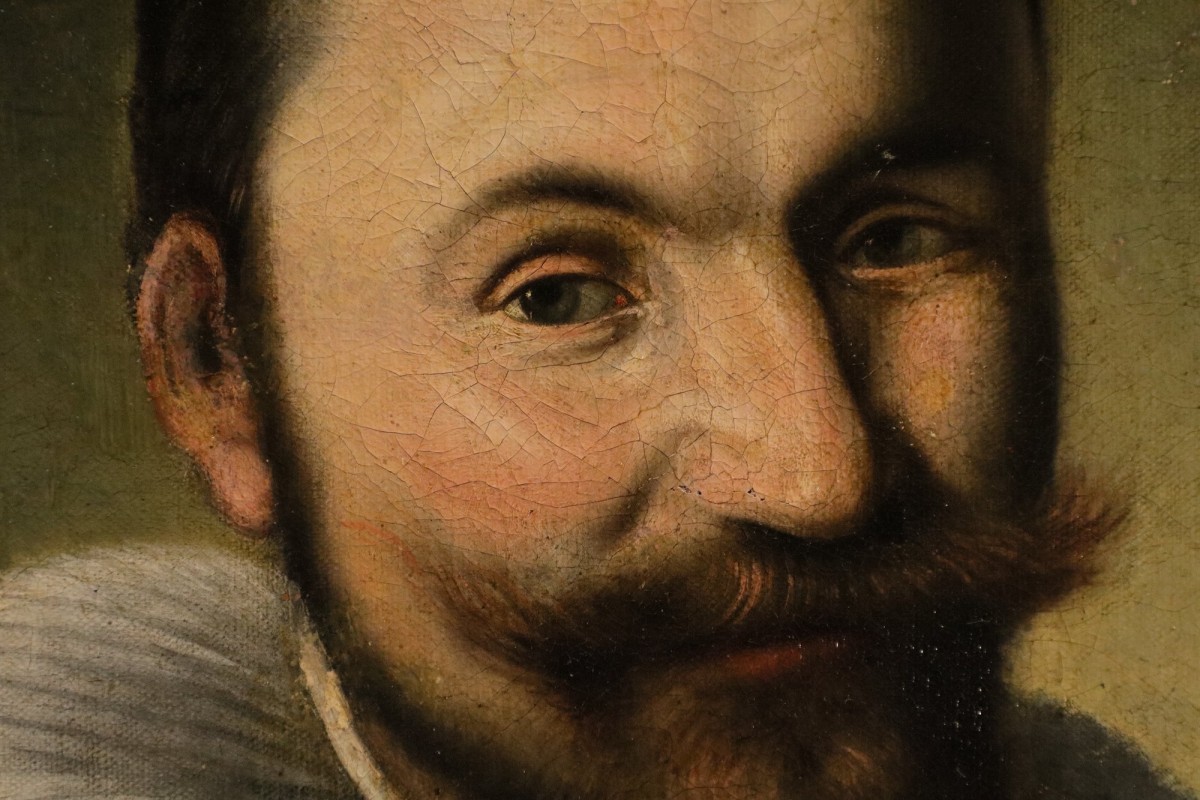
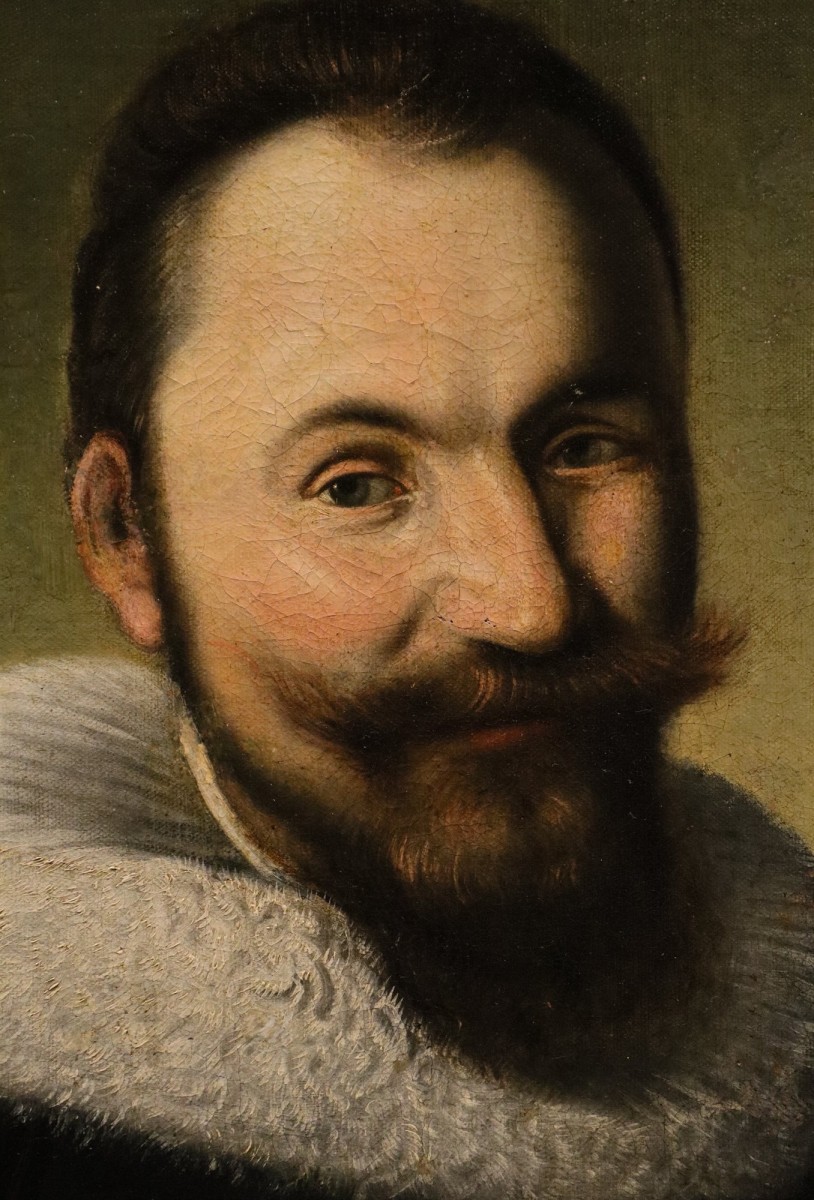
The rigorous yet psychological rendering of the face evokes Rubens’s portraiture, which the painter had absorbed, especially in the expressive and piercing gaze that seems almost to engage the viewer in conversation, combined with subtle expression lines and the hint of a faint smile—distinctive features common to much of his portrait work.
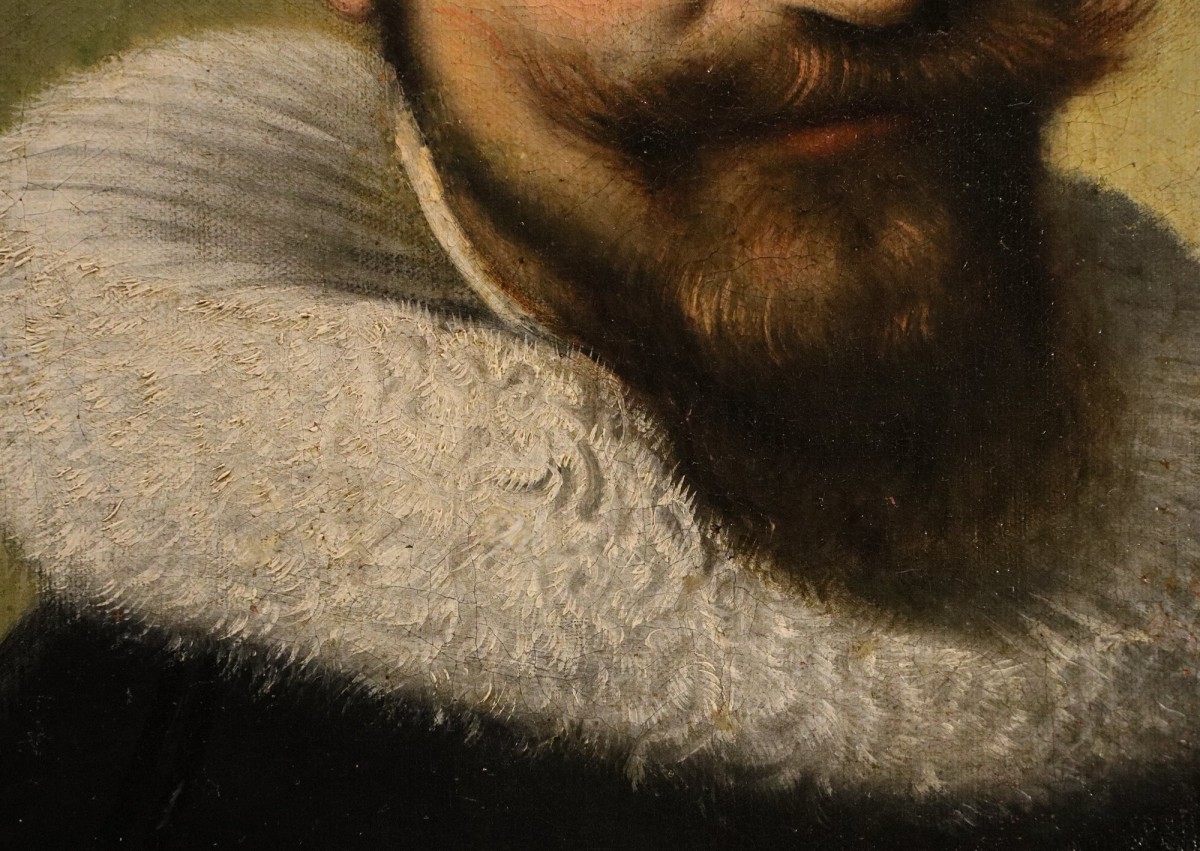
Likewise, the extraordinary execution of the complex pleated white ruff, achieved through vigorous, textured brushstrokes of thick white paint, is a technique unique to Hoffmann and one of his most recognizable stylistic hallmarks, used to impart three-dimensionality and capture ambient light, distinguishing it from the dark, austere background.
His habit of placing the heraldic coat of arms in the upper corner, with the subject’s age or the date of election positioned exactly below the shield, faithfully follows the pattern Hoffmann used for his clients from the upper middle class and the judiciary of the Swiss cantons.
In our case, we can see the official coat of arms of the Bernese patrician Dachselhofer family (a shield with a gold background featuring the black silhouette of a badger’s clawed paw pointing upward): In heraldry, this type of coat of arms is called a “speaking coat of arms”—a shield whose symbol directly refers to the meaning of the owner’s surname (in German, “Dachs” means badger).
A painting similar to ours is now part of the collections of the Swiss National Museum in Zurich; specifically, it comes from the collection of the Château de Wildegg (Fig. 1 – inventory number SW-410).
Two other portraits of the subject, painted later, date from 1666 (Fig. 2—collection of the Burgerbibliothek in Bern) and 1645 (private collection), respectively.
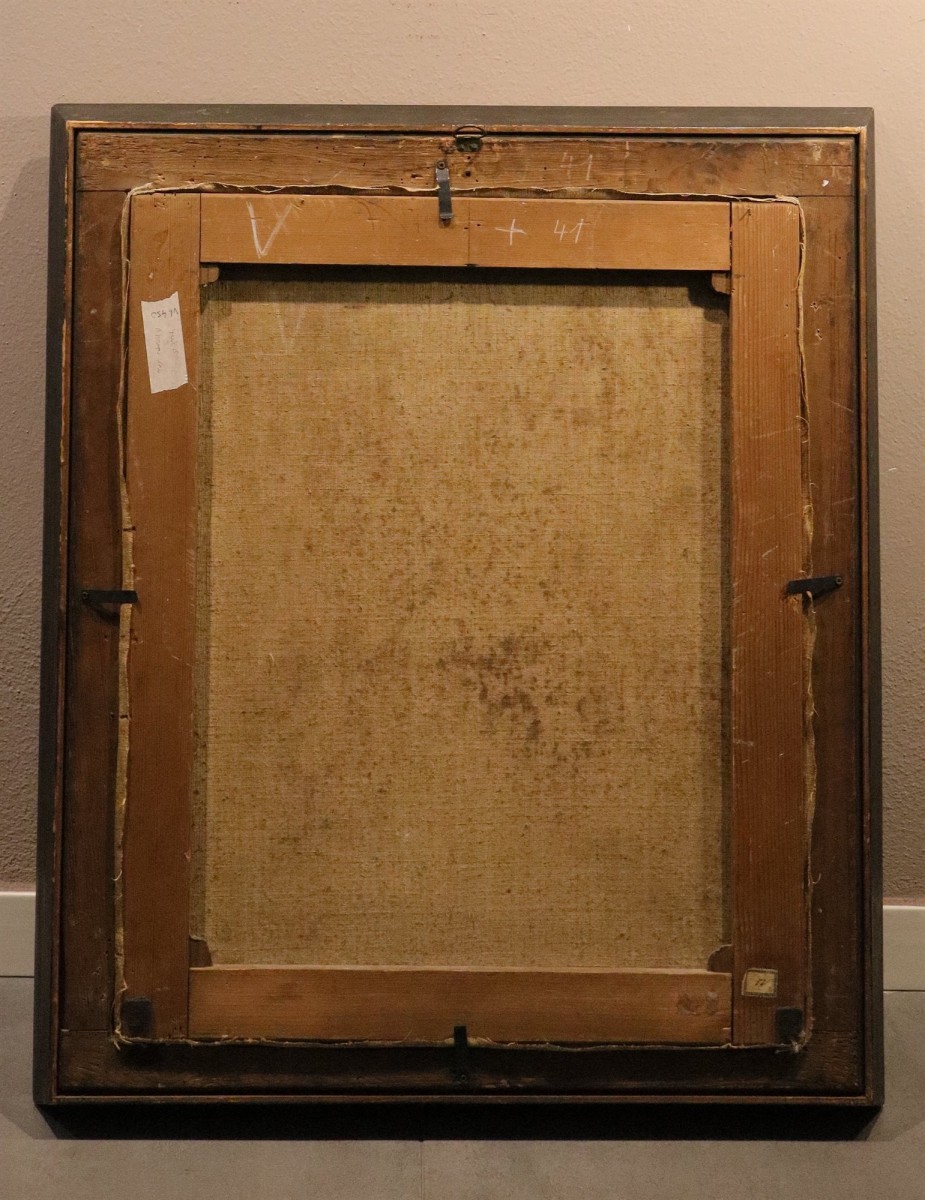
Good condition.
Delevery information :
We take care of and organise the transport of the purchased works, both for Italy and abroad, through professional and insured carriers.
We take great care We personally take care of the packaging, to which we devote a great deal of care: each work is carefully packed, first with arti- cle material, then with a custom-made wooden box.
Should you have the desire to see this or other works in person, we would be happy to welcome you to our gallery in Riva del Garda, Viale Giuseppe Canella 18, we are always open by appointment only.