Offered by Ars Antiqua

Old Masters paintings, furniture, sculptures and modern art
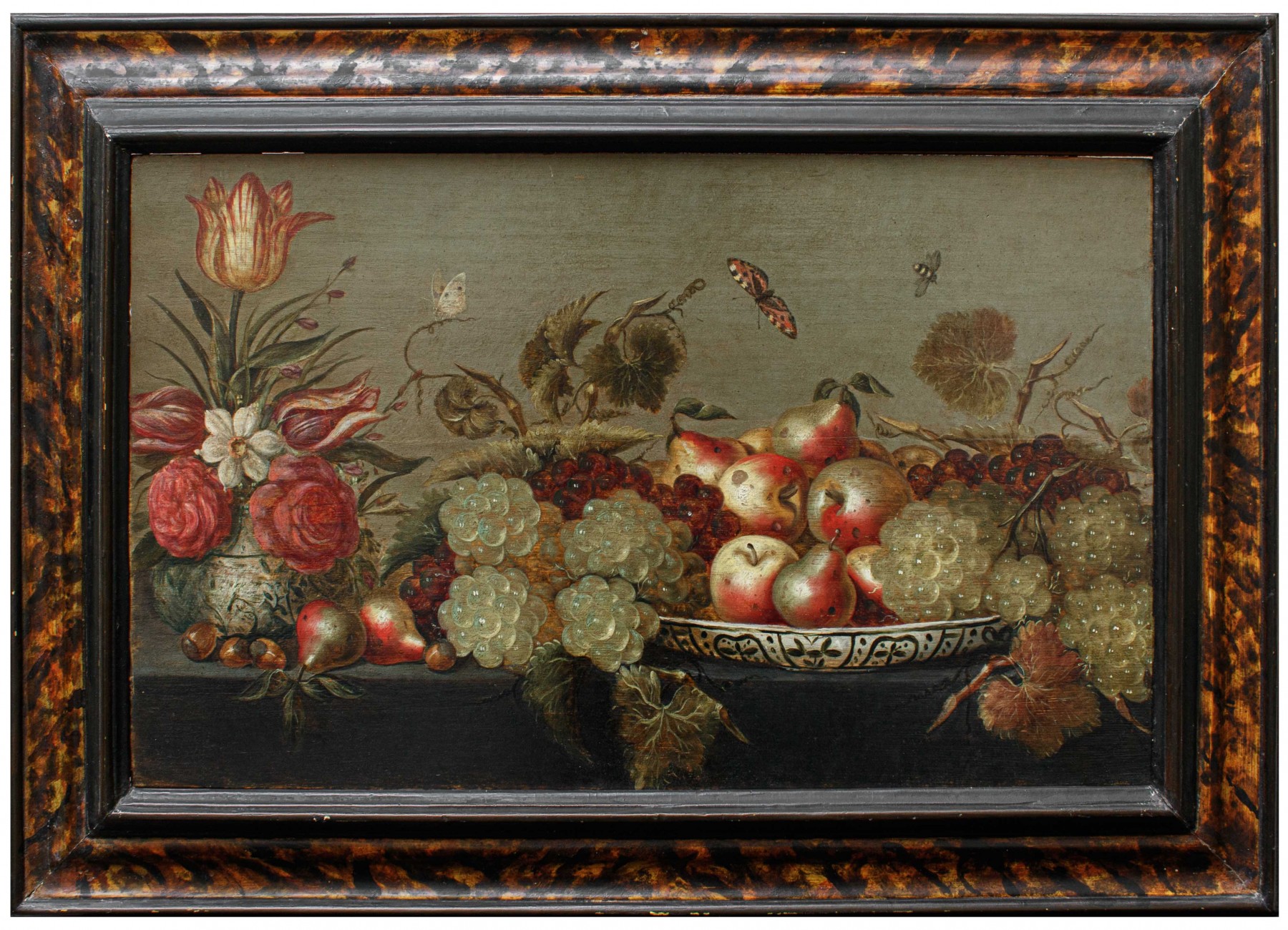
Follower of Evert van Aelst (Delft, 1602 – 1657)
Still Life
Oil on panel, 69 x 84 cm
With frame, 95 x 109 cm
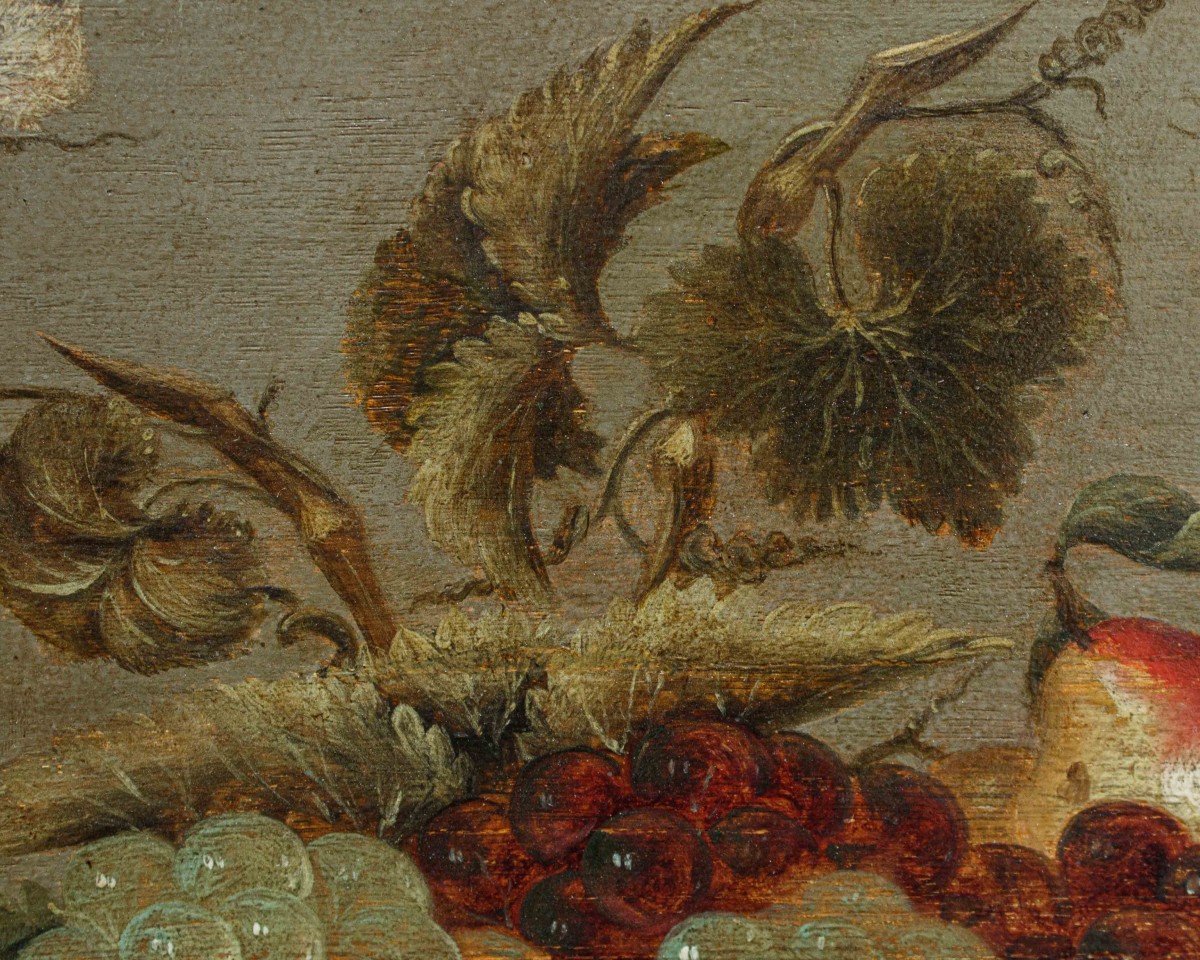
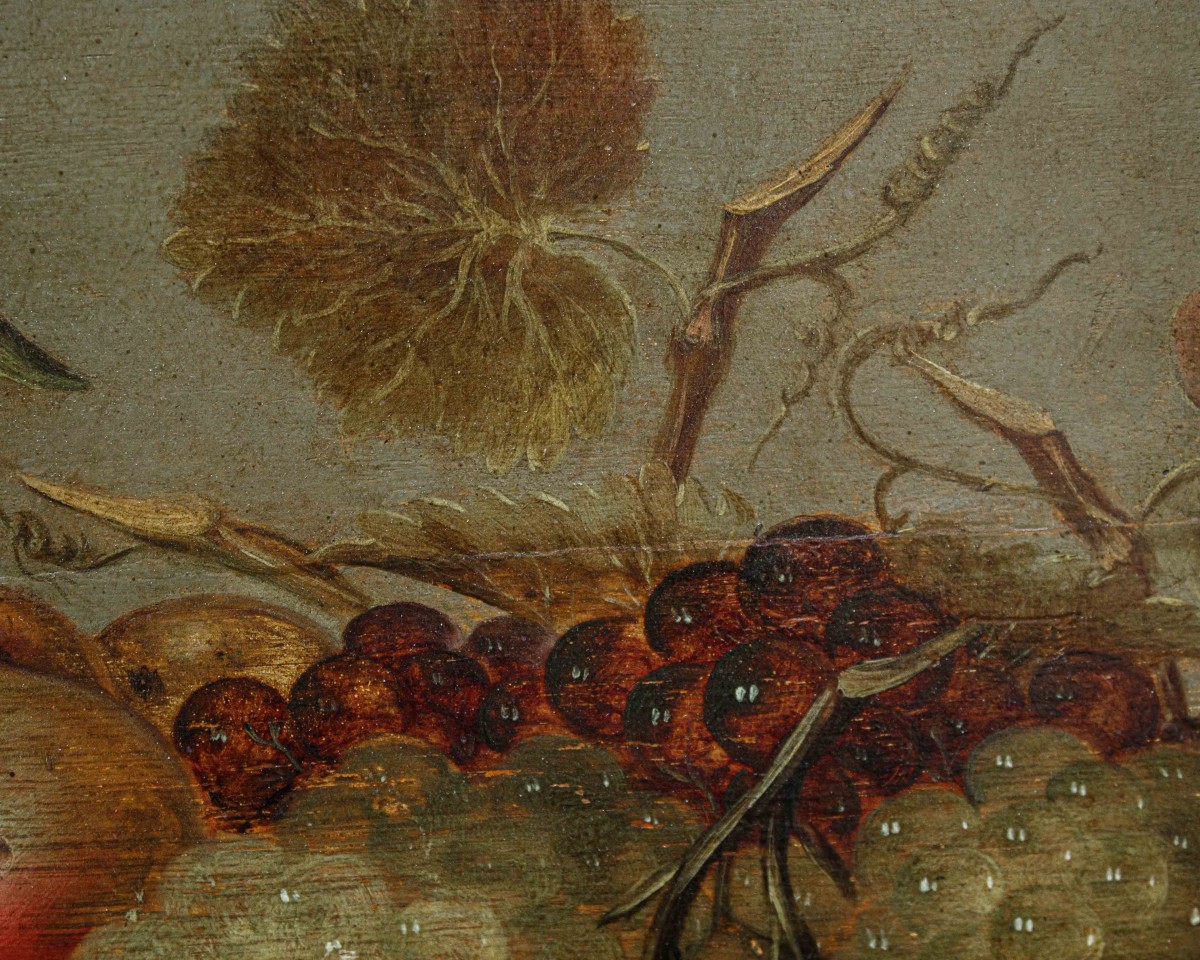
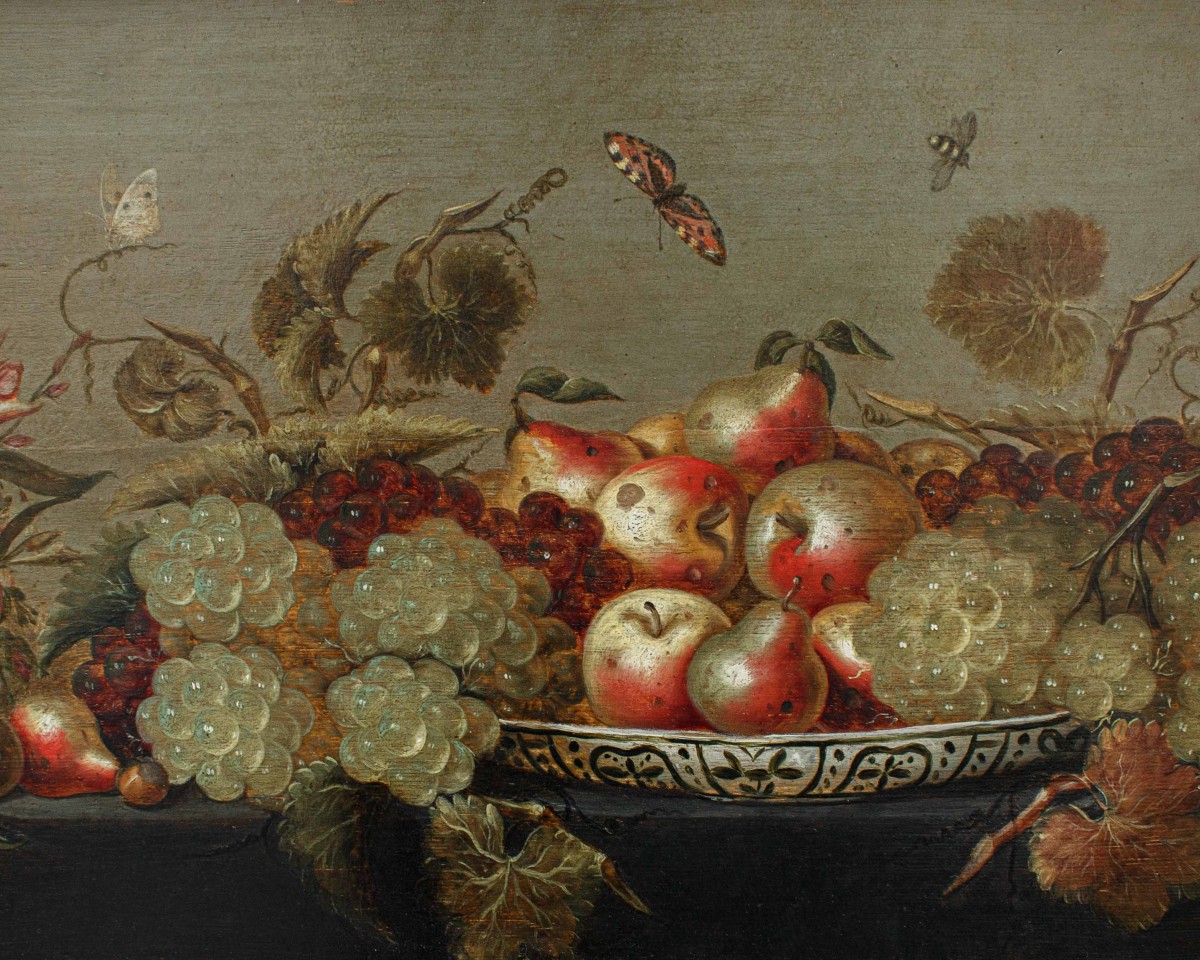
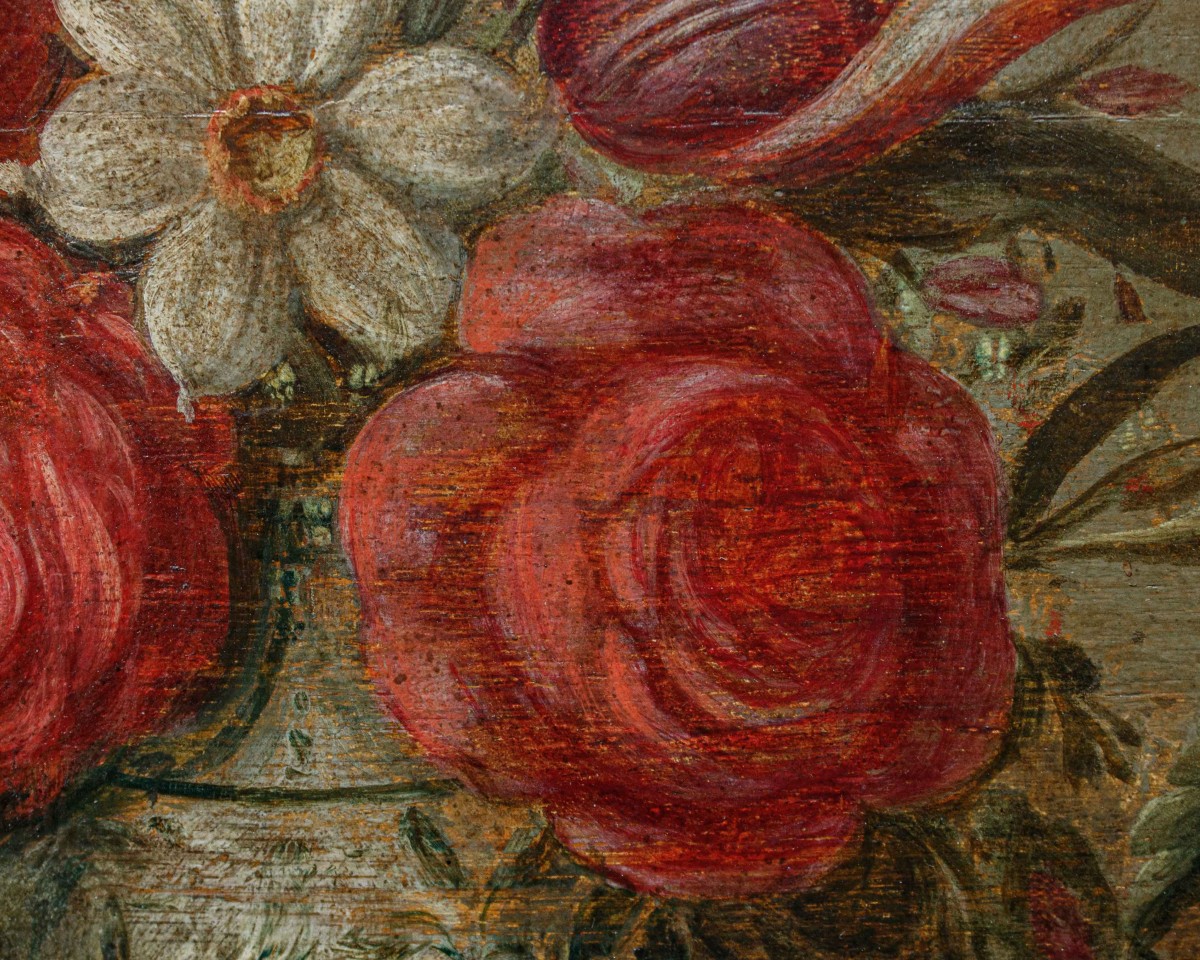
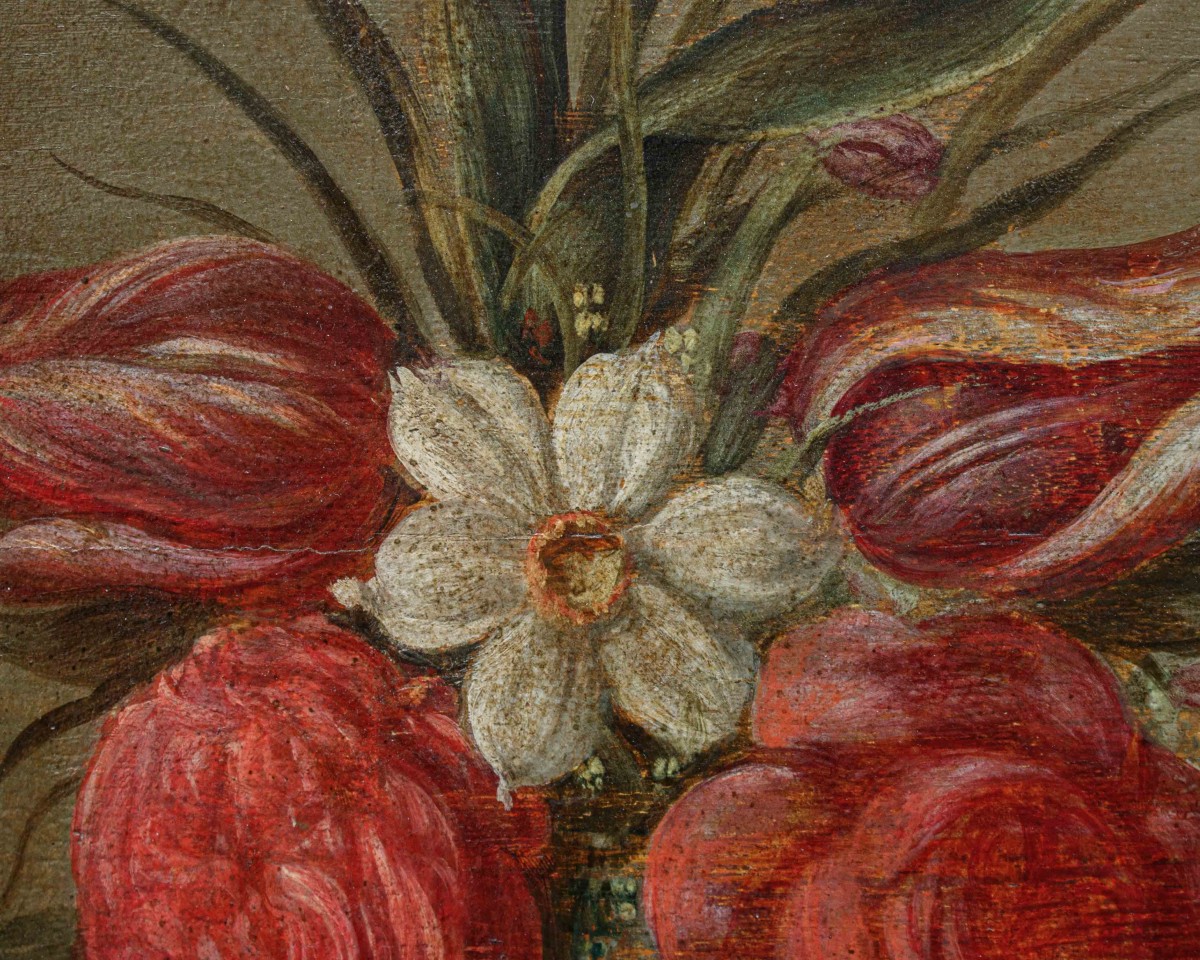
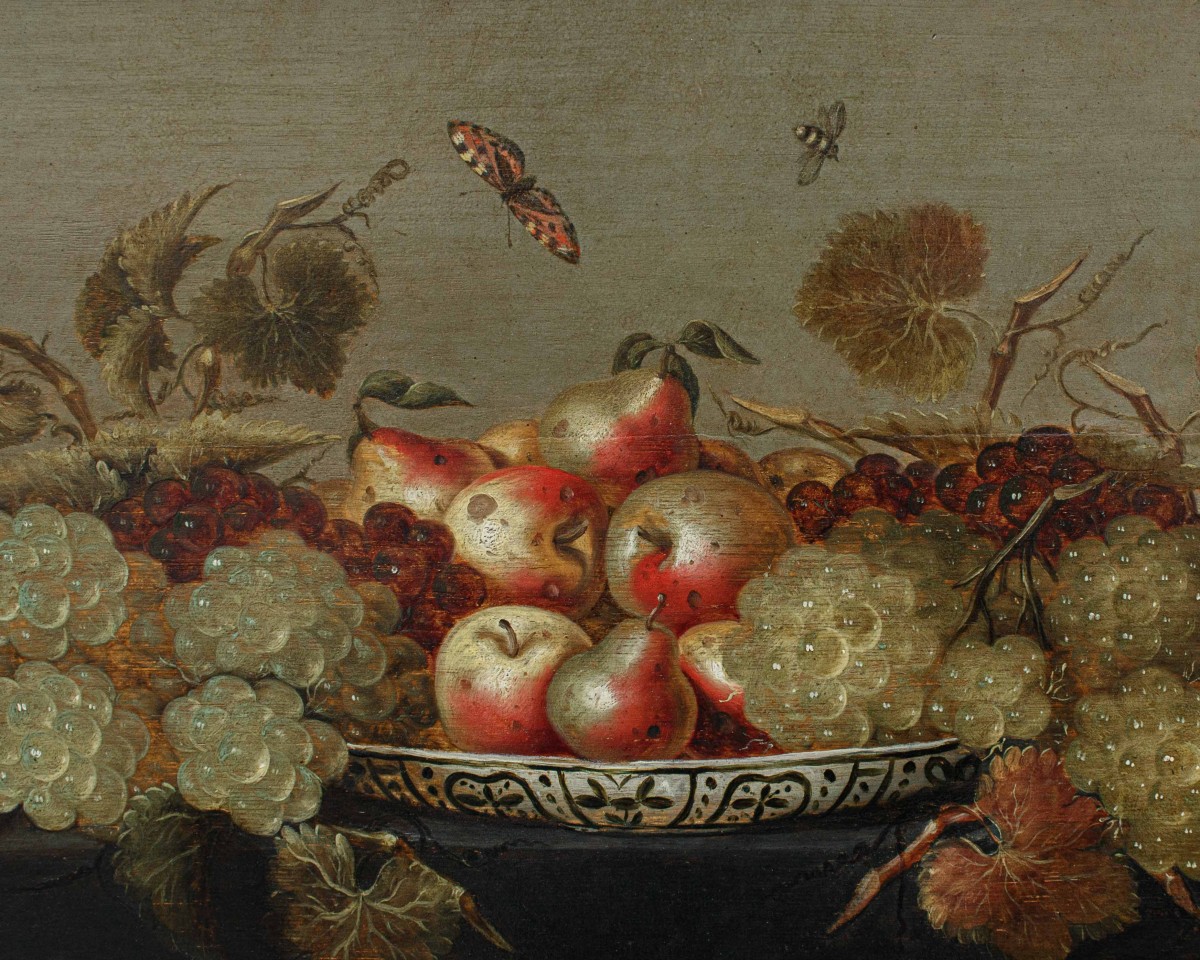
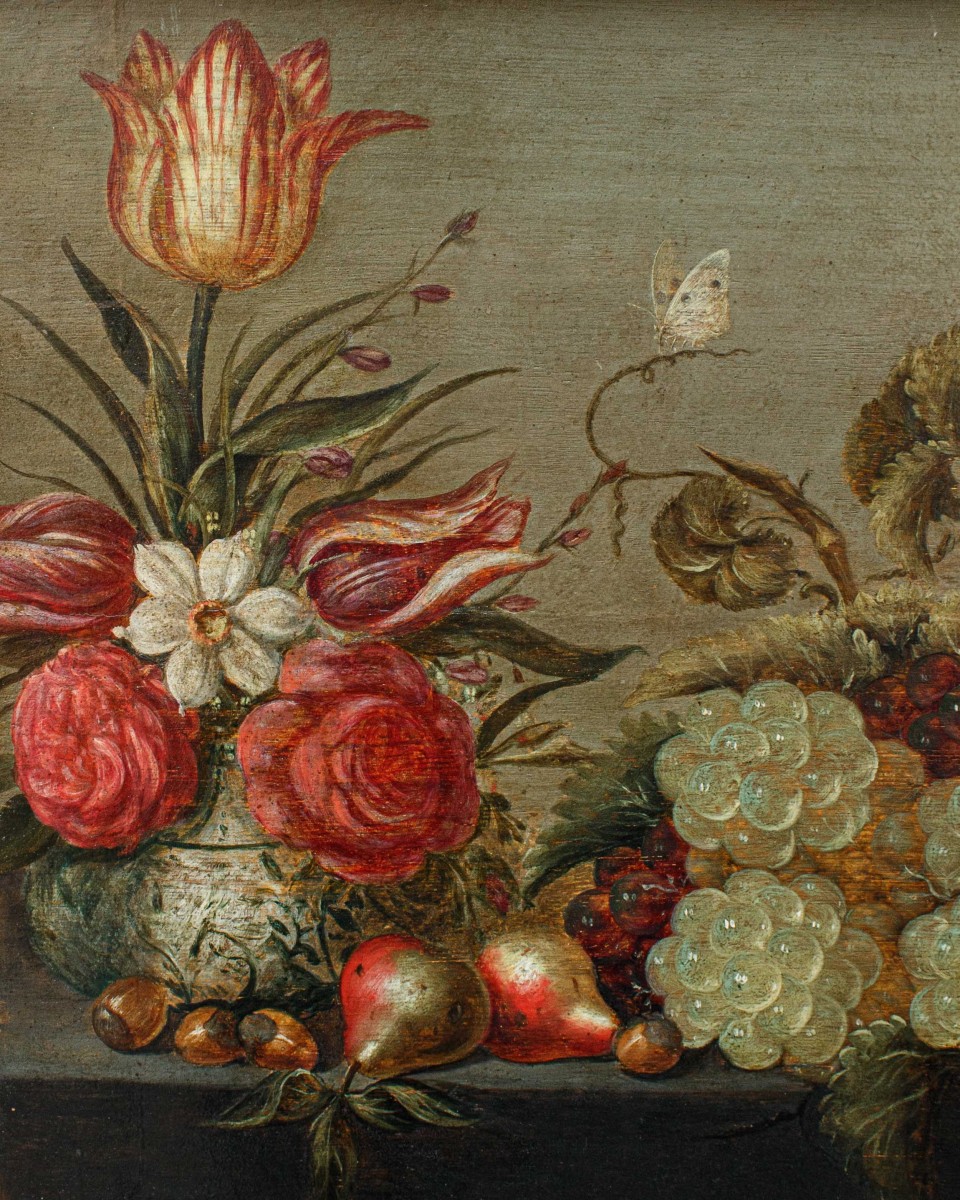
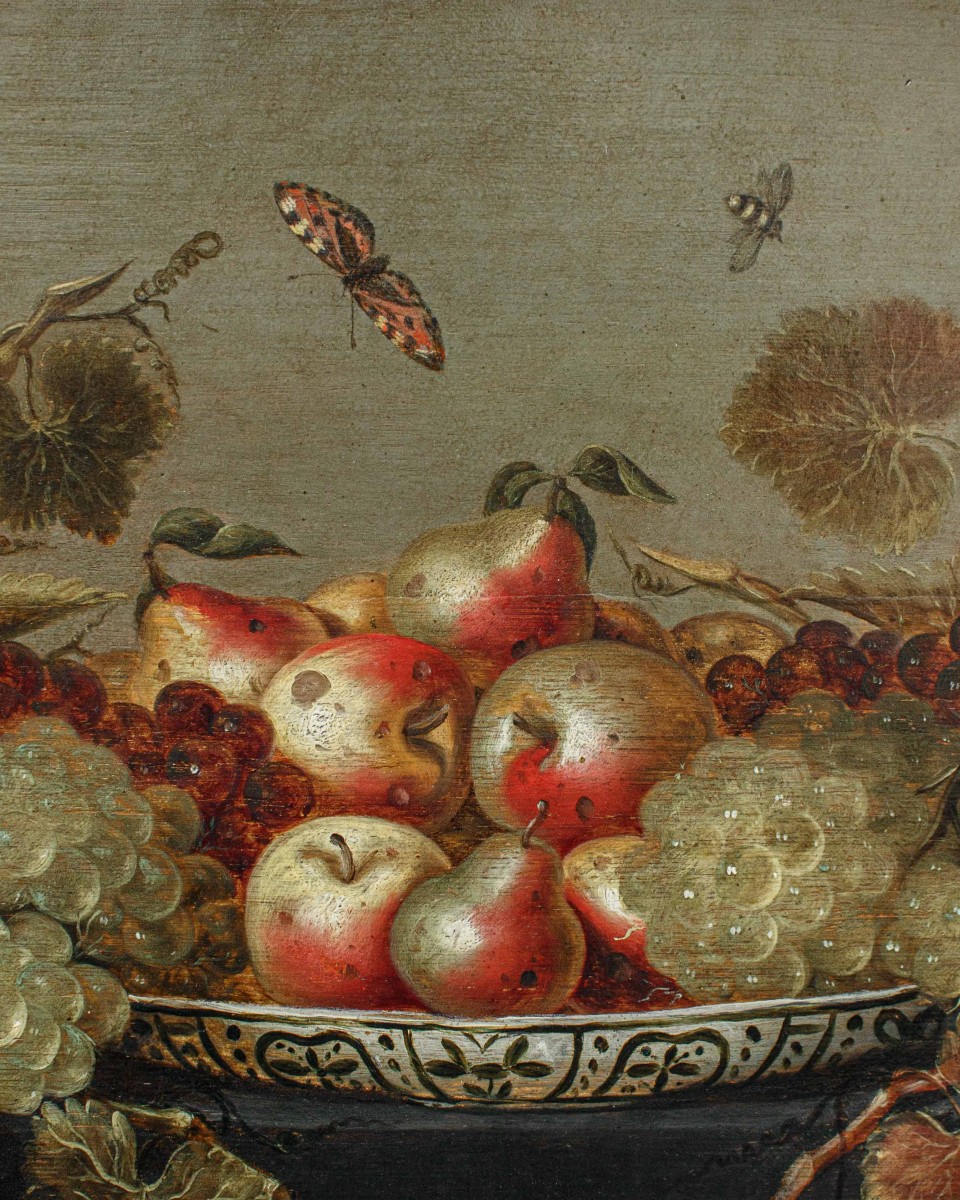
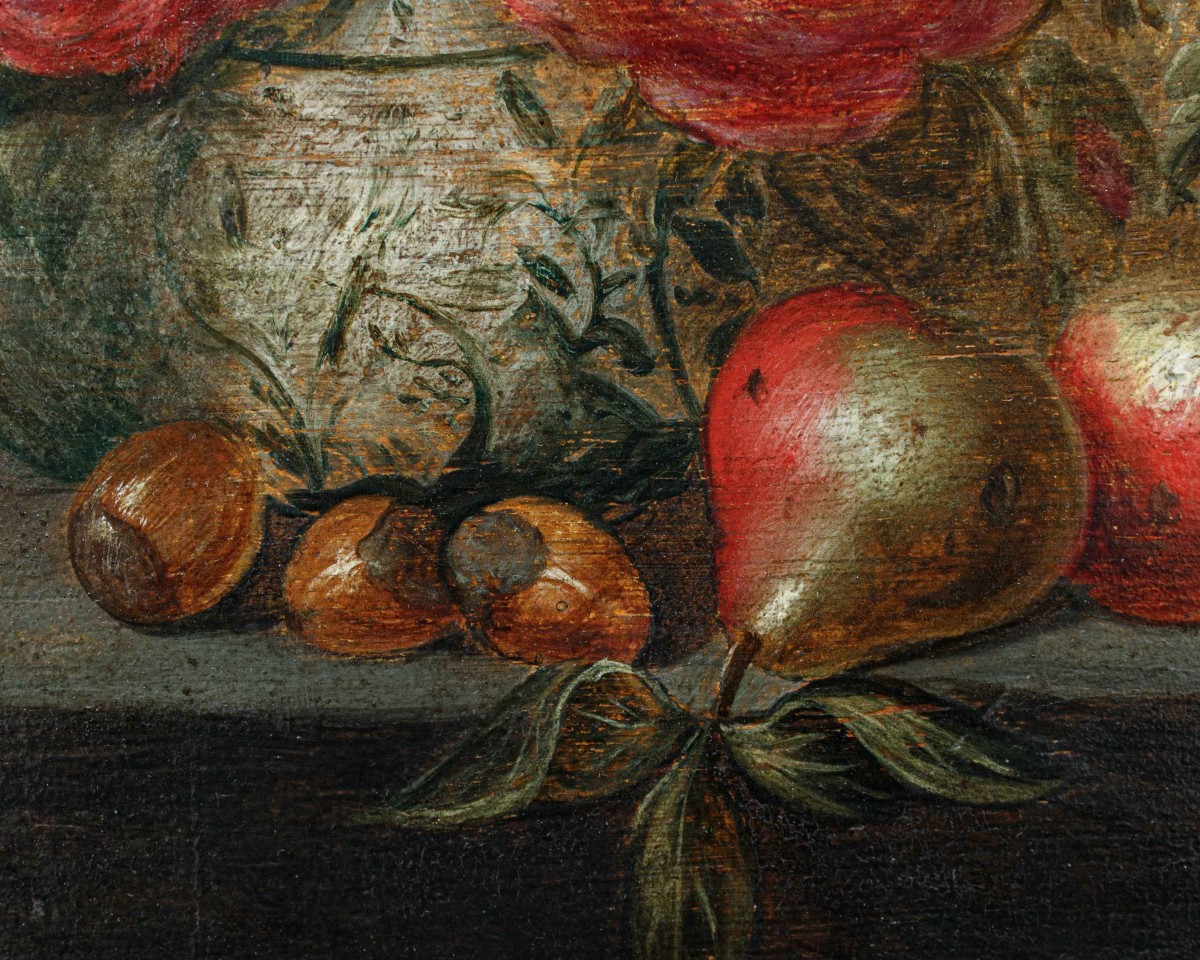
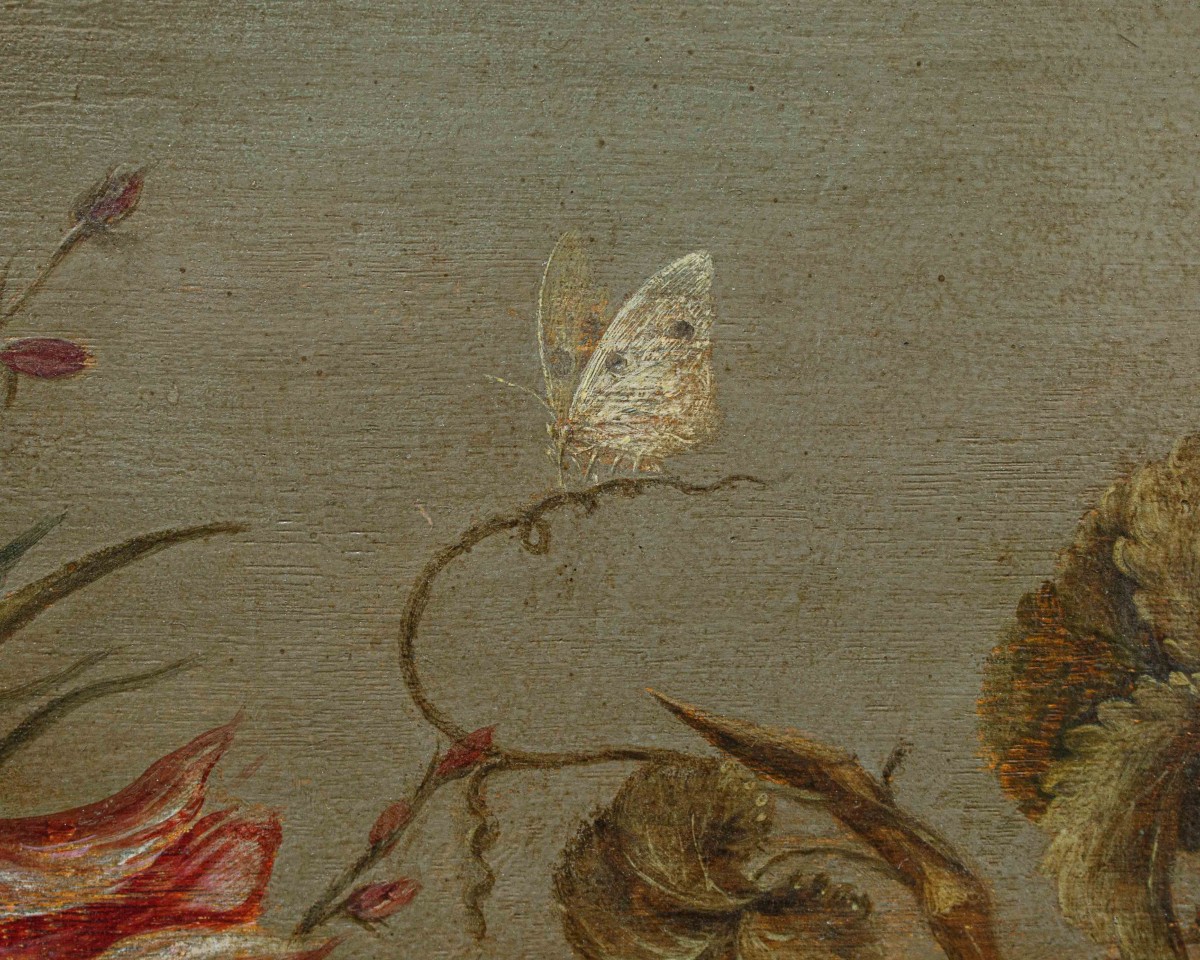
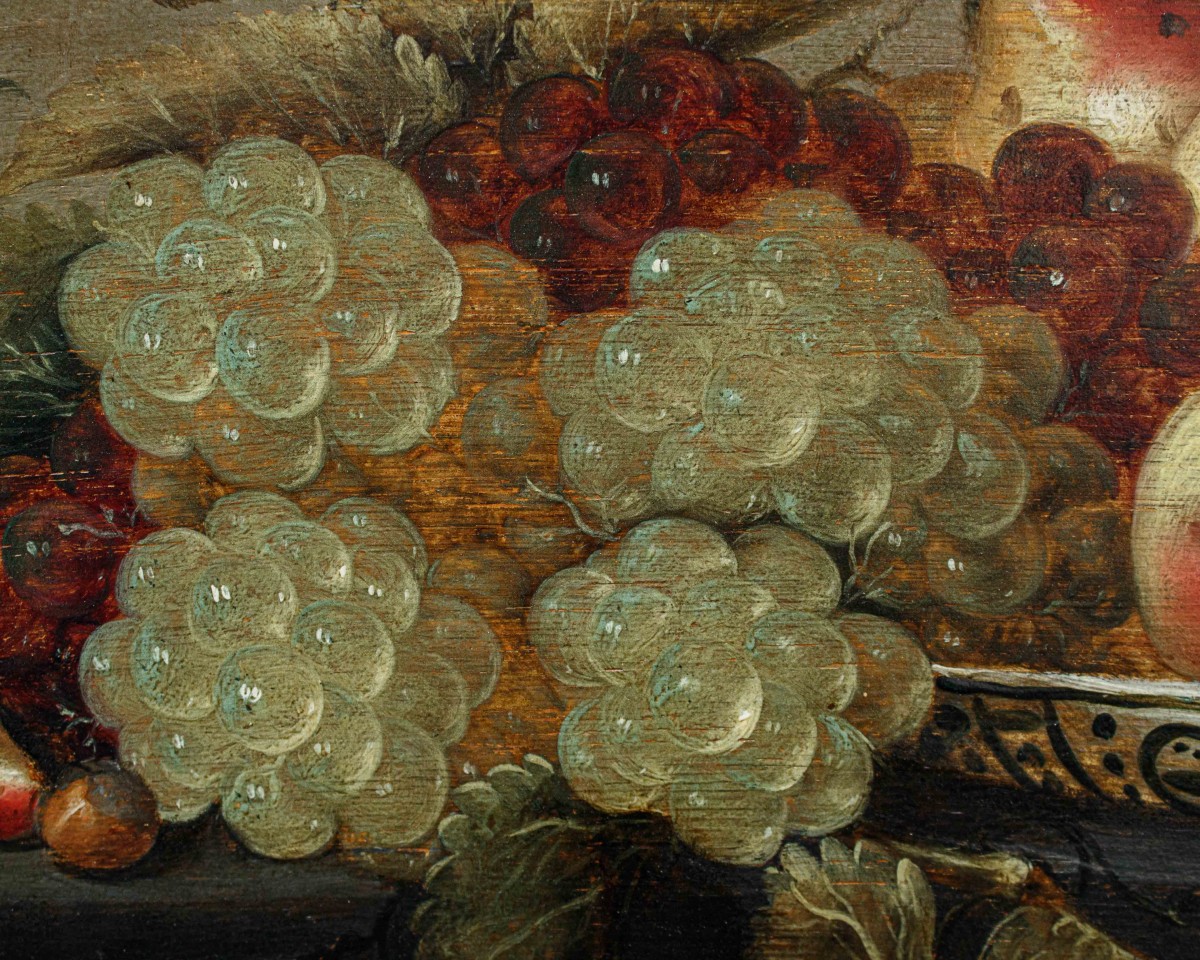
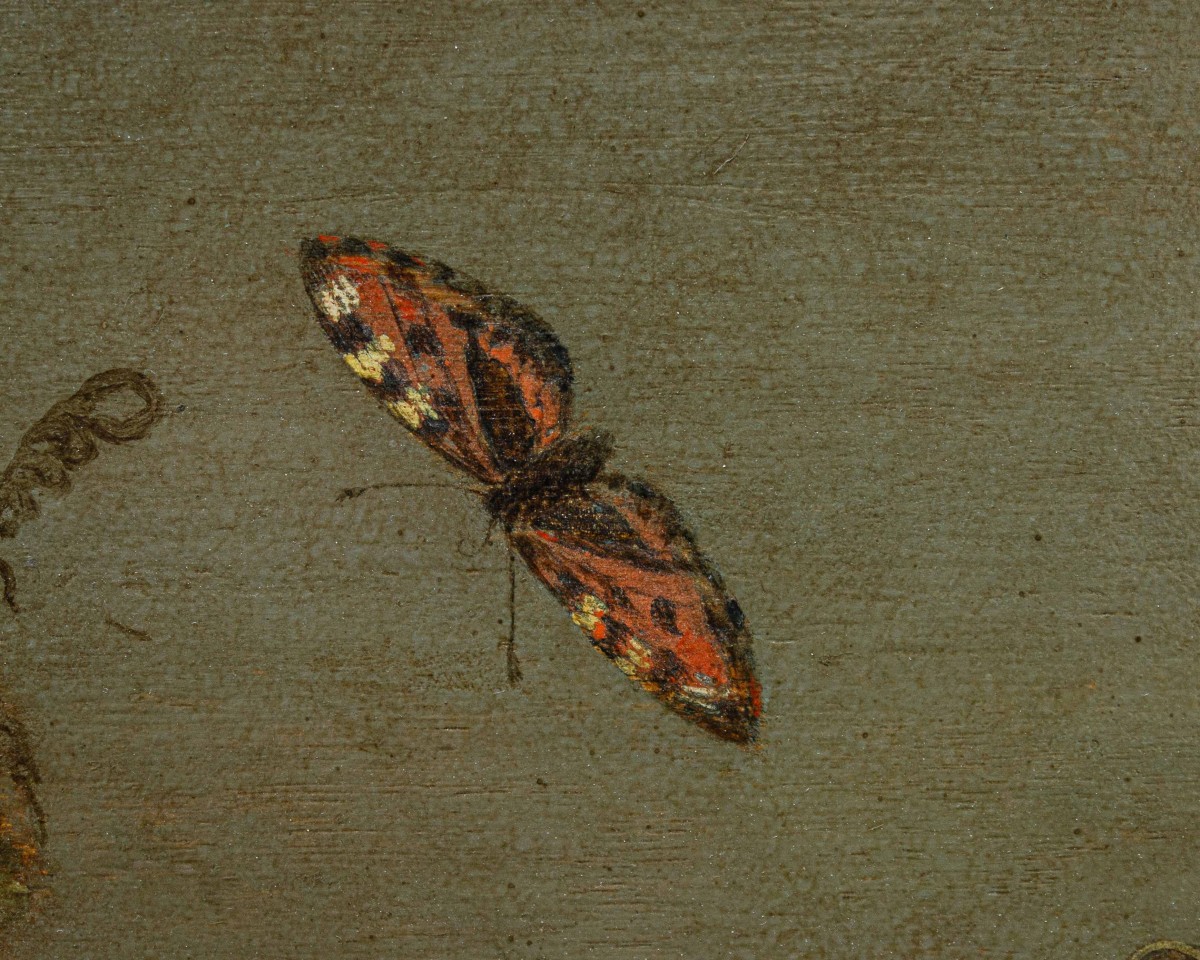
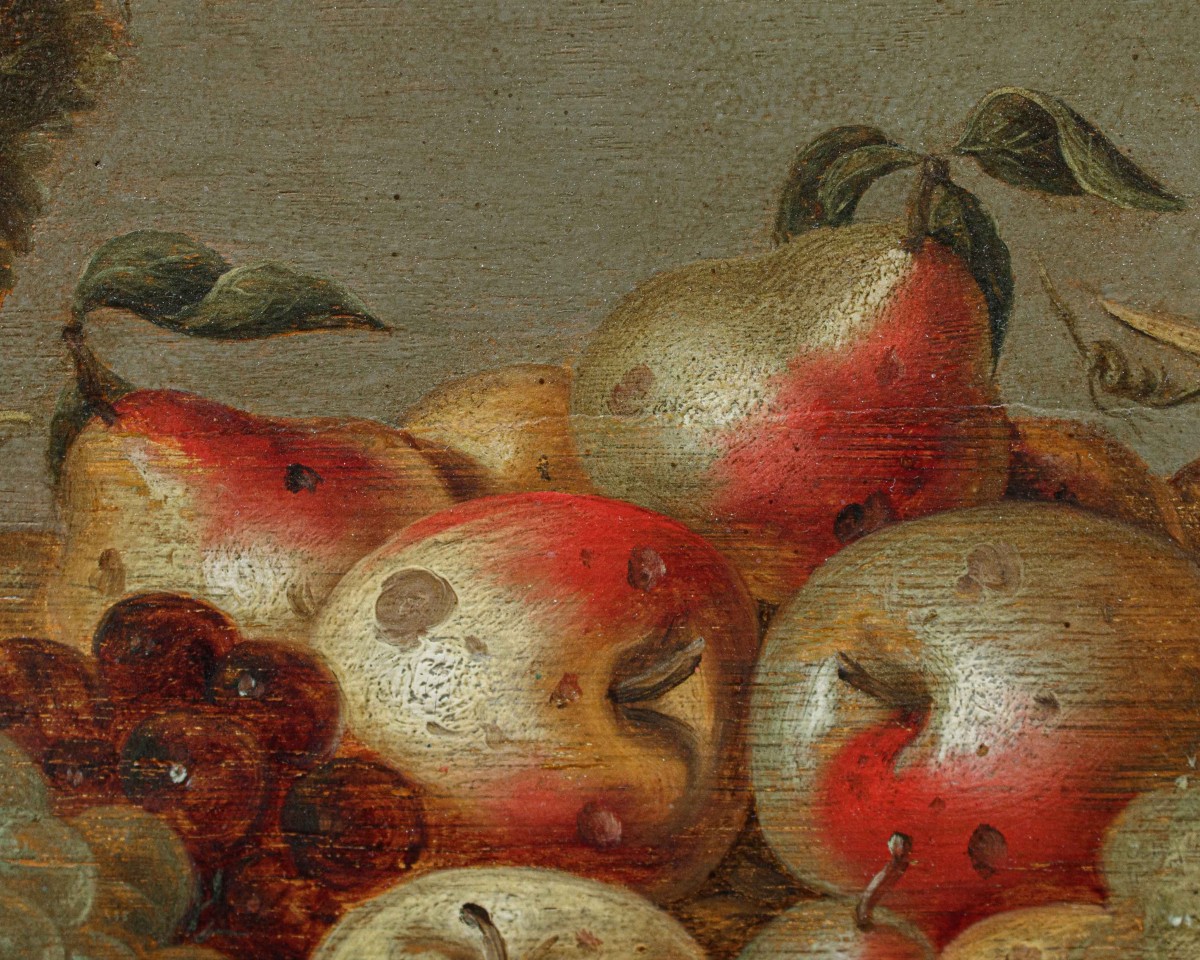
The composition under examination is characterized by an elegant lightness. Fruit is freely scattered across a stone ledge, while apples and grapes are presented inside a painted ceramic dish. A vase of flowers dominates the left side of the painting, disrupting the horizontal arrangement and infusing the composition with movement. The style appears to derive from certain late works by Balthasar van der Ast, who was born in Middelburg in 1593–94. In 1632, Van der Ast settled in Delft, where he lived until shortly before his death in 1657. It seems plausible that the signature belongs to a painter borrowing the style of Evert van Aelst (Delft, 1602 – February 19, 1657), who was himself influenced by Van der Ast. Marked by a rather linear, ordered, and analytical style, Balthasar's compositions have influenced the present work through the monochrome background, the insects scattered across the surface, and the inclusion of decorated ceramics—traits visible in two reference still lifes by the master, the first held at the Fitzwilliam Museum in Cambridge (UK), and the second having appeared on the art market.
Evert van Aelst, also known as Everald Aalst, achieved renown for his still-life paintings of game, fish, and vases. He was influenced in part by Pieter Claesz and, as noted, by Balthasar van der Ast. He spent four years in France and seven in Italy, where the Grand Duke of Tuscany became his patron and rewarded him generously for his works. Upon returning to the Netherlands, he settled in Delft, establishing a workshop specialized in still lifes; Emanuel de Witte, his nephew Willem, and Jacob Denys were among his pupils.
The painting also shares plausible connections with the early works of Willem van Aelst (1627 – 1683 or later), nephew and pupil of Evert van Aelst. Based on stylistic and compositional analysis, the panel is to be referred to the early, youthful phase of Evert van Aelst, still reflecting the primitive character of Balthasar van der Ast's influence. Compare, in this regard, Van Aelst's Pears held in the Sir William Bird Collection (UK), or those that appeared on the art market featuring a similar ceramic vase with flowers, a floral composition with poppies executed with the same rendering, and a fruit composition in the same hand and style. In his second phase, his compositions became more articulated and marked by greater complexity. Works by the master are preserved in the Suermondt-Ludwig-Museum in Aachen, the Harvard Art Museums in Cambridge, and the Rijksmuseum in Amsterdam.
Delevery information :
Les frais d'expédition seront calculés au moment de la commande en fonction de la destination, des dimensions et du poids du tableau, ainsi que de l'assurance couvrant la valeur totale de l'œuvre.
For paintings purchased from abroad: following payment, the application process to obtain the export license (ALC - Attestato di Libera Circolazione) will be initiated. All antiques shipped abroad from Italy require this document, which is issued by the Ministry of Cultural Heritage. The procedure may take 3 to 5 weeks from the date of request; therefore, the painting will be shipped as soon as the document is obtained