Offered by Ars Antiqua

Old Masters paintings, furniture, sculptures and modern art
Circle of Bonaventura Bettera (1663 – post-1718)
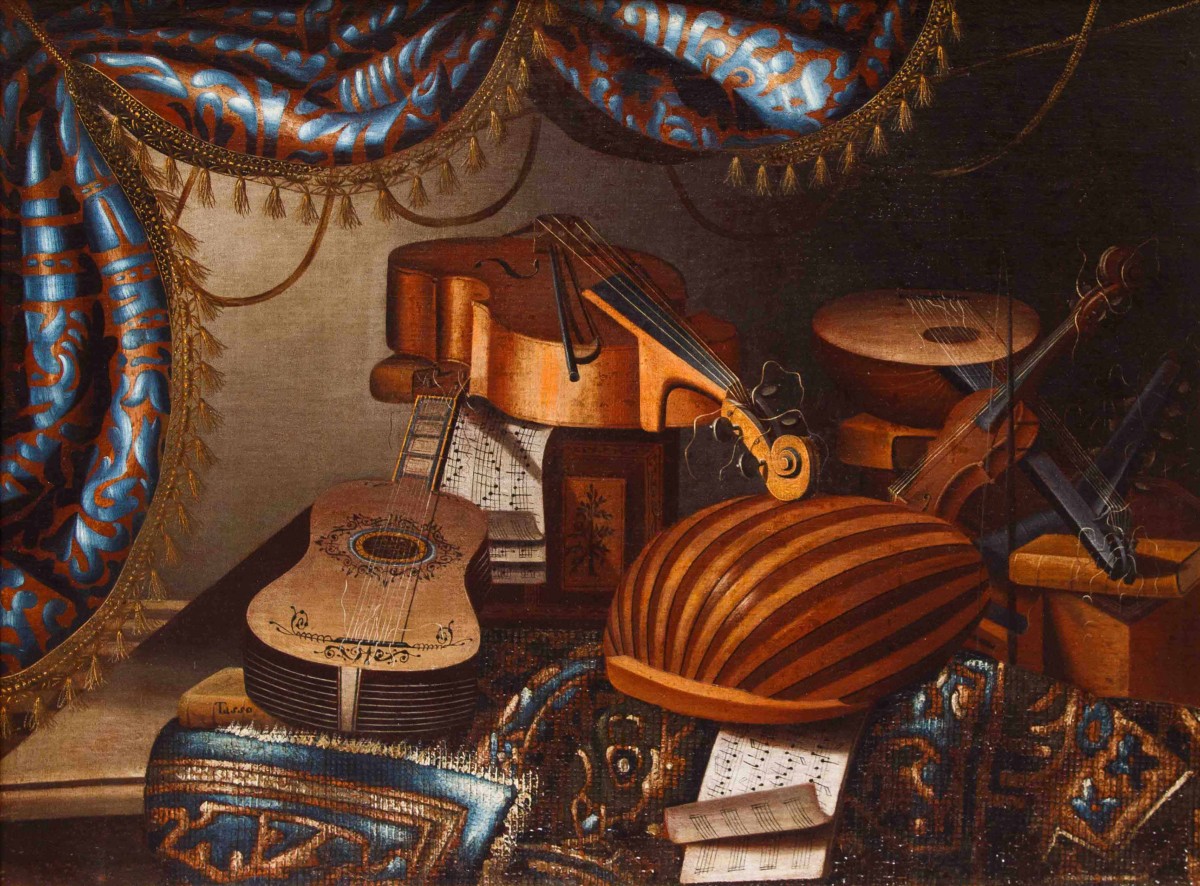
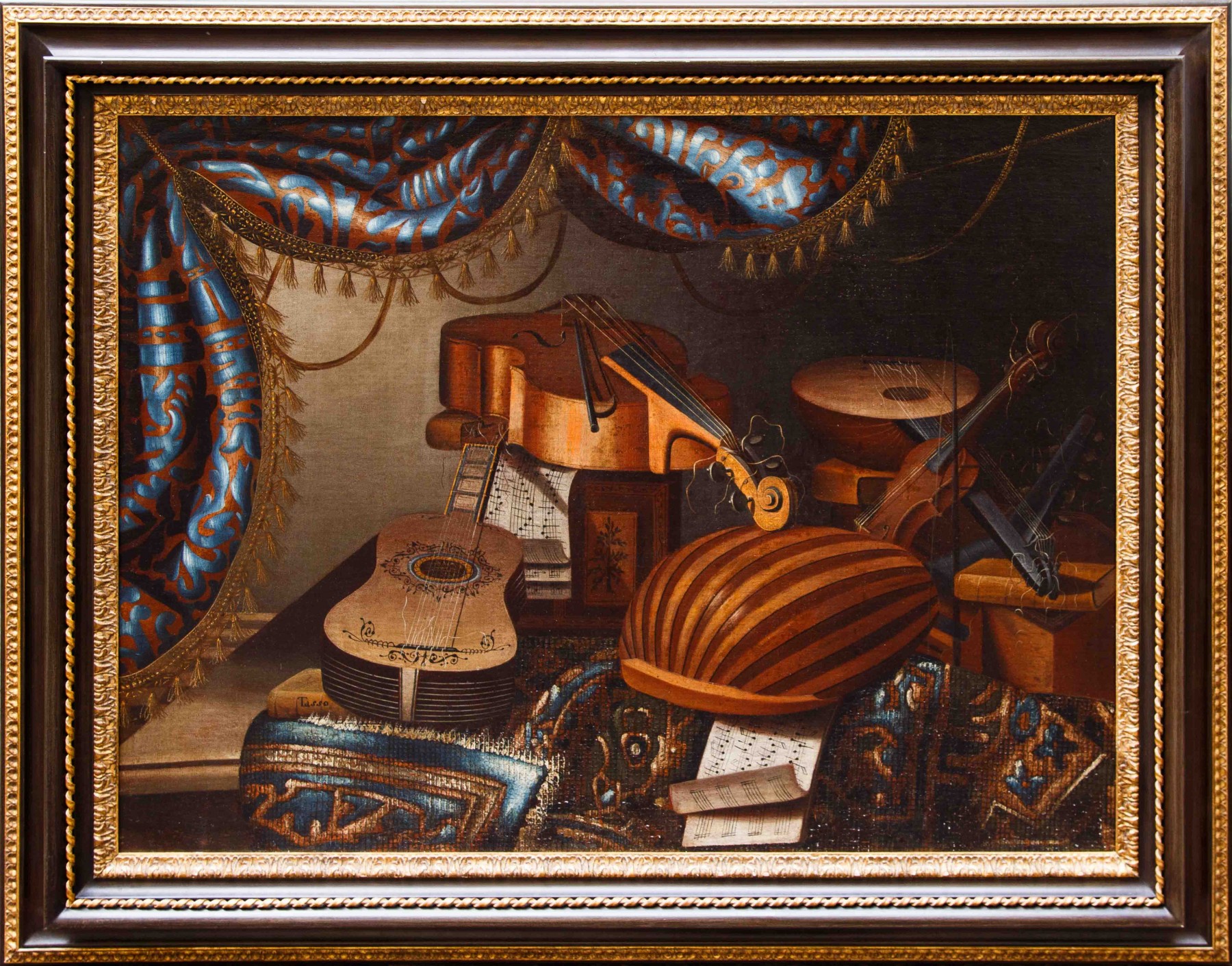
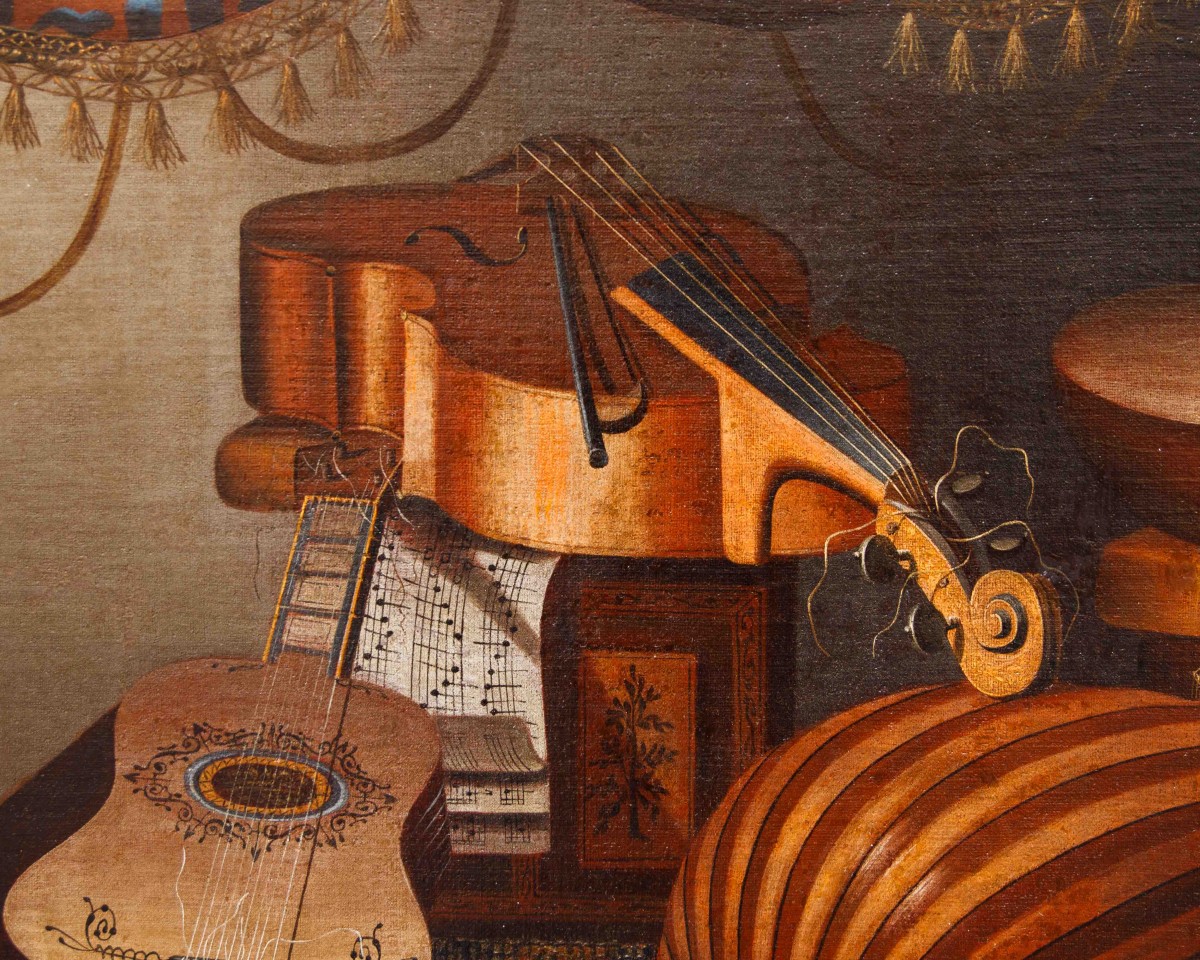
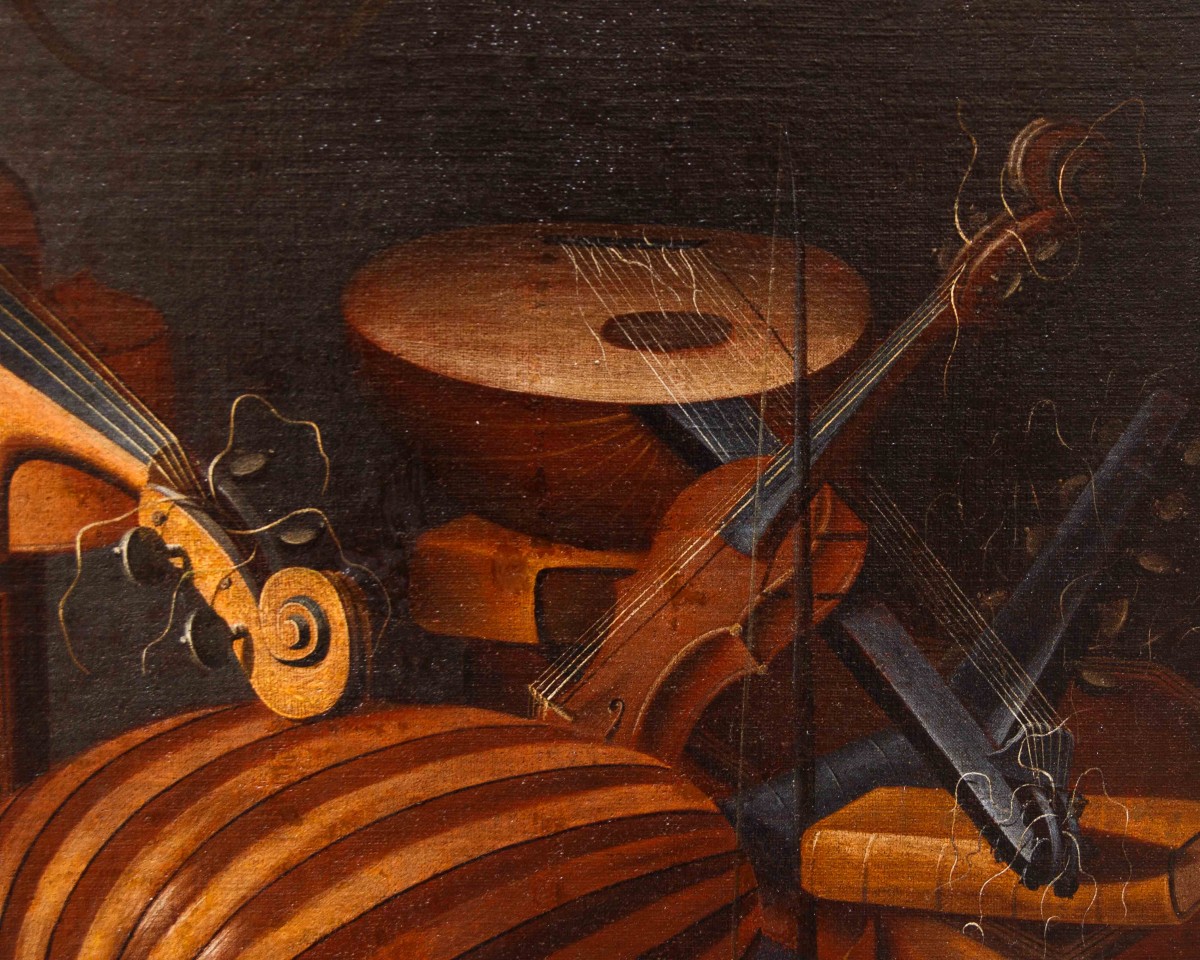
Still Life with Musical Instruments, Sheet Music, and Carpet
Oil on canvas, 85 x 110 cm
With frame, 111 x 138 cm
The present painting fits fully into the Bergamasque tradition of musical still lifes, a genre pioneered by Evaristo Baschenis (1617–1677) and passed down to other painters from Bergamo, including his contemporary Bartolomeo Bettera (1639 – post-1688) and the latter's son, Bonaventura (1663 – post-1718), to whose circle this work can be attributed. Beyond the subject matter, one can already discern the distinctive features that evolved the still lifes of Bartolomeo and Bonaventura into a more sumptuous, contrasting, and opulent dimension. Born and raised in the Bergamo region, the family traced its origins to the central Val Seriana, specifically Gandino and its valley, thus bringing them into direct contact with Baschenis's oeuvre. While Bartolomeo traveled first to Rome and later to Milan in 1687 (where he remained until his death, likely around the turn of the century), little is known about Bonaventura's biography, though works attributed to his hand are primarily found in Lombard, particularly Bergamasque, collections, suggesting an area of activity still closely tied to his native land.
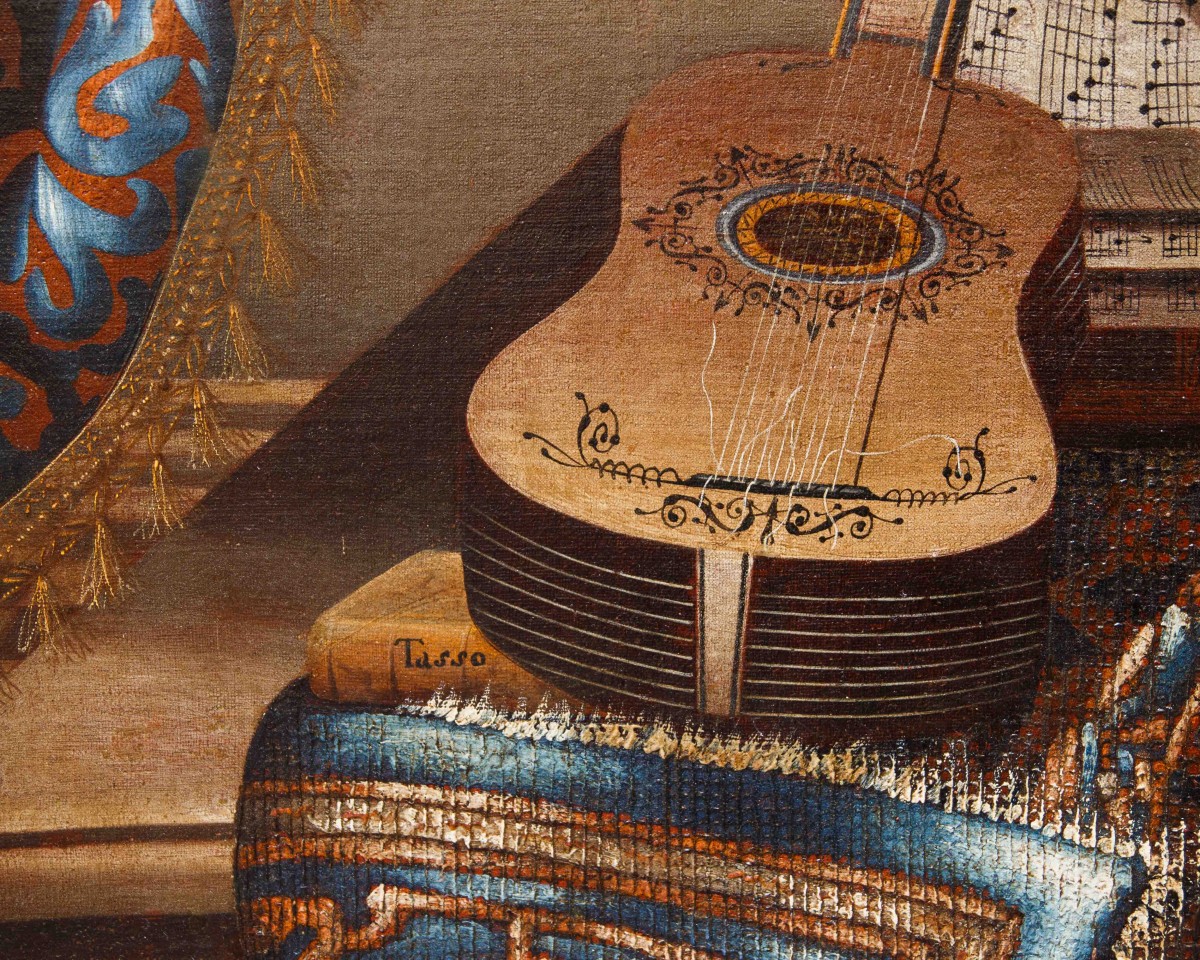
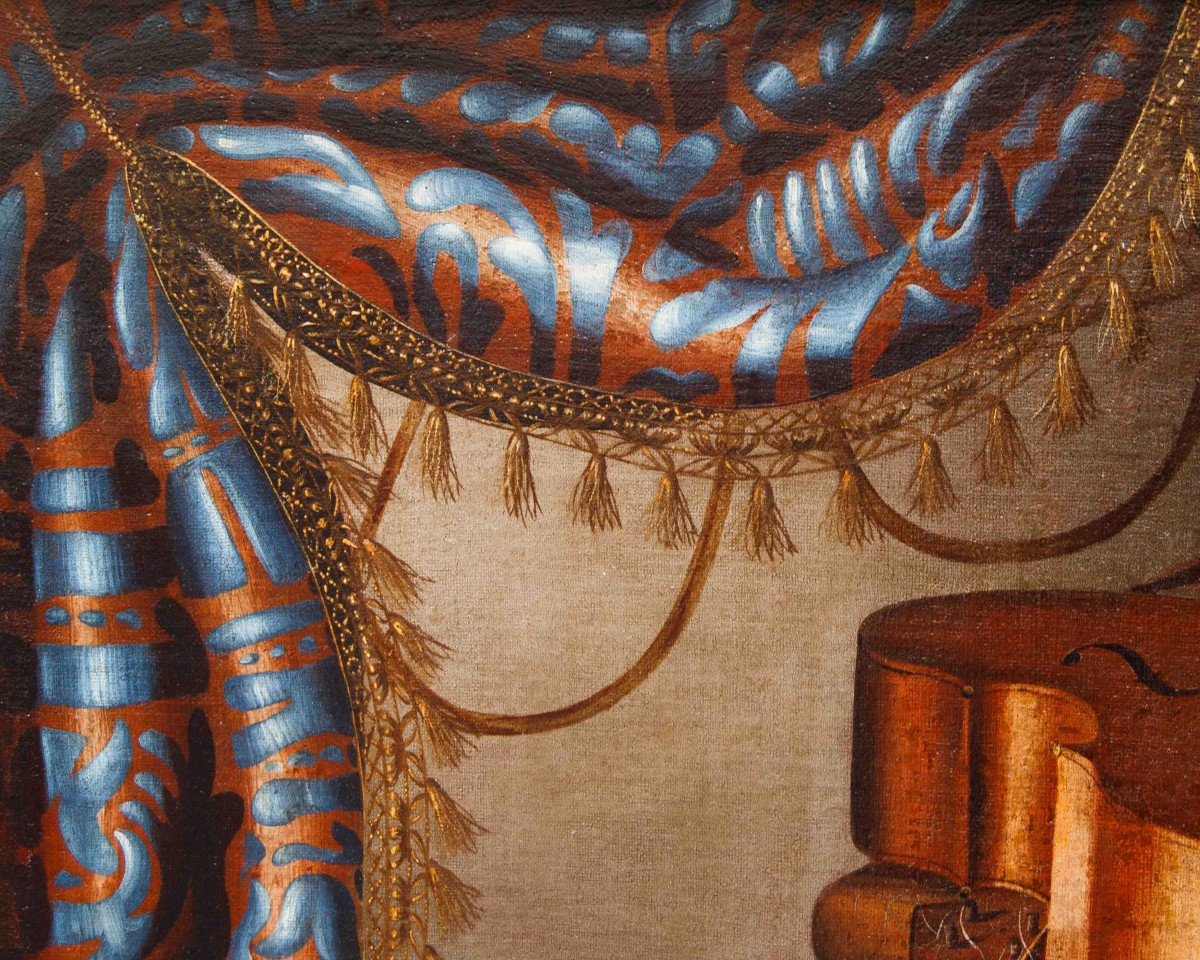
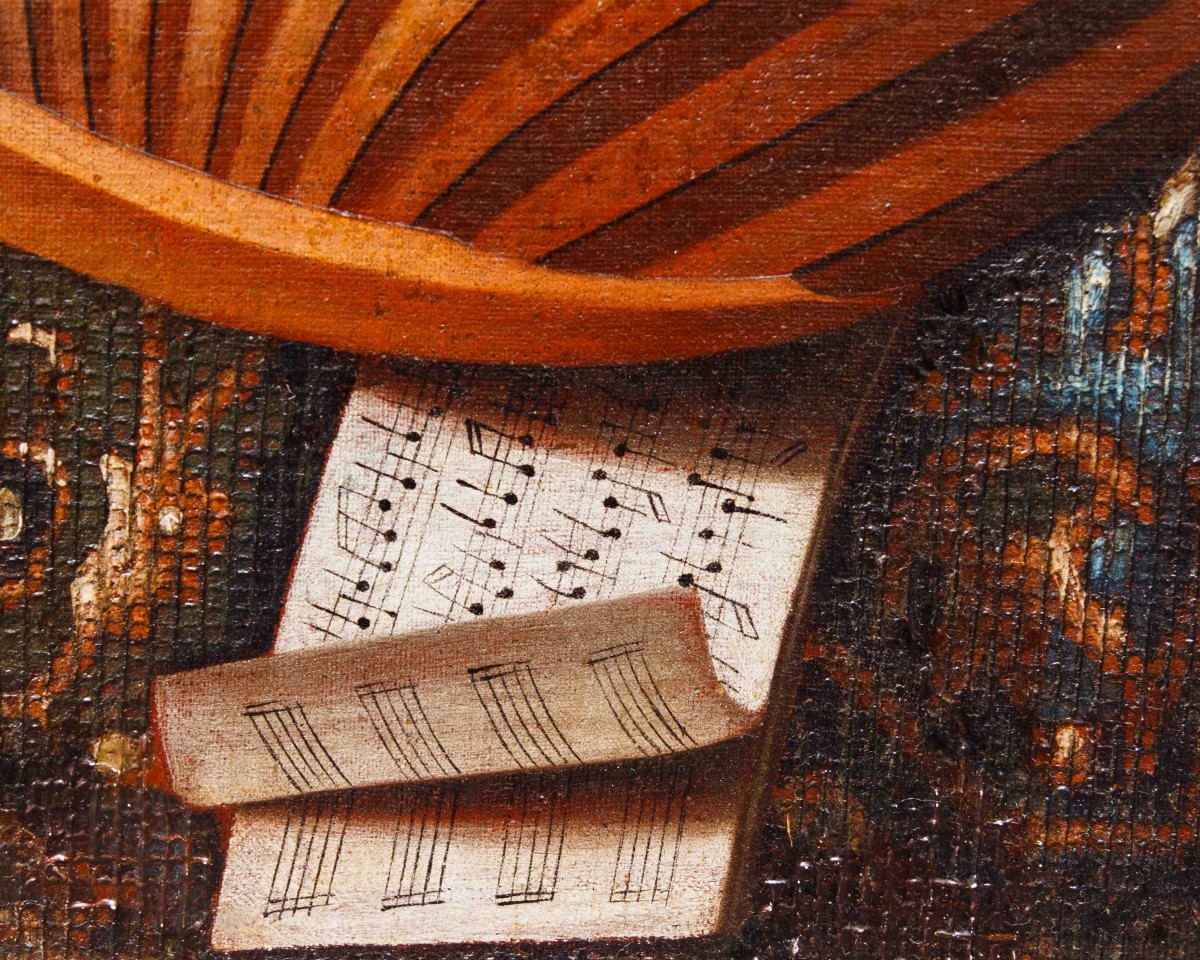
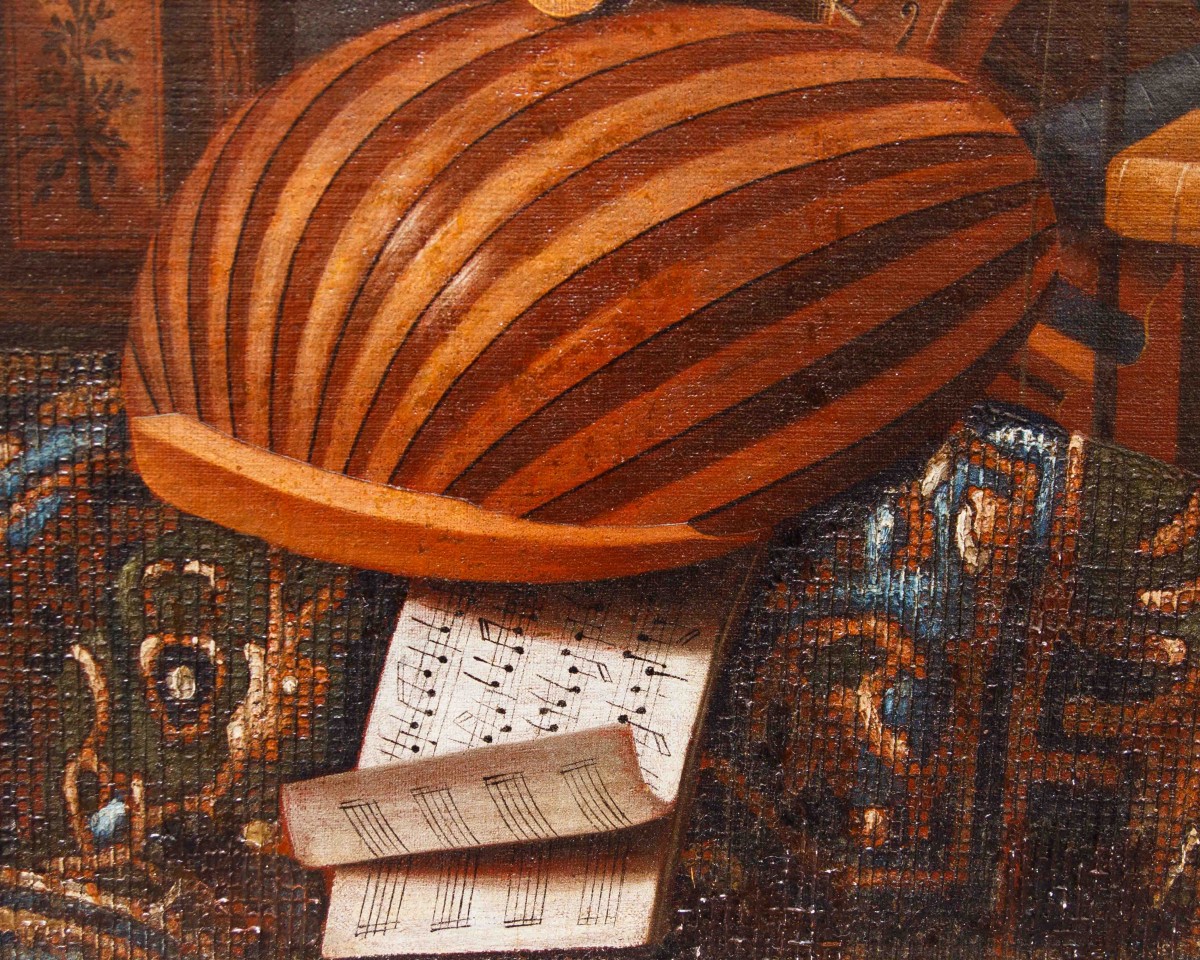
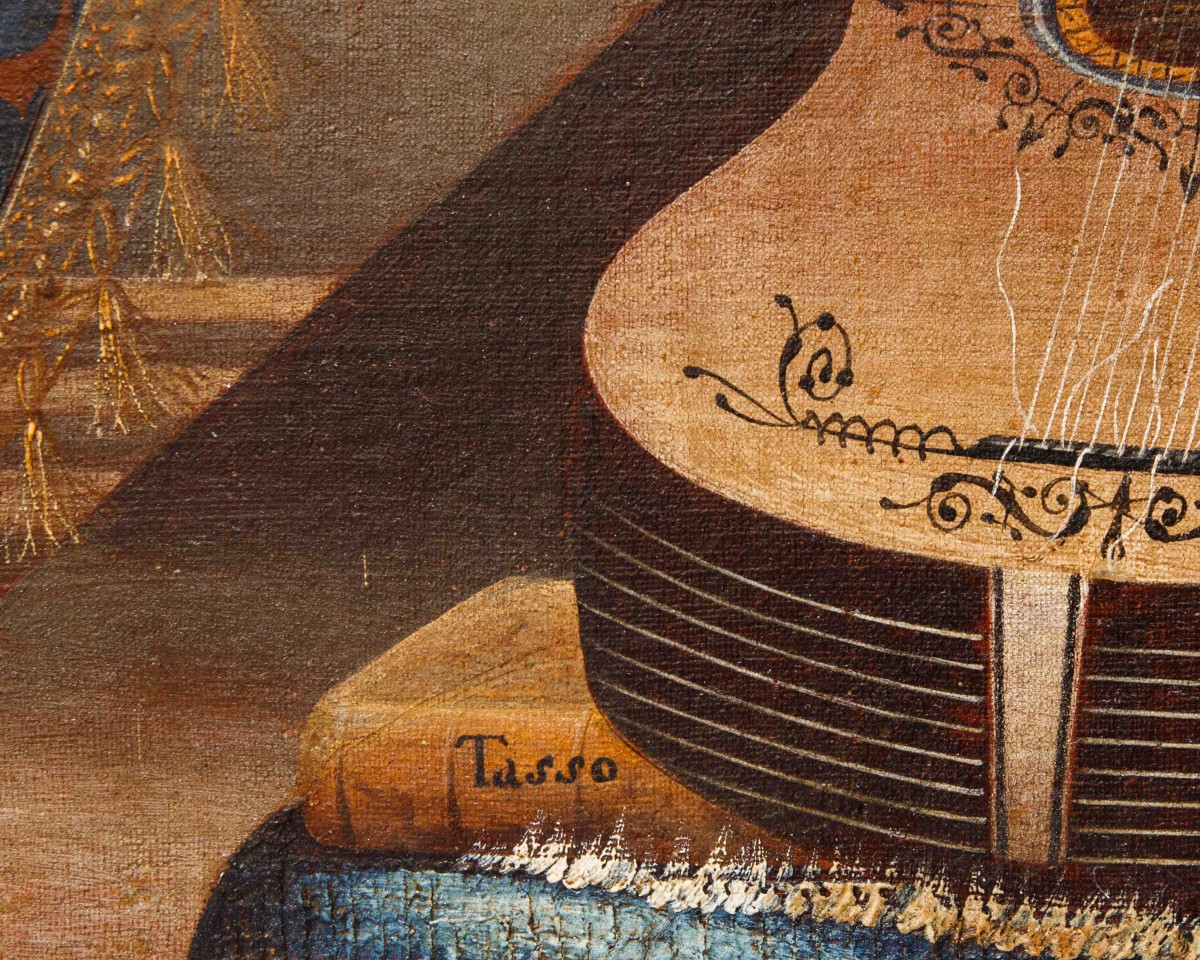
Although the affinities with Baschenis are evident in the subject, layout, and sense of realism, Bettera distinguished himself by creating compositions marked by a higher density of objects—almost always related to music—and an ornate splendor visible in the rich embroidery of carpets and drapes, rendered in luminous, vibrant colors. His arrangements are more crowded, featuring bolder foreshortening of elements piled in an opulent, carefully calculated disorder that forms a central pyramid or stack. These traits, derived from his father’s work, are clearly displayed here in the virtuoso perspective of the lutes and violins, as well as in the use of rich blue and gold tones in the drapes and carpets—bright and vibrant against the muted, shadowed background. Furthermore, typical hallmarks of his compositions are apparent: the partially unfastened drape, the dense accumulation of objects, and the apparent chaos on the table—evidenced by crumpled sheet music, misaligned and overlapping instruments (including a lute, mandolin, guitar, viola, and violin), and books piled beneath. Among these, the spine of one book reads "Tasso," likely referring to Torquato Tasso, author of Jerusalem Delivered, whose family belonged to the ancient Bergamo nobility and was therefore connected to the very territory in which Bettera worked.
While the corpus of works by his father Bartolomeo is larger and more securely established (often signed), works by Bonaventura are extremely rare and difficult to identify. Two firmly attributed works are held at the Pushkin State Museum of Fine Arts in Moscow; they reveal a raised texture in the weave of the canvas across the rug sections—a distinctive trait separating his technique from Bartolomeo's, which is also present in our painting. Several other works have passed through the art market or reside in private collections, many sharing this peculiar detail, alongside a more homogeneous, matte light quality and a distinct preference for cool tones, such as blue and azure, which are likewise employed in this canvas.
Delevery information :
Les frais d'expédition seront calculés au moment de la commande en fonction de la destination, des dimensions et du poids du tableau, ainsi que de l'assurance couvrant la valeur totale de l'œuvre.
For paintings purchased from abroad: following payment, the application process to obtain the export license (ALC - Attestato di Libera Circolazione) will be initiated. All antiques shipped abroad from Italy require this document, which is issued by the Ministry of Cultural Heritage. The procedure may take 3 to 5 weeks from the date of request; therefore, the painting will be shipped as soon as the document is obtained