Offered by Conservatoire Sakura
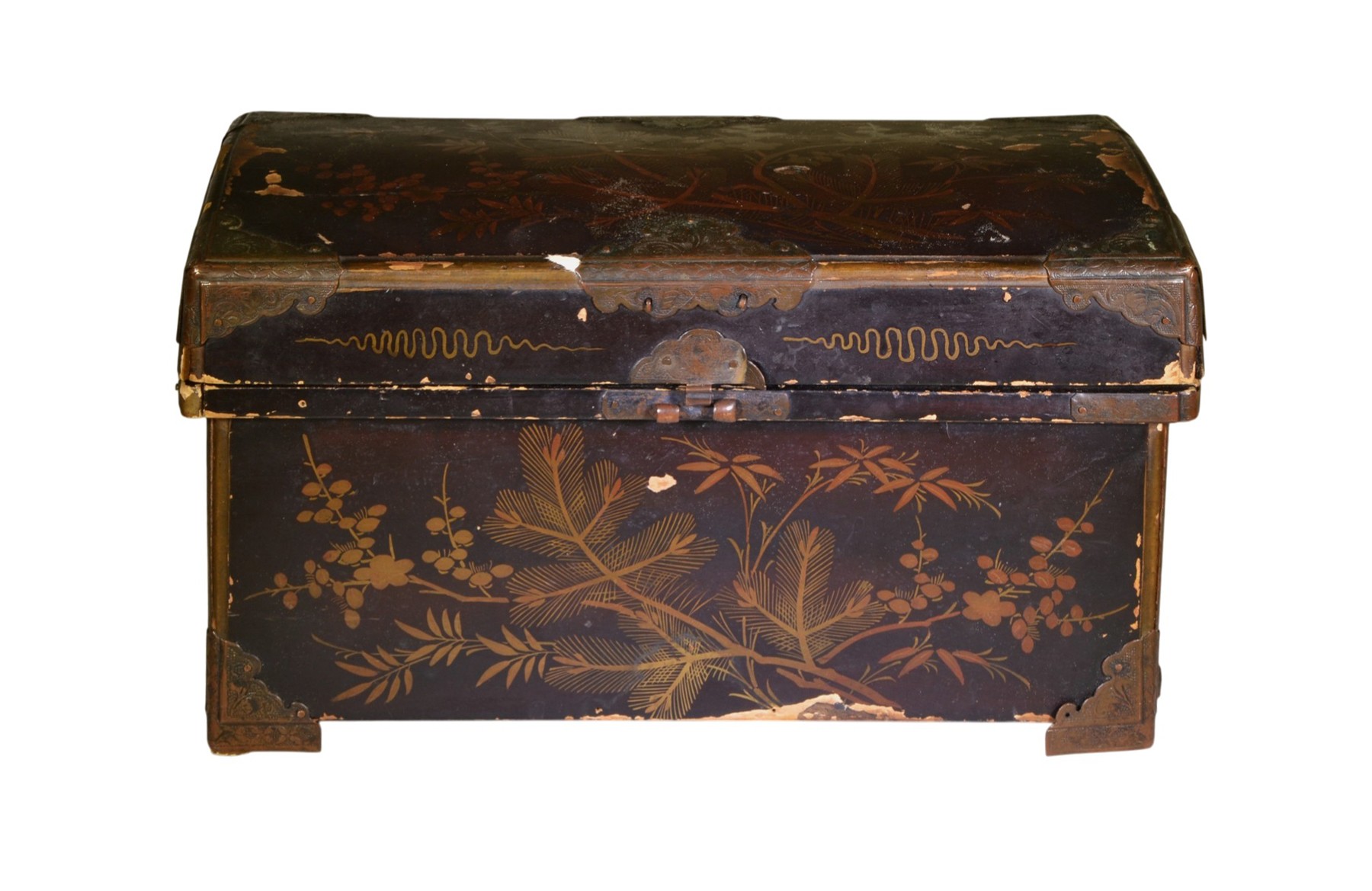
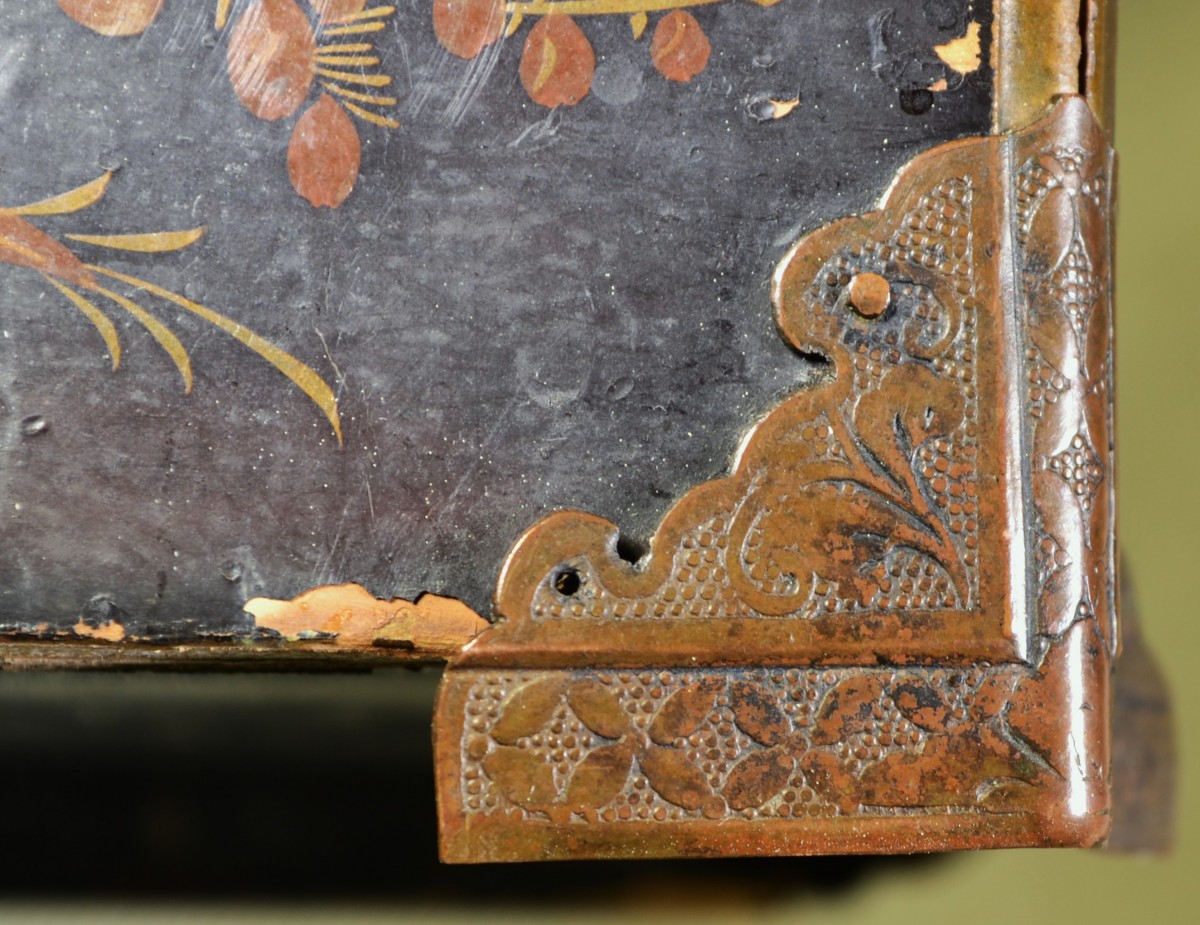
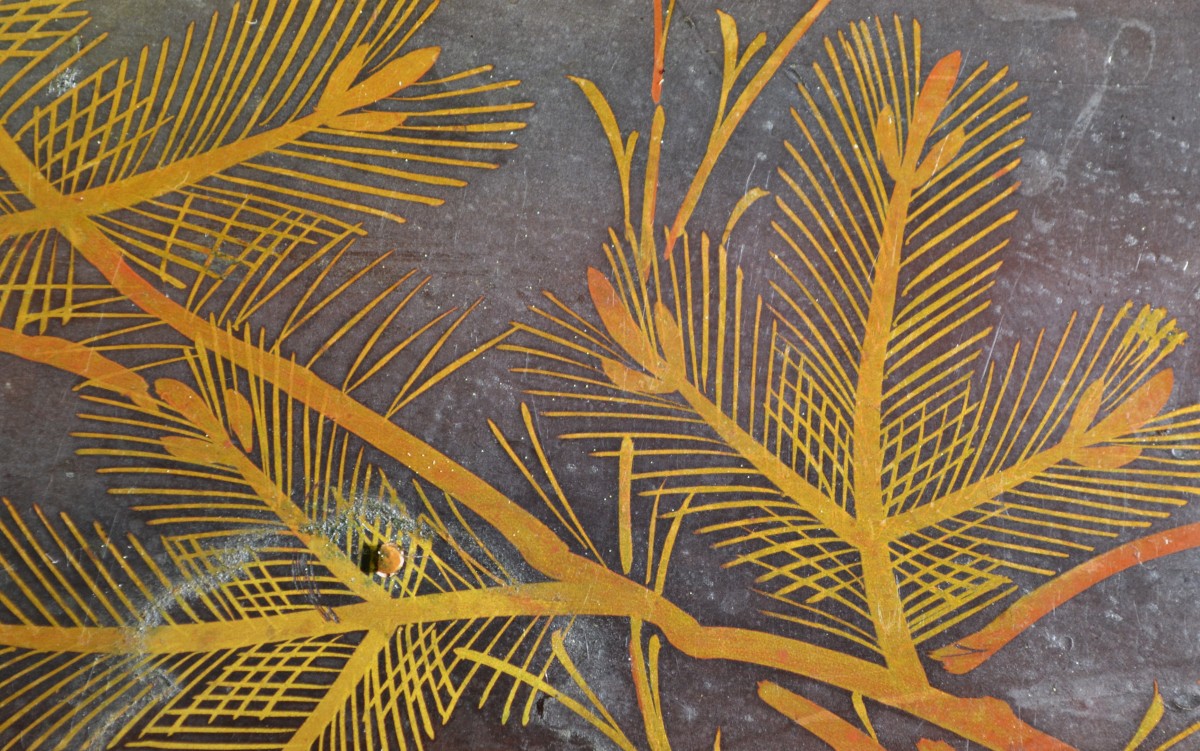
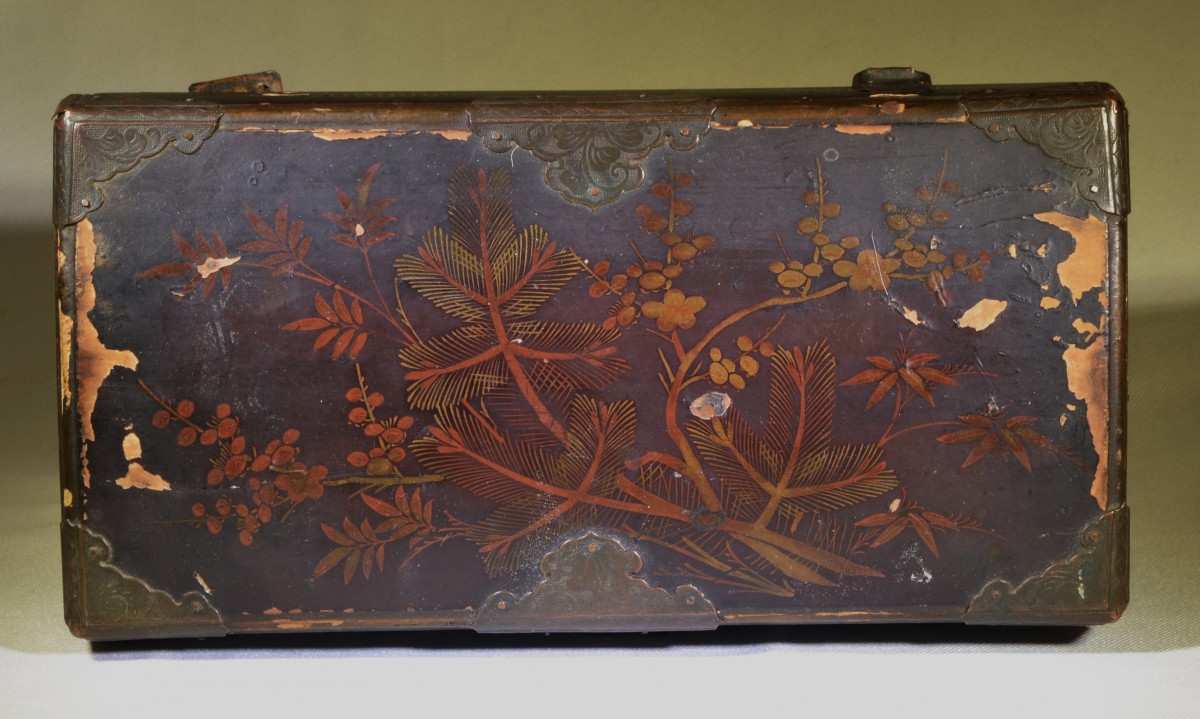
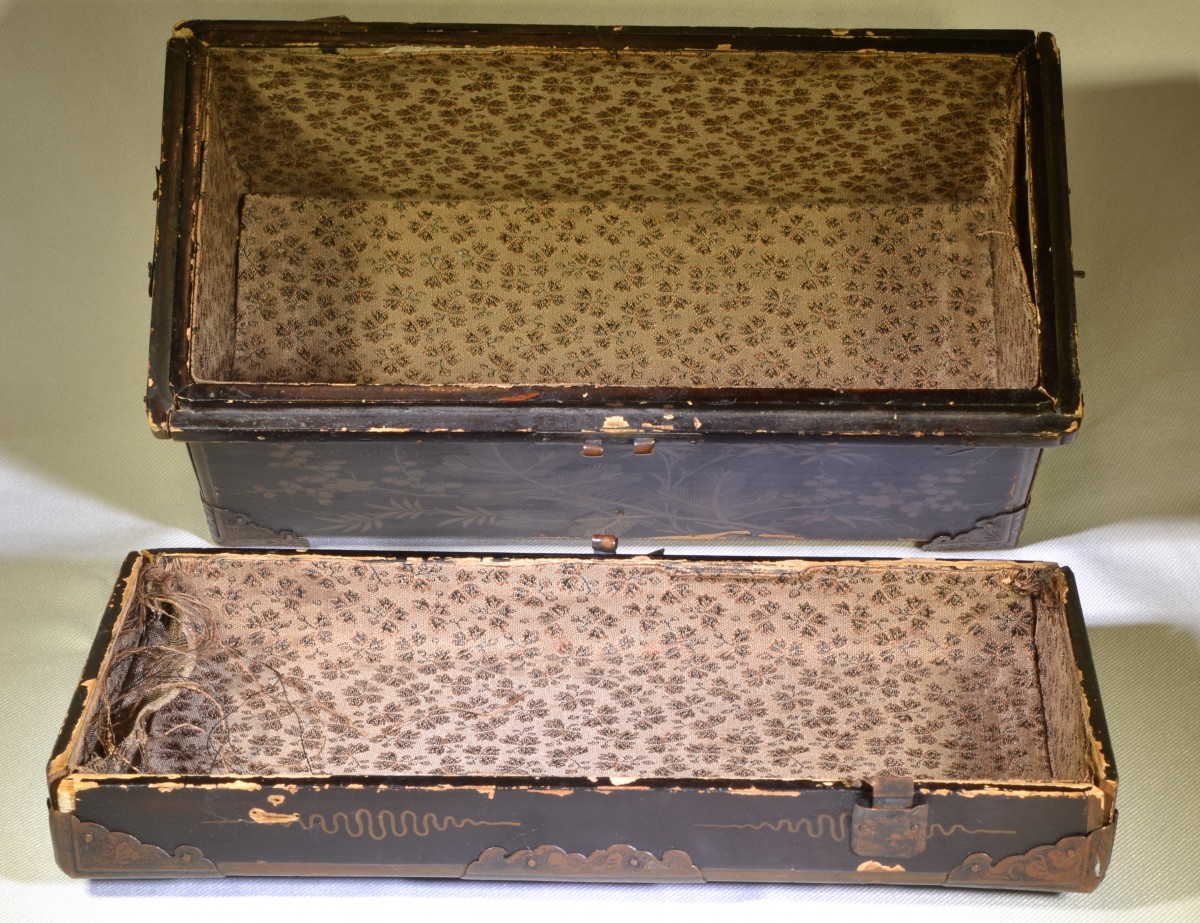

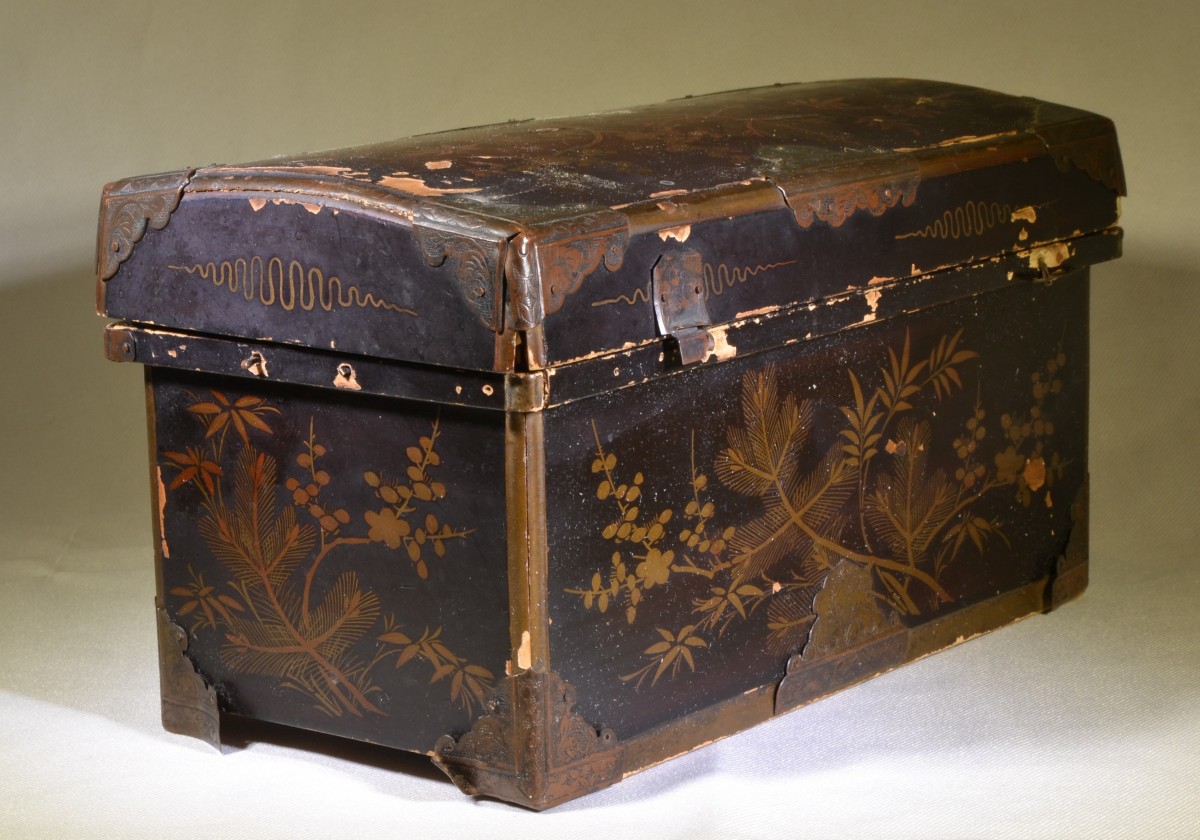
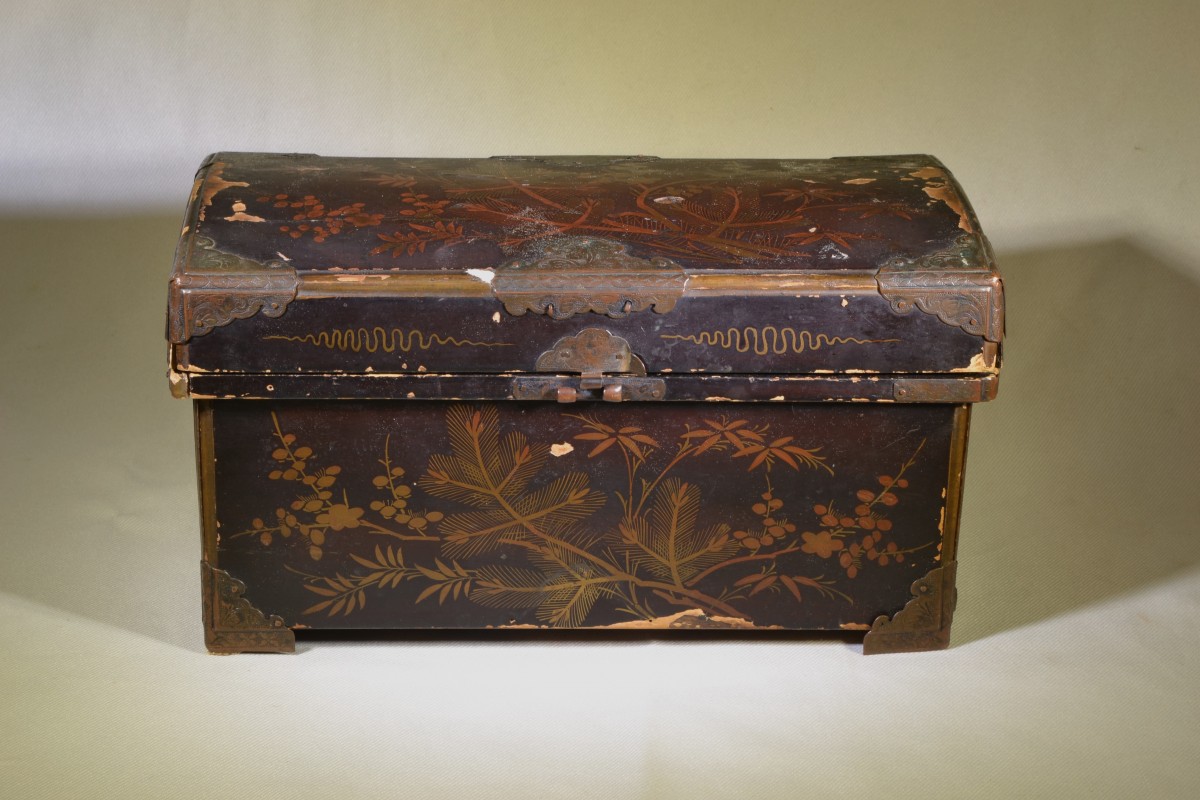
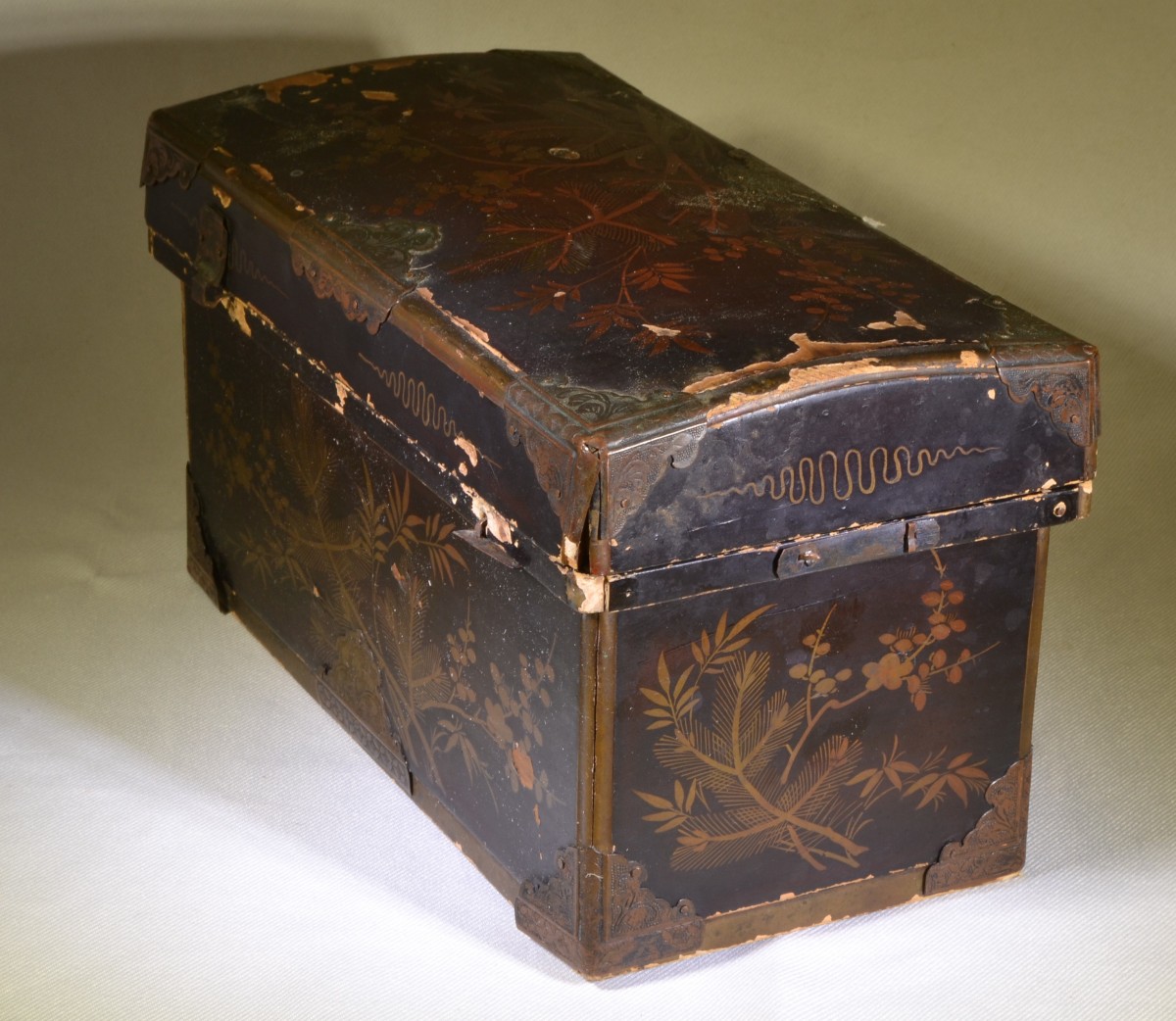
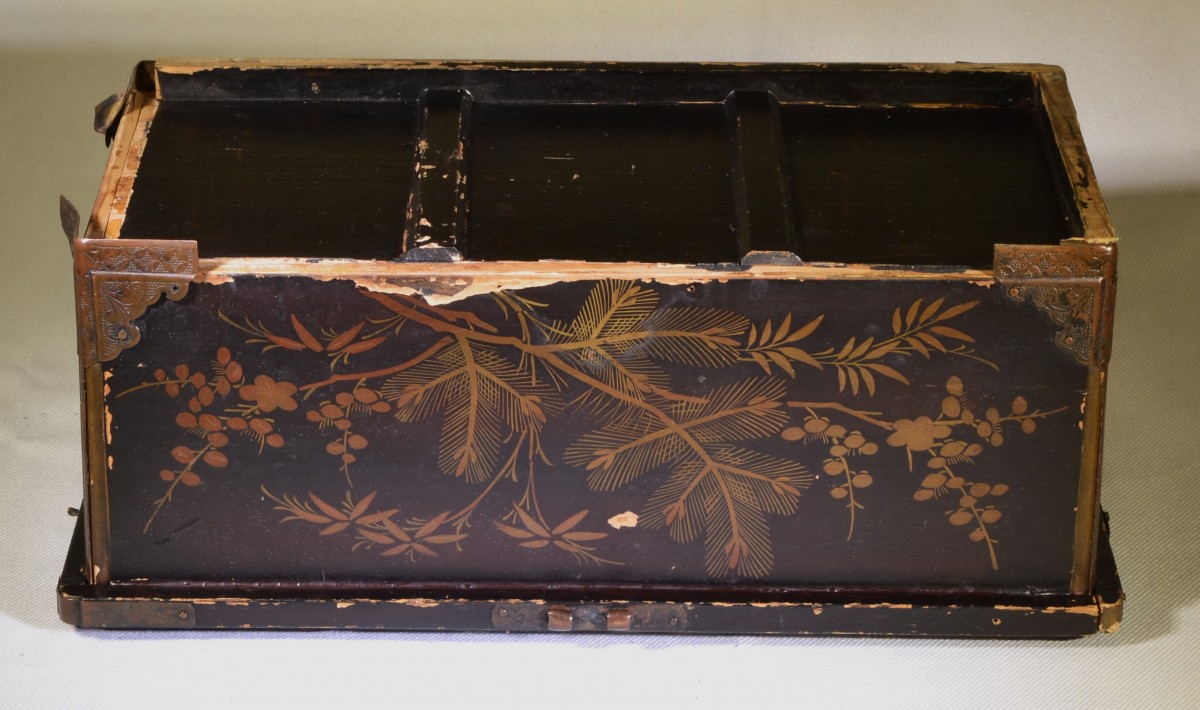
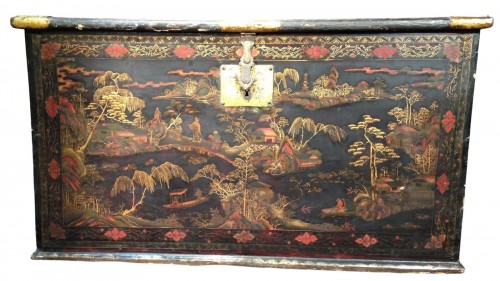
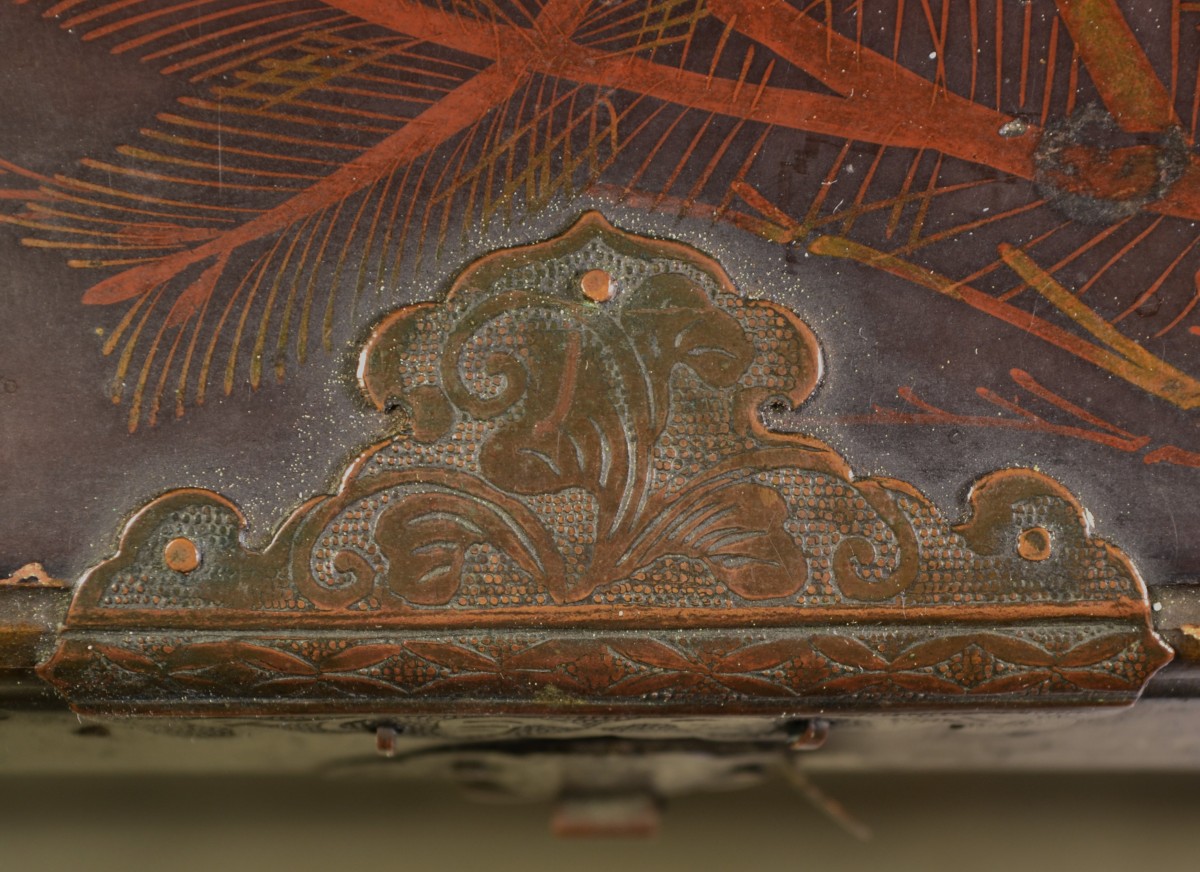
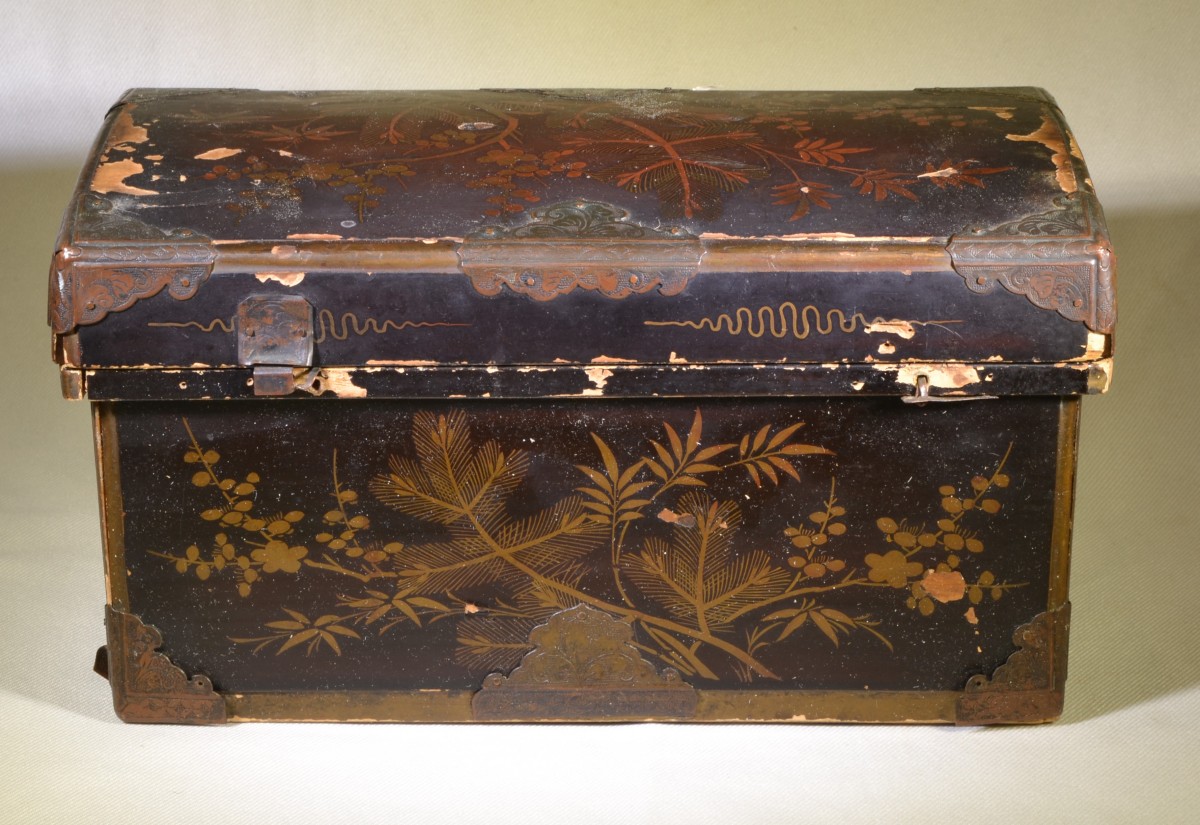
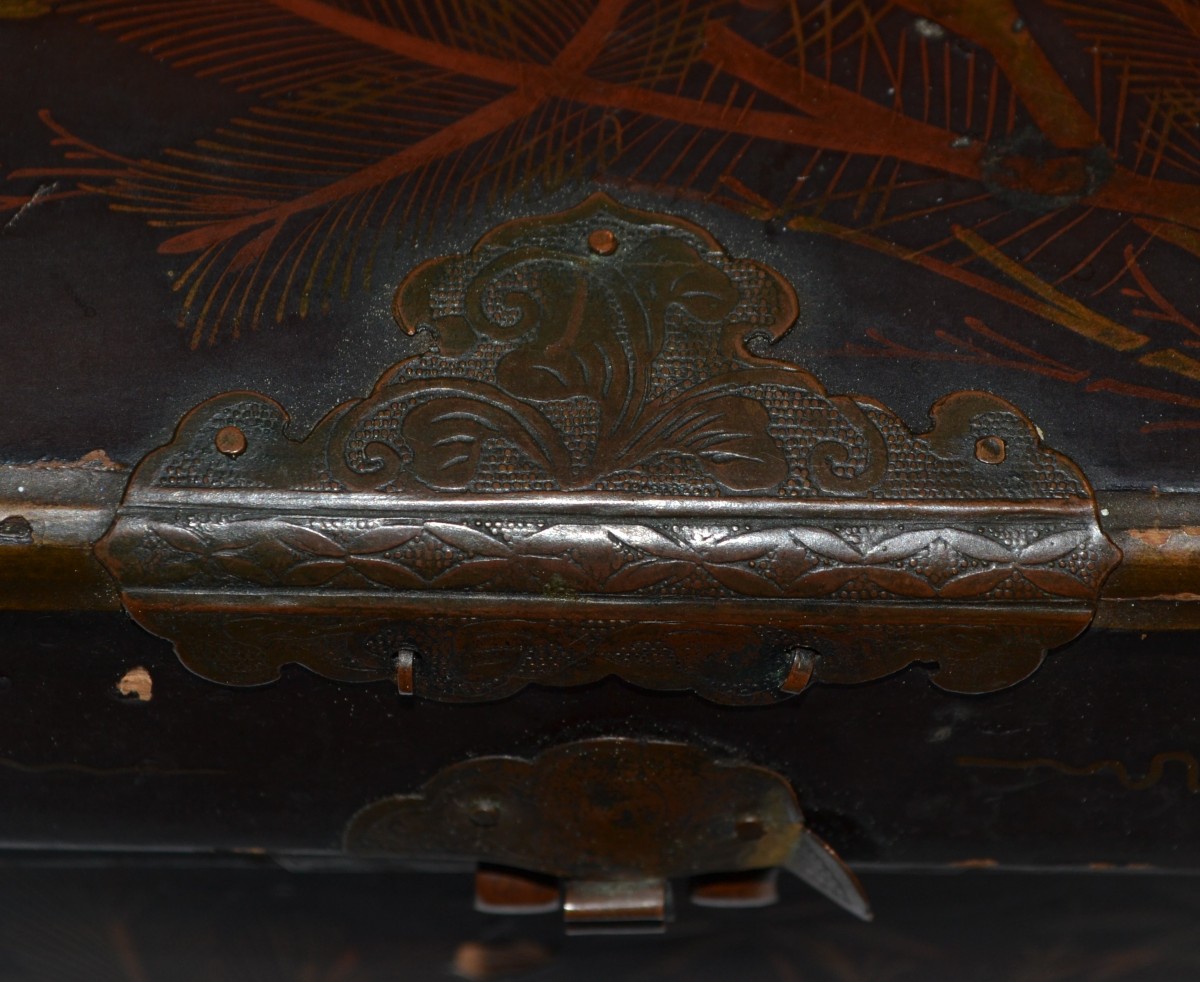
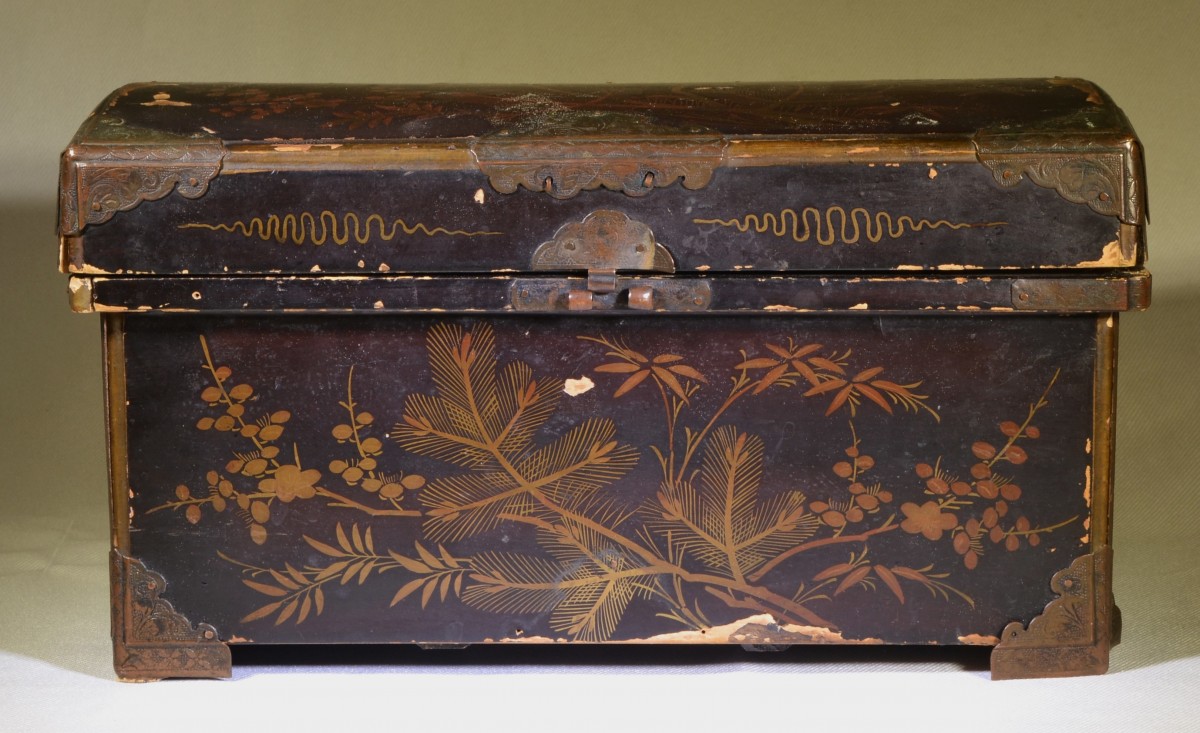
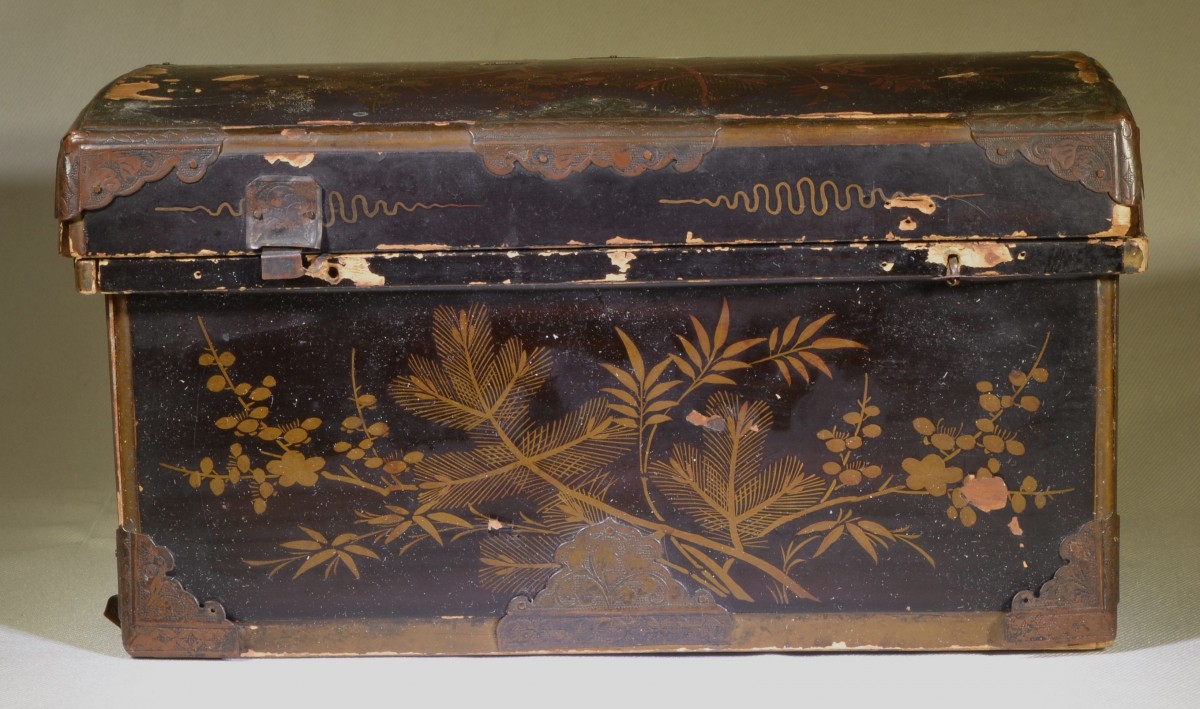
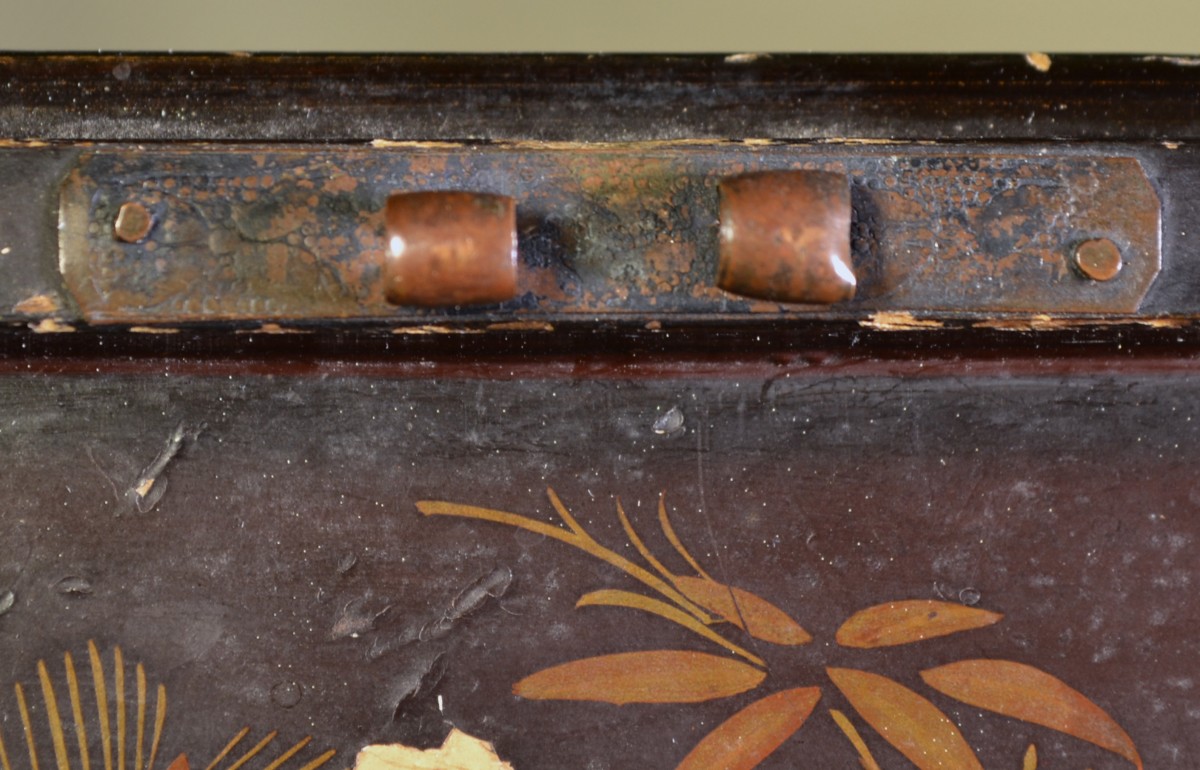
The box is made of wood covered with Urushi lacquer and decorated with metallic powders. The hinges and reinforcing corners are made of repoussé copper. Very importantly, a very specific detail allows us to precisely date the creation of this box: the serpentine motif, drawn twice on all four sides of the lid's rim. This motif appears only on Japanese export lacquerware created before 1600, during the Momoyama period. Previously unknown in Japan, this motif must have appeared on the first Namban lacquerware around 1550, during the end of the Muromachi period (1336-1573), just after the arrival of the Portuguese in 1543. The minimalist decoration, rich in symbolism, is typically Japanese with its "three friends" (pine, plum, and bamboo). It is in keeping with the restrained style of Muromachi lacquer and lacks the ostentatious magnificence of the lacquerware from the luxurious Azuchi-Momoyama period (1573-1603). Similarly, the metal fittings, cut with scissors from thin copper plates, are... Also, in their very simple technical design, in the spirit of Muromachi creations, the incised designs on these fittings differ from the standardized ones found on Momoyama fittings. This is one of the very first Japanese creations for export to Portugal, made around 1550-60. It is extremely rare to find Namban (Southern Barbarian) style lacquerware from this period, most Namban pieces being much later, some even dating from the early 17th century. The interior was lined with poor-quality fabric. There is considerable damage, which, fortunately, was never restored. 25 x 13 x 14 cm.
Delevery information :
International deliveries in the best conditions. Careful packaging. I travel with important items as needed.