Offered by Franck Baptiste Paris
REQUEST INFORMATION
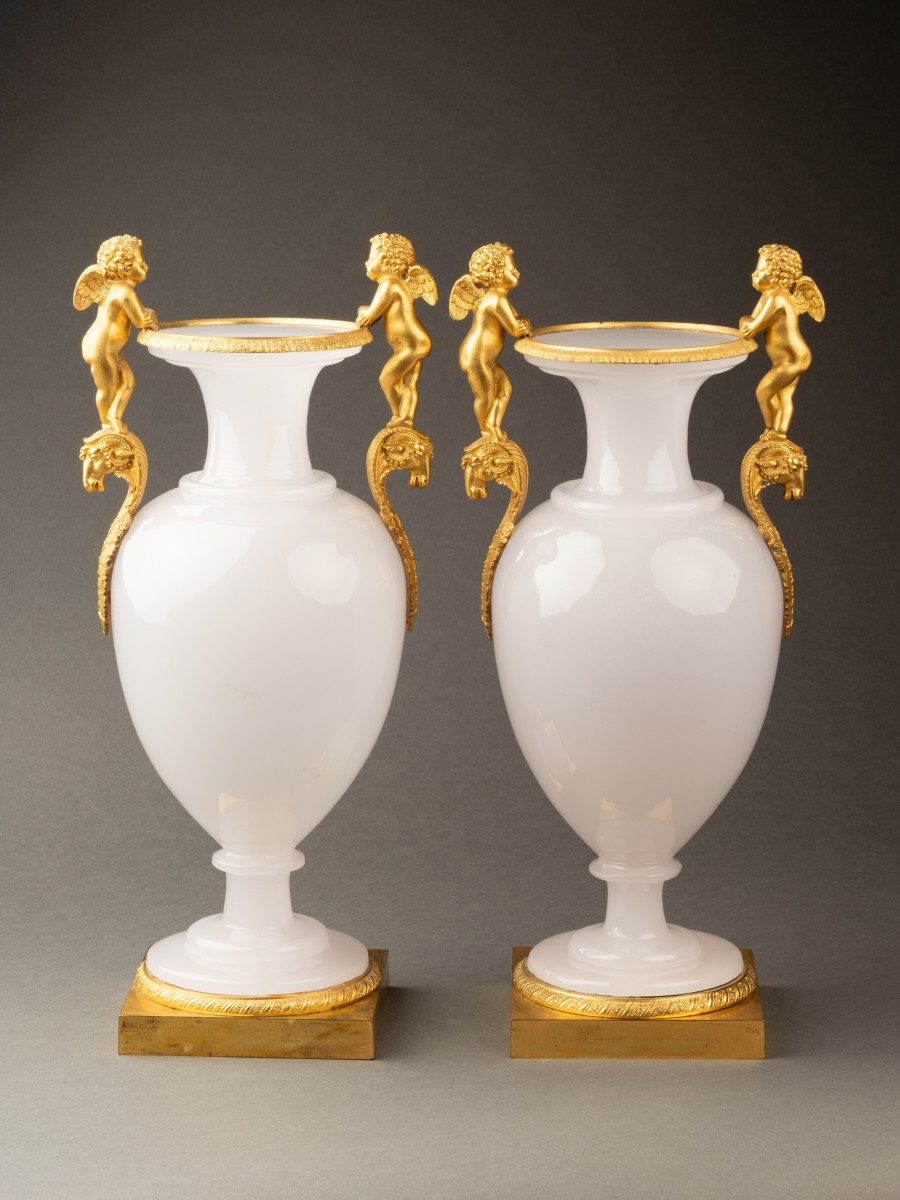
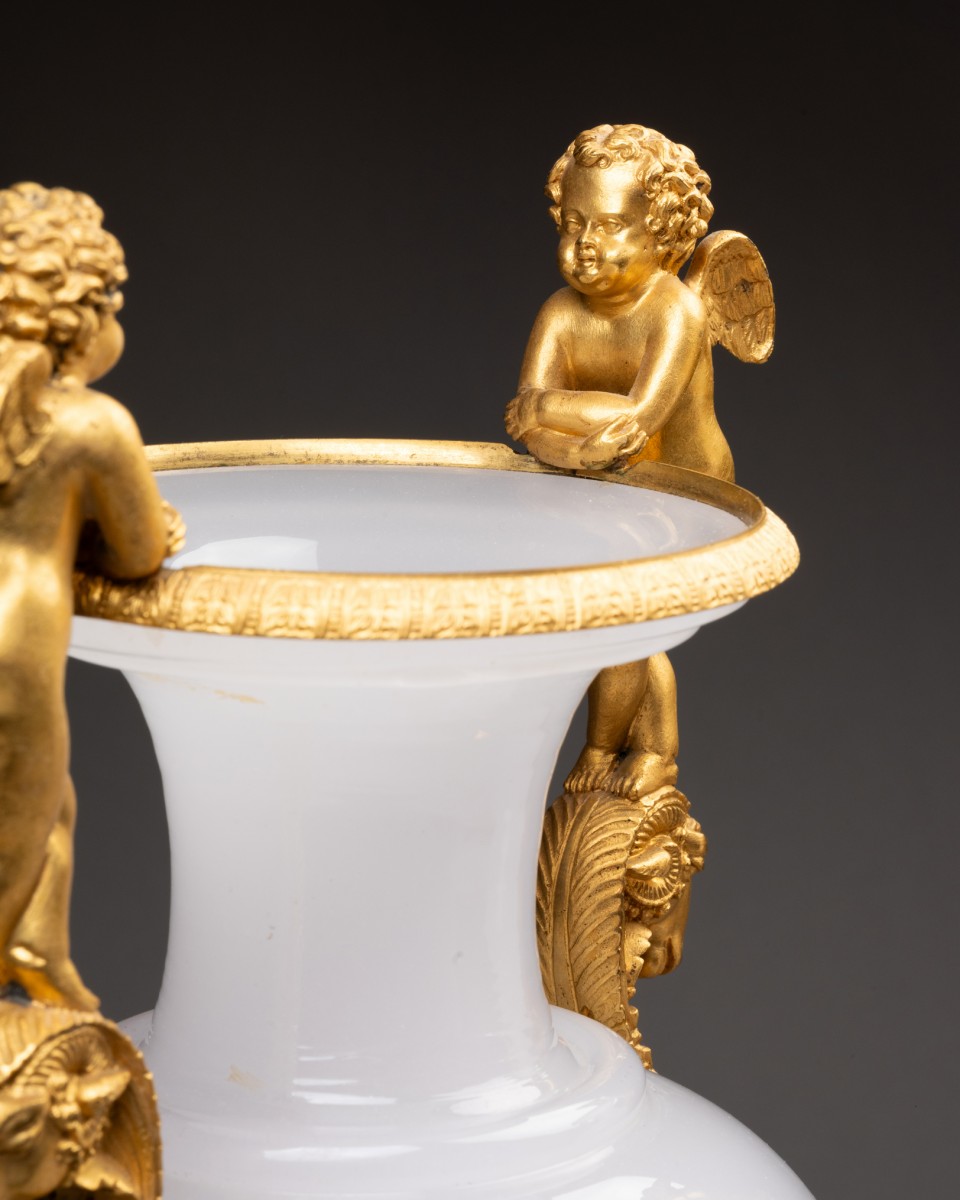

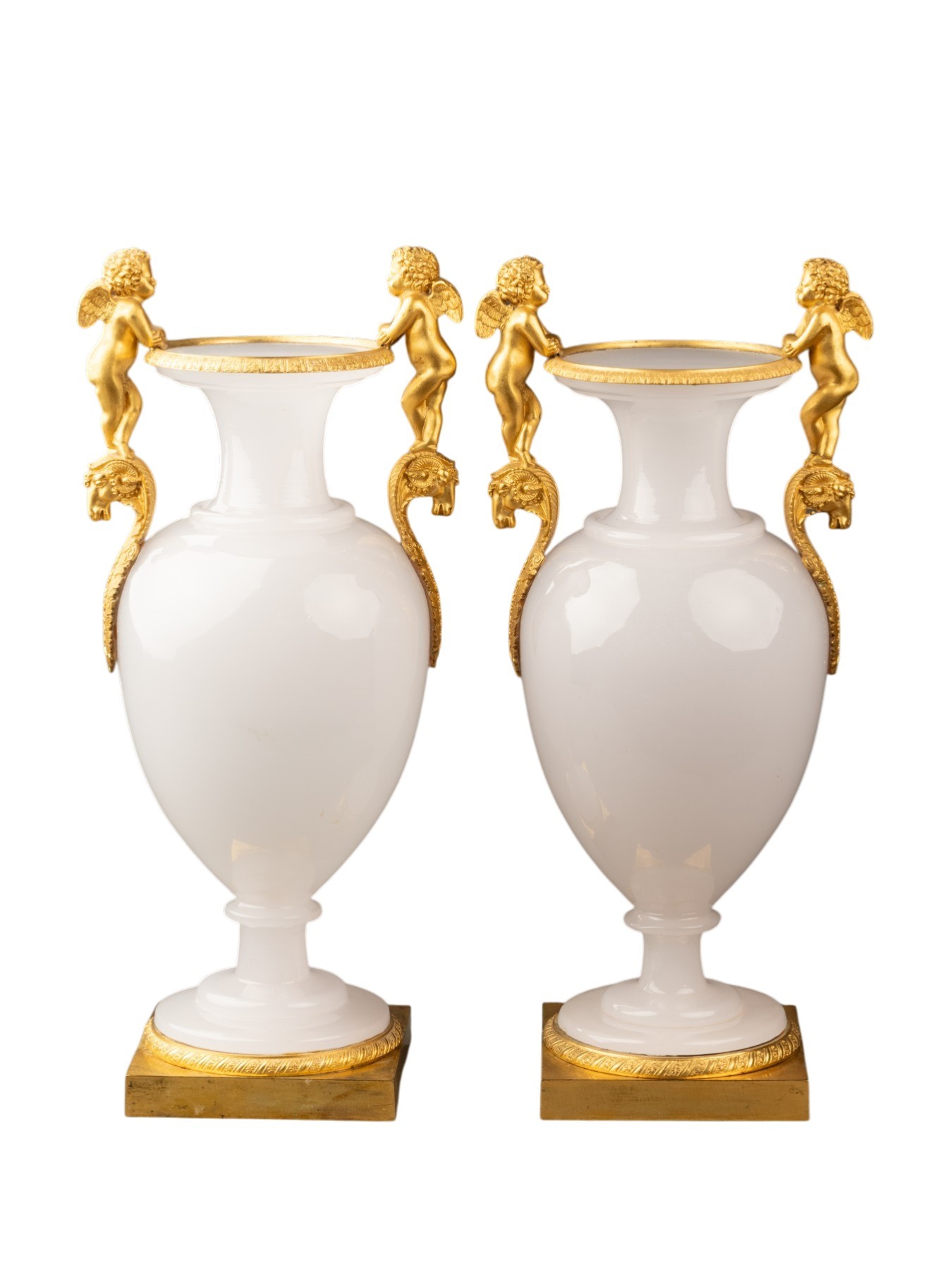
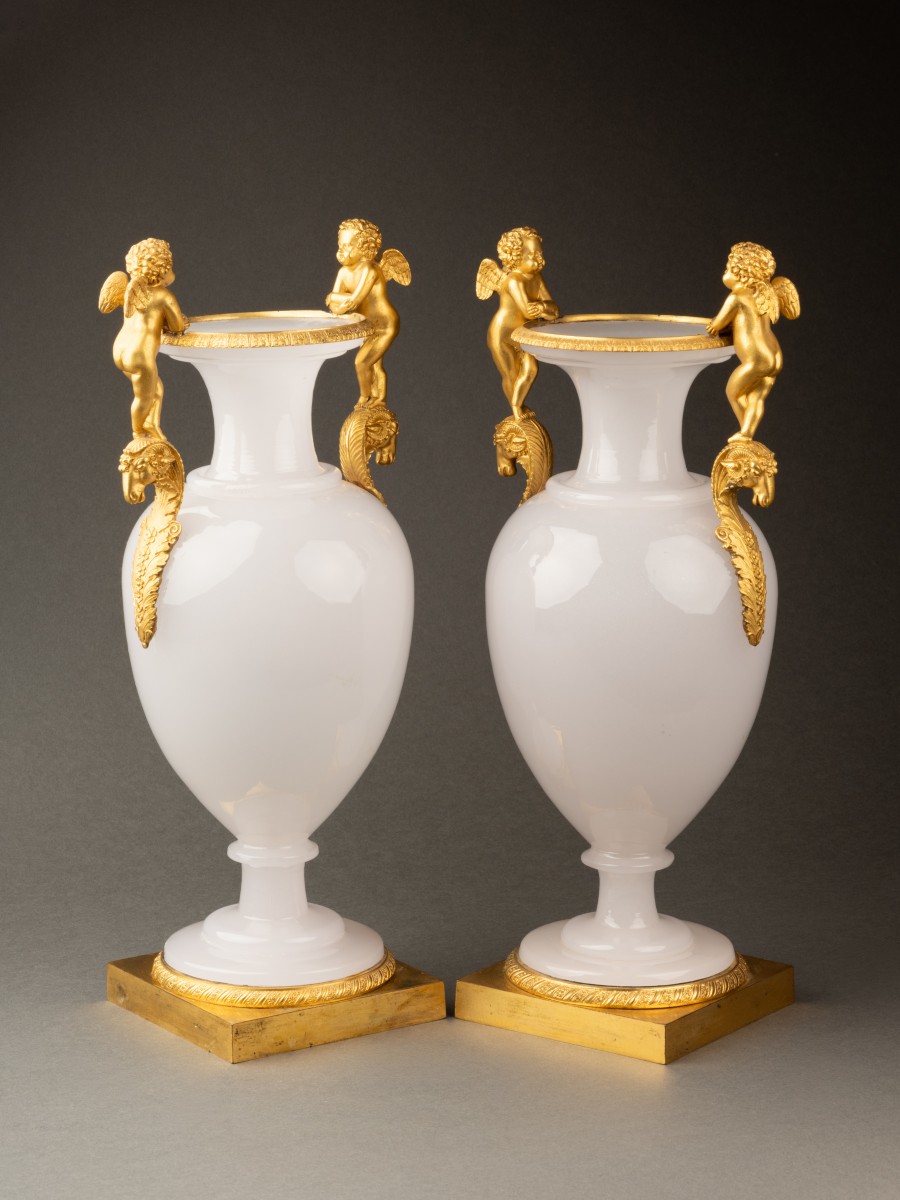
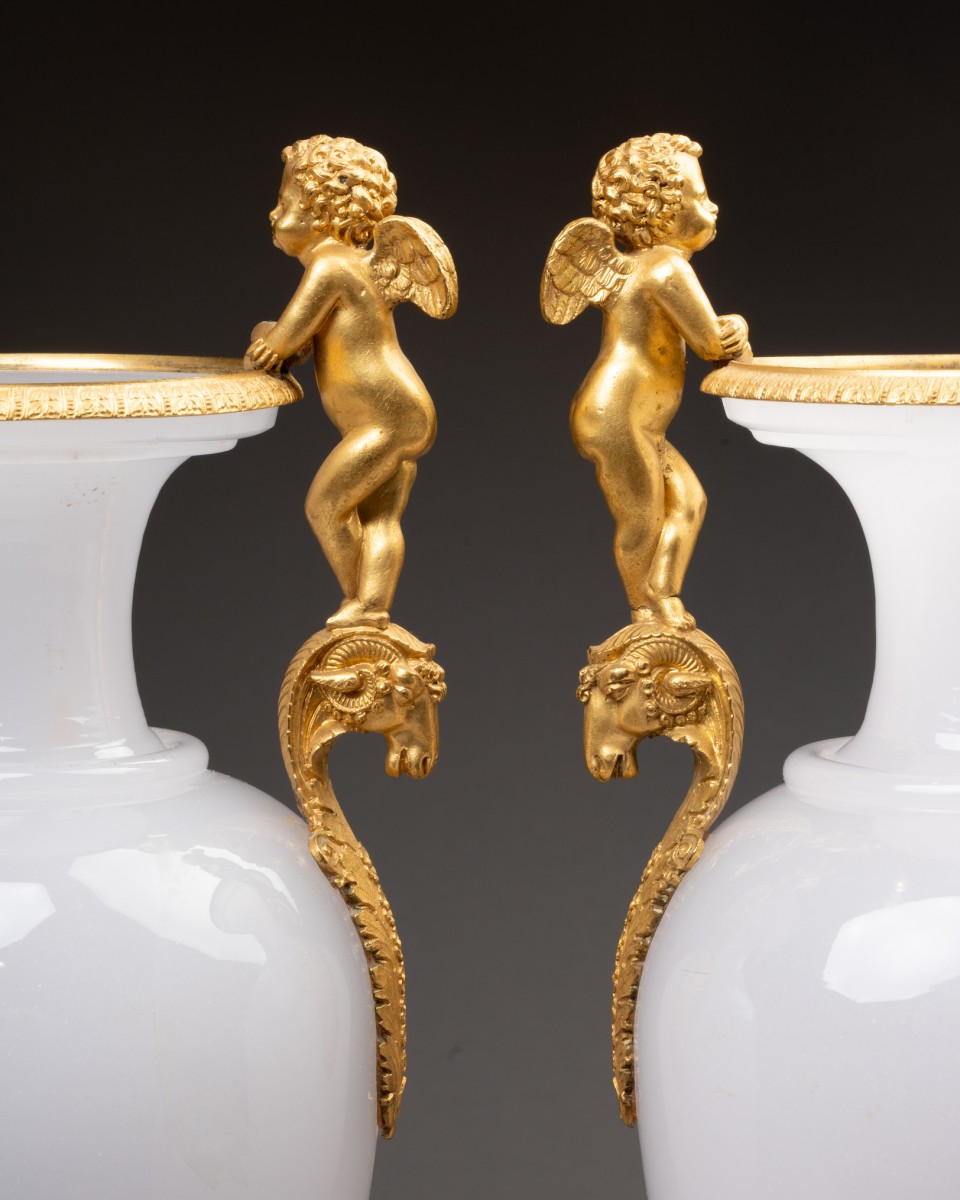
An important pair of vases in slightly translucent white opaline glass, known as "soap bubble" glass.
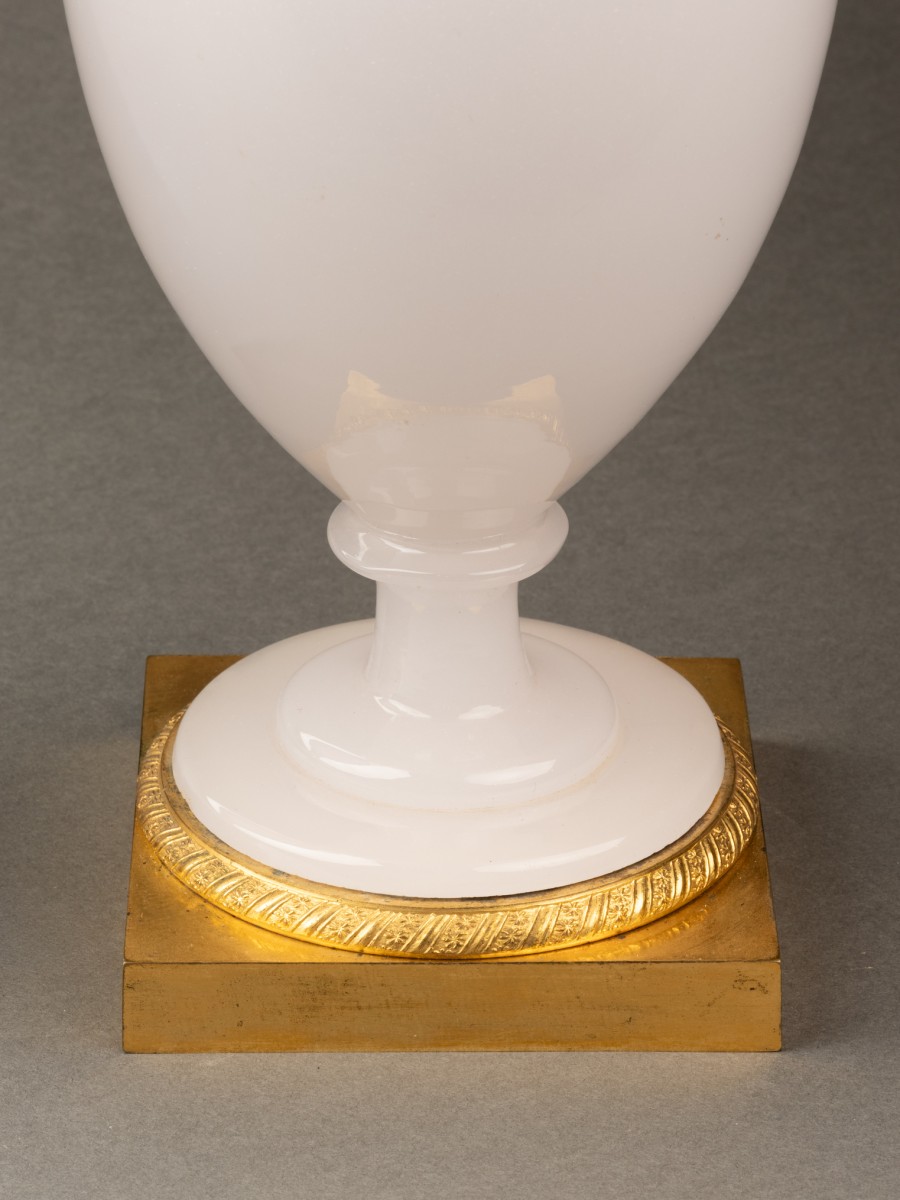
The lower section consists of a circular foot supporting the ovoid baluster-shaped body of the vase; the upper section has a narrow neck with delicately flared lips.
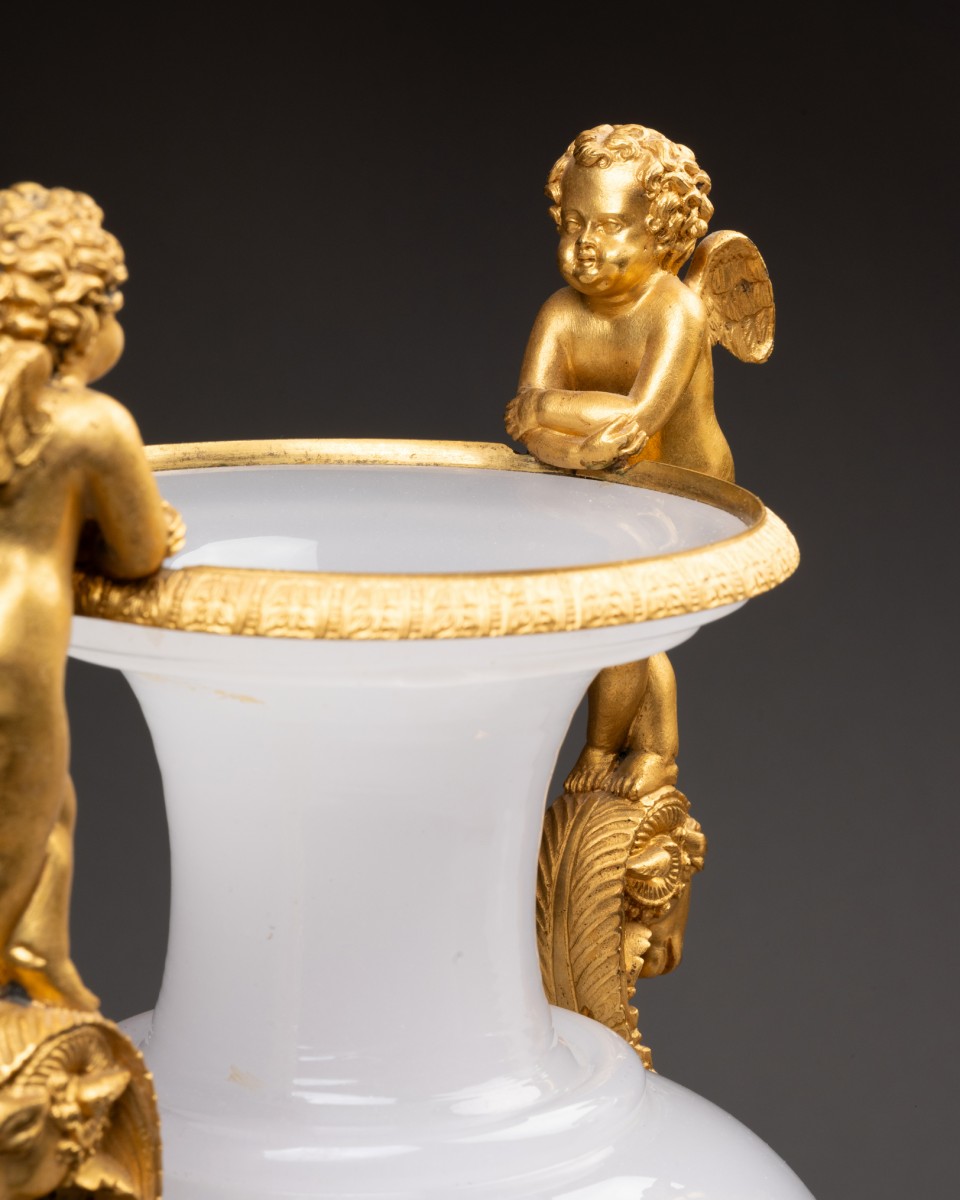
The whole is adorned with a rich mount of finely chased and mercury-gilded bronze.
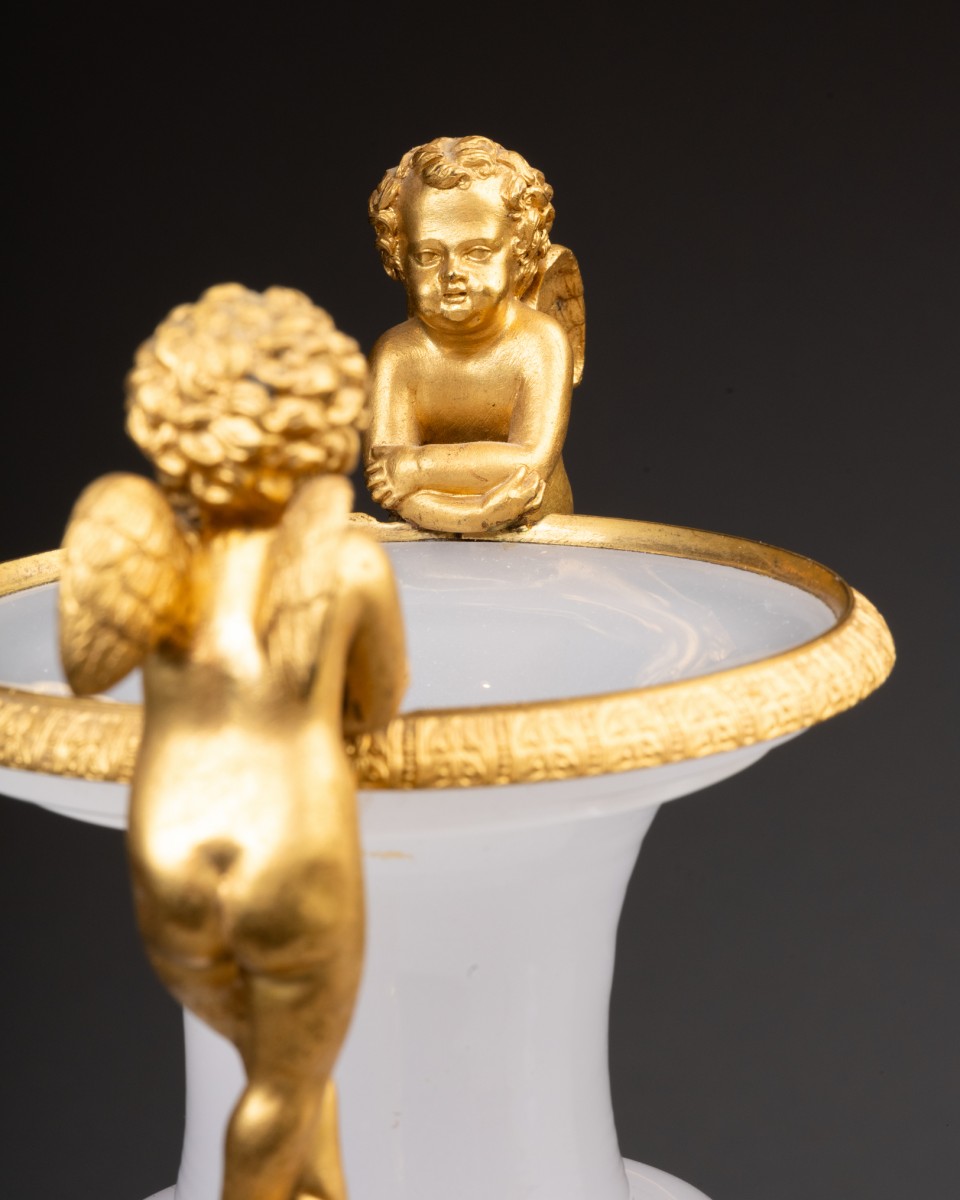
It includes two side handles, a rectangular base, and two bands: the lower band with a hatched frieze and the upper band with a palmette frieze.
The handles are decorated with winged putti standing in contrapposto, resting on ram's head protomes ending in scrolls.
In very good condition; a small chip on one edge of the foot.
Exceptional quality of chasing and mercury gilding with a double patina of matte and glossy finish.
Paris, late Empire period, circa 1810-1820
Dimensions:
Height: 36 cm
Our opinion:
The pair of vases we are presenting is exceptional for the originality and finesse of its gilt bronze ornamentation.
This technical perfection reminds us of the finest bronze workers of the Empire period, such as Pierre-Philippe Thomire, whose name is regularly mentioned in the archives for his work on opaline glass.
Our vases reflect a style still influenced by Louis XVI, drawing on a very pure neoclassical vocabulary for form and a bucolic and pastoral inspiration for decoration. The cherubs, serenely reclining, enliven the composition with an almost intimate presence, while the ram, peacefully assisting, evokes the imagery envisioned by Marie Antoinette at the Queen's Hamlet. All of these elements allow us to date our pair of vases to the Empire period or the very beginning of the Restoration, between 1810 and 1820. Given the incredible quality of its chasing and the great originality of its decoration, it is not unreasonable to consider this pair one of the most remarkable pairs of mounted opaline glass known to date.