Offered by Galerie Gilles Linossier
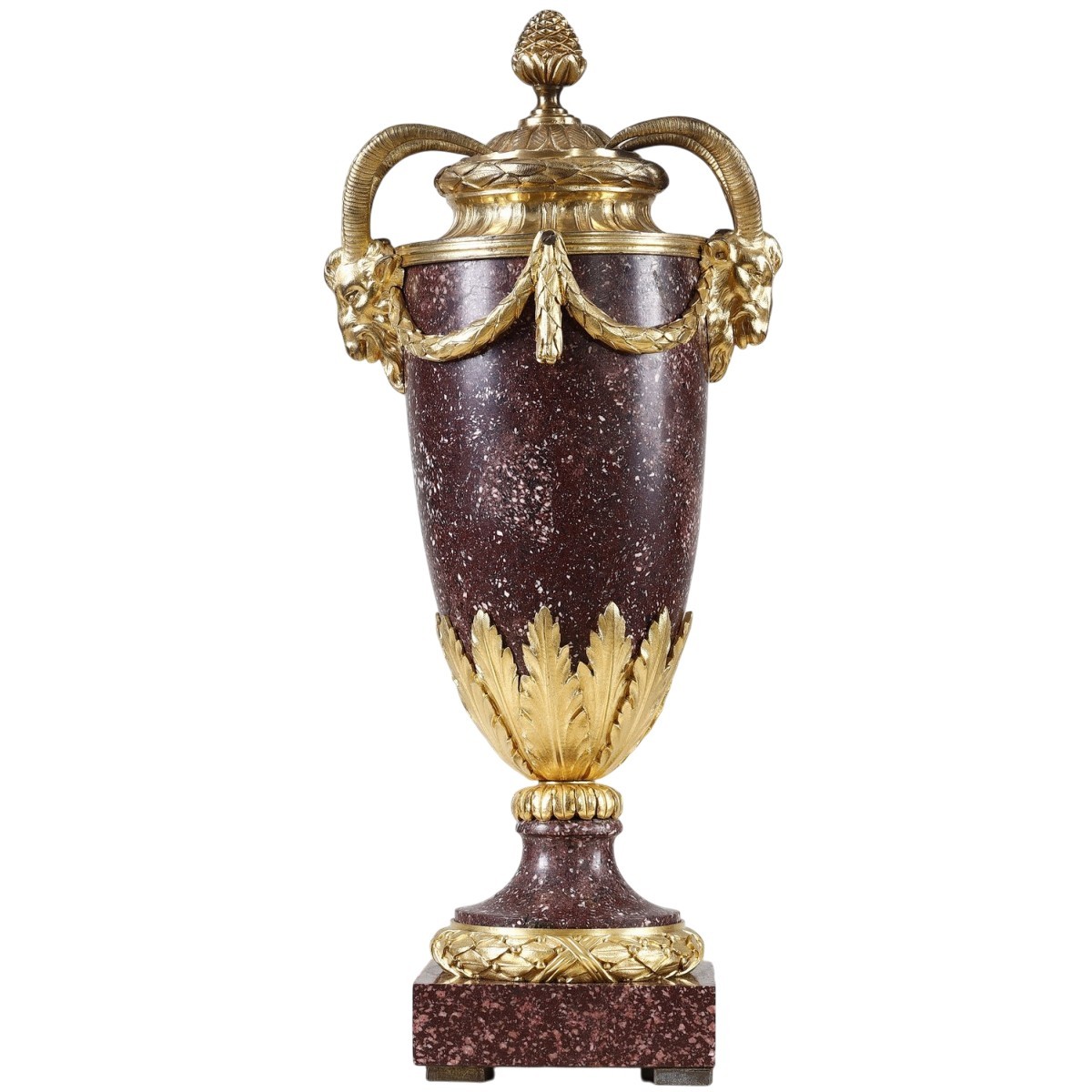
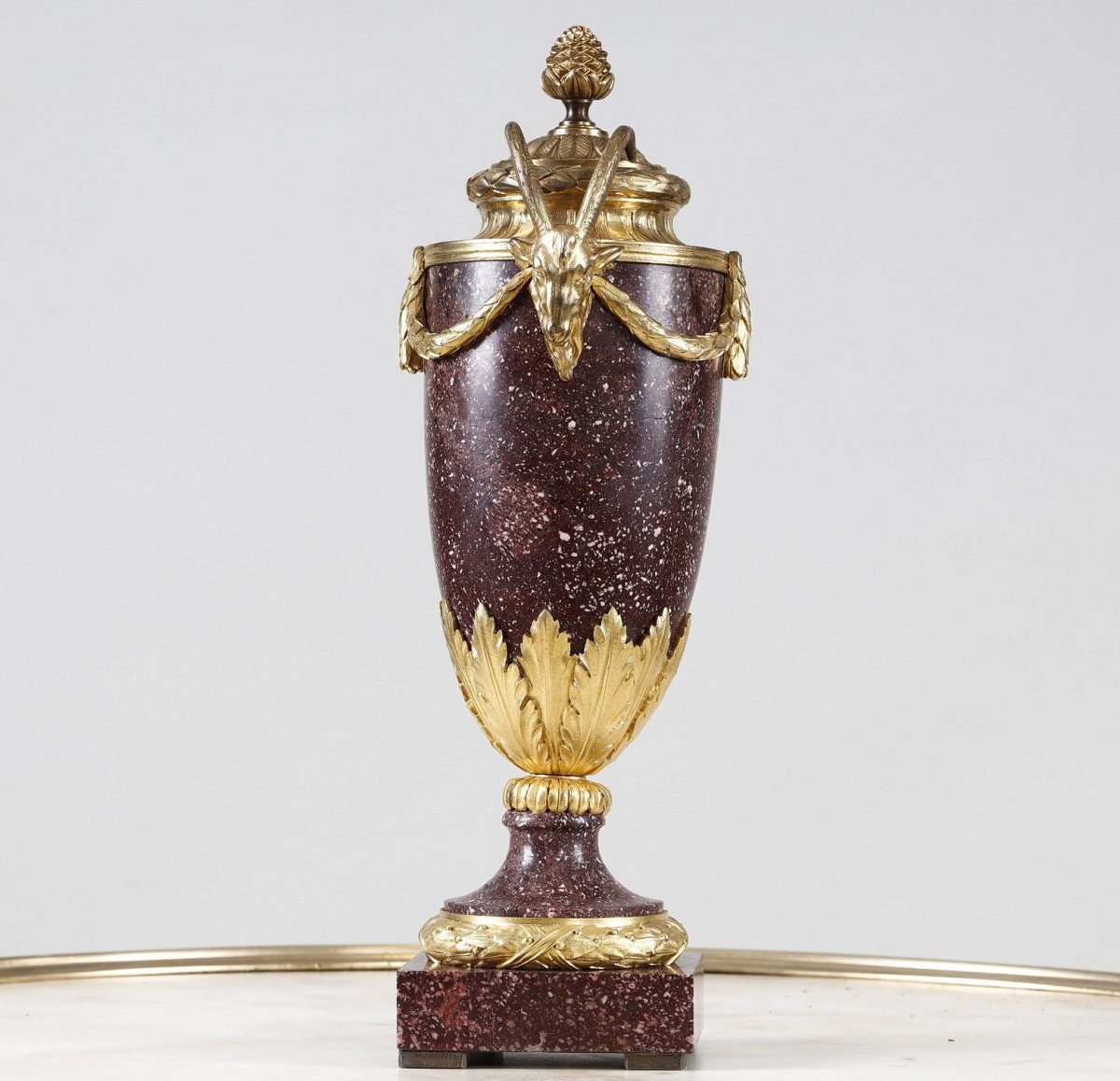

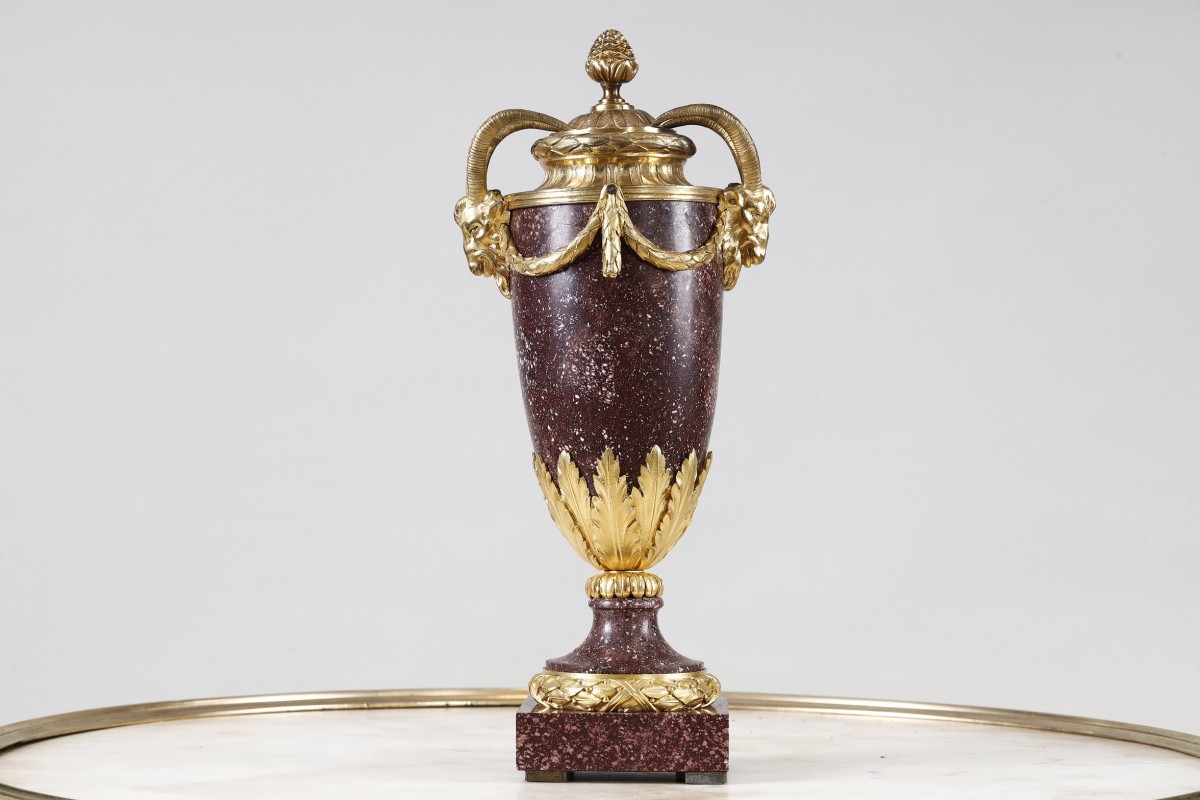
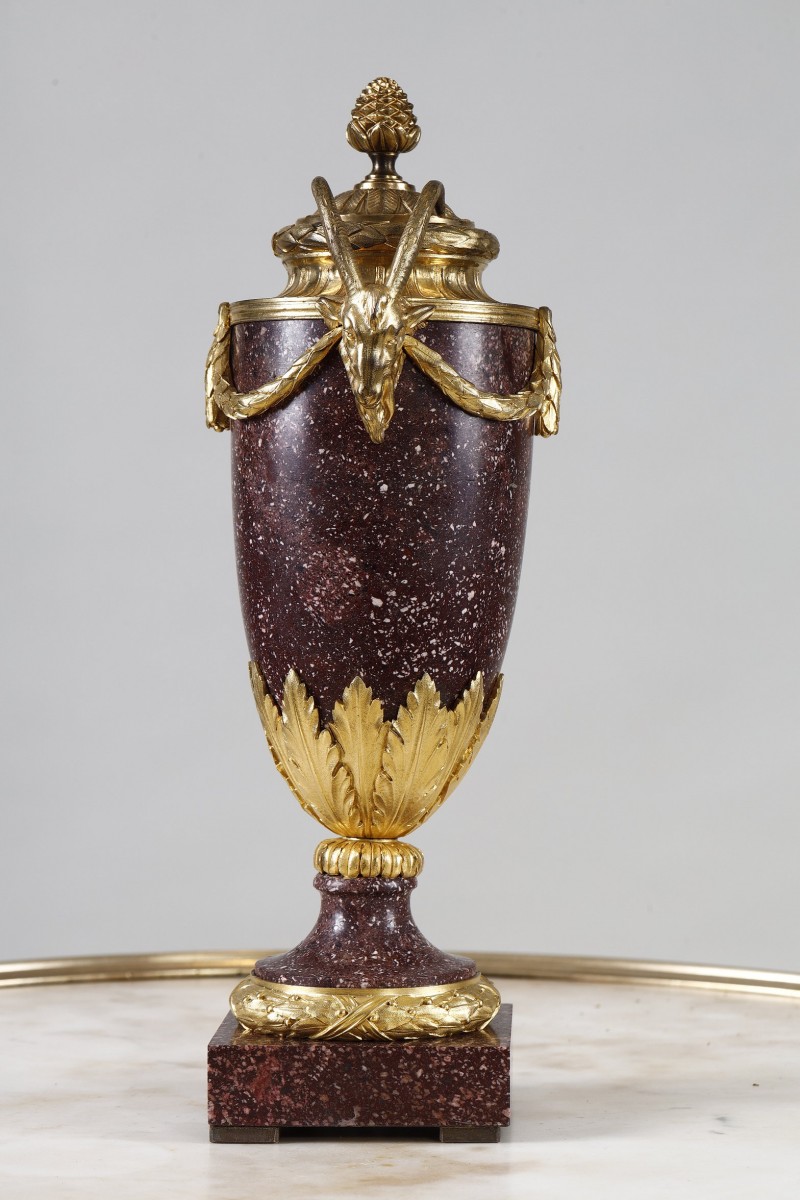
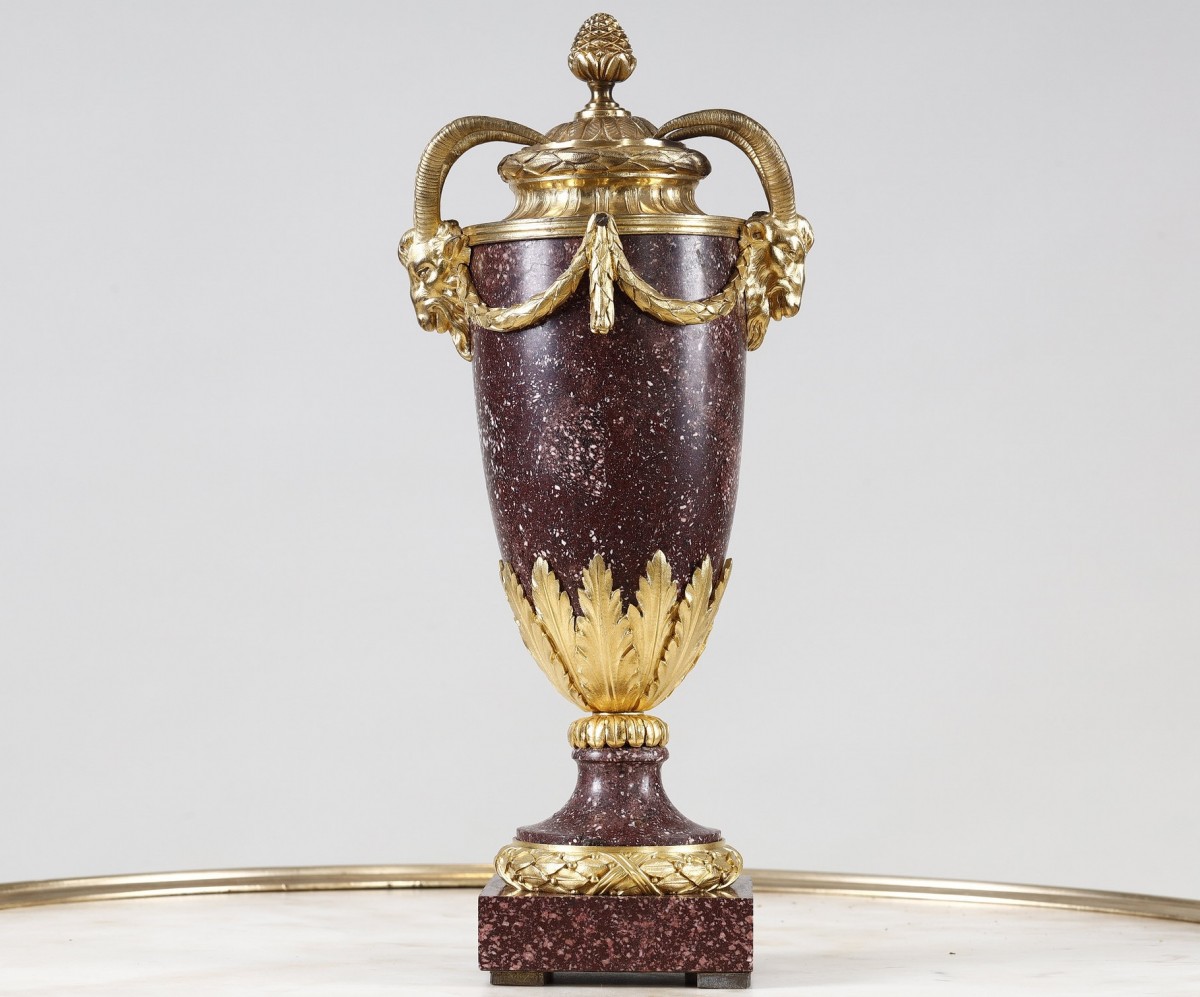
Magnificent porphyry urn mounted in gilt bronze, Louis XVI period, early 19th century – circa 1800-1820.
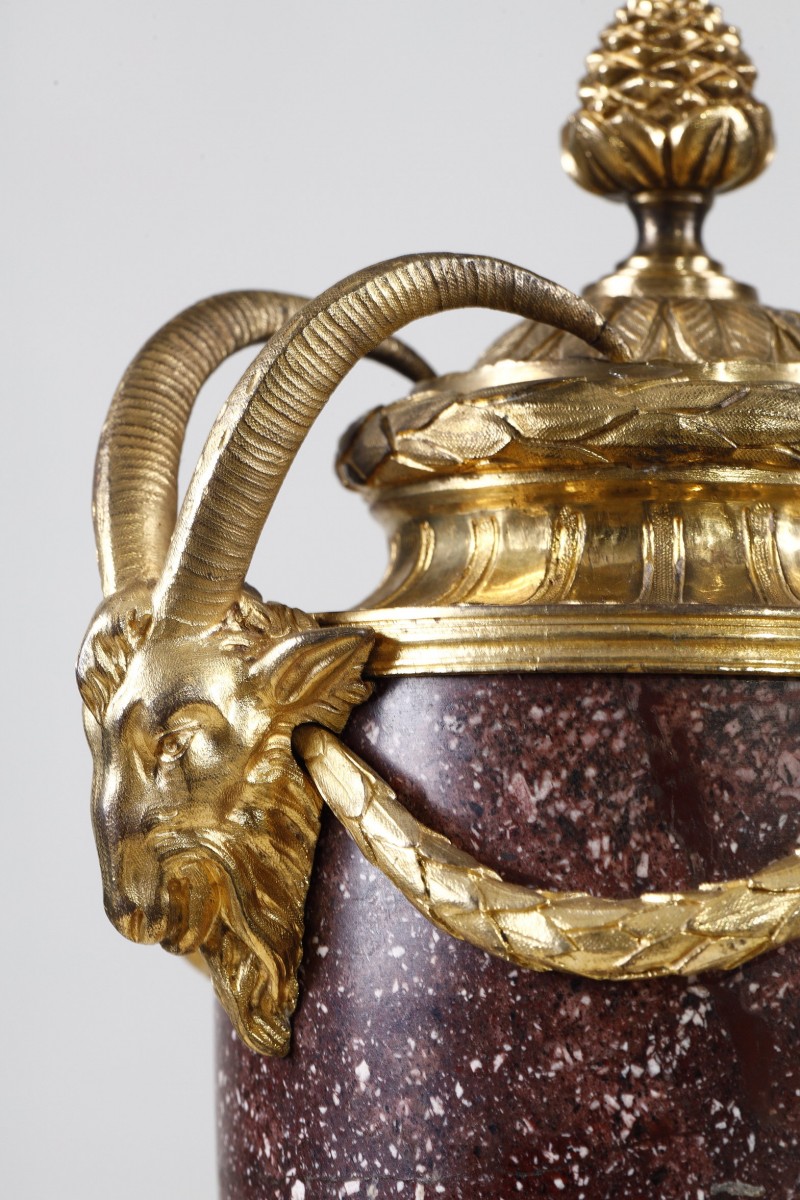
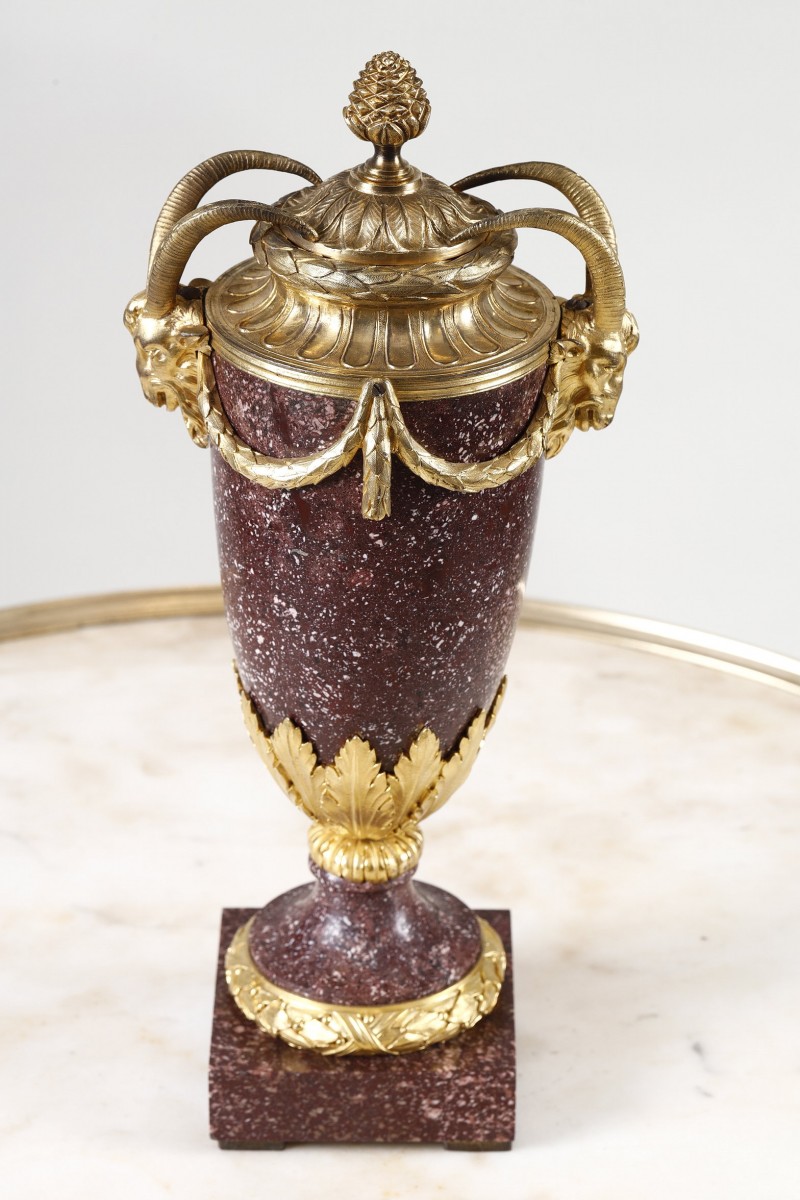
The ovoid body is carved from rich, deep porphyry; a stone of ancient origin particularly prized for its rarity and noble appearance.
This precious material was used in the 18th and 19th centuries to create small ceremonial objects. These were mounted in mercury-gilt bronze, finely chased and decorated with various motifs.
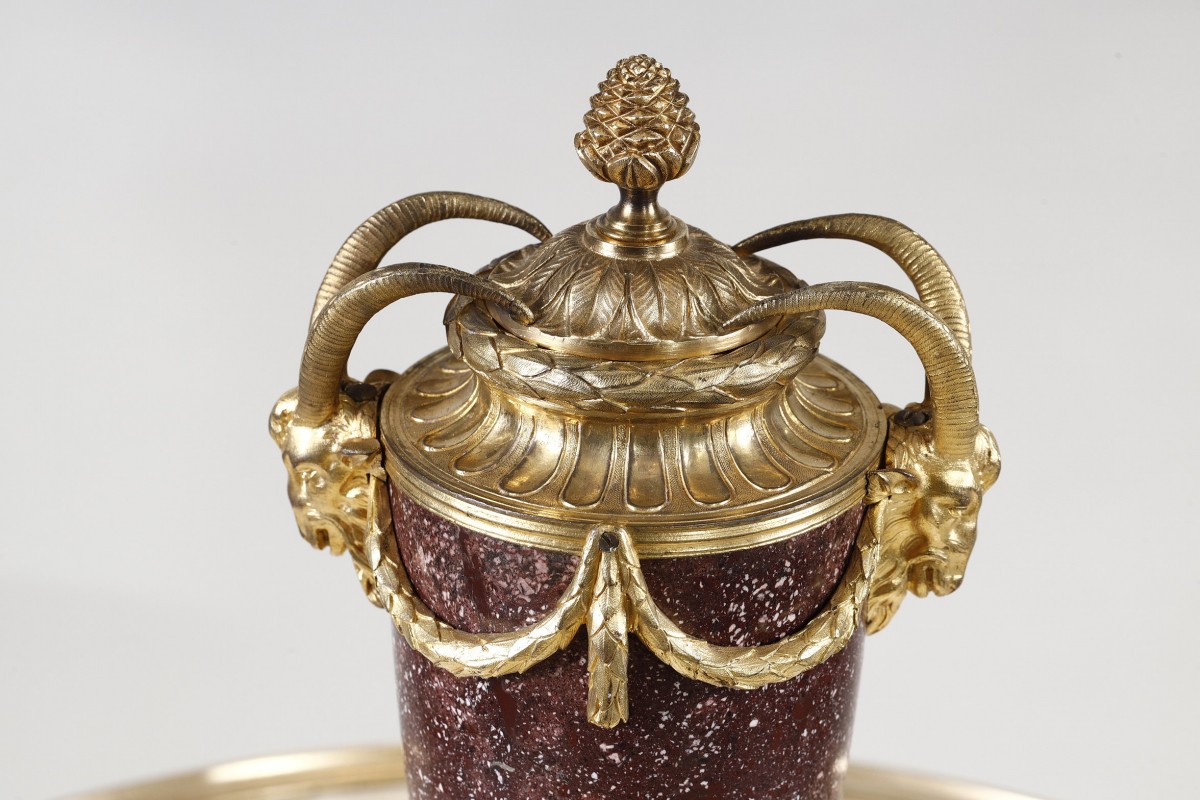
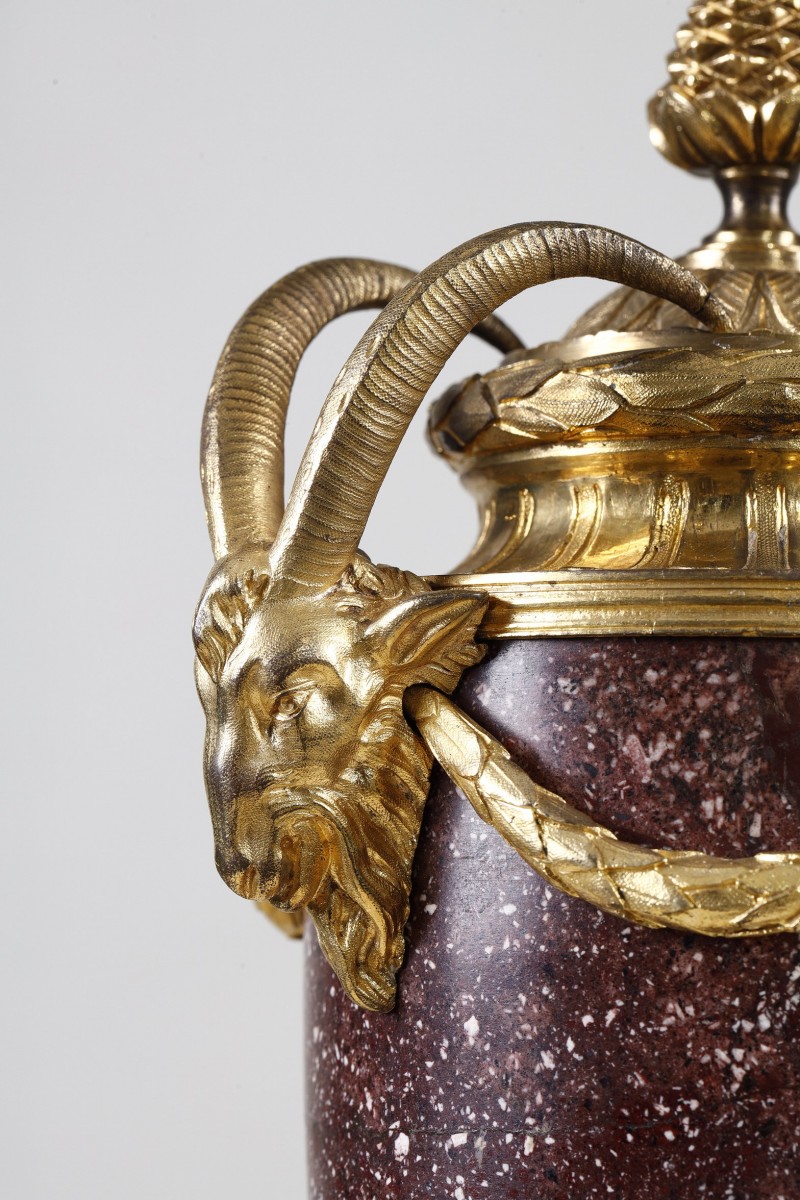
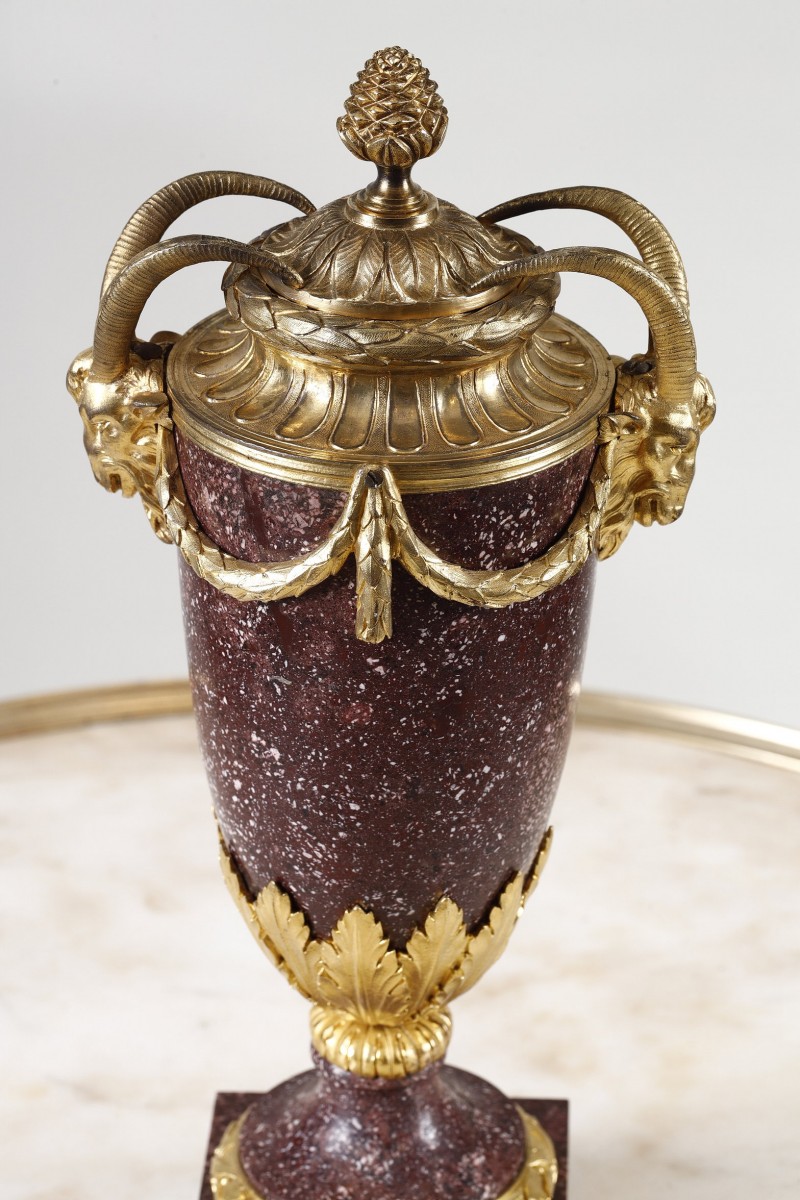
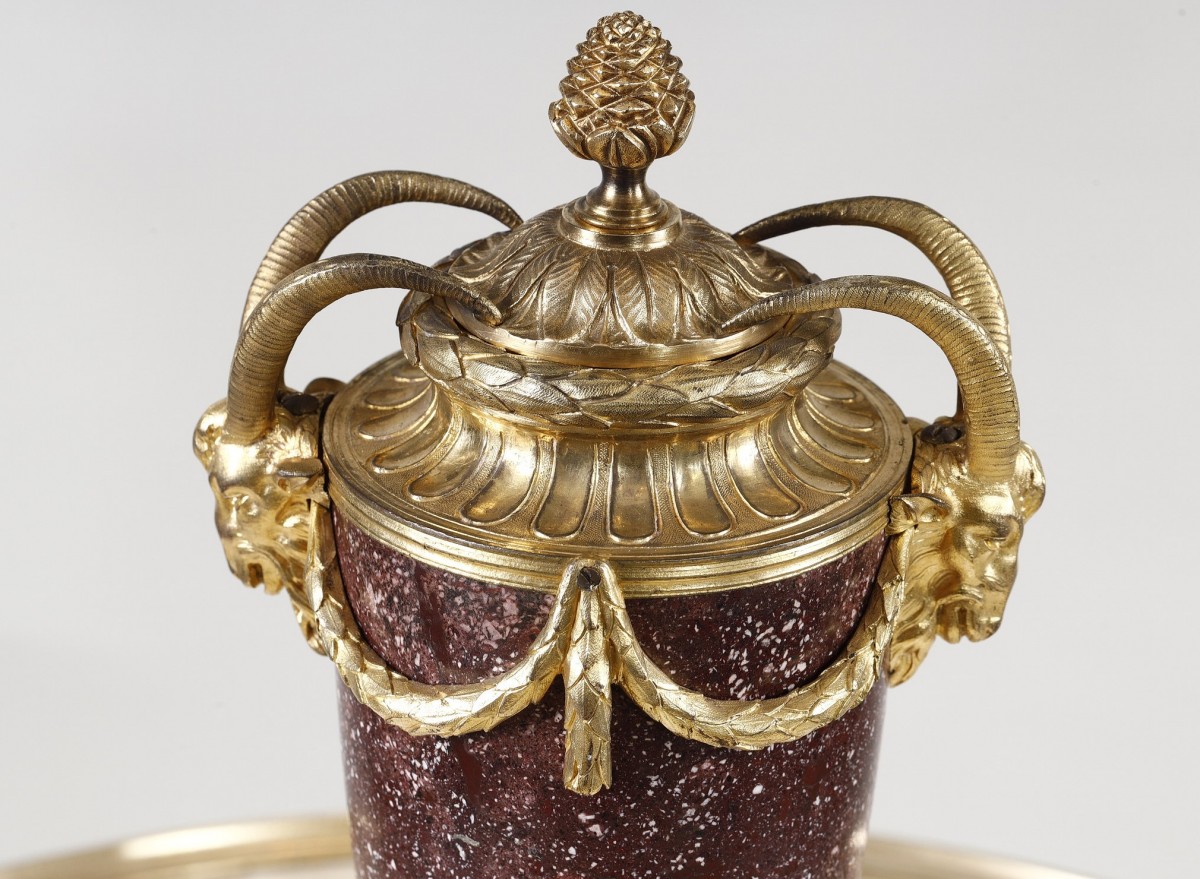
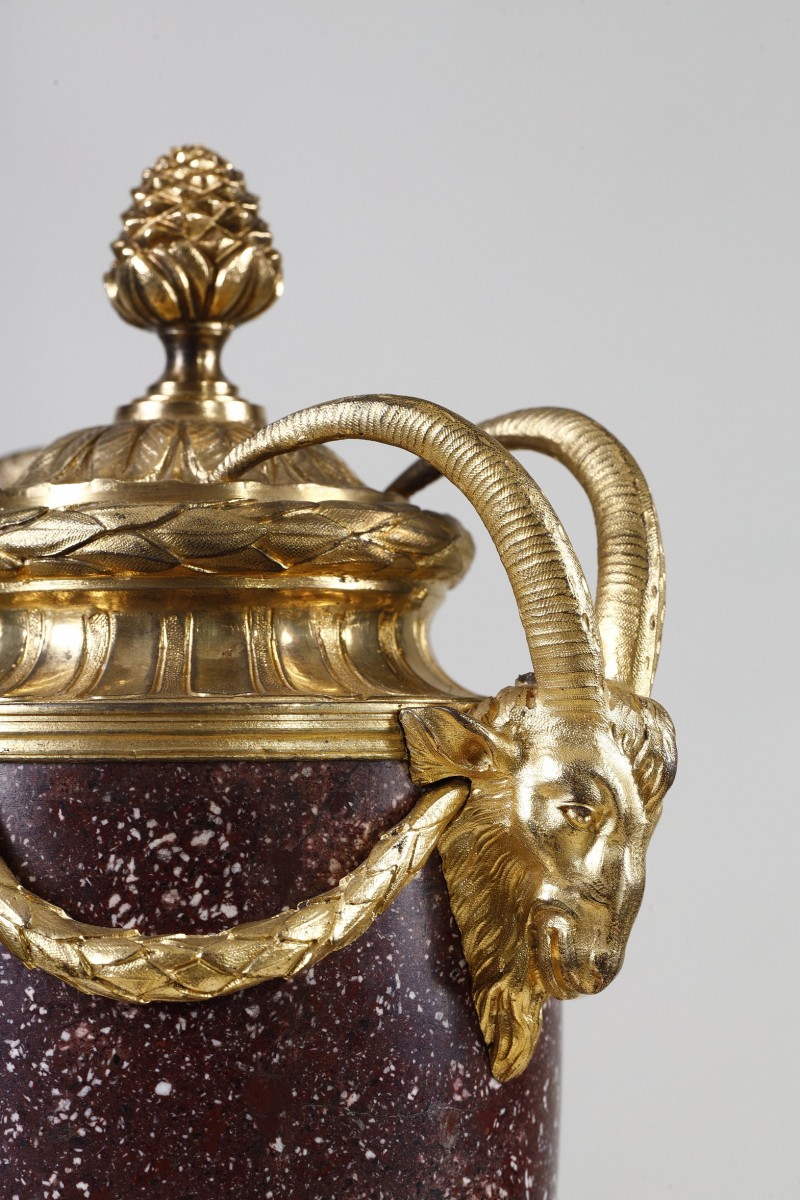
Here, the finely crafted handles are adorned with ram's heads, a figure prized by the 18th-century aristocracy for its symbolism of strength and vitality.
From each finely chiseled head emerge graceful laurel wreaths arranged in garlands.
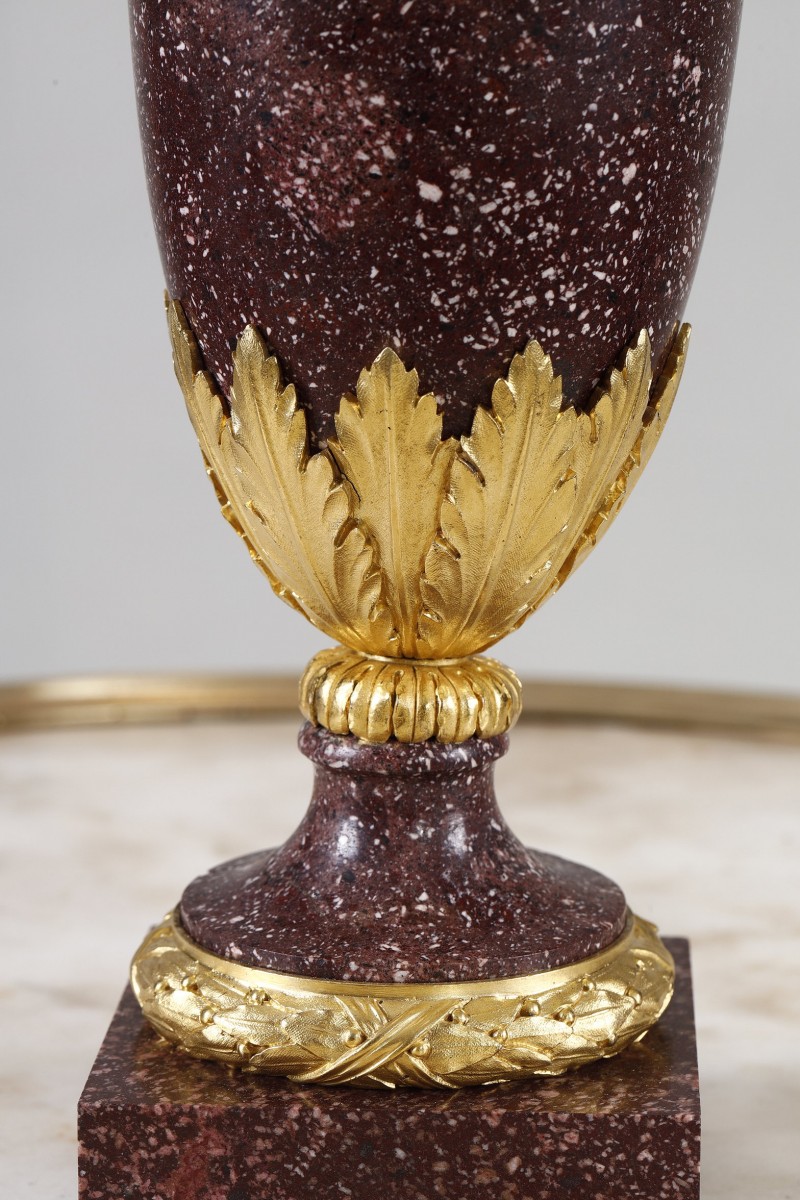
The vase is surmounted by a flared, fluted neck, crowned with a laurel wreath and topped with a pine cone. Its base is decorated with a band of laurel leaves, adjacent to the foot.
The vase rests on a pedestal encircled by a beaded laurel wreath, a motif frequently used in Louis XVI ornamentation, evoking both victory and glory. It also rests on a square base, also made of porphyry.
A very fine Louis XVI decorative object, dating from the early 19th century, notable for its noble materials (Egyptian porphyry and gilt bronze), its size (36 cm high), and its exquisite craftsmanship.
Dimensions: H 36 cm