Offered by Galerie Gilles Linossier
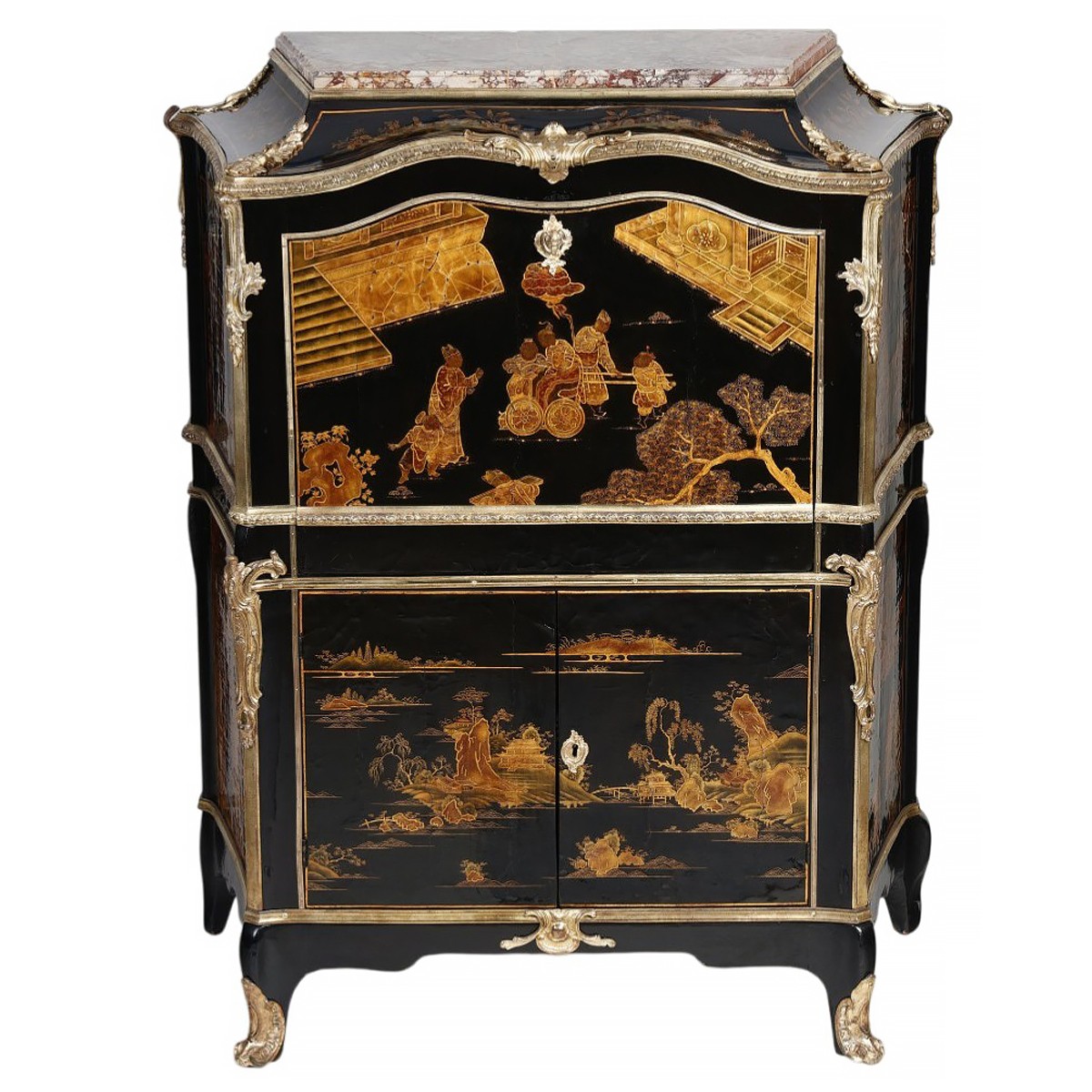
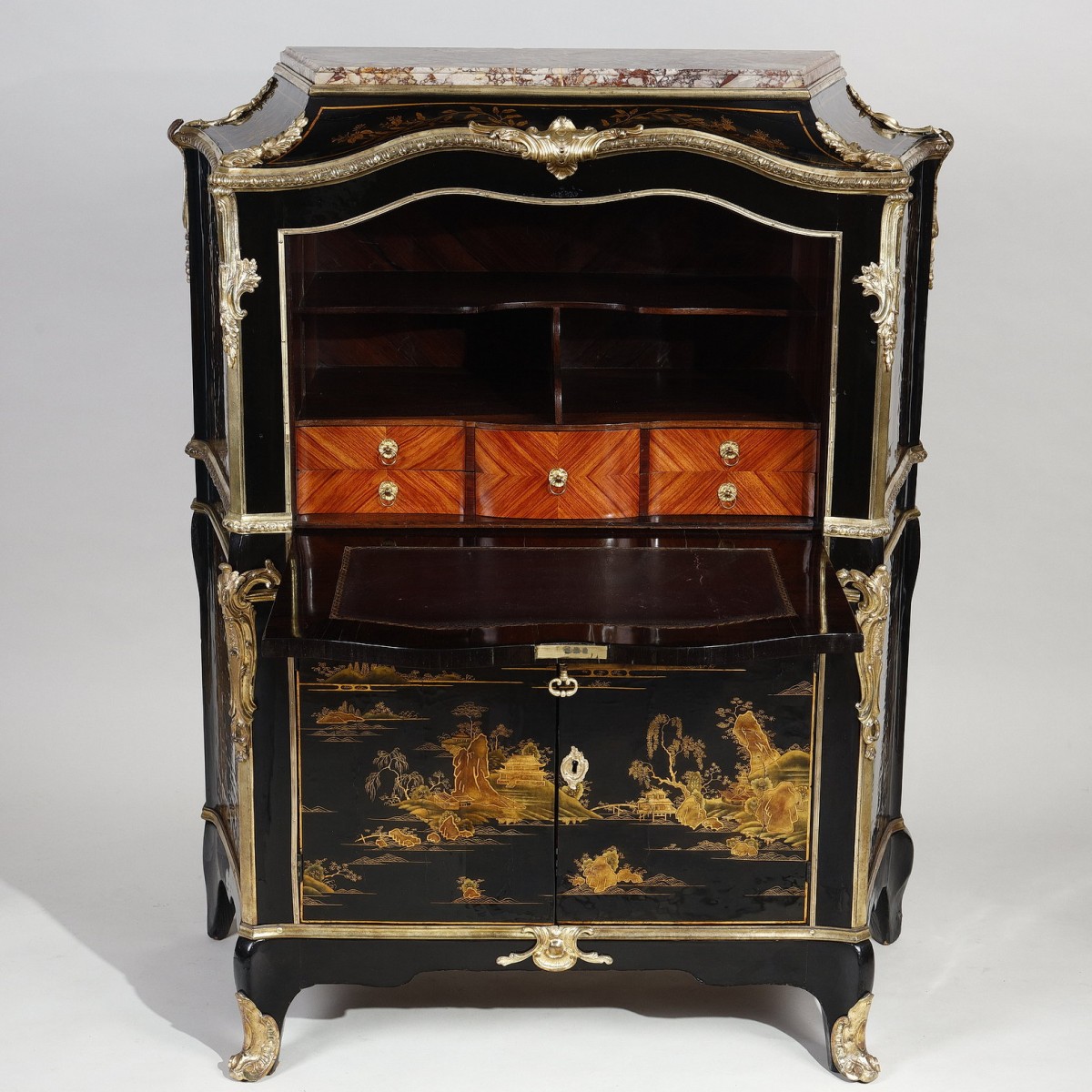
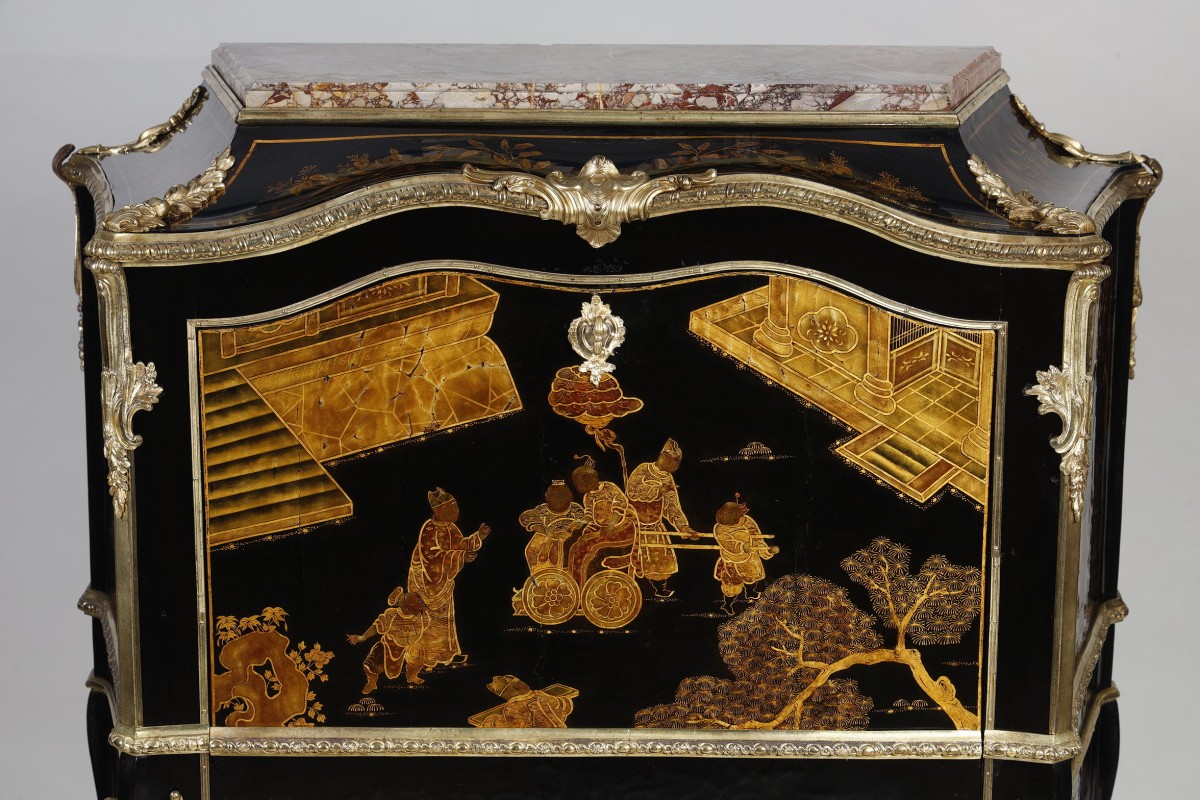

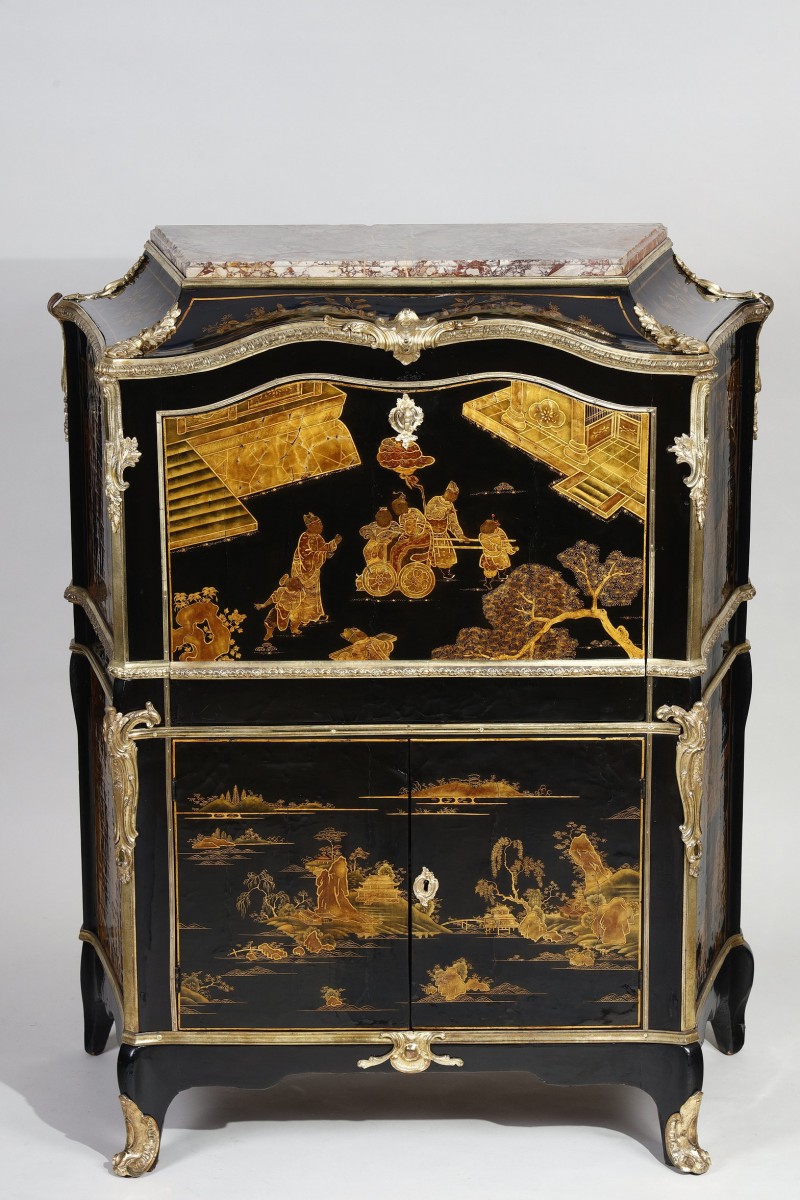
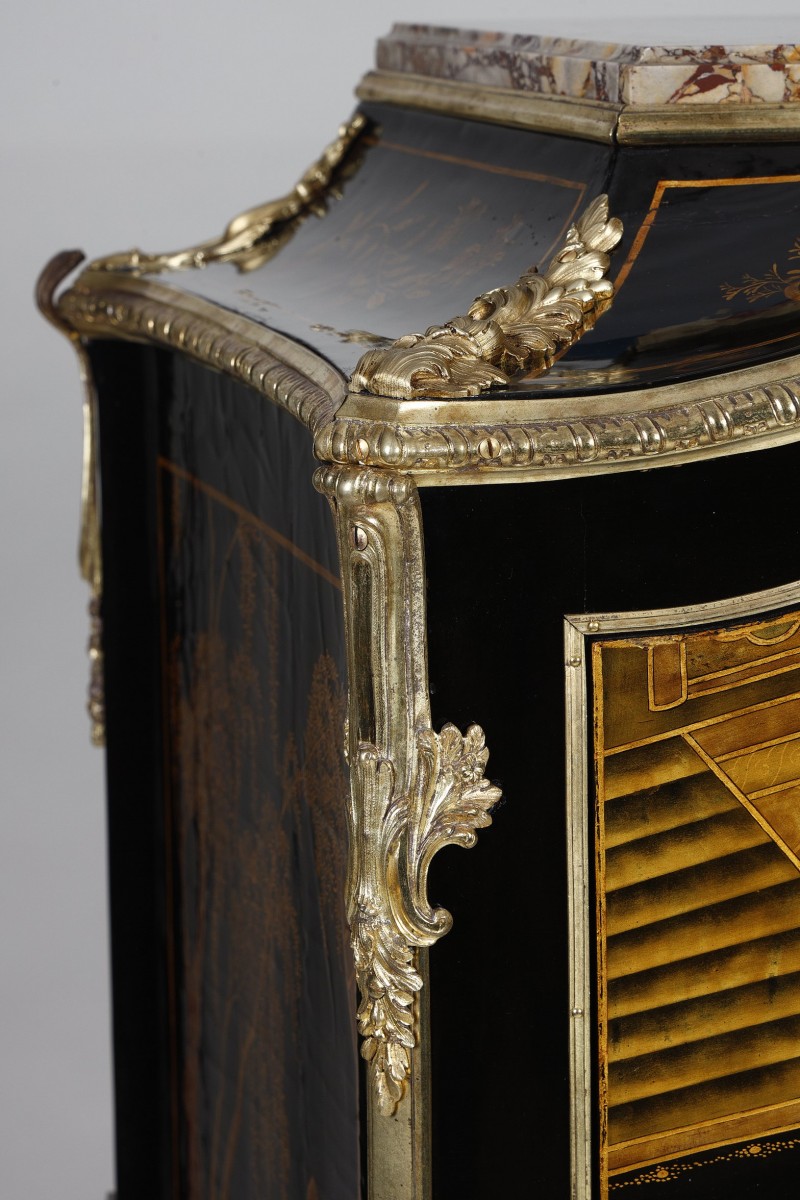
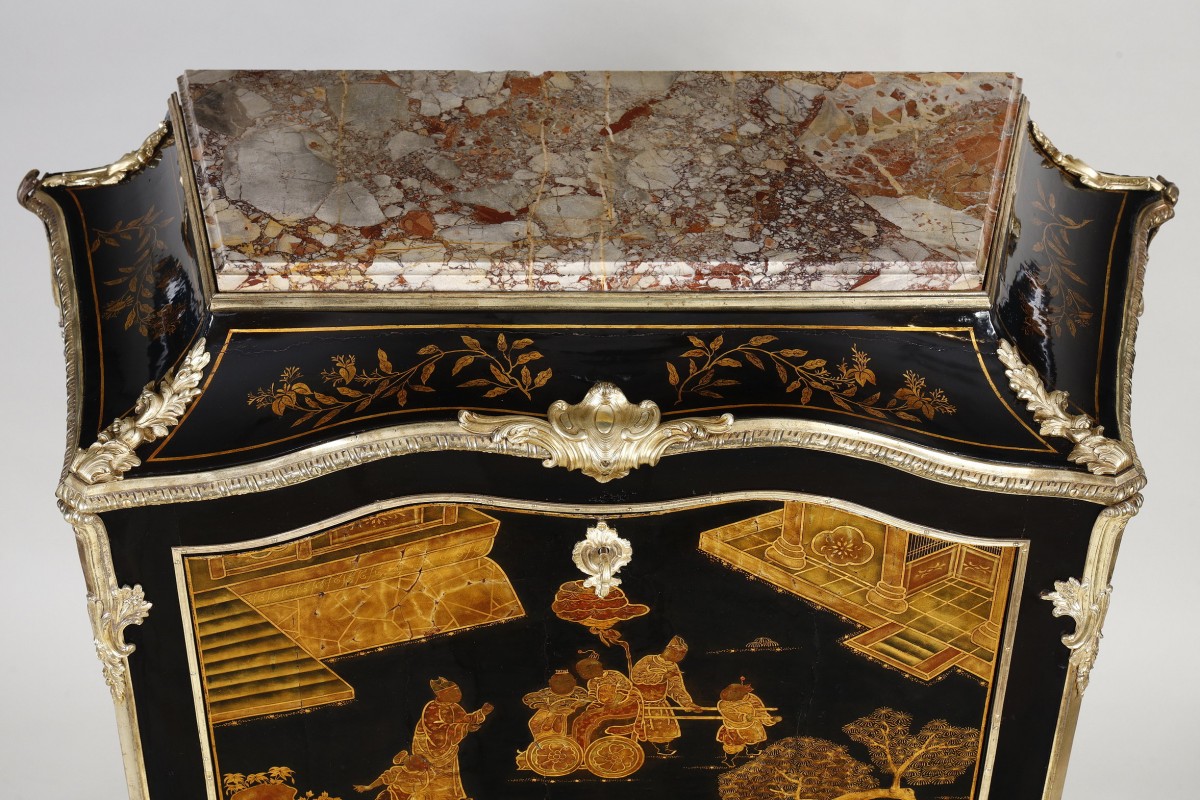
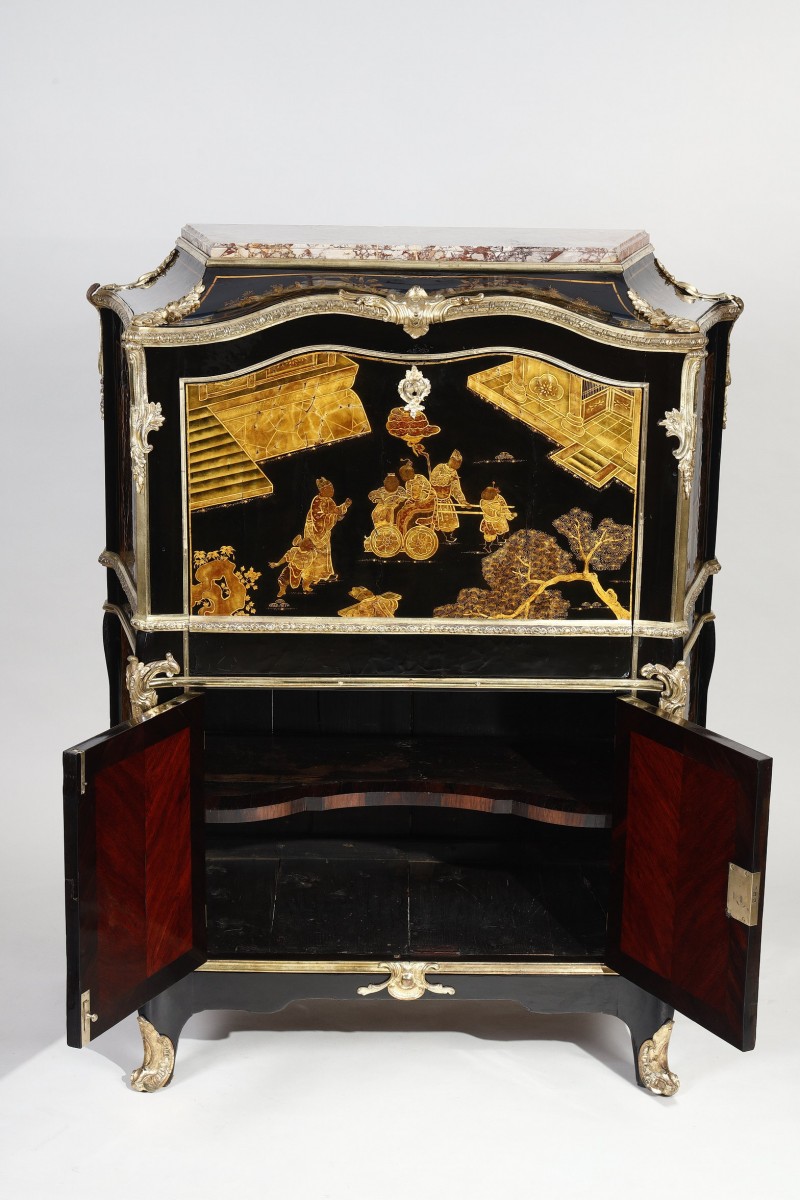
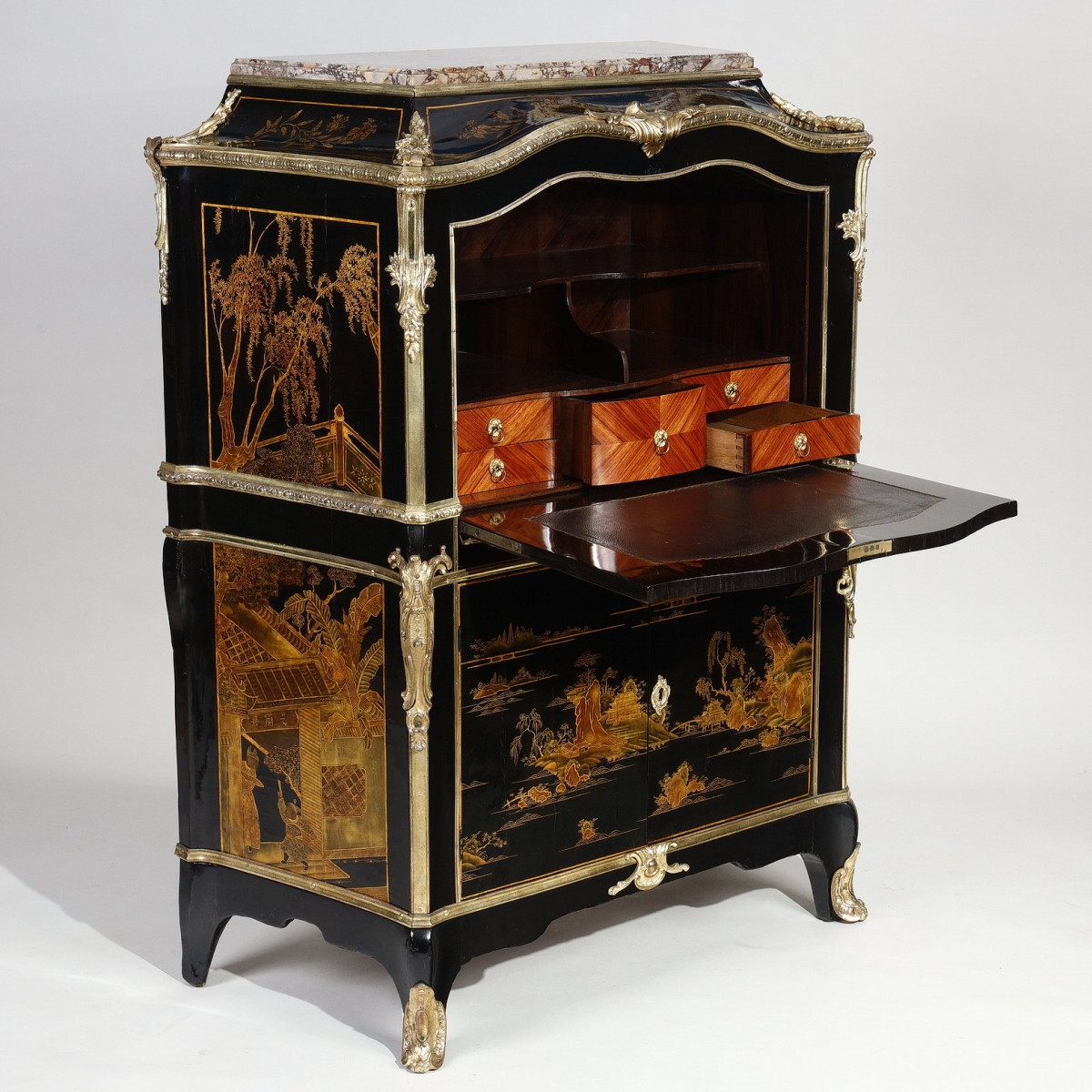
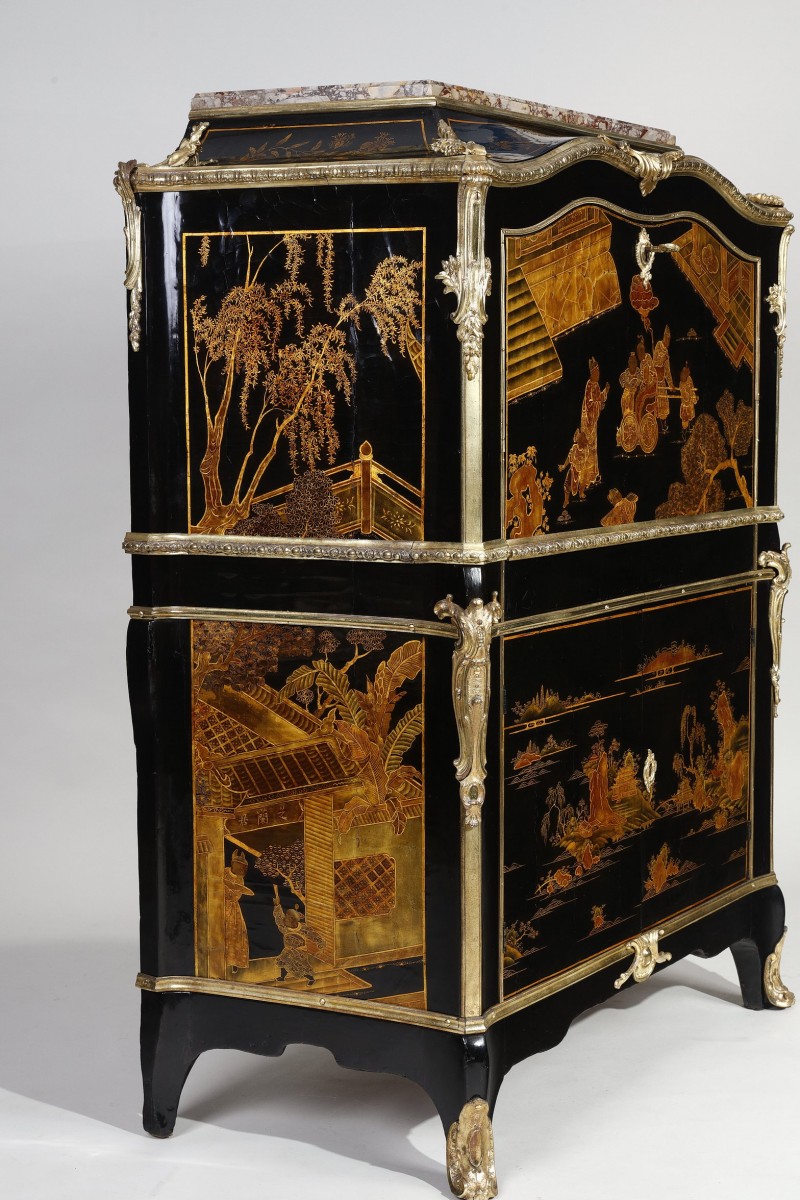
The top is made of molded breccia marble, framed by a gilt bronze molding mounted with a paste (note a correction in the fixing notches).
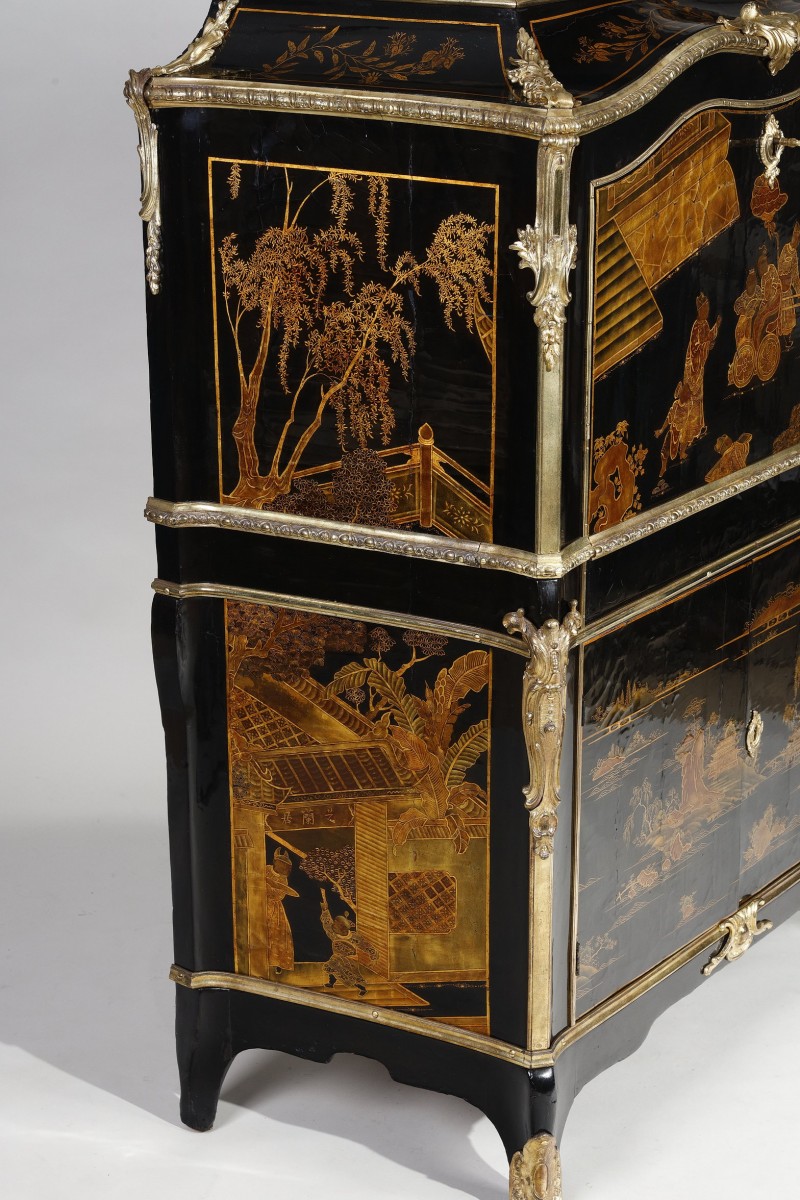
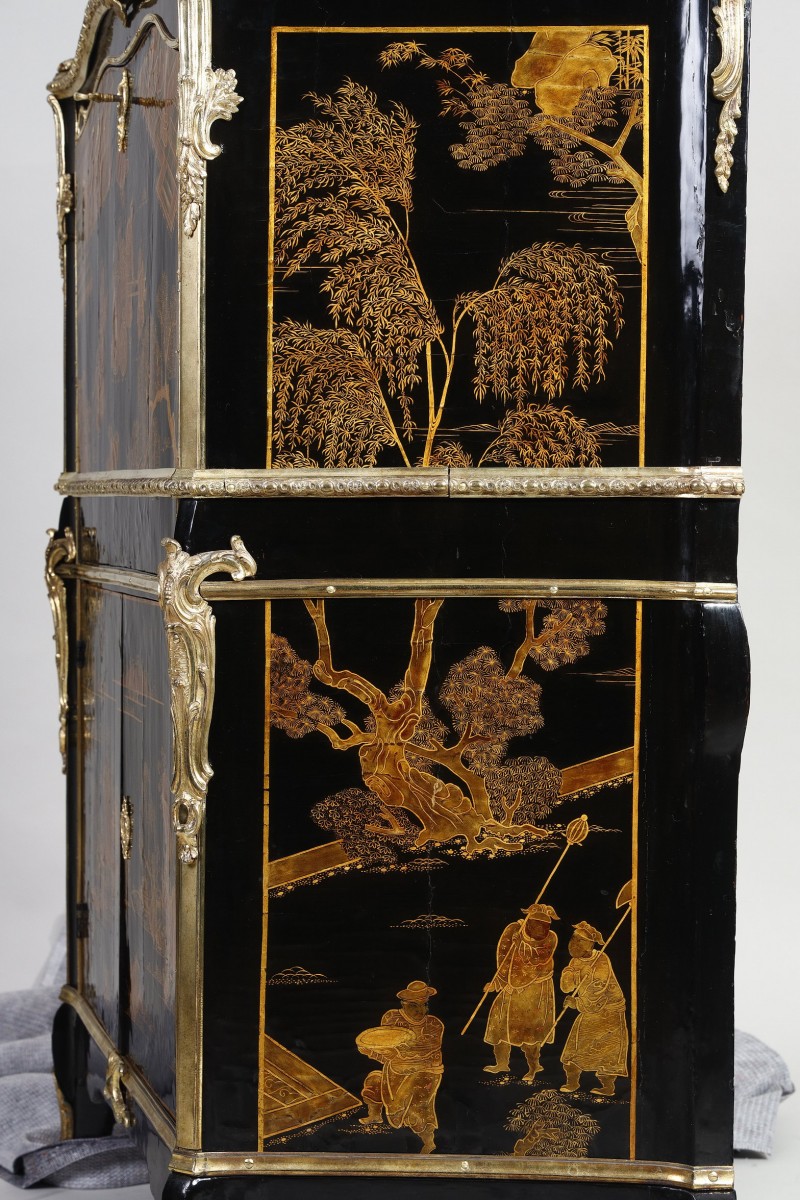
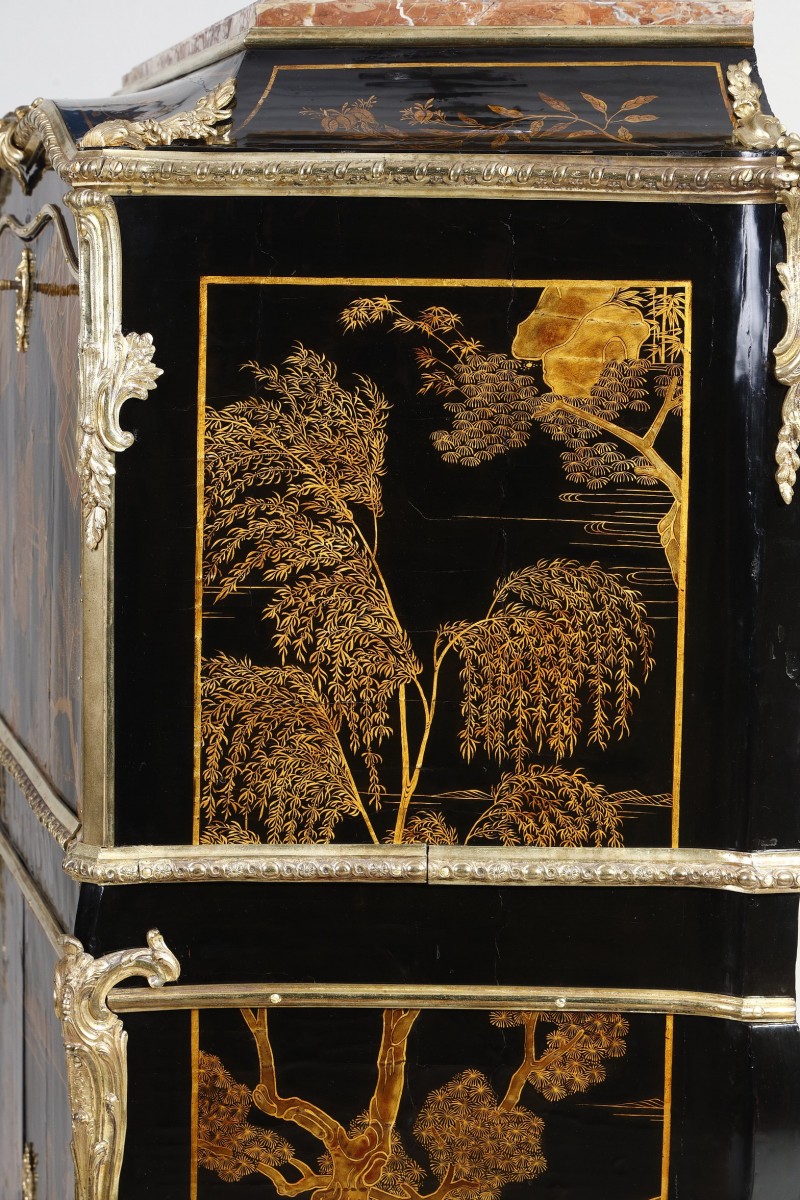
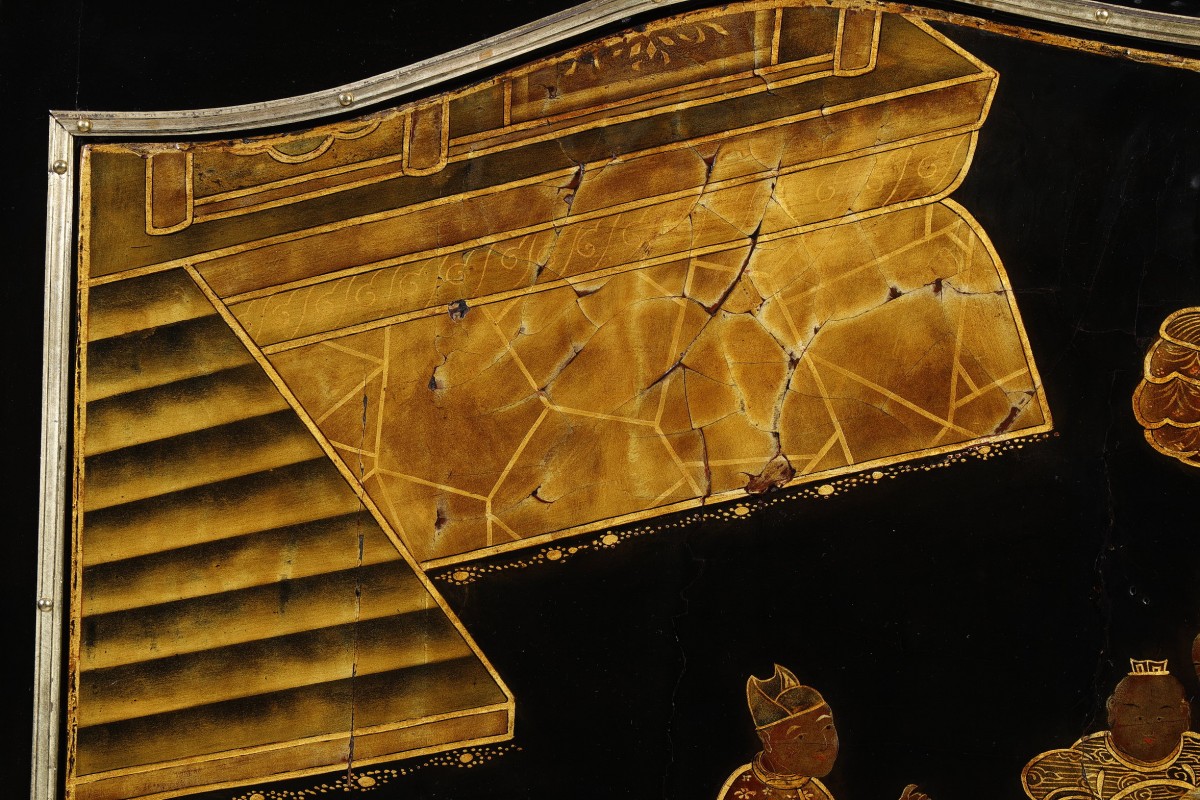
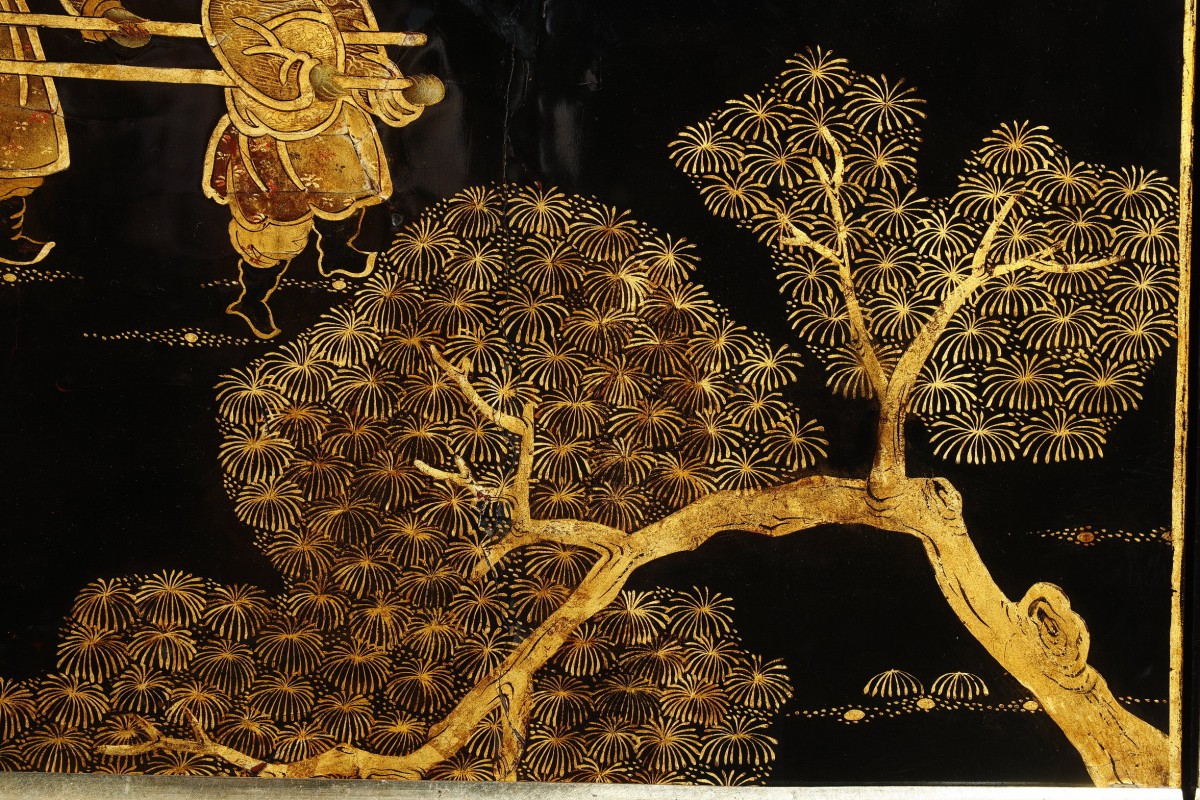
The drop-front and the two front doors are covered in black, gold, and brown Chinese lacquer, as are the sides, each decorated with two large panels of the same lacquer.
The decoration of the cyma molding, with a leafy branch motif, is executed in Martin varnish (European lacquer) in the Chinese style.
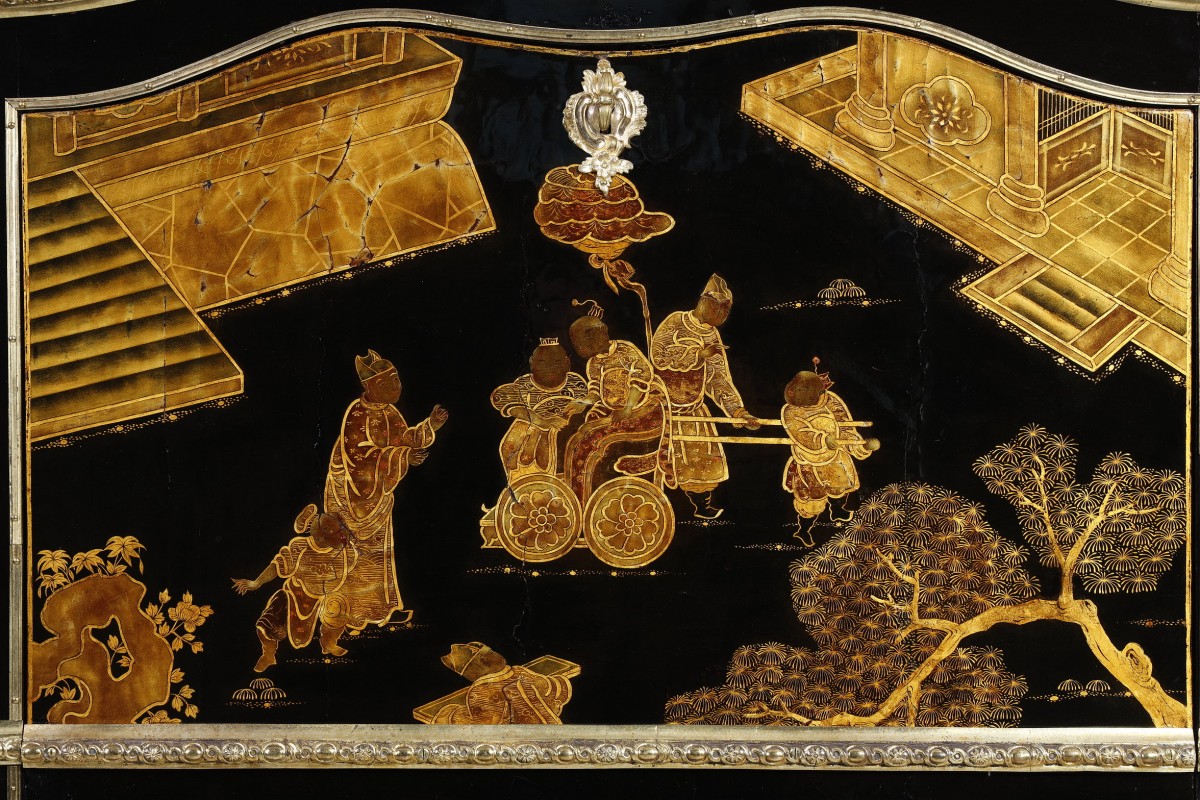
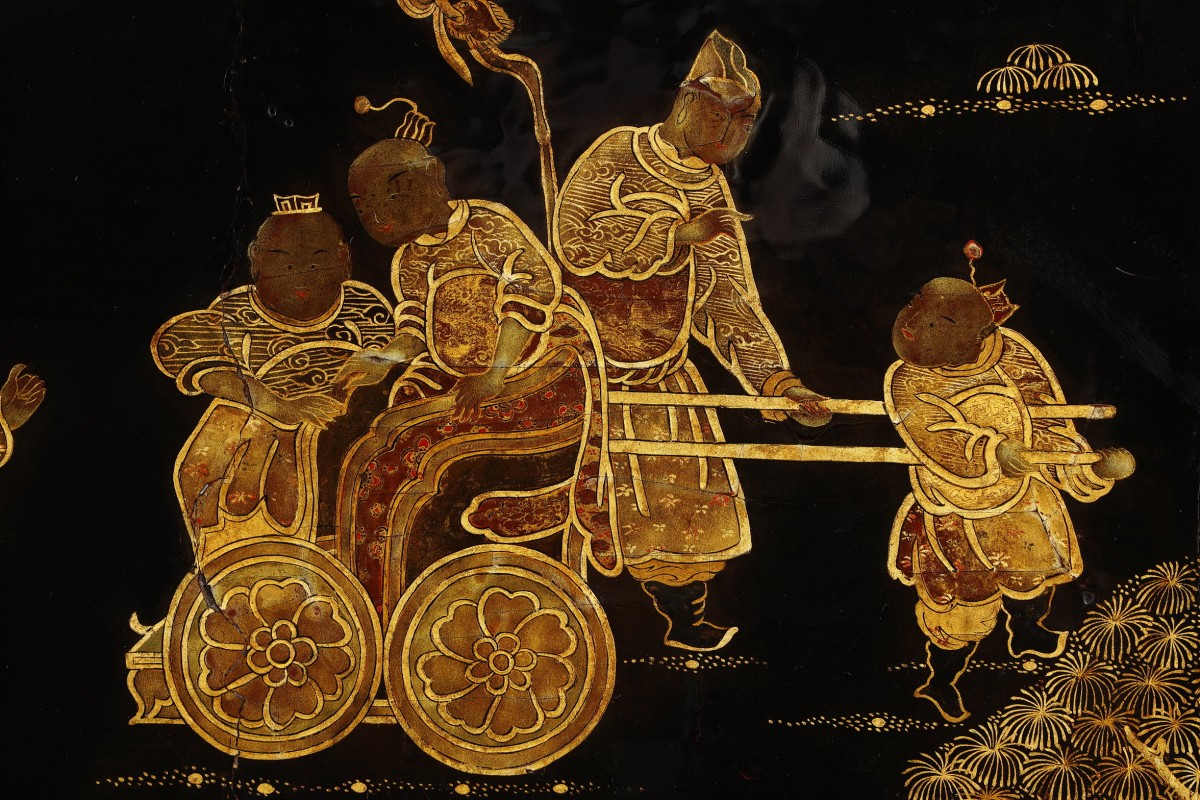
The lacquer panel on the drop-front depicts, in the center, figures in a four-wheeled rickshaw, along with palace entrances and foliage.
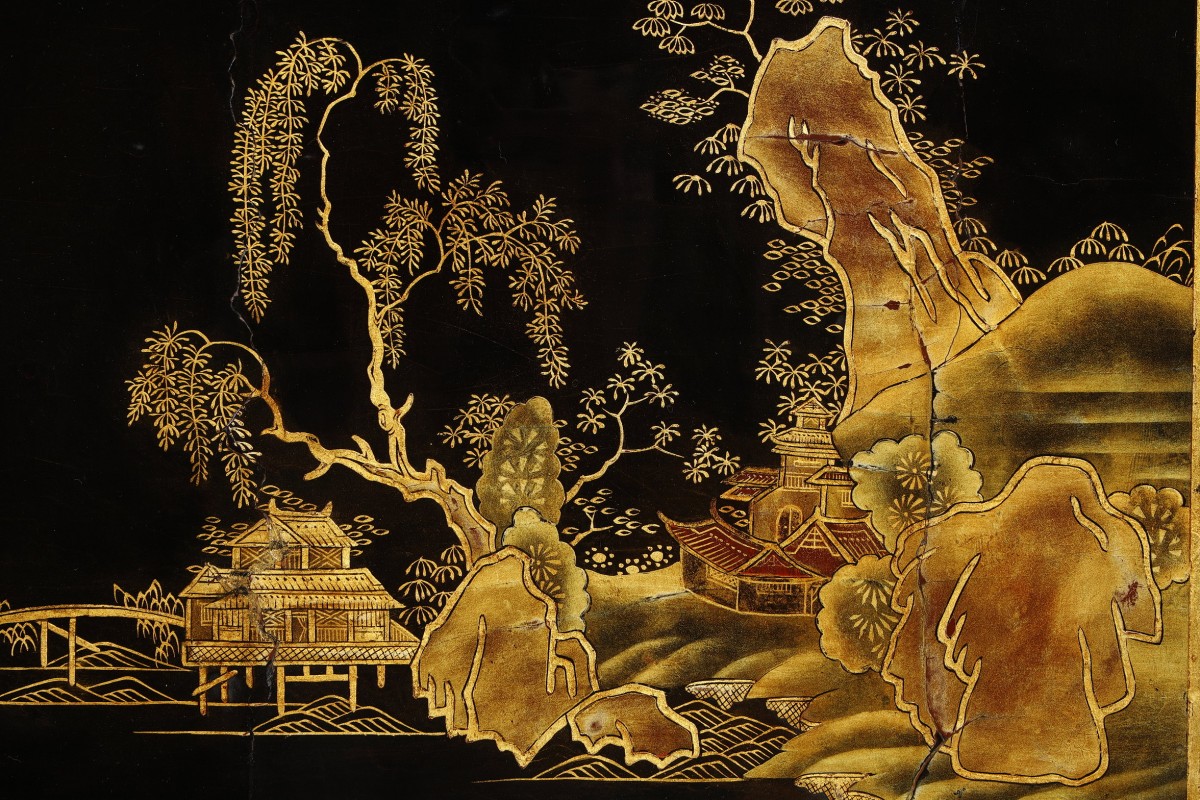
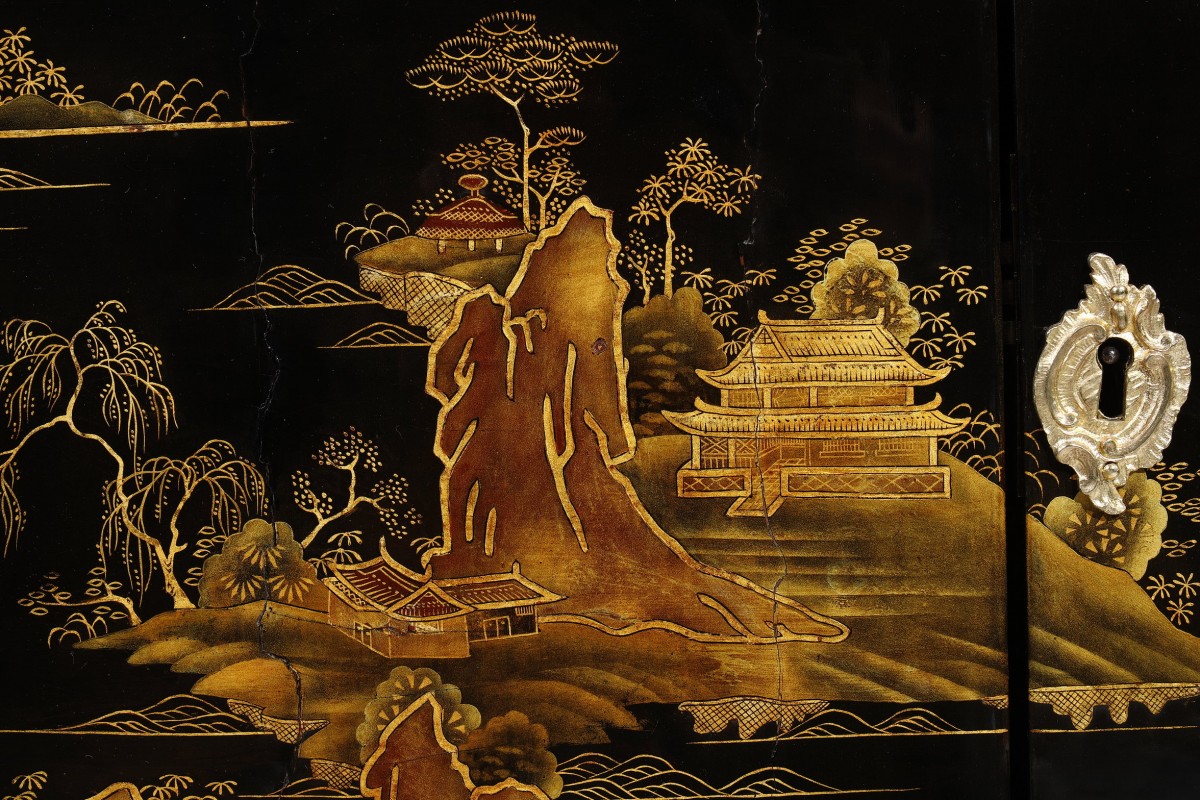
The lacquer panels on the two lower doors depict inhabited islands and a bridge connecting them.
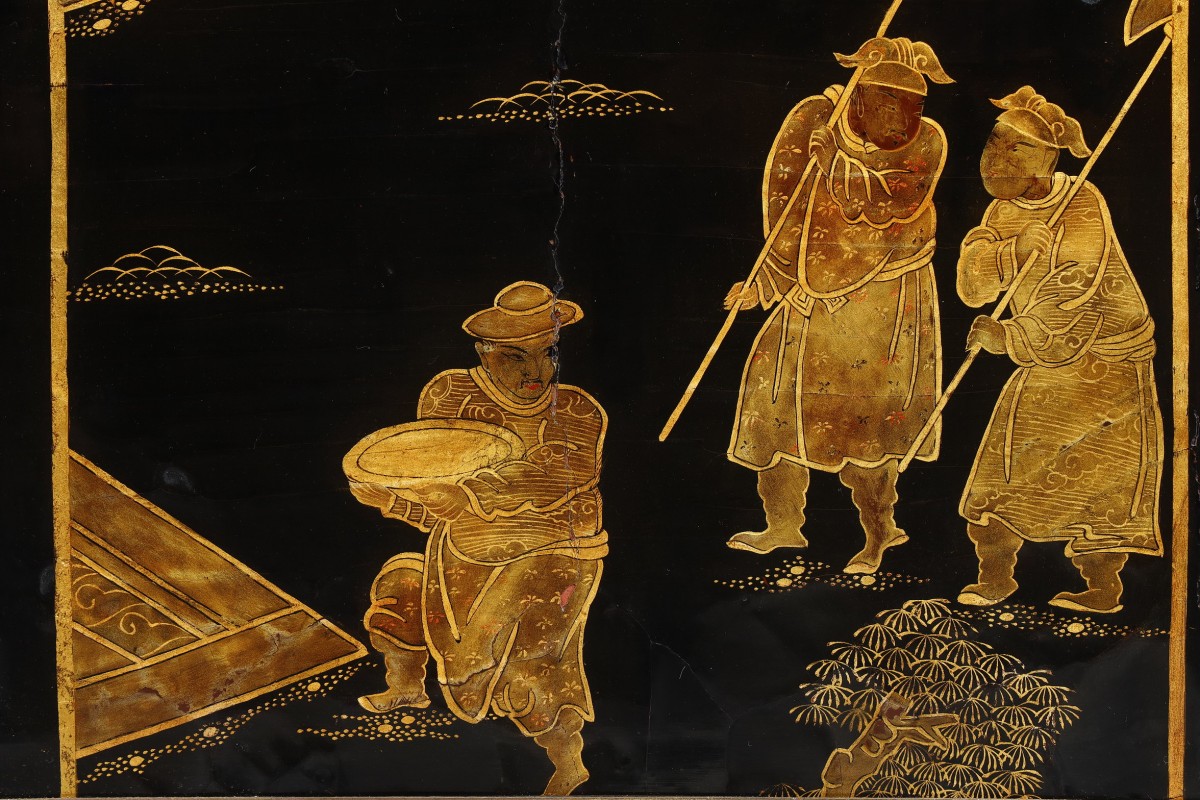
The sides feature views of parks, entrances to houses, and figures in procession.
The panel frames are finished in European black lacquer.
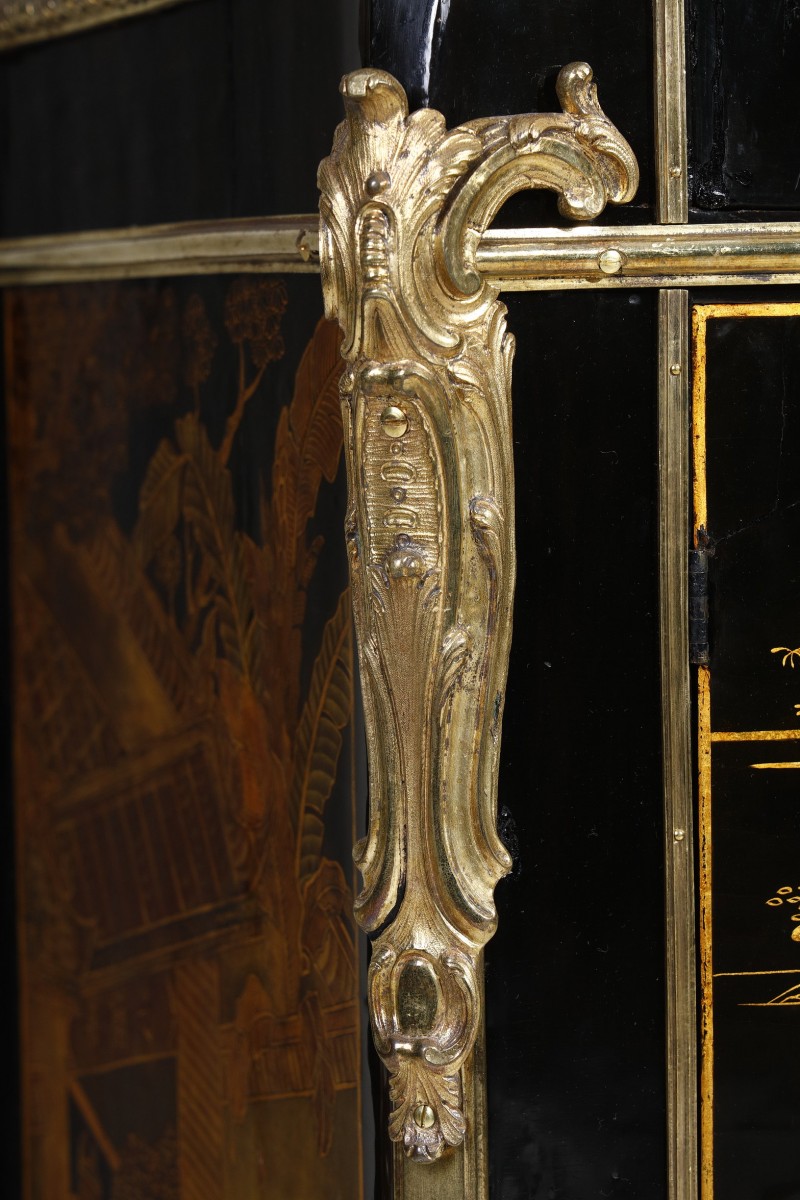
Some of the original bronze mounts, such as the astragal, reserve and frame fillets, and drops from the front uprights decorated with lacquered foliage, are present; other parts have been replaced or are missing.
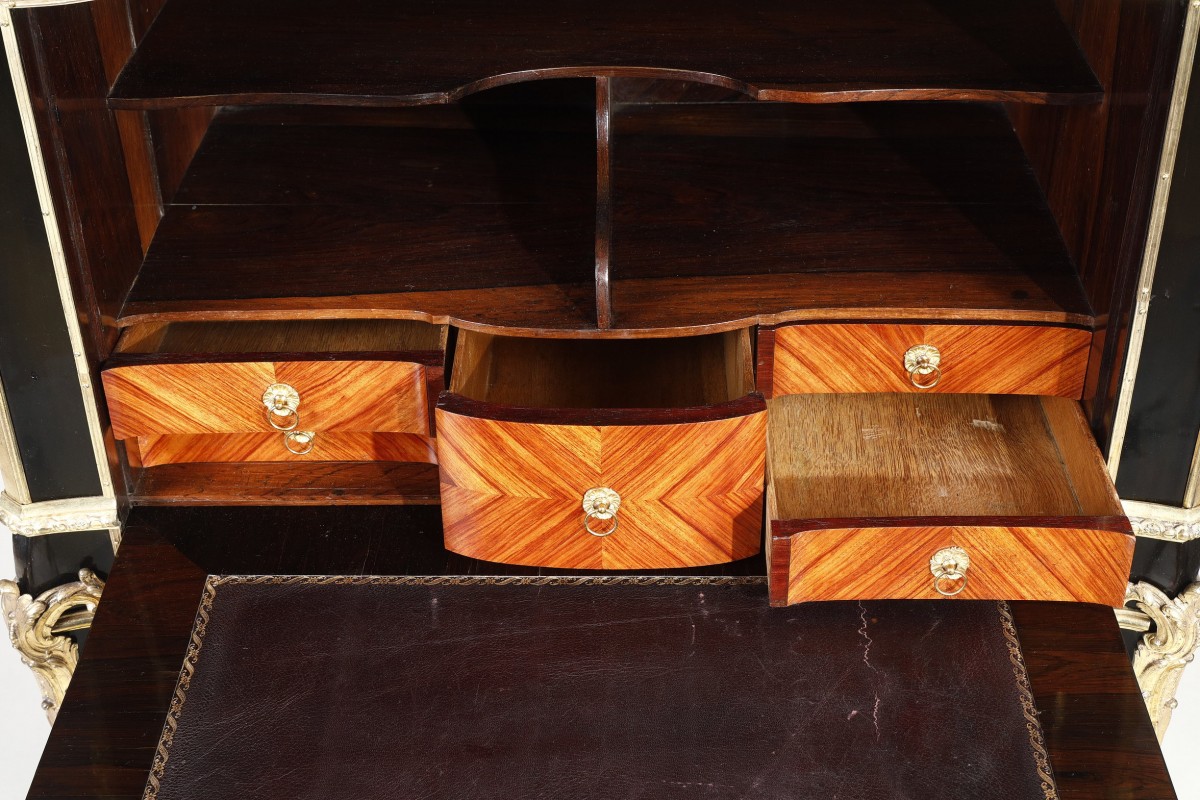
The drop-front reveals an interior veneered in Brazilian rosewood and drawers veneered in rosewood.
Provenance
Lot 73, Christie’s, Masson and Woods sale, London, July 2, 1981, reproduced in the catalogue. References cited in the 1981 catalogue: "A particularly close comparison is the lacquer cabinet (with two doors high) in the Forsyth Wickes collection (C. Packer, Paris Furniture, 1957, fig. 85)."
This is a more sumptuous version at Goodwood House, Sussex, which was probably given or purchased by the 3rd Duke of Richmond, ambassador to France after 1763 (P. Verlet, *French Furniture and Decoration of the 18th Century*, 1967, figs. 120 and 121).
However, the majority of extant examples feature floral marquetry characteristic of BVRB.
One example from the Ford collection was sold by Sotheby Parke Bernet on February 25, 1978, lot 82; another from the Lord Michelham collection was sold by Sotheby & Co., Monte Carlo, on May 22, 1978, lot 236, unsold (stamped). A third (stamped) example from Lord Buckland's collection was sold in these rooms, May 21, 1936, lot 54;
while another (stamped) example from the collection of the Earls of Coventry was sold at Sotheby & Co., June 25, 1948, lot 54.
Two secretaries desk (both stamped) of this model from a private collection were exhibited at the Louis XV Exhibition, Hôtel de la Monnaie, Paris, 1974, nos. 428 and 429.
The Louis XV Exhibition catalogue suggests that these secretaries desks, generally dated to around 1755, may have been sold by Lazare Duvaux (1703–1758), the haberdasher.
The evident long-standing popularity of this model (particularly in view of the probable date of acquisition of the Richmond secretary) is indicated by the fact that the 6th Earl of Coventry, a discerning patron of a wide range of Neoclassical tastes, purchased his secretary from the renowned haberdasher Simon Poirier in 1763: 'A secretary in a cabinet fitted with gilt bronze… 1,000
The name BVRB – Bernard II Van Risen Burgh – is one of the most sought-after in the world of 18th-century furniture.
While this secretary desk is only attributed to him, its quality of execution speaks for itself.
Kept out of public view since its sale at Christie’s in London in 1981, it has been able to be compared to the master cabinetmaker’s work by examining very similar pieces.
One of these is a lacquer cabinet from the Forsyth Wickes collection, acquired by the 3rd Duke of Richmond, ambassador to France after 1763, for his residence at Goodwood House.
Dimensions: H 129 cm x W 108 cm x D 46 cm