Offered by Galerie Gilles Linossier
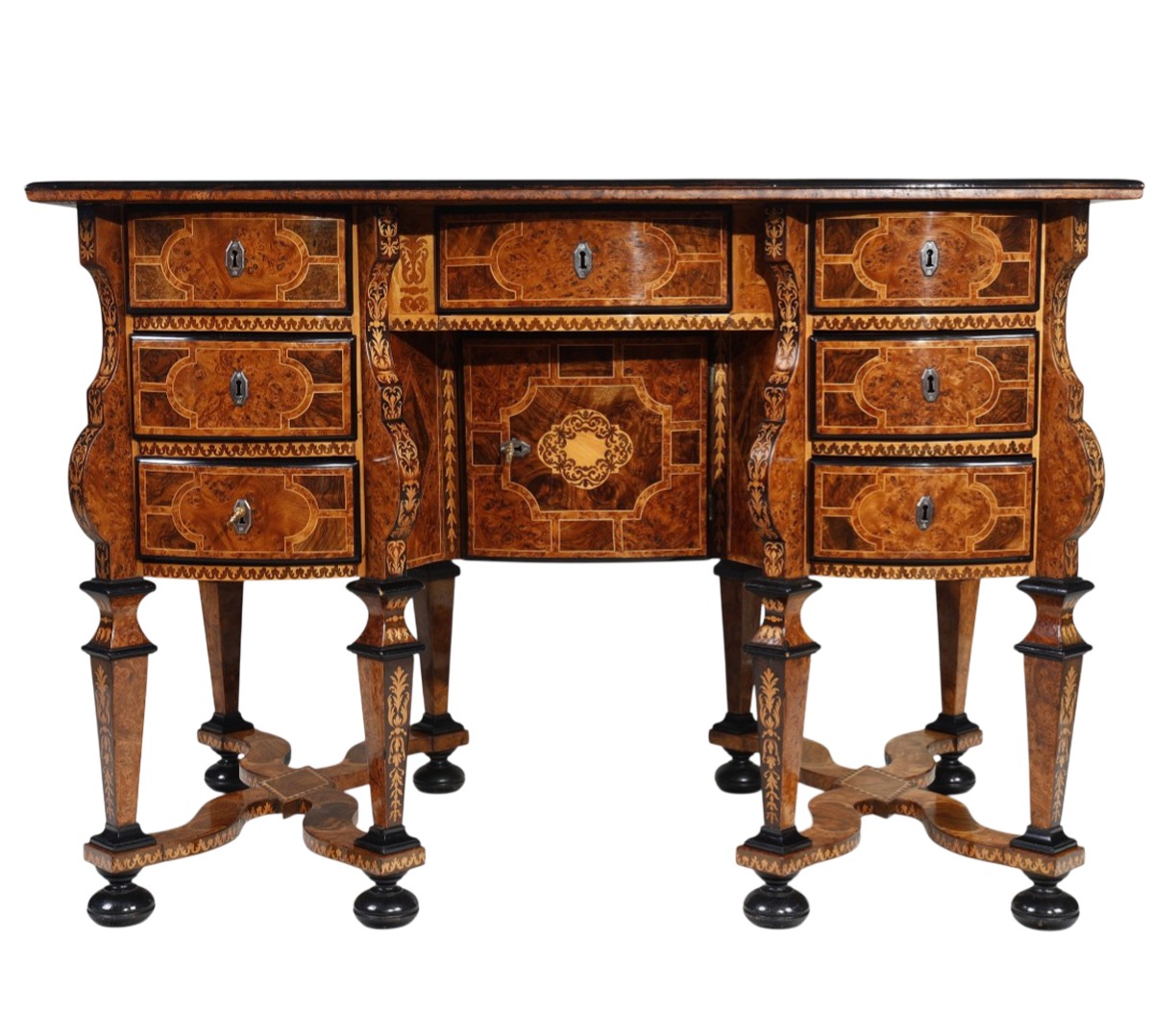
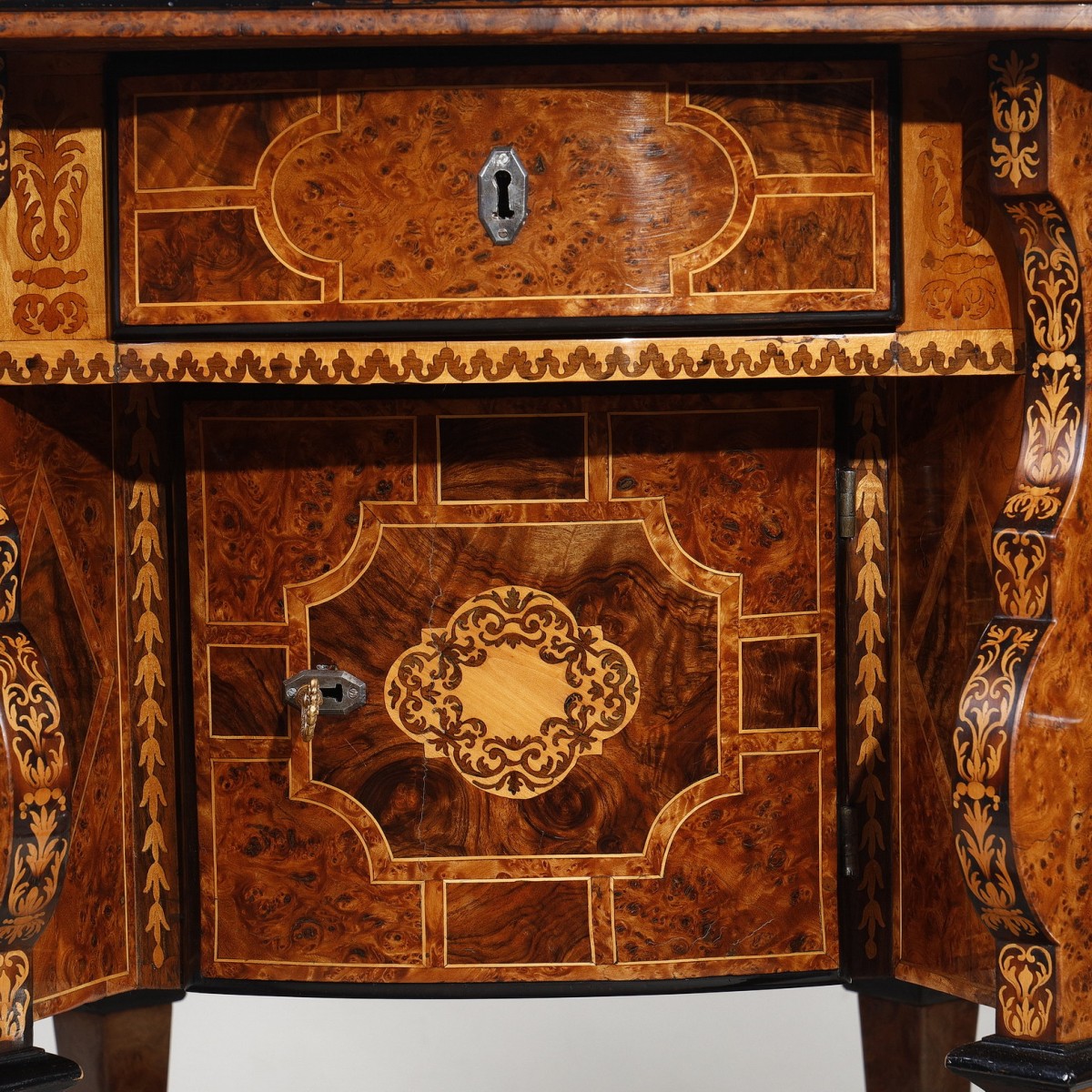
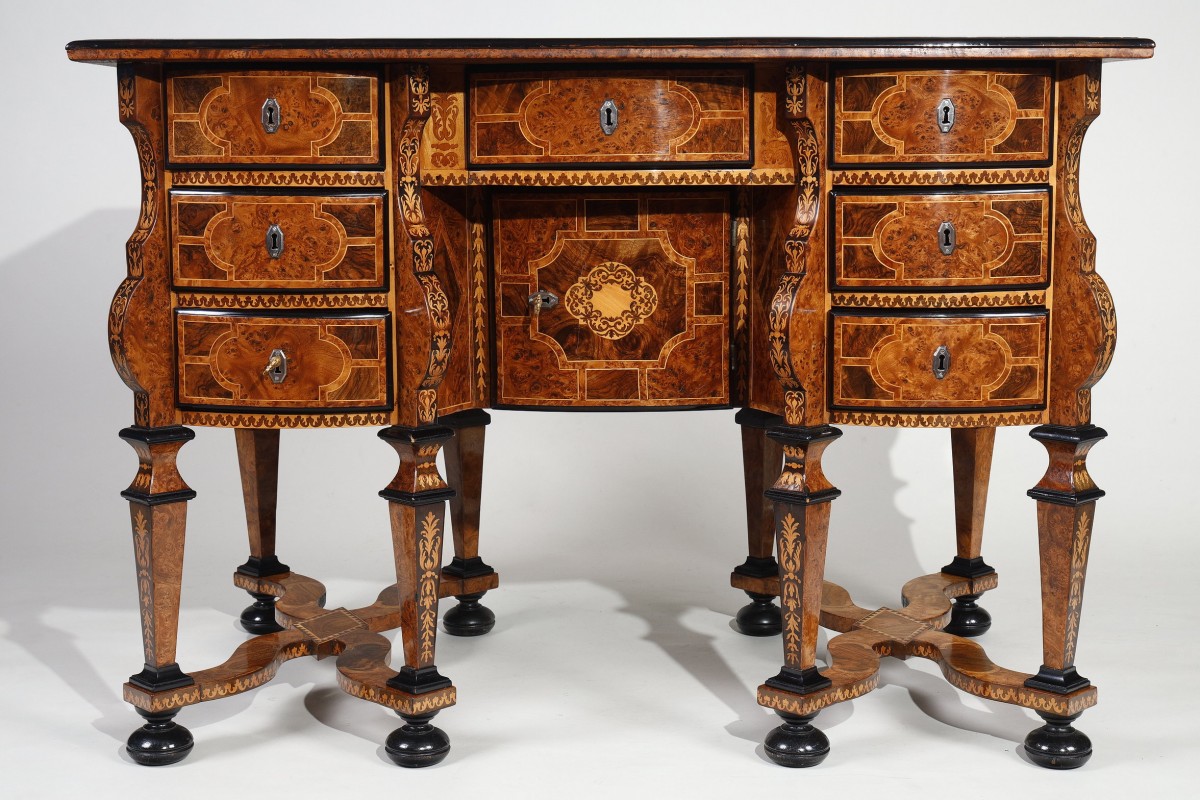

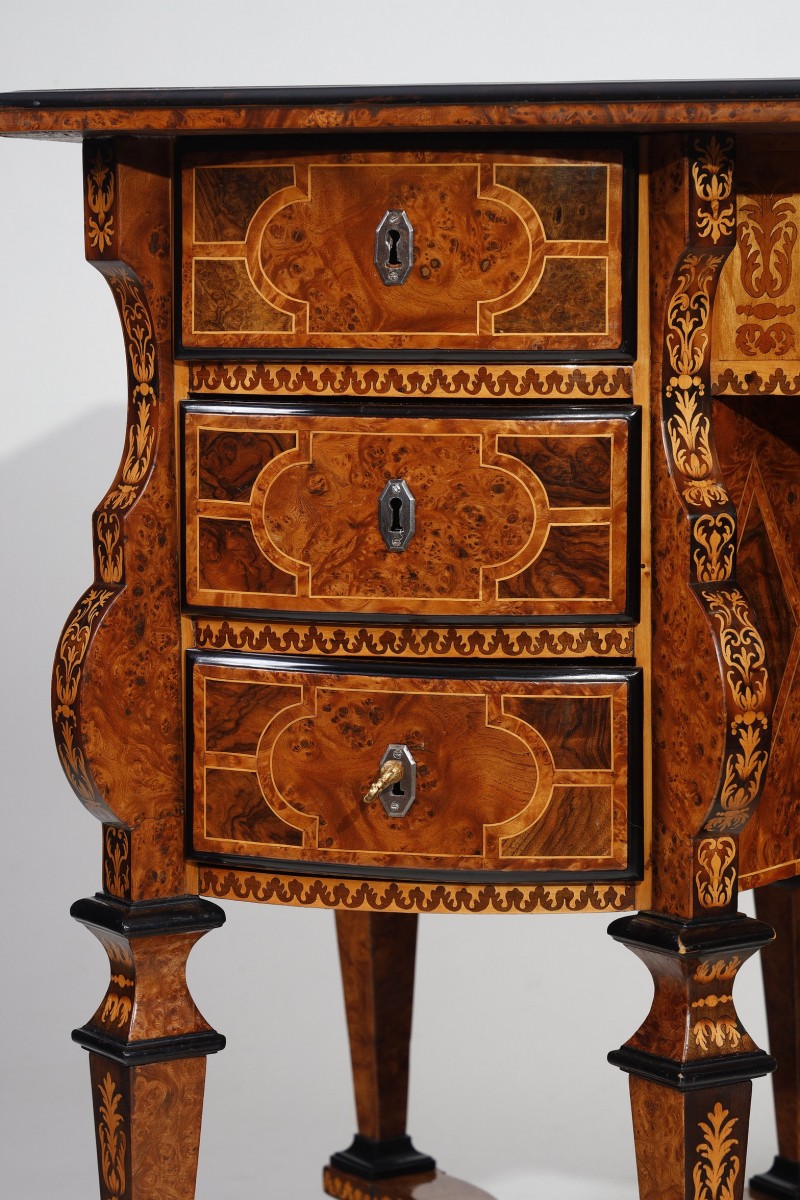
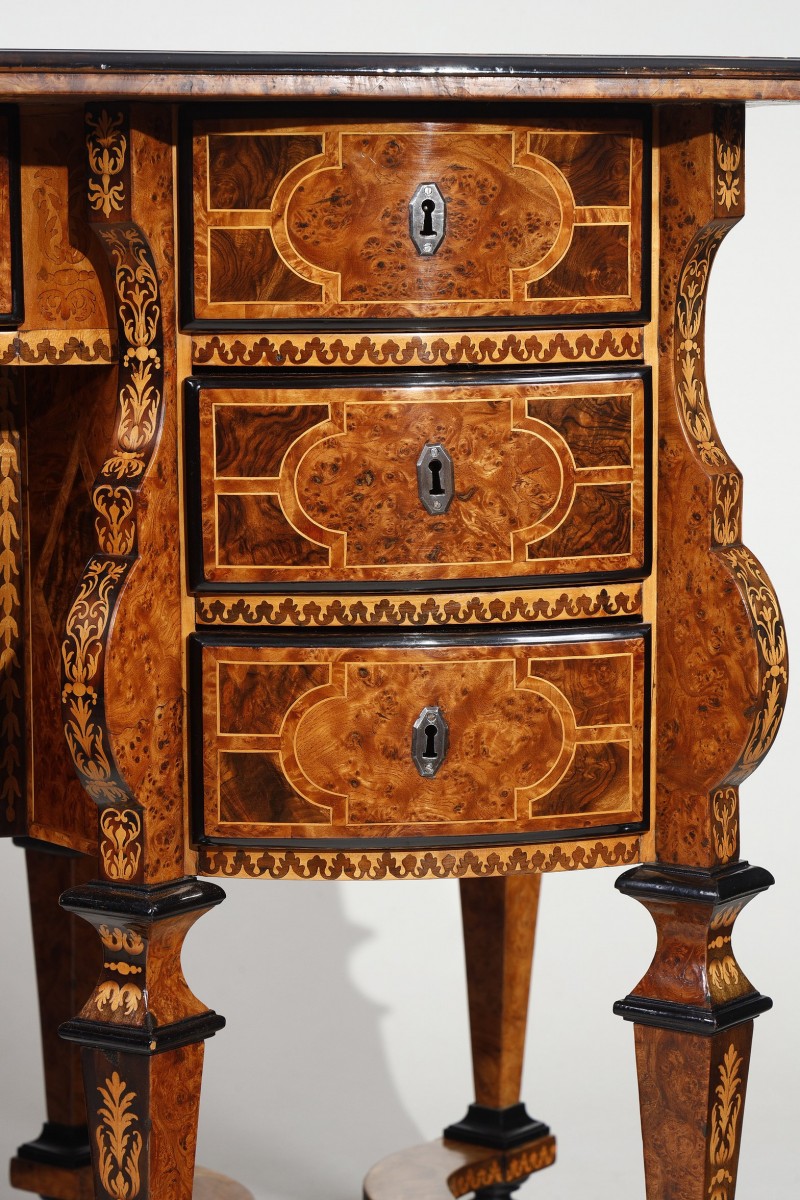
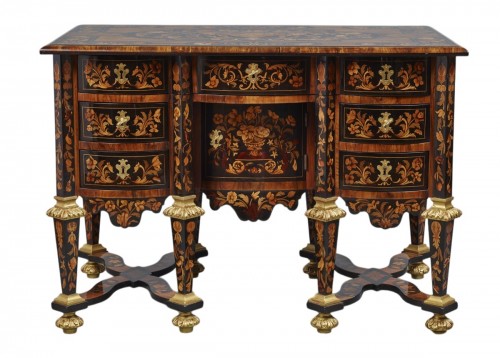
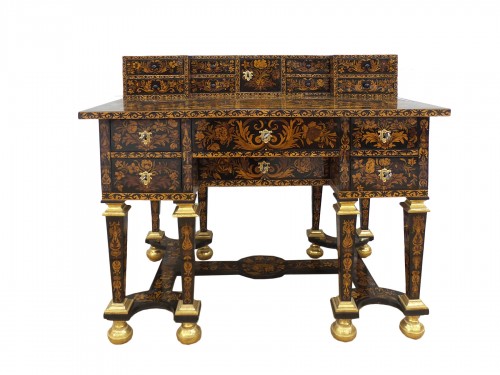
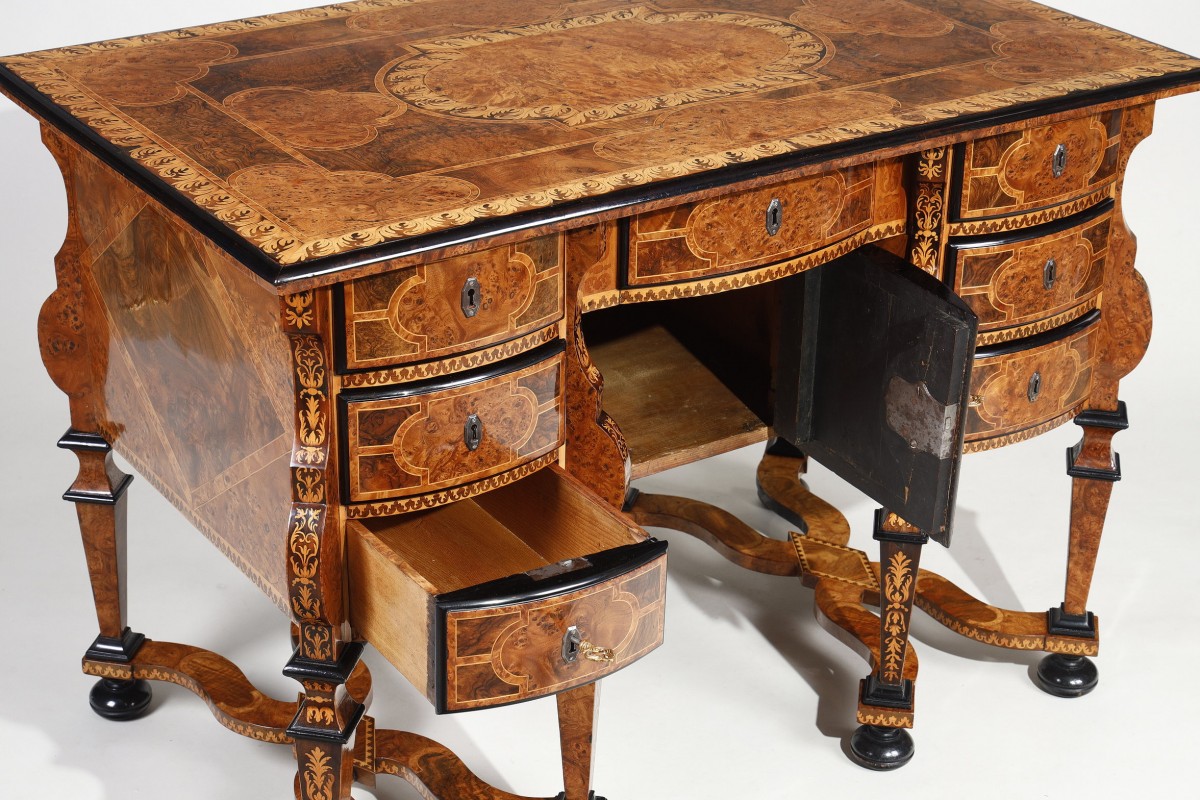
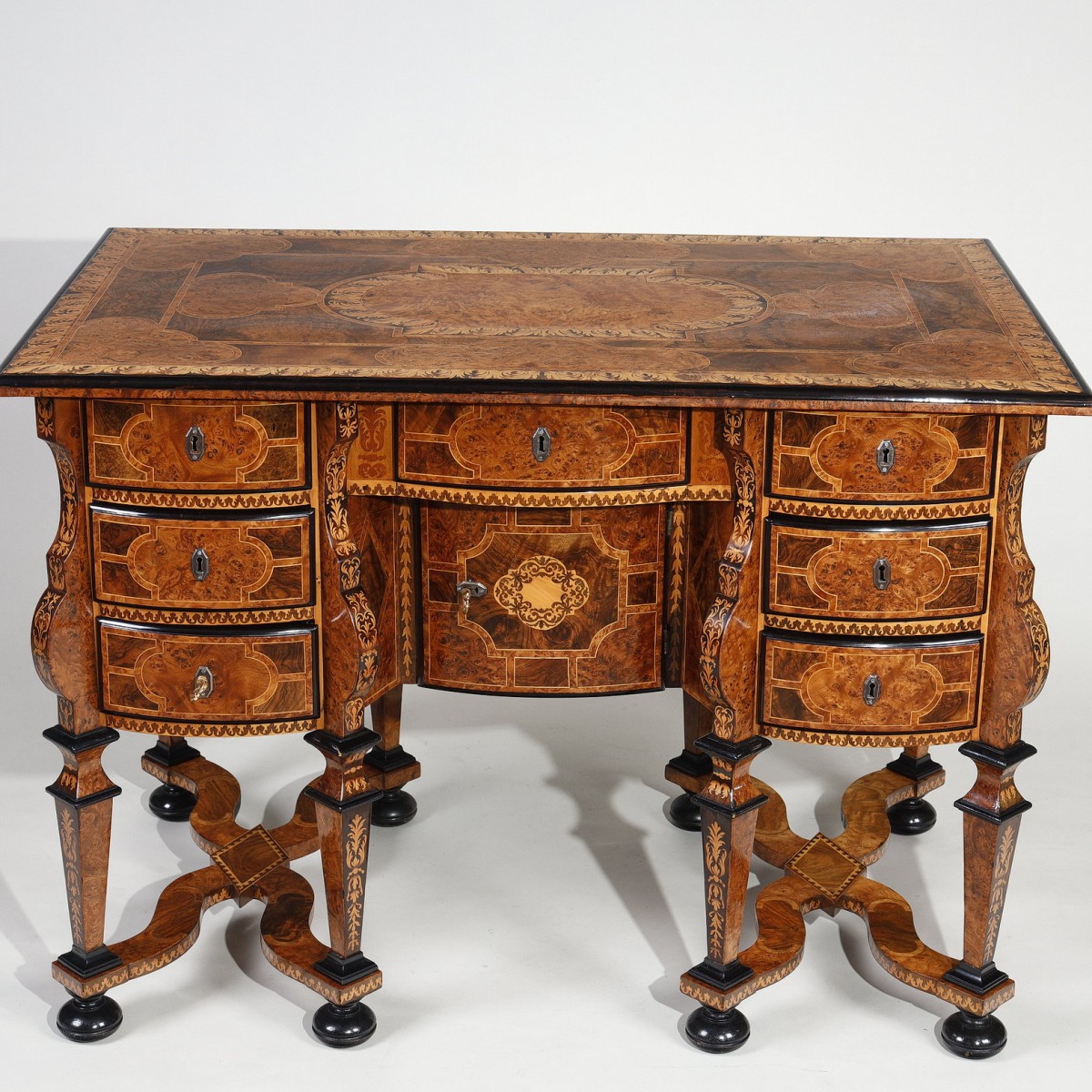
A Mazarin desk with eight legs, veneered in native woods. The front opens to reveal seven drawers and a central recessed drawer front, its center adorned with a polylobed reserve decorated with stylized foliage and framed on either side by a straight foliate frieze.
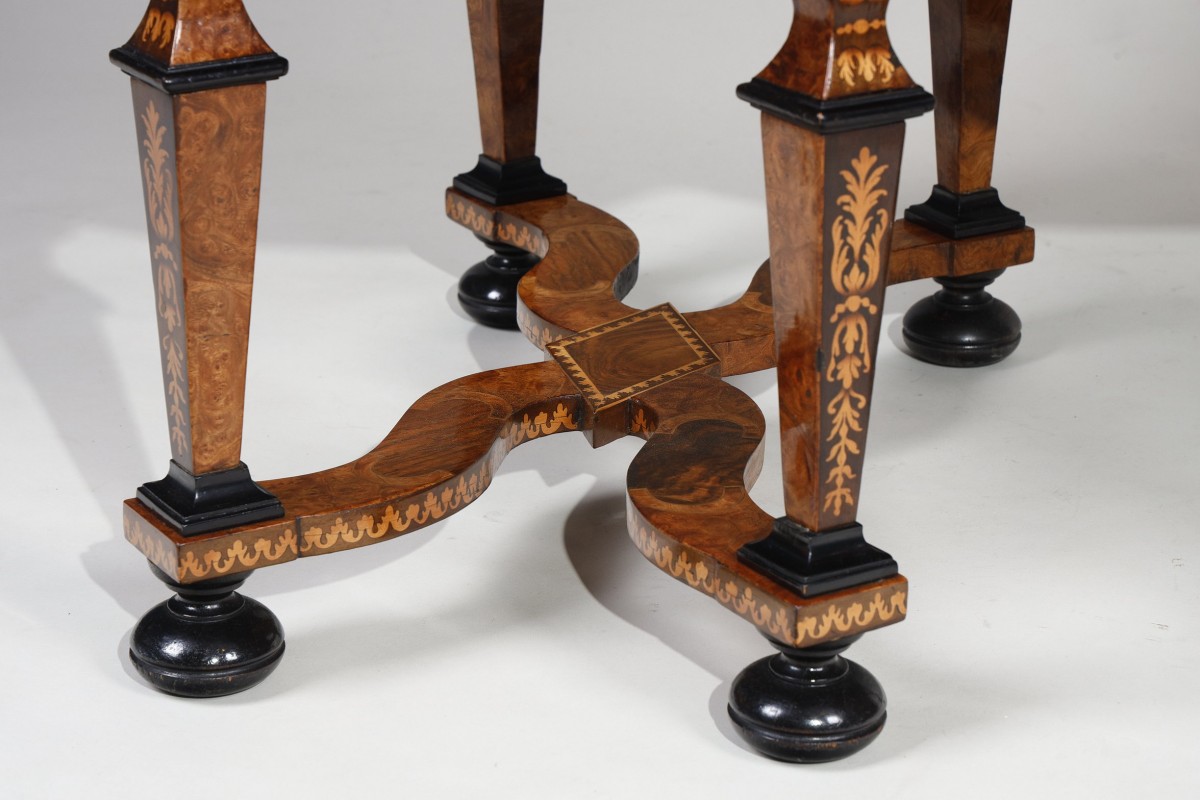
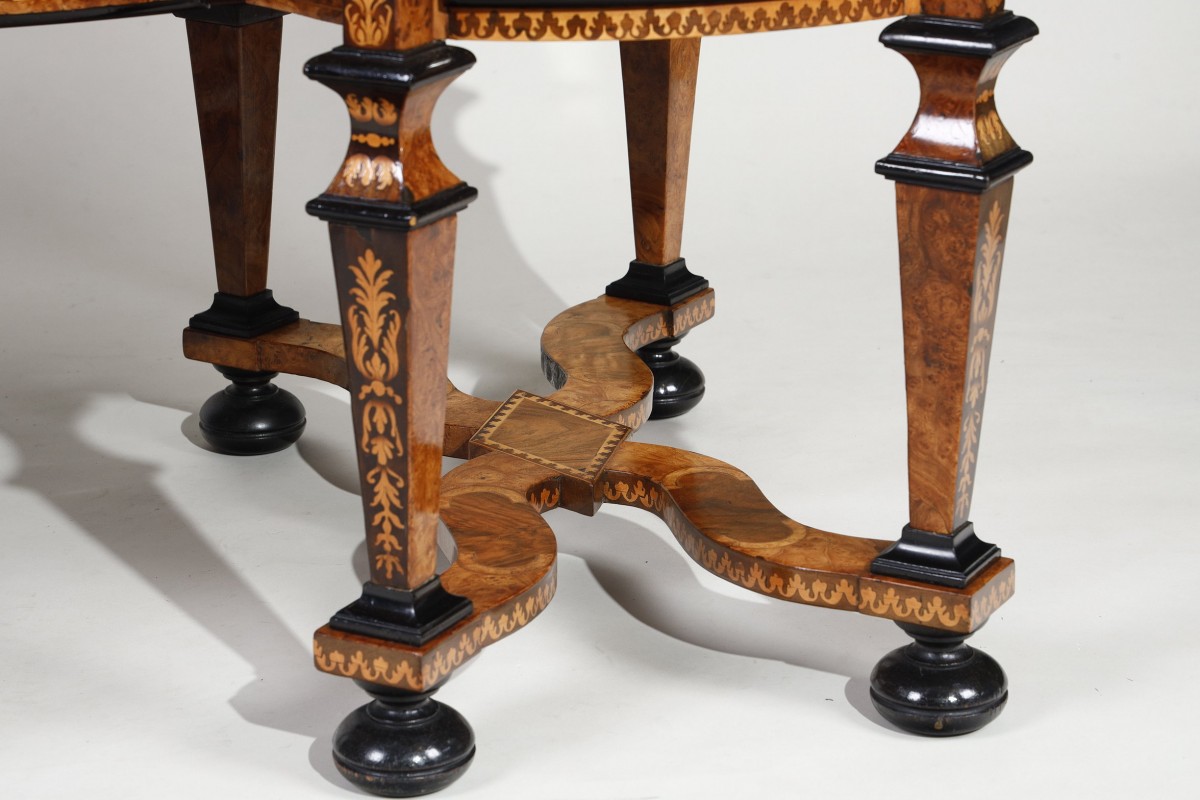
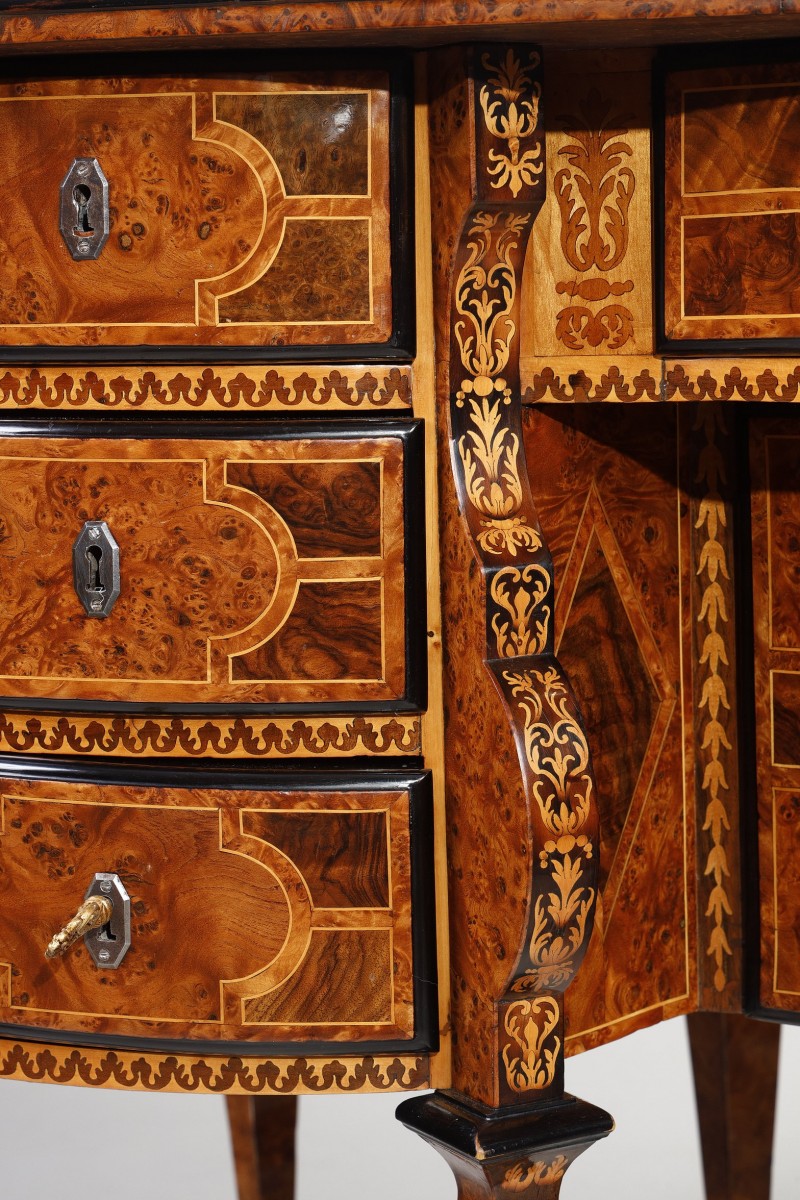
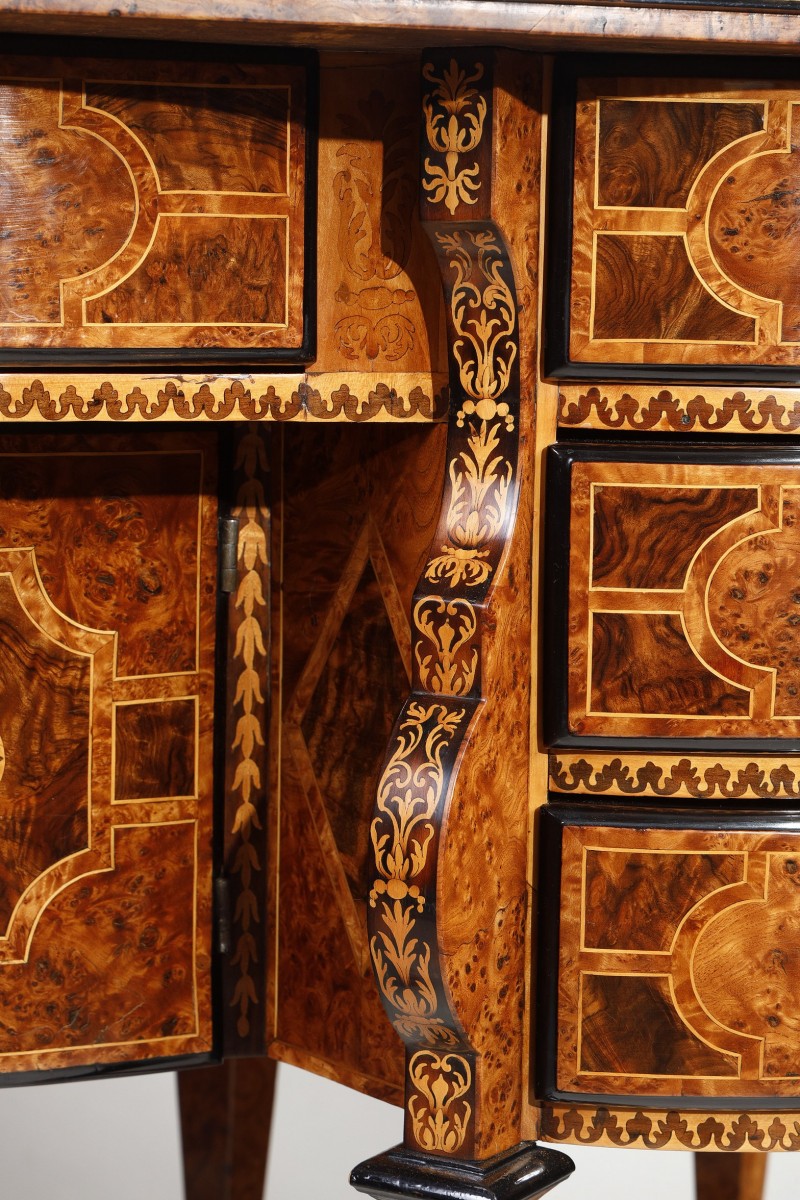
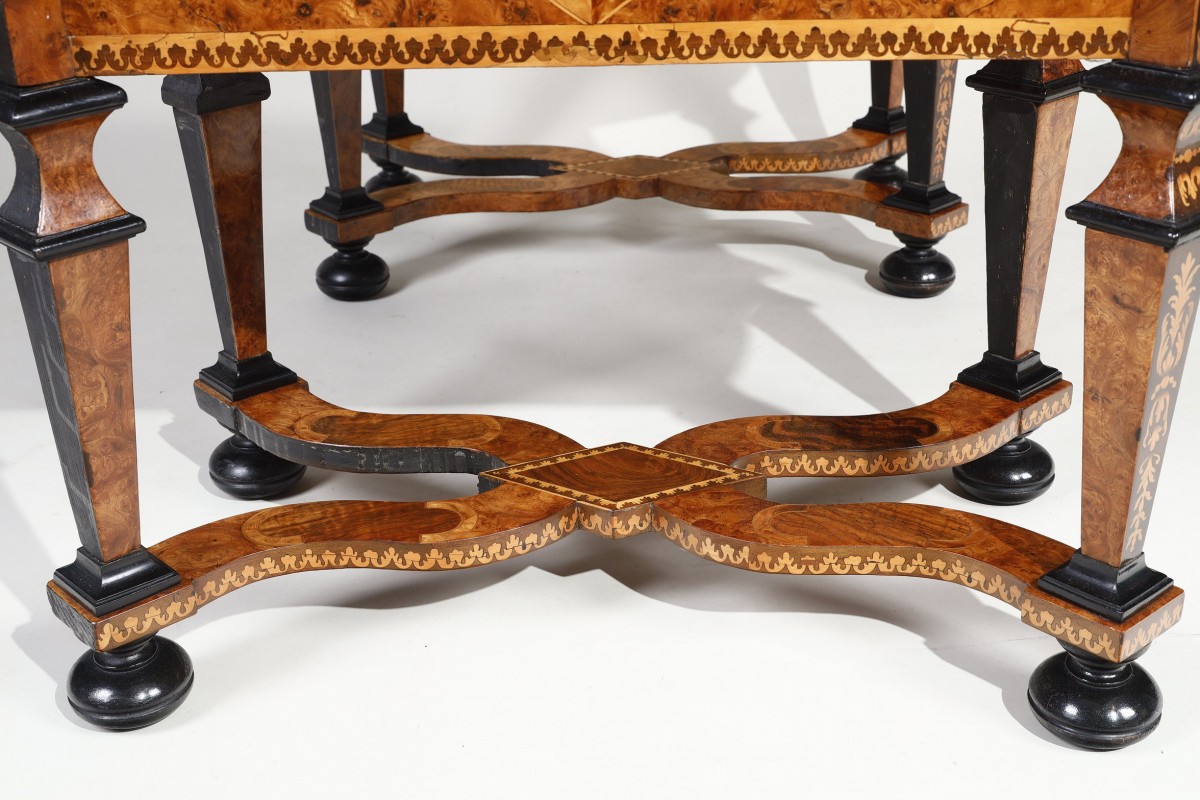
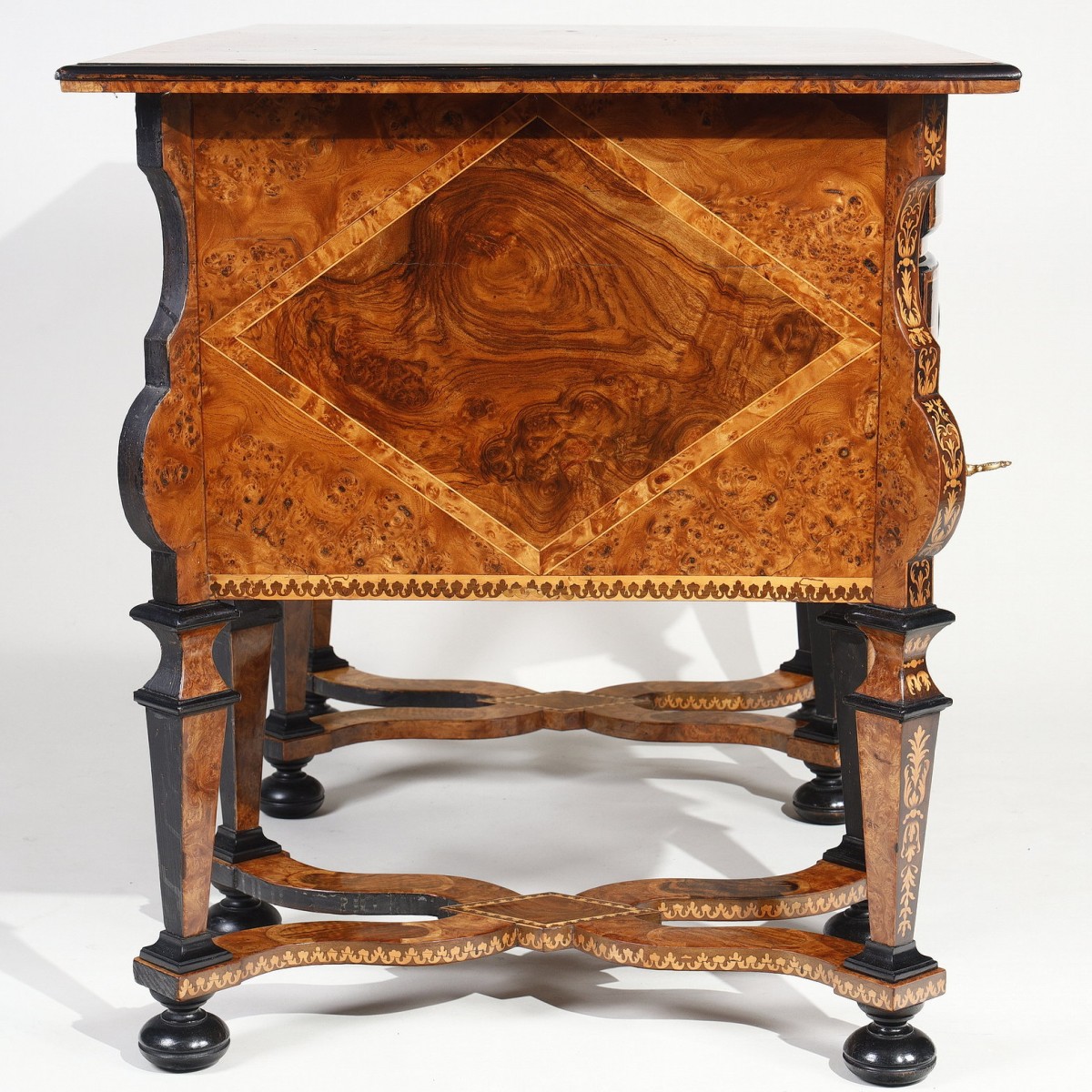
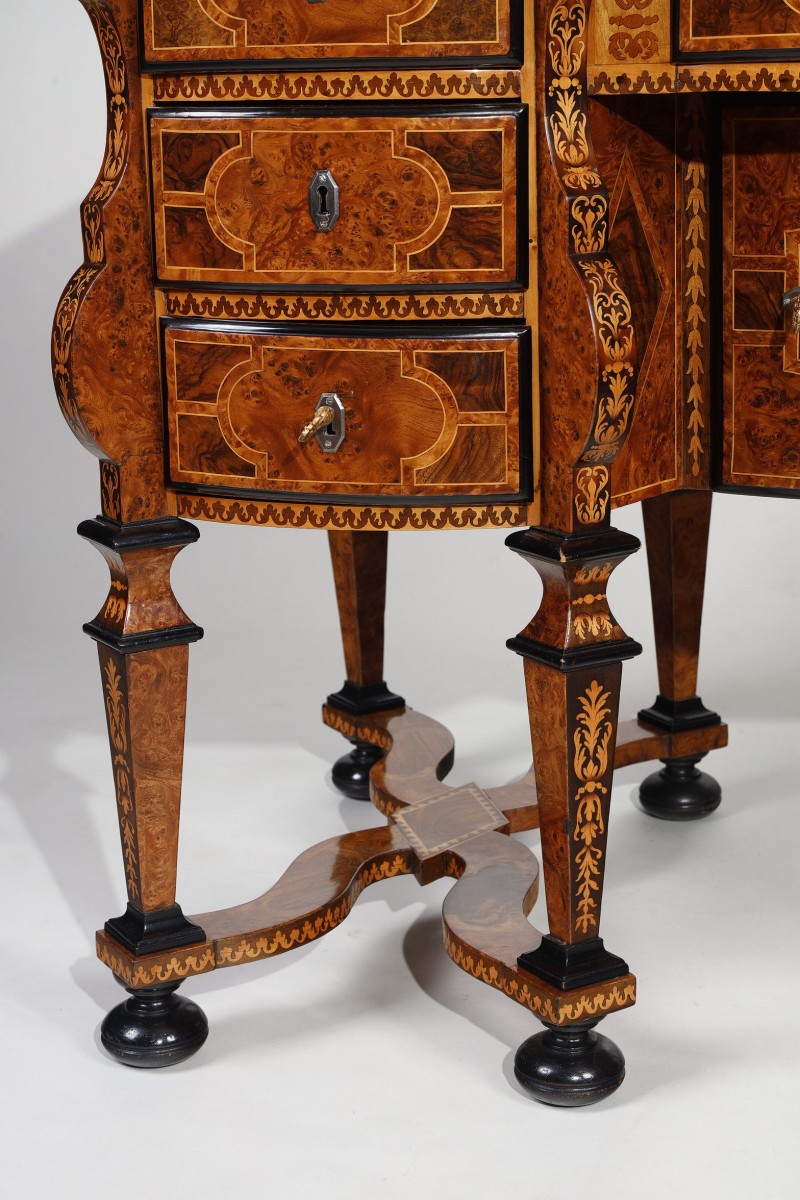
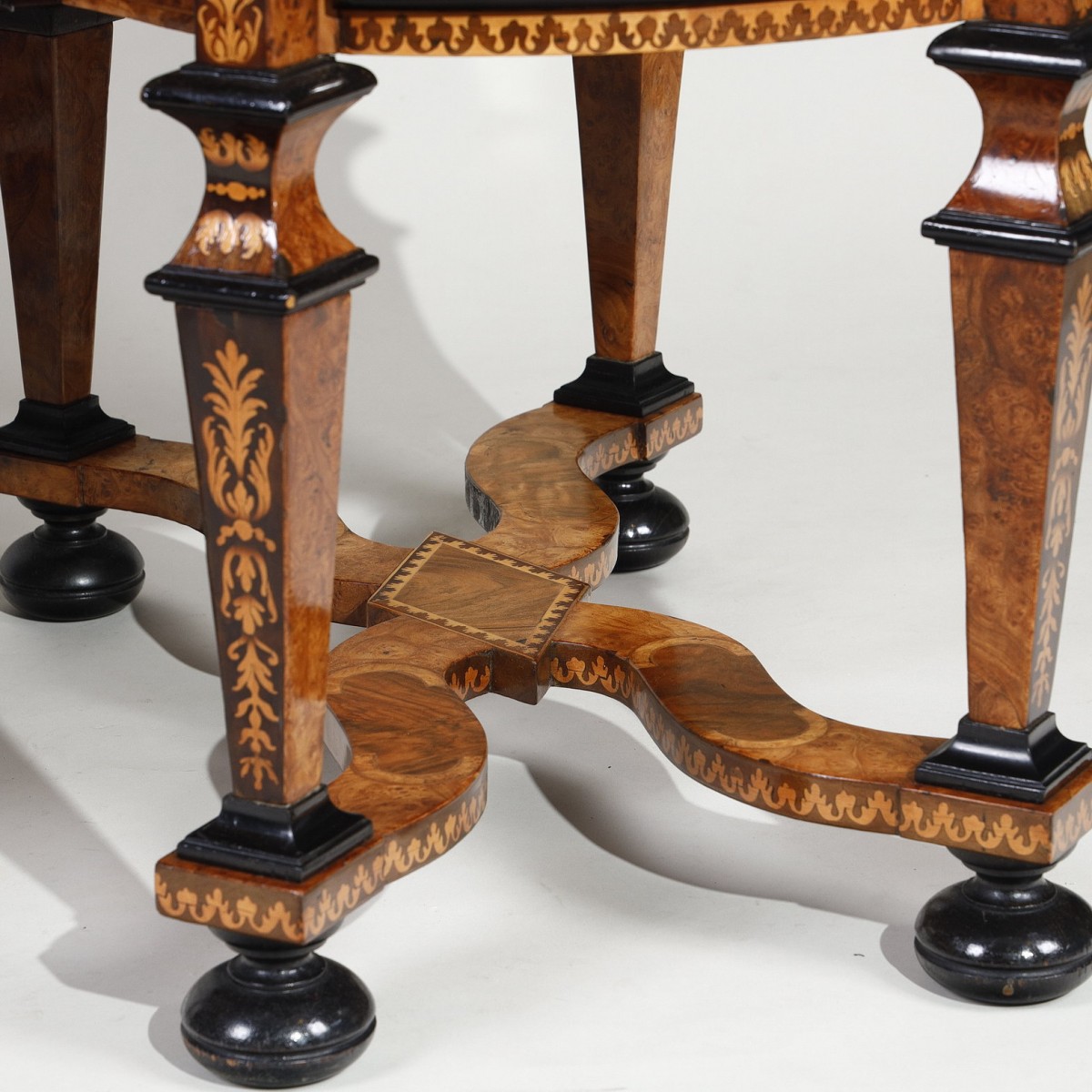
The scrolled uprights are decorated with a frieze typical of Thomas Hache furniture, which extends down the legs and also frames the central drawer. The eight tapered legs with hourglass-shaped capitals, enhanced with ebonized wood, are joined in groups of four by two X-shaped stretchers centered with a lozenge and supported by flattened balls, also in ebonized wood.
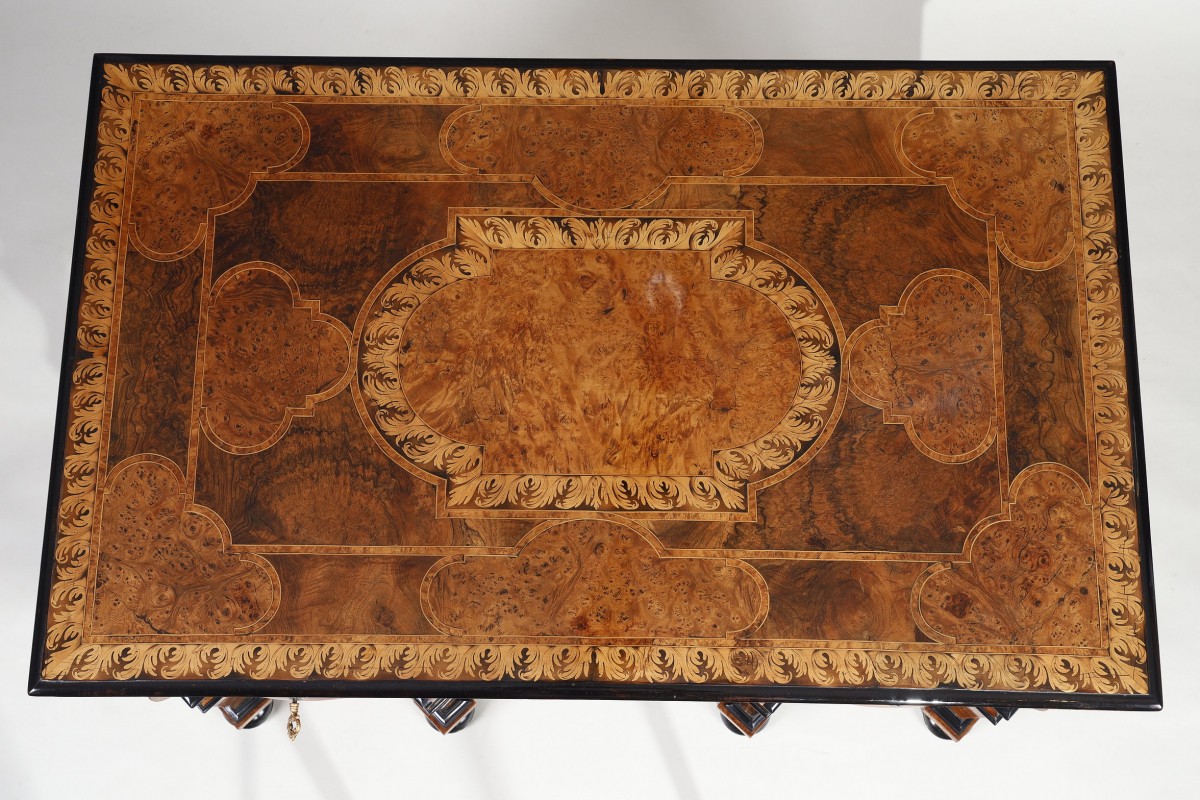
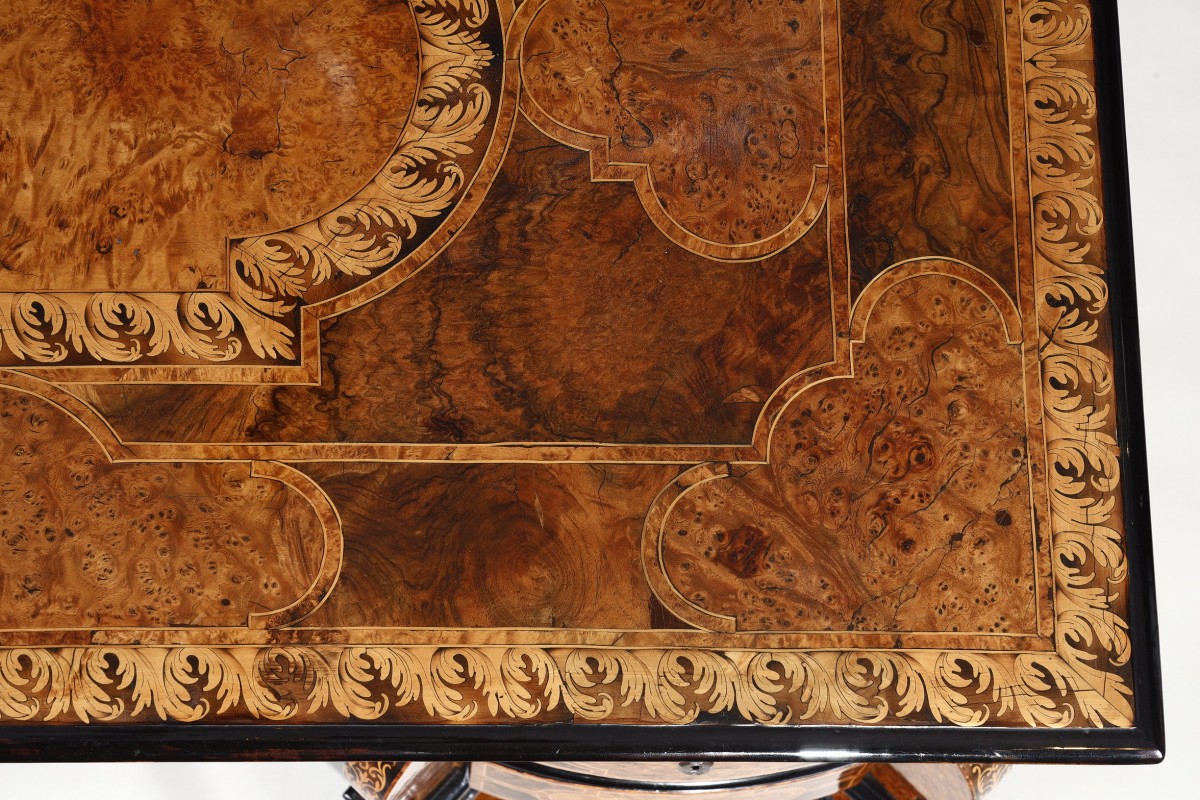
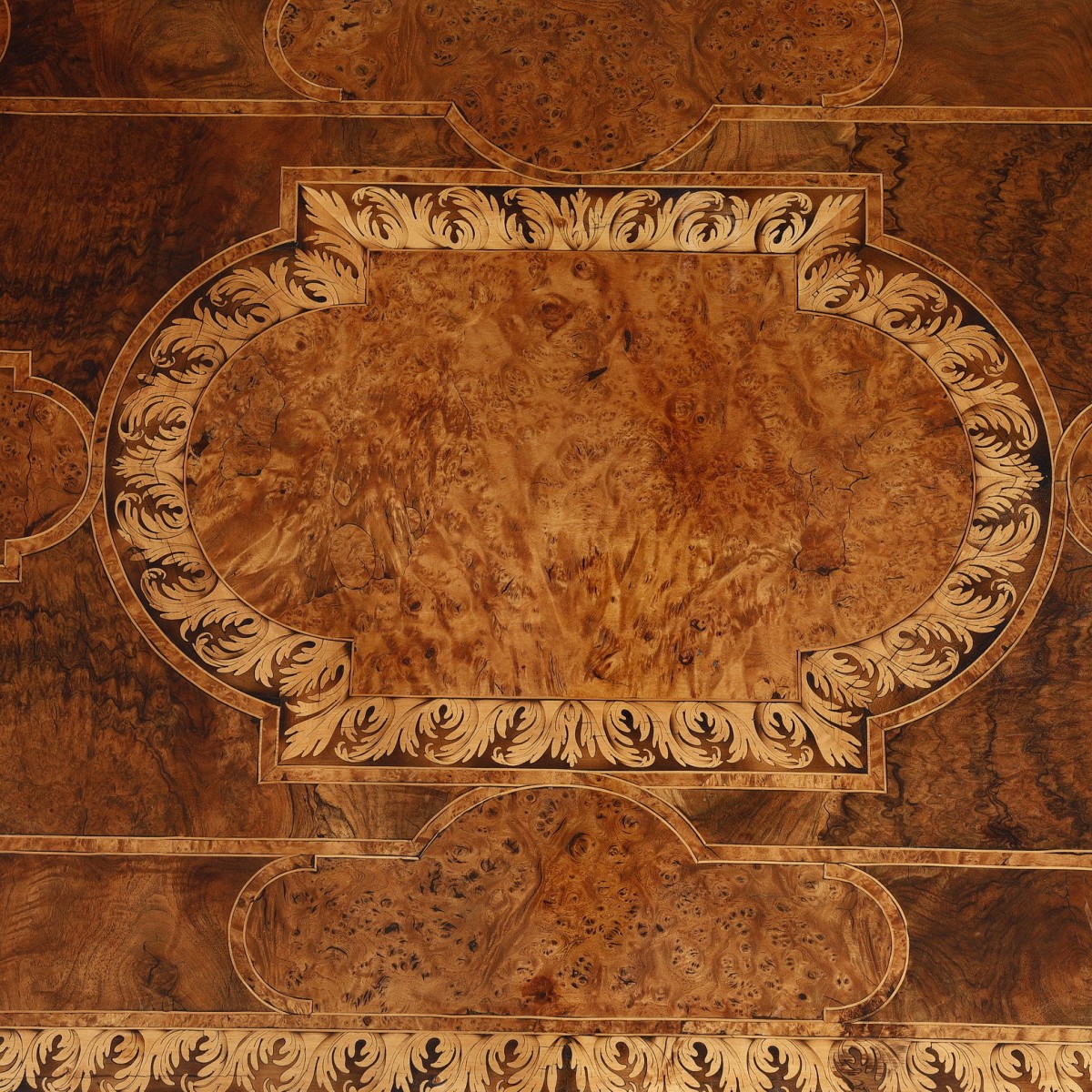
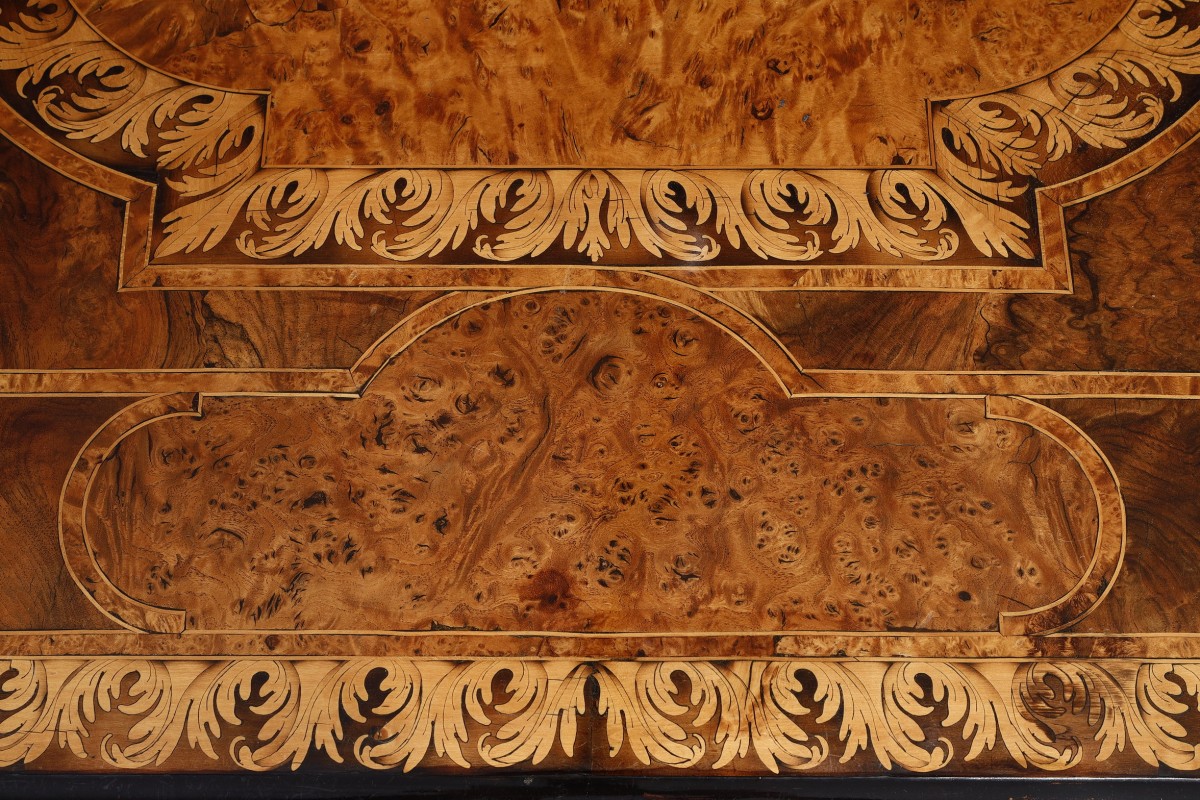
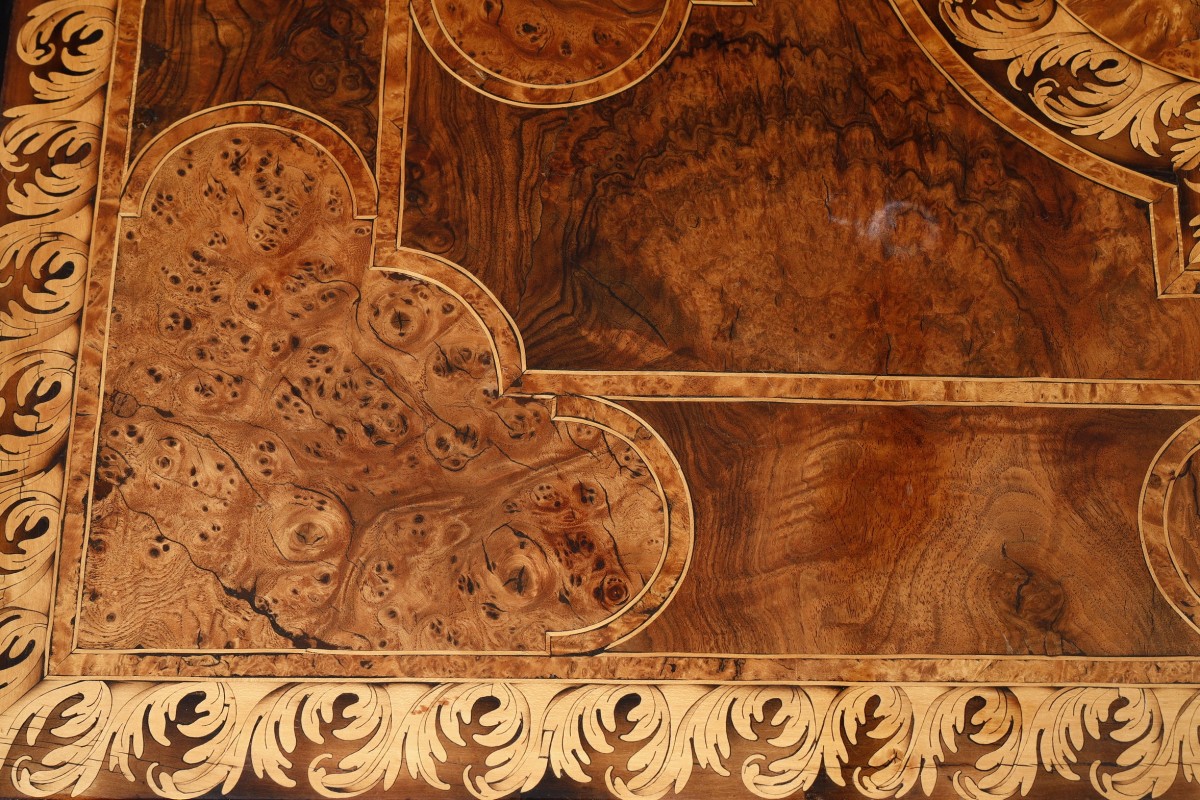
The top is framed by a frieze of sycamore acanthus leaves, alternating light and dark wood using the "hot sand burnt wood" technique, which creates nuanced shading. And a similar frieze of acanthus leaves surrounding the central elm burl shape.
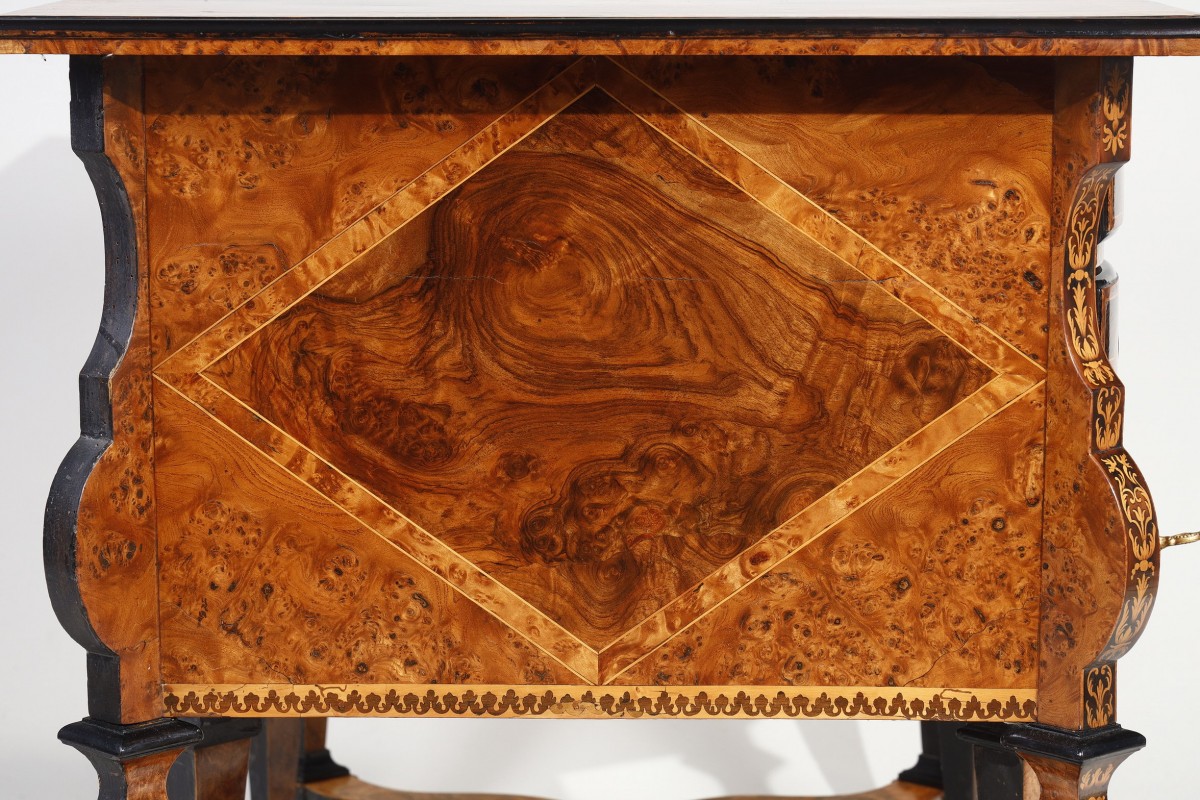
The reserves, with their walnut burl and olive wood burl backgrounds, alternate with polylobed reserves in amboyna burl surrounded by sycamore stringing. The same is true of the drawer and side lozenge motifs.
The counterpointing frieze running between the drawers, highlighting the side lozenges, and ornamenting the stretcher is characteristic of Thomas Hache and borrowed from Pierre Gole.
French work from the Dauphiné region, circa 1700-1710
The high quality of this piece and several features specific to Thomas Hache undoubtedly attribute the Mazarin chair to this cabinetmaker.
“Thomas Hache uses a very understated geometric design, highlighting the burls and burrs of the various wood species in a warm and sophisticated harmony. There is no extravagance in the Grenoble craftsman’s art; his classic and sure taste is based on flawless technique. The masterful decoration is an integral part of the piece and never appears superfluous or excessive. Indeed, one of the most striking impressions of Hache furniture is this unity of each piece, the perfect harmony between the marquetry design and the form.” HACHE Cabinetmakers in Grenoble by Marianne Clerc, Glénat Edition, 1997
This piece of furniture has two certificates: one from October 1984 by Eugène Brelaz, accredited expert and member of the Chambre Nationale des Experts Spécialisés en Meubles Objets d'art Anciens et de Collecte (National Chamber of Experts Specializing in Antique and Collectible Furniture and Works of Art),
And from its certificate of November 1984 by Pierre Rouge, an expert accredited by the National Chamber of Specialized Experts, recognized in Hache furniture.
It is similar to the Mazarin pieces referenced in "Le génie des Hache" by Pierre Rouge and Françoise Rouge, Faton edition 2005, particularly on page 170, private collection.
Thomas Hache:
A major figure in Dauphiné cabinetmaking, Thomas Hache (1664-1747) embodies the excellence of a craft passed down and enriched throughout an exceptional career. Trained from a young age in his father Noël Hache's workshop in Toulouse, he further honed his skills in Paris, learning from the greatest cabinetmakers of his time, before perfecting his experience in Chambéry, in the Duchy of Savoy. His permanent move to the Dauphiné, following his marriage to the daughter of the Grenoble cabinetmaker Michel Chevalier, marked the beginning of a remarkable rise. Becoming a master in 1701, his talent was recognized at the highest level: in 1721, he received the title of Cabinetmaker to His Highness the Duke of Orléans, a prestigious title that solidified his position with a noble and aristocratic clientele.
His works, prized for their exquisite craftsmanship and elegant marquetry, reveal Italian and Parisian influences, while asserting a unique identity through the refined use of Alpine woods.
A living legacy of a family business emblematic of French cabinetmaking: The true genius of the Hache family.
Thomas Hache was one of the most sought-after cabinetmakers of his time, renowned for his exceptional skill and mastery, and his furniture remains highly valued today.
Dimensions: 81.5 cm high; 114 cm wide; 71.5 cm deep