Offered by Galerie Gilles Linossier
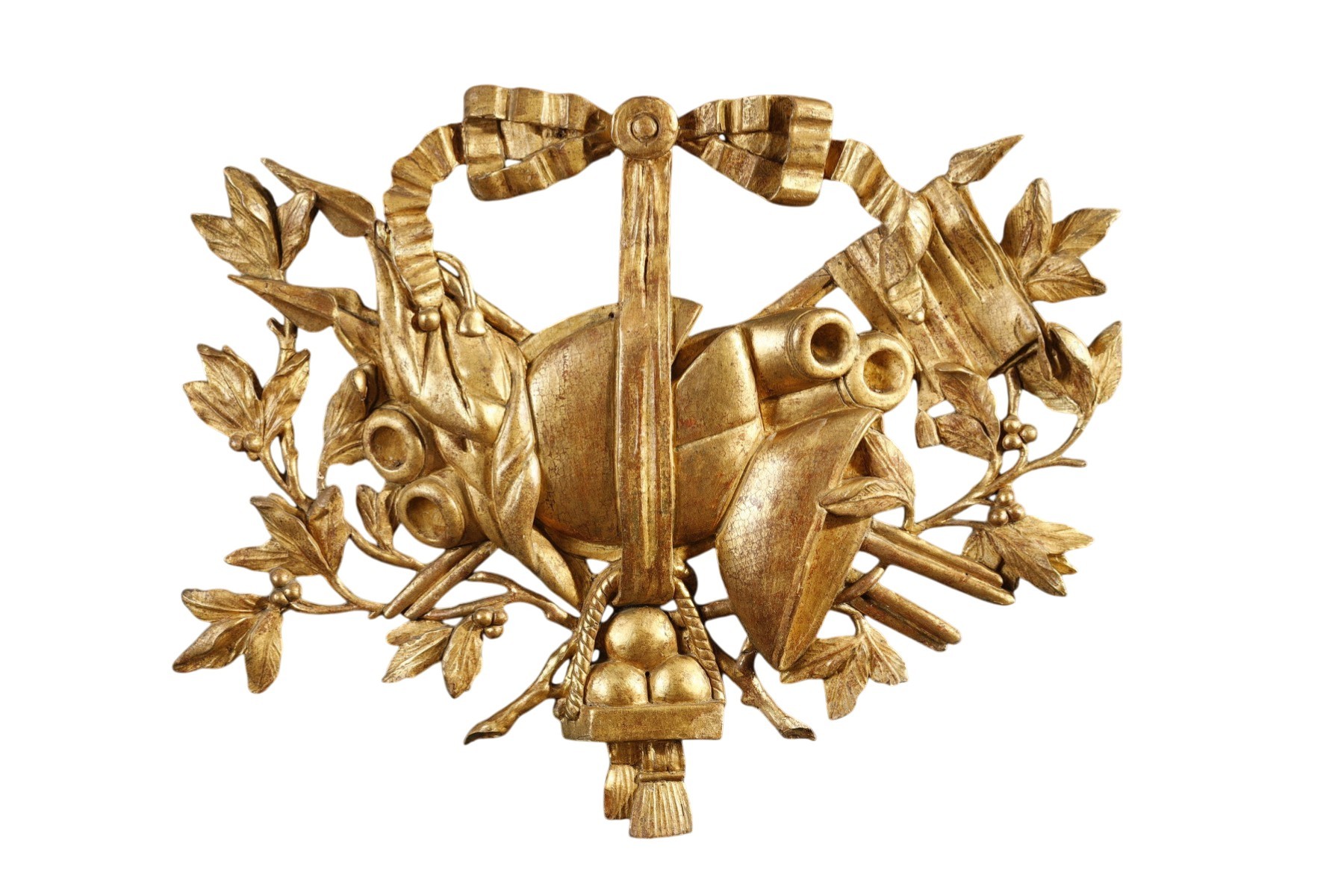
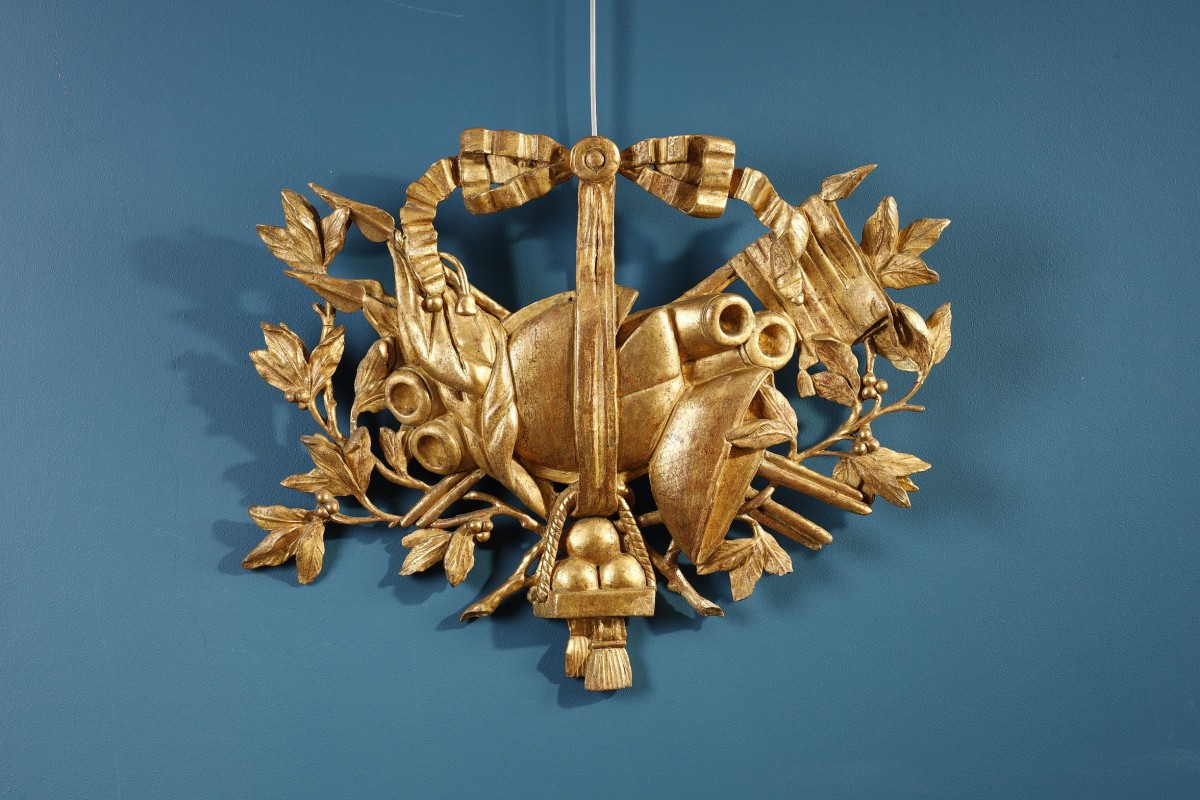

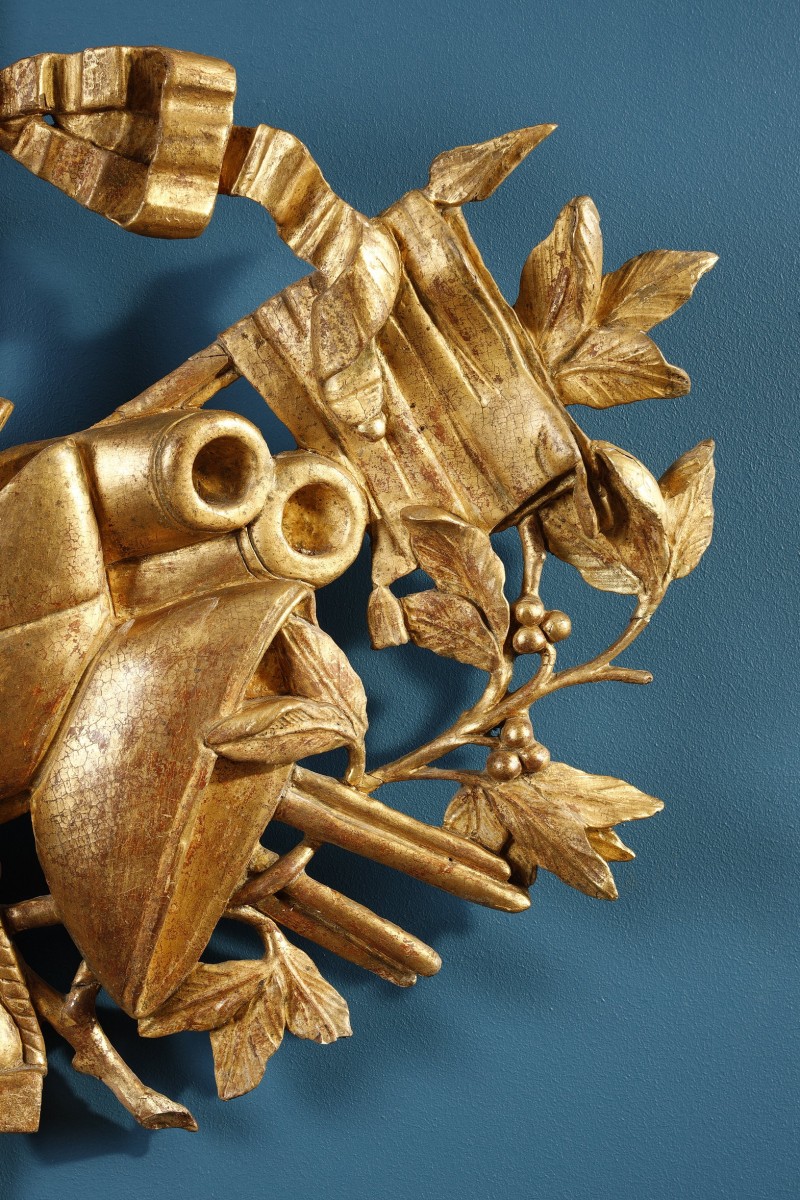
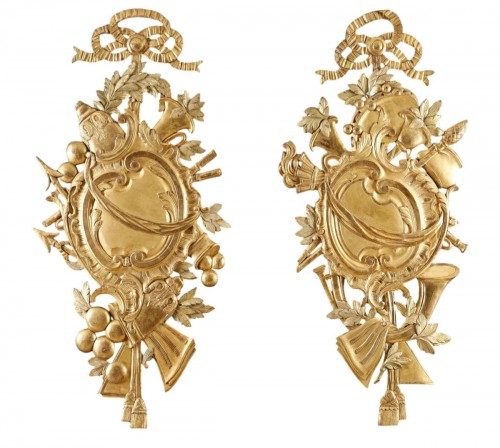
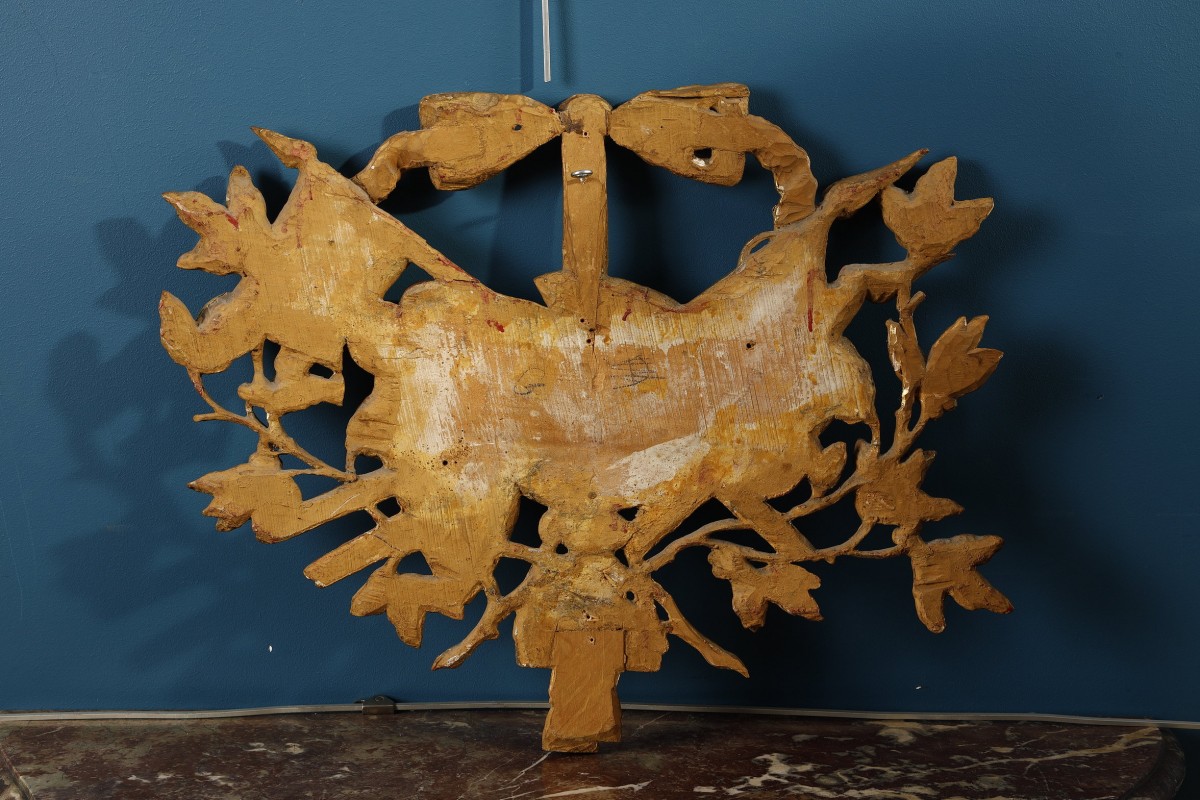
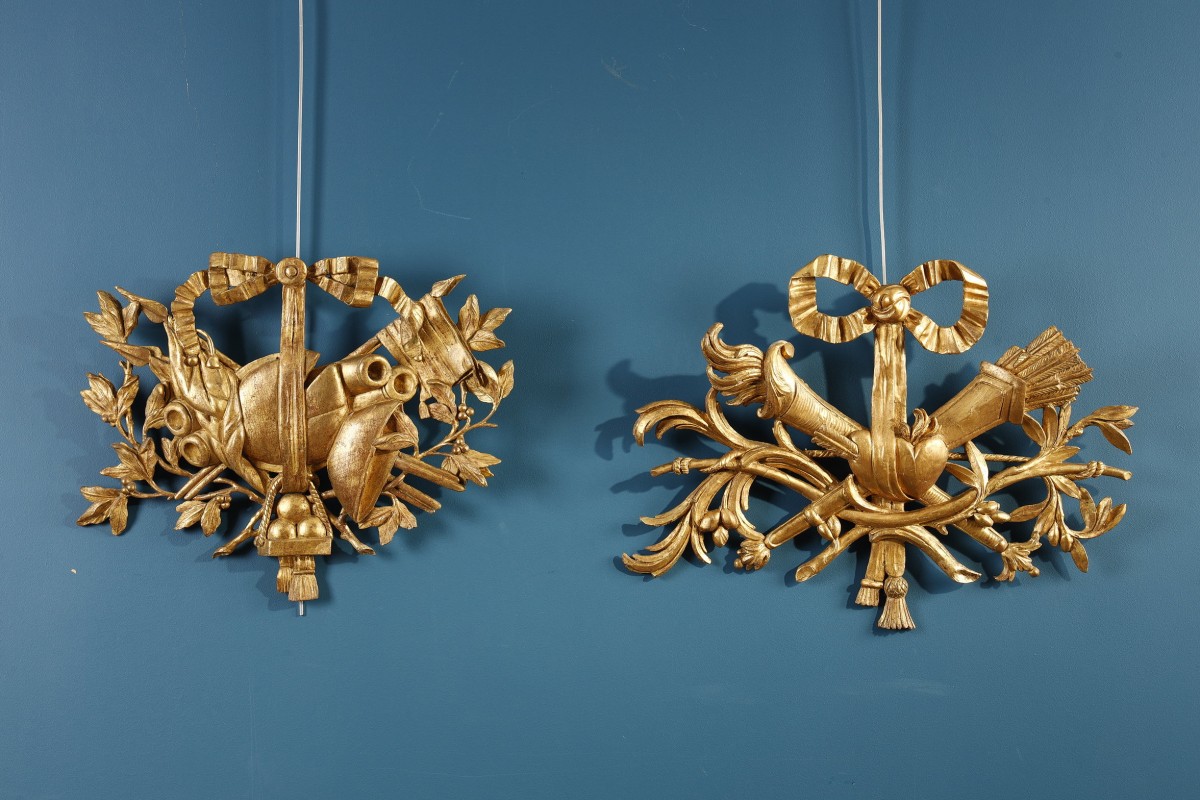
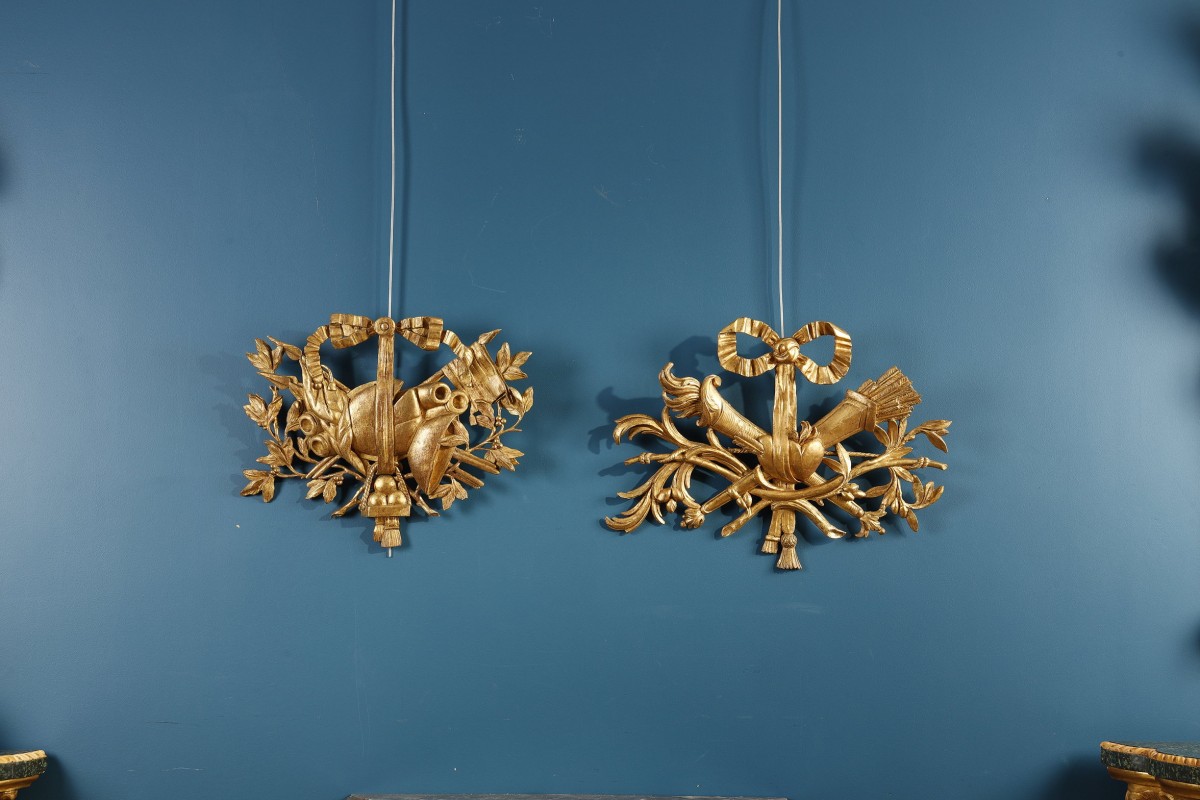
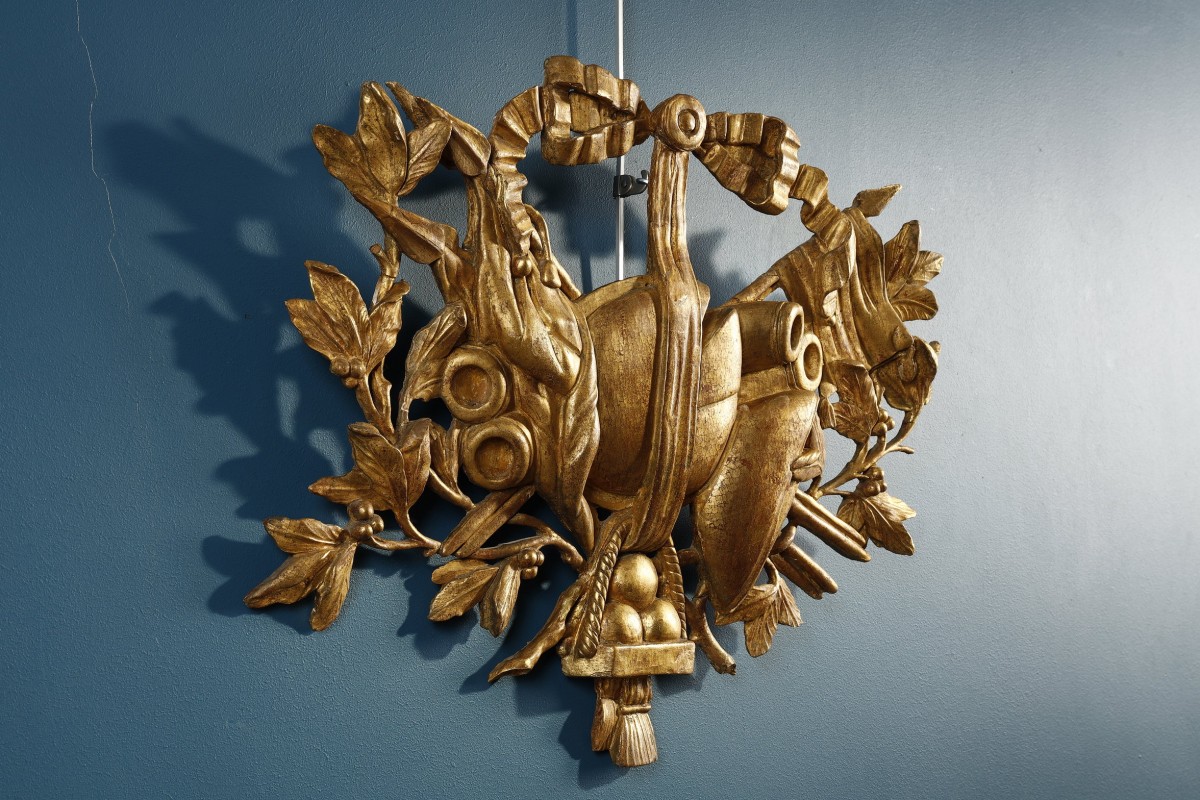
An elegant Louis XVI period carved and gilded wooden overdoor, depicting a rich array of military symbols in a beautiful composition.
At the center, a armet stands out as the focal point. This fully enclosing helmet, narrowing at the neck and covering the throat, was developed in the 15th century. It represented a significant evolution in the art of warfare because, although it completely protected the head, it remained relatively light and unobtrusive, thus allowing for ease of movement. Primarily intended for heavily equipped men-at-arms, it was widely used in Europe.
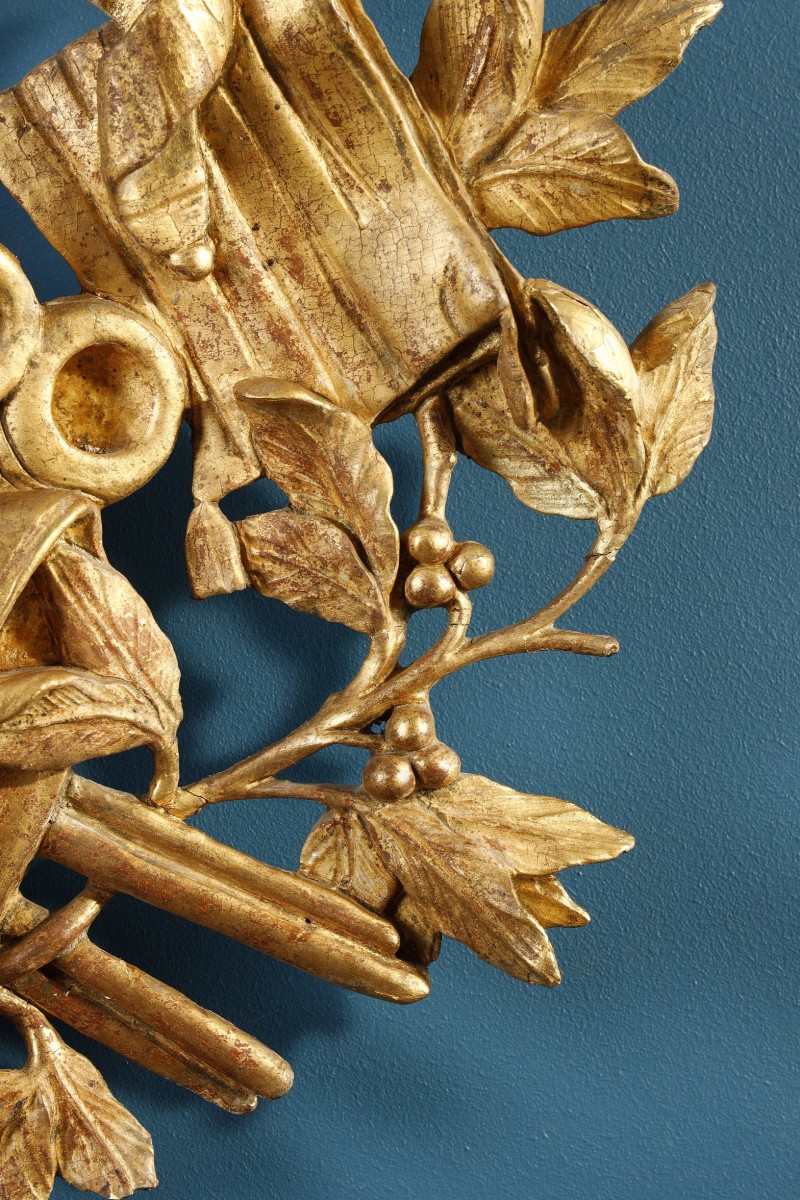
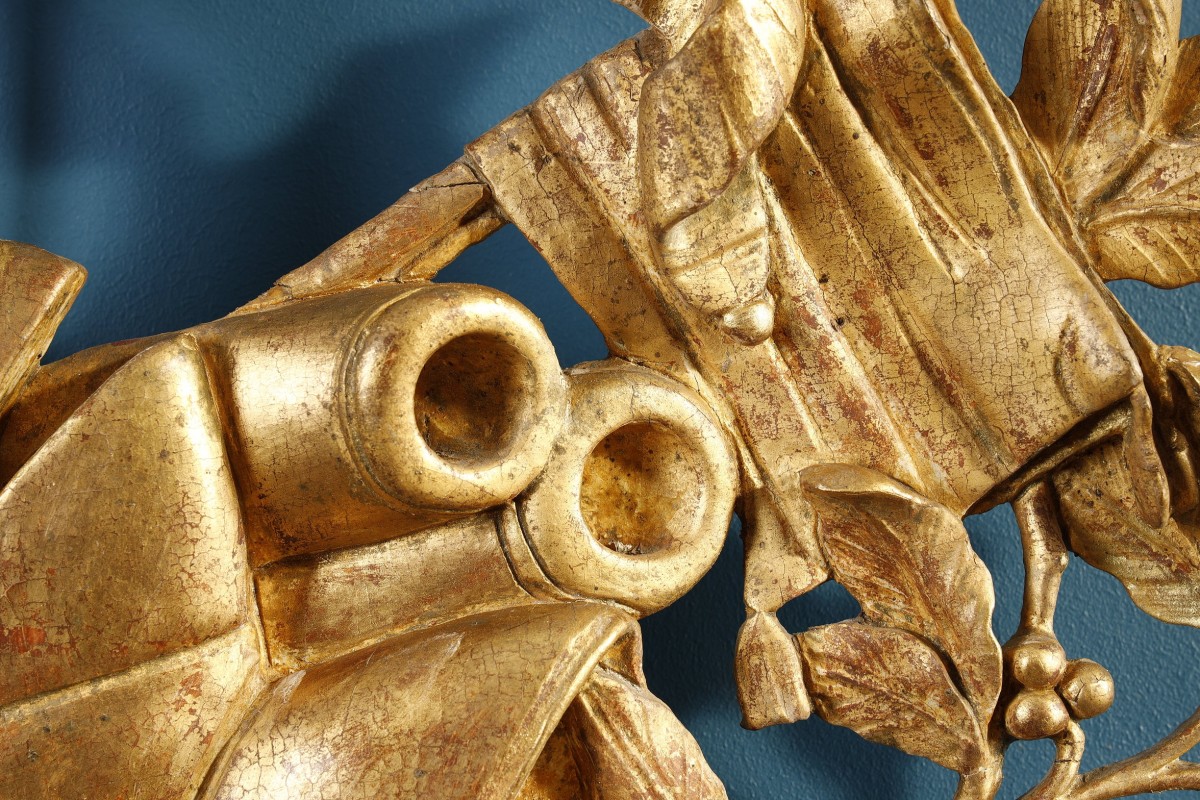
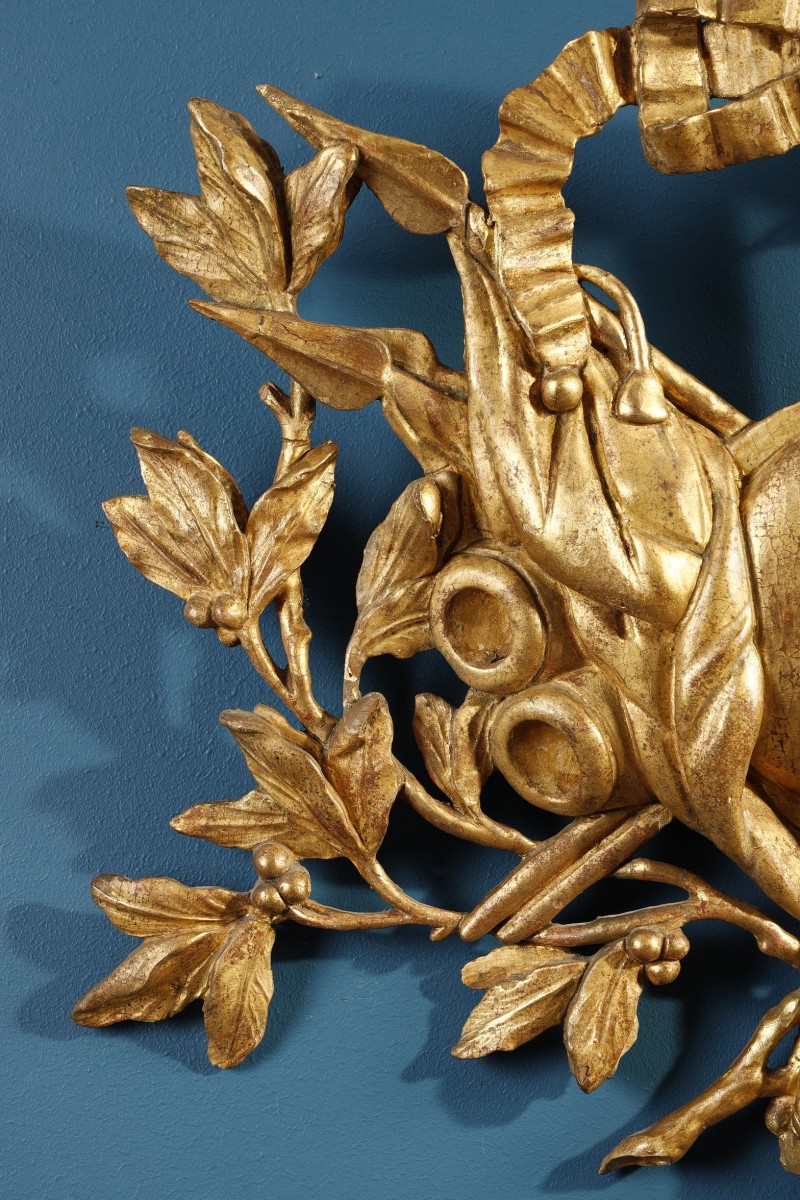
In our composition, it is flanked by cannons on either side and lances artfully arranged in a cross and surmounted by flags, one of which appears to flutter atop the helmet.
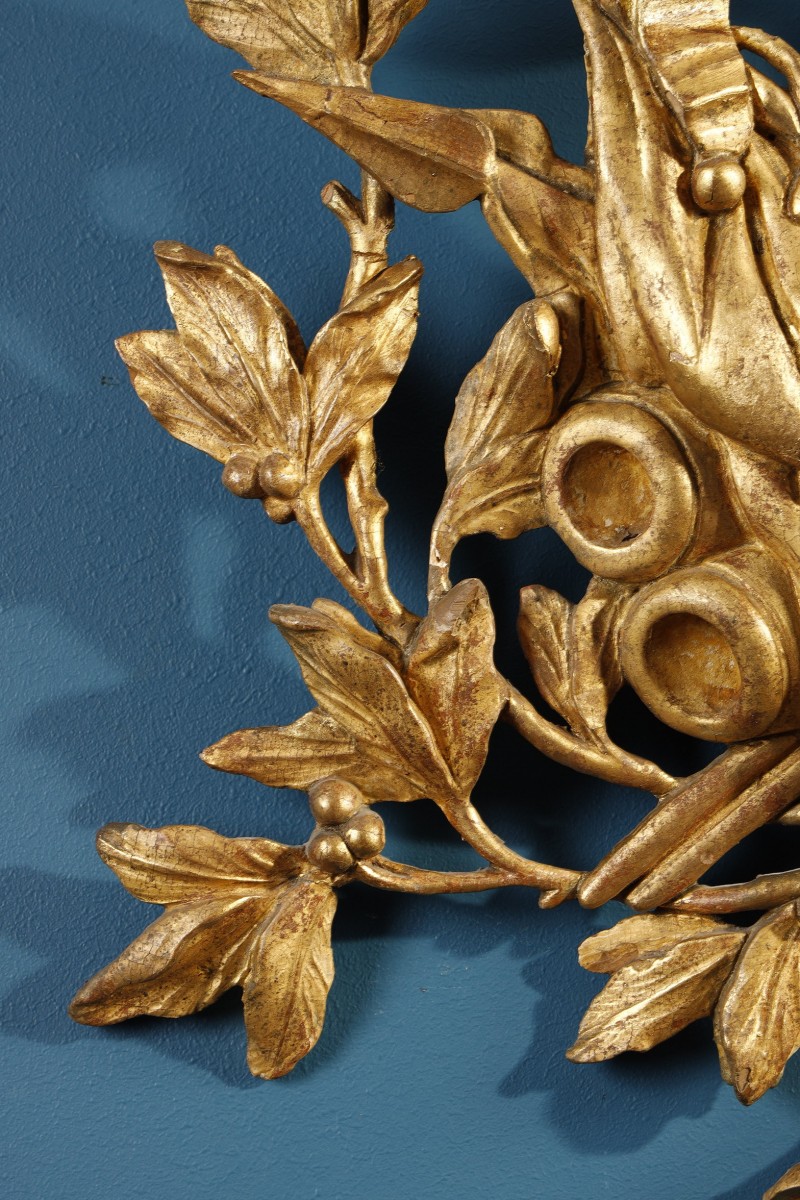
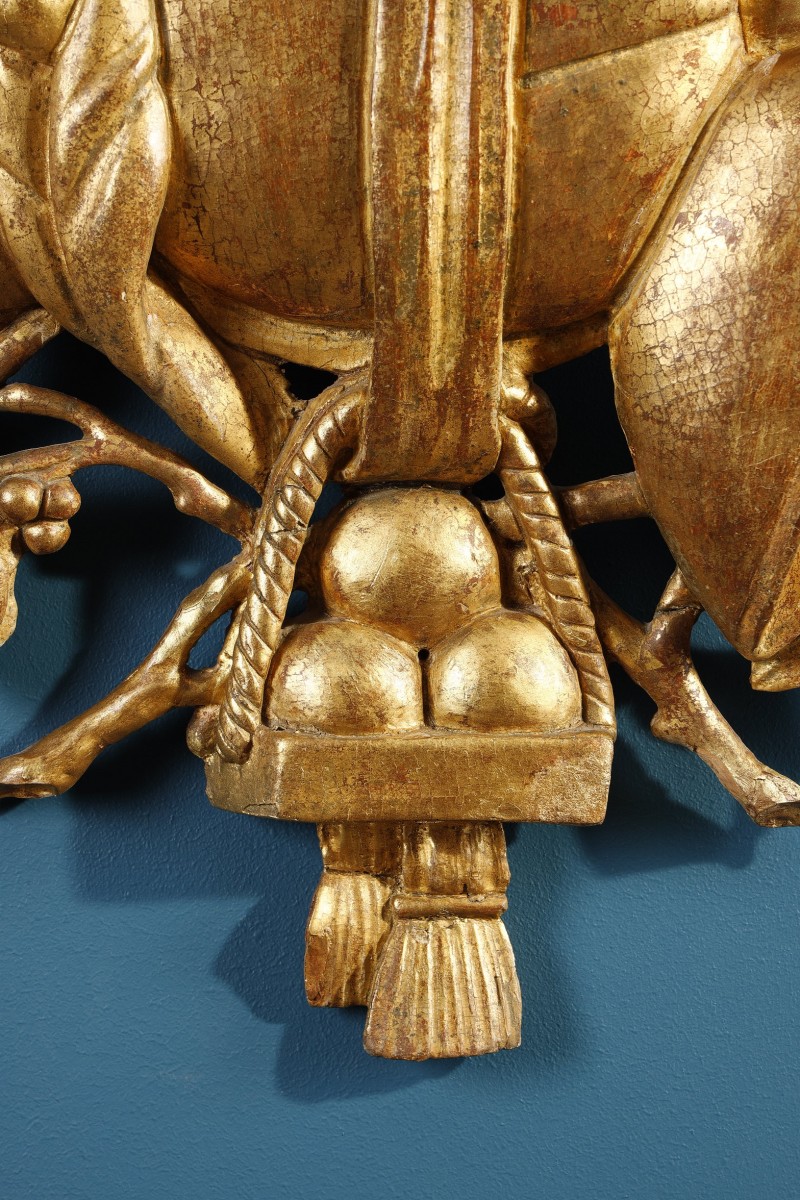
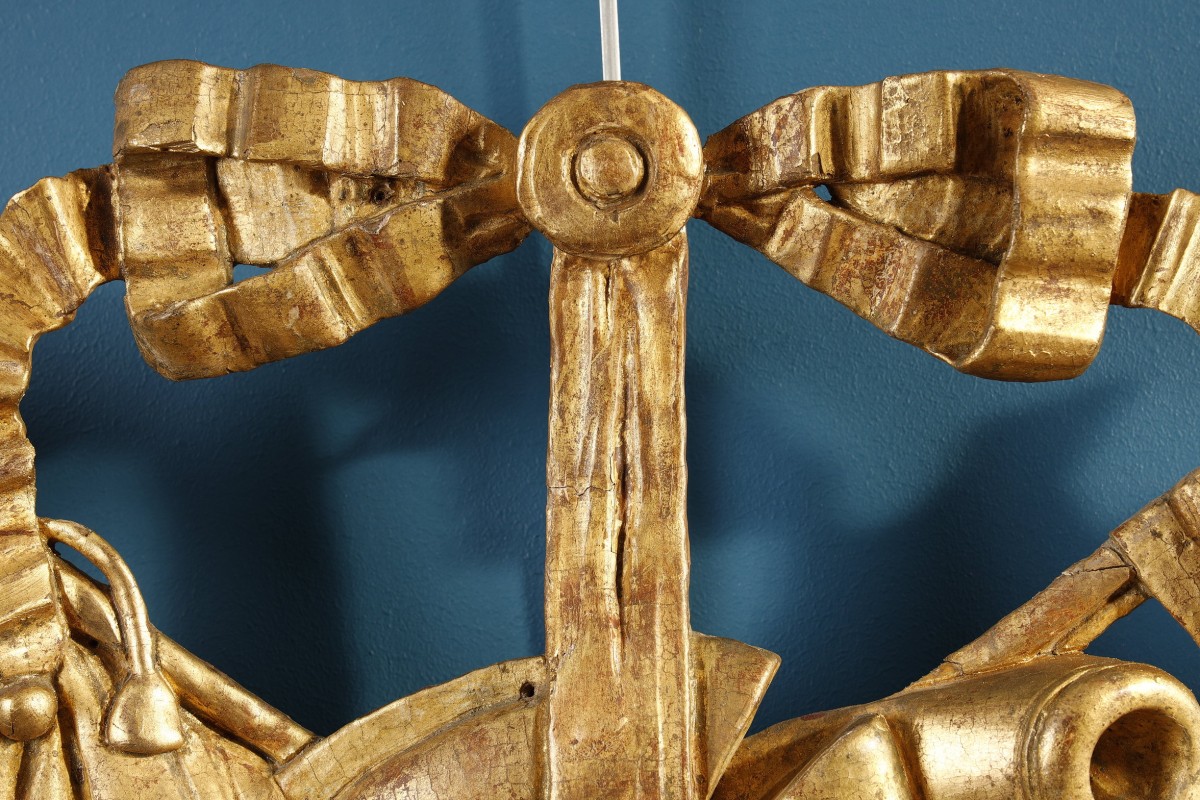
The scene is surmounted by an elegant ribbon bow tied in a rosette, its ends cascading in graceful arabesques on either side, a motif characteristic of late 18th-century decorative vocabulary. The center of the ribbon transforms into a stirrup supporting three cannonballs.
The composition is surrounded by leafy branches, lending movement to the whole.
Very fashionable during the reign of Louis XVI, this type of military trophy is part of a decorative tradition inherited from Antiquity, where weapons, repurposed from their original use, become ornamental elements and symbols of power. The finely chiseled sculpture testifies to meticulous craftsmanship and a keen sense of composition, enhanced by beautiful original gilding. Intended to adorn overdoors, these decorative elements were designed to capture the eye and enrich the interior architecture. They were placed in the drawing rooms, armories, or reception rooms of aristocratic residences, contributing to the grandeur and refinement of the décor.
A fine example of 18th-century decorative woodwork, combining powerful symbolism with ornamental elegance.
Dimensions: H 46 cm x W 60 cm