Offered by Jan Muller
REQUEST INFORMATION

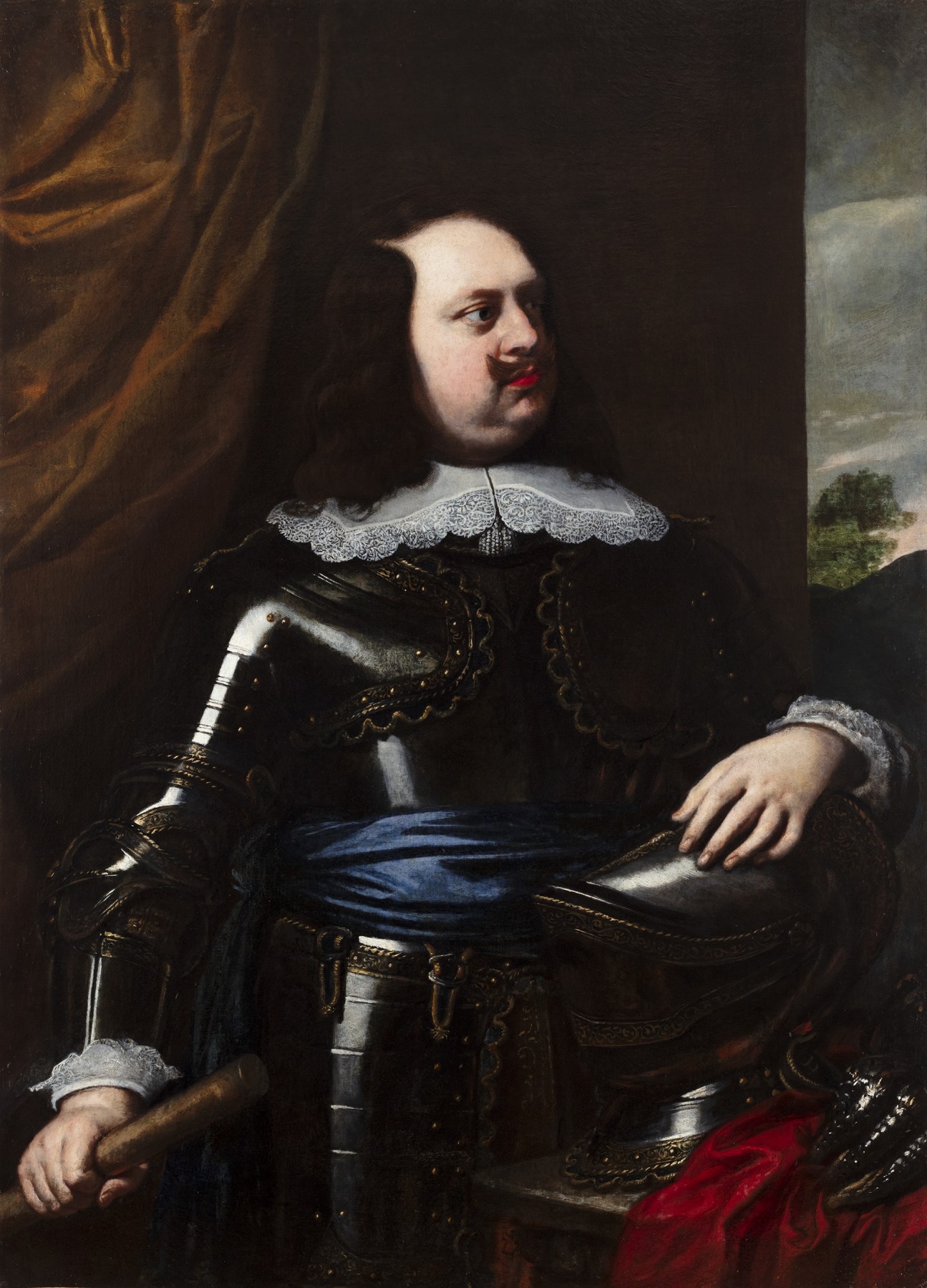
Attributed to JUSTUS SUSTERMANS
1587 - 1681
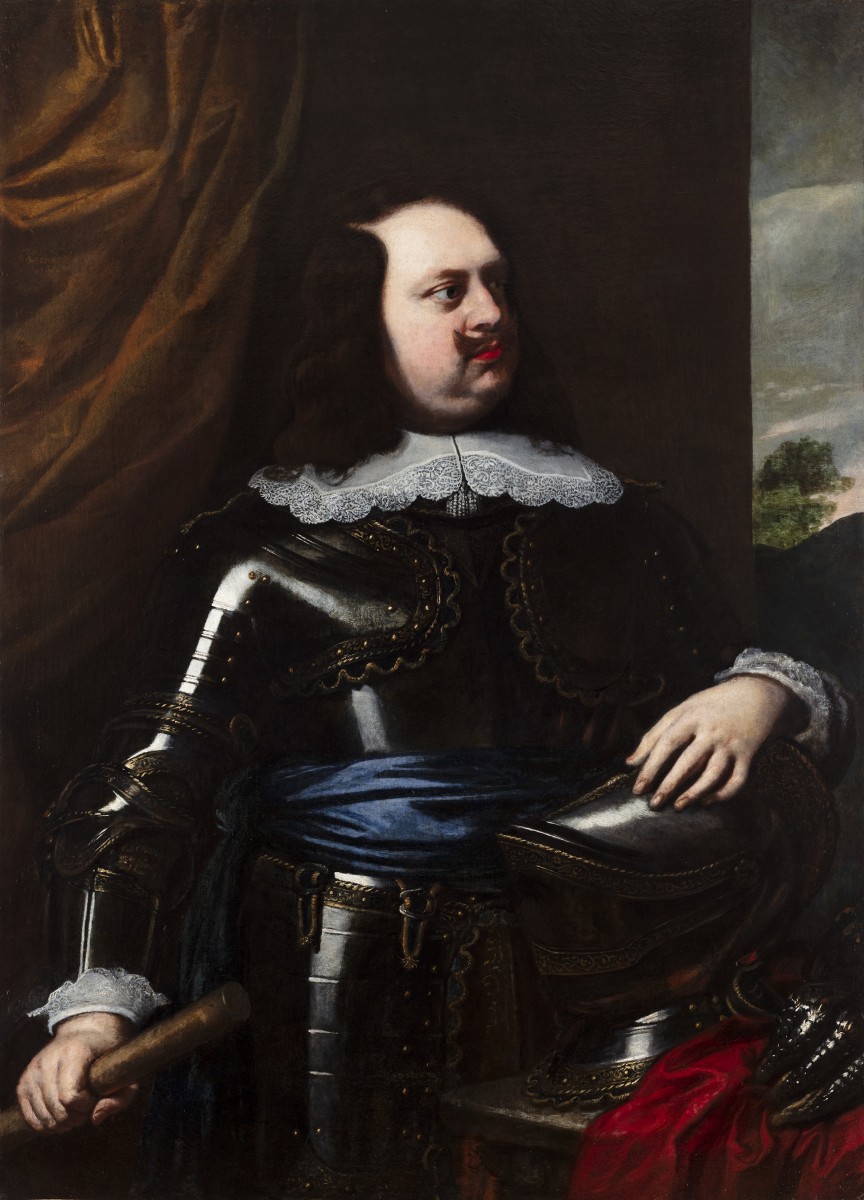
“A portrait of an Italian nobleman, possibly Odoardo Farnese”
Oil on canvas
Provenance: private collection in Rome
Dimensions: 114 x 84 cm, 135 x 103 cm (framed)
THE ARTIST
Justus Sustermans, a Flemish painter born in Antwerp, rose to prominence as one of the most celebrated portraitists of the 17th century. After training in Paris under Frans Pourbus the Younger, he was invited to Florence in 1620 by Cosimo II de’ Medici and would go on to serve as official court painter to the Medici family. Sustermans combined the Flemish love of precision and texture with the grandeur of Italian classicism, capturing the opulence and psychological depth of his sitters with remarkable finesse.
Sustermans’ reputation extended beyond Tuscany. He received commissions from the courts of Vienna, Modena, Rome, Parma, and Paris. His career was marked by diplomatic mobility, including extended stays at the Farnese court in Parma and Piacenza in 1639–1640, where he painted several members of the local nobility, among them likely the sitter in the present portrait
This refined and stately portrait belongs to the elite visual tradition of 17th-century Italian court portraiture and likely represents Odoardo Farnese, Duke of Parma, painted during Sustermans’ 1639–1640 sojourn at the Farnese court. Or shortly after the 1640s, he may have executed the painting based on preparatory studies, a method he was known to employ. Notably, the double portrait of Duke Ferdinand and his wife Vittoria della Rovere was likewise not painted from life.
The sitter’s military posture, blue sash, ceremonial armor, and facial features align strongly with the identity of Odoardo, a key noble figure of his time and a known patron of French interests in Italy. In 1633, he formed an alliance with Louis XIII of France to combat Spanish hegemony in northern Italy and obtain loans to build a strong army. His efforts were in vain, as Piacenza was occupied by the Spanish and his army was defeated by Francesco I d'Este.
While the attribution cannot be confirmed with absolute certainty, the convergence of iconographic, stylistic, and historical evidence makes Odoardo Farnese the most compelling and probable identification to date.
Delevery information :
After reception of payment we can box and ship our items all over the world. Estimates of this service can be provided.