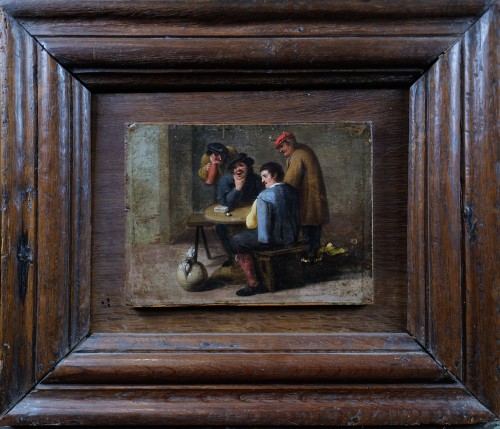
Offered by Jan Muller
REQUEST INFORMATION

CORNELIS DE HEEM
1631-1695
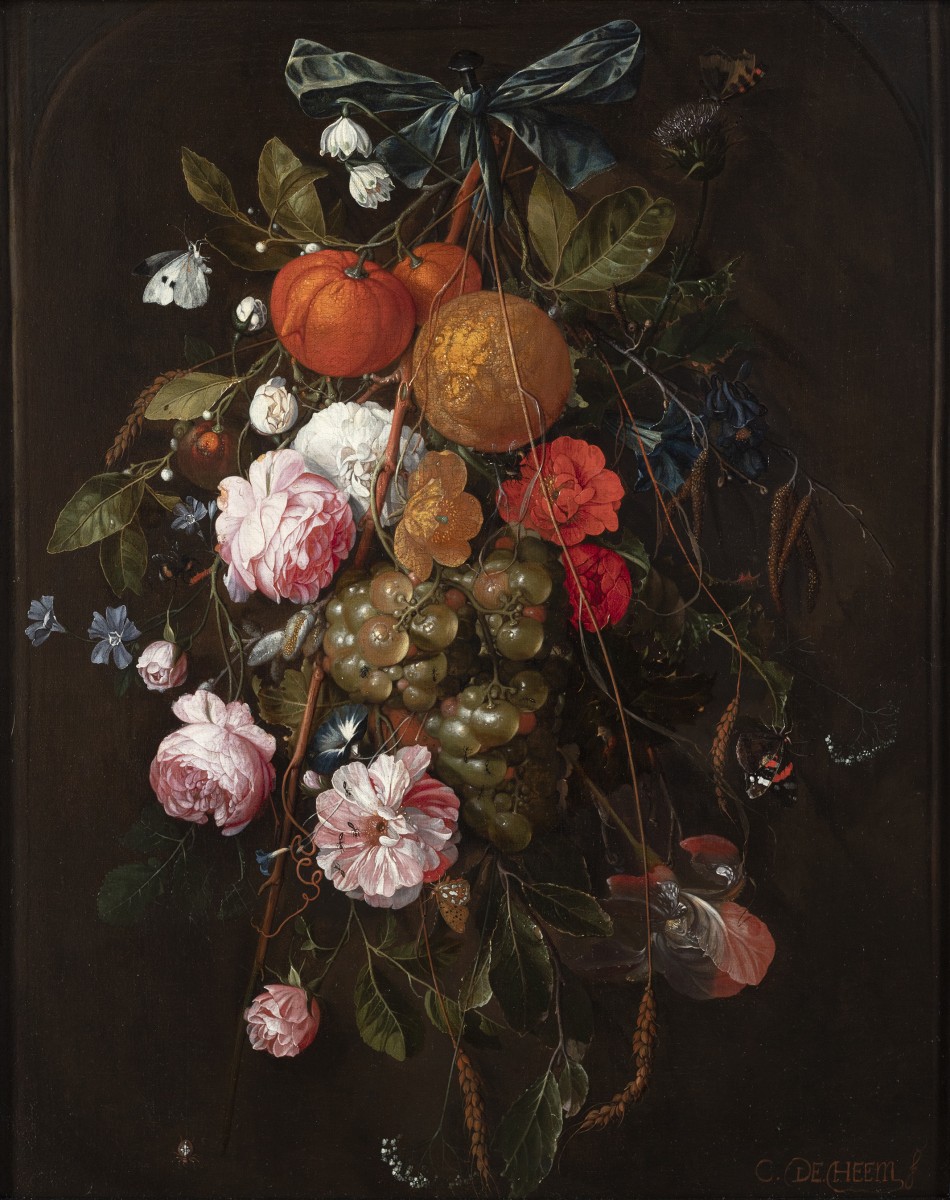
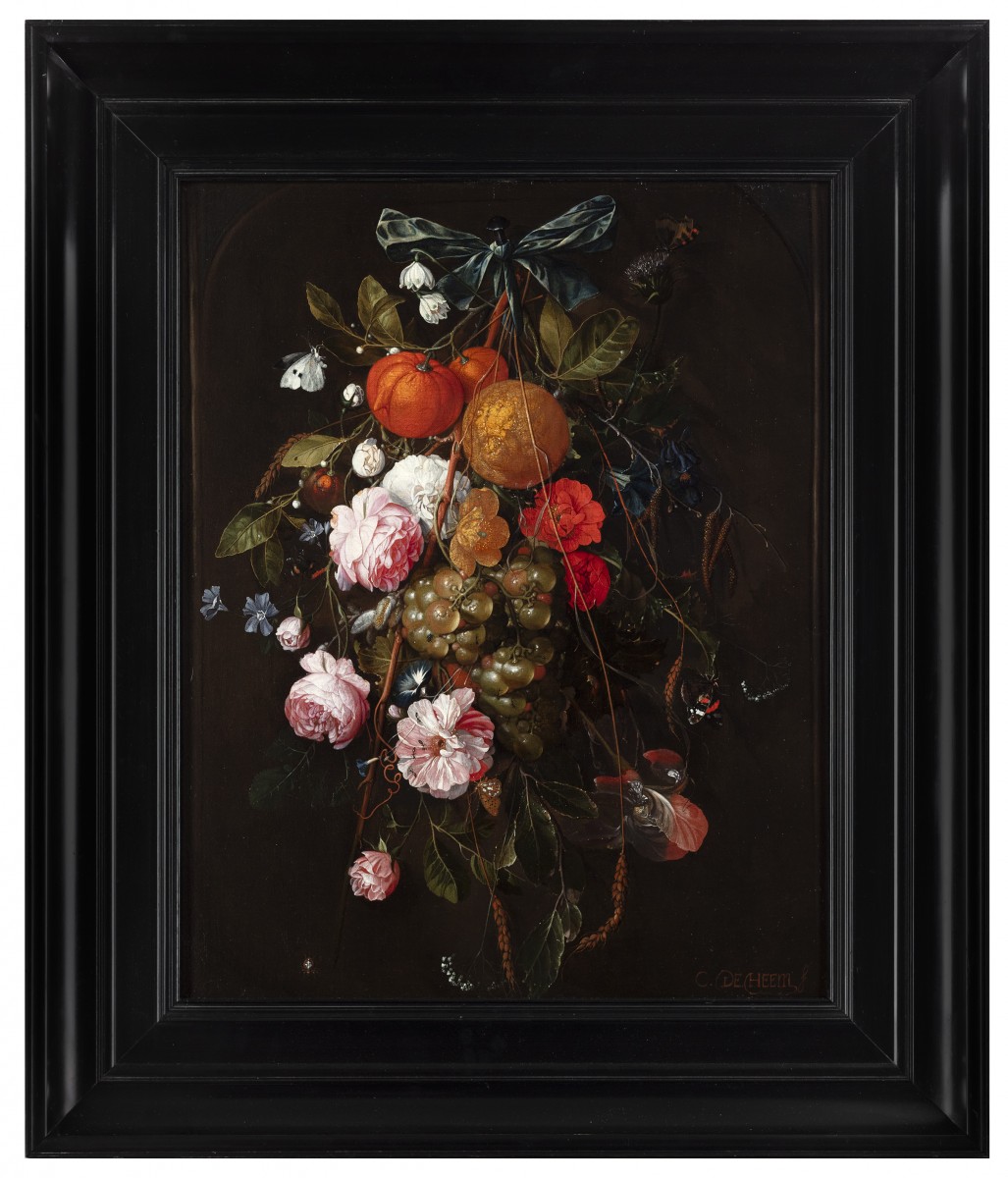
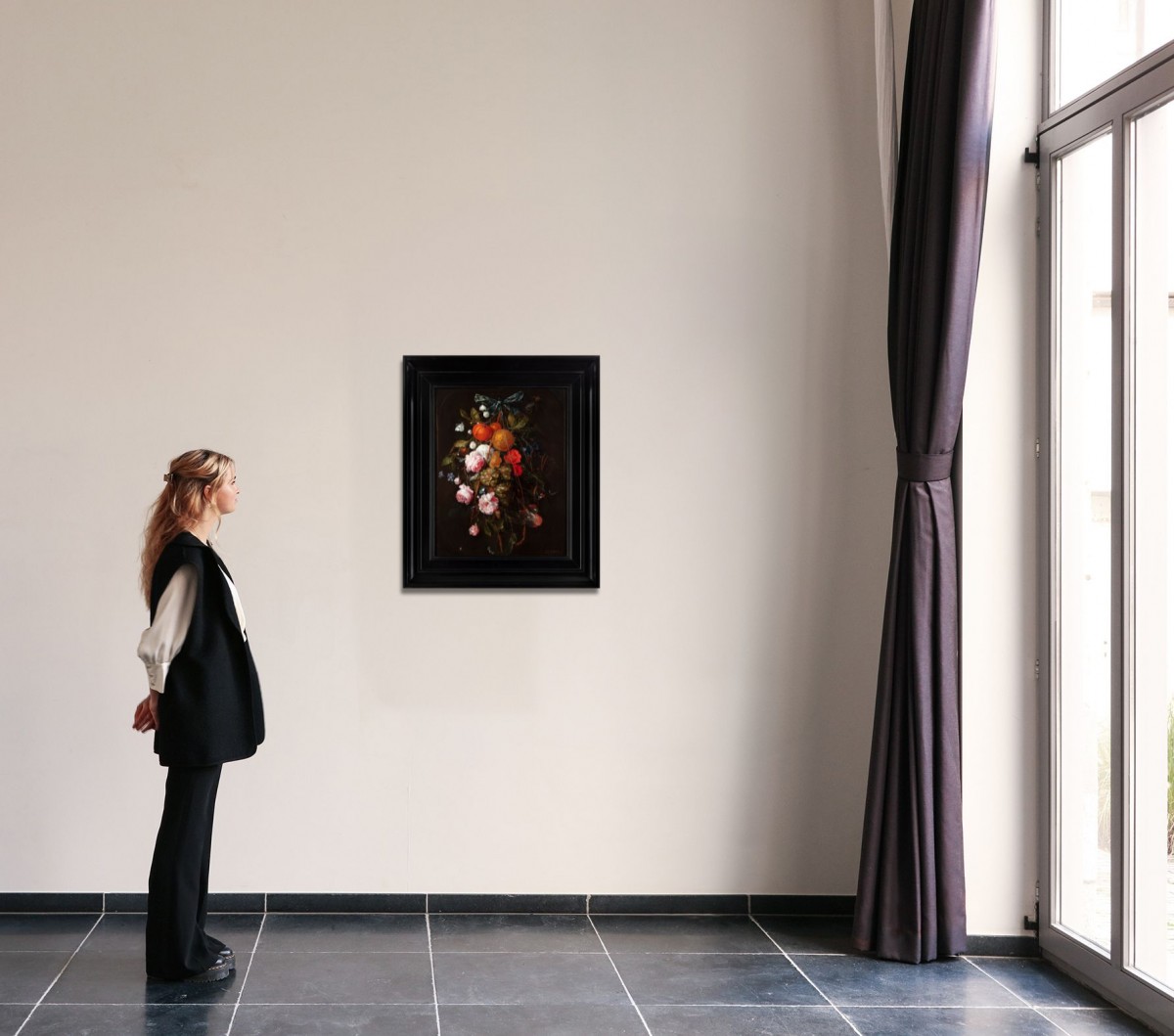
“A still life of fruit and flowers, suspended from a blue ribbon hanging from a nail”
Oil on canvas
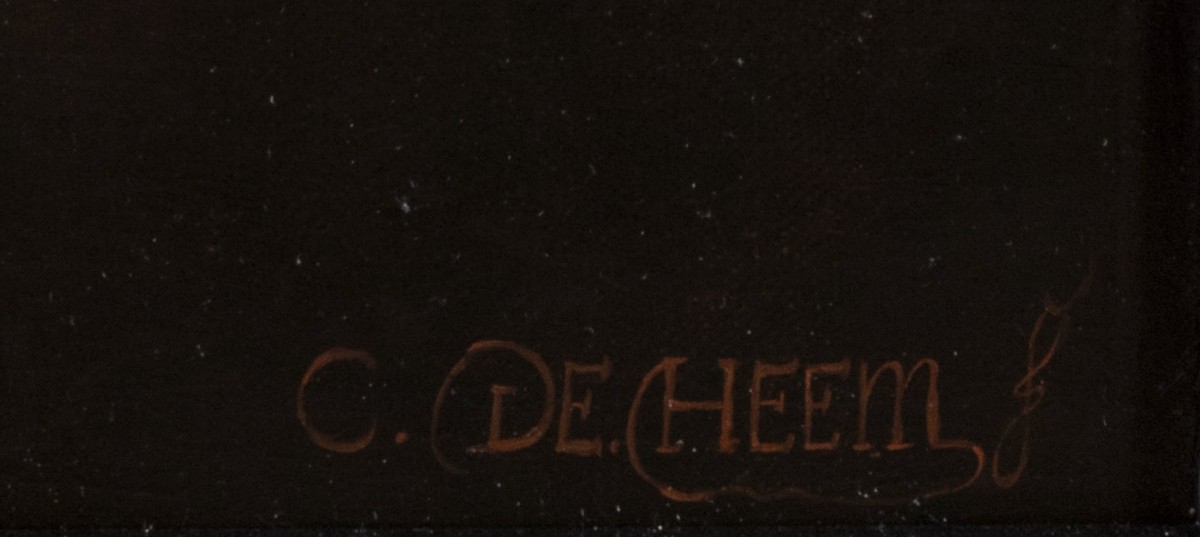
Signed lower right: “C. De Heem. F.”
Provenance: Christie's, London, 19 June 1942, lot 22. the family of the late Derek R Strauss.
Dimensions: 64 x 51 cm
THE ARTIST
Cornelis de Heem was born into one of the most celebrated still-life dynasties of the 17th century. He was the son of Jan Davidsz. de Heem, the towering figure of Dutch-Flemish still-life painting whose compositions married opulence with painterly finesse and symbolic subtlety. Trained in his father’s workshop, Cornelis absorbed the meticulous technique and rich visual language of the Leiden school while gradually developing a more compact and decorative style of his own.
Although active in both the Dutch Republic and the Southern Netherlands, Cornelis spent much of his career in Antwerp, where he became a member of the Guild of Saint Luke in 1660. His work retained the high finish and compositional precision typical of his father’s circle but often in smaller formats and with a cooler palette, strong blues in particular are a recurring chromatic signature in his oeuvre.
While his father's monumental pieces were often rich with moral allegory and intellectual symbolism, Cornelis’s works leaned toward a more intimate aesthetic, emphasizing elegant arrangements, exquisite color balance, and the tactile allure of fruits, flowers, and insects. His paintings were sought after by connoisseurs in both Northern and Southern Europe for their refinement and subtle charm.
THE ARTWORK
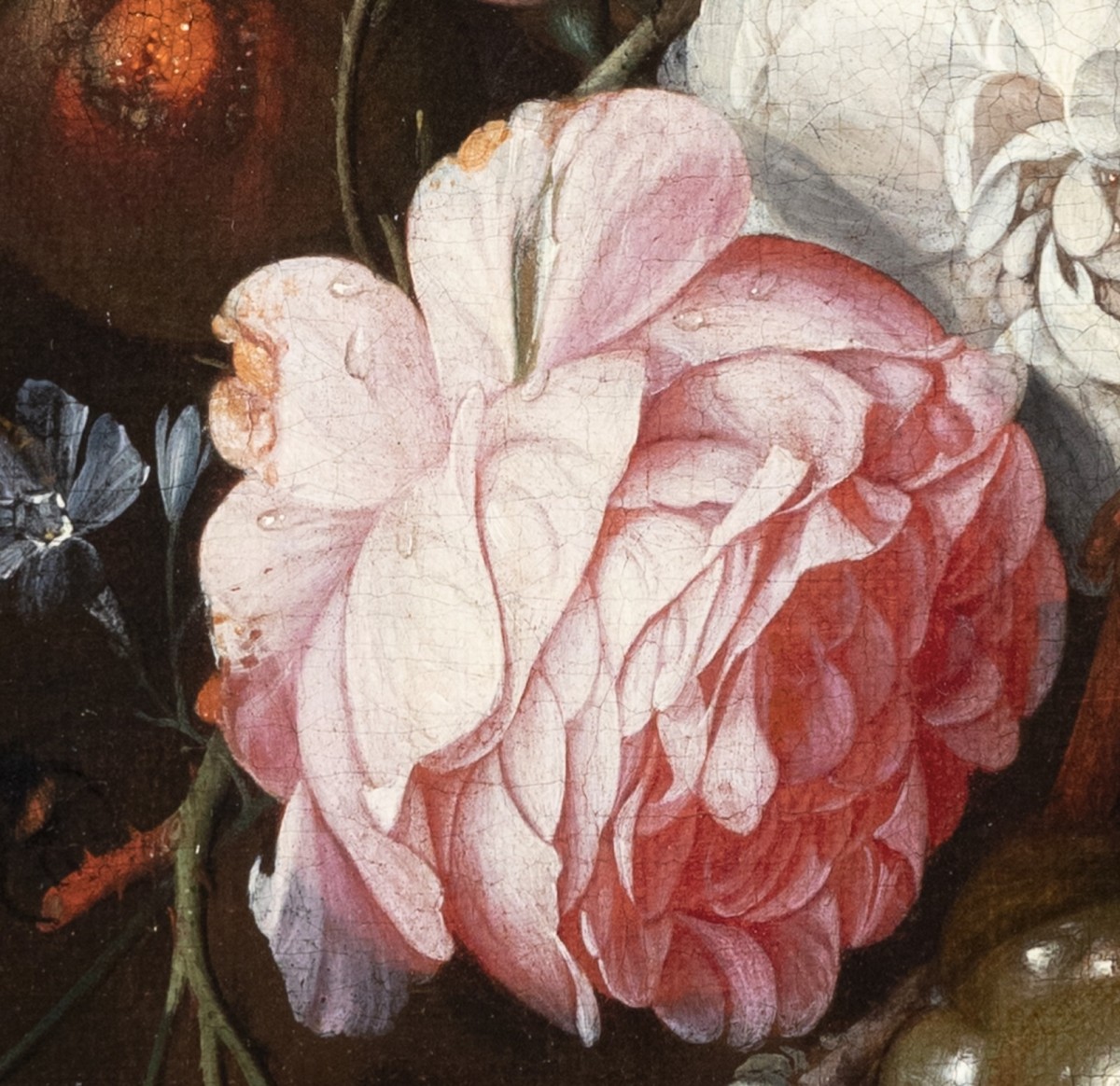
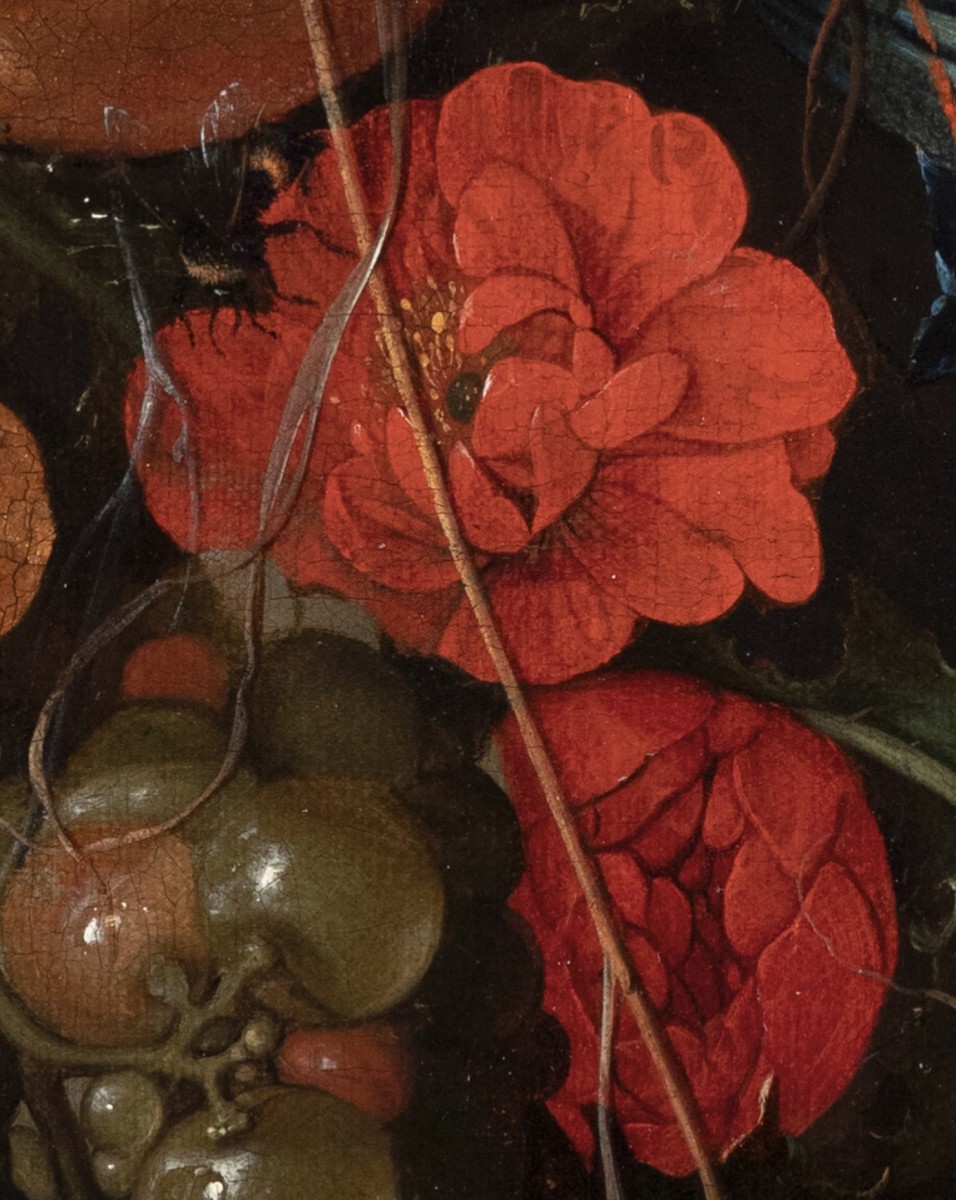
This richly composed garland still life is a beautiful example of Cornelis de Heem’s mature output: a suspended cluster of flowers and fruit tied with a silk-blue ribbon, meticulously painted against a dark background that enhances their jewel-like vibrancy. The cascading elements, roses, carnations, grapes, citrus fruits, and curling vines, are carefully orchestrated to create a rhythm of form and color. De Heem masterfully contrasts the velvet textures of the petals with the waxy sheen of grape skins and the knotted, pocked surface of the hanging orange.
What sets this work apart is the trompe-l'œil illusion of the bouquet hanging directly on the picture plane, a device intended to blur the line between painted image and viewer’s space. This technique was popular among still-life painters in Antwerp, and particularly favored by the De Heem family workshop.
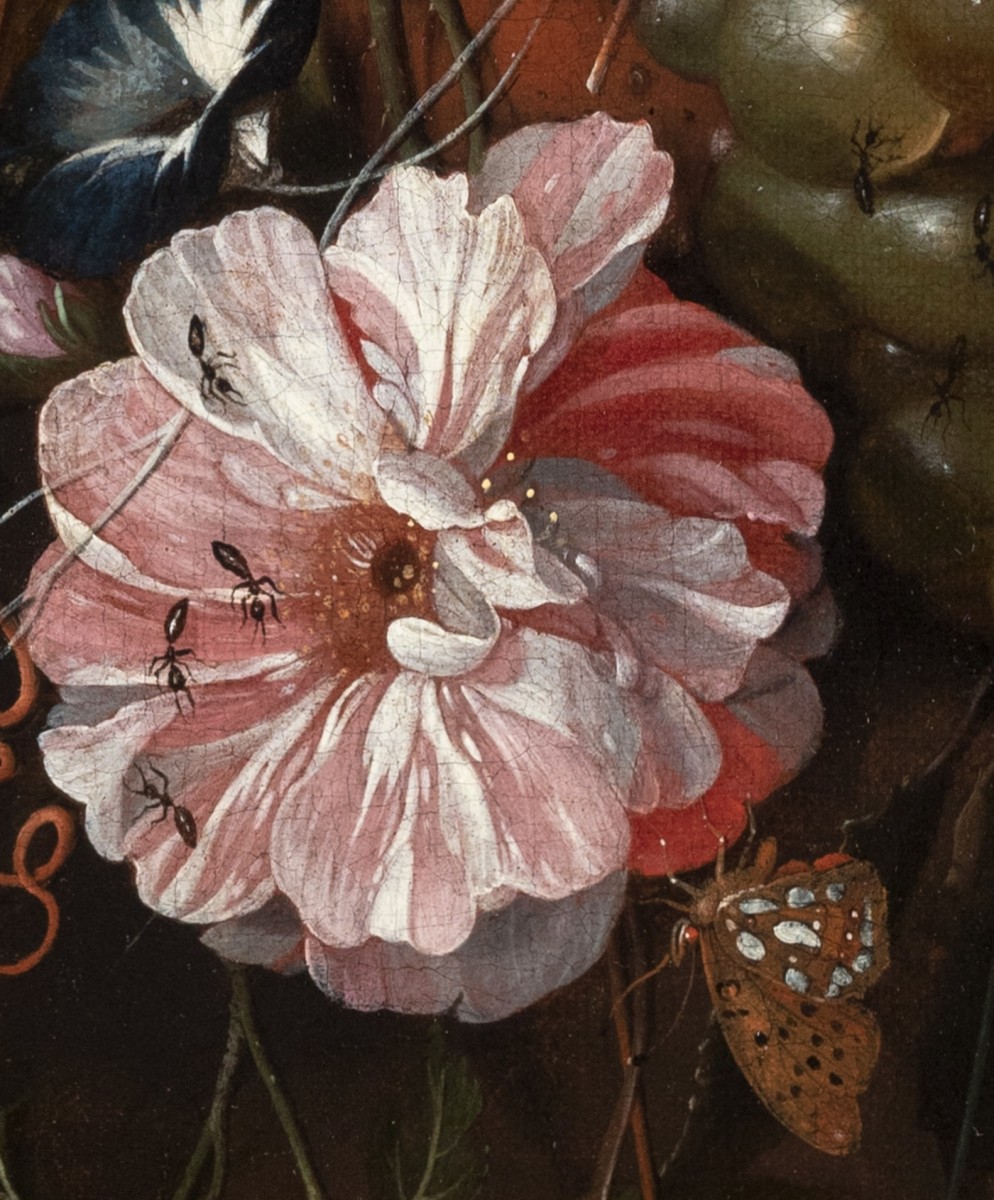
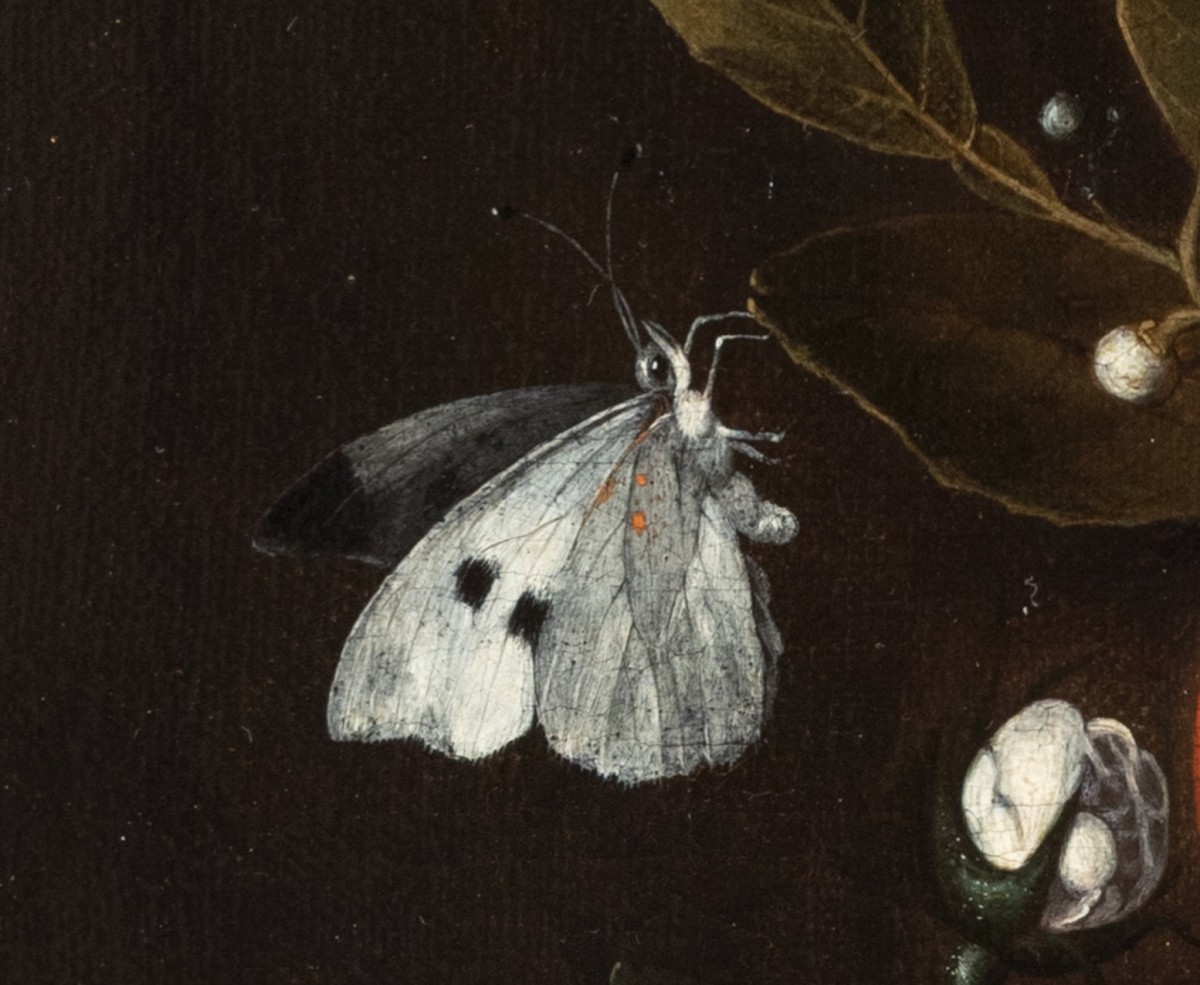
The inclusion of small insects and a white butterfly, adds both naturalism and symbolic charge, hinting at themes of transformation and the fragility of life. Such elements were common in floral still lifes and reflected a growing fascination in the period with nature’s fleeting beauty and the emerging field of natural history illustration.
The painting’s scale suggests it was intended for a domestic setting, making it not only a visual delight but also a reflection of 17th-century tastes in art, botany, and collecting.
Delevery information :
After reception of payment we can box and ship our items all over the world. Estimates of this service can be provided.