Offered by Antichità Castelbarco

Annibale Carracci (Bologna 1560 – Rome 1609) School of
Madonna and Child with Saint John the Baptist (known as “The Silence”)
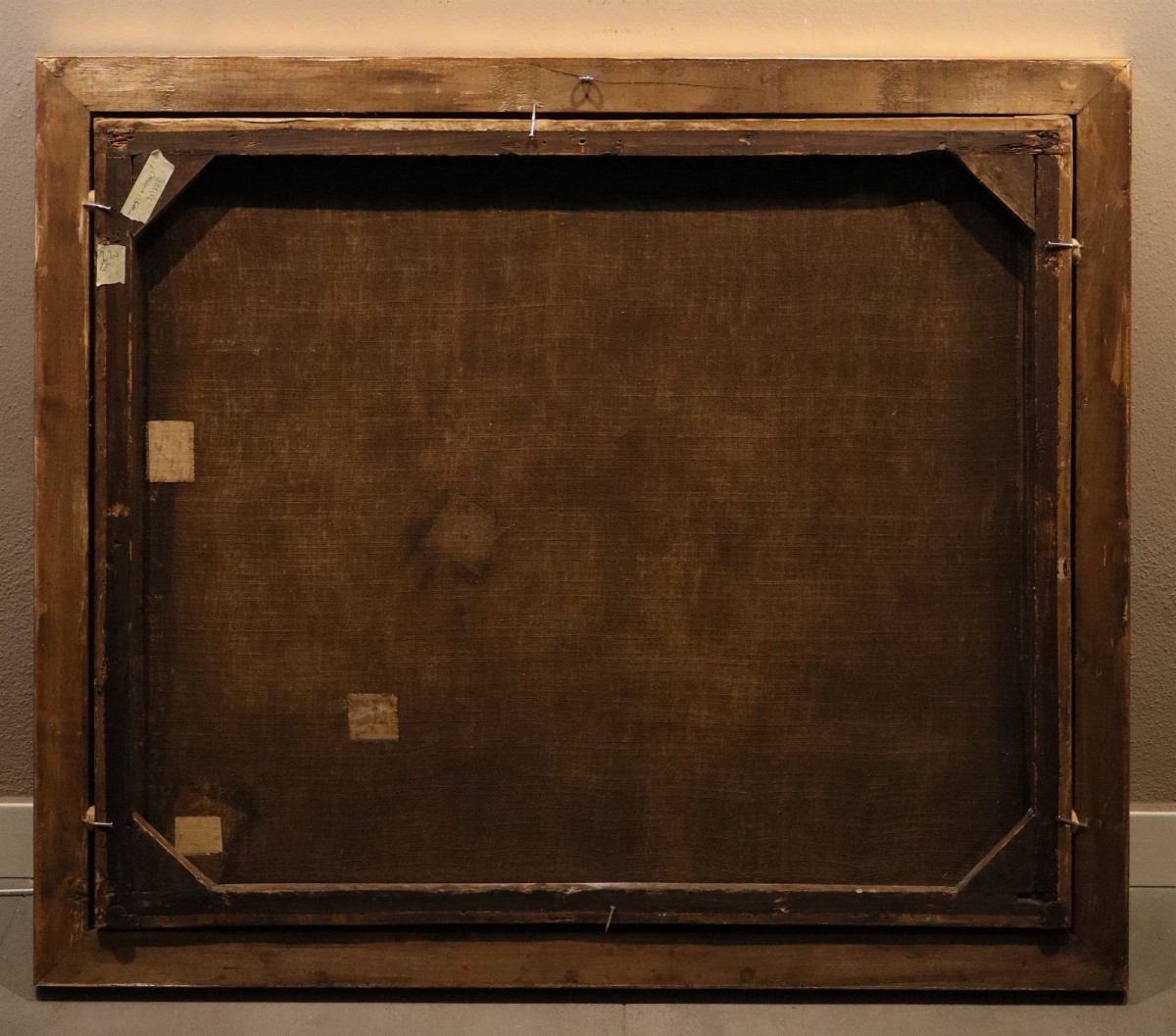
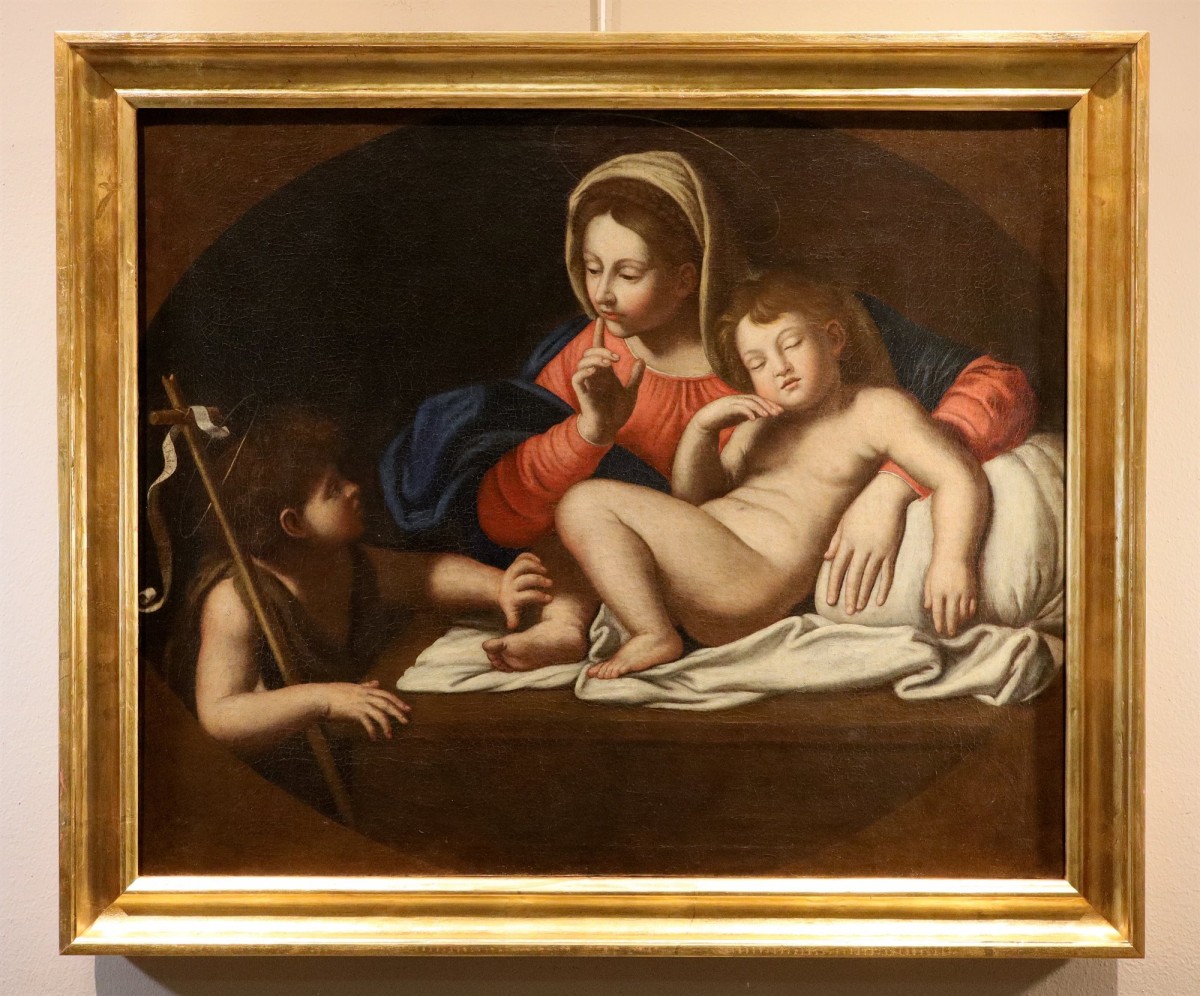
Oil on canvas 73 x 89 cm. In frame 86 x 101 cm.
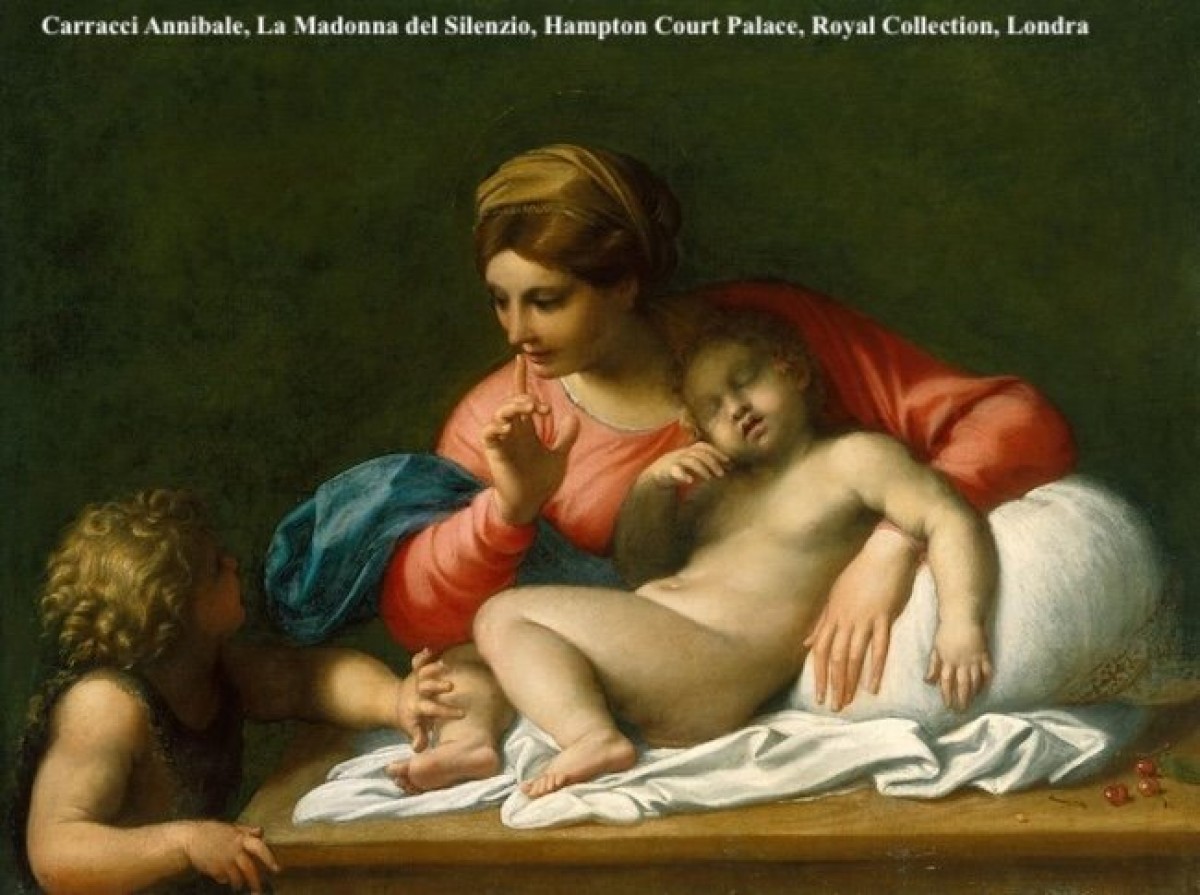
The Madonna and Child Asleep with Saint John the Baptist (known as the Madonna del Silenzio, or simply ‘Il Silenzio’) is an oil painting on canvas created by Annibale Carracci between 1599 and 1600, currently held in the British Royal Collection and on display at Hampton Court Palace in London**.
This small painting, distinguished by its exquisite luminosity and typically devotional character, was executed during the period when Annibale Carracci was completing the frescoes at the Farnese Palace in Rome, his most important work.
Despite its modest size, the work conveys grandeur: every form is clearly delineated with the classical restraint typical of Carracci’s style, all enveloped in a soft atmosphere, with the figures emerging from deep shadows.
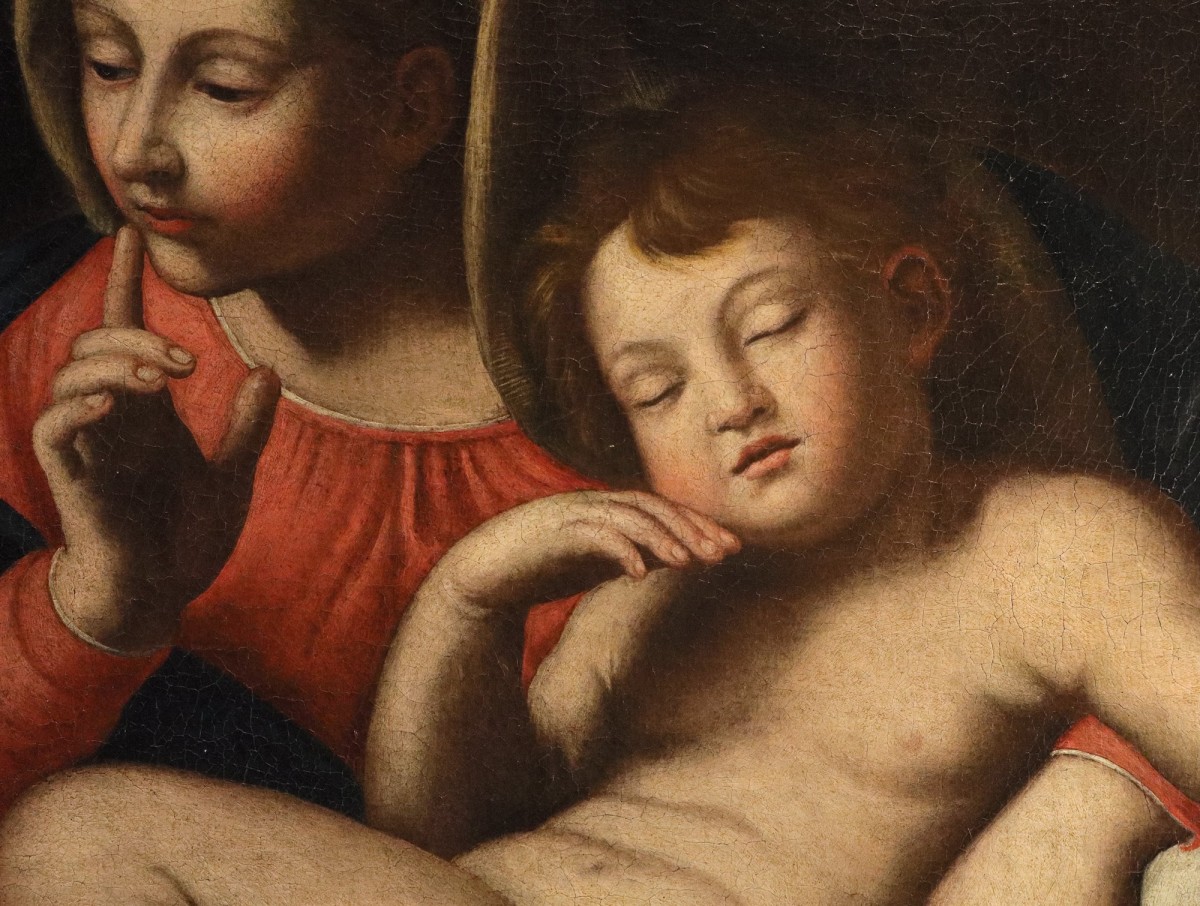
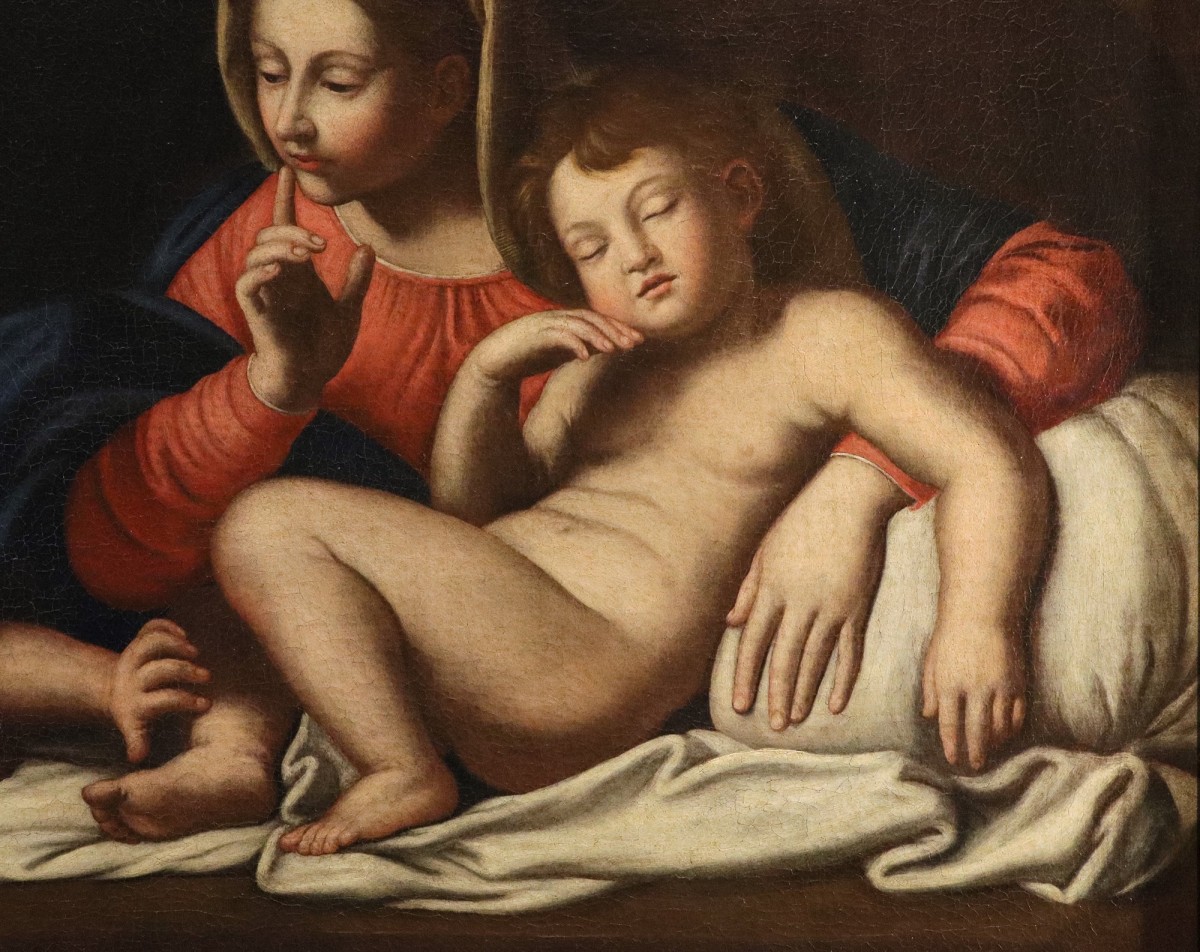
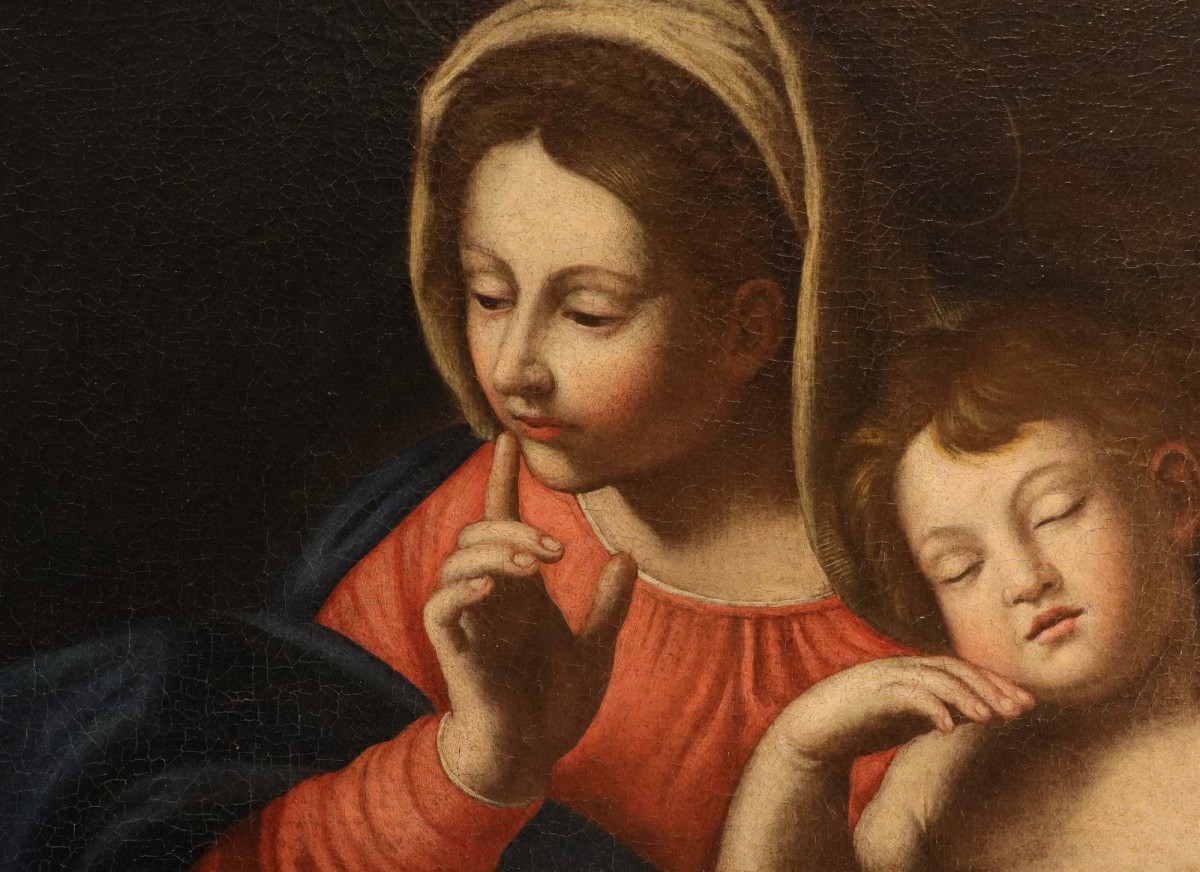
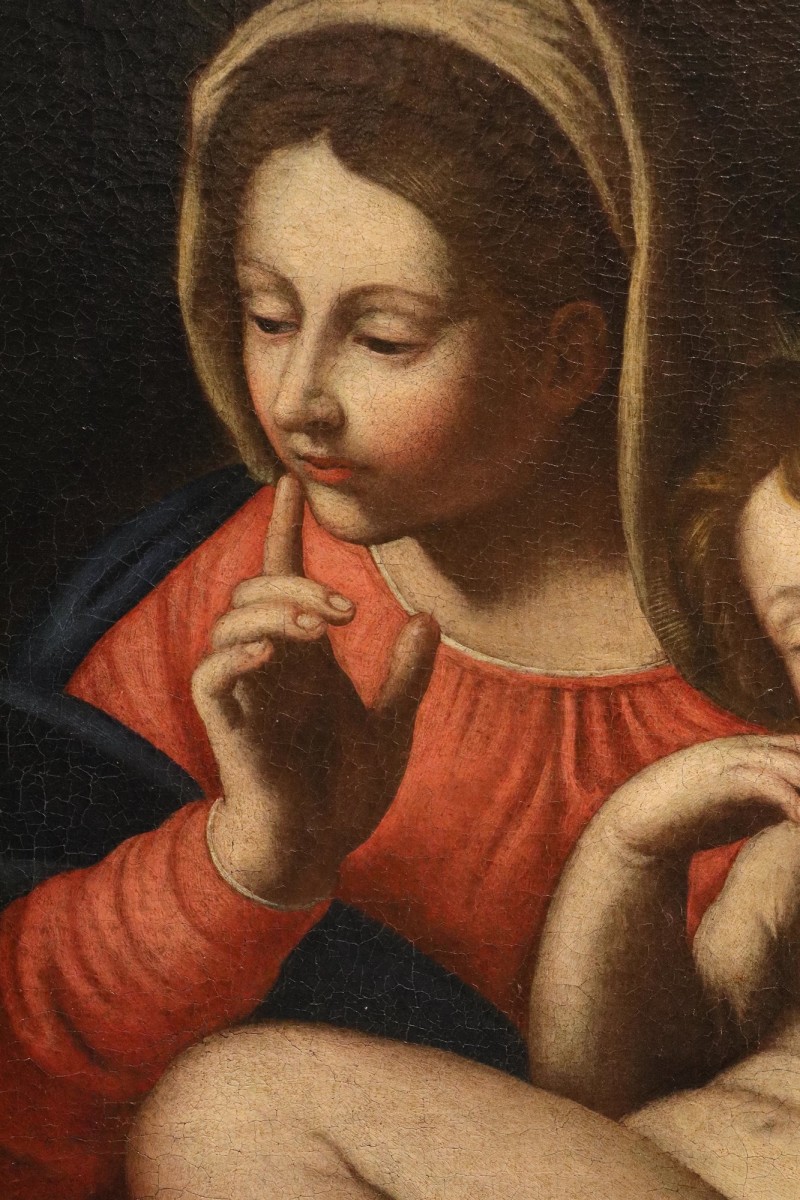
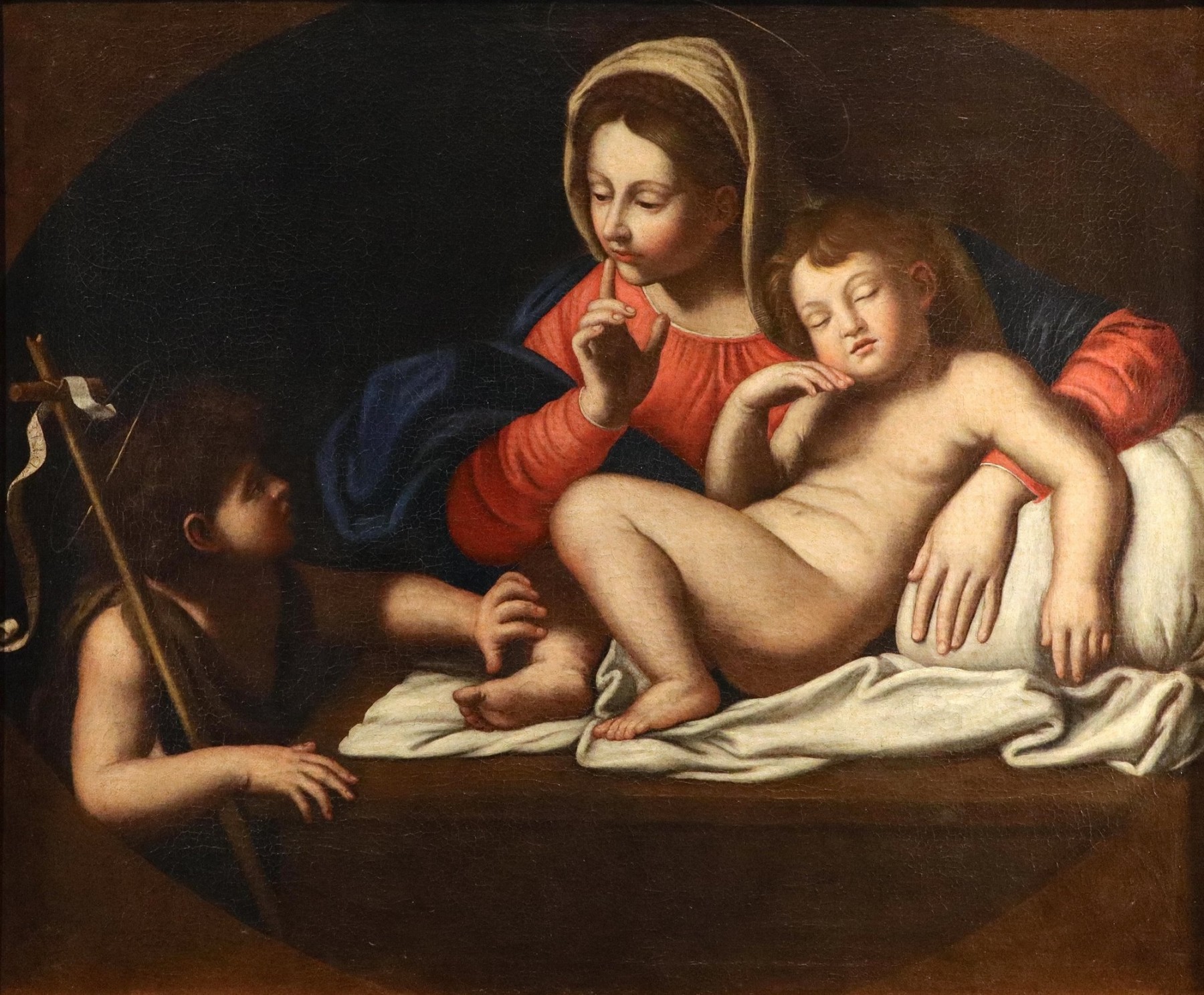
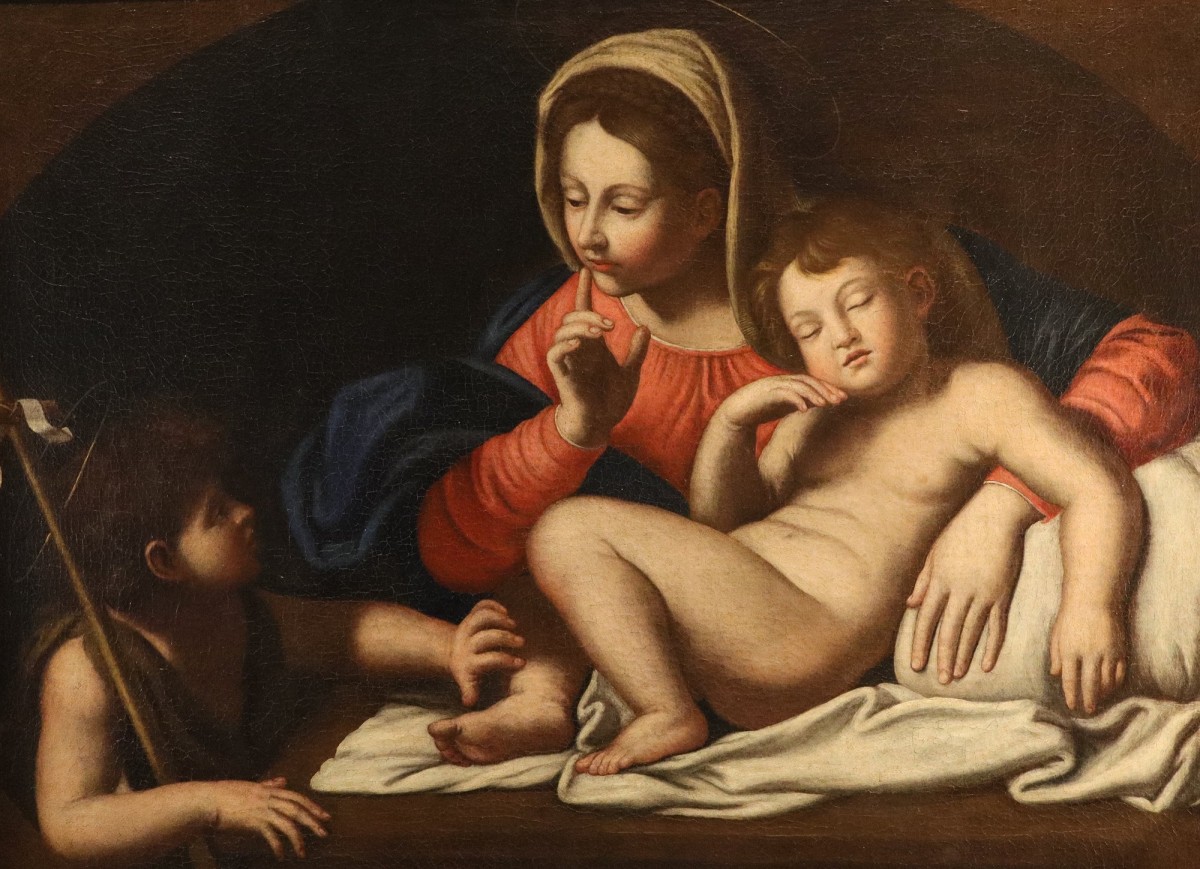
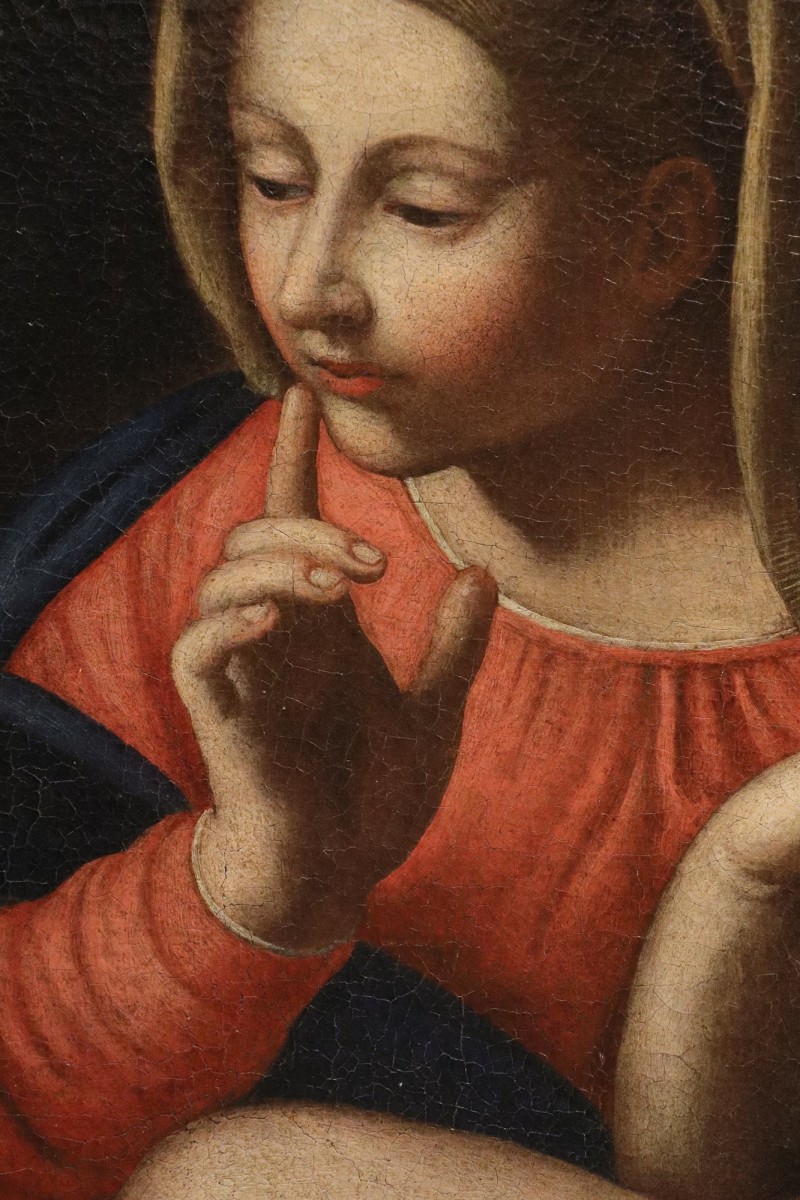
We can admire these characteristics in our fine copy as well, in which great attention has been paid to detail, especially in the delicate features of the faces.
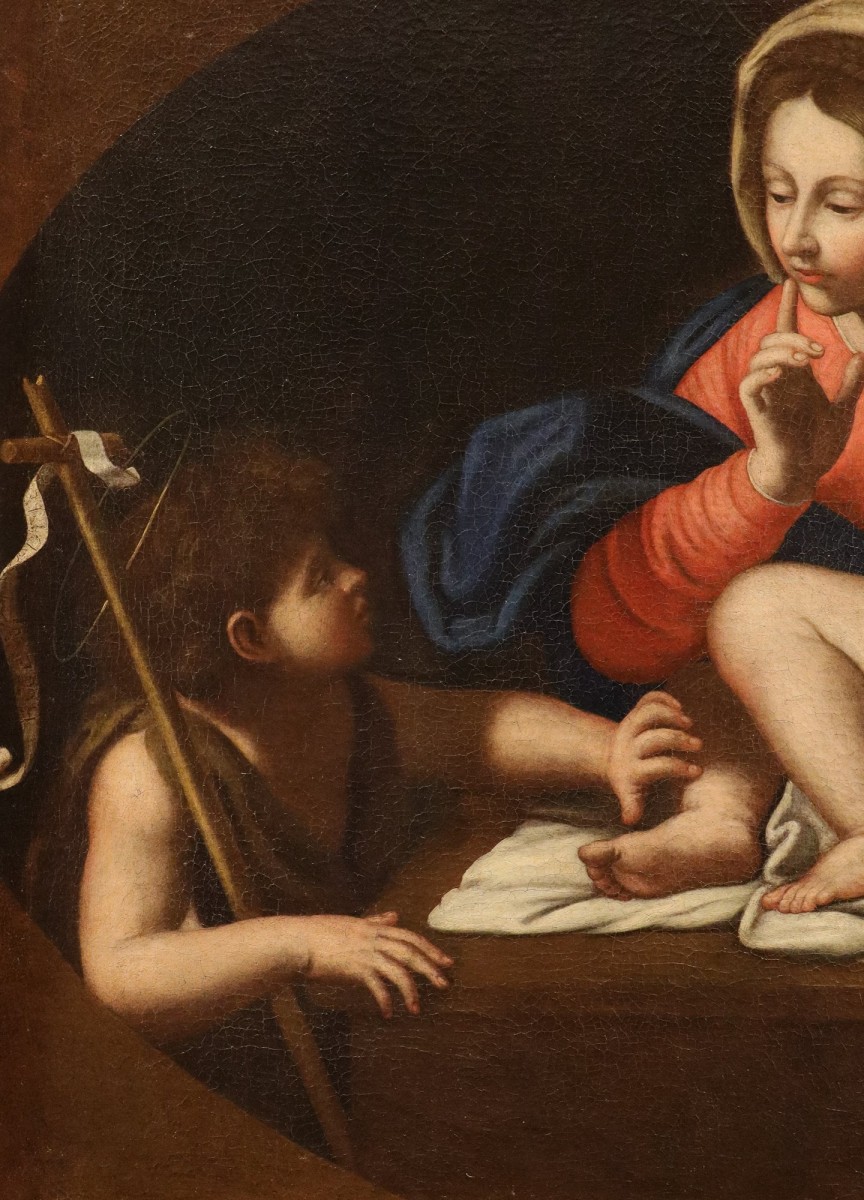
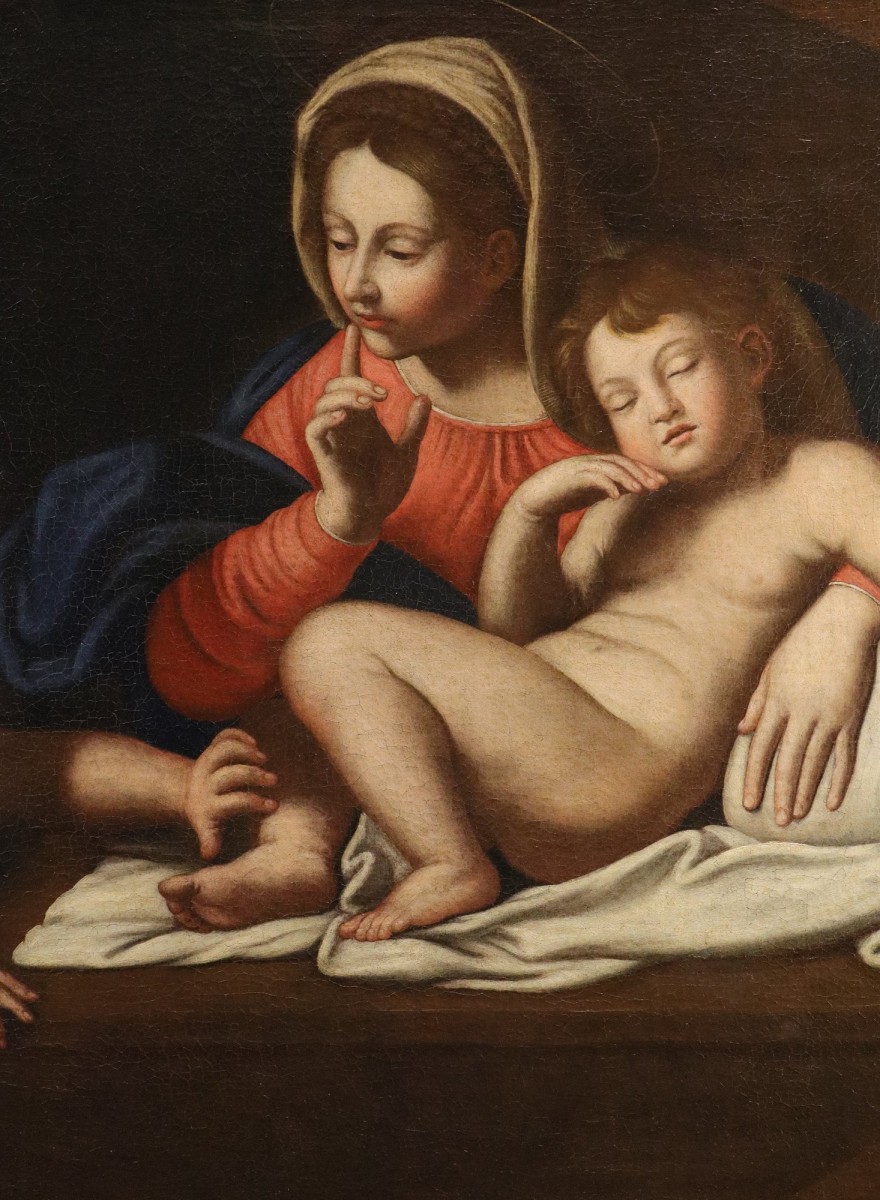
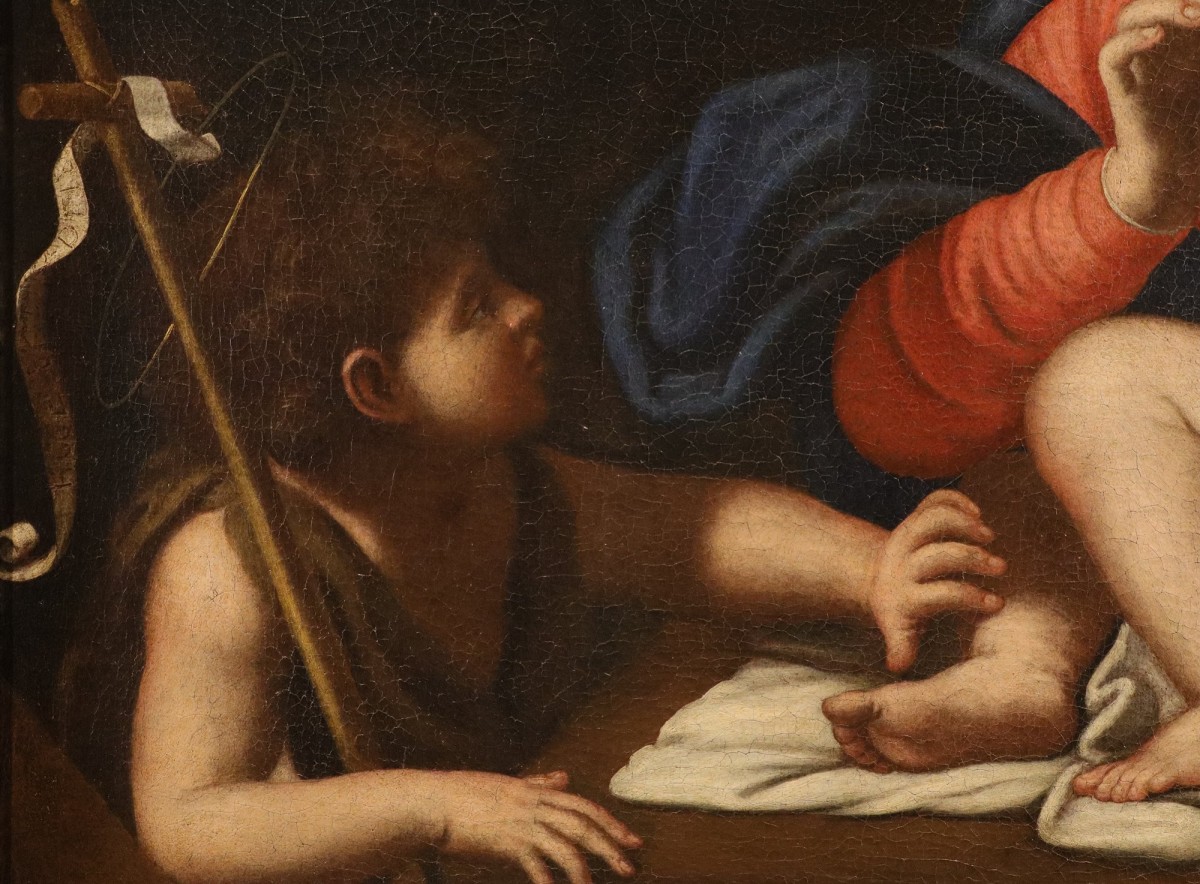
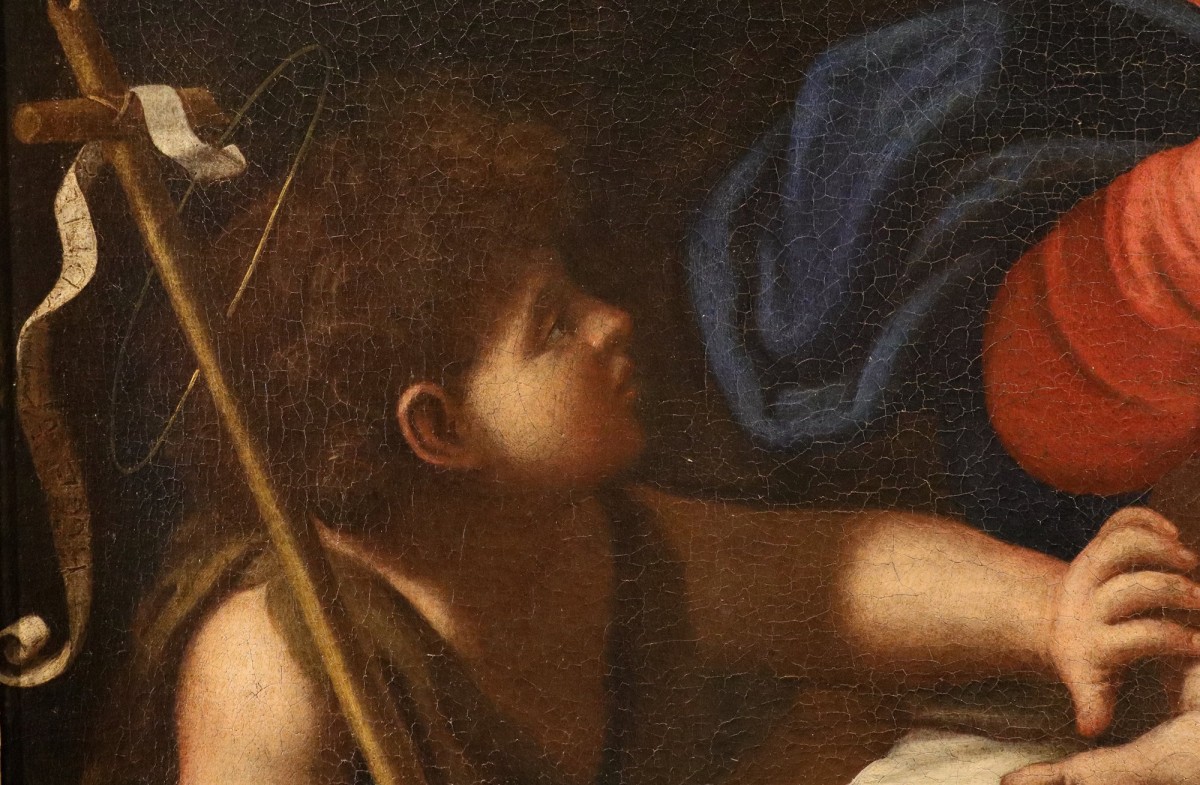
The painting depicts an intimate, domestic scene, with the Madonna gently placing a finger to her lips in a gesture of silence to warn John the Baptist not to wake the sleeping infant Jesus.
This gesture—simple yet highly effective in conveying the need for silence so as not to disturb the child’s sleep—is an invention derived from Michelangelo, and we find it in one of his red-pencil drawings from around 1540, in which it is John the Baptist, rather than Mary, who places his finger to his lips (Portland Collection, Holbeck, Nottinghamshire).
The symbolic meanings present in the work are enchanting and complex, with the idea of the sleeping Christ as a foreshadowing of his future sacrifice, evoked by the panel’s resemblance to an altar and the sheet on which he sleeps, which resembles a shroud.
We find this correlation in some of Raphael’s works, such as the Madonna of the Diadem (Louvre), in which the lifting of the veil is a symbol of revelation, alluding to the cloth that covers the chalice during Mass and to the shroud that covered the dead Christ.
The Virgin could be interpreted as a warning to John not to awaken Christ from the Passion before his time.
The gesture of the young John, reaching out to touch Christ with his little hand, finds an analogous counterpart in the putto who curiously reaches out to touch the crown of thorns in Annibale di Capodimonte’s Pietà, suggesting that the painter was developing ideas for both paintings simultaneously.
Both of these works follow a striking, carefully balanced pyramidal composition, with the crucial gesture of the Virgin—the dominant figure of the composition—holding the center.
Among the most illustrious names who have taken up this design, we can mention the version by Domenichino (or attributed to his school) and preserved at the Louvre Museum in Paris, probably painted around 1605, thus very shortly after the original, or a square composition by Sassoferrato. ** Madonna and Child with Saint John the Baptist ('The Silence') c.1599–1600 - Oil on canvas - 51 x 68 cm Hampton Court Palace, Royal Collection, London
Delevery information :
We take care of and organise the transport of the purchased works, both for Italy and abroad, through professional and insured carriers.
We take great care We personally take care of the packaging, to which we devote a great deal of care: each work is carefully packed, first with arti- cle material, then with a custom-made wooden box.
Should you have the desire to see this or other works in person, we would be happy to welcome you to our gallery in Riva del Garda, Viale Giuseppe Canella 18, we are always open by appointment only.