Offered by Franck Baptiste Paris
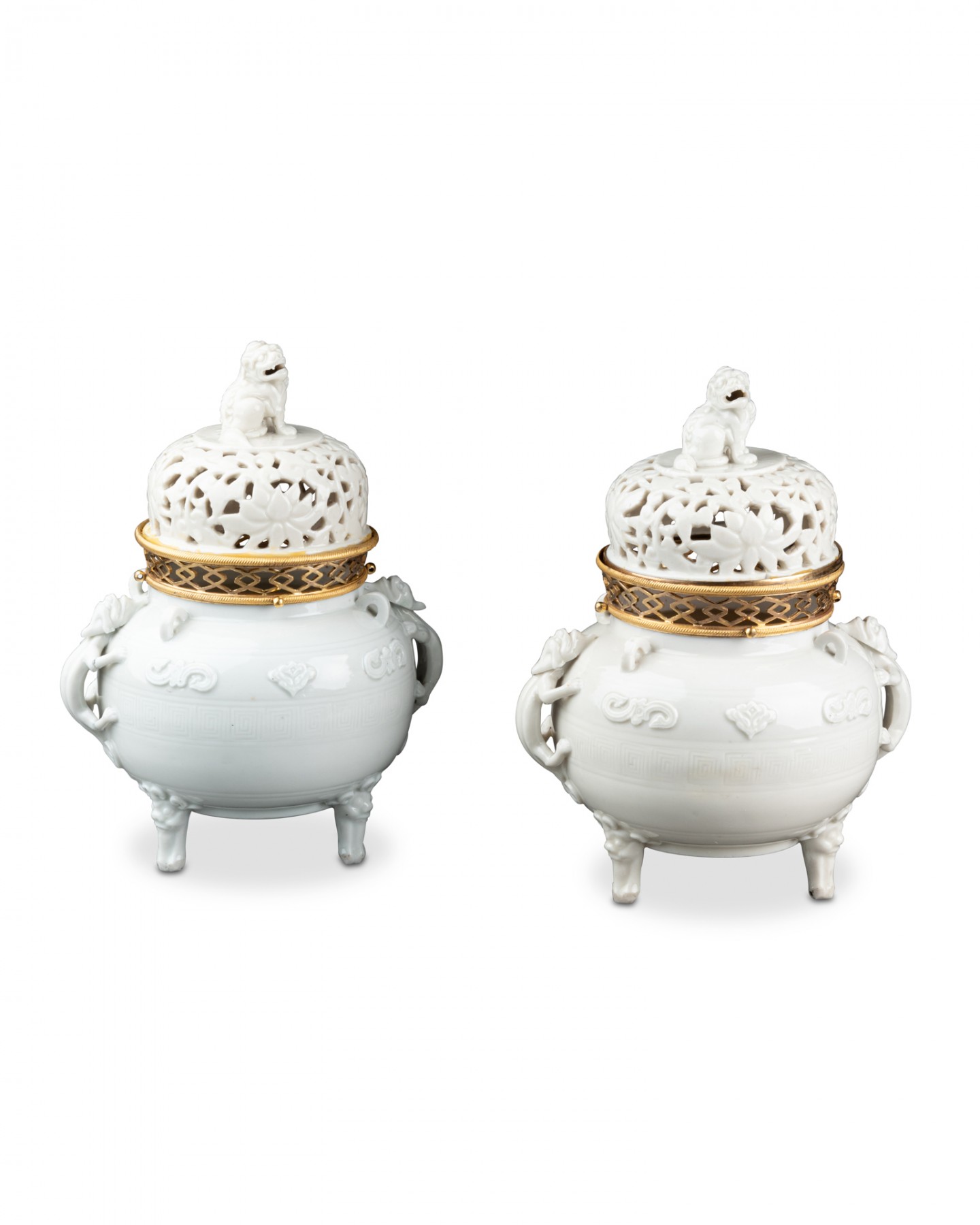
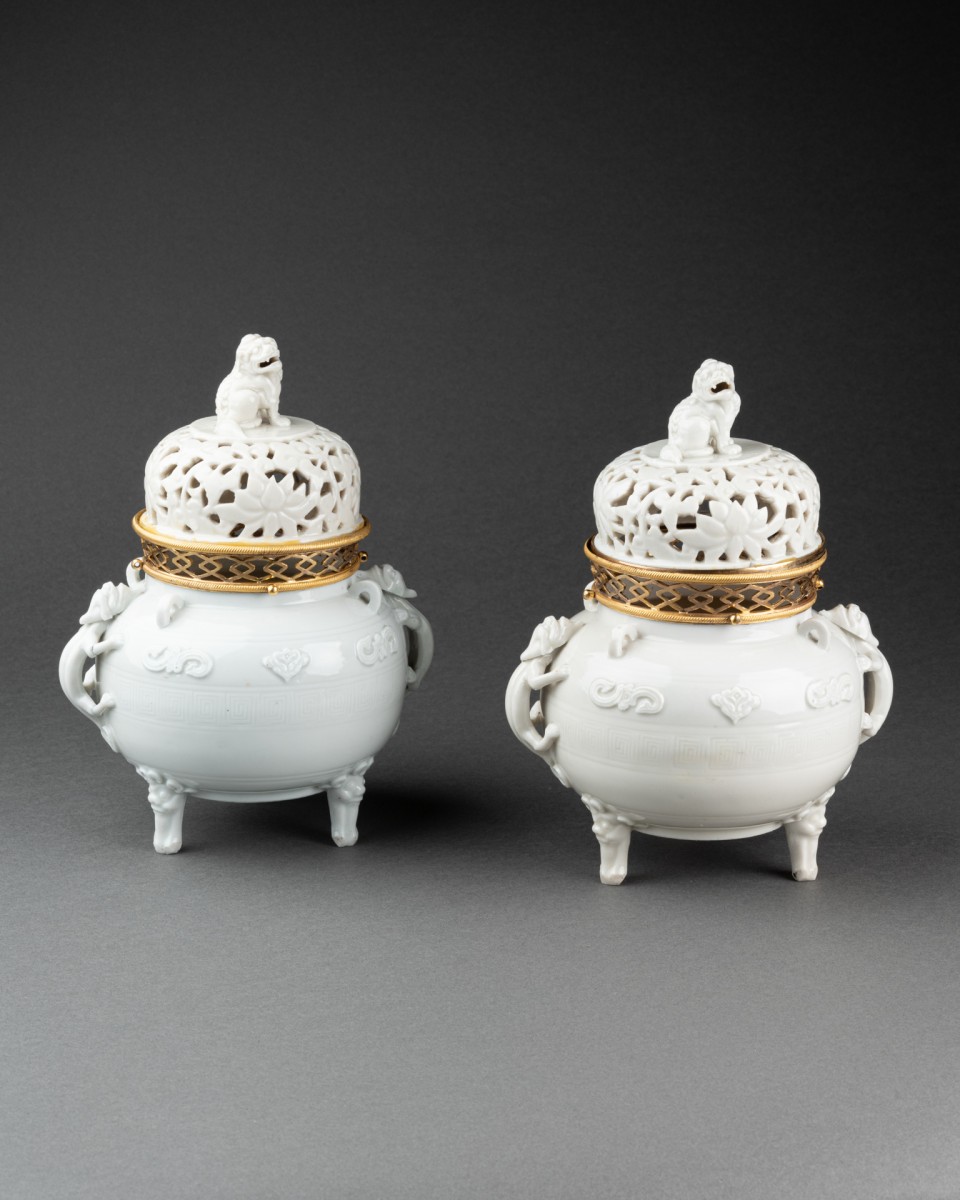
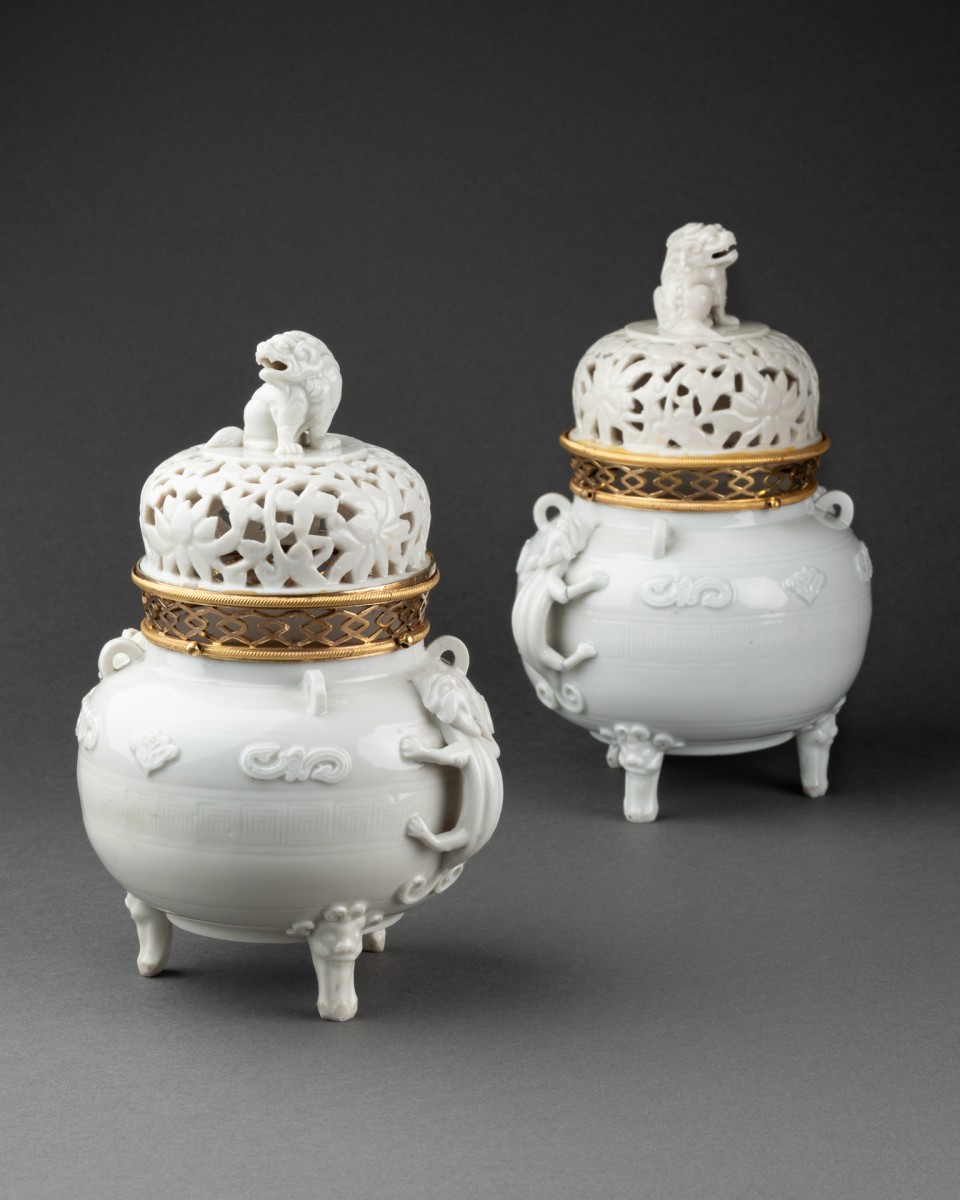

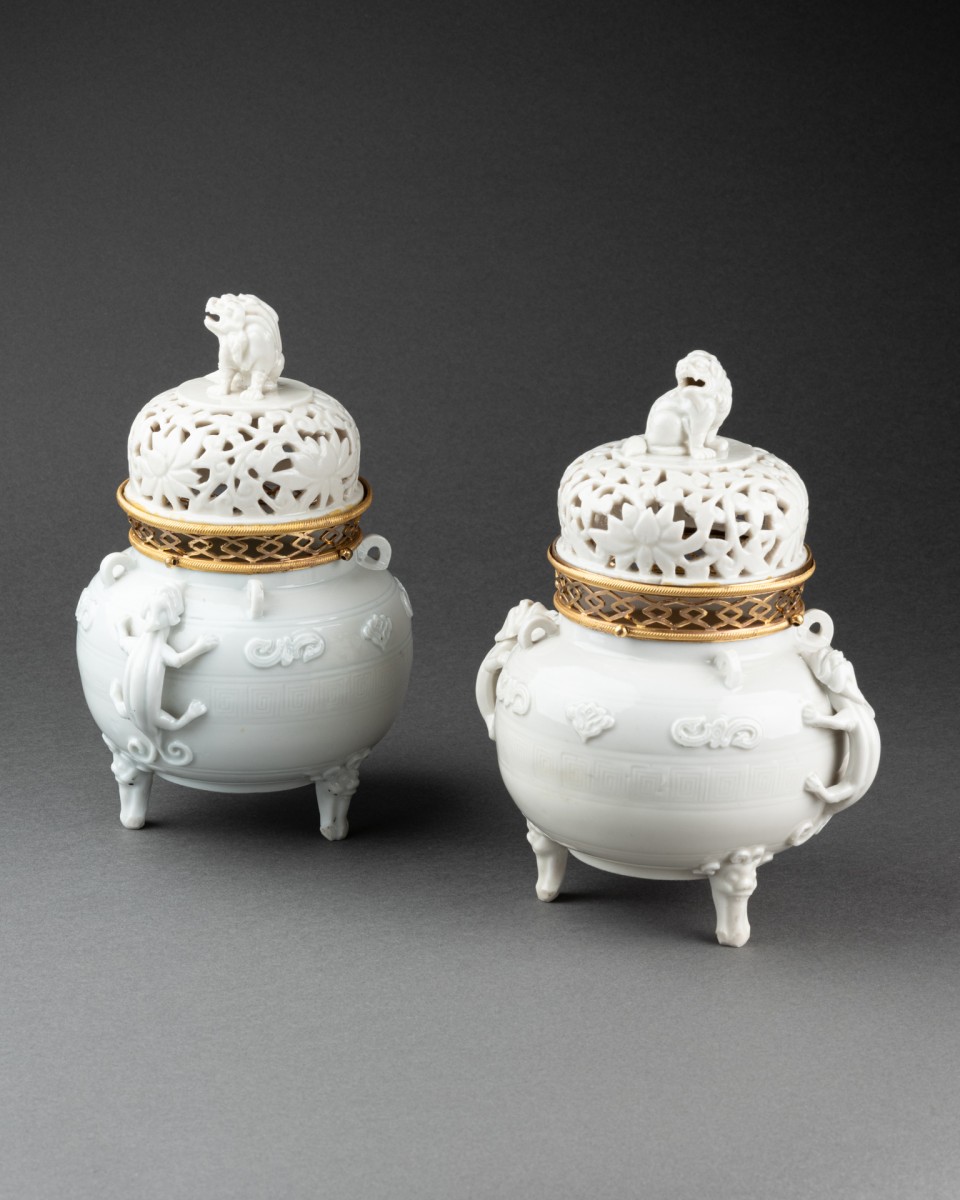
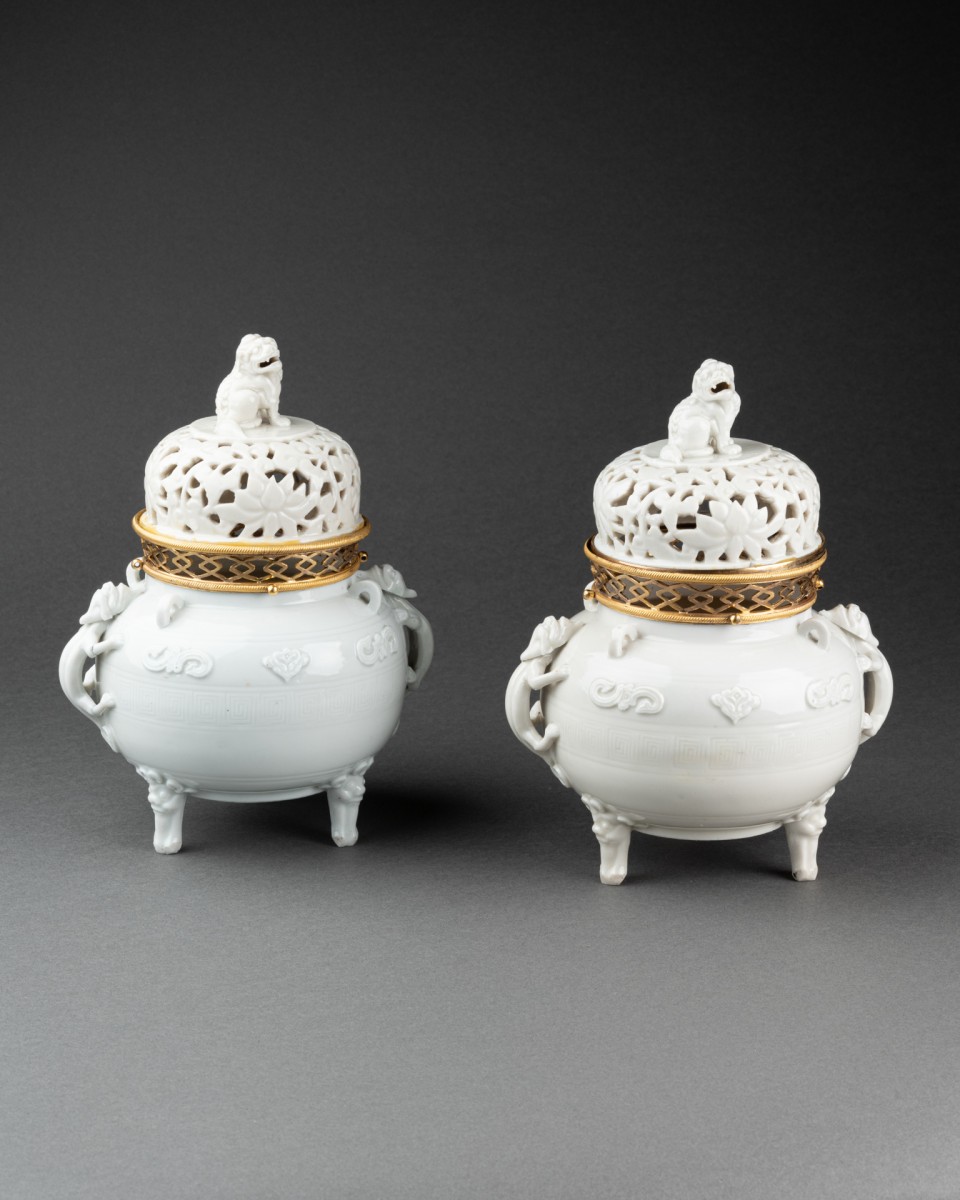
A rare pair of potpourri jars in white Chinese porcelain and finely chased and mercury-gilded bronze.
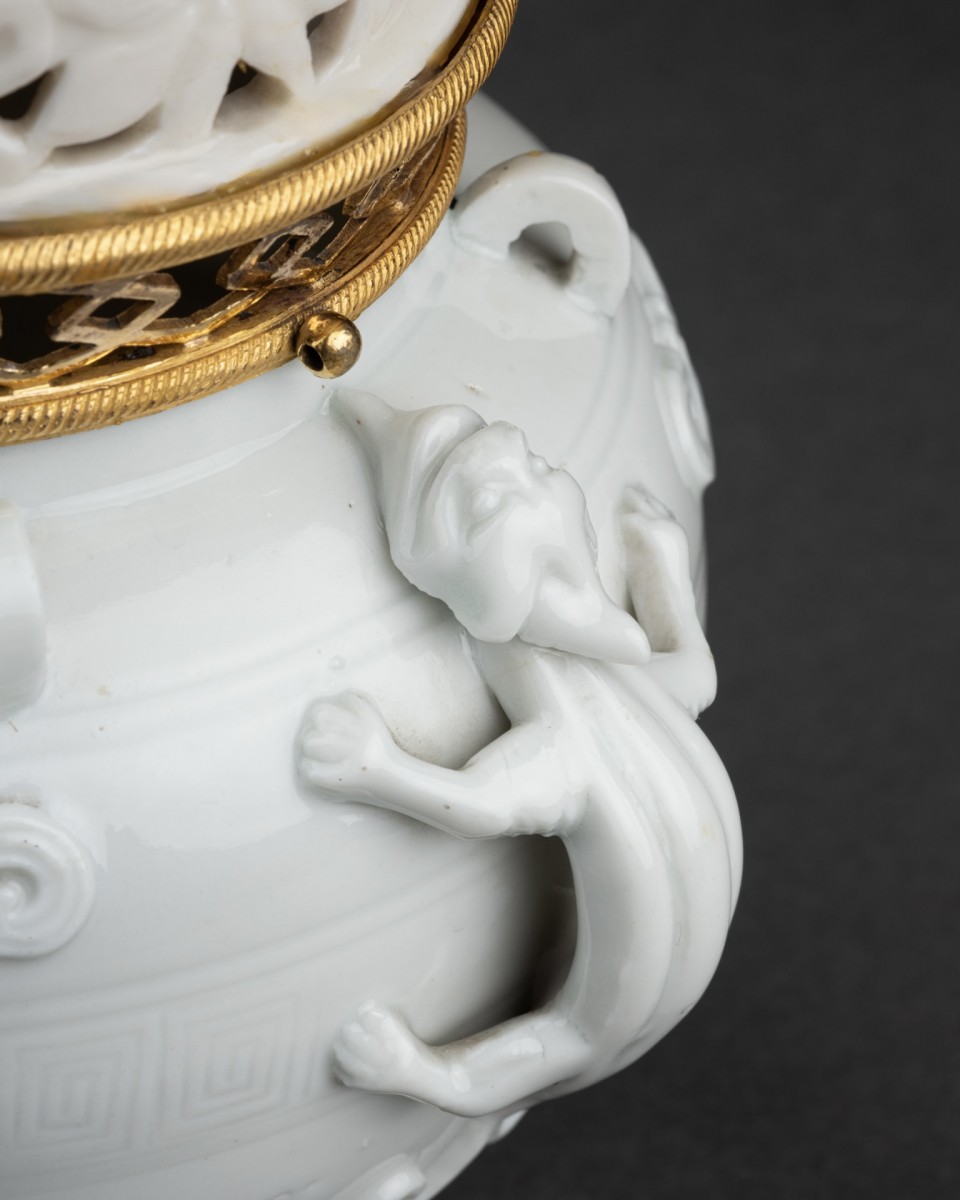
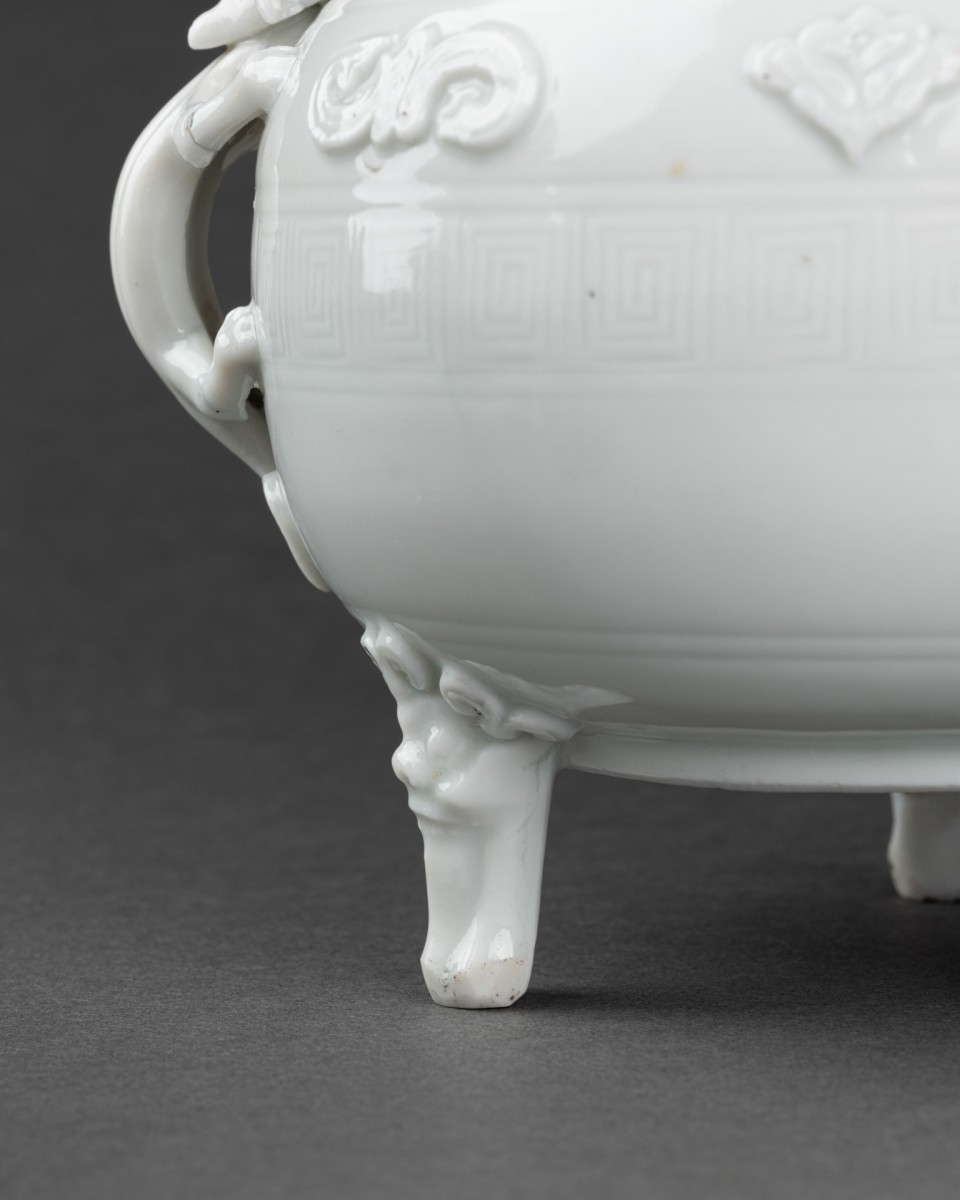
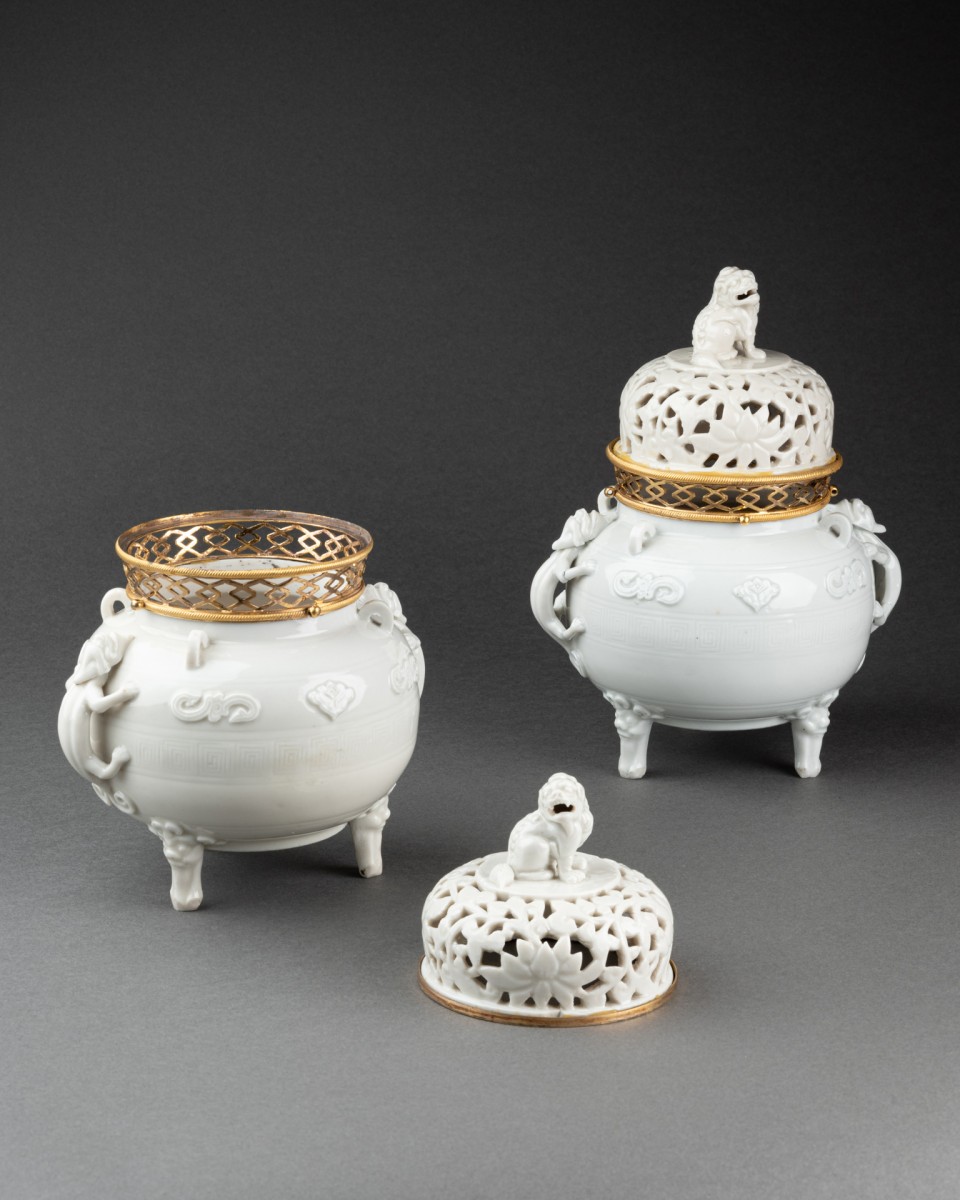
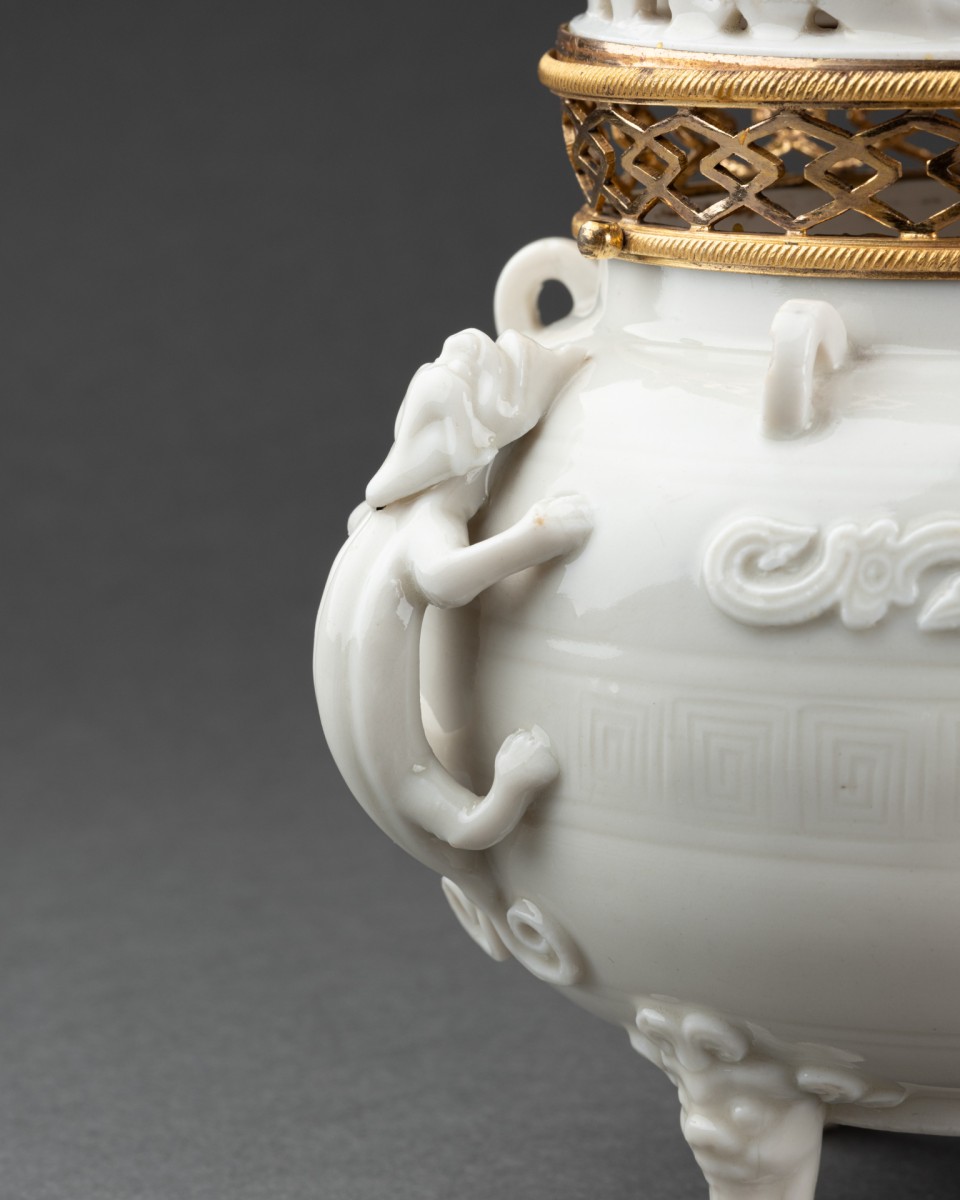
The tripod bodies are inspired by archaic bronze Ding-type incense burners. They rest on three feet adorned with masks and are decorated with molded and applied motifs of stylized ruyi friezes, rings, and two chi dragons forming the side handles. The whole is further enhanced by a subtle underglaze incised decoration of lines and Greek key patterns (leiwen).
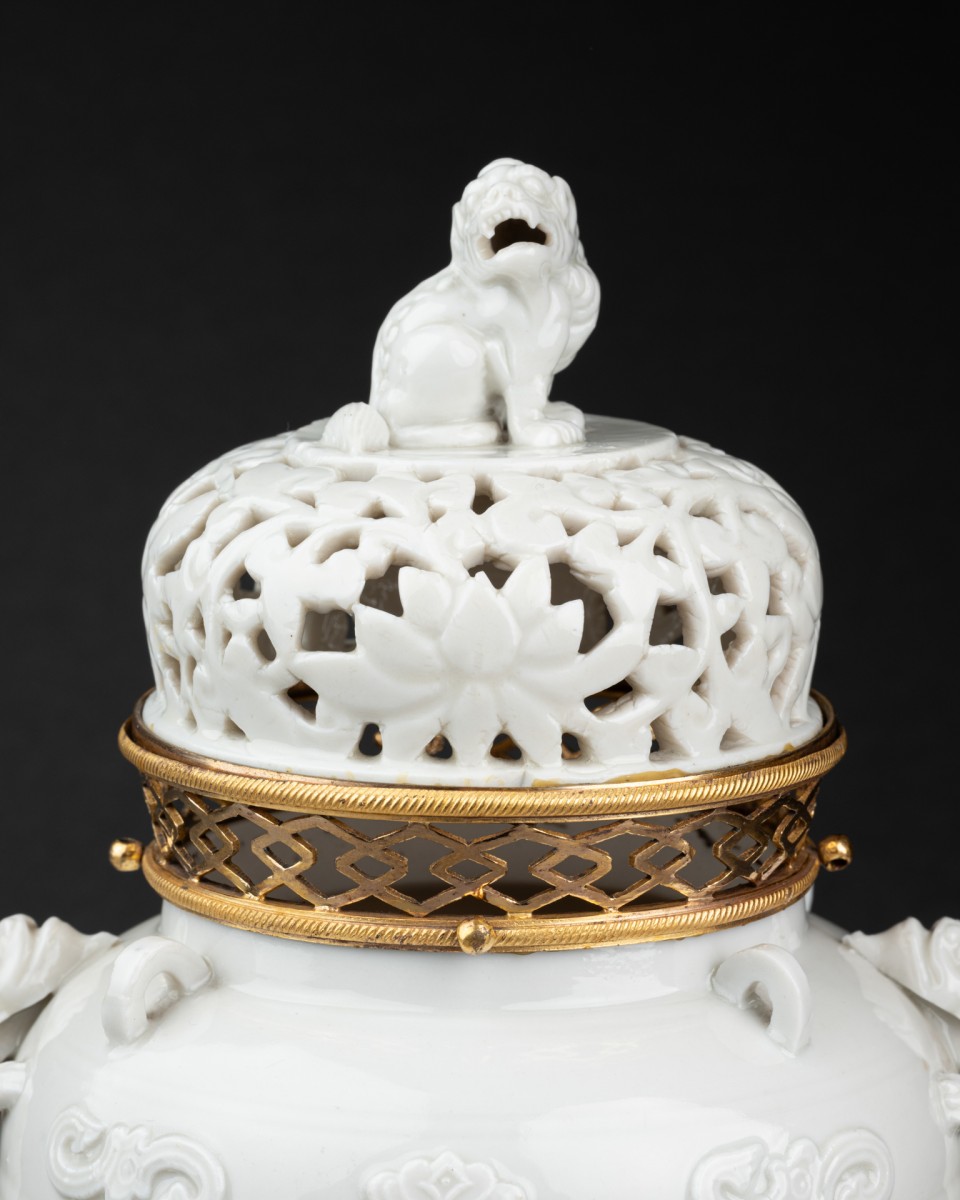
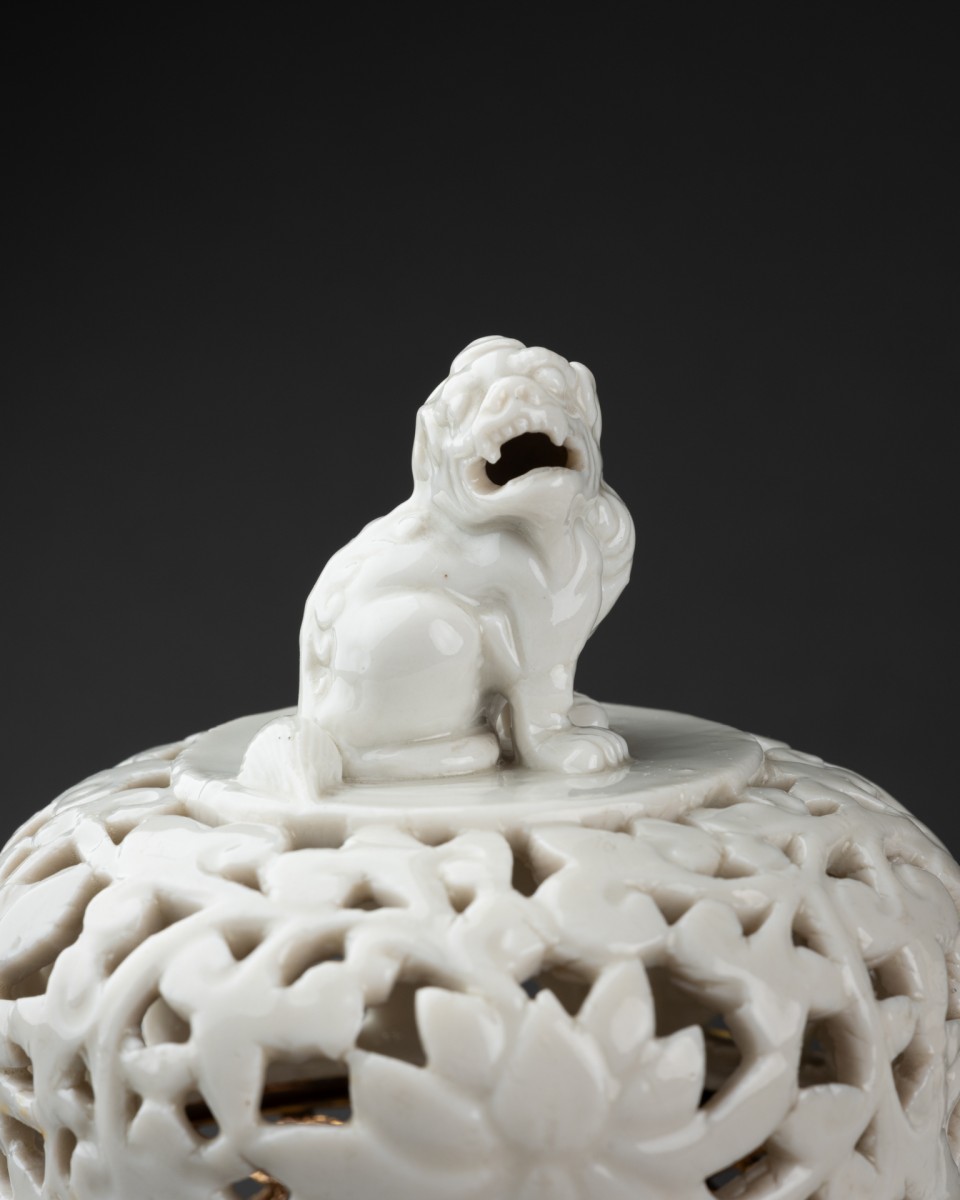
The stoppers are surmounted by Foo dogs and are made of reticulated porcelain with an openwork decoration of finely incised lotus flowers. The incense burners were adapted at the end of the 18th century with a finely chased and mercury-gilded bronze mount, consisting of an openwork gallery with a lozenge pattern, framed by a delicately guilloché border.
The porcelains, Fujian province, Dehua kilns, reign of the Kangxi Emperor (1661–1722). The bronze mount, with a double patina and two layers of gold, was made in Paris around 1780.
Perfect condition, without damage.
Dimensions:
Height: 20 cm; Width: 16 cm; Depth: 12 cm
A similar example, but without its original stopper, is held at the Dehua Porcelain Museum (China).
Bibliography: “Blanc d’étoiles. Porcelaines de Dehua, des Ming aux Qing,” edited by Zheng Yongsong, Lienart Publishers.
Our opinion: A very similar incense burner is presented in the work cited above, where it is the subject of a detailed analysis, accompanied by an in-depth study of the iconography of the Chi dragon. This study unambiguously confirms the attribution of this type of production to the Dehua kilns. The formal characteristics of the motif—a body modeled from a single piece, sculpted in the round or in low relief, and elegant modeling—perfectly correspond to the identified productions of this center.
The present pair owes its extreme rarity to the preservation of its original reticulated stoppers, particularly fragile elements that have most often been lost. The set is completed by a finely chased and gilded bronze mount, made in Paris during the reign of Louis XVI, testifying to the refined taste and expertise of Parisian bronze workers of the late 18th century.
The pairing of these works, preserved with their original openwork stoppers and equipped with high-quality antique mounting, constitutes a set of truly exceptional rarity.