Offered by Franck Baptiste Paris
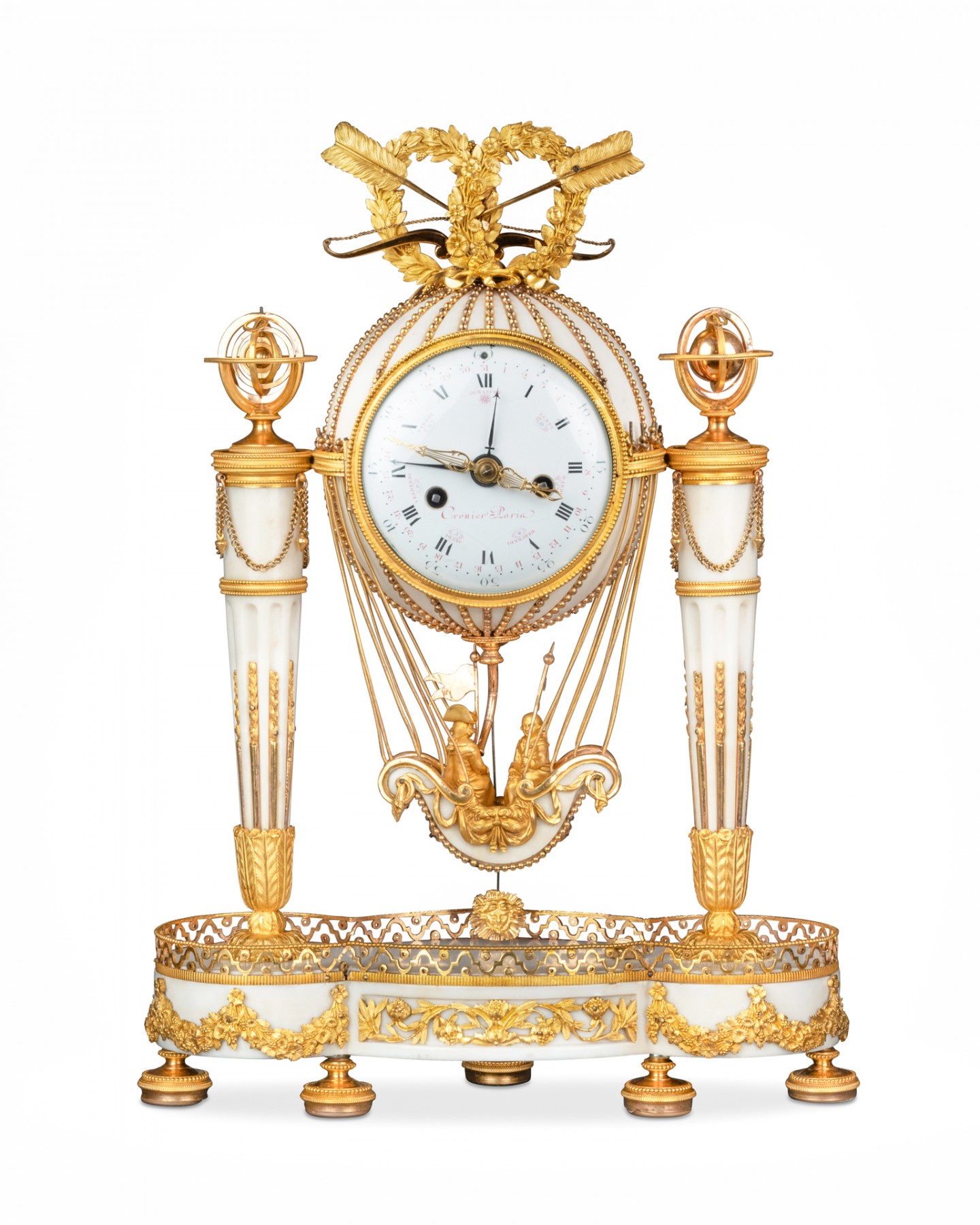
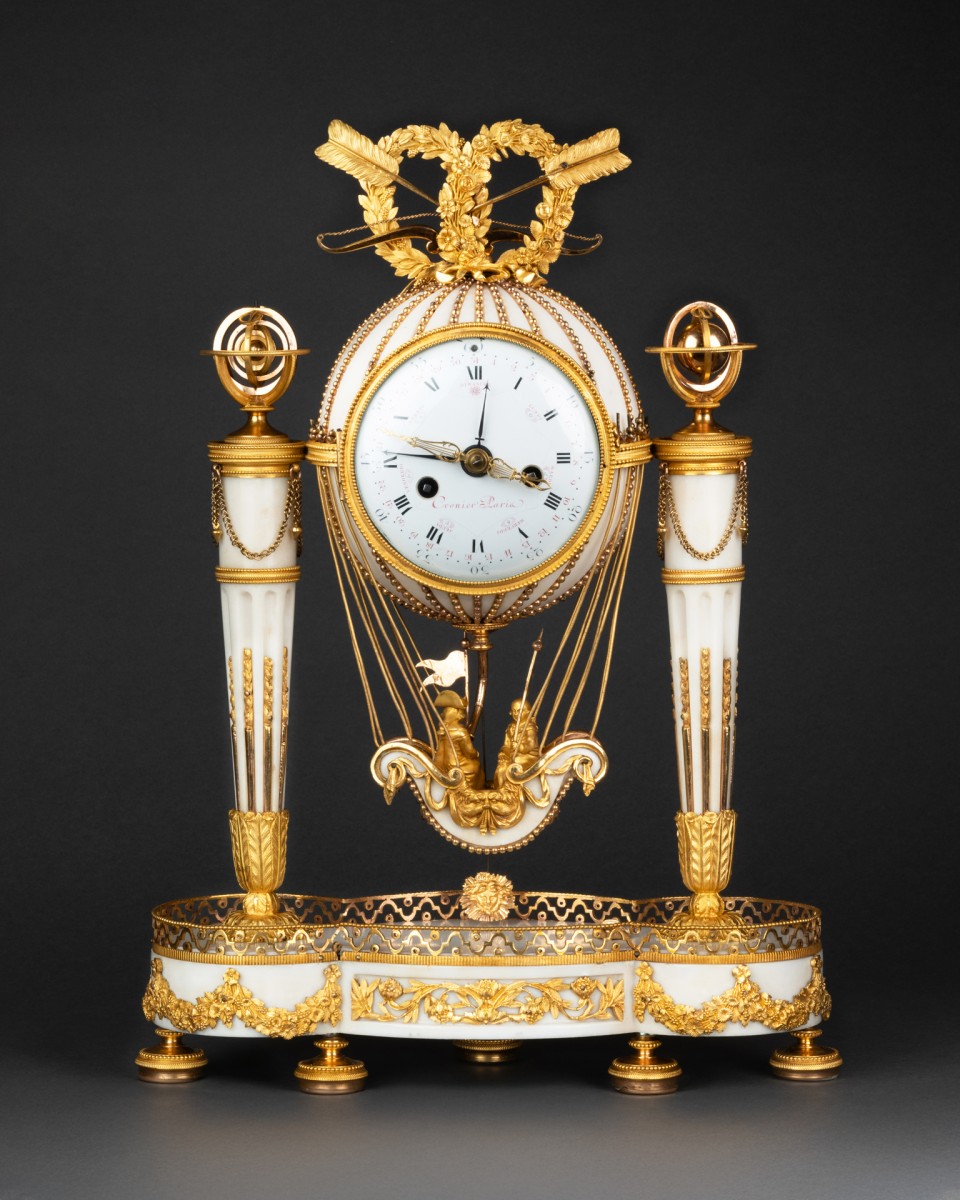
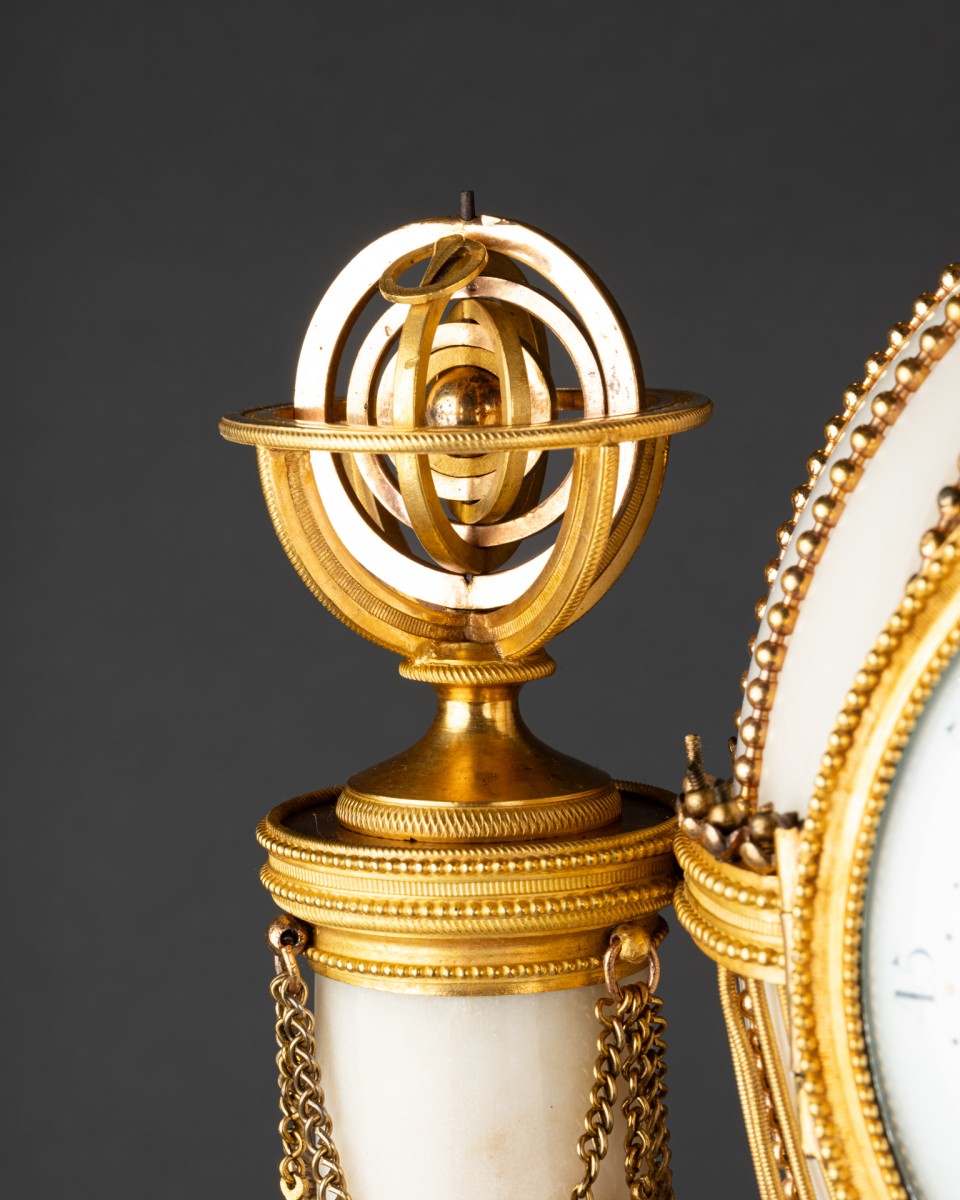

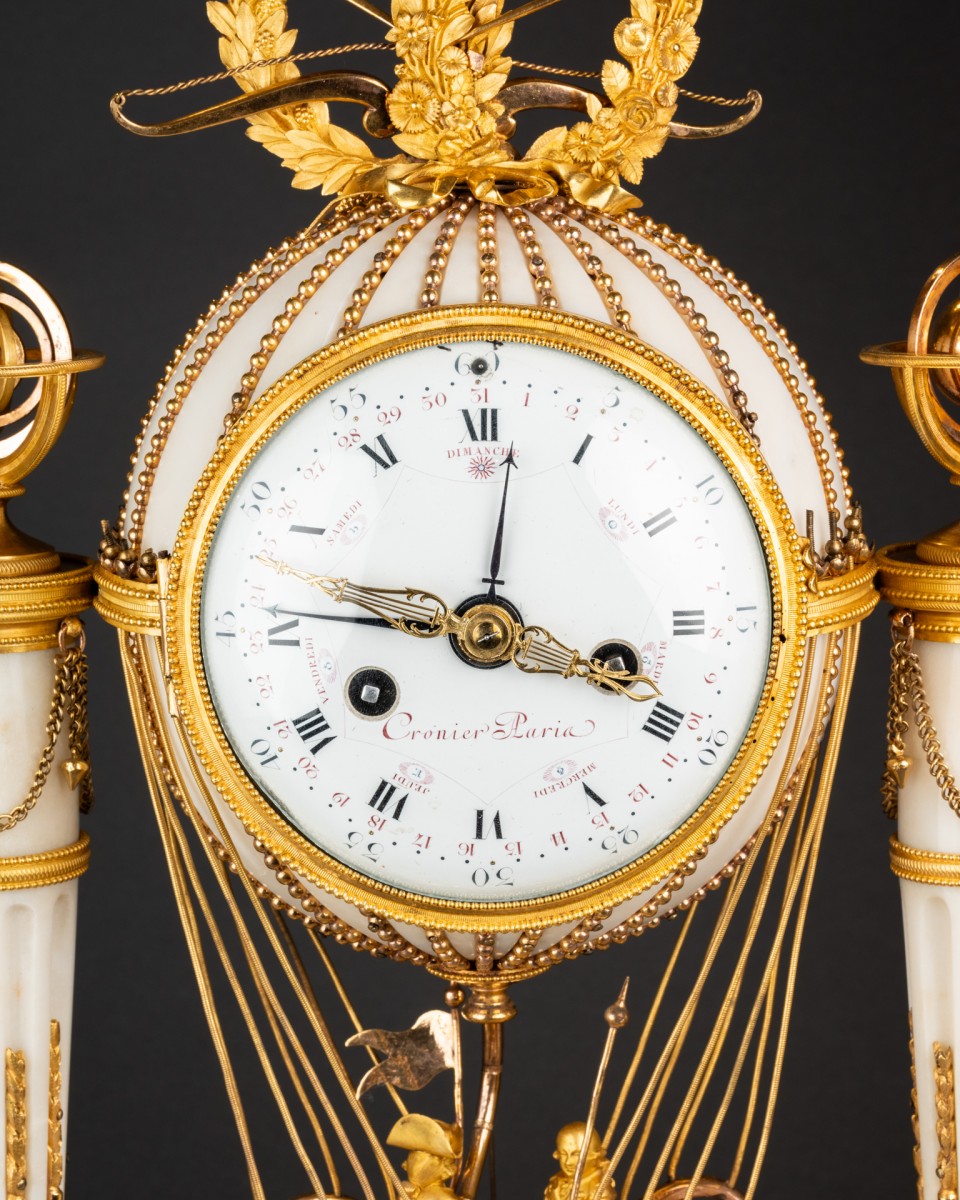
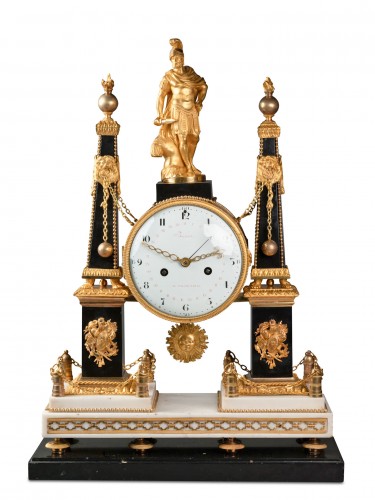
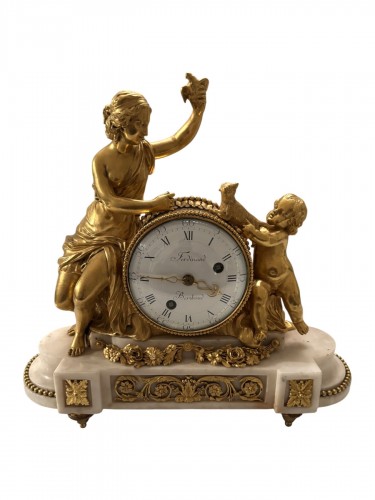
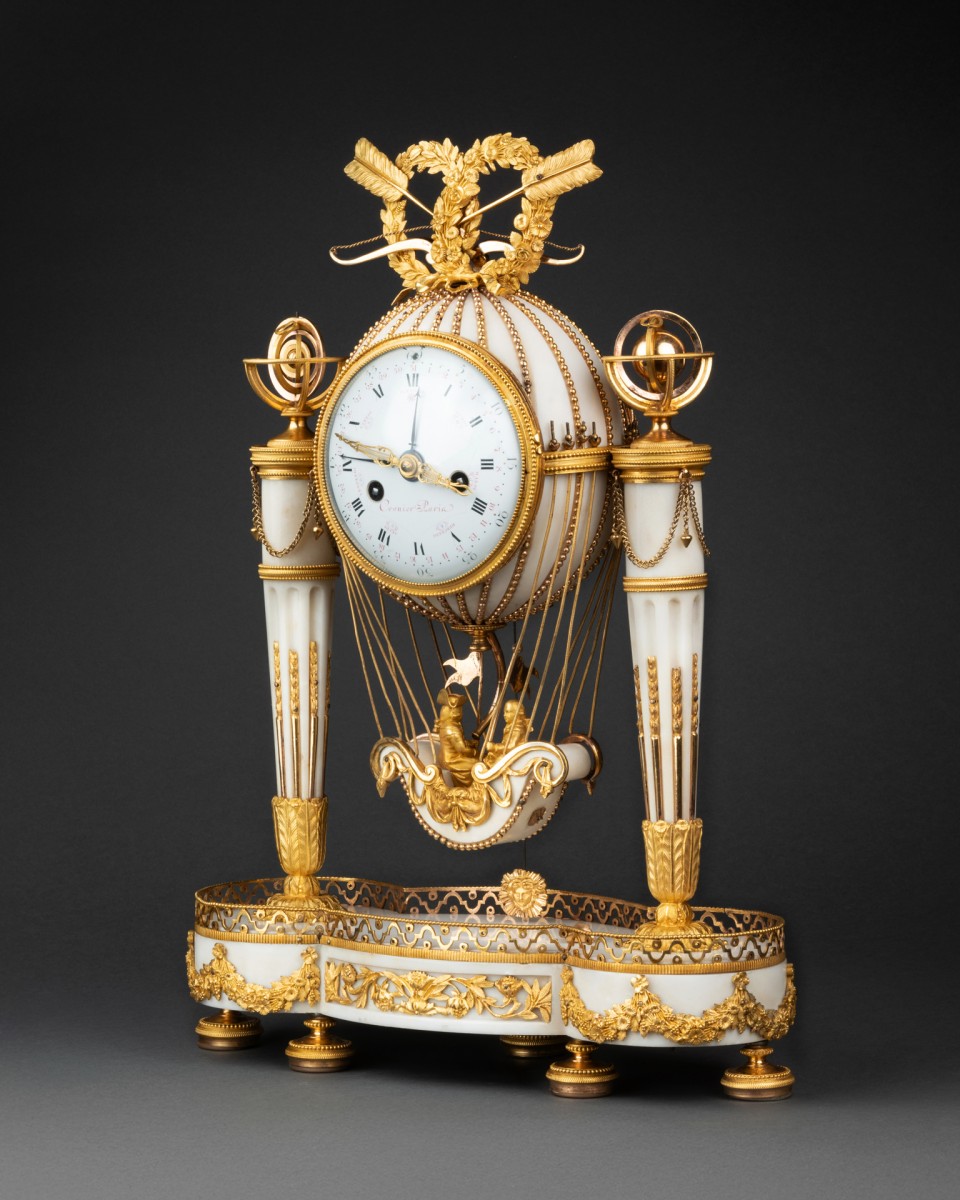
A rare gilt bronze and Carrara marble portico clock.
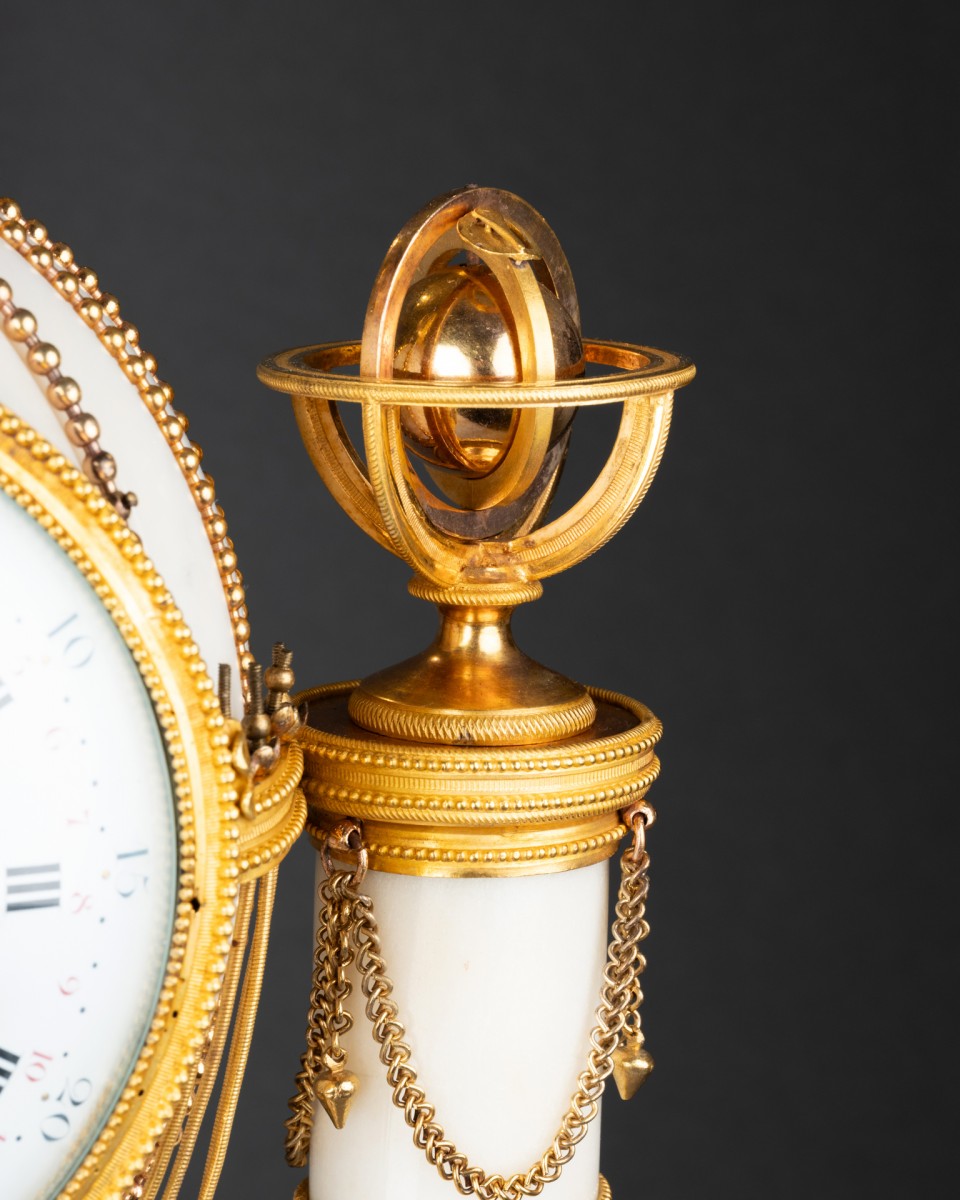
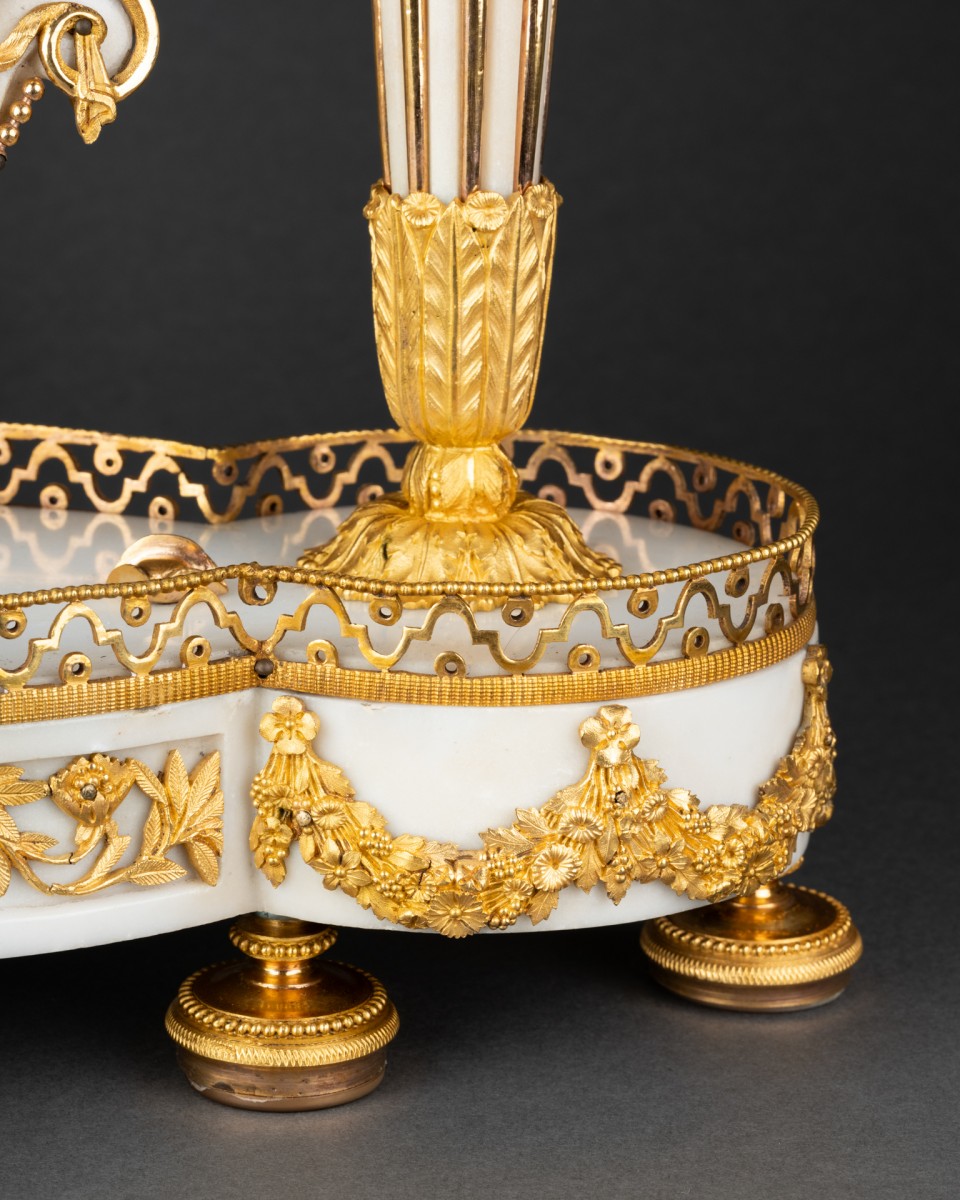
The portico consists of two marble spindles imitating quivers; they are adorned with gilt bronze mounts, including asparagus spears in the fluting, small rings, and chains; all surmounted by two armillary spheres.
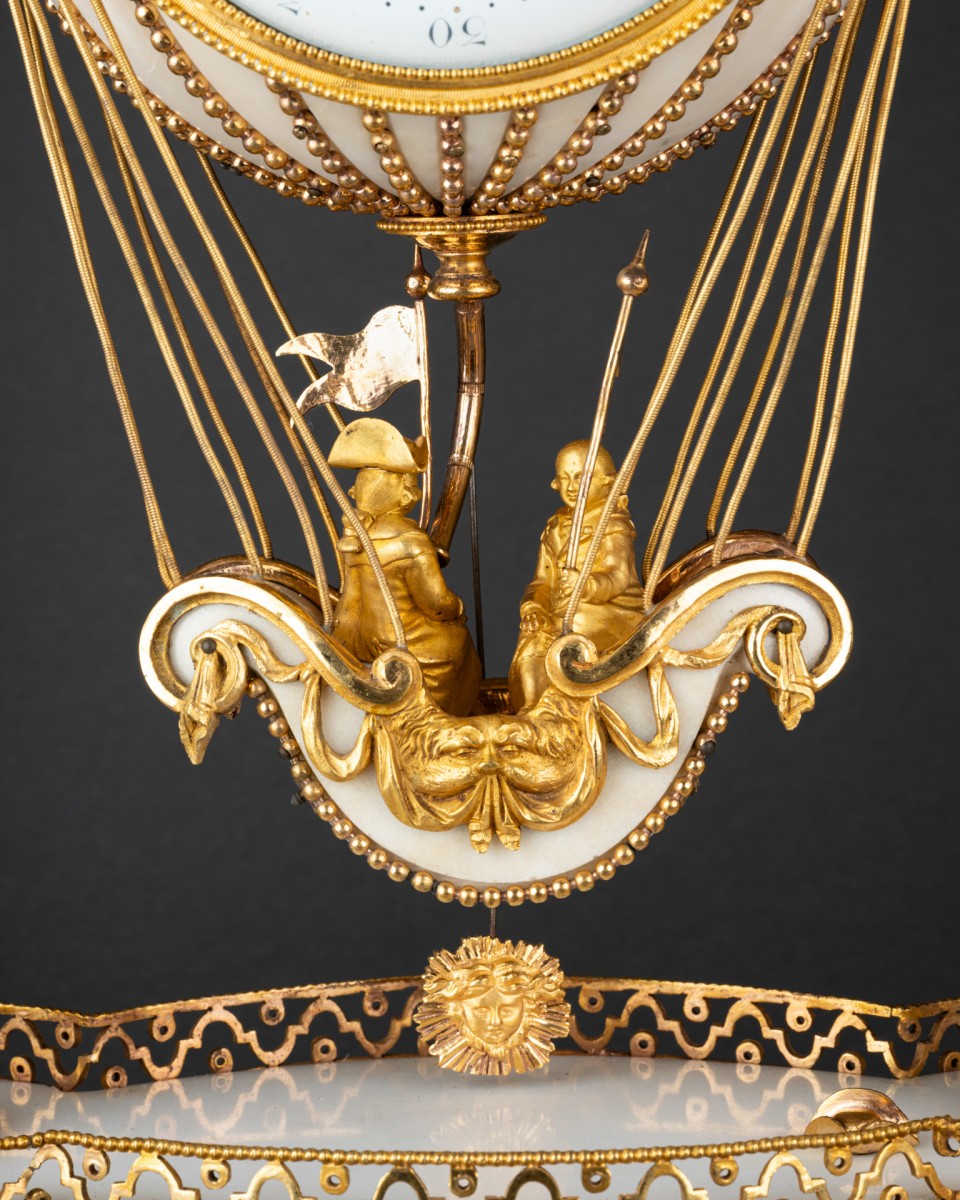
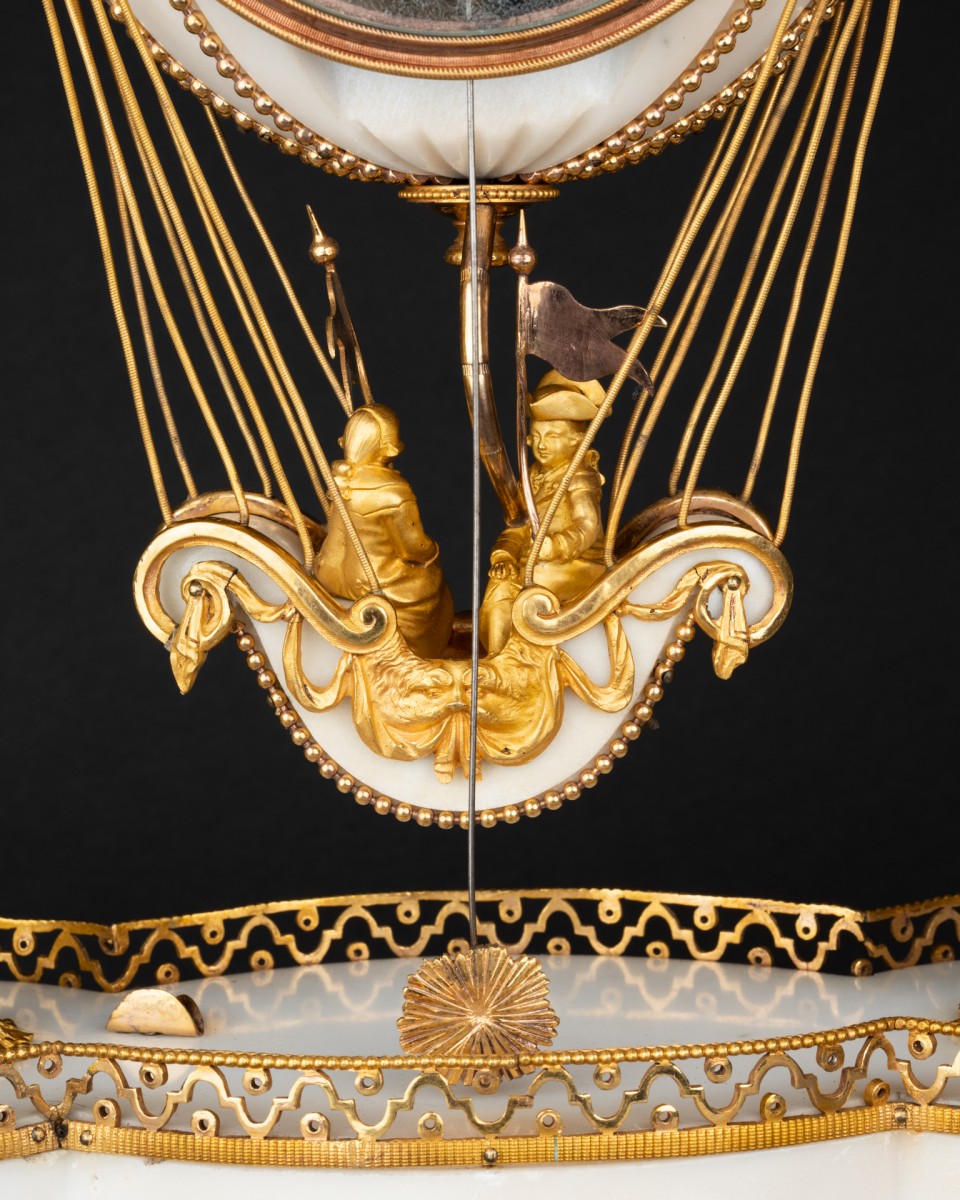
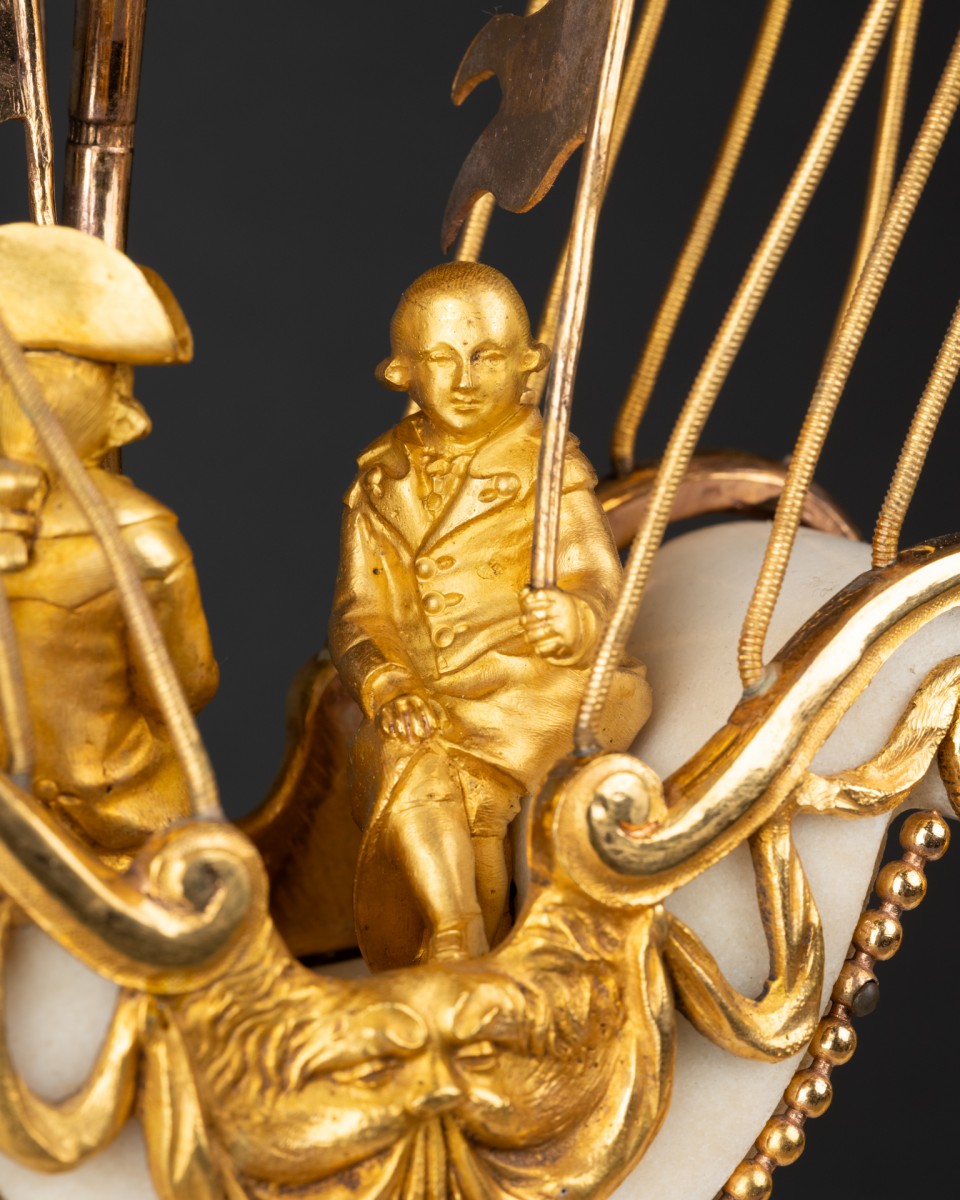
In the center unfurls a hot air balloon with two figures in a basket waving flags.
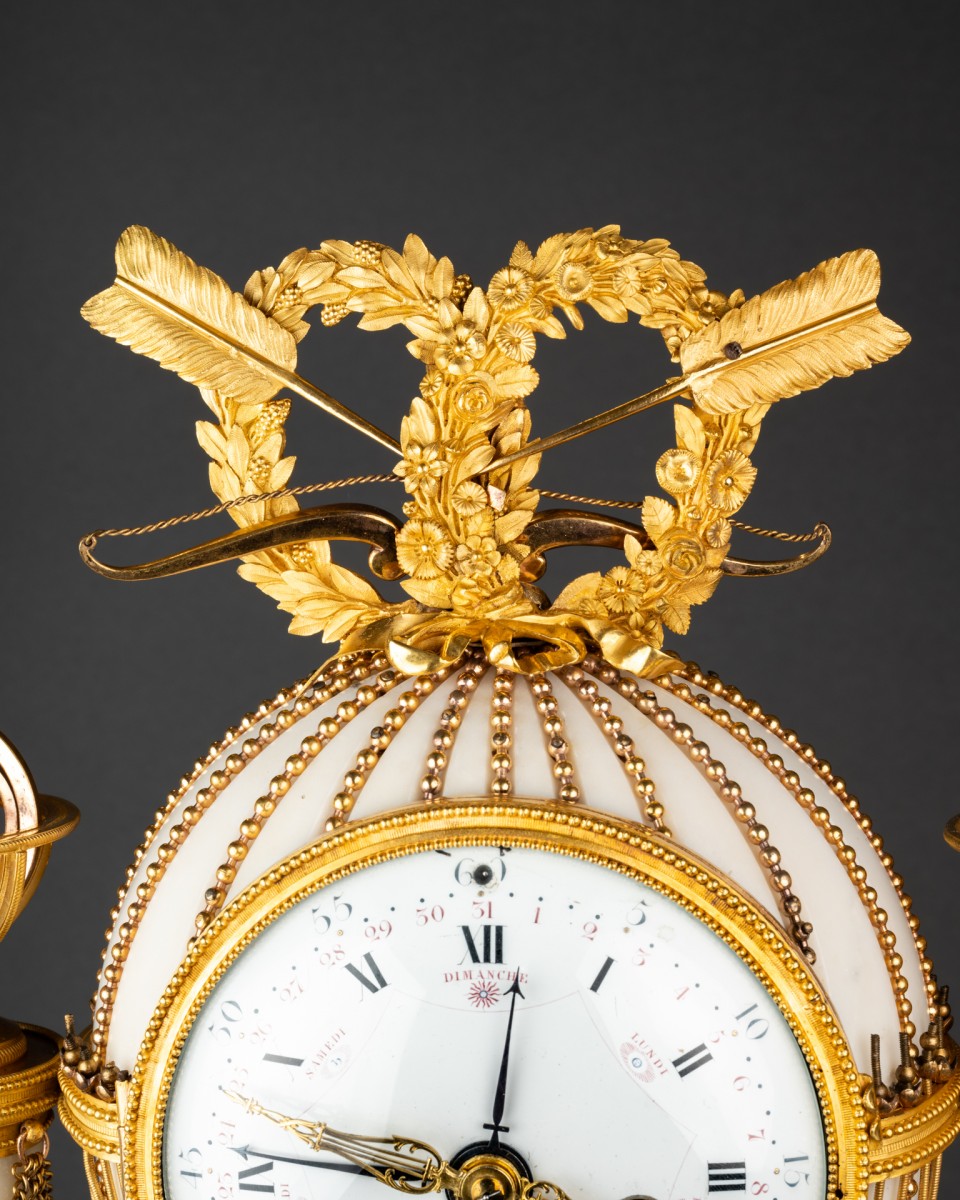
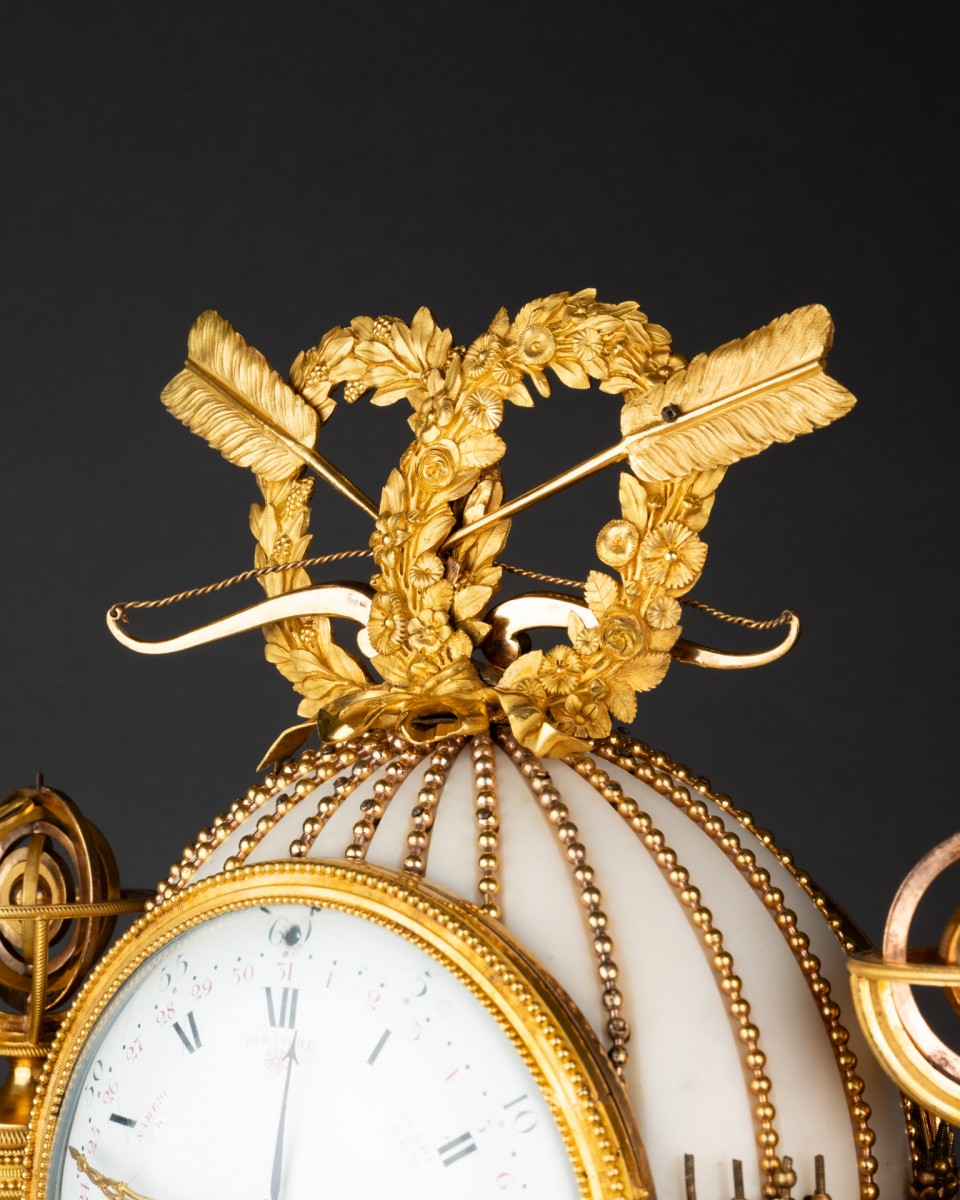
It is surmounted by a double crown forming a heart; this crown is intertwined with the attributes of love and cupid (arrows and bow).
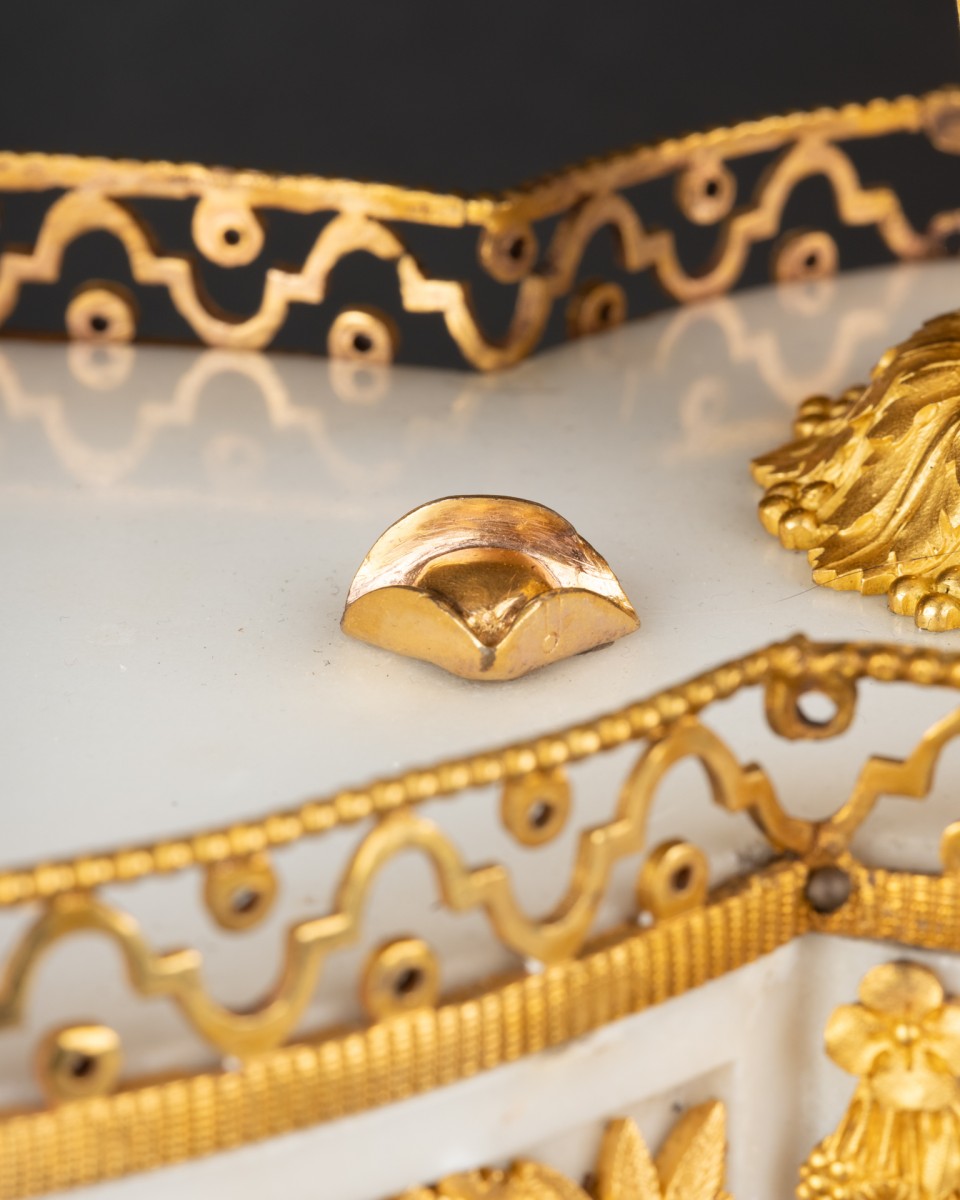
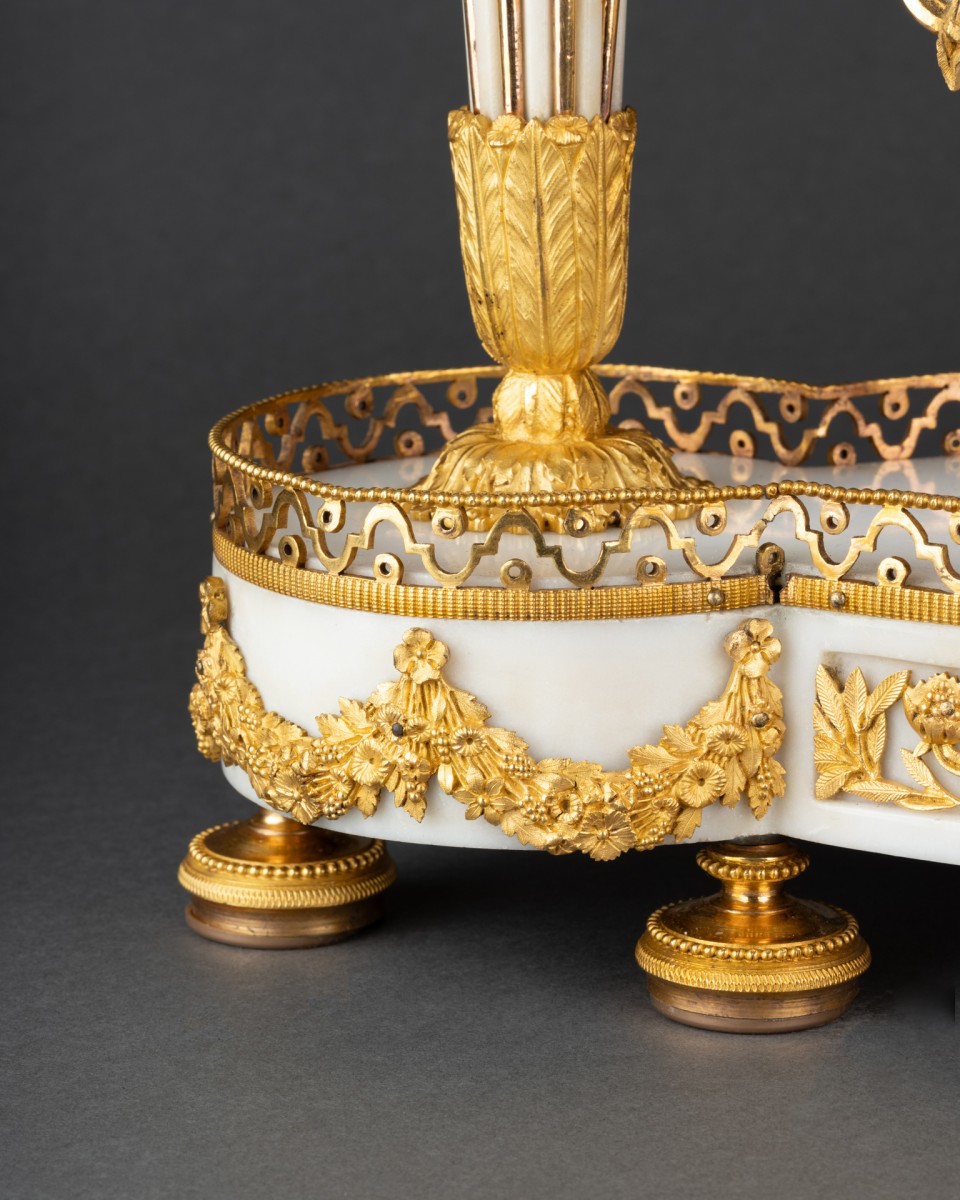
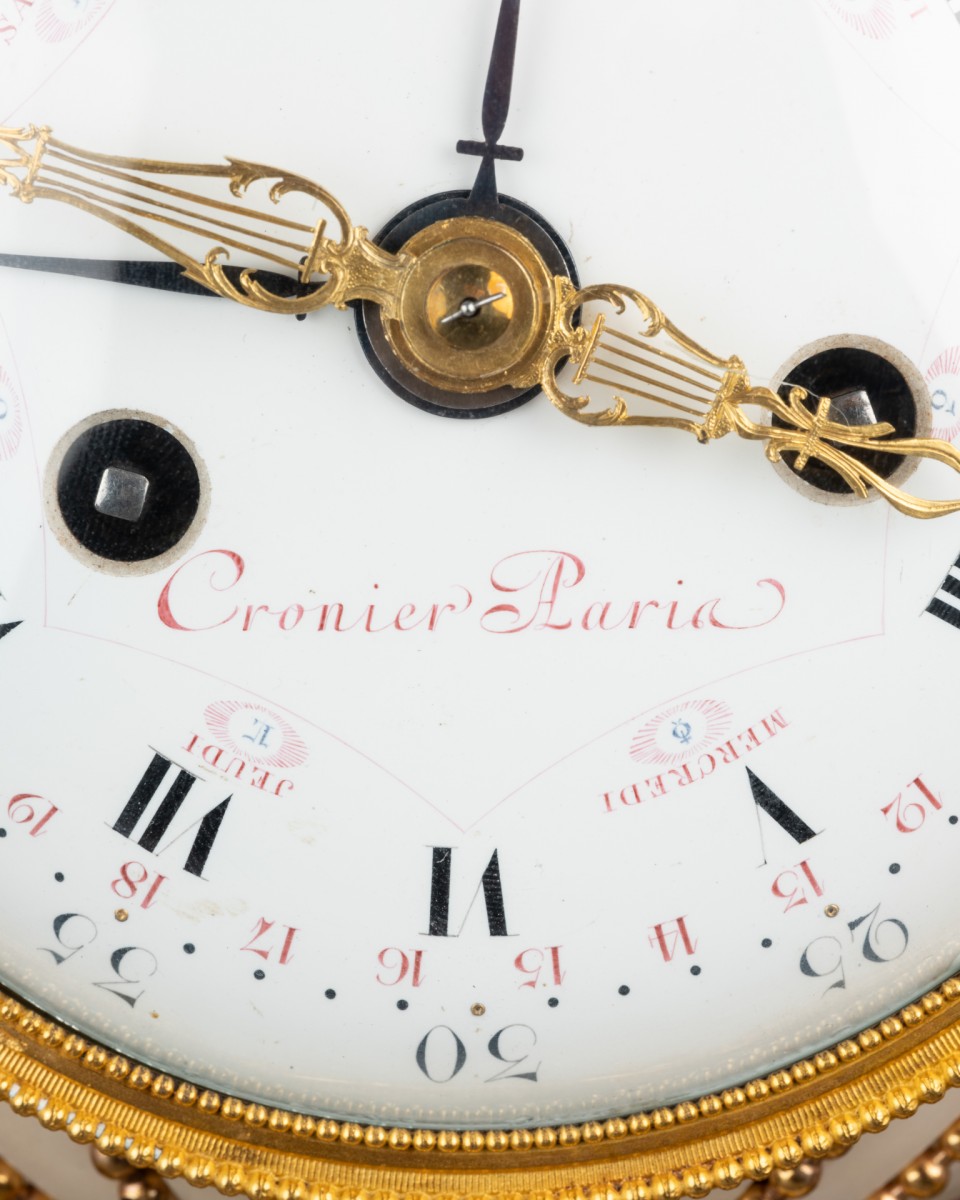
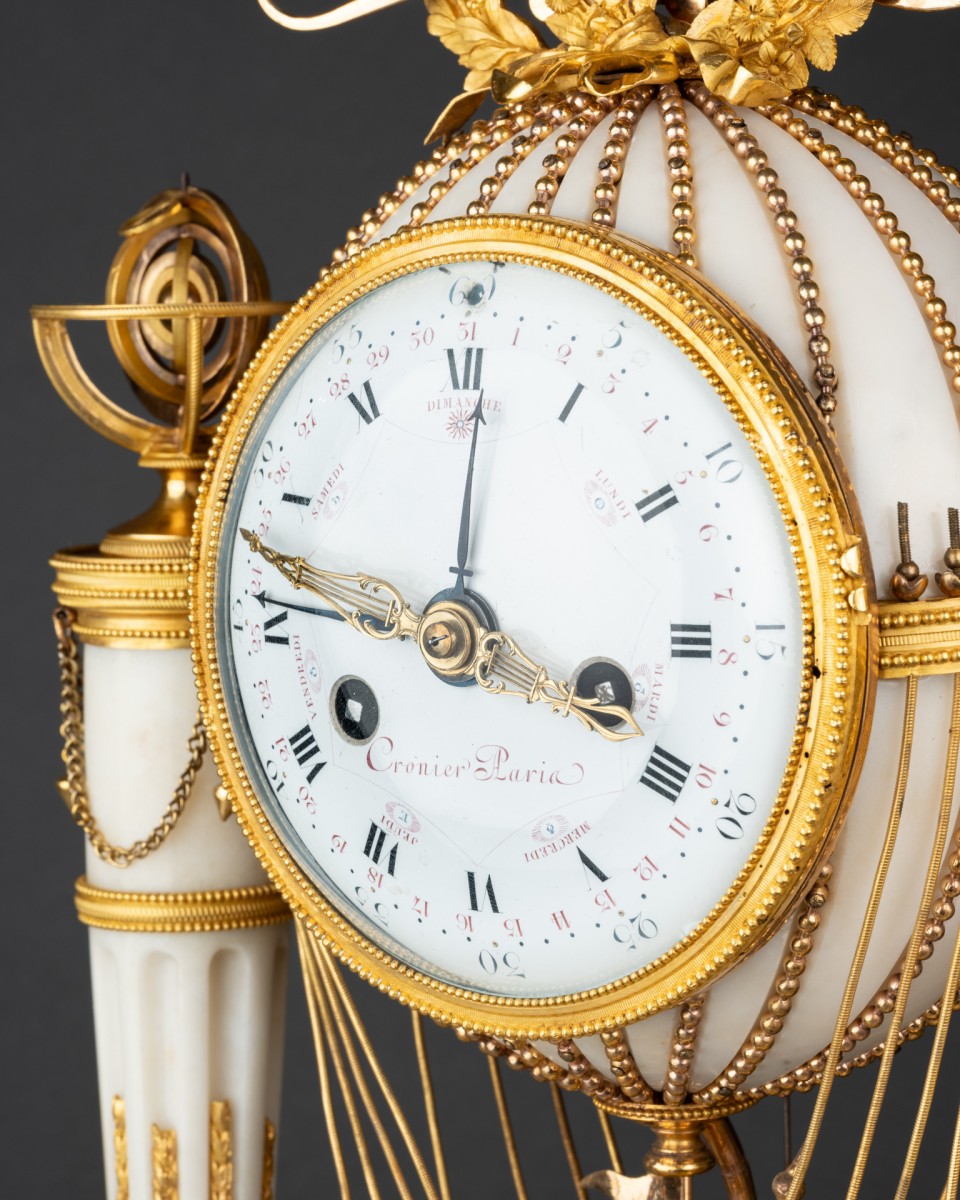
The whole rests on a polylobed base enhanced with an openwork gallery; it is decorated with garlands of fruit and interlacing motifs in gilt bronze and rests on five toupie feet. The white enamel dial on the hot air balloon features four hands indicating the hours and minutes, as well as the days of the week and the date of the month.
The movement, with its complications and silk thread suspension, is original.
In perfect working order and condition.
Parisian work from the Louis XVI period, circa 1785.
Dimensions:
Height: 52 cm; Width: 36 cm; Depth: 15 cm
Among the few known similar clocks, we can mention:
- A clock is illustrated in P. Kjellberg, La Pendule Française, Paris, 1997, p. 208, fig. A.
- A similar clock with a skeleton movement signed Festeau the Younger was sold at Christie's in Paris on June 21, 2006, lot 324.
Our opinion:
Following the Montgolfier brothers' first flights in the summer of 1783, the year was marked by the spectacular experiments conducted in Paris by Jacques Charles and the Robert brothers. Their ascent from the Tuileries Garden in December 1783 took place in the presence of King Louis XVI, Queen Marie Antoinette, and a large crowd of Parisians who came to celebrate the feat.
This event, which left a lasting mark on the collective imagination, is often immortalized by depictions of the aeronauts waving to the crowd and throwing their hats. The shape of the hot air balloon depicted on our clock clearly corresponds to the one used during this flight, as evidenced by the type of gondola, the network of ropes, and the characteristic mesh of the balloon's envelope, as well as the figures represented, who are indeed Messrs. Charles and Robert.
In conclusion, we would like to emphasize that this hot air balloon clock is extremely rare and, among known models, stands out for the abundance and finesse of its bronze mounts and its complex movement, making it one of the most luxurious versions ever created.
Antoine Crosnier was an important French clockmaker of the second half of the 18th century. The son of the carpenter Charles Crosnier, he became a master clockmaker in 1763 in Paris and established himself on the rue Saint-Honoré, where he collaborated with the greatest artisans of his time, such as the carpenter Latz and the bronze workers Vion and Osmond. He is particularly remembered for having responded to orders from Marshal de Choiseul-Stainville, the Marquis de Sainte-Amaranthe, Prince Belosselsky-Belozerky, and the Duke of Zweibrücken.