Offered by Gallery de Potter d'Indoye
REQUEST INFORMATION

18th-century and Empire French furniture, works of art and pictures
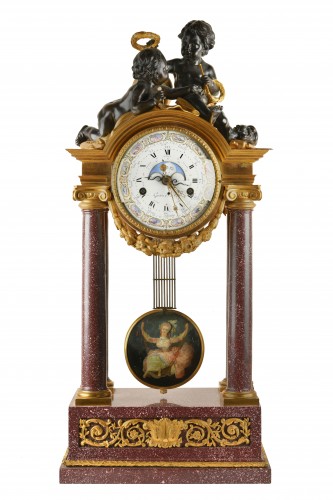
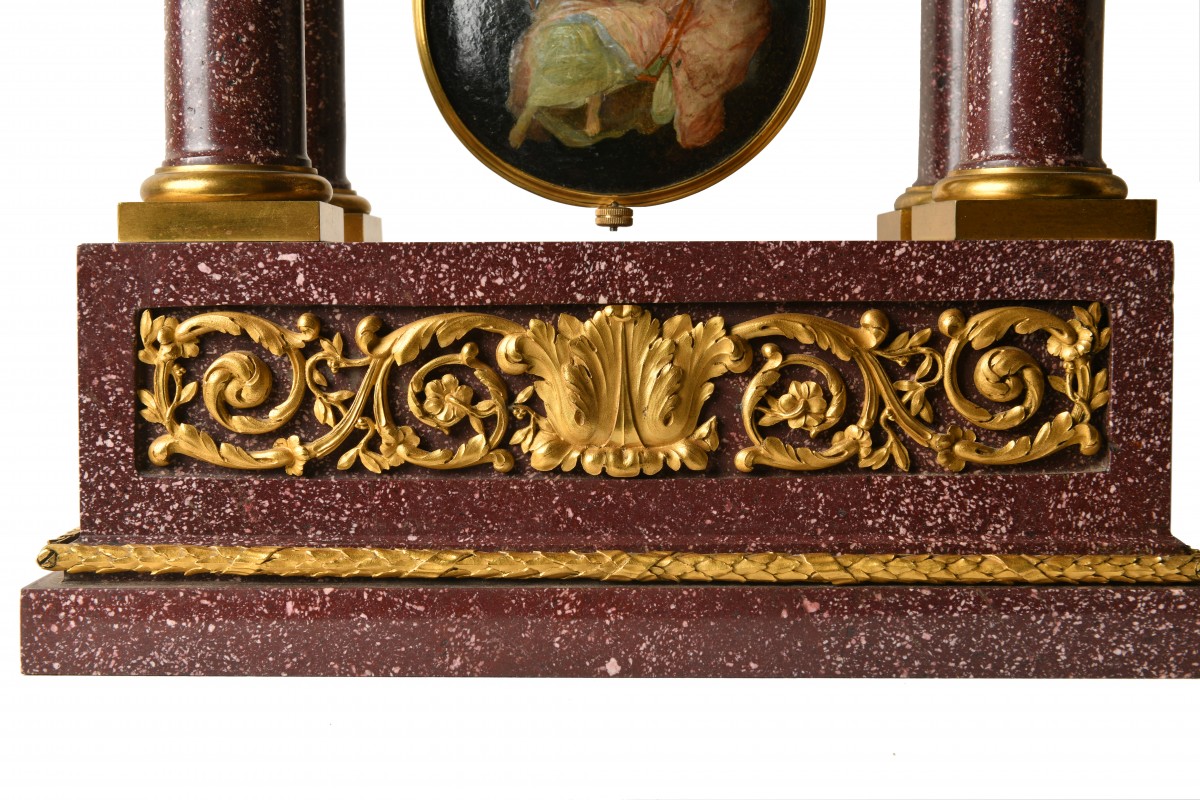
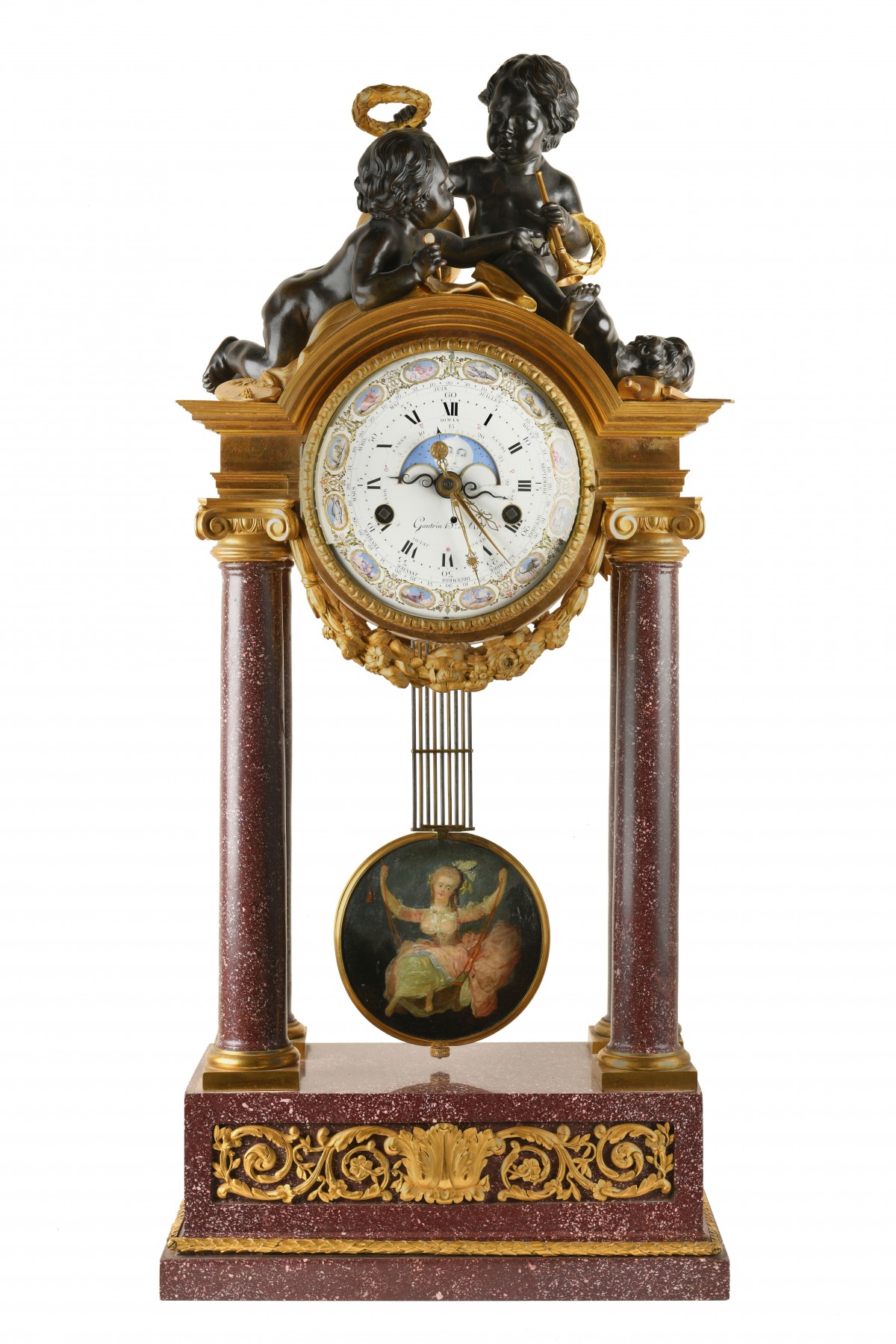
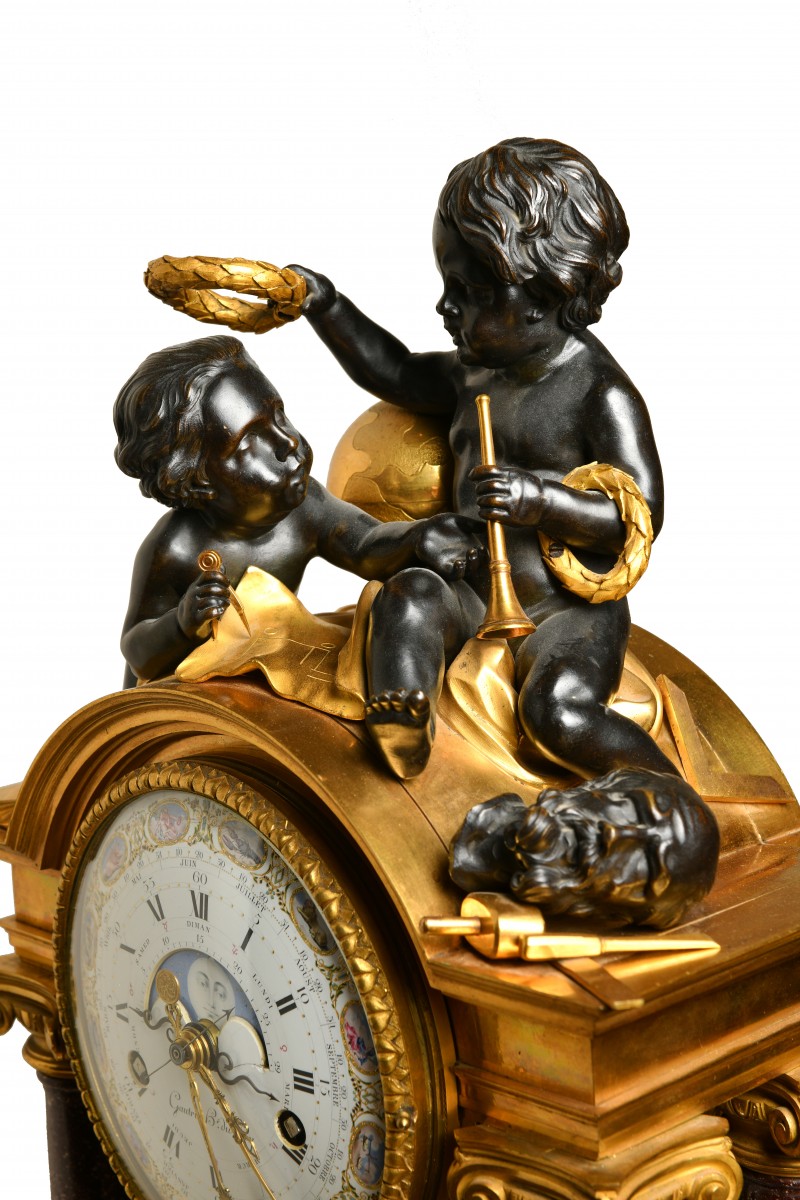
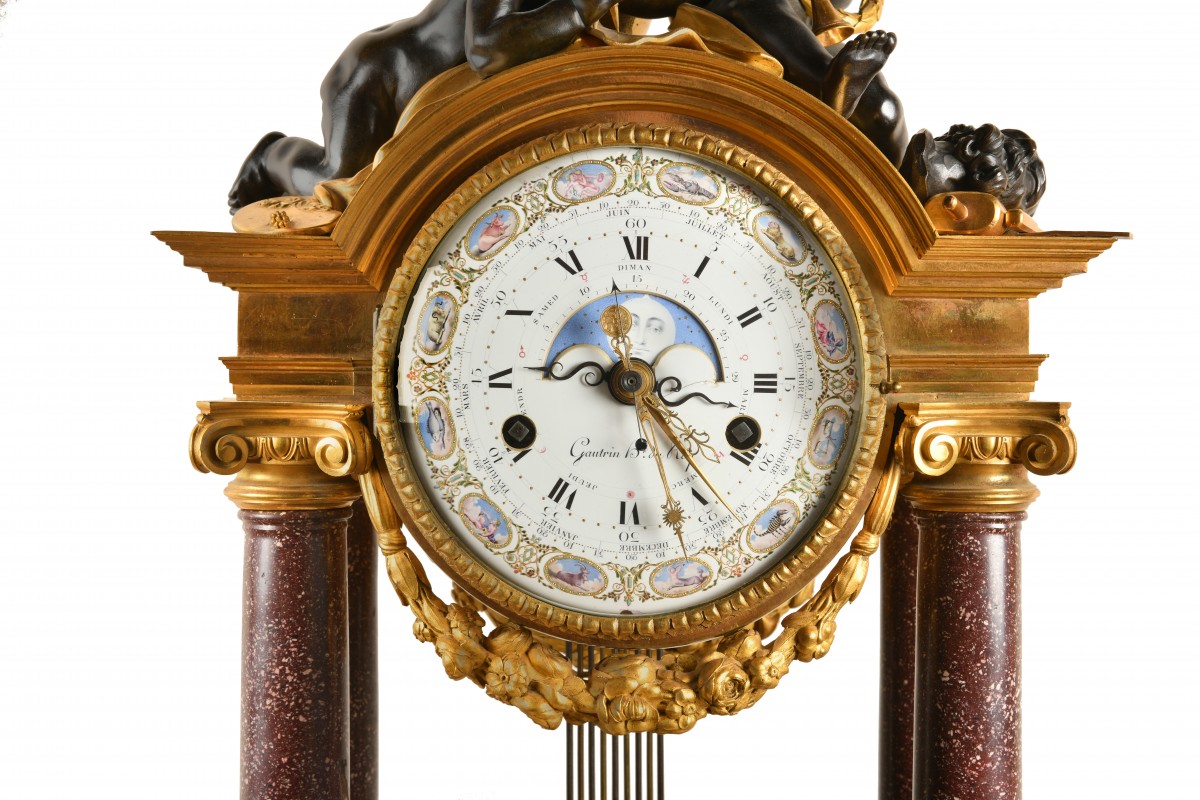
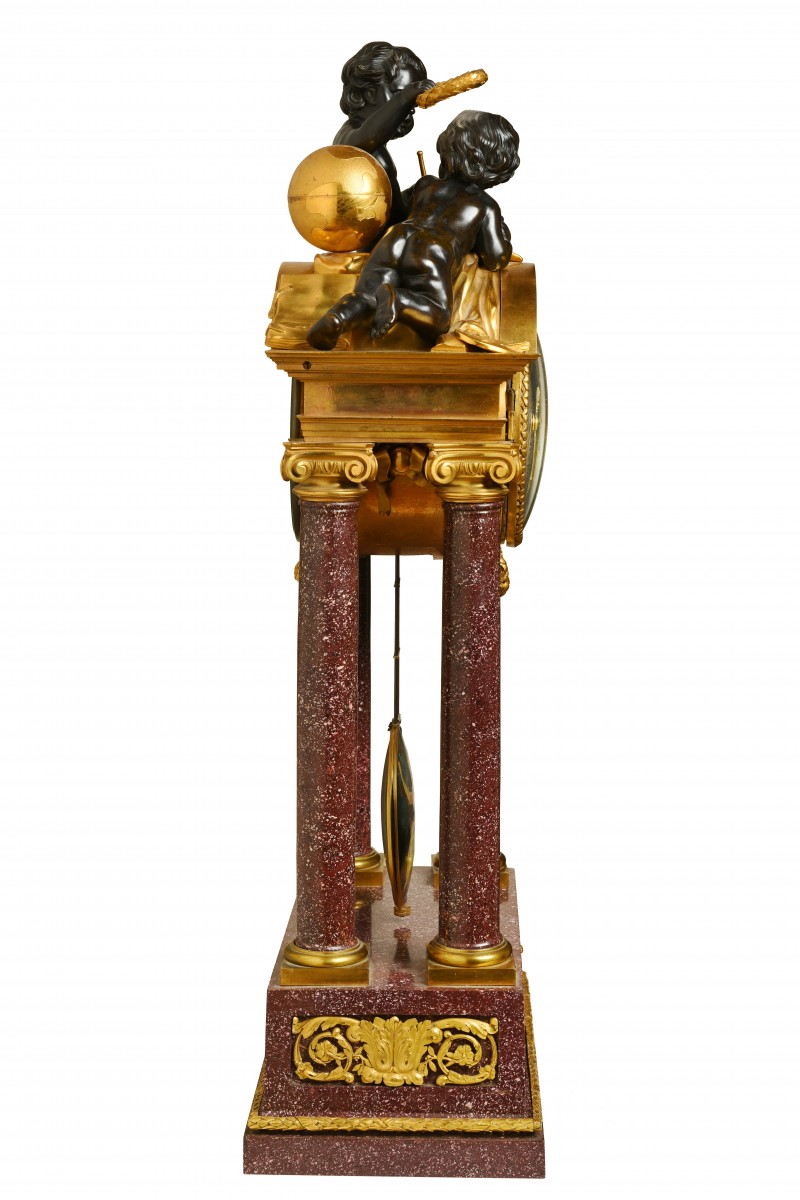
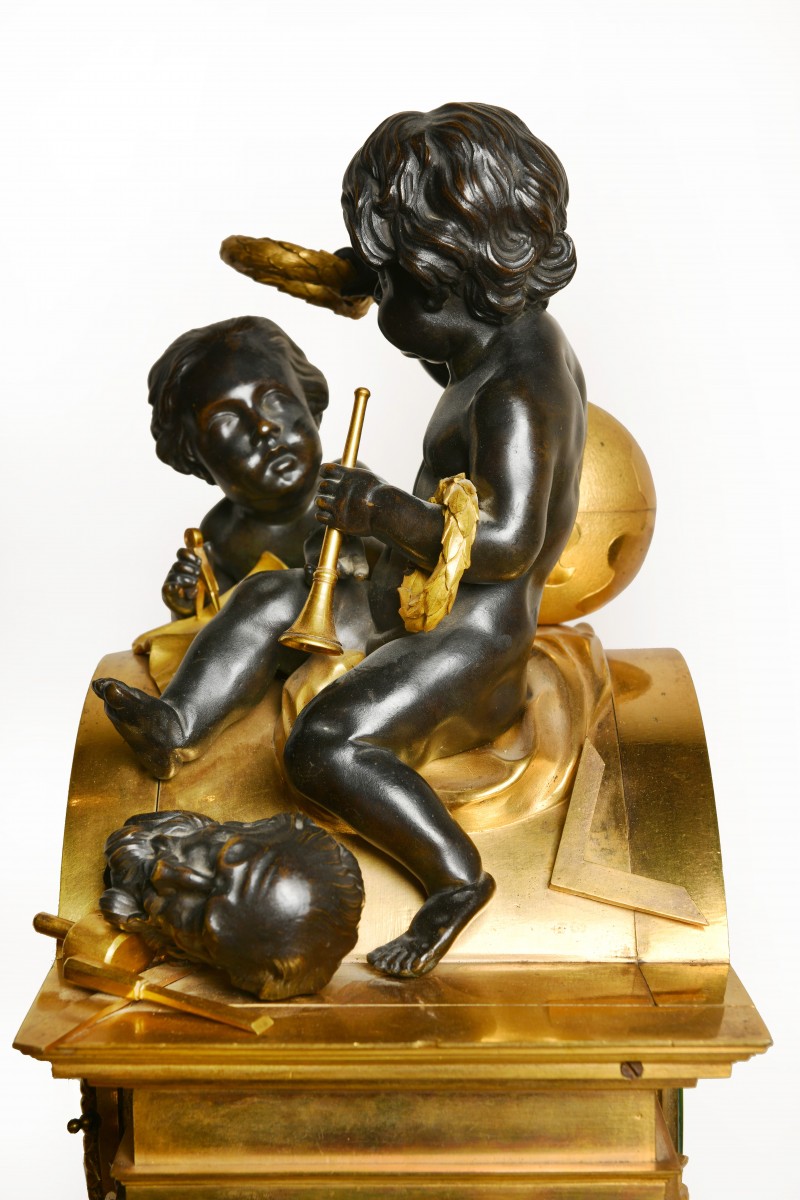
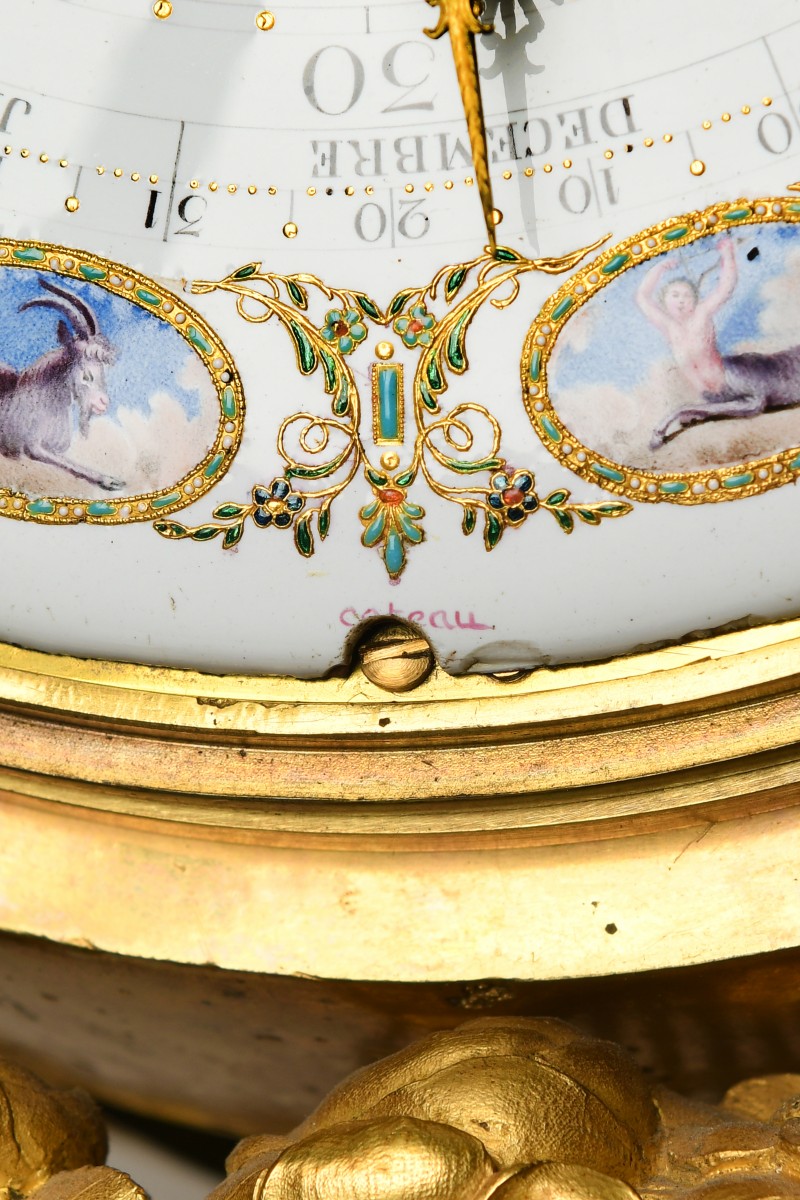
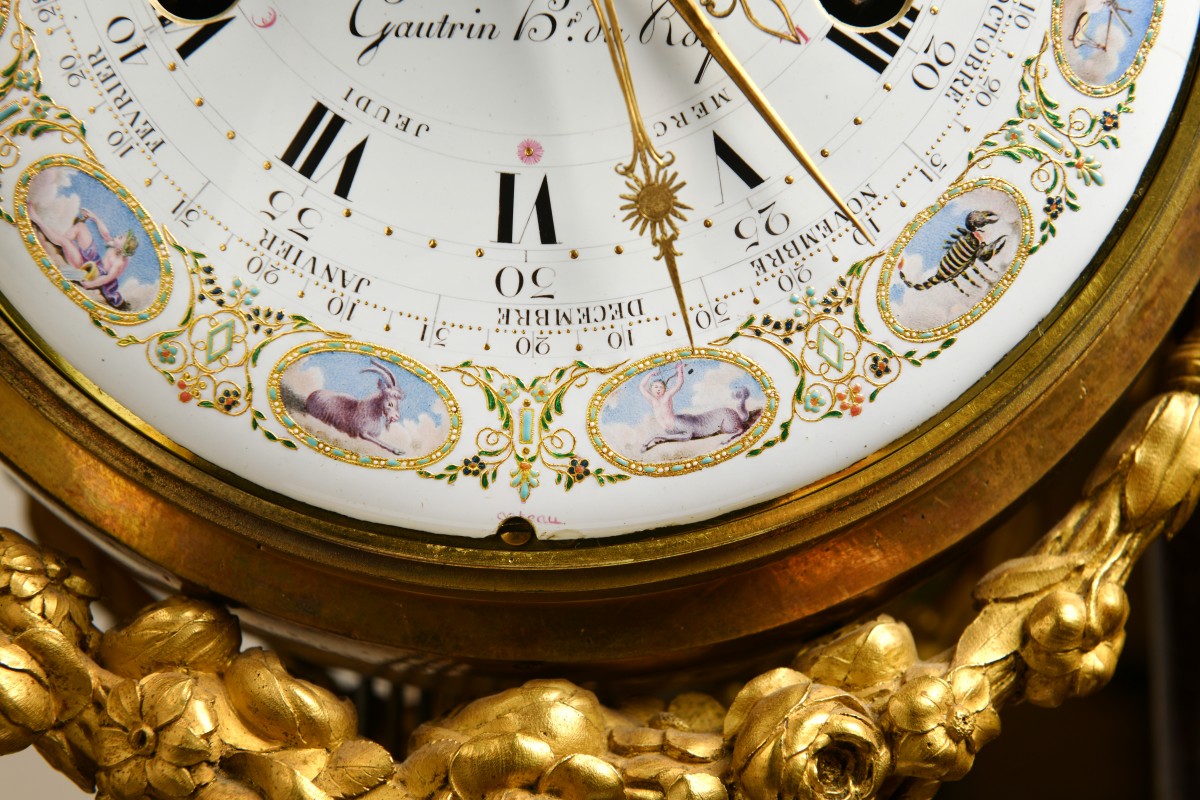
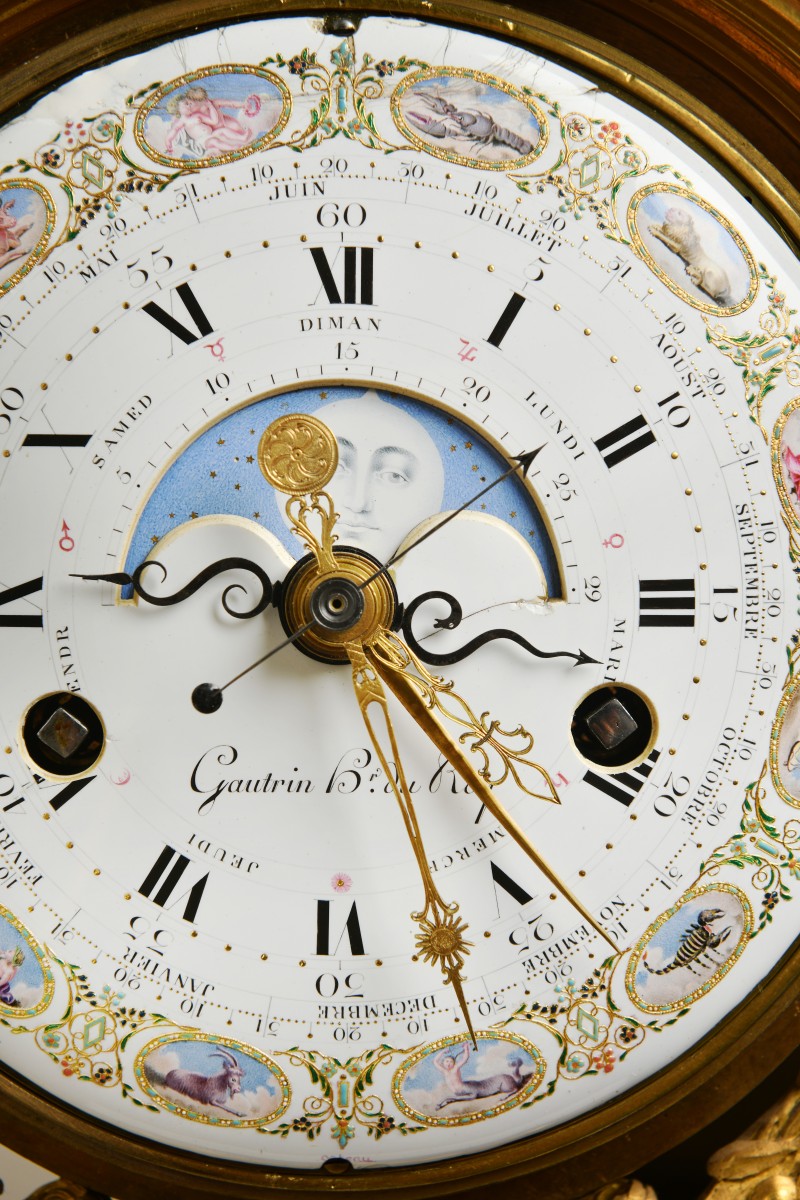
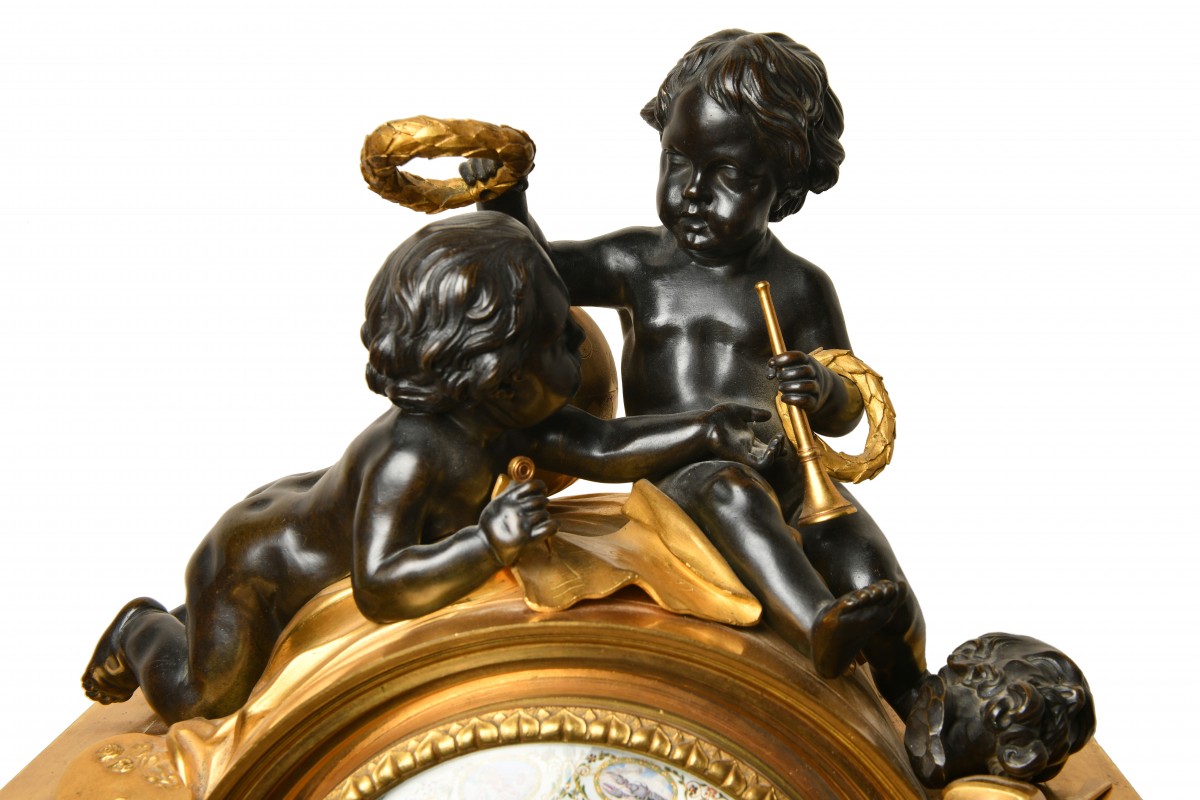
A gilt-bronze and patinated bronze mounted porphyry clock, Louis XVI, the dial signed Gautrin and Coteau, the pendulum painted by Jean-Frédéric Schall.
Provenance
After an Orlov family tradition, gift of Catherine II of Russia (1729-
1796) to Count Grigory Orlov (1734-1783);
Prince Nicolaï Orlov (1827-1885), thence by descent;
Bought from Lucien Delplace, Brussels
Pierre-François Gautrin, receievd maître horloger in 1768 ; Joseph Coteau, received maître peintre-émailleur in 1778 ; Jean-Frédéric Schall, painter (1752-1825)
Our clock used to belong to the Orloff family, and more precisely to Prince Nicolas Orloff (1827-1885). He was a Russian diplomat and served as Ambassador in Brussels for more than ten years, before serving in Austria, London and Paris. He was the nephew of the Earl Gregori Orloff, lover of Empress Catherine II, who might have given this clock to him. Gregori Orloff had an exceptionnal art collection, mainly due to the many gifts Catherine II gave him. She retrieved some of them when he died.
With exceptionnal chiselling, the children on the upper part can be linked to engravings by Huquier after François Boucher, in particular La Peinture and La Poésie. The painted scene on the pendulum represents 'the escarpolette' and can be attributed to the painter Jean-Frédéric Schall (1752-1825), who specialised in galantes scenes, as Boucher did before him. Our painted scene recalls the painting of 'Hasards heureux de l'escarpolette', by Jean-Honoré Fragonard of 1767, currently at the Wallace Collection.
Joseph Coteau (1740-1812), a famous enameller, delivered many enamel dials to the most famous clockmakers of the late 18th century and early 19th century. Former student of the Académie de Saint- Luc, established in 1766, he then settled on the rue Poupée in 1772. Constantly innovating, he discovered a new process to fix the gold onto enamel, and worked with the Manufacture de Sèvres. He also embellished many jewellery and porcelain pieces. The zodiac signs on
our dial are similar as the ones on a clock in the Musée National de la Céramique de Sèvres (ill. in P. Kjellberg, Encyclopédie de la pendule française du Moyen Âge au XXe siècle, Paris, 1997, p.230, fig. B).