Offered by Gallery de Potter d'Indoye

18th-century and Empire French furniture, works of art and pictures
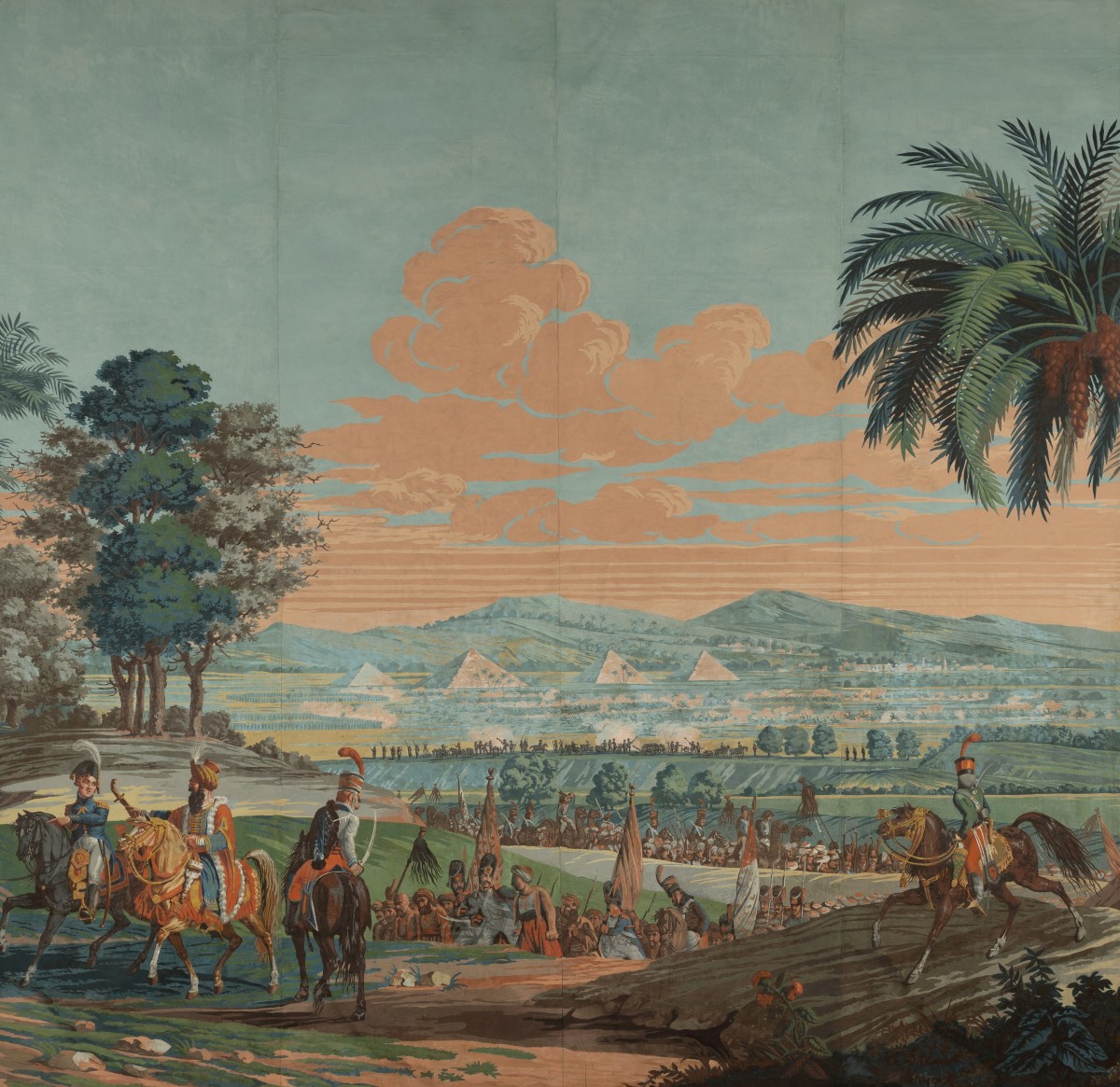
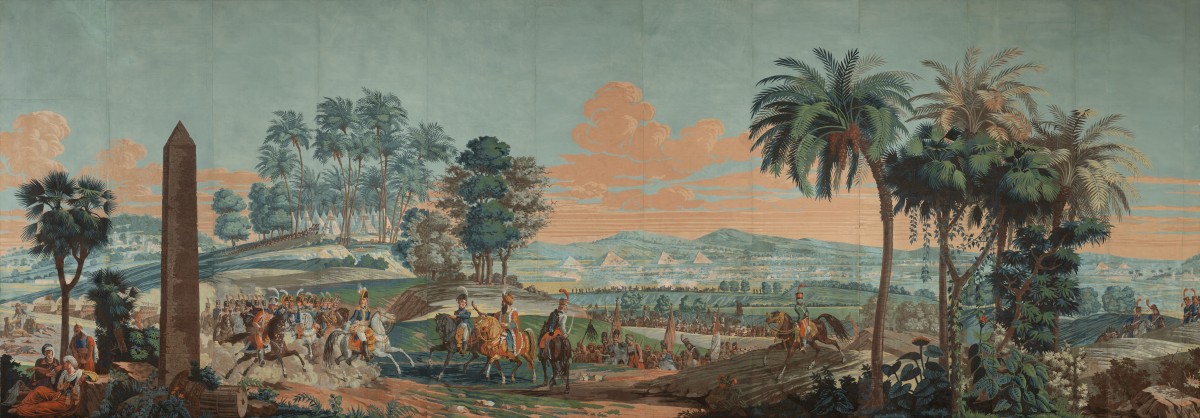
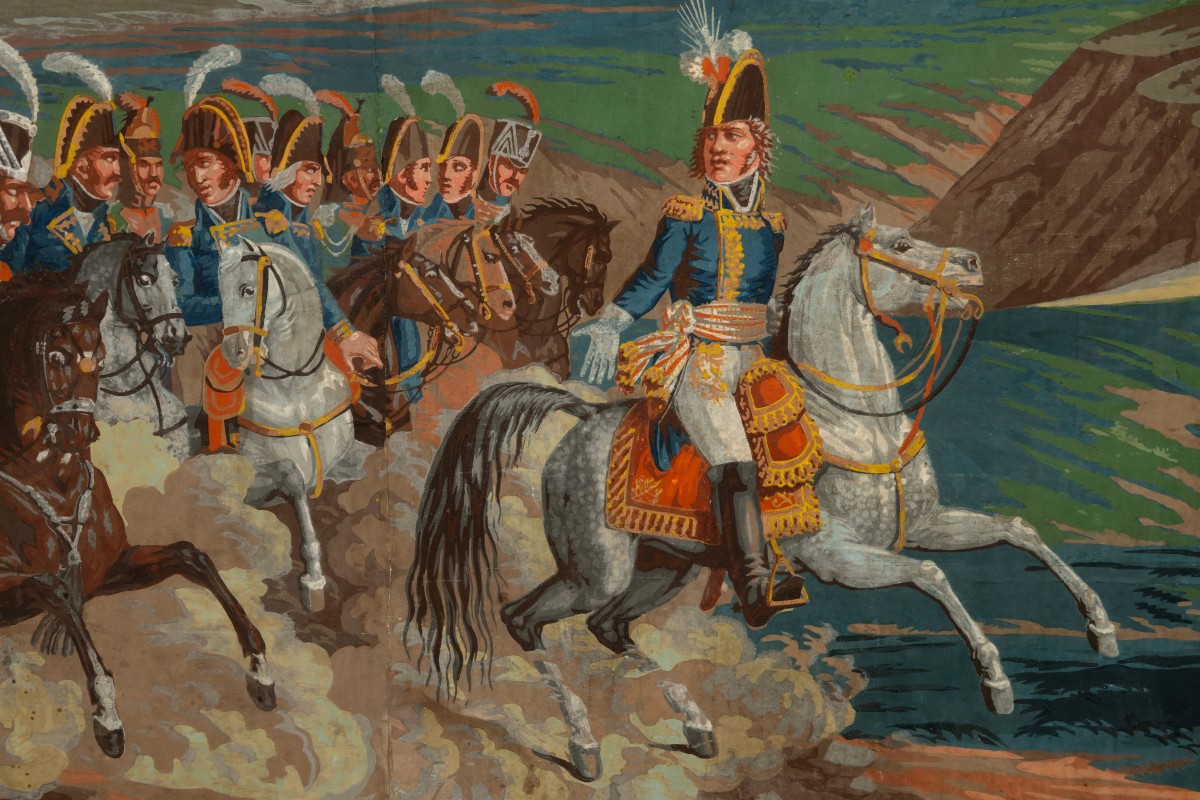
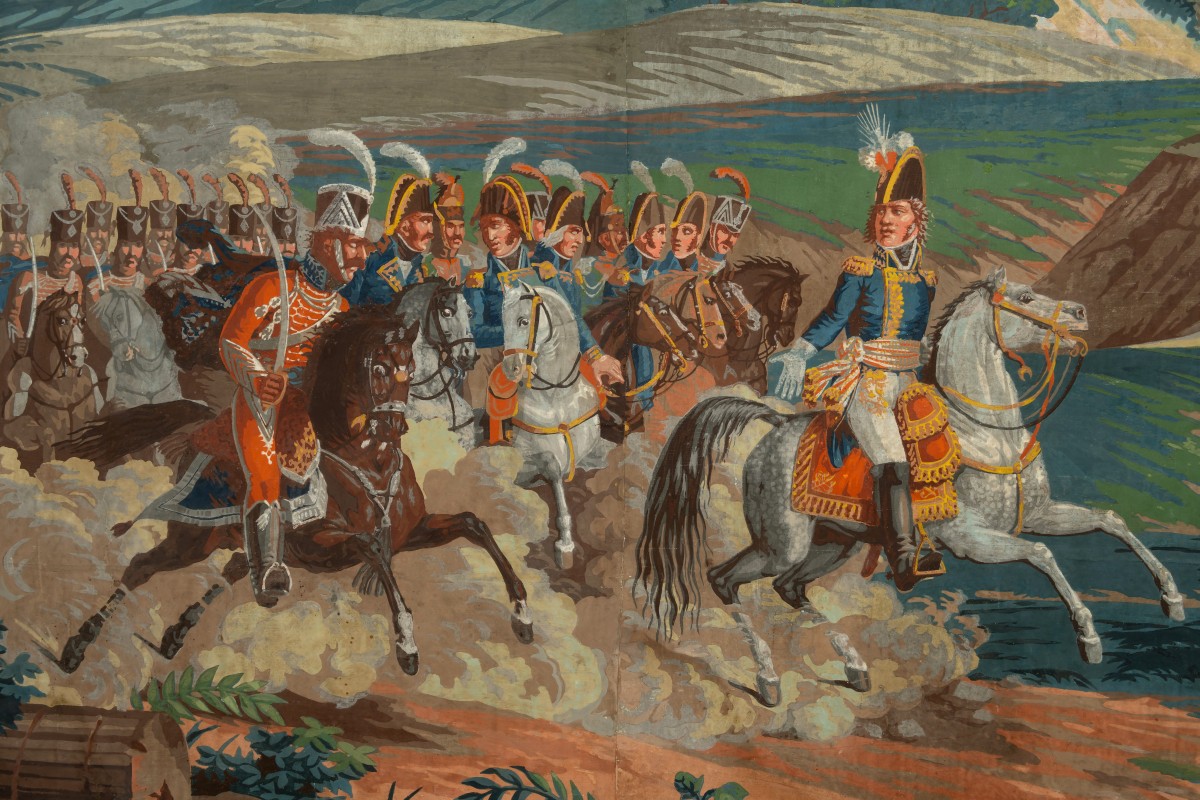
PANORAMIC WALLPAPER THE BATTLE OF HELIOPOLIS
Also known as The French in Egypt.
Manufactured by Velay, Paris.
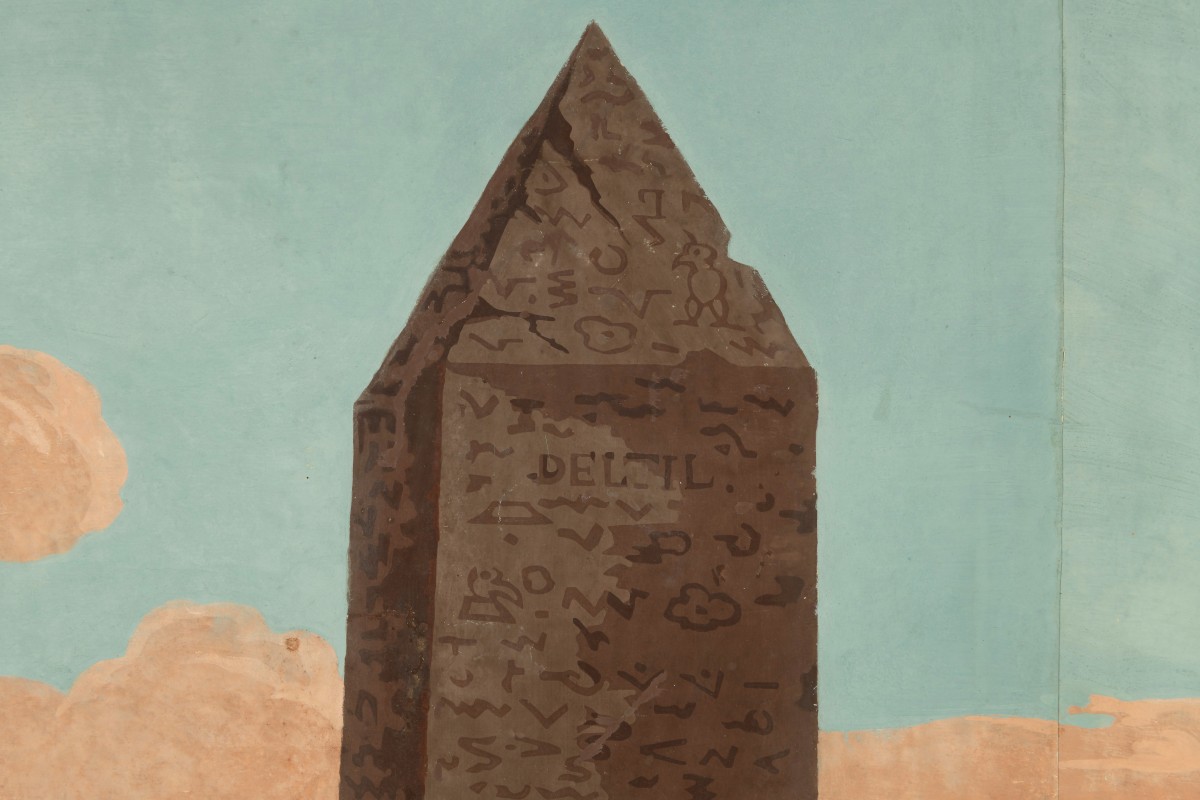
Designer: Jean-Julien Deltil, signed on the obelisk.
Circa 1820.
Commissioned by General Kléber, printed by M. Formentin.
Exhibition: Paris, 1819. Exhibition of the Products of French Industry.
Dimensions: Overall H 208 cm x W 594.50 cm
This panoramic wallpaper is composed of three panels mounted on canvases stretched over frames.
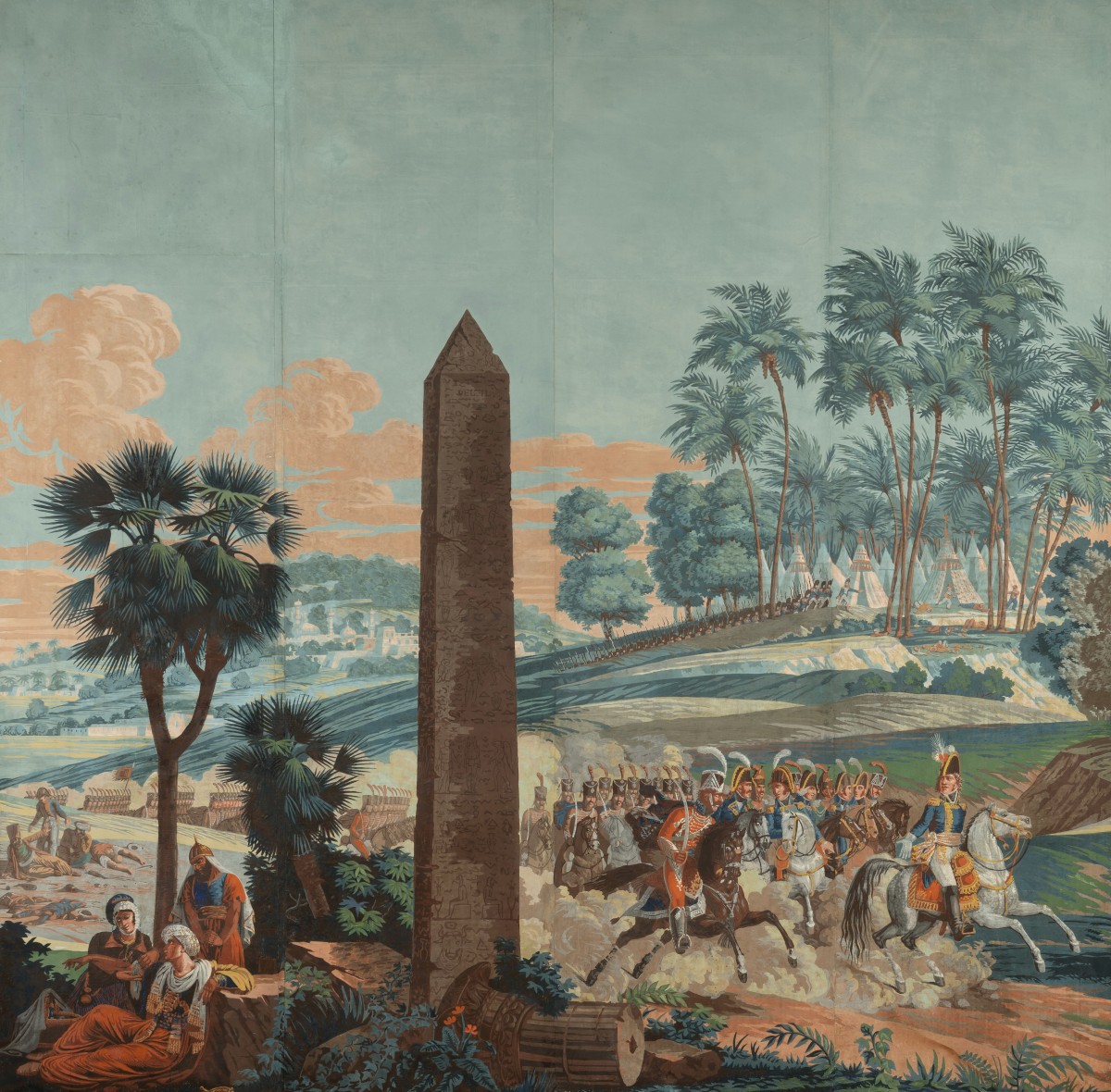
- H 208 x W 211 cm
- H 208 x W 213.50 cm
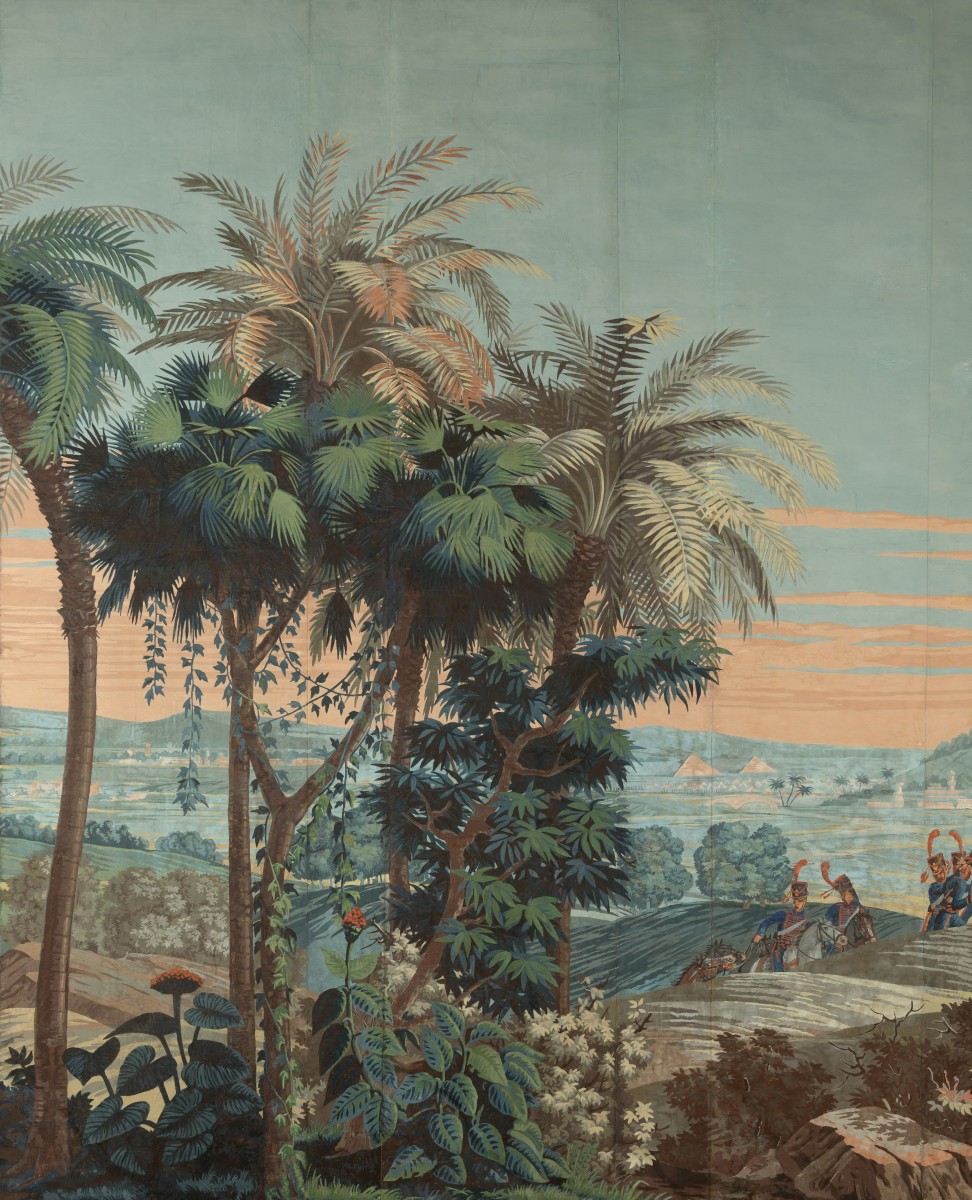
- H 208 x W 170 cm
An identical example can be found in the Wallpaper Museum in Rixheim, France.
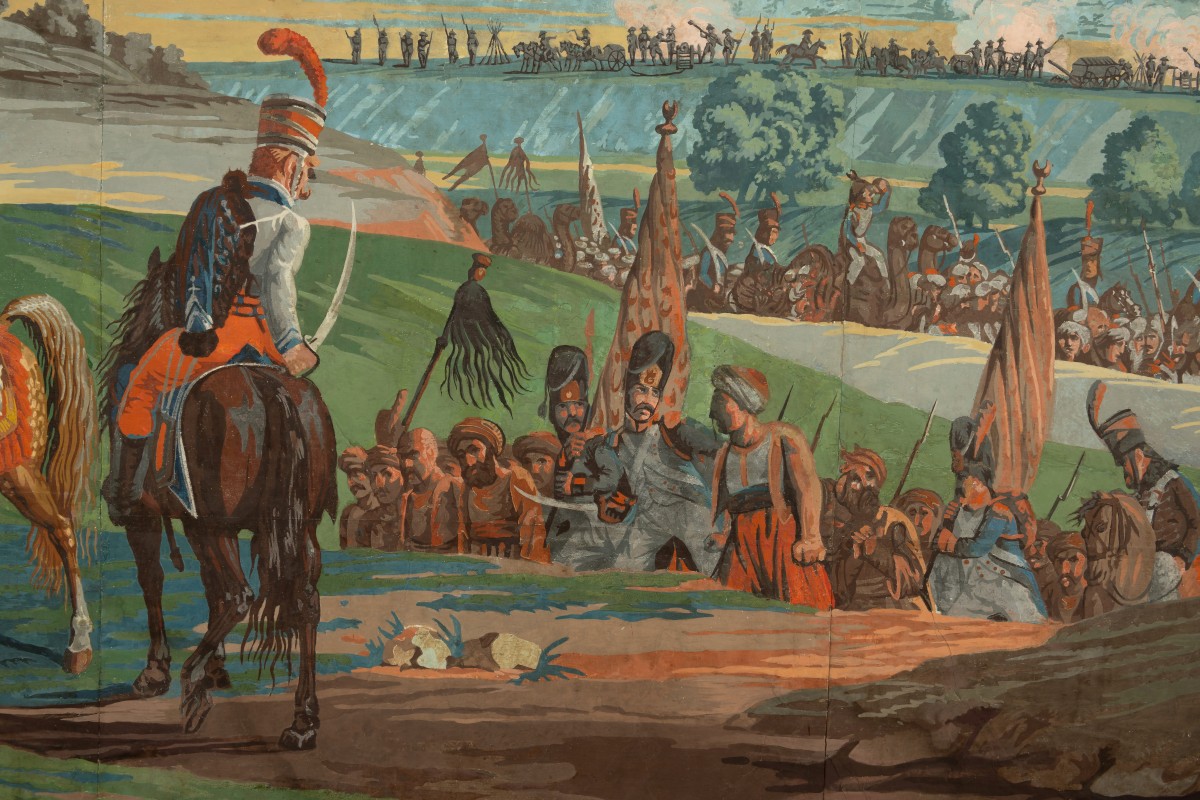
From left to right:
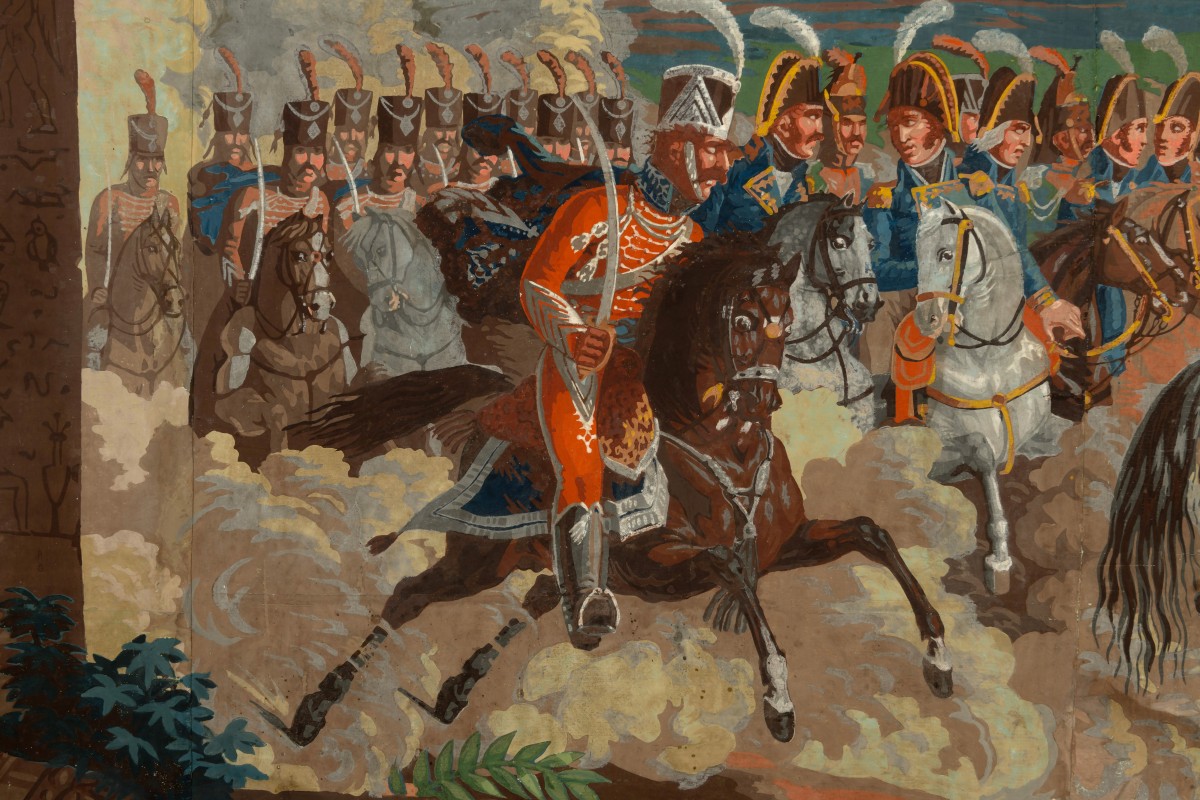
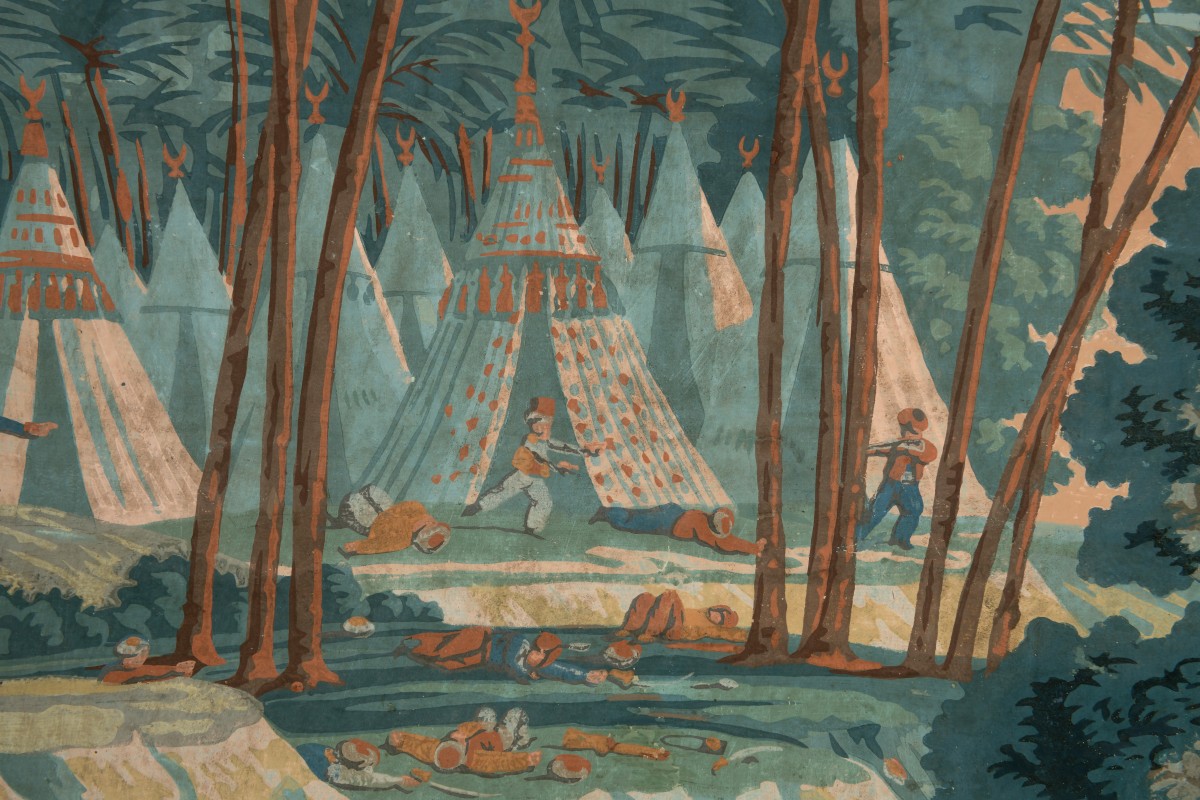
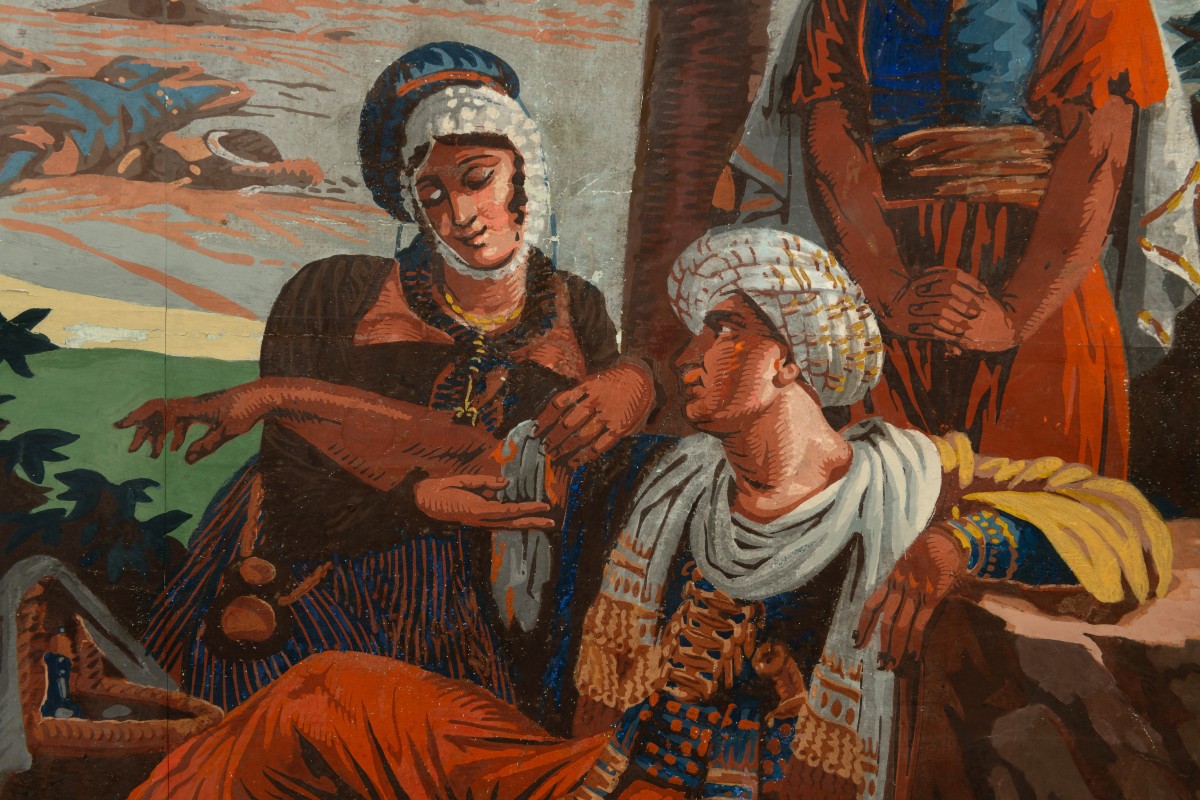
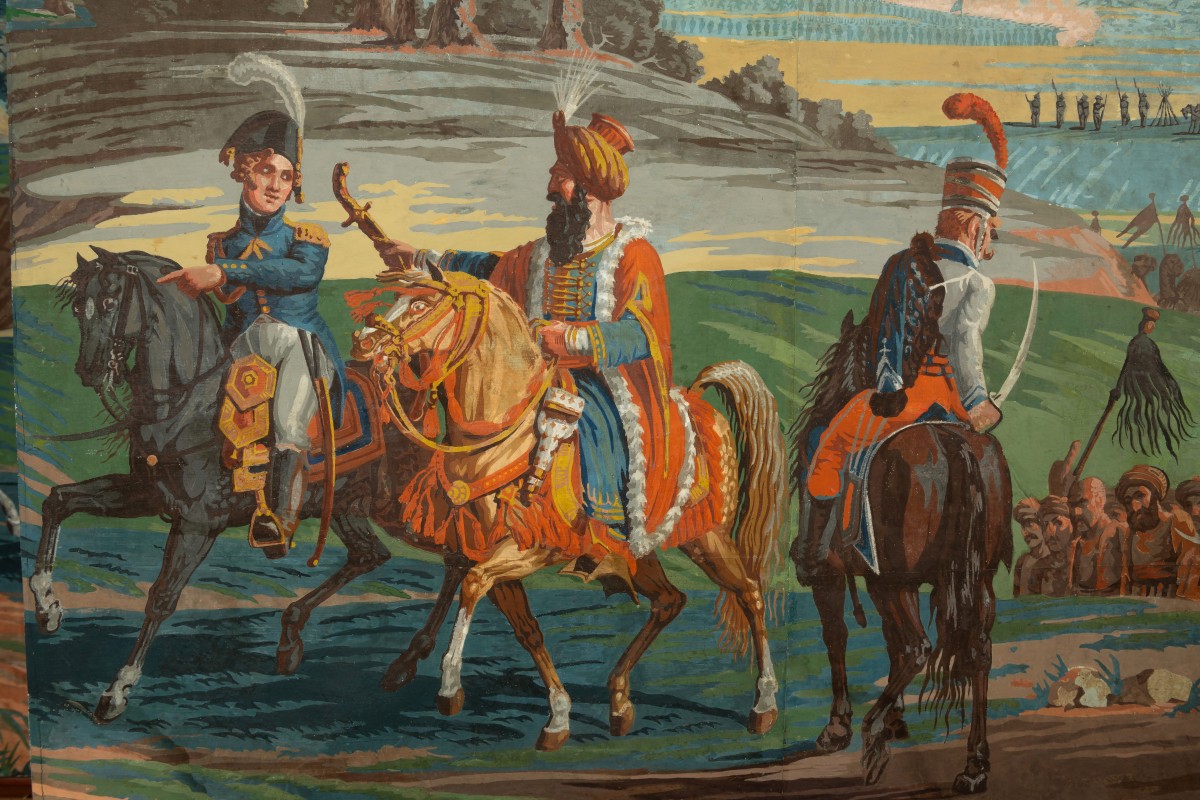
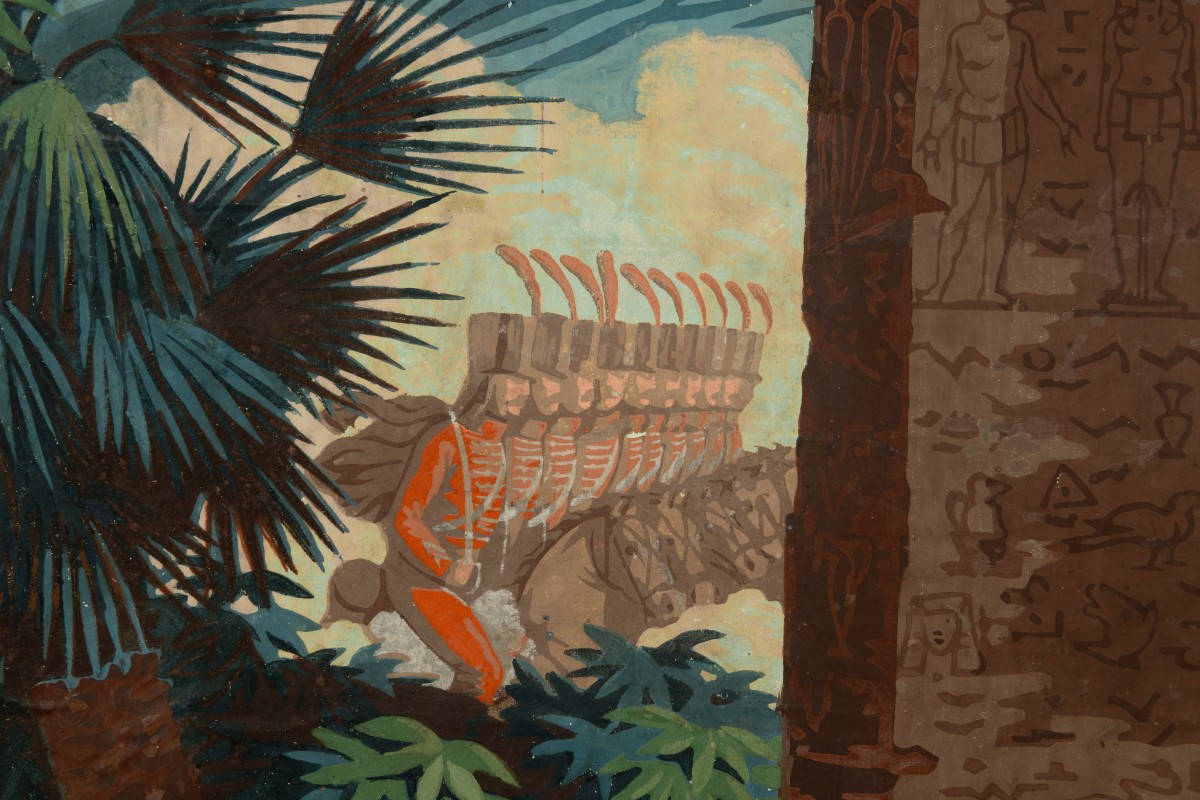
General Kléber arrives at the head of his troops. A sutler tends the wounds of a dey. In the background, a column of grenadiers seizes the Grand Vizier's tents.
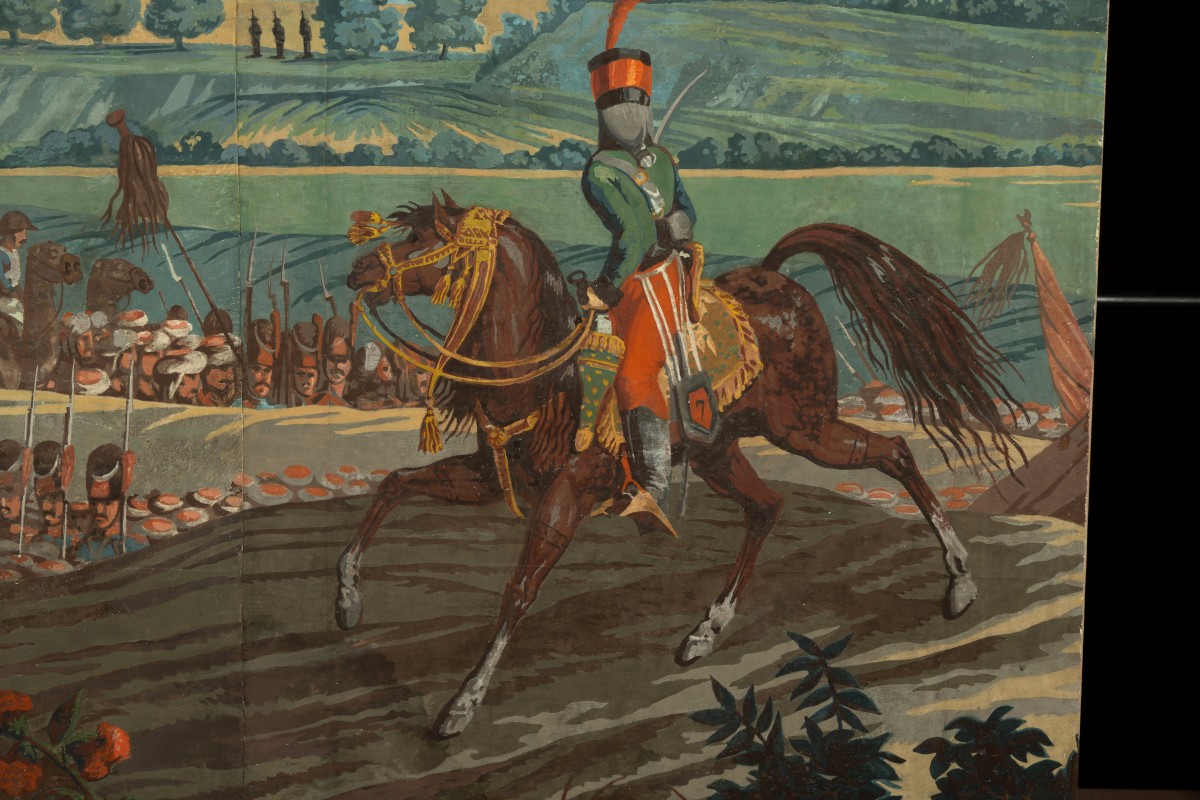
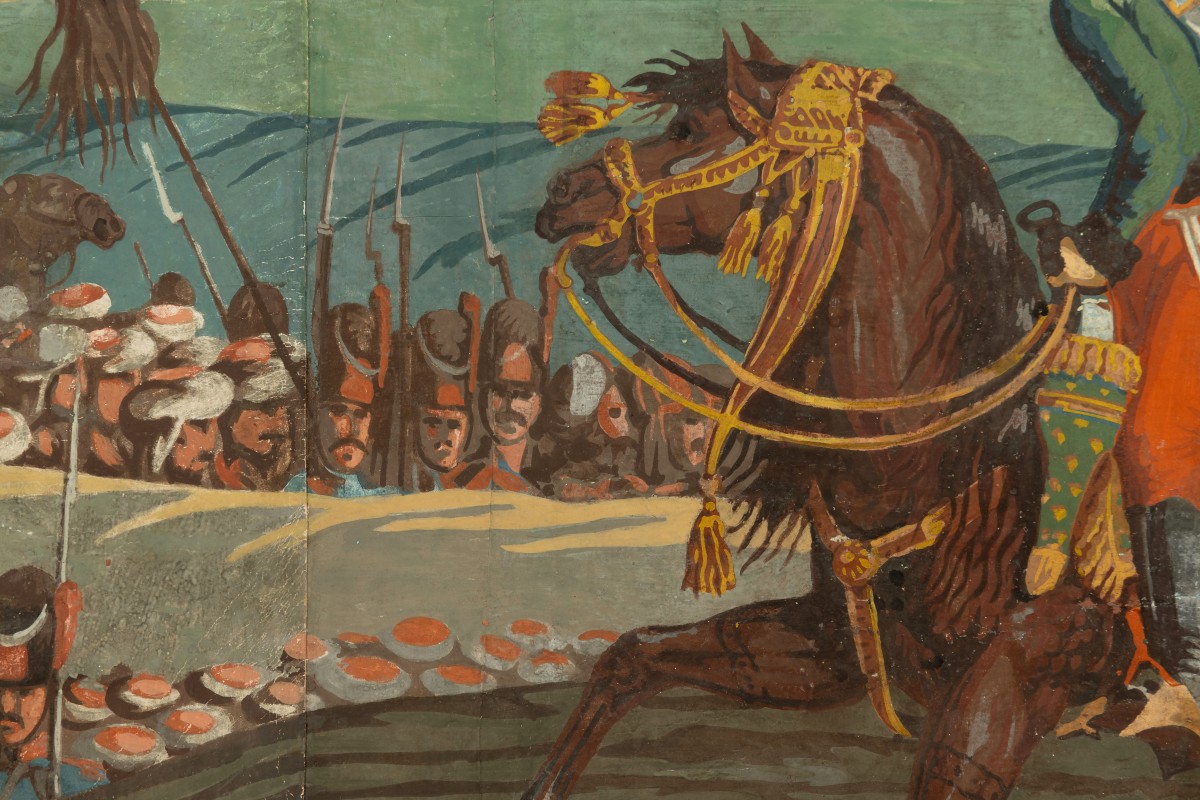
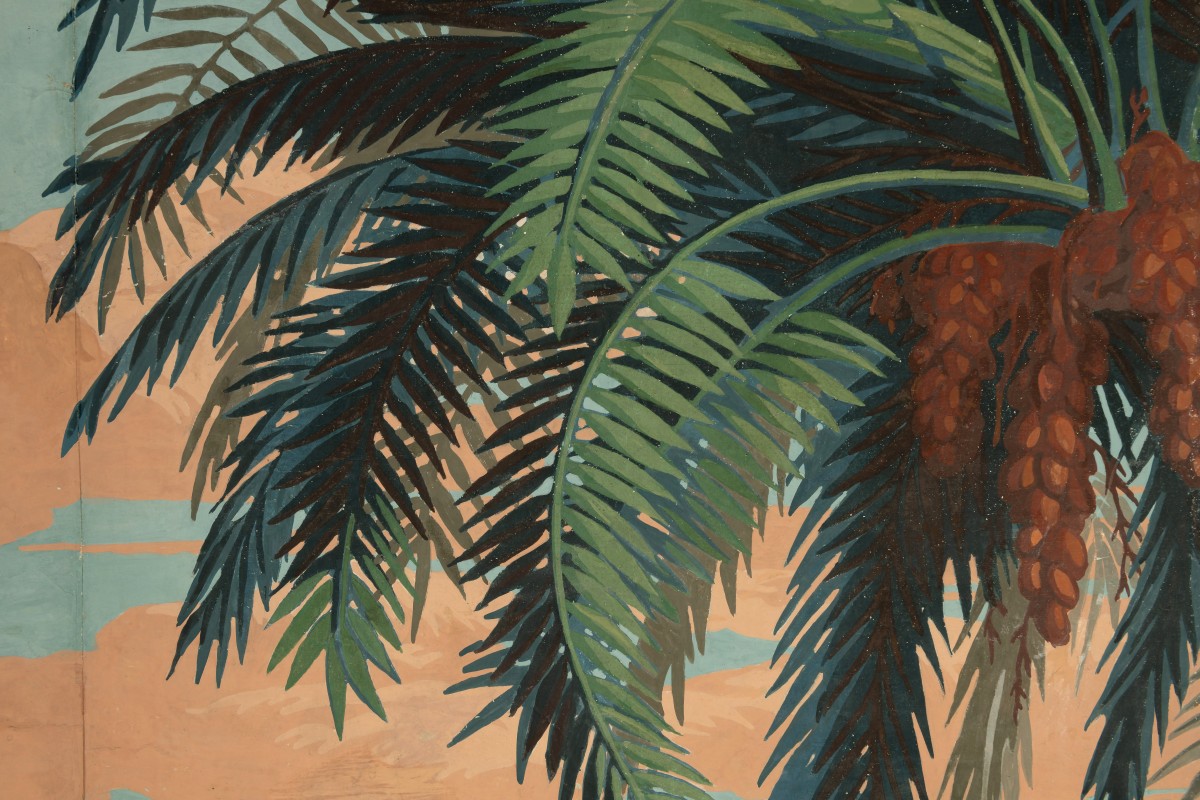
Column of prisoners escorted by French hussars. On the right, a palm tree. The Thebaid and date palm.
The Battle of Heliopolis was a French victory won on March 20, 1800, by the Army of the Orient under General Kléber against the Ottoman army.
In order to evacuate Egypt honorably and participate in military operations in Europe, Kléber entered into negotiations with the Ottomans and the British, which resulted in an agreement on January 23, 1800. The implementation of this agreement proved impossible due to internal British dissension, the Sultan's procrastination, and the resumption of hostilities in Egypt.
The British Admiral Keith Elphinstone did not respect the Convention of El Arish, signed on January 24, 1800. Refusing to capitulate, Kléber resumed hostilities. The British and the Turks believed the Army of the Orient was too weak to resist them. At the head of the Ottoman army, Nassif Pasha marched on Cairo, where the population rose up in response to his call, but French troops counterattacked and won a victory at Heliopolis on March 20, 1800. Returning to Cairo, they successfully quelled the uprising.
Following the subsequent operations, Egypt was more firmly in French hands than ever before.
Forces involved:
French Army (approximately 11,000 men) under the command of General Jean-Baptiste Klébert.
Ottoman Army (40,000 to 80,000 according to various sources) under the command of Nassif Pasha and Grand Vizier Yusuf Pasha.
Losses:
French Army: 600 to 800 men killed or wounded.
Turkish Army: 8,000 to 9,000 men killed, wounded, or captured.
Printed in color, requiring 5,000 plates. Engraved. Lithograph, public, colored (Library of the Army Museum, Paris) or black and white (BN. Est., Ob 1, 1800, M 104 319 and M 104 820, titled: Battle of Heliopolis)
LOCATION: Coll. publ. fr: MAD (deposit of the Museum of African and Oceanic Arts)
Shropshire (R.-(.): Gothenburg, Södermanland, Tastergötland, Ostergötland (Sweden): Bern (Switzerland).
BIBLIOGRAPHY: Baumer, 1989, p. 156; Clouzot, 1931, p. 27; Entwisle, 1902, pl. 36, 39 (ill.); Leiss, 1961, p. 97; Lynn, 1980, p. 200. 20+ (ill.):
McClelland, 192+, pp. 79, 306-307 (ill.): Olligs, 1970, pp. 269-270; Teynac, 1981, pp. 110, 12+ (ill.) - Exhibition: Paris, 1936, no. 36.
Text published: The French in Egypt. Colored landscape. Executed in 30 strips on large-format paper.