Offered by Tobogan Antiques
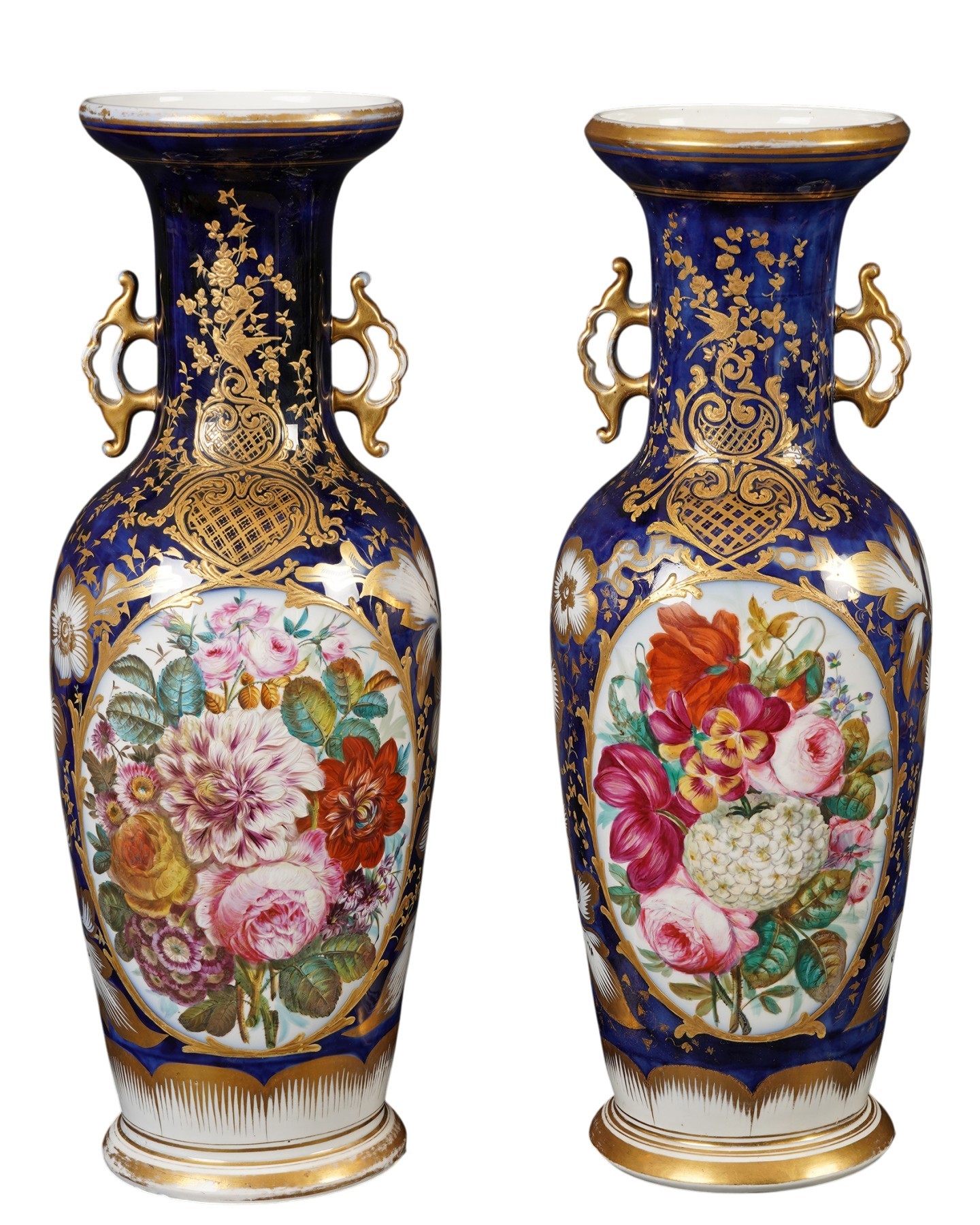
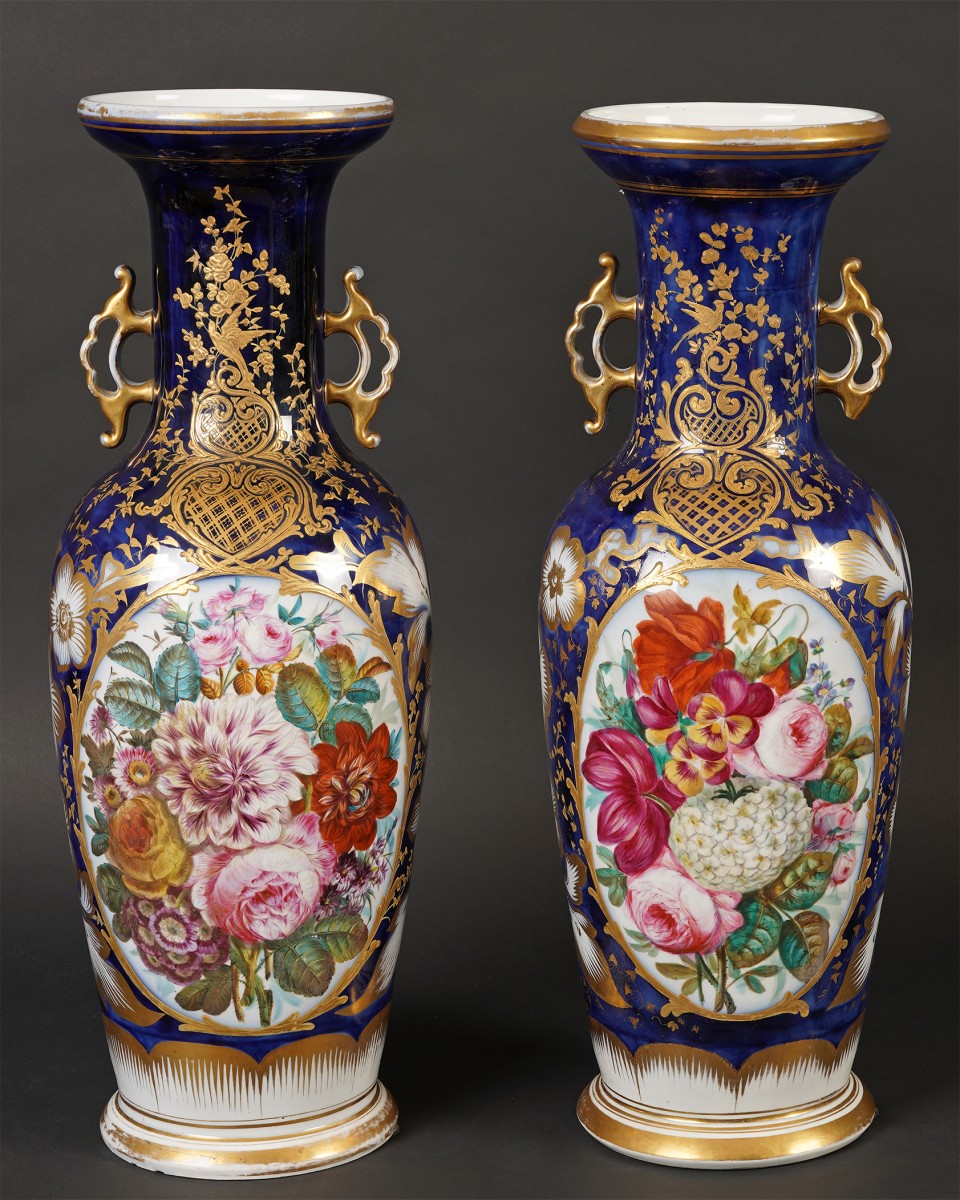
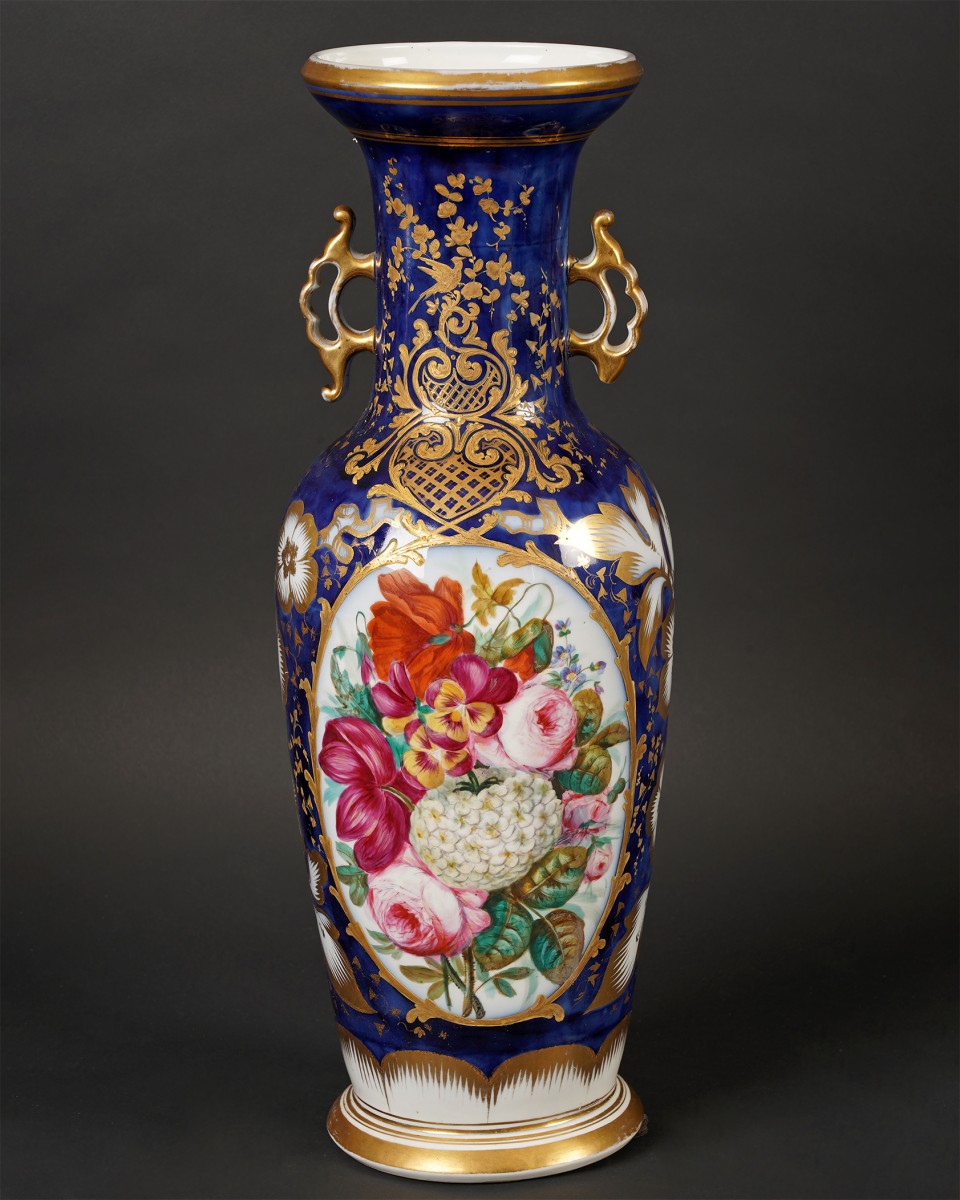
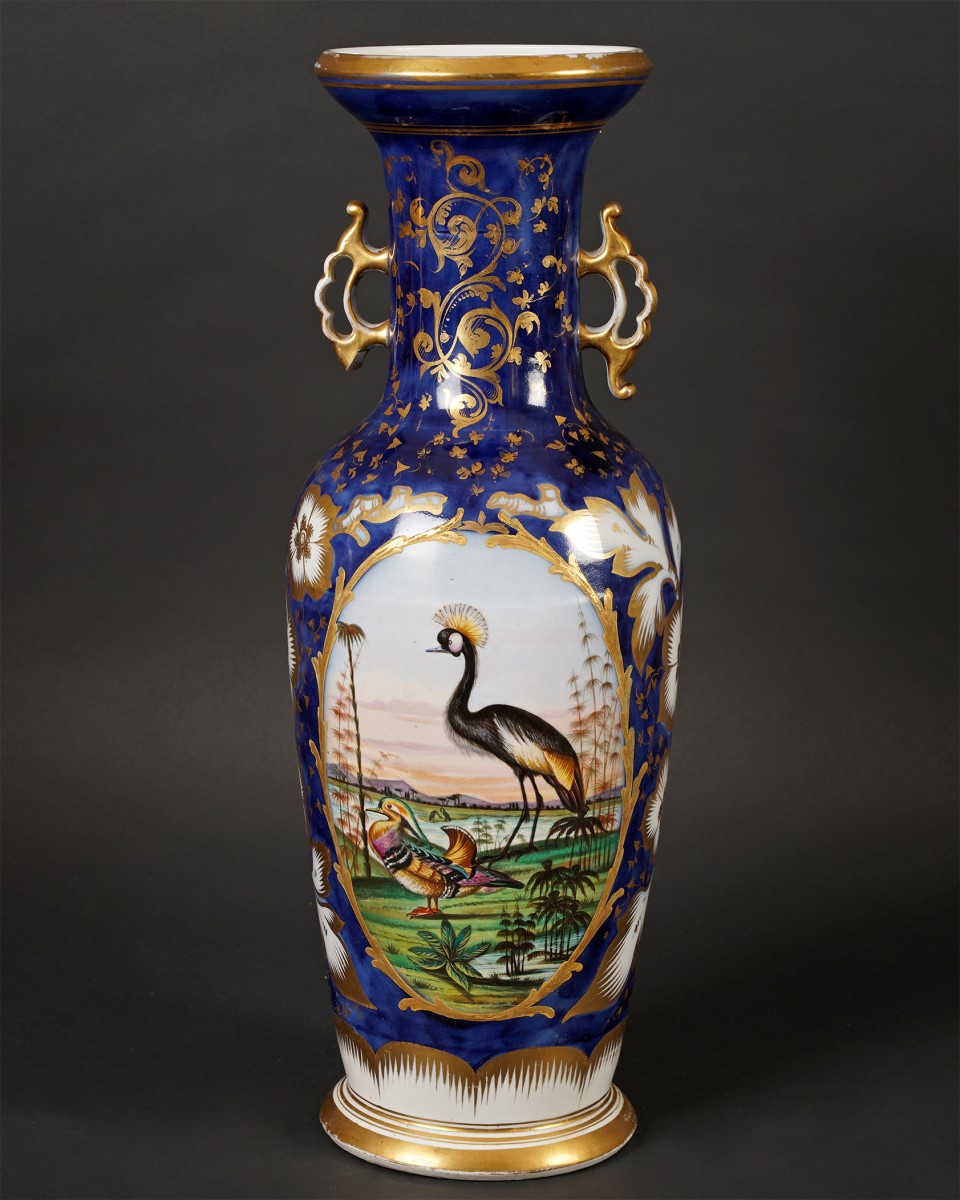
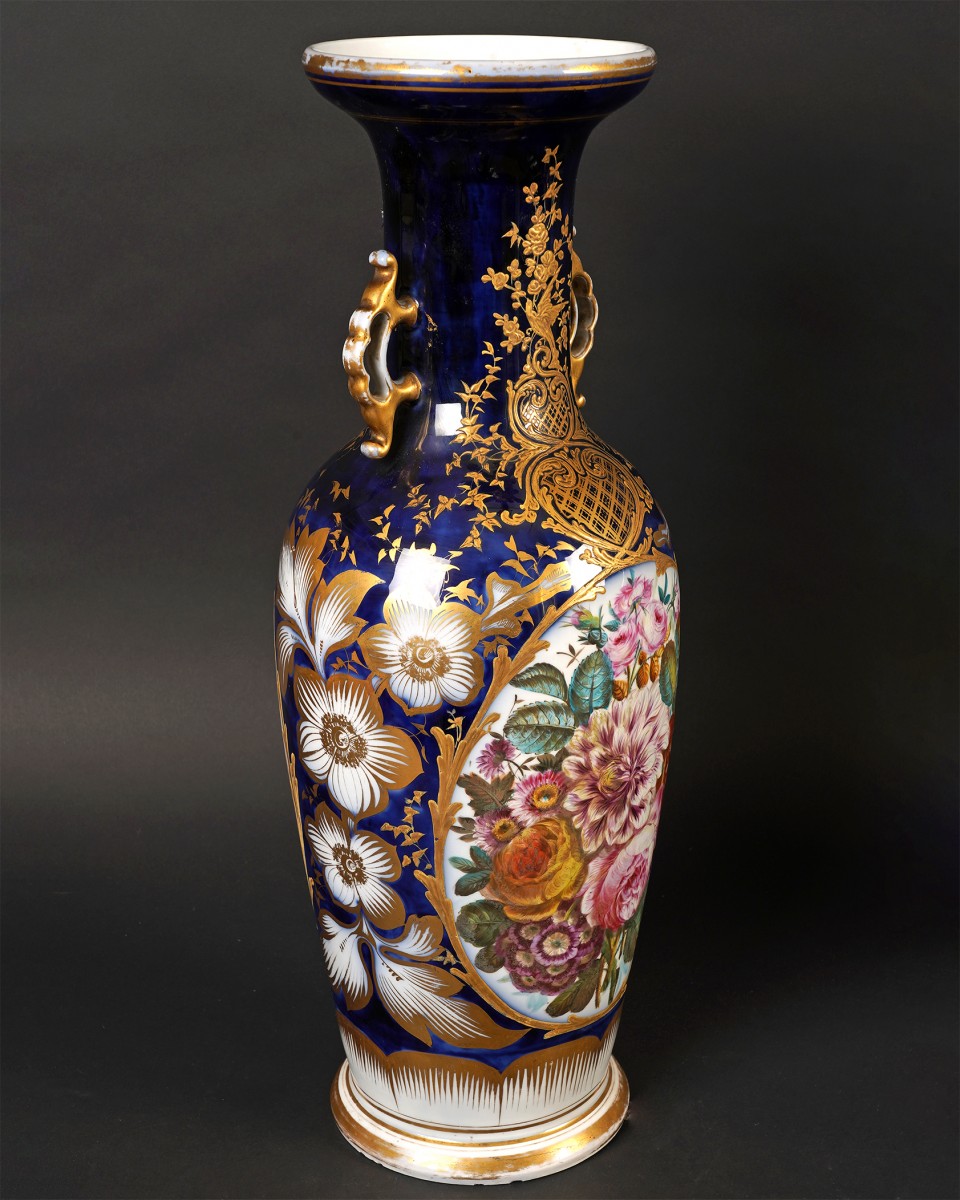

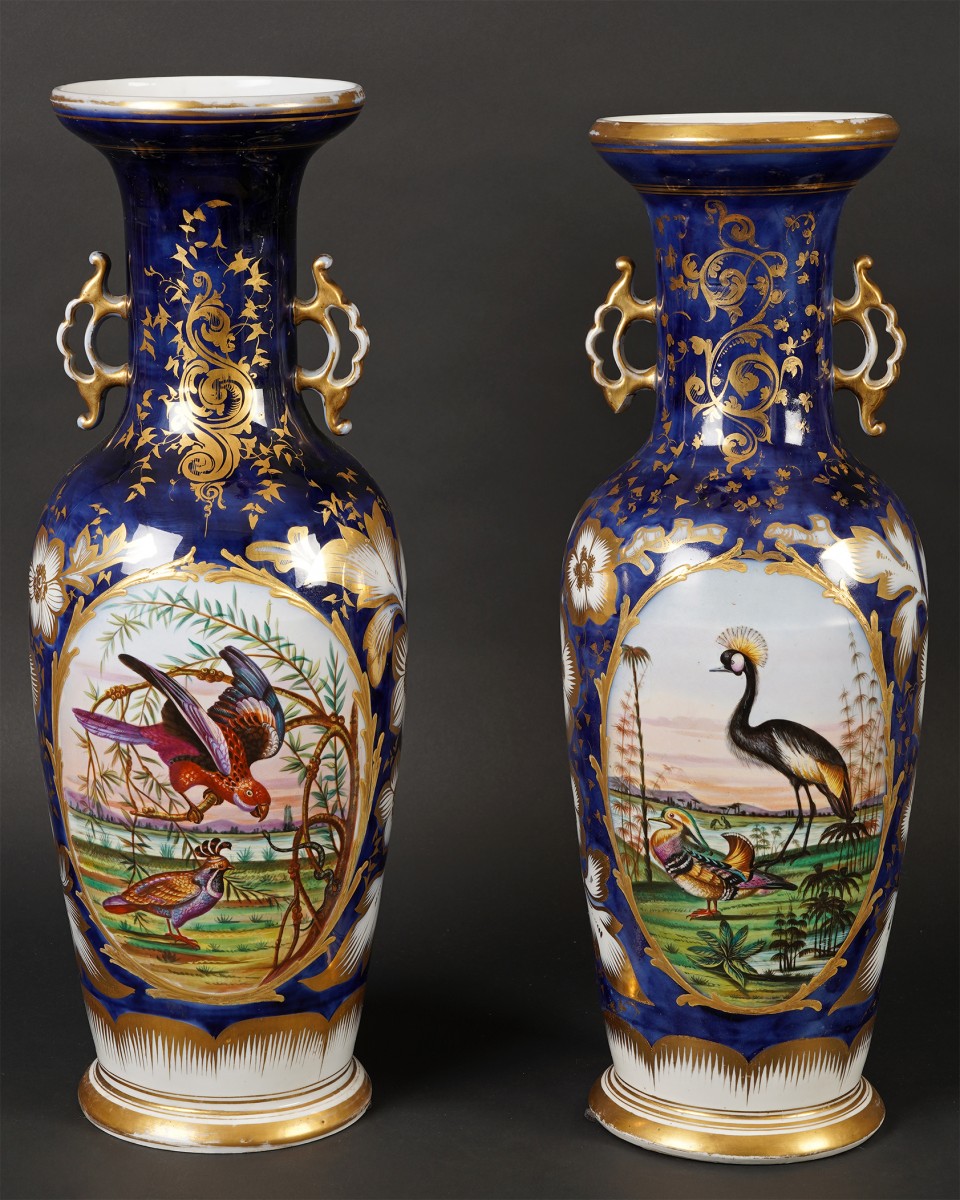
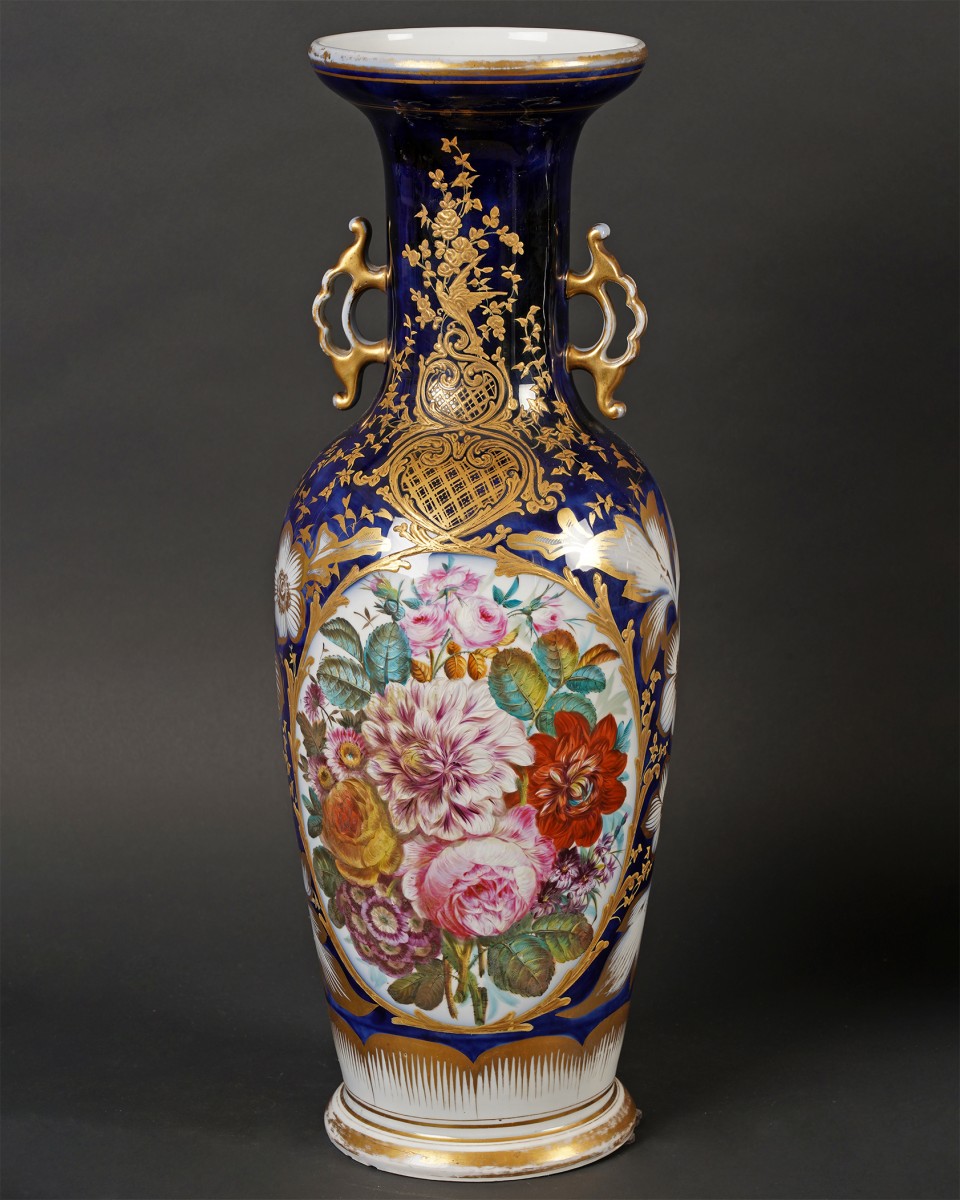
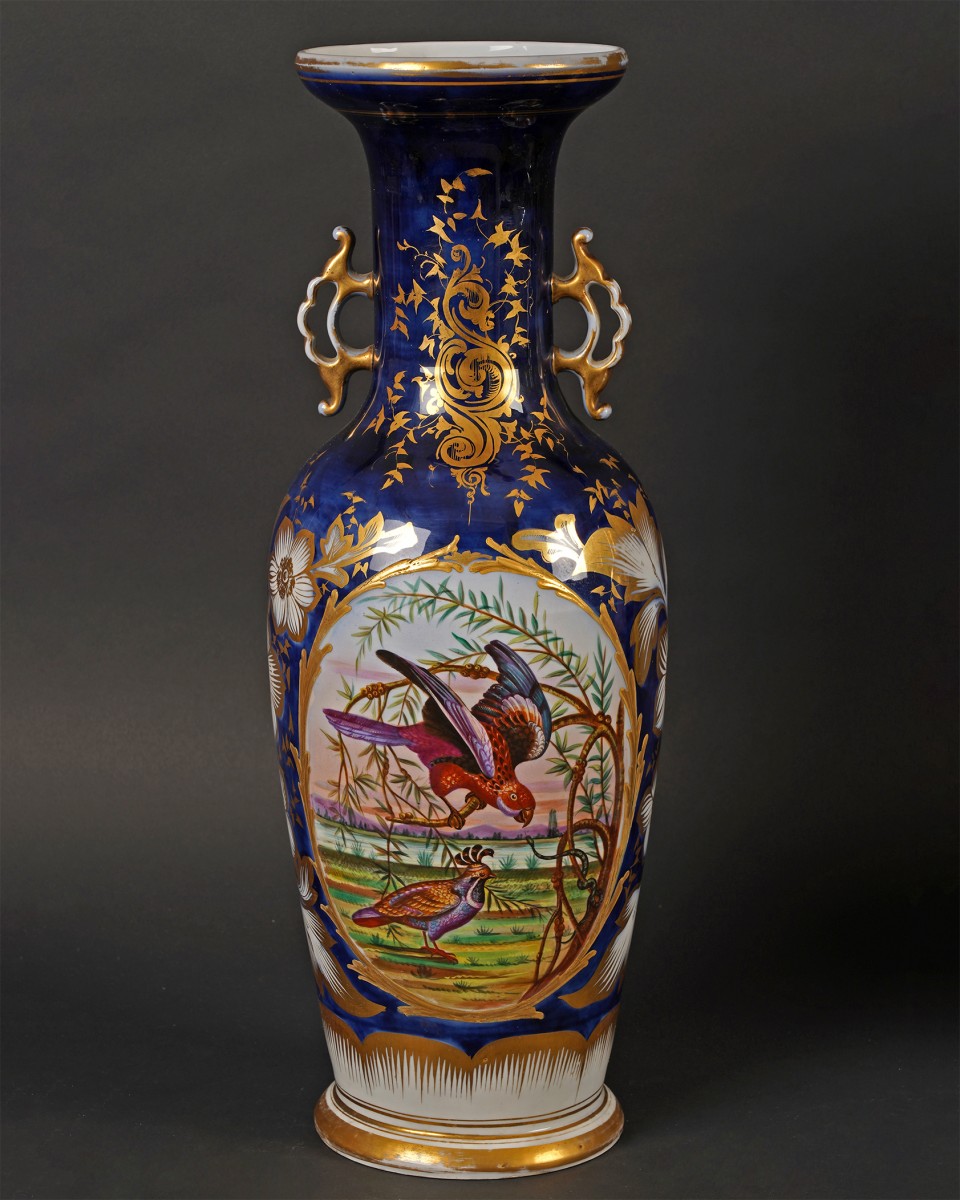
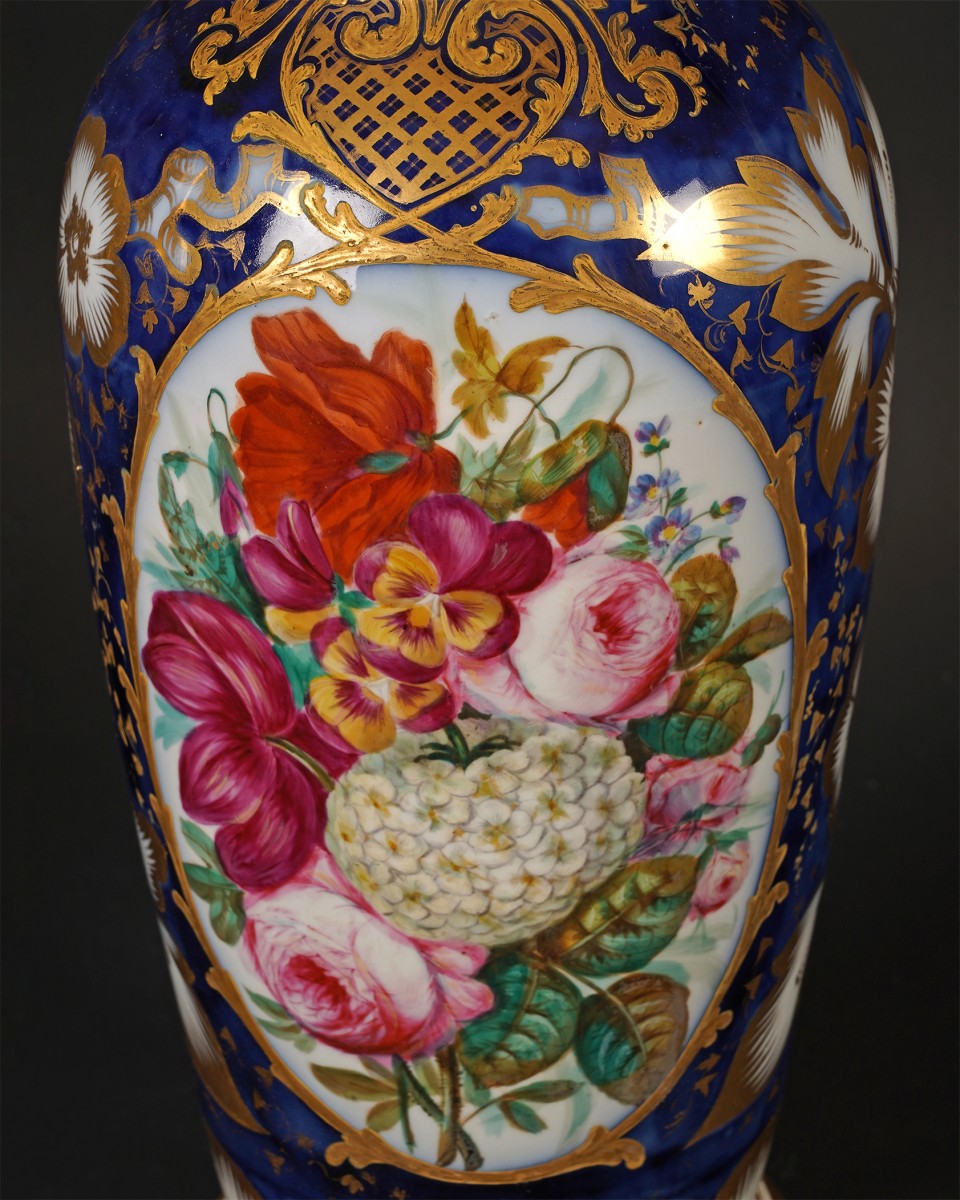
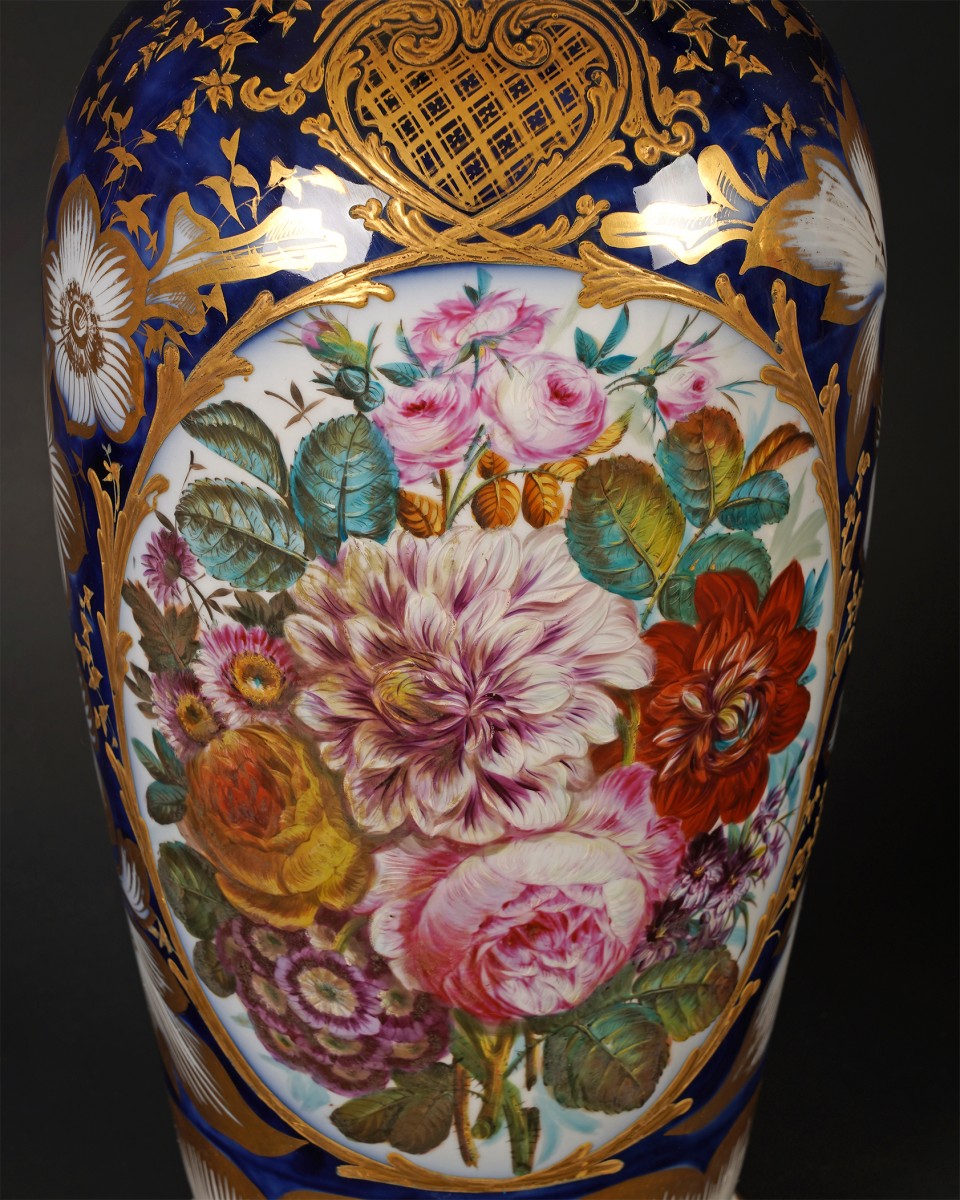
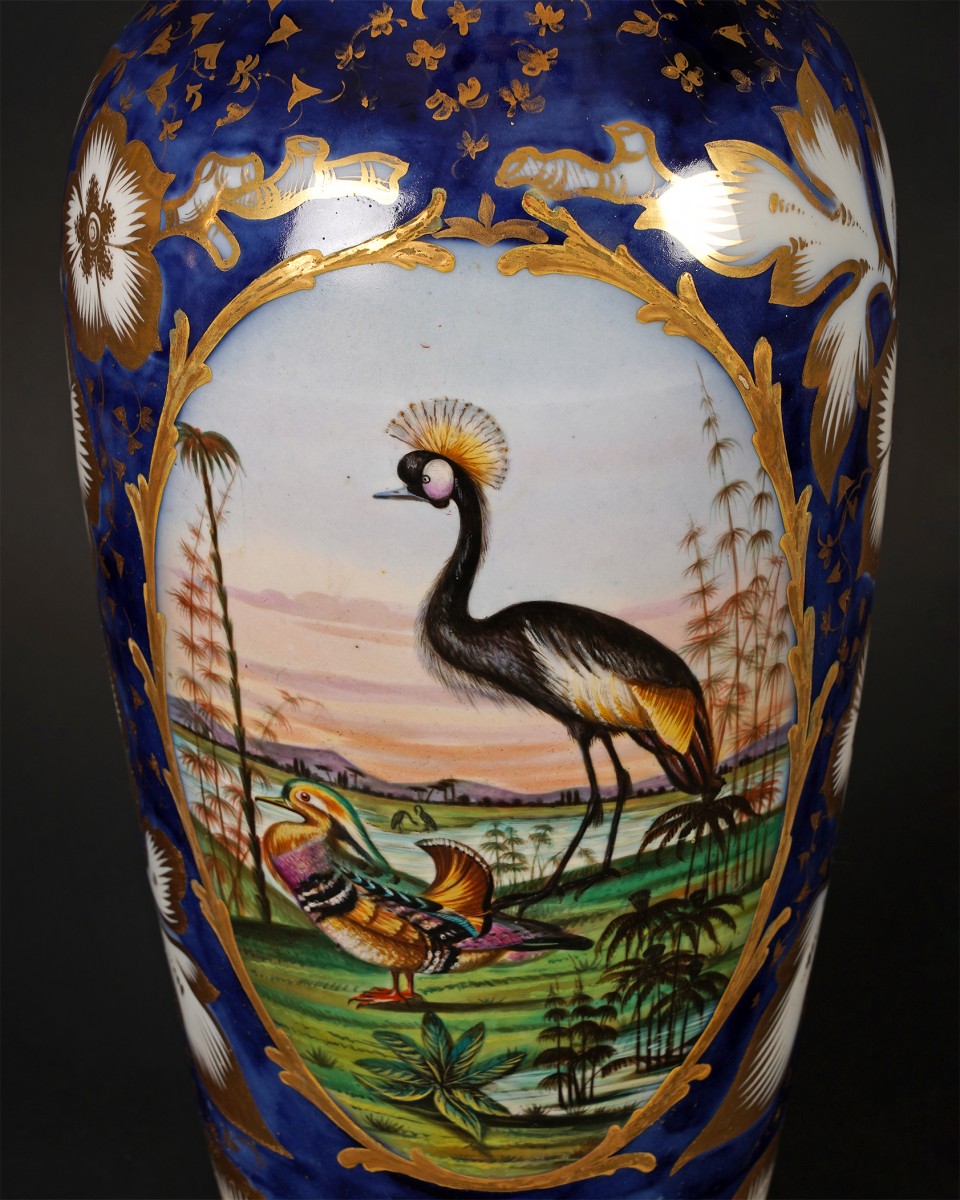
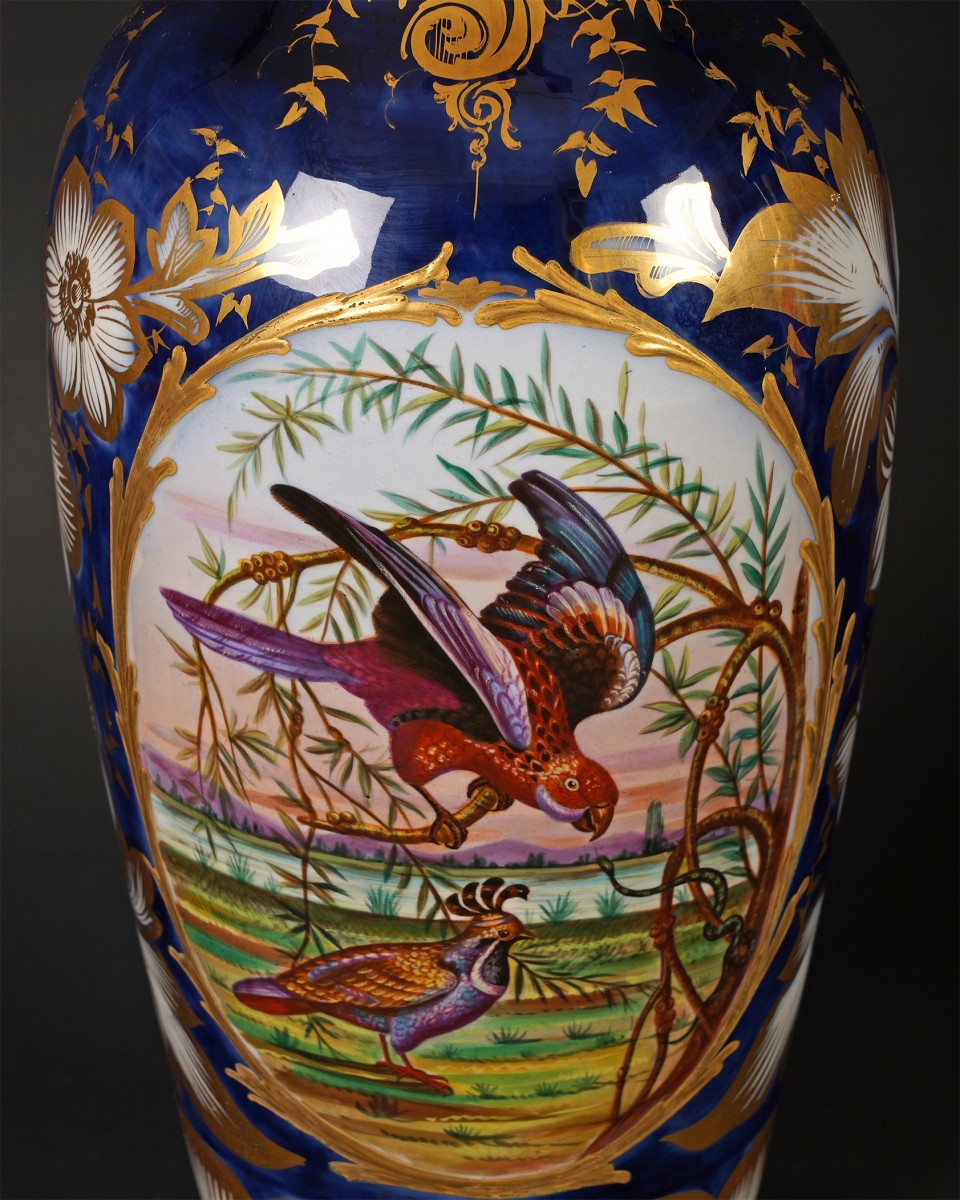
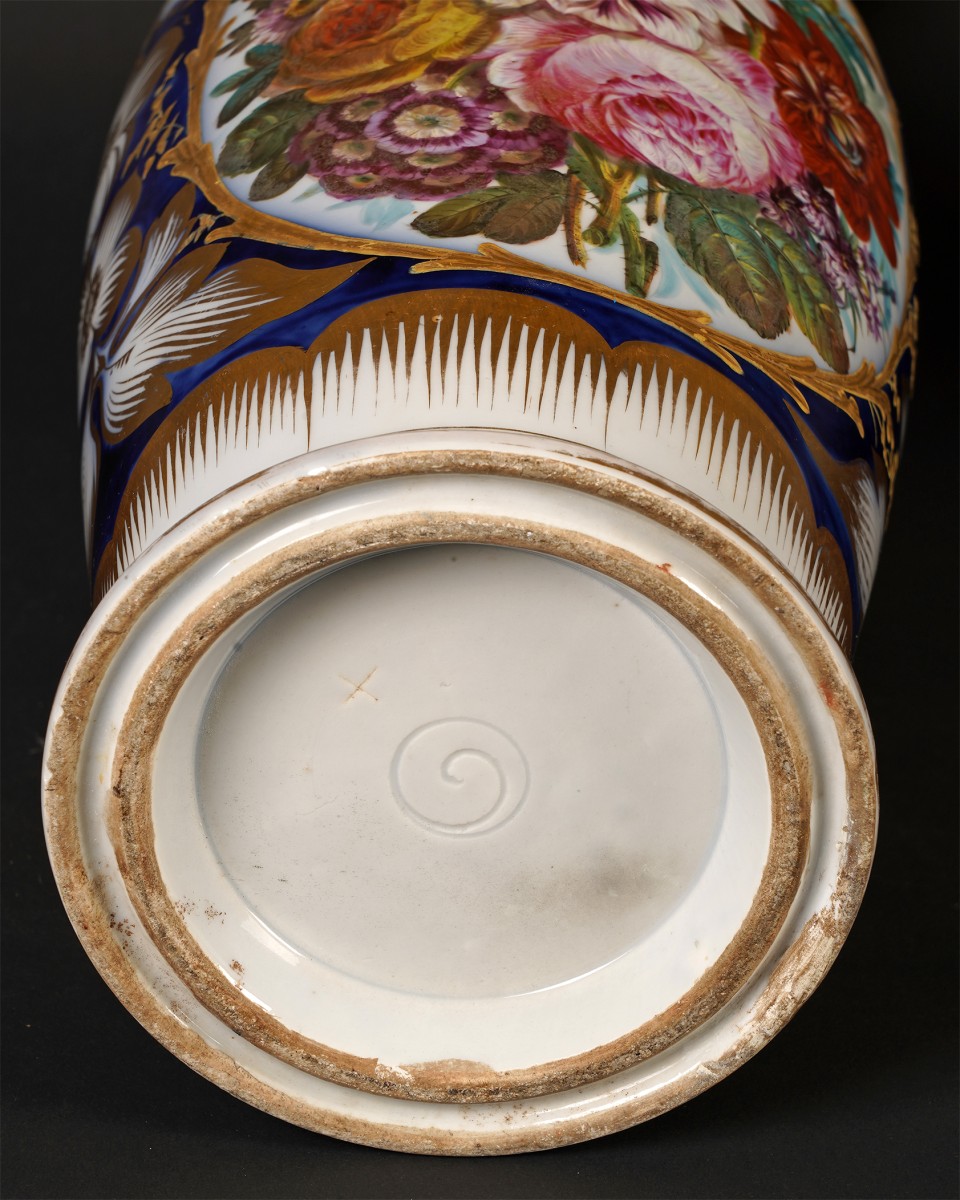
Elegant pair of baluster-shaped vases in hard-paste porcelain, resting on a molded circular foot and flaring toward a neck with a flat rim highlighted by a gilt line. Each vase is fitted with two applied lateral handles, featuring openwork and gilded decoration with sinuous profiles, reflecting the historicist ornamental vocabulary of the mid-19th century. The surface is covered in a deep blue ground, richly enhanced with gilded decoration composed of leafy scrolls, volutes, trellis patterns, and stylized floral motifs. The design is organized around large oval reserves framed by gilt borders. On one side of each vase, the reserves depict animal and ornithological scenes painted in polychrome, showing exotic birds in idealized landscapes. These are rendered with great naturalistic precision and a subtle palette, reflecting the influence of zoological publications and the Orientalist taste then in vogue. On the opposite sides, the reserves are adorned with luxuriant floral bouquets composed of roses, dahlias, peonies, and garden flowers, executed with a keen sense of modeling, petal transparency, and chromatic gradation, characteristic of high-quality porcelain flower painting.
The alternation of decoration—bird scenes and floral compositions—together with the overall symmetry of the ornamentation, gives this pair a strong visual unity while highlighting the technical virtuosity of the painters and gilders. The ensemble attests to the expertise of the Valentine manufactory, active in the 19th century and renowned for its luxurious productions intended for a bourgeois and aristocratic clientele. It stands within the French tradition of display porcelain, heir both to the models of Sèvres and to the eclectic taste of the Second Empire.
The Valentine manufacture was a porcelain factory founded in 1832, following the discovery of a vein of kaolin in the central Pyrenees, at Saint -Gaudens. It was the only porcelain factory located in the south of France. Driven by political troubles, former porcelain makers of Moustiers-Sainte-Marie, founded in the early nineteenth century a factory in Toulouse. By 1820, this factory named “Fouque and Arnoux, earthenware manufacturers, Place Saint-Sernin in Toulouse”, with seventy workers, installed a second factory in Saint-Gaudens, on the banks of the river Garonne, where the two factories finally consolidated in 1832. The factory employing up to 250 workers in the 1850s, was facing the Valentine hill, from where the 6 ovens of the factory were refuelling with wood, and which gave then its name to the porcelain wares. These “Valentine porcelain wares”, produced until 1878 in Saint-Gaudens, were made in pure white and milky hard-paste, with very bright enamel, and whose famous ”Valentine Blue” vases were colored with cobalt-blue. The decor was often enriched with floral bouquets and gold lines painted on enamel.