Offered by Tobogan Antiques
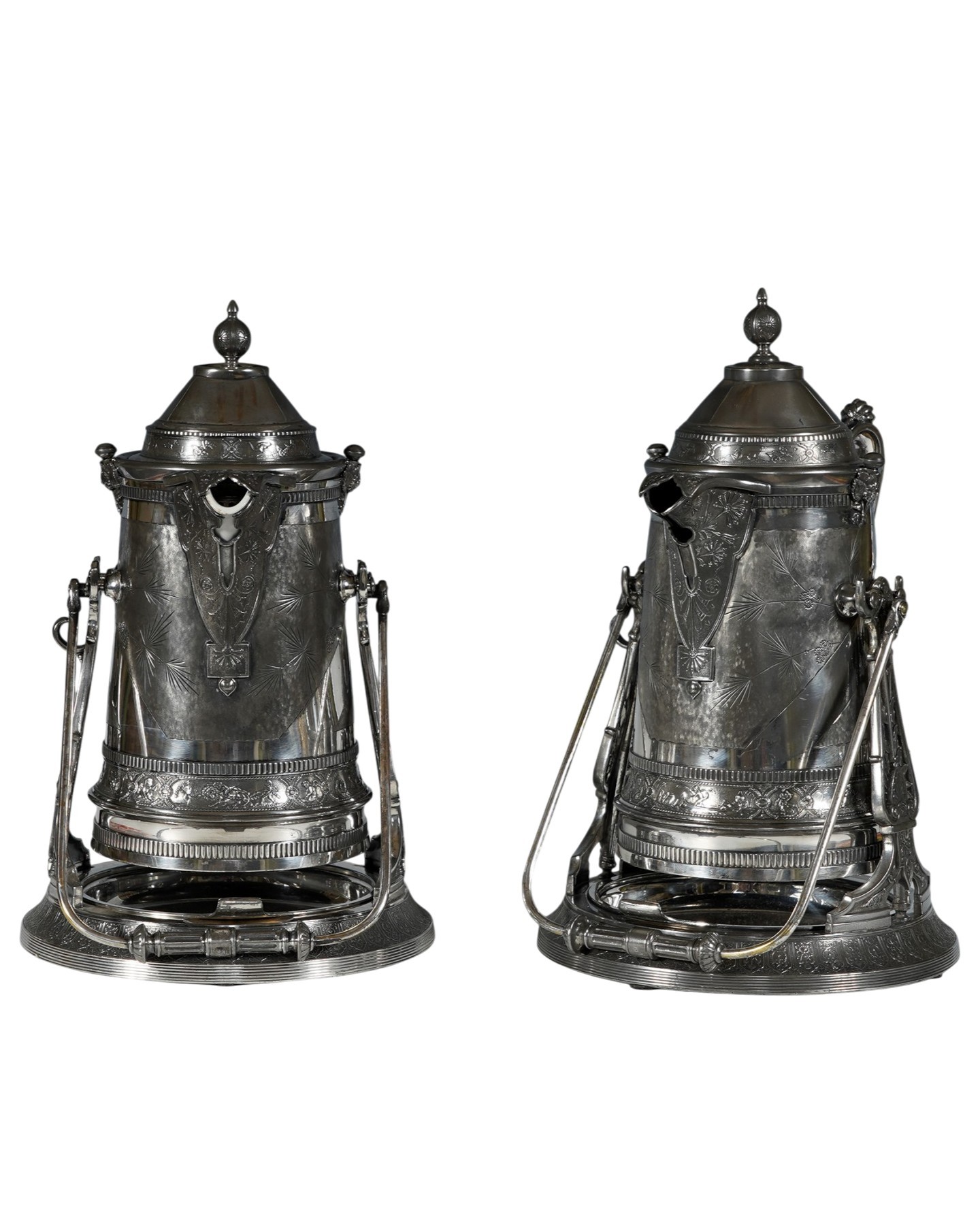
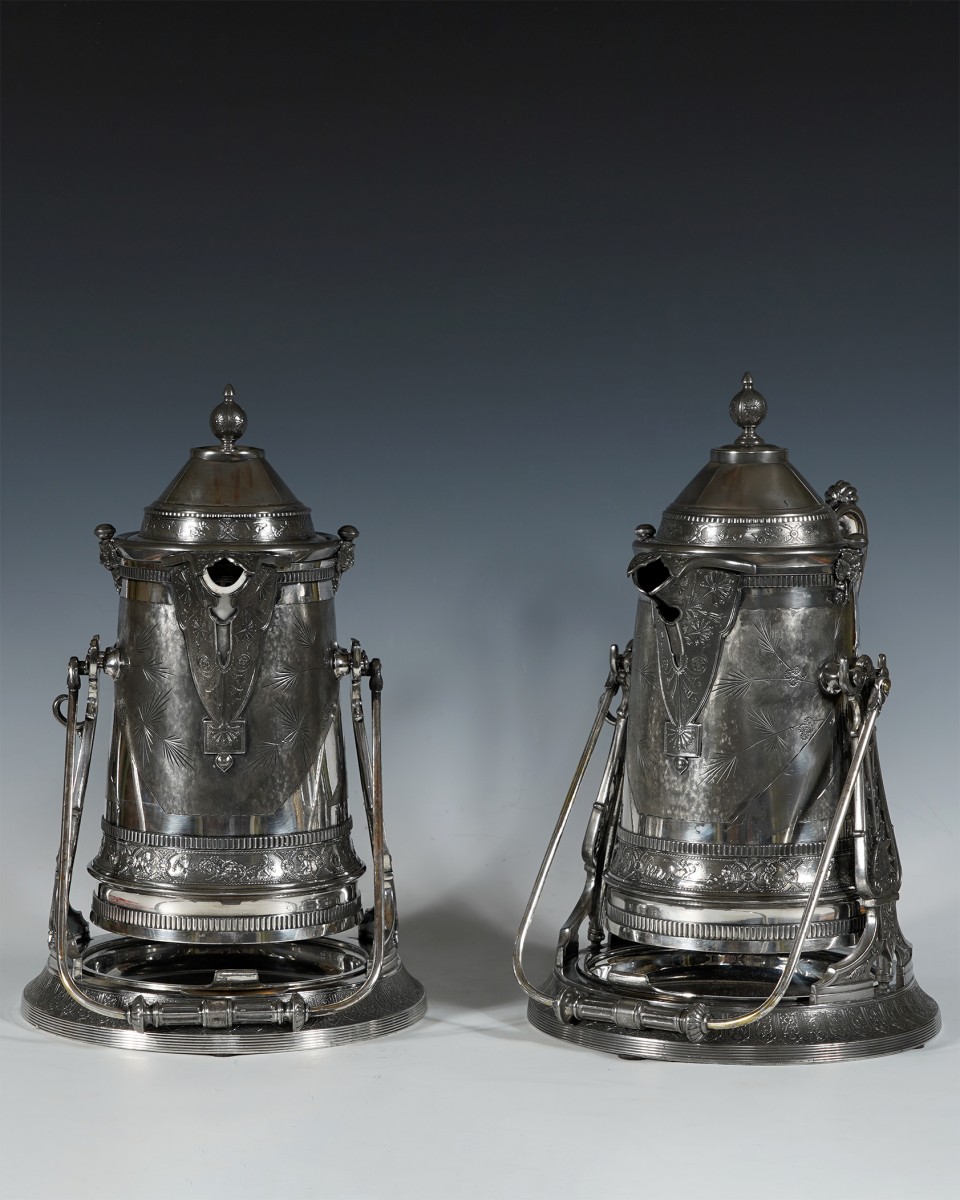
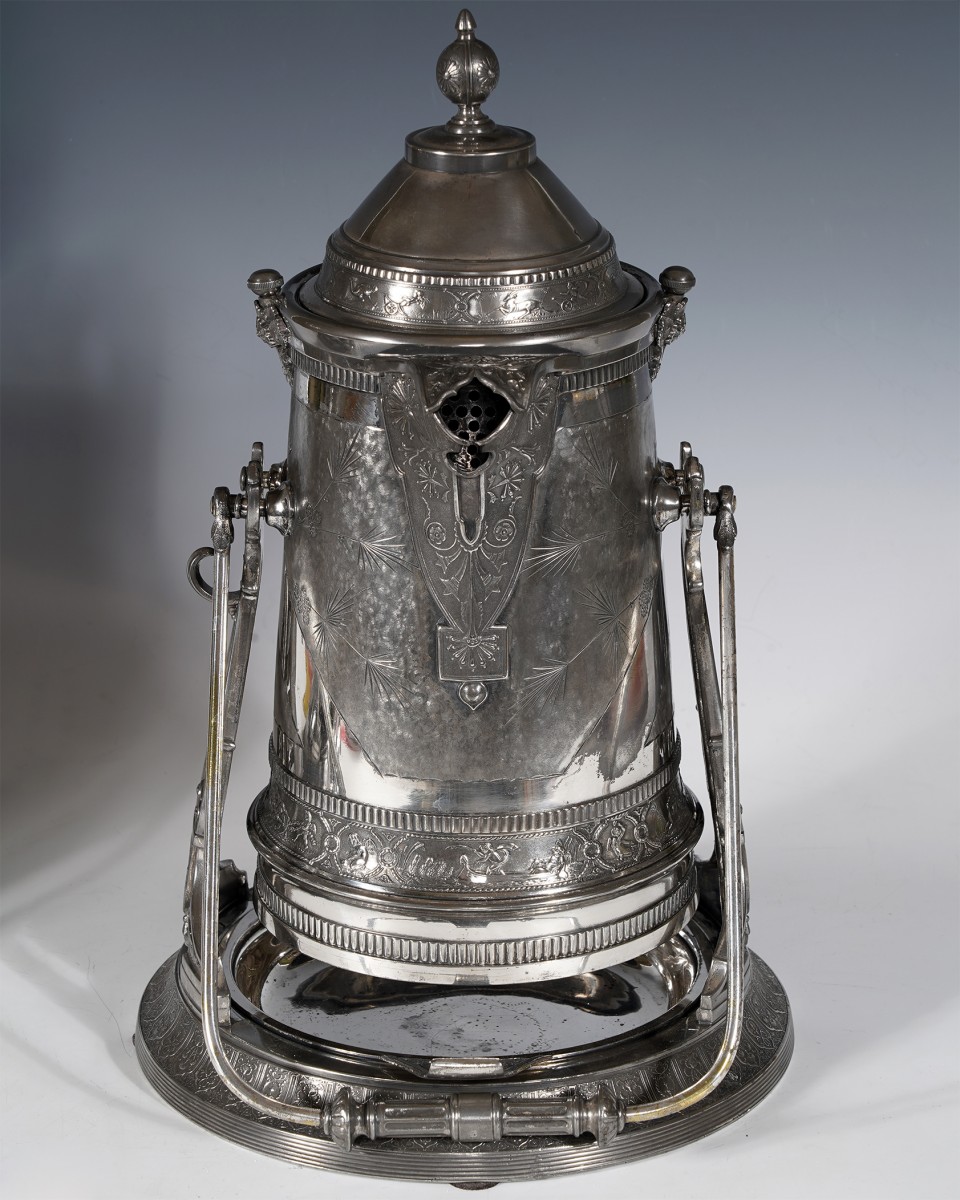

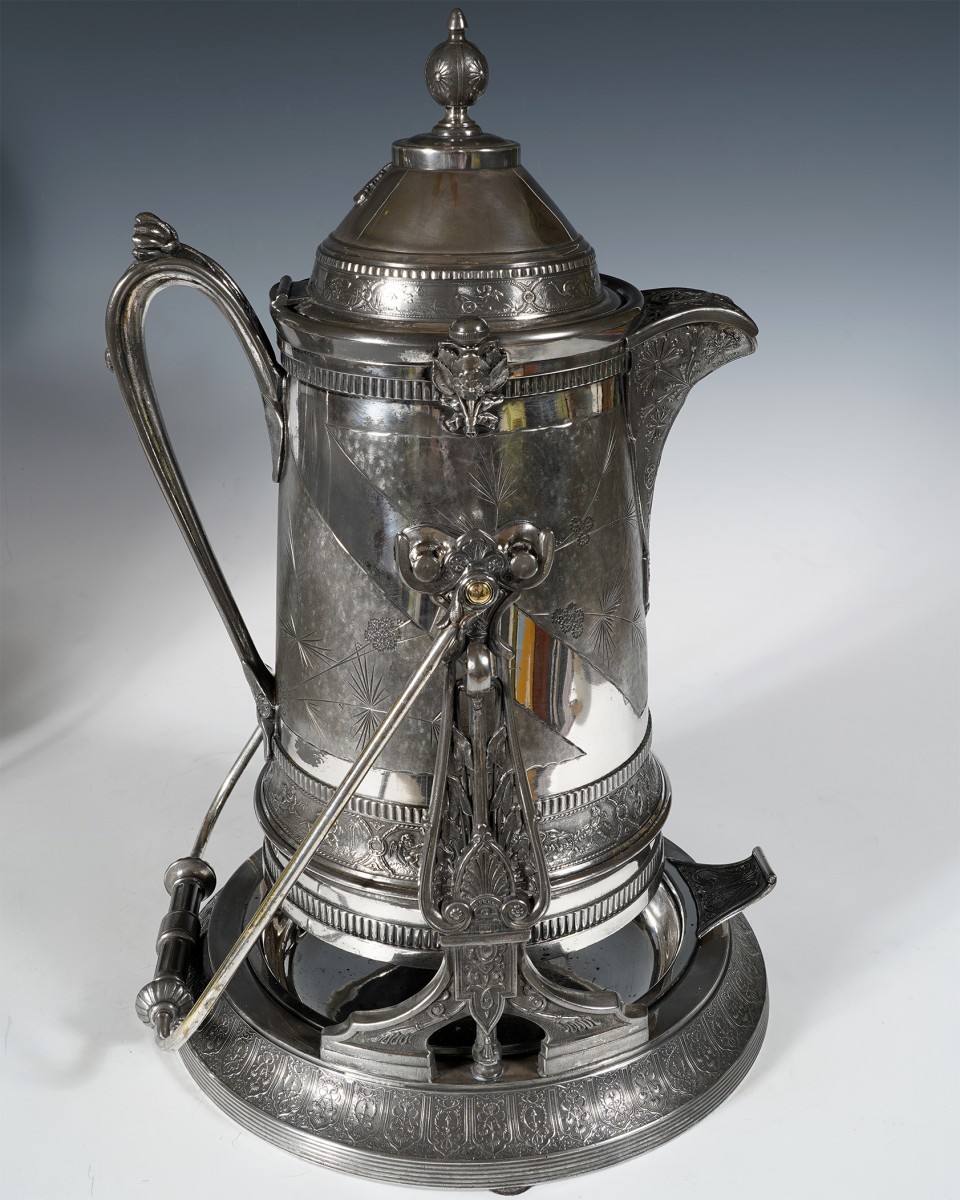
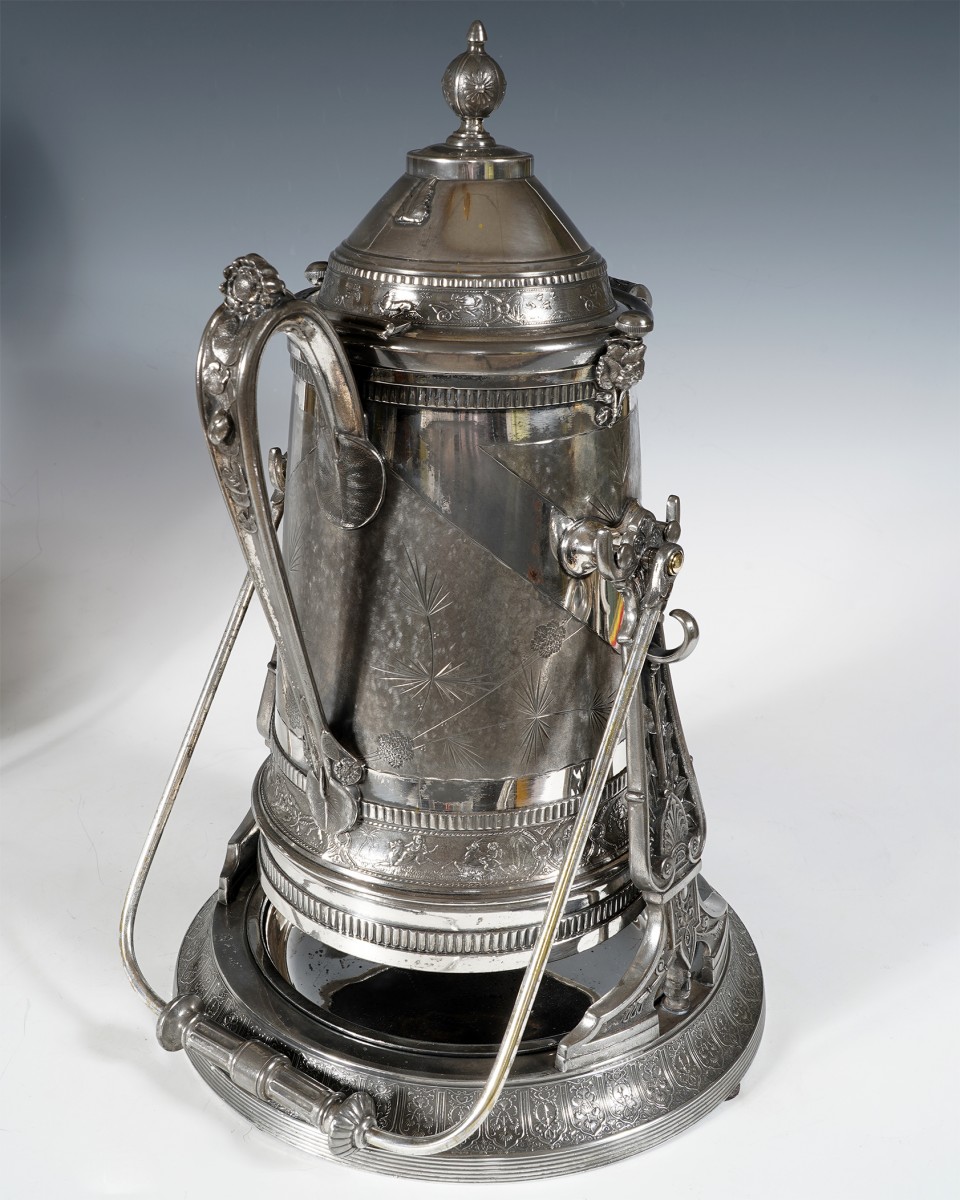
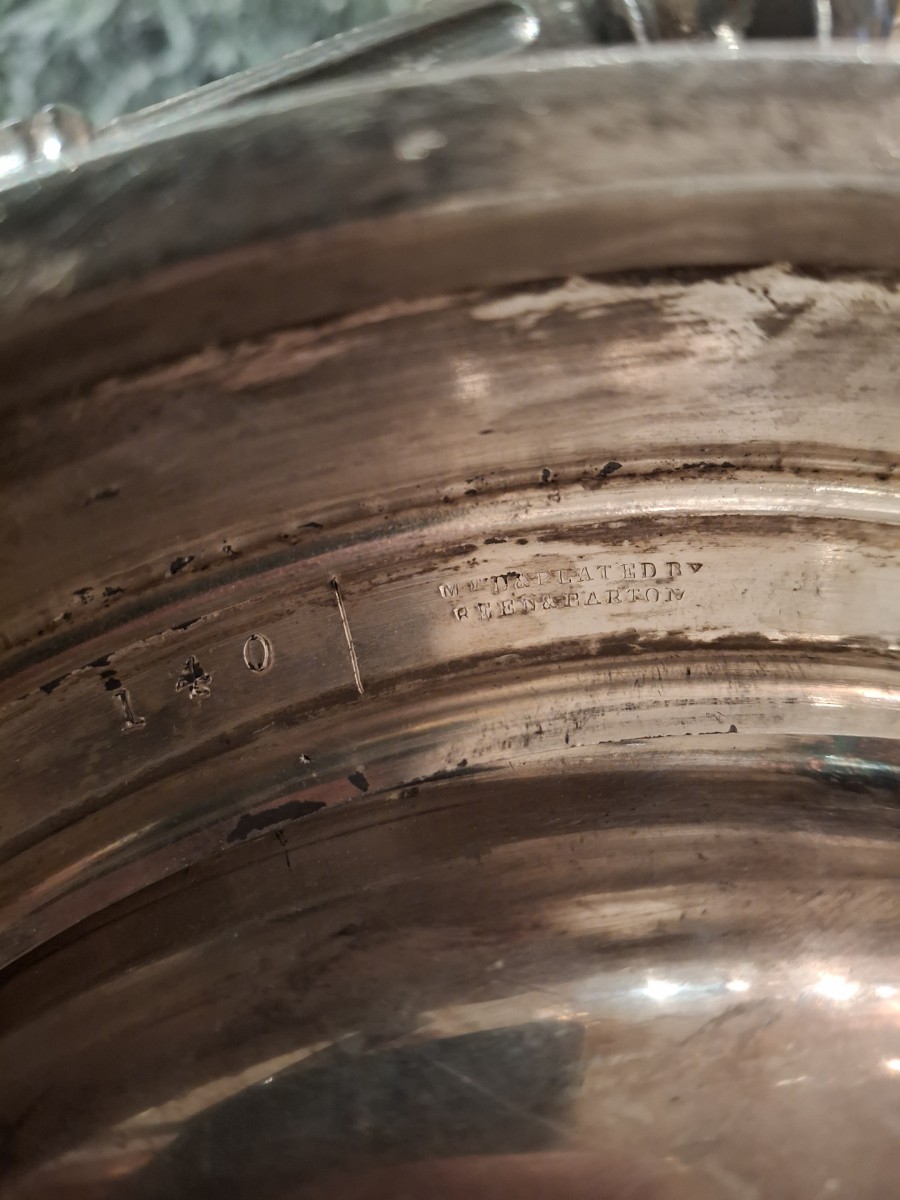
Base numbered 140 and inscribed MFD &PLATED BY REED & BARTON
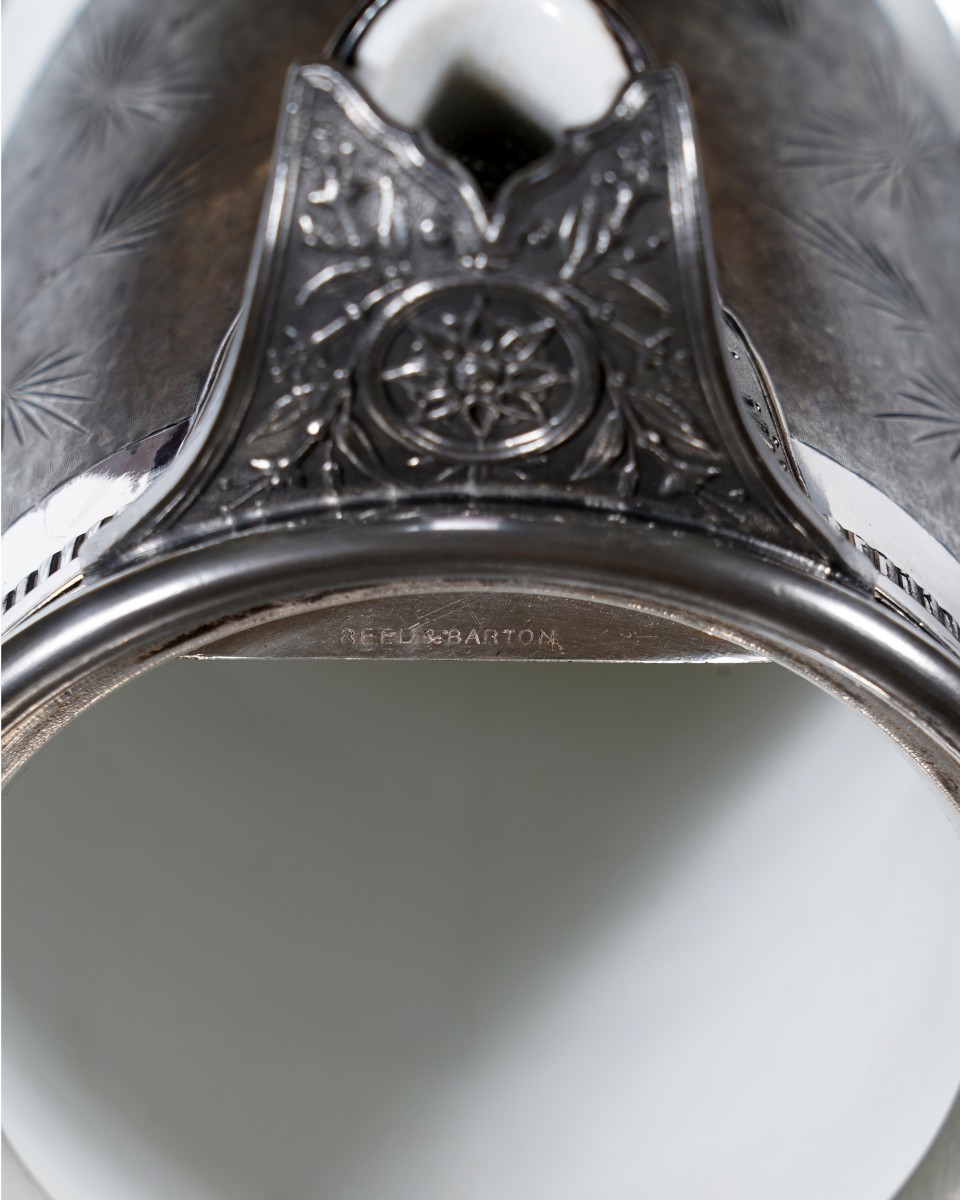
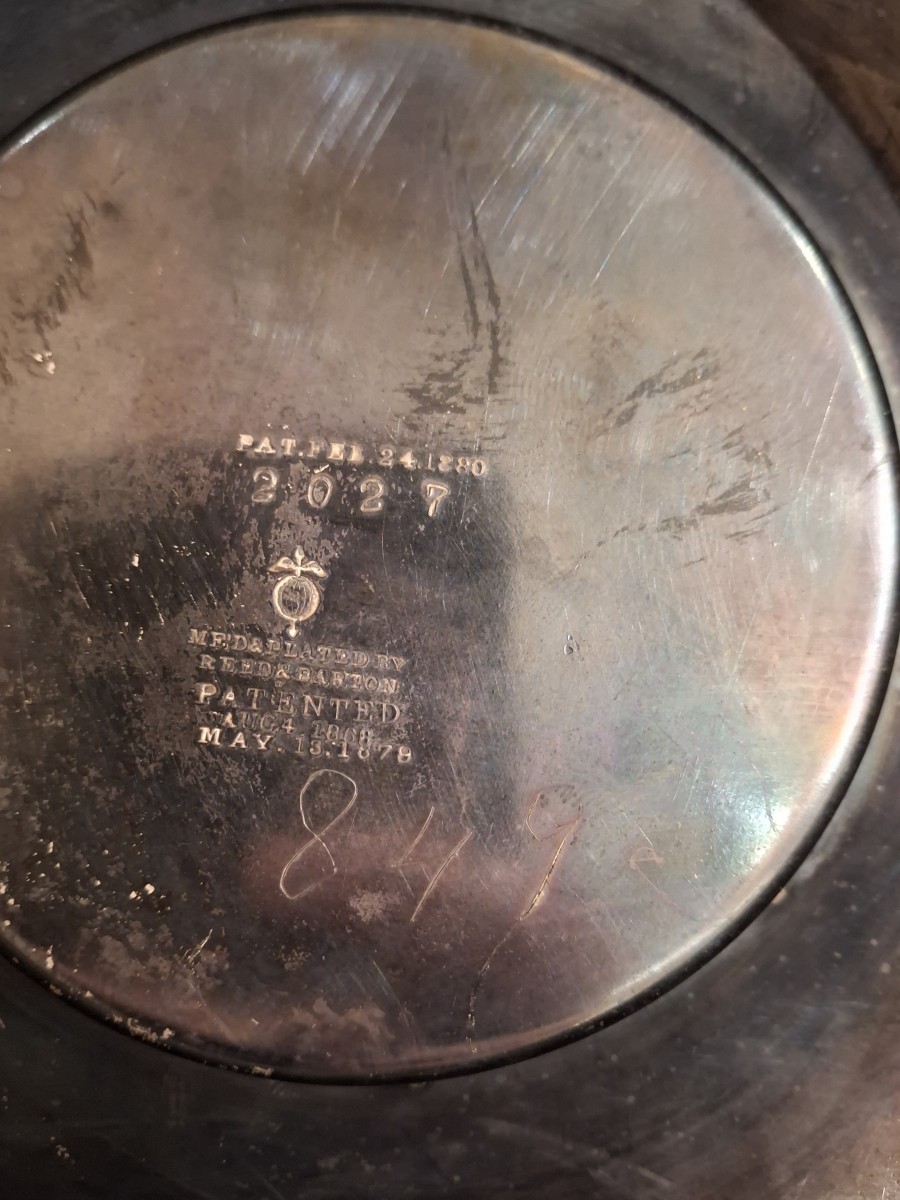
Pitchers numbered and inscribed PAT FEB 24 1880, PATENTED AUG 4 1868 et MAY 13.1879
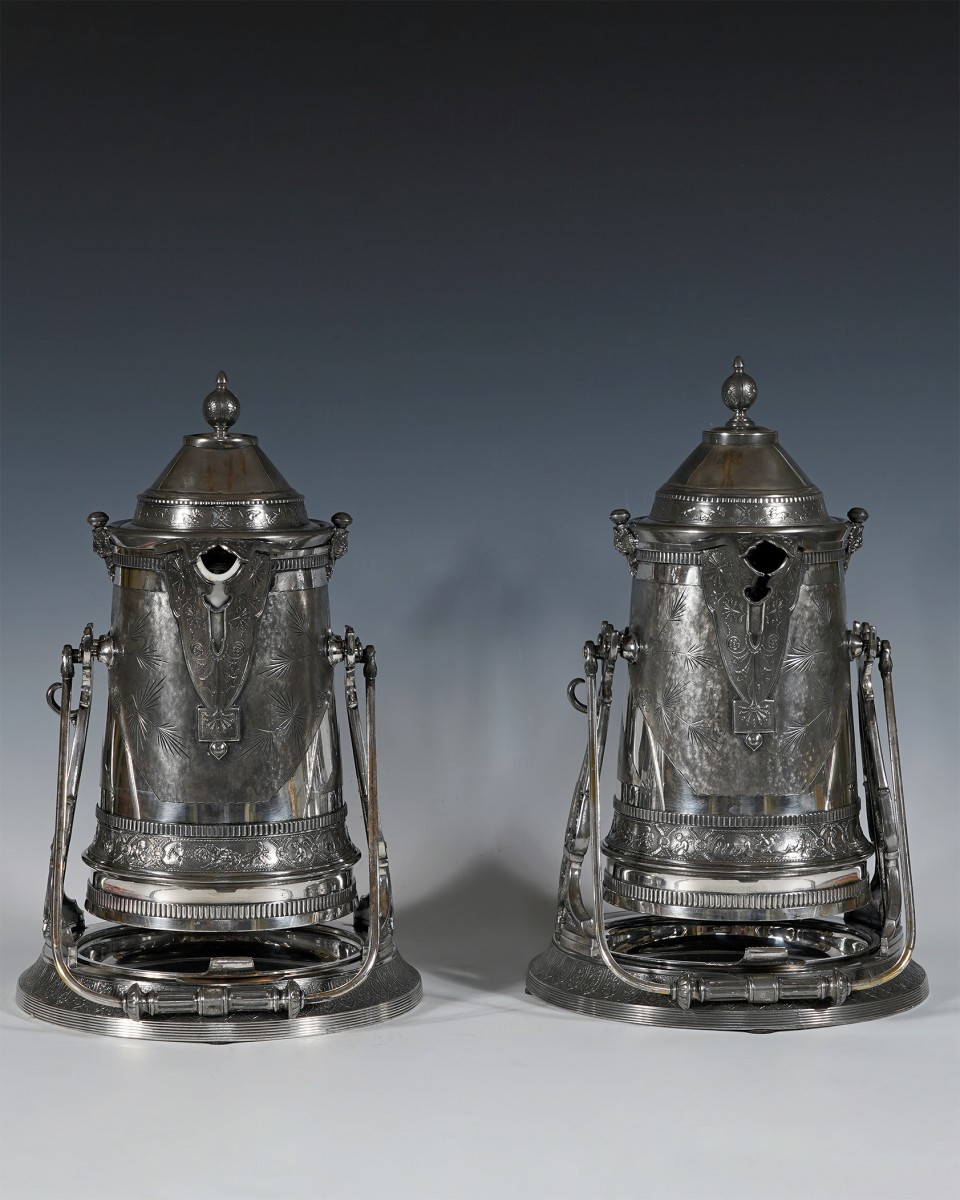
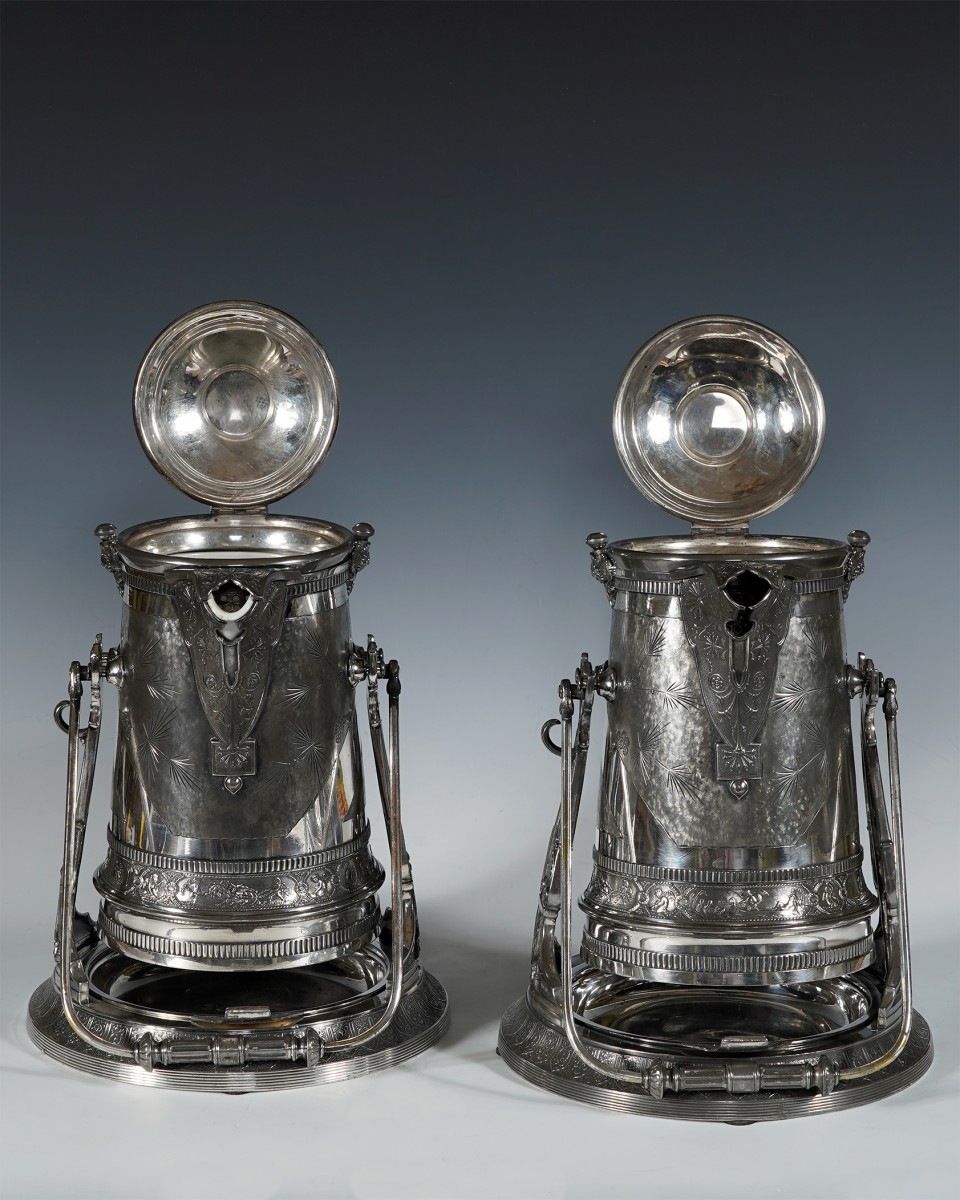
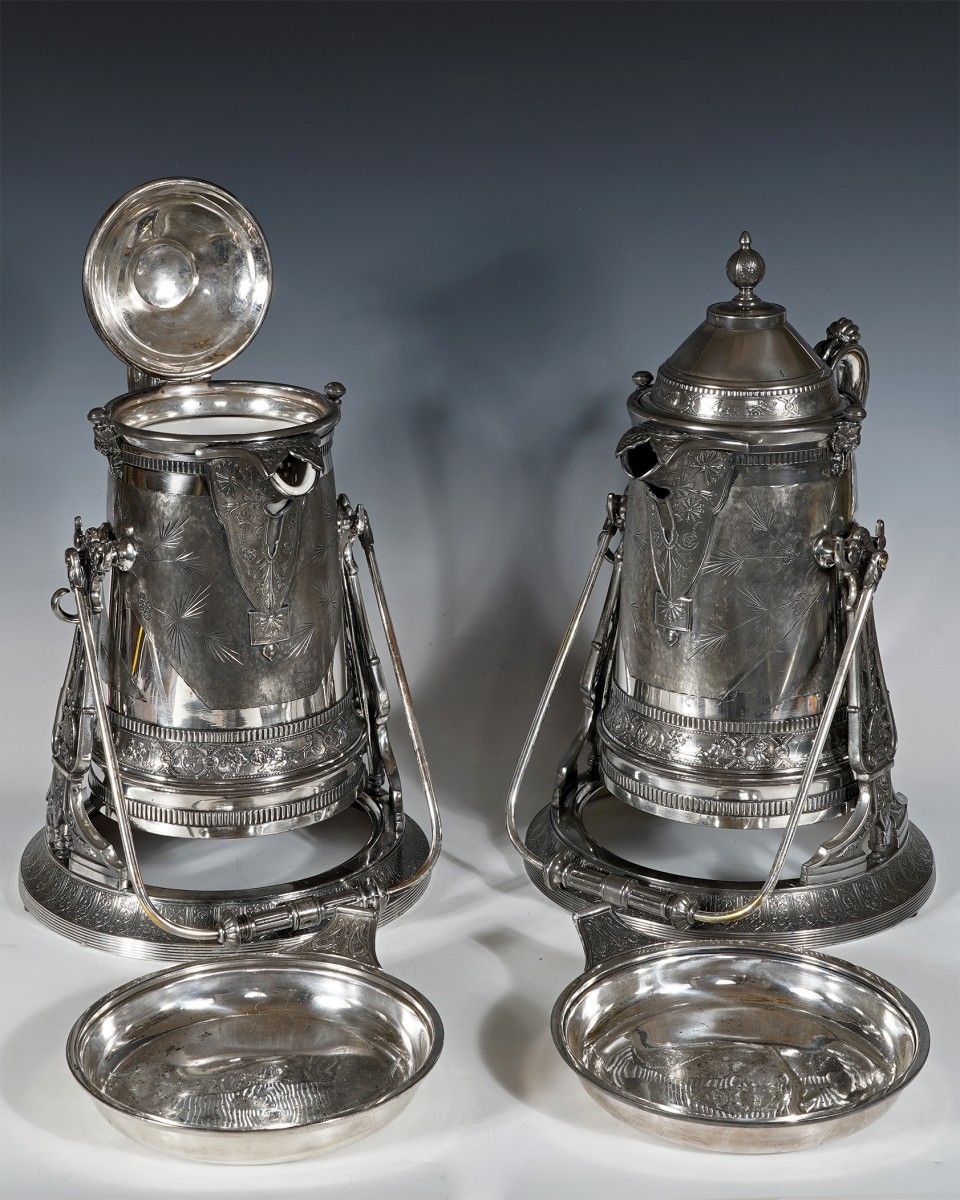
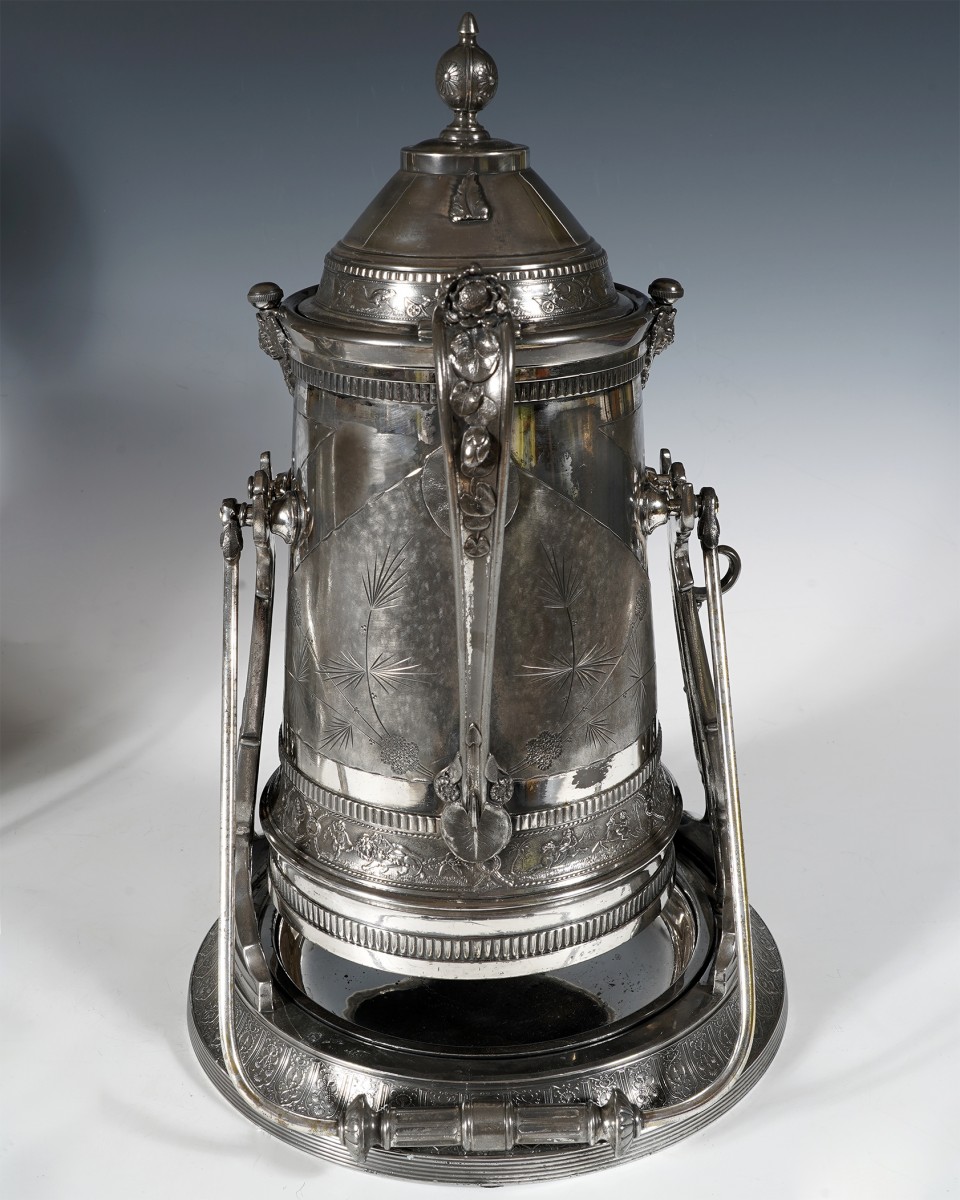
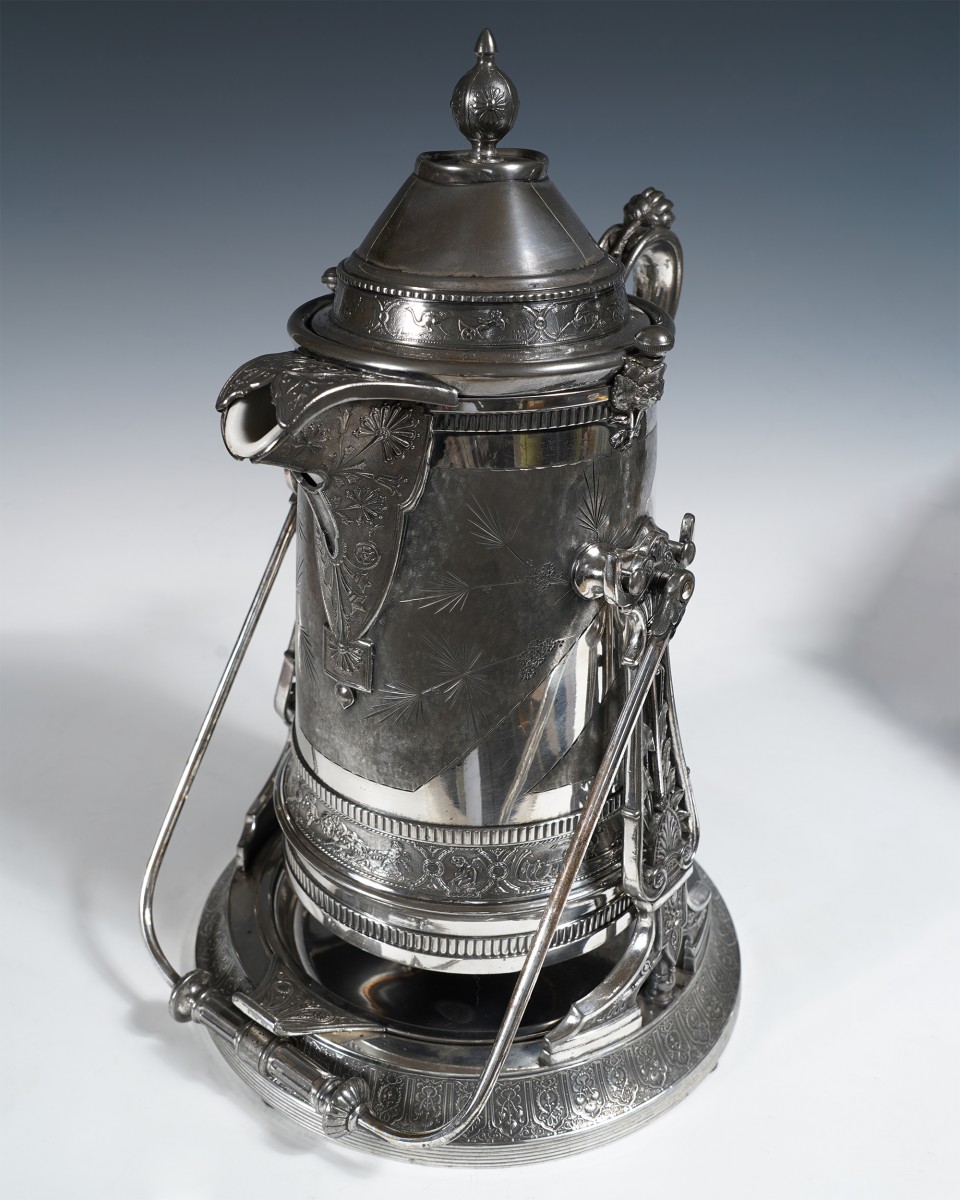
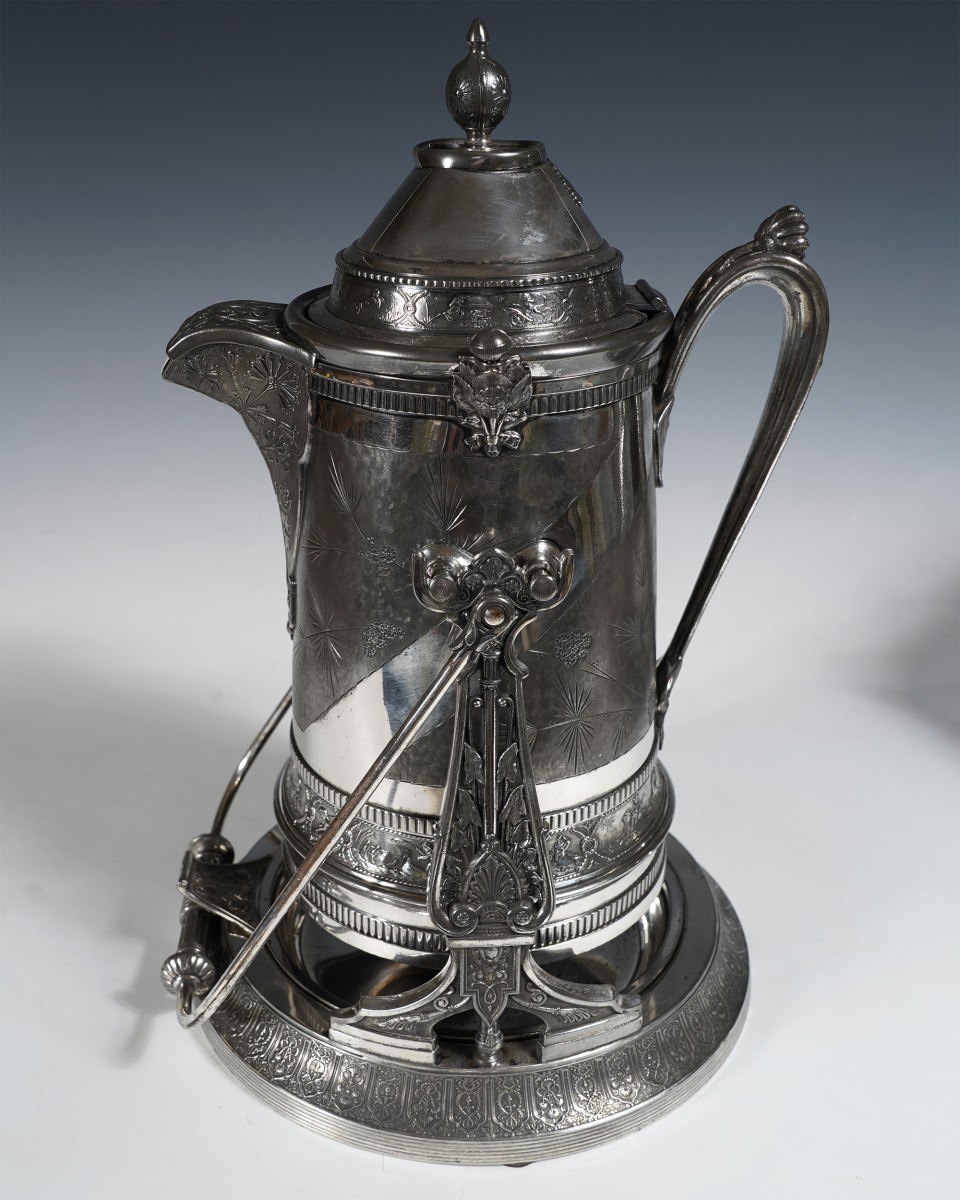
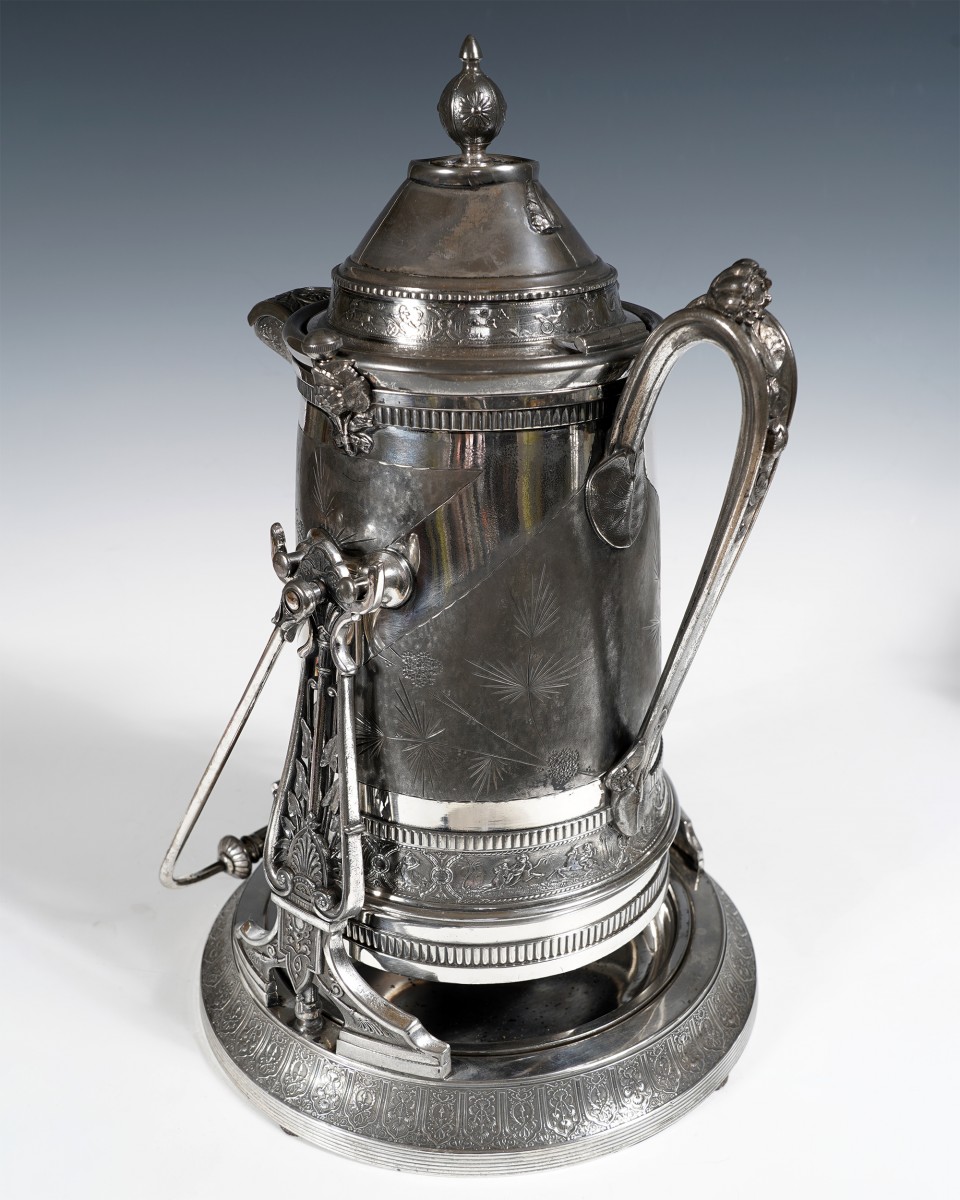
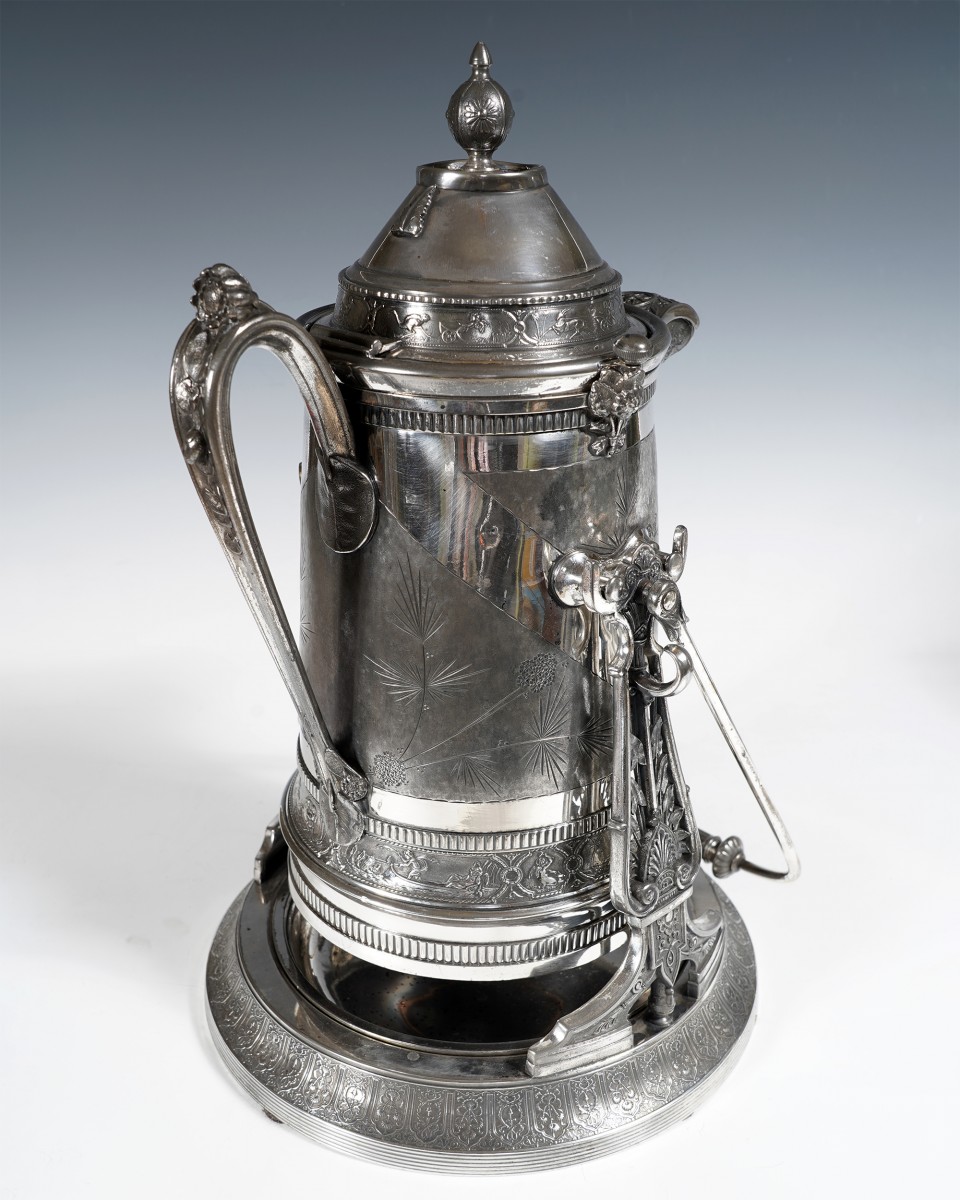
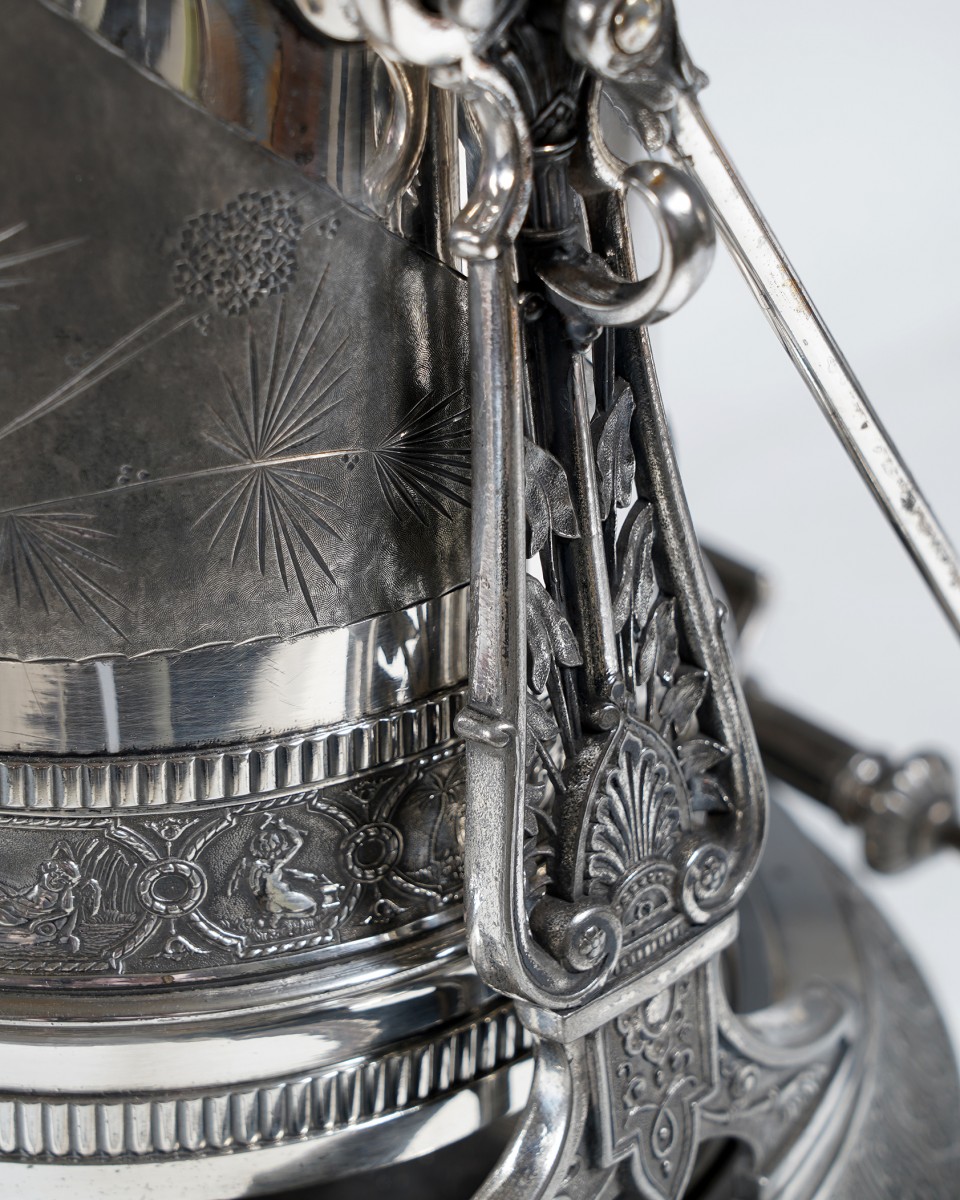
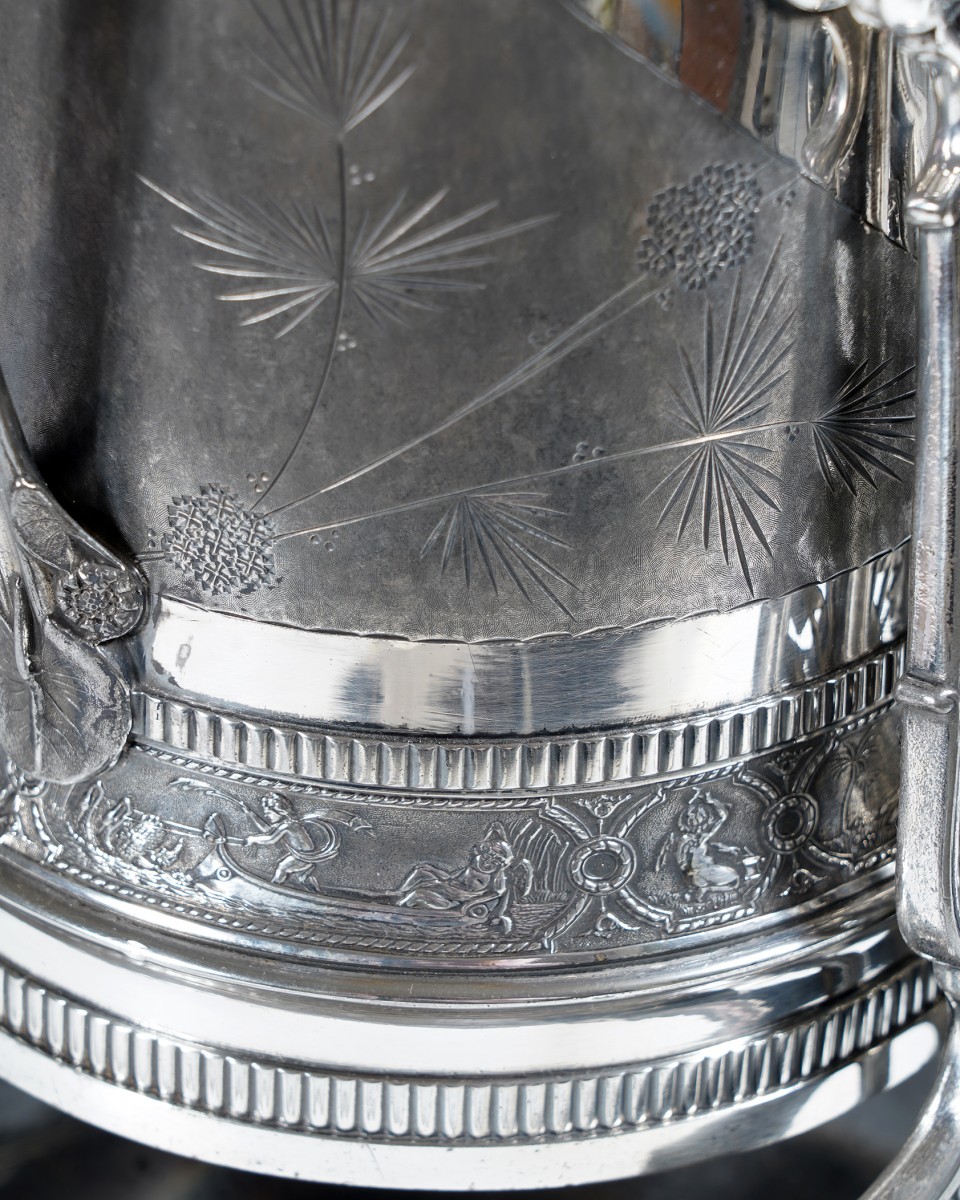
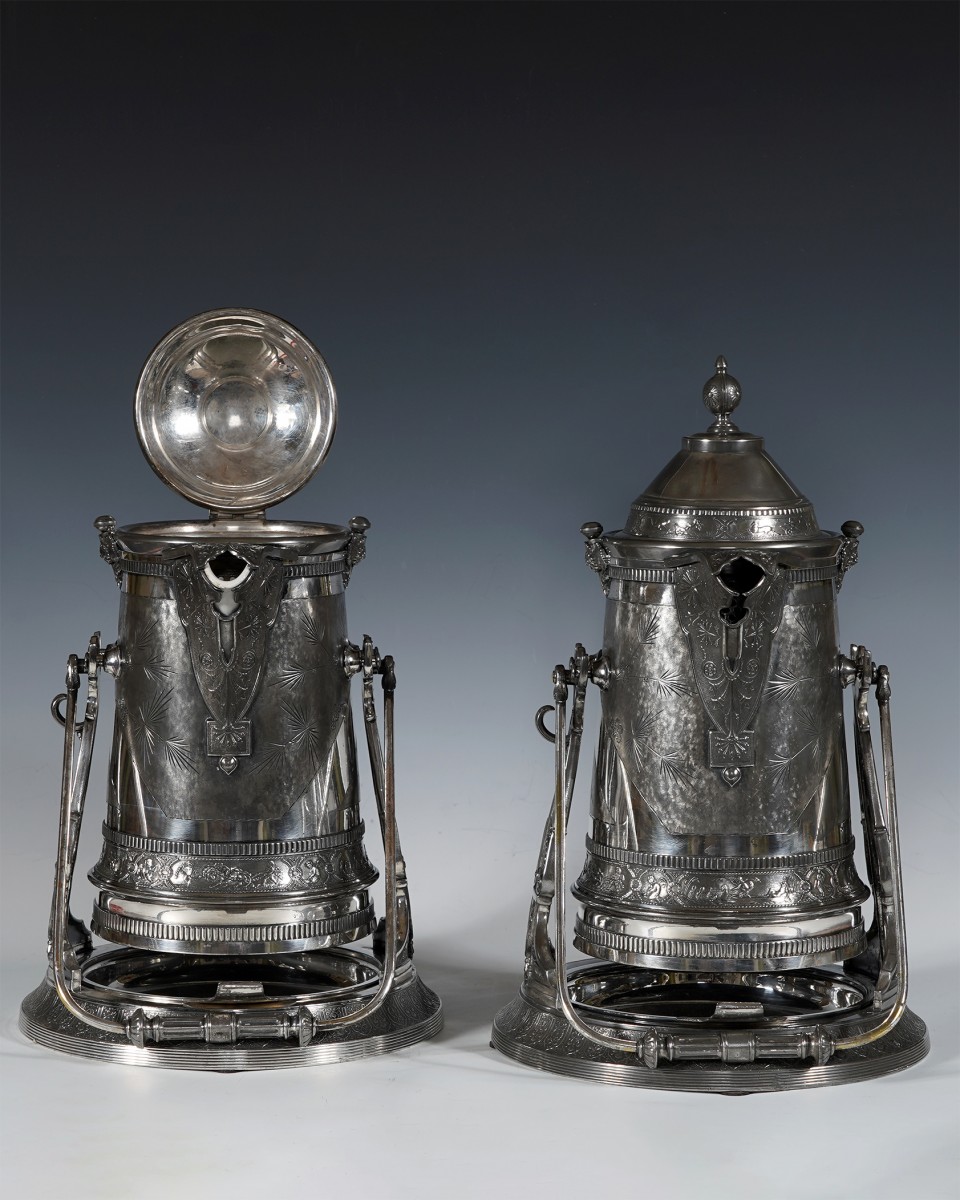
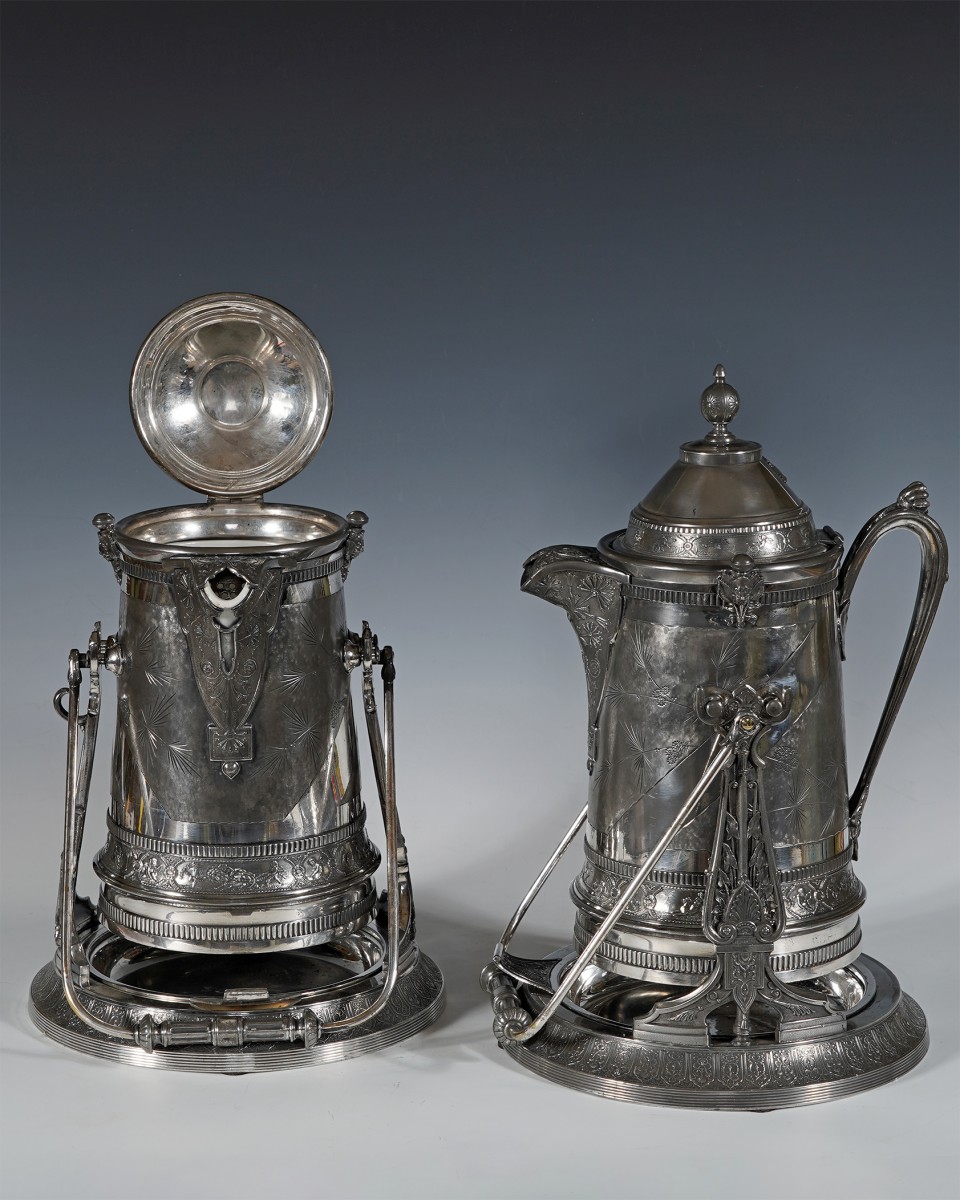
These two silver-plated metal pitchers display the characteristic morphology of American ice water pitchers from the late 19th century. Their conical form, slightly flared toward the base, rests on a broad circular foot decorated with engraved vegetal friezes and concentric bands. Each pitcher is set on an articulated tilting stand, allowing the liquid to be poured without lifting the entire object, an innovation typically associated with American manufacture. The body is adorned with engraved and stamped decoration featuring geometric and stylized floral motifs, along with a frieze of cupids in the lower section. The conical lid, topped with a spherical finial decorated with flowers, is encircled by a discreet beaded frieze surmounting a band ornamented with cupids riding chariots. The lateral uprights, composed of double rods, support the body of the pitcher by means of richly chased articulated pivots. The structural elements display a high level of ornamental refinement, combining straight and circular lines, reflecting the Victorian taste for decorative abundance while maintaining industrial symmetry.
According to the catalogs preserved at the Museum of American Silver (Taunton, MA) and the reproductions published in Rainwater & Redfield (2001), models no. 140 and no. 2027 appear in the series “Ice Water Pitchers with Tilting Stand” produced between 1878 and 1884 and correspond to the large-size examples of the “Deluxe Tilting Ice Pitchers.”
The patent of August 4, 1868 concerns a spring-loaded tilting mechanism introduced between 1869 and 1870, while the patents of May 13, 1879 and February 24, 1880 relate to two filings concerning the hinges and the double-walled insulating lining, which came into use specifically after 1880.
Historical and stylistic context :
Ice water pitchers constitute a typology characteristic of American silverware in the post–Civil War period (circa 1865–1890). Designed to keep water cool by means of an internal double wall (often of pewter or nickel), they were among the display pieces found in bourgeois parlors, symbolizing both technical modernity and social status.
Stylistically, these pitchers belong to the American Victorian style, marked by an eclectic fusion of Neo-Gothic, Neo-Renaissance, and Orientalist influences. The geometrization of friezes, the juxtaposition of naturalistic and symbolic ornament, and the overall symmetrical composition reflect the rise of an ornamented industrial aesthetic.
Biography :
Founded in 1824 by Isaiah Reed and Henry G. Barton in Taunton, Massachusetts, the firm of Reed & Barton became, in the 19th century, one of the most important American manufacturers of silver and silver-plated wares.
Its innovations in electroplating and mechanical casting enabled large-scale production that was both artistic and functional. The firm’s output is distinguished by the quality of its electroplated finishes and the integration of patented elements.