Offered by Tobogan Antiques
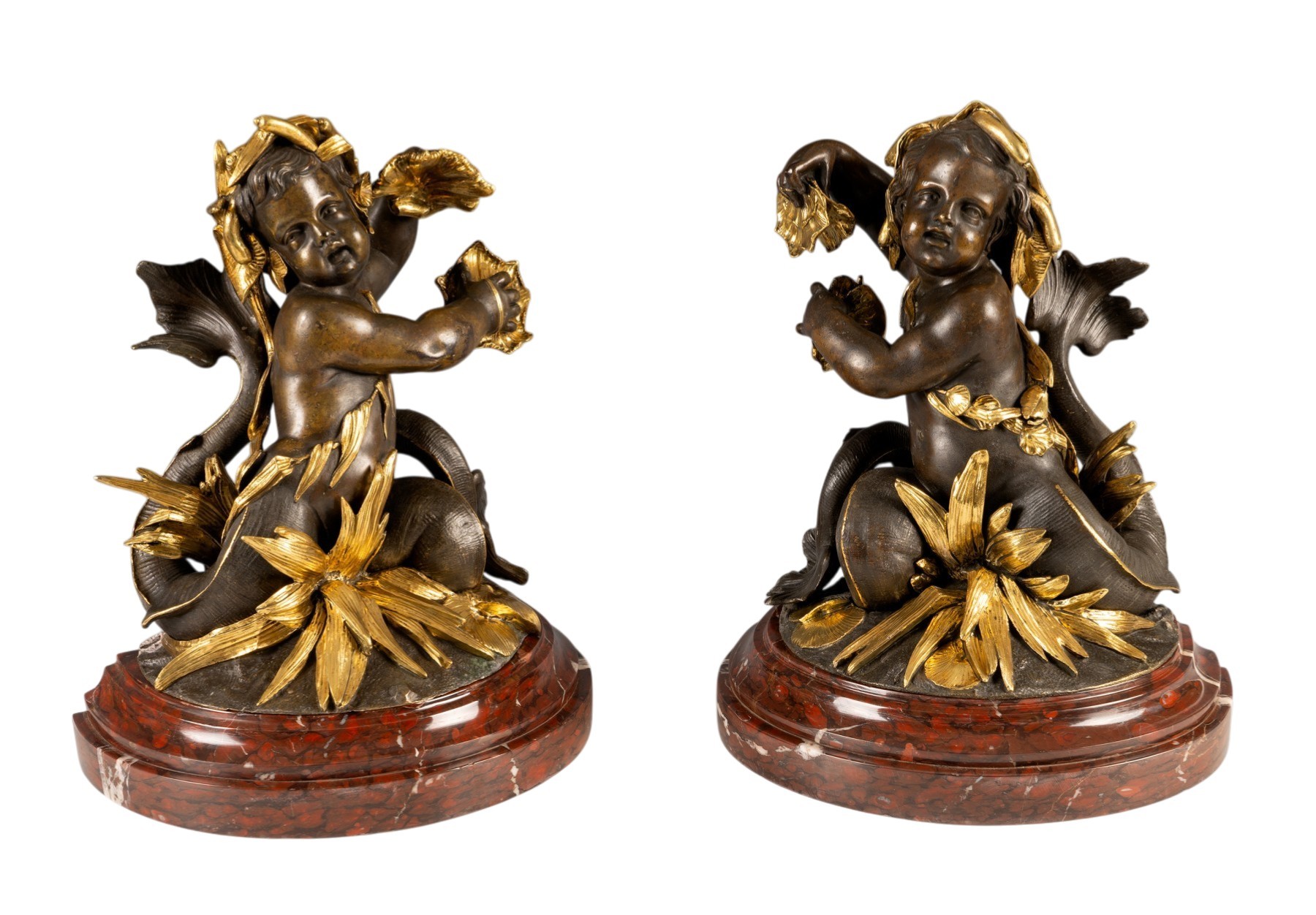
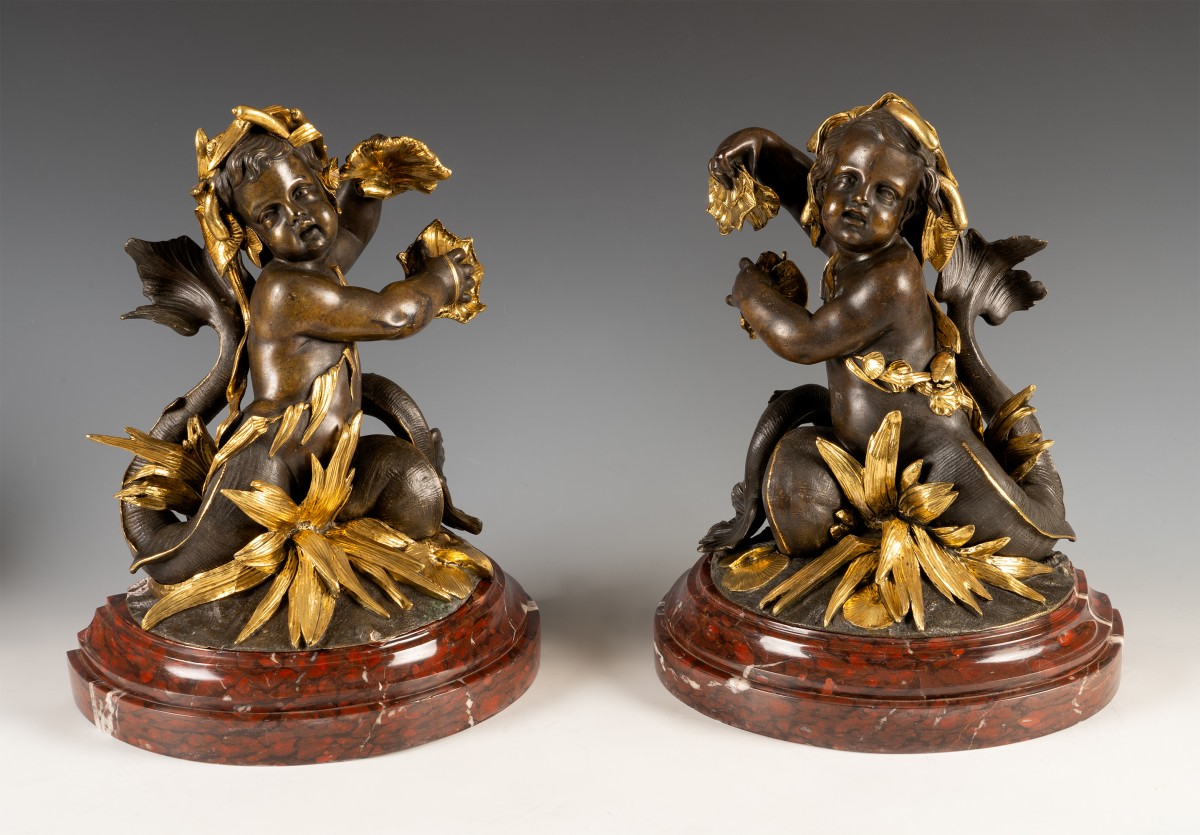
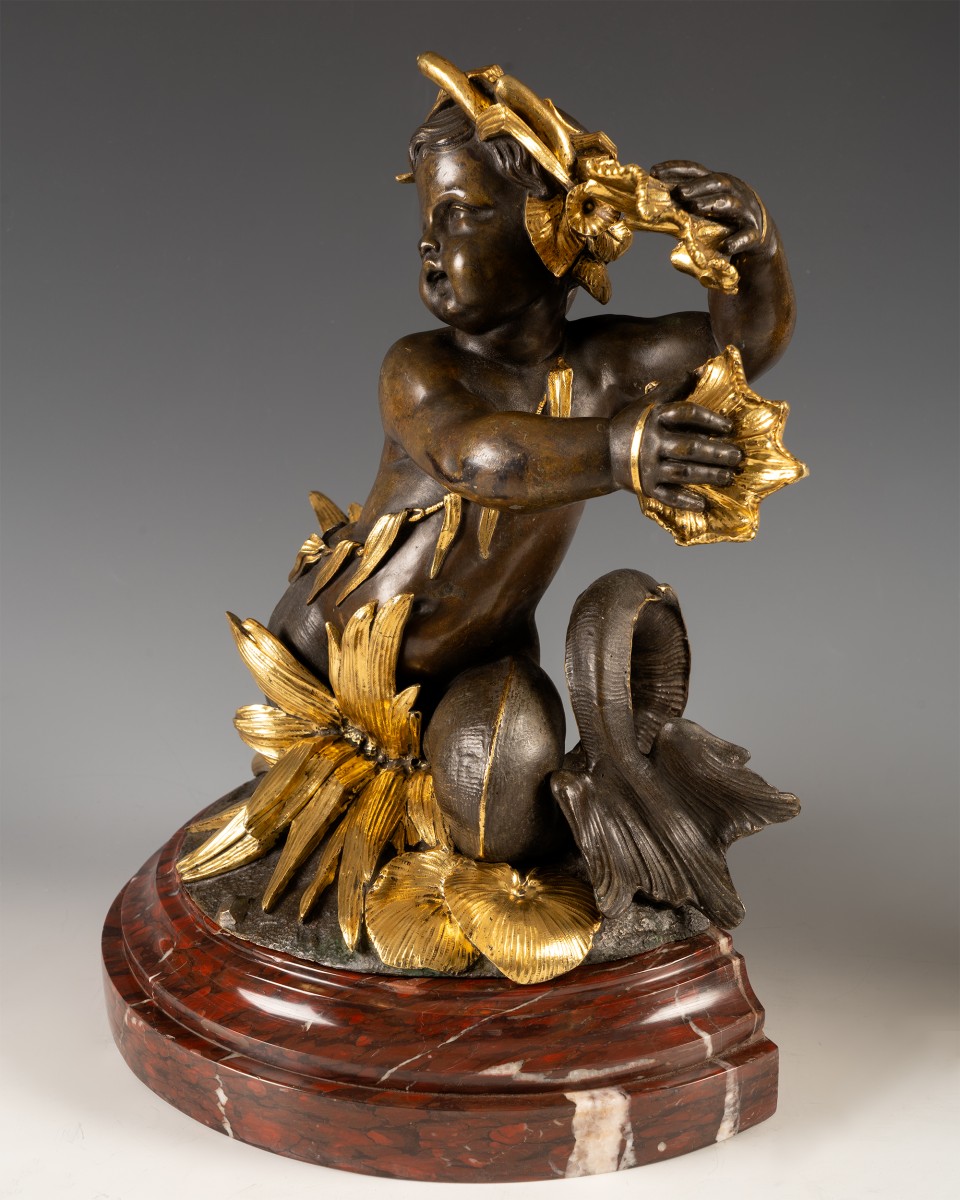
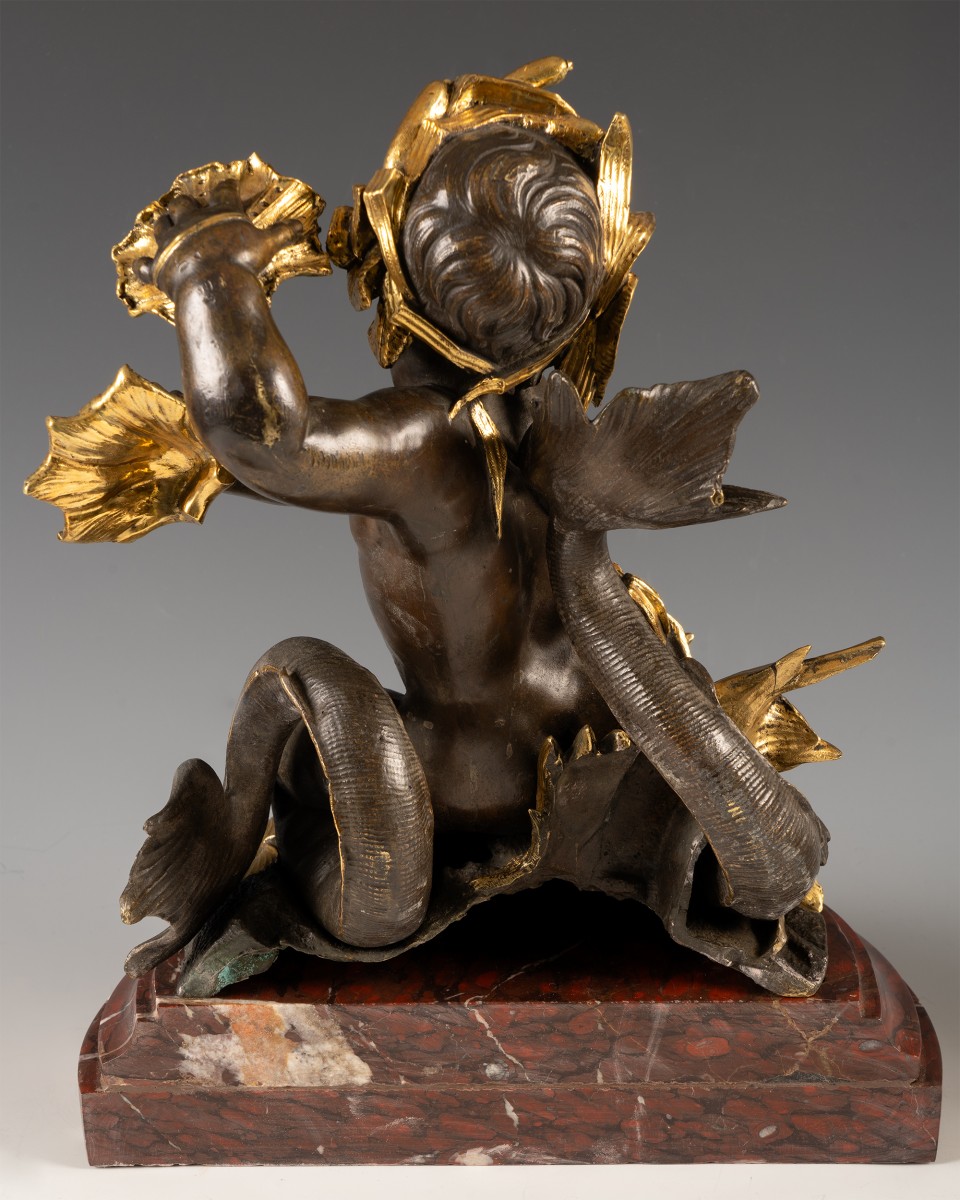
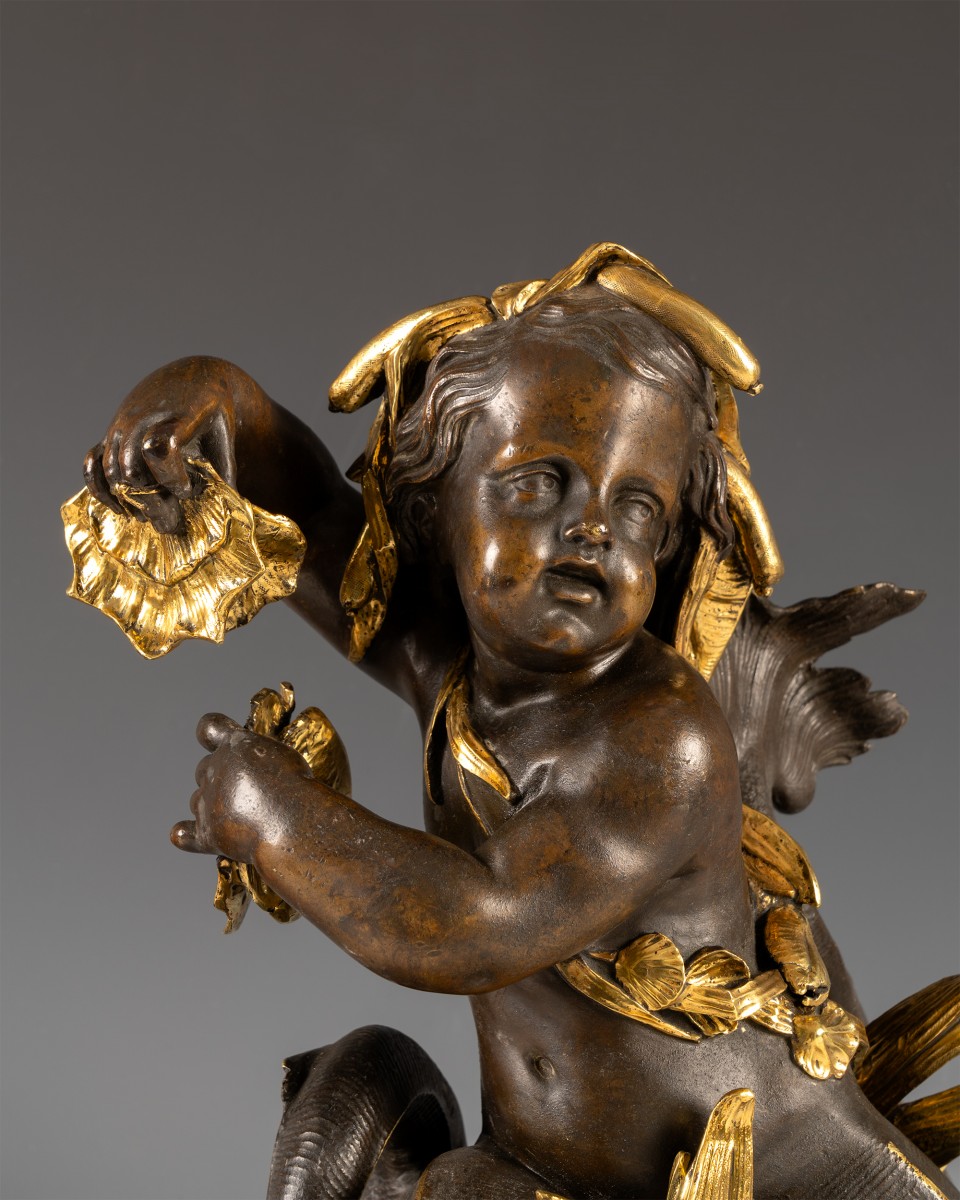

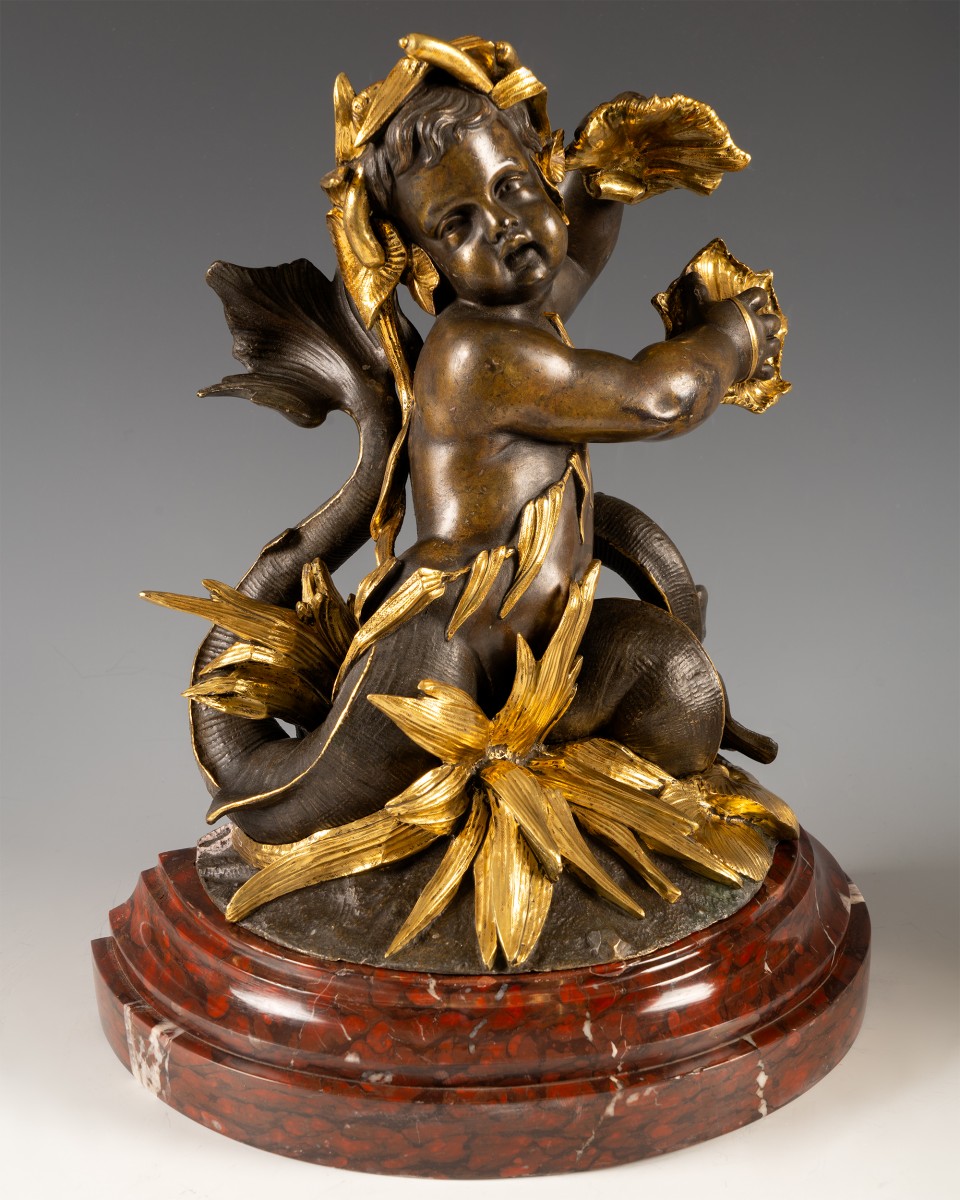
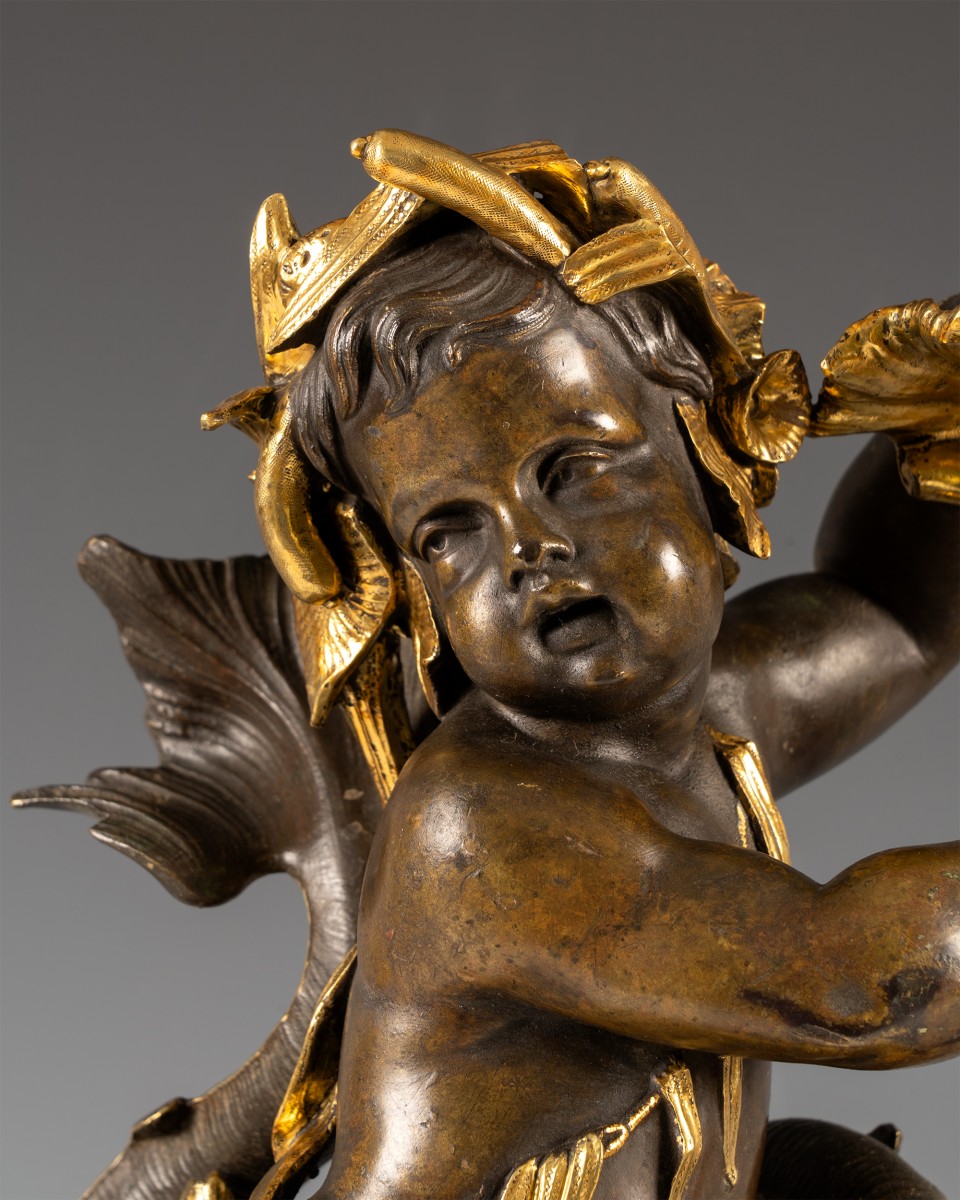
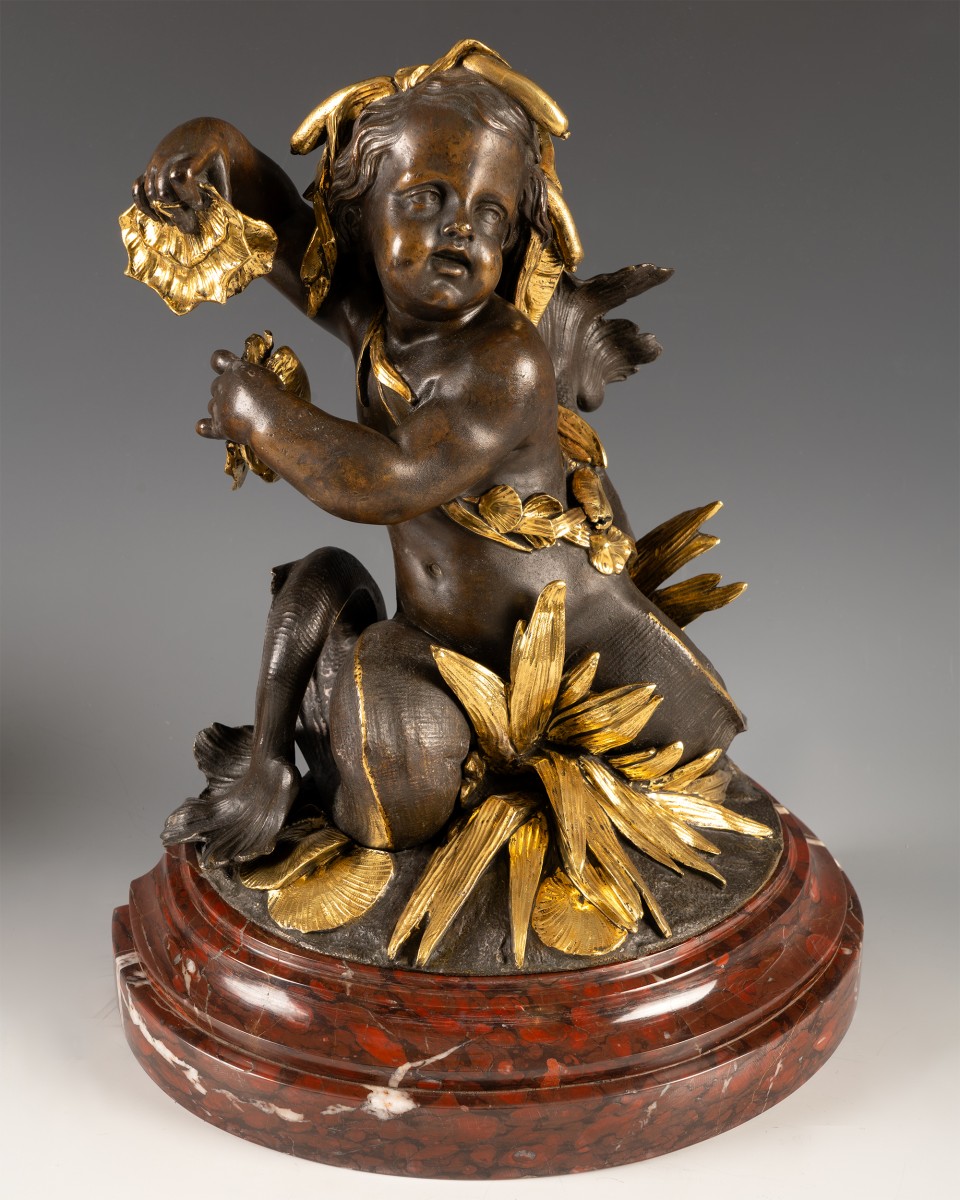
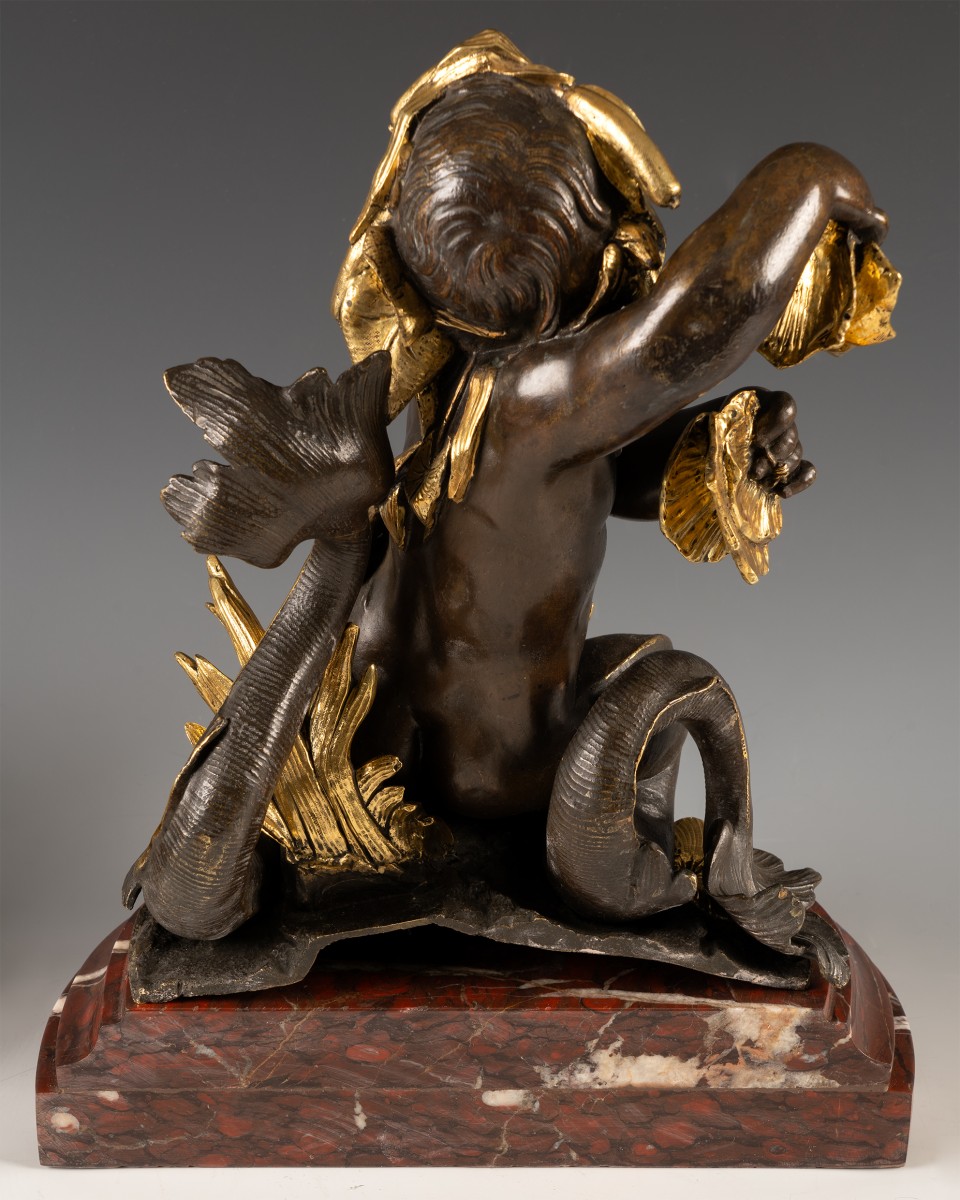
Pair of patinated bronze sculptures with gilded highlights attr. to V. Paillard, depicting two juvenile tritons slightly turned inward, creating a visual dialogue.
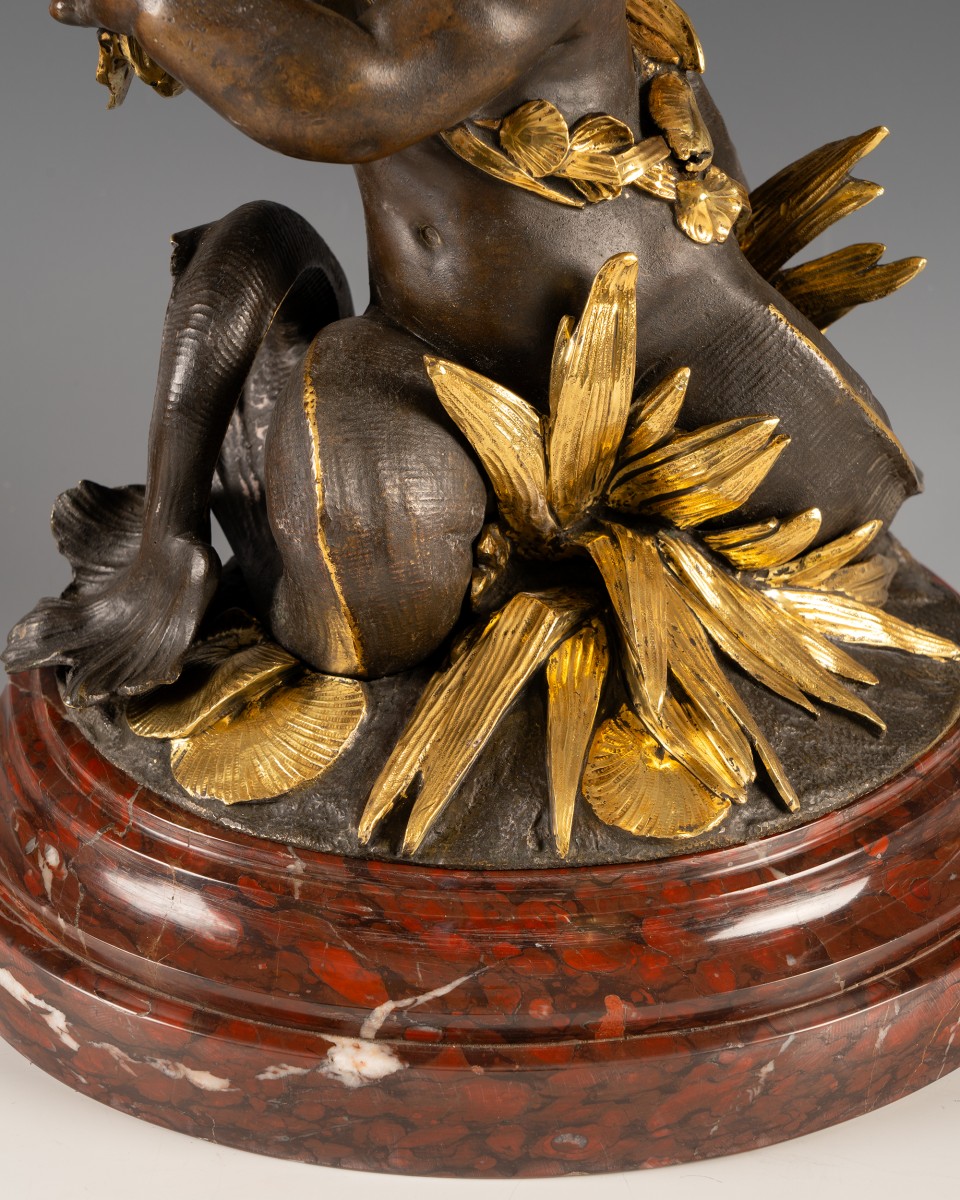
These hybrid figures combine the torso of a child, evoking Cupid, with an ichthyomorphic lower part forming a coiled tail. This typology refers to the iconographic tradition of tritons, marine deities belonging to the retinue of Poseidon/Neptune in Greco-Roman mythology. However, the youthful and graceful treatment, far removed from the bearded triton of Antiquity, reflects instead a decorative reinterpretation from the modern period, in which the marine imagination is softened and integrated into an ornamental aesthetic. The tritons are shown holding or surrounded by stylized aquatic elements: shells, aquatic foliage, and broad-petaled flowers.
Each sculpture rests on a molded circular base in griotte marble, truncated at the rear, a material widely used in European decorative arts from the 17th to the 19th century, lending the whole a rich chromatic foundation and a sense of luxury.
Biography :
Victor Paillard (1805-1886) was one of the most distinguished bronze casters in Paris during the second half of the 19th Century. He was taught chasing by Jean-François Denière (1774-1866), then opened in the 1830’s his own workshop making “Art bronzes and Furnishing bronzes”, settled n°105, boulevard Beaumarchais in Paris. He executed first small objects, then cast statuettes, candelabra, clocks as well as impressive sized torcheres. He appeared to the public for the first time at the Industrial Products Exhibition of 1839 and worked for the greatest French sculptors, such as Pradier, Barye and Carrier-Belleuse. He exhibited extensively with great success being mentioned for the quality of his work at the famous 1851 and 1862 London Universal Exhibitions, and the 1855, 1867 and 1878 Universal Exhibitions then held in Paris. Paillard was there celebrated by everyone ; John Burney Waring ilustrates a gilt-bronze mirror by him in his “Masterpieces of Industrial Art and Sculpture, 1862 (Plate 92)”, which is a comprehensive record of the finest pieces on show in the London Exhibition. At that time, he was awarded a prize medal and the exceptional quality of his work was commented in all jury reports. Appointed a Chevalier of the Légion d’honneur by the French Government, Paillard employed since the 1850’s a hundred workers and proposed to his wealthy clients about four hundred models, cast in bronze not only after famous sculptors’ works, but also after his own creations. It is especially interesting that his “Cherub” figures, such as those ones presented here were particularly singled out for their charm and popularity by commentators at both the 1862 and 1867 Universal Exhibitions. Burney Waring noted that they portrayed the “happy and innocent moods of childhood”.