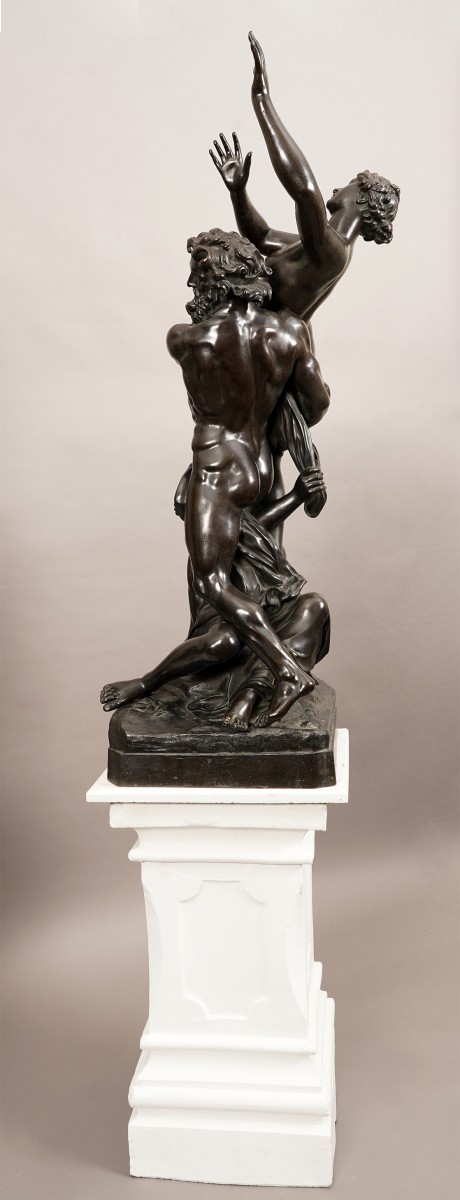
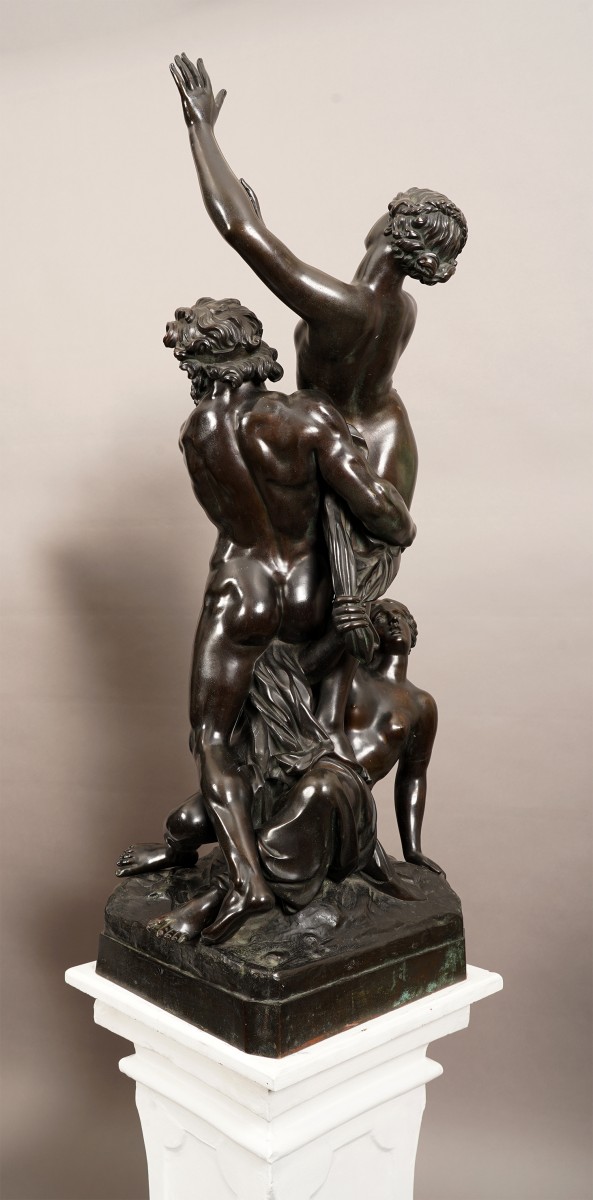
Offered by Tobogan Antiques
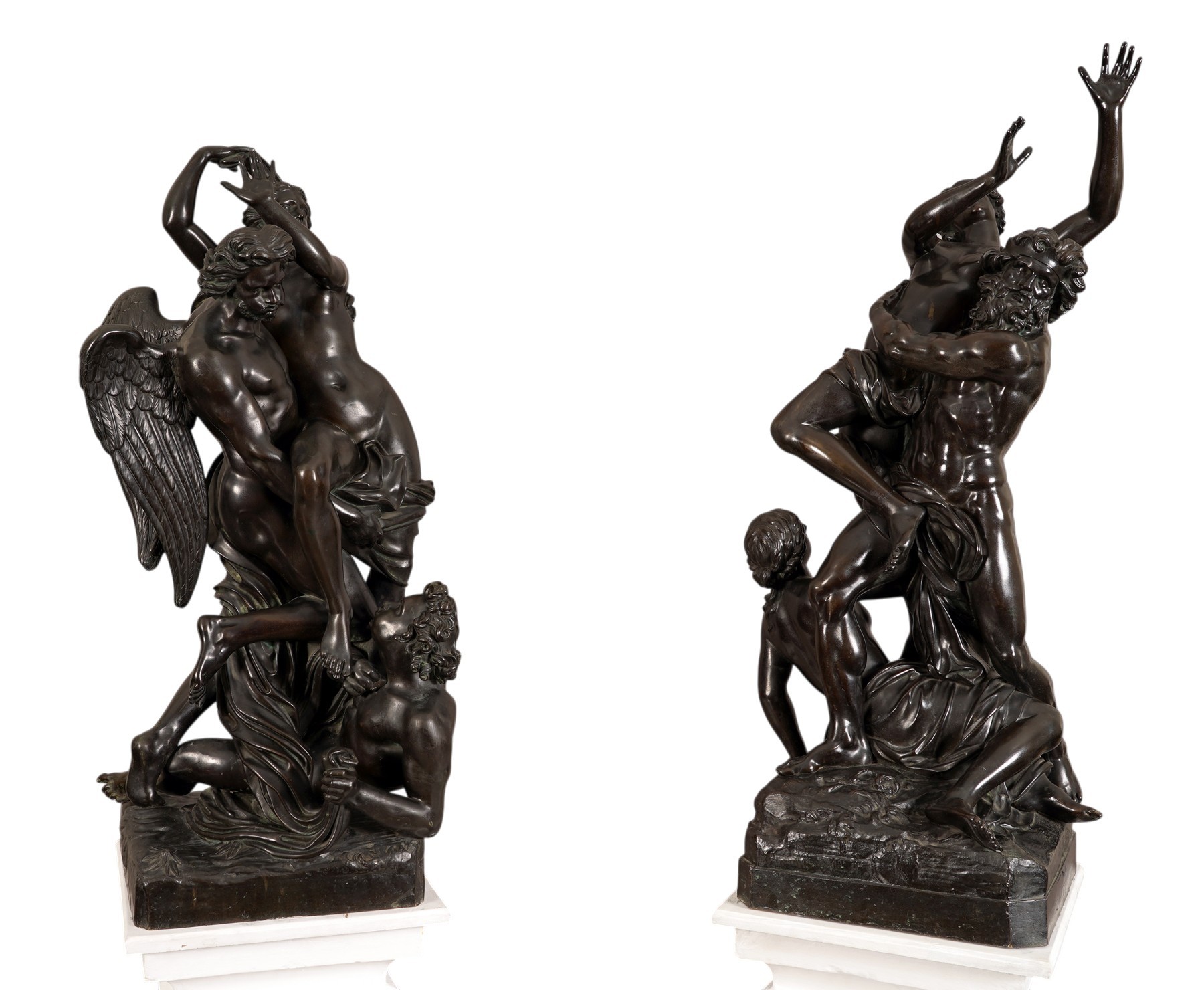
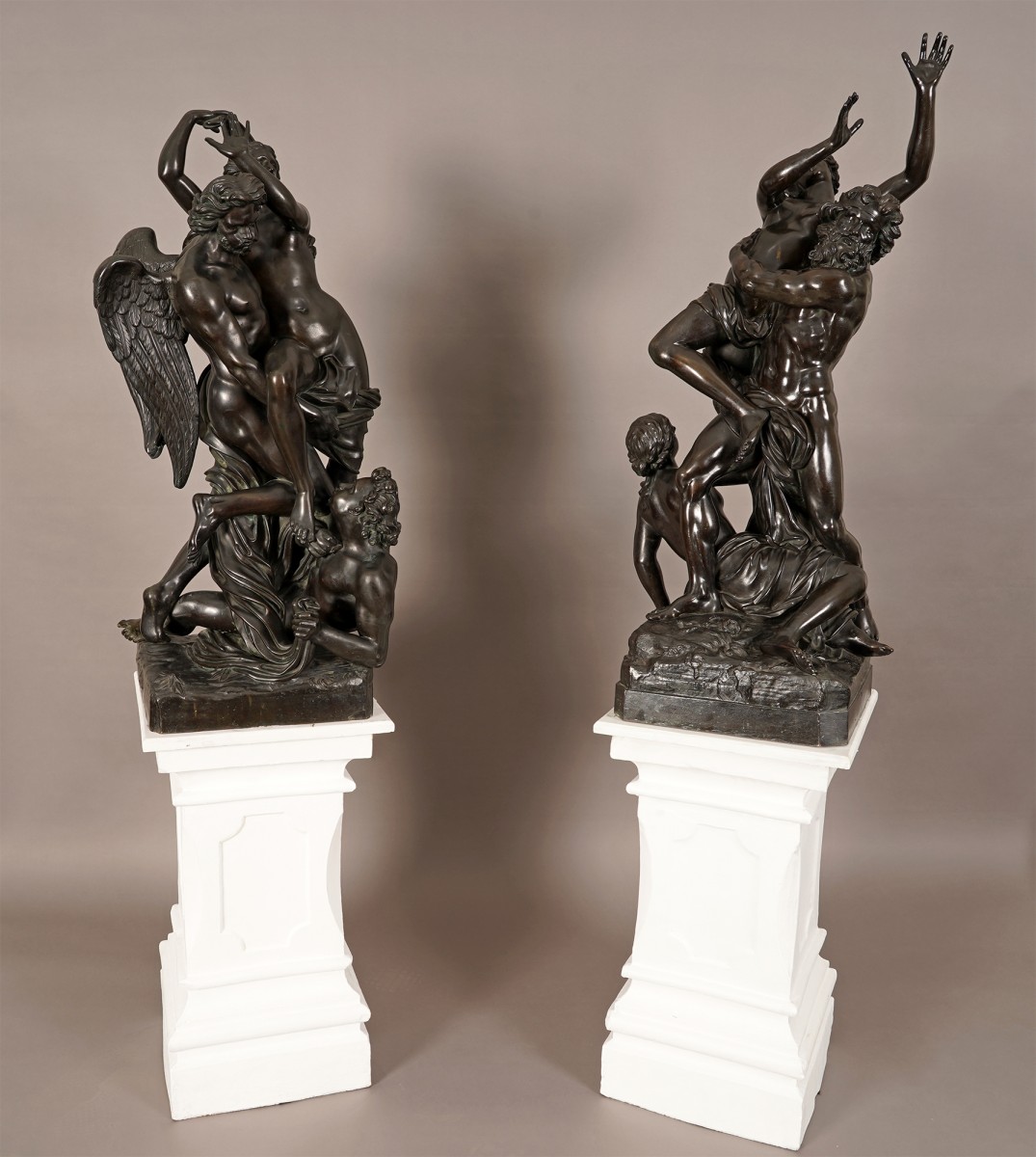
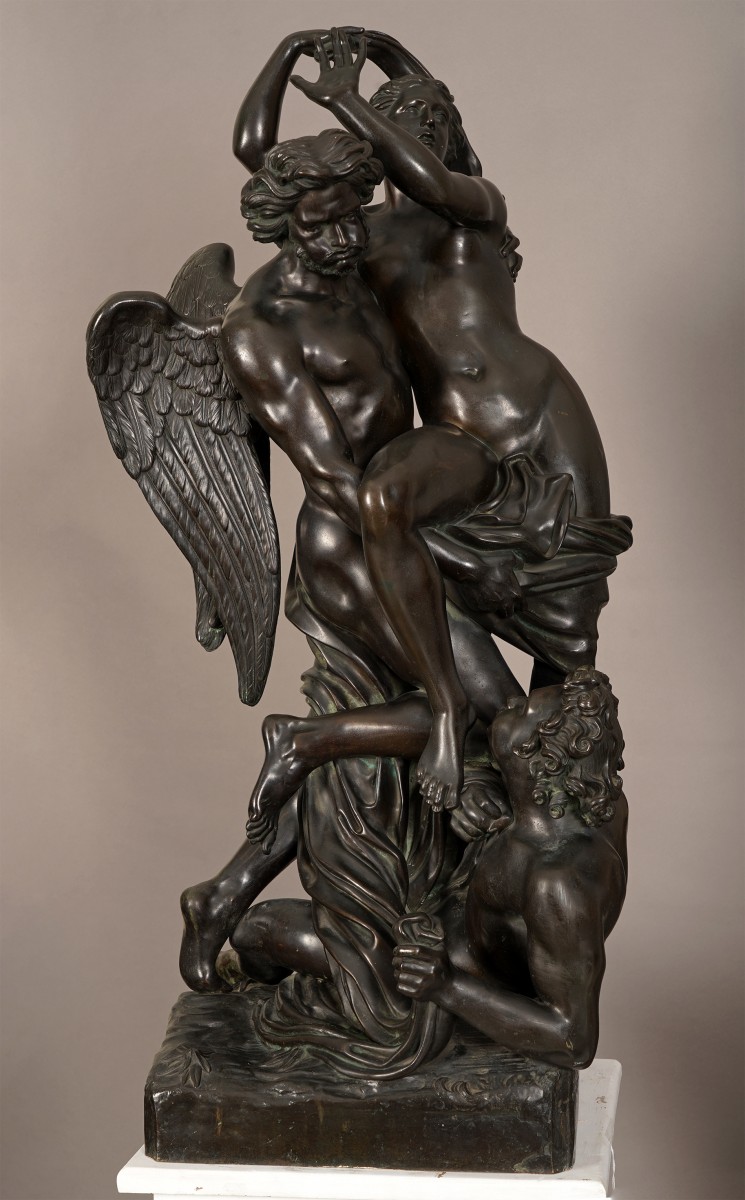
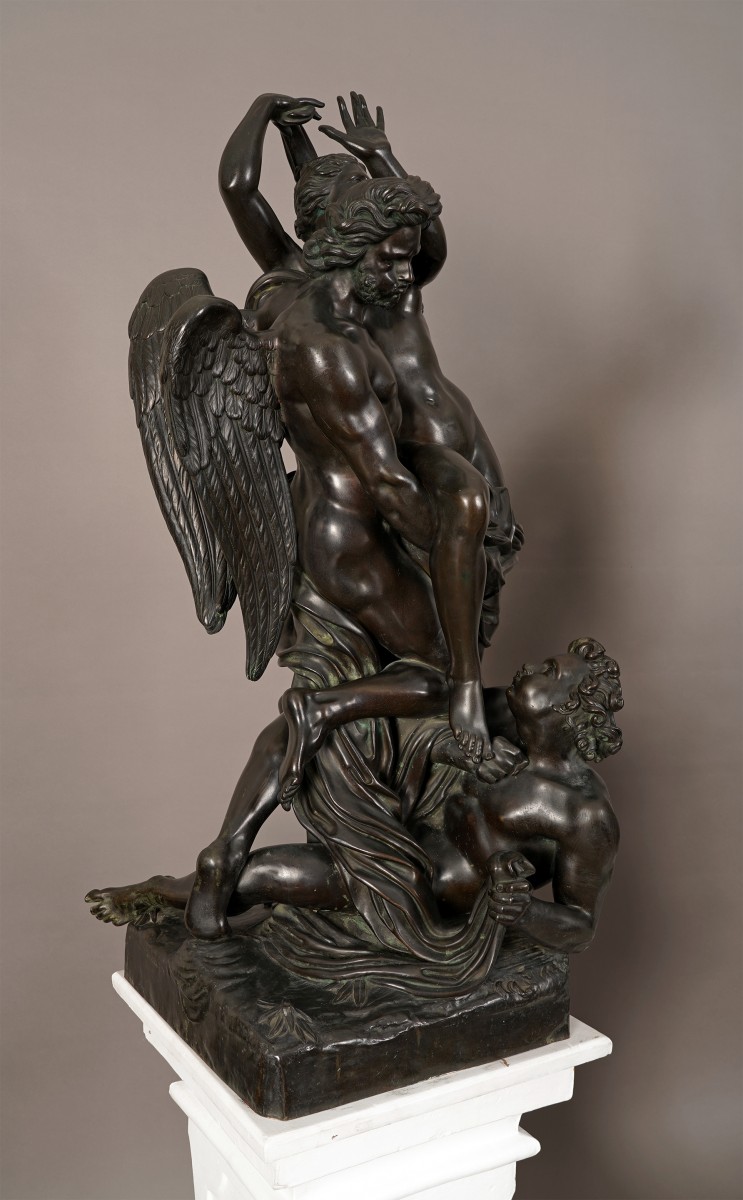

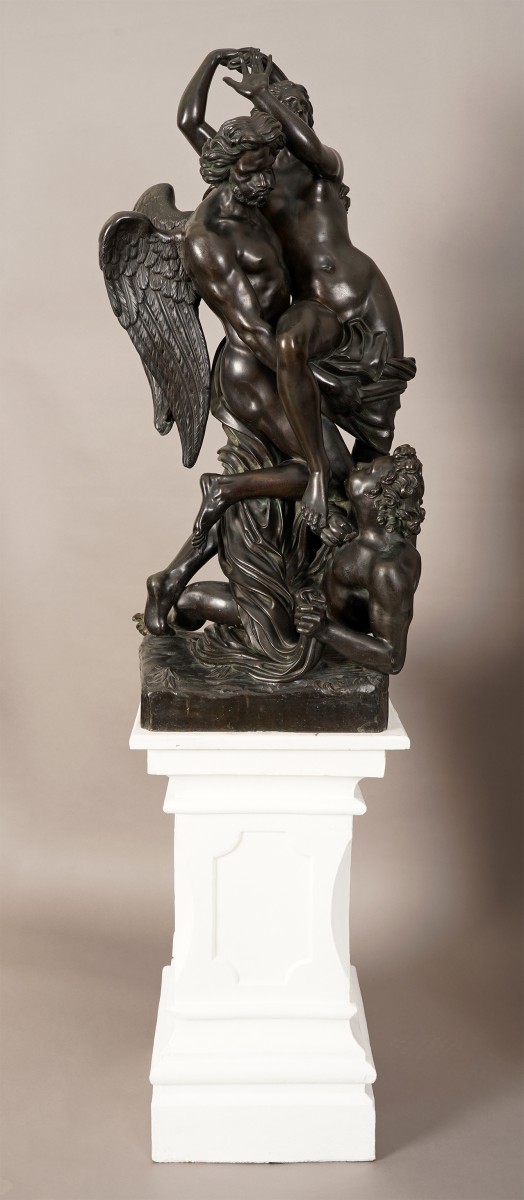
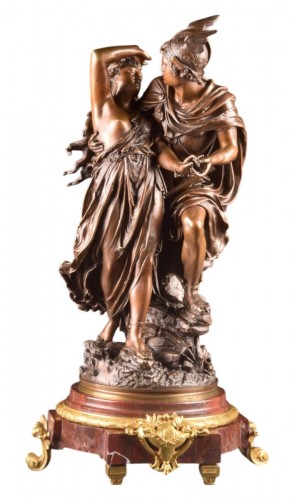
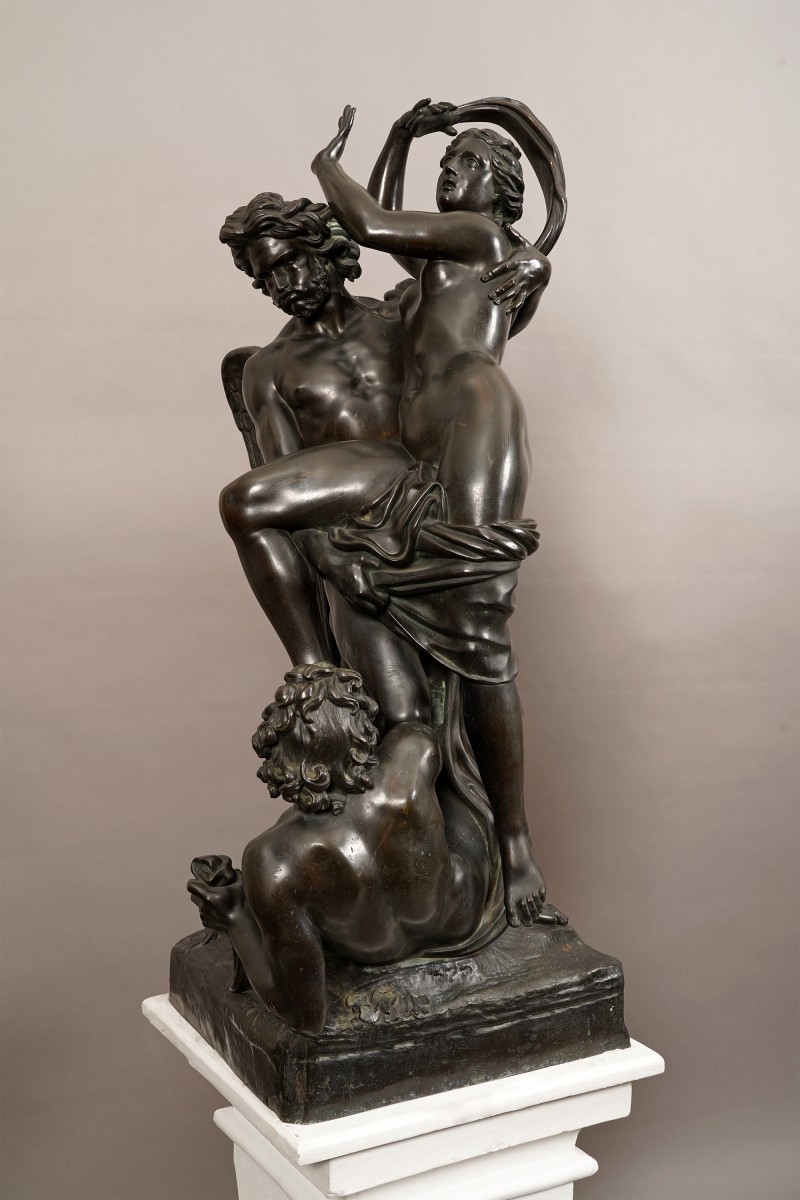
Bores and Orithya – Height: 100 cm (39,4 in.) ; Width : 43 cm (16,9 in.) ; Depth : 45 cm (17,7 in.)
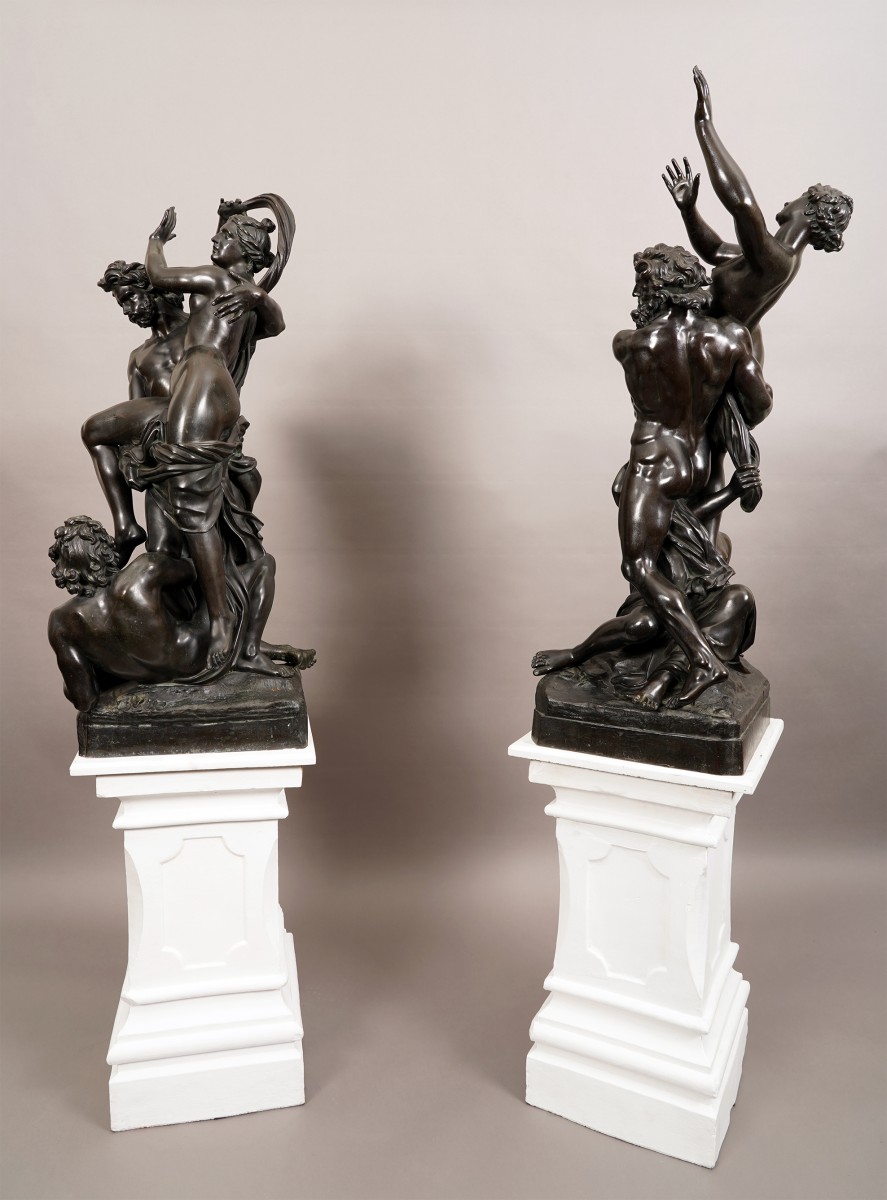
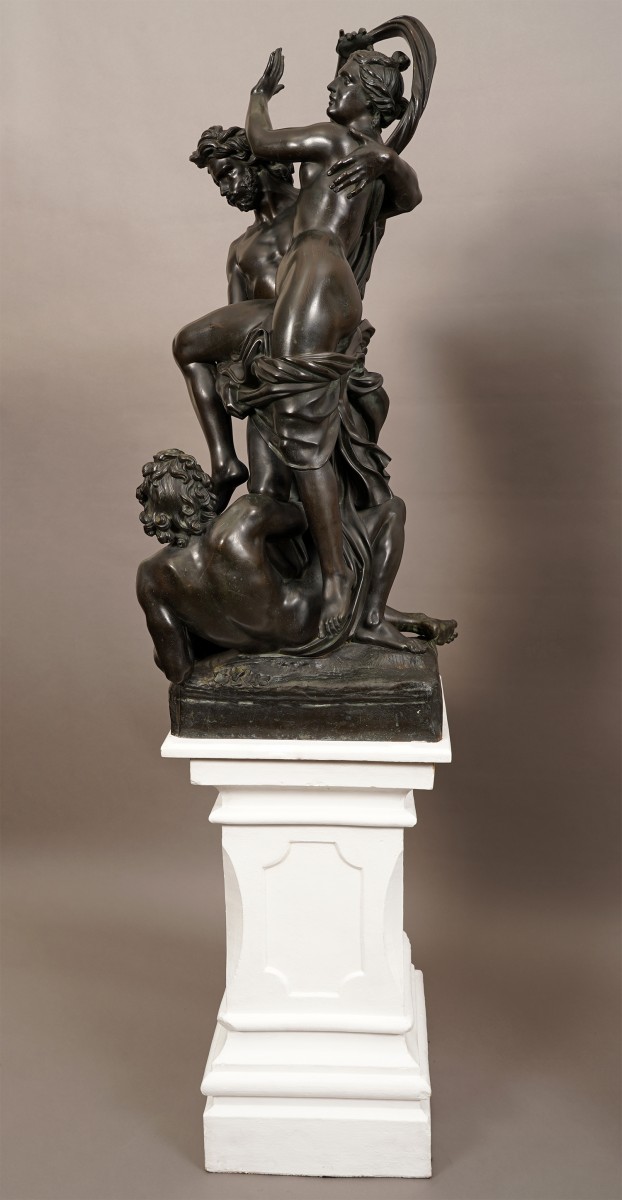
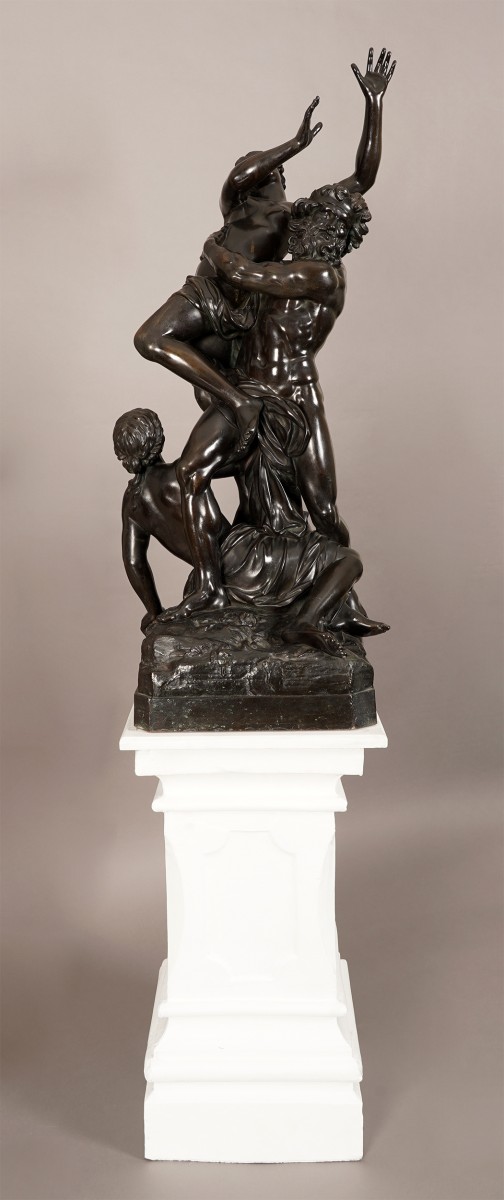
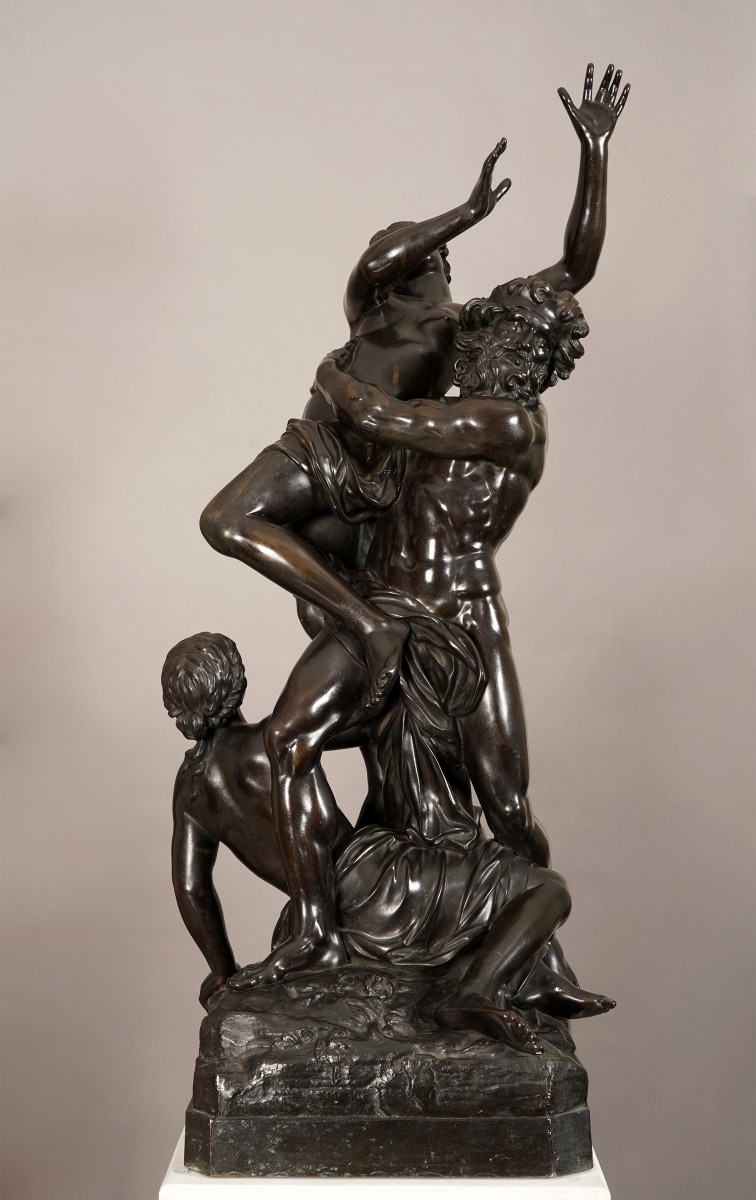
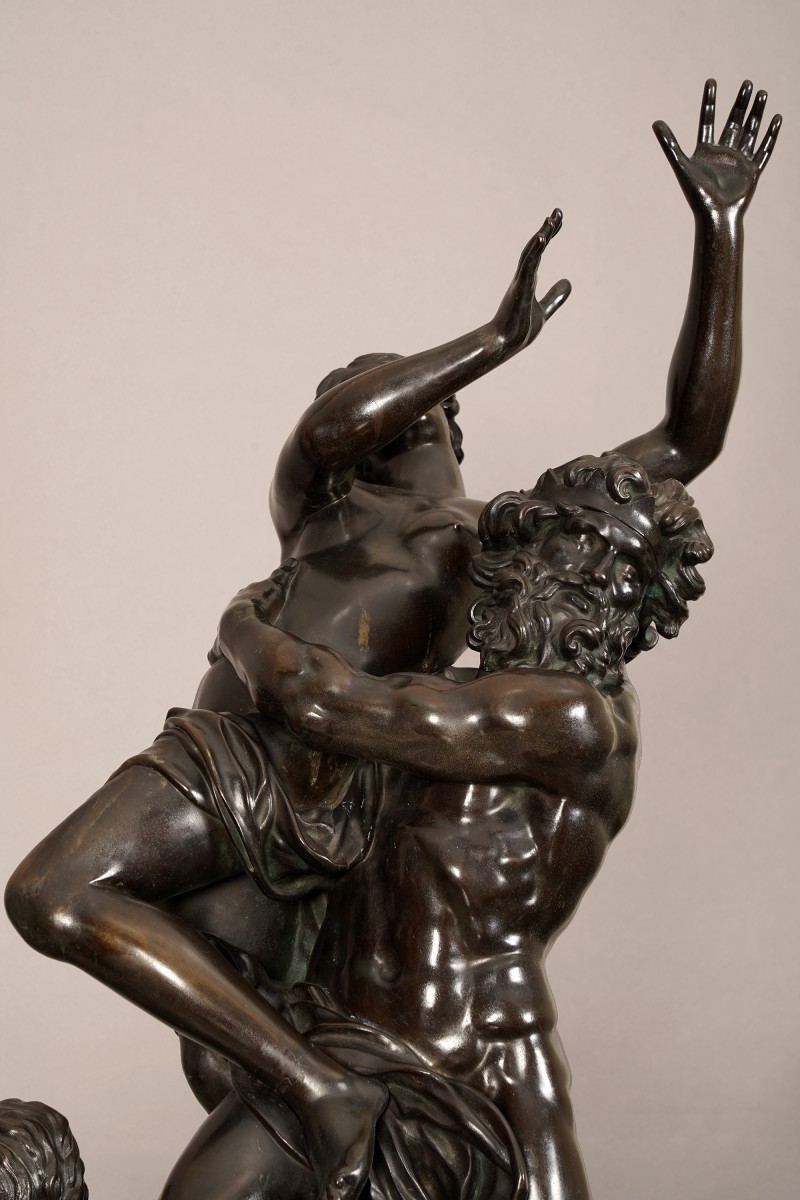
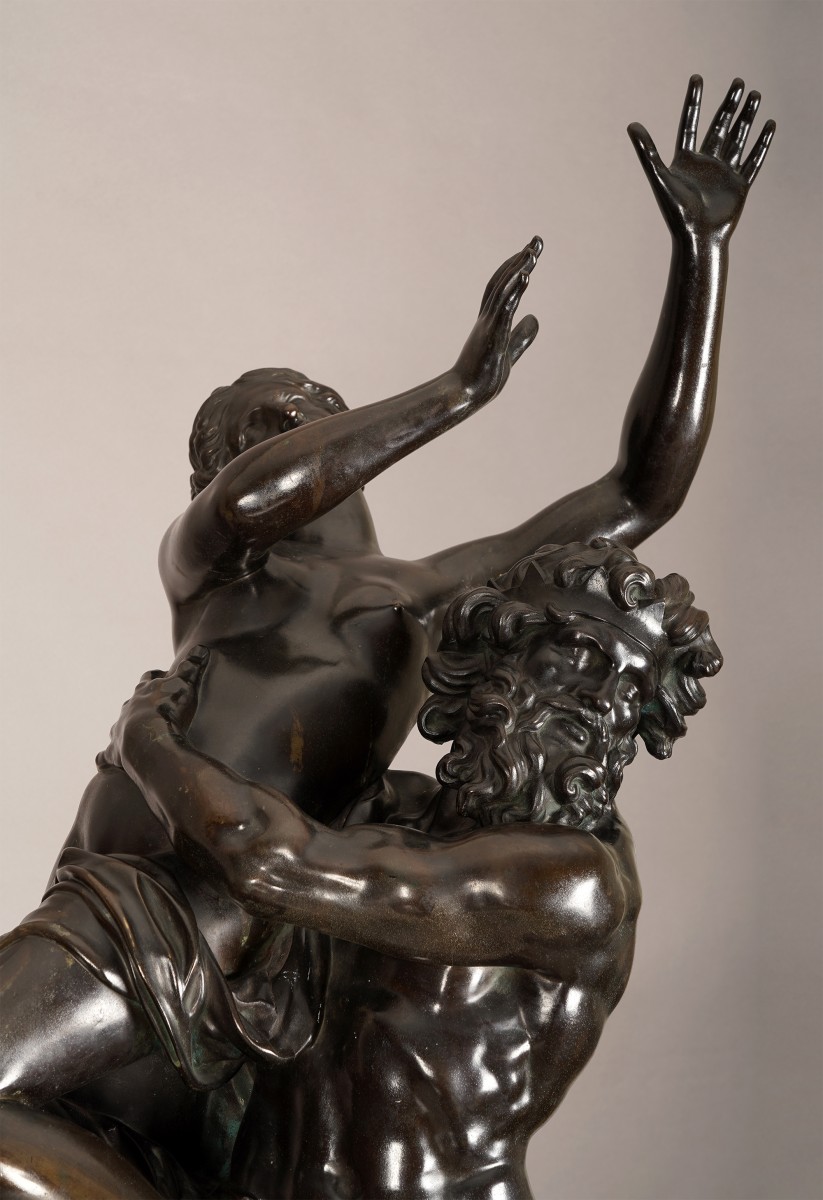
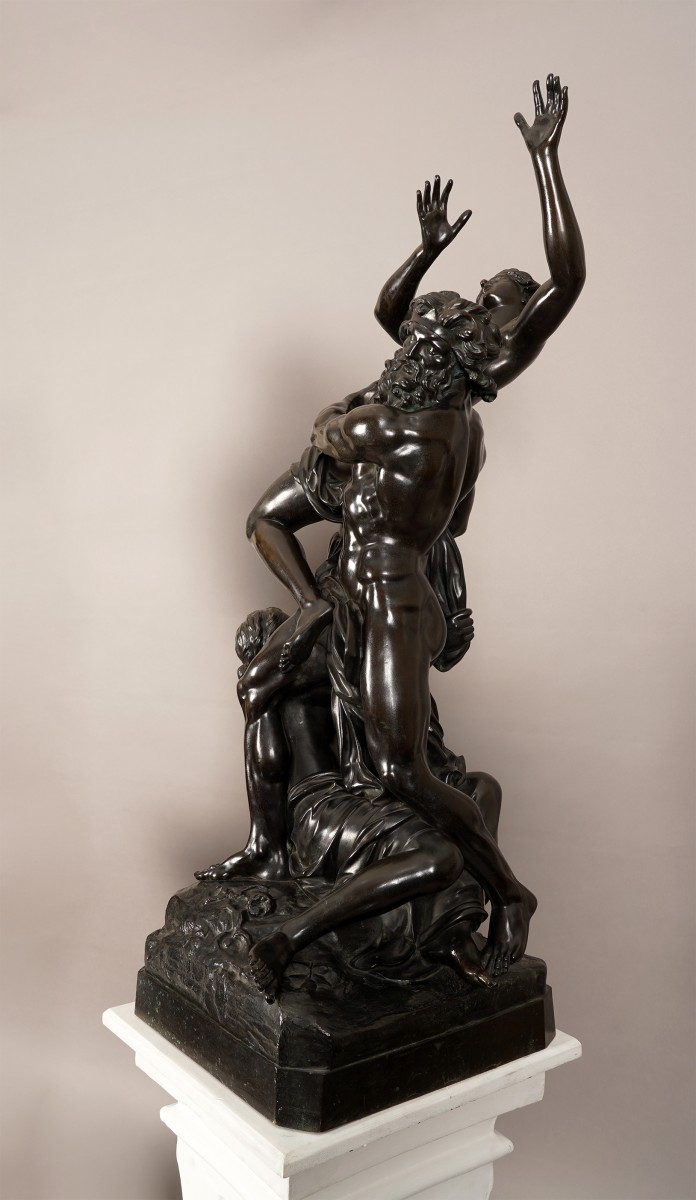
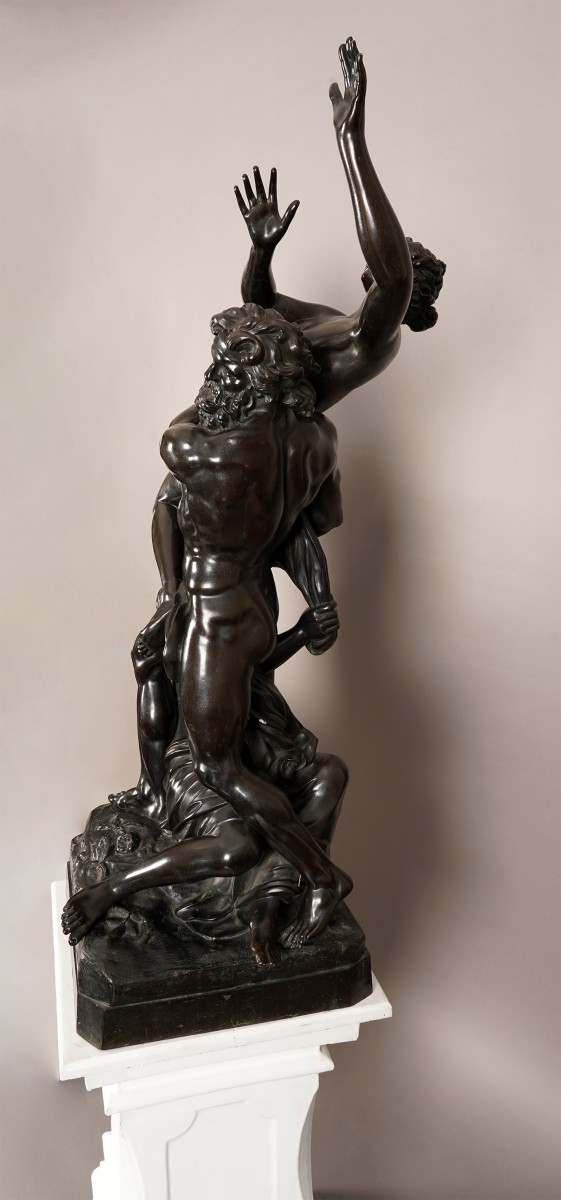
Pluto and Proserpina – Height : 113 cm (44,5 in.) ; Width : 53 cm (20,8 in.) ; Depth : 41 cm (16,1 in.)
Bases - Height : 73 cm (28,7 in.) ; Width : 43 cm (16,9 in.) ; Depth : 41,5 cm (16,3 in.)
Provenance : Robin Chichester-Clark, Moyola Park, Castledawson.
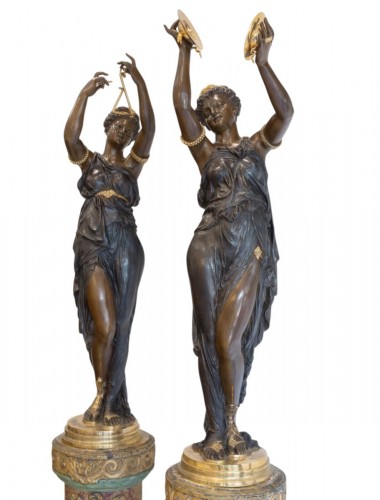
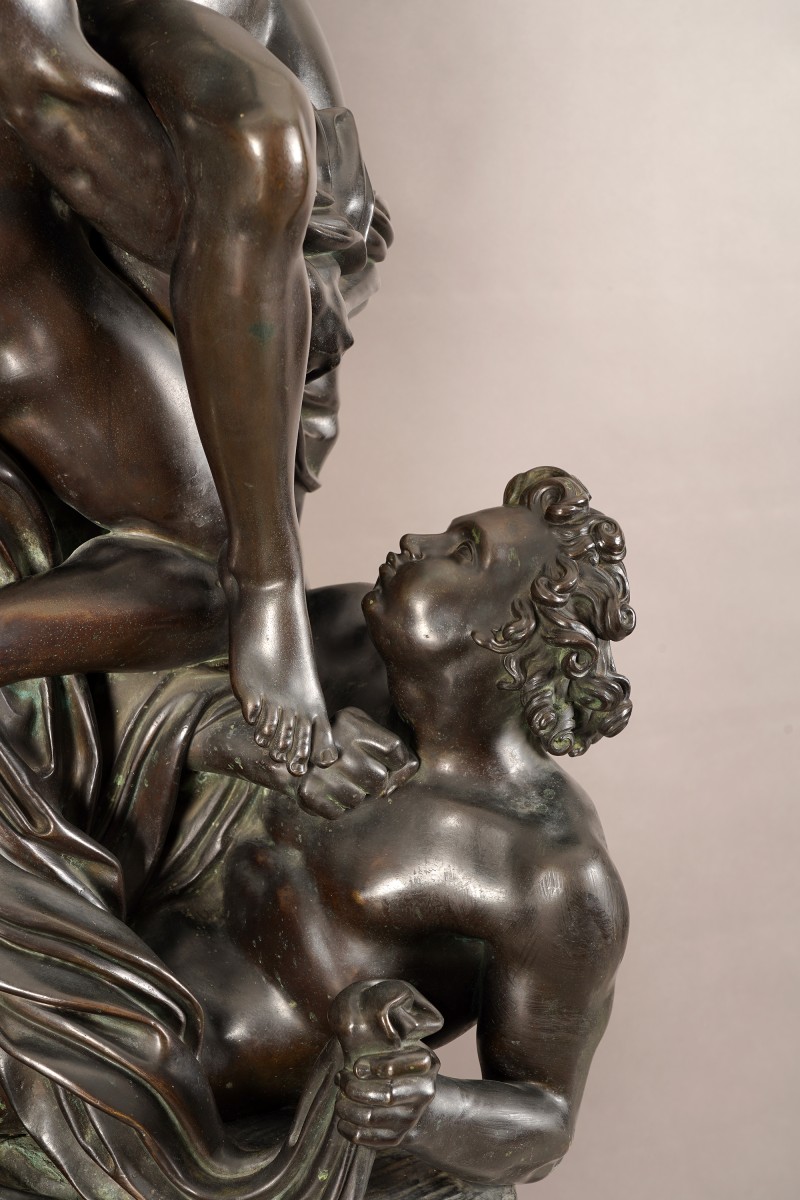
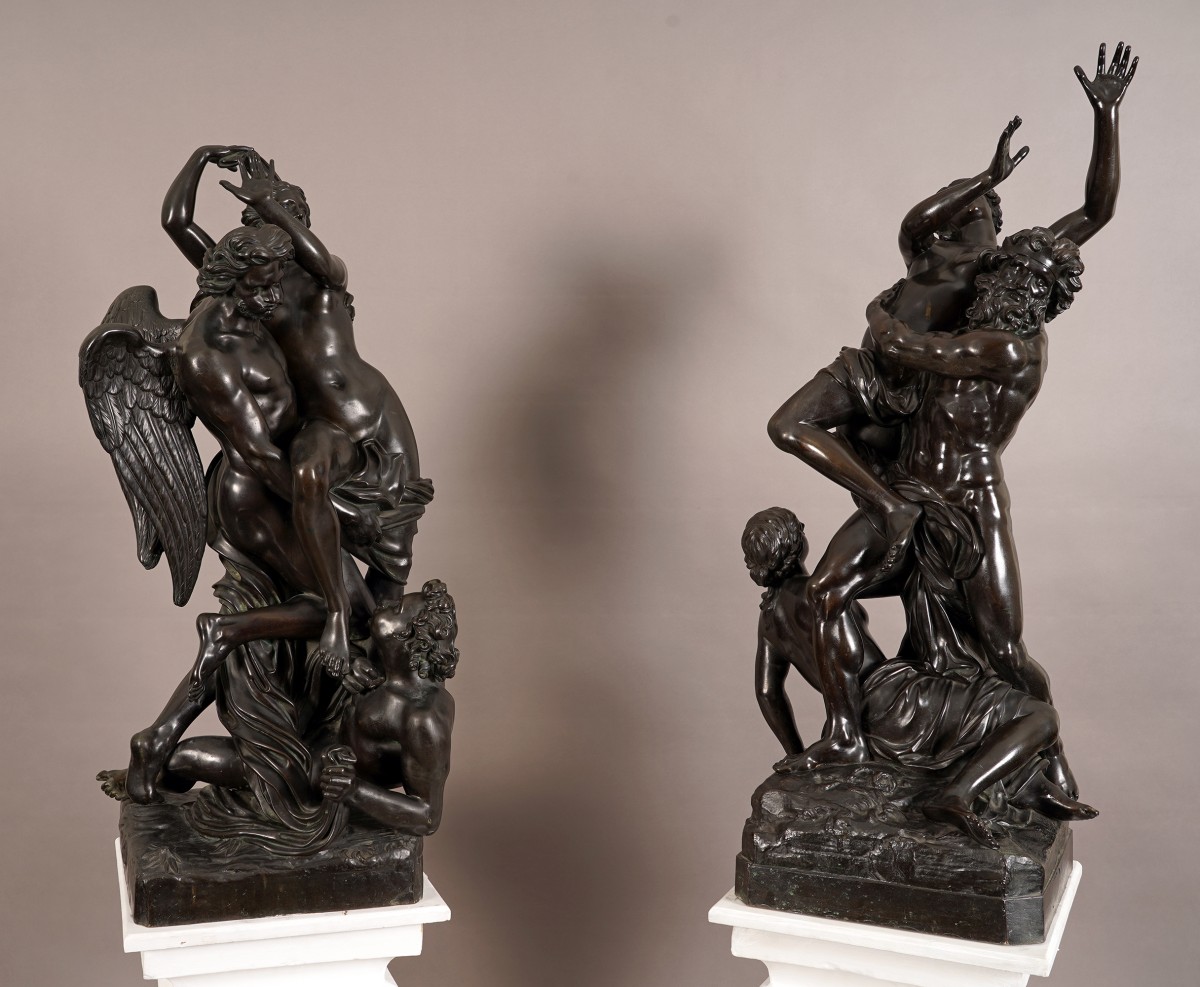
Beautiful pair of patinated bronze sculptures depicting mythological scenes, resting on molded wooden bases painted white.
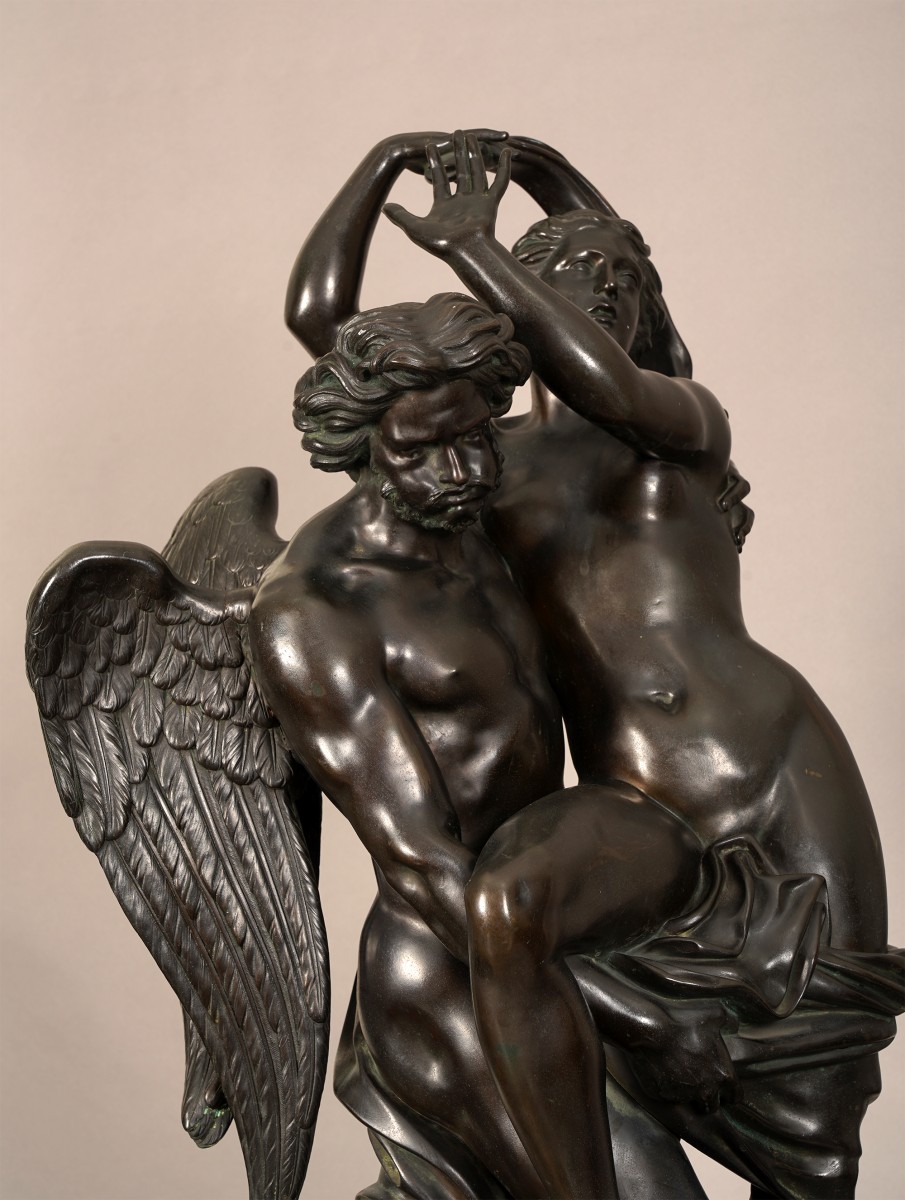
The first represents Boreas, the god of the north wind, recognizable by his large wings, abducting a young nude woman, Orithyia, whose body arches backward. Her arms are raised above her head, her hands open in a gesture of surprise or defense. Her face, turned outward, expresses fear and astonishment. The treatment of the bronze highlights the softness of her forms, contrasting with the muscular tension of Boreas. At the base of the composition, a third figur, often interpreted as a personification of the wind or a secondary spirit, partially supports the ensemble.
The second depicts the abduction of Proserpina by Pluto, god of the Underworld. Her body bends backward while her raised arms intensify the sense of resistance : her open hands seem either to push away an invisible force or to call for help. At the base of the group, a third female figure is kneeling or seated upon the rock. Seen from behind, she appears to be trying to hold back Proserpina or oppose the abduction. Her role is both narrative and structural : she stabilizes the composition while introducing a secondary viewpoint that encourages the viewer to move around the sculpture.
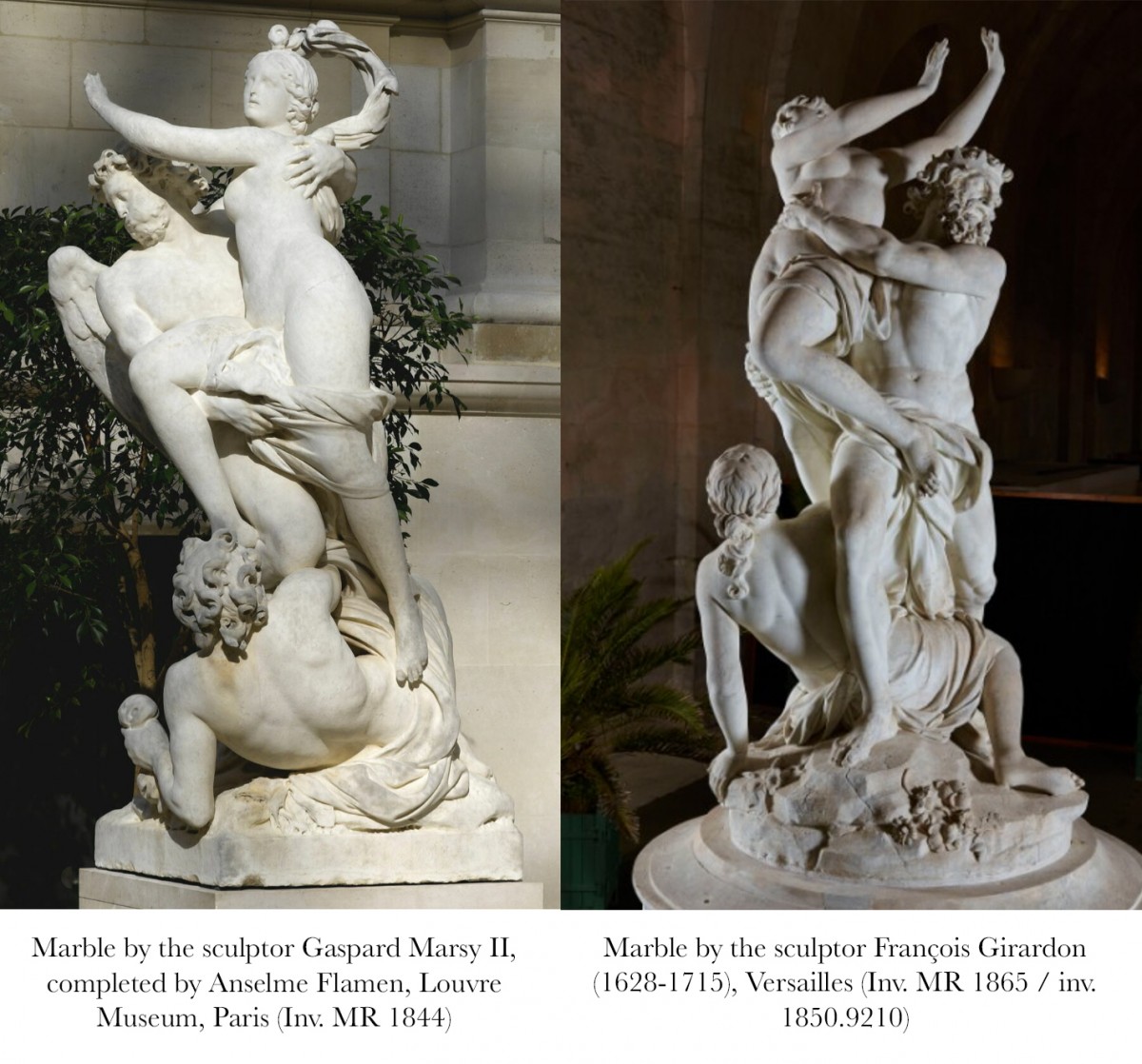
Related works :
These sculptures are inspired by the groups depicting mythological abductions that formed part of the “Grande Commande” of 1674, commissioned by the Direction des Bâtiments du Roi under Jean-Baptiste Colbert for the Water Parterre in the gardens of the Château de Versailles. The program was intended to celebrate the cosmic and political glory of Louis XIV through an iconography inspired by Apollo and the order of the universe, and included eight groups of mythological abductions conceived under the artistic direction of Charles Le Brun, who provided the preparatory drawings. However, the successive redesigns of the gardens prevented the original arrangement from being carried out, and the sculptures were ultimately dispersed throughout various groves and pathways of Versailles.