Offered by Tobogan Antiques

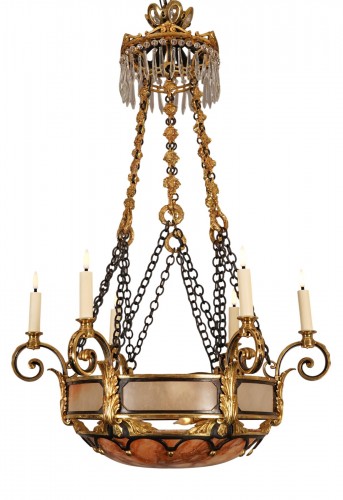
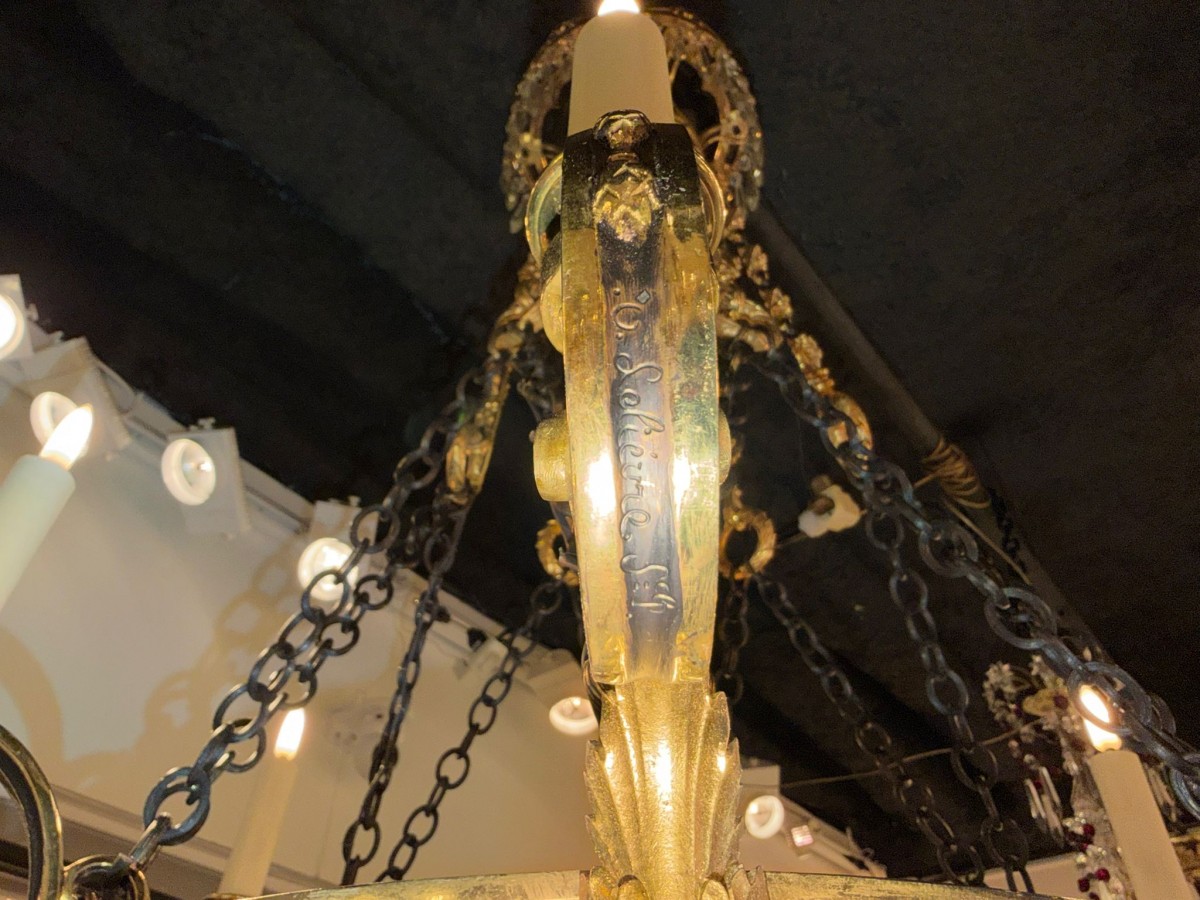
Signed "Susse Frères Edts Paris" and "O. Lelièvre Sclp"
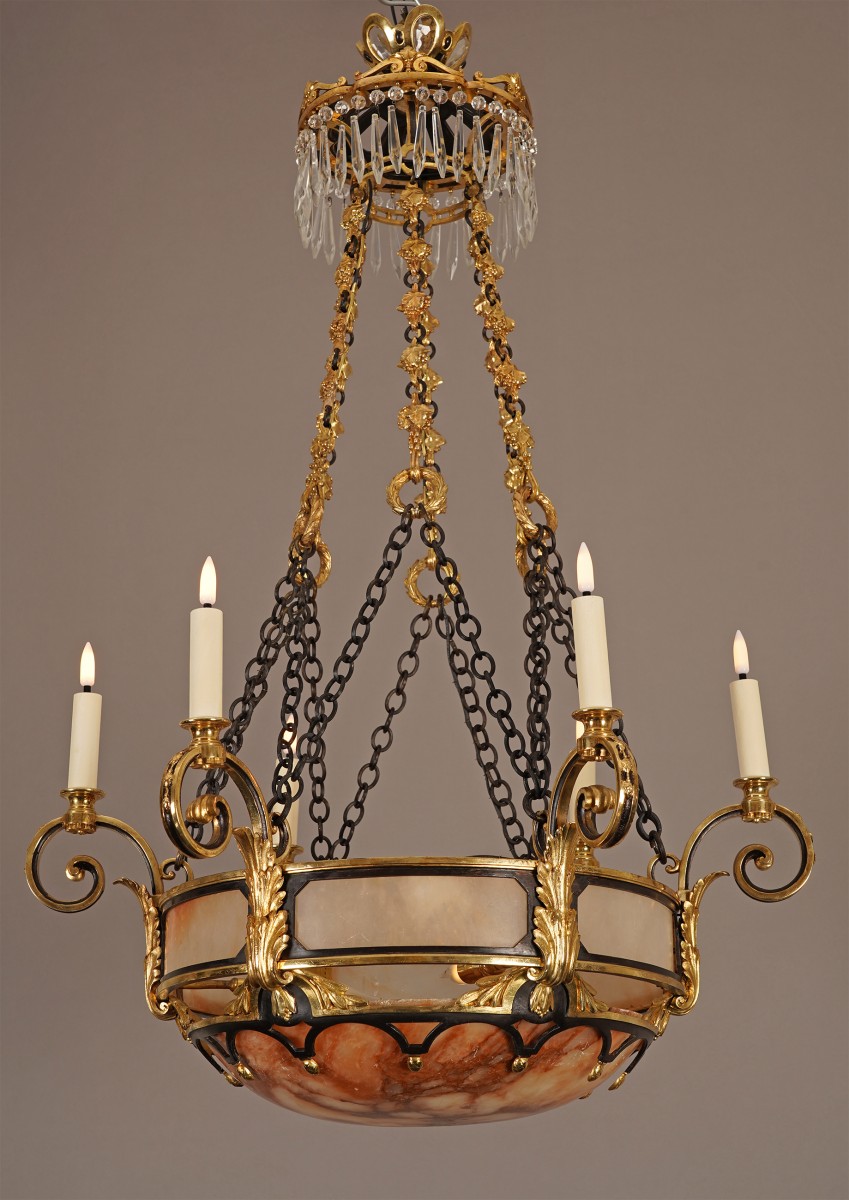
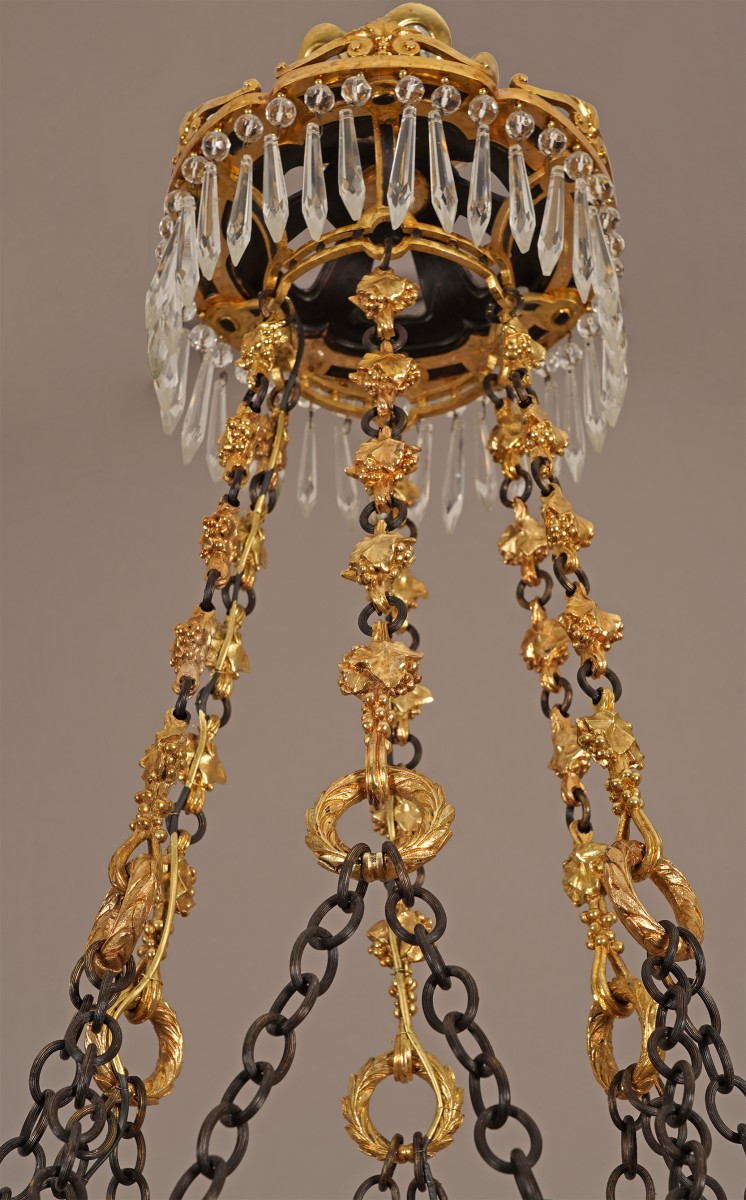
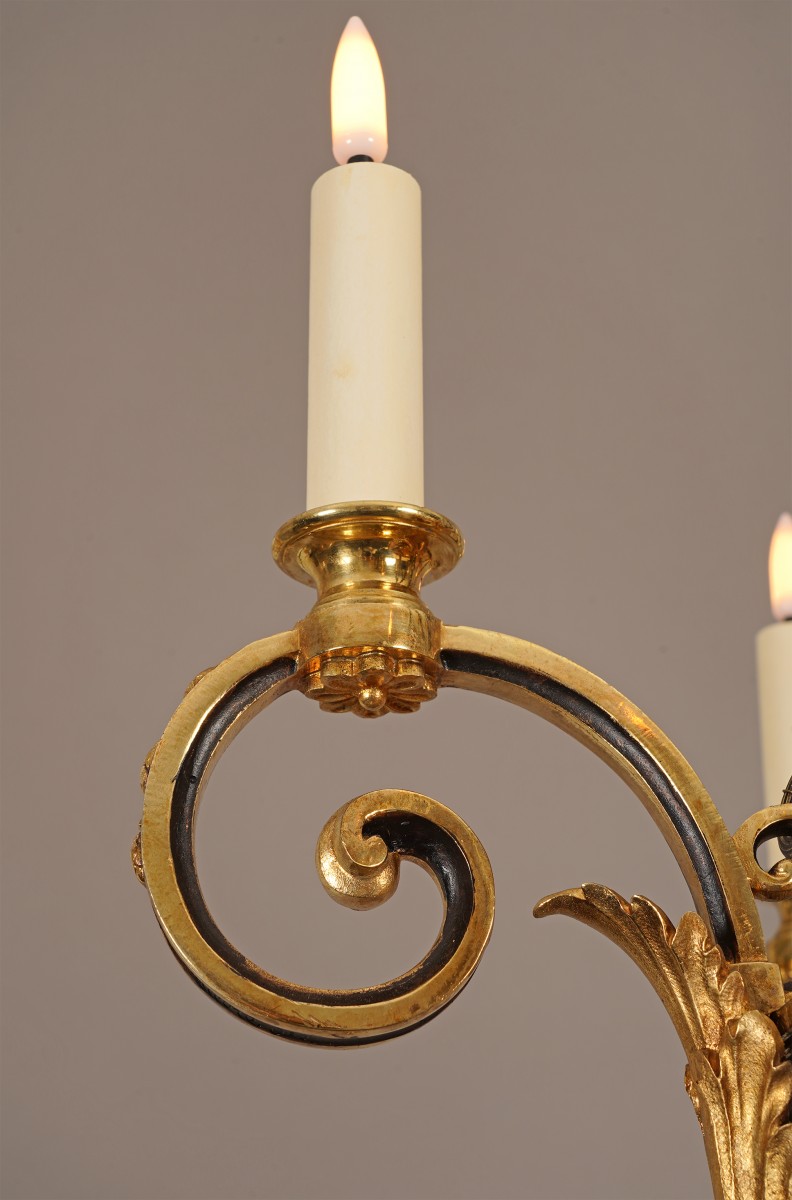
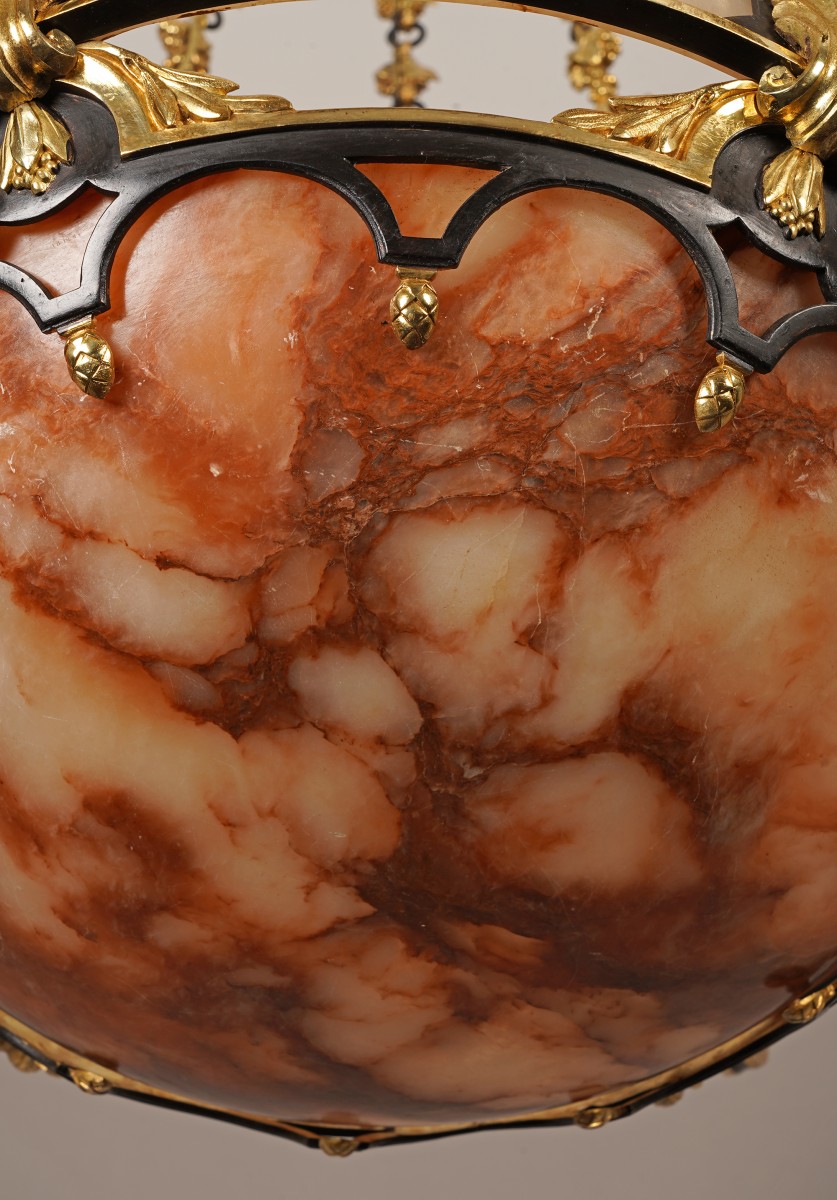
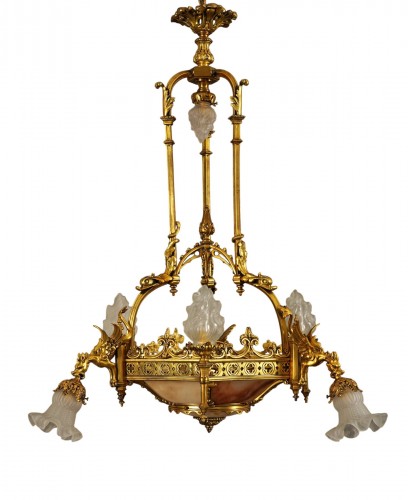
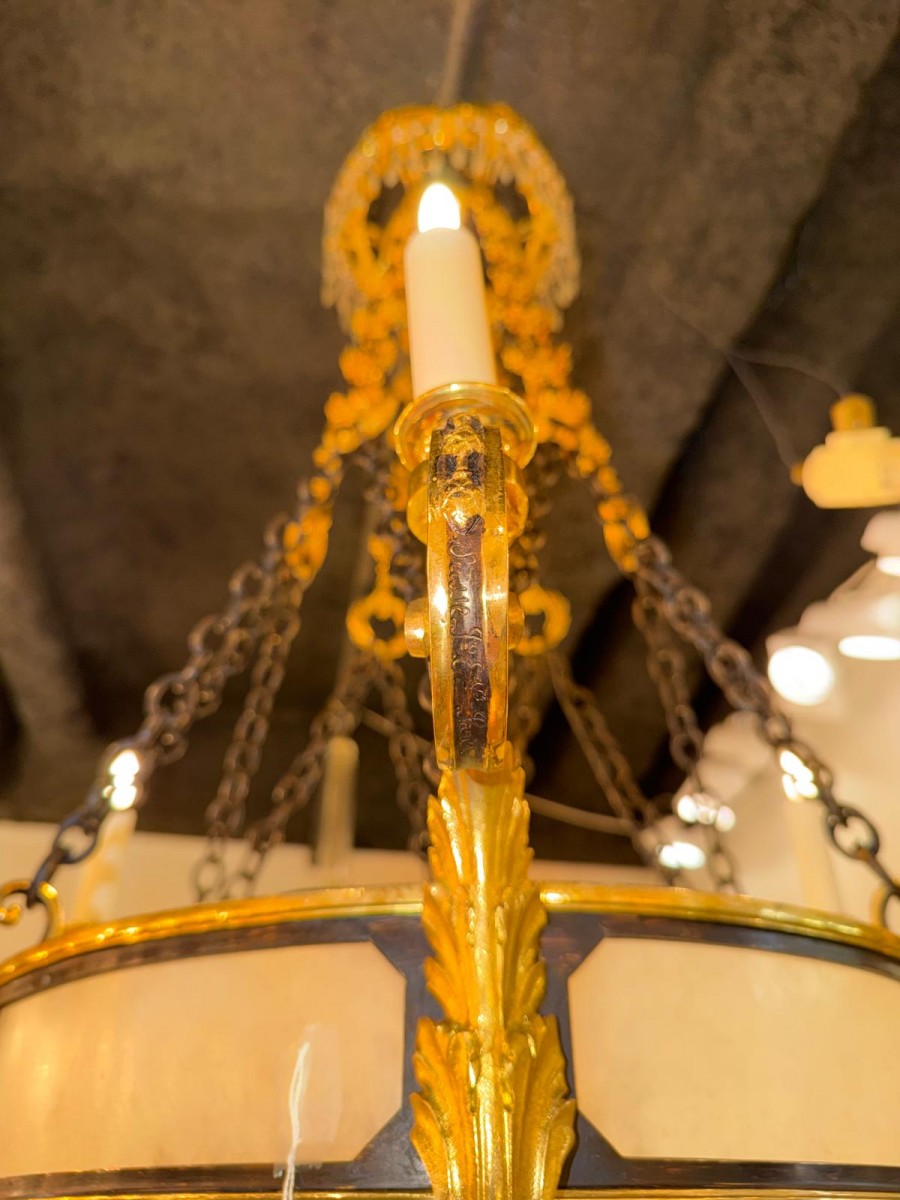
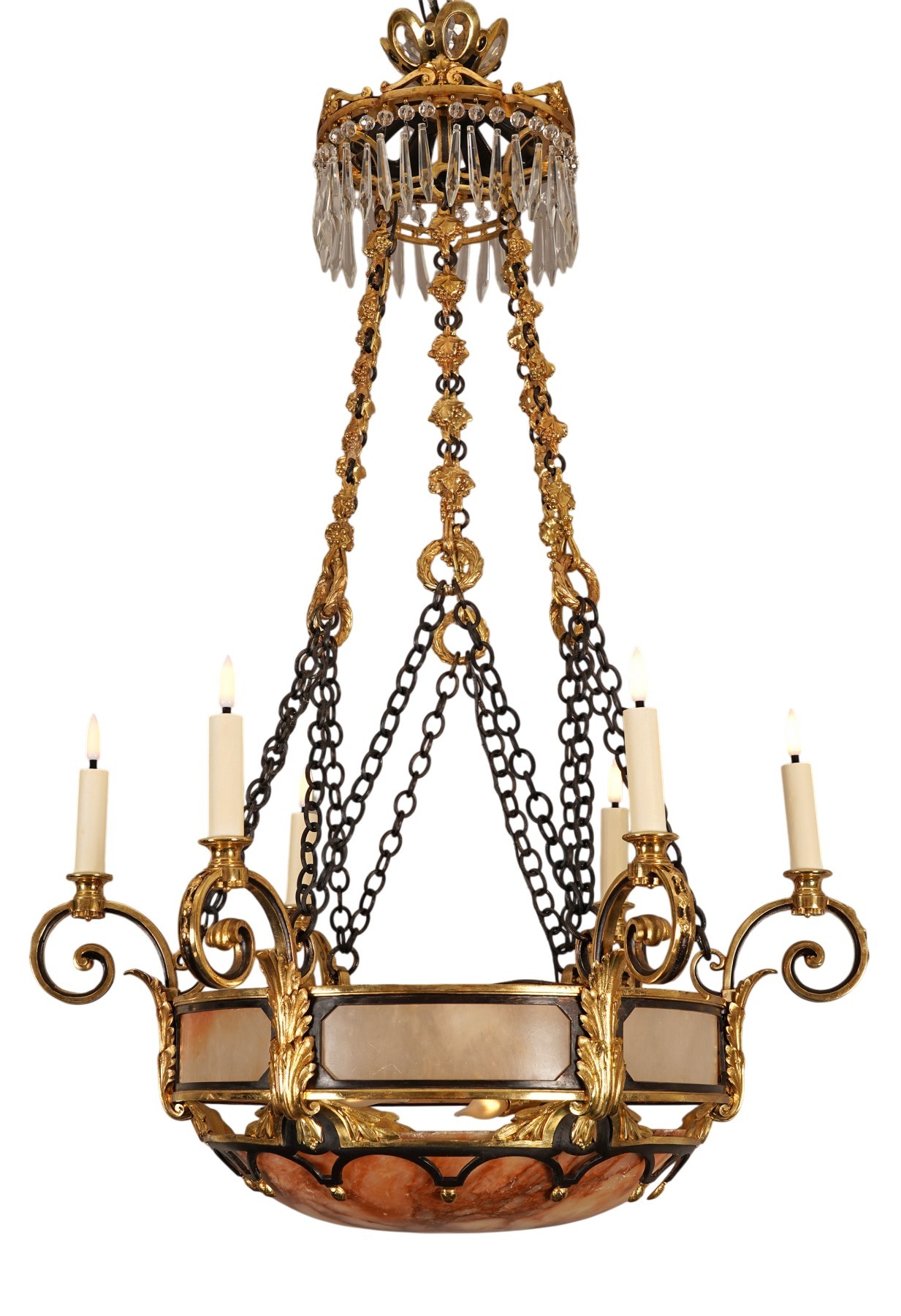
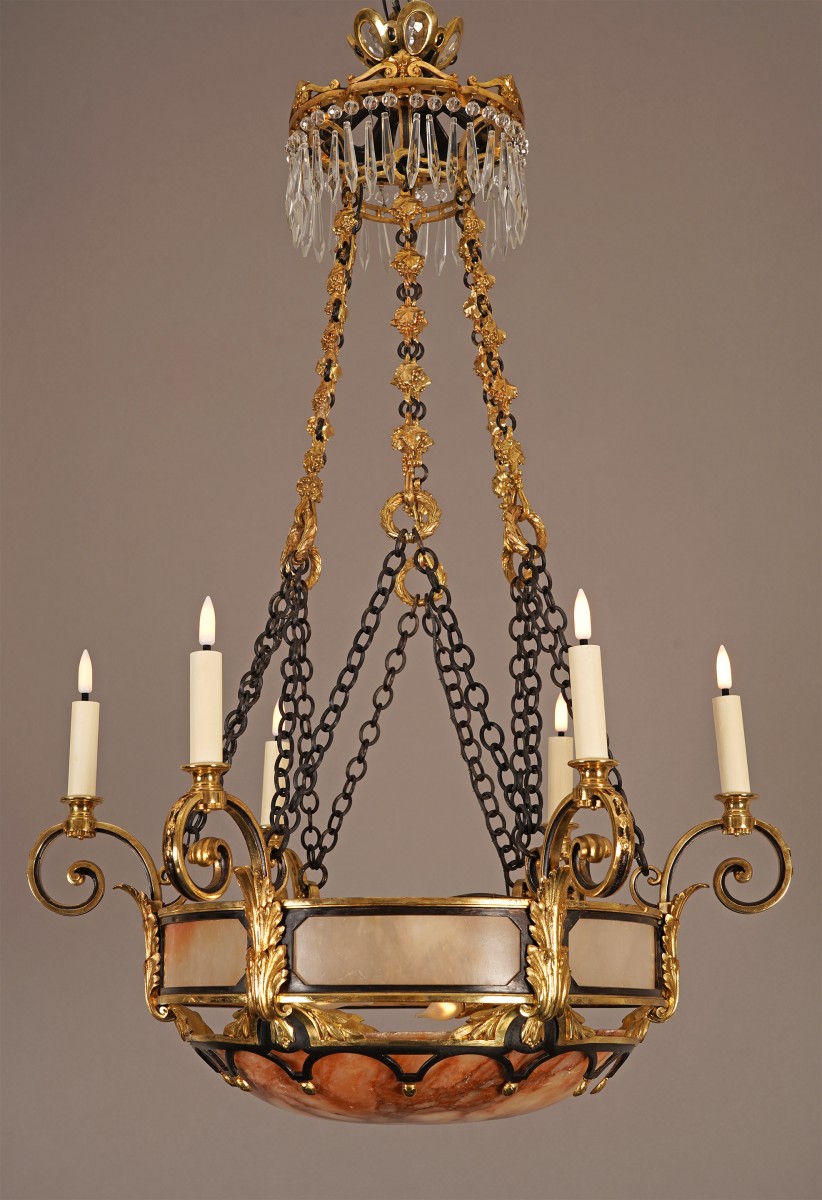
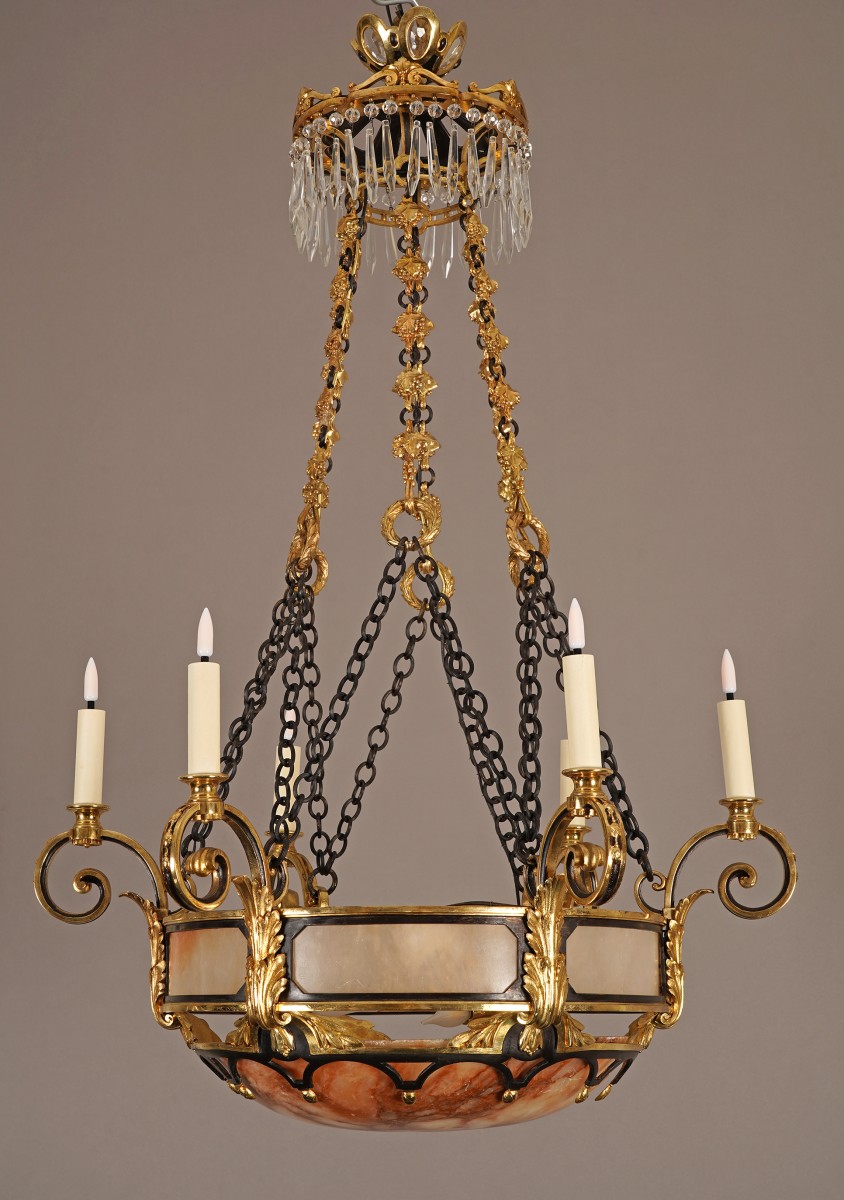
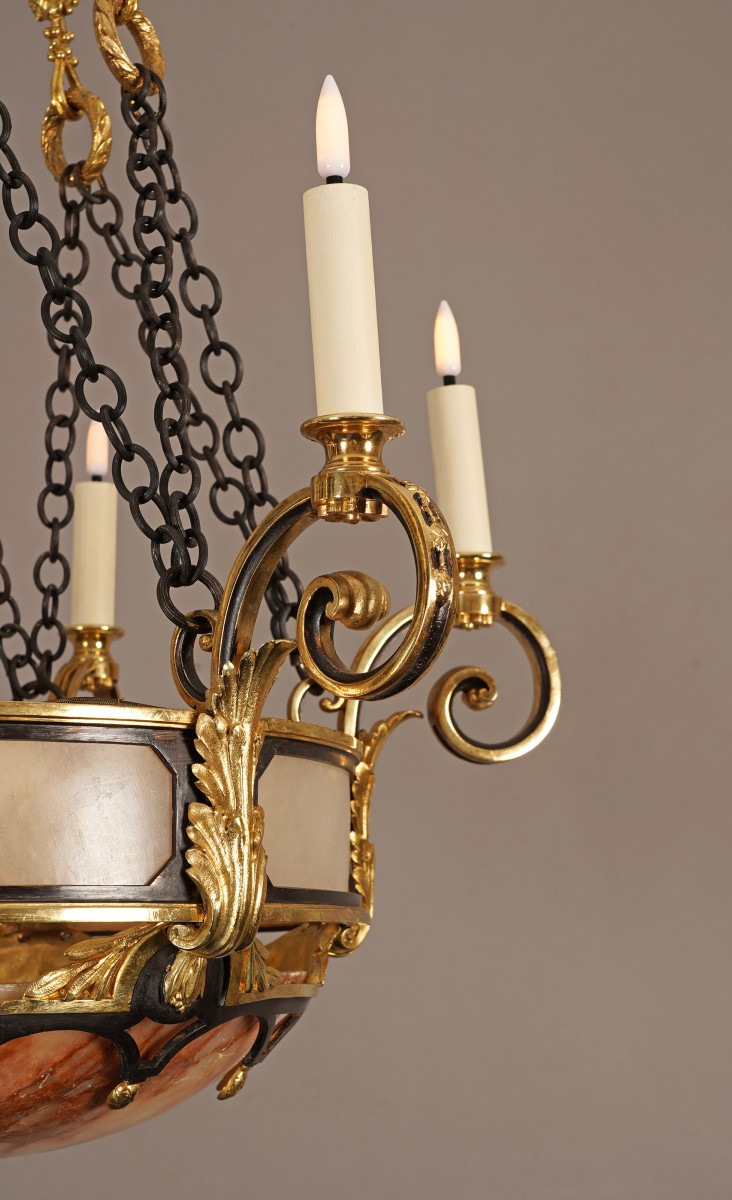
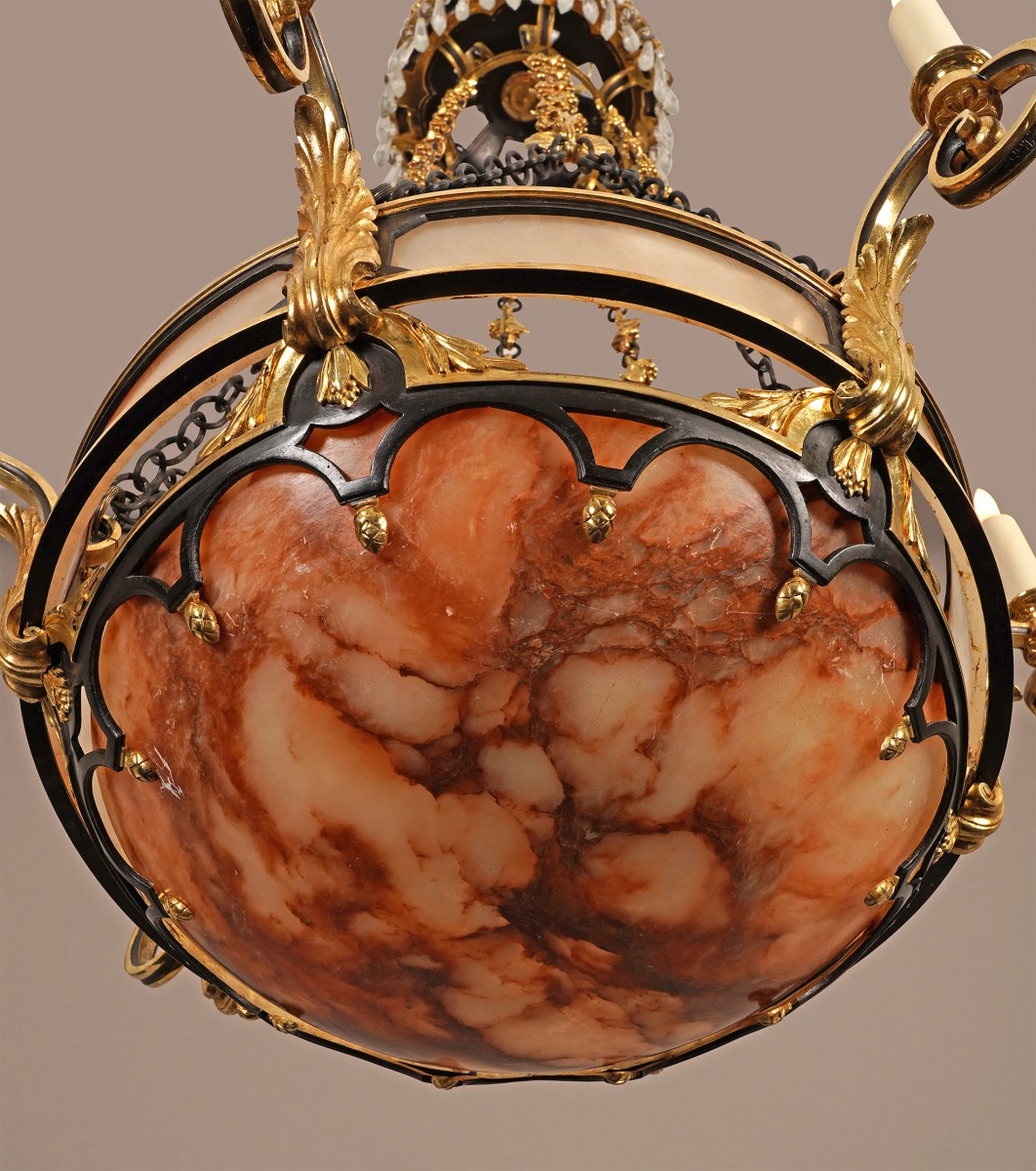
Elegant six-light chandelier in patinated and gilt bronze, composed of a veined alabaster bowl with internal illumination, supported by arcades and surmounted by a frieze of rectangular white alabaster plaques alternating with scrolling light arms accented with acanthus leaves. The whole is suspended by double chains in the lower section and adorned in the upper section with vine tendrils and laurel wreaths, all attached to a crown decorated with fleurons and embellished with cut and faceted crystal prisms and mirzas.
This chandelier is the result of the fruitful collaboration between the sculptor Olivier Lelièvre and the prestigious Parisian art foundry Susse Frères, for which he designed and modeled high-quality pieces that were subsequently cast in bronze.
Biography
The world-renowned Susse Frères foundry began producing bronze works as early as the first half of the nineteenth century. Confirming their success during the celebrated Expositions des Produits de l’Industrie in Paris, the Susse brothers, Victor Susse and Amédée Susse, were listed from 1841 onward as manufacturers of “art bronzes for clocks, candelabra, vases, statuettes, etc. The greatest French sculptors entrusted them with their sculpted works to be cast in bronze, such as James Pradier, who signed in 1841 the earliest known publishing contract currently recorded. Following the deaths of the two brothers, Albert Susse succeeded them and directed the firm from 1880 to 1922. He brought renewed momentum to the company and greatly expanded the foundry’s activities. Albert Susse subsequently opened a luxurious showroom at 13 boulevard de la Madeleine in Paris.
Octave Georges Lelièvre (1869-1947) was a French sculptor and ornamentalist associated with the decorative arts of the Belle Époque and with a reinterpretation of the Louis XVI style. A student of the sculptor Théodore Eugène Victor Barrau, as well as of Auguste Dumont and Charles Gumery, his work is chiefly known through ornamental bronzes, clocks, candelabra, desk sets, and decorative objects produced by major artistic bronze foundries, notably Susse Frères. Active circa 1890–1930, he worked within the tradition of French decorative sculpture, combining neoclassical influences with the refinement of Art Nouveau and later Art Deco. His creations frequently employed gilt bronze, featuring decoration with acanthus leaves, garlands, mascarons, and motifs inspired by eighteenth-century French design.