Offered by Tobogan Antiques
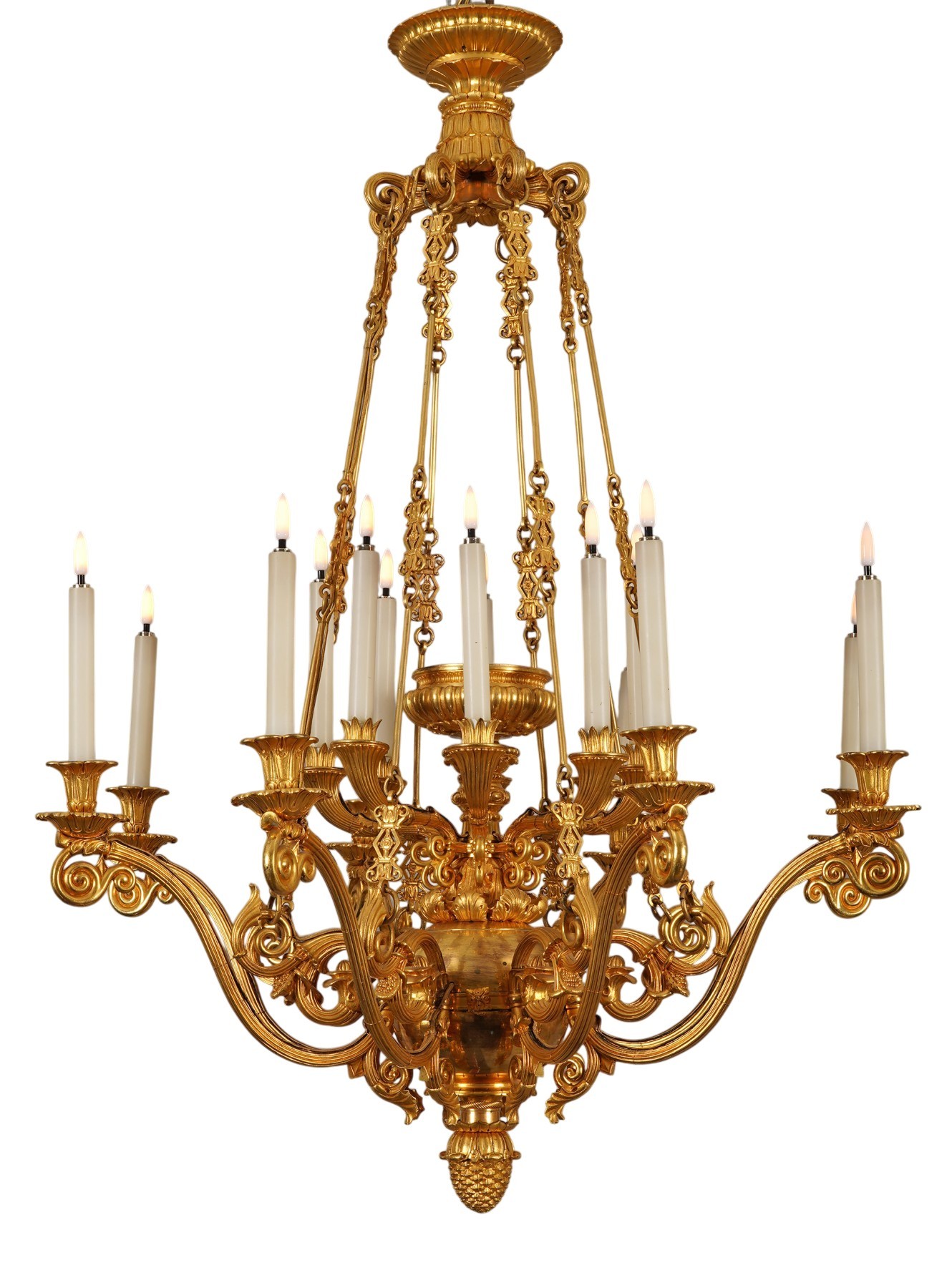
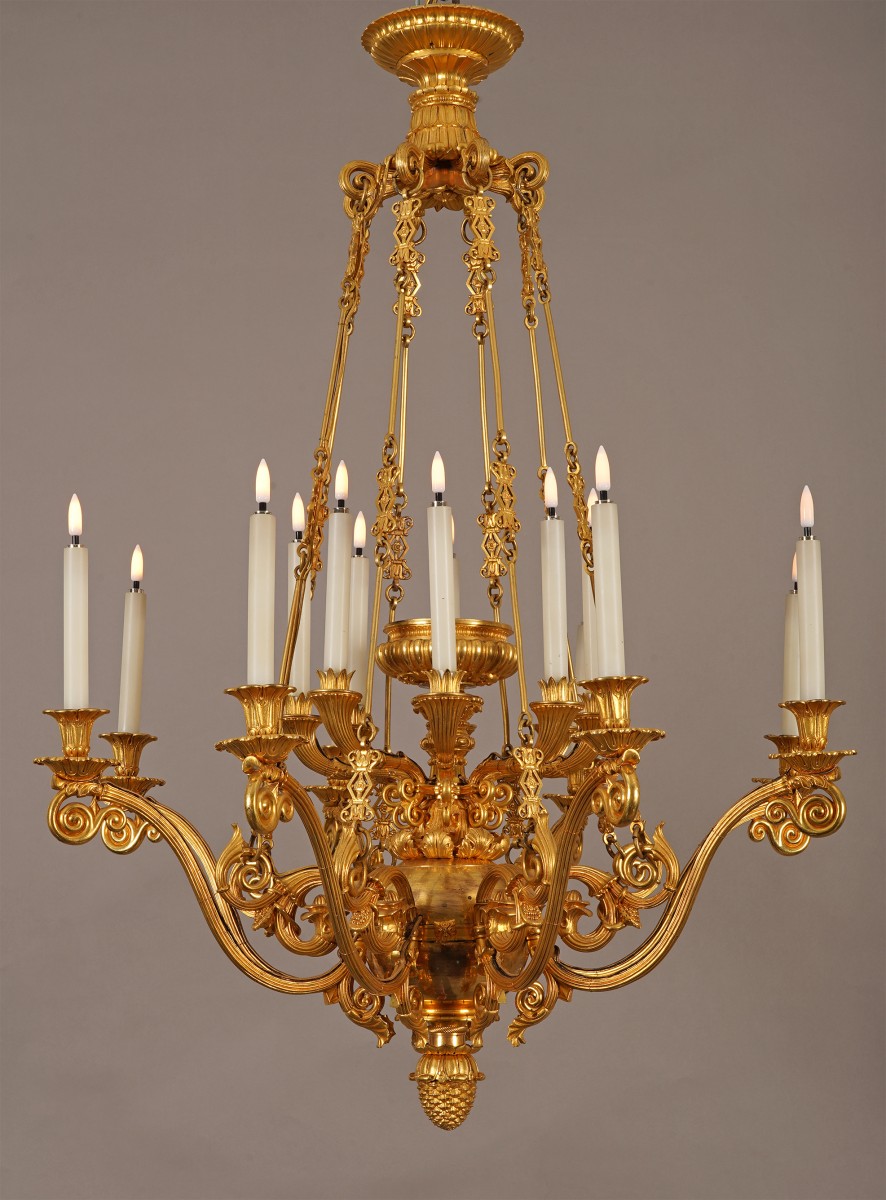
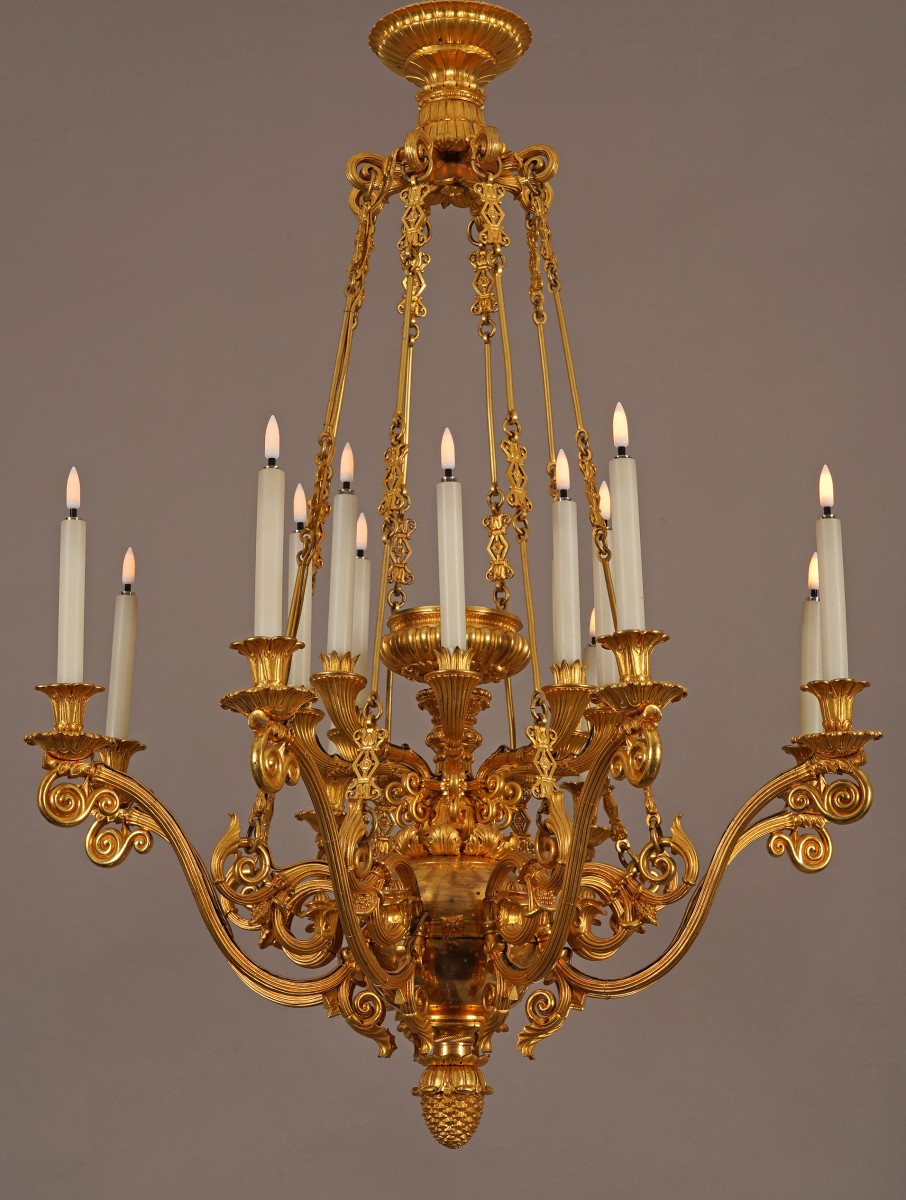

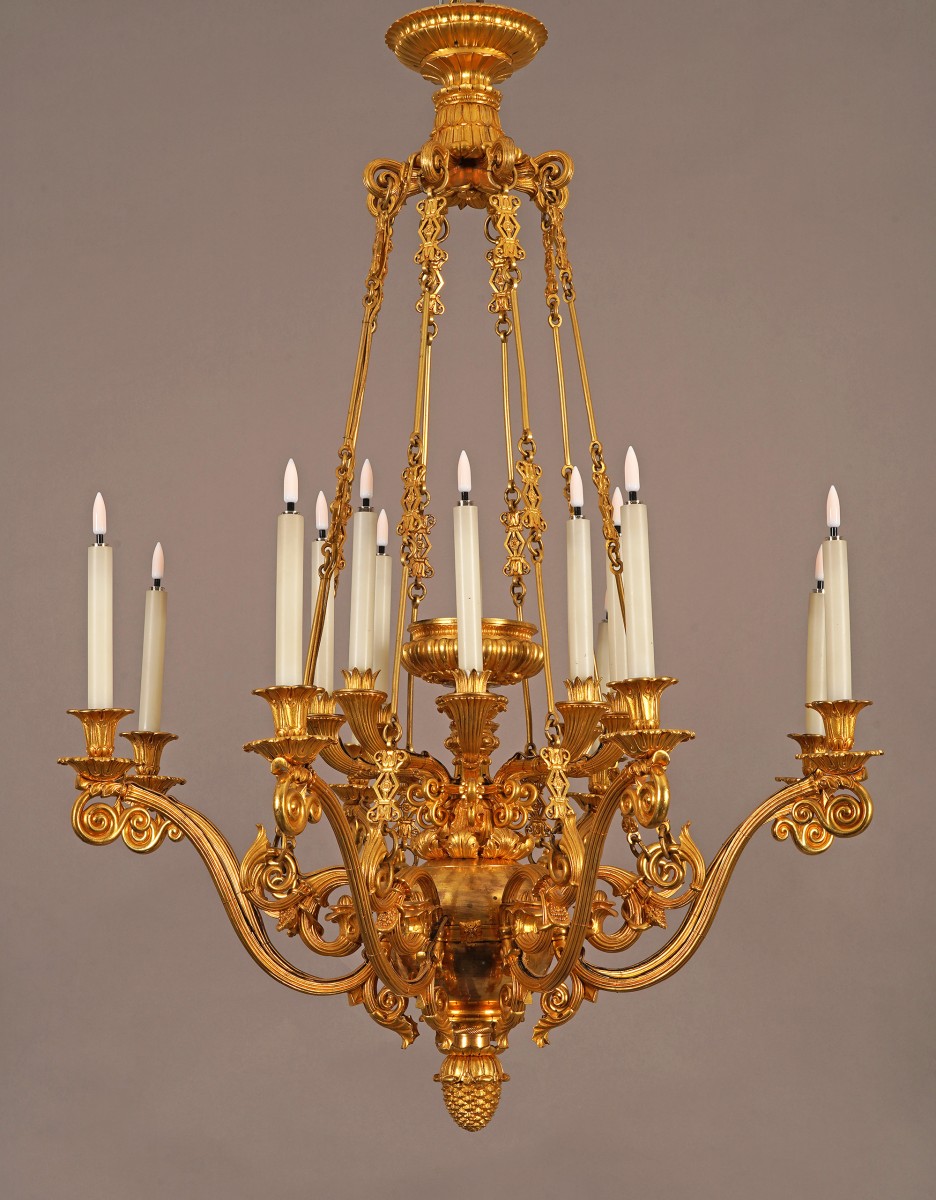
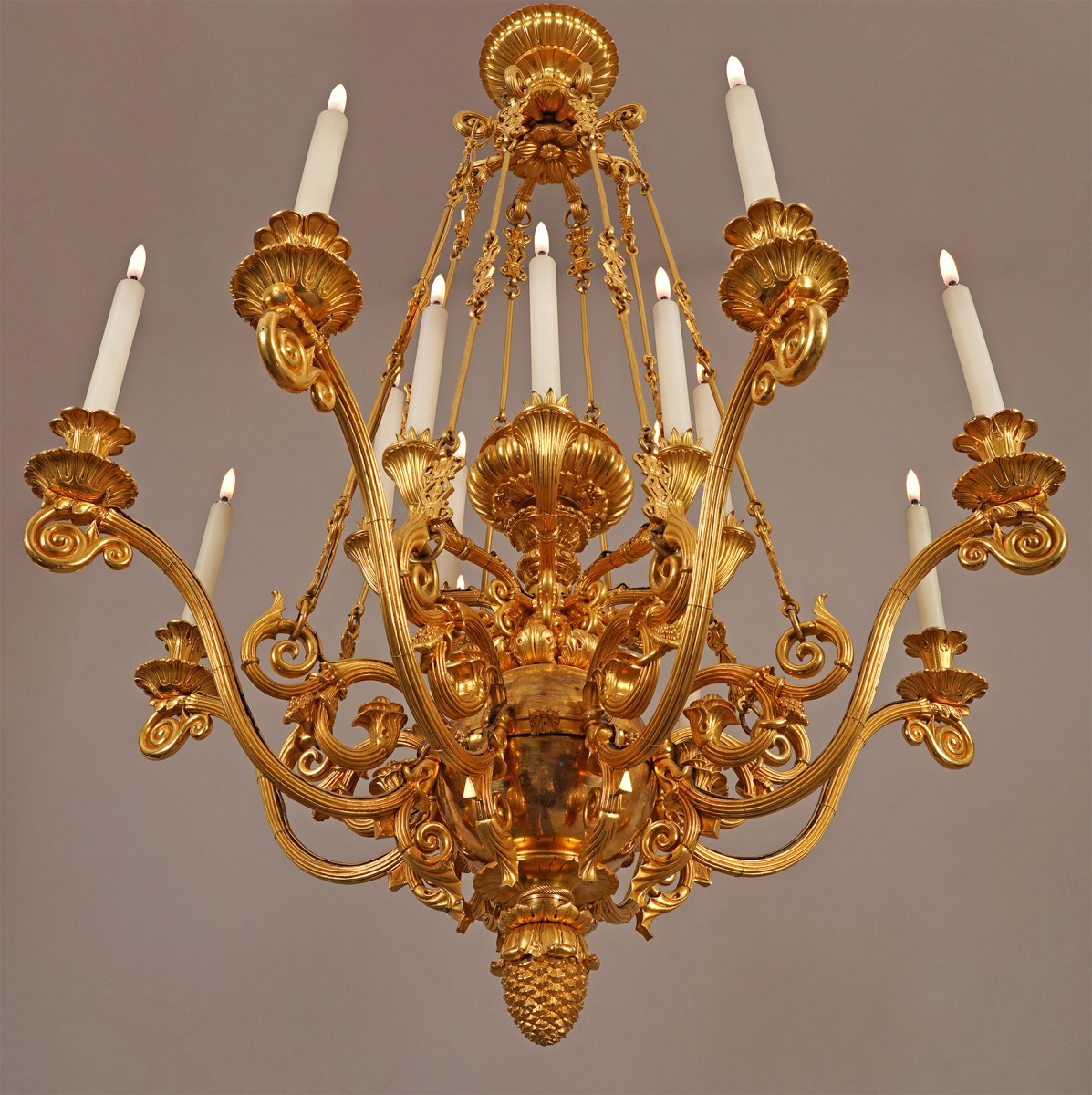
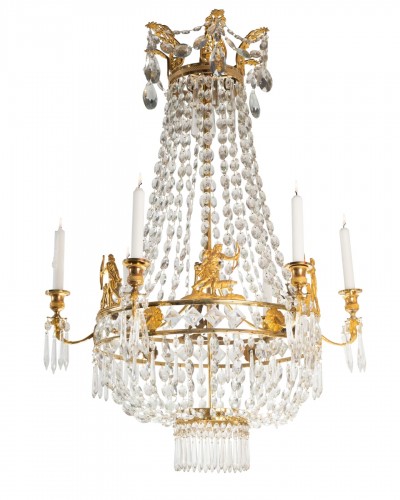
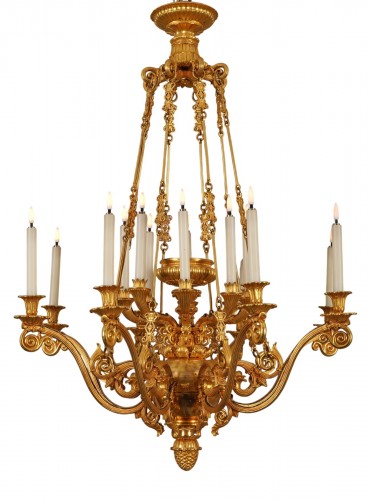
Large chandelier in chased and gilded bronze with sixteen lights attr. to G.-J. Galle, fully embodying the refined aesthetic of the Restoration period (1814–1830), marked by a return to a certain classical sobriety tempered with ornamental elegance.
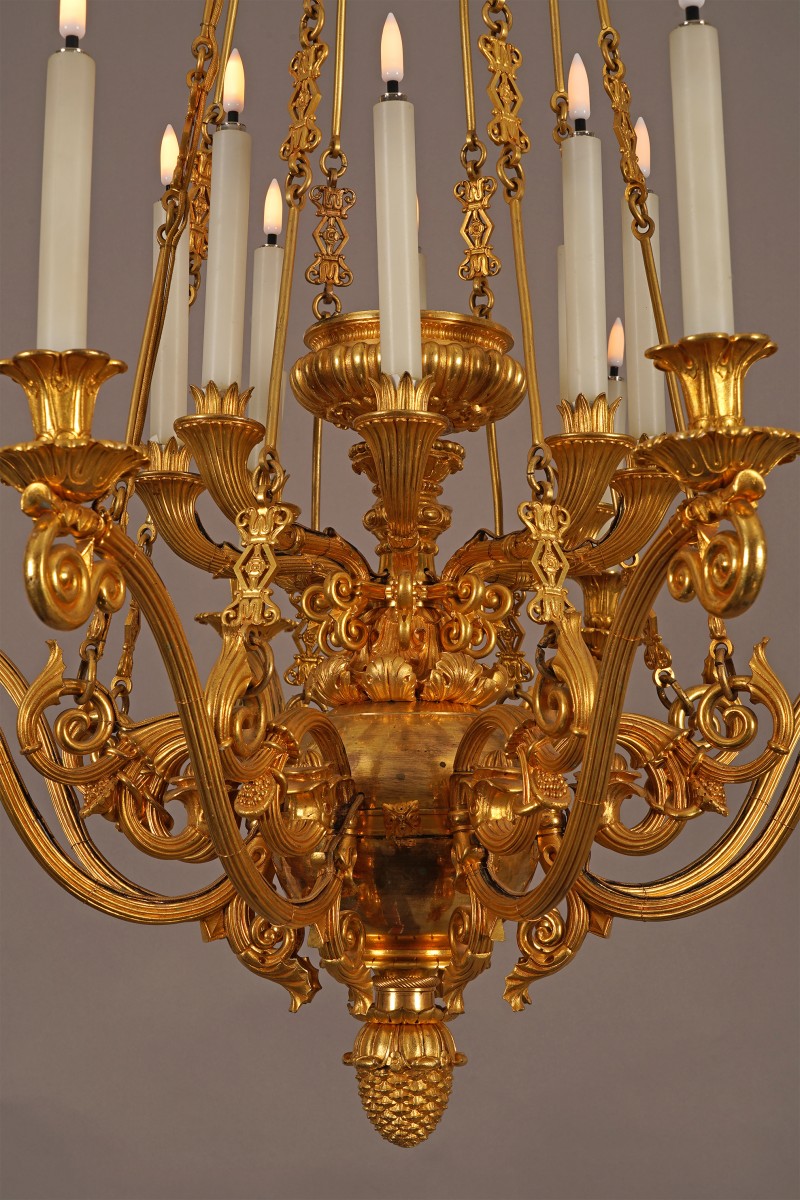
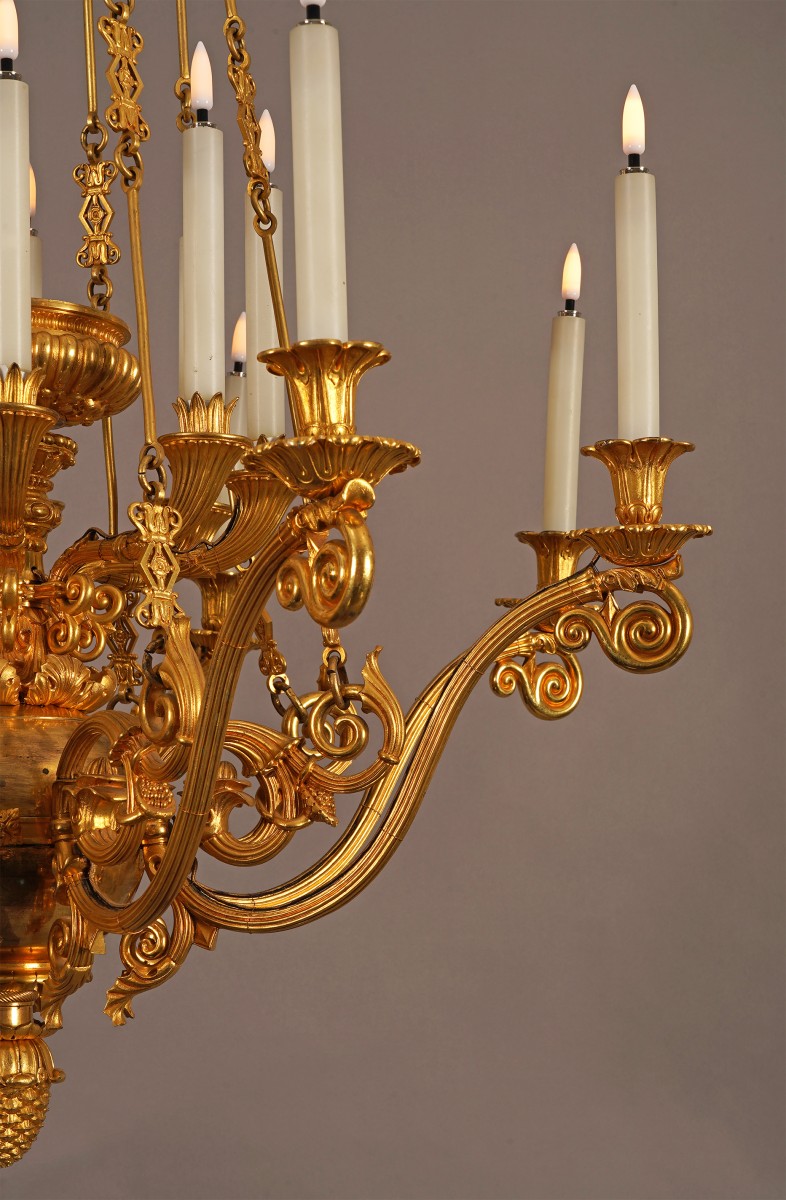
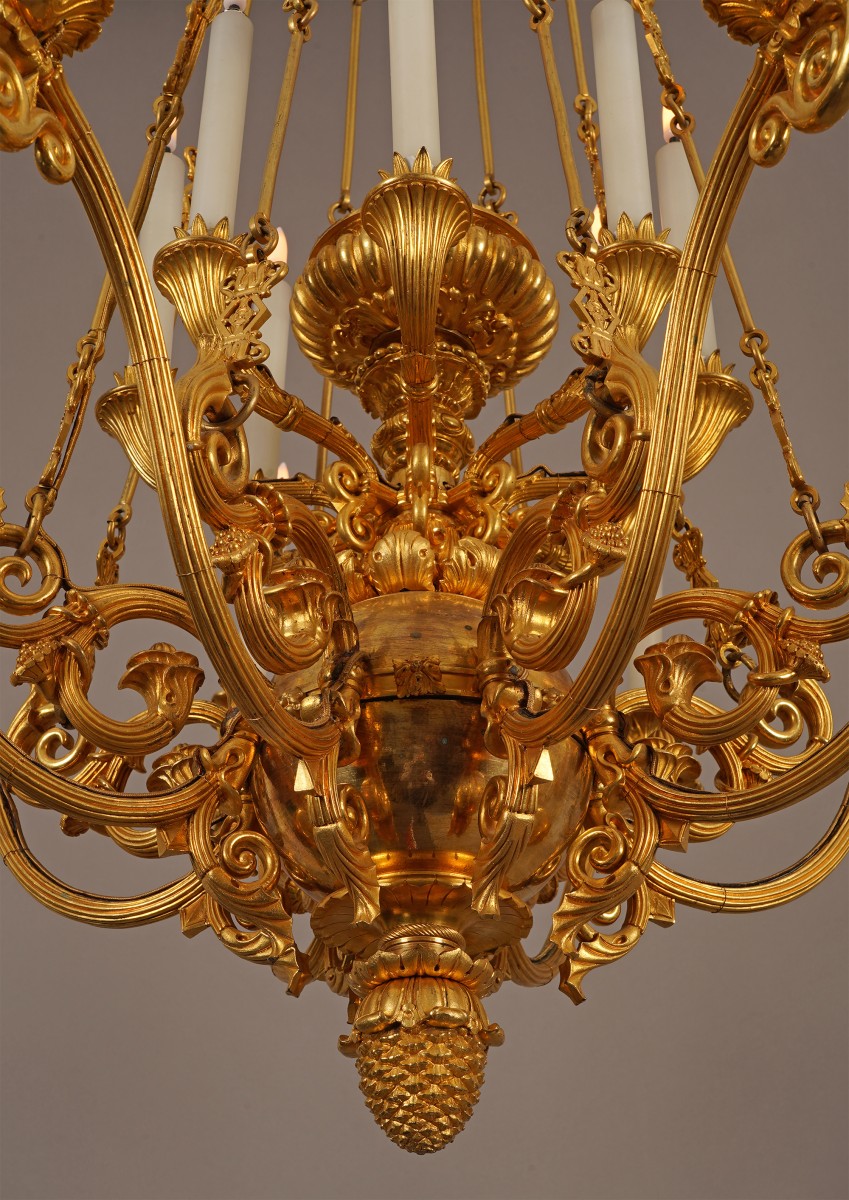
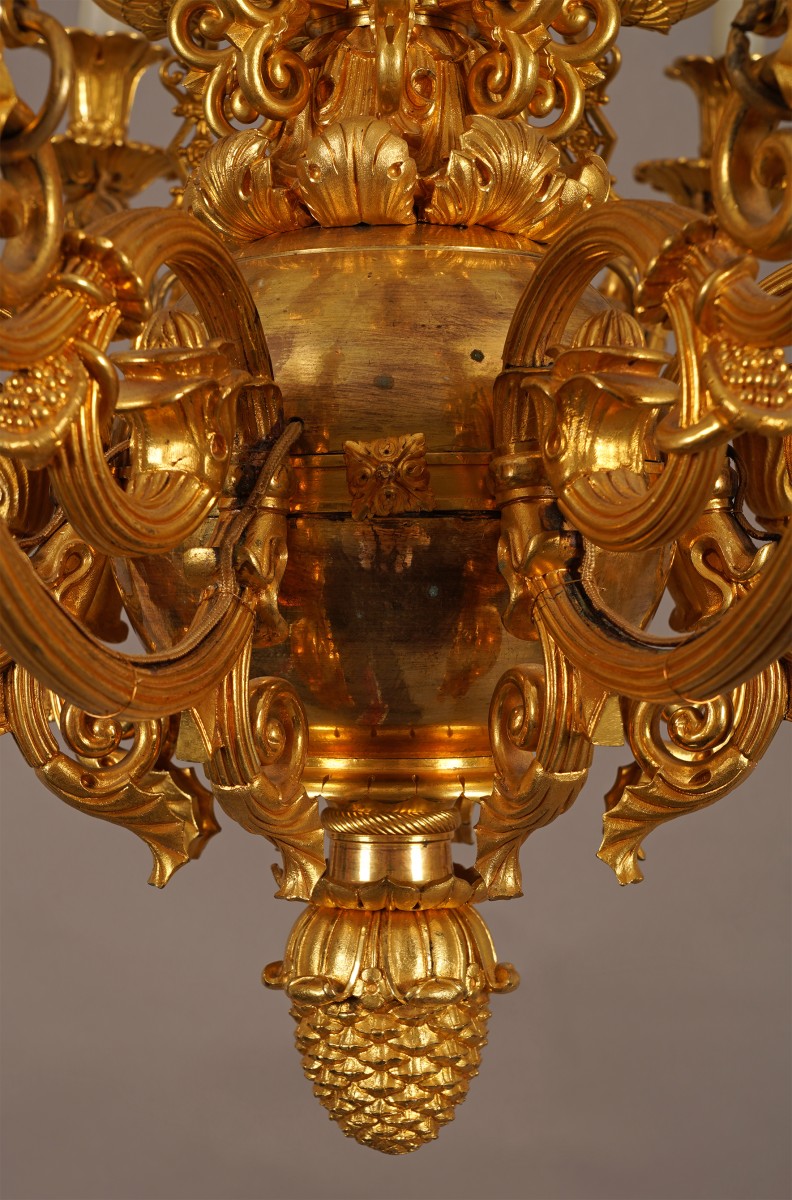
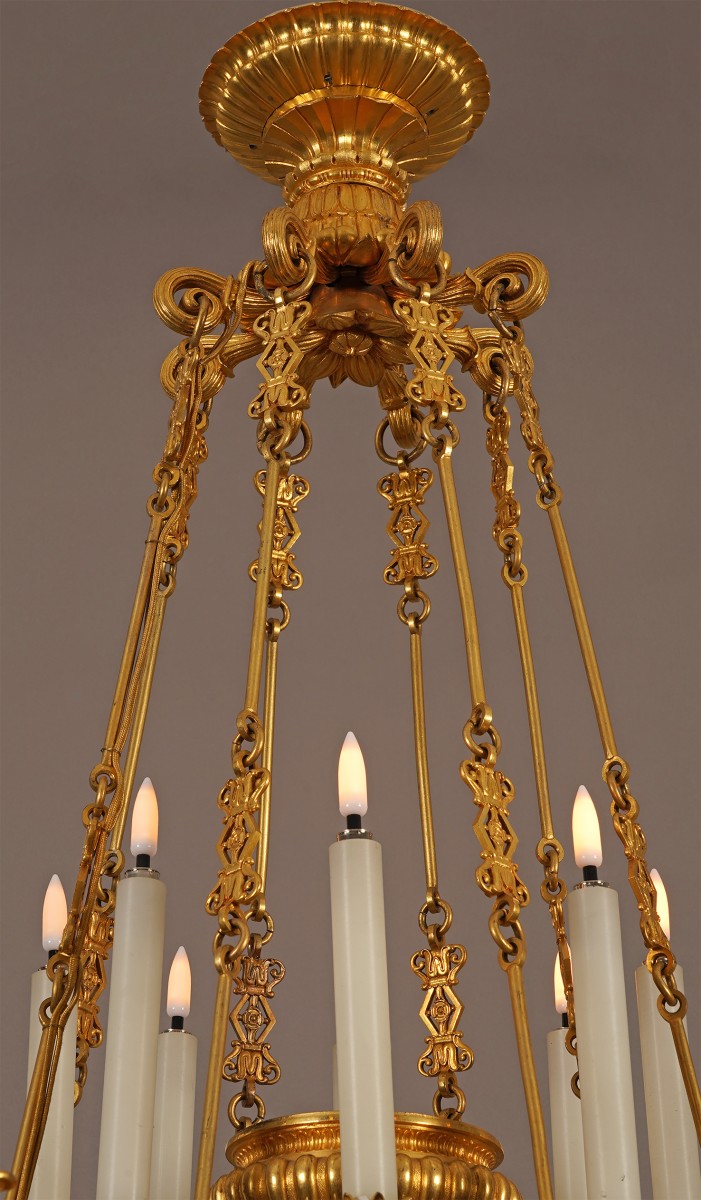
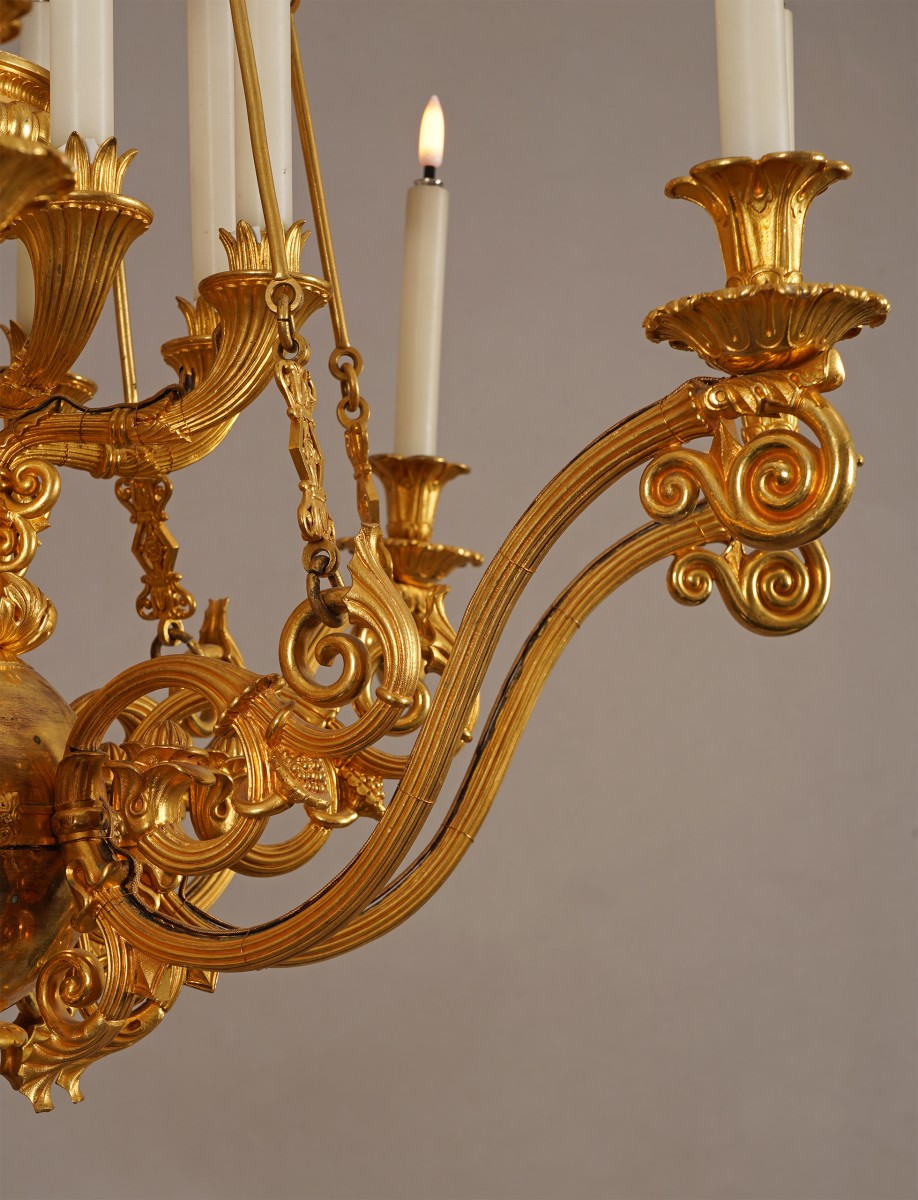
The central shaft, adorned with stylized acanthus leaves and finely chased friezes, is composed of a sphere decorated with rosettes and foliage motifs, ending in a pinecone (an ancient symbol of eternity), and supports two rows of eight fluted arms of light with double scrolls. A gadrooned basin in the antique taste, a detail frequently seen during the Restoration, crowns the whole. It is suspended by eight rods with symmetrical openwork links, decorated with rosettes and scrolls inspired by the ornamental vocabulary inherited from the Empire style, and attached by scroll motifs to a leafy corona surmounted by a flared-rim bowl with gadrooned decoration.
This chandelier perfectly illustrates the stylistic transition characteristic of the Restoration period: a balance between the classical rigor inherited from the Empire style and a renewed taste for lightness, grace, and a certain decorative refinement. It is a work that is both functional and sculptural, designed to enhance a prestigious interior while demonstrating the exceptional craftsmanship of Parisian bronzeworkers of the early 19th century.
Chandeliers with widely projecting arms, imposing pinecone finials, and the use of rigid chains with decorative links are recurring hallmarks of G.-J. Galle’s production, who was awarded a medal at the 1819 Exhibition of the Products of Industry.
Biography :
Son of the great Empire-era bronzemaker Claude Galle (1759–1815), Gérard-Jean (1788–1846) took over his father’s workshop in 1815, inheriting its molds, designs, and prestigious clientele, and brought it to its peak. While he continued producing bronzes in the Empire style, he gradually introduced greater lightness, richer decoration, and forms that heralded the Charles X style. Under the July Monarchy, his style became more eclectic.