Offered by Tobogan Antiques
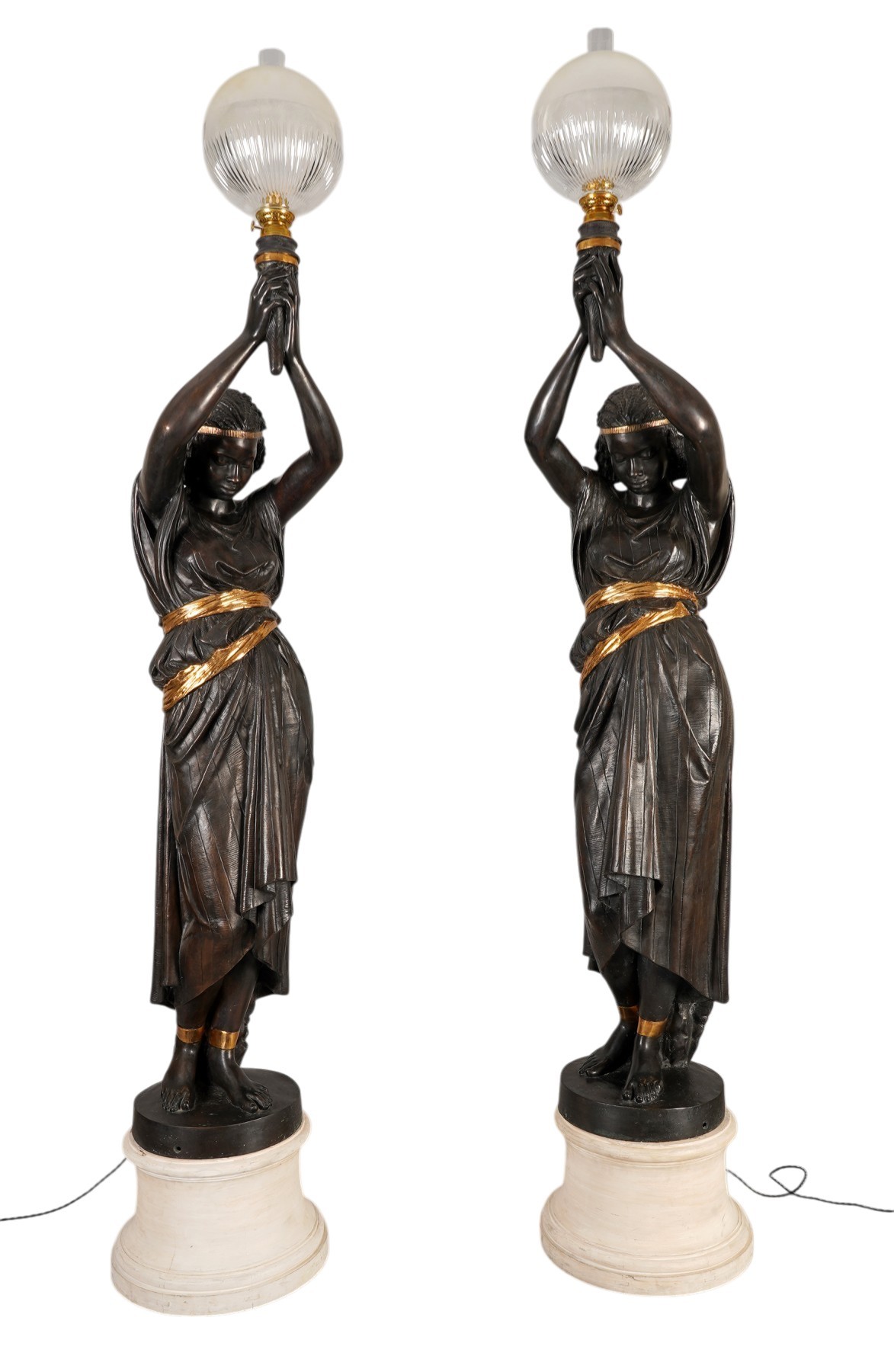
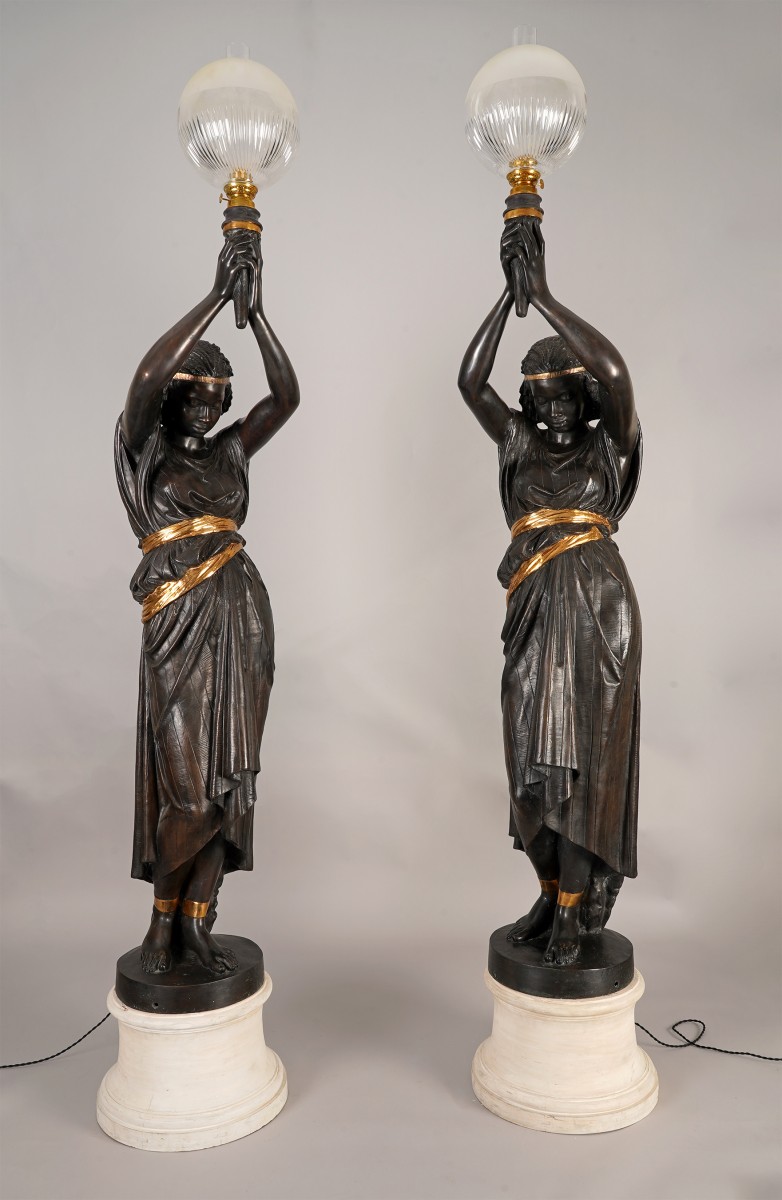
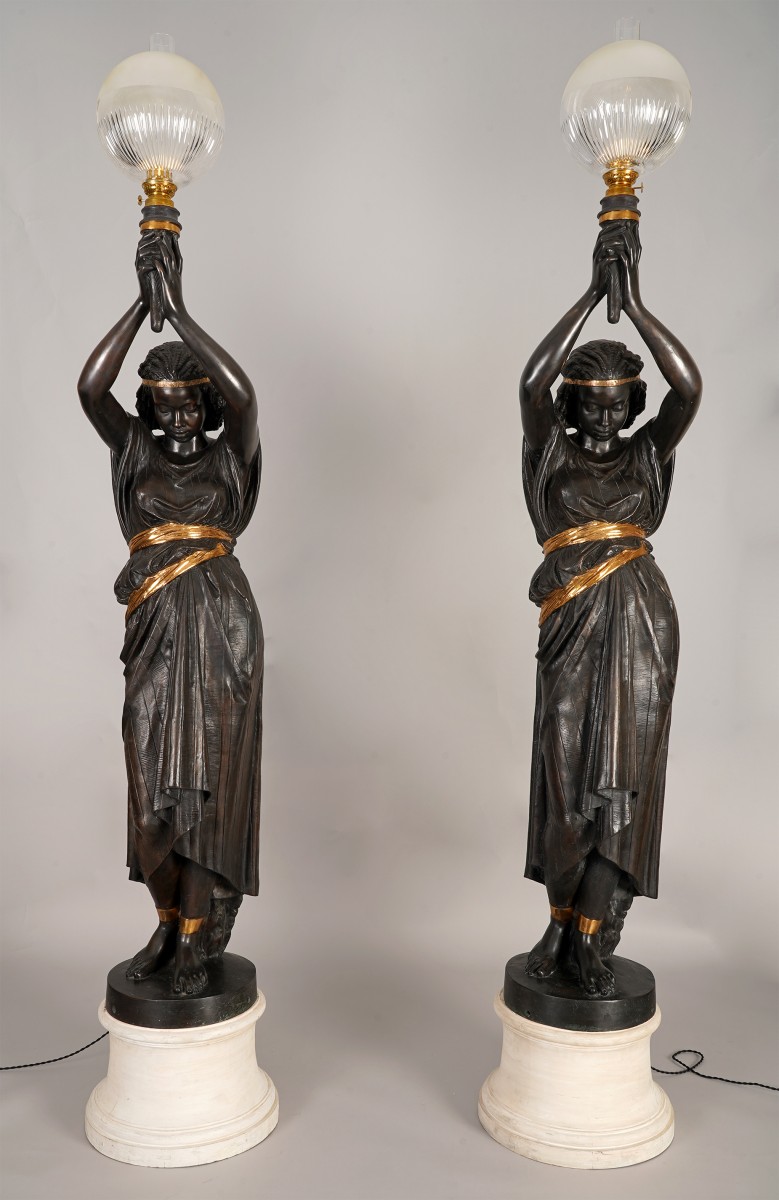

Total height : 234 cm (92,1 in.) ; Base height : 29 cm (11,4 in.) ; width : 38 cm (15 in.) ; Depth : 45 cm (17,7 in.)
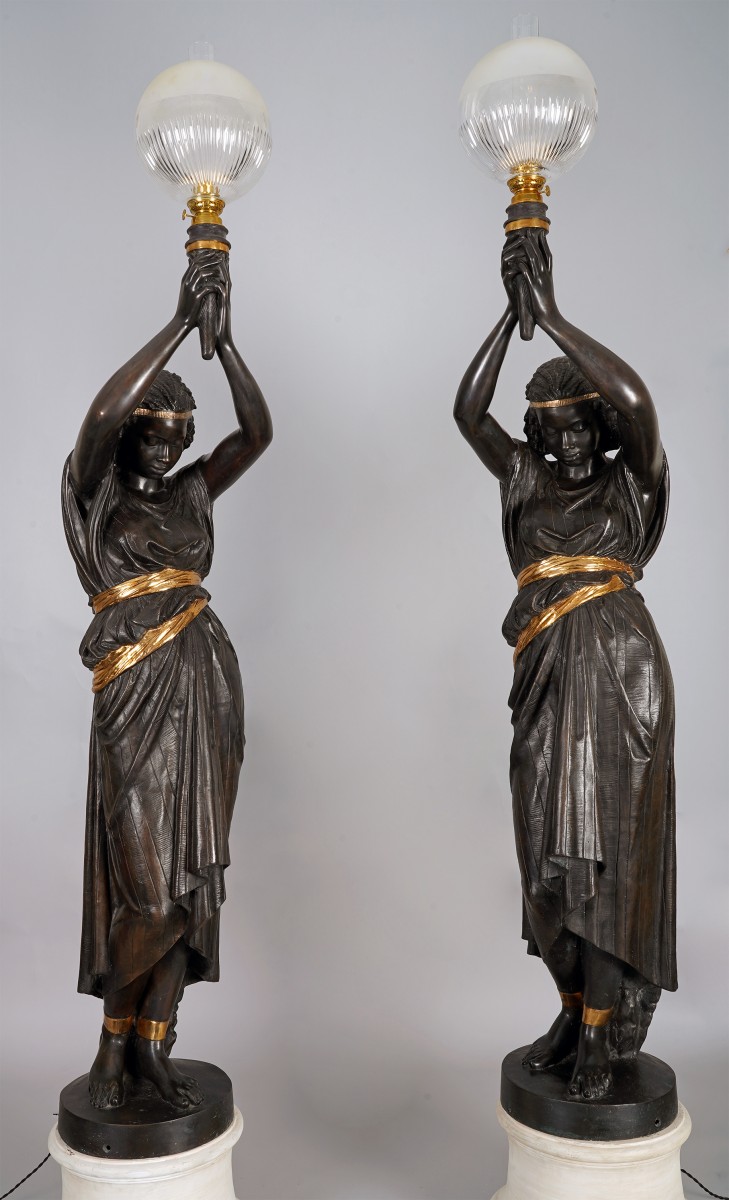
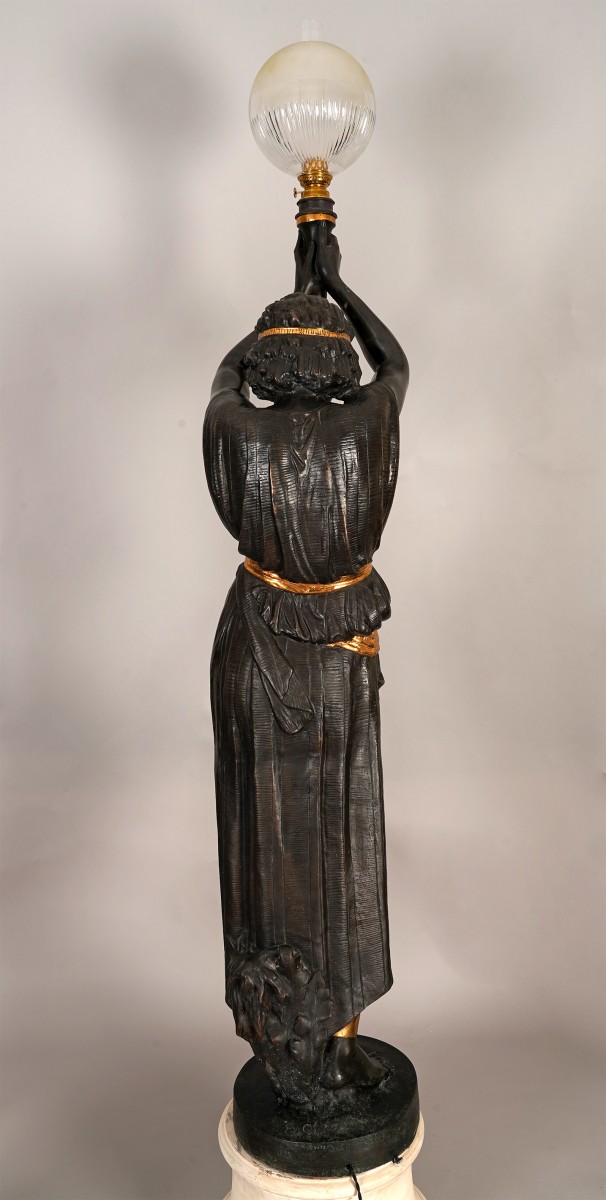
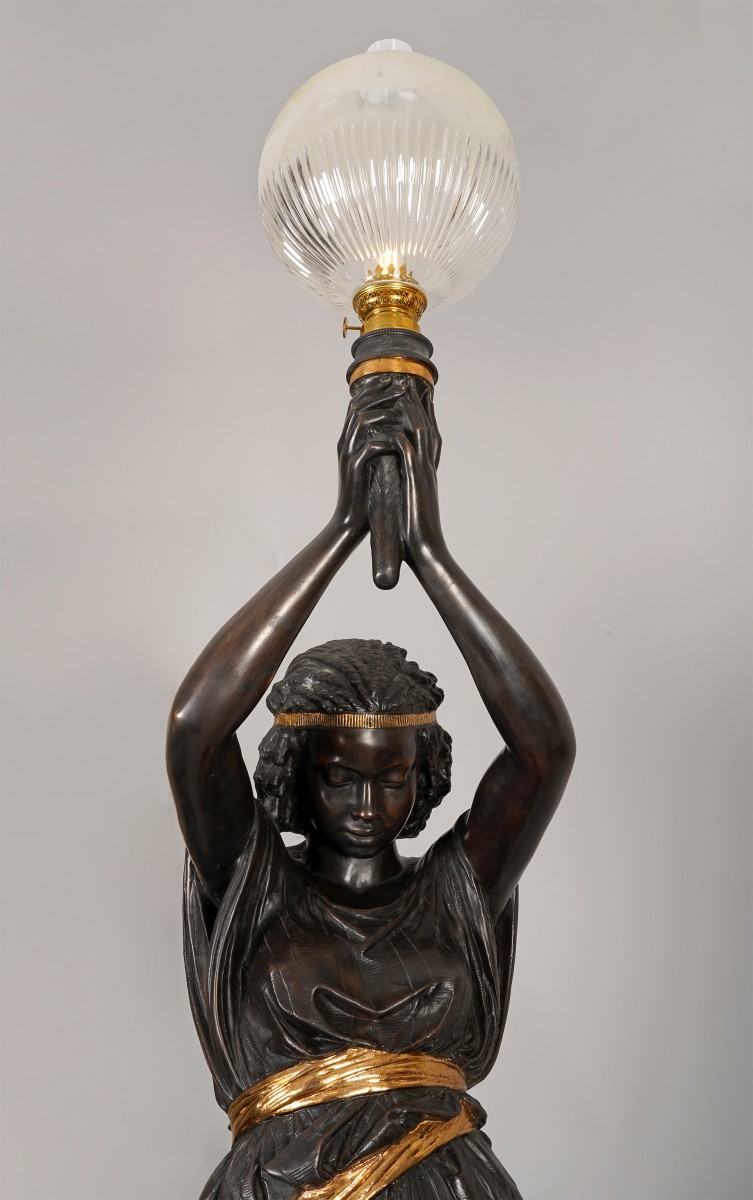
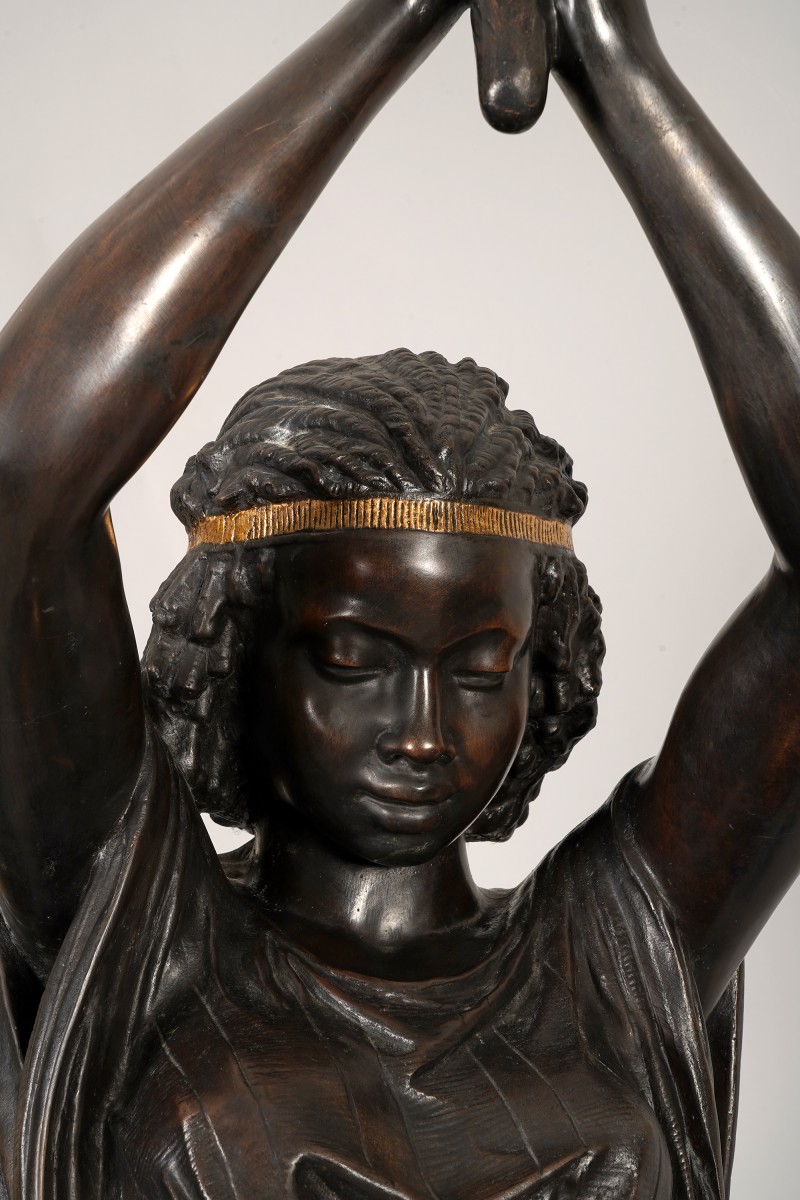
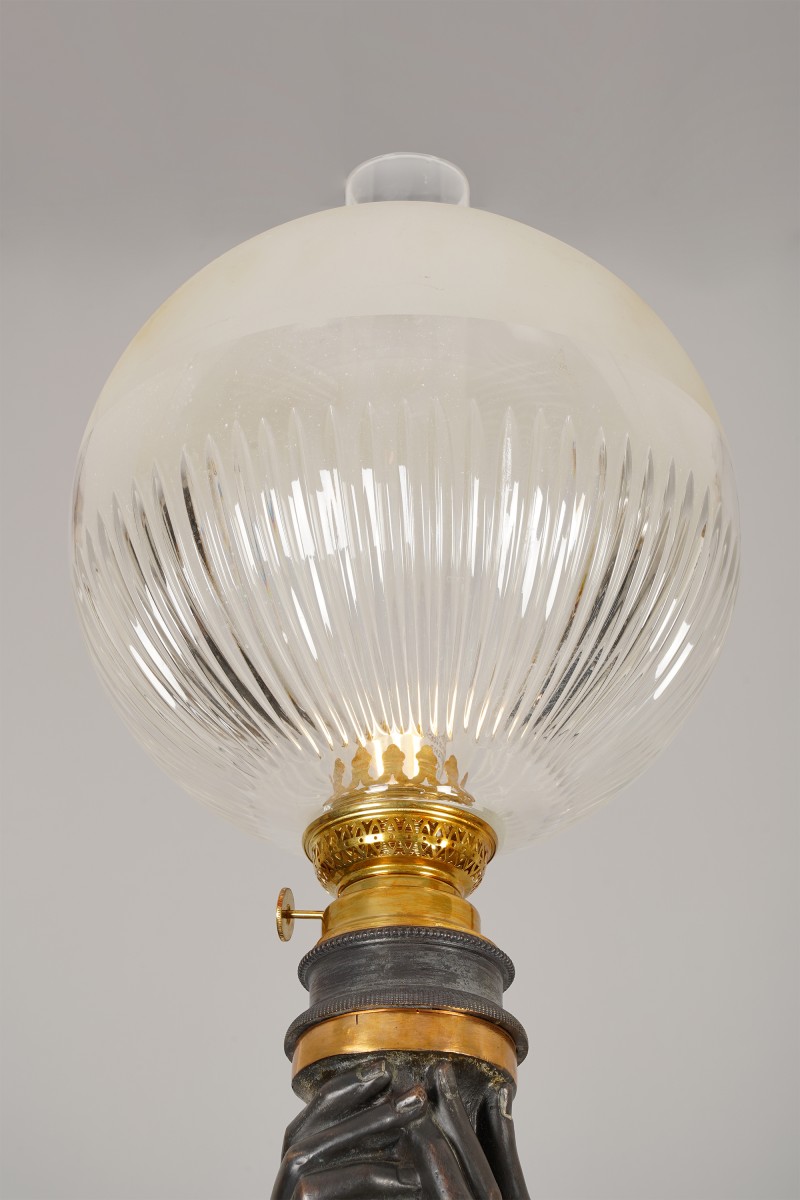
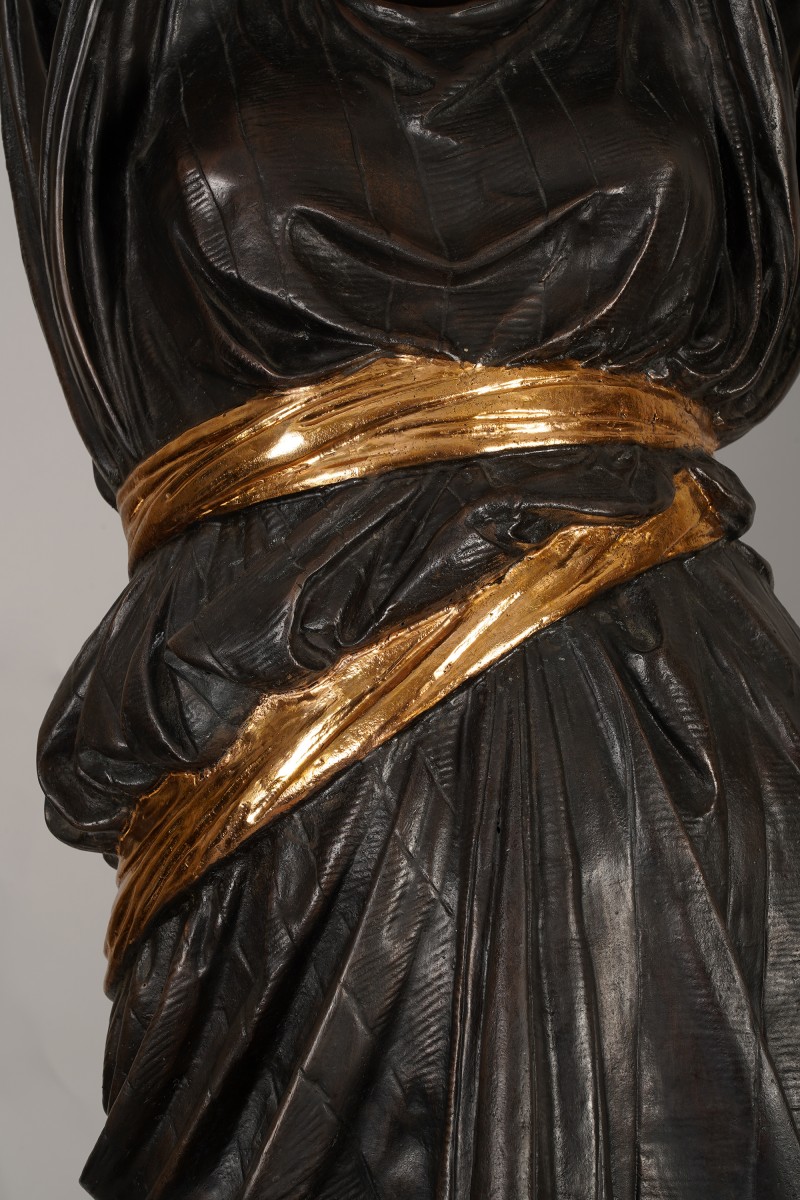
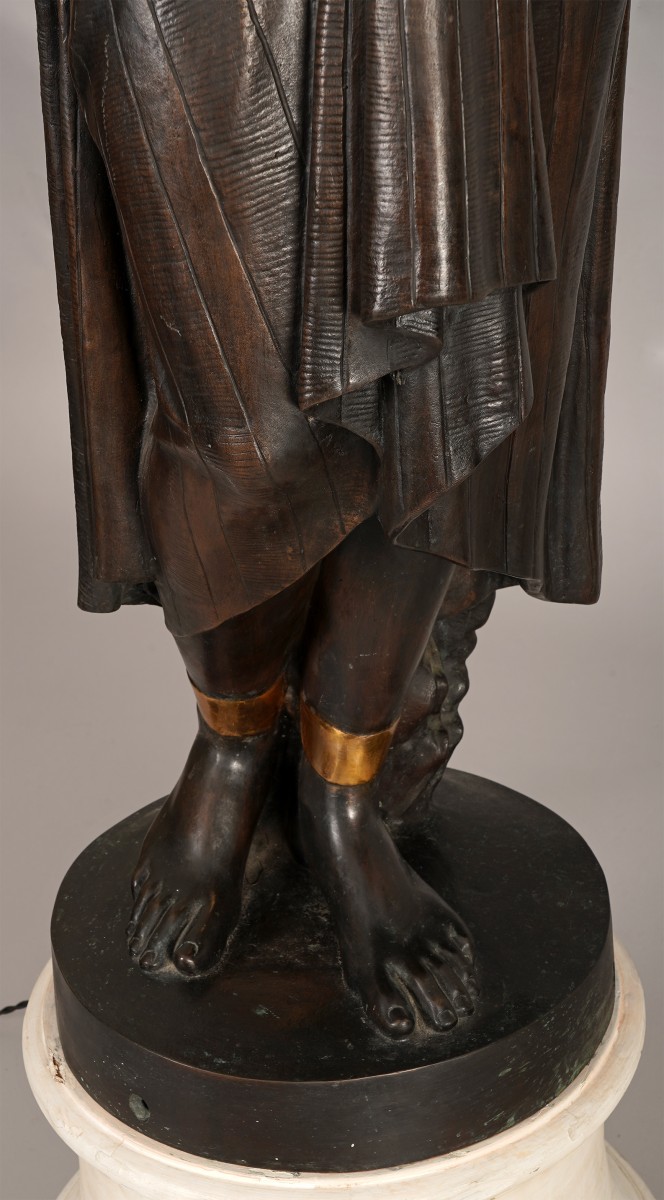
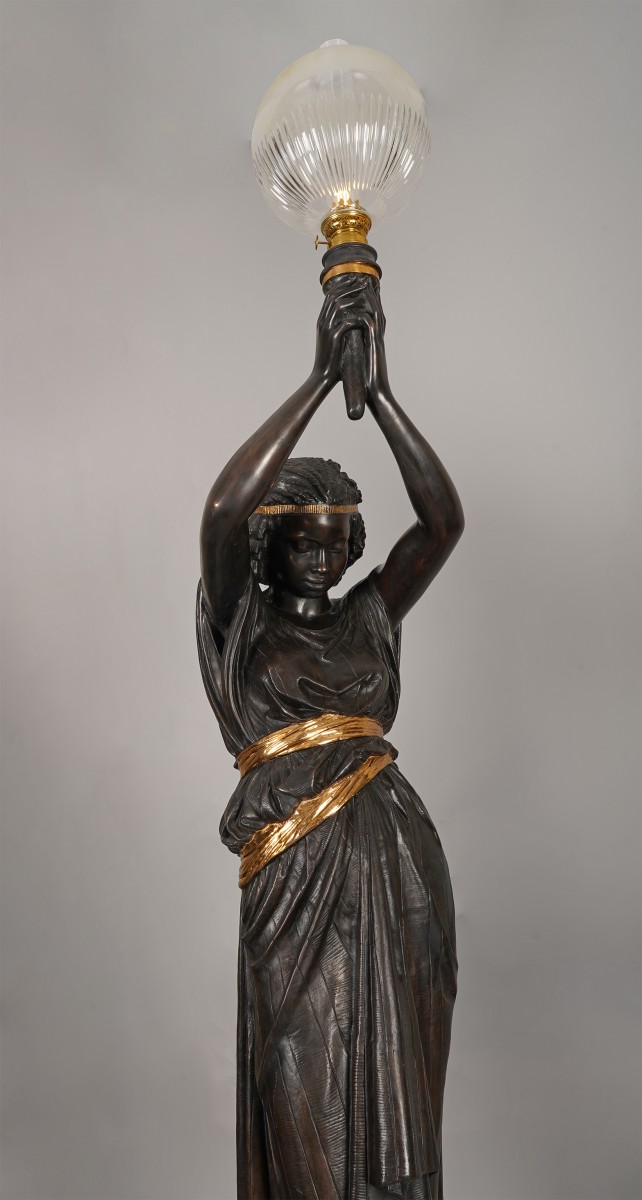
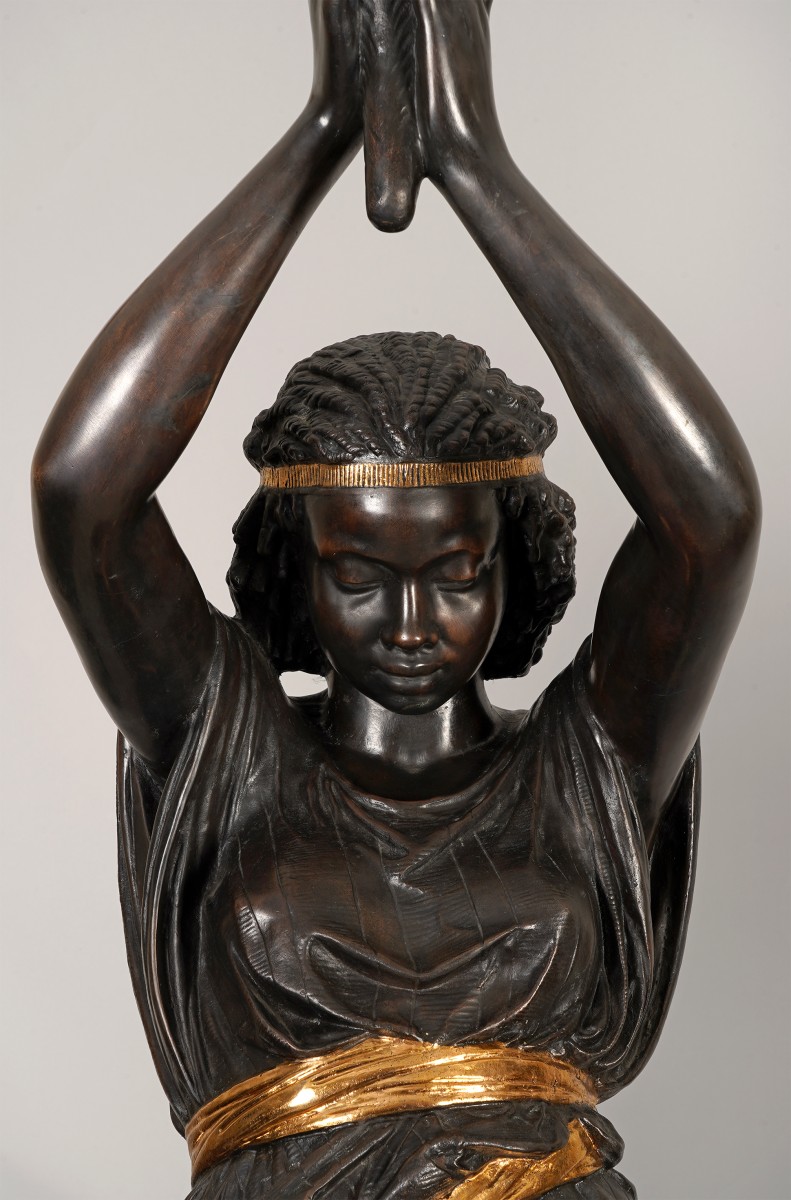
Exceptional pair of patinated bronze Nubian figures with golden highlights after a model by Mathurin Moreau. Each woman, draped in antique-style garments, stands gracefully with gilt anklets and her arms raised elegantly above her head to support a lighted torch. Their serene faces, marked by great softness, feature lowered eyelids and hair held in place by a gilt ribbon. The drapery, gathered with a gilt belt, emphasizes the subtle contrapposto of their stance.
Each figure stands on a circular base.
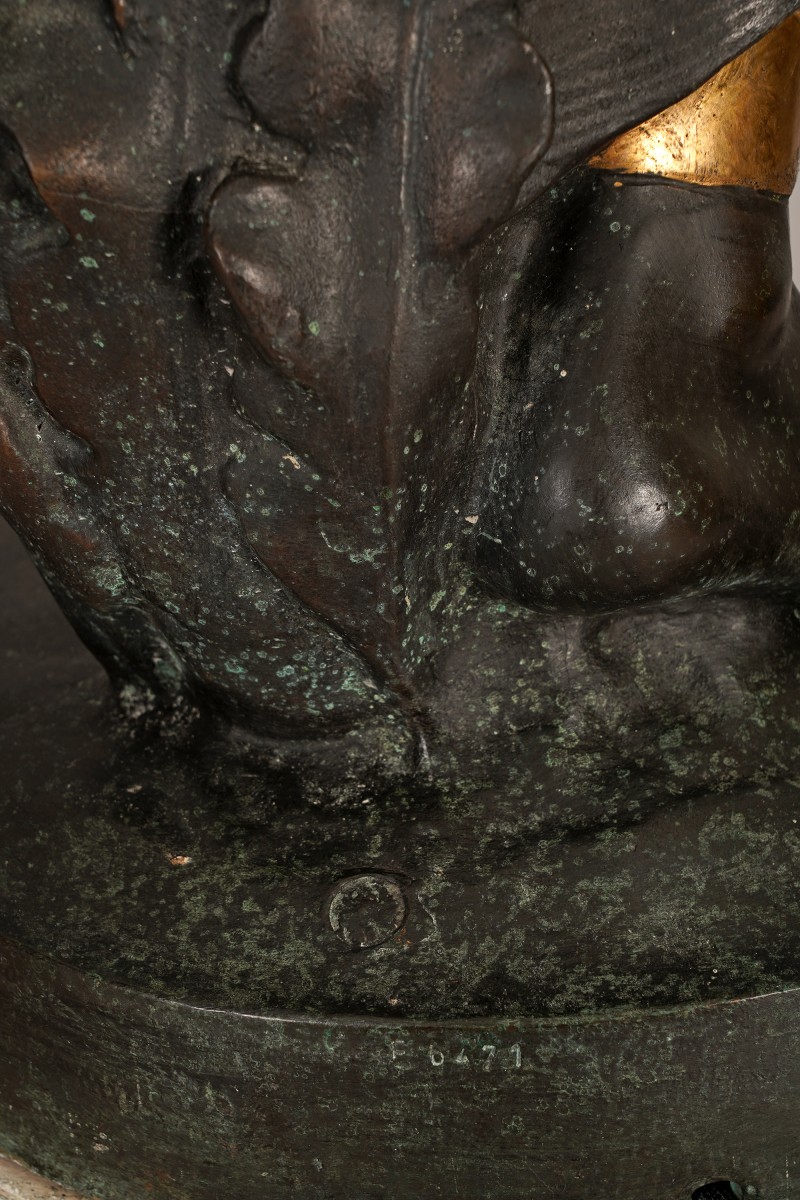
An edition number is visible on one of the bases (6471), consistent with the practices of the Val d’Osne foundry; a circular workshop stamp is also present.
Related work :
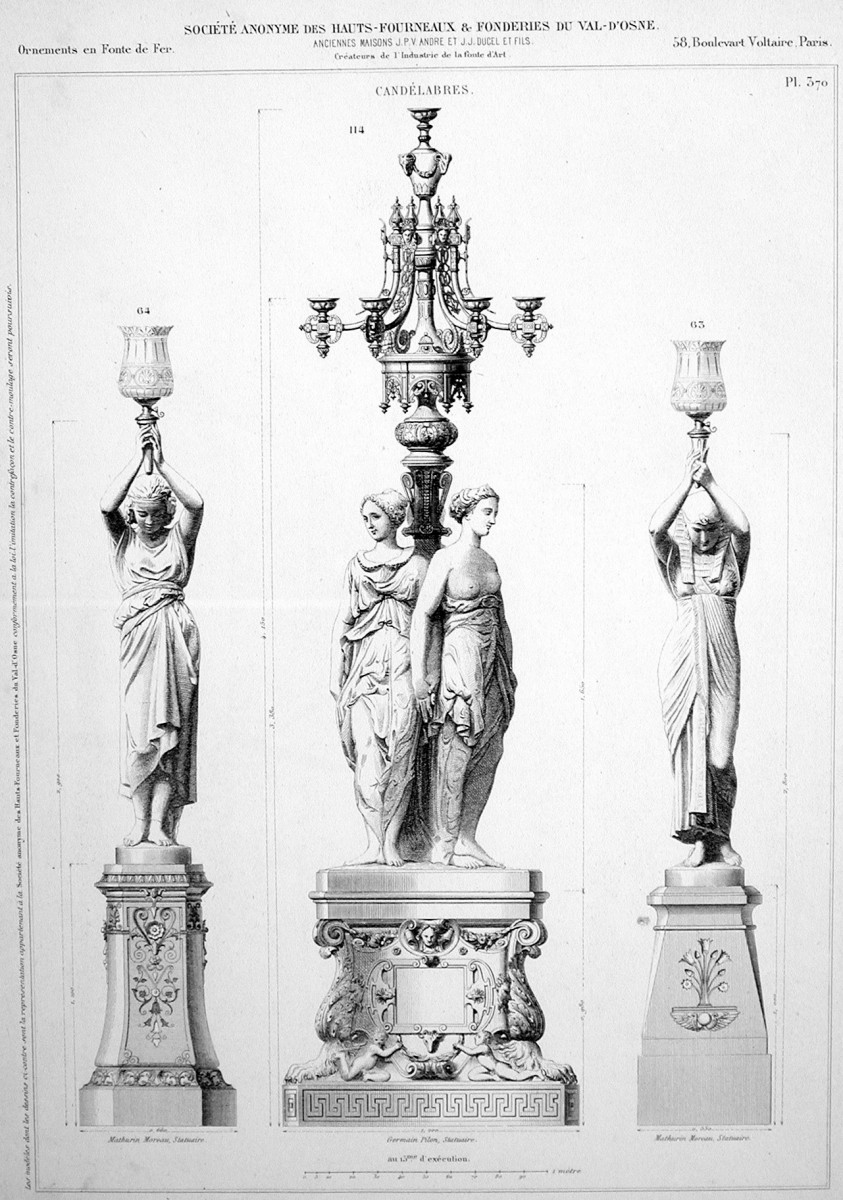
Model of candelabra by Mathurin Moreau, illustrated in the catalogue of the Société anonyme des hauts-fourneaux et fonderies du Val d'Osne.
Biography :
Mathurin Moreau was a major 19th-century French sculptor, celebrated for his academic and naturalistic style. Trained at the École des Beaux-Arts and winner of the Prix de Rome, he exhibited regularly at the Salons from 1848 onward. His works often depict allegorical or feminine figures. He collaborated with many leading art foundries, including Barbedienne and the Val d’Osne, and received several distinctions, notably a medal of honor at the 1878 Exposition Universelle. His sculptures adorn numerous monuments and gardens in France and abroad.
The Val d’Osne Foundry, established in 1836 by Jean-Pierre-Victor André, became one of the most renowned French art foundries of the 19th century. Specializing in ornamental cast iron and bronze, it produced an extensive catalogue of statues, fountains, candelabra, and architectural elements. Known for the high quality of its castings and for collaborations with leading sculptors (including Mathurin Moreau, Carrier-Belleuse, and Pradier), the foundry exported worldwide and earned numerous awards at the Expositions Universelles. It remains a reference in the history of architectural ornamentation and urban decoration of the Second Empire and the Belle Époque.