Offered by Franck Baptiste Paris
REQUEST INFORMATION
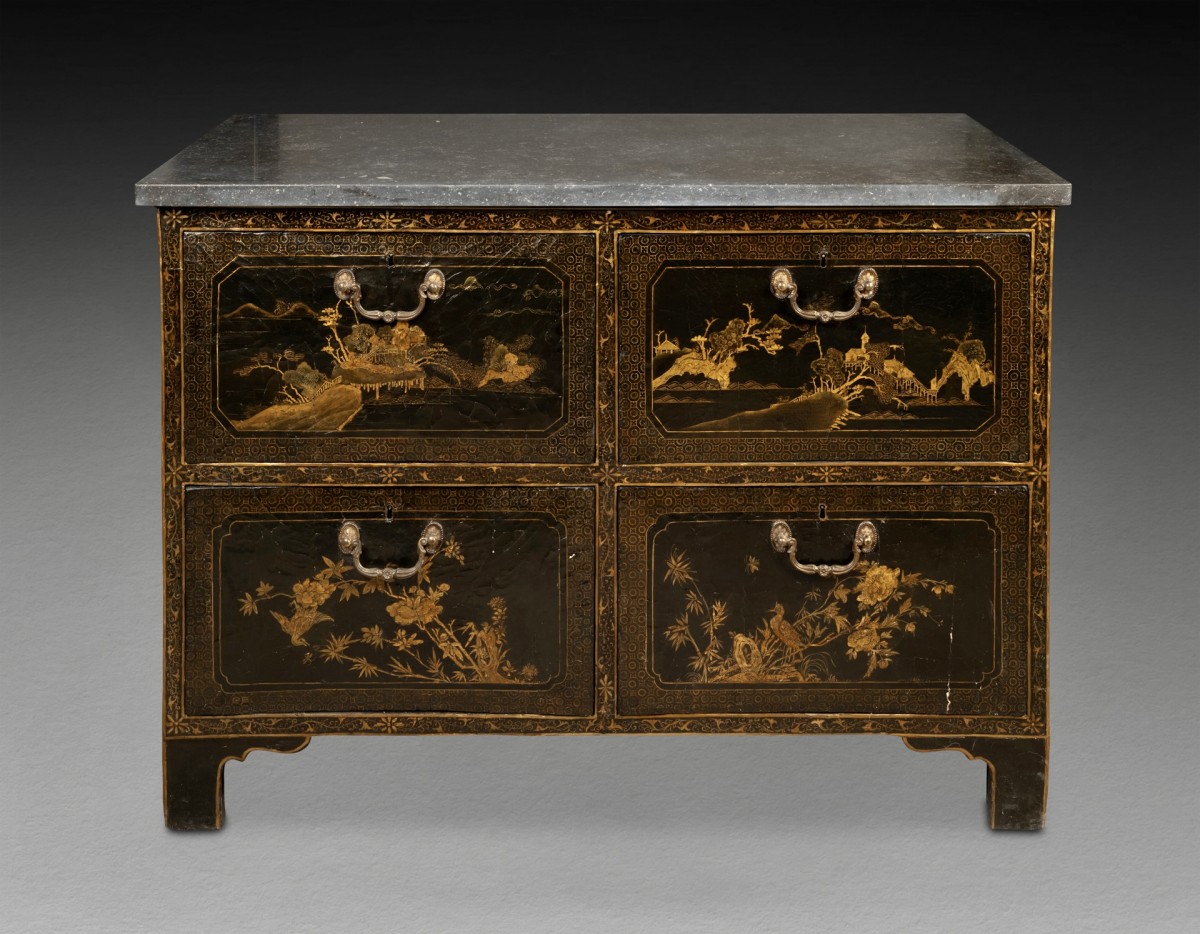
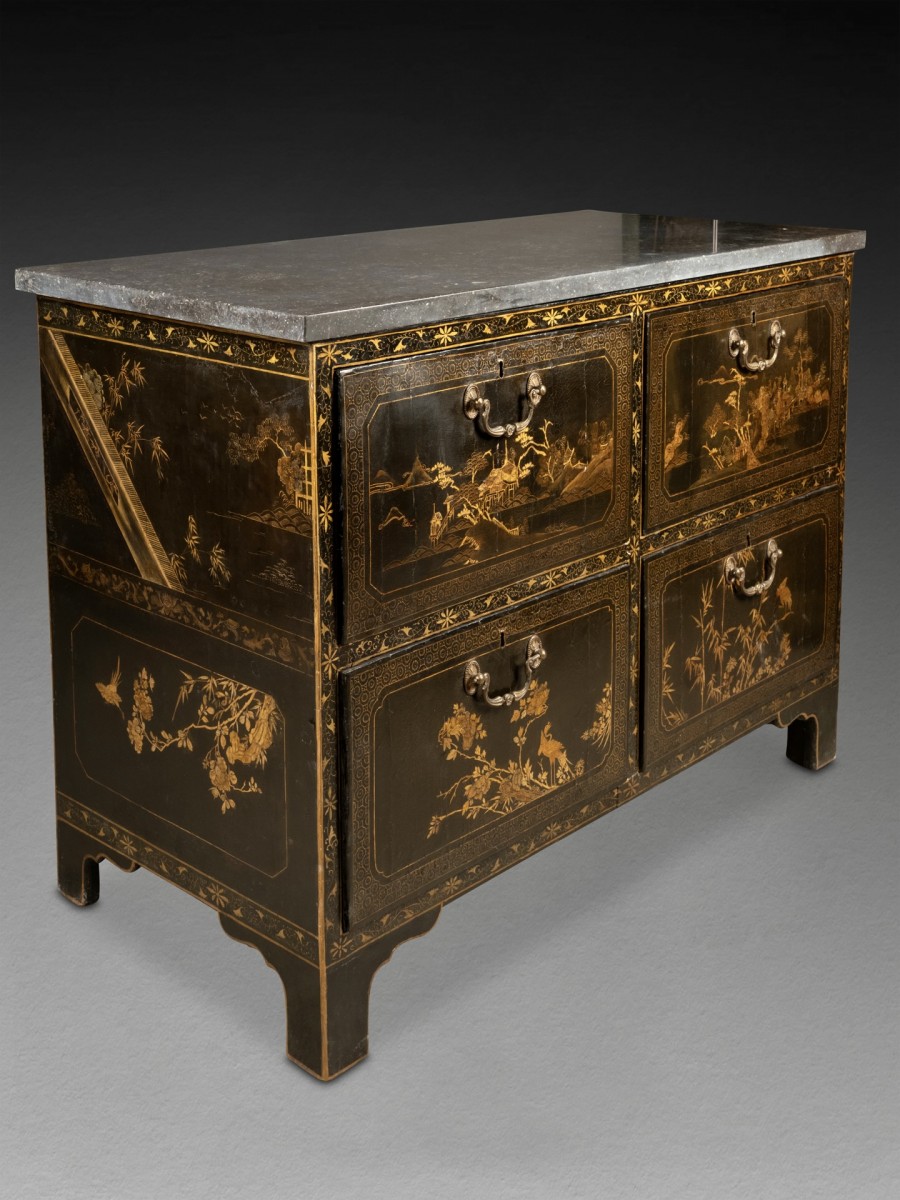

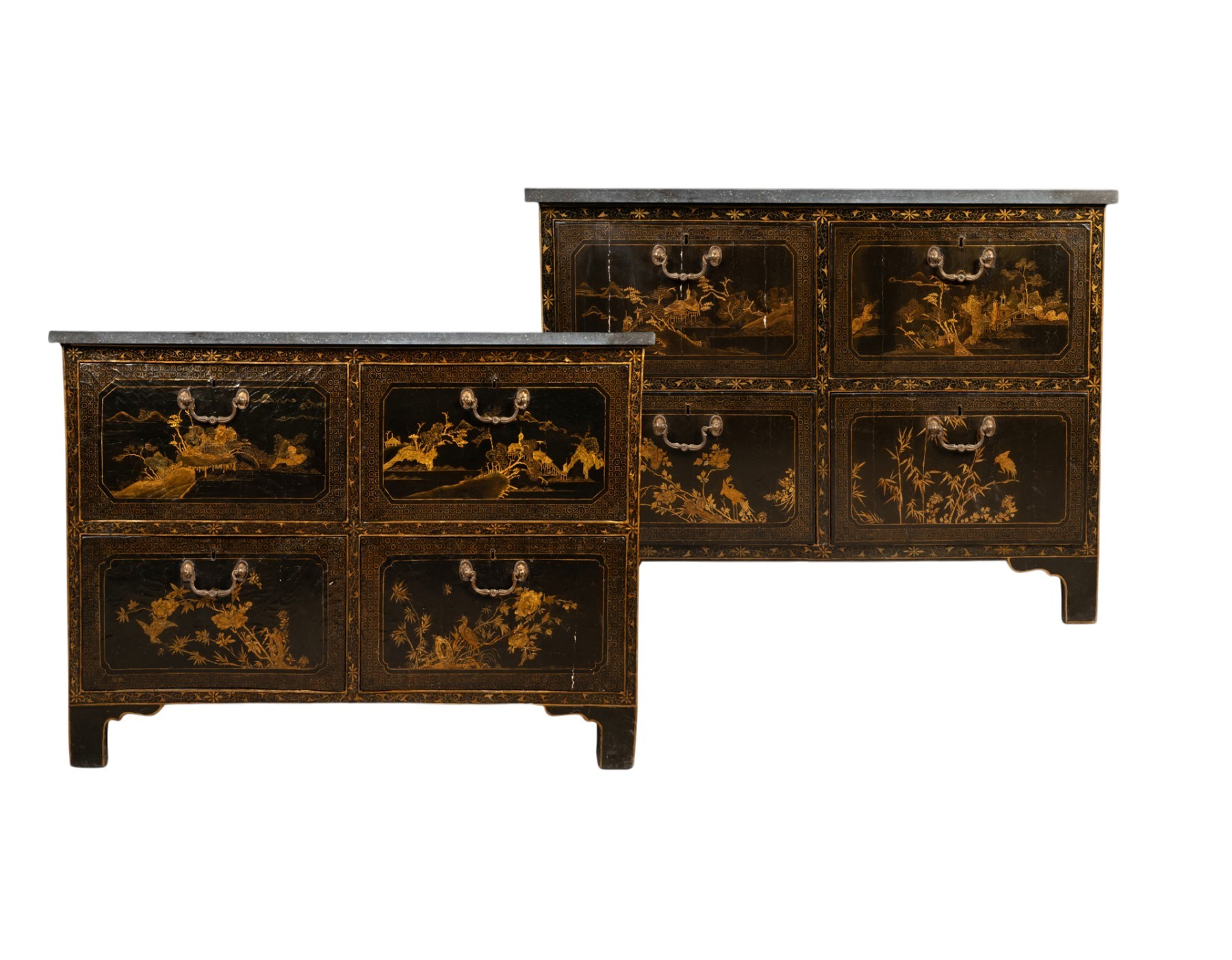
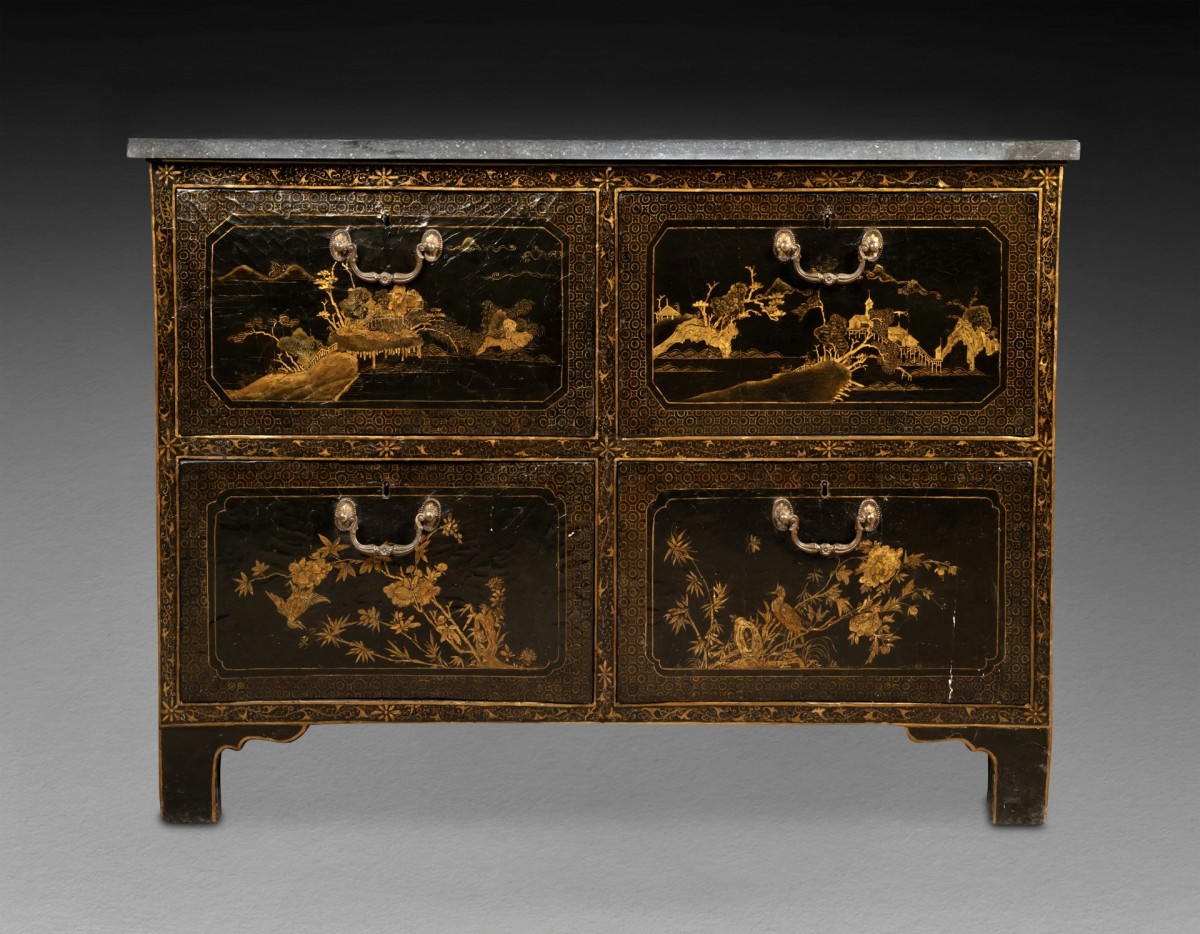
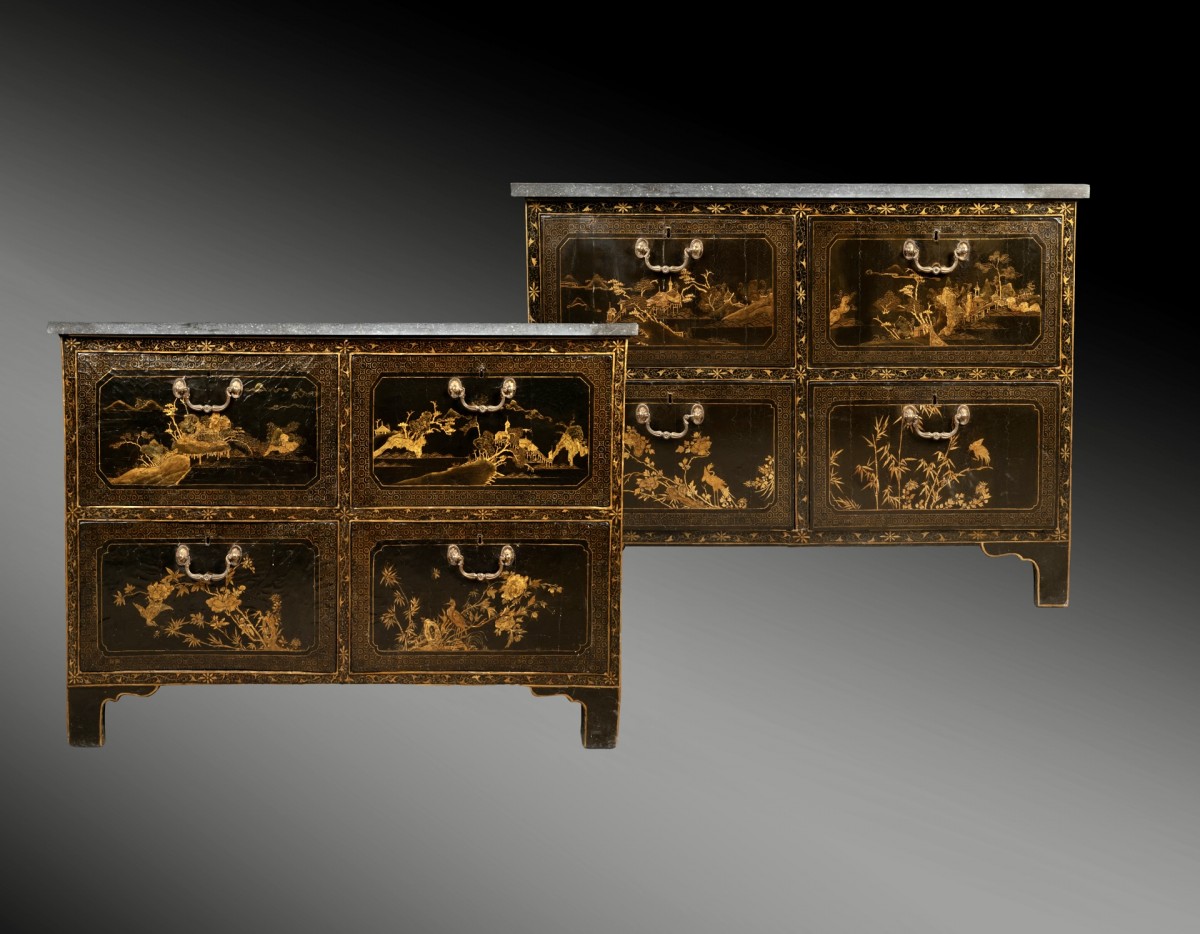
A rare pair of rectangular commodes, each opening with four large drawers in the front.
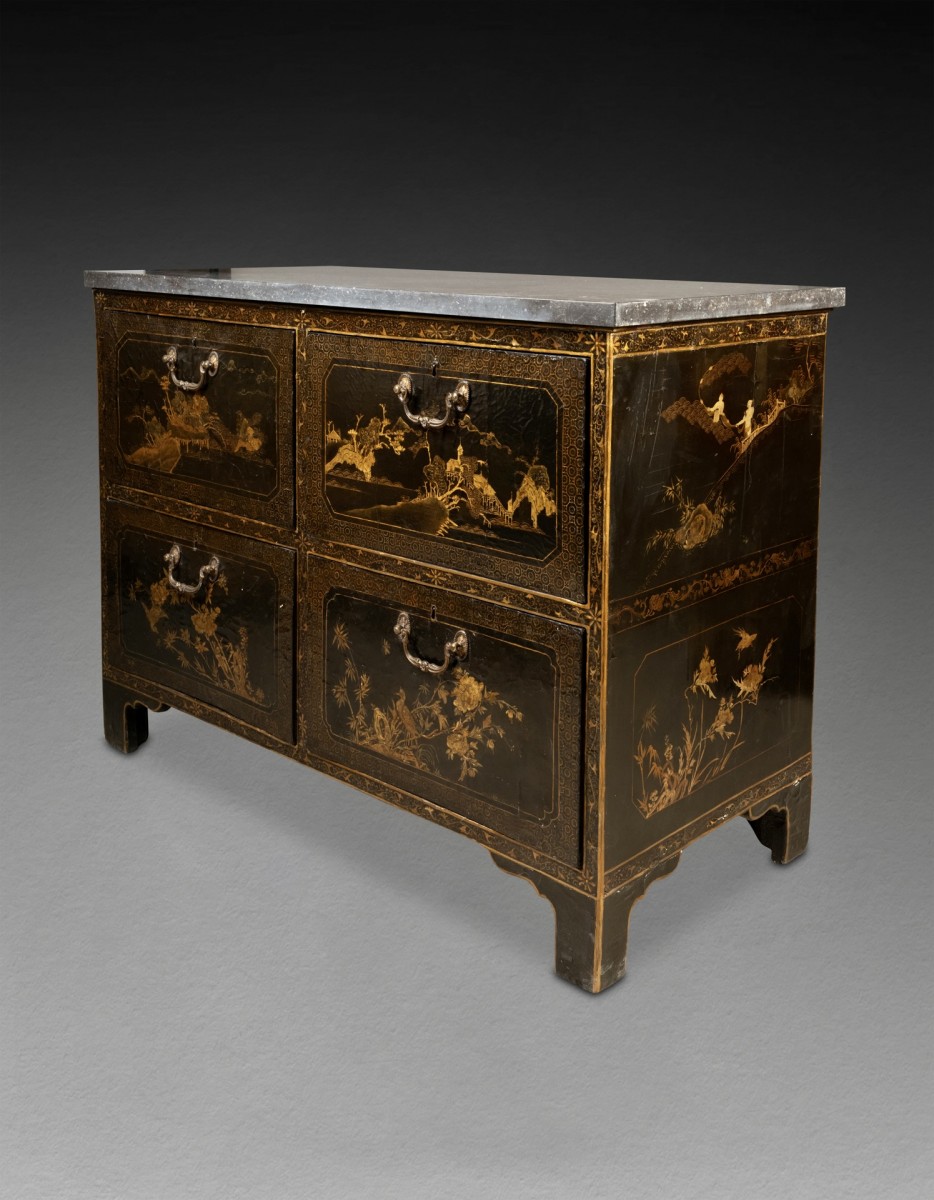
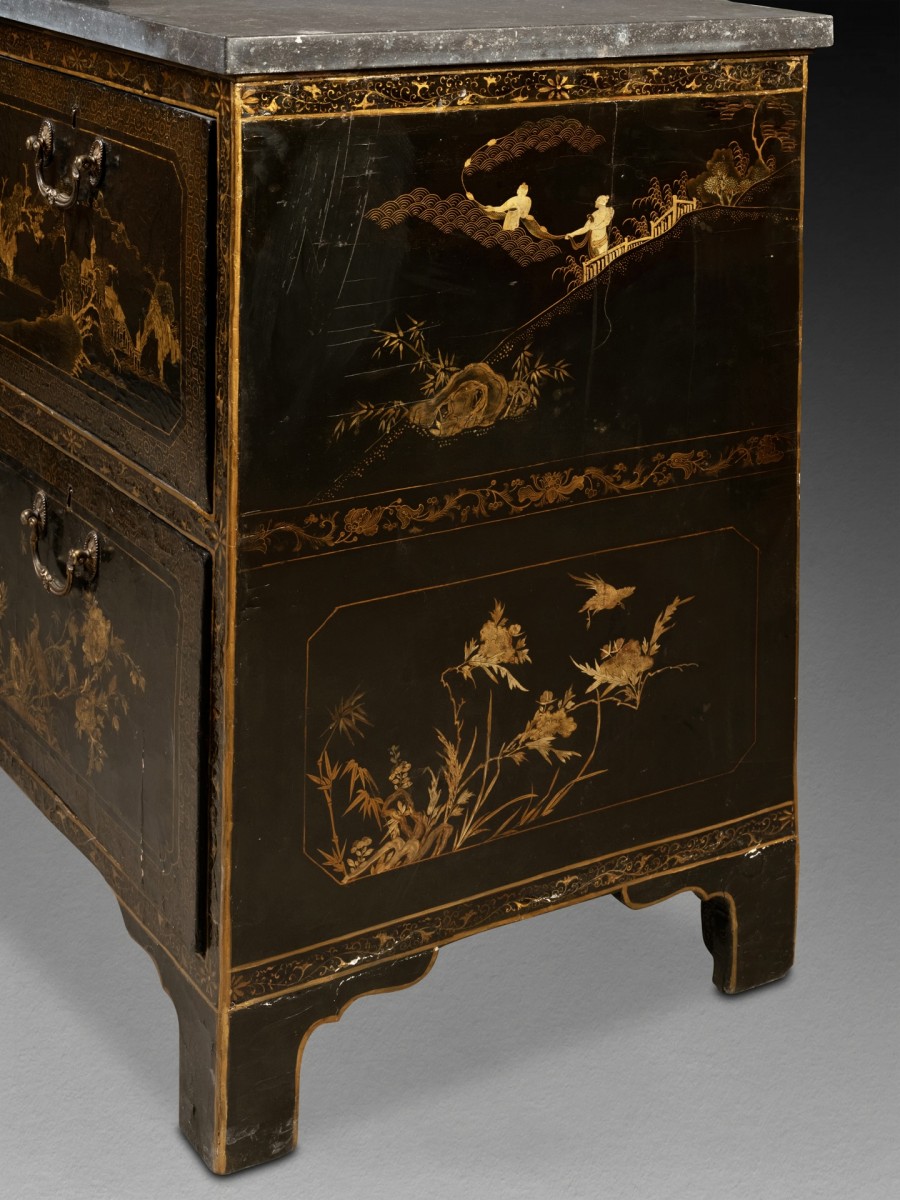
The four straight legs are connected to the rails by slightly curved spandrels.
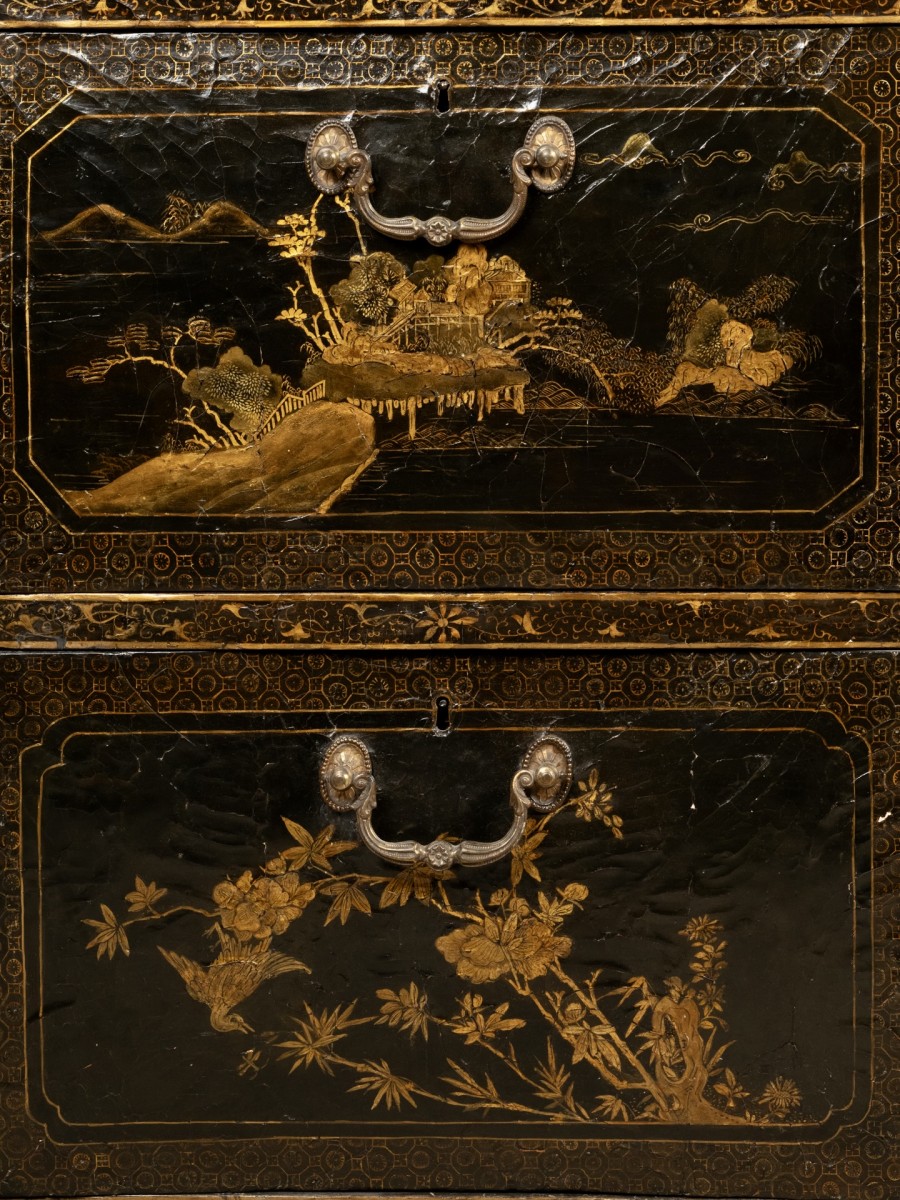
The front and sides are entirely veneered with lacquer panels, decorated in gold on a black ground with lakeside landscapes and birds perched in shrubs.
The scenes are framed by geometric motifs, and the rails feature delicate friezes of scrolling foliage.
The backs are made of softwood, and the drawer interiors are oak.
In good condition, with minor lacquer restorations.
The tops are made of black Belgian granite.
Inventory number stenciled on.
English cabinetmaking from the reign of George III, circa 1780, featuring panels from a large Chinese lacquer screen made in Canton during the Qianlong Emperor's reign, around 1760-1780.
Dimensions:
Width: 126 cm; Depth: 61 cm; Height: 90 cm
Our opinion:
The panels on our chest of drawers come from a large screen made in Canton, China, for export to Europe. These pieces, highly sought after by the elite of the nobility, were collected and repurposed from their original function to reuse these precious lacquer panels, which local artisans still did not know how to produce in the 18th century. To do this, cabinetmakers would cut the decorative elements from cabinets and especially screens, which offered a larger surface area, in order to reuse them on furniture with European forms. The panels of our pair of commodes come from a large six-panel screen measuring approximately four meters wide by two and a half meters high.
The different sections of the screen that are now featured on our commodes are easily recognizable.
The small outer friezes of the frame are repeated on the uprights and rails, which were deliberately adapted to the same dimensions.
The twelve scenes with geometric frames that bordered the upper and lower sections of each of the six panels were used for the eight drawer fronts; the remaining four for the lower sections of the sides.
The upper sections of the sides, in turn, received scenes from the central sections of the screen.
Due to the rarity and exorbitant cost of Oriental lacquer, and the difficulty of obtaining and working with the panels, these commissioned pieces were reserved for an elite of the nobility.
The extremely rare pair of commodes we are presenting perfectly illustrates the English taste for Chinese art. This taste, which would be curbed in France by the revolution, would persist in England, reaching its peak at the end of the 18th century with the construction of the Brighton Pavilion and its magnificent oriental-style decorations.