Offered by Artimo
REQUEST INFORMATION
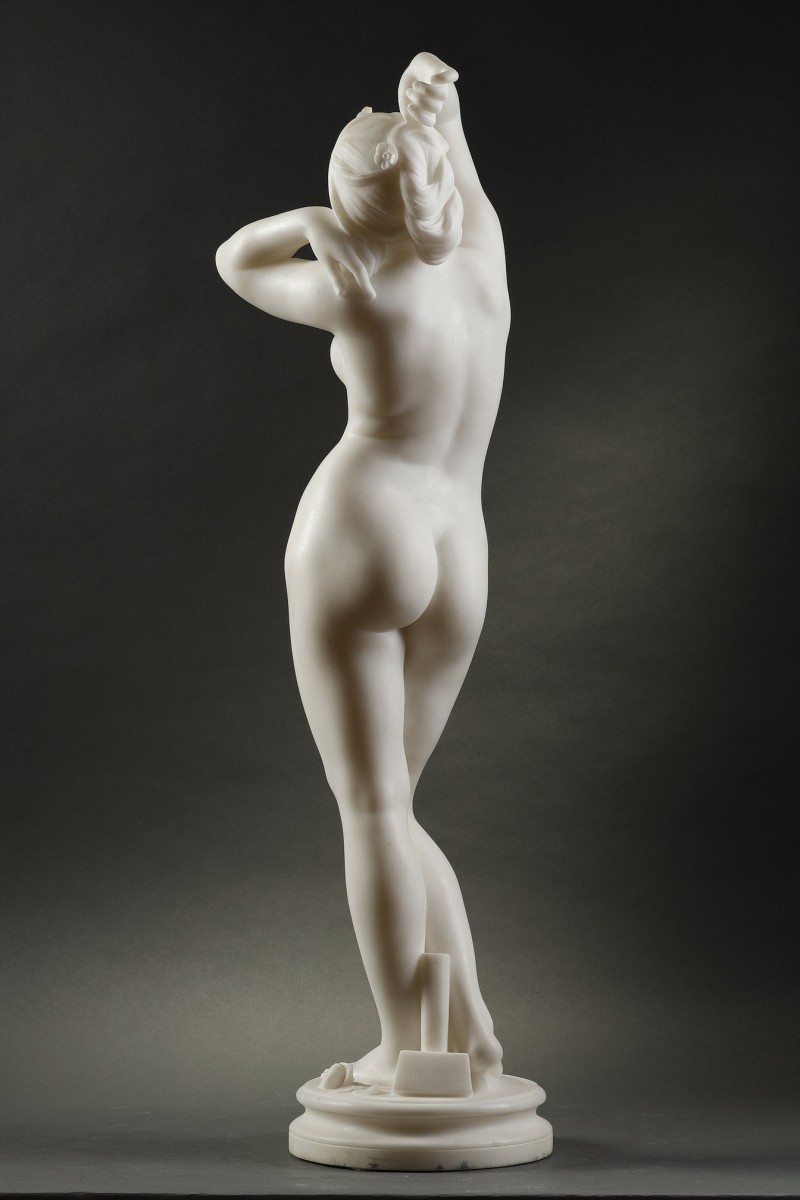
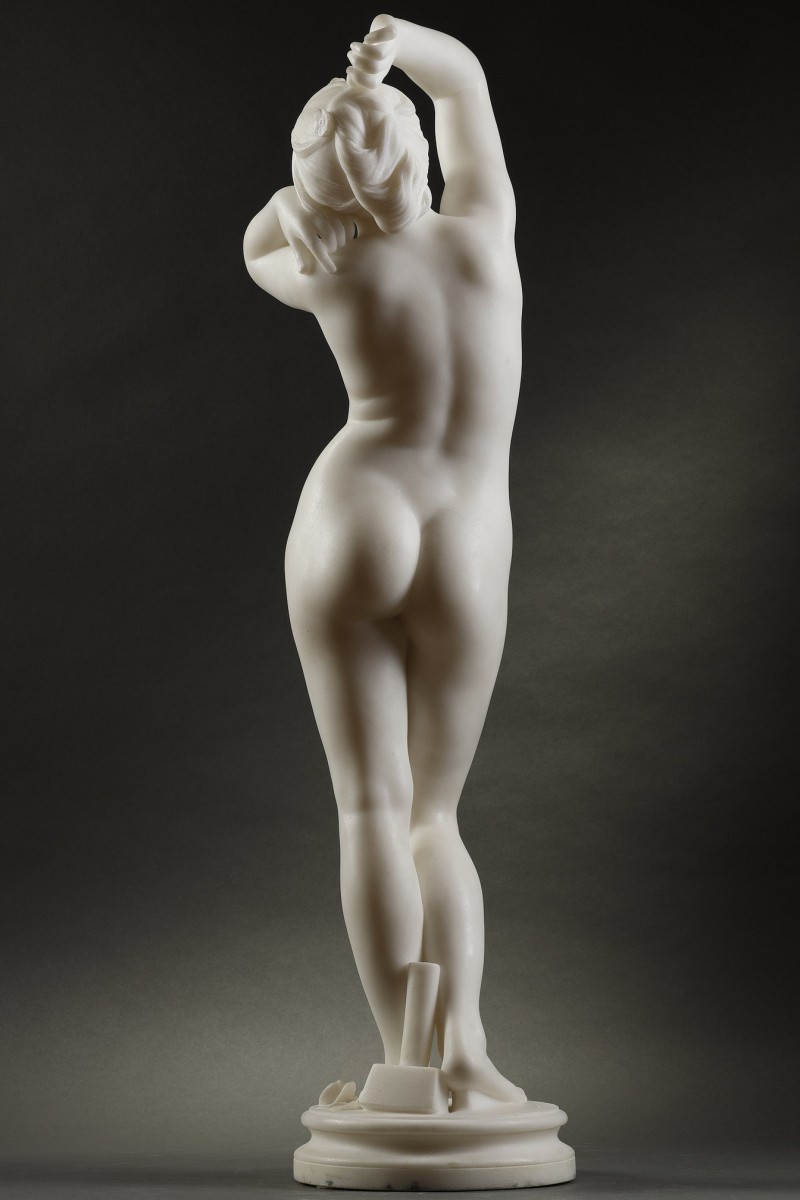
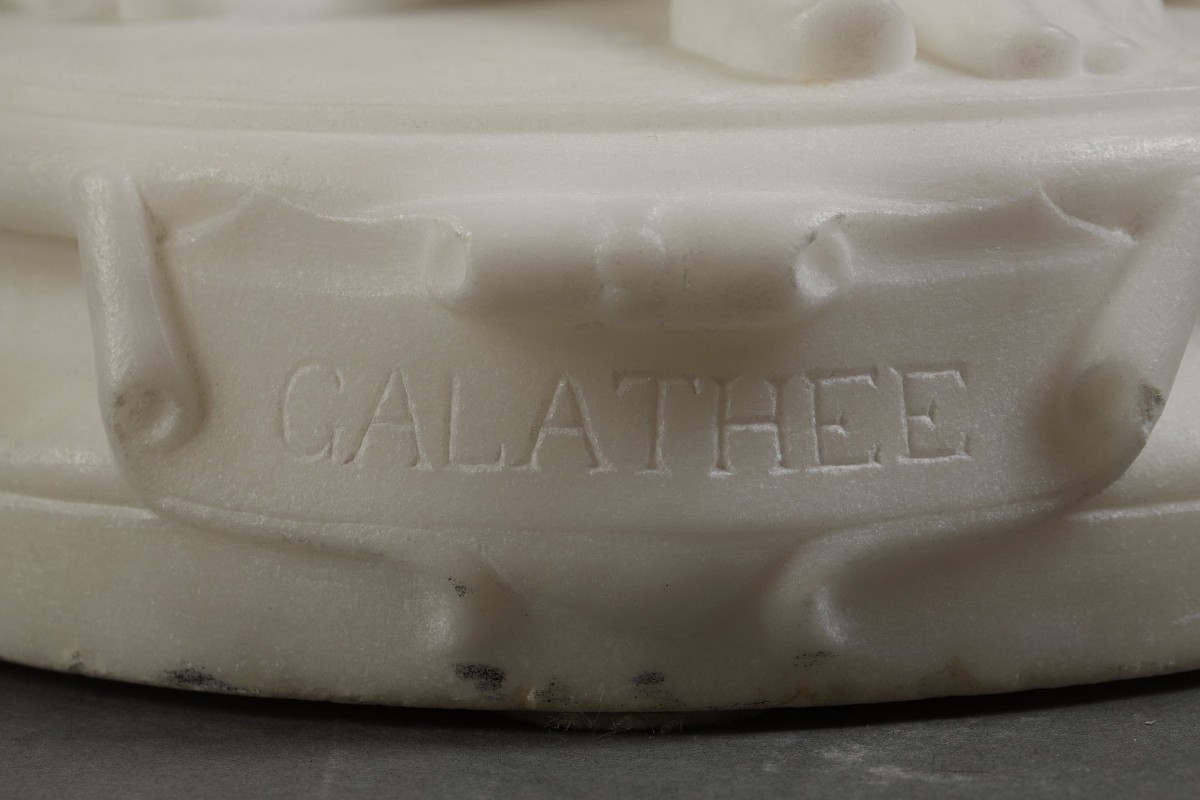

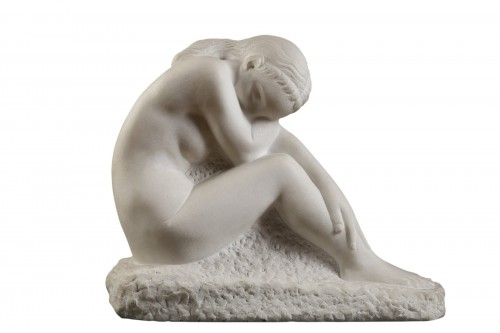
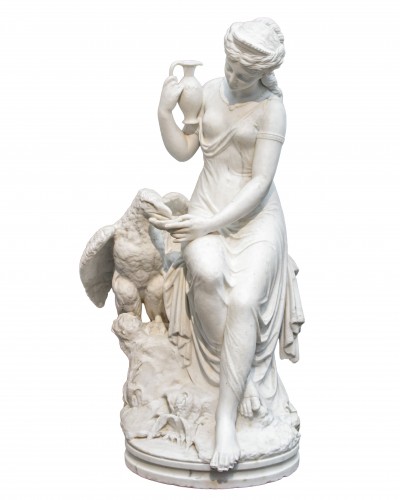
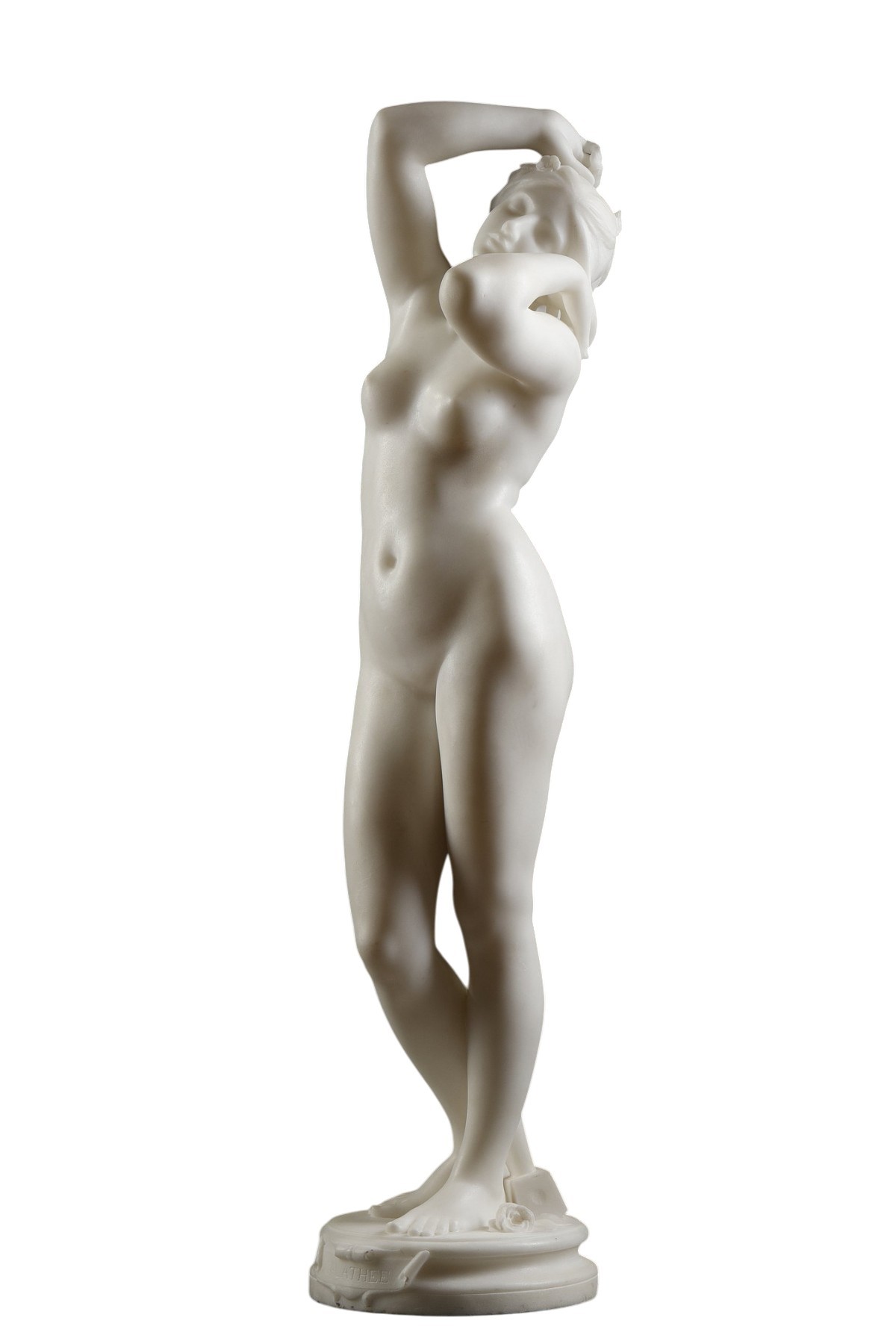
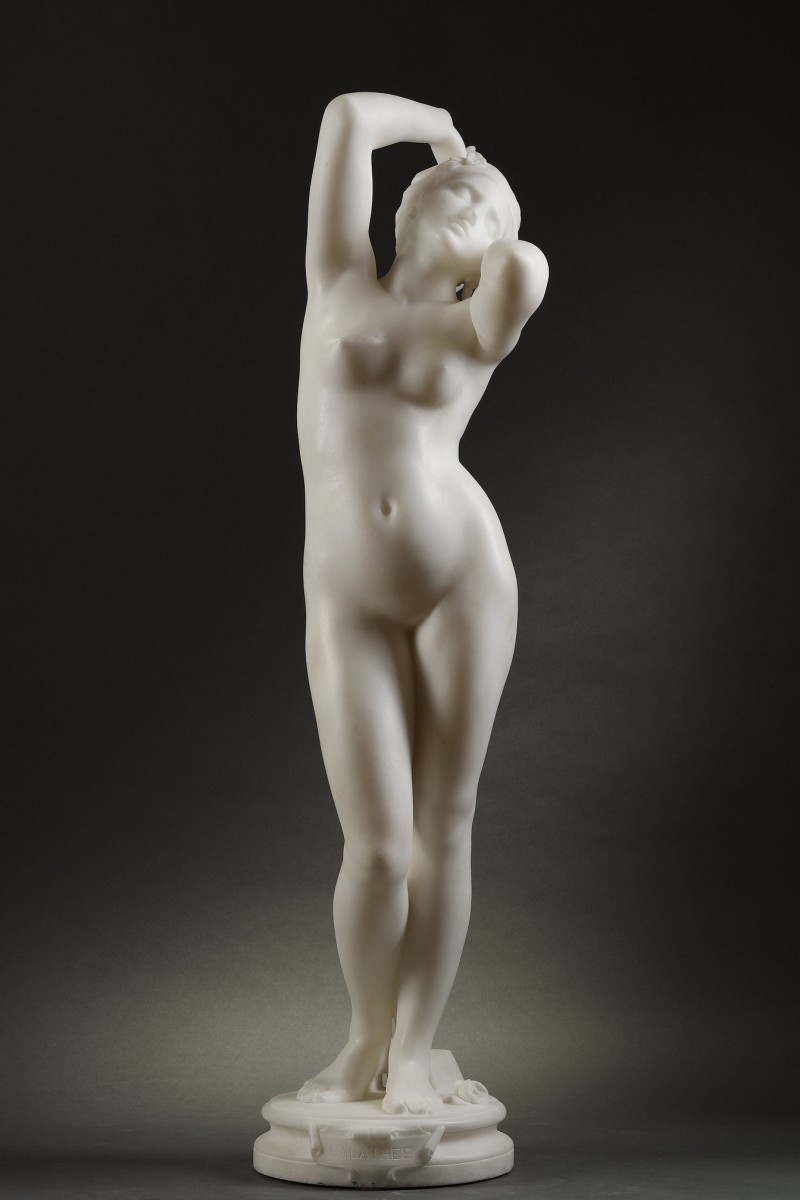
In a subtle balance between grace and tension, this sculpture by Laurent-Honoré Marqueste depicts Galatea, the heroine of the famous myth of Pygmalion as recounted by Ovid in The Metamorphoses (Book X, lines 243–297). Pygmalion, a Cypriot sculptor disillusioned by the women of his time, gives form to a statue of ideal beauty and falls in love with it. Moved by the sincerity of his love, Venus grants his prayer: the statue comes to life beneath his hands. It is this moment of metamorphosis that Marqueste chose to immortalize.
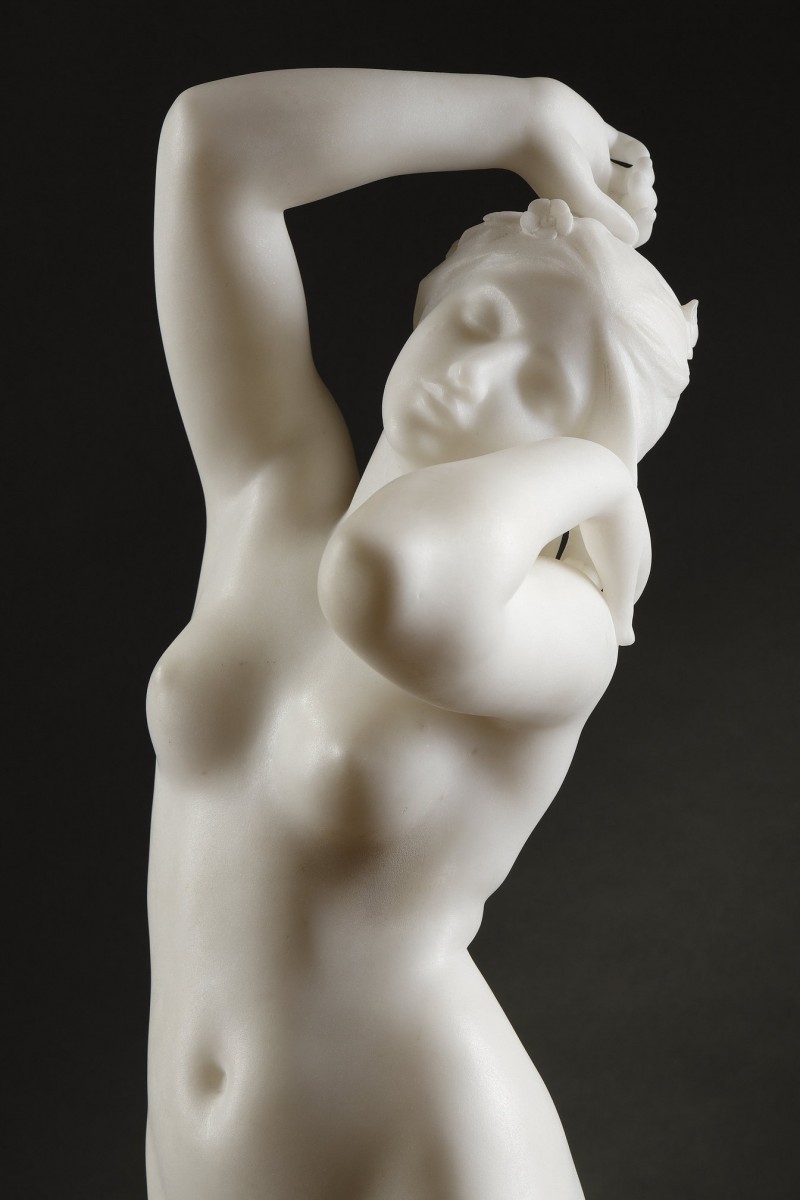
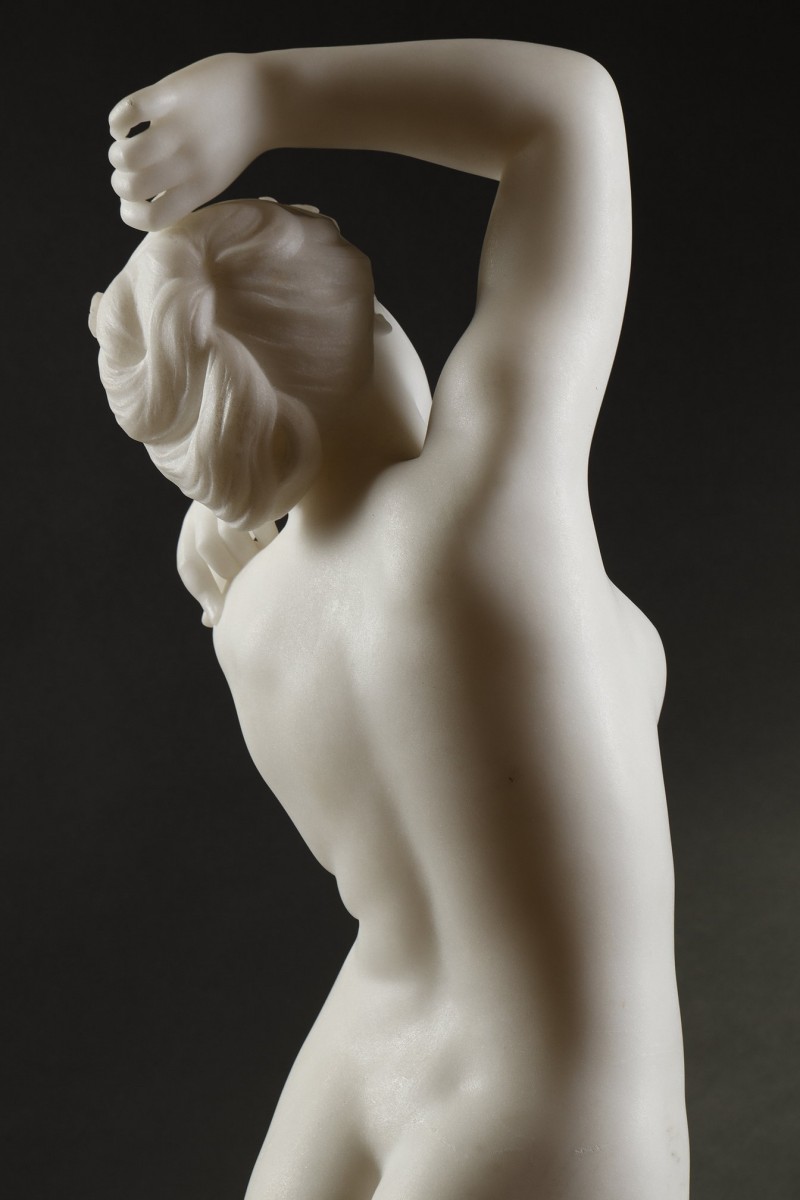
With her delicately twisted body, arms raised in a gesture of protection or surprise, the young woman seems to slowly emerge from her original block. The treatment of the marble, of remarkable finesse, captures the softness of newly awakened flesh, while the dreamy face, half-veiled by her arms, conveys the modesty of a being newly awakened to the sensory world.
At the foot of the figure, the sculptor’s tool as well as a carefully placed rose subtly recall the hand of Pygmalion and the love that shaped her. This narrative choice — representing Galatea alone — reinforces the symbolic intensity of the subject and invites contemplation of the blurred boundary between art and life, matter and emotion.
A life-size marble model of Galatea measuring 1.70 m exists; its original plaster, presented hors concours by Marqueste at the 1884 Salon (no. 3731), is preserved at the Musée des Augustins in Toulouse under the title Le Réveil (Galatée). The marble version — executed around 1885 — was acquired by the French State. After several assignments, including at the Louvre, it was officially attached to the Musée d’Orsay in 1986. Since 2019, it has been exhibited (or held in reserve) at the Dobrée Departmental Museum in Nantes.
Born in Toulouse in 1848, Laurent-Honoré Marqueste is one of the great figures of French sculpture. A pupil of Jean-Alexandre Falguière and François Jouffroy at the École des Beaux-Arts in Paris, he won the Prix de Rome in 1871, which allowed him to reside at the Villa Medici from 1872 onward. There he deepened his knowledge of ancient and Renaissance sculpture.
Upon returning to Paris, Marqueste opened his studio and exhibited regularly at the Paris Salon from 1874 onward, as well as at the Universal Exhibitions. He taught at the École nationale supérieure des Beaux-Arts from 1893 to 1900, becoming vice-president in 1902 and president in 1903.
His monumental work, often imbued with mythological or allegorical themes, today adorns several emblematic locations in Paris: the Tuileries Gardens, the Luxembourg Garden, and the Hôtel de Ville. He is the author of major works such as Perseus and the Gorgon.
Marqueste died in Paris in 1920. Today, his works are preserved in major French institutions such as the Musée d’Orsay, the Petit Palais, and several regional museums.
He received several distinctions, including:
Second-class medal at the 1878 Universal Exhibition
First-class medal in 1876
Knight of the Legion of Honour in 1884
Grand Prix and gold medal at the 1900 Universal Exhibition
Provenance: Collection Aso O. Tavitian
Delevery information :
Deliveries are offered in Belgium and Northern France.
All other deliveries are subject to a charge.