Offered by Menken Works of Art


REQUEST INFORMATION

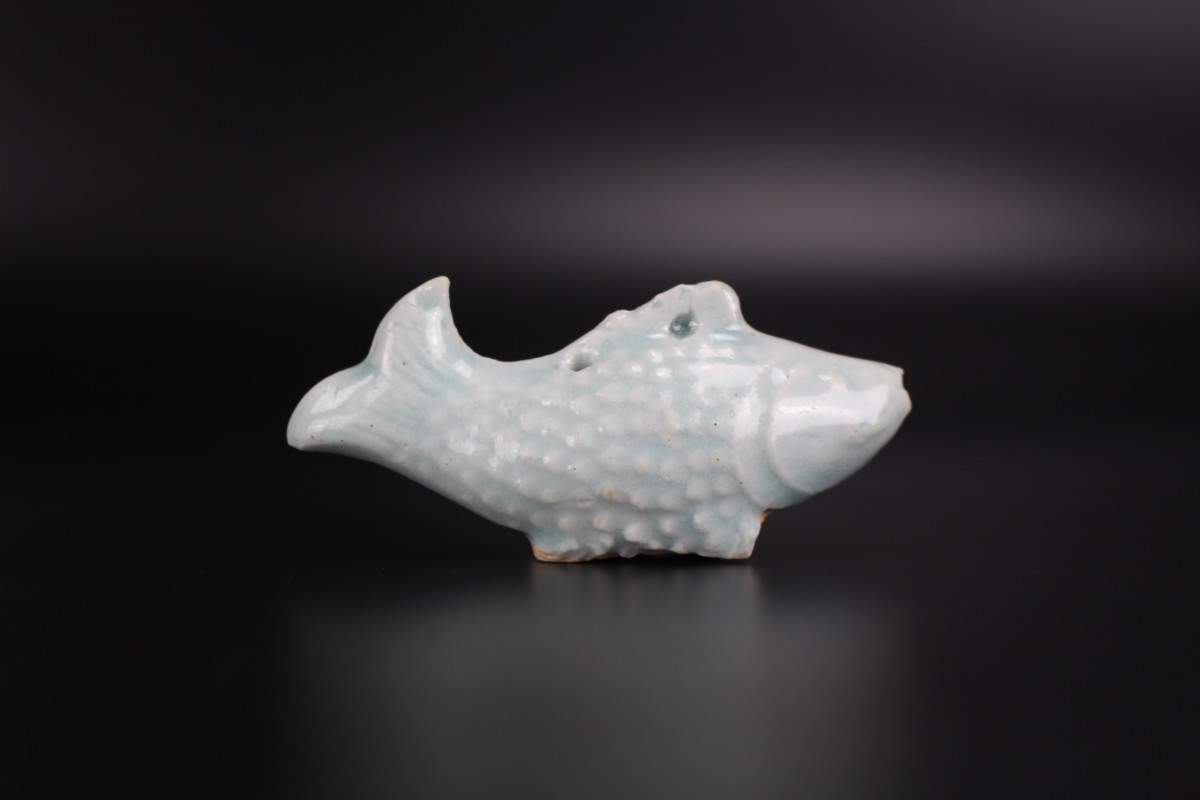

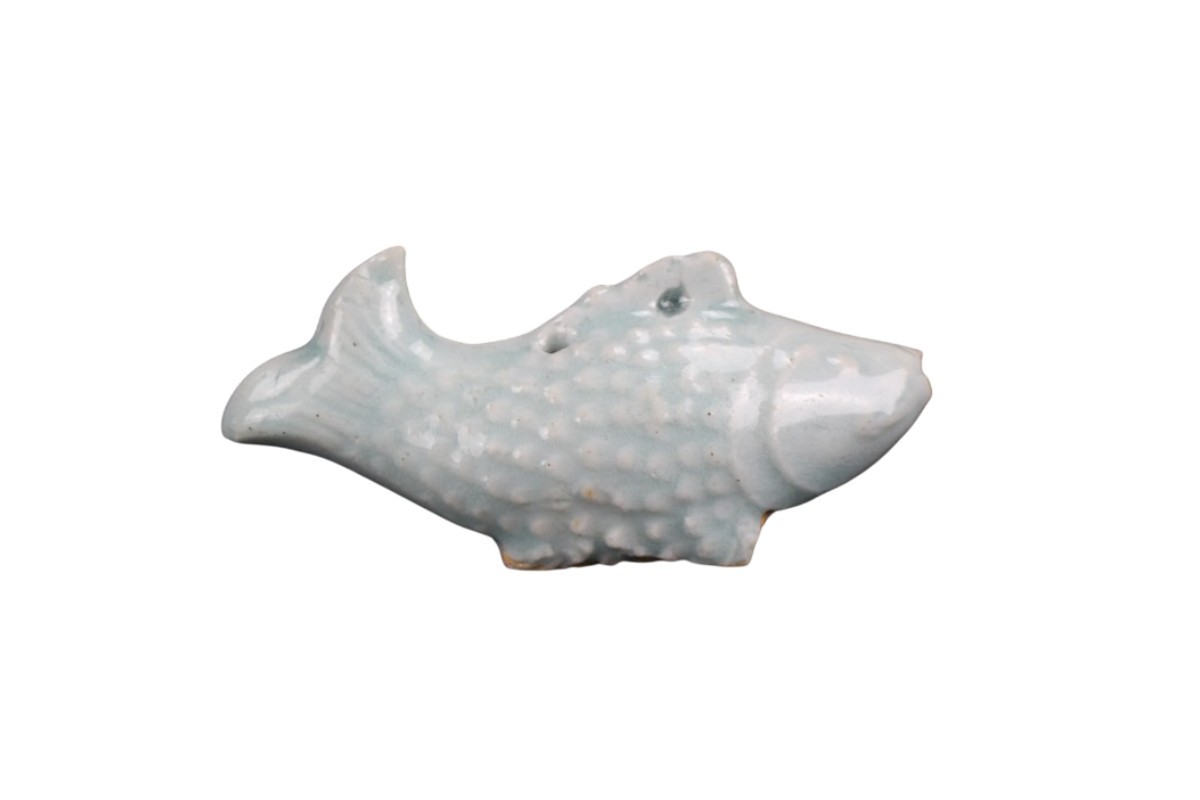
A Qingbai 'fish' water dropper.
Yuan dynasty (1279-1368).
The body covered in a pale blue Qingbai glaze and molded as a fish-form water dropper. The fish’s open mouth serves as the spout, while a small opening on its back allows it to be filled.
Dimensions:
Height 4.5 cm, width 10.2 cm, depth 3.5 cm.
Condition:
Very good.
Provenance:
The Mennen and Nancy Williams Collection, no. 221.
Exhibited:
K. Aga-Oglu, The Williams Collection of Far Eastern Ceramics, Tonnancour Section, Museum of Anthropology, Ann Arbor, Michigan, 1975, cat. no. 68, p. 47 and p. 145.
Note:
This water dropper comes from a collection of Far Eastern ceramics assembled by Justice and Mrs. G. Mennen Williams. This was a large collection numbering over one thousand pieces of Chinese, Annamese, and Siamese Ceramic wares, portions of which have been donated by the Williamses to the Detroit Institute of Arts, the Flint Museum of Art, and the University of Michigan Museum of Anthropology. The entire collection was carefully assembled by Mrs. Williams during 1968-1969, when her husband was the United States Ambassador to the Philippines. During their residence in Manila, Mrs. Williams became interested in the Chinese ceramic wares that were found in ancient burial sites of the islands of the Philippines and were being traded in Manila. Her interest in acquiring these wares lay primarily in their historical and educational value, an interest which was shared by her husband, who gave her support and encouragement in her project. Mrs. Williams's collecting was accompanied by serious study of the ceramics in various collections in Manila and reading literature on the subject. But it was, above all, her intuitive judgment and perceptive eye that guided her in bringing together a sizable collection of truly creative works of the Chinese potter. In addition to the Chinese ceramics acquired in Manila, there is a small group of Annamese and Siamese wares which had also been recovered from burial sites. The ceramics obtained in the Philippines make up about one half of the entire collection, the remaining portion of which was acquired in various parts of Southeast Asia, Europe, and the United States.