Offered by Tobogan Antiques
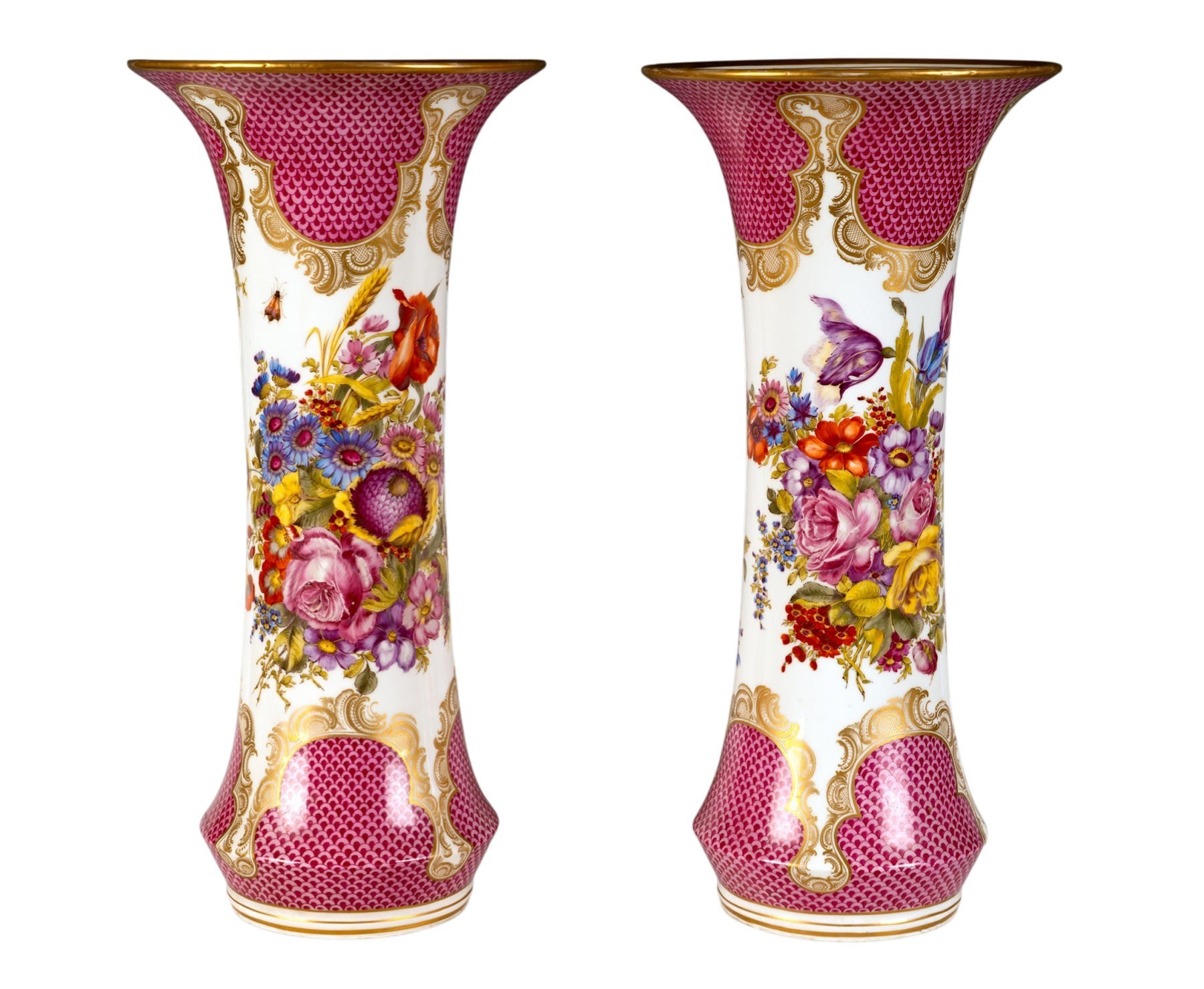
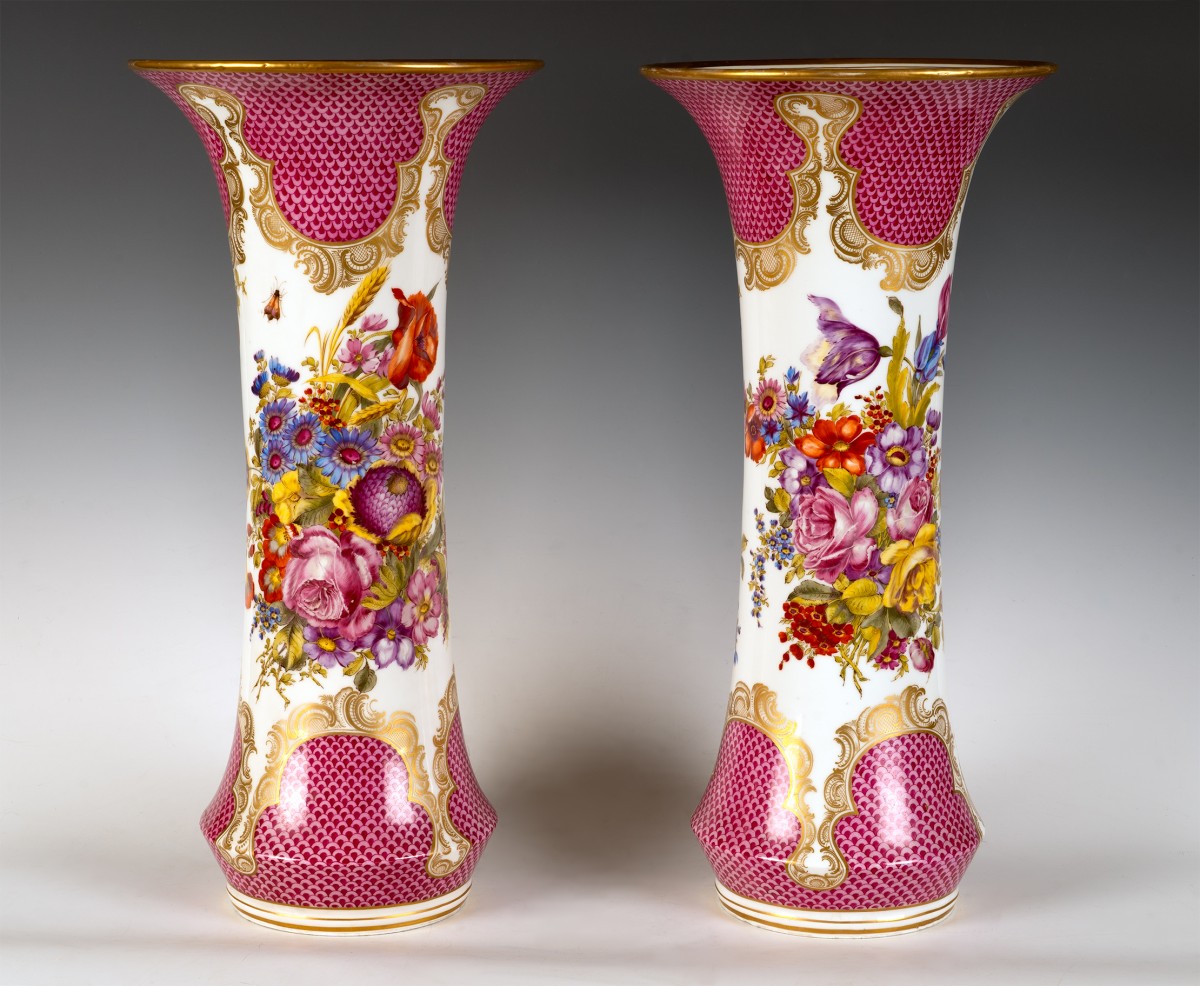
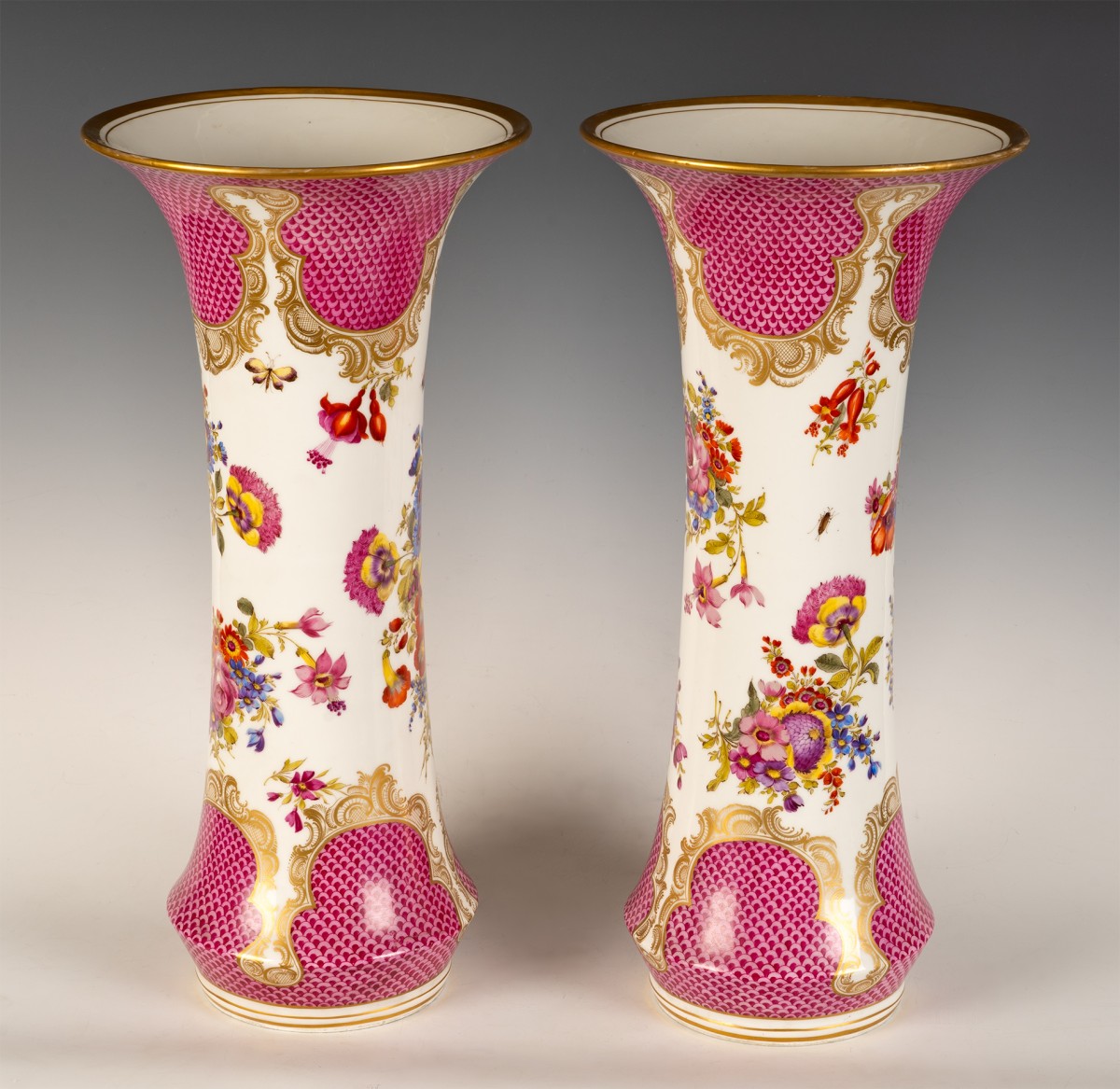
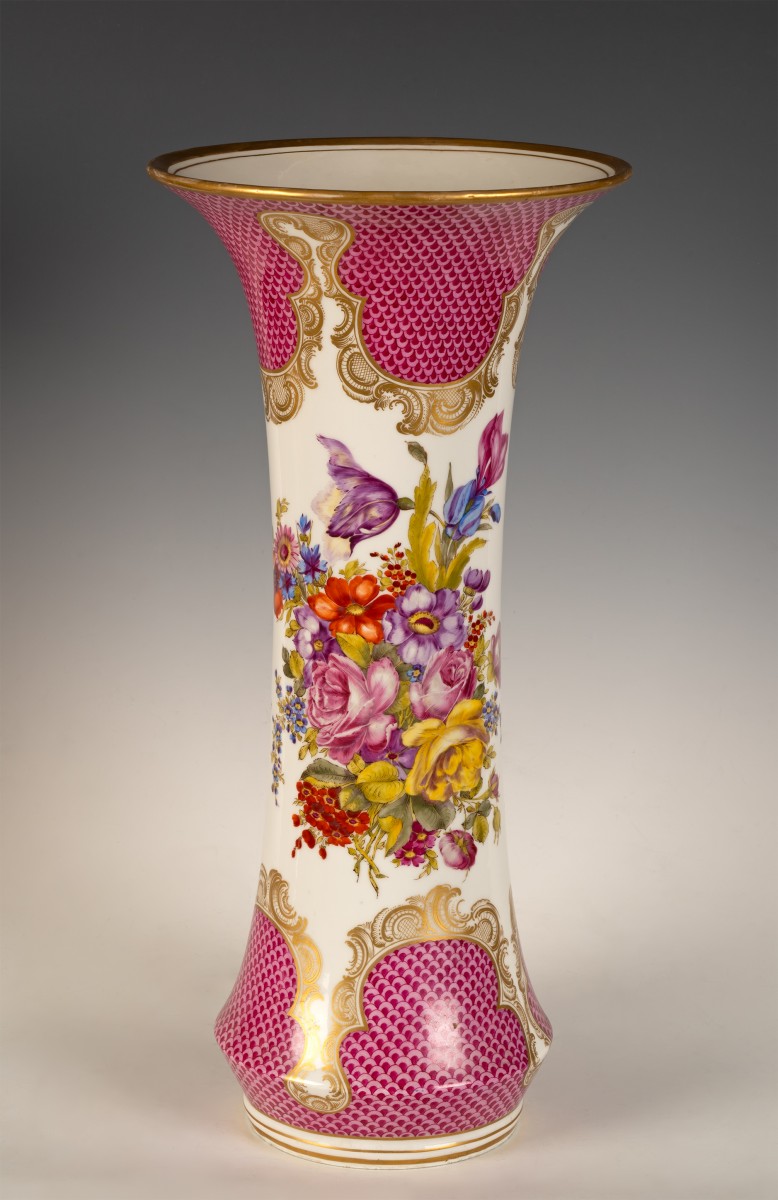
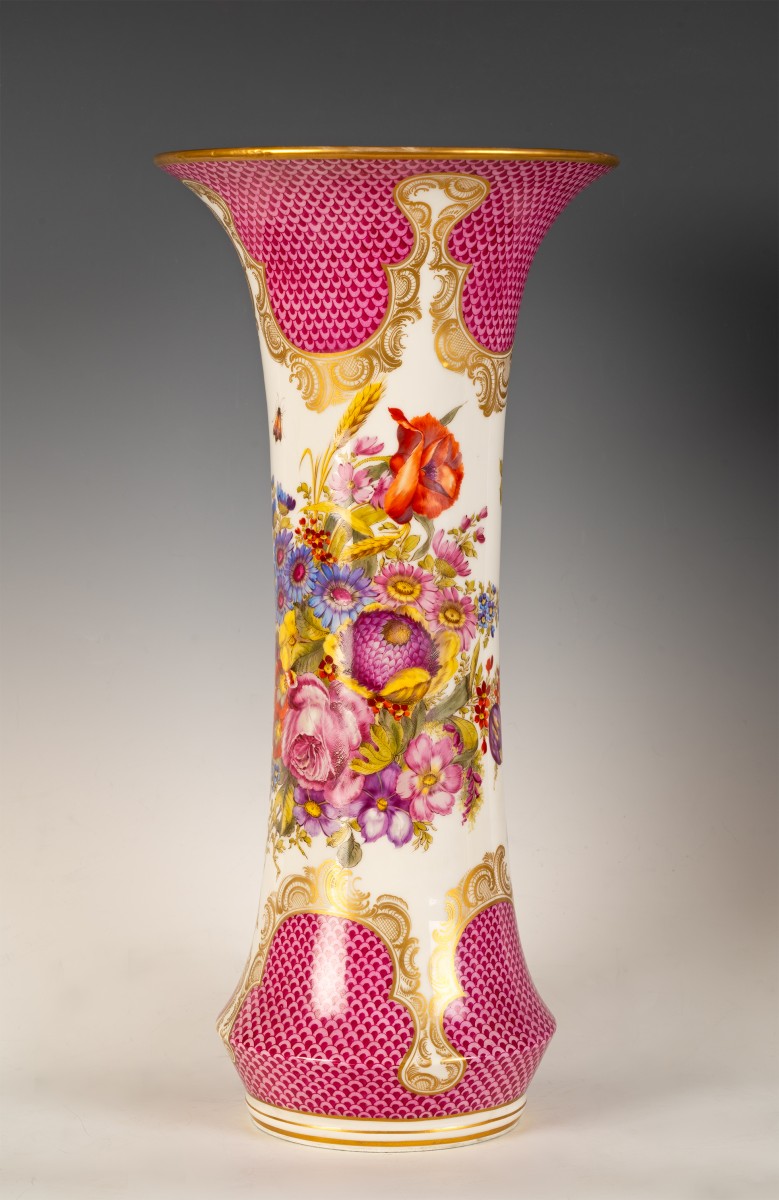

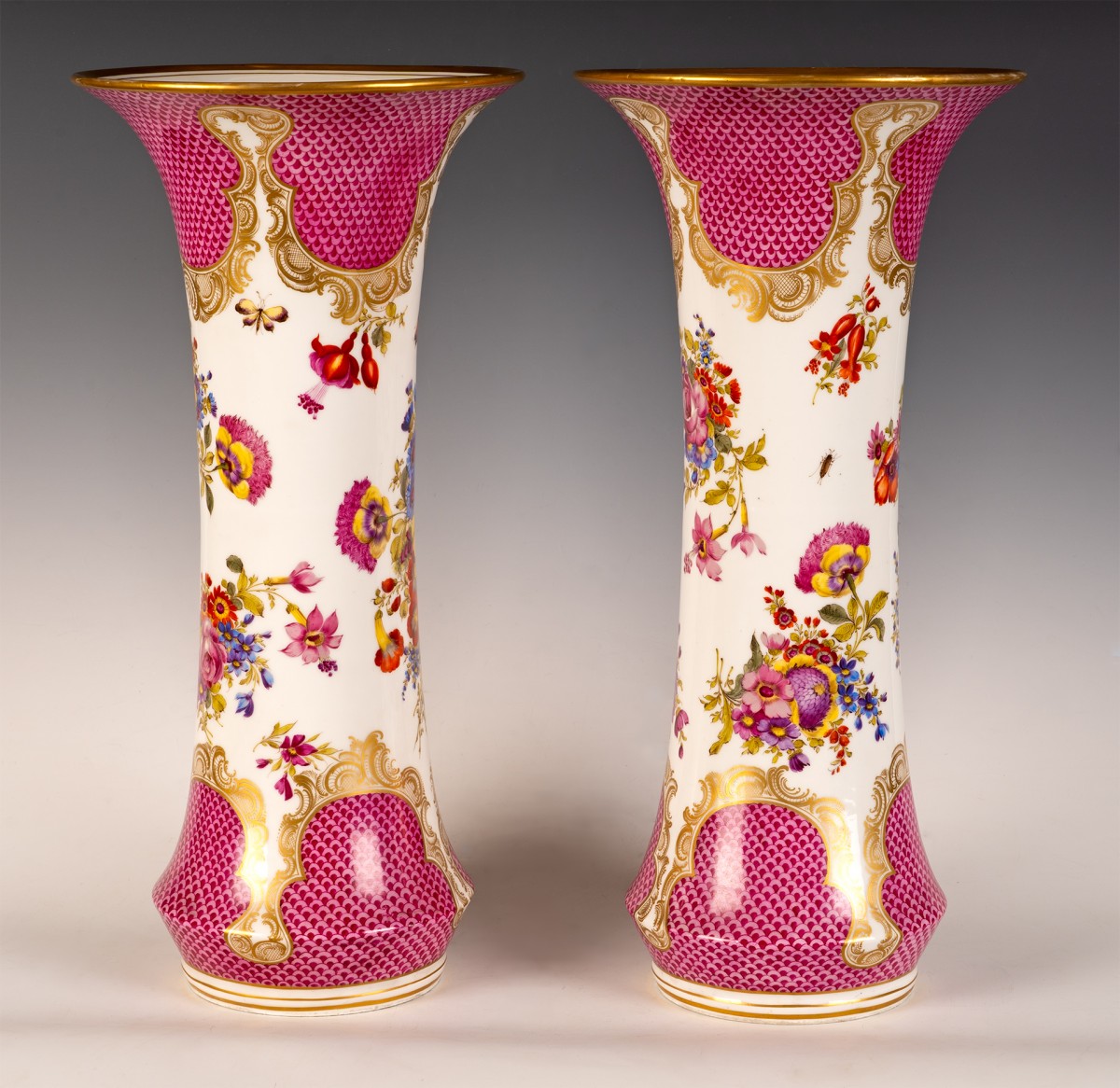
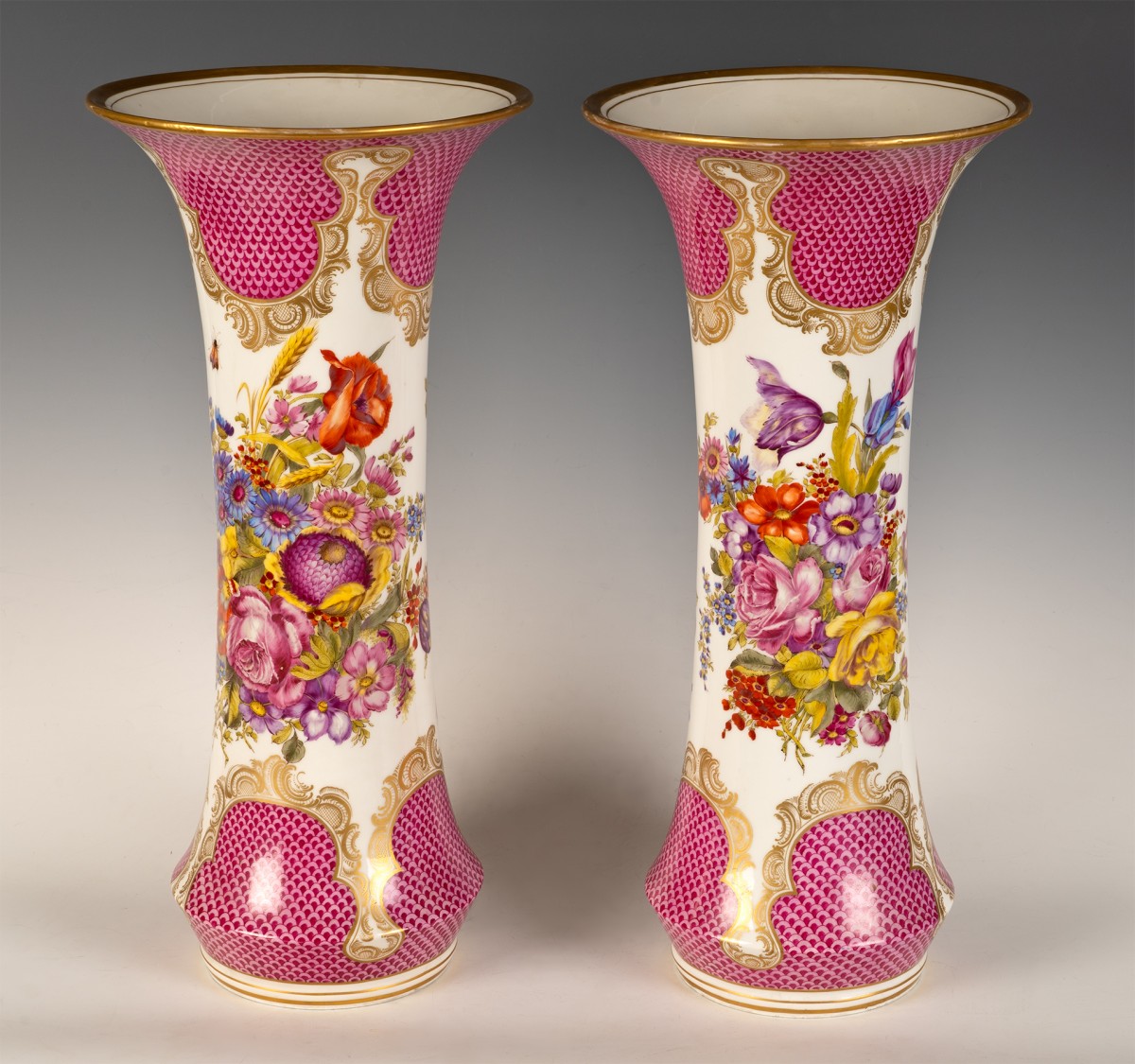
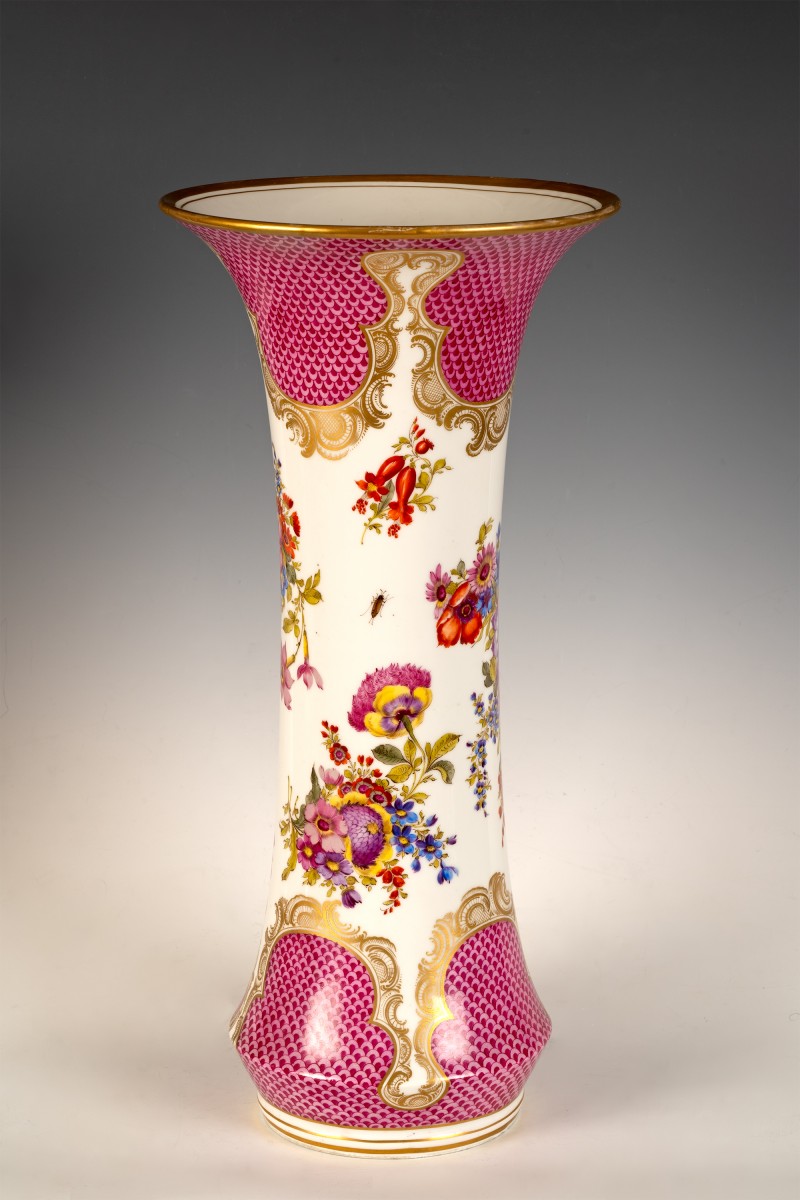
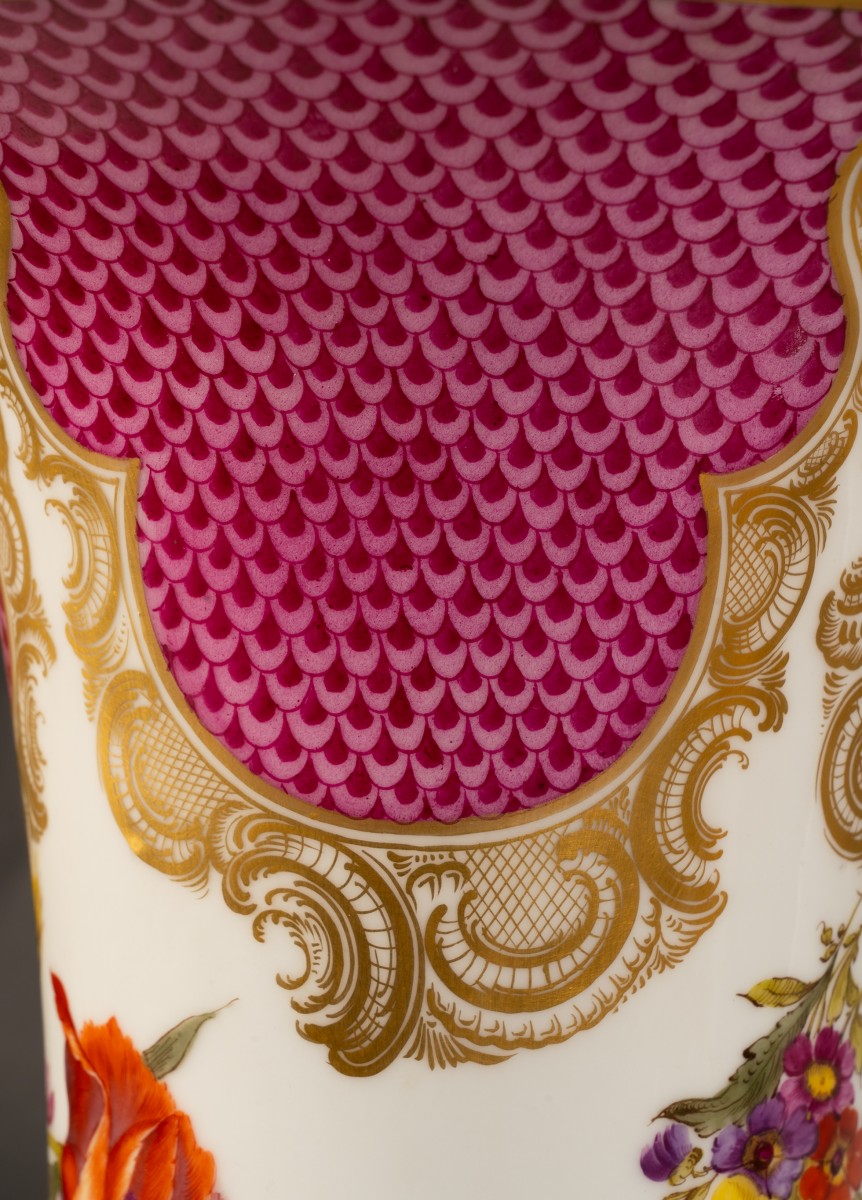
Fine pair of trumpet-shaped vases in porcelain, flaring widely at the top into an elegant, blossom-like rim. The slightly bulbous base rests on a circular foot accented with a gilded line.
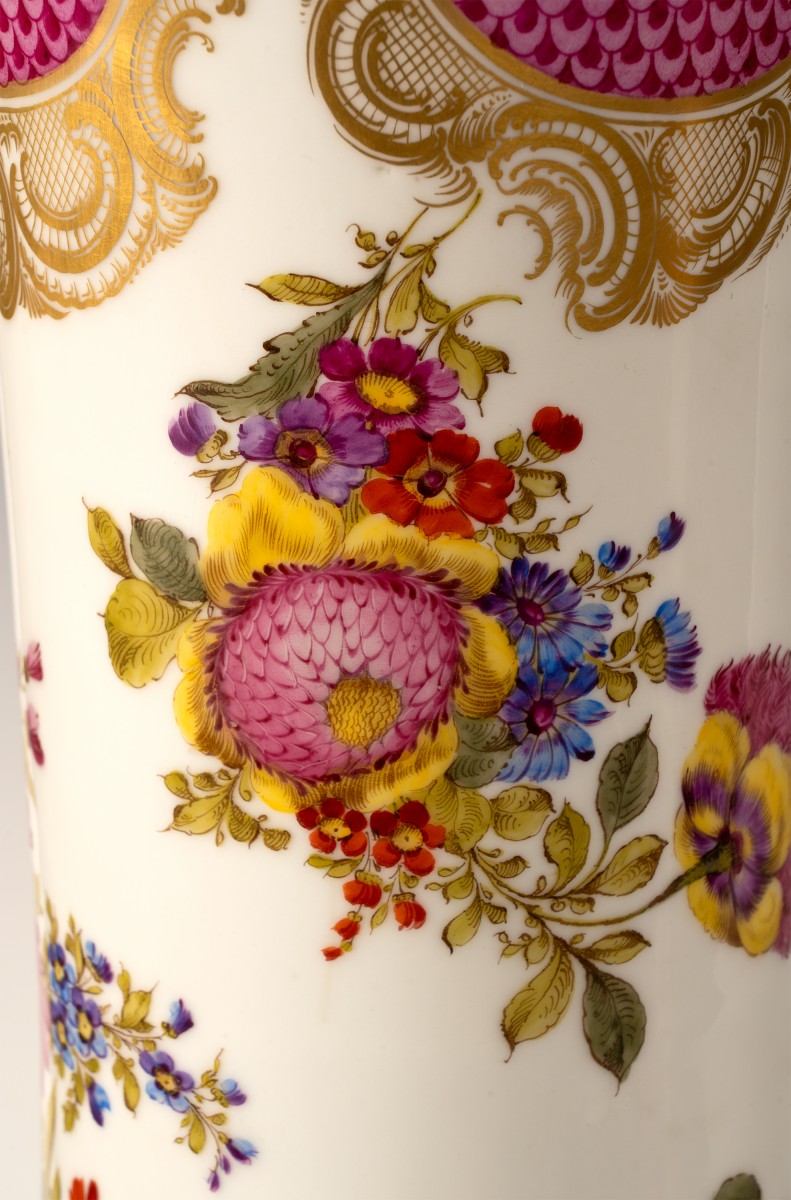
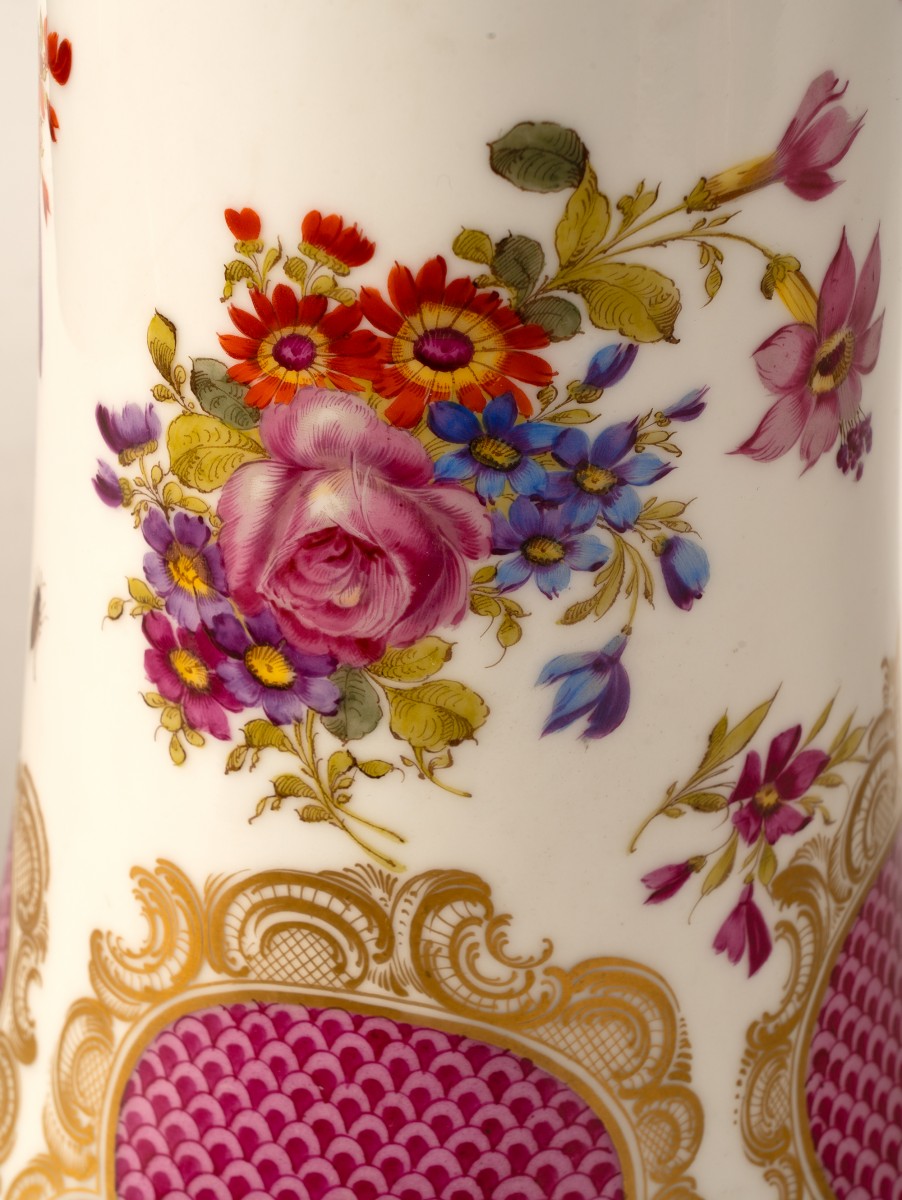
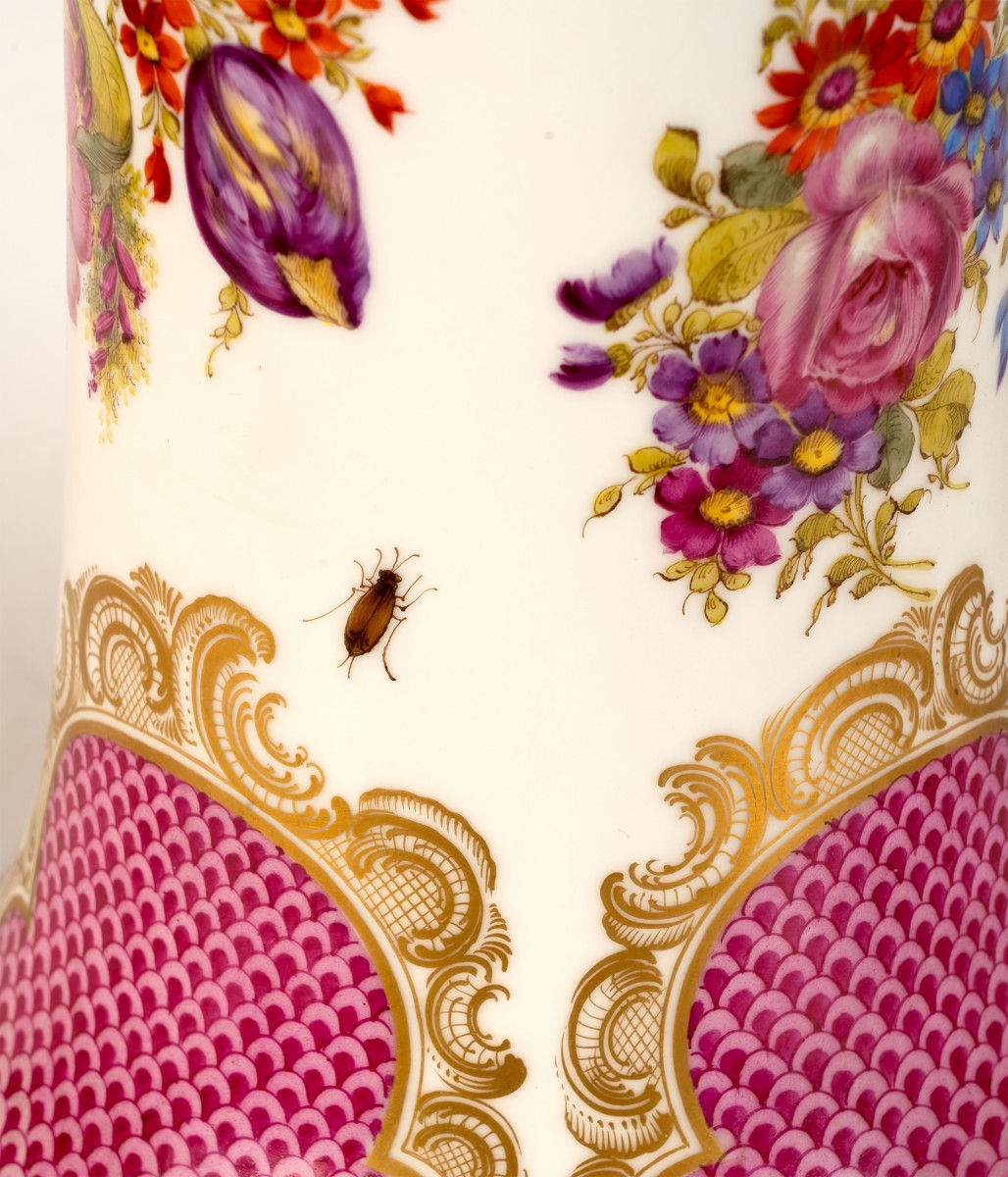
They feature a compartmentalized decoration alternating white reserves with colored grounds. The deep pink ground, treated in a pattern of overlapping scales, evokes the famous so-called “Schuppenmuster” (scale pattern), frequently used at Meissen in the 18th century and revived in the 19th century in a historicist spirit. This regular latticework, painted in gradations from carmine pink to pale rose, creates an effect of optical depth. Rocaille-style cartouches composed of gilded scrolls and acanthus leaves frame the floral scenes and define the colored areas.
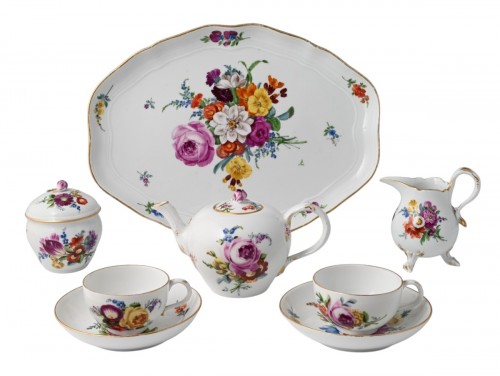
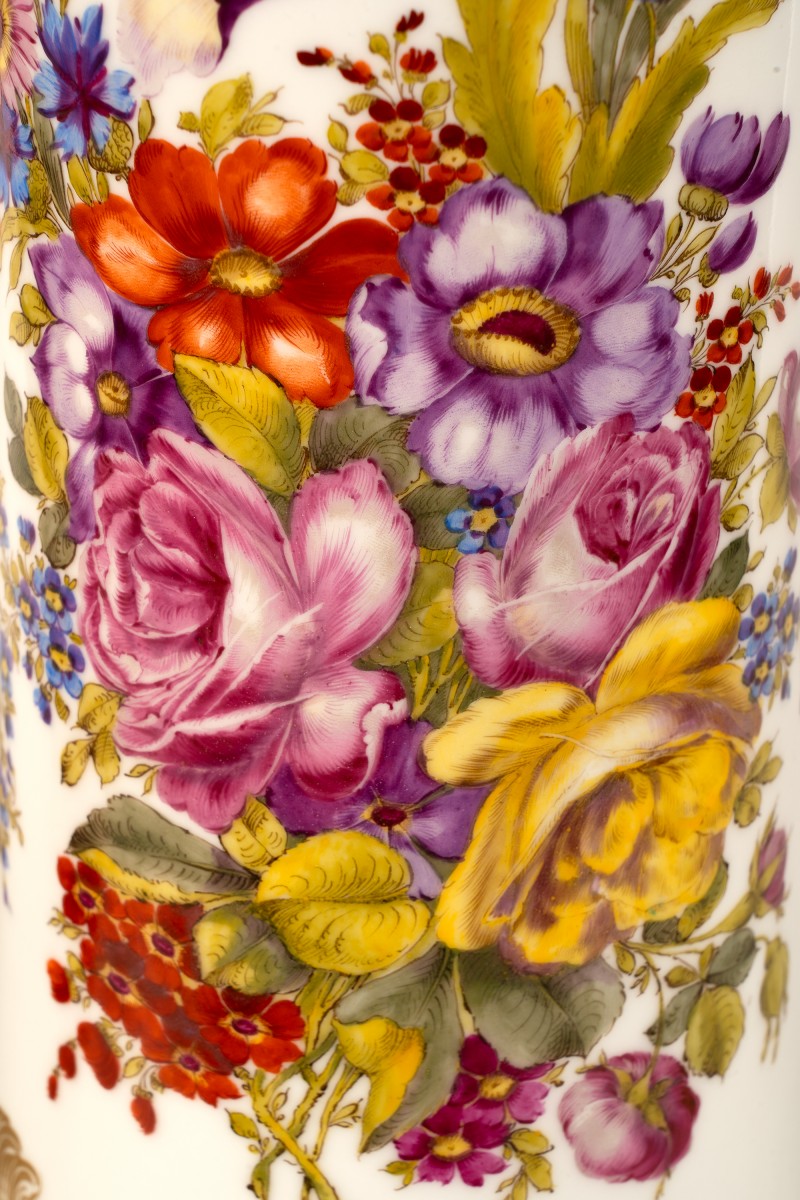
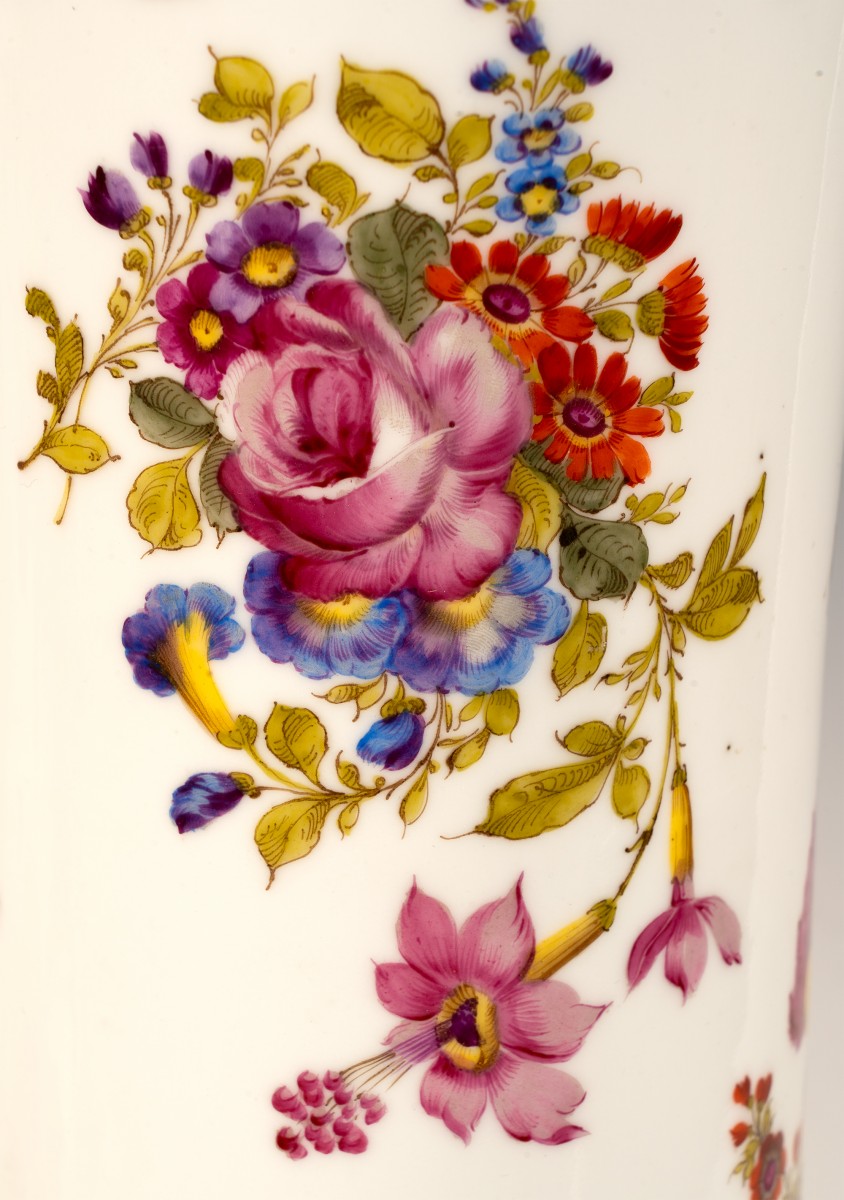
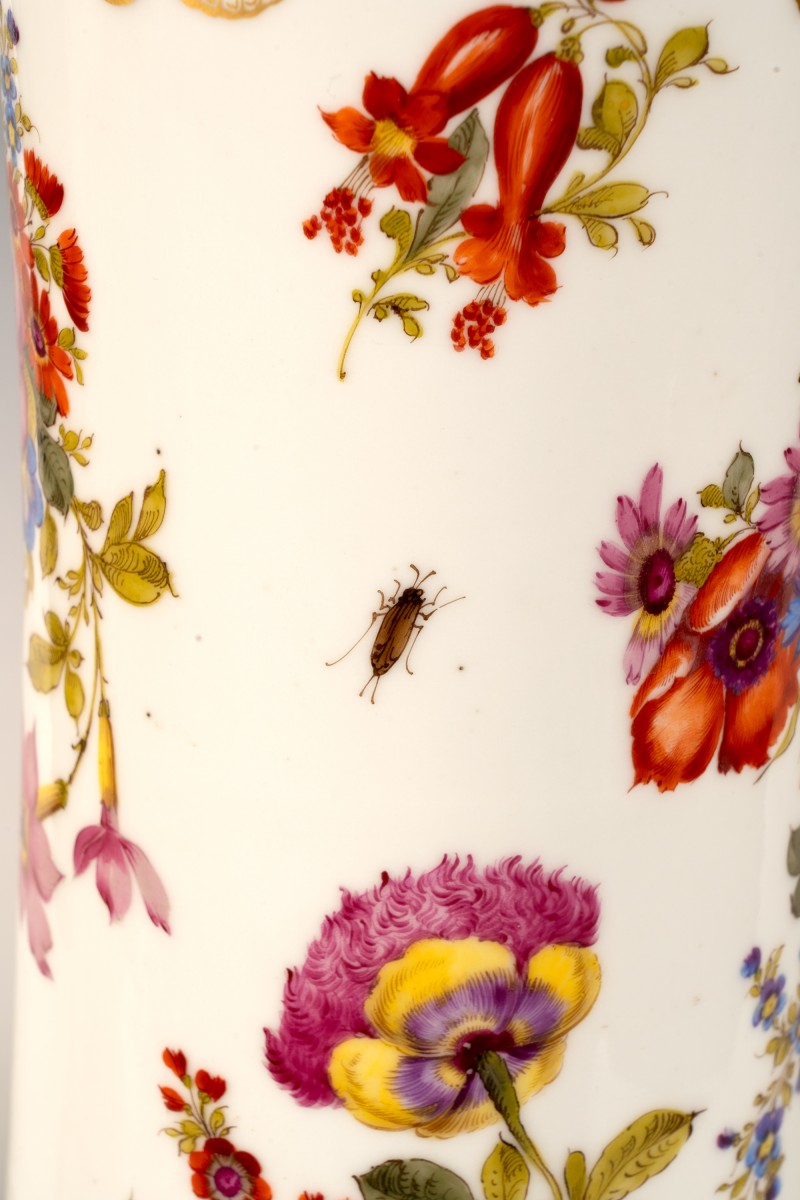
The bodies of the vases are adorned with finely executed polychrome decoration depicting an asymmetrical naturalistic bouquet. One can distinguish peonies, anemones, tulips, and wildflowers. To enhance the sense of naturalism, the artist has scattered small flying insects (beetles and butterflies) across the surface, a practice typical of Meissen.
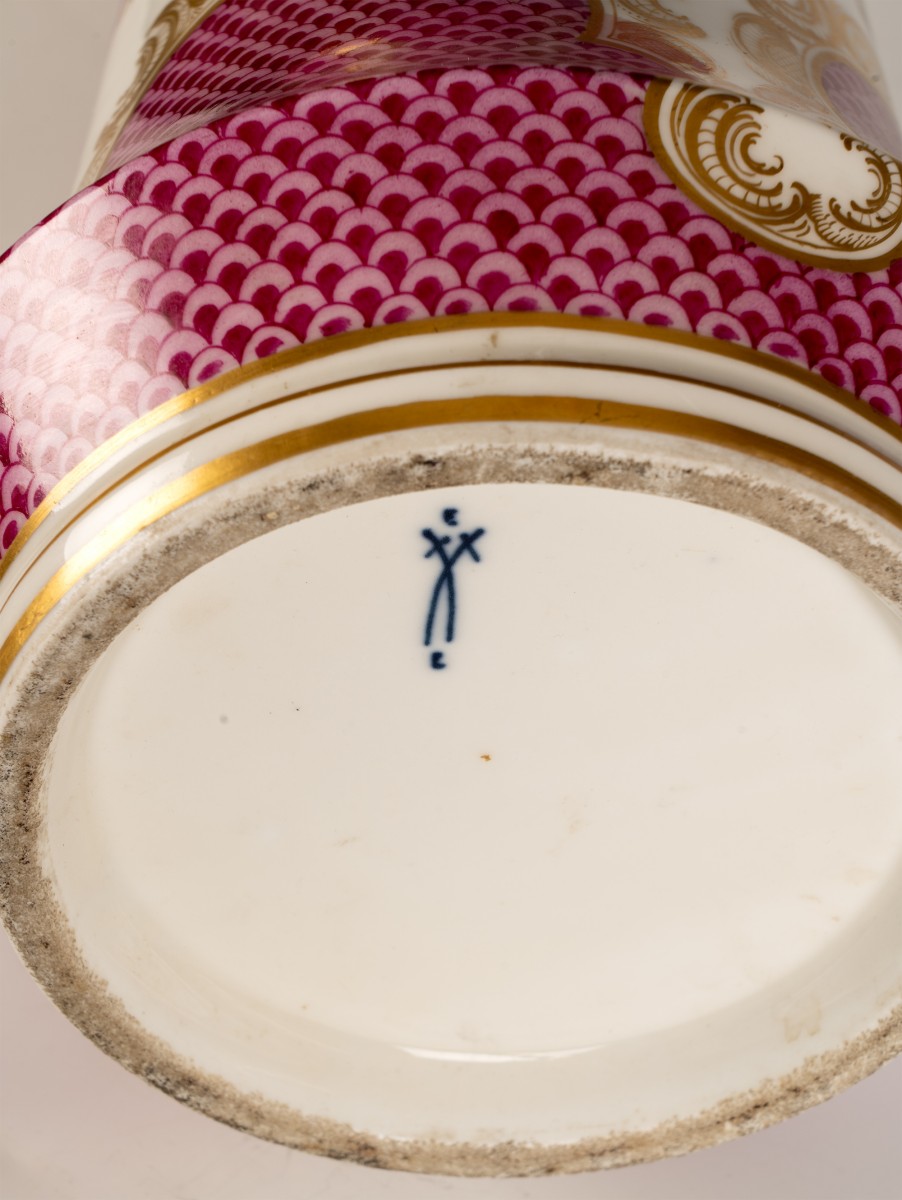
The base bears the mark of the crossed swords painted in underglaze blue, the emblem of the Meissen manufactory since 1722. The presence of characters or workshop numerals near the mark may correspond to a variant or later workshop mark, suggesting 19th-century production in the taste of the 18th century, a period during which the manufactory produced numerous historicist reinterpretations of its Rococo models.
Commentary :
Founded by Auguste Le Fort in 1710, the Meissen manufactory was the first porcelain factory in Europe to rival production that had until then come from China, following the discovery in 1709 by the chemist Friedrich Böttger of the principles of porcelain manufacture and of the indispensable material, kaolin.
From its earliest days, the manufactory established its distinctive style through the work of talented artisans and the use of complex techniques. Among the most renowned sculptors were Johann Gottlieb Kirchner and Johann Joachim Kaendler, who left their mark on Meissen’s history with their animal figurines and exquisitely refined miniature sculptures.
Meissen porcelains are characterized by a hard-paste body, offering a uniquely brilliant whiteness, often hand-decorated with polychrome enamels or delicate gilding. The designs are frequently inspired by nature, hunting scenes, or Rococo motifs, which were highly fashionable in the eighteenth century. One also finds pieces adorned with flowers and birds, as seen in certain collections of table services and ornamental objects created for the European aristocracy.