Offered by Conservatoire Sakura
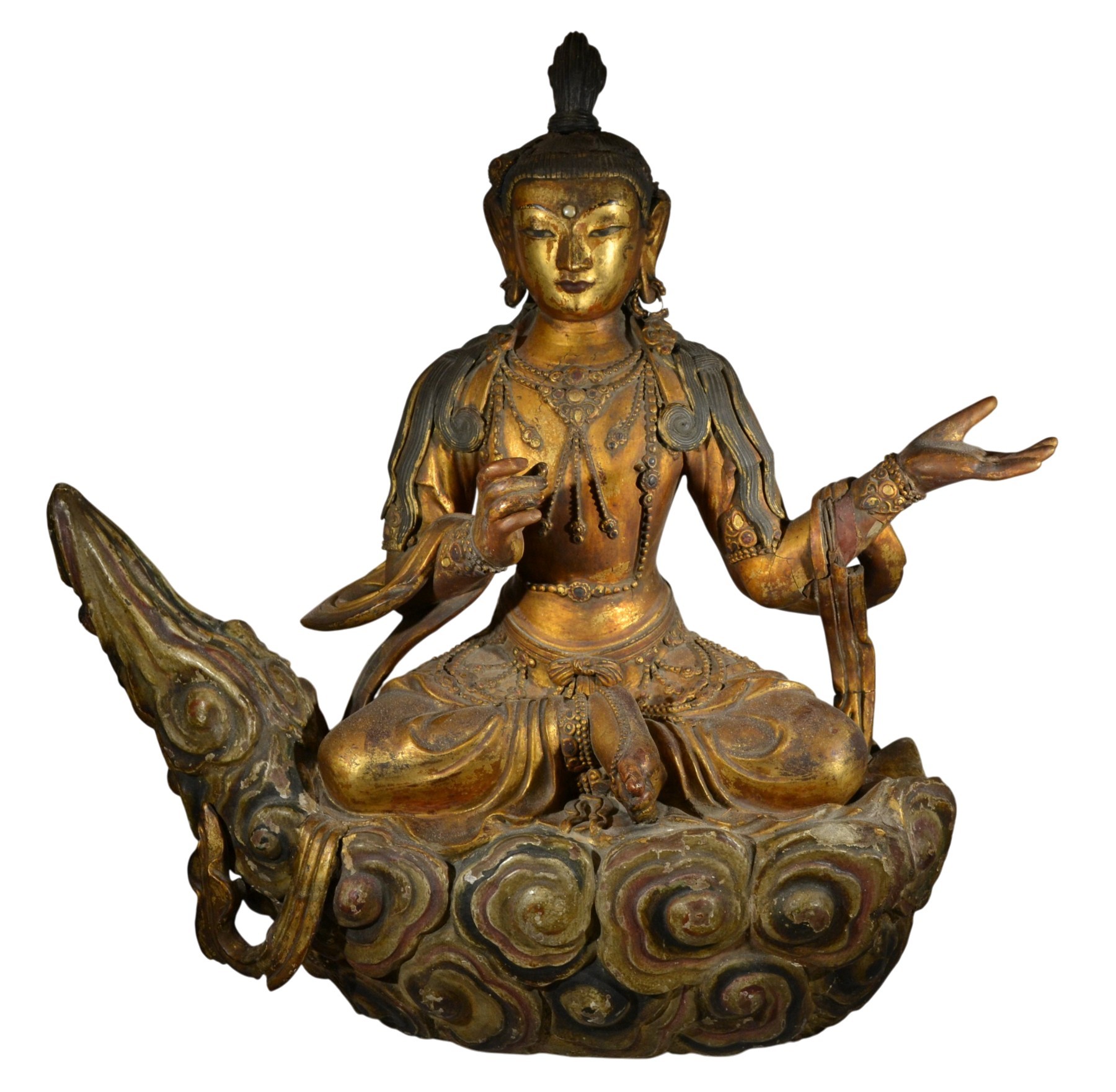
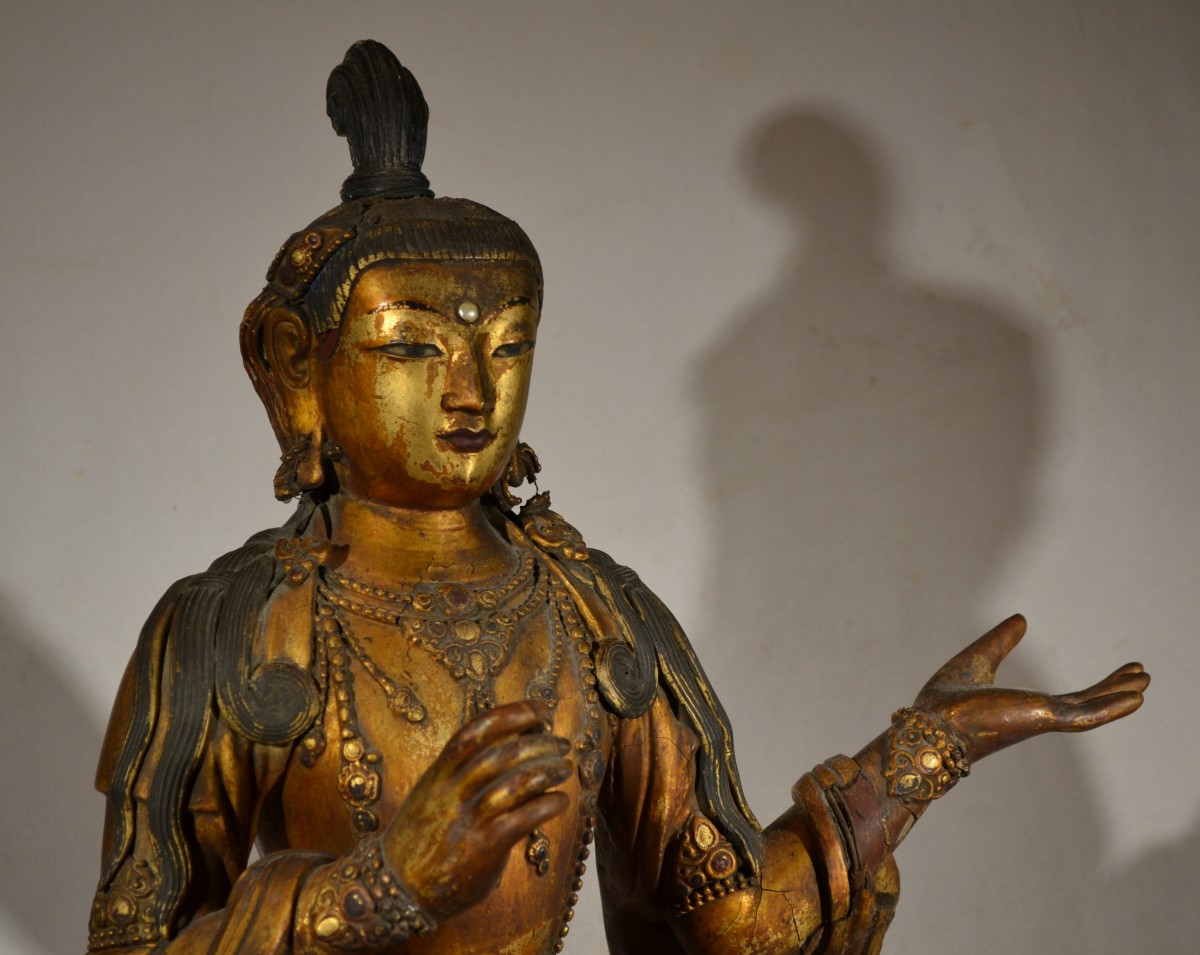
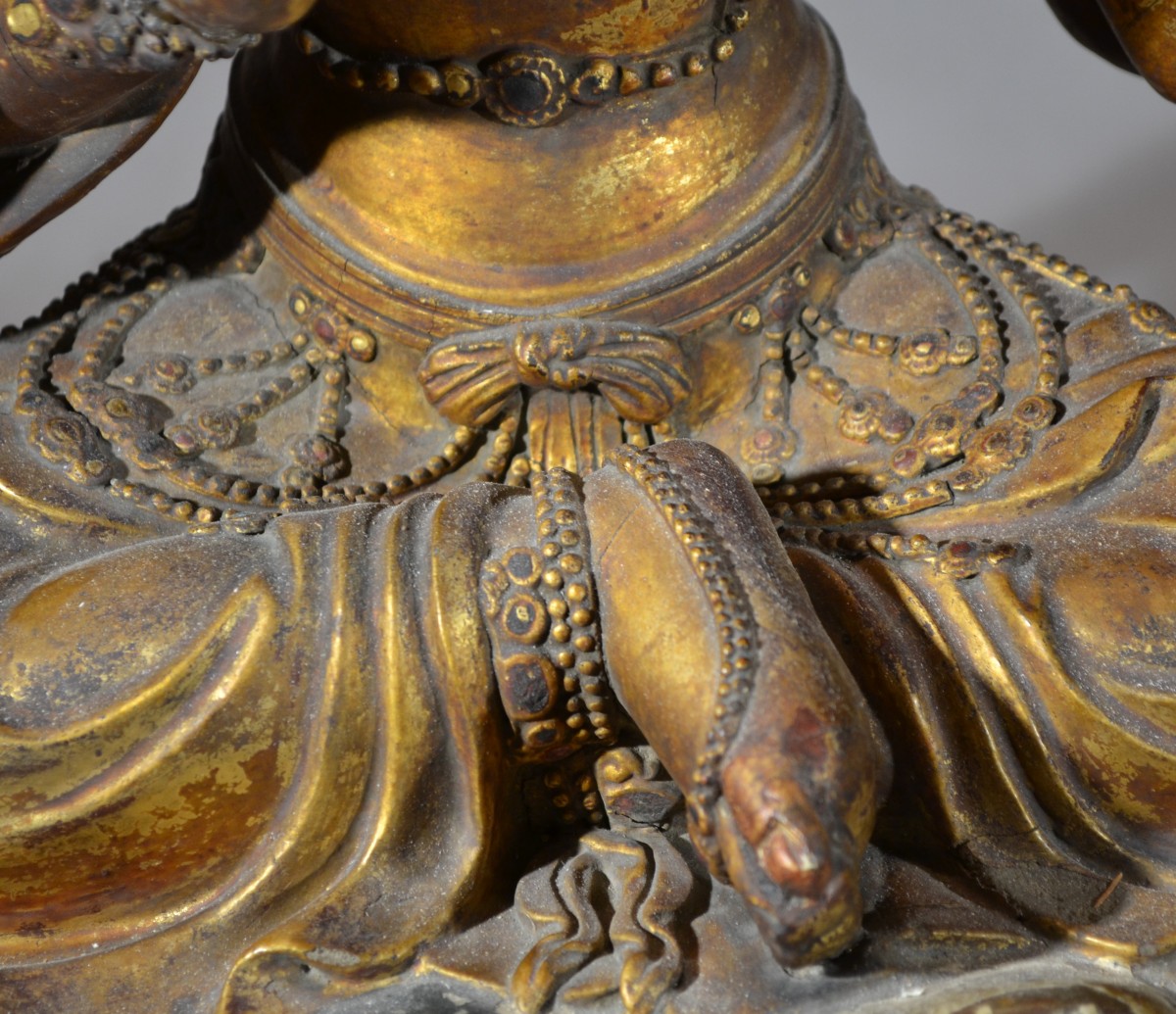
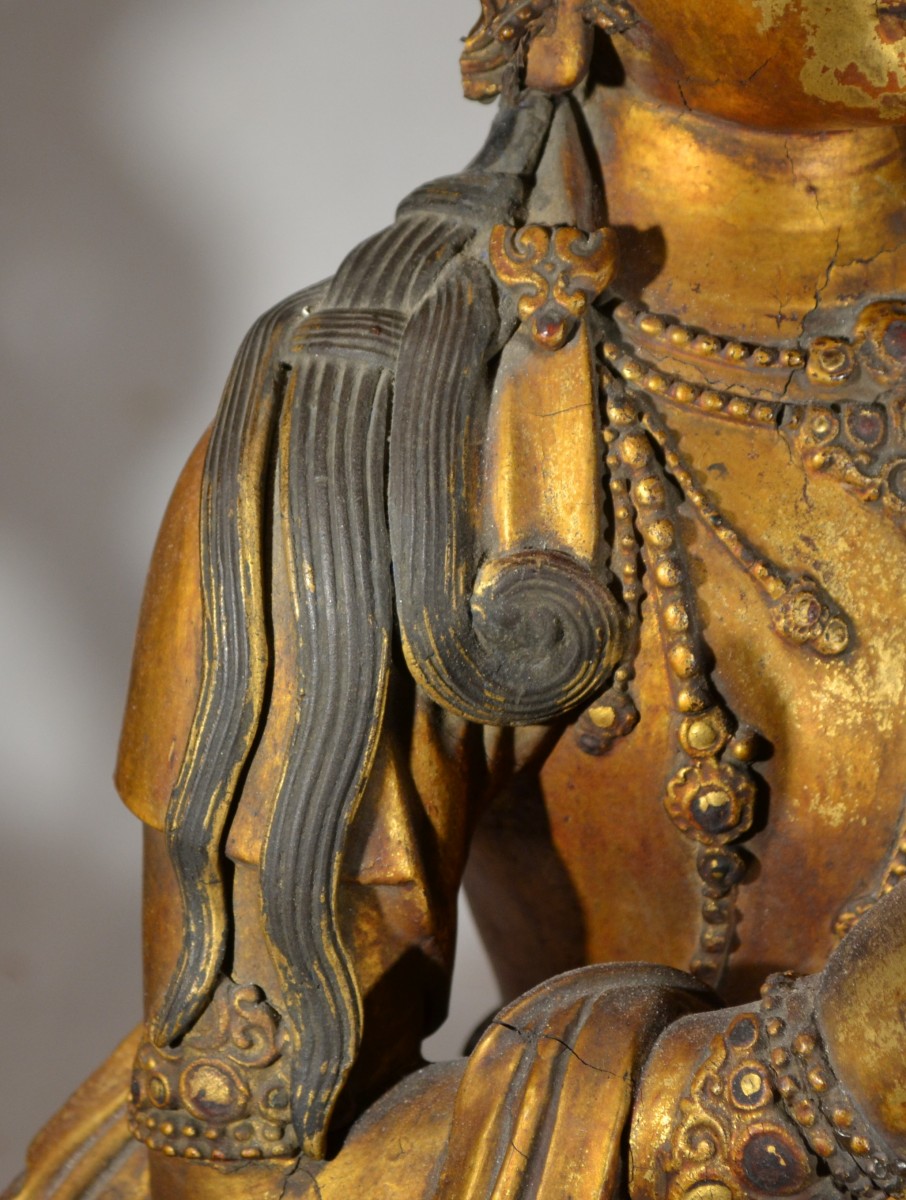
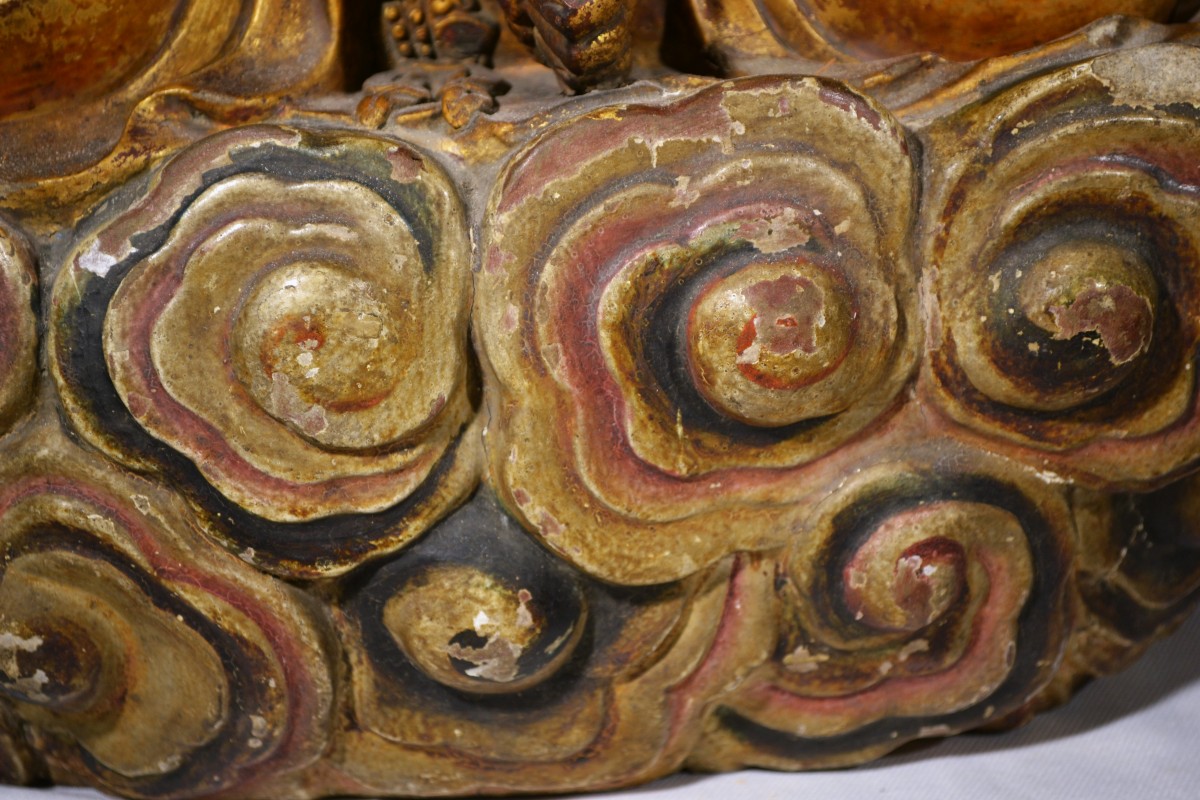

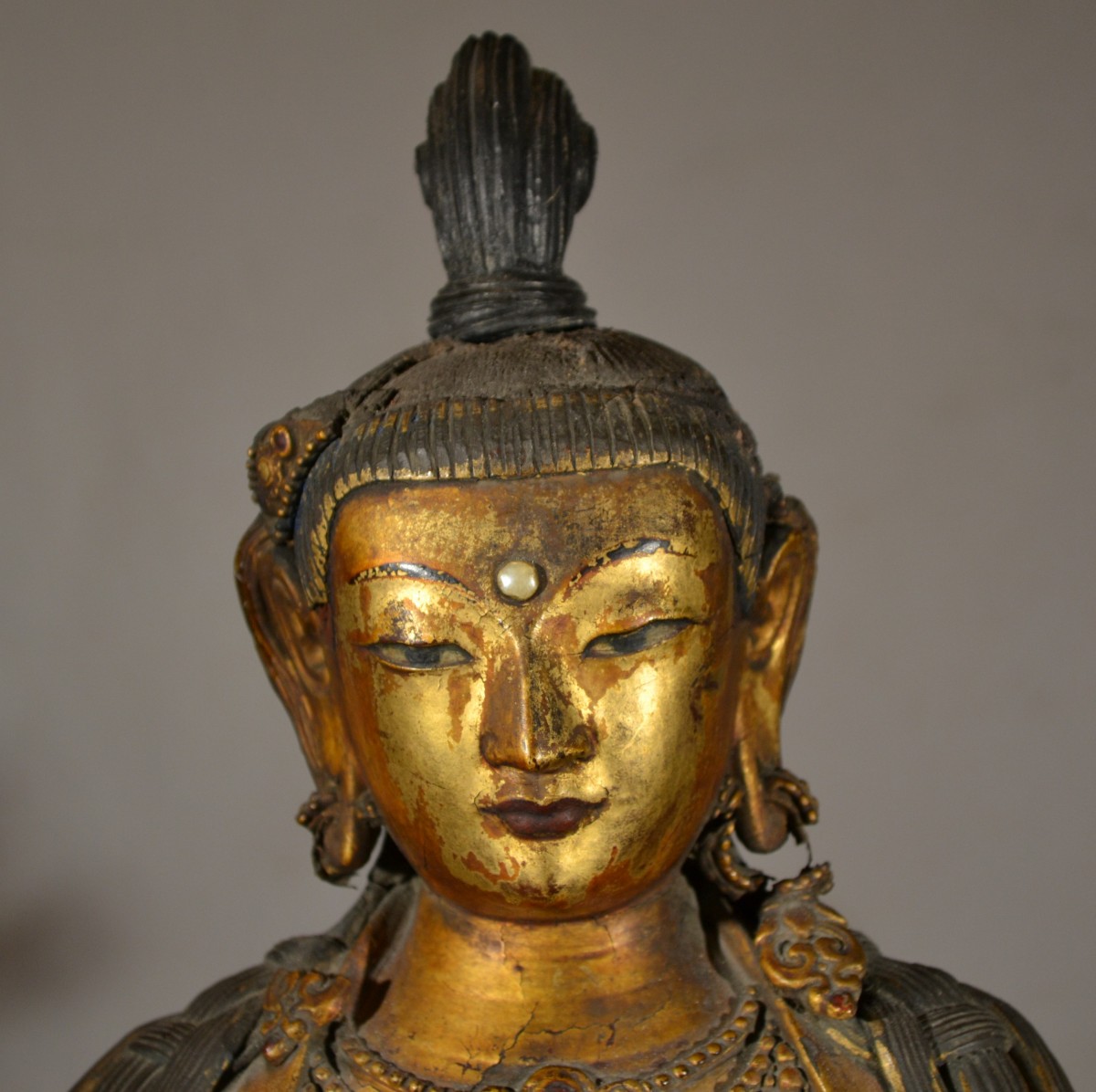
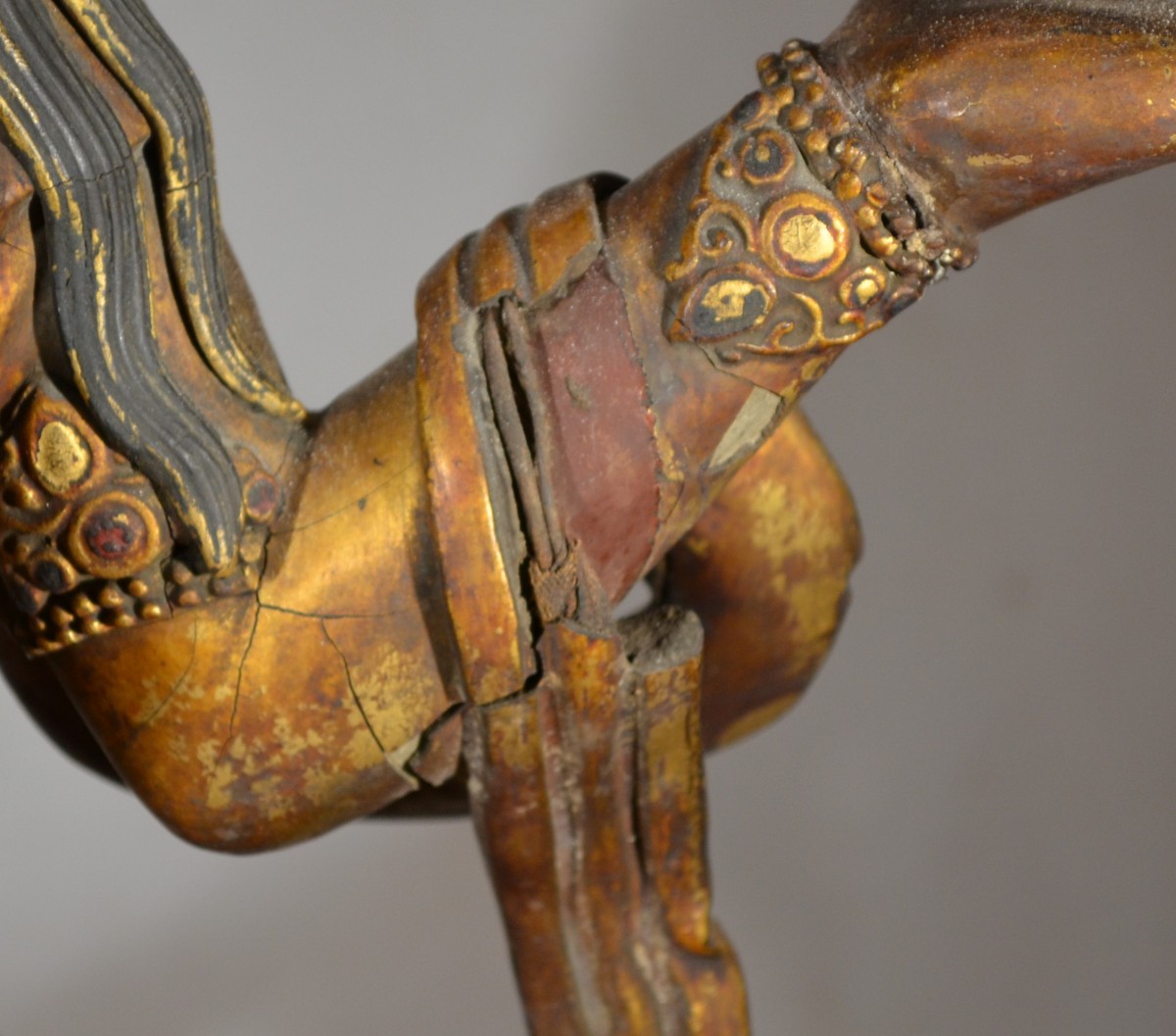
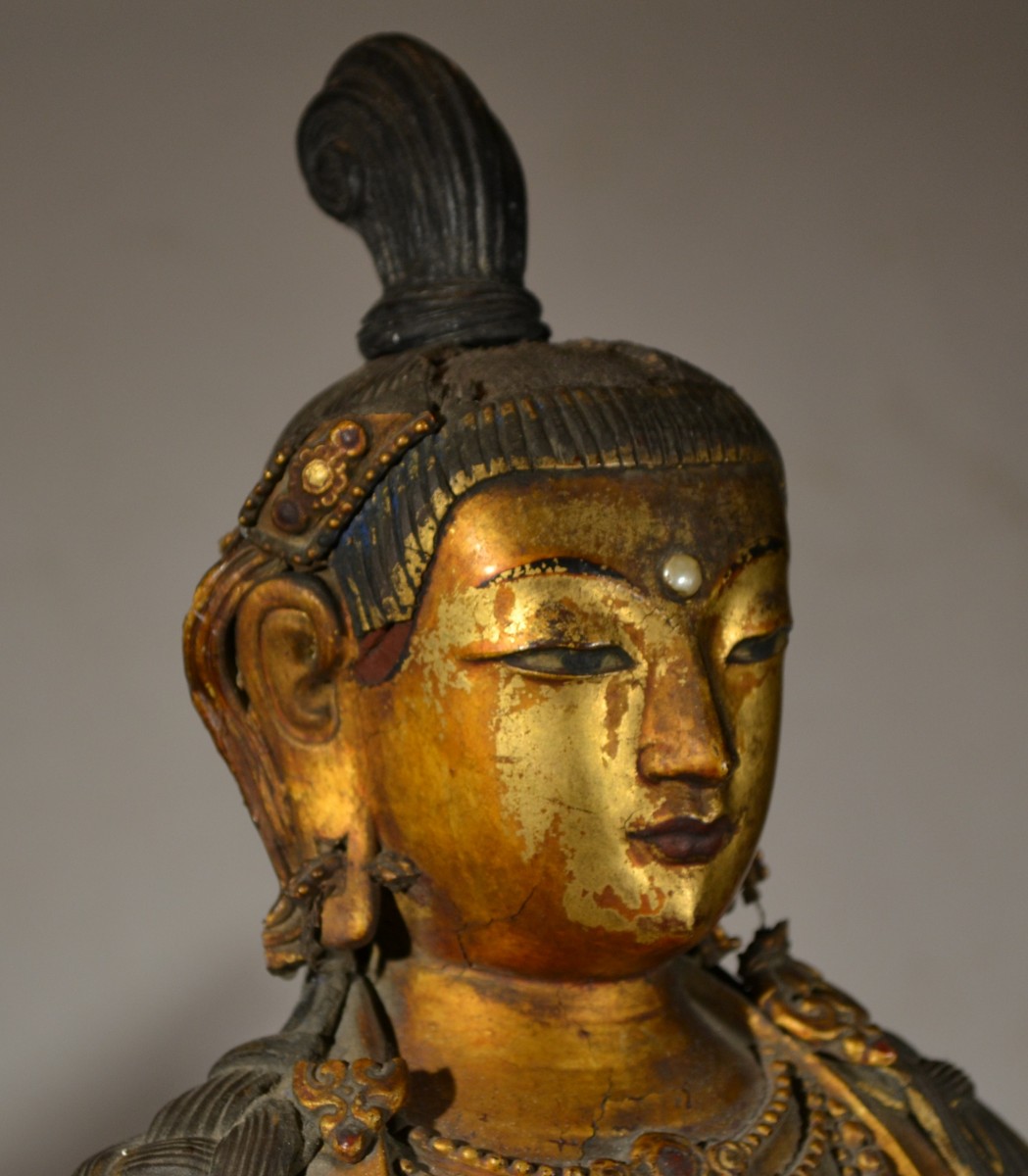
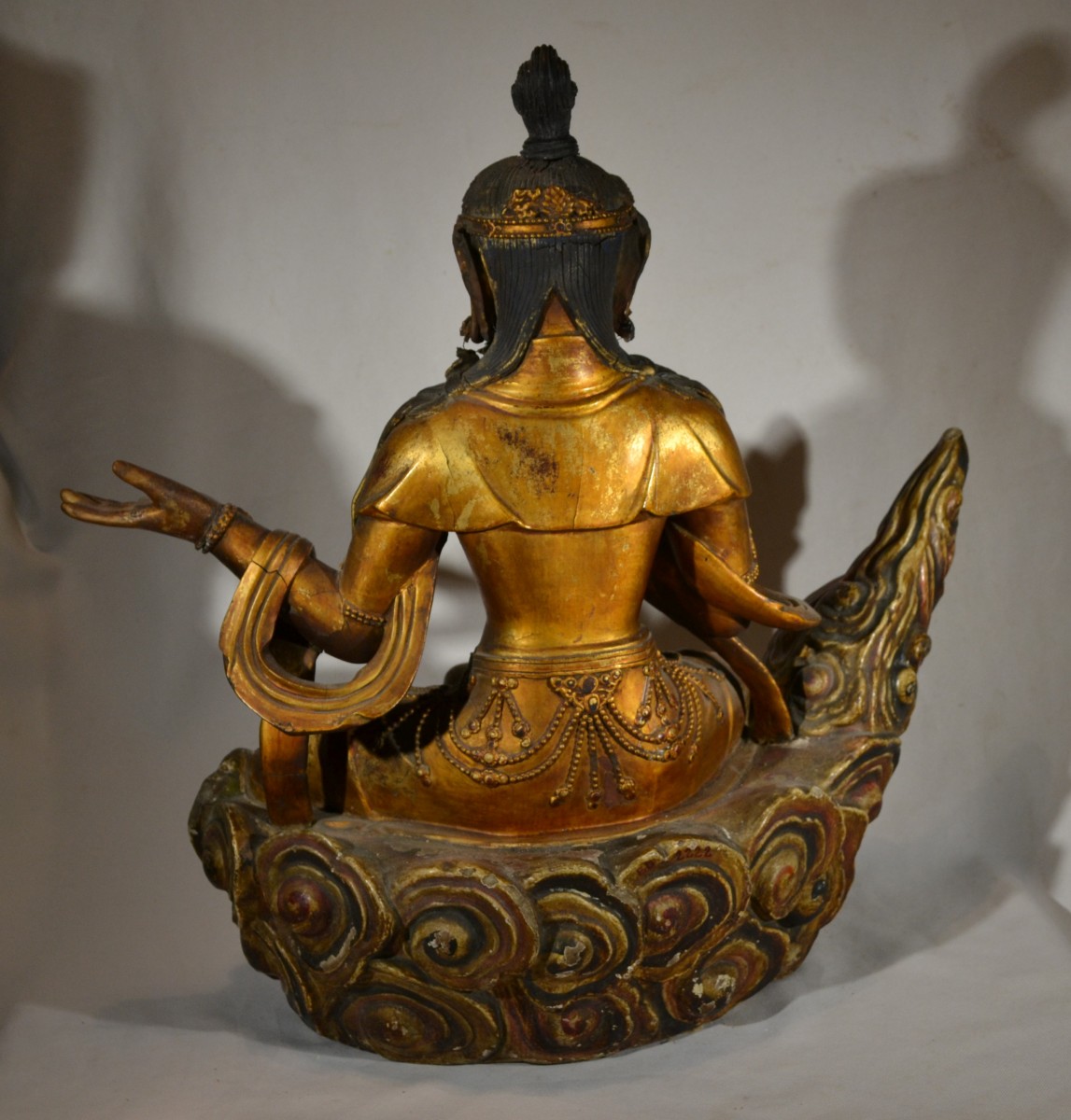
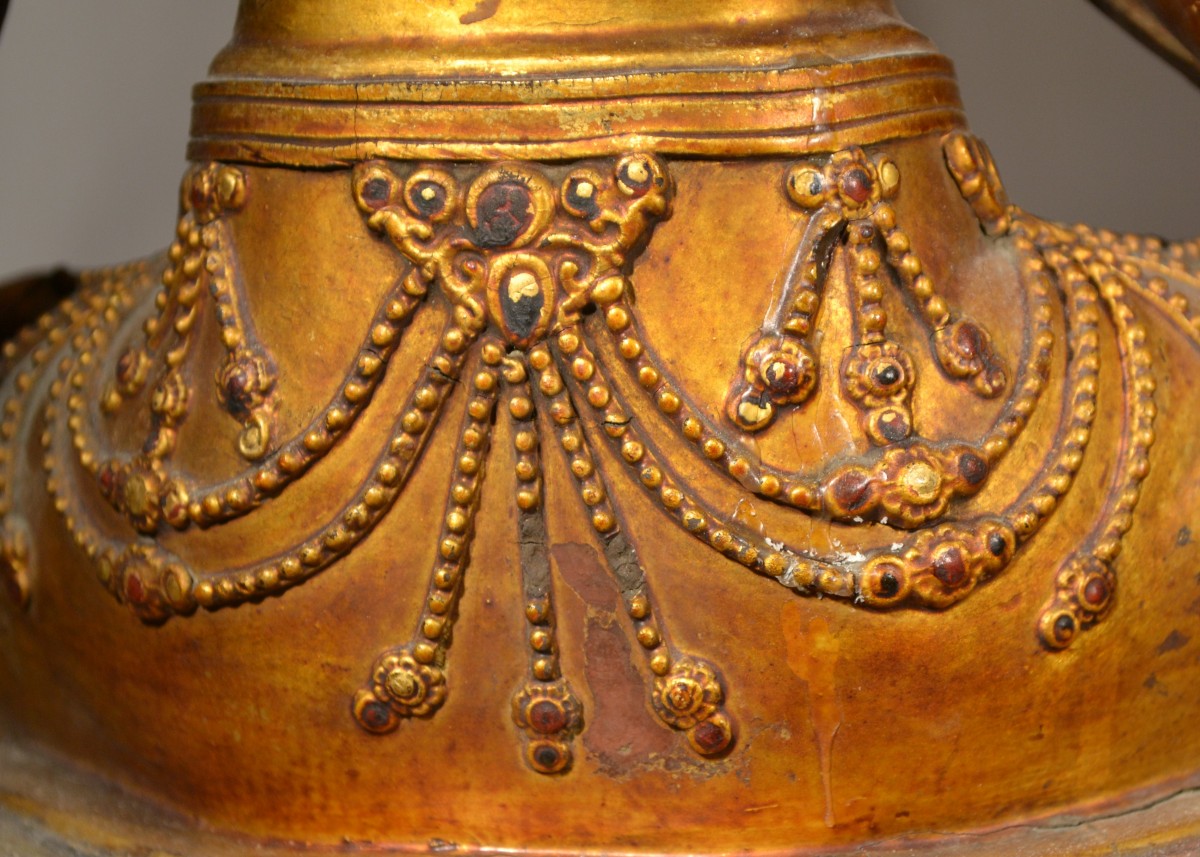
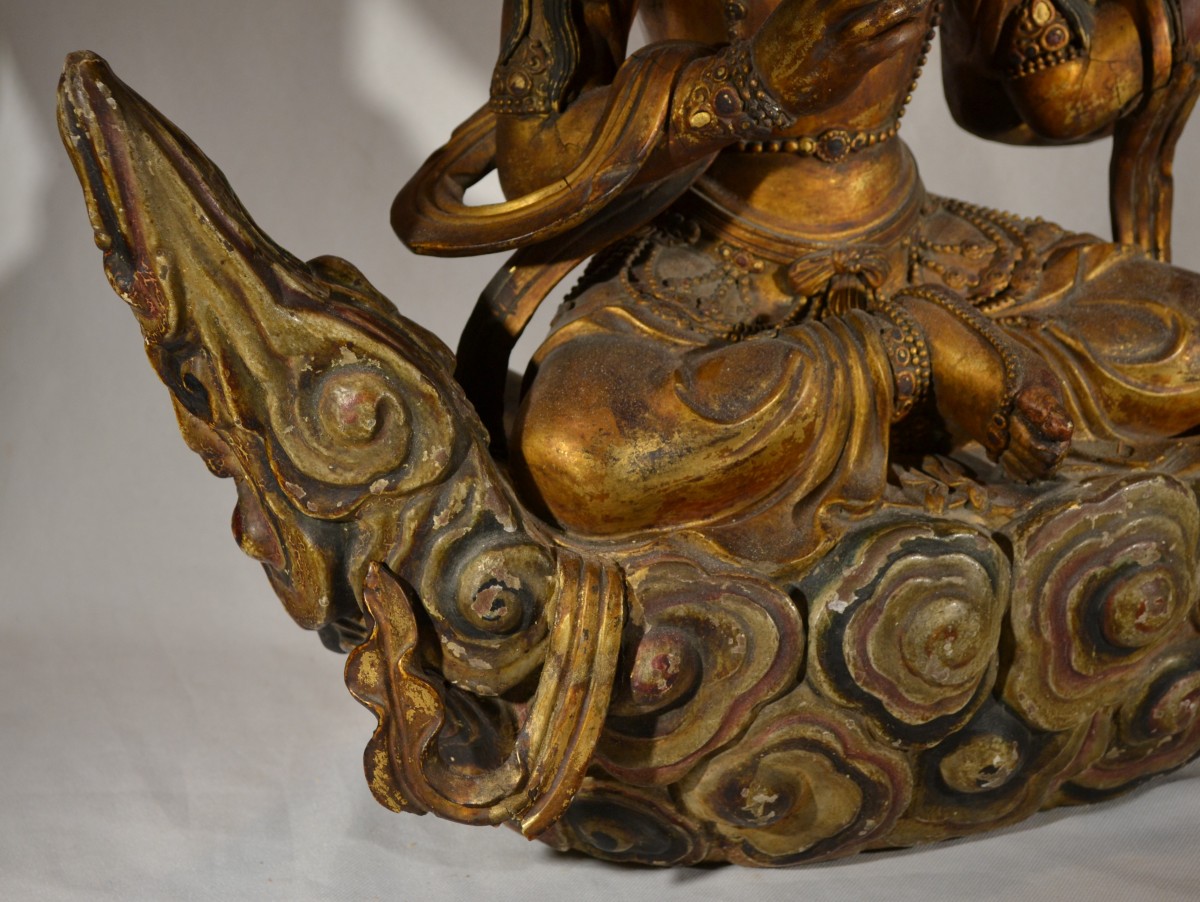
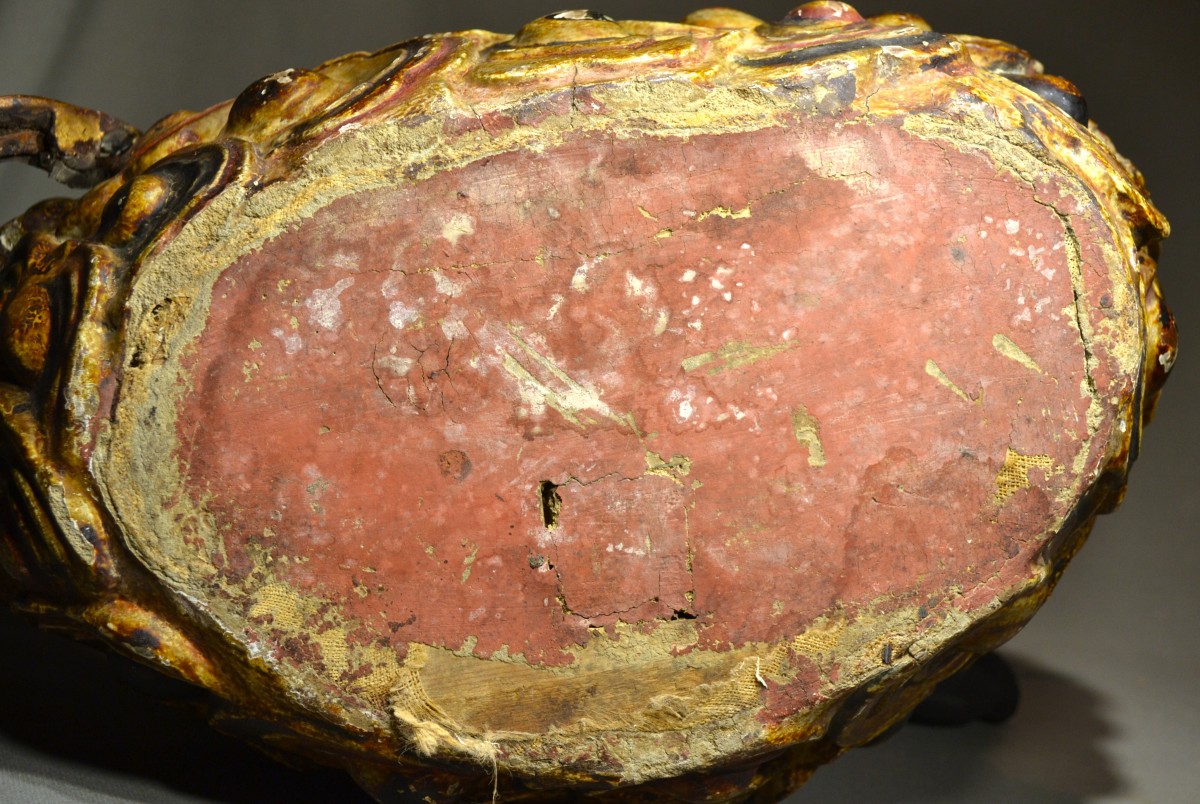
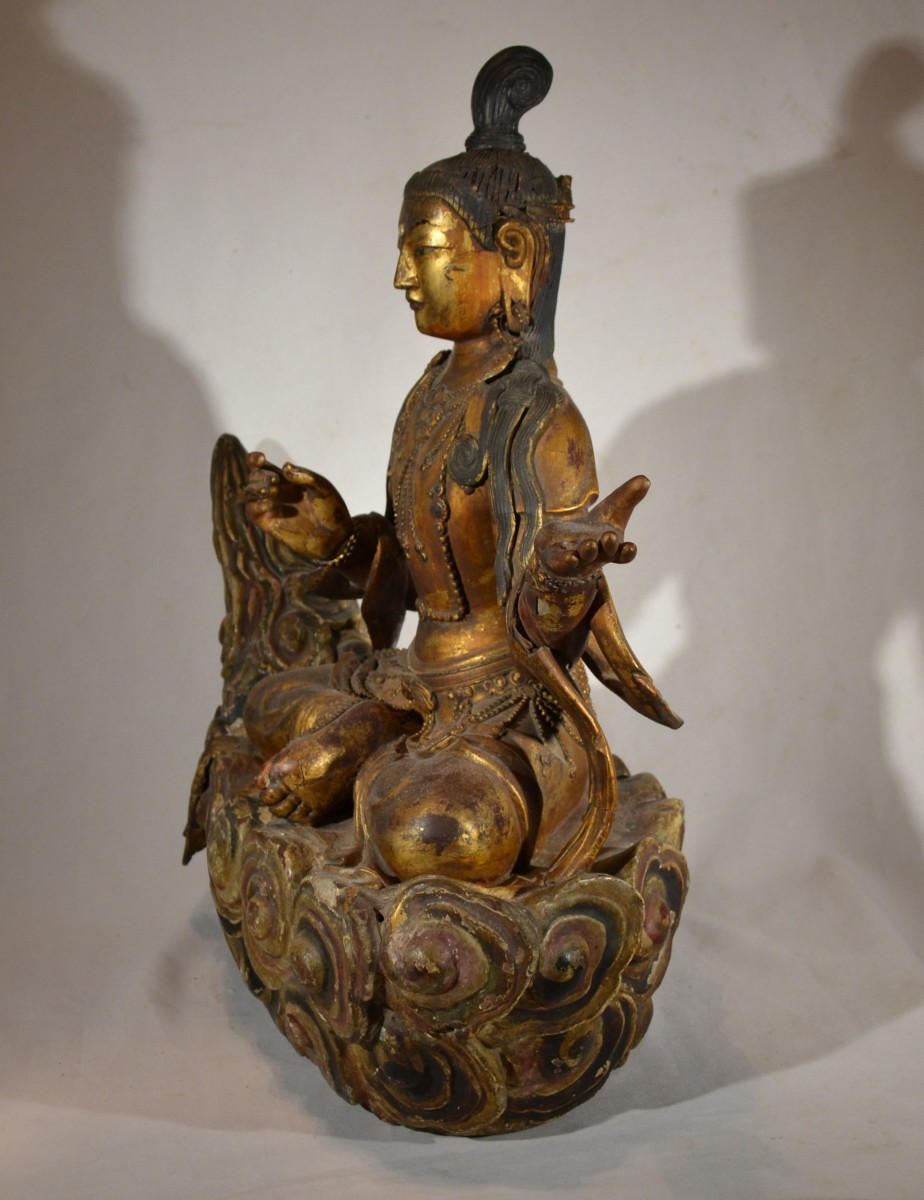
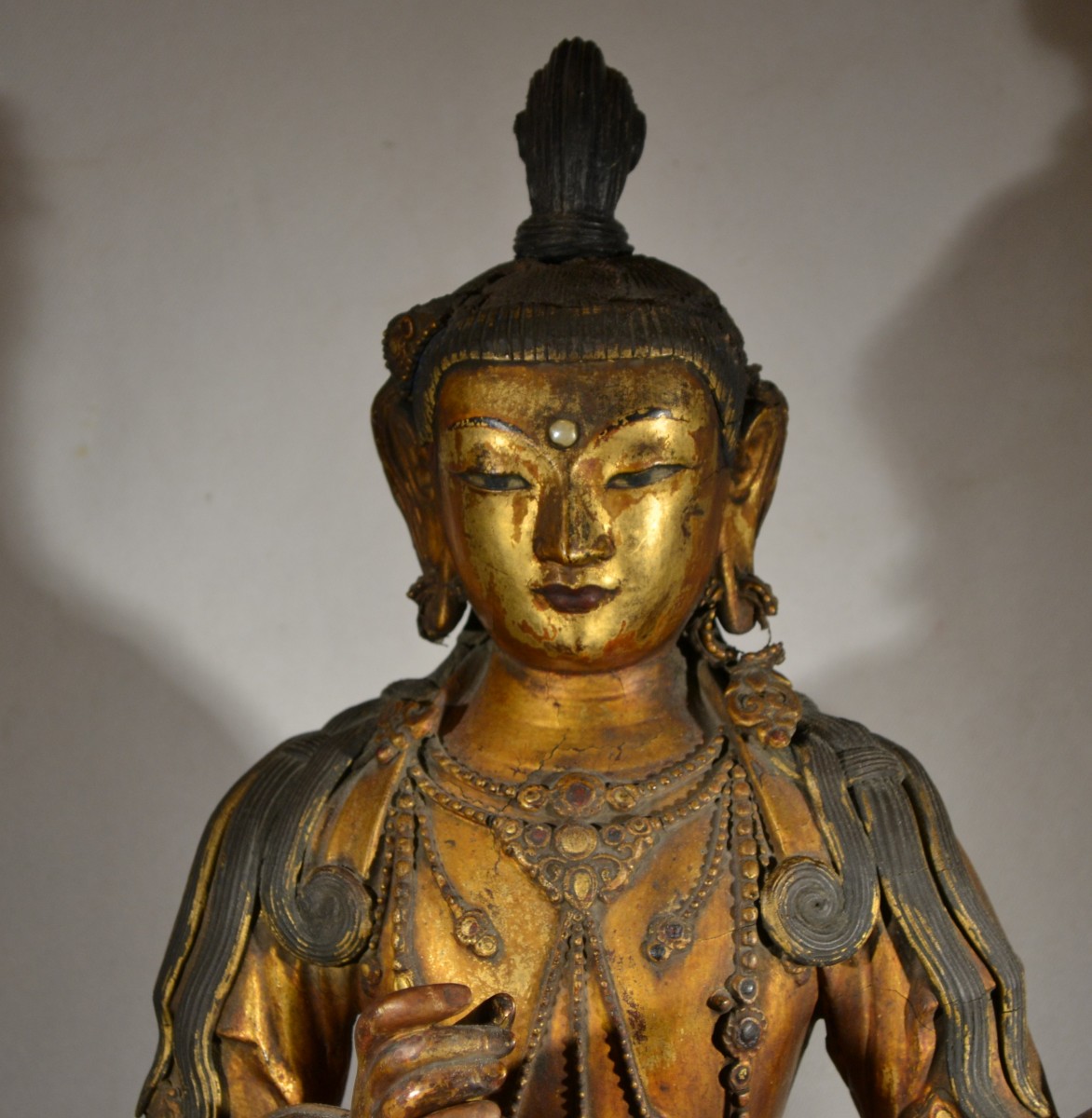
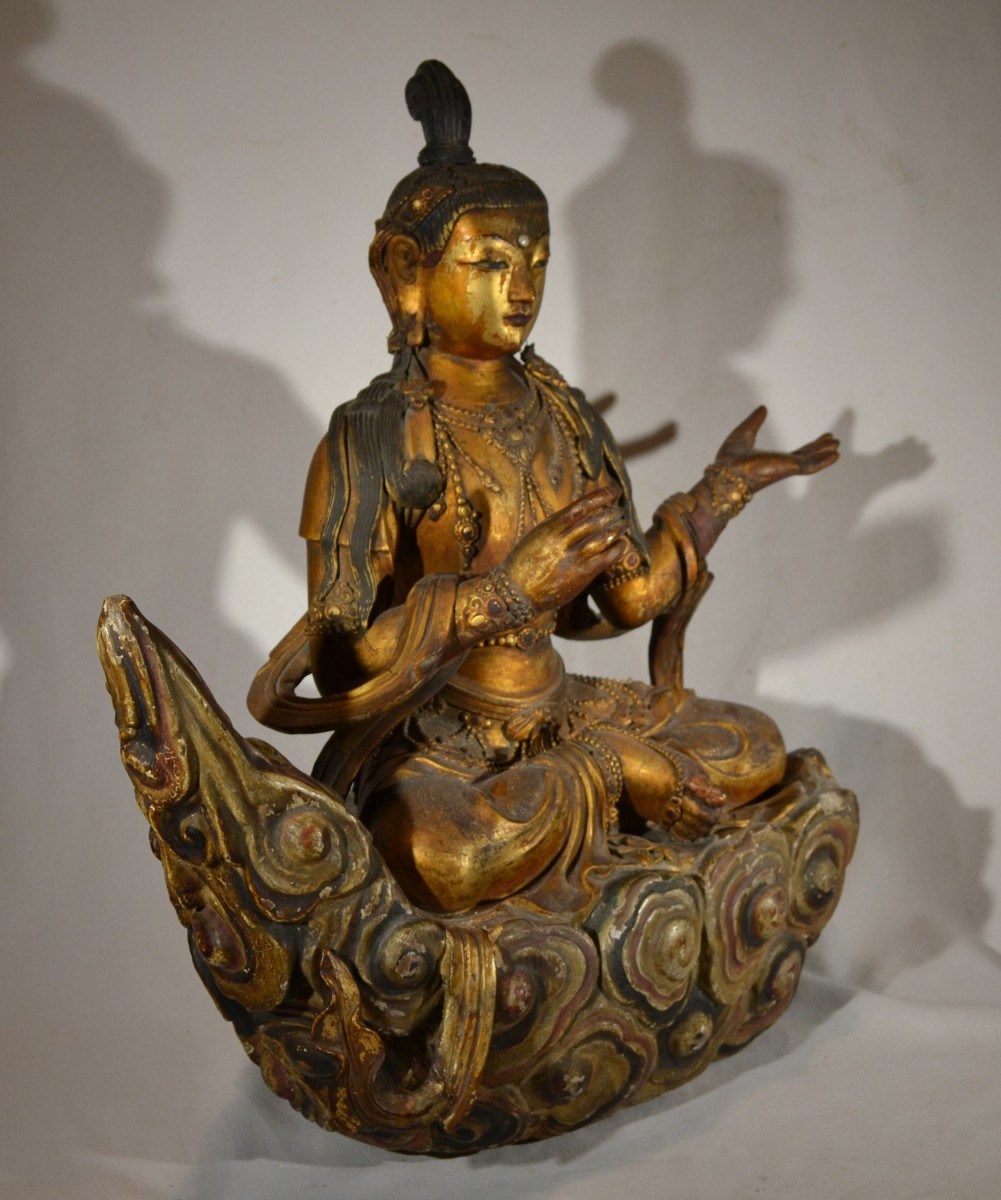
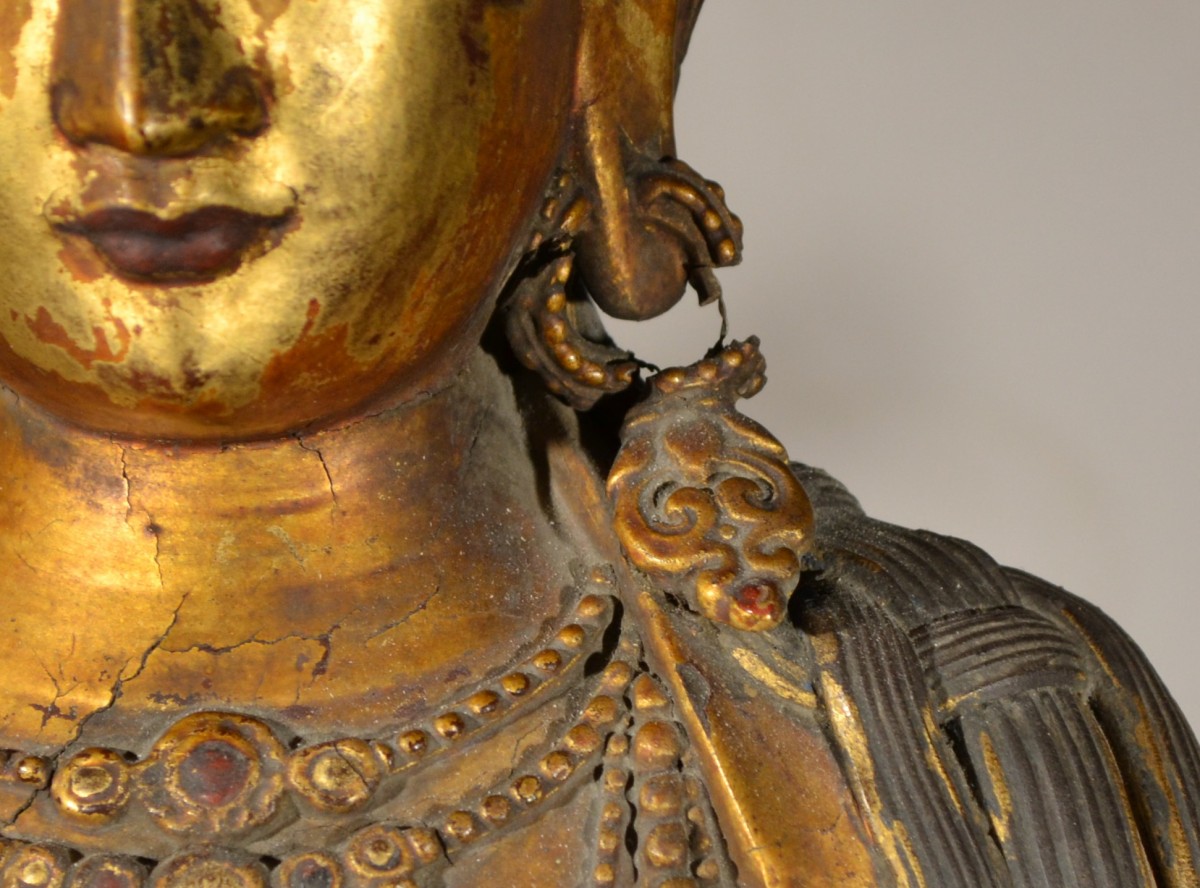
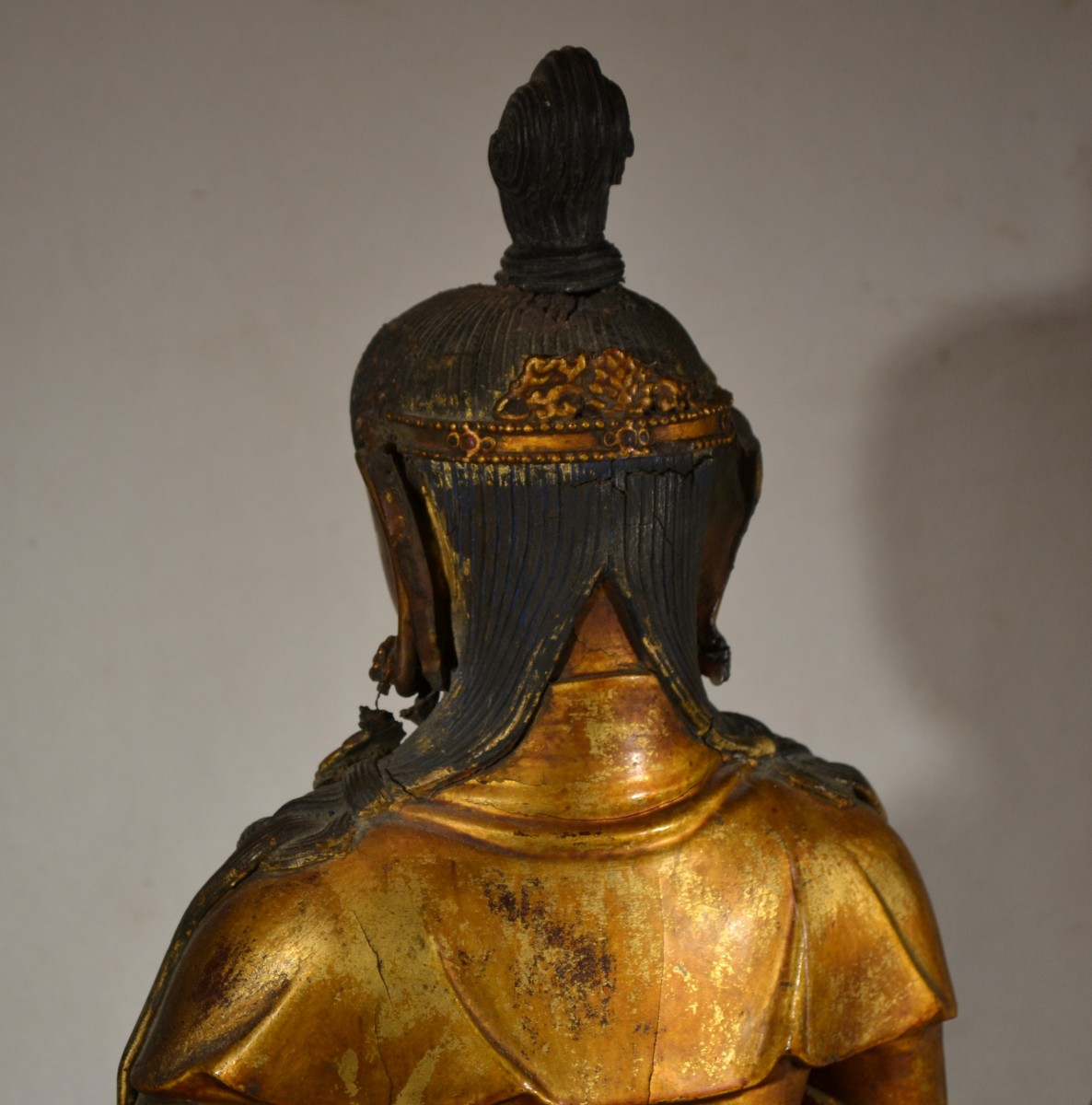
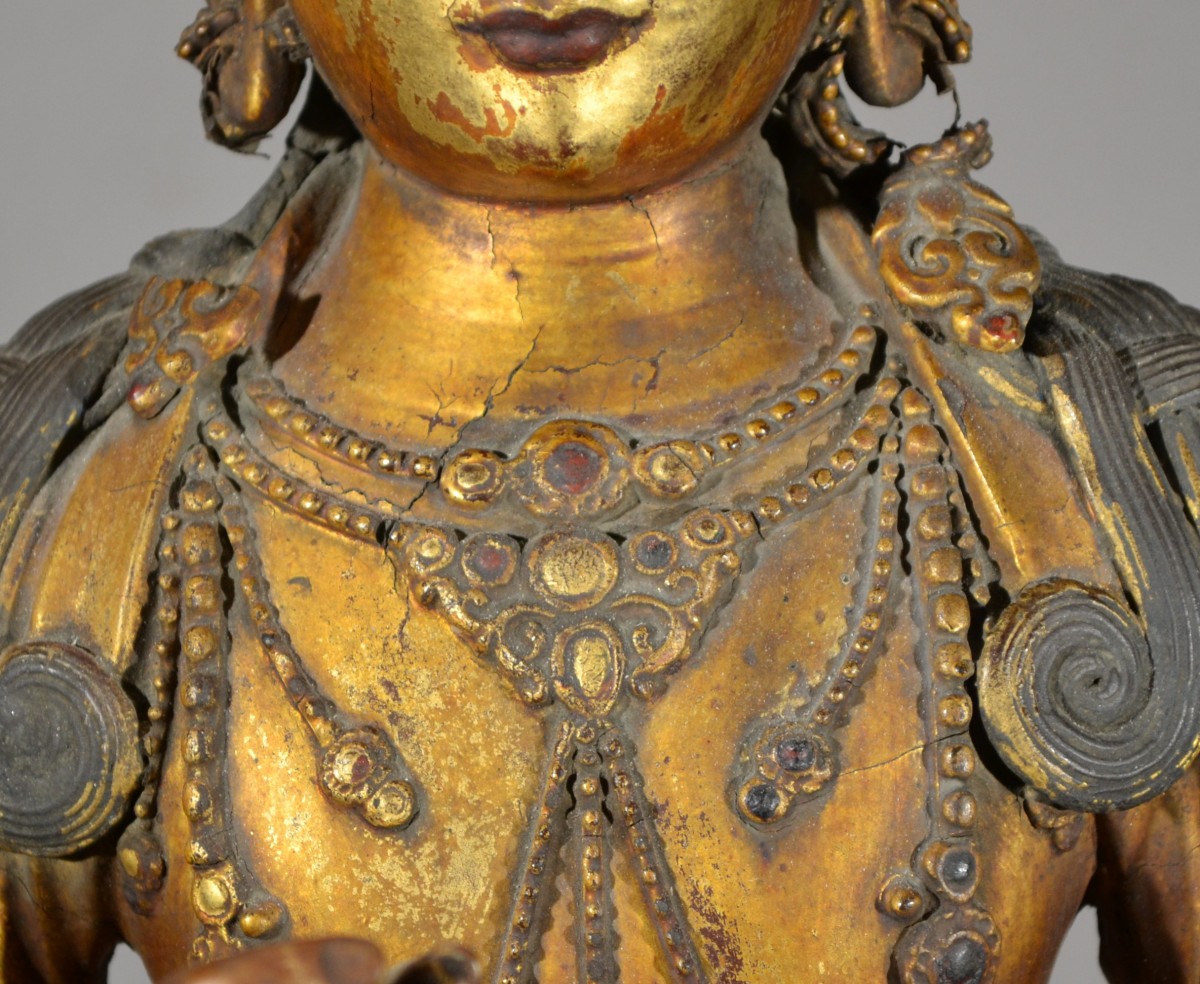
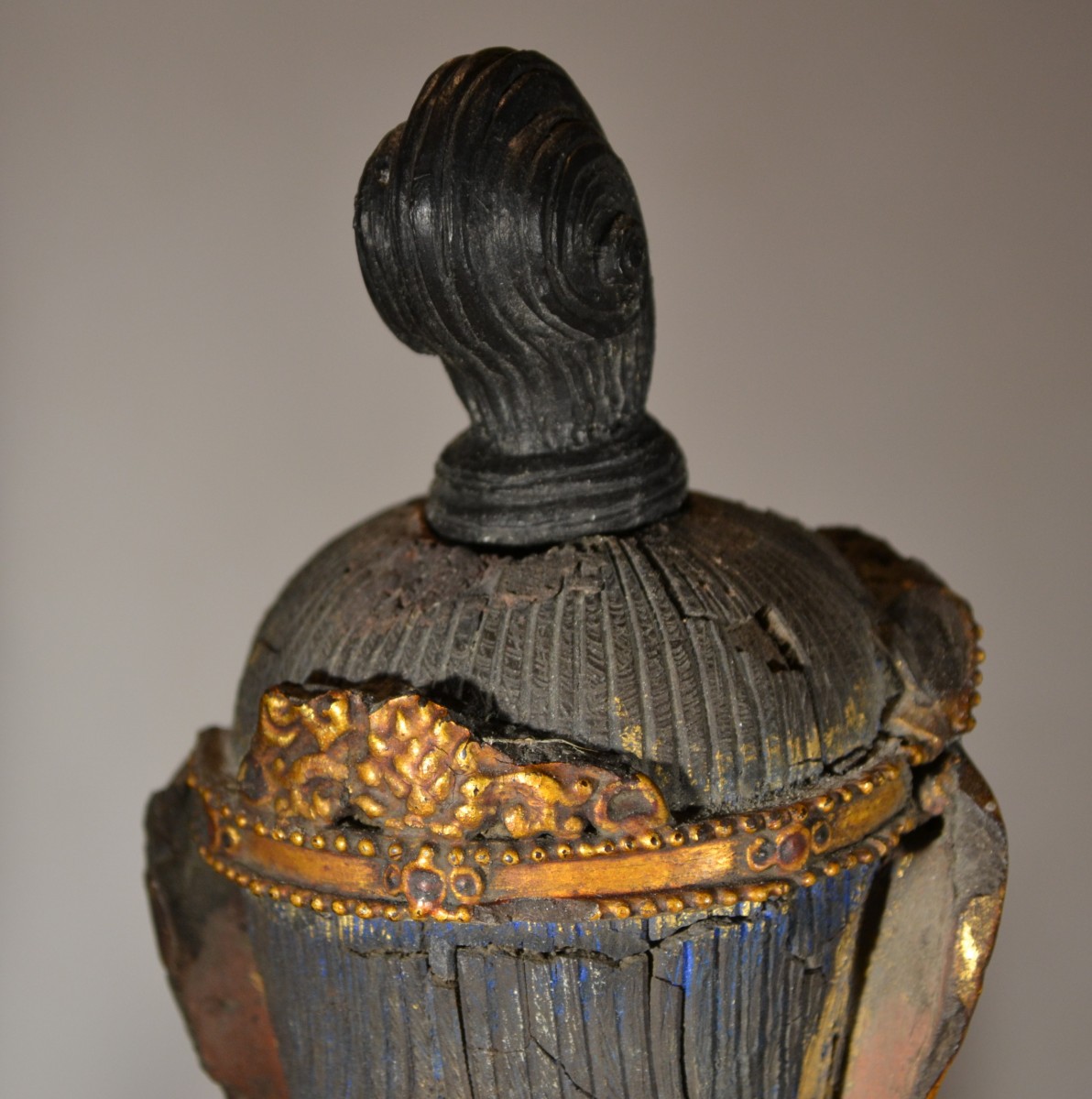
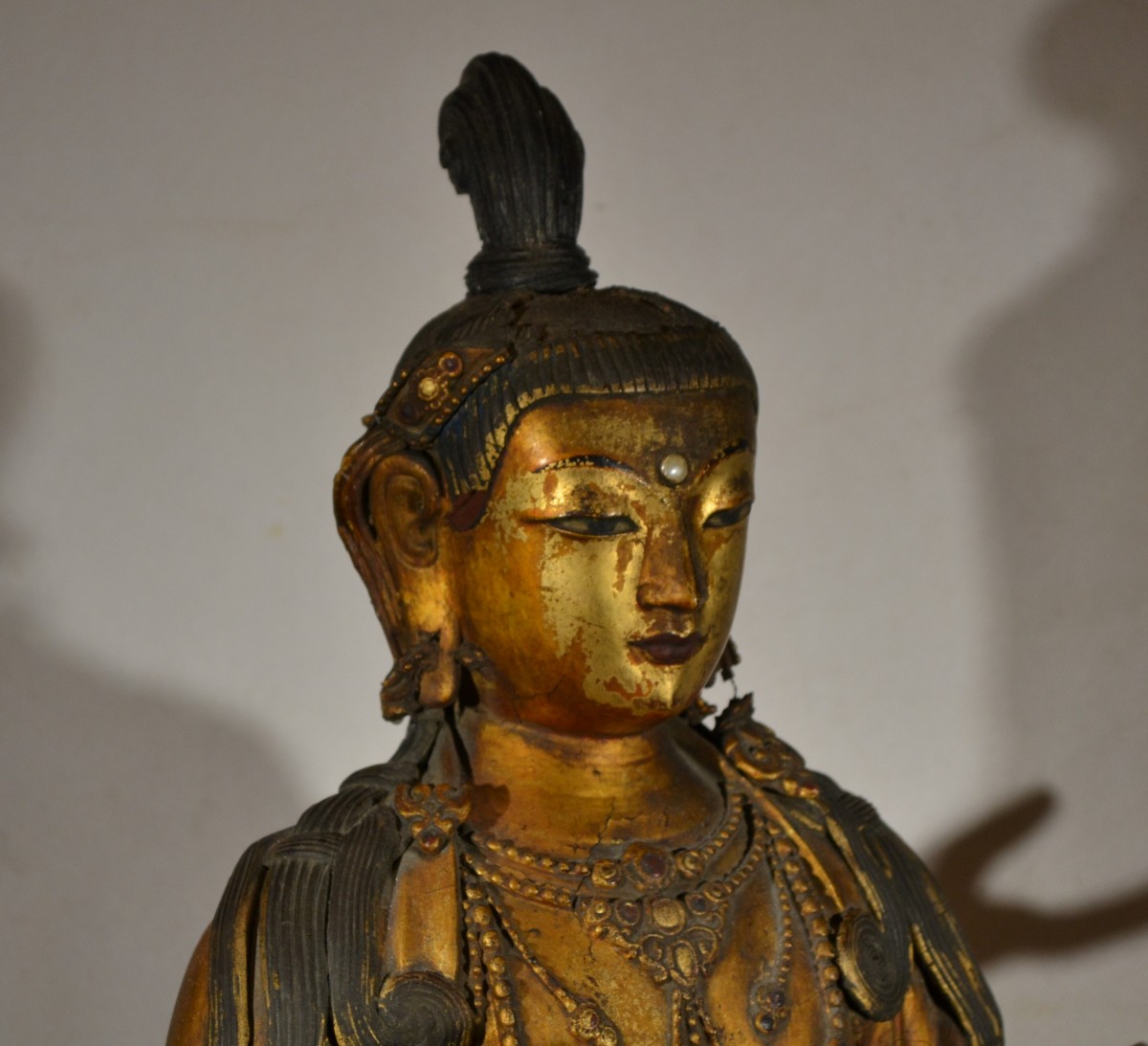
Ancient Chinese stucco statues are exceedingly rare. Most were destroyed, and the survivors are badly deteriorated. The one we are presenting is in exceptional condition. It has not been restored; only the topknot has been replaced. There are very few missing pieces, and the gilding and pigments show very little wear. The damaged areas allow us to see the iron reinforcements (see the forearm and earrings). The deity is very elegant, with a slender body; importantly, the third eye (urna) is made of natural pearl. The date of creation is difficult to determine precisely; we believe it to be the 14th century, at the very beginning of the Ming or even Yuan dynasty, but it is possible that it is earlier. Indeed, the cloud that serves as his throne has an unusual protrusion on one side. We have not found this type of cloud in Chinese art; however, they do exist in Japanese art from the Heian and Kamakura periods (9th-14th centuries). In our collections, we have two 13th-century Japanese wooden panels depicting monks carried by such clouds, which serve as their celestial vehicles. This cloud is an essential element in defining the deity, as it is a celestial raft of transport, not a static throne. The deity is modeled on an iron armature; the material used is unknown to us and would require analysis. Some texts mention a mixture of lime and sand, others plaster and terracotta powder. Each region likely had its own formula. Examination of the underside reveals a wooden board covered with fabric and a red coating. A small square is visible beneath the paint; it is highly probable that this is the compartment containing the relics that breathed life into the statue. A careful examination suggests that it was never opened, as it remains partially concealed beneath the paint. Priests kept sutras, seeds, the ashes of saints, and sometimes precious stones within it. But it is best left closed, like Pandora's box, allowing the divinity to continue its journey through time, peacefully and intact. The front part of the crown is missing. Height: 50cm Width: 50cm.
Delevery information :
International deliveries in the best conditions. Careful packaging. I travel with important items as needed.