Offered by Antiquités Philippe Glédel

18th Furniture, country french furniture
François Lieutaud (Marseille 1665 – Paris 1748)
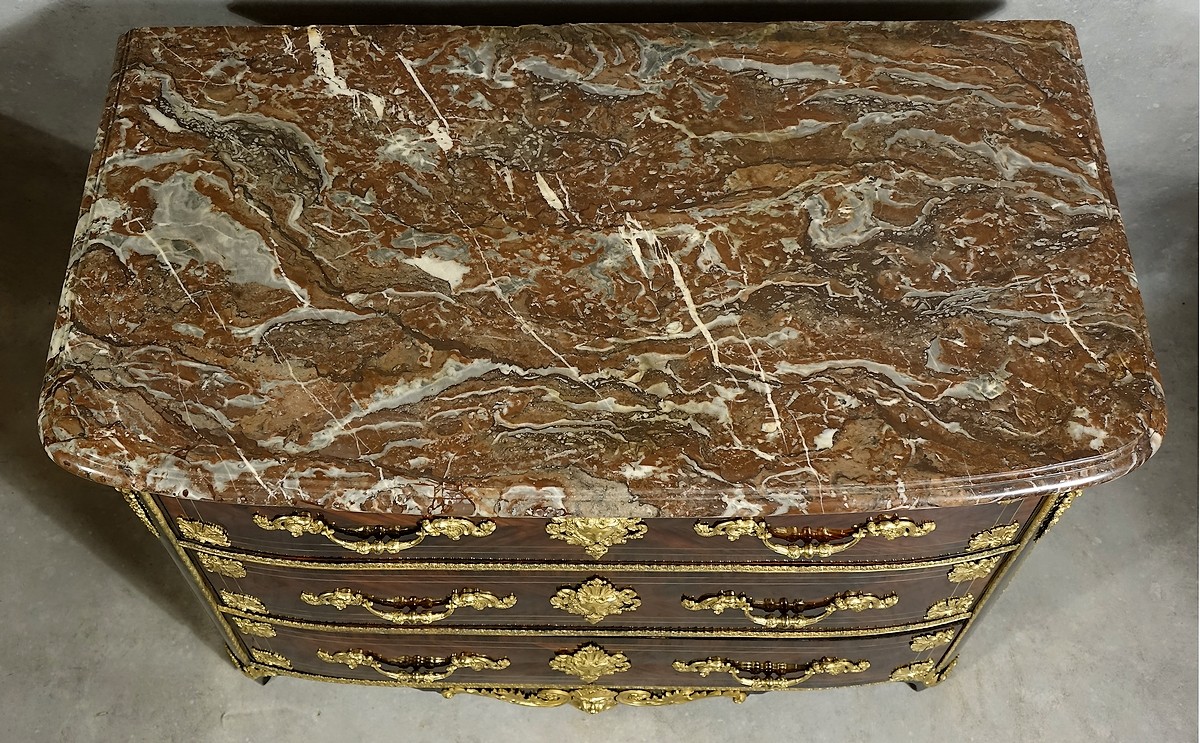
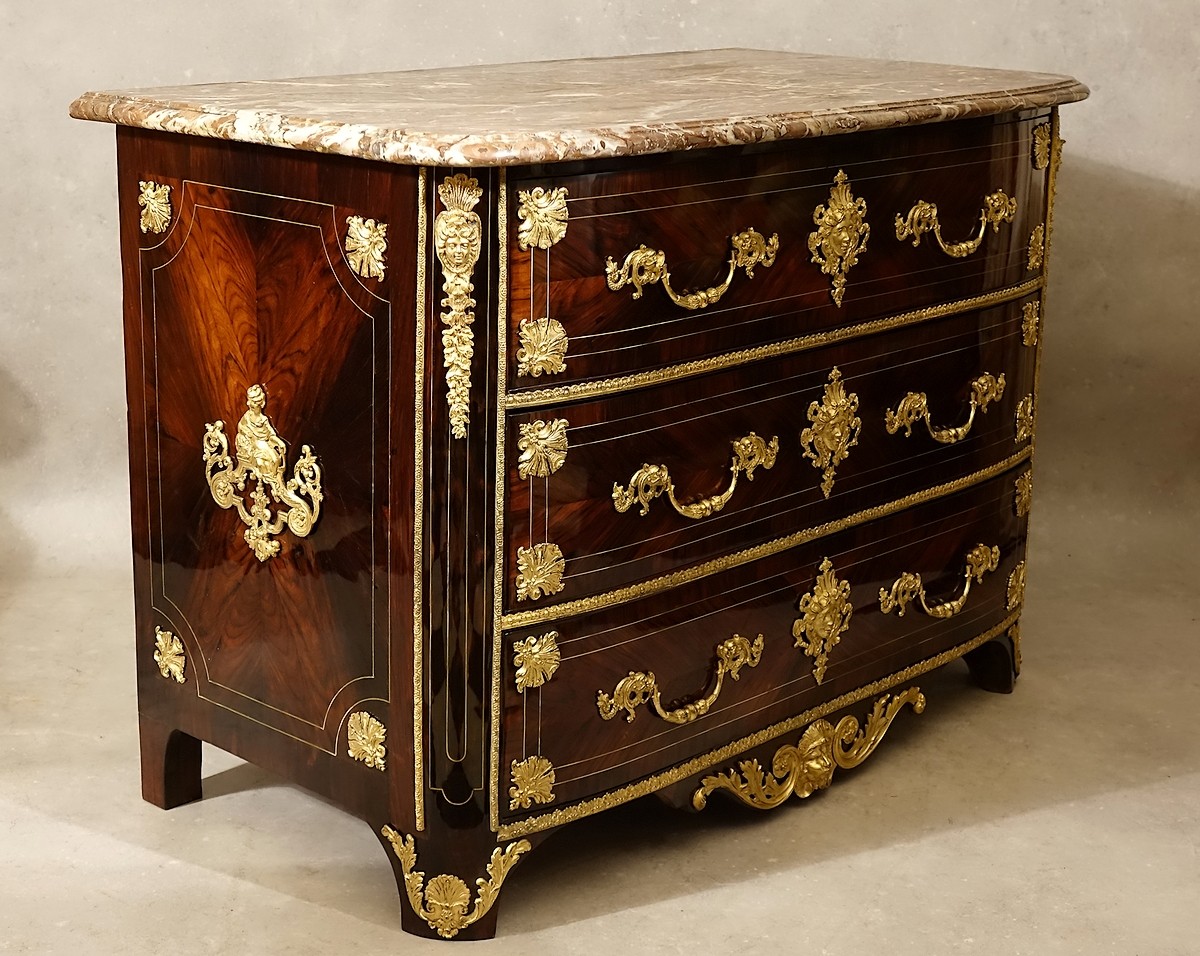
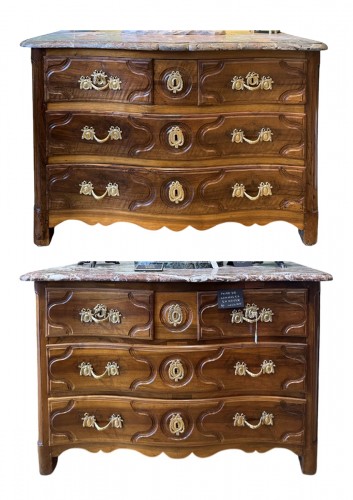
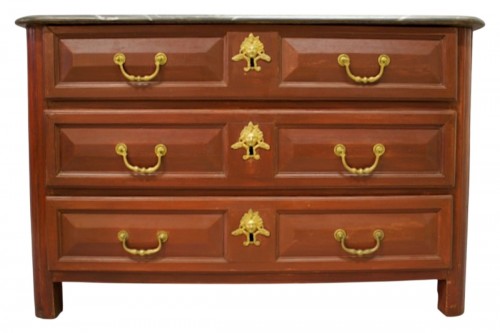
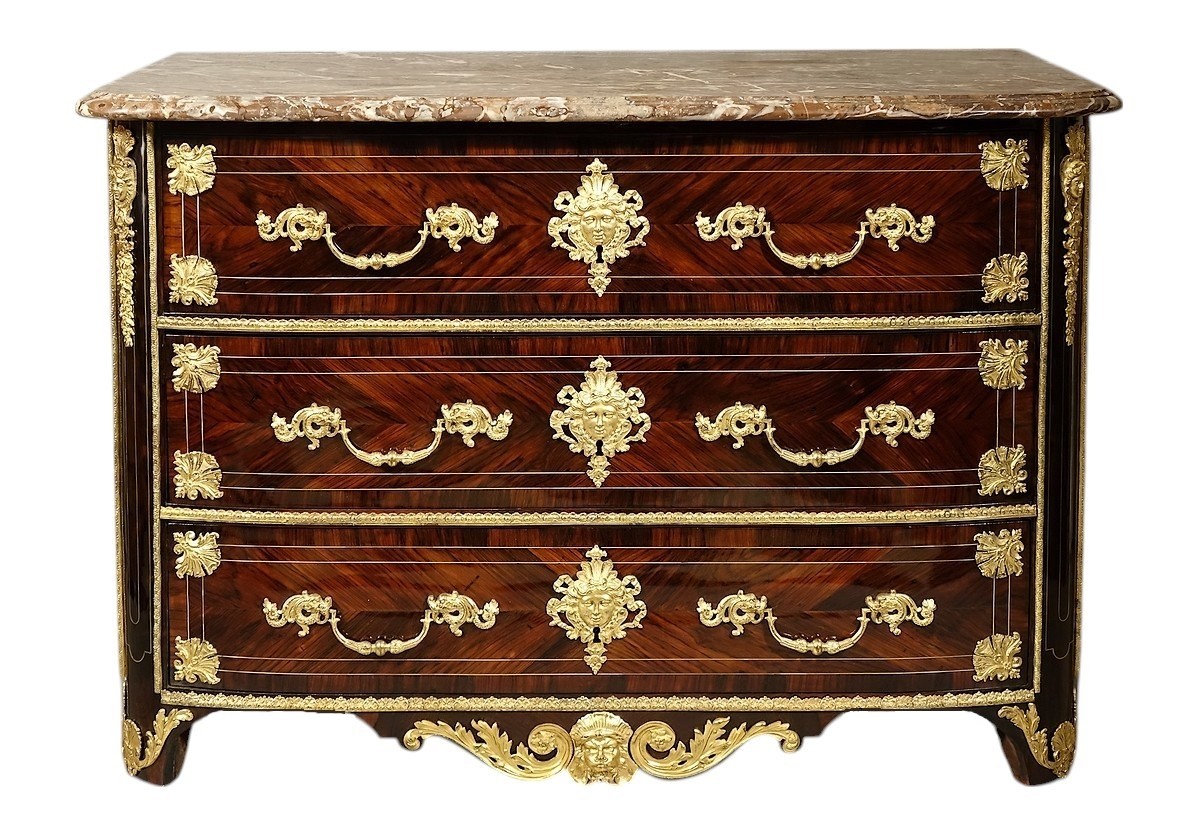
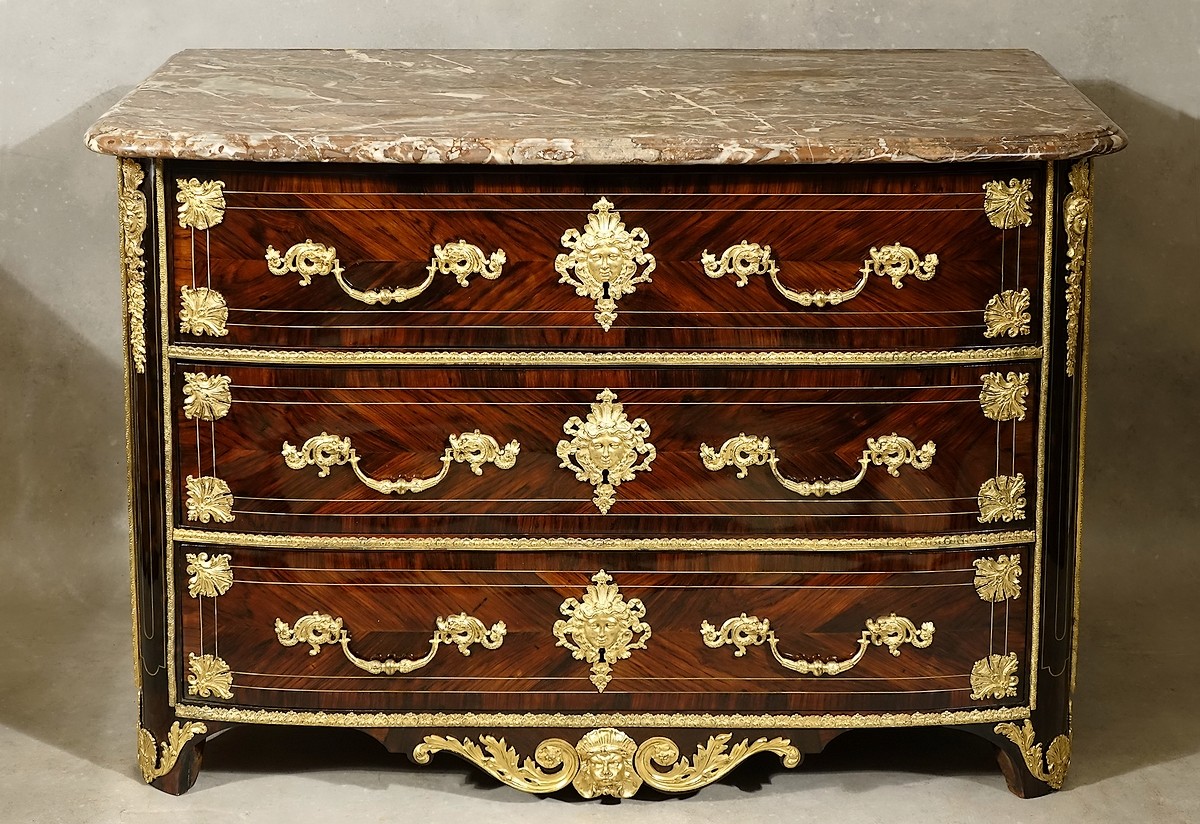
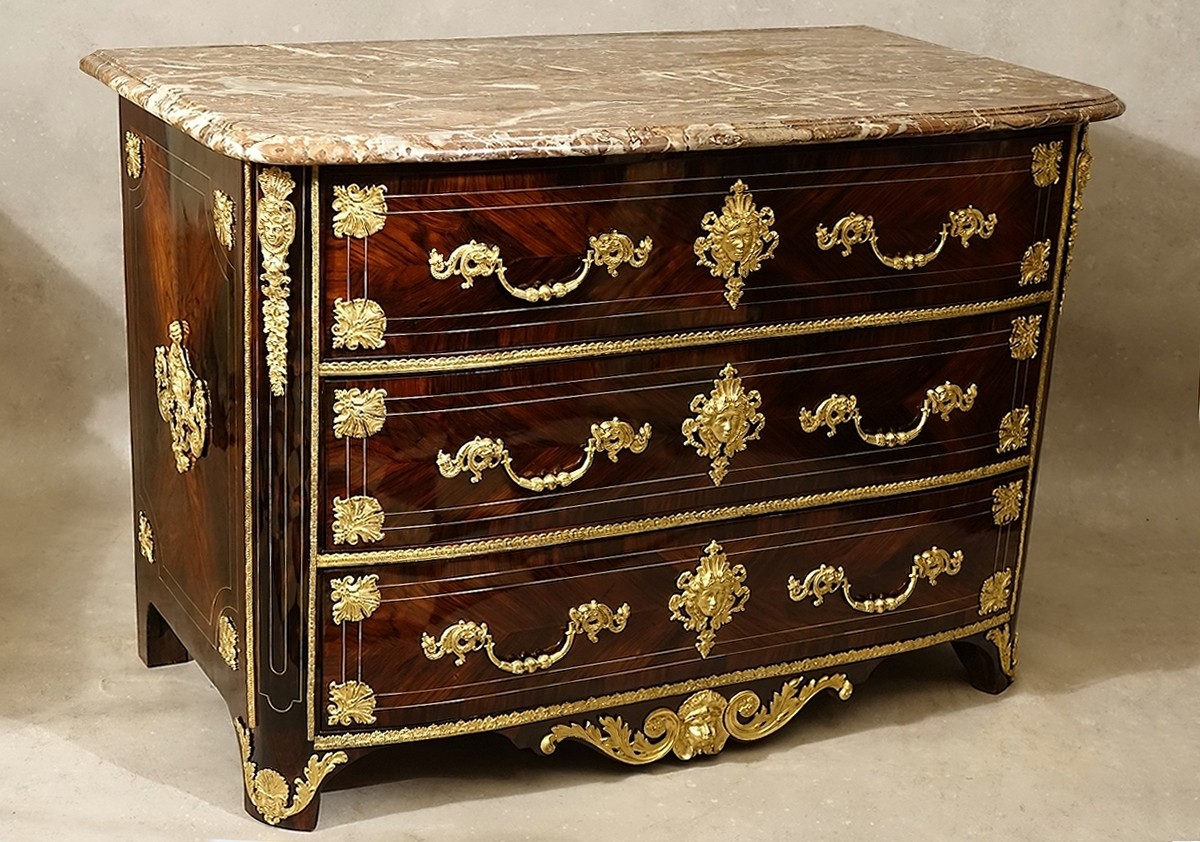
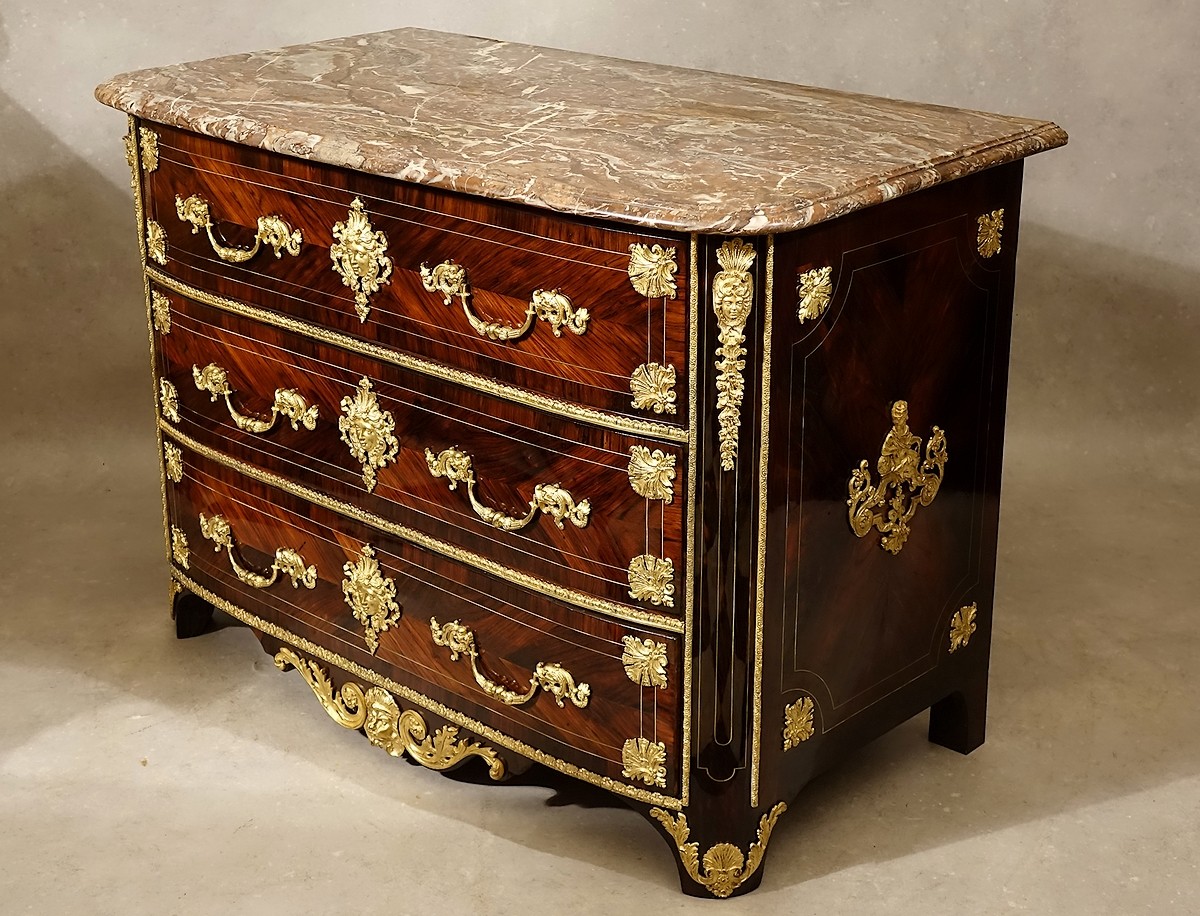
Louis XIV period commode, known as a commode à cadres, veneered in Brazilian rosewood arranged in chevrons and elaborate grain patterns, topped with a Rance marble, inlaid with brass stringing and adorned with exceptionally rich gilt bronze mounts. Its bombe front opens with three large drawers.
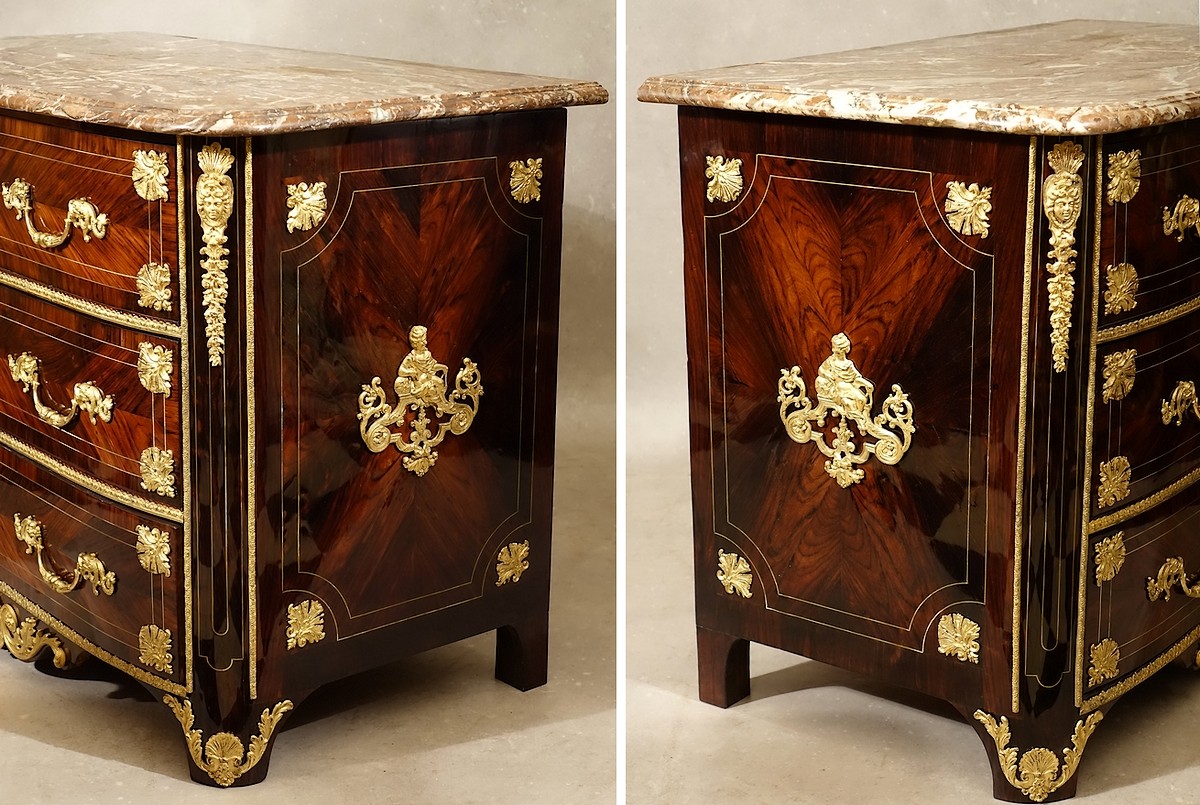
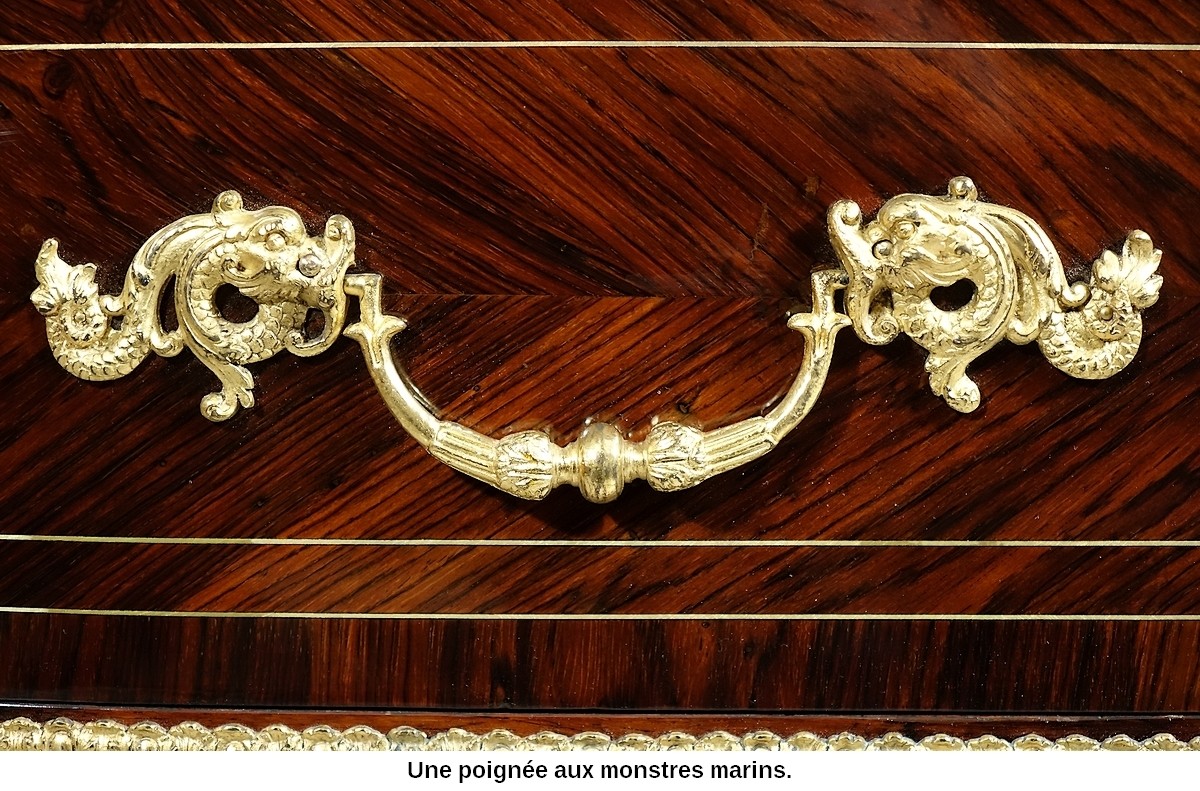
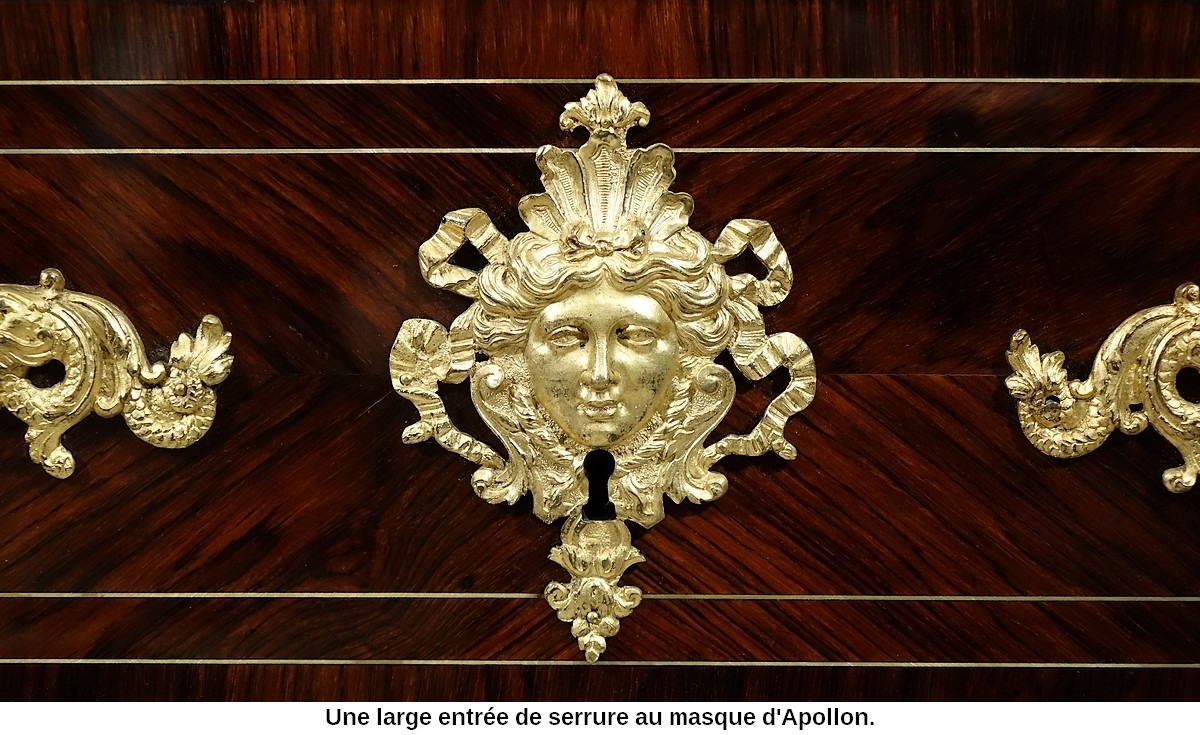
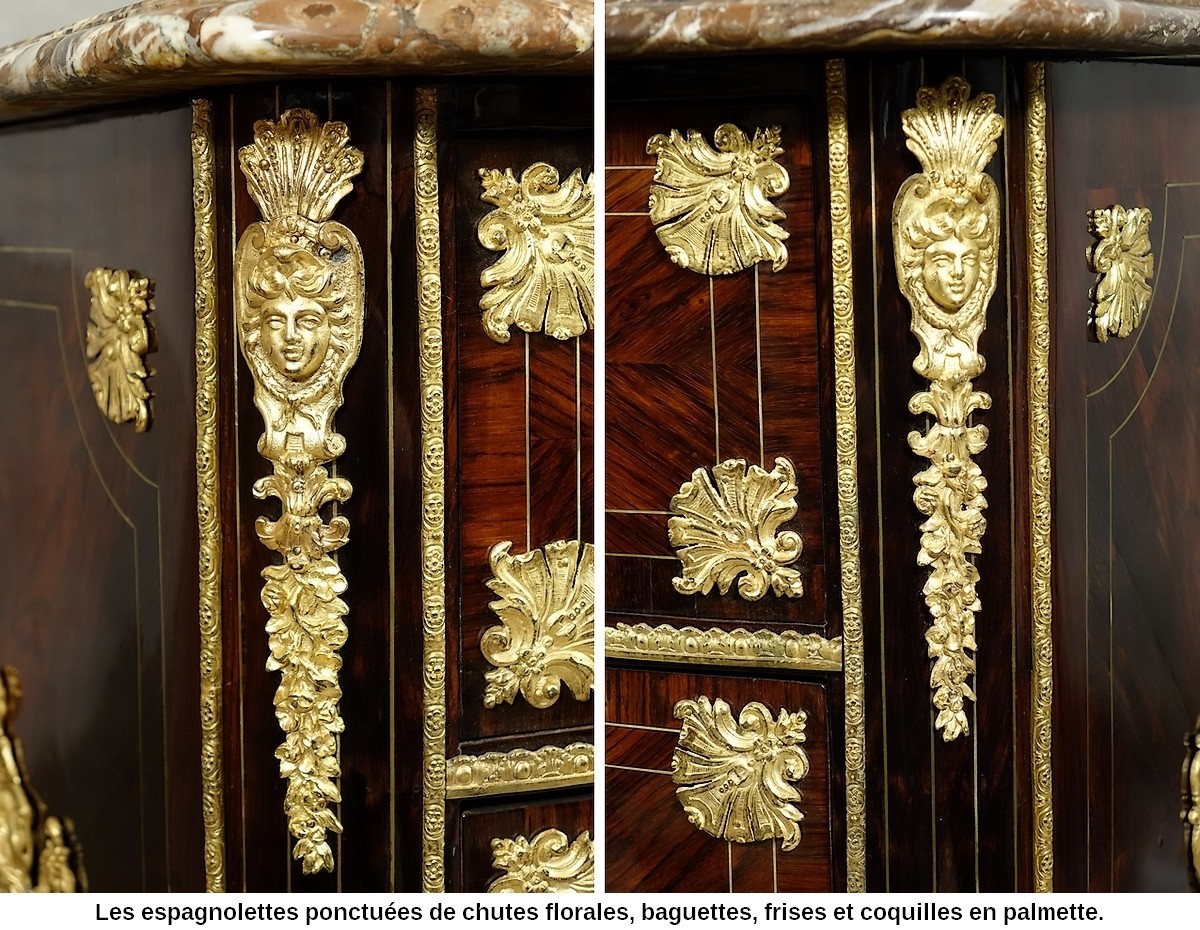
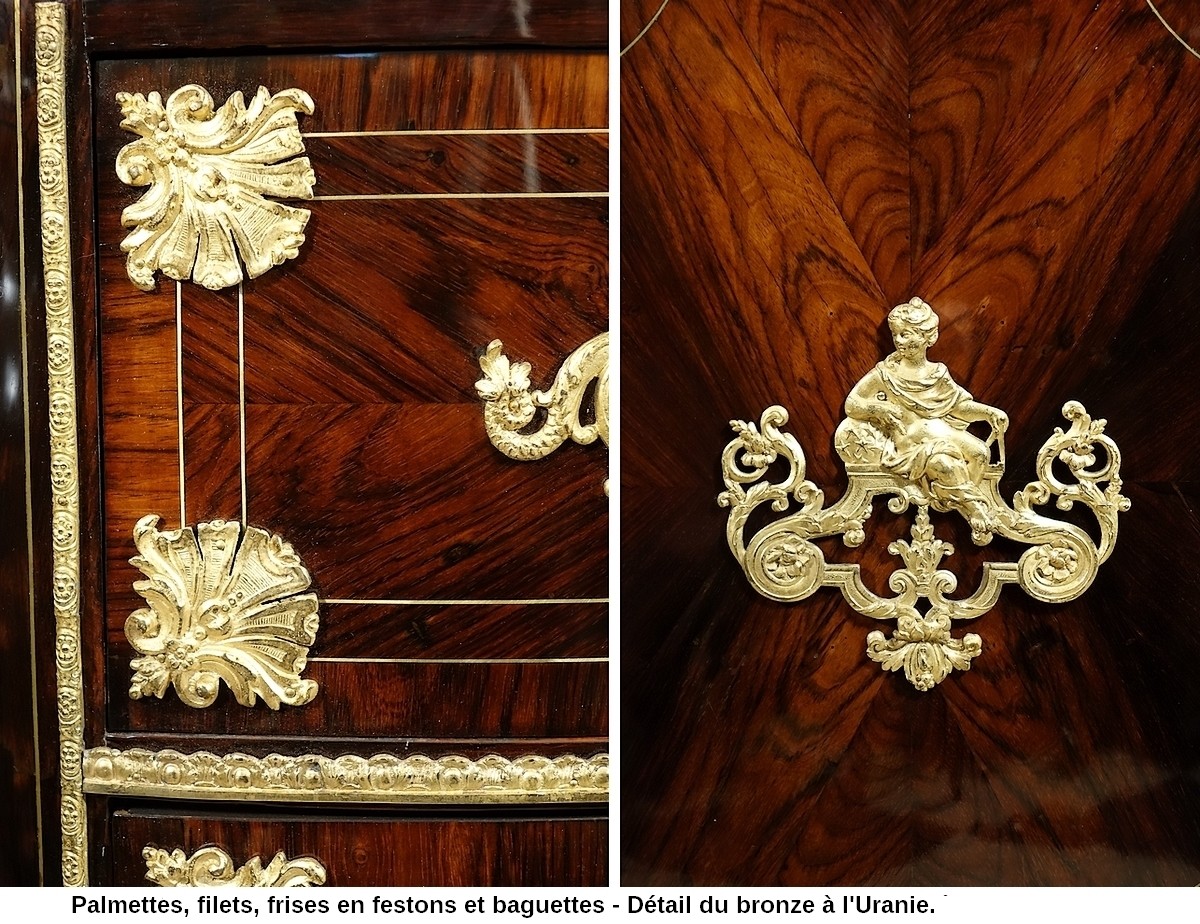
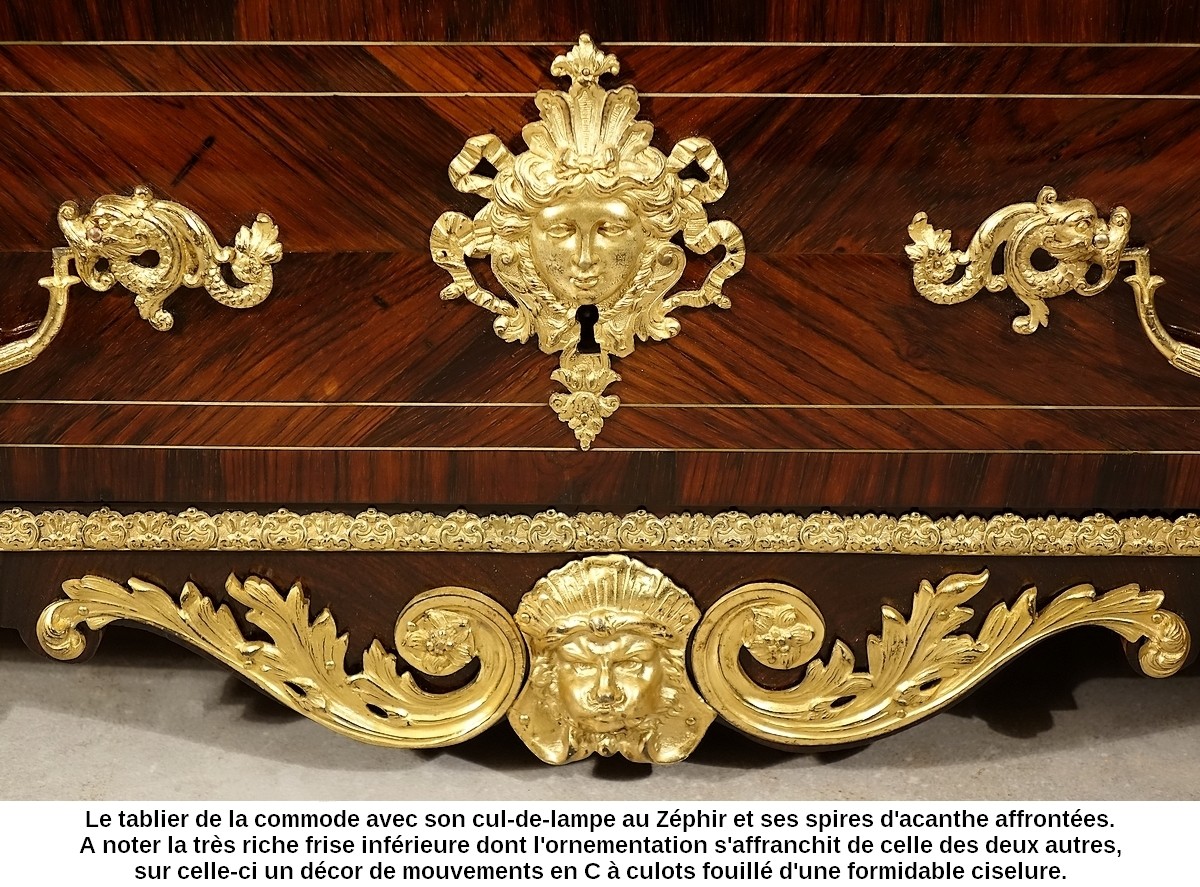
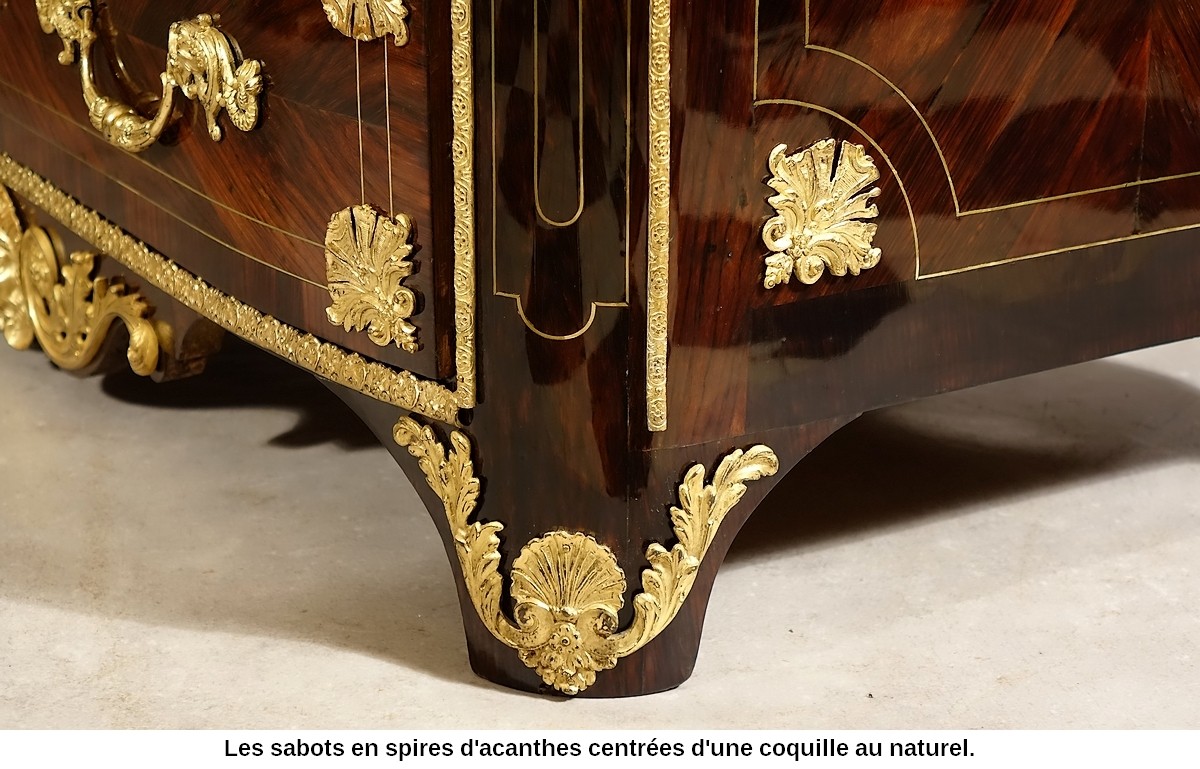
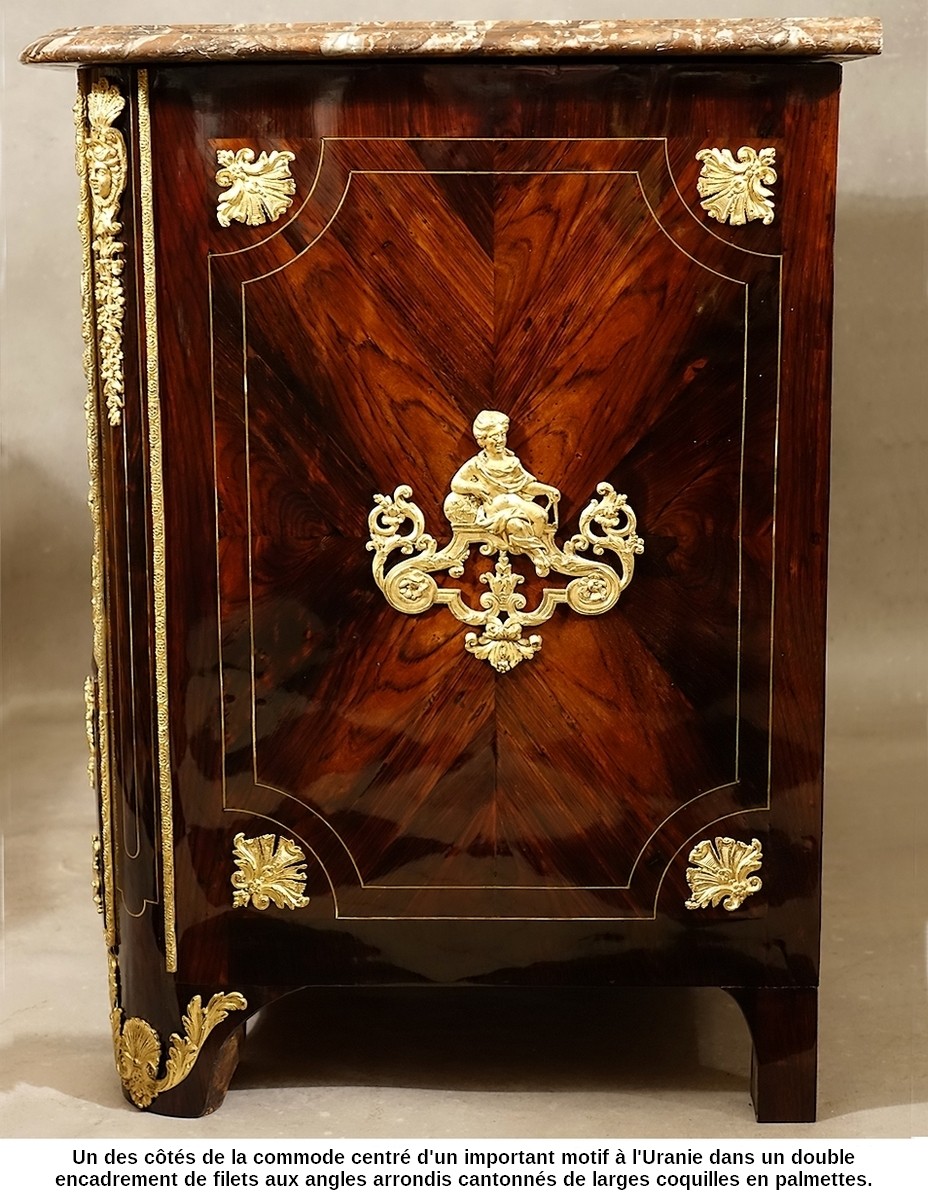
The chased and gilt bronze ornamentation is truly sumptuous: bronze astragals forming frames around the drawers (hence the name commode à cadres), friezes of alternating palmettes and oves, and C-scroll motifs with cul-de-lamp forms on the horizontal planes; vertical mounts with fleuron motifs reinforcing the uprights; double brass stringing framing the drawers, uprights, and sides; exceptional escutcheons featuring the mask of Apollo tied with ribbons; handles in the form of sea monsters; palmette mounts at the drawer corners and sides; rare espagnolette corner mounts; shell-form sabots with acanthus scrolls; a rare apron mount with a “Zephyr” mask flanked by acanthus scrolls; and finally, large Urania motifs centered on the sides.
Further notes on the bronzes:
François Lieutaud, both cabinetmaker and founder, took great care in embellishing this commode with bronzes (around fifty in total), among the most refined and some extremely rare:
The brass stringing, with its irregular triangular reverse—entirely hand-planed—indicates an early date, characteristic of 17th-century techniques also seen in the work of André-Charles Boulle.
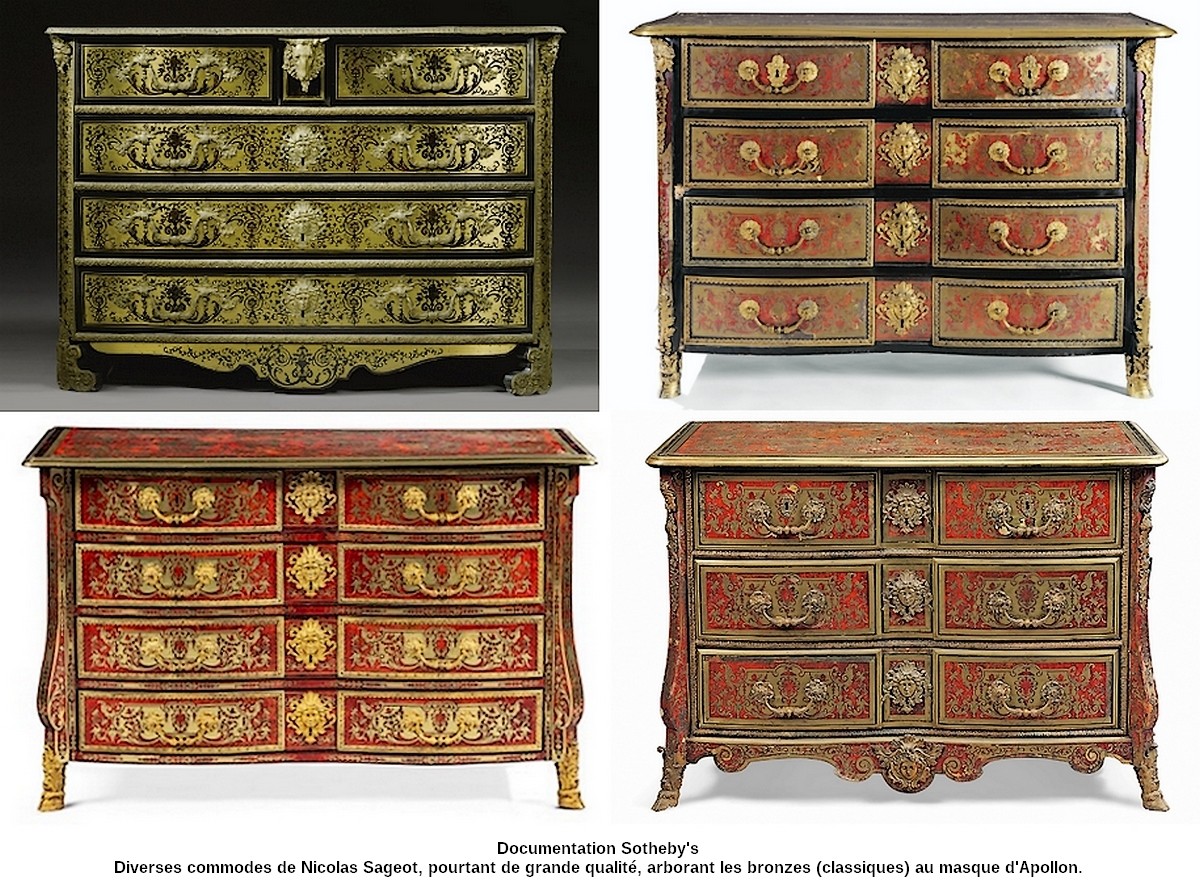
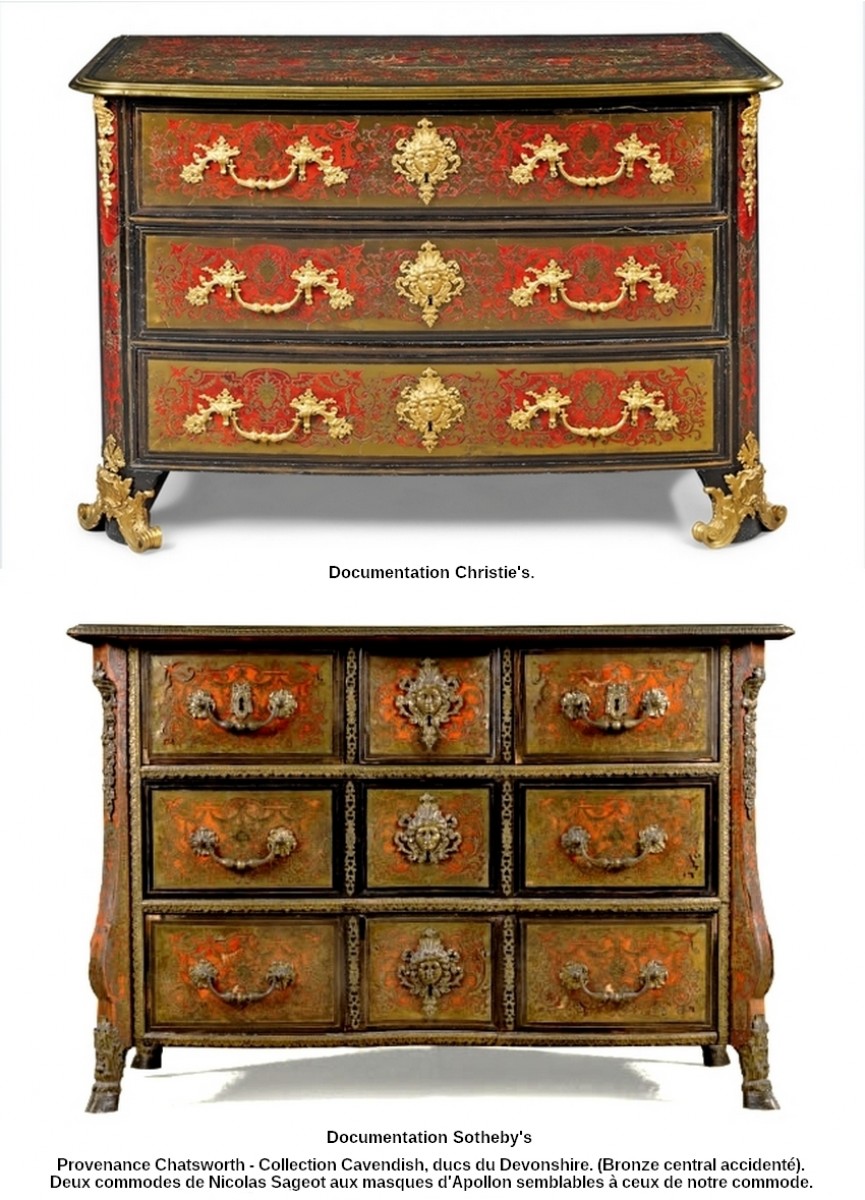
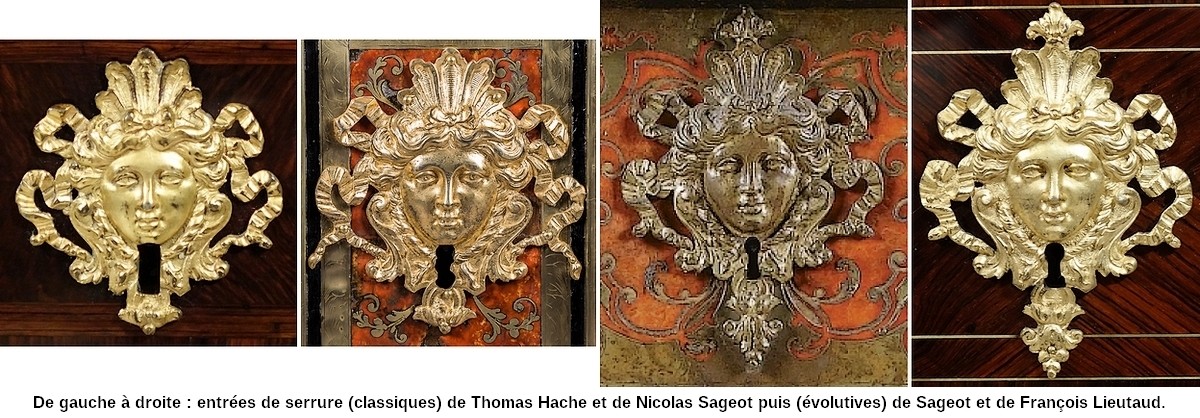
The Apollo escutcheons, emblematic of the Sun King, are known in Lieutaud’s work, as well as that of Nicolas Sageot, but are almost never found with the distinctive vertical extensions seen here.
The espagnolette mounts, inspired by Renaissance engravings and later reinterpreted by Charles Cressent, recall in this instance the ornamental vocabulary of Boulle.
Comparable apron mounts with Zephyr masks and acanthus scrolls appear on early commodes by Cressent.
The Urania figure, muse of astronomy, leaning on a celestial globe with a compass, is a sophisticated motif also found on the most luxurious Régence pieces by Lieutaud, Sageot, or Germain Boffrand Oppenordt.
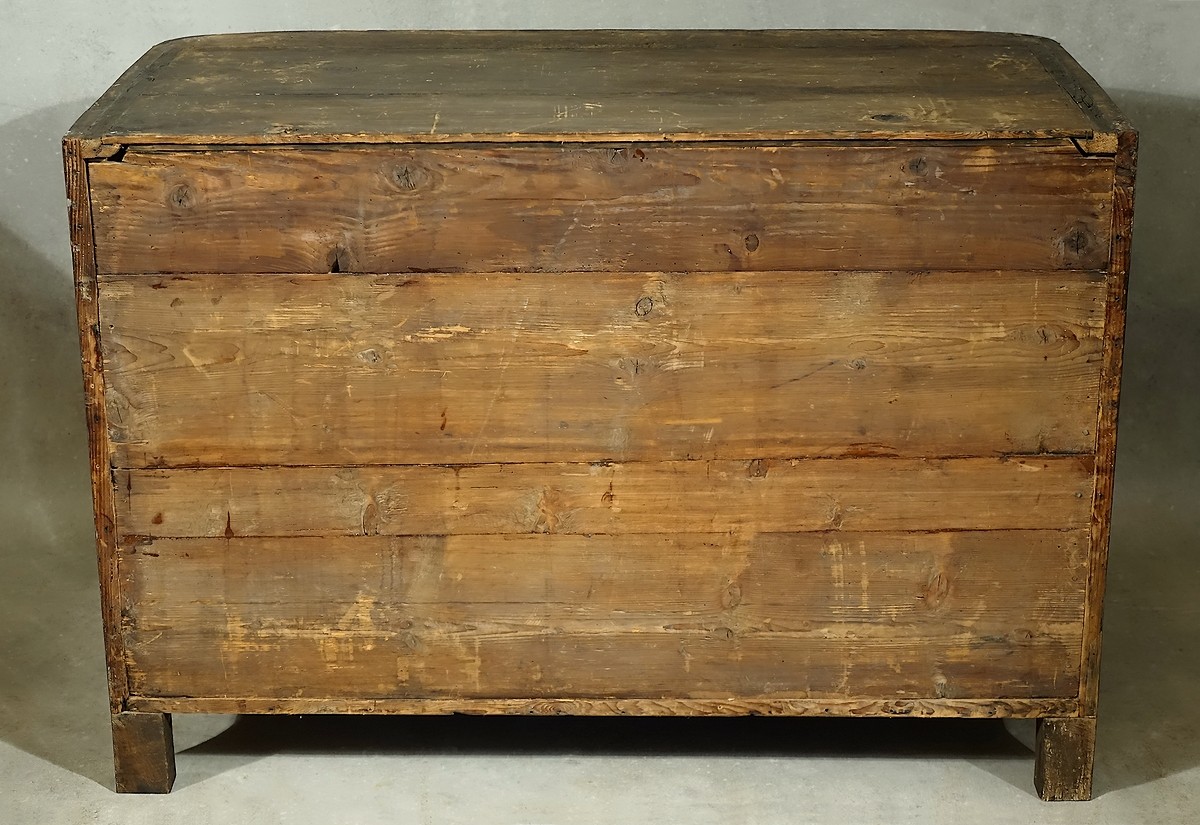
The piece has been discovered in a fine state of preservation, retaining almost entirely its original carcass and veneer in beautifully figured Brazilian rosewood, along with its original Vieux Rance marble (deeper than the body to cover wall paneling), period bronzes, brass stringing, and its three original locks (with a functioning key).
As expected for a Louis XIV commode, the carcass is entirely in pine, while the drawer interiors are in walnut. The construction is assembled exclusively with dovetail joints flush with the veneer on both the façade and sides, necessitating a very careful restoration after more than 300 years.
Restoration:
To present this commode as close as possible to its original state, it was entrusted for nearly two years to a master cabinetmaker, requiring over 250 hours of work. The marble was restored by a specialist, while the bronzes were first reworked by a chaser before being regilded by a gilder using traditional techniques (burnished and matte finishes). Including all interventions, more than 300 hours were devoted to the complete restoration of this piece.
This commode can be considered a true ceremonial model, in which Lieutaud fully expresses his taste and creativity. Dating from the early Louis XIV period (circa 1710–1715), it is likely among his earliest works, contemporary with those of Nicolas Sageot, Noël Gérard, and André-Charles Boulle, with whom he maintained professional relations.
Notably, it was conceived from the outset with a marble top—still preserved today—something extremely rare for the late Louis XIV period. At that time, marble was a luxury material, its high cost of transport making it far more expensive than veneered or marquetry wood tops. Such features were therefore reserved for the most prestigious Parisian cabinetmakers, often linked to Boulle and the Royal Garde-Meuble.