Offered by Antichità Castelbarco

Peter Paul Rubens (Siegen 1577 – Antwerp 1640) Follower of
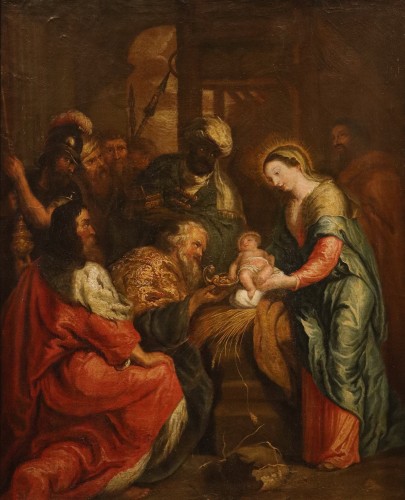
Nativity with the Adoration of the Magi
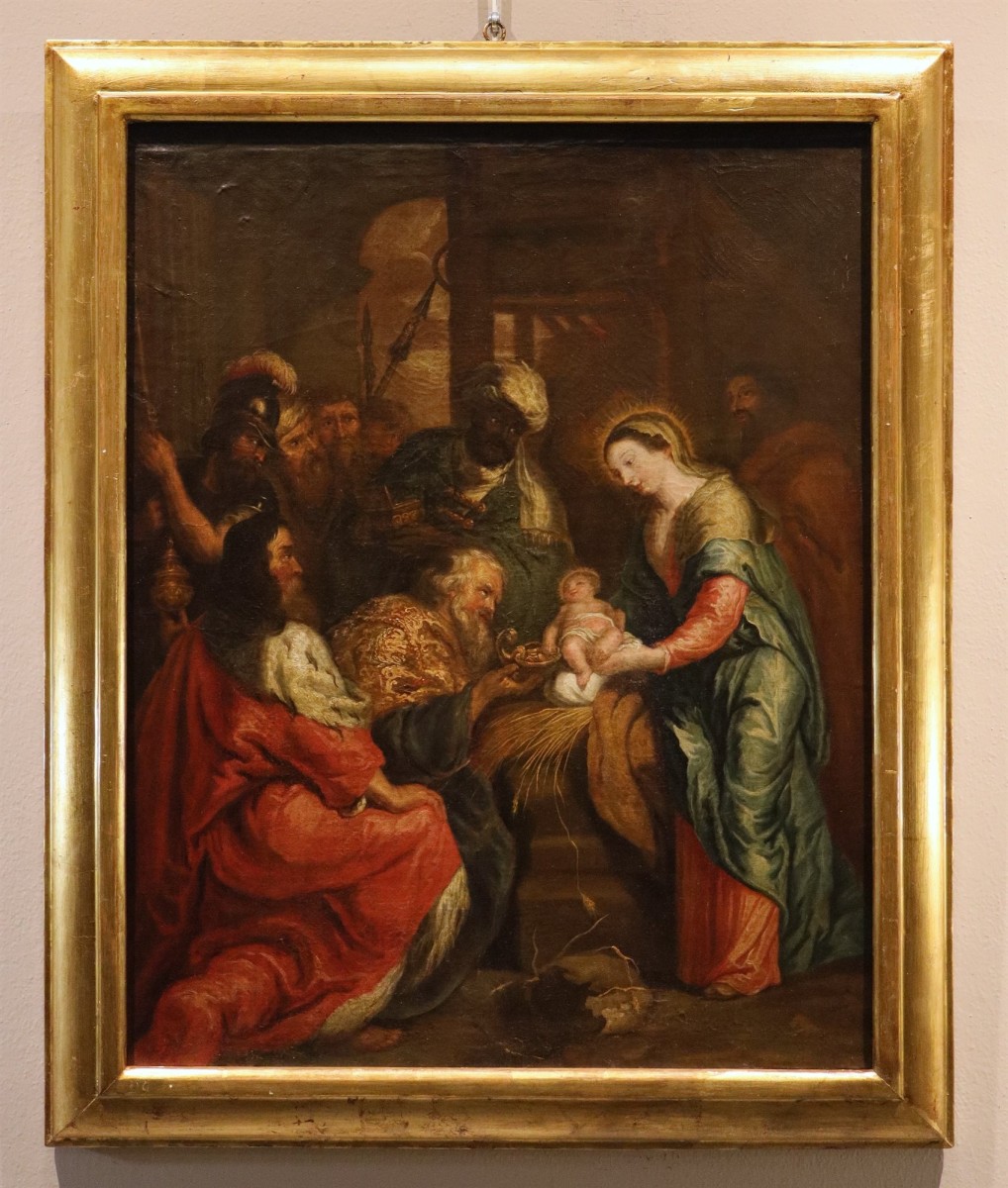
Oil on canvas 75 x 61 cm. Framed: 87 x 72 cm.
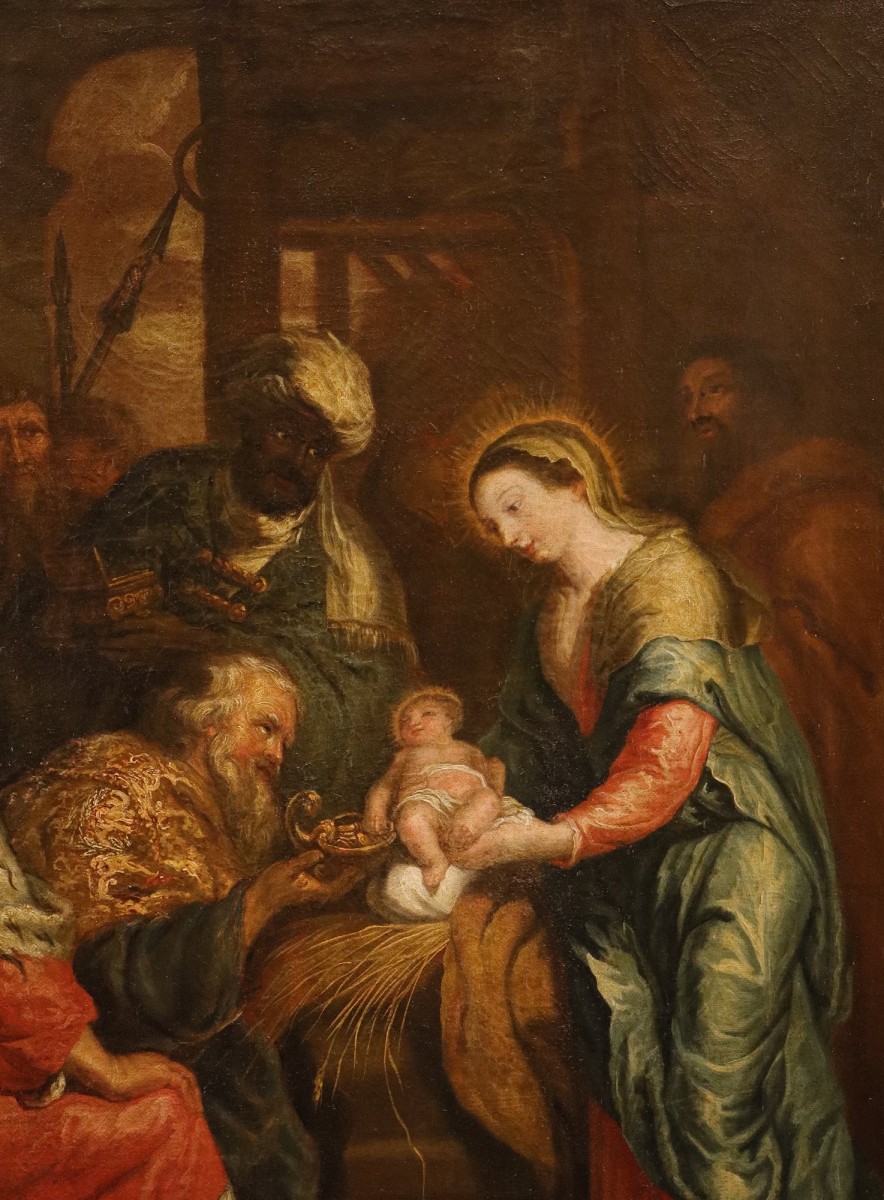
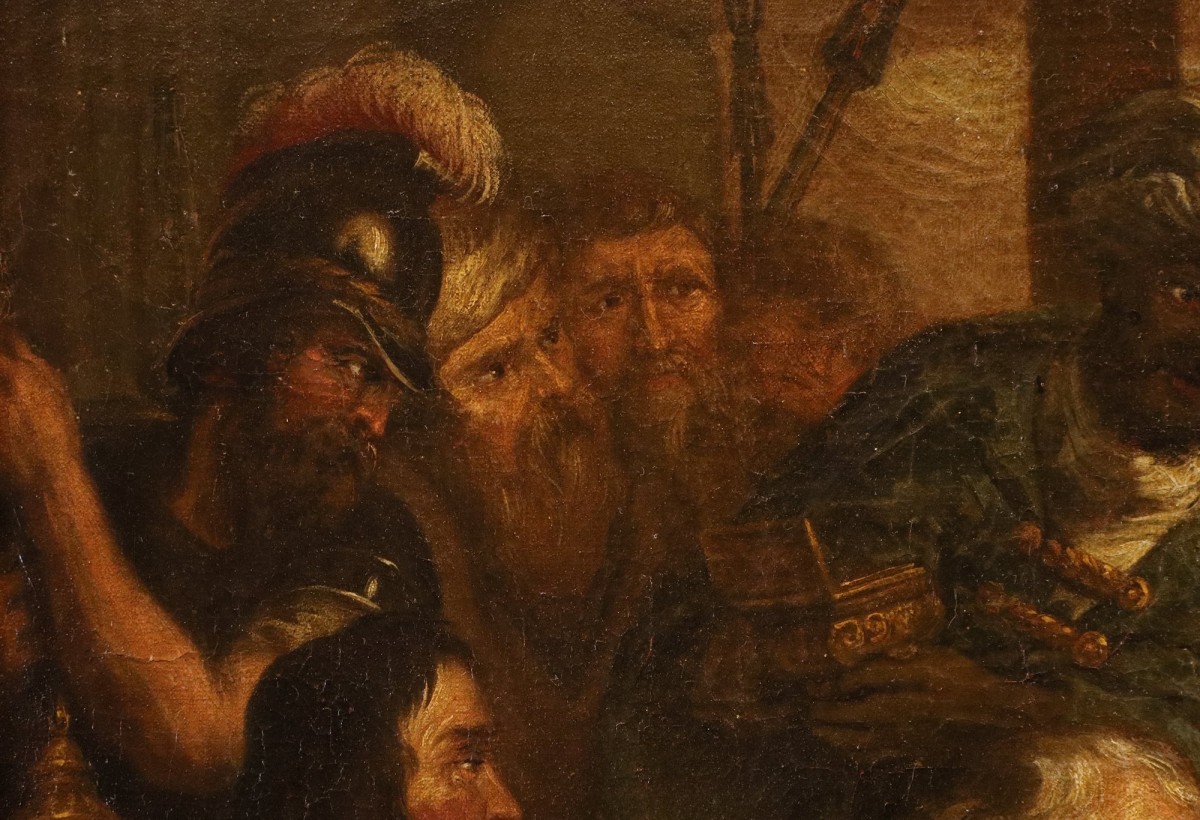
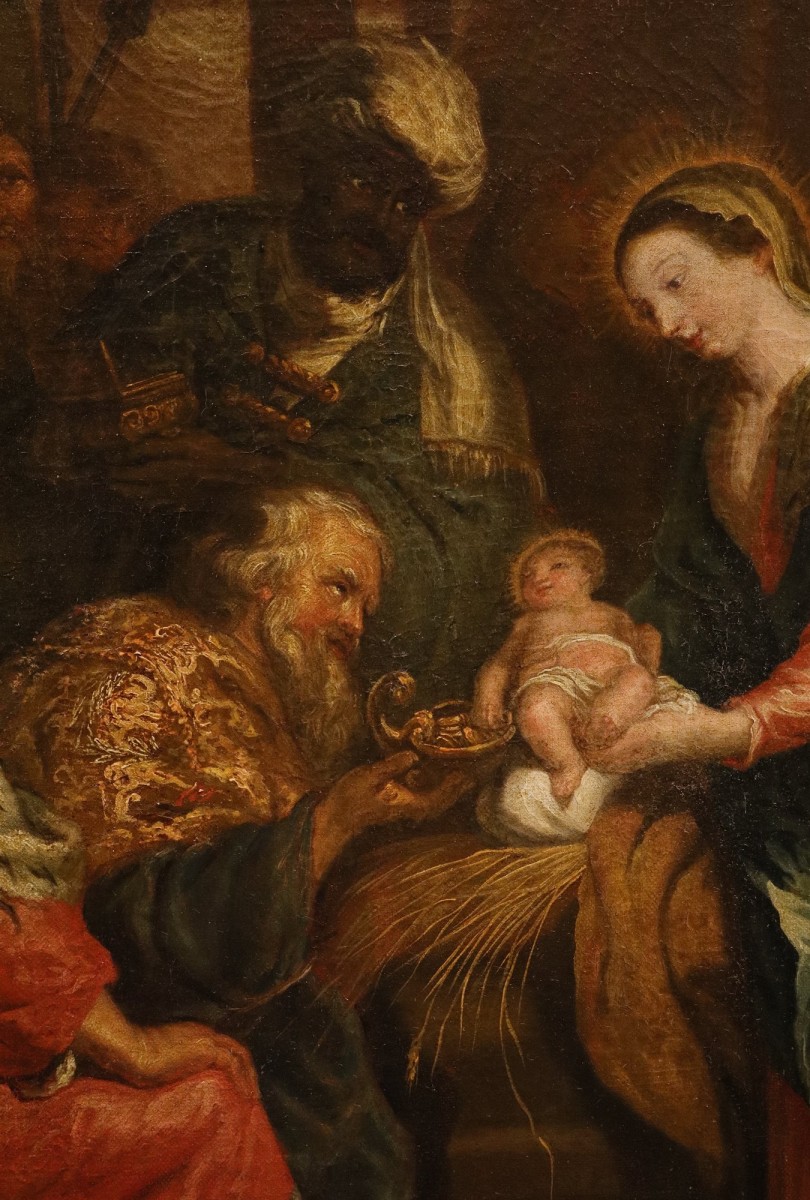
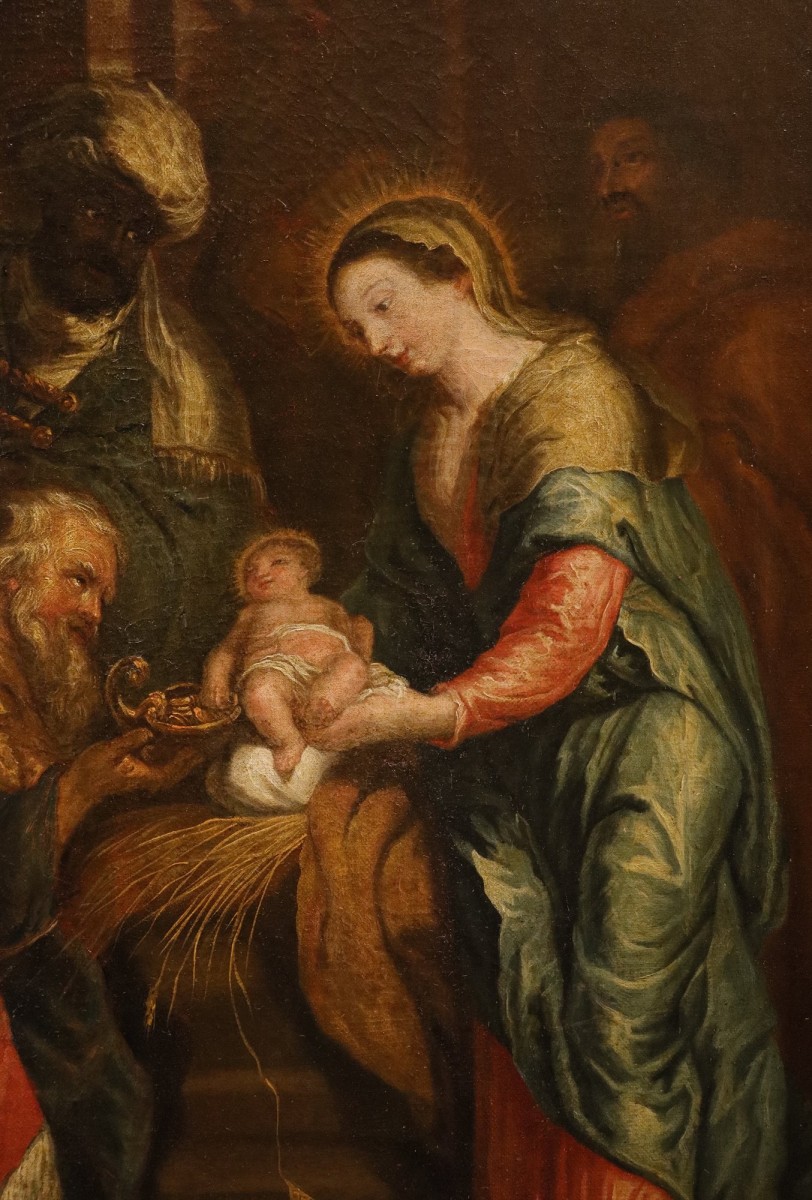
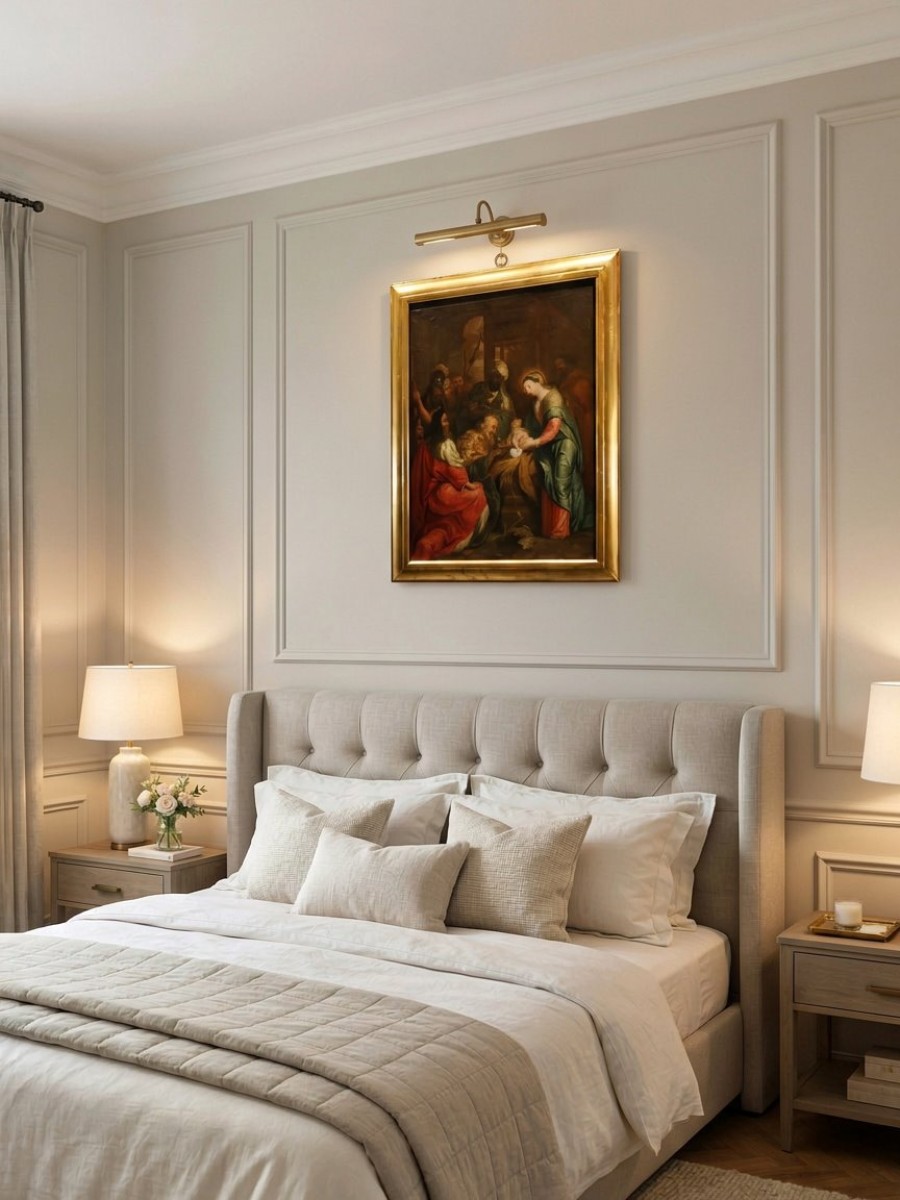
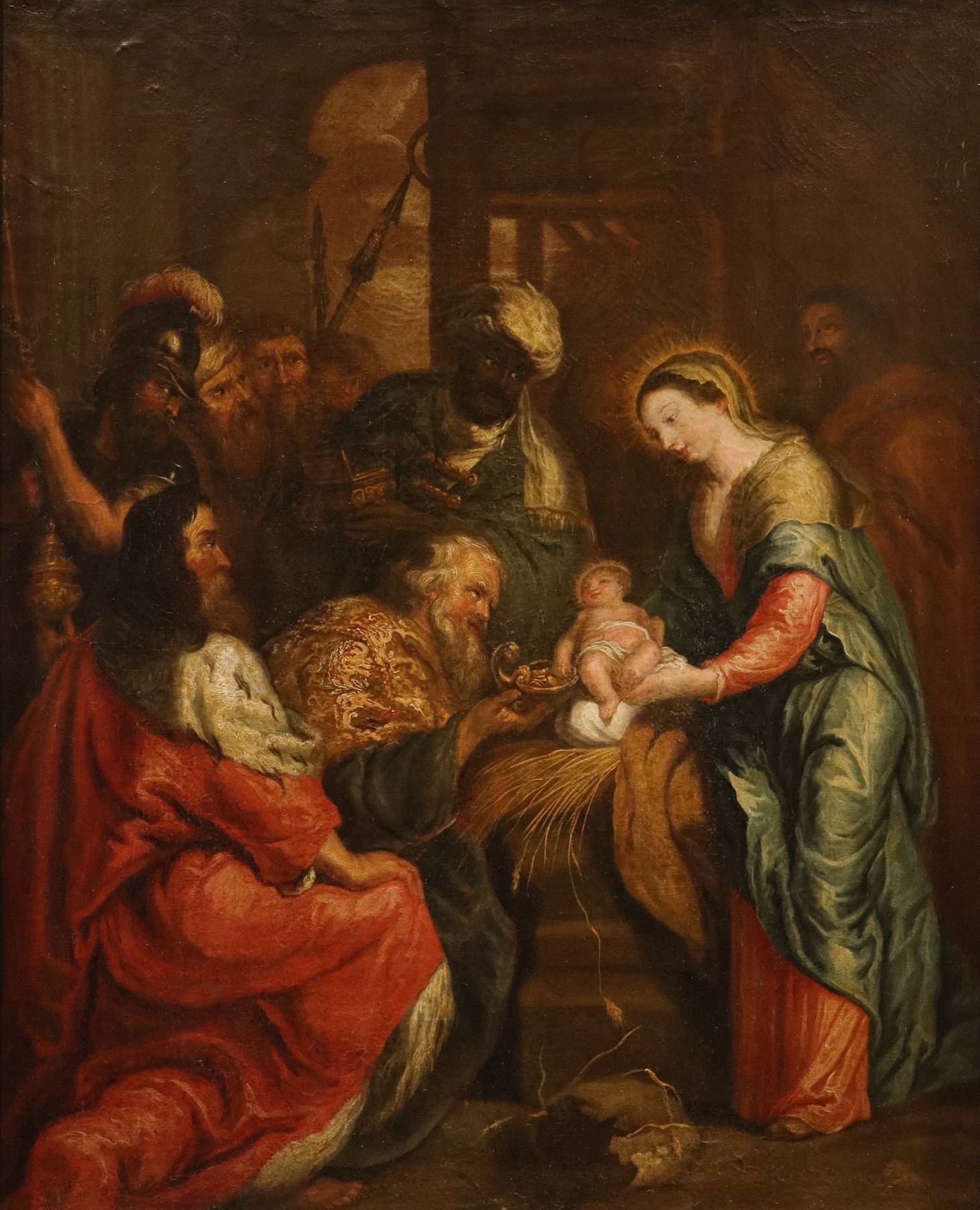
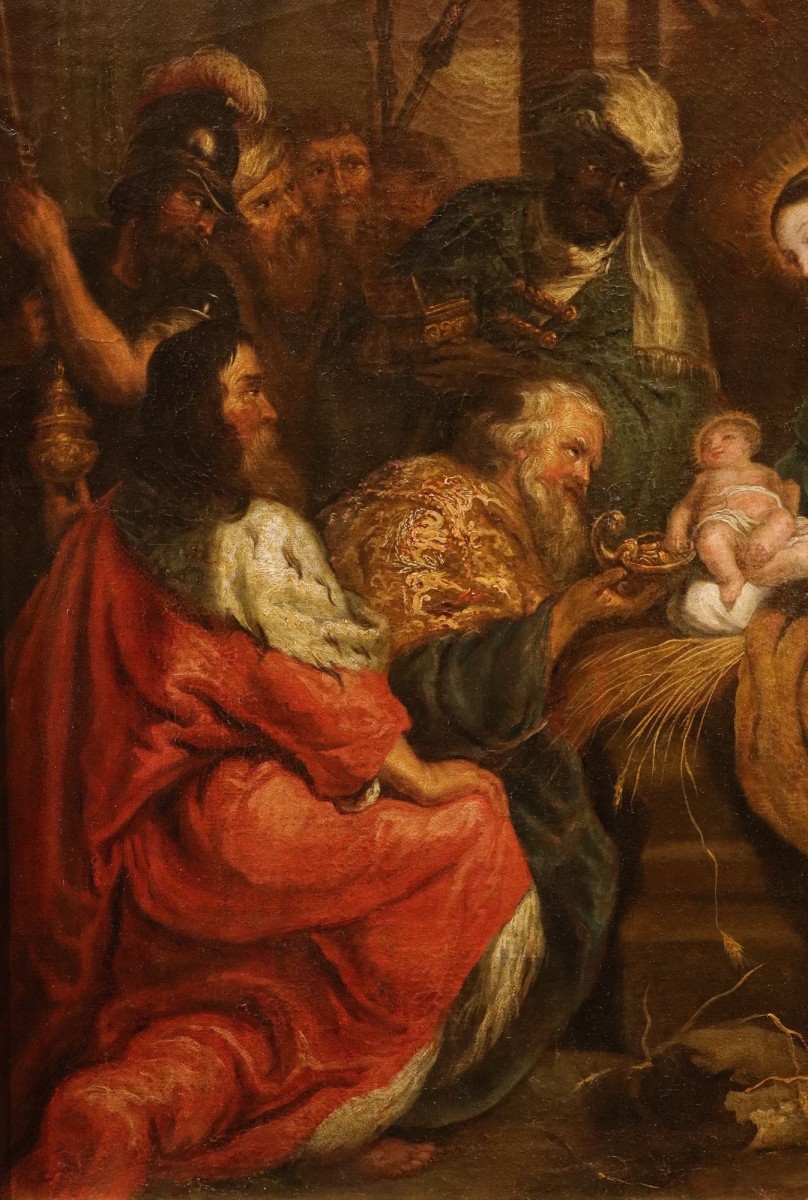
The scene captures all the theatricality and warmth of Flemish Baroque painting, transforming the sacred episode of the Nativity into an intimate yet solemn encounter, where the viewer’s gaze is immediately drawn to the center of the composition, where the Virgin gently holds the infant Jesus, presenting him to the three Wise Men.
A golden, enveloping light seems to radiate from their interaction, piercing the twilight of the stable and illuminating the faces, the precious fabrics, and the metallic glints of the gifts.
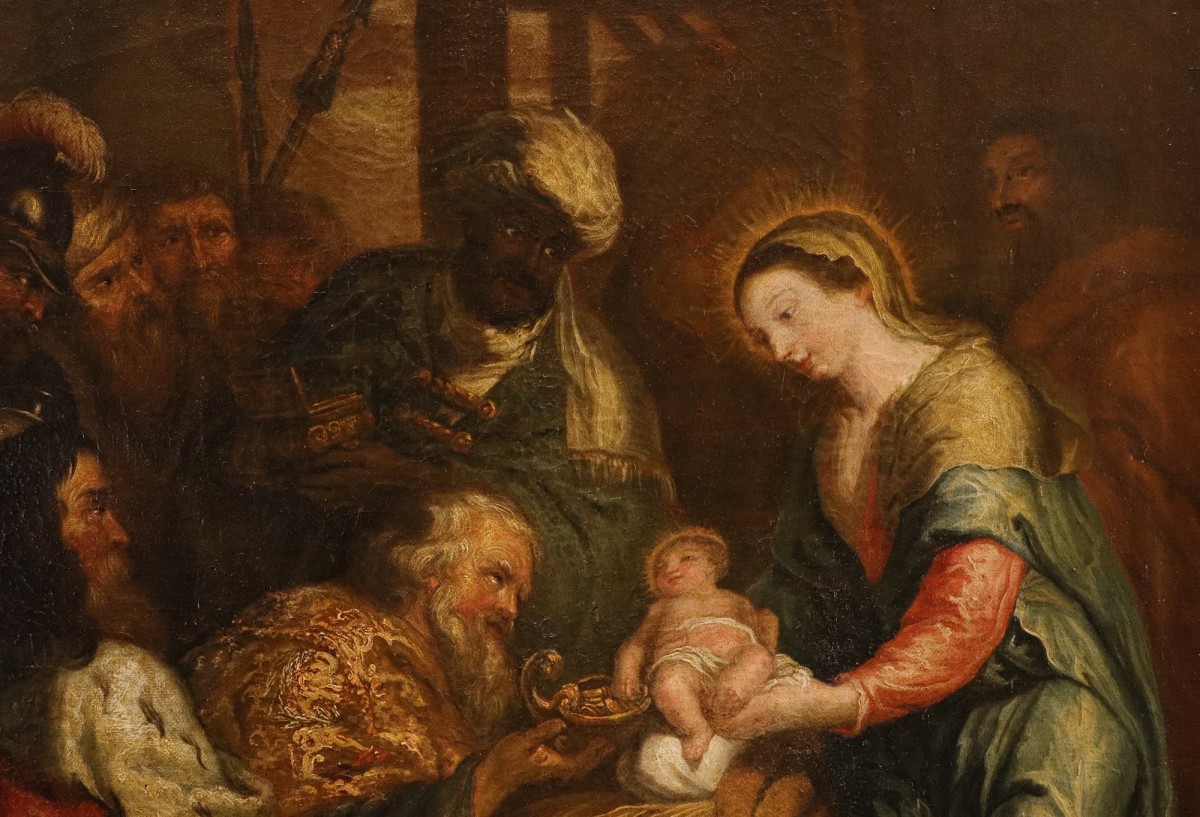
Surrounding the Holy Family, with Saint Joseph watching discreetly from the shadows on the right, we see the procession of the three distinguished visitors gathered together, captured in a crescendo of gestures and emotions.
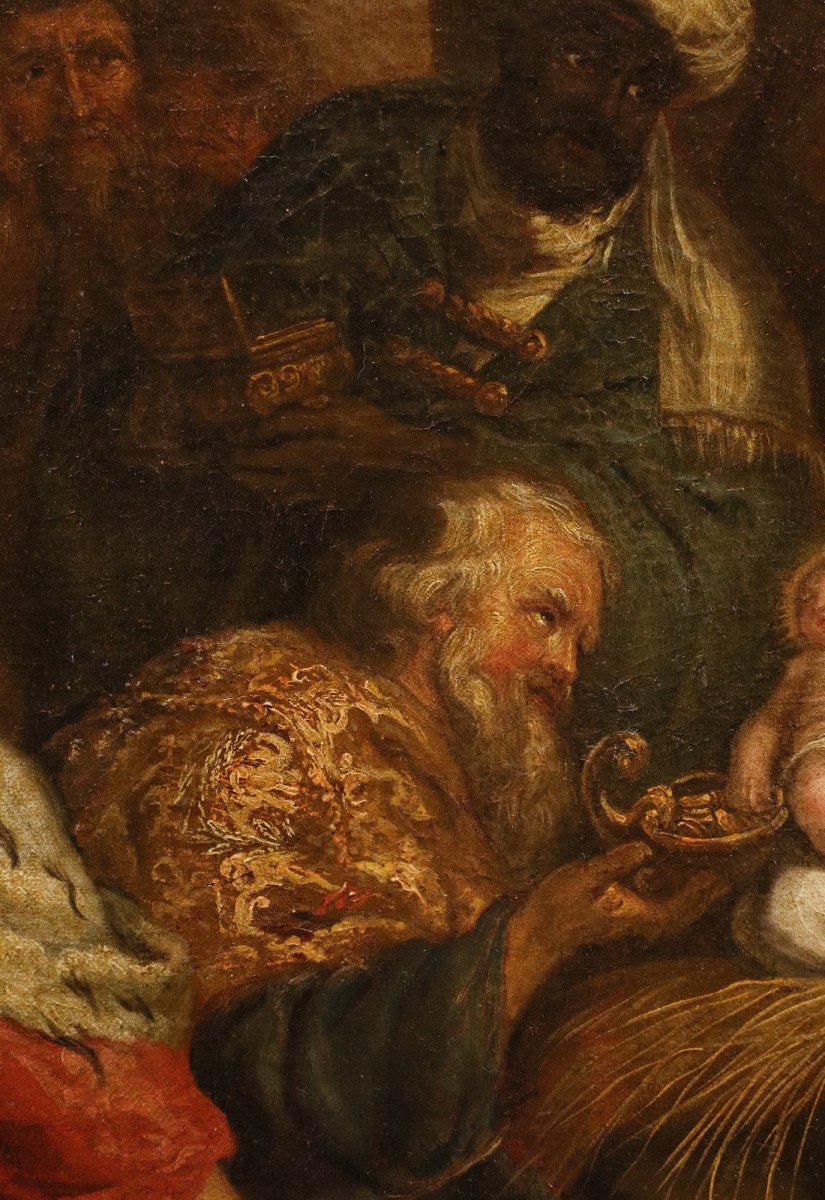
As Christian tradition dictates, they are depicted as people of different ages and ethnicities, symbolizing the three stages of life and the universality of all peoples. In the center, the eldest Magi (Melchior), with thick white hair and a white beard and clad in a rich gold-brocaded cope, leans forward in a gesture of reverence, offering the Child gold, a symbol of royalty.
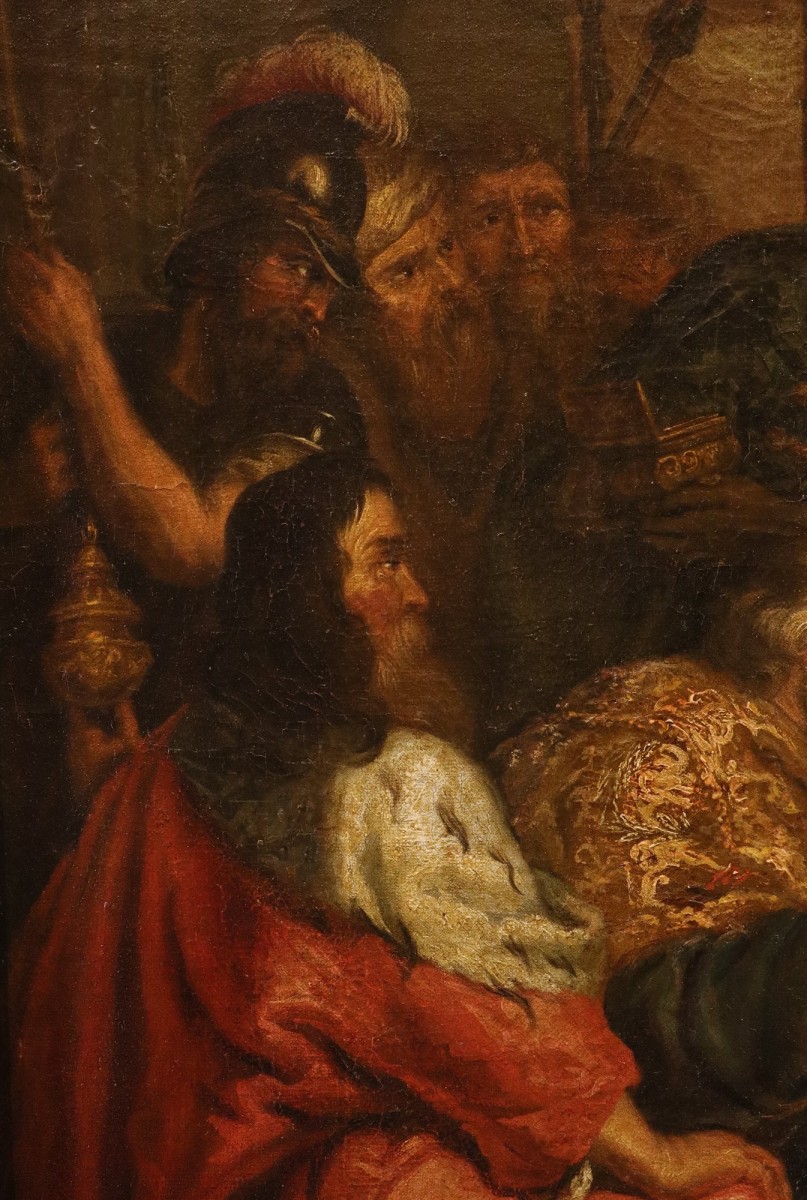
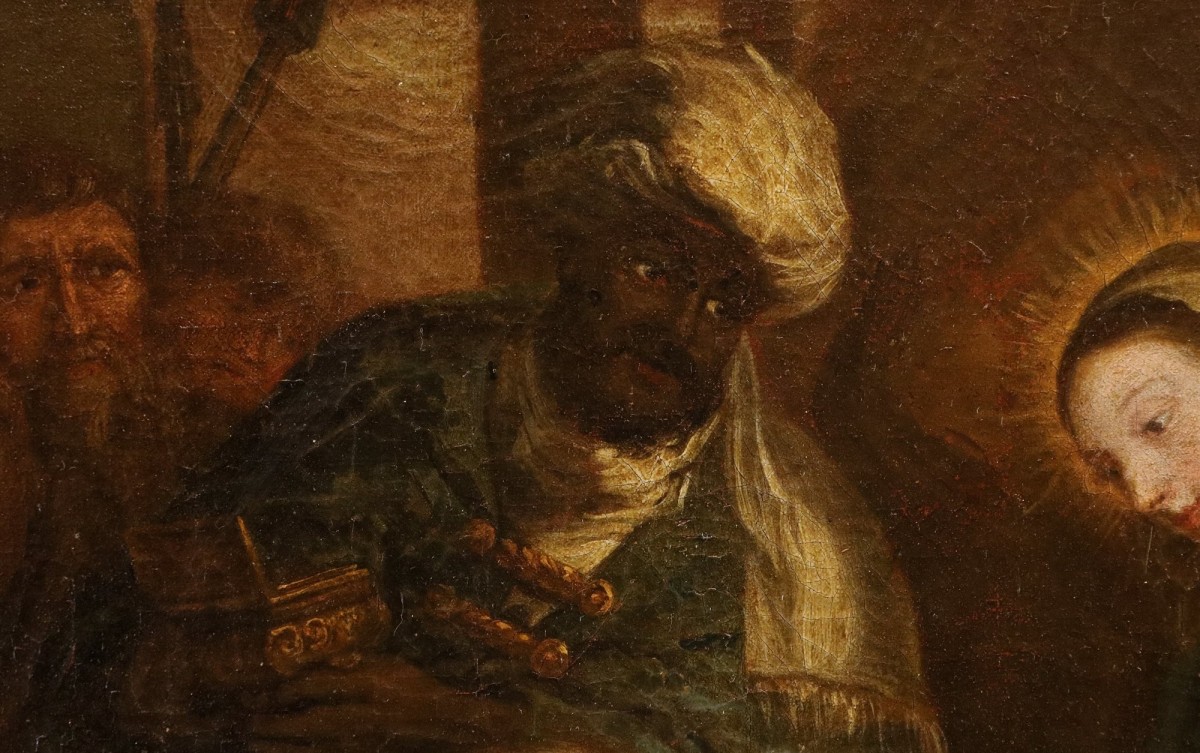
Behind him, the Moorish Magi (Baldassarre) stands out with proud elegance, his head wrapped in a white turban, holding the casket containing myrrh, while in the foreground on the left, the third Magi (Caspar) kneels in the foreground on the left, holding incense and wrapped in a majestic bright red cloak edged with ermine—a vibrant and magnetic splash of color that lends depth and dynamism to the entire composition.
The painting is a variation—with some simplifications in the secondary elements and the procession in the background—of the famous altarpiece depicting the Adoration of the Magi, painted by Peter Paul Rubens in 1624 for the altar of St. Michael’s Abbey in Antwerp (now housed at the Koninklijk Museum voor Schone Kunsten in Antwerp). [1]
Rubens’s composition enjoyed immediate and widespread popularity throughout Europe, both through preparatory sketches (including the one in the Wallace Collection in London) [2] and through printed reproductions that established its iconographic scheme.
Our painting preserves its expressive power and chromatic richness intact in a smaller format that is perfect for a private collection.
The artist, who can be placed within his Flemish circle and who, in our opinion, was active between the 17th and 18th centuries, effectively captures the theatrical staging and Baroque dynamism of the original, focusing attention on the intimate and solemn dialogue between the Holy Family and the Three Kings.
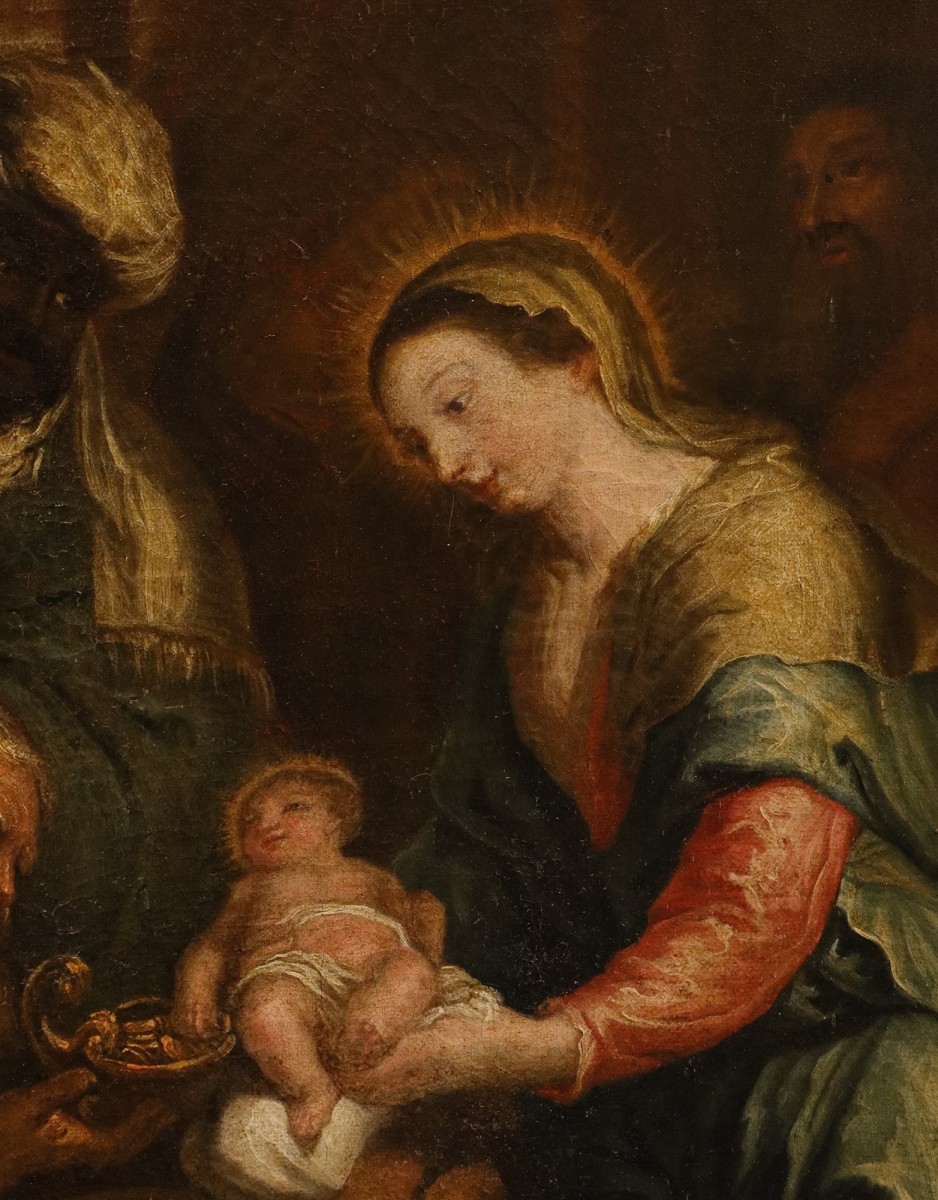
A close examination allows us to appreciate a painterly style characterized by a dense and vibrant texture, capable of recreating the strong chiaroscuro contrasts typical of the great Flemish painter: natural and supernatural light radiates from the Child’s body and the white cloth, illuminating the skin tones, the metallic reflections of the gift, and the vivid mass of the red cloak in the foreground, before rapidly fading into the warm, rich browns of the background.
Condition report:
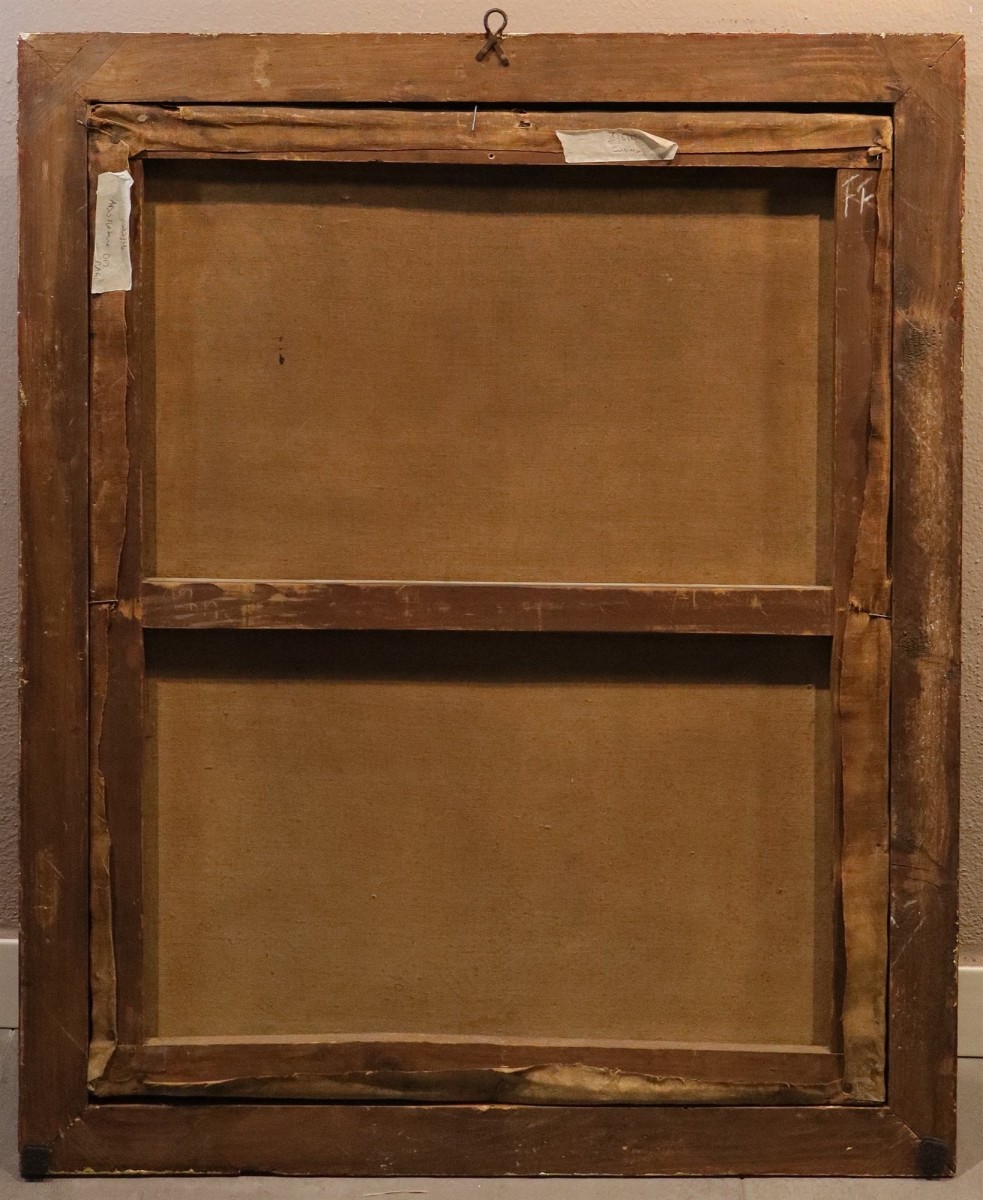
The canvas is in good condition, featuring a full-bodied paint application, with small lumps of paint in relief at the top and slight cracking consistent with its age.
Along the upper edge, the canvas bears the imprint of the stretcher (visible in the photo). [1]A
Delevery information :
We take care of and organise the transport of the purchased works, both for Italy and abroad, through professional and insured carriers.
We take great care We personally take care of the packaging, to which we devote a great deal of care: each work is carefully packed, first with arti- cle material, then with a custom-made wooden box.
Should you have the desire to see this or other works in person, we would be happy to welcome you to our gallery in Riva del Garda, Viale Giuseppe Canella 18, we are always open by appointment only.