Offered by Antichità Castelbarco

Pietro Liberi (Padua 1605 – Venice 1687), circle
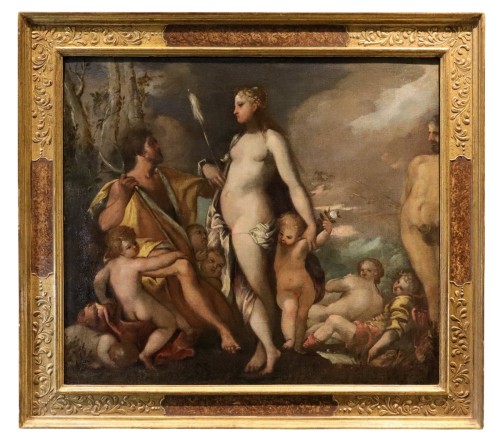
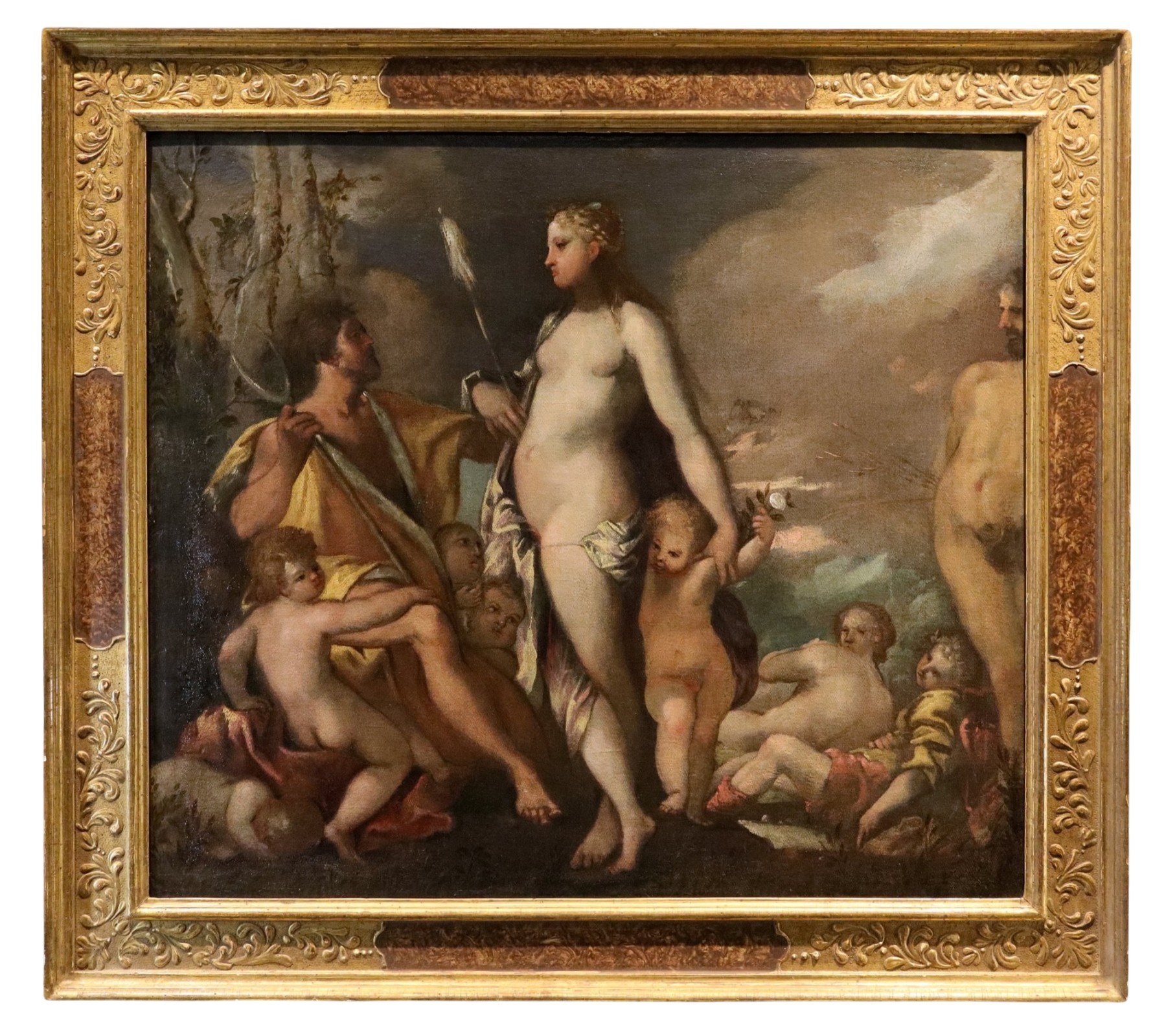
Allegory of the Golden Age
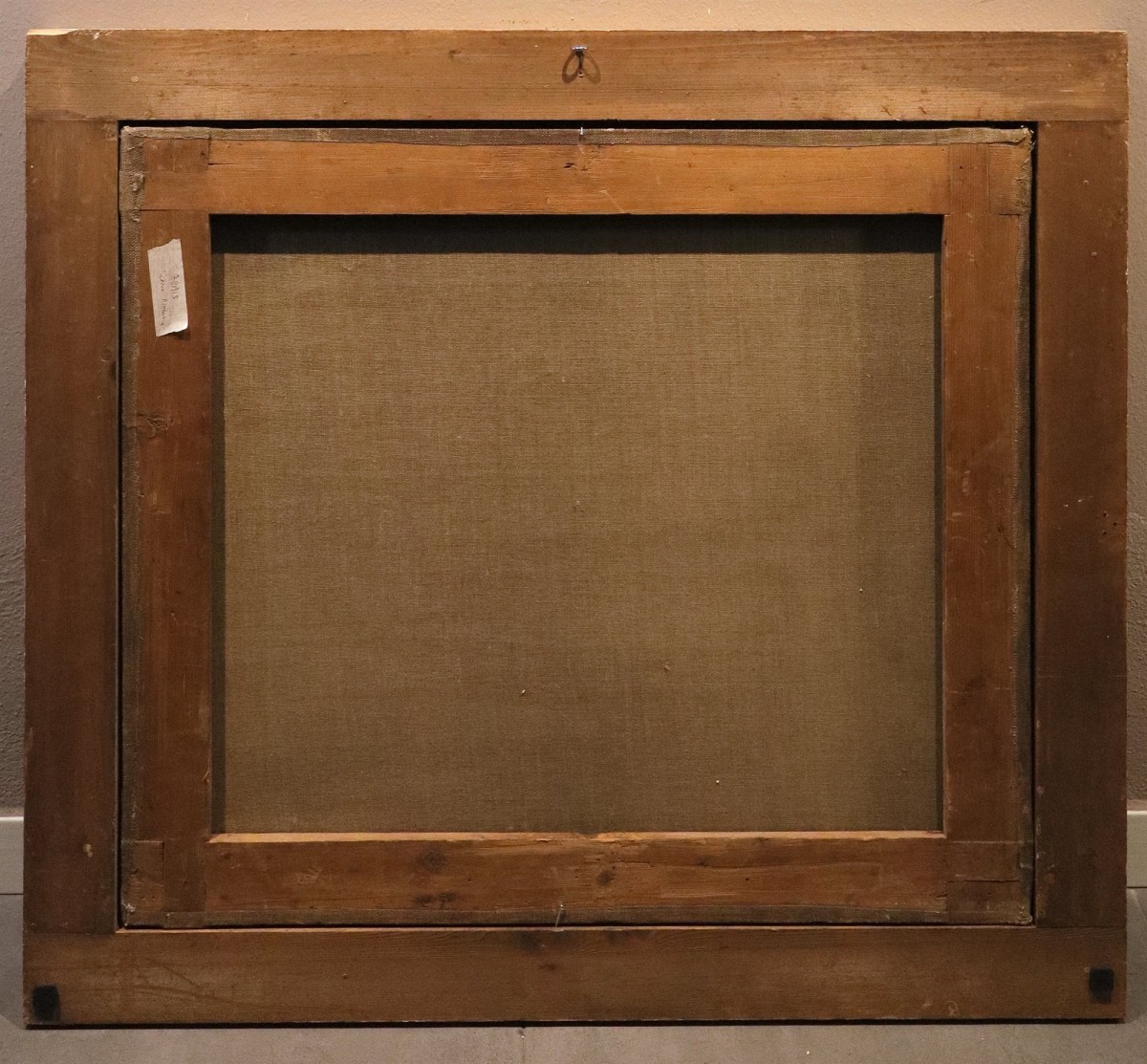
Oil on canvas 70 x 80 cm. - Framed: 87 x 97 cm.
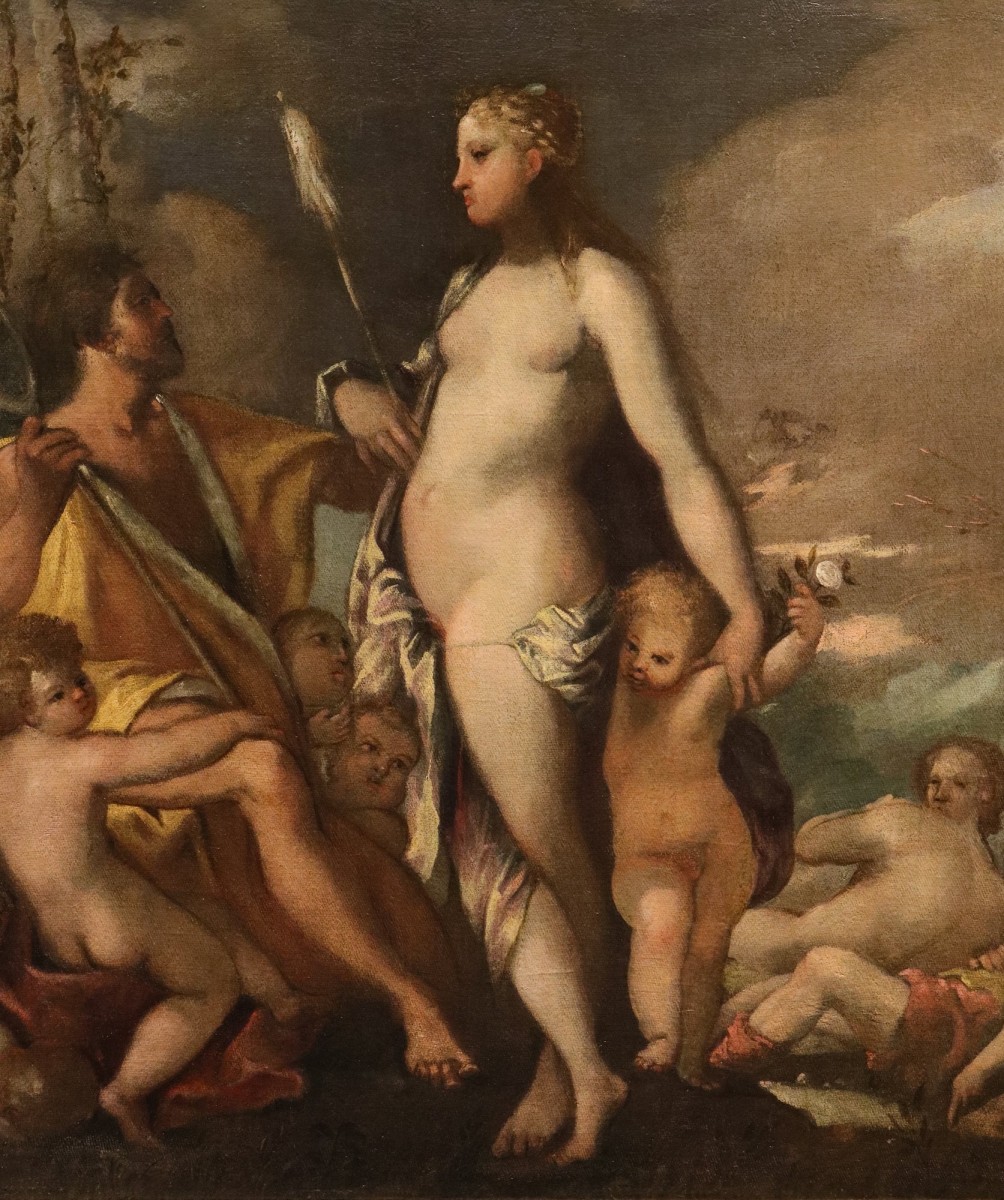
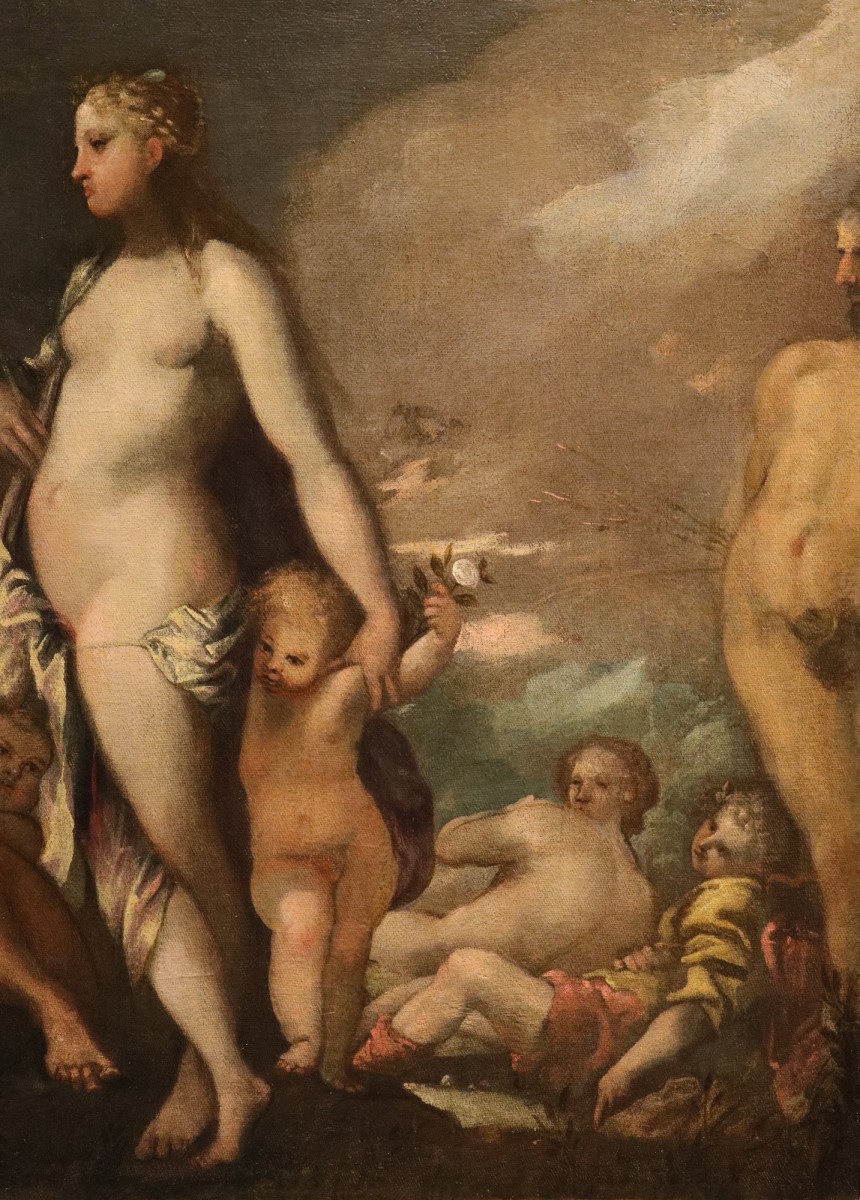
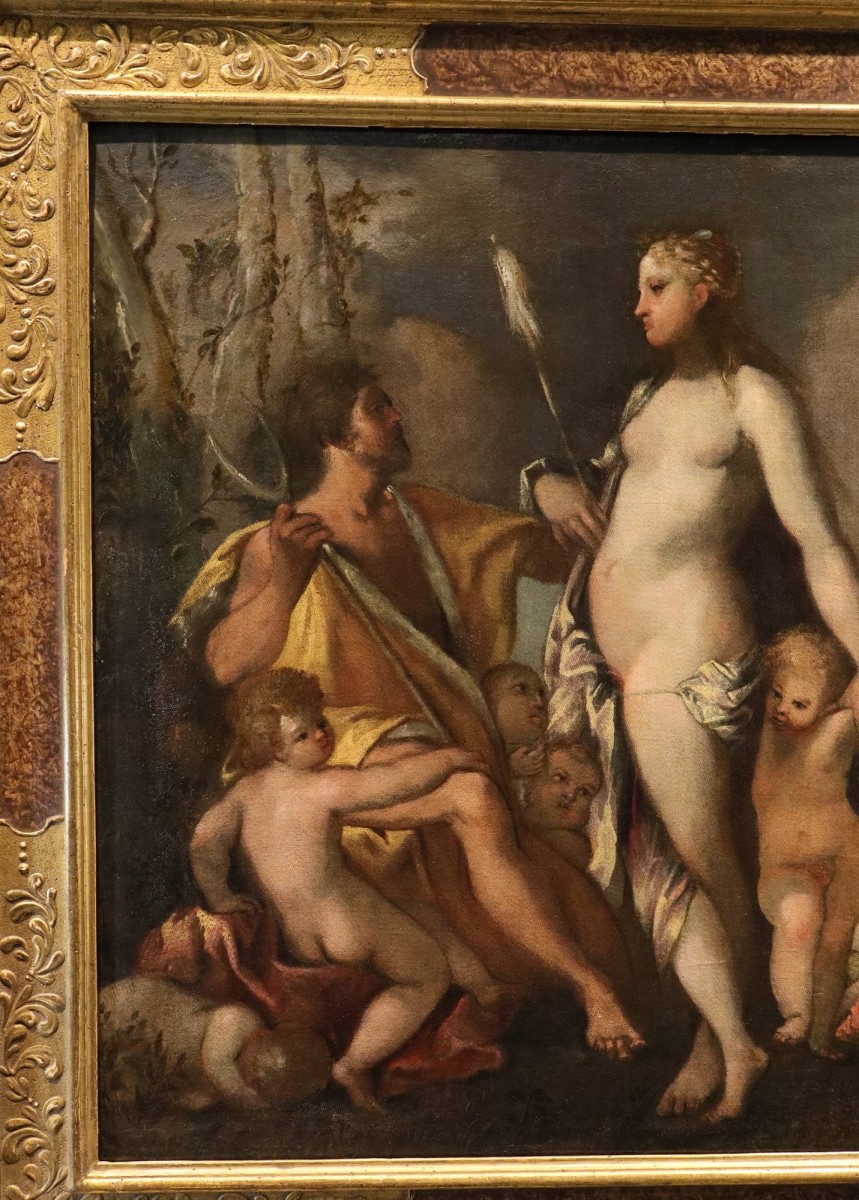
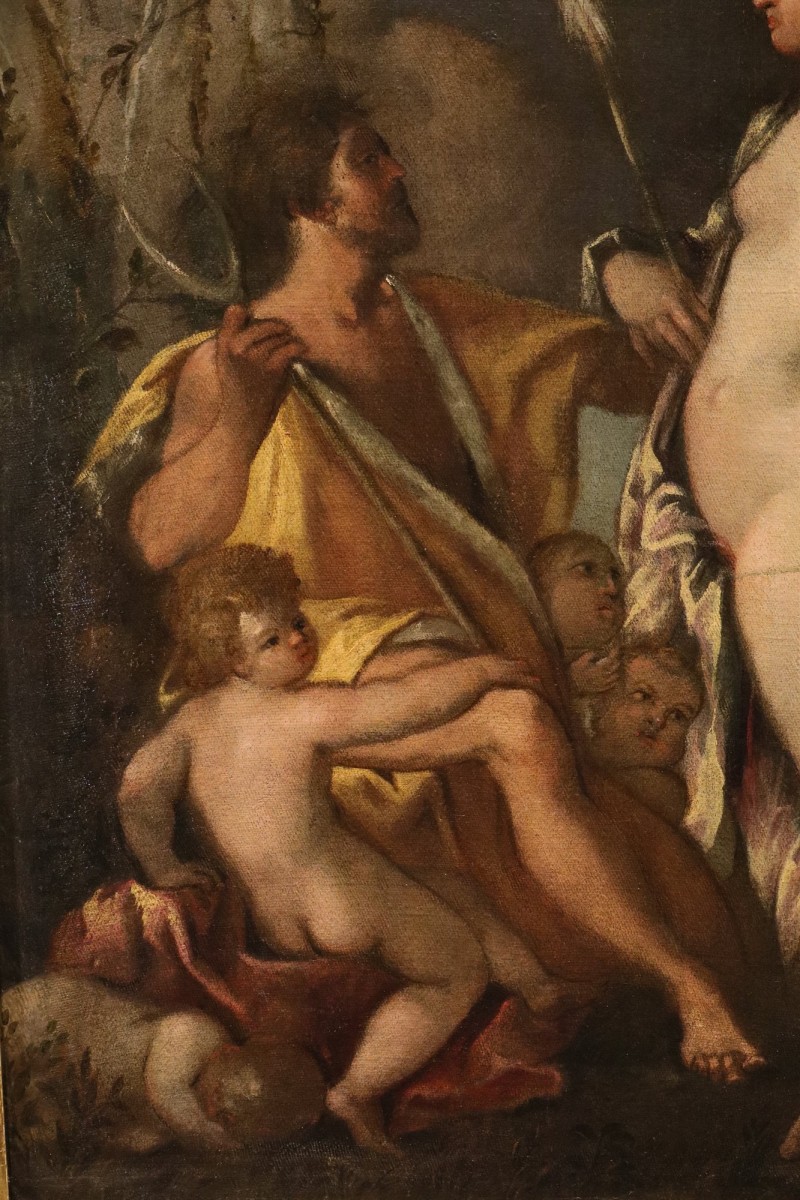
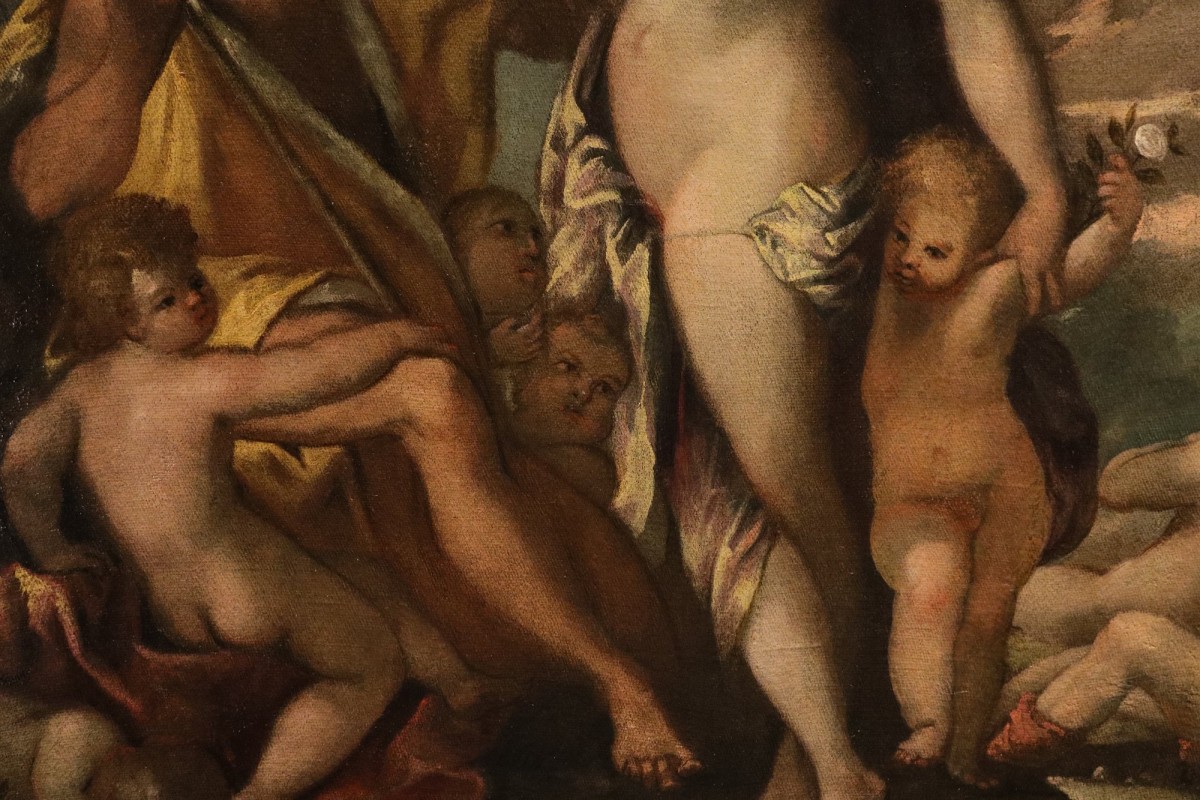
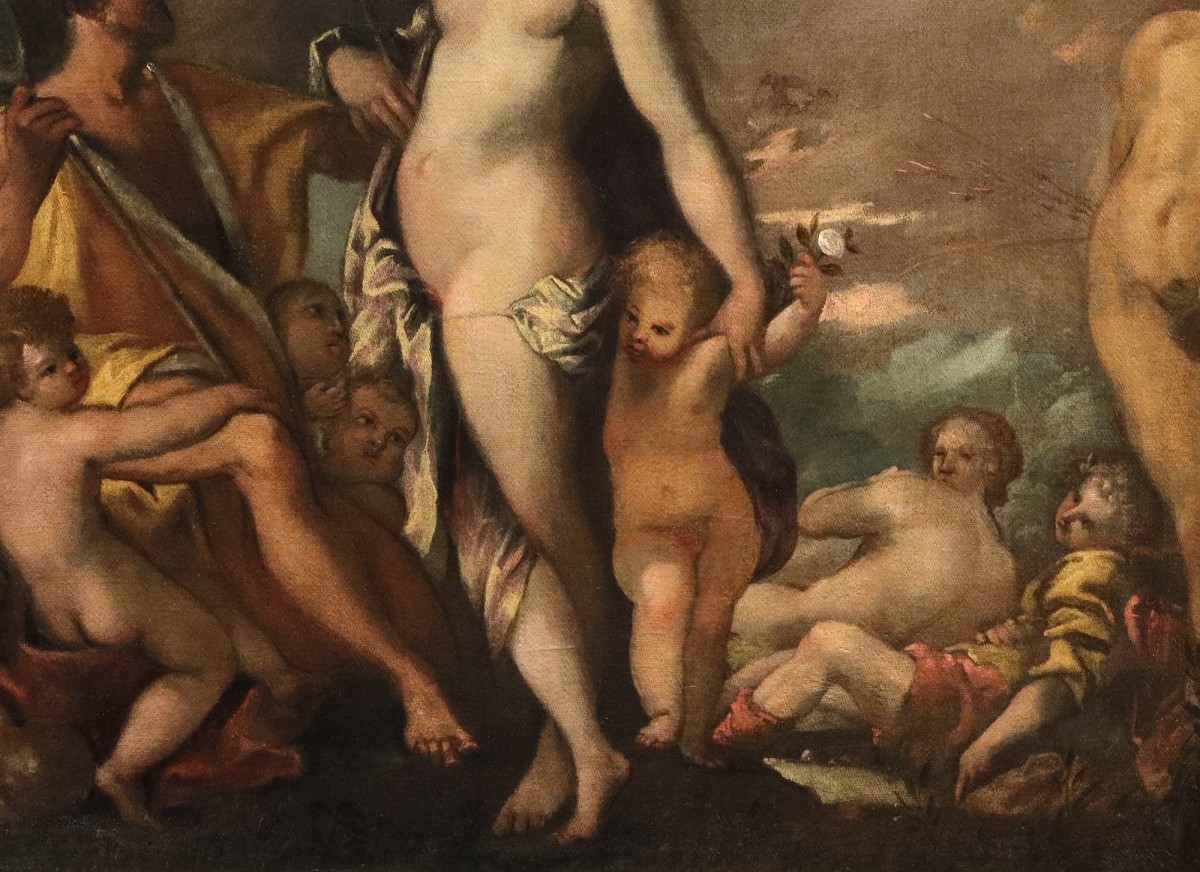
A hymn to peace, abundance, and the fertility of nature comes to life in this refined composition attributed to the circle of Pietro Liberi (Padua 1605–Venice 1687): specifically, it is a beautiful allegory of the Golden Age, featuring Saturn (Cronus) and his wife Opis (Rhea)—a rather rare iconographic subject that celebrates the prosperity of their reign through a sensual language characteristic of the refined taste of the Venetian Baroque.
The allegorical subject is inspired by the classical mythology of Hesiod, who, in the poem "Works and Days," recounts the first and happiest era of humanity, set during the mythical reign of Saturn (Saturnia regna) and characterized by absolute peace, spontaneous justice, and abundance (akin to the Garden of Eden in the biblical tradition).
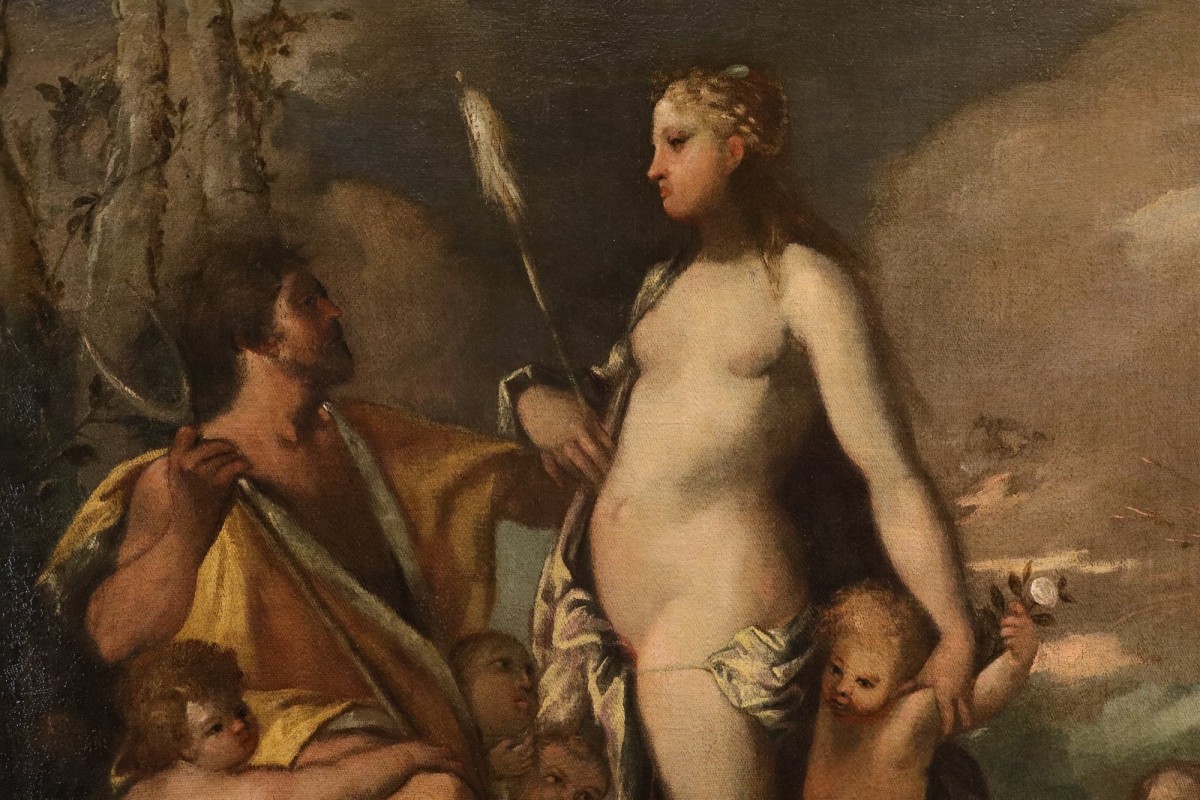
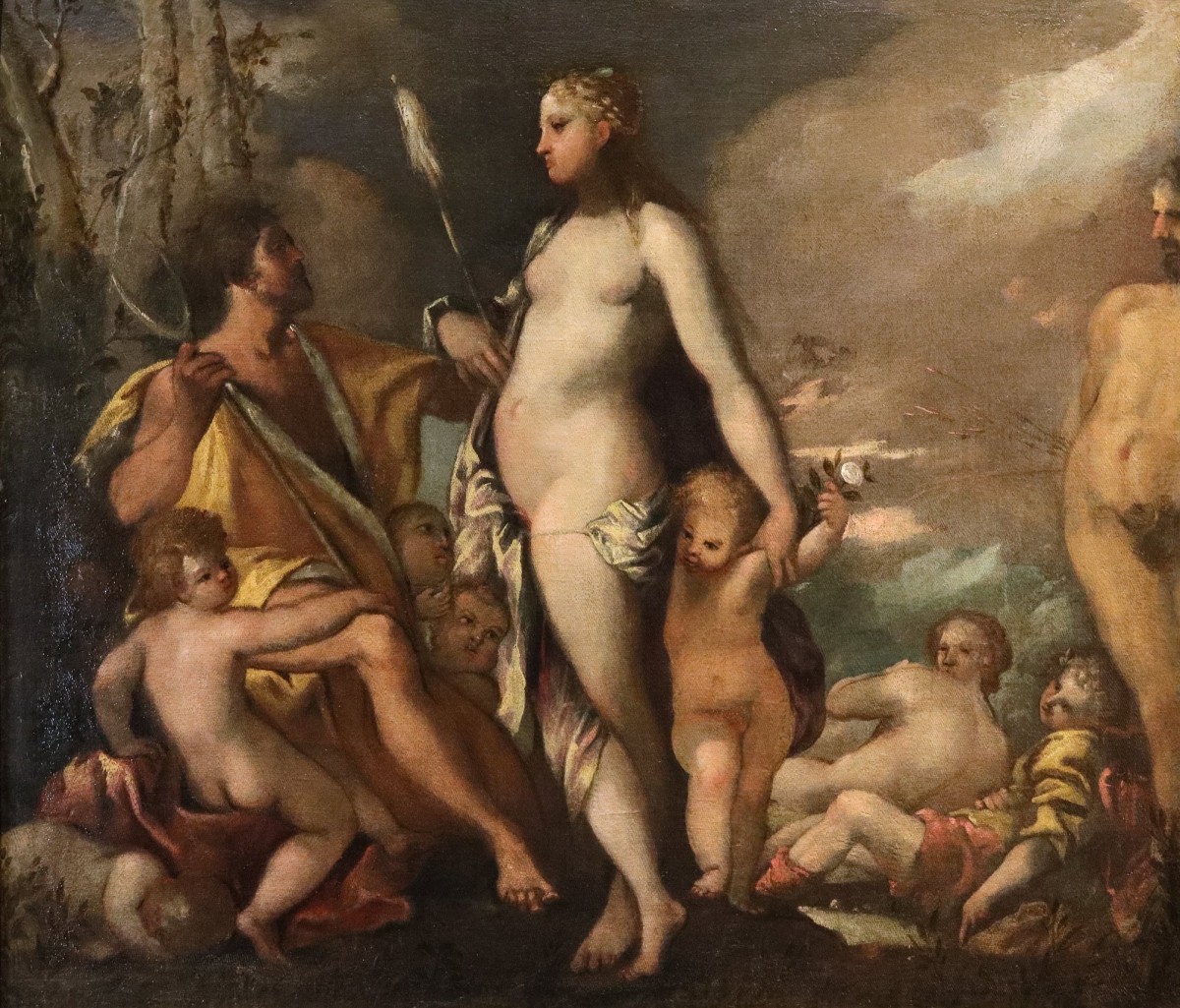
Set in a landscape bathed in warm, golden light, Saturn, god of Time and agriculture, is depicted seated, wrapped in a wide ochre cloak, while he holds his crescent-shaped sickle—his canonical attribute, symbolizing both his primordial connection to agriculture and the passage of time—as if it were a scepter.
His gaze is directed toward his consort, Opis, who dominates the scene in an elegant contrapposto pose and is draped only in a light, sheer cloth.
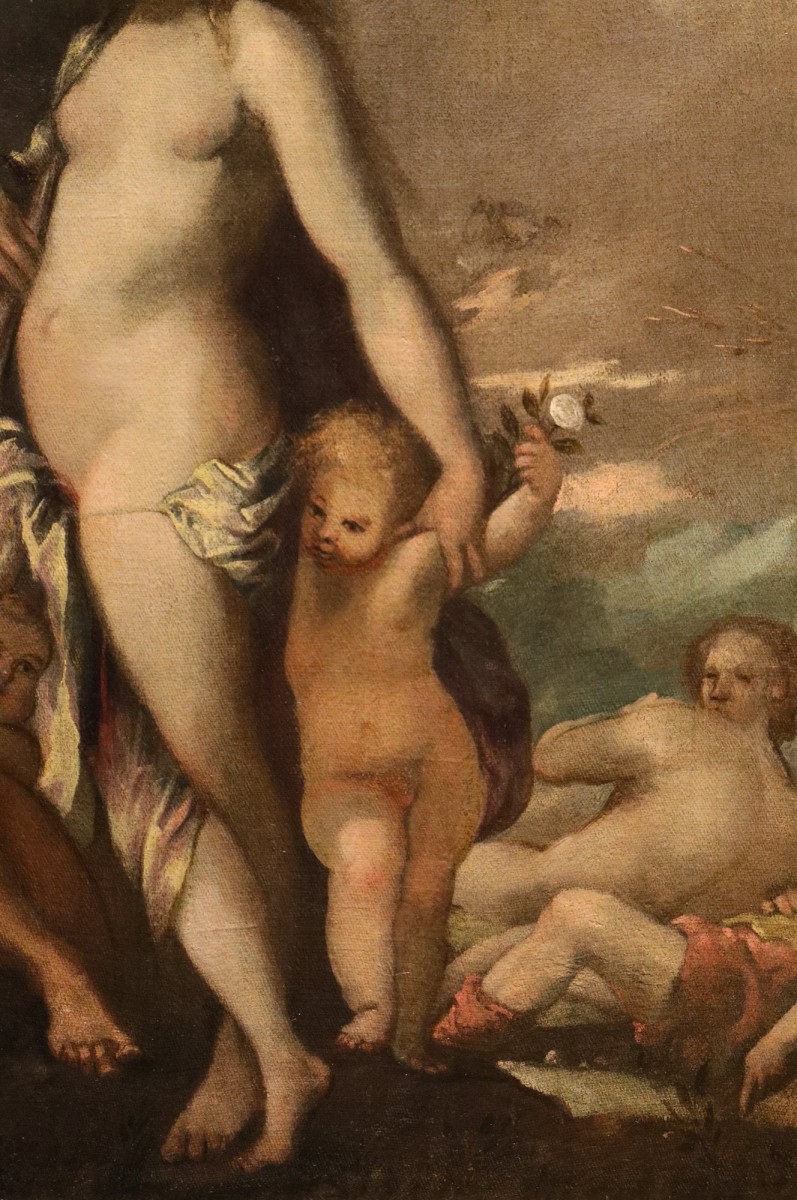
The goddess, the personification of the Earth’s Fertility and Wealth, holds a spindle wrapped in wool to be spun—an emblem linked to creation, domestic prosperity, and the peaceful industriousness of the Golden Age—while with her left hand she tenderly leans on a cherub who offers her a white flower, itself a symbol of peace.
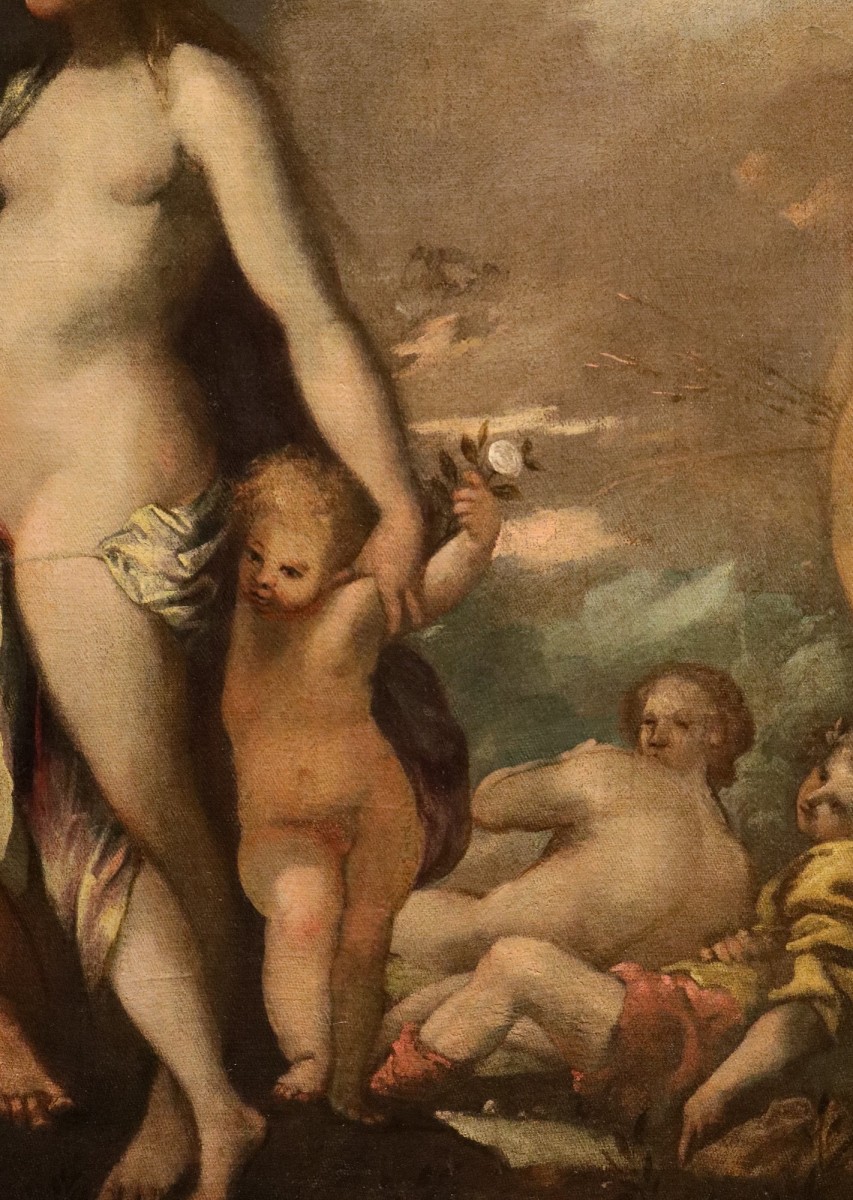
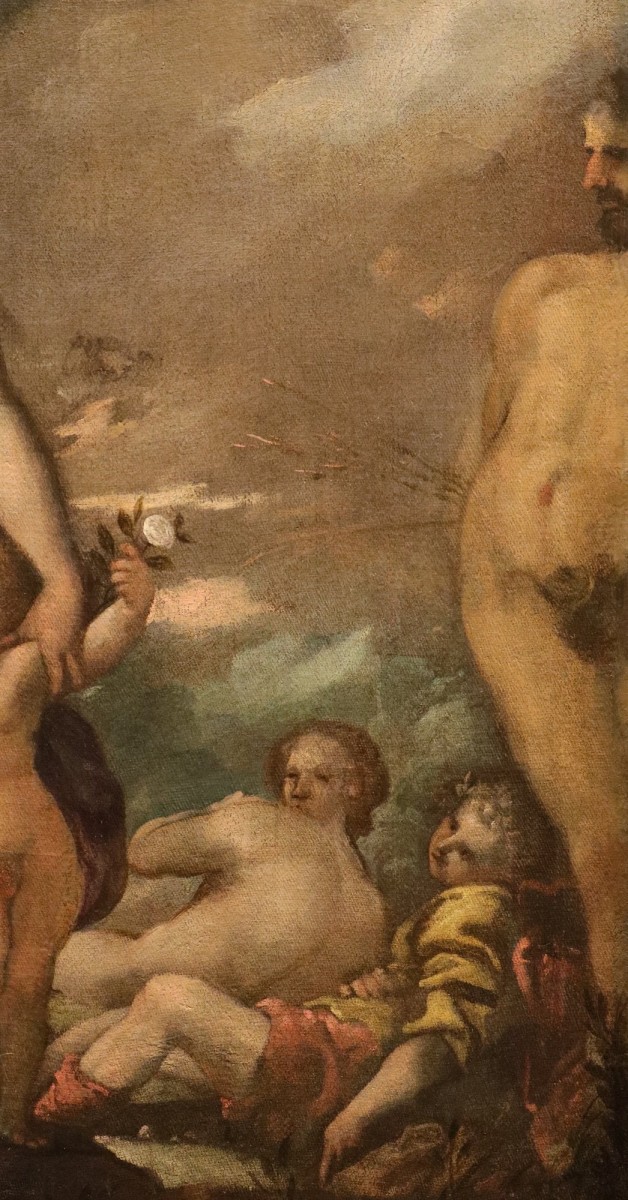
On the right margin stands the nude, statuesque figure of a Genius of the Harvest, holding ears of wheat—the personification of nature’s prosperity. Surrounding the divine couple, a festive crowd of children enlivens the scene, embodying the carefree spirit and prosperity of humanity during the mythical Golden Age, before the advent of wars and hardships.
In 17th-century Venetian figurative art, this pictorial subject held a specific symbolic value, having been commissioned to celebrate good governance and to wish for prosperity in business, family harmony, longevity, and social success.
The presence of fertility deities surrounded by cherubs transformed the subject into a powerful symbol of marital love and the continuity of the family line, making it the ideal theme for decorating patrician villas or celebrating aristocratic weddings.
The combined presence of Saturn’s sickle (agriculture) and Rhea’s spindle (domestic industry) also celebrated the balance between the earth’s resources and human labor, alluding to material well-being, bountiful harvests, and flourishing trade.
Finally, regarding the attribution, in our opinion the work fully reflects the style of Pietro Liberi (Padua, 1605–Venice, 1687), one of the leading figures of 17th-century Venetian painting, renowned for his mythological and allegorical compositions.
The soft brushwork, the ivory-toned and softly shaded skin tones of the female figure, and the lively grace of the cherubs evoke the characteristic style of the artist’s workshop and circle, which skillfully combined the warm colorism of the 16th-century Venetian tradition with the narrative elegance of classical myth.
Delevery information :
We take care of and organise the transport of the purchased works, both for Italy and abroad, through professional and insured carriers.
We take great care We personally take care of the packaging, to which we devote a great deal of care: each work is carefully packed, first with arti- cle material, then with a custom-made wooden box.
Should you have the desire to see this or other works in person, we would be happy to welcome you to our gallery in Riva del Garda, Viale Giuseppe Canella 18, we are always open by appointment only.