Offered by Antichità di Alina
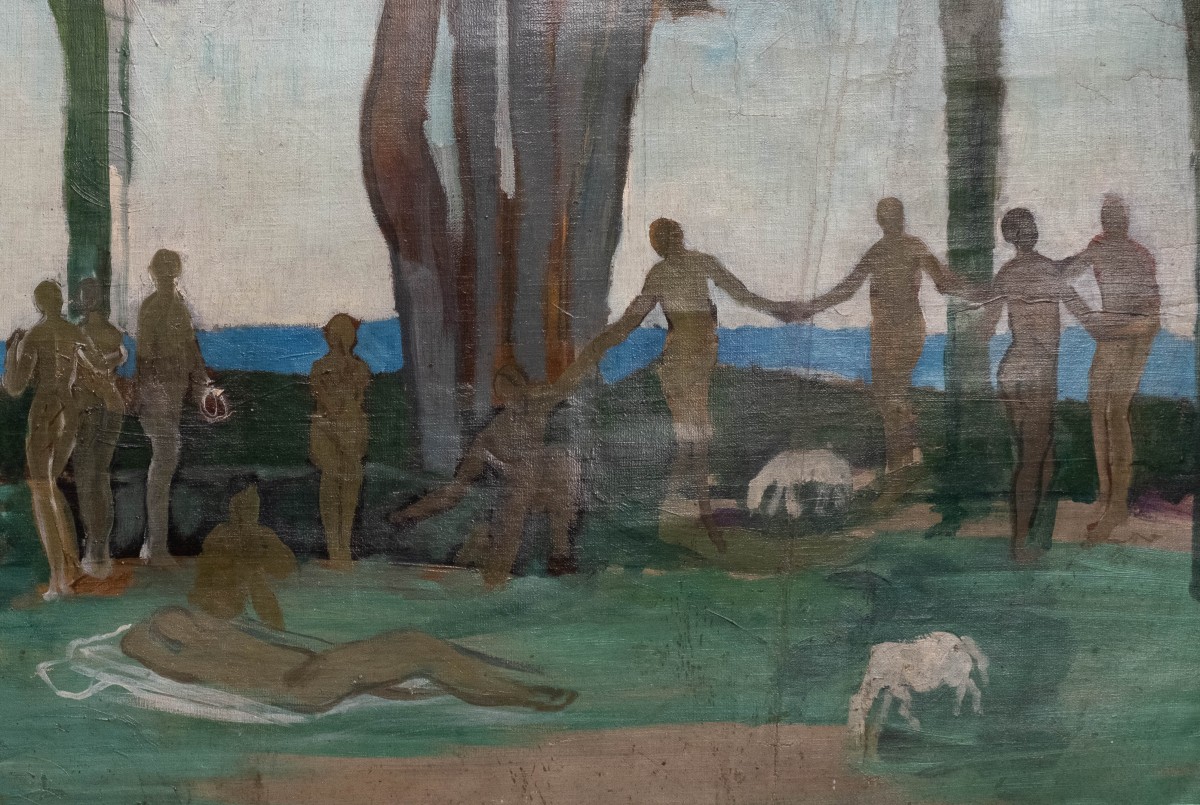

France, circa 1912
Henry Déziré (Libourne, 1878 – Paris, 1965)
Born in Libourne in 1878 and raised in La Rochelle, Henry Déziré studied at the Académie Julian in Paris under William Bouguereau and Gabriel Ferrier. He began exhibiting at the Salon des Artistes Français in 1904 and participated in group exhibitions at Berthe Weill’s gallery in 1906. He also exhibited at Durand-Ruel and other leading Parisian galleries. A particularly receptive artist, Déziré absorbed a variety of influences, from the Symbolism of Puvis de Chavannes and Maurice Denis to the artistic developments of the Pont-Aven School. His extended stays in Brittany contributed to the evolution of his pictorial language.
In the years preceding the First World War, Déziré developed a particular interest in the theme of Arcadia, populating his landscapes with youthful nude figures, shepherds and grazing animals. Arcadia, the ideal realm of classical tradition, became in Symbolist painting an image of primordial harmony between humanity and nature, removed from historical time and modern life.
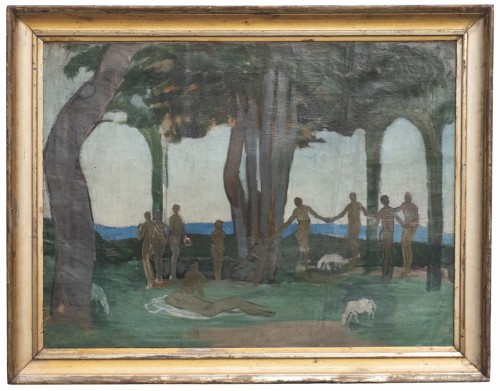
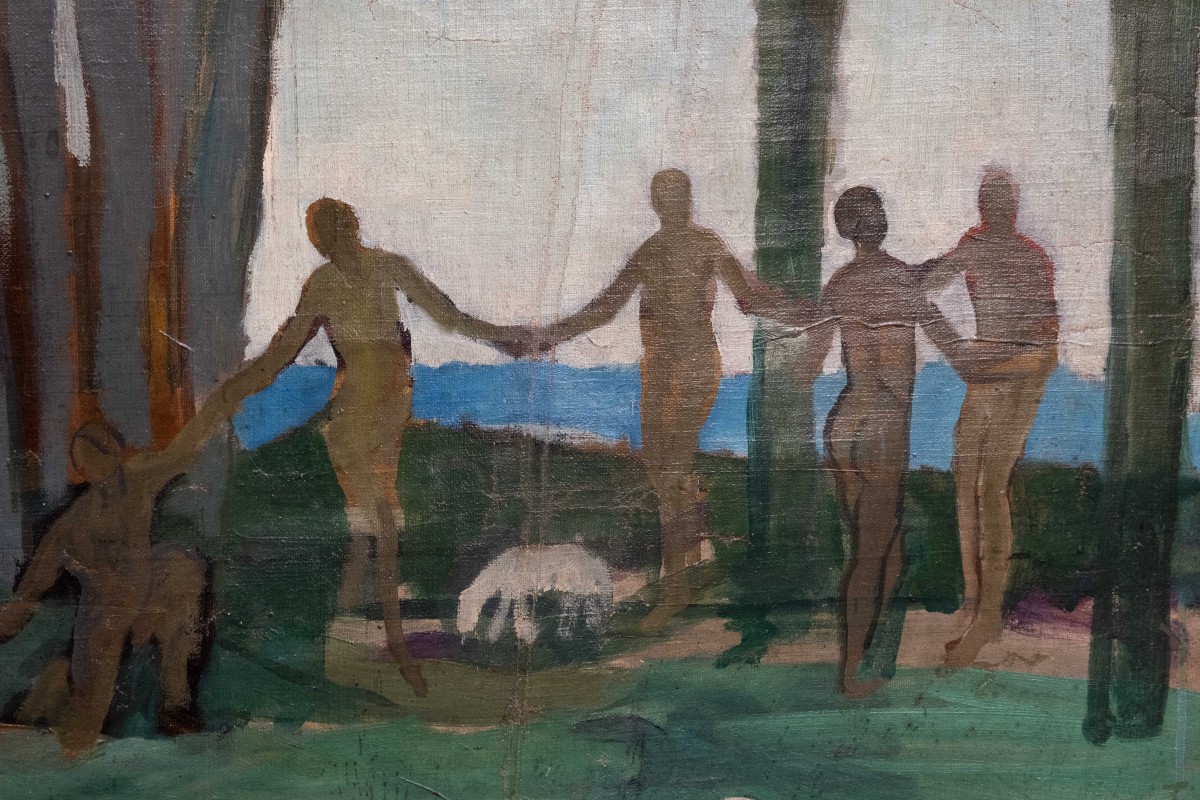
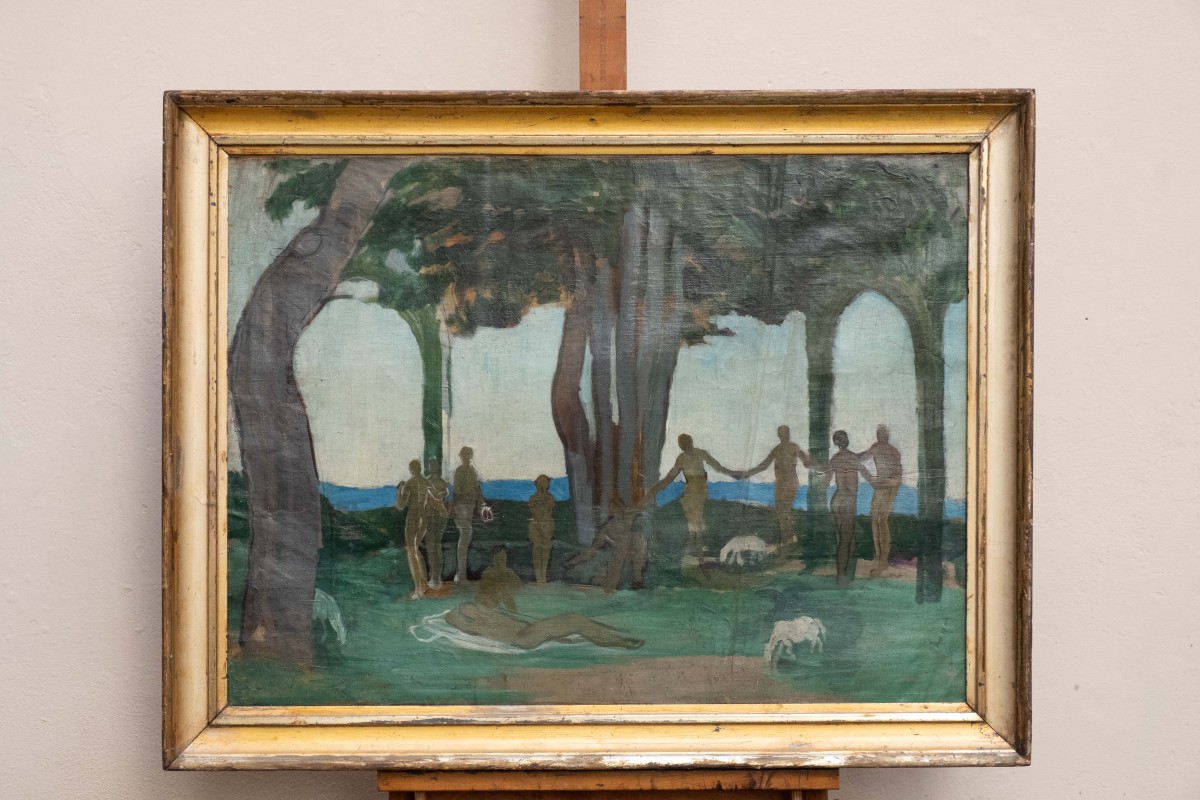
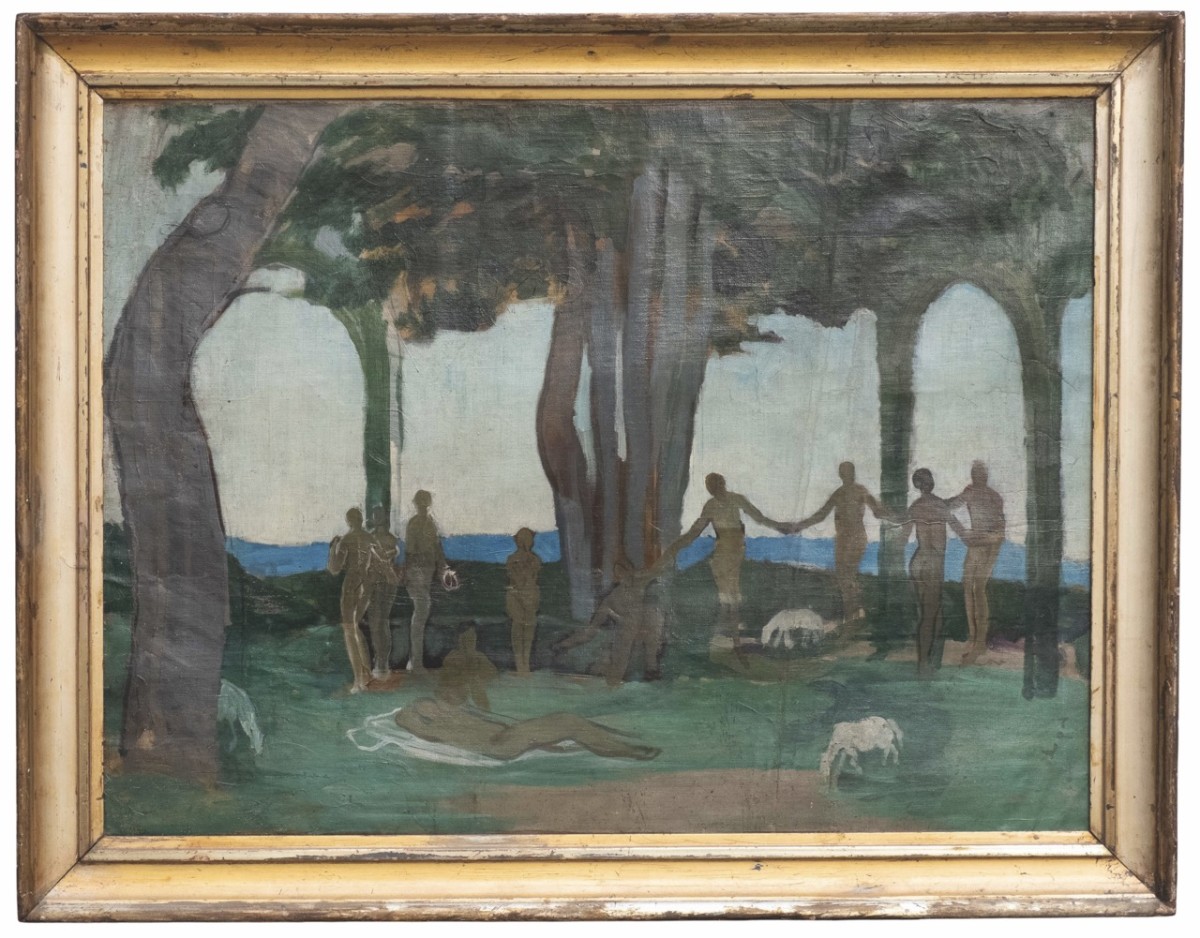
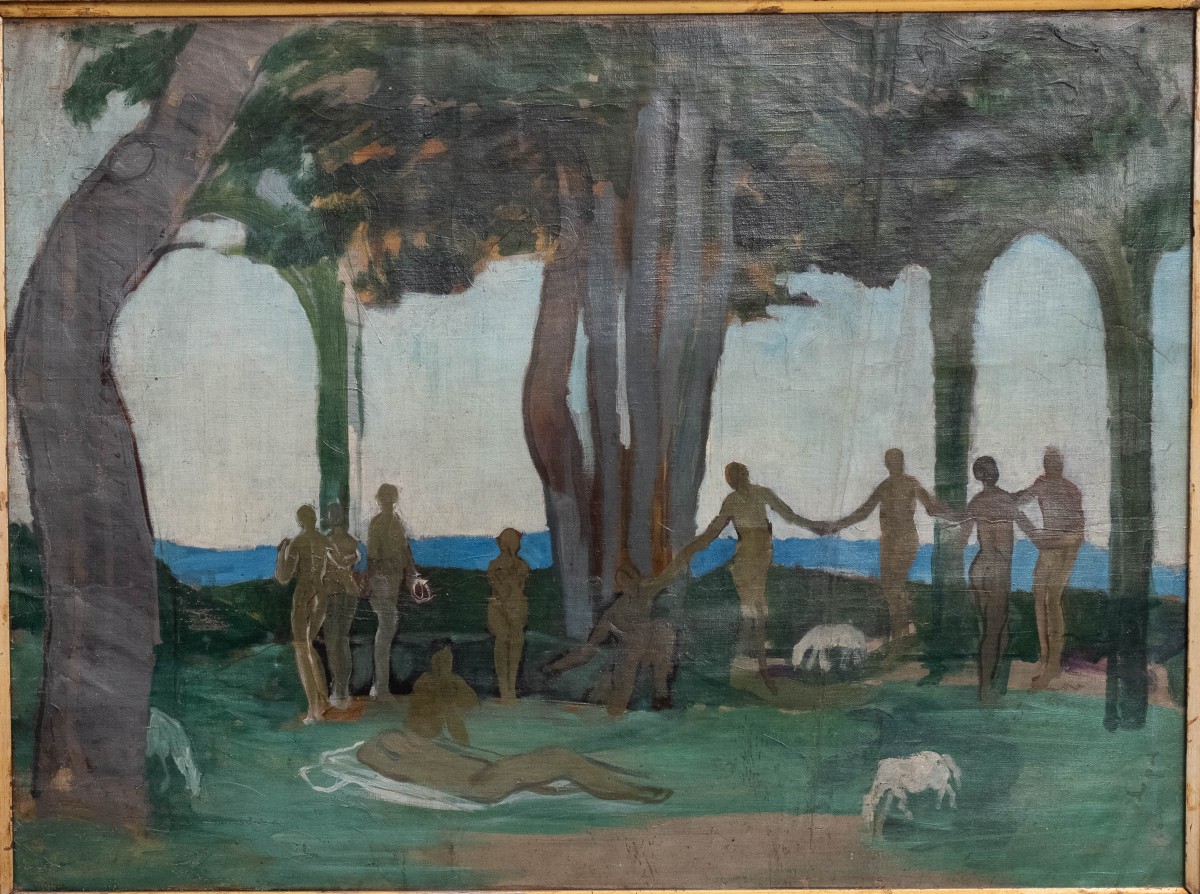
The present painting is a preparatory study for Paysage (Arcadie), a work dated 1912 in the collection of the Musée d’art et d’archéologie de Guéret (oil on canvas, 54 × 81 cm).
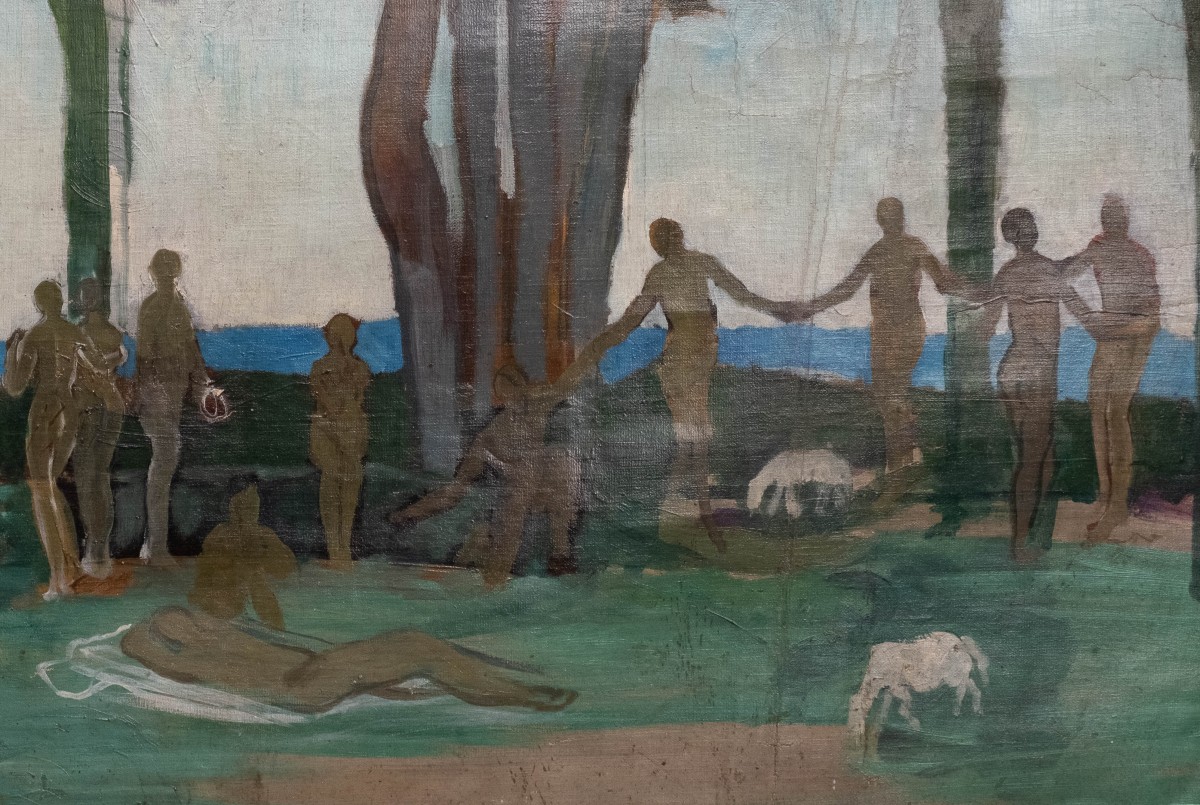
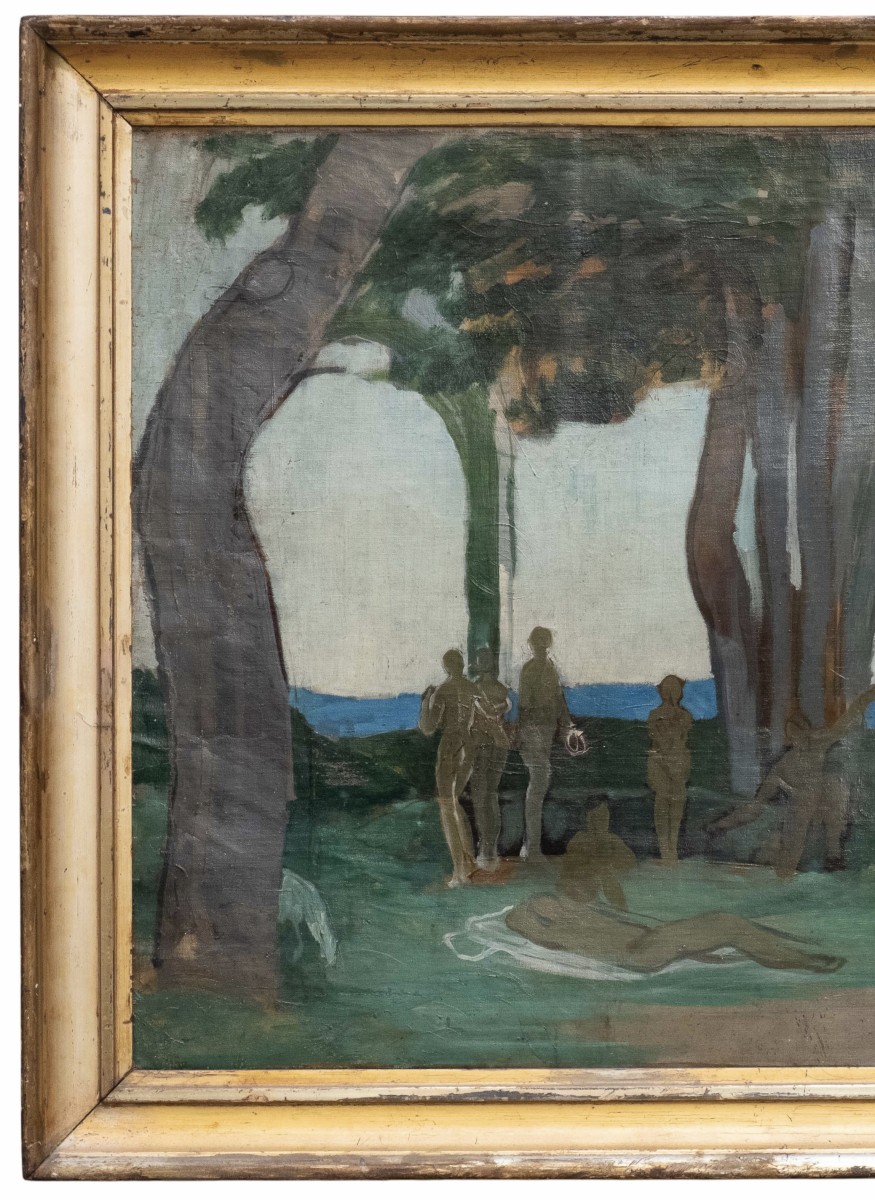
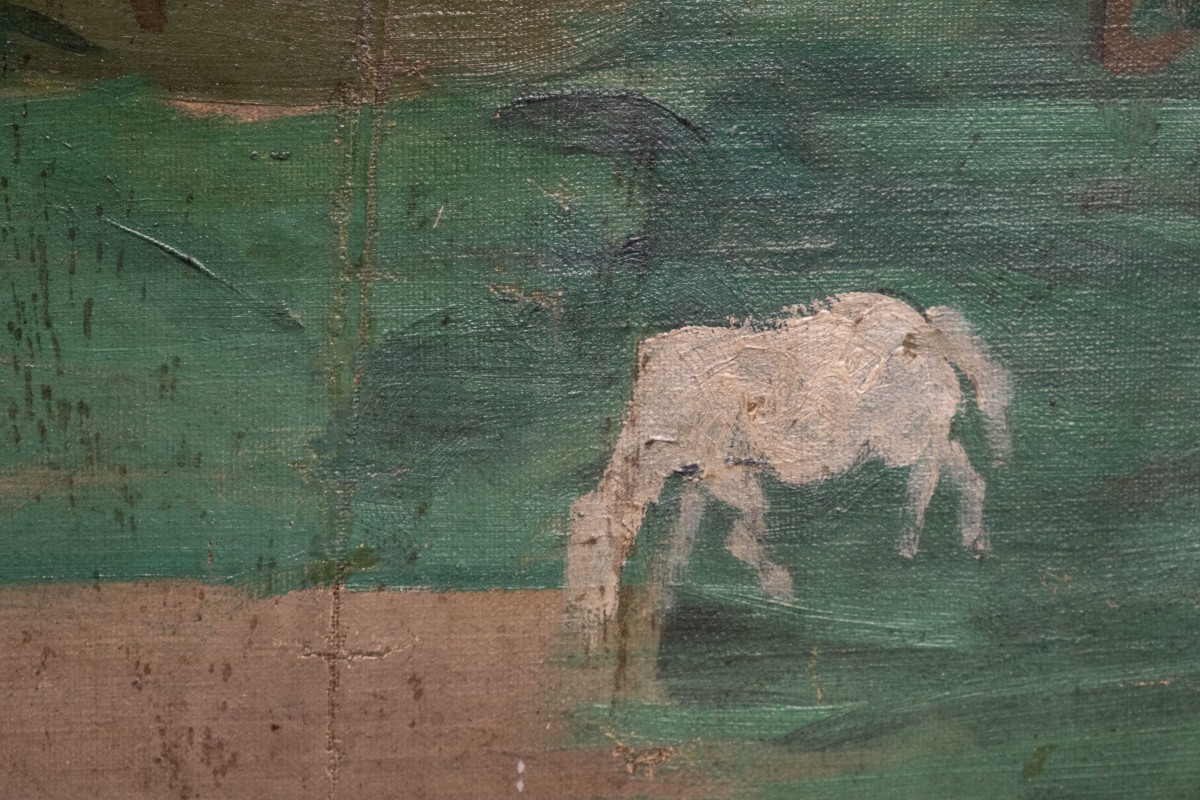
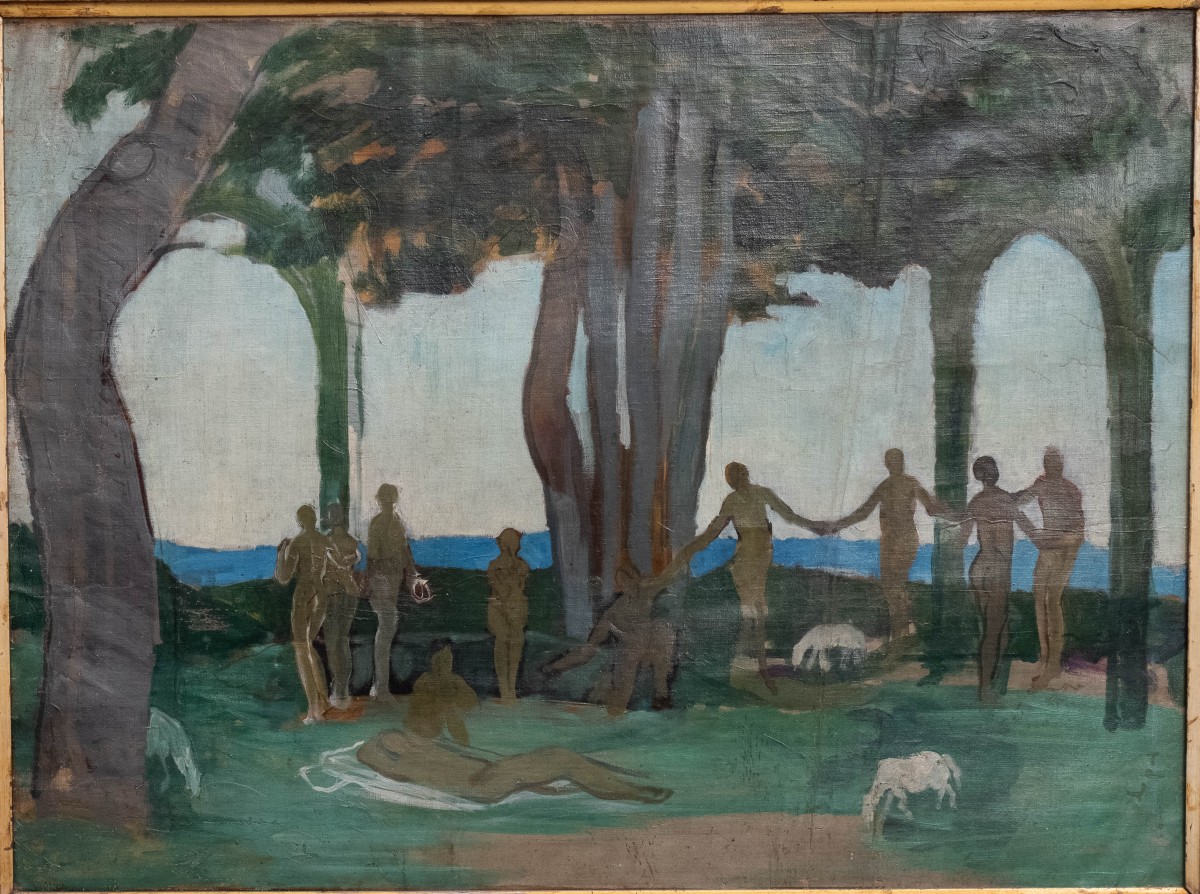
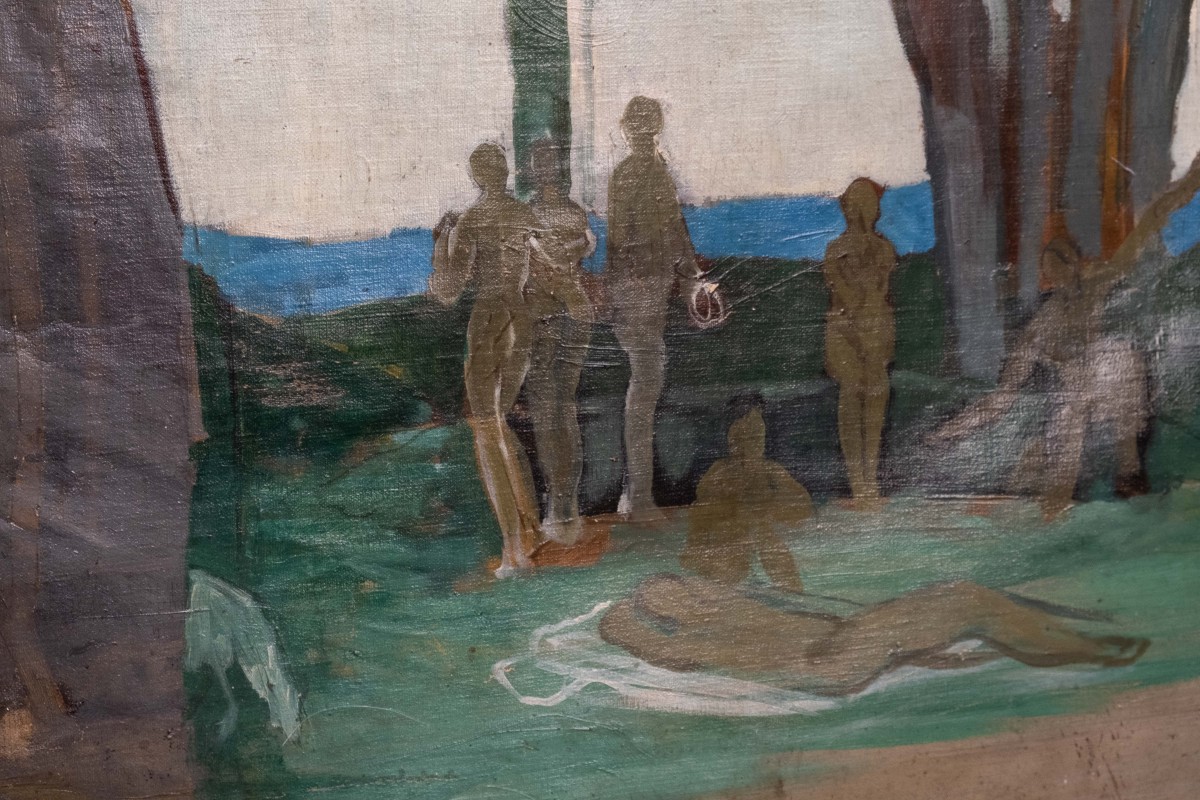
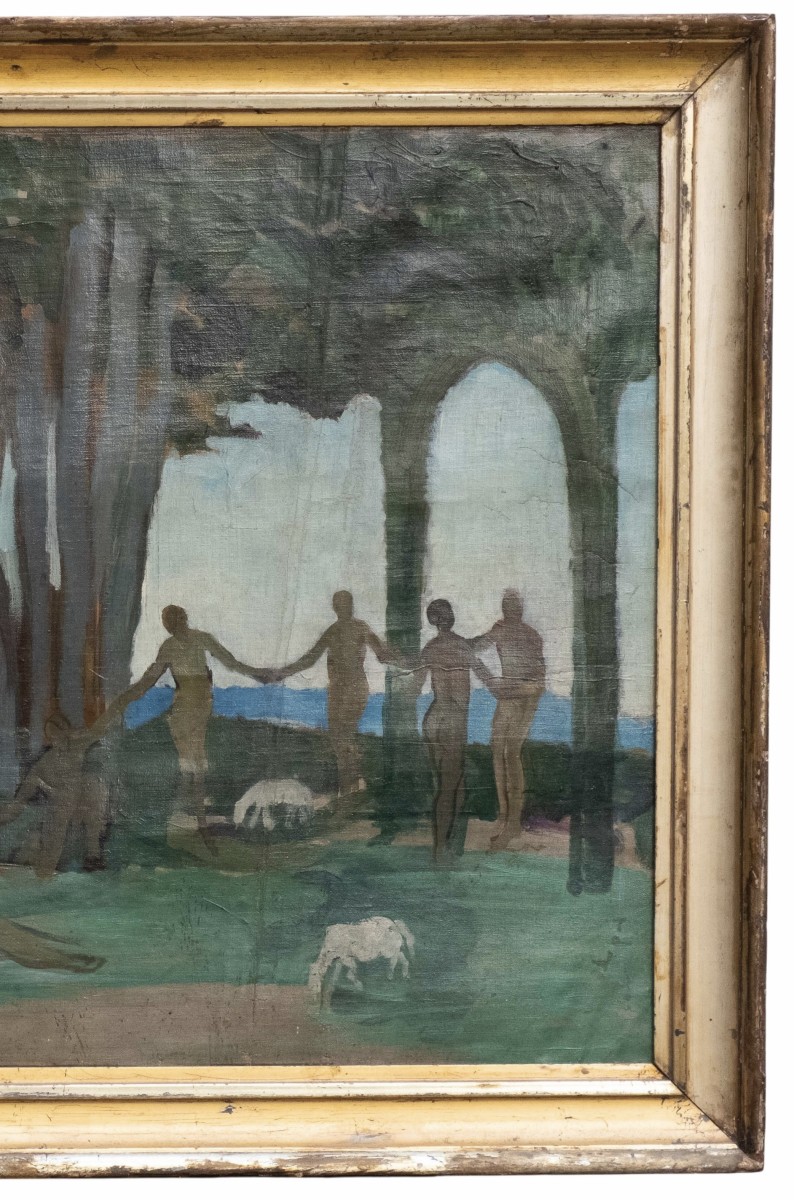
In a clearing dominated by monumental trees, four nude figures join hands in a dance, while other figures stand among the trunks. In the foreground, a reclining female figure rests on the grass, surrounded by grazing sheep. A narrow band of blue opens the woodland towards the horizon.
Comparison with the painting in Guéret reveals the development of the composition. In the study, the vegetation is denser and the dance occupies a central position. In the finished painting, the landscape opens onto a stretch of water and a mountainous horizon, while the figures and animals are rearranged to achieve a different balance.
The simplified forms, the vertical rhythm of the trees and the integration of the figures into the landscape recall French Symbolist painting, particularly the decorative approach of Puvis de Chavannes. The woodland becomes an ideal, almost sacred space, where dancing, repose and pastoral life evoke a primordial humanity.
The painting retains the freedom of a preparatory study: broad masses of green and brown establish the vegetation, while the figures are defined with a few essential strokes.
The work documents a significant moment in Déziré’s artistic development, when classical tradition and Symbolist sensibility converged in his personal interpretation of Arcadia.
Comparative work and bibliography
Henry Déziré, Paysage (Arcadie), 1912, oil on canvas, 54 × 81 cm, Musée d’art et d’archéologie de Guéret, France.
Henry Déziré (1878–1965), exhibition catalogue, Musée du Faouët, 2015, p. 28, reproduction of the Guéret painting.
Dimensions without frame: 61 × 81 cm
Dimensions with frame: 74 × 93 cm