Offered by Galerie Sismann
REQUEST INFORMATION
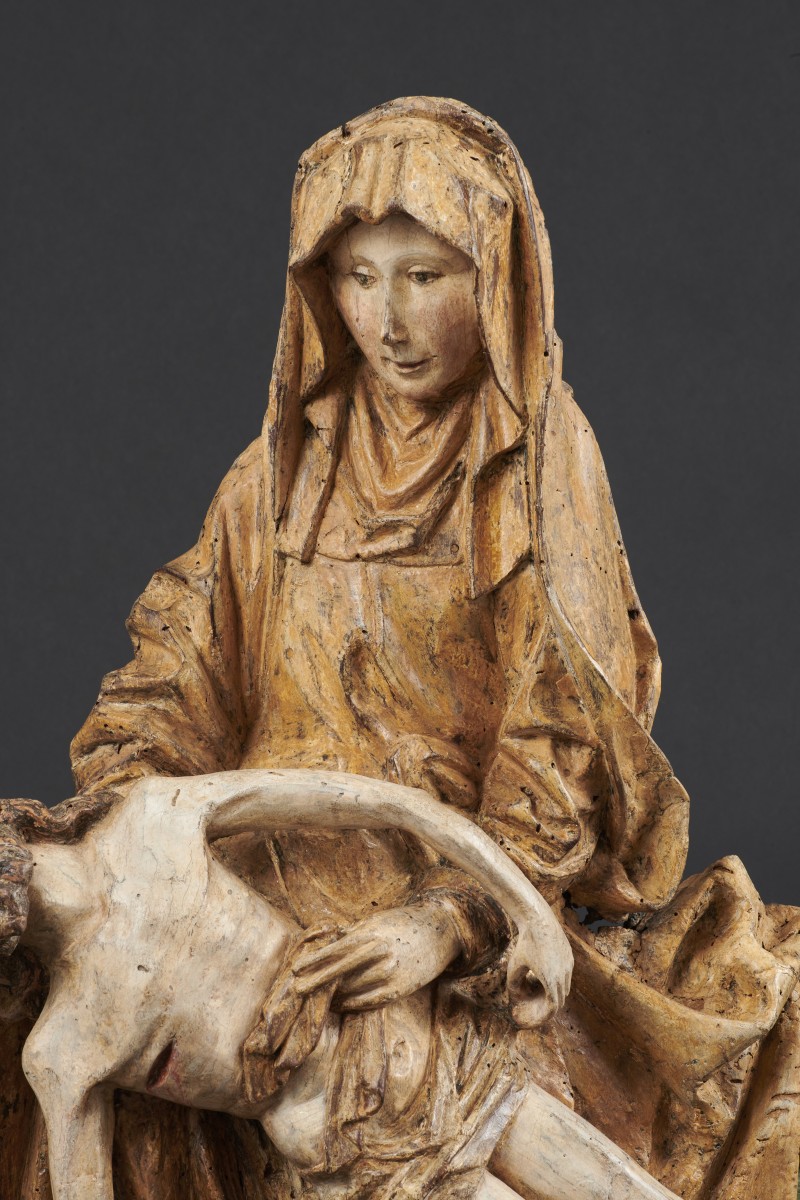
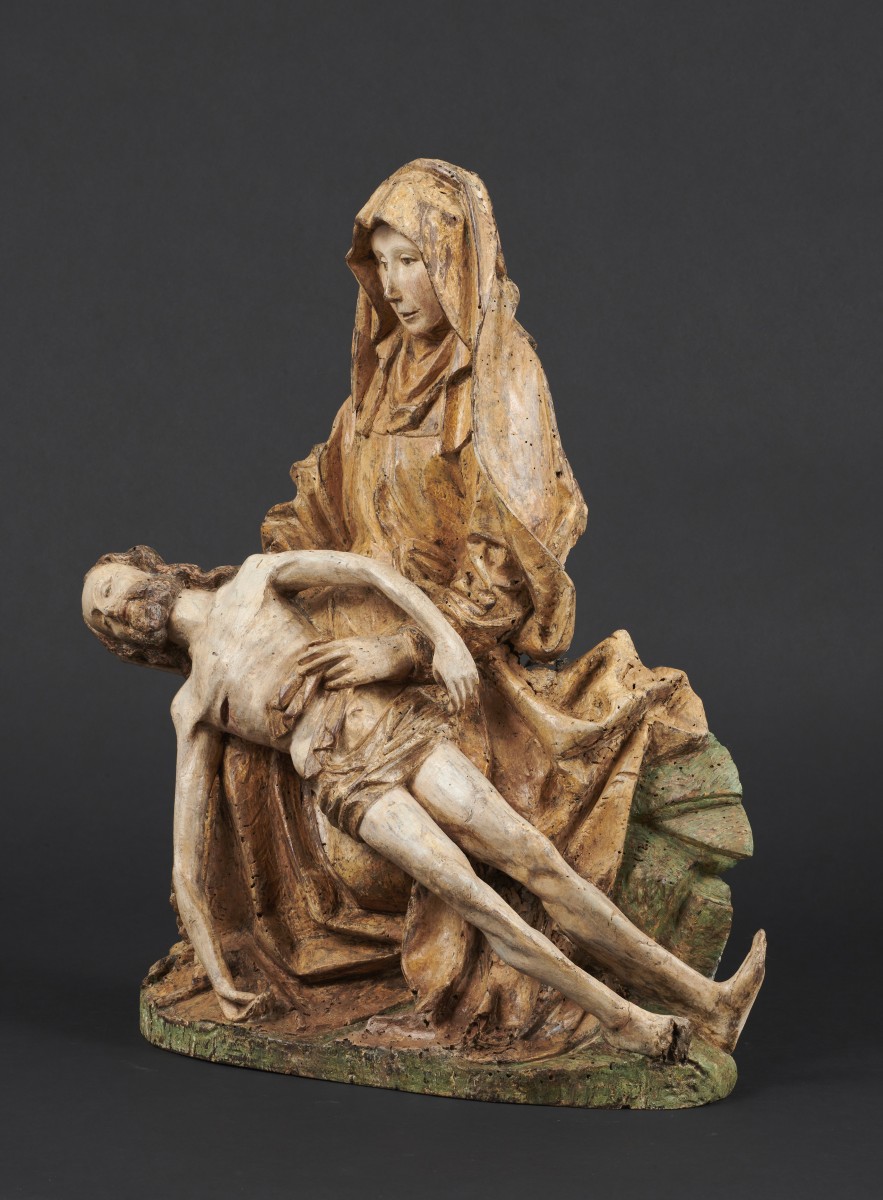
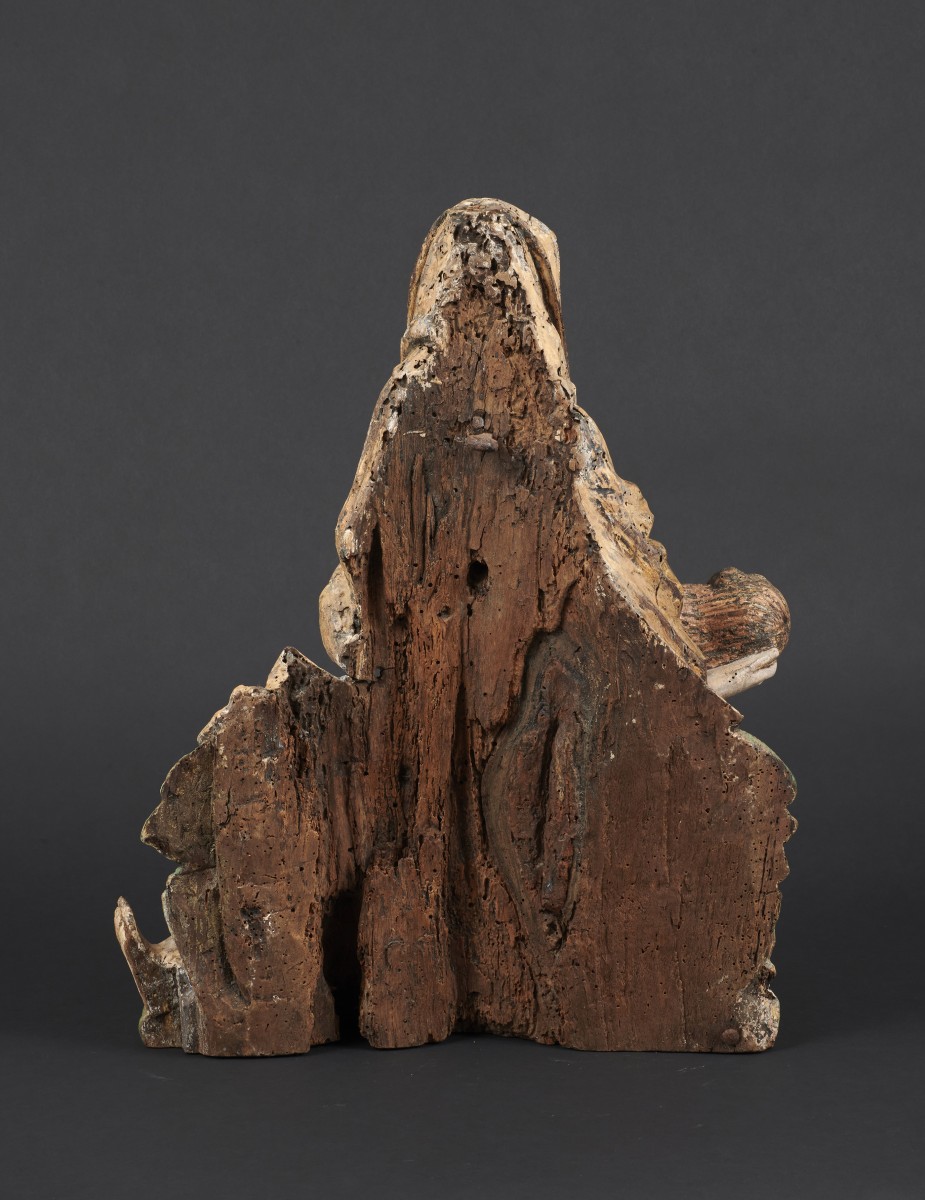

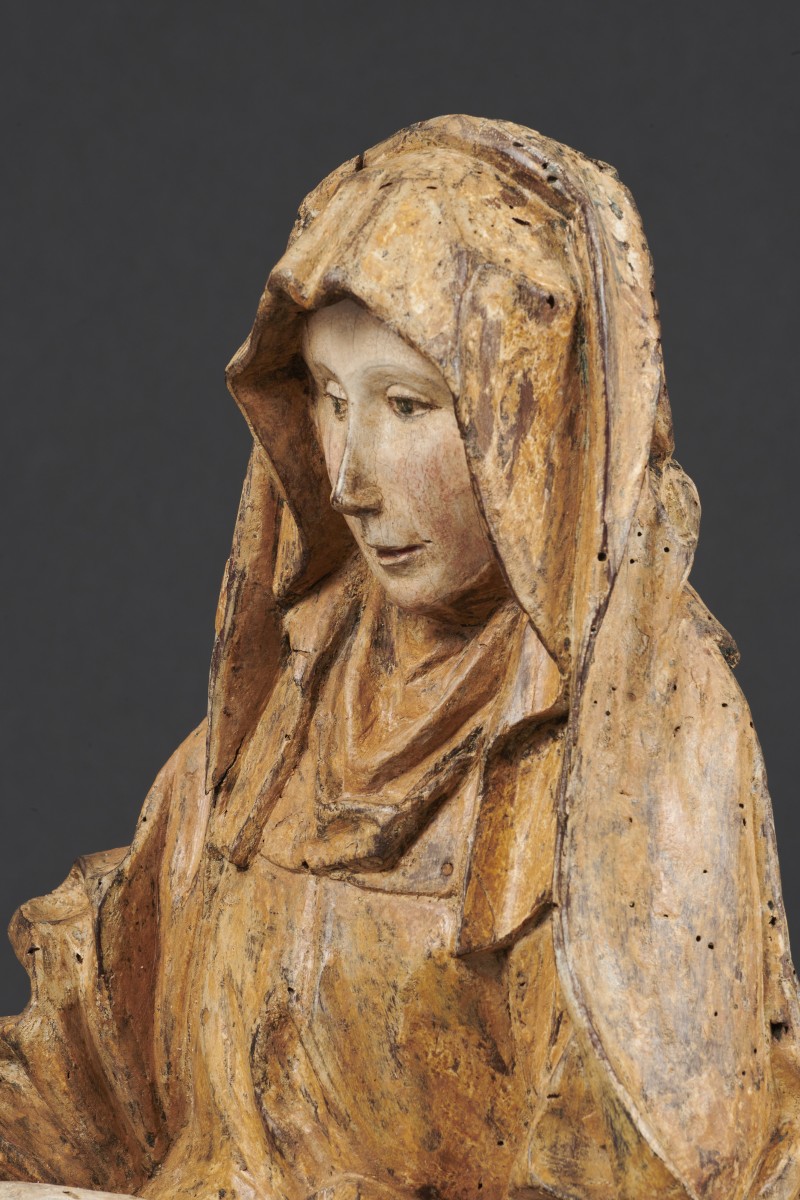
In the 15th and 16th centuries, within the orbit of the Grand Duchy of Brabant, the Duchy of Limbourg occupied a unique border position on the edge of the Southern Netherlands, wedged between the episcopal principality of Liège, the United Provinces and the Holy Roman Empire.
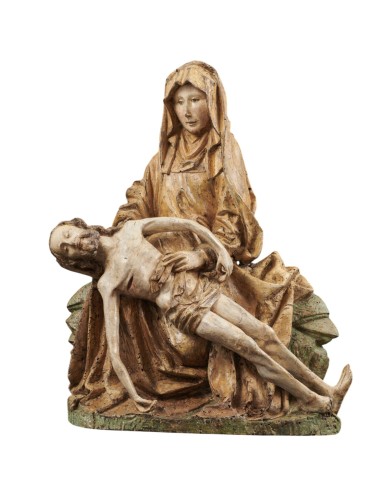
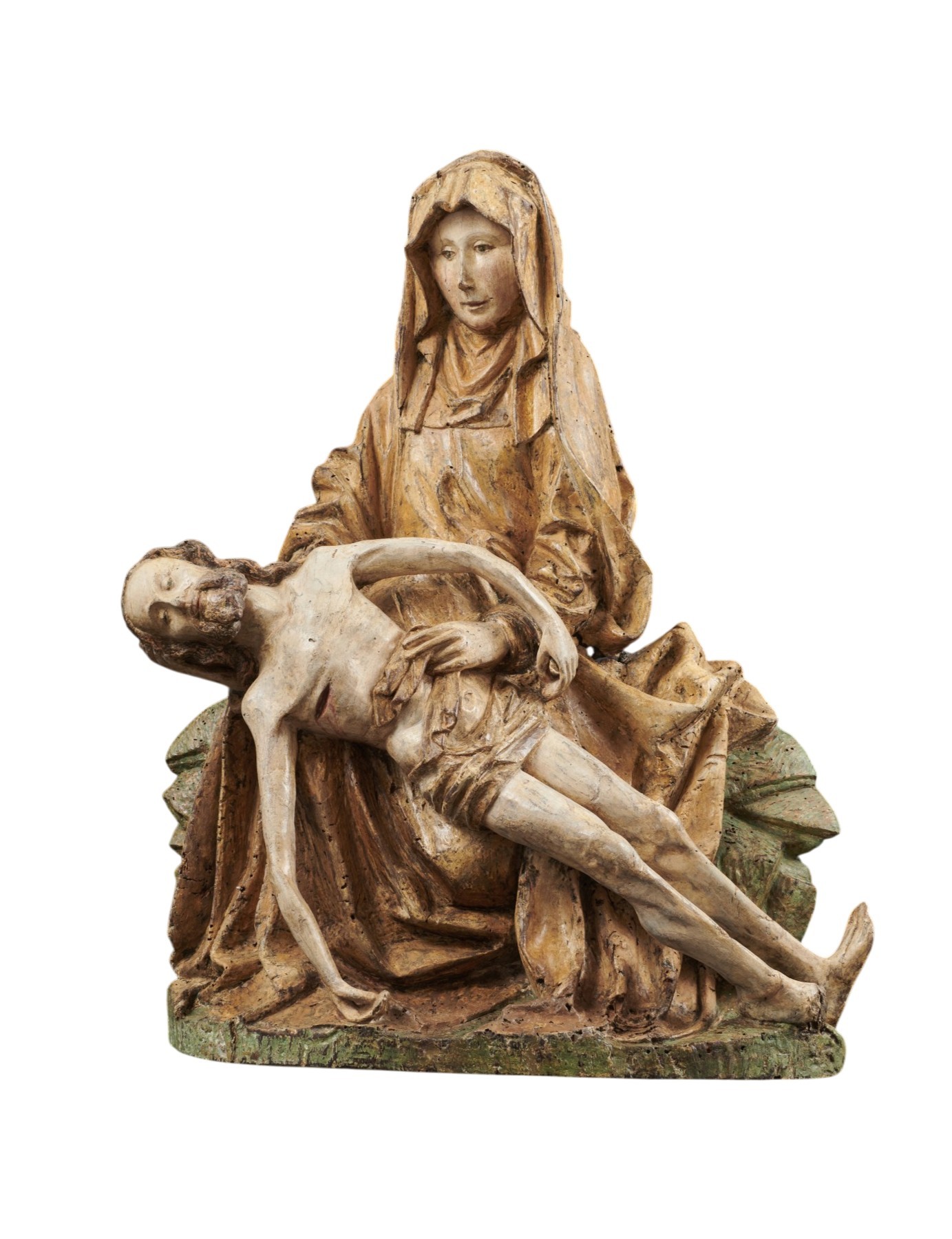
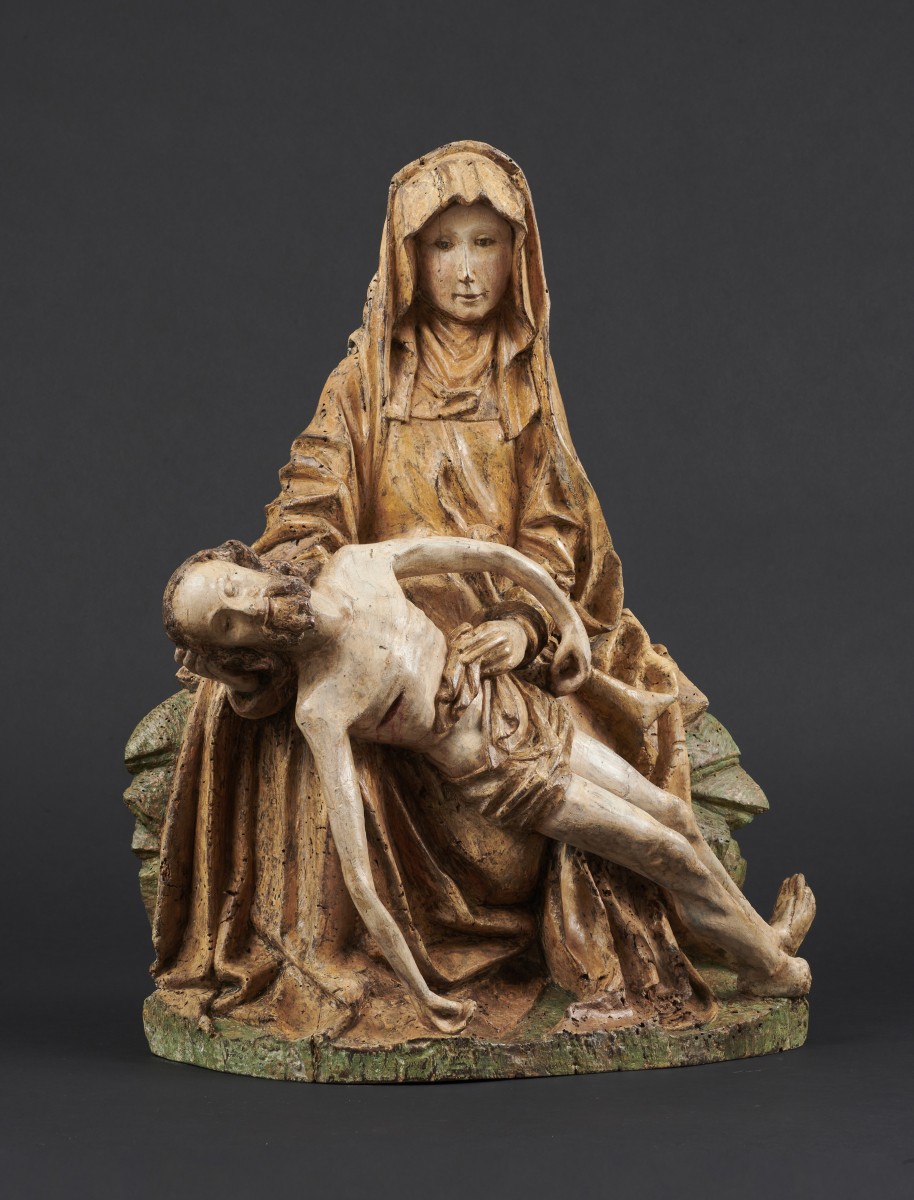
It was here, in the Rhin-Meuse basin, that a number of sculptor workshops sprang up in the late 15th and early 16th centuries, producing a major output of sculptures that skilfully blended Brabantine, Rhenish and Dutch influences. This moving Pietà is a superb example.
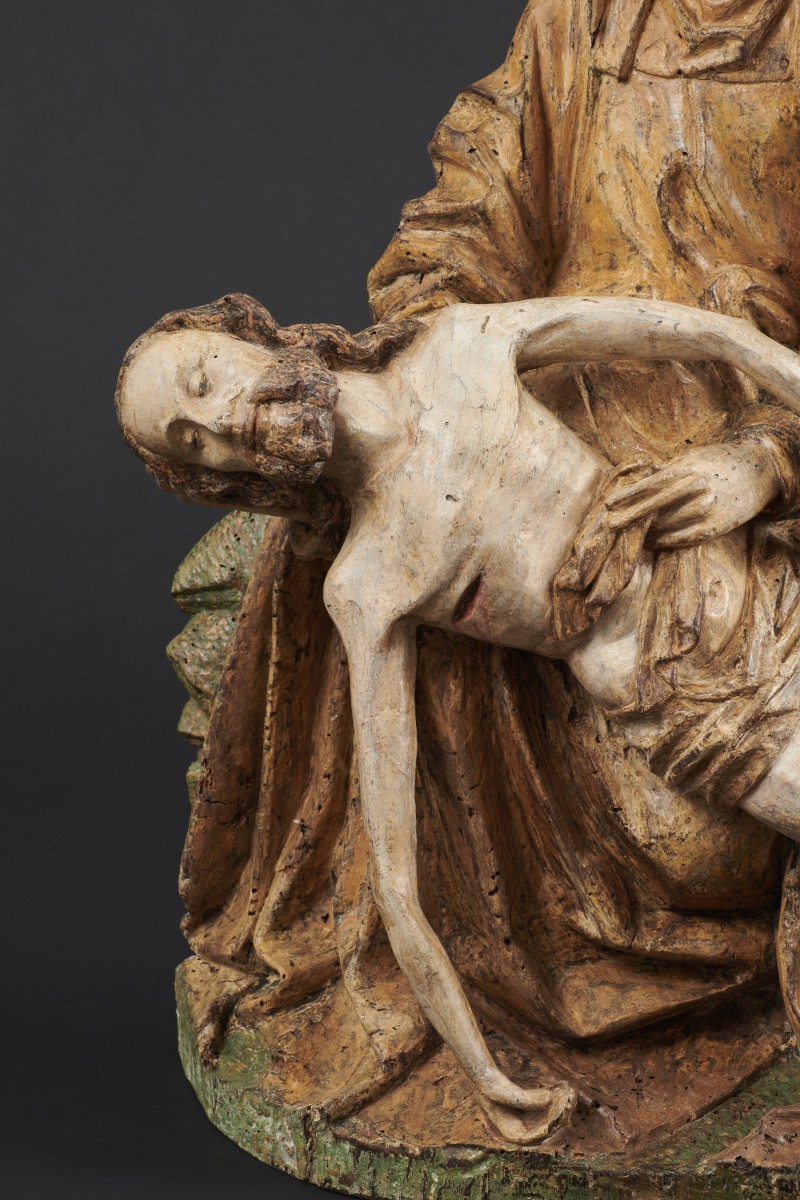
A favourite theme of late medieval sculptors, our work follows the traditional iconographic pattern of the Virgin Mary holding the dead body of her son on her legs. The battered body is offered for contemplation by the faithful, tilted parallel to the foreground, in keeping with a formula popular in Brabant art. Although seated on a mound, Mary's position reveals all her grace and melancholy dignity. She is wearing an austere veil that conceals all of her hair and covers her neck. This pattern can abundtantly be found in around 1500 in sculpture in the Southern Netherlands, and perhaps most notably in sculpture from Liège, as evidenced by a beautiful Pietà from the Curtius, a Trinitarian Sainte Anne and a Calvary Virgin from the Musée d'art religieux et d'art mosan in Liège. Regularly, above the Virgin's forehead, this veil breaks into an "M"-shaped fold, similar to that seen on the beautiful Sainte Anne Trinitaire in the former Museum van Stolk in Haarlem, whose veil structure is almost superimposed on that of our Virgin. Difficult to attribute to a workshop in the Netherlands, Limburg or the Lower Rhine, this work invites us to read in our Pietà influences other than those of the art of Brabant, which are particularly evident in the singular treatment of Mary's face and her drapery.
The oval, youthful face of our Virgin, with its rounded forehead, subdued eyebrows, rounded cheeks and small, firm chin, is reminiscent of the work of the great masters active in Holland in the late 15th and early 16th centuries, such as the Master of Esloo, Arnt Van Tricht and Jan van Steffesweert, an artist from Flanders working in Maastricht whose workshops had a particularly strong influence in Limburg. Examples include a Madonna and Child on a Crescent Moon from the circle of Jan van Steffeswert, certain female figures from Arnt Van Tricht's Passion Altarpiece in the Schnütgen Museum, and his superb Madonna and Child on a Crescent Moon in the Cologne City Museum. All of them, but the latter in particular, have the same fine nose and pinched mouth as our Virgin, paradoxically giving her an almost smiling character, which is foreign to Brabant art for this type of scene. The extraordinary drapery of Van Tricht's Virgin with Crescent even echoes, to a certain extent, the free, dynamic movement of the folds of Mary's cloak over her left forearm in our sculpture, as well as the flowing folds that slide over her chest.
However, the absence here of any accessories or embellishments in the use of the fabrics, which are spare and sober, breaks with the colourful treatment of those seen in Dutch sculpture. These comparisons place our sculpture in an in-between position, at the crossroads between the art of Brabant and that of the United Provinces, referring to the art of Limbourg created on the borders of the Southern Netherlands at the end of the Middle Ages by sculptors who came into contact with Dutch art through trade and travel facilitated by the region's proximity.