Offered by Galerie Sismann
REQUEST INFORMATION
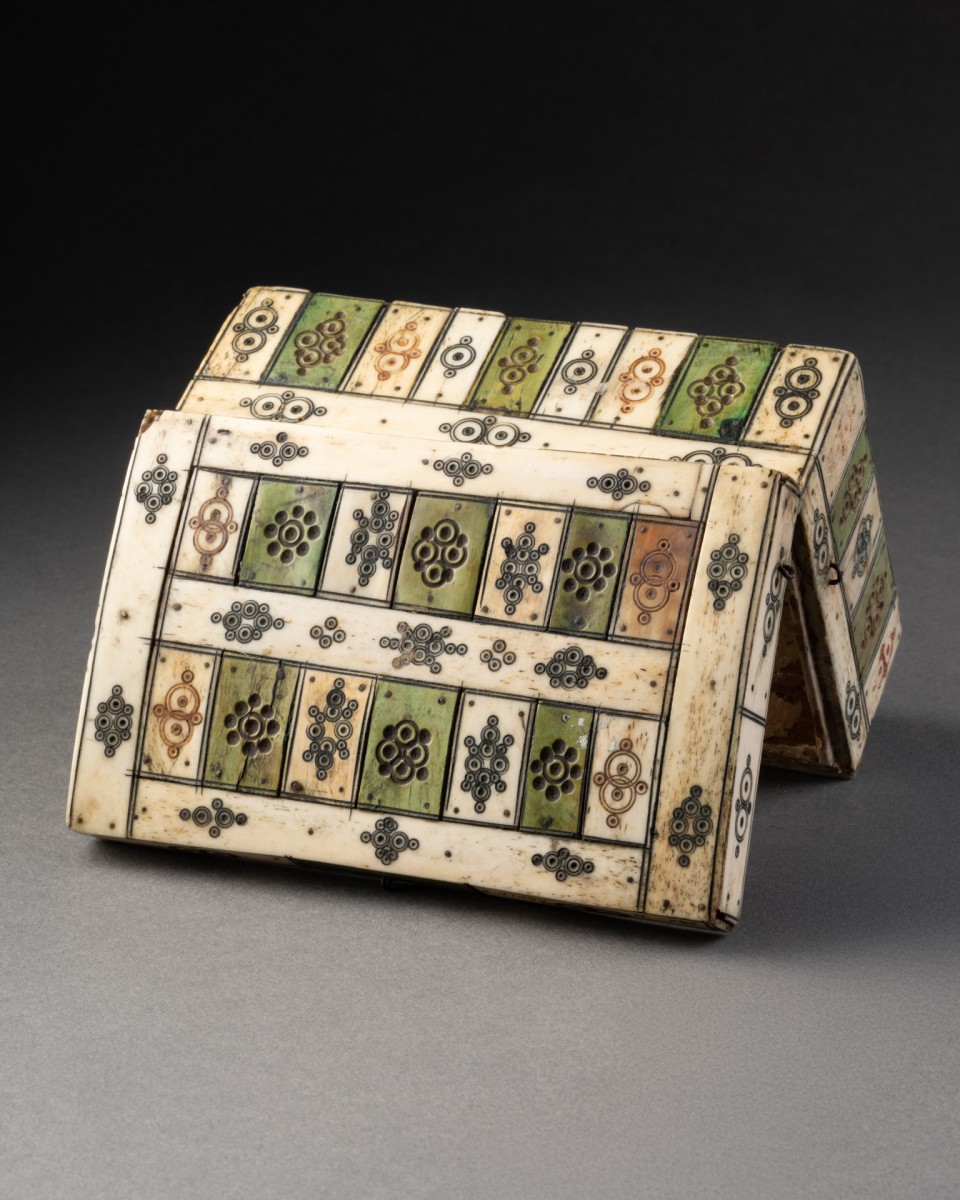
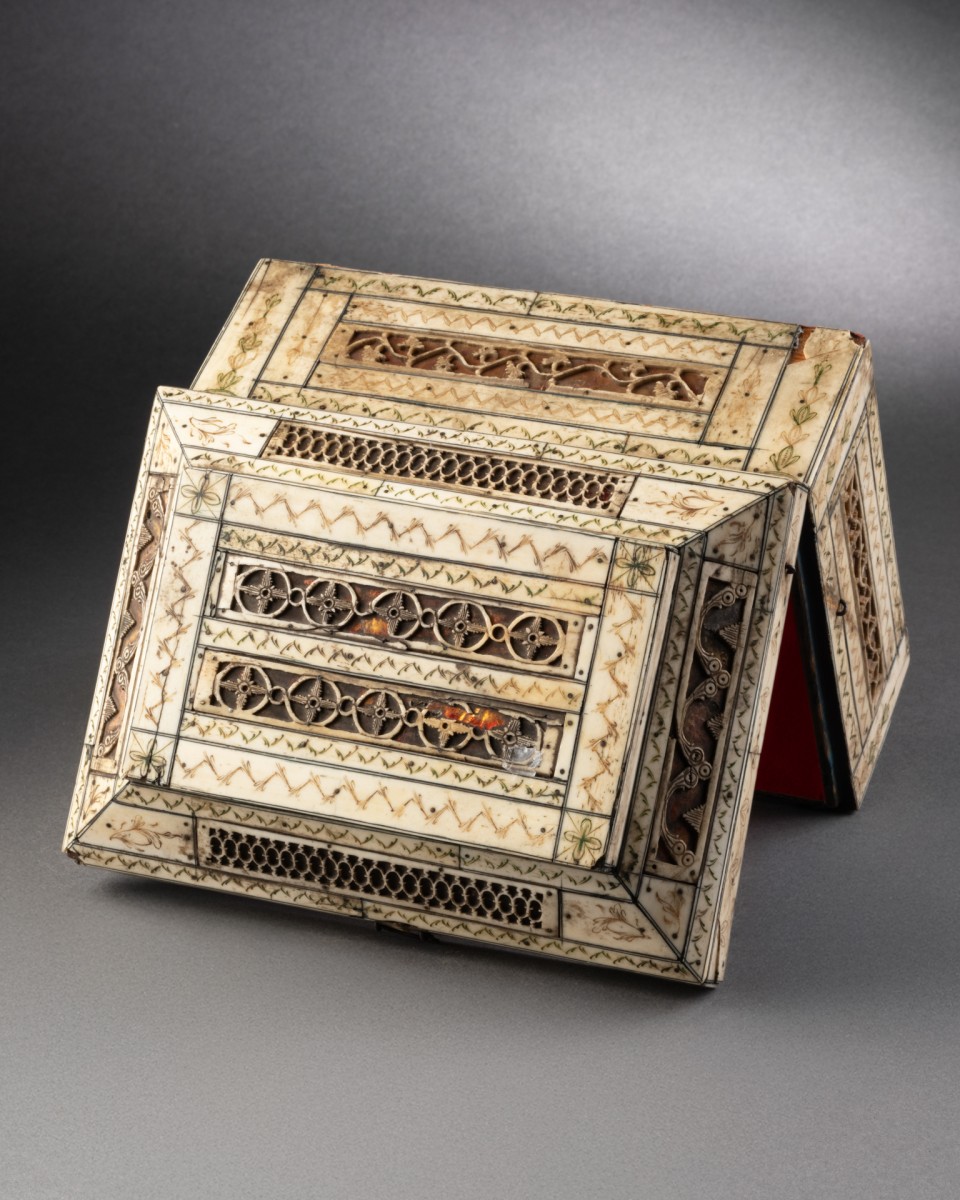

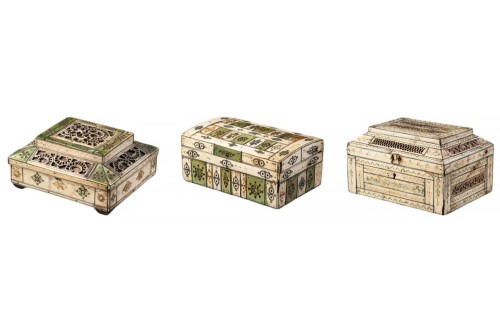
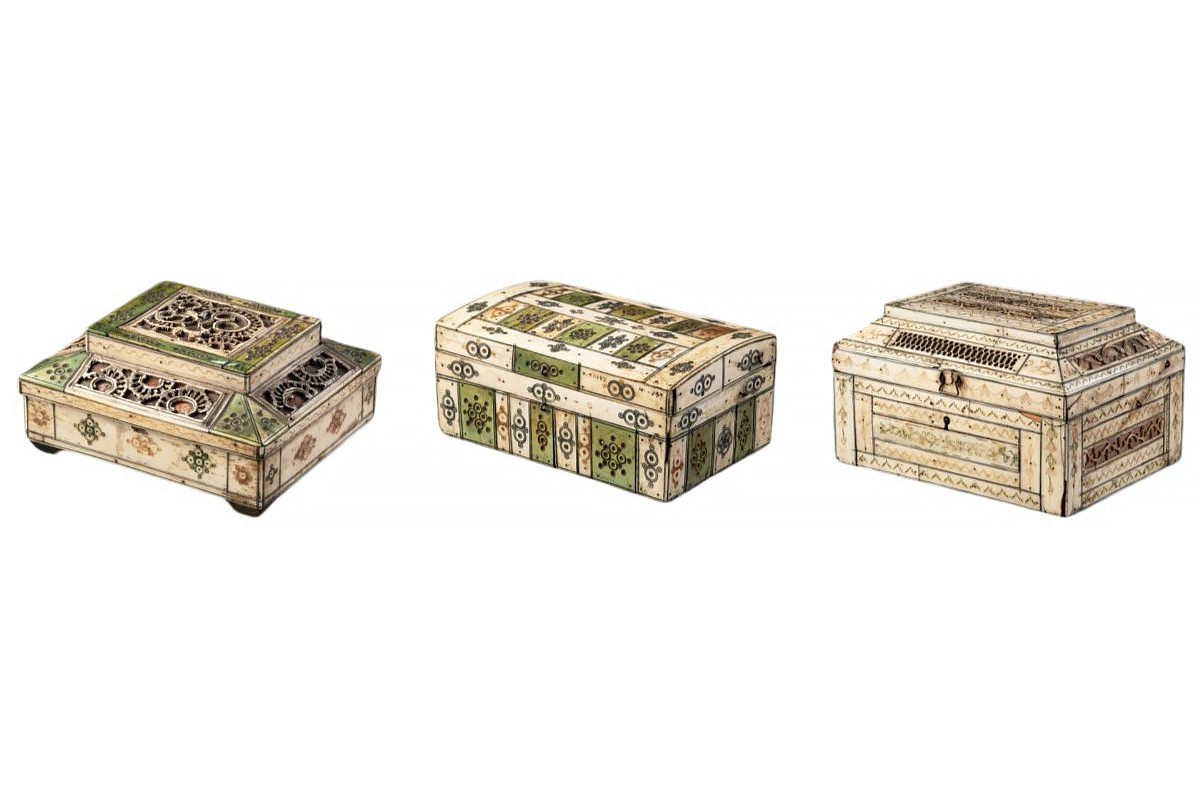
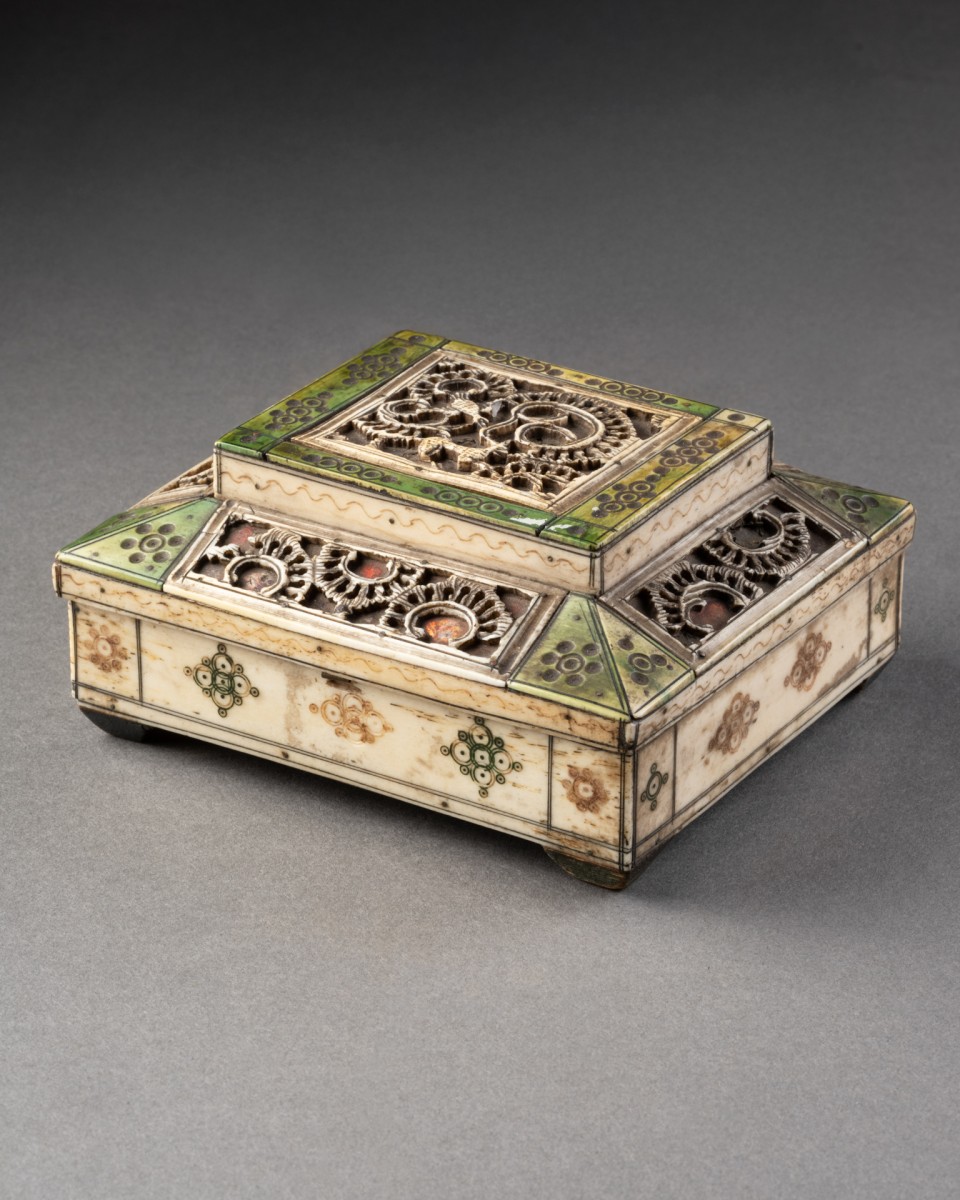
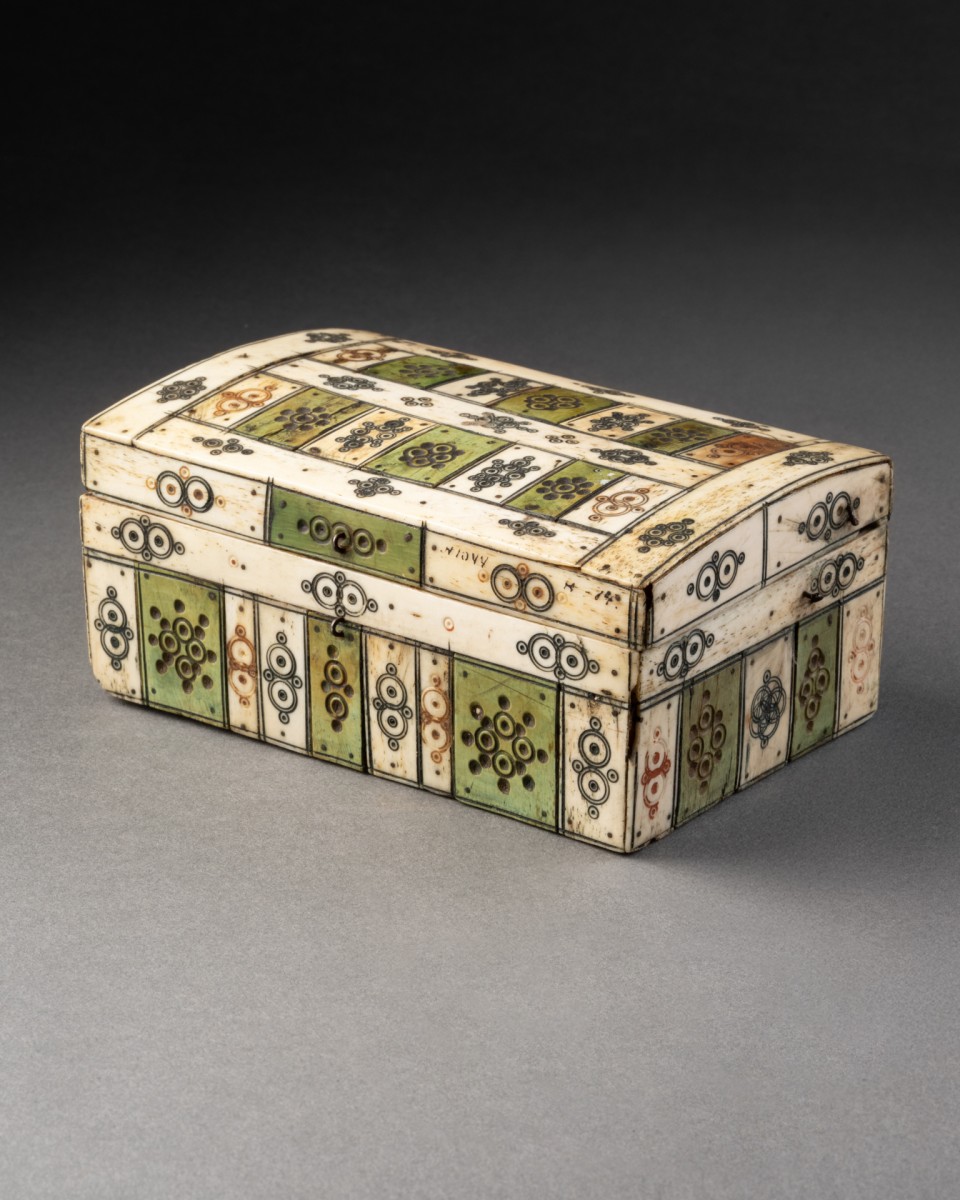
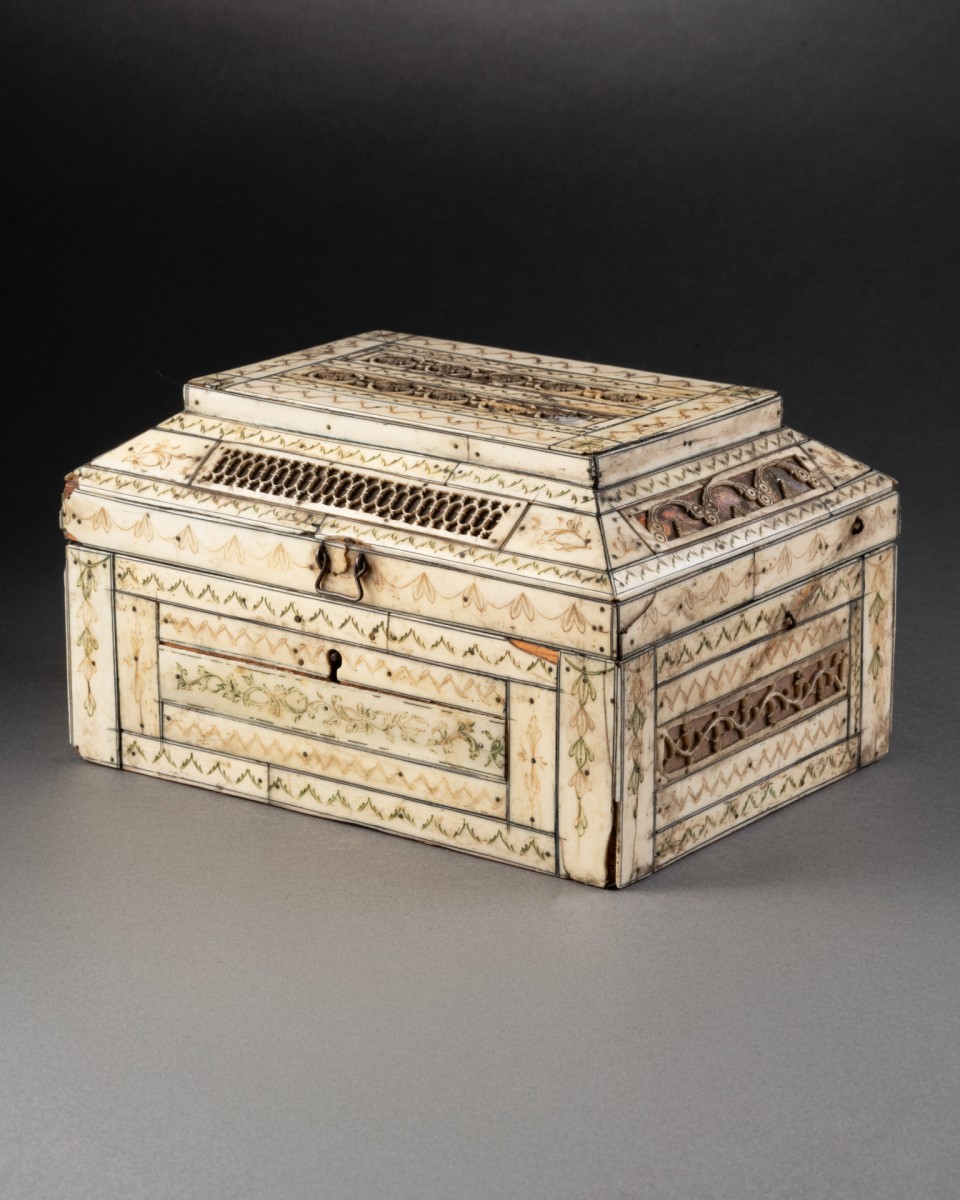
These three boxes are typical of the craftsmanship of Kholmogory, a town in north-western Russia. For centuries, the craftsmen of Kholmogory and its neighbouring hamlets have been renowned for their skill in carving small objects from bone. This craft was encouraged and supported from the mid-17th century onwards by Alexei I (1629–1676) and subsequently by Peter I of Russia (1672–1725), leading to its spread throughout Russia, particularly in Saint Petersburg. Most of the commissions consisted of boxes recognisable, as is the case here, by their geometric and plant motifs, their regular patterns and the alternation between the natural colour of the bone and green dye.
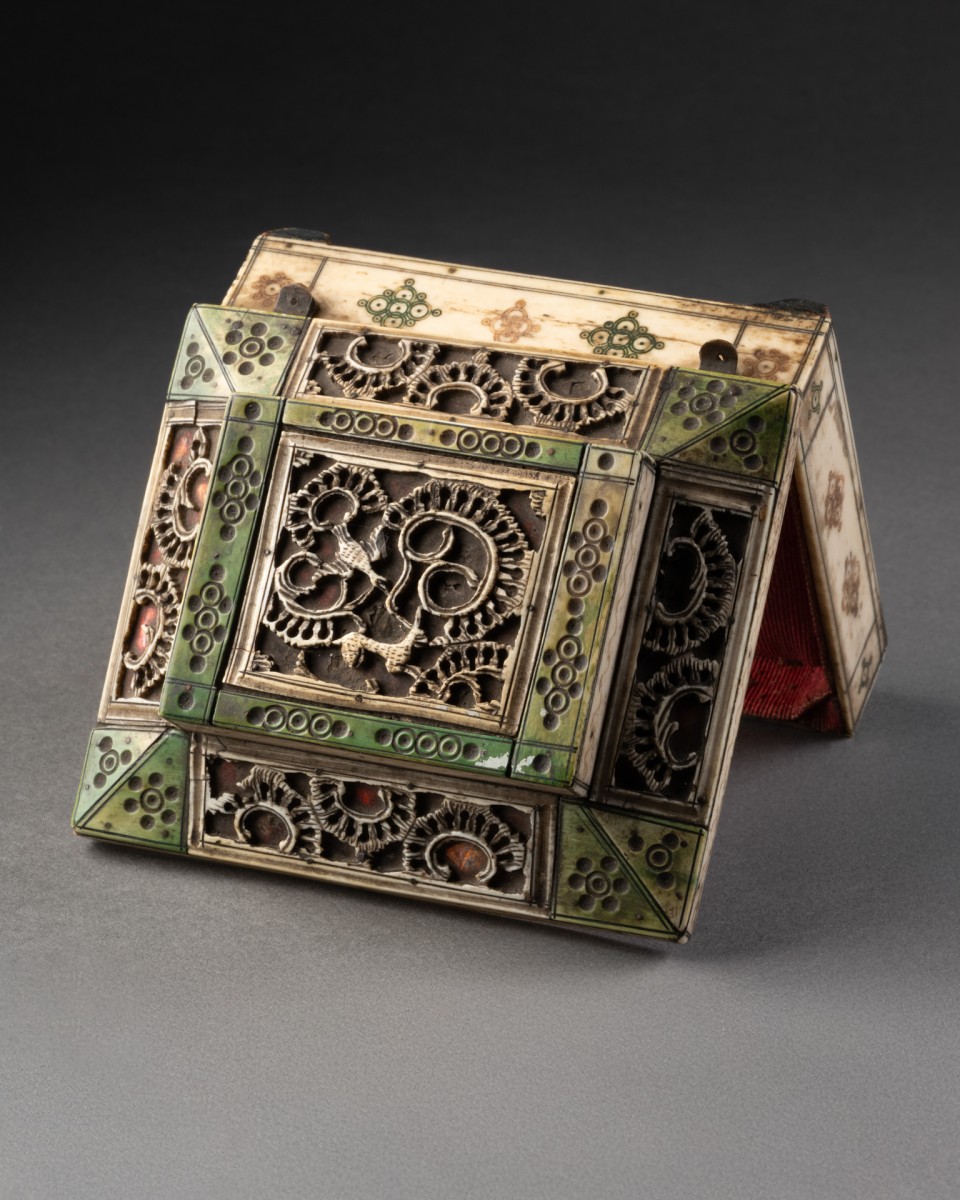
Our three caskets are perfect examples of this. Two of them feature this famous bone marquetry, incised with circular geometric motifs known as ‘eye ornaments’, which are highlighted with brown, black or dark brown ink. The marquetry alternates between the natural colour of the bone and bone dyed green. The lid of one of the boxes is partly made up of openwork bone plaques carved with plant motifs, resting on a sheet of metal. The central motif on the lid, which is also openwork, depicts a bird and a rabbit. A similar box is now held at the Hermitage Museum in Saint Petersburg (Inv. ???-1172) ; small in size, it also features a central motif depicting, once again, a hare amidst stylised plant motifs. As for the ‘eye-shaped ornaments’ and the green-stained plaques, these are also found on a box held at the Hermitage (Inv. ???-842). The larger box features bone marquetry incised with plant motifs, which are highlighted with brown or green ink. The lid is also covered with bone marquetry; some of the bone plaques are openwork and carved with plant or geometric motifs, set against a sheet of metal. A similar box is now housed at the Khanty-Mansiysk State Art Museum in Siberia.
Box with rabbit motif: H. 5; W. 11.5; D. 9.5 cm
Small box with “eye ornaments”: H. 5.7; W. 13.5; D. 8.5 cm
Large box with plant motifs: H. 10.5; W. 18.5; D. 13.5 cm