Offered by Galerie Latham
REQUEST INFORMATION
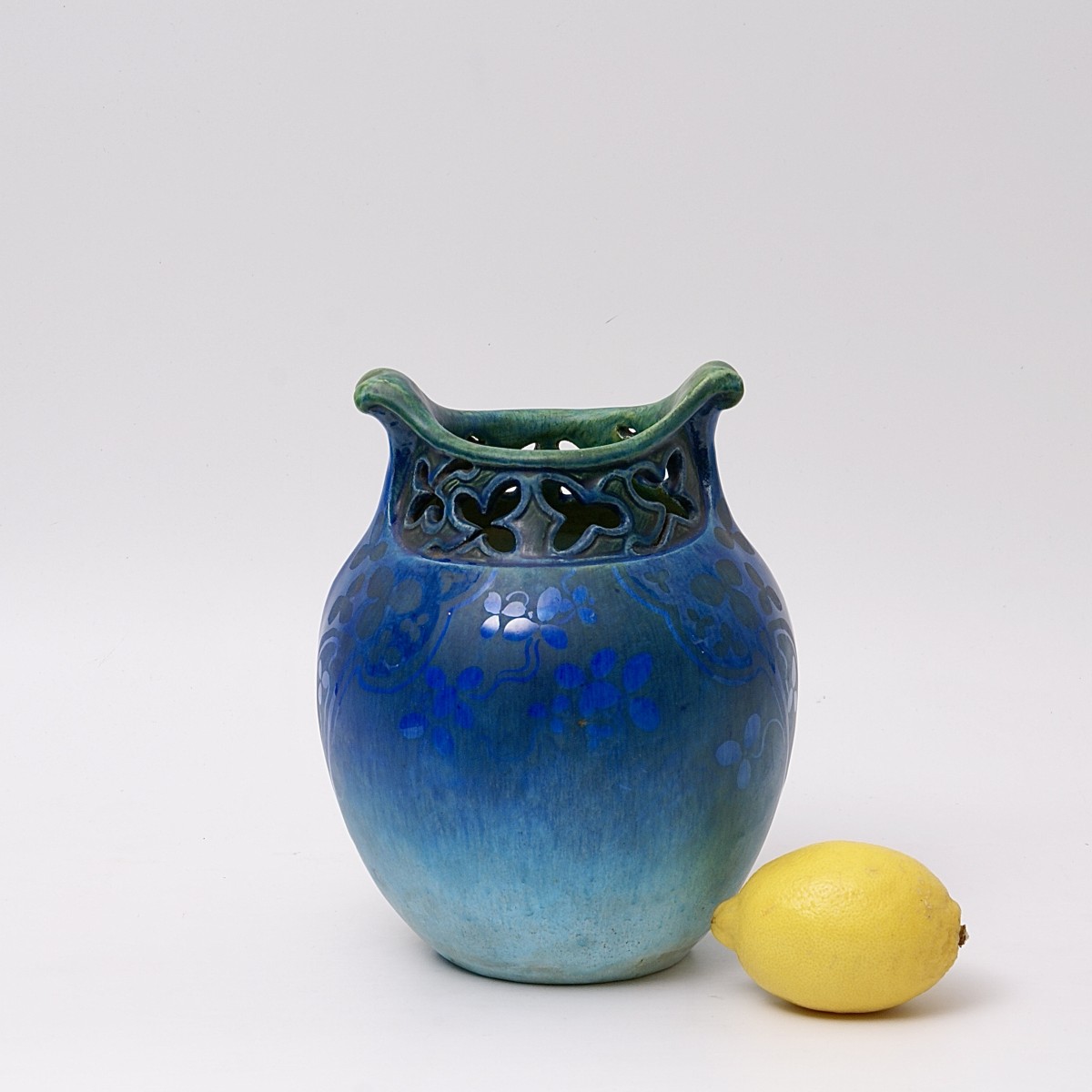
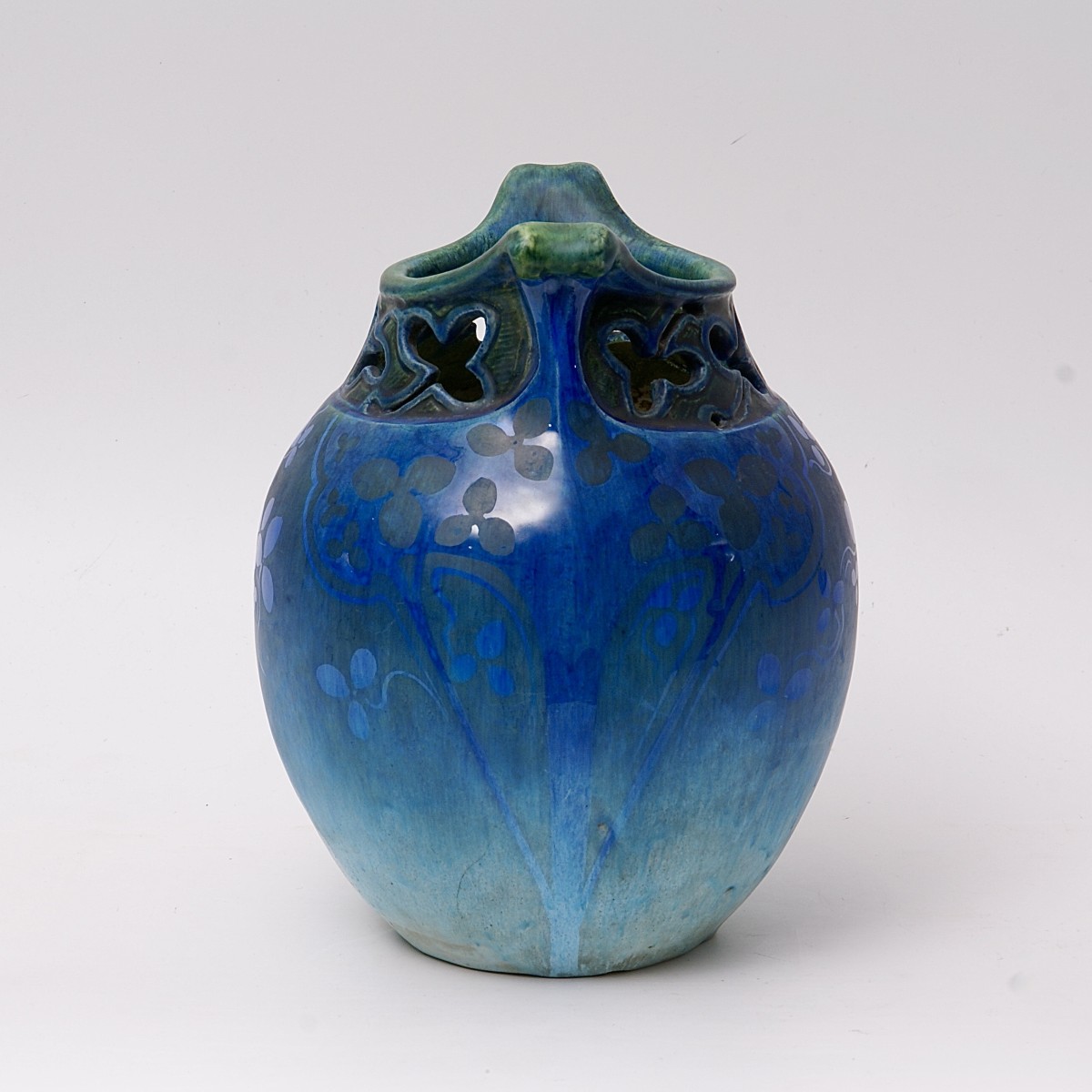

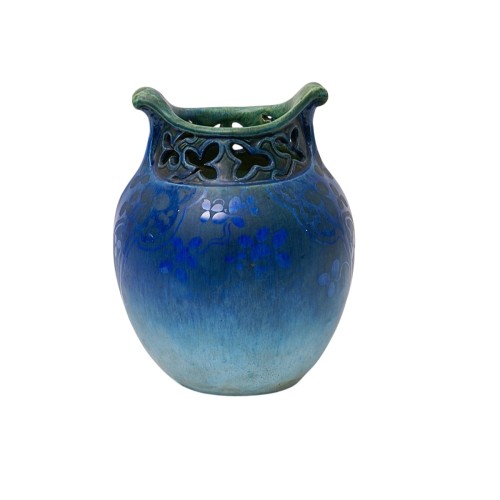
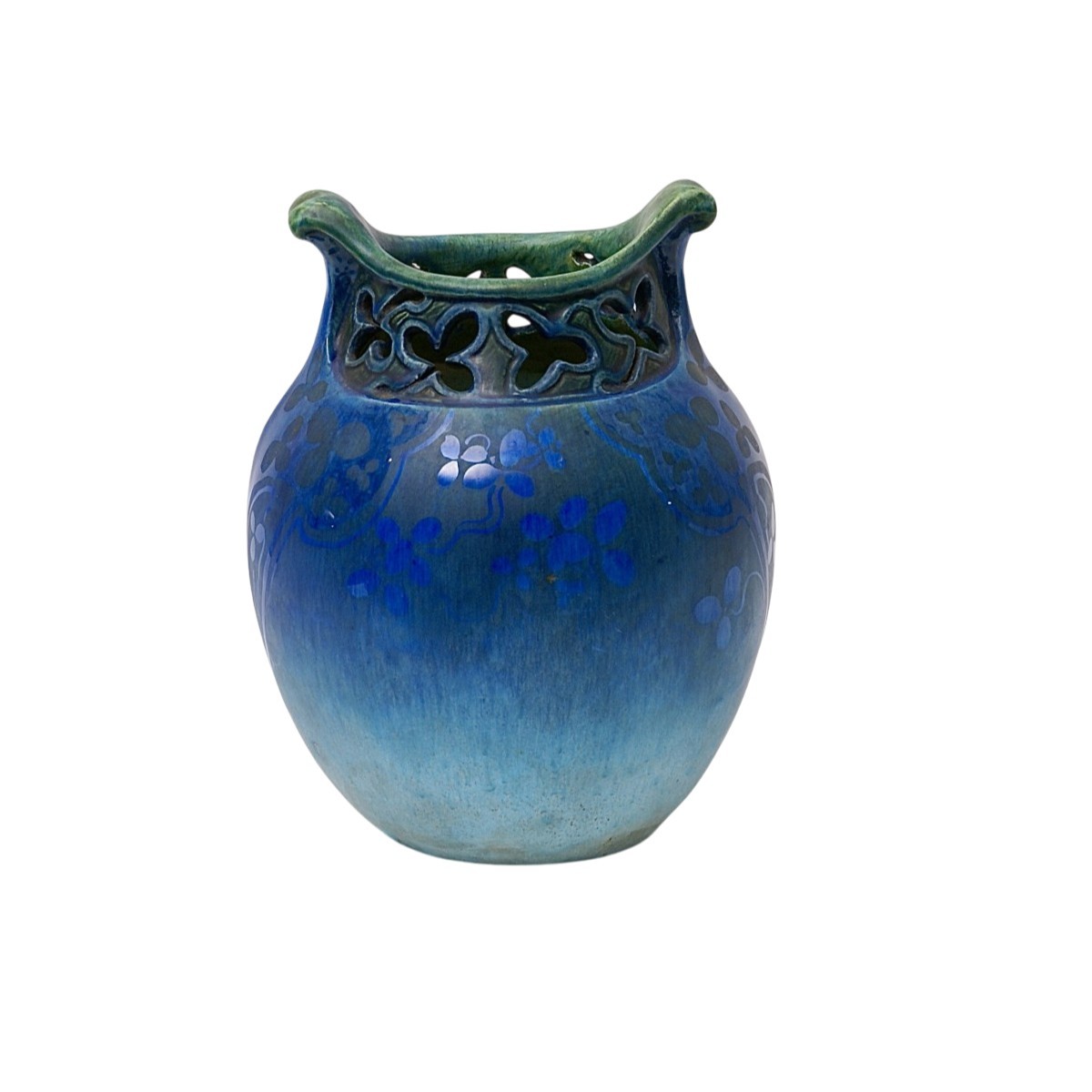
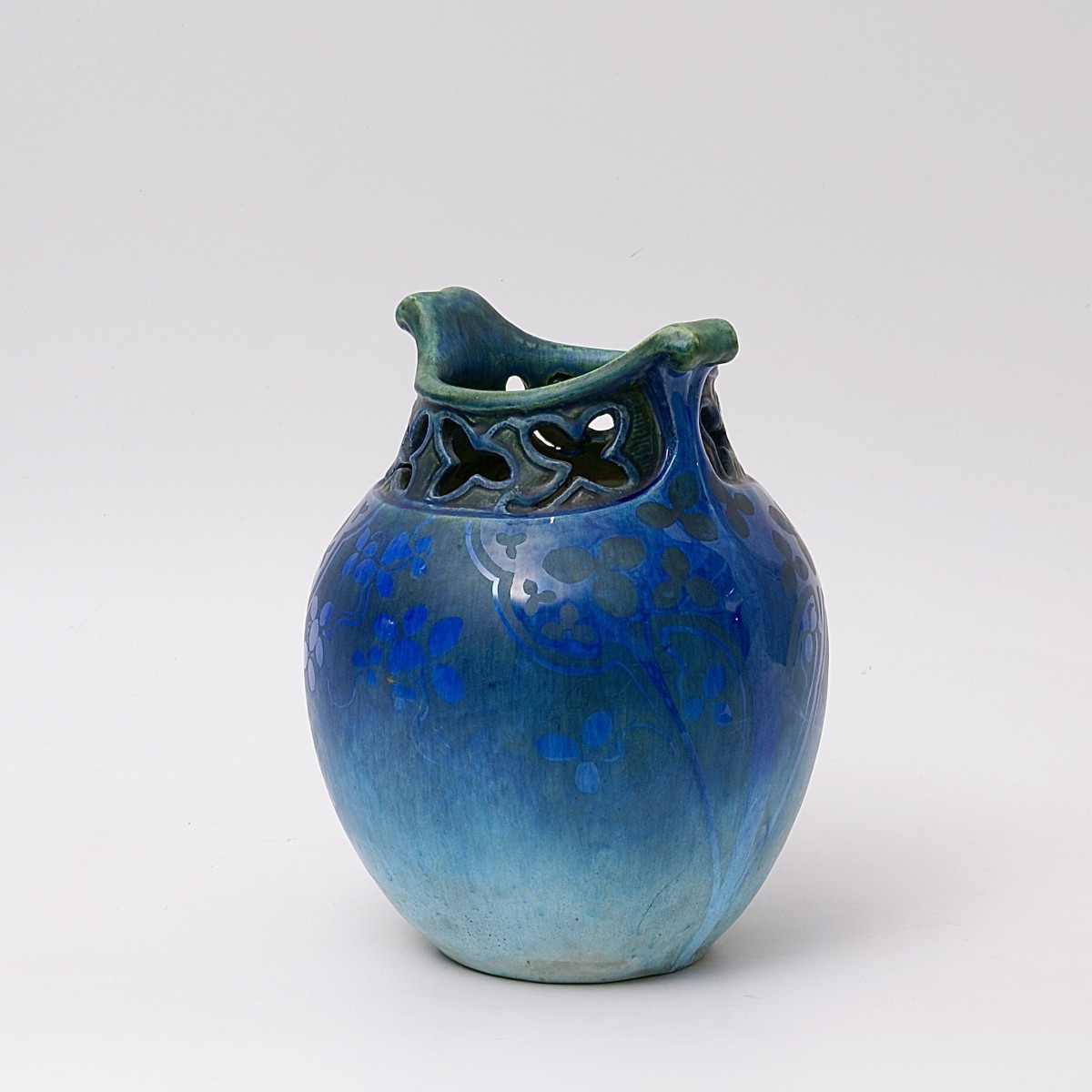
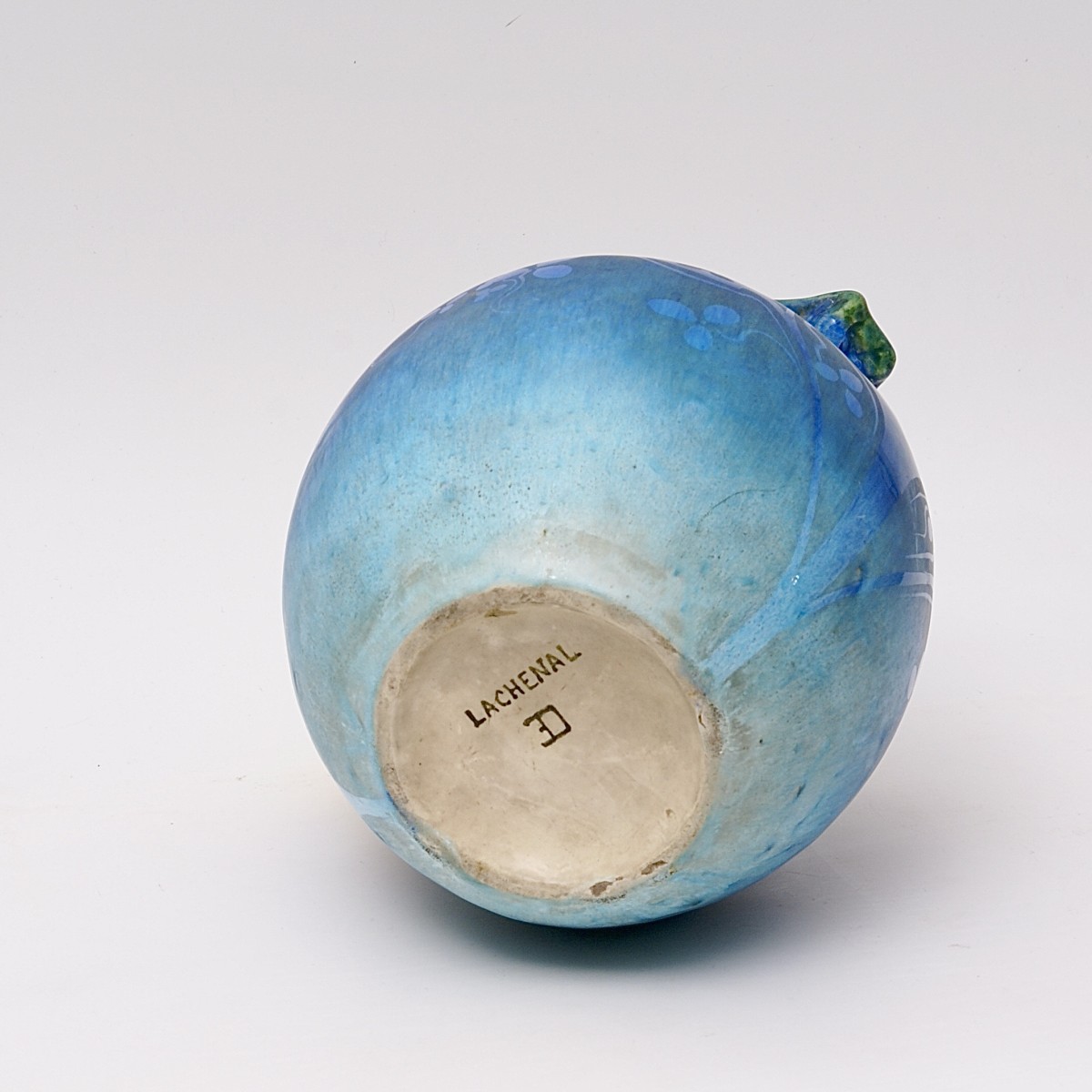
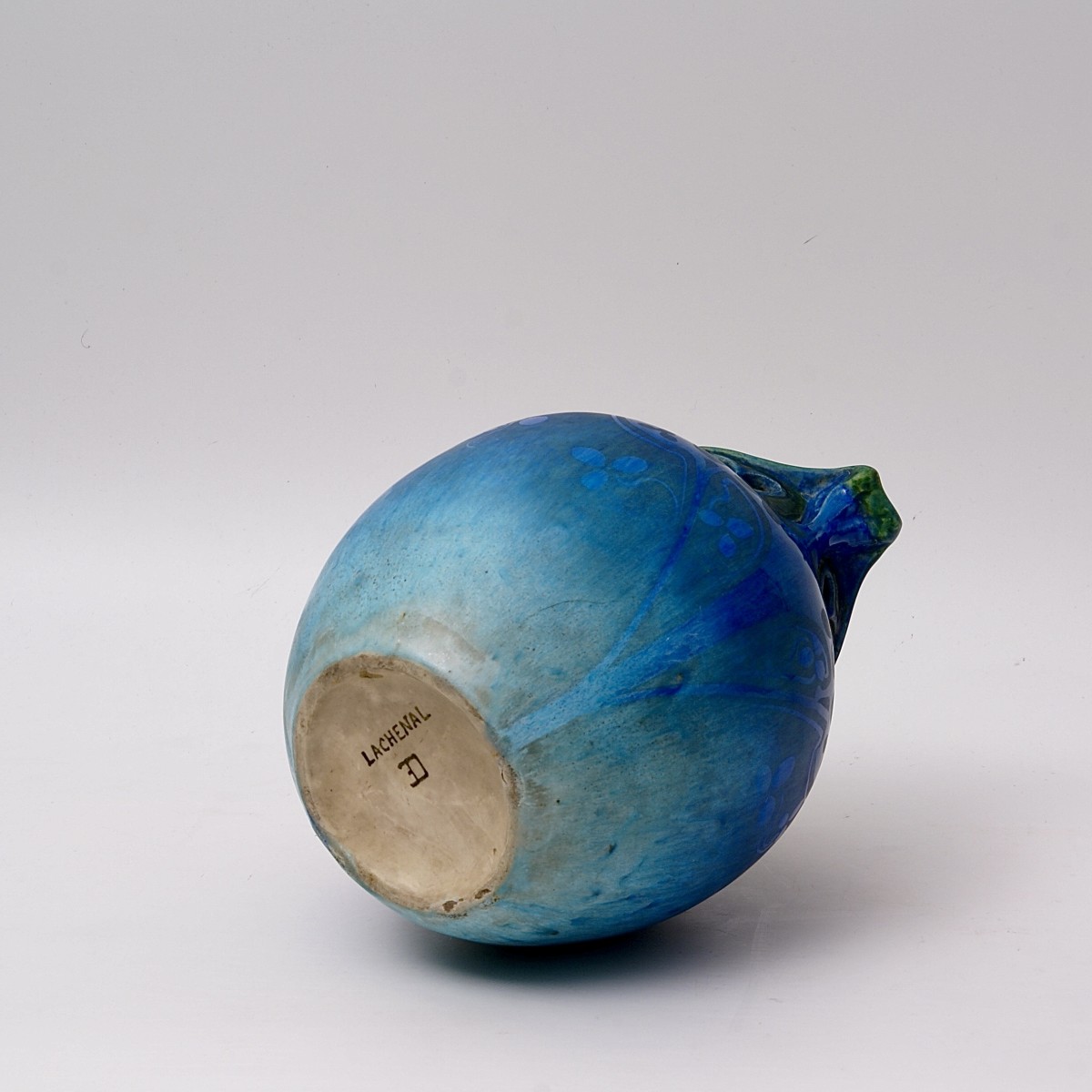
Edmond Lachenal (1855–1948) and Emile Decœur (1876–1953). Vase with an openwork neck, circa 1900–1902, glazed stoneware with a gradient glaze (shaded effect) ranging from a luminous blue to a deep, matt blue. The neck is cut out and decorated with a motif of shamrocks or stylised leaves characteristic of Art Nouveau’s stylised flora, with a matching decoration on the upper part of the vase’s body, in glossy enamelled reserve against a matt enamel background. Marked ‘LACHENAL’ and the monogram ‘DECŒUR’. H. 22 cm x Diam. 18 cm. Provenance: former collection of the Stern family, Geneva.
This exceptional decorative vase is the result of a prestigious collaboration between two leading independent ceramicists of the early 20th century, which took place at Edmond Lachenal’s workshops in Châtillon-sous-Bagneux (Hauts-de-Seine). Edmond Lachenal (1855–1948) was a former pupil and workshop manager of the great master ceramist Théodore Deck (1823–1891); he made a name for himself through his technical innovations in matt glazes and glazes with infinite nuances, heavily influenced by Japonism. The young Émile Decœur (1876–1953) began his apprenticeship with Lachenal at a very early age (at 14, as he was an orphan); he soon became his principal collaborator, before going on to become one of the leading figures in modern independent ceramics.
This is a rare piece bearing the joint signatures of Lachenal and Decœur, and can therefore be dated to around 1900–1902. Its style marvellously combines Lachenal’s floral sensibility—typically Art Nouveau—with the rigour of Decœur’s stoneware forms, foreshadowing his future success.
Immersed in the talent of his master Lachenal, Decœur studied the techniques of earthenware and stoneware under him, learnt chemistry and drawing, and studied the history and analysis of ancient ceramics in libraries. Monograph: ‘Emile Decœur’ (Throughout these years of apprenticeship (from 1890 to 1902), he was in fact Edmond Lachenal’s only apprentice. His talent and diligence were quickly recognised by his master, who soon allowed him to work alongside him, designing the shapes and decorations for a number of pieces bearing Lachenal’s usual signature, to which was added the monogram of the young Decœur. Around 1895, Lachenal began working with stoneware, and introduced Decœur to the technique. The finest vases co-signed by Lachenal and Decœur date from the years 1901–1904. It is one of these that I am offering for sale today.
Most pieces from this period make use of flamed effects, with a particular preference for shades of blue and turquoise green. This tableware collection makes use of variations in copper glazes, typical of the emergence of the Art Nouveau style, which came into being in the 1890s. This interplay of fire on the material, creating a flamed effect, became the defining trend in Lachenal and Decœur’s productions around 1900. It was also the direction Decœur would adopt from the very beginning of his solo career. Following a collaboration (between 1903 and 1904) with the young Fernand Rumèbe (1875–1952) – another remarkable French ceramist of the period – which was more a matter of sharing a workshop and kiln, Émile Decœur finally set up on his own. His work gradually moved away from naturalistic ornamentation to return to fundamental forms, seeking ever greater simplicity and abstraction: he abandoned decoration in favour of the purity of materials, inspired by Chinese forms but reinvented through the layering of glazes.
(Brief bibliography: Jean-Pierre Camard, catalogue of the exhibition *L’Art de la poterie en France de Rodin à Dufy*, Sèvres, Musée national de Céramique, 1971, in *Cahiers de la céramique, du verre et des arts du feu*, no. 50, 1971, p. 27. / Michel Giraud and Fabienne Fravalo, *Émile Decœur (1876–1953)*, monograph, 208 pages, Galerie Michel Giraud Éditions, 2008).