Offered by Galerie Lamy Chabolle
REQUEST INFORMATION

Decorative art from 18th to 20th century
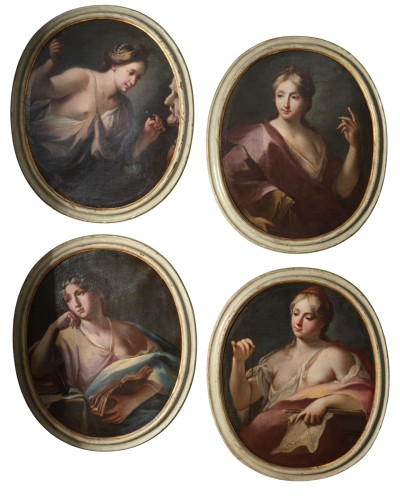
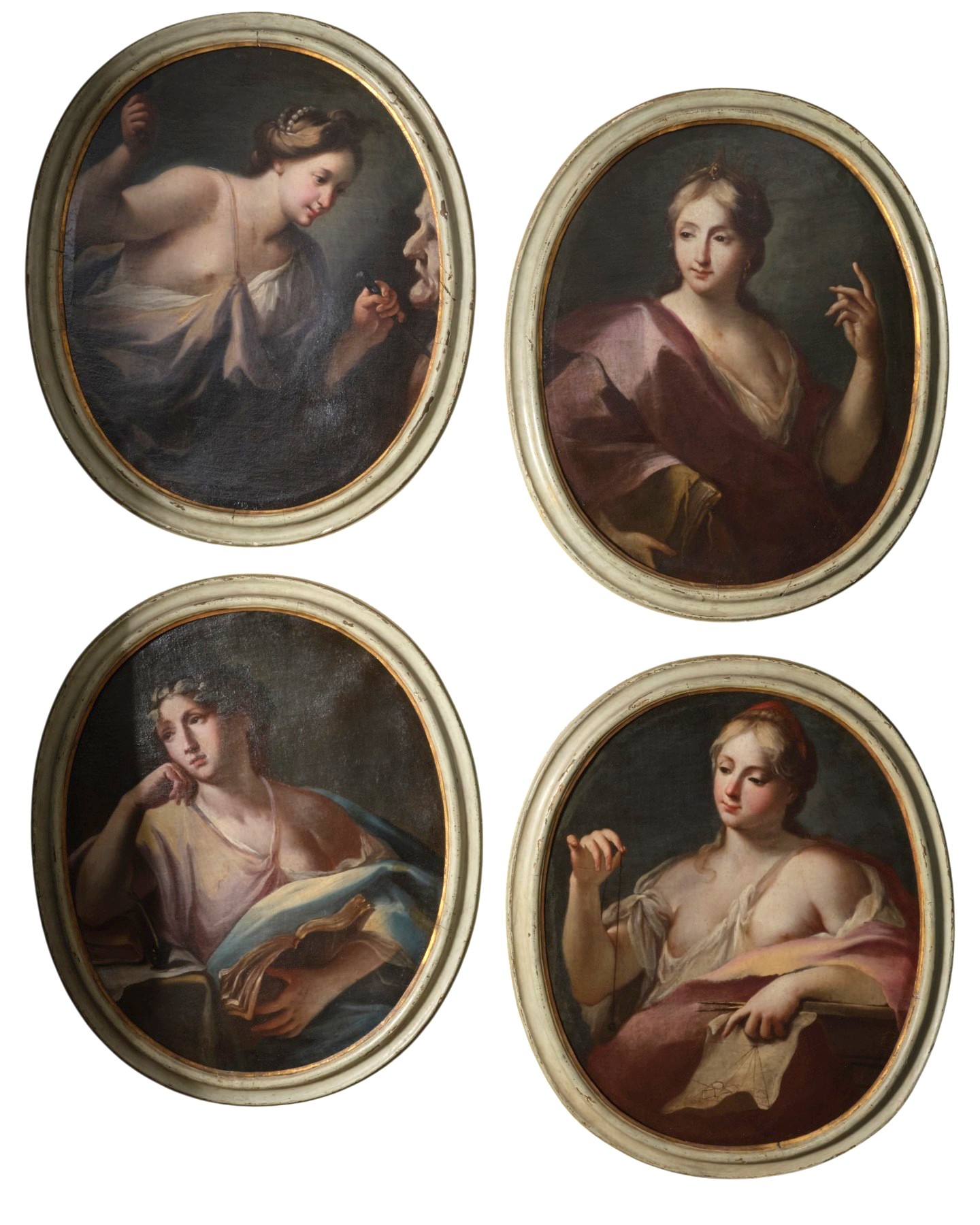
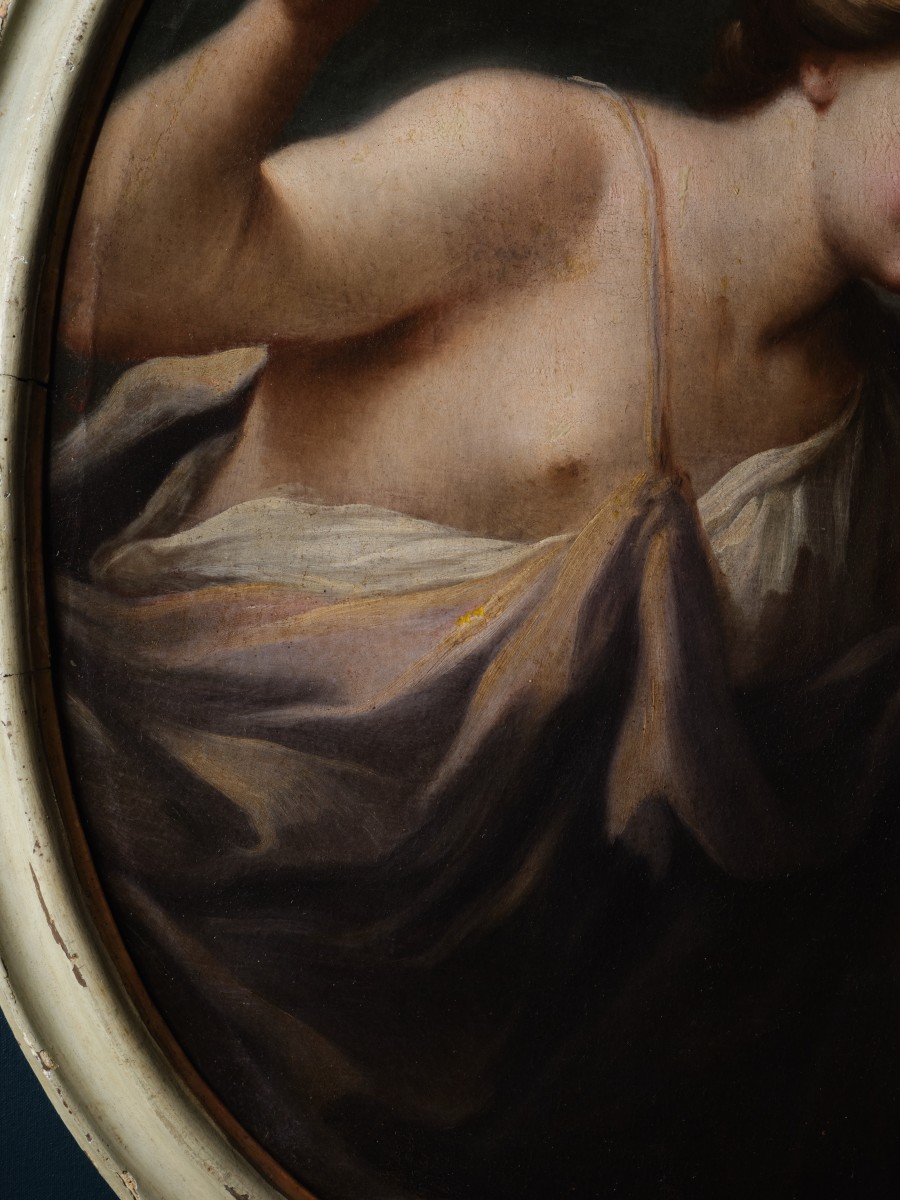
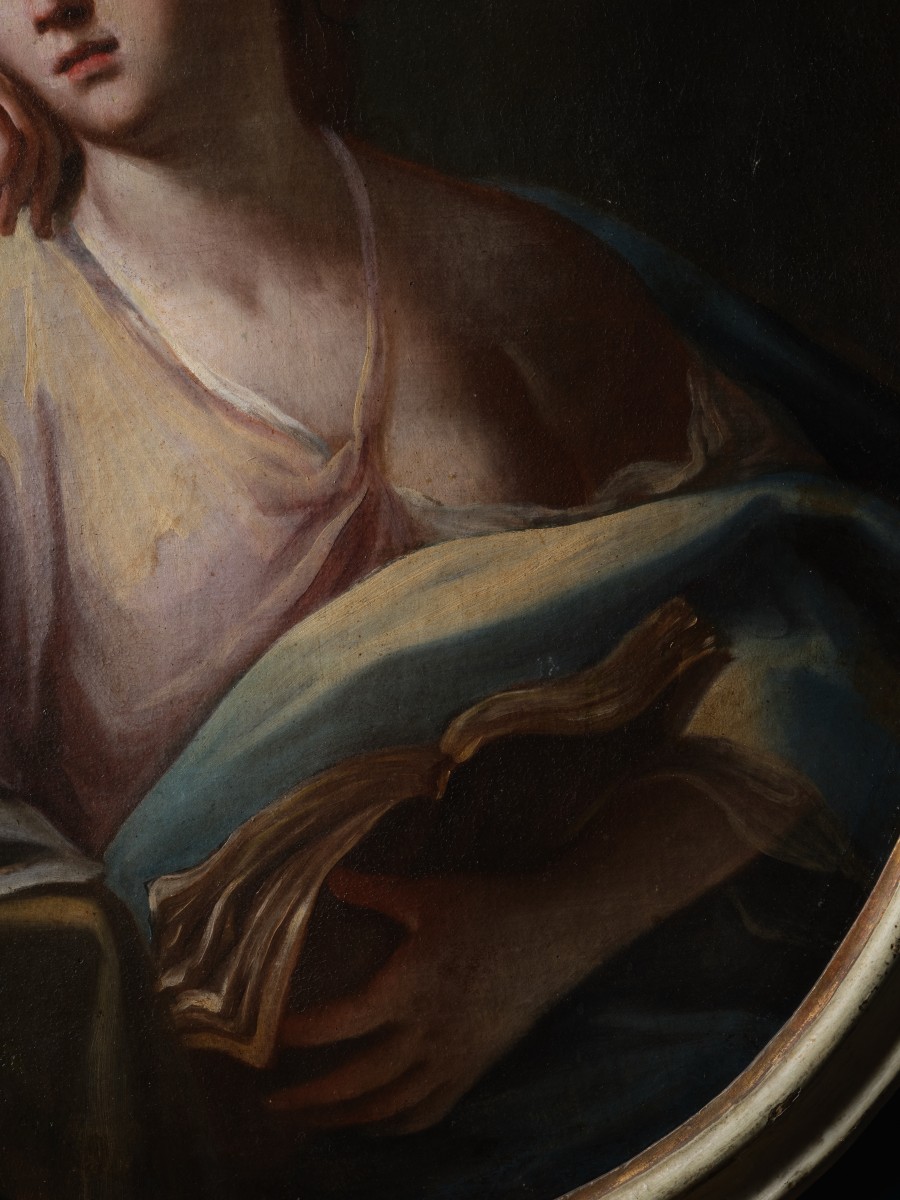
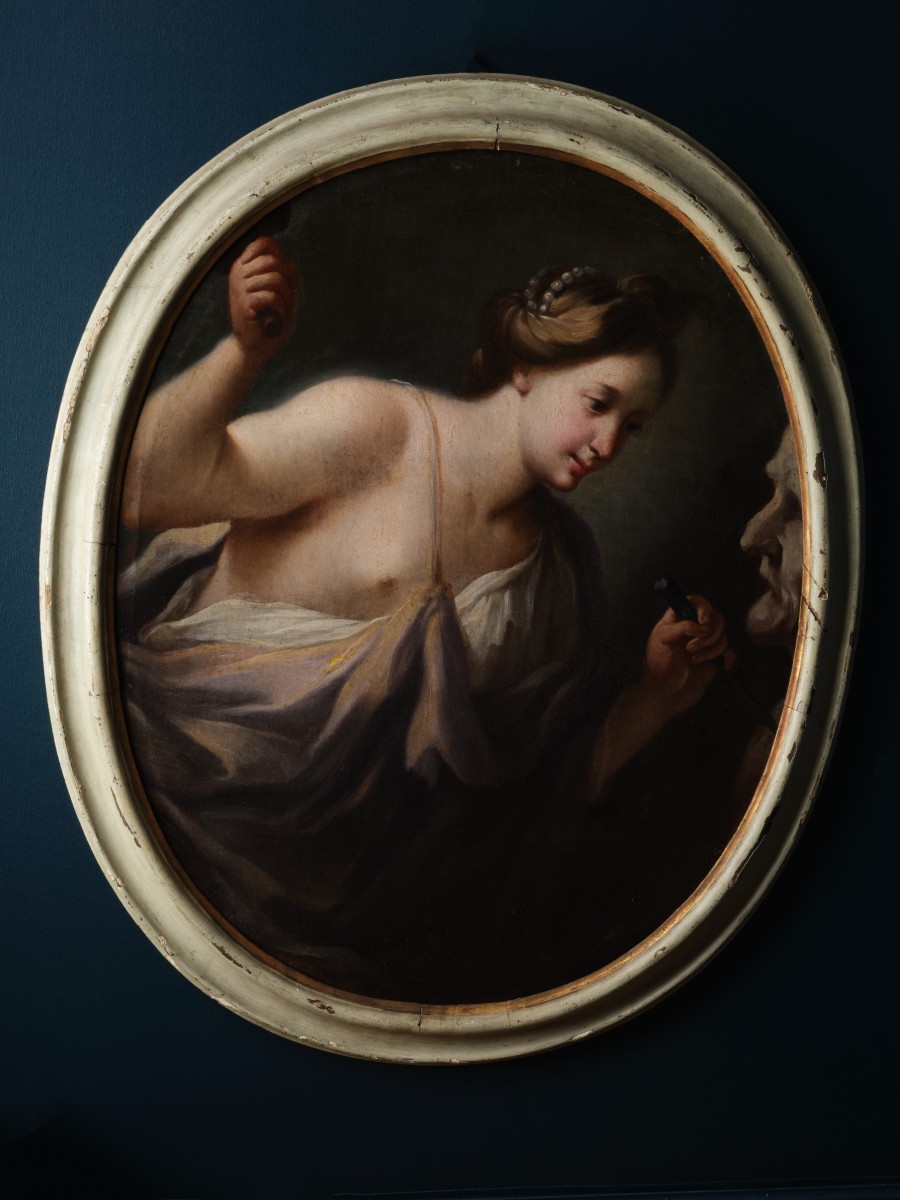
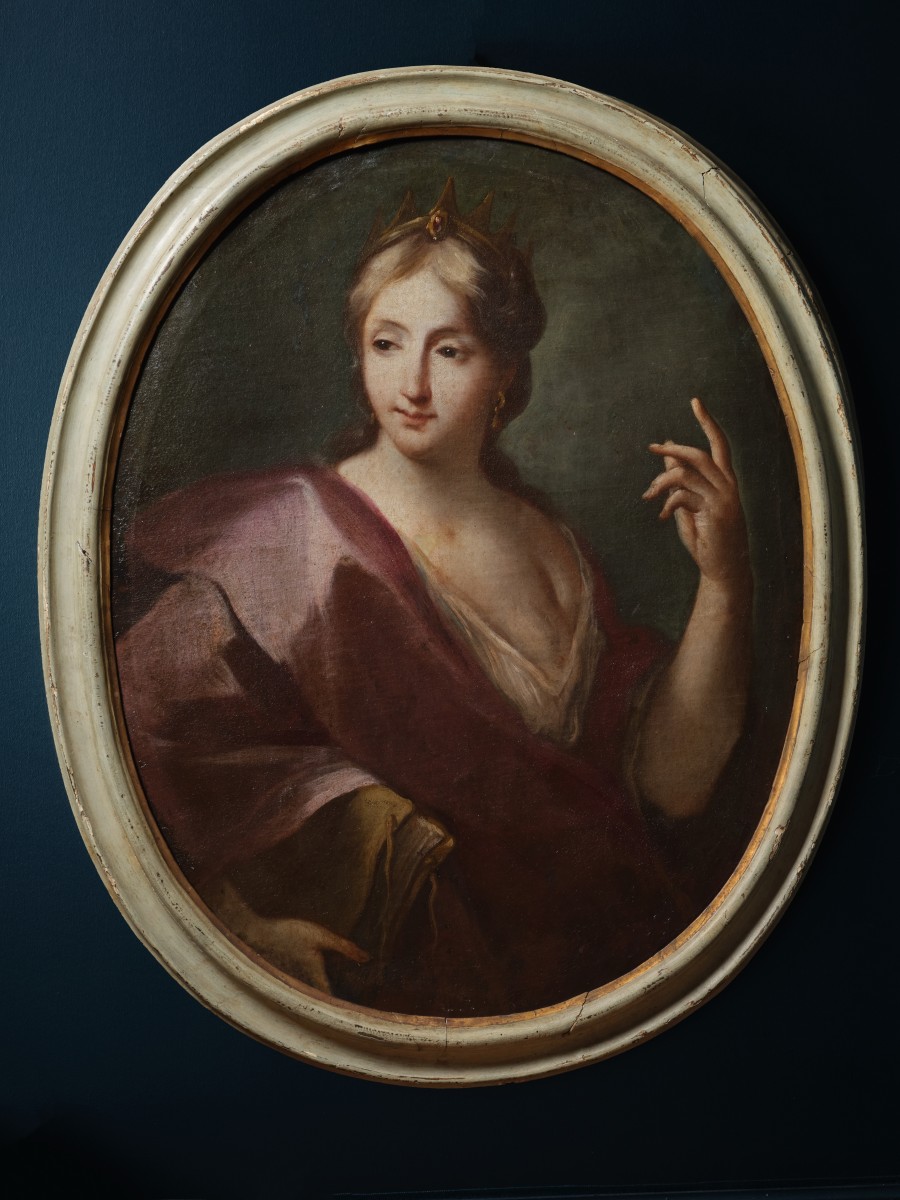
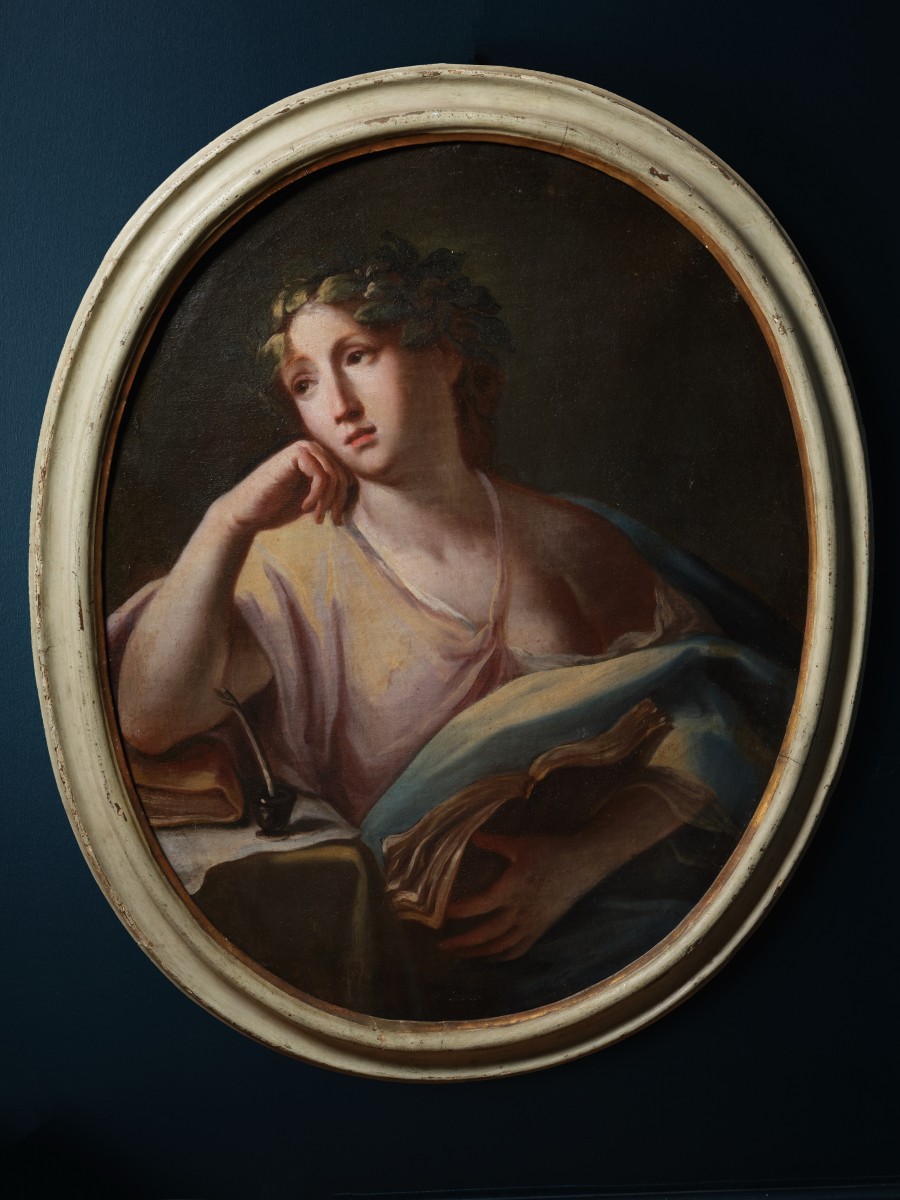
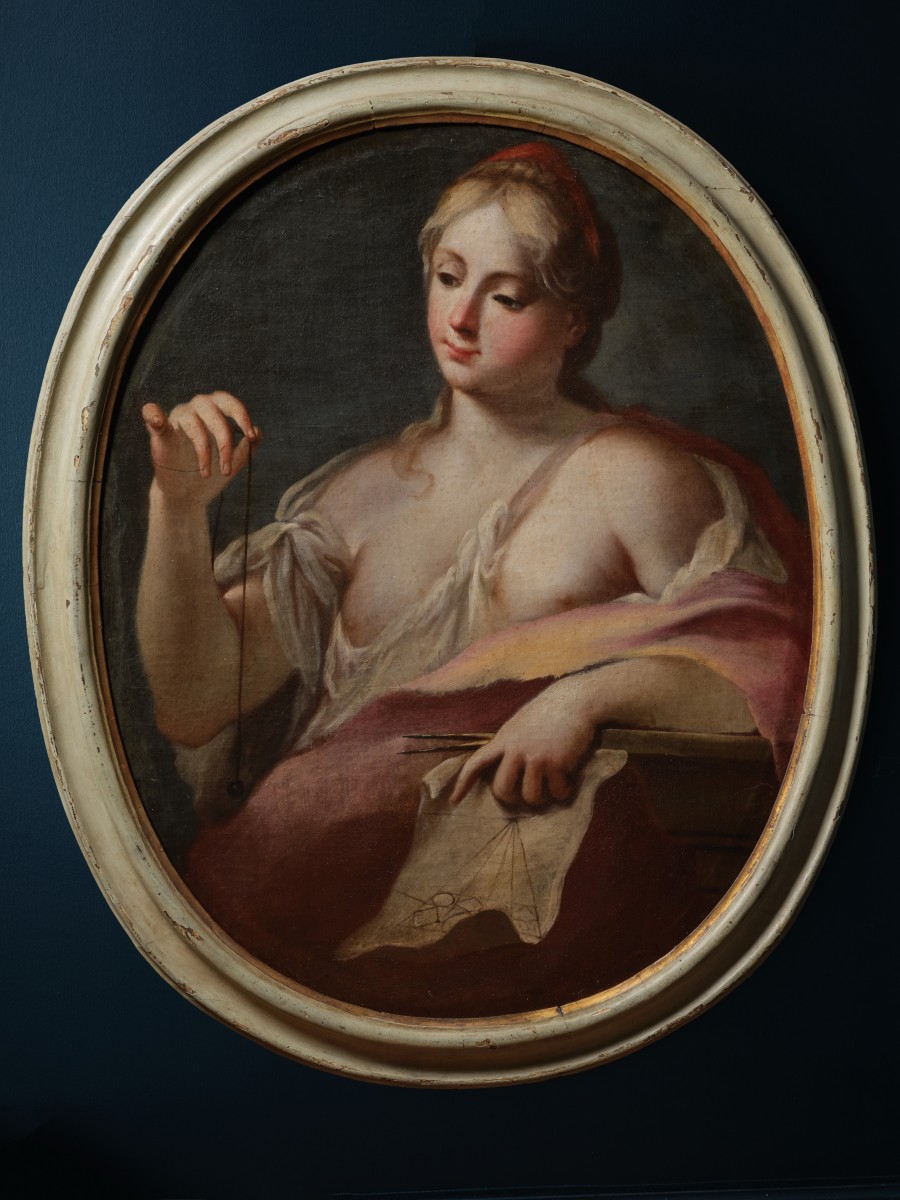
Allegories of Architecture, Sculpture, History and Philosophy, attributed to the circle of Marcantonio Franceschini and Carlo Cignani
Oil on canvas
Bologna, late 17th century
96 × 76 cm without accessories (37.8 × 29.9 in.)
112 × 90 cm with accessories (44.1 × 35.4 in.)
These four allegories, representing Architecture and Sculpture, History and Philosophy, have traditionally been given to Lorenzo Pasinelli (1629–1700), an attribution that cannot be verified but already pointed towards Bologna. Marcantonio Franceschini (1648–1729) was also active there: a painter of a ‘softened neo-Correggesque Carraccism’, he was fond of allegorical paintings treated as medallions. The Museo Davia Bargellini in Bologna thus holds two medallions attributed to him, a Venus and Cupid and a Liberality. Franceschini also executed, ca. 1691, two allegorical medallions, Justice and Prudence, for his patron Johann Adam Andreas I of Liechtenstein.
A certain naivety in the modelling of the hands can be detected in the Liechtenstein Prudence. It recurs in a Sibyl in the Nationalmuseum, Stockholm, attributed to Franceschini by Federico Zeri, together with a tendency, as in the Bologna Venus, to give his female figures, even the most graceful, strangely strong shoulders. These few idiosyncrasies, the recourse to the medallion format for allegorical subjects and the very type of these women, at once idealised and powerful, prompt one to relate the four allegories, if not to the circle of Franceschini, then at least to the succession of his master Carlo Cignani (1628–1719), a painter of a ‘delicate Correggism’ and one very close, moreover, to Pasinelli (Bologna, p. 146).
The four large medallions certainly formed part of a large-scale Bolognese decorative scheme of the late Seicento. The cleaning of the canvases and of their frames, which are undoubtedly original, revealed modesty overpaint on the breasts of Architecture and Sculpture, which was accordingly removed.
Literature
See Maestri della pittura del Seicento Emiliano, exh. cat., Bologna, 1959 and The Age of Correggio and the Carracci. Emilian Painting of the Sixteenth and Seventeenth Centuries, exh. cat., Washington, 1986.