Offered by Galerie Thierry Matranga
REQUEST INFORMATION

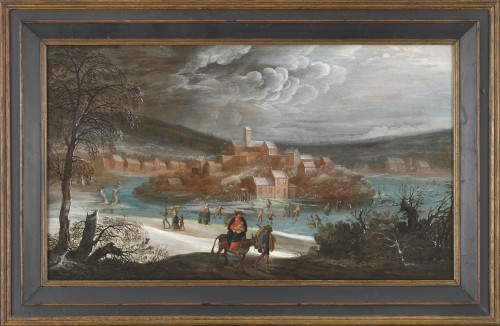
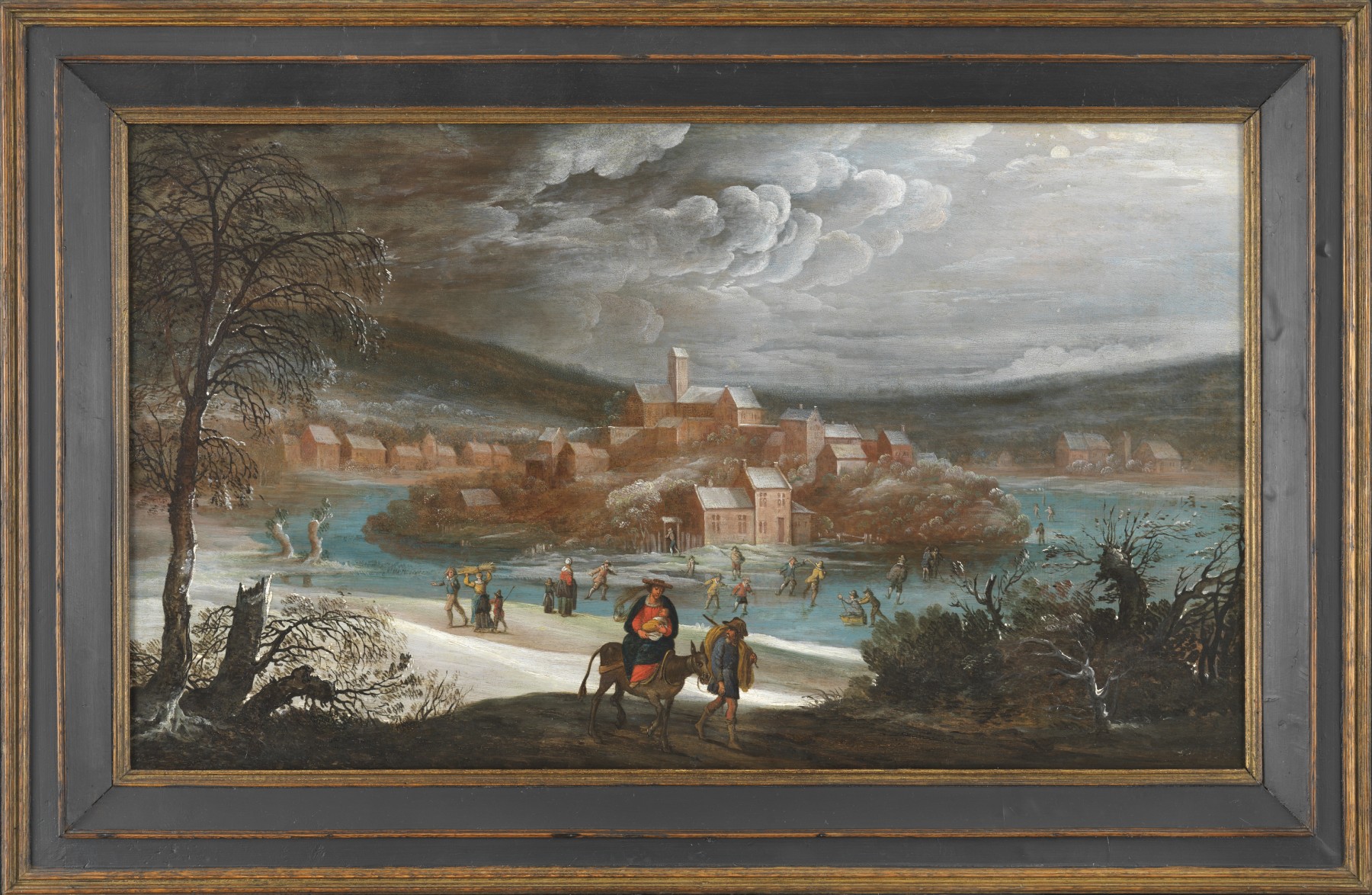
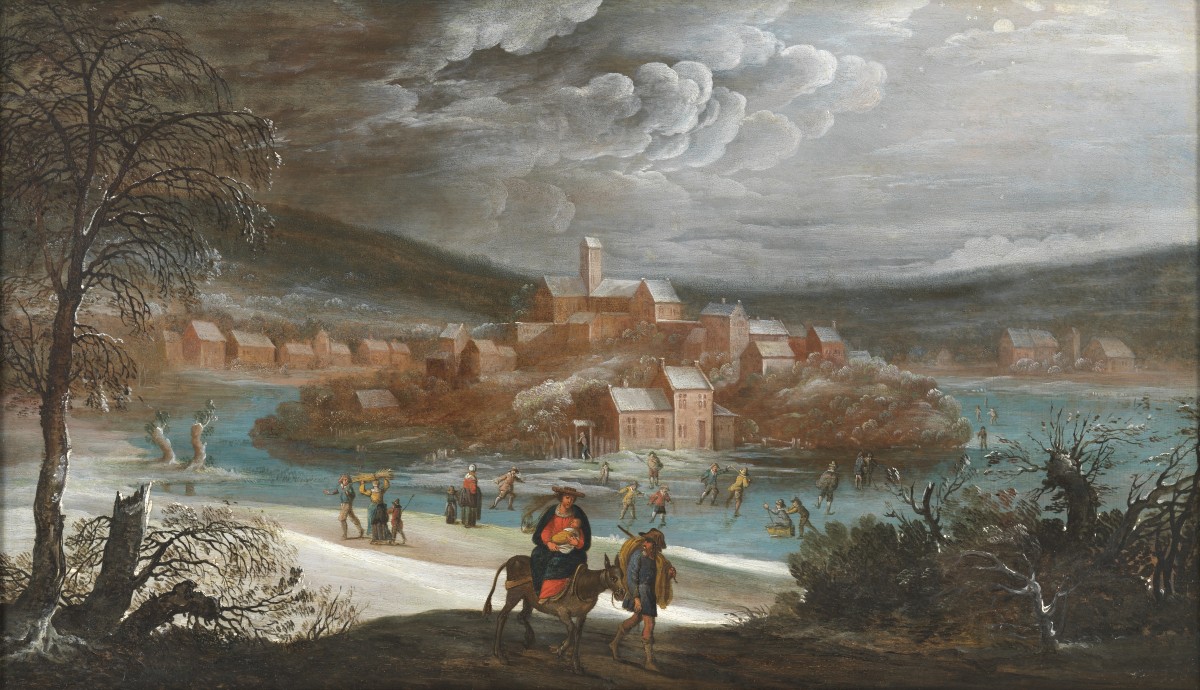
Oil on panel. Antwerp School, first third of the 17th century, attributed to Joos de Momper II.
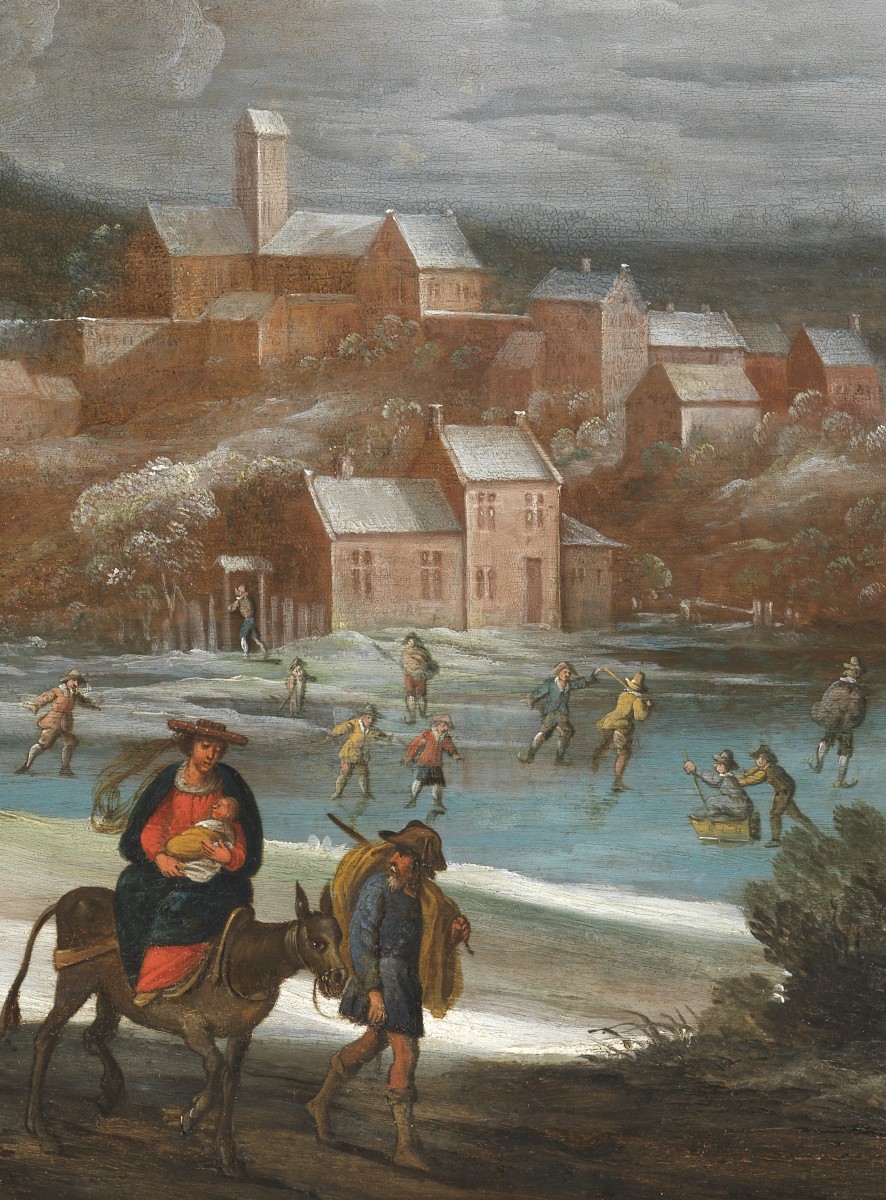
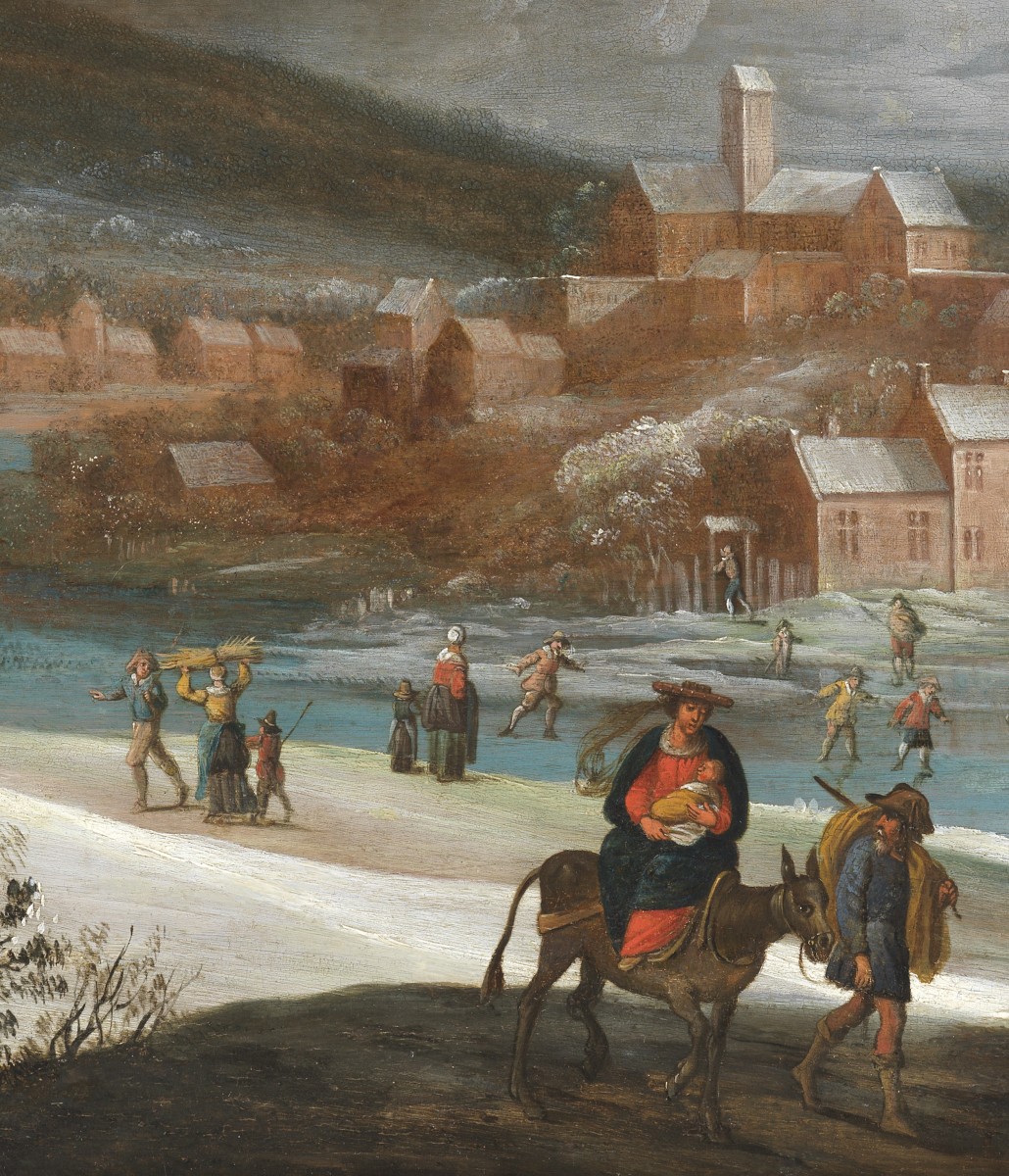
In a vast, dreamlike snow-covered landscape, the Holy Family discreetly continues its journey, almost absorbed by the immensity of the setting. The vibrant luminosity of Mary's vermilion dress, like a beacon, draws the viewer's attention to the biblical episode. Yet, faithful to the Flemish landscape tradition of the early 17th century, the sacred subject is no longer the sole focus of contemplation; it becomes a pretext for depicting a bustling world in which nature and human activities occupy the foreground.
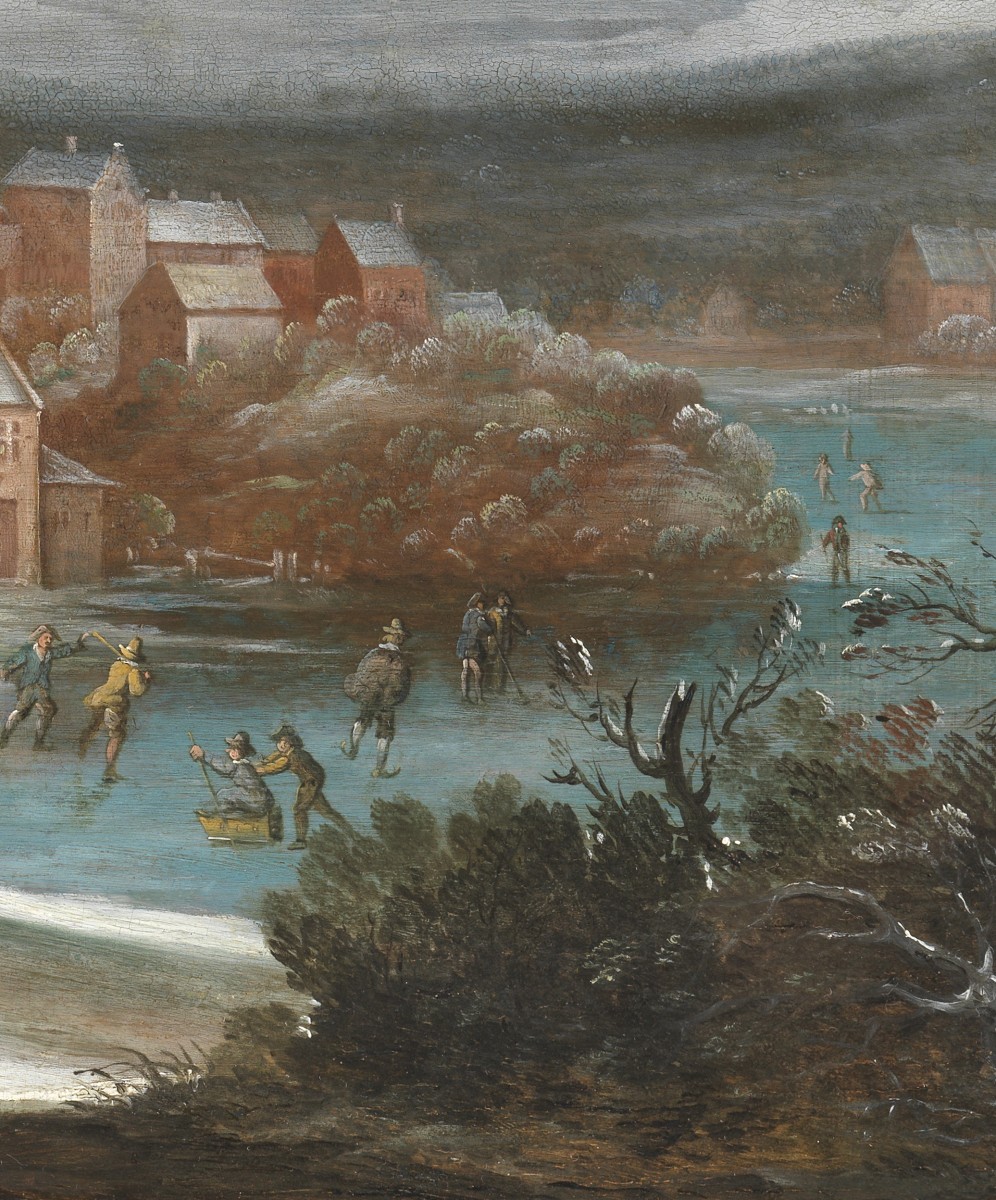
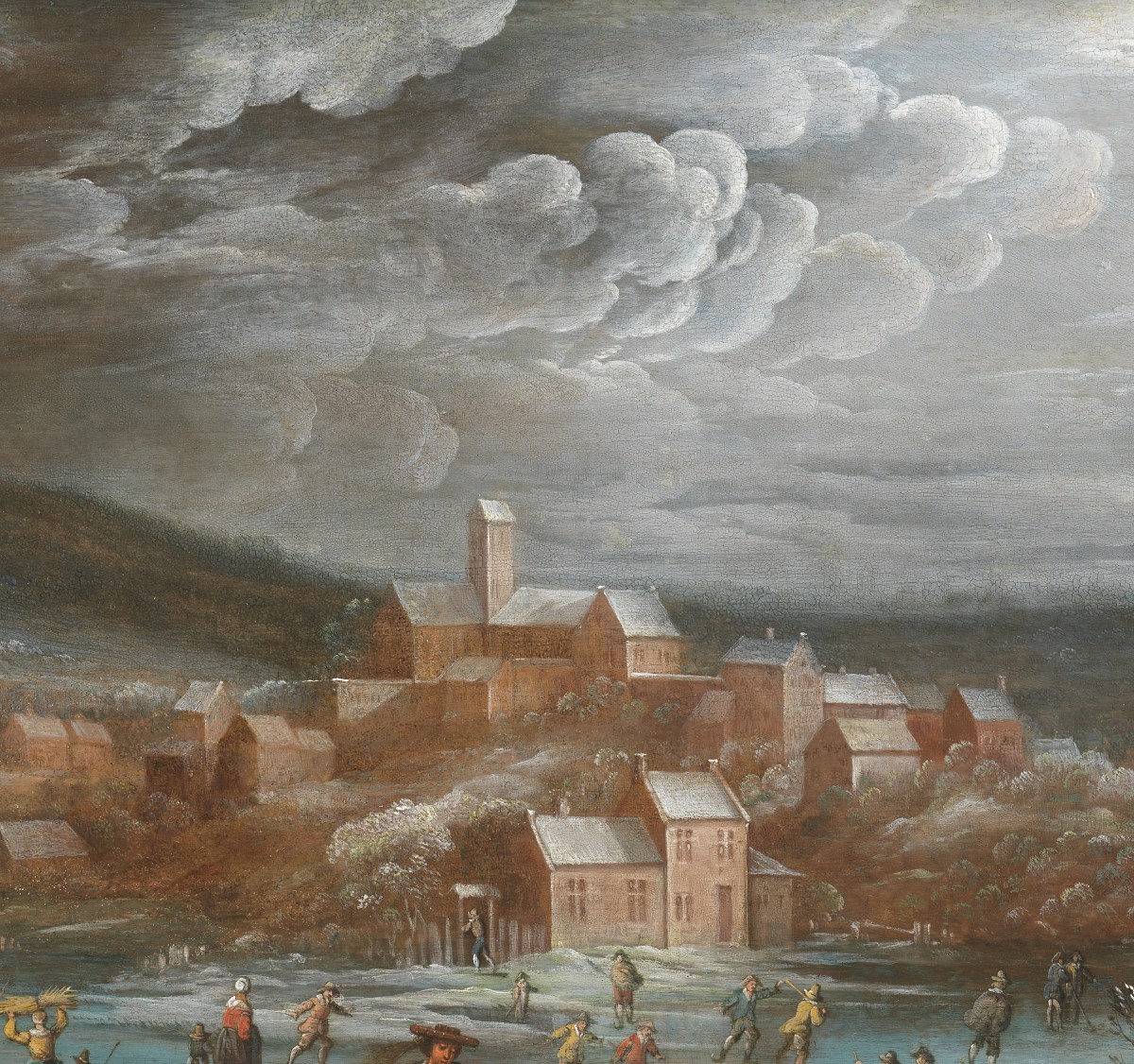
Beneath a sky filled with swirling, electrically charged clouds, the composition is organized around an unusual village whose center stands on an island surrounded by frozen waters. This setting, with its geography both plausible and imaginary, is characteristic of the landscapes invented by Northern European artists. Far from bringing the scene to a standstill, winter provides the backdrop for a multitude of picturesque episodes. On the frozen expanses, villagers enjoy the pleasures of the ice: some skate, while others play kolf, a popular game practiced in the former Low Countries. This picturesque activity introduces a subtle contrast between the silent gravity of the Flight into Egypt and the carefree nature of village life. As so often in Flemish art, the sacred and the everyday coexist naturally within the same space.
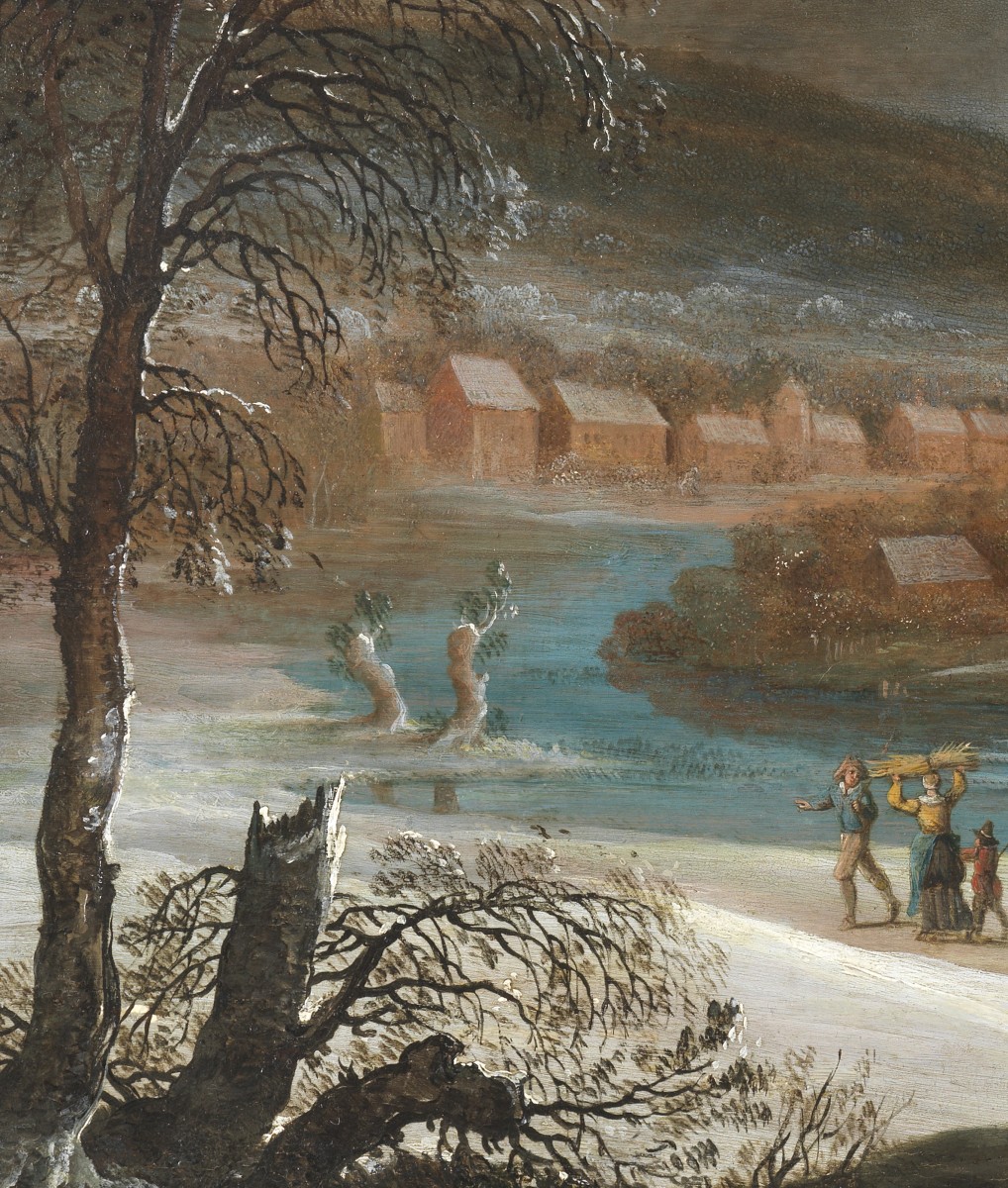
The attribution to Joos de Momper II is based on several consistent stylistic elements. The panoramic construction of the landscape, the importance given to the setting at the expense of the narrative subject, and the organization of space through successive winding paths all belong fully to the artistic language of the Antwerp master. The treatment of the trees also appears characteristic: their supple branches seem to bend under the weight of the snow, a motif found in several of his winter landscapes. These observations find close parallels in the Winter Landscape at the Statens Museum for Kunst in Copenhagen, in the winter landscapes preserved at the Israel Museum in Jerusalem and the Walters Art Museum in Baltimore, as well as in the Village in Winter at the Hamburger Kunsthalle.
Sold with invoice and expert certificate.
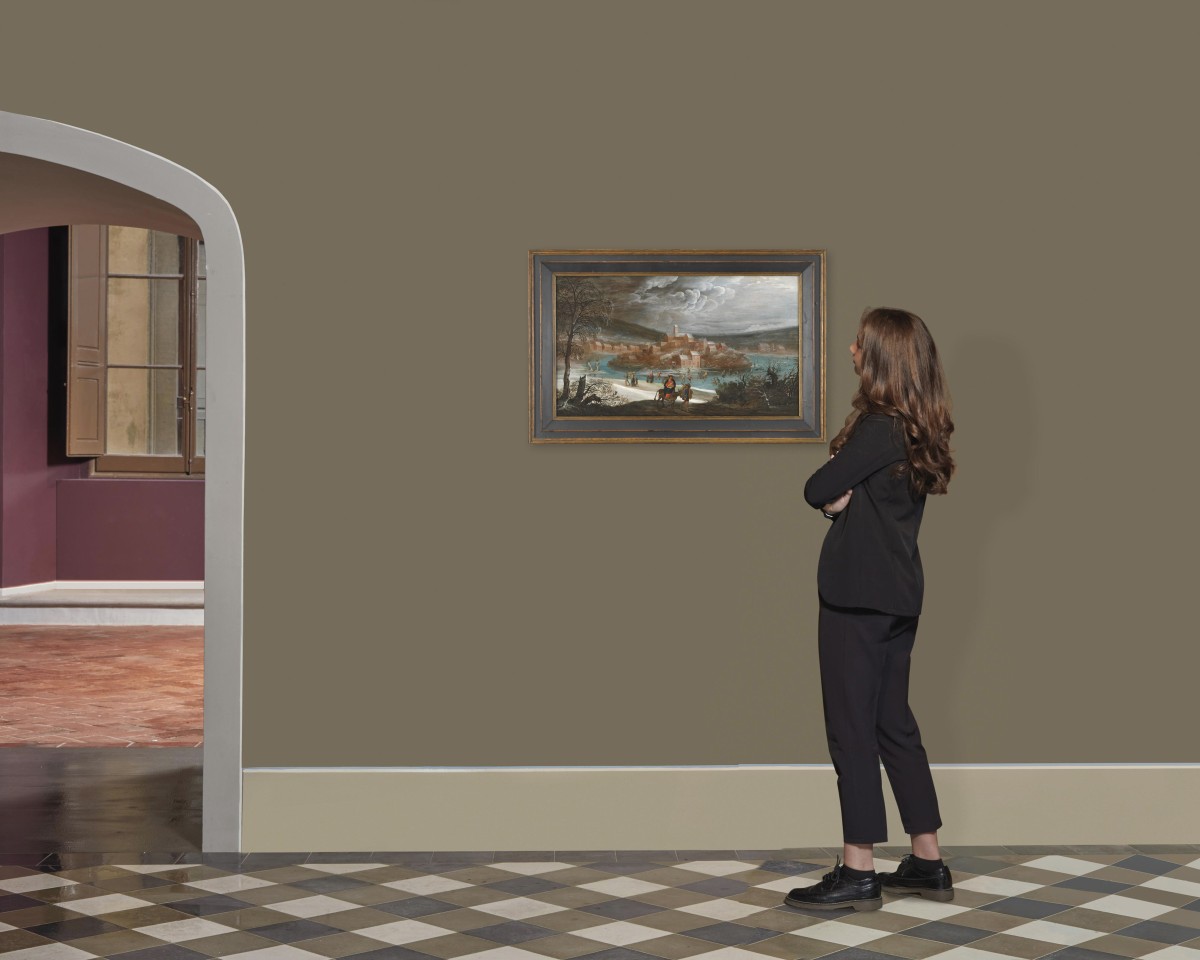
Our painting is presented in a frame veneered in ebonized and natural wood.
Dimensions: 42.5 × 73 cm for the panel – 56.5 × 86 cm with the frame.
Biography: Joos de Momper, also known as Joos II the Younger (Antwerp, 1564 – ibid., 1635), belonged to a dynasty of painters and art dealers. He learned painting from his father, Bartholomeus. Admitted as a master to the Guild of Saint Luke in Antwerp at the age of 17, he became its dean in 1611. With a new vision, both lyrical and powerful, his mountainous landscapes achieved considerable success and established him as a major painter of his time. A journey to Italy, probably between 1581 and 1590, is thought to have inspired his vision of vast mountainous panoramas. The number of paintings in the manner of Momper is such that it is generally accepted that his workshop employed a large number of apprentices. Joos de Momper signed very few works. His paintings are now exhibited in some of the world's greatest museums: four at the Rijksmuseum in Amsterdam, five at the Prado in Madrid, four at the Gemäldegalerie in Dresden, five at the Louvre Museum in Paris, as well as at the Hermitage Museum in Saint Petersburg, the Art Institute of Chicago, and the renowned Kunsthistorisches Museum in Vienna.
Bibliography:
ERTZ Klaus, Josse de Momper der Jüngere (1564–1635). Die Gemälde mit Kritischem Œuvrekatalog, Freren Lucas, 1986.
VAN SUCHTELEN Ariane, Holland Frozen in Time, The Dutch Winter Landscape in the Golden Age, Wanders Publishers and Printers, 2006.
MÜLLENMEISTER Kurt J., Meer und Land im Licht des 17. Jahrhunderts, Band 1, Carl Schünemann Verlag, 1973.
GIBSON Walter S., Mirror of the Earth: The World Landscape in Sixteenth-Century Flemish Painting, Princeton, Princeton University Press, 1989.
METZGER Alexis, L’hiver au Siècle d’Or, Art et Climat, Sorbonne Université Presses, 2019.