Offered by Antichità Castelbarco

Guido Reni (Bologna, 1575 – 1642) Workshop of
probably Giovanni Andrea Sirani (Bologna, 1610–1670)
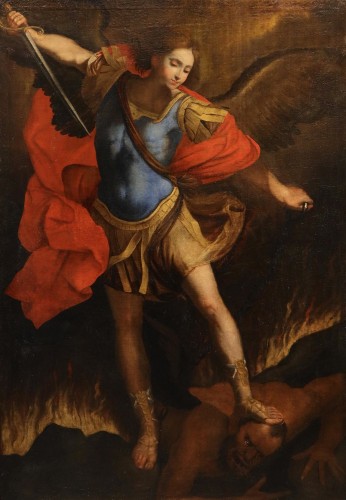
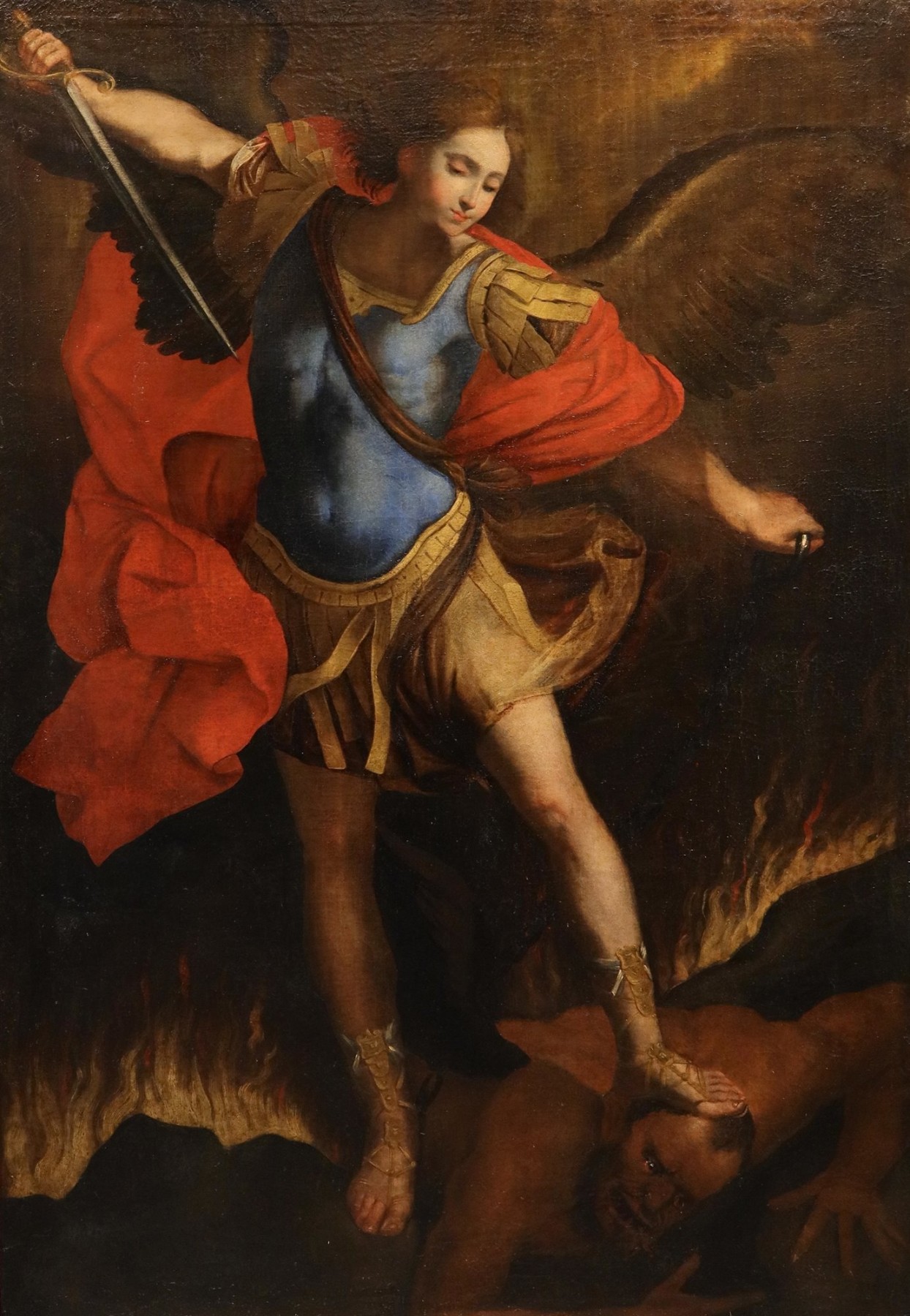
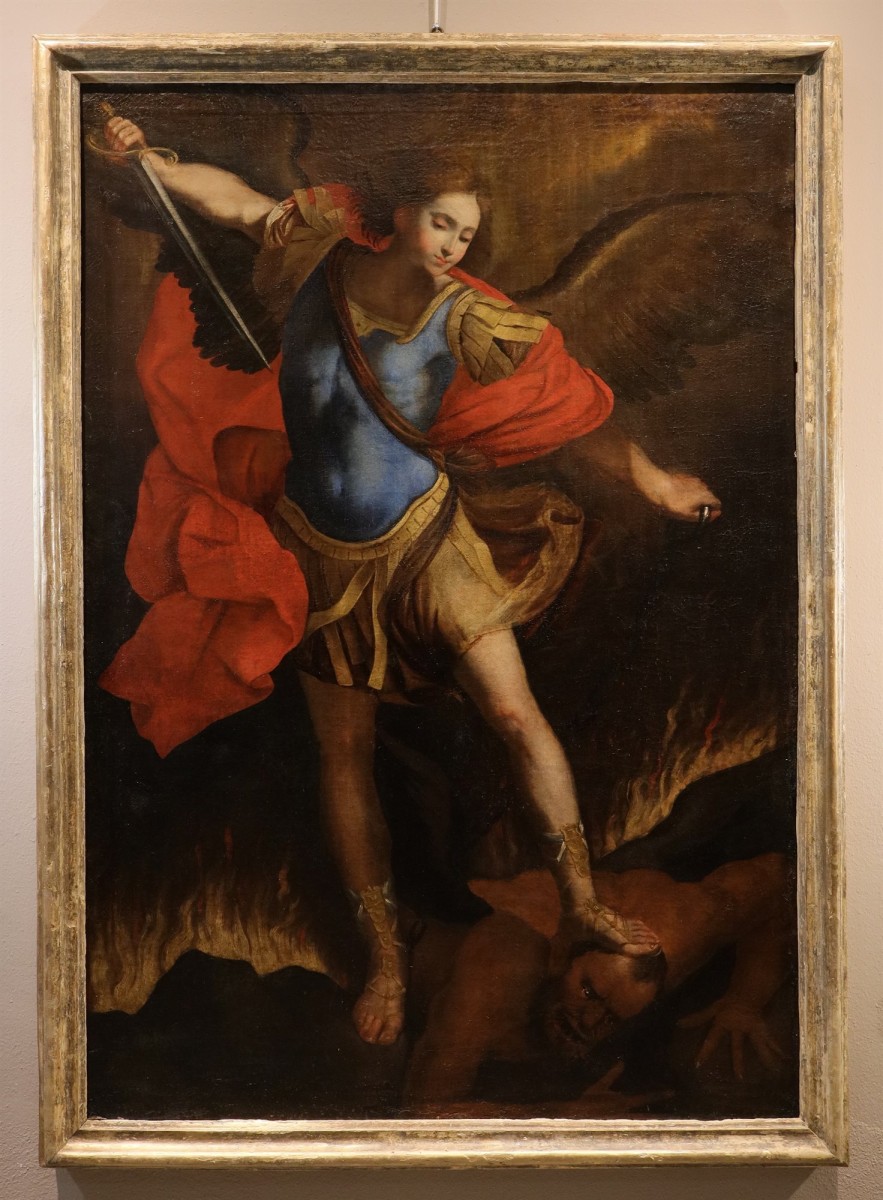
Saint Michael the Archangel
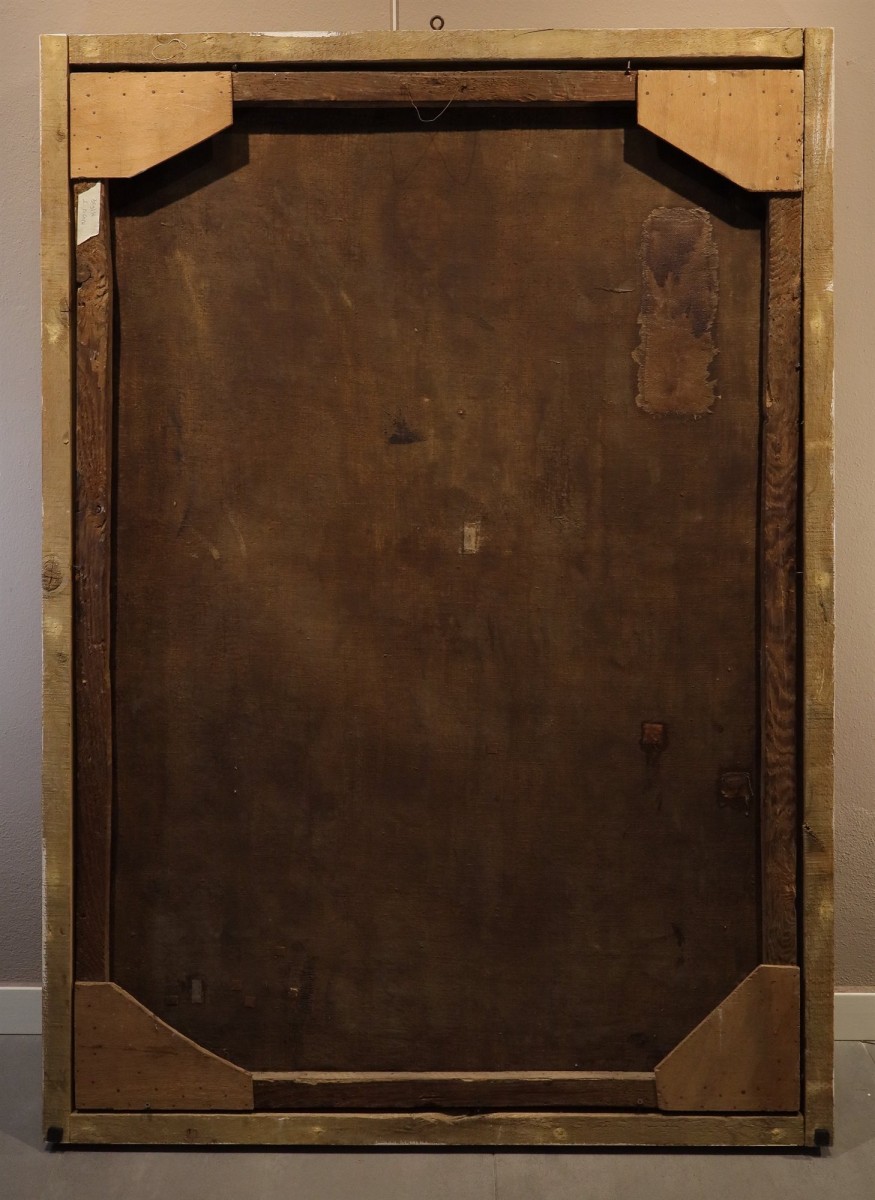
Oil on canvas 143 x 100 cm./ In frame (with defects and missing parts) 155 x 110 cm.
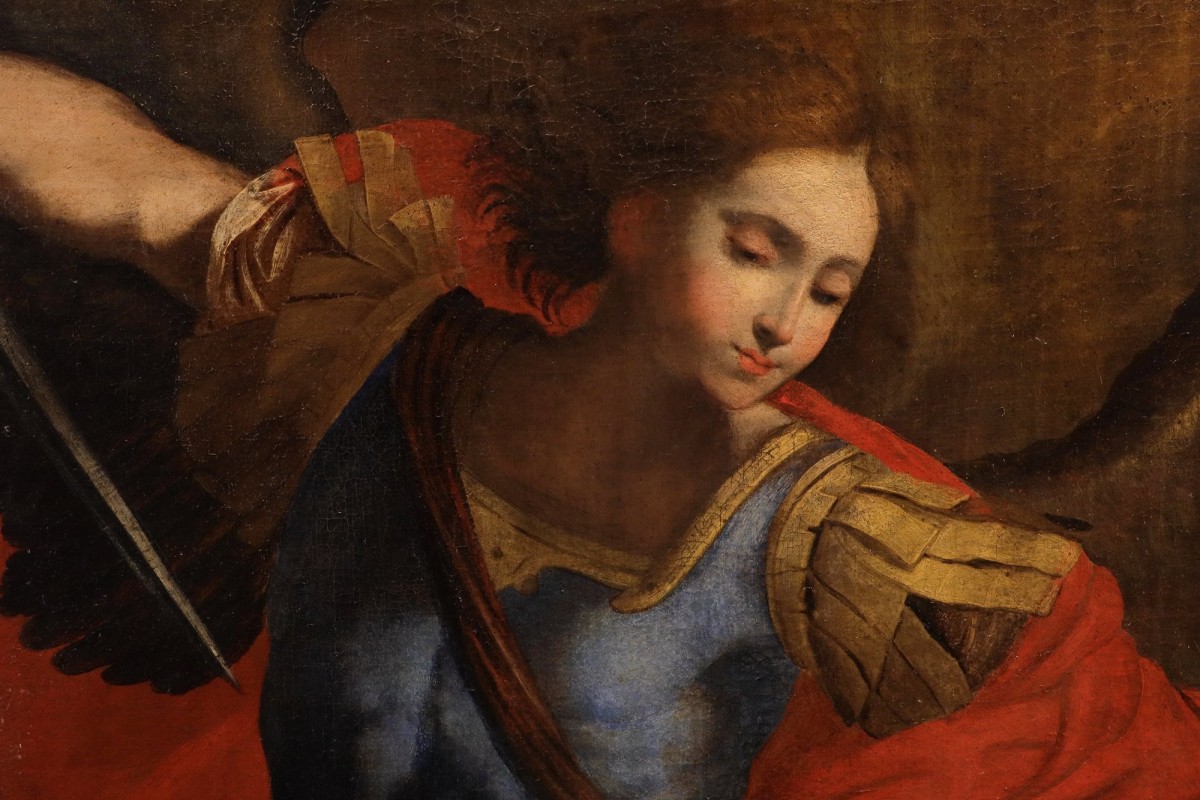
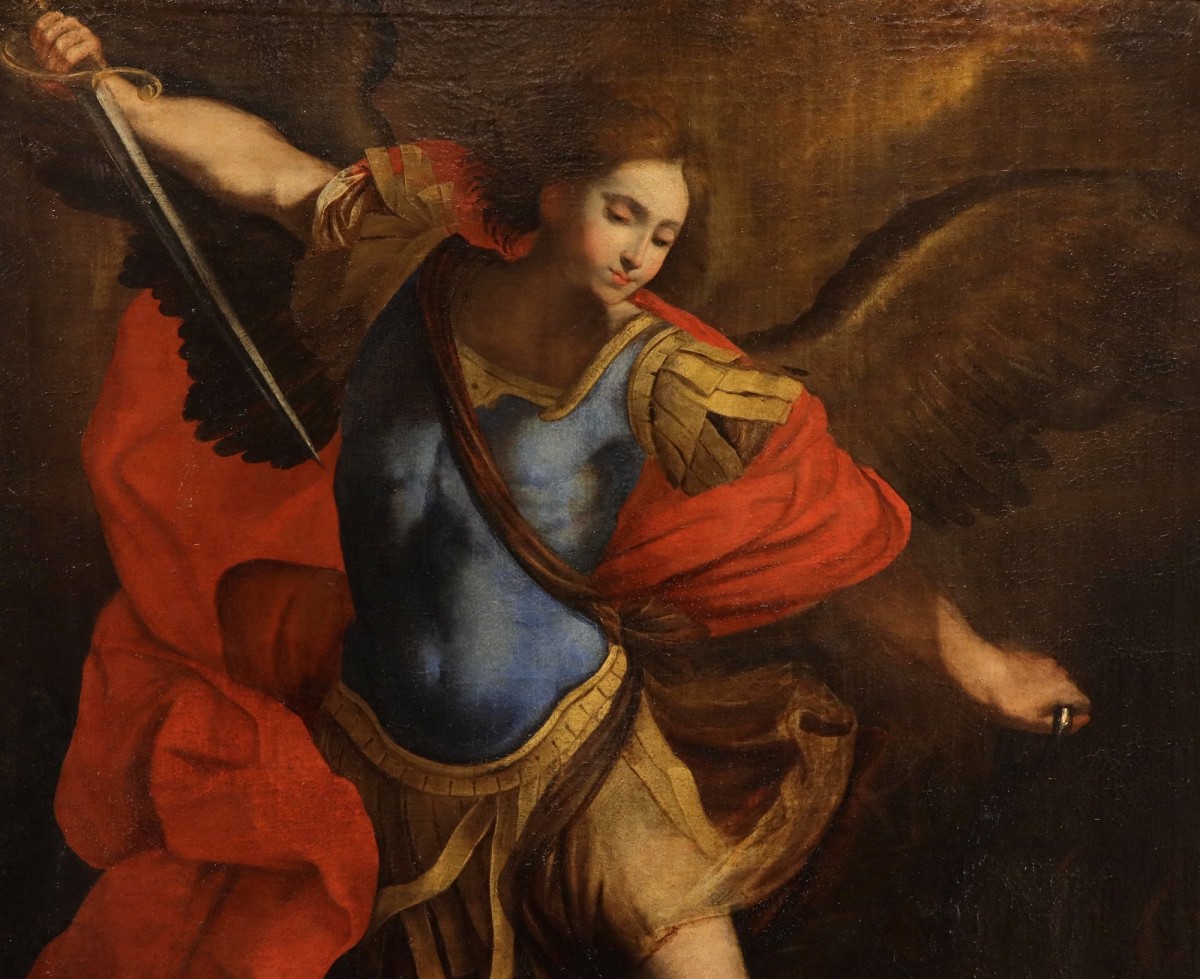
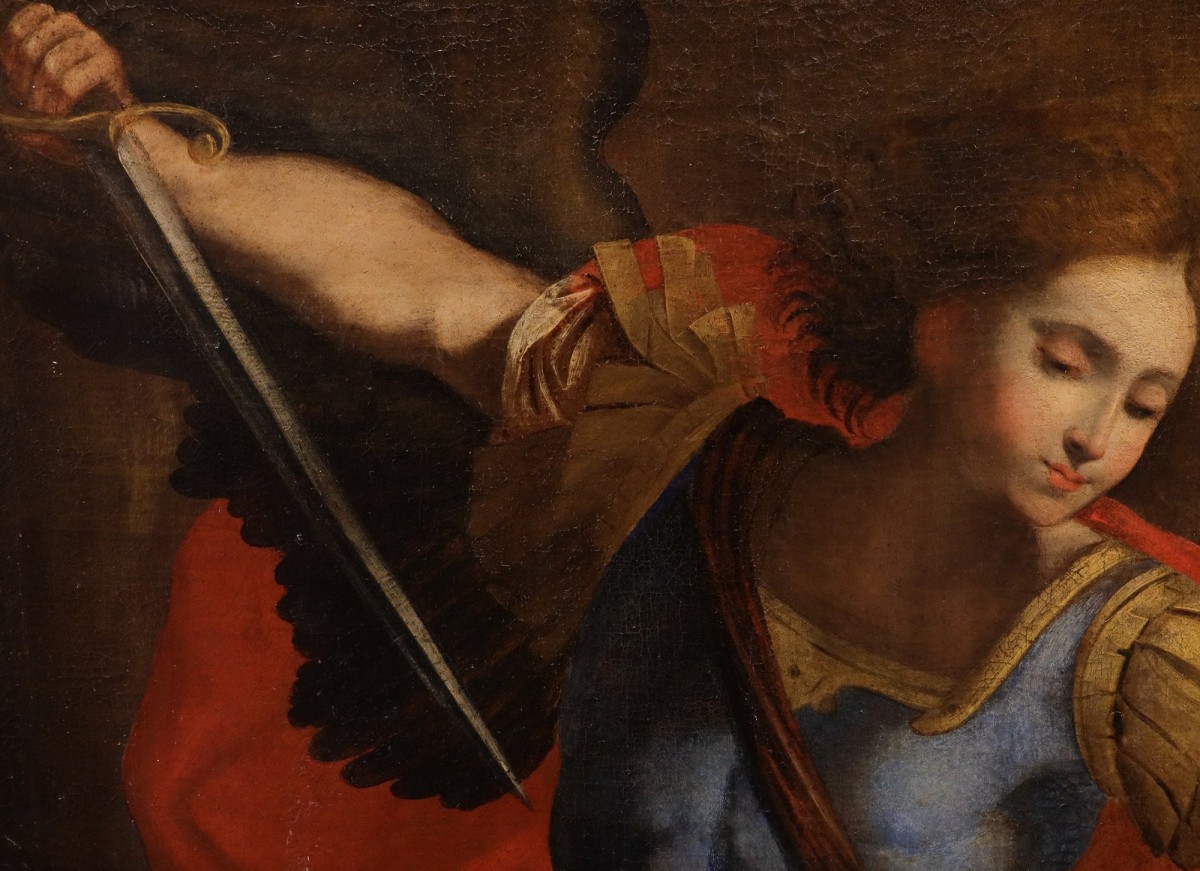
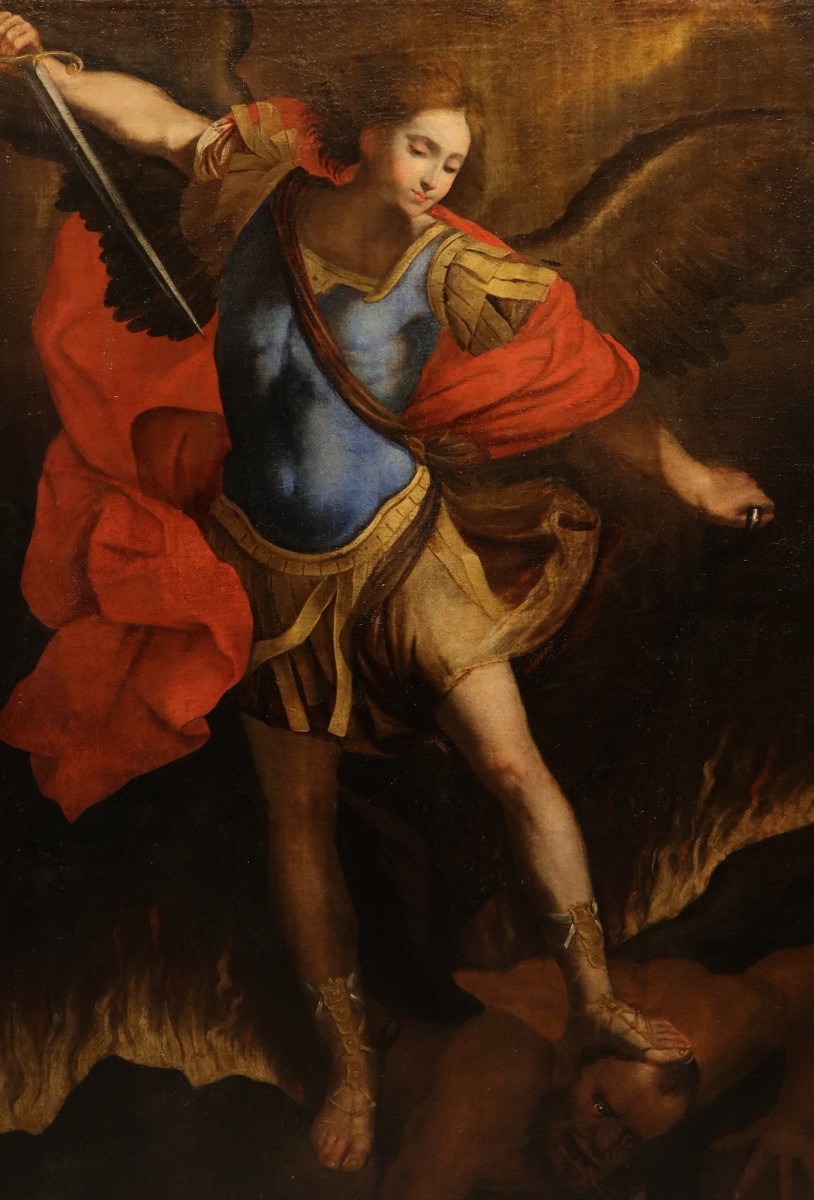
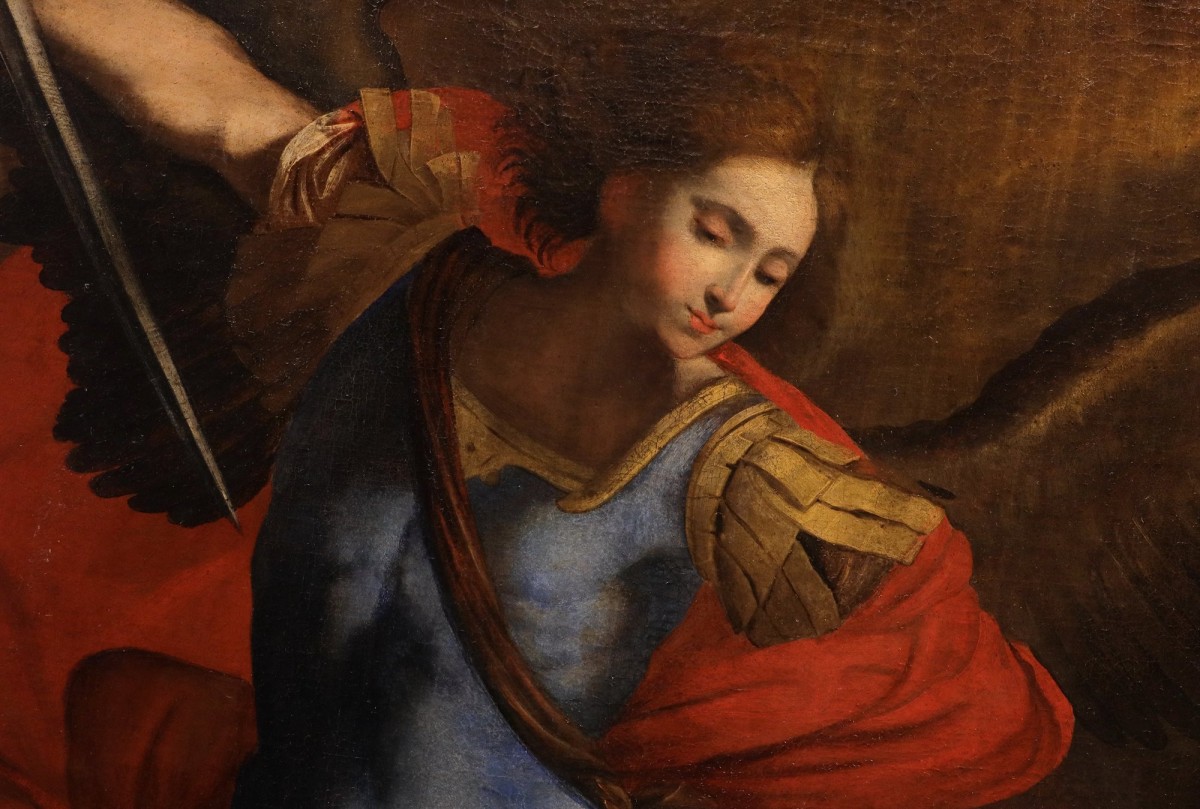
The large canvas examined here, of excellent quality, is a reproduction of the famous Saint Michael the Archangel painted by Guido Reni in 1635 for the Capuchin Church in Rome (photo 1), which was built thanks to a donation by Cardinal Antonio Barberini (1569–1646), brother of Urban VIII.
After a long and intensive apprenticeship in Bologna, which culminated at the Accademia dei Carracci in 1602, the twenty-seven-year-old Guido Reni traveled to Rome, where he soon became a celebrated artist in the most influential circles and won the patronage of prominent figures such as Popes Paul V, Urban VIII, and Scipione Borghese.
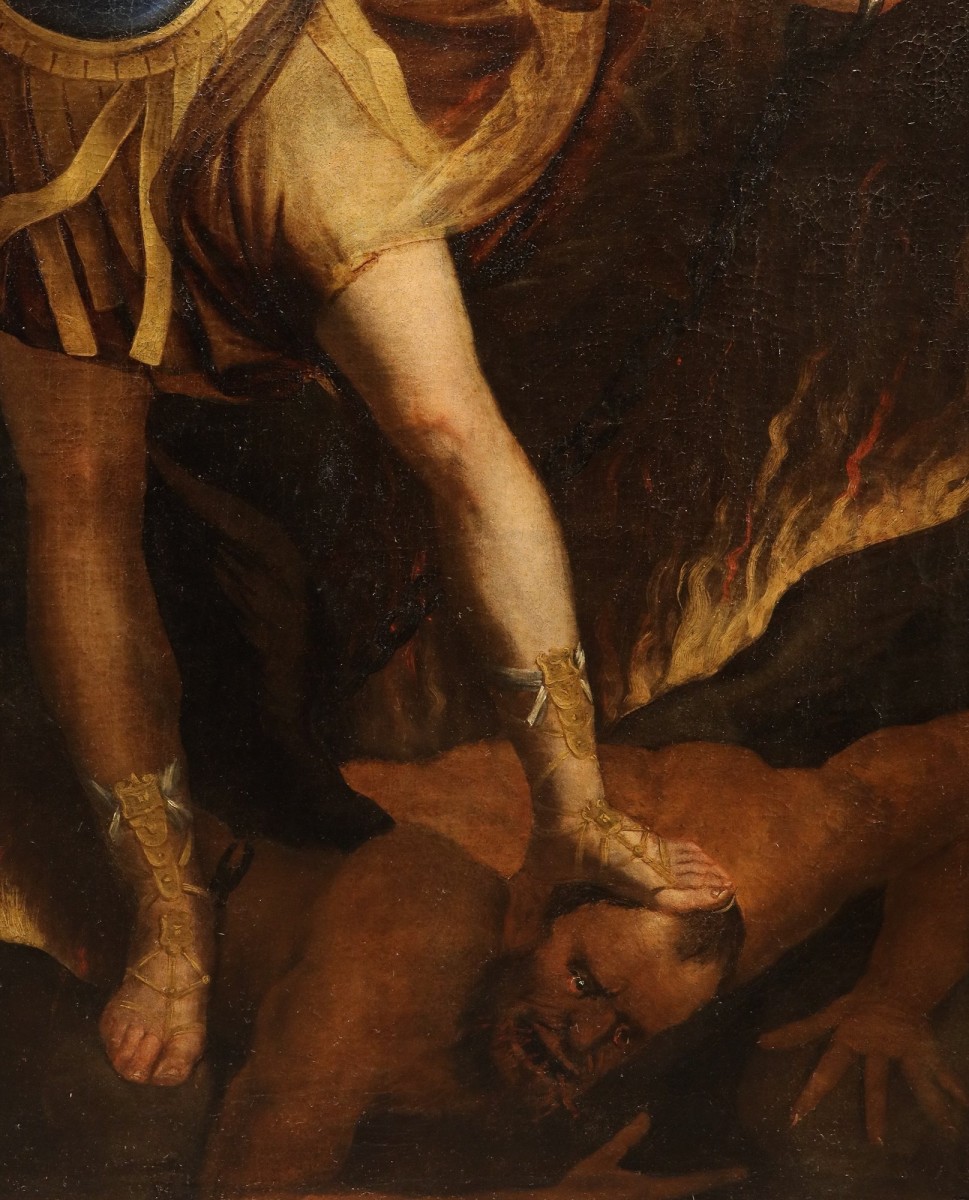
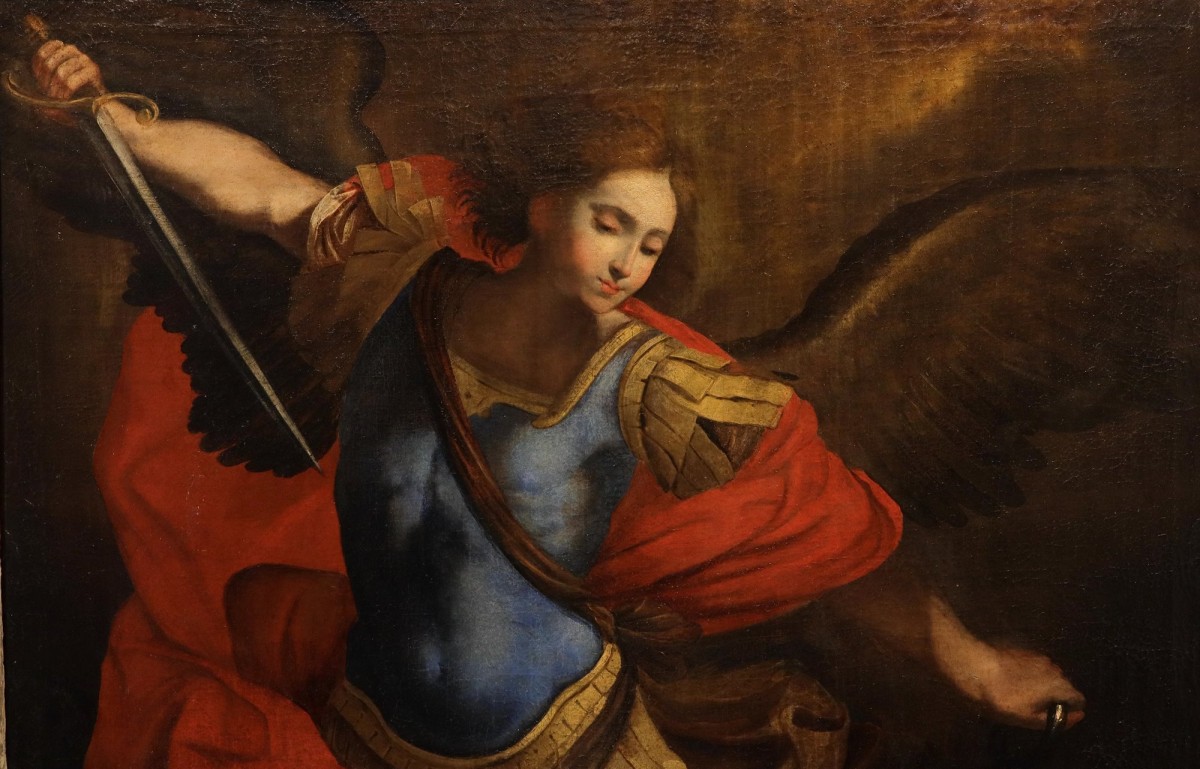
The entire composition exalts the “ideal of beauty” with the Archangel Michael, engaged in battle against Evil, depicted as a young divine warrior, strong yet delicate at the same time; the violence of the clash dissolves into absolute elegance; Michael, almost effortlessly and with outstretched wings, tramples on the head of a defeated Satan.
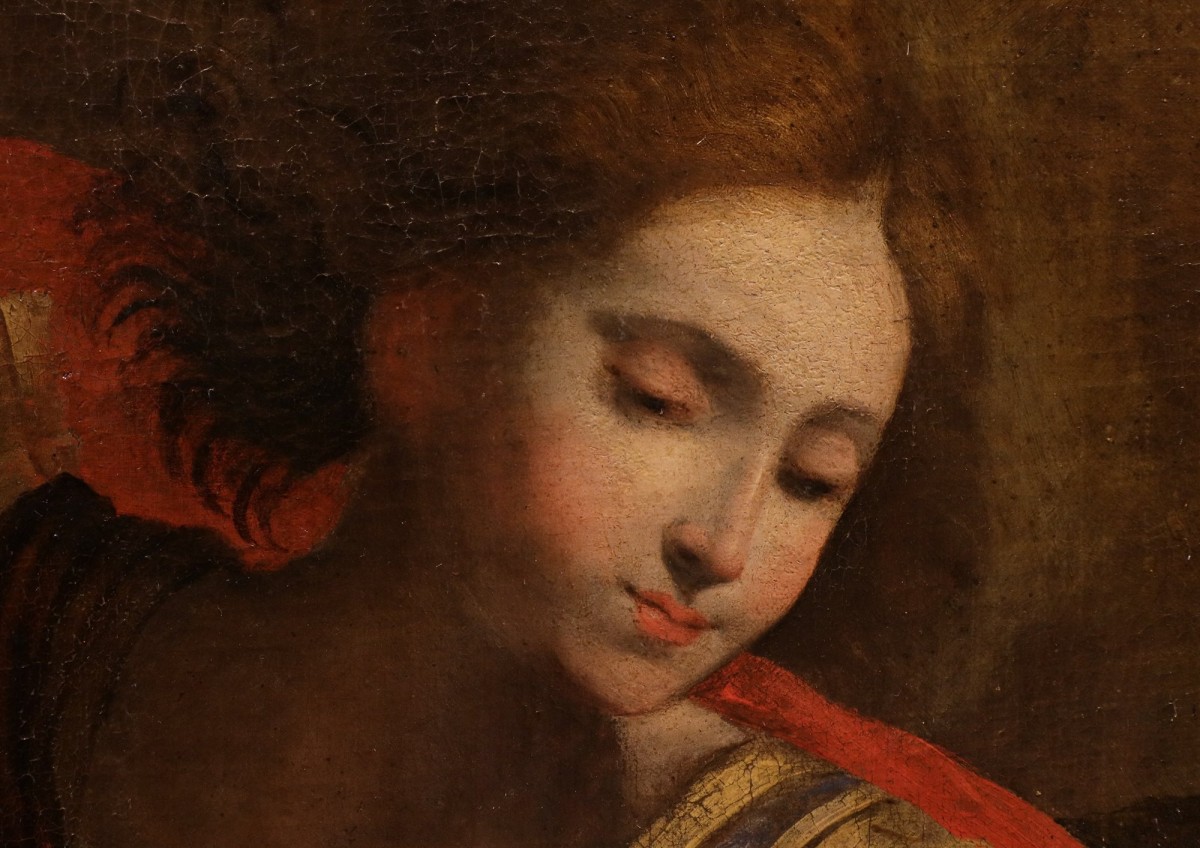
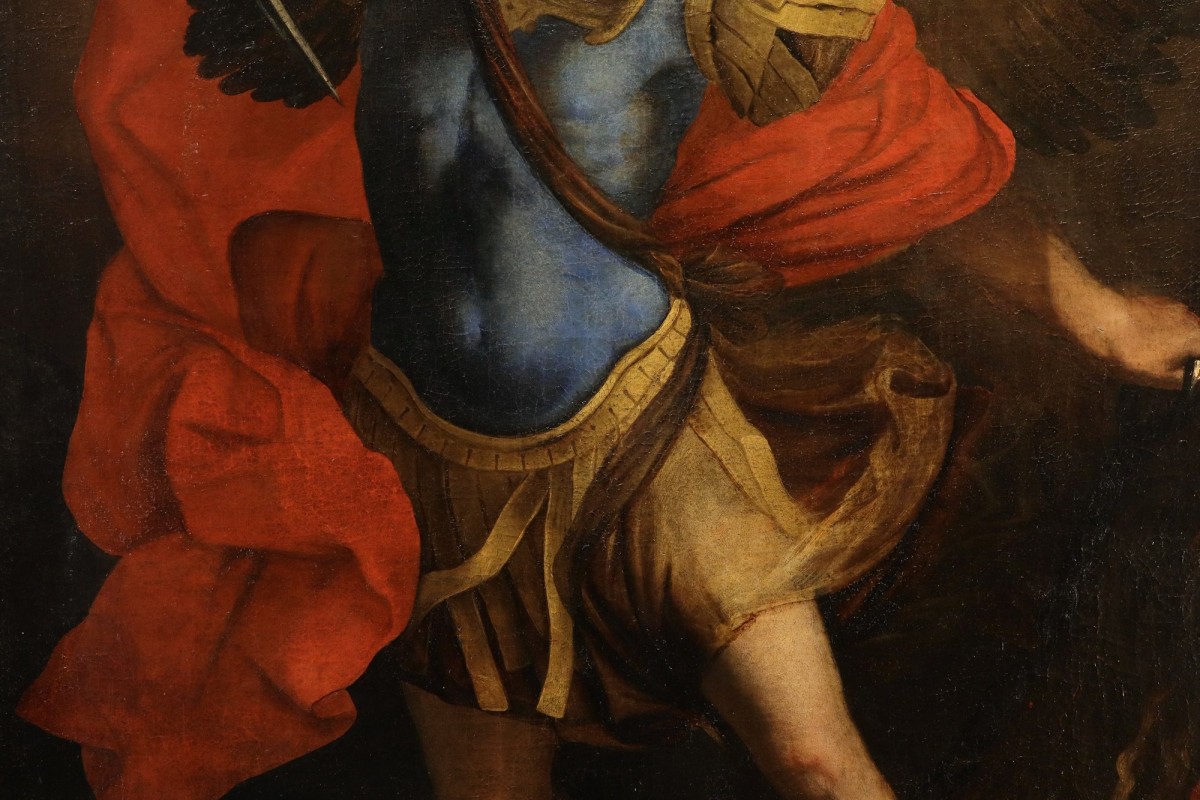
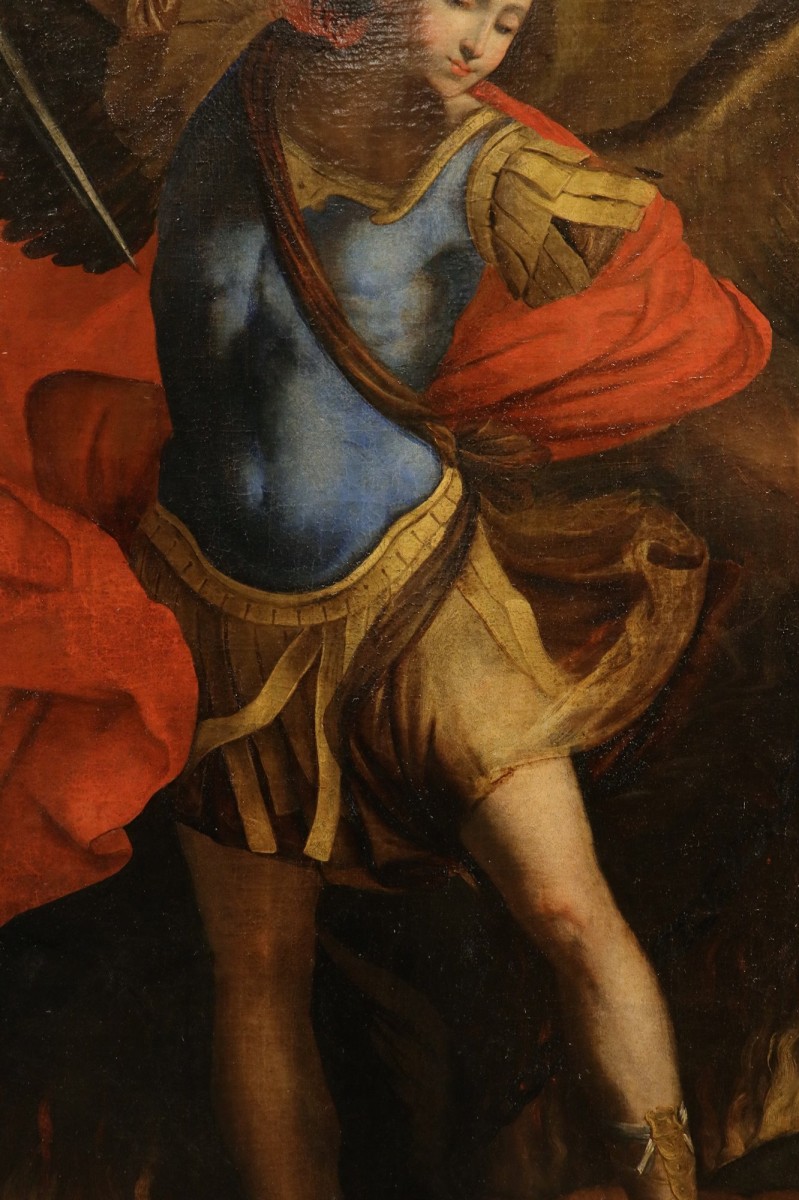
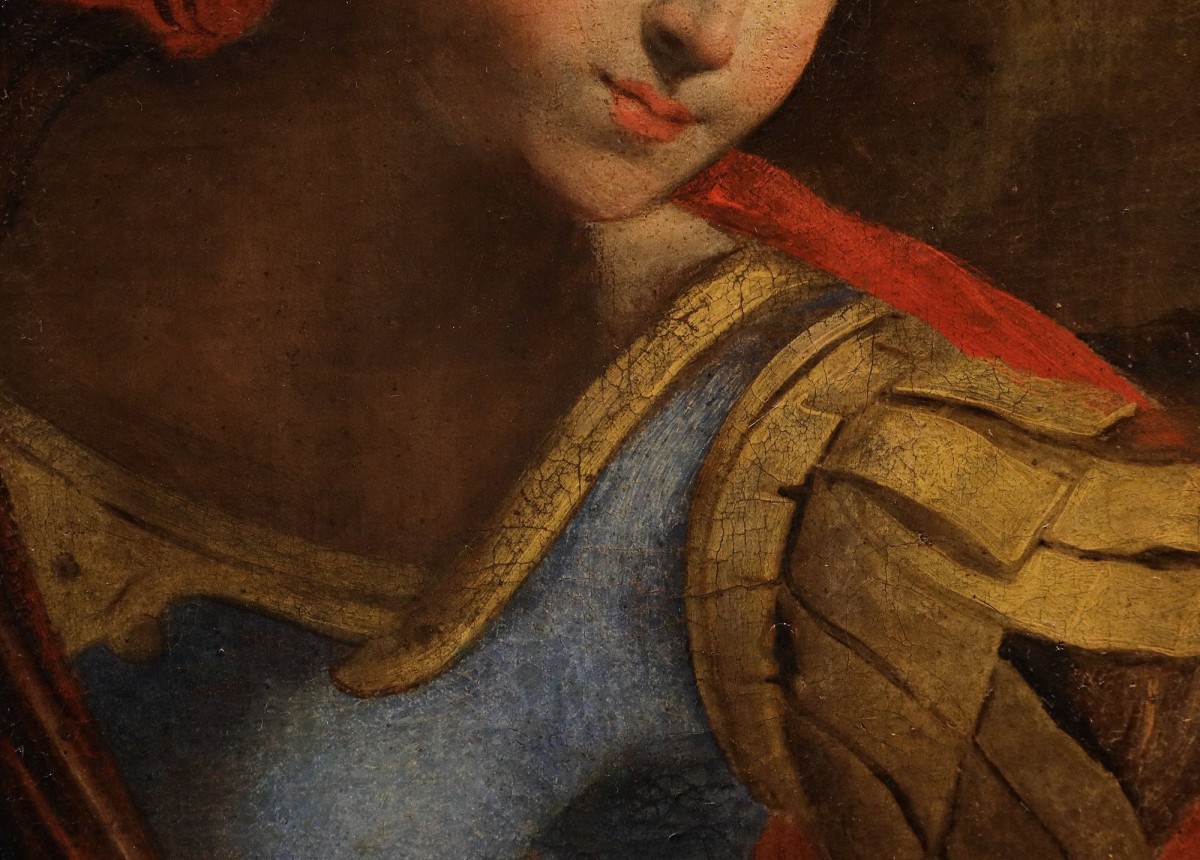
He wears classic Roman armor in an iridescent metallic blue that highlights his muscular build, yet is balanced by the celestial and idealized grace of his beautiful face.
A soft drapery of red silk envelops the angel’s body and billows vigorously behind him, creating a strong theatrical contrast with the cool tones of the armor, symbolizing the fire of divine zeal, royalty, and passion in the fight against evil.
The painting was met with great acclaim and esteem by his contemporaries and enjoyed incredible success from the very beginning, aided in part by the controversy it sparked among the Pamphili family—who had long been at odds with the Barberini, the patrons who commissioned the work: In fact, a historical curiosity suggests that the devil’s features were modeled—as an act of personal revenge by the painter—on the face of the future Pope Innocent X (Giovanni Battista Pamphilj).
Given the period and the quality of this painting, it is likely a work from the prolific workshop of Guido Reni, and therefore executed by one of his skilled collaborators.
We are inclined to attribute its execution to Giovan Andrea Sirani (Bologna, 1610–1670), one of his finest students and an exceptional draftsman—so much so that the master even entrusted him with the task of transferring the cartoons onto the canvases and sketching them out, thereby bringing him into constant contact with the original designs of the works.
We know that, thanks to the deep trust Reni placed in him, Sirani produced numerous replicas of Reni’s most successful compositions; among these are variations on iconic subjects such as Judith with the Head of Holofernes, the Madonna in Ecstasy, and variations on the Allegory of Fortune.
With regard to the subject under consideration, there is one known canvas, painted by Giovan Andrea Sirani himself, which very faithfully replicates its subject and characteristics, and is now housed at the Bob Jones Museum in South Carolina (United States of America) (photo 2 - https://catalogo.fondazionezeri.unibo.it/scheda/opera/60922/).
The style of the faces in Sirani’s works is closely linked to the influence of his master, reflecting the same classicist idealization, with extremely soft and noble features, while always maintaining a solid anatomical structure, with sharp details in the contours of the eyes, lips, and hairstyles.
Delevery information :
We take care of and organise the transport of the purchased works, both for Italy and abroad, through professional and insured carriers.
We take great care We personally take care of the packaging, to which we devote a great deal of care: each work is carefully packed, first with arti- cle material, then with a custom-made wooden box.
Should you have the desire to see this or other works in person, we would be happy to welcome you to our gallery in Riva del Garda, Viale Giuseppe Canella 18, we are always open by appointment only.