Offered by Limburg Antiquairs
REQUEST INFORMATION
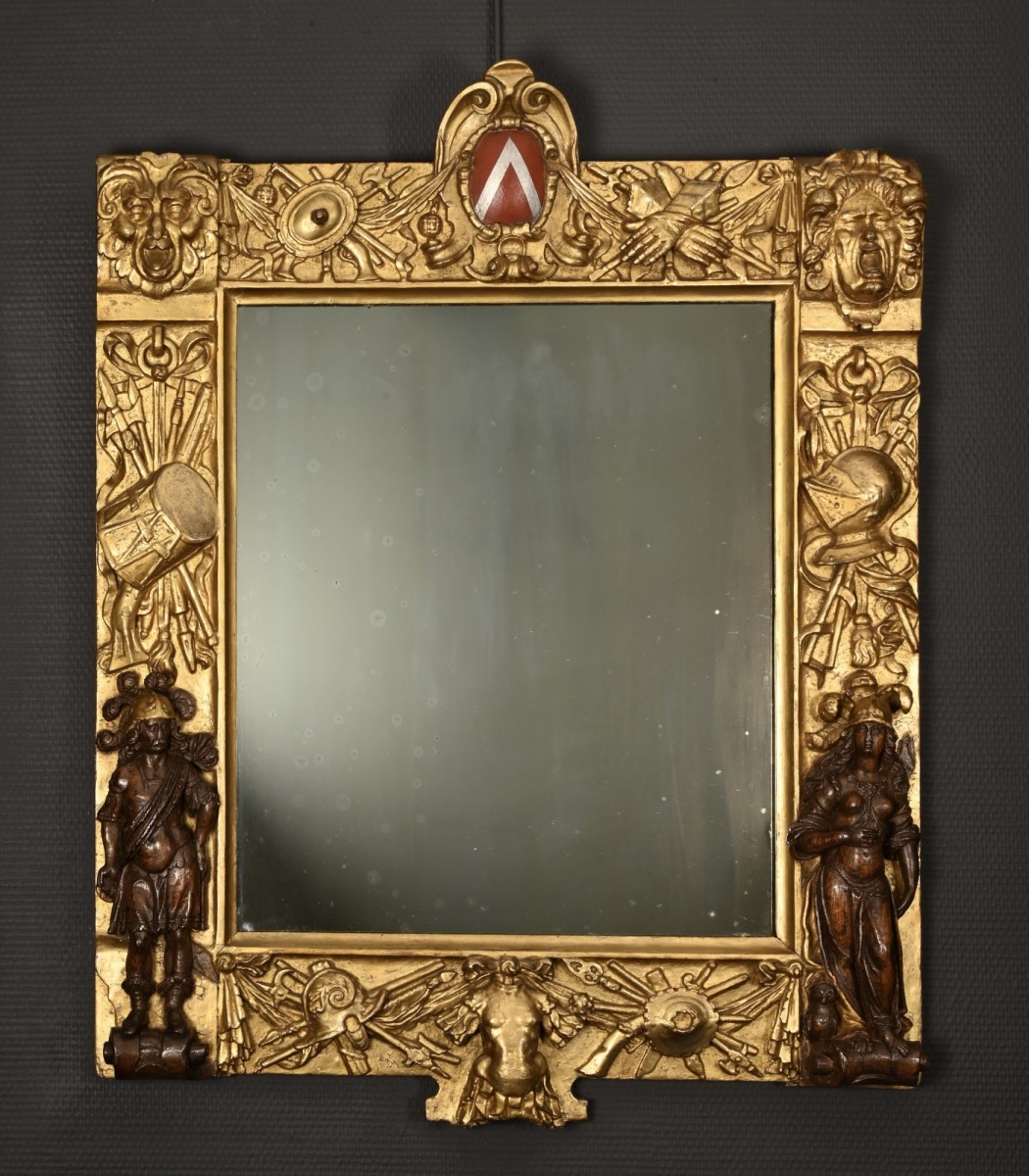

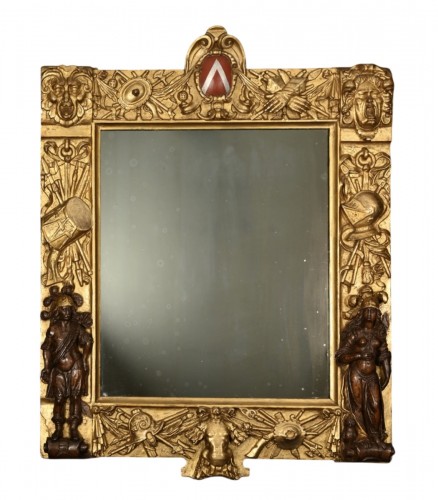
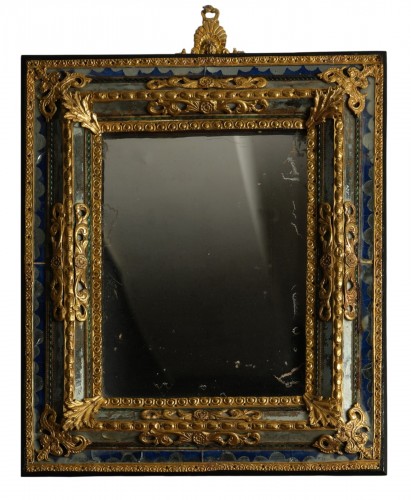
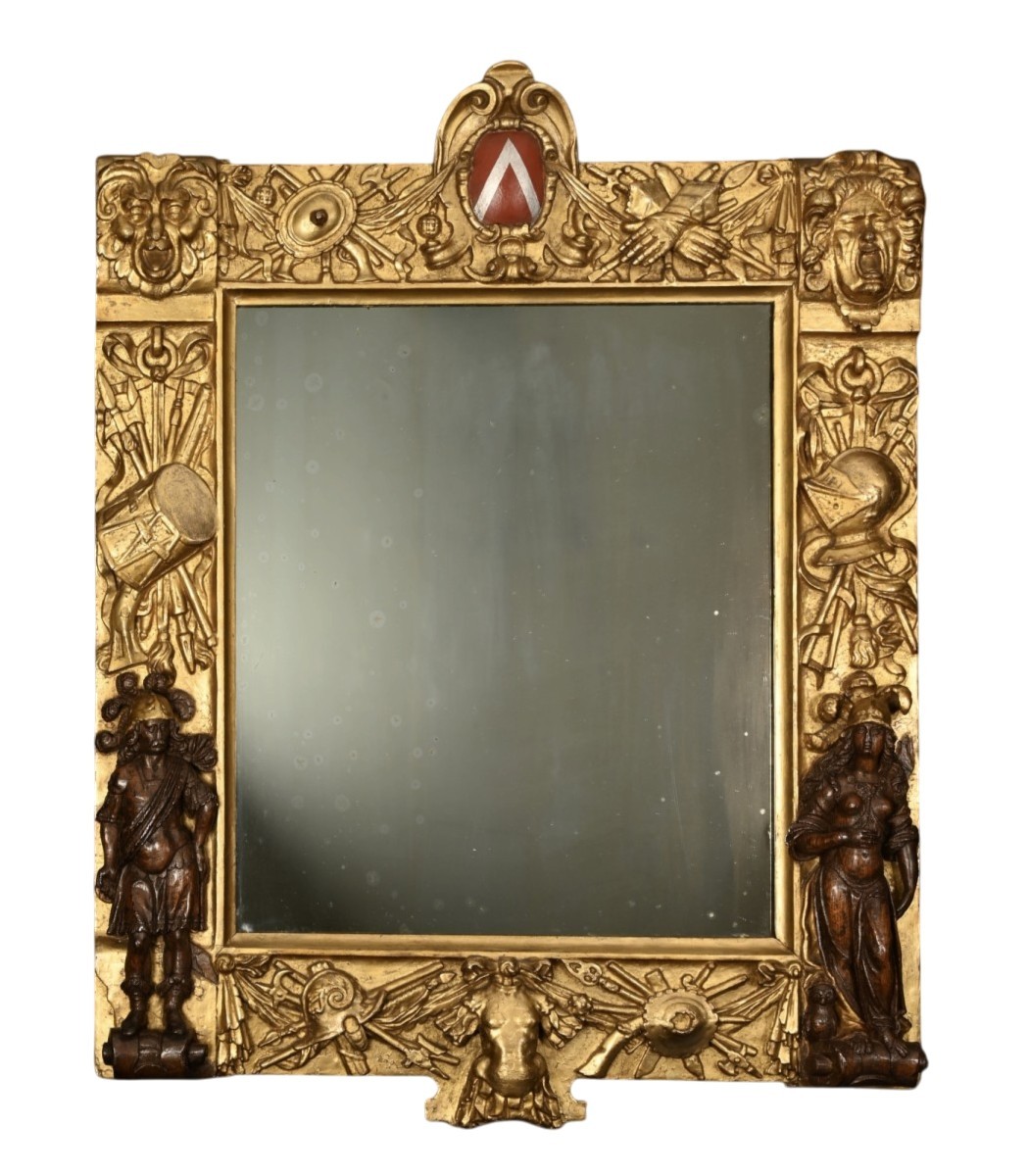
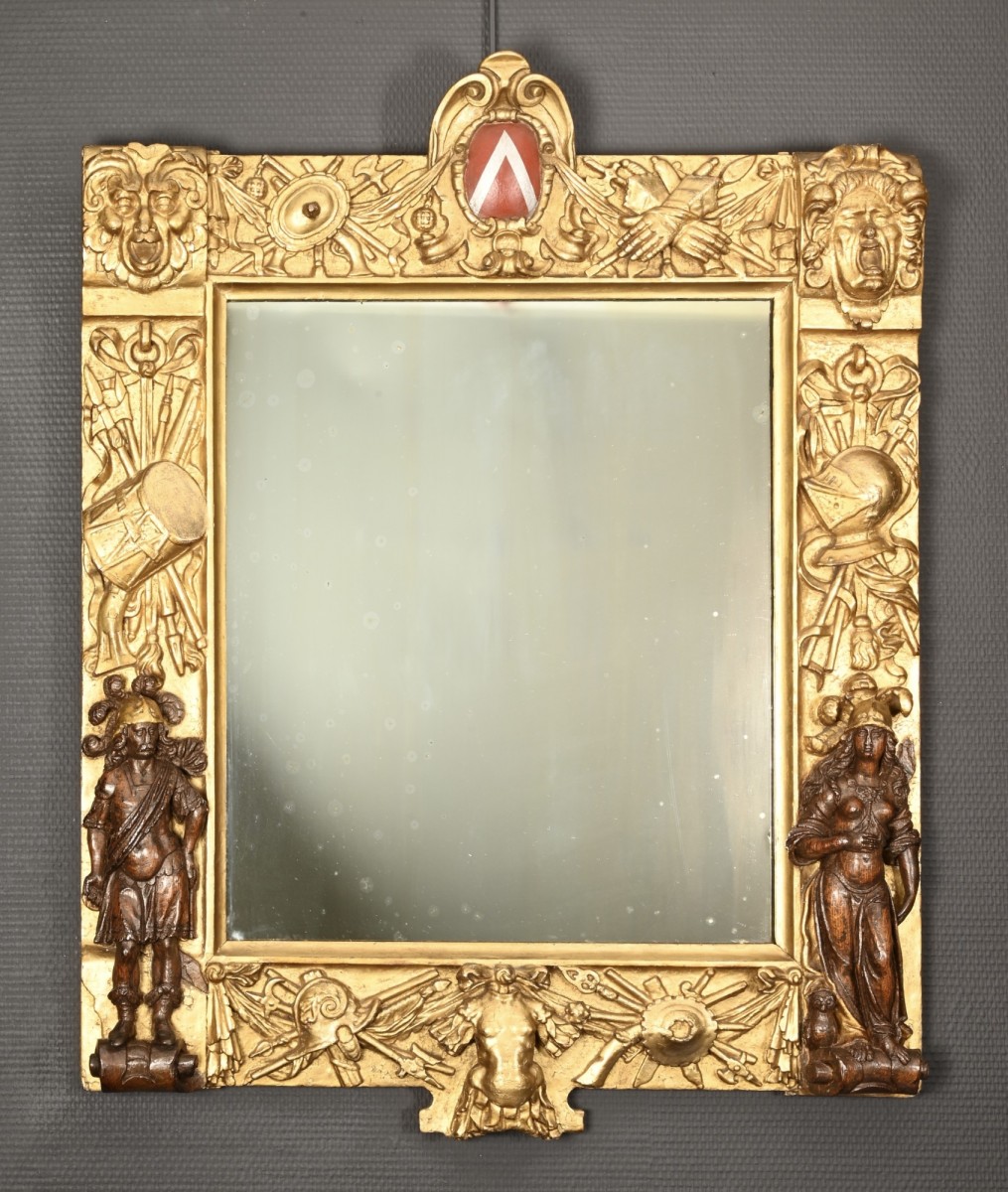
This exceptional mirror frame is crafted from beautifully carved and gilded oak and stands out for its rich ornamentation and sculptural details.
The frame is lavishly decorated with detailed figures and allegorical trophies of war along the edges. The carved, standing figures in the corners, dressed in historical robes, appear to represent allegorical or mythological characters. In the art of the Golden Age, such figures and trophies of war could symbolise power, prestige, virtue, victory and prosperity.
The combination of the refined woodcarving, the warm lustre of the gilded wood and the three-dimensional figures lends the mirror frame a monumental and aristocratic character. The whole piece bears witness to a tradition of craftsmanship in which decoration, symbolism and sculpture come together harmoniously.
At the top of the mirror frame is the coat of arms of the Belgian municipality of Anderlues, situated in the province of Hainaut, which dates back to the heraldic tradition of the local lords. In the 17th century, Anderlues was not yet an independent town with its own municipal coat of arms, but a manor under the authority of noble families. According to Geneawiki, the official blazon of Anderlues is: ‘Gules (red) a chevron argent (silver).’
During the Ancien Régime, the manor belonged to prominent noble families, including the well-known House of Trazegnies. It was customary for noble families to link their family coats of arms to the territories and manors they owned. In this way, family coats of arms could evolve into distinguishing marks that were also associated with a particular place or manor.
In heraldry, a chevron is a V-shaped heraldic figure reminiscent of the structure of a roof truss. Such figures are sometimes attributed symbolic meanings, such as protection, support or architectural strength. However, caution is advised when attributing these meanings to the coat of arms of Anderlues: without a specific historical source, it cannot be stated with certainty that the silver chevron originally referred to the construction of fortifications or to the protective role of the local lords.
Flanders, late 17th century.
Delevery information :
Please note that packing and shipping costs are not included in the price of the objects.