Offered by Galerie Magdeleine
REQUEST INFORMATION

Paintings and drawings from the 17th to the 19th century
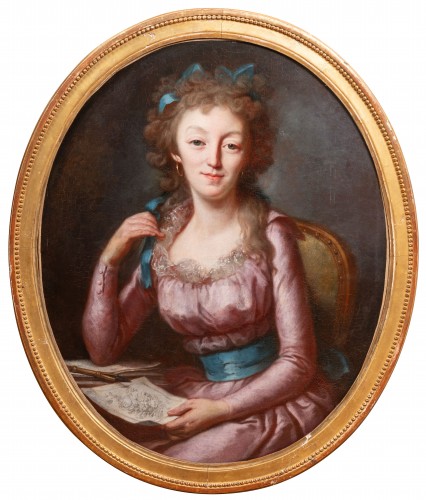
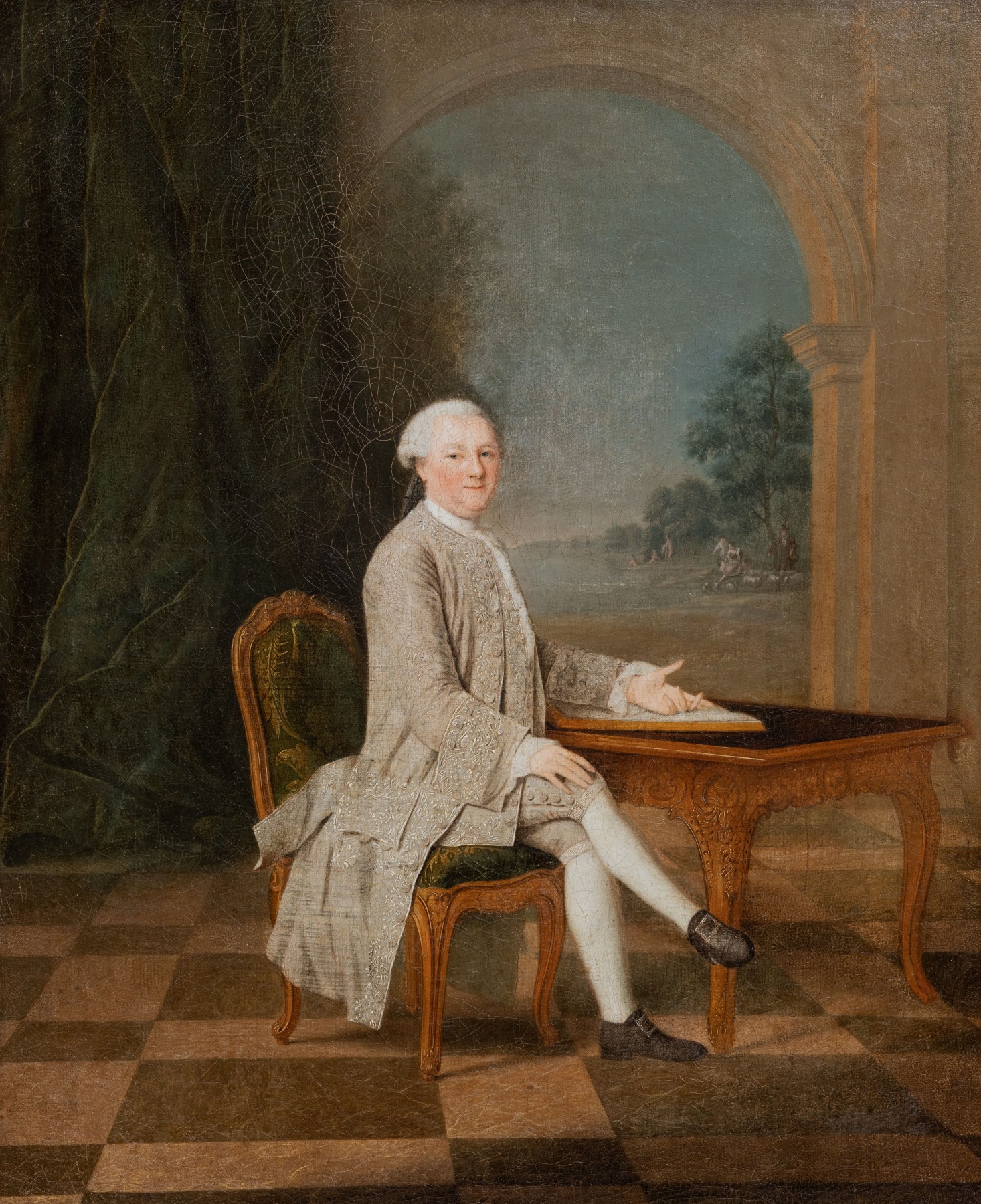
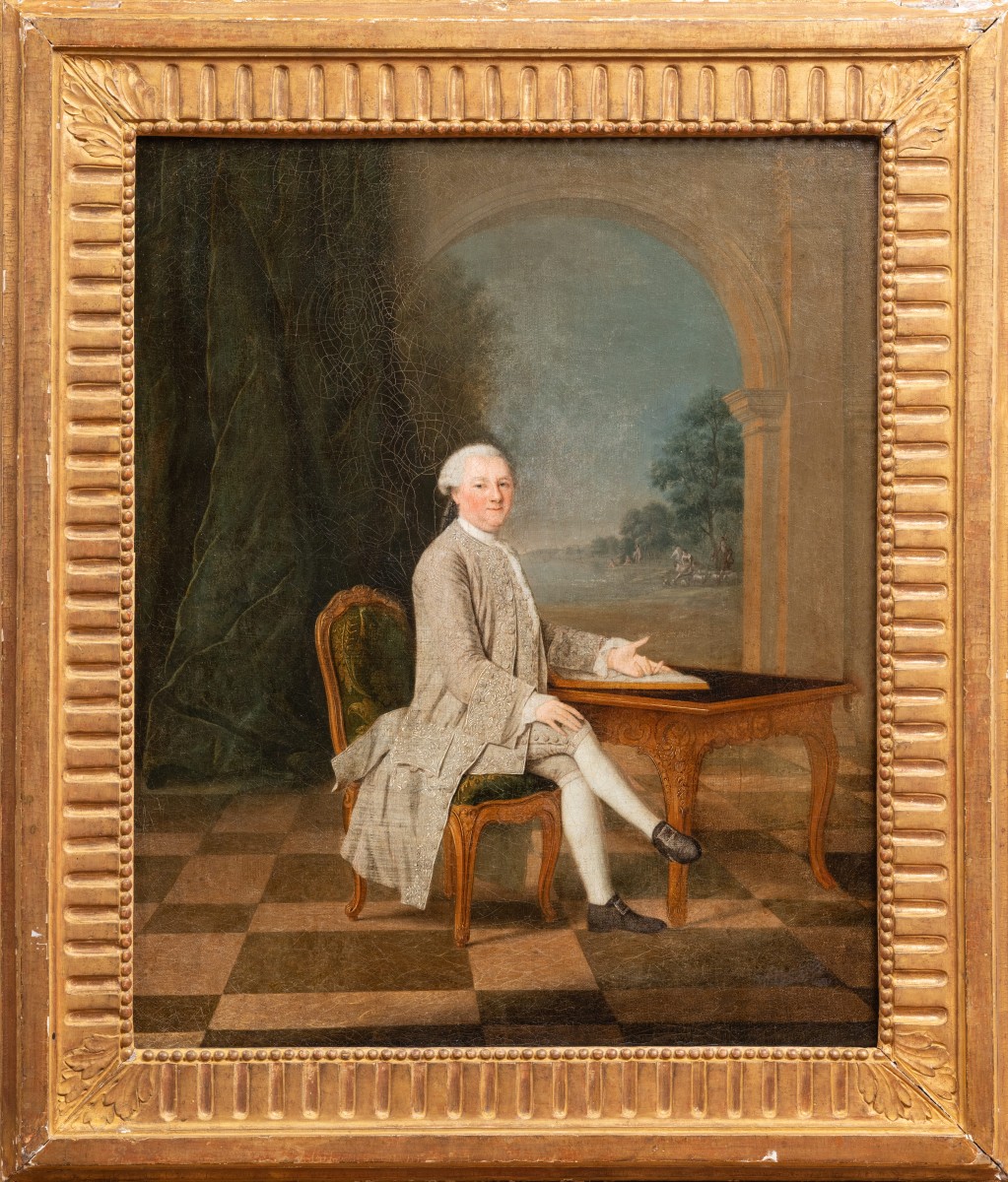
Attributed to Jean-Baptiste André GAUTIER DAGOTY (Paris, 1740 – Paris, 1786)
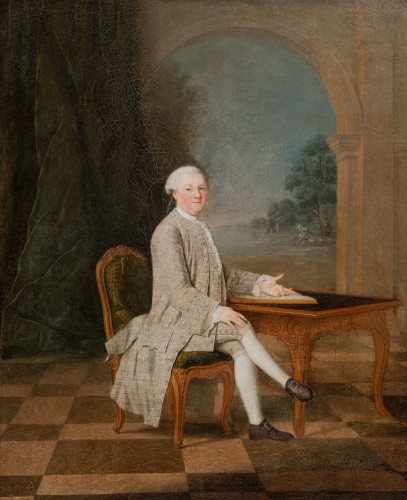
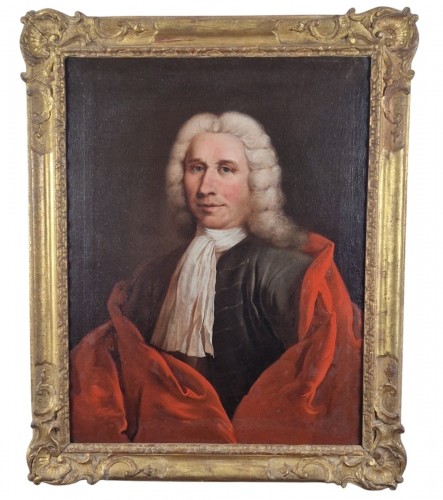
Presumed Portrait of Denis Pierre Jean Papillon de La Ferté
Circa 1777–1778. Oil on canvas. H: 55; W: 46 cm.
Born on February 17, 1727, in Châlons-en-Champagne into a family of magistrates, Denis-Pierre-Jean Papillon de La Ferté acquired in 1756 the position of Intendant and Controller of the King's Silverware, Menus-Plaisirs and Affairs of the King's Chamber.
It was in the autumn of 1762 that Papillon de La Ferté, having been the sole holder of his position for only a few months, established himself at court during his first season of performances at Fontainebleau. For Mondonville's L'Amour et Psyché (performed on October 21, 1762), Papillon chose Sophie Arnould to sing the title role, even though she was threatening to leave the Académie royale de musique and had never before performed before the royal family. This therefore represented a double risk.
The first was artistic, in imposing a reluctant singer; the second was institutional, in presenting before the King a voice that had not yet been heard in this setting. The success was considerable. Bachaumont noted that “the audience's acclamations at the sight of Mademoiselle Arnould cannot be expressed.”
Louis XV personally congratulated Papillon, the First Gentleman of the Chamber awarded him a gratuity of 4,000 livres, and the Controller-General of Finances also showered him with praise.
A few days later, Papillon organized the revival of Rameau's Castor et Pollux, once again with Sophie Arnould in the leading role of Thélaïre.
During the performance, a fire broke out in a ceiling. Papillon immediately brought the situation under control using sponges attached to the ends of poles that he himself had arranged to have prepared in advance. Disaster was averted, the performance continued, and Papillon received another round of congratulations, this time for his foresight as much as for his command of the circumstances. Madame de Pompadour herself congratulated him. In a single season, Papillon de La Ferté, while demonstrating his talent as an administrator and programmer in the exercise of his duties, introduced Sophie Arnould, a future icon of opera, to the court. Crowning his success, he rose to the status of a hero by preventing a catastrophe in the presence of the King.
Fifteen years later, Papillon was at the height of his career, having been in charge of the Académie royale de musique since 1776 in addition to his original position. During the 1777 season, he chose to return to the works that had launched his career and collaborated for the last time with Sophie Arnould. On this occasion, the singer performed her iconic roles for the final time before her definitive retirement in 1778.
On June 5, 1777, Rameau's Castor et Pollux was performed at the Opera of the Palace of Versailles on the occasion of the visit of Emperor Joseph II, Marie-Antoinette's brother. This was one of the major diplomatic and ceremonial events of the reign.
On October 23 of the same year, L'Amour et Psyché was performed at Fontainebleau before the King and Queen. By programming the same works in 1777 before the court as he had in 1762, and calling upon the same performer, Papillon affirmed the continuity of his work and placed his success of 1762 within a framework of ultimate recognition.
It is within this precise context, and within the narrow chronological window between October 1777 and Arnould's retirement in 1778, that a commission by Papillon de La Ferté for three portraits from Gautier Dagoty could be situated: one depicting himself, and the other two portraying Sophie Arnould as Thélaïre in the first and as Psyche in the second. The dating becomes even more precise when one considers that Dagoty himself lost his title of painter to the Queen in 1778, being replaced by Élisabeth Vigée Le Brun: the commission must therefore have been placed no later than the first months of 1778.
These three portraits, which share a very similar setting, down to the black-and-white tiled floor, appear to form a coherent ensemble from a metaphorical point of view. The portrait of Papillon de La Ferté, slightly larger in format than the others, represents the accomplished man whose career is depicted.
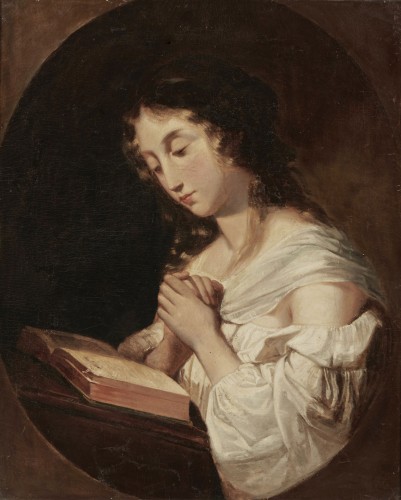
The two portraits of Arnould, identical in format, function as allegorical equivalents of his two great successes: Arnould as Thélaïre for Castor et Pollux, Arnould as Psyche for L'Amour et Psyché. She appears as the living embodiment of Papillon de La Ferté's achievements.
The costume worn by Sophie Arnould in her portrait as Thélaïre can be compared with a drawing preserved at the Bibliothèque nationale de France, “Thélaire en habit de Deuil,” belonging to the corpus of costume designs by Louis-René Boquet for Castor et Pollux. Working under Papillon's authority, Boquet held the position of official costume designer. Comparison between Boquet's drawing (circa 1770) and our painting reveals an overall fidelity, while showing a greater degree of sumptuousness in the stage production of 1777.
Since late 1775, Dagoty had held the title of “painter to the Queen and Madame.” He remained the official portraitist of Marie-Antoinette's immediate circle, that is, the same Gluckist circle to which Papillon belonged institutionally. These men knew one another, frequented the same salons, and responded to the same royal commissions.
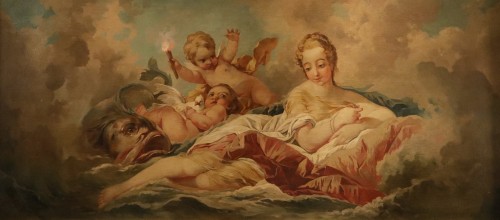
Finally, it is interesting to note Papillon's profound passion for painting, an interest that may have been at the origin of this commission. A knowledgeable connoisseur and collector, Papillon commissioned series of decorative panels from Boucher, Robert, Fragonard, and Vernet for his private mansion. In 1776, he published an Extrait des différens ouvrages publiés sur la vie des peintres, direct evidence of his sustained interest in the visual arts.