Offered by Galerie Thierry Matranga
REQUEST INFORMATION
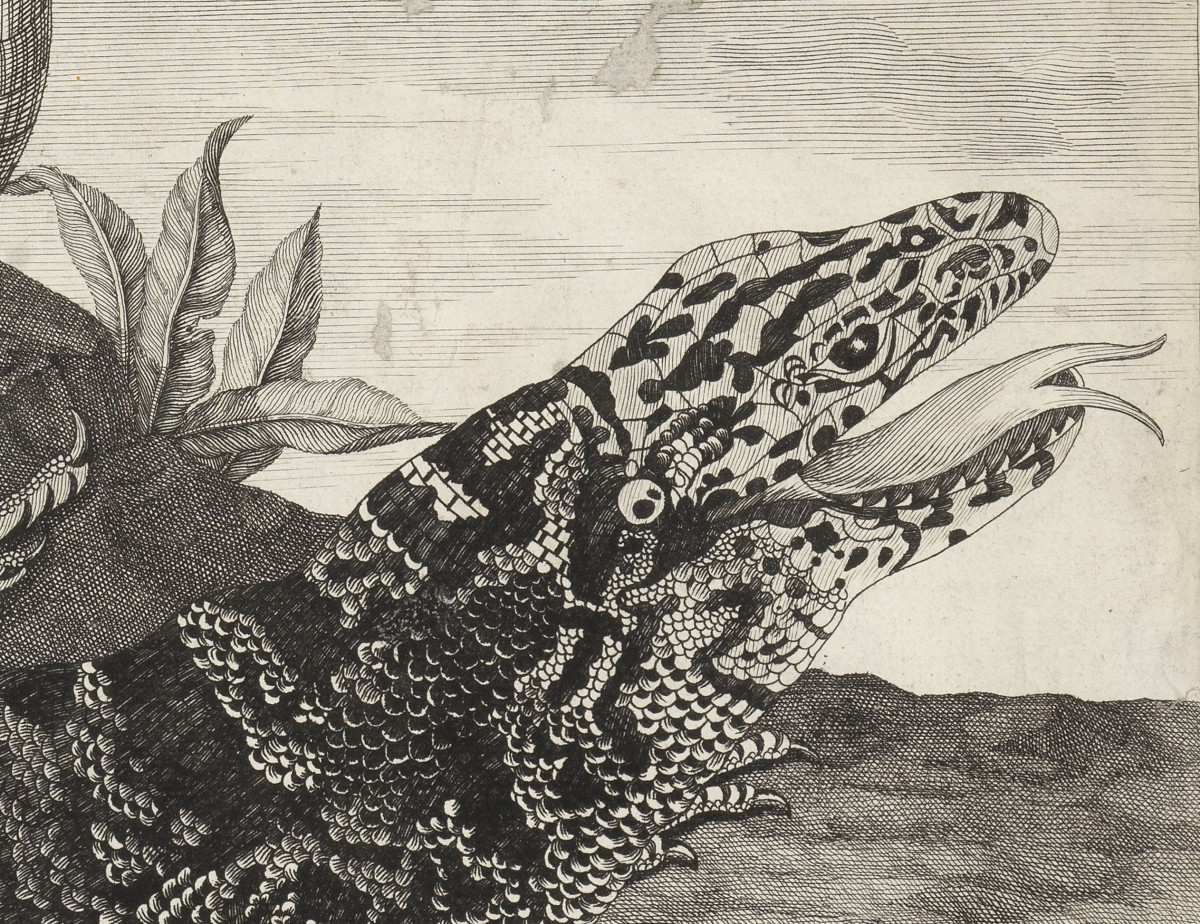
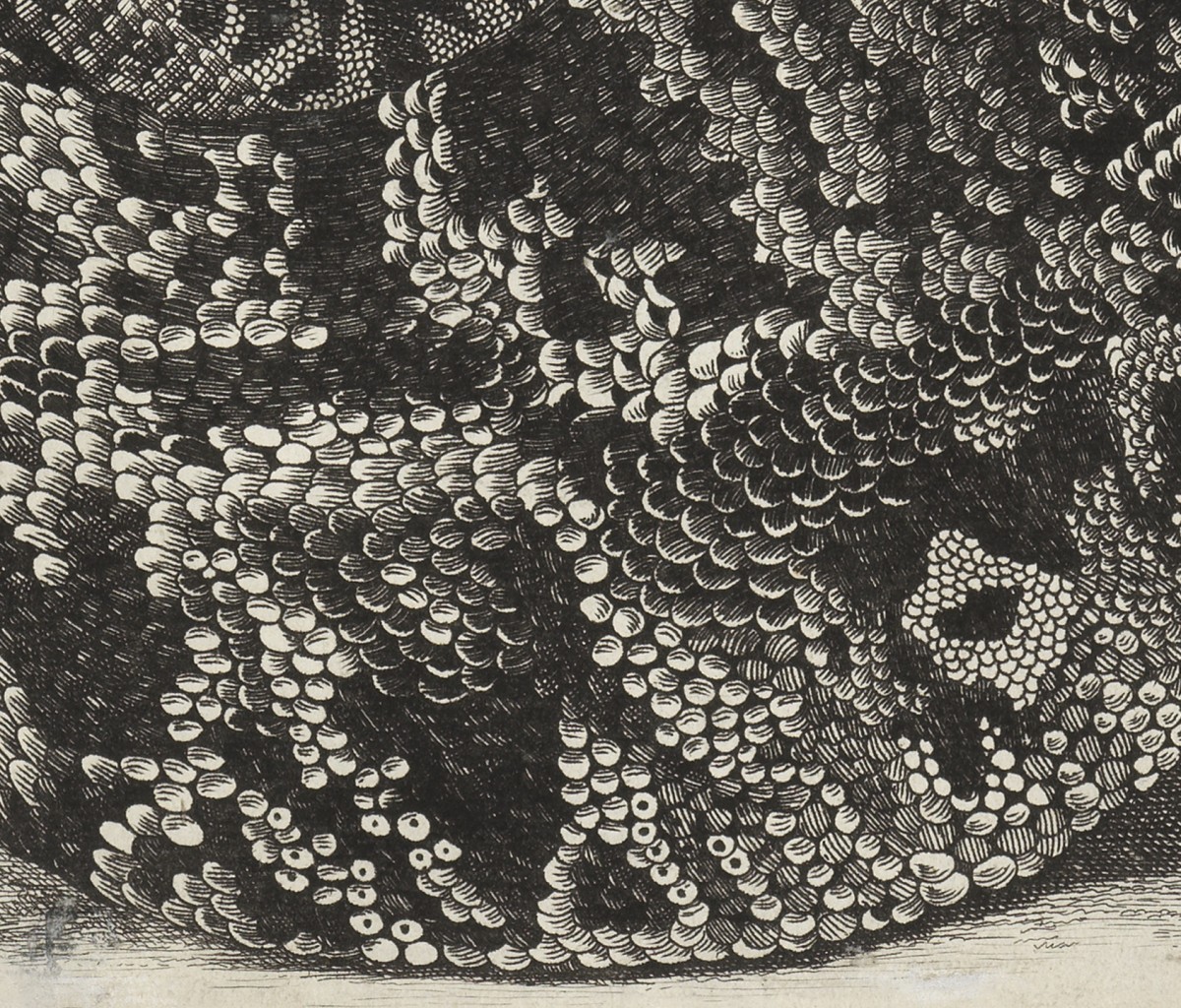

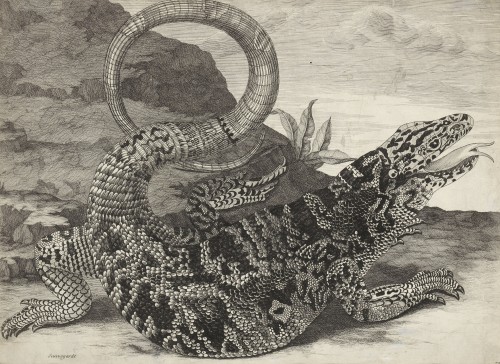
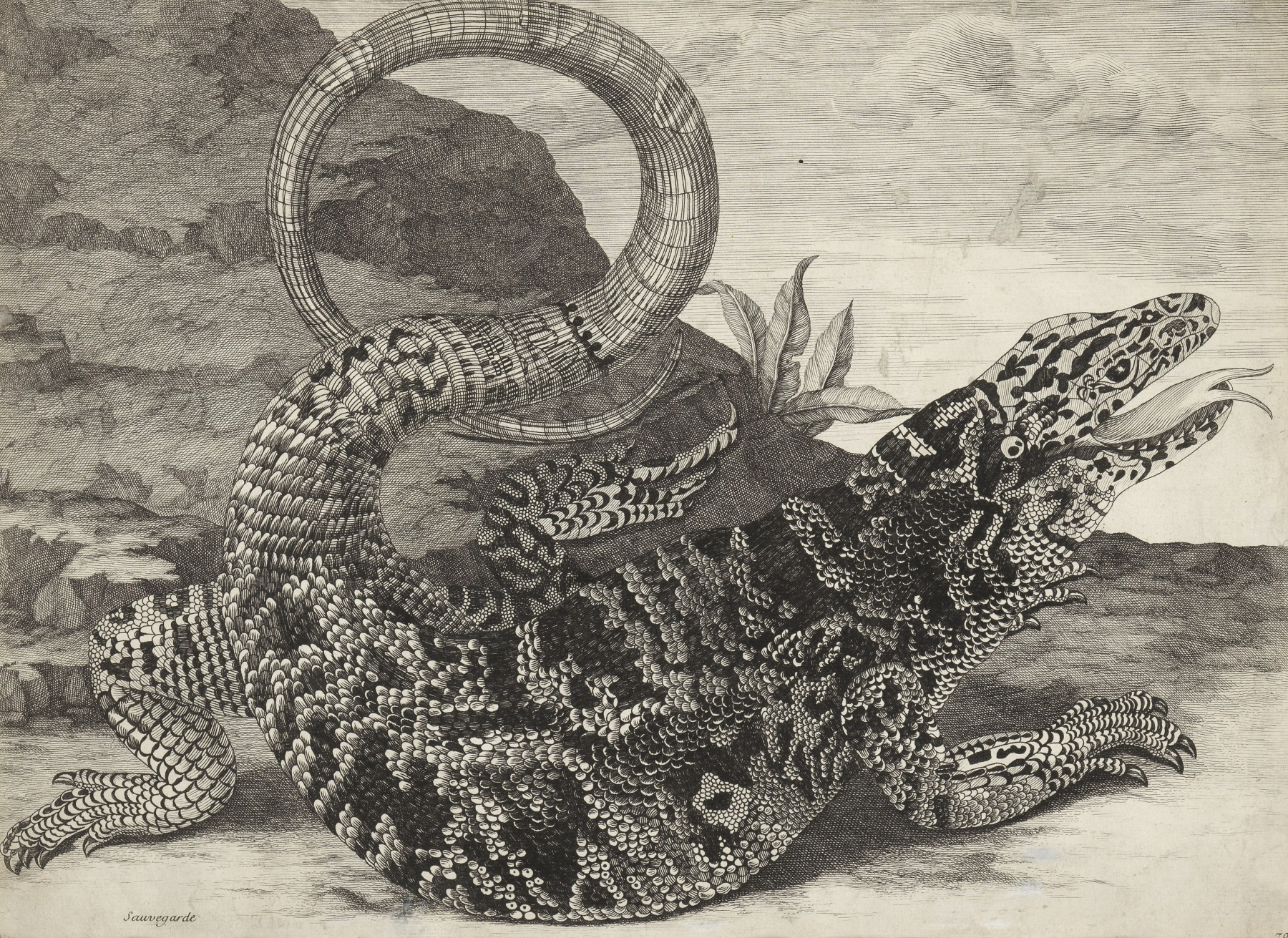
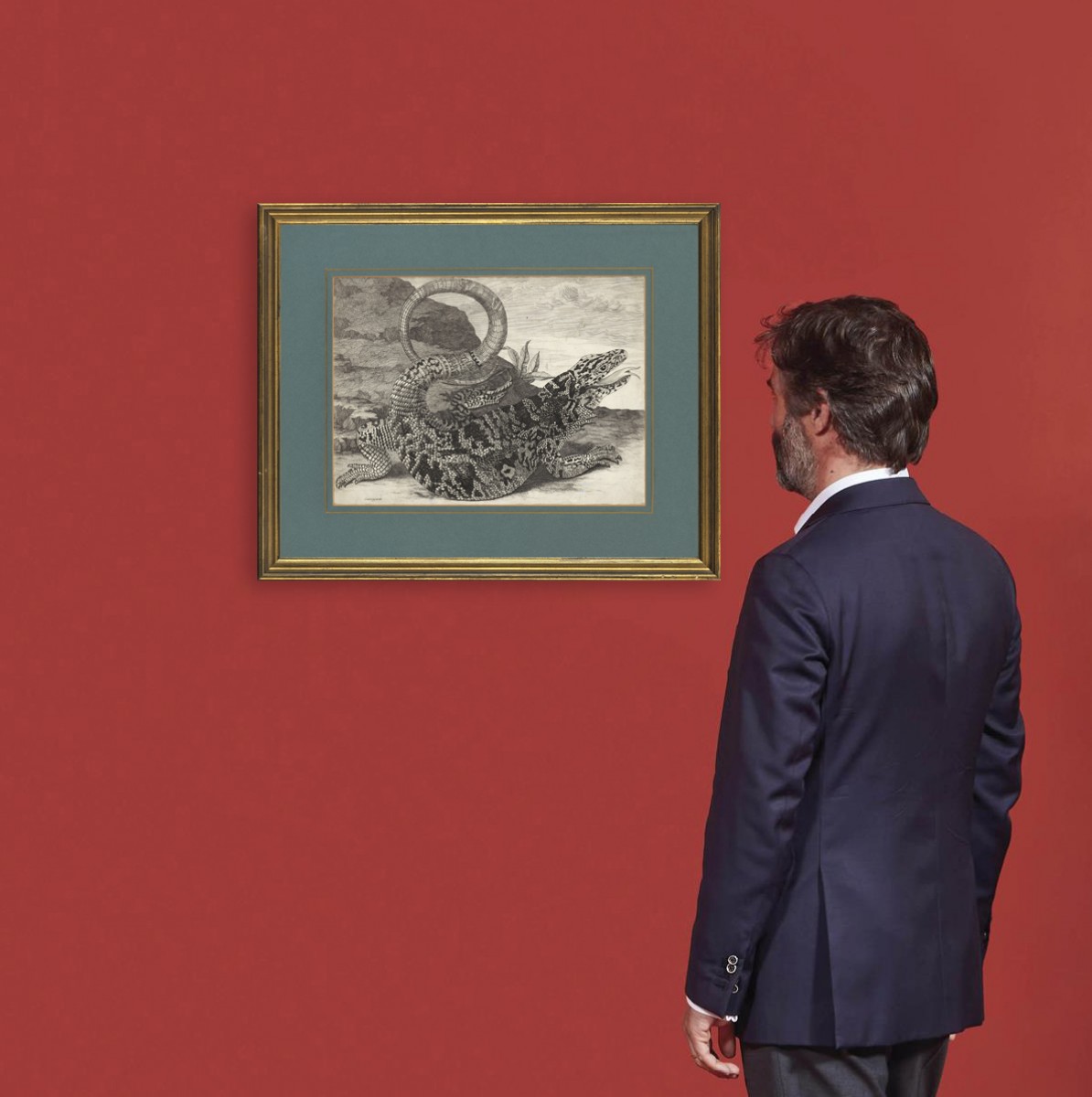
Our spectacular and rare engraving is plate 70 from the work “Metamorphosis insectorum Surinamensium,” which brings together engraved drawings of insects and animals by Maria Sibylla Merian. Second edition, 1719.
The term “sauvegarde” refers in this historical context to a large lizard (a tegu, an Amazonian reptile) depicted in its natural habitat. In Tupi, an Amerindian language, “tégou” means “silvery.” Even today, the scientific name of this reptile, “Salvator merianae,” pays tribute to Anna Maria Sibylla Merian, the first observer to describe it.
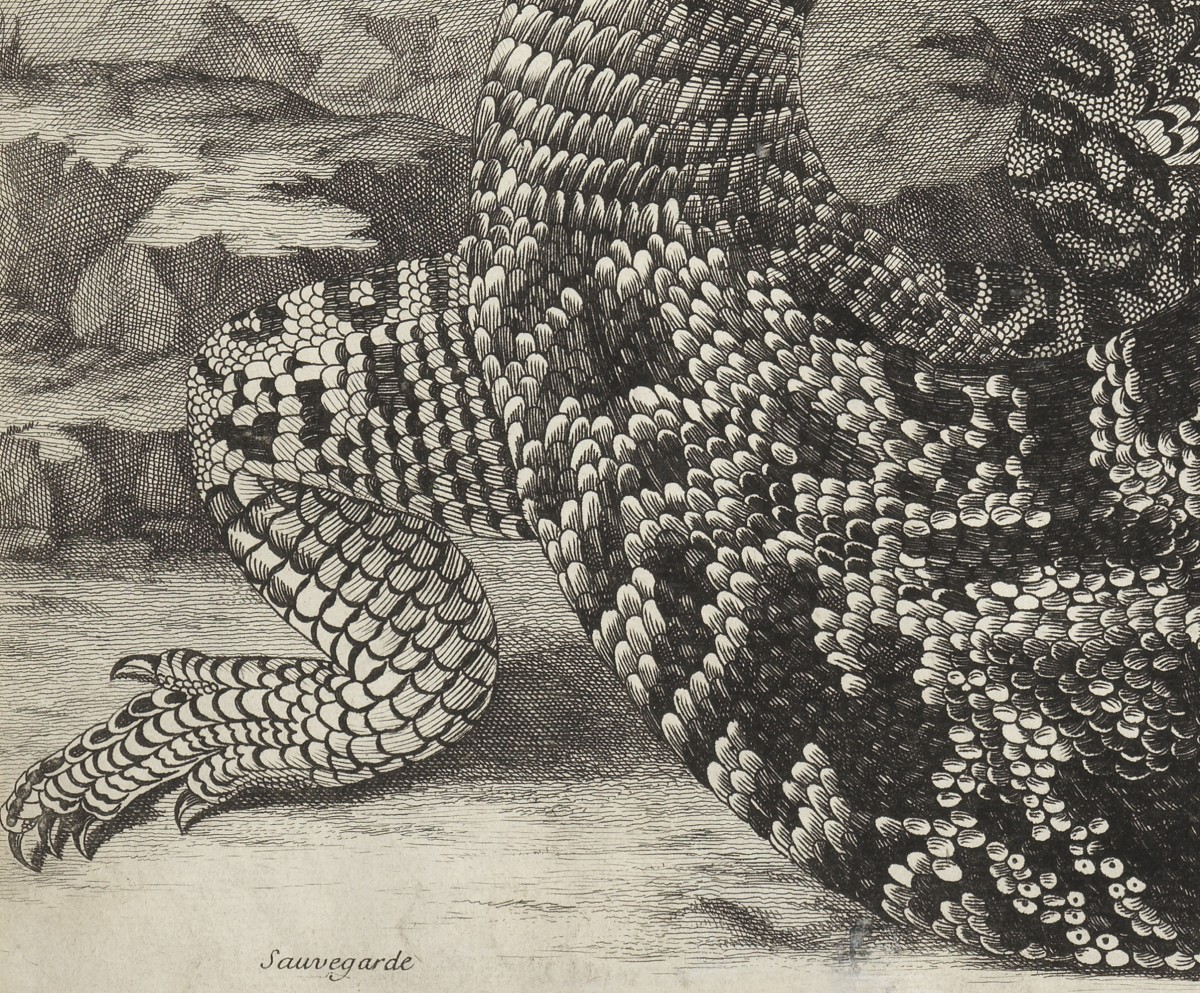
The artistic qualities of our print can be attributed to Maria Sibylla’s training as a still-life painter. The anatomical accuracy stems from her early passion for entomology and her use of the microscope, which enabled her to reproduce the finest details. Our artist’s thirst for knowledge led her to undertake a perilous research journey to Suriname in 1699, from which she returned with numerous previously unpublished studies and dried insects. Thus, it was both as an artist and a scientist that she published her “Metamorphosis insectorum Surinamensium” in 1705. This major compilation resulting from her journey to America became a reference work for the greatest scientists, such as Carl Linnaeus, who cited her illustrations 136 times in his great taxonomy of species.
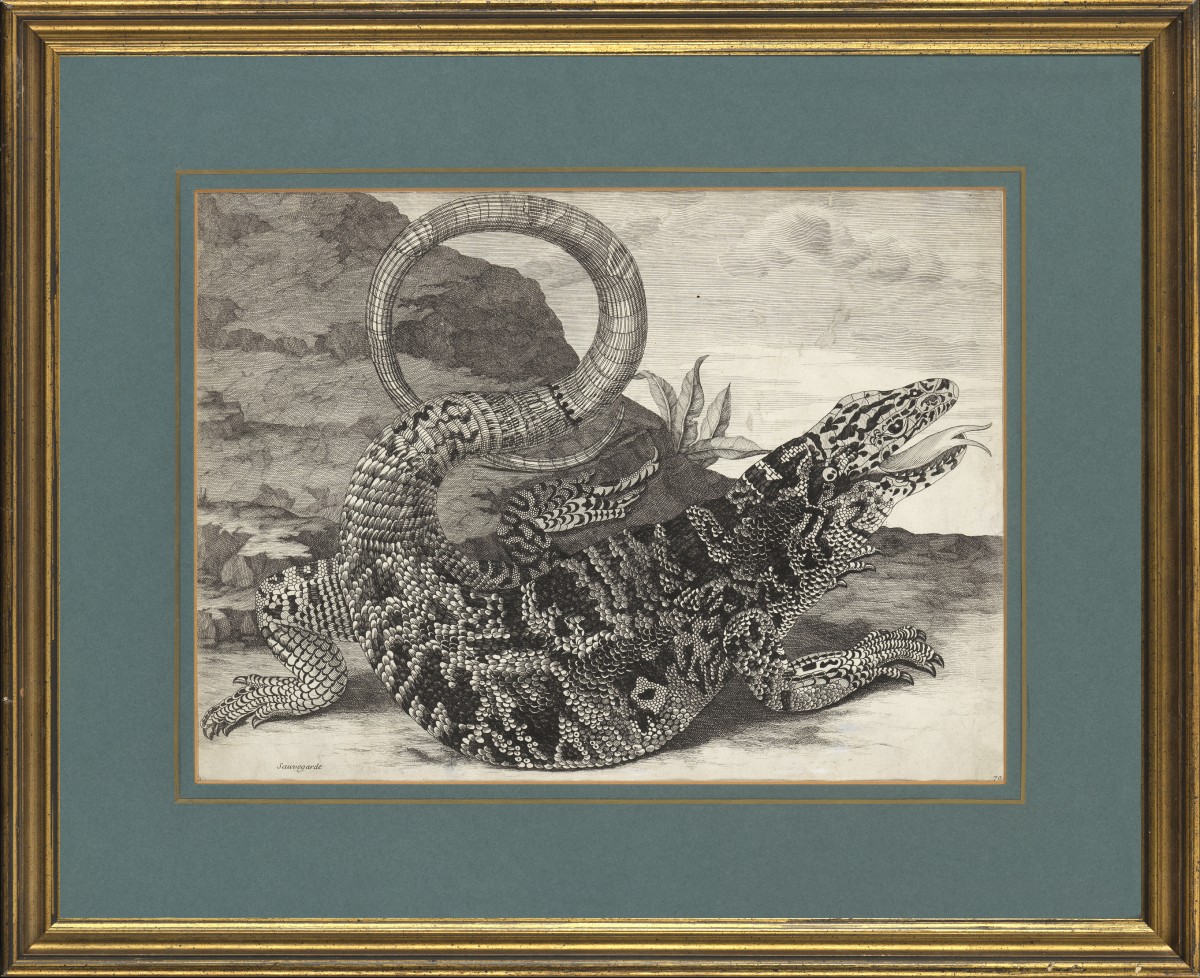
Our plate is mounted in a gilt frame, with a mat and anti-reflective, UV-protective glass.
Dimensions: 28 × 38 cm – 46 × 56 cm with the frame.
Biography: Maria Sibylla Merian (Frankfurt, April 2, 1647 – Amsterdam, January 13, 1717) discovered drawing through her stepfather, the still-life painter Jacob Marrel. His studio contained a collection of dried plants and insects that the young Maria practiced copying. However, from the age of 13, she understood that studying living specimens would allow her to achieve a more accurate representation of reality. She thus recounted having “set aside her social life and devoted all her time to observing insects and improving her painting skills, so that she could draw and paint specimens as they appear in nature.”
Both a publisher and an artist, Maria Sibylla Merian headed a prolific workshop in which numerous other women worked, often excluded by the guilds from the prestigious field of history painting. Her two daughters, Johanna Helena Herolt (1668–1723) and Dorothea Maria Henrietta Gsell (1678–1743), spent most of their careers in the family workshop, to the point that it is often difficult to distinguish their works from those of their mother.
Bibliography:
- REISTMA, Ella (ed.), Maria Sibylla Merian & Daughters: Women of Art and Science, (exhibition catalogue, Rembrandt House Museum, Amsterdam, 23.02.08 – 18.05.08, J. Paul Getty Museum, Los Angeles, 10.06.08 – 31.08.2008), Oxford University Press, 2008.
- VAN DE ROEMER, Bert, Maria Sibylla Merian: Changing the Nature of Art and Science, Tielt, Lannoo, 2022.
- WETTENGL, Kurt, Maria Sibylla Merian, 1647–1717: Artist and Naturalist, Ostfildern-Ruit, Verlag Gerd Hatje, 1998.
- HOND, Jan de, Crawly Creatures: Little Animals in Art and Science, (exhibition catalogue, Amsterdam, Rijksmuseum, 30.09.2022 – 15.01.2023), Amsterdam, Rijksmuseum, 2022.
- NERI, Janice, The Insect and the Image: Visualizing Nature in Early Modern Europe, 1500–1700. Minneapolis: University of Minnesota Press, 2011.