Offered by Étienne de Roissart
REQUEST INFORMATION
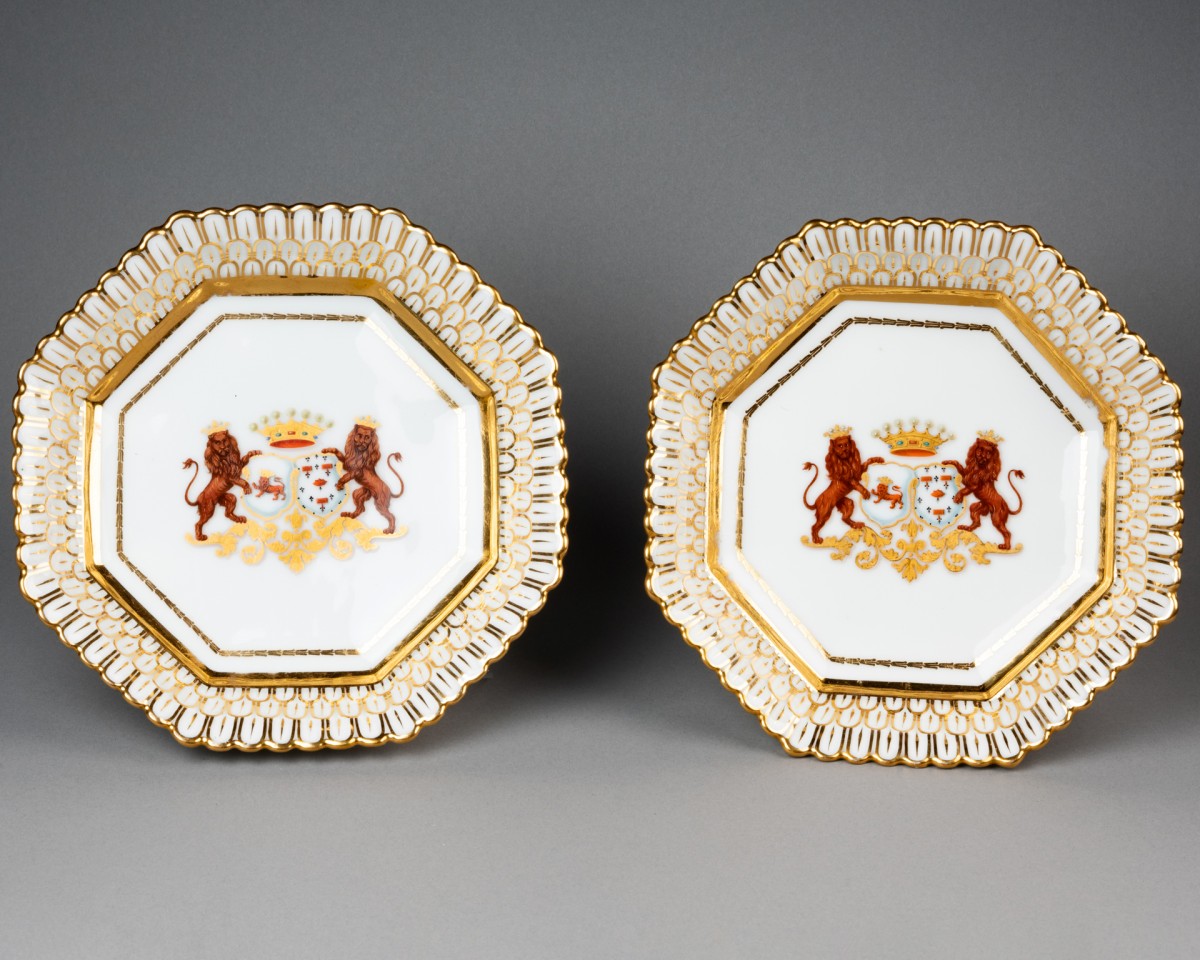
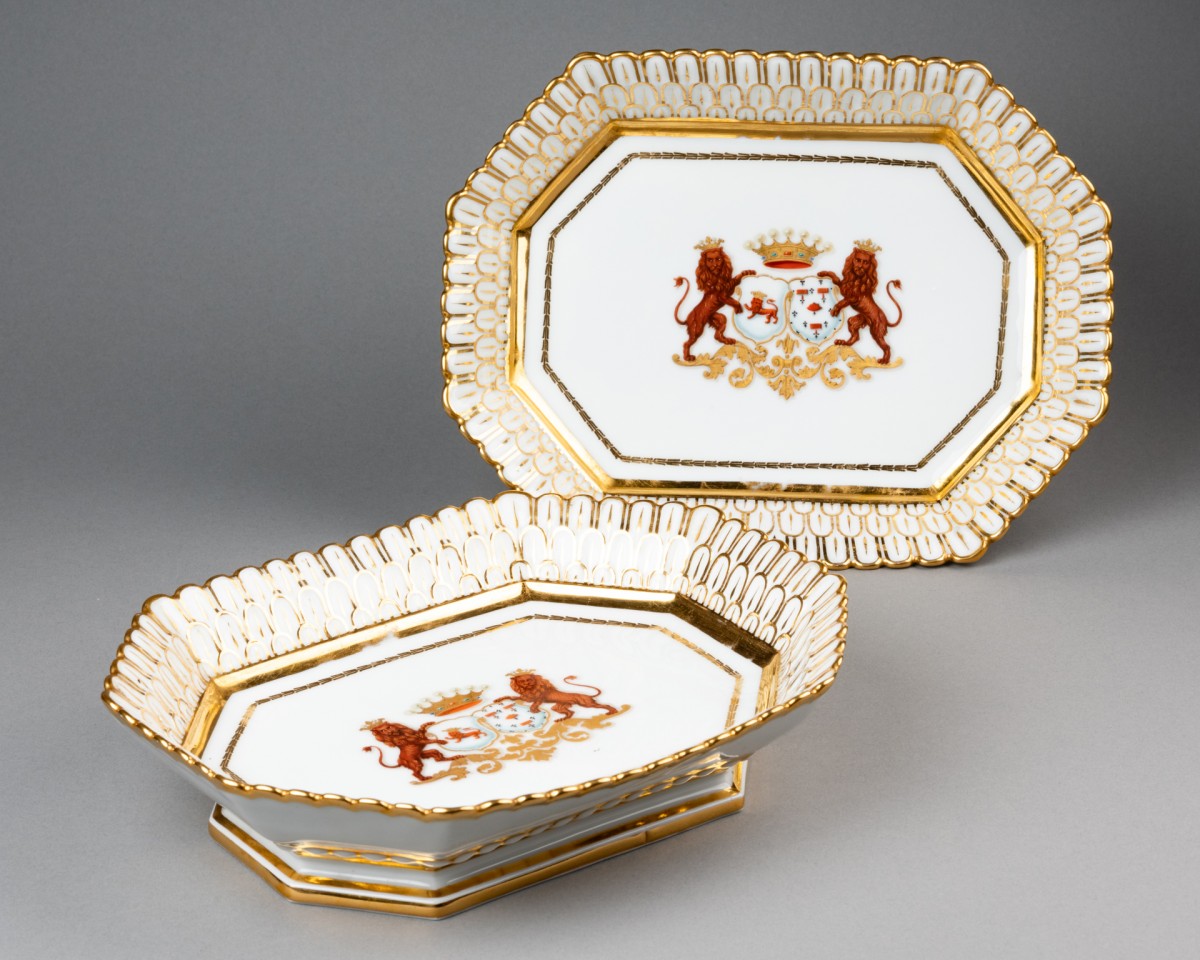

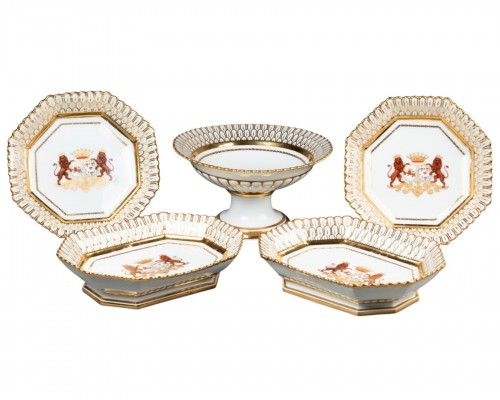
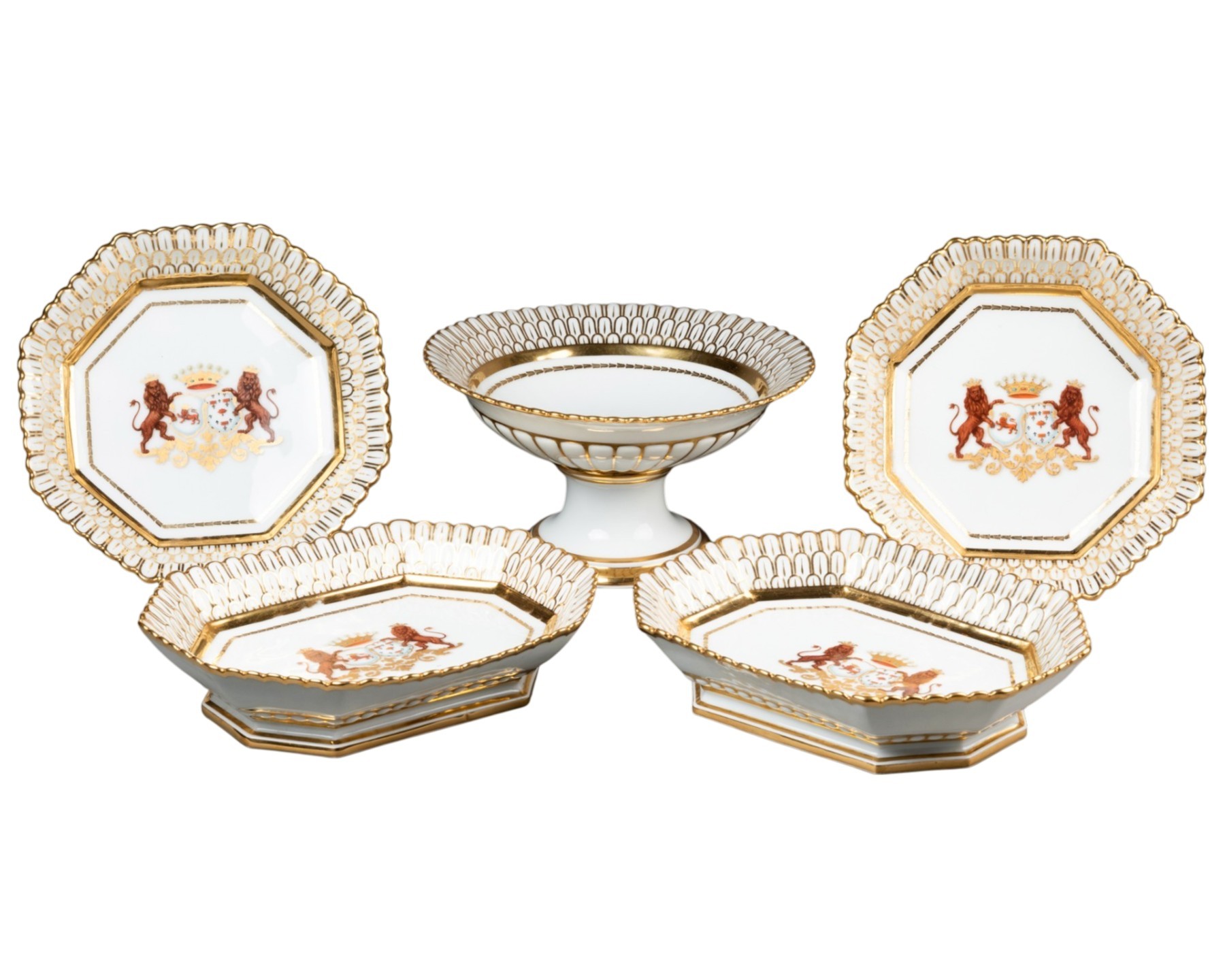
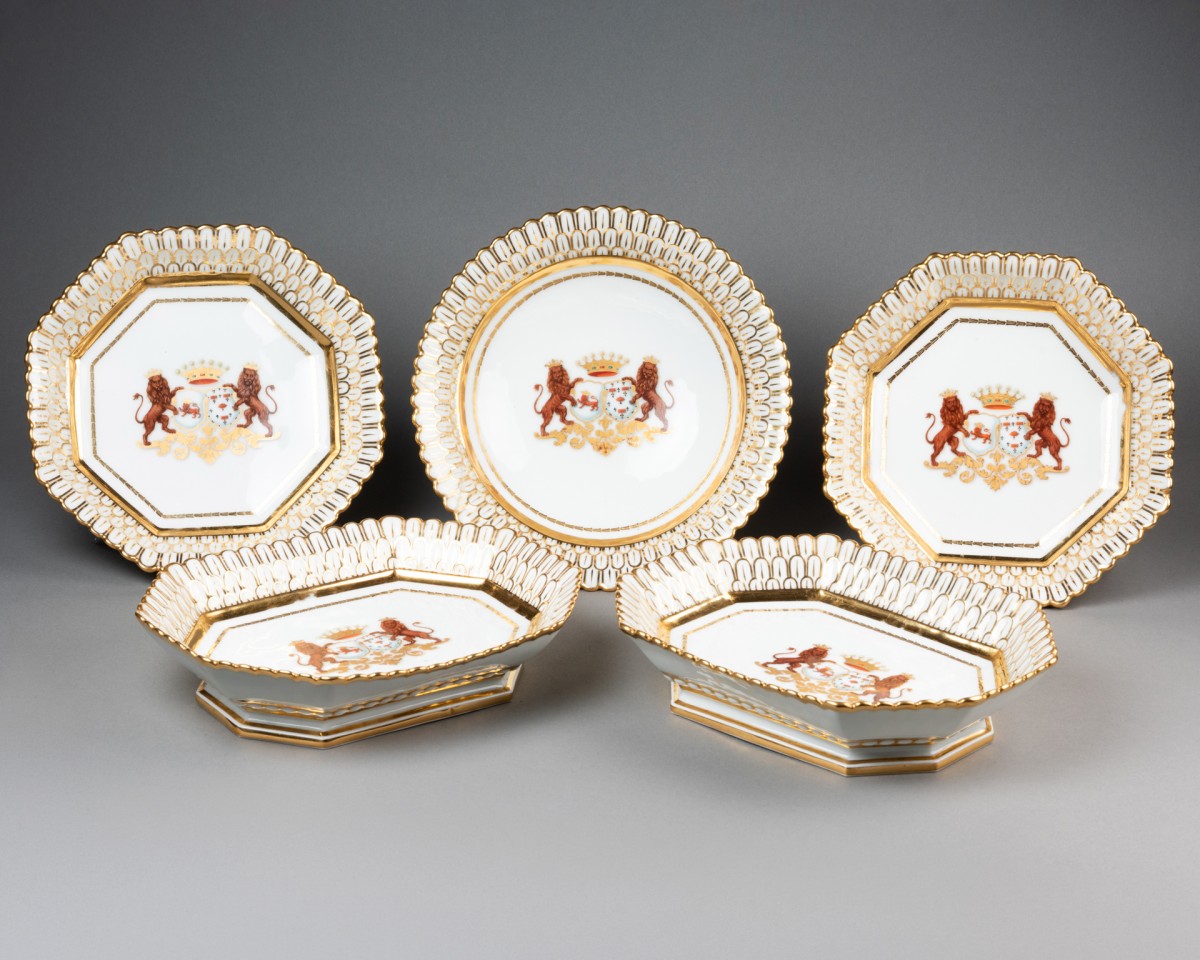
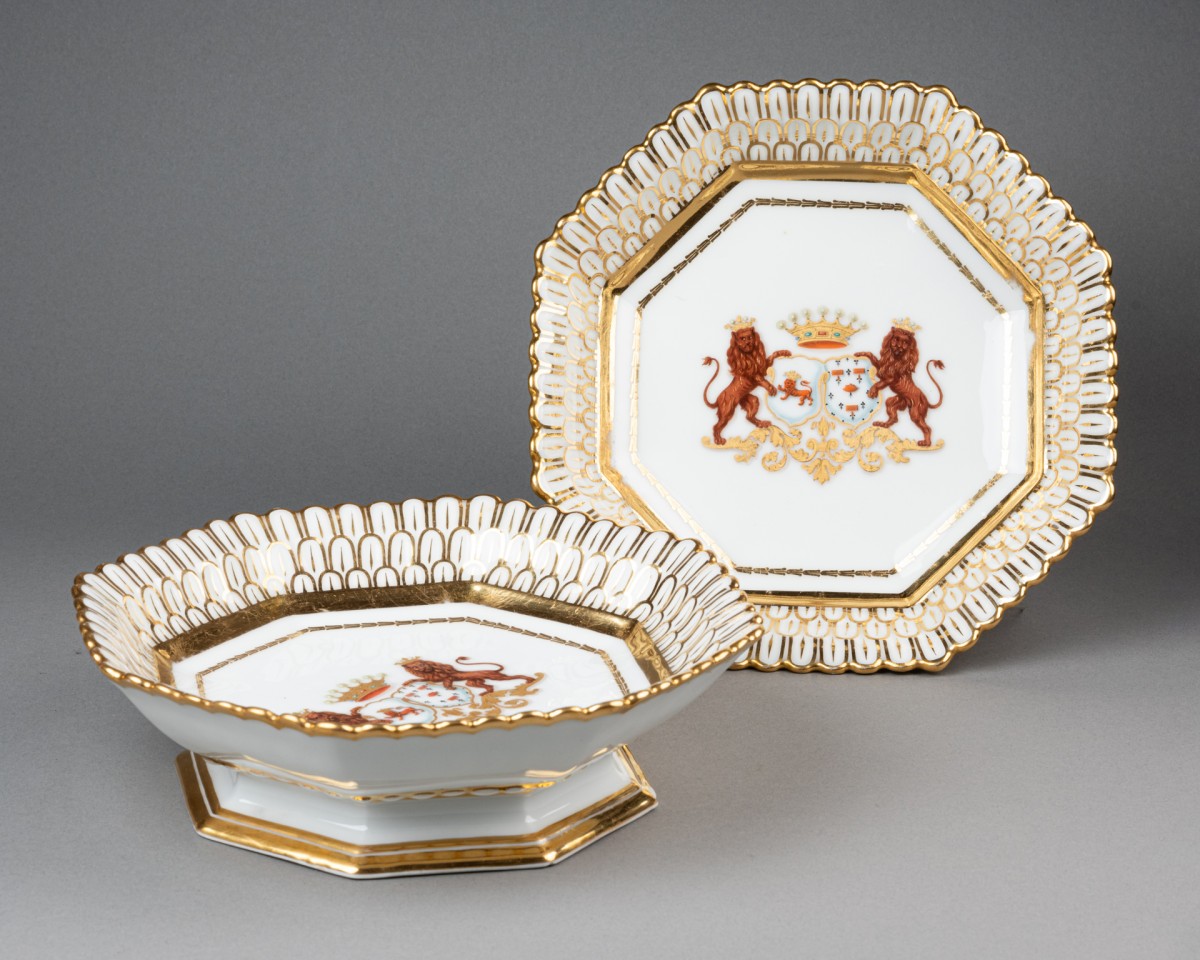
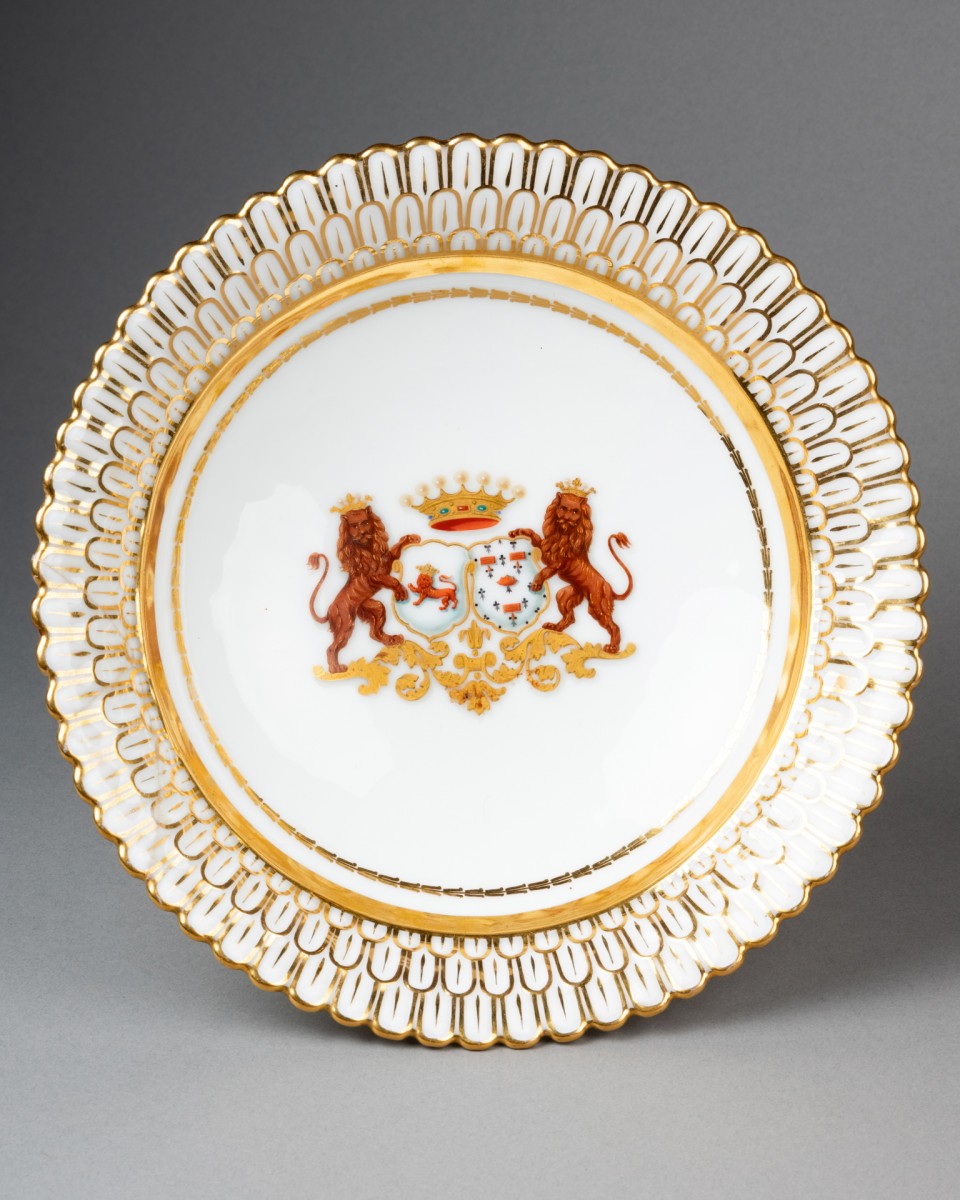
Set of Brussels porcelain dishes from the Henri Faber manufactory, bearing the arms of the Baré de Comogne–Plovits alliance
The set comprises a total of five porcelain dishes, including two pairs. The pair of hexagonal dishes measures 21 cm, the pair of octagonal dishes measures 19 × 25 cm, while the fruit dish measures 23 cm in diameter and 13 cm in height.
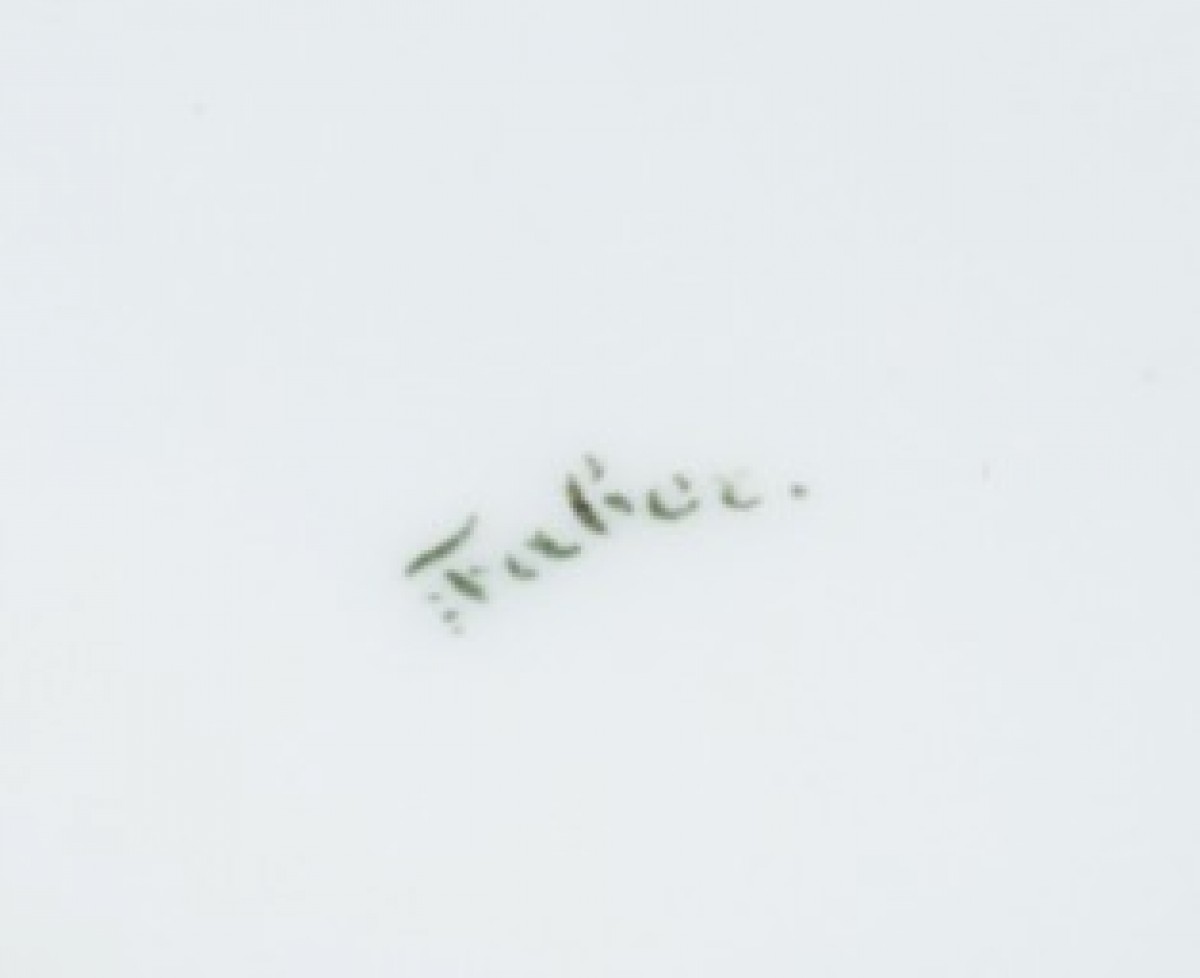
Frédéric Théodore Faber was a painter and porcelain manufacturer, born in Brussels in 1782 and died there in 1844. The son of the painter Johann Hermann Faber (1734–1800), Frédéric Théodore initially specialised in animal and landscape painting before founding a porcelain manufactory, subsequently abandoning painting on canvas in favour of painting on porcelain. From 1818, he directed the Porcelain Manufactory of Ixelles. Appointed painter to the Court, he produced a table service for King William I of the Netherlands.
This service can be dated between 1835 and 1849. The Baré de Comogne family traces its roots to the County of Namur, where, from the 16th century onwards, its members were tanners for several generations. Lambert Baré (1759–1828) was a member of the cavalry corps of Namur and was created a baron in 1827. Henri-Adrien de Baré de Comogne was born in Namur in 1789 and married Isabelle-Henriette Plovits in 1812. The Plovits were an old family of bankers from northern France, originally from Watten.
The alliance arms are blazoned as follows: on the dexter side, argent, a leopard passant gules, crowned à l’antique or, for Baré; on the sinister side, ermine, a red label accompanied by three red tines, for Plovits.
The shields are surmounted by a baronial crown and supported by two lions passant gules, crowned, armed and langued or. The service is decorated on a white ground with gilt edging, while the borders of the dishes are adorned with a “scale” pattern.
It is worth noting that since 1848, all bearers of the name Baré de Comogne have held the title of Viscount.