Offered by Poncelin de Raucourt Fine Arts
REQUEST INFORMATION

Paintings and drawings, from 16th to 19th century
Attributed to Jacopo Zanguidi, known as Bertoja
(Parma, 1544–1574)
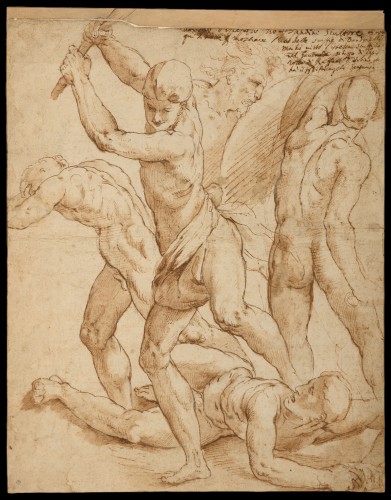
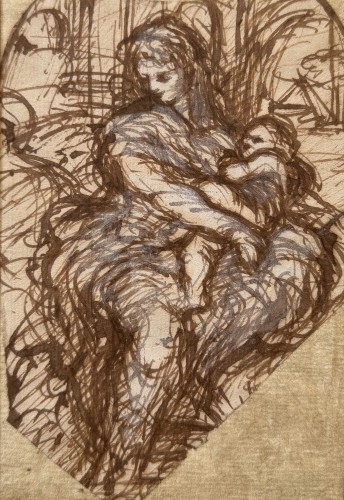
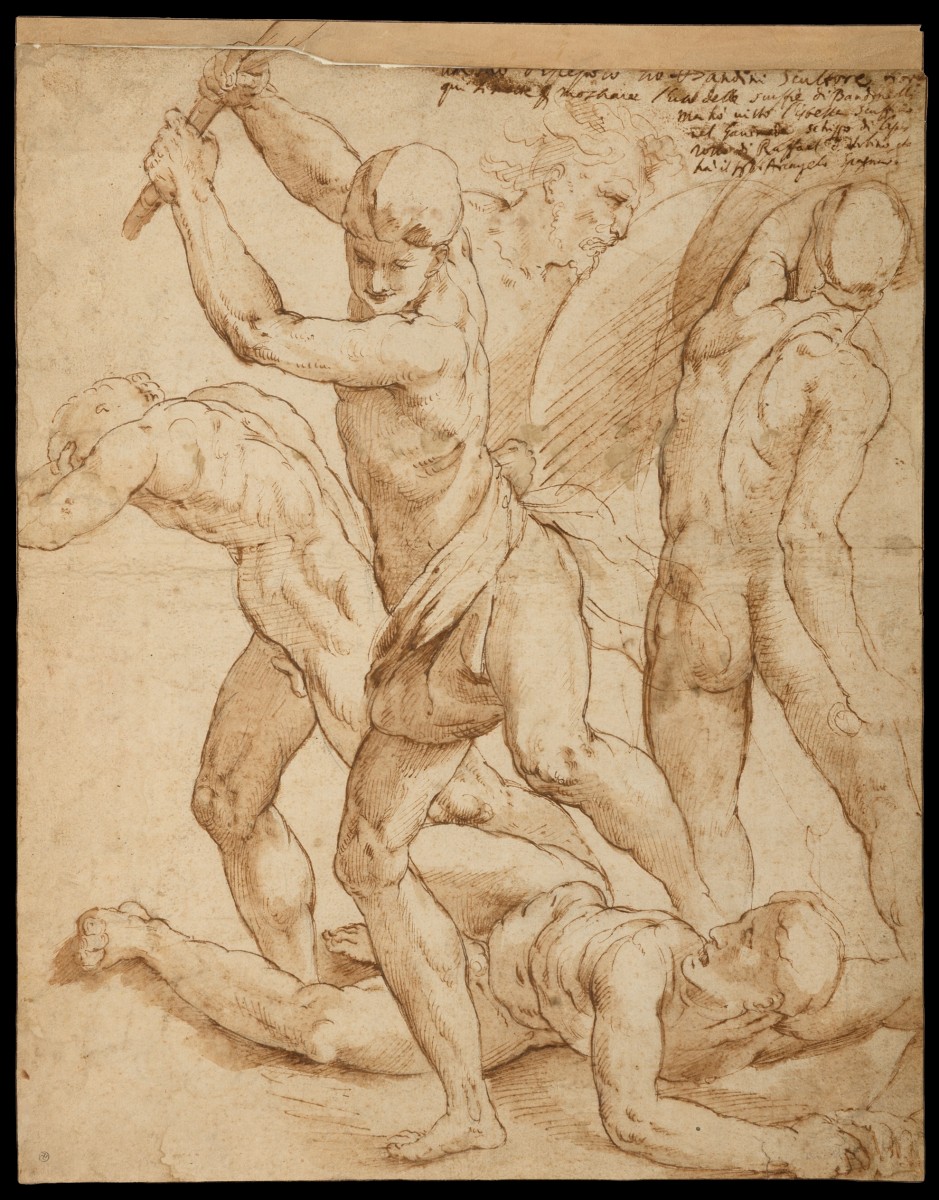
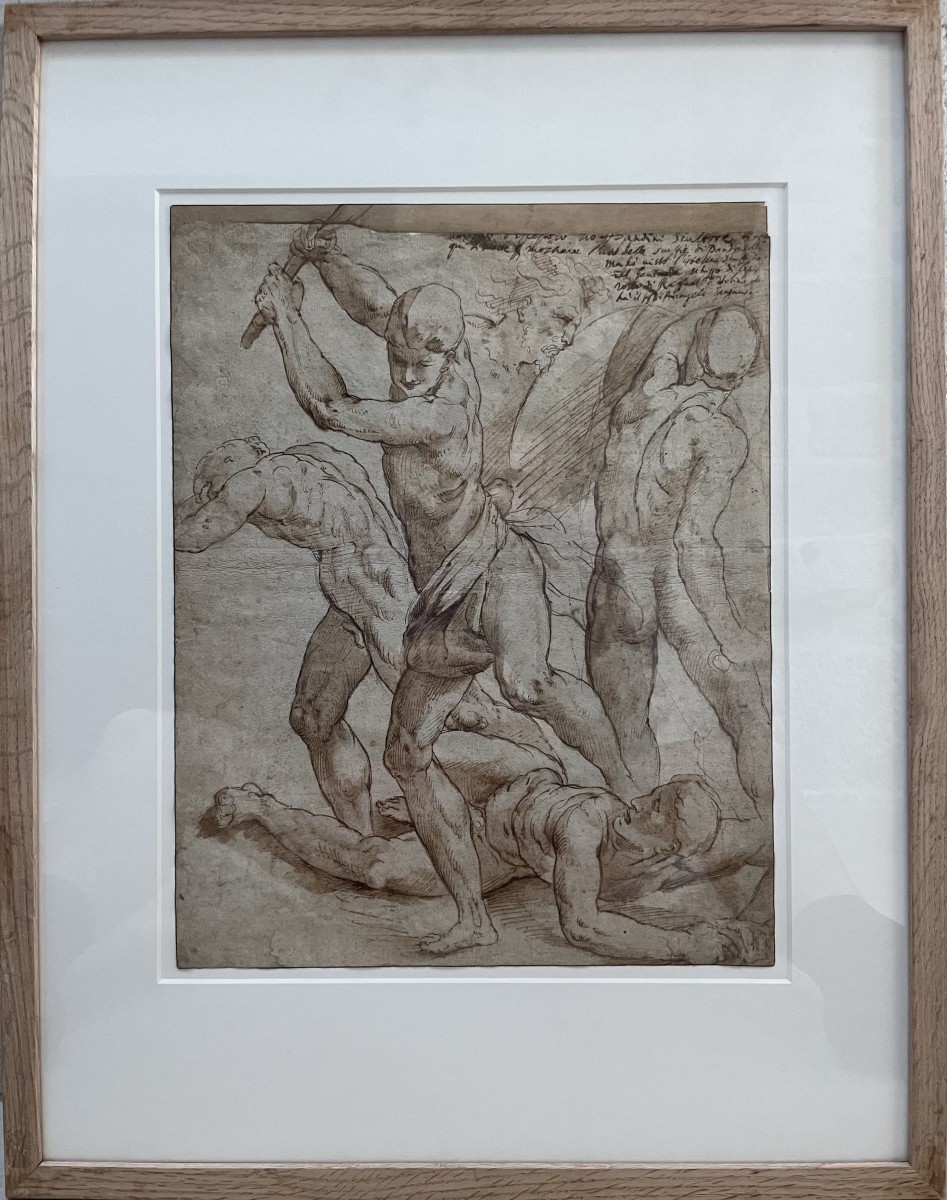
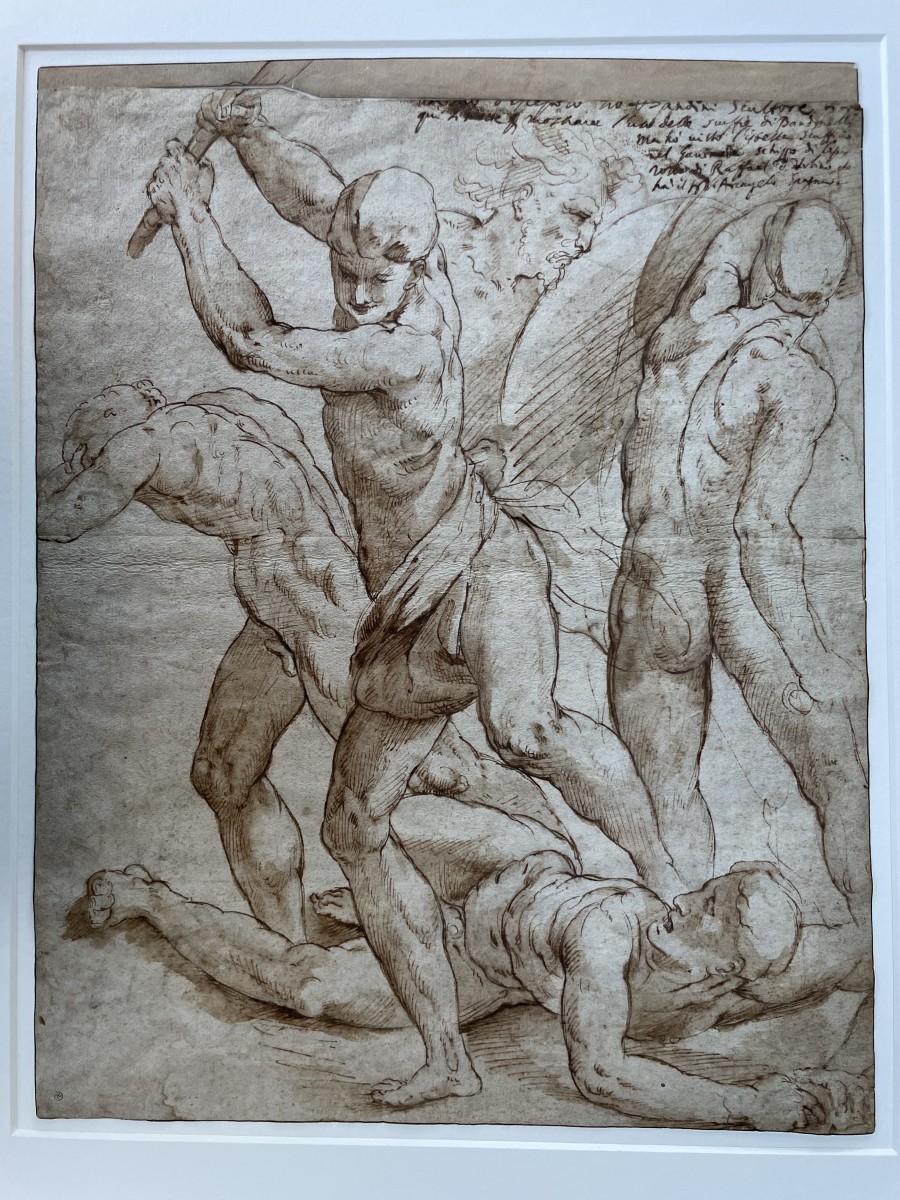
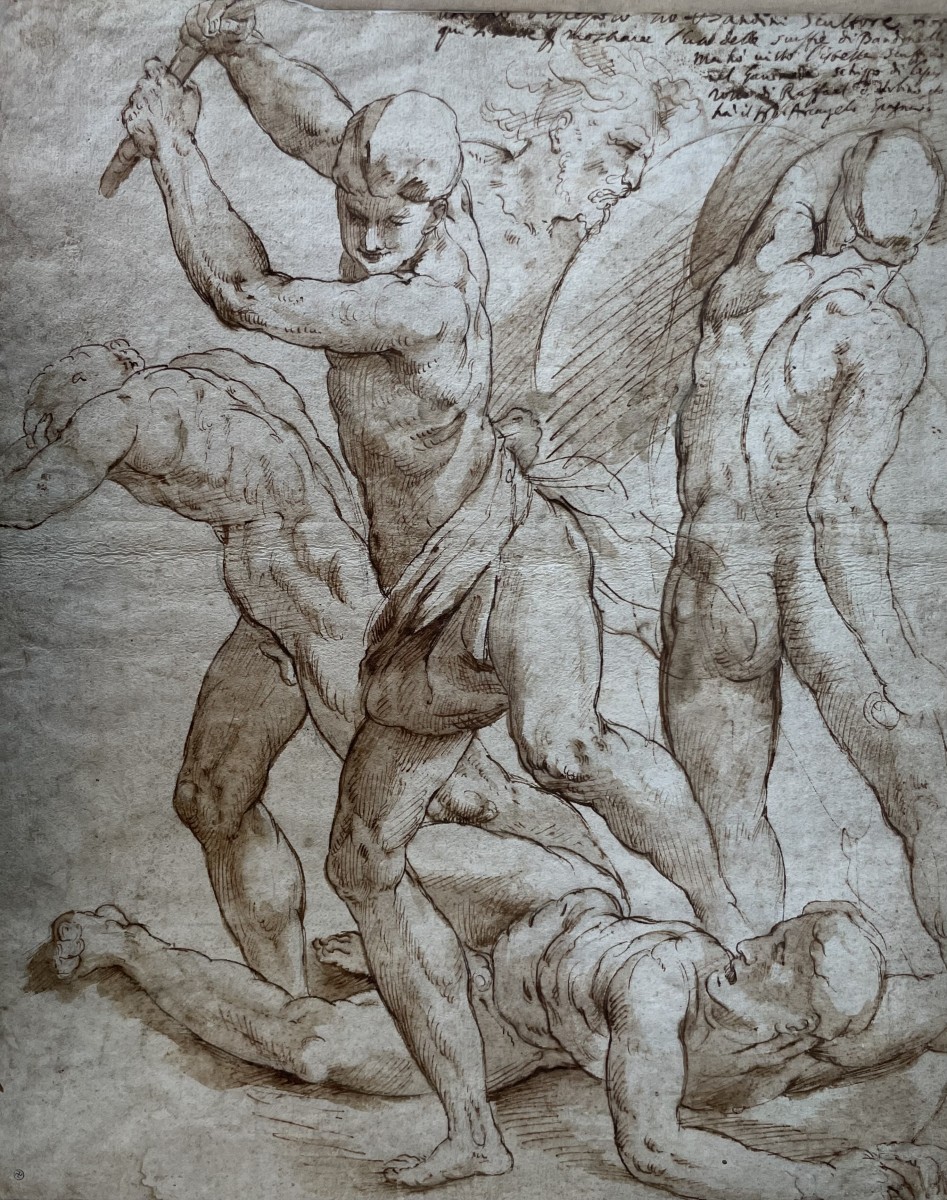
Fight between Five Figures, after Raphael, 16th century
Pen and brown ink, brown wash, over black chalk outlines.
43 × 34 cm
Provenance:
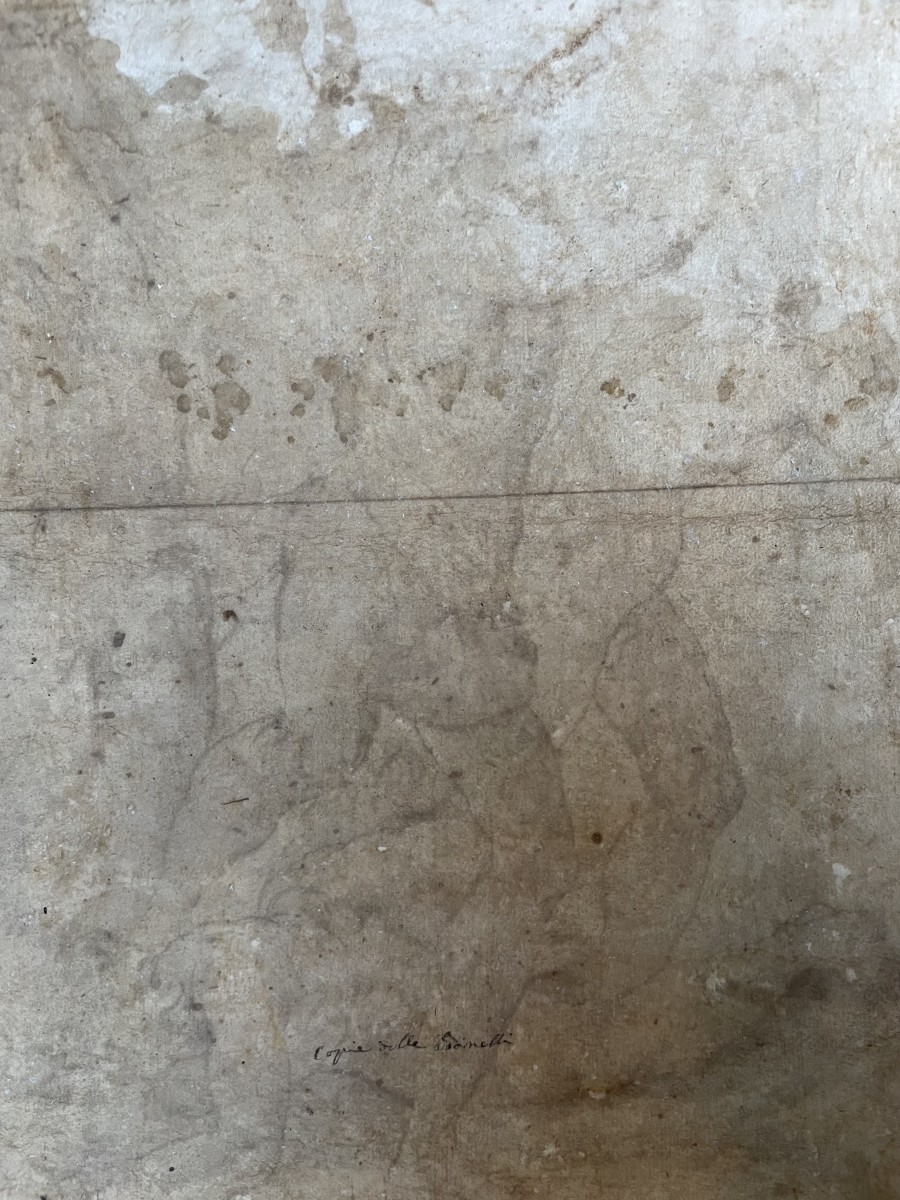
Former collection of Charles Molinier (1845–1910), his seal in the lower left (Lugt 2917);
Private collection, France.
A major and ambitious Mannerist drawing based on Raphael’s famous Battle of the Five Men, a red chalk study executed around 1508–1510 for the faux bas-relief located beneath the statue of Apollo in The School of Athens, now in the Ashmolean Museum in Oxford.
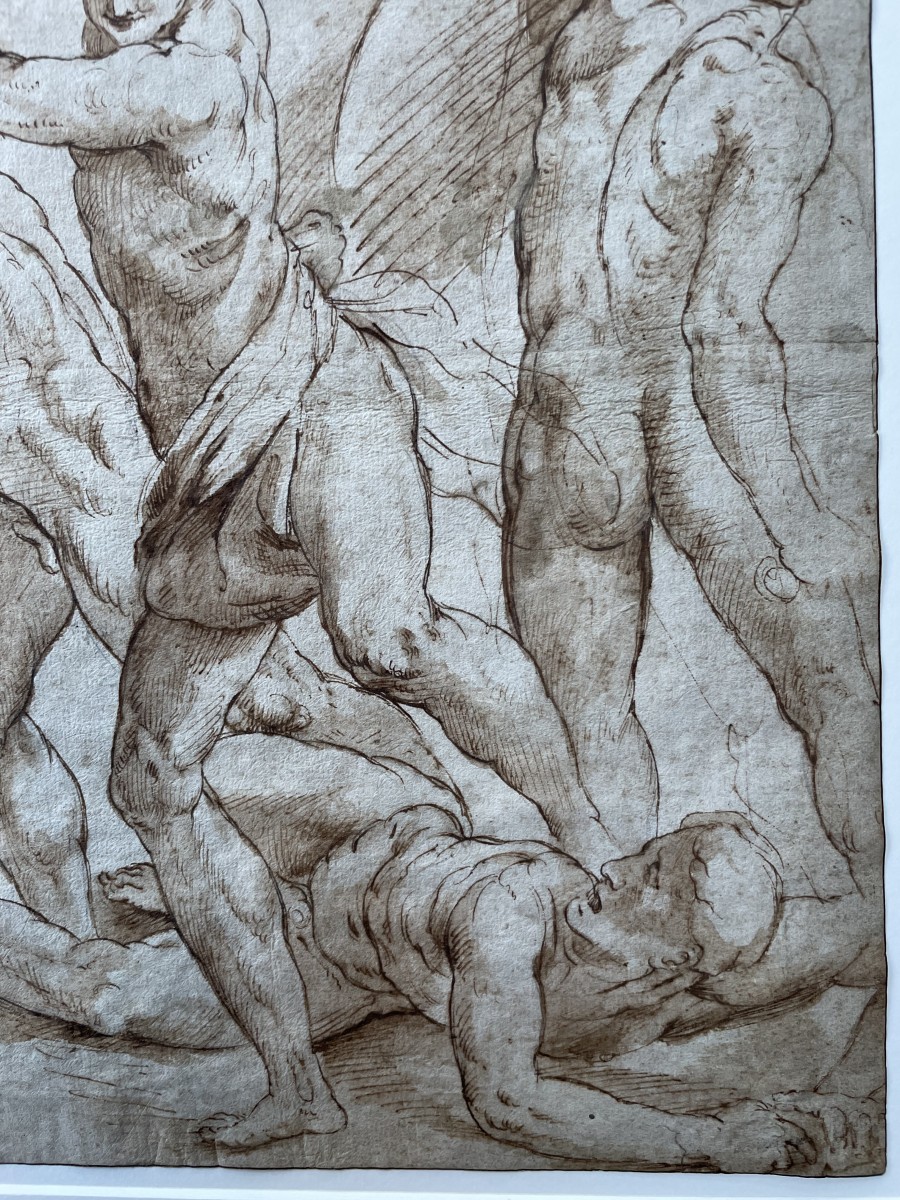
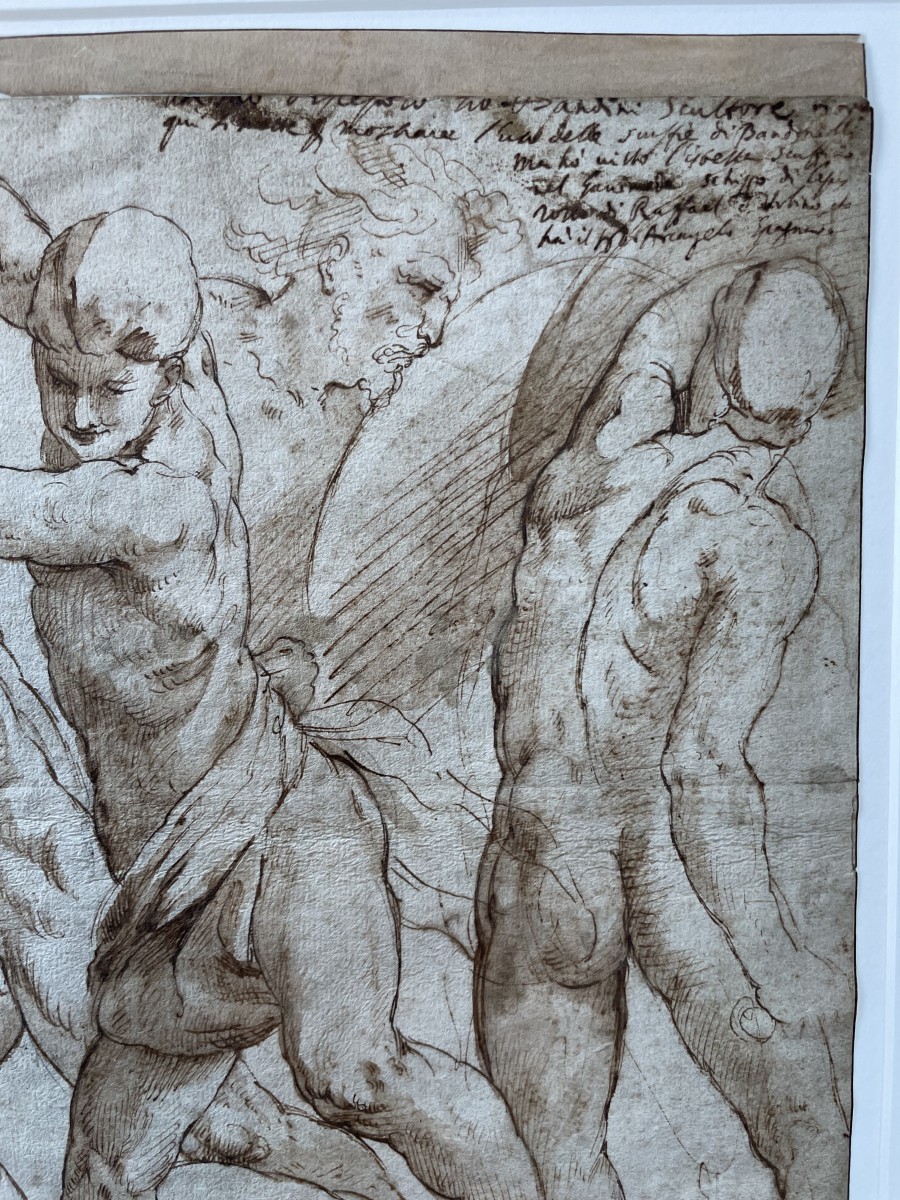
This drawing draws directly on Raphael’s preparatory study rather than on the finished fresco. The artist, however, does not merely produce a copy: several elements that were only sketched in the original—notably the staff, the drapery, and the bearded head—are developed here in a more personal manner.
The attribution to Jacopo Zanguidi, known as Bertoja, is based in particular on the great fluidity of the contours, the hatching that follows the muscular forms, and certain characteristic details around the joints. Convincing stylistic parallels can be drawn with several of Bertoja’s drawings preserved at the Louvre, notably the Studies of Legs (INV 6450), the Group of Seven Figures (INV 6538), and Hercules, Omphale (?), and an Old Man (INV 6064.BIS).
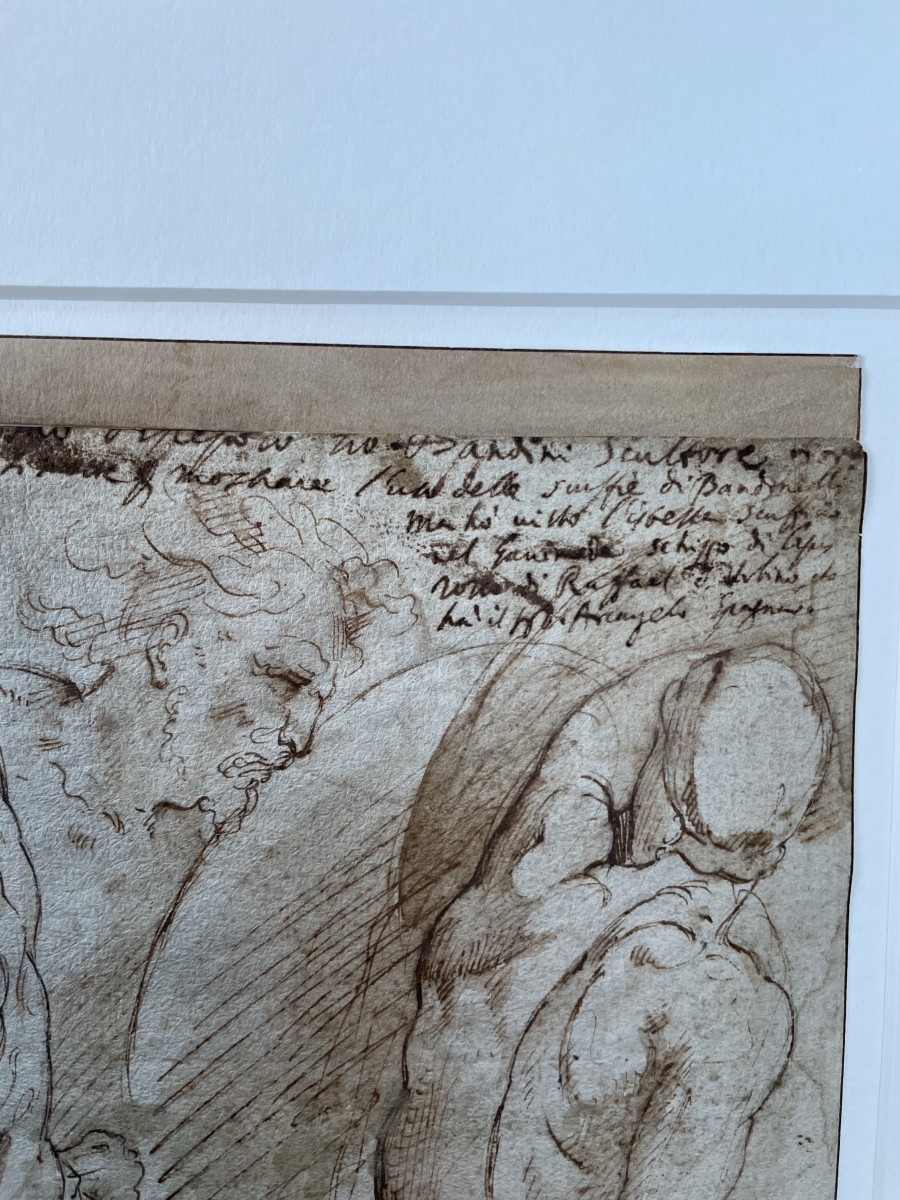
An old inscription in the upper right corner mentions Giovanni Bandini, Bandinelli, Raphael, and Arcangelo Spagna. It is of particular documentary interest since it appears to refer to Raphael’s red chalk drawing now in Oxford and could help establish a previously unknown historical provenance. This inscription has been studied by Professor David Ekserdjian.