Offered by Poncelin de Raucourt Fine Arts
REQUEST INFORMATION

Paintings and drawings, from 16th to 19th century
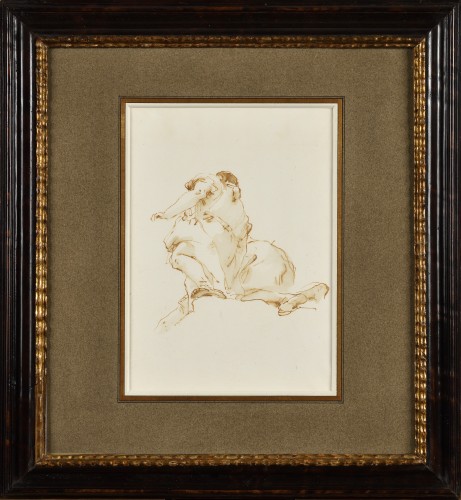
Giovanni Battista Tiepolo (1696–1770)
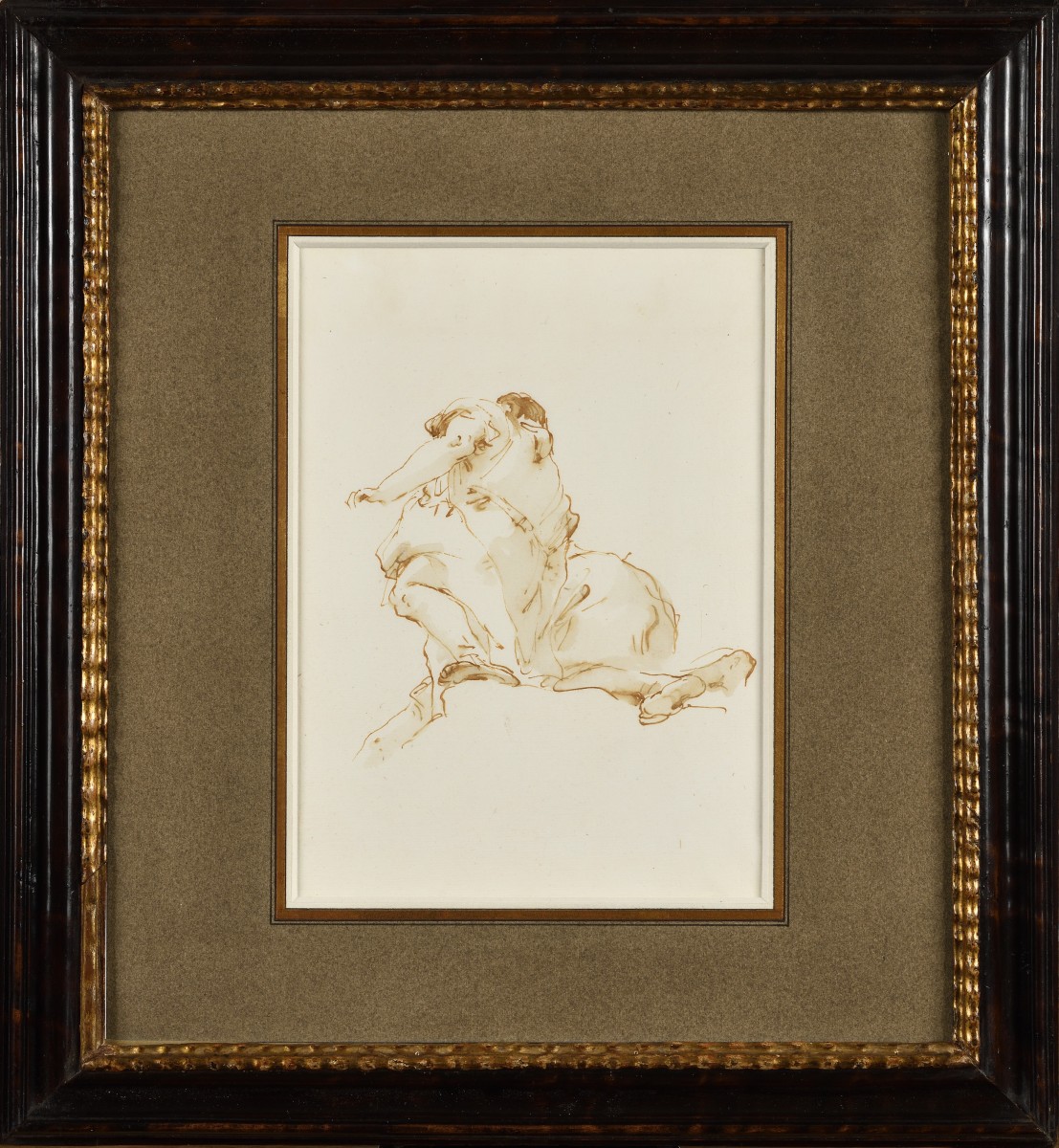
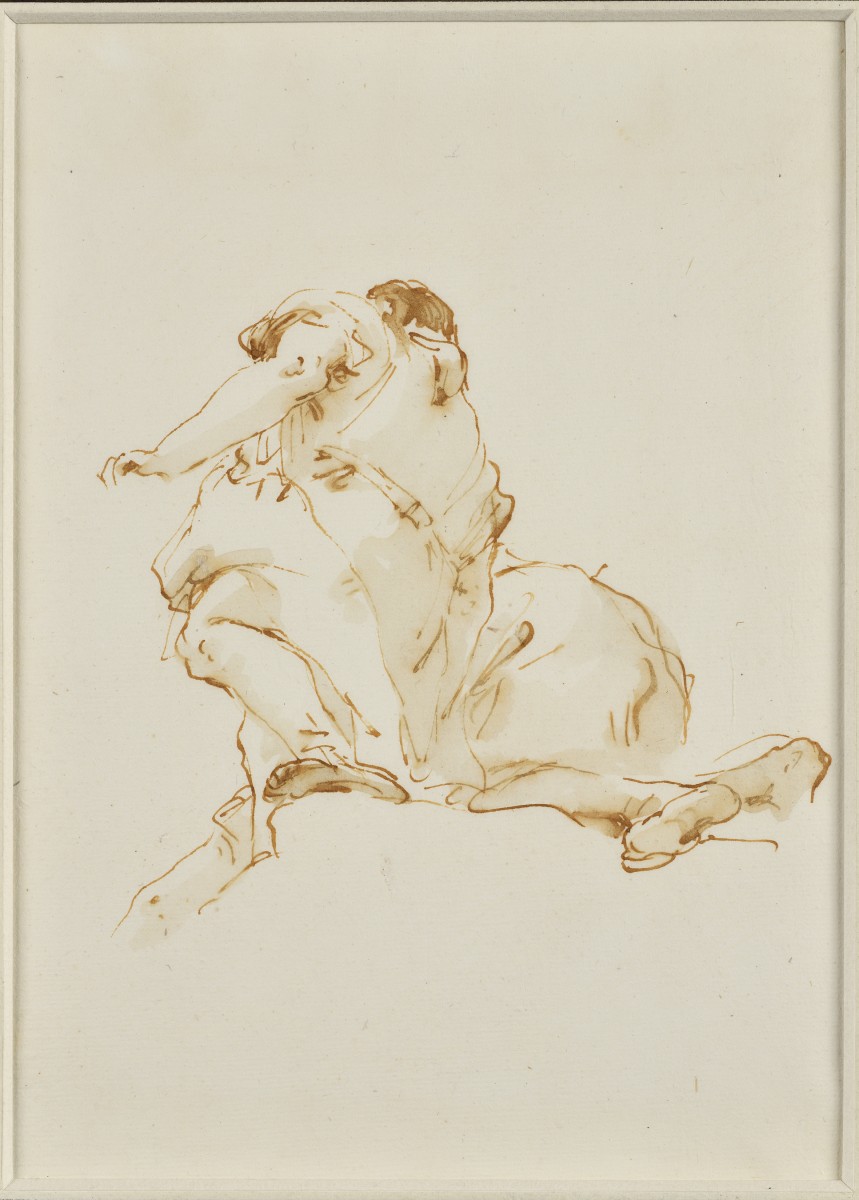
Two figures seen from below looking up
Circa 1758–1760
Pen and brown ink, brown wash on paper mounted on board.
21.5 × 15.5 cm
Unidentified watermark.
Provenance:
Ben Wolf, Philadelphia, Pennsylvania;
passed down through the family;
University of Michigan, William Clements Library, Ann Arbor, Michigan;
private collection.
This remarkable drawing by Giovanni Battista Tiepolo belongs to the highly characteristic group of figure studies viewed da sotto in su, executed by the artist to expand his repertoire of compositions intended for large-scale ceiling decorations.
It can be compared to the drawings once gathered in albums such as the famous Sole Figure per Soffitti, which are now scattered. These drawings generally depict figures seated or floating in space, rendered using bold foreshortening and viewed from a very low vantage point. Approximately one hundred and eighty studies of this type are known today. George Knox proposed dating this group to around 1758–1760, considering that it likely constituted for Tiepolo a veritable visual repertoire from which the painter could draw for his large-scale painted compositions and frescoes.
This sheet is particularly captivating due to the freedom of its execution. The rapid, energetic pen lines construct the two figures with remarkable economy of means, while the brown wash, applied in light strokes, lends volume to the drapery and accentuates the foreshortening effects. This combination of an extremely fluid line and a luminous wash is characteristic of Giambattista Tiepolo’s mature style as a draftsman. Both the paper and the tone of the bistre correspond to the materials used by the artist in his drawings from this period.
The positioning of the figures, designed to be viewed from below, directly links the sheet to the world of Tiepolo’s grand ceiling decorations. Similar studies from the Sole figure per soffitti series are held, notably, at the Fitzwilliam Museum in Cambridge, the Albertina in Vienna, and the Yale University Art Gallery; other closely related sheets are in the collection of the Princeton University Art Museum.
These figures, devoid of specific attributes and appearing to float in space, constitute one of the most iconic motifs in Tiepolo’s drawings. They reflect the artist’s fascination with depicting the body in foreshortened perspective and the extraordinary graphic spontaneity that allowed him to capture, in just a few strokes, a pose, a movement, or an effect intended for reuse in his monumental compositions.
As a recent point of comparison, a Study of a Female Figure for a Ceiling Decoration by Giovanni Battista Tiepolo, belonging to the same group of Sole figure per soffitti, was offered by Artcurial in Paris on September 22, 2026. Estimated at €7,000–10,000, it sold for €39,720, including fees. Artcurial also noted that this group of drawings came from albums compiled around Tiepolo’s da sotto in su studies.
One of the greatest decorative artists of 18th-century Venice, active in Venice, Würzburg, and later Madrid, Tiepolo was also one of the most virtuosic draftsmen of his time. More than two thousand drawings are attributed to him today; many of them were preserved by the artist in albums organized by subject to serve as a repertoire of designs for use in his studio.