Offered by Gallery Judith et Jean de Beaumont
REQUEST INFORMATION

Classical Painting from the 16th to the 19th Century (Flanders, Italy, France)
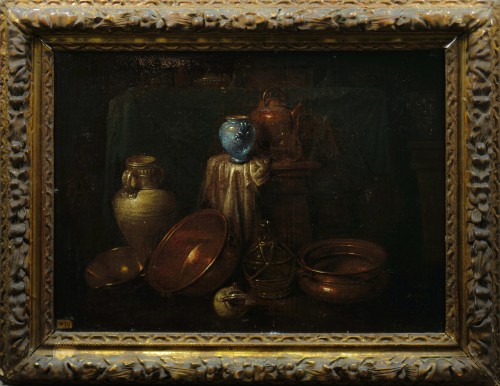
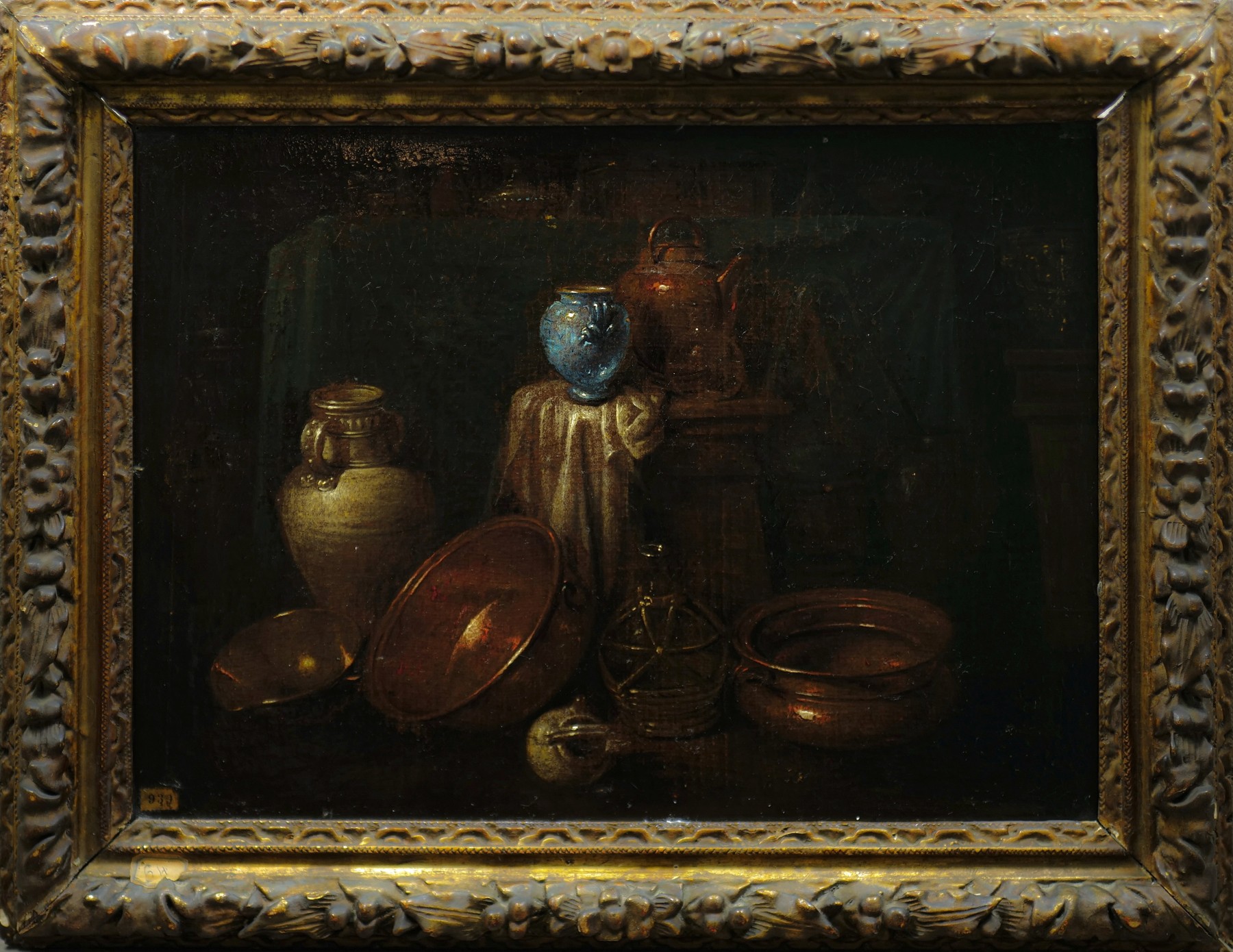
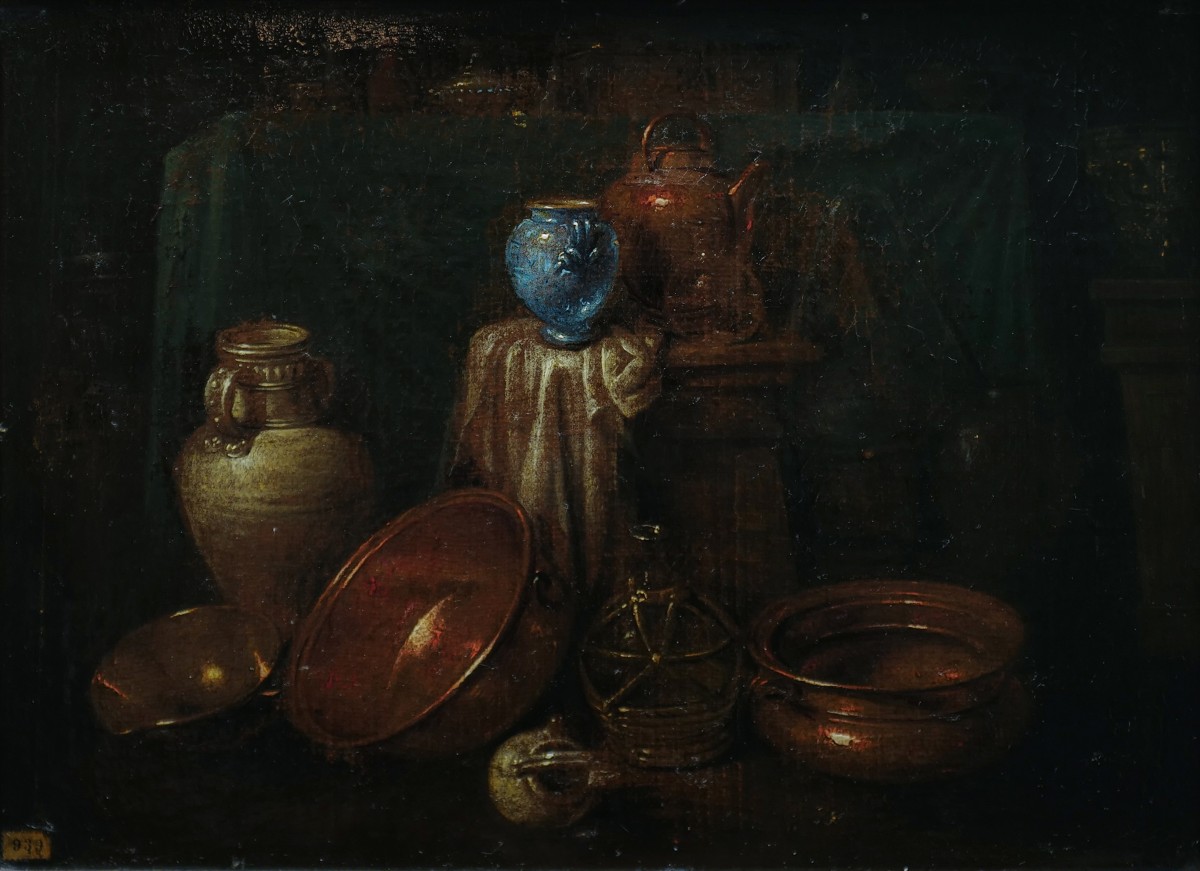
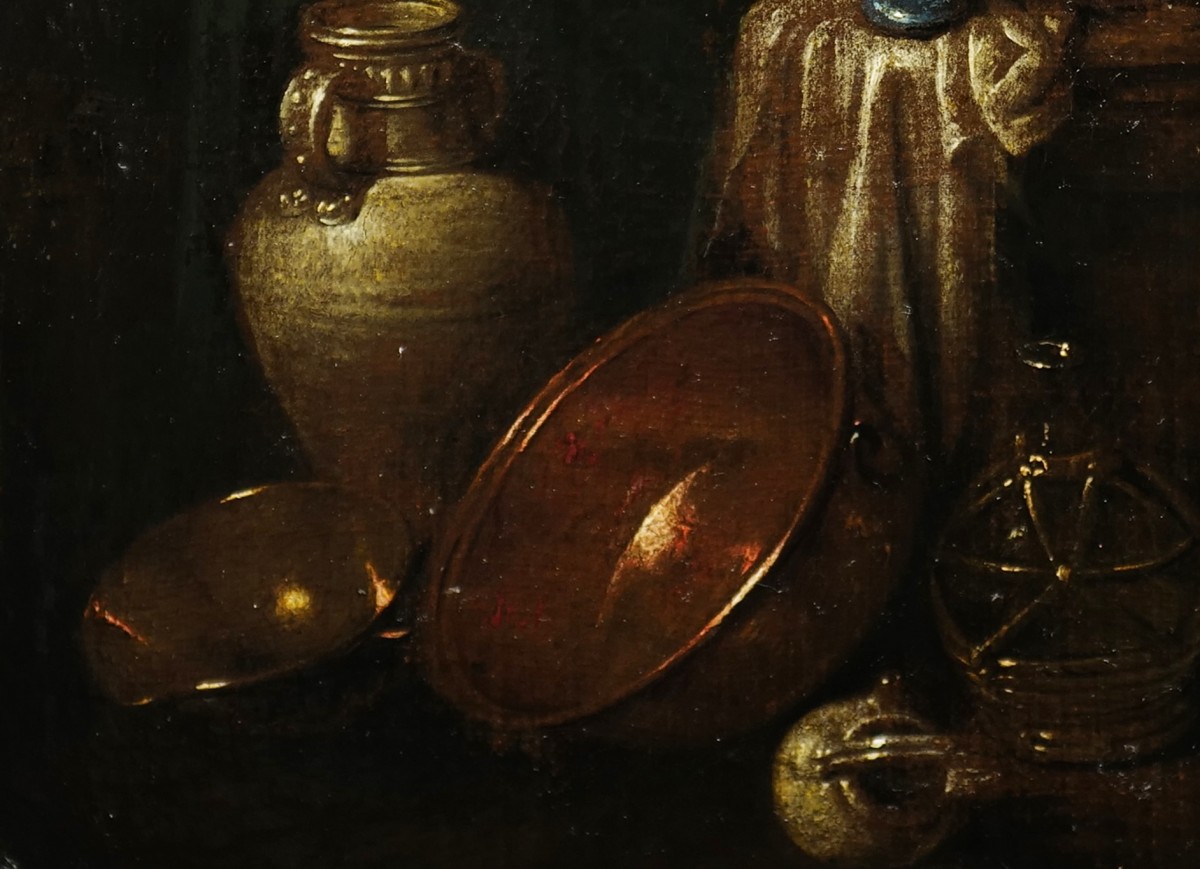
Still Life with Brass, Ceramics, and Glassware
Oil on canvas mounted on panel
32 × 42.7 cm
Presented in its period Louis XIII frame of carved and gilded wood, sold separately for €1000
On the reverse of the panel is an old handwritten inscription: “Téniers – Woeburg Sale – Lyon 1874,” a particularly interesting testament to the work’s history. This former attribution to David Teniers speaks to the quality of the composition and its clear affinity with 17th-century Flemish interiors.
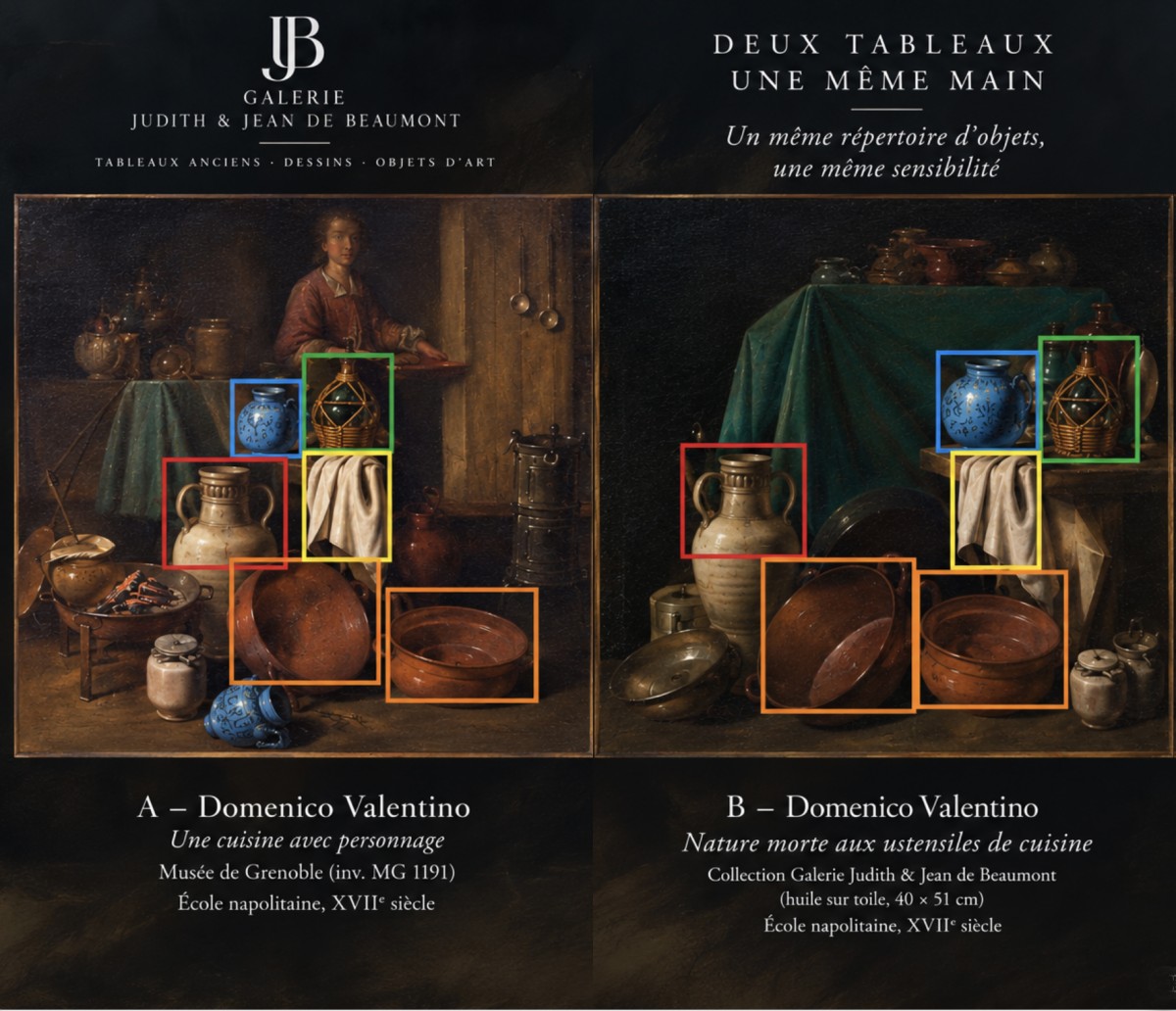
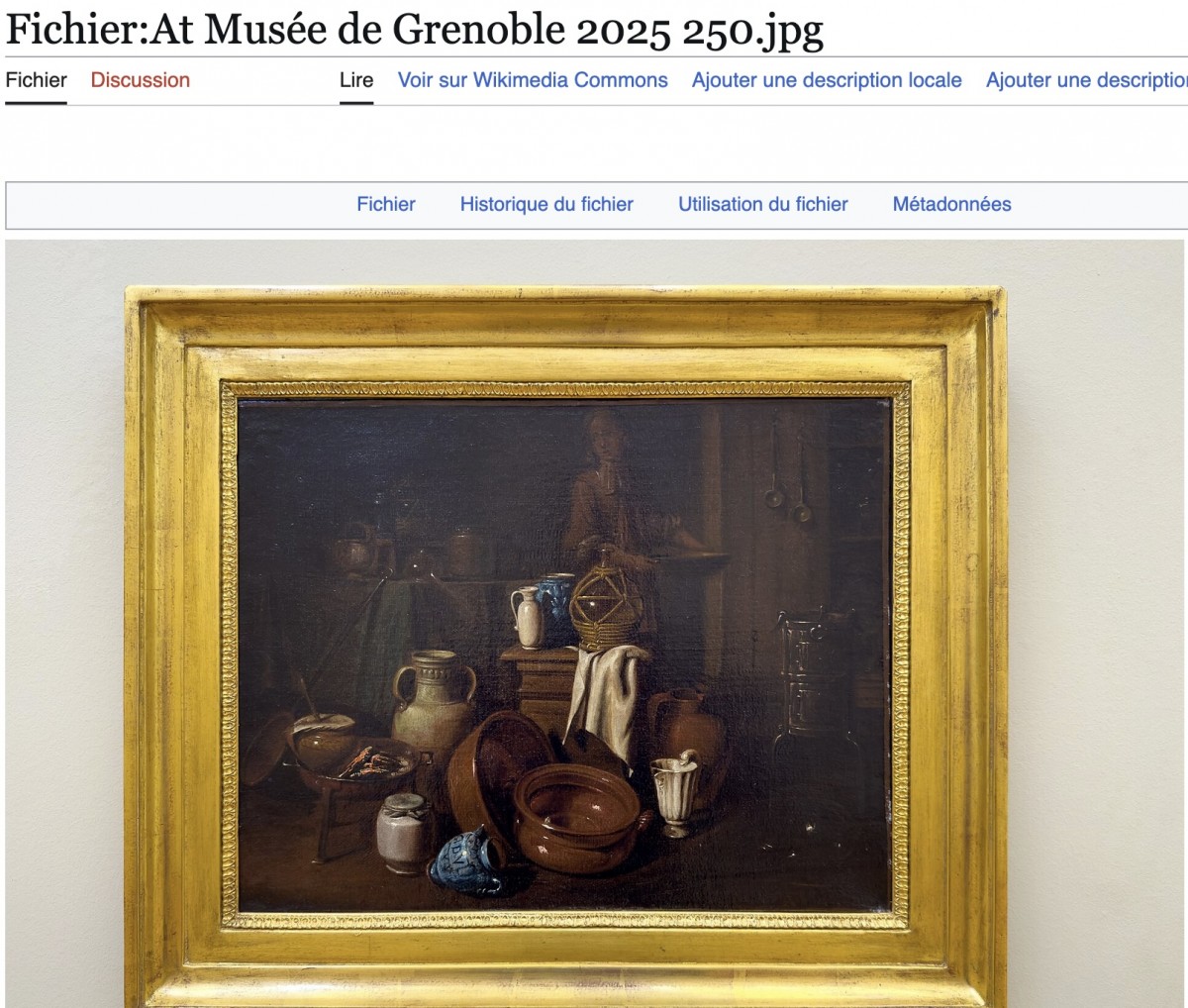
It is worth noting that the same utensils appear in the painting on display at the Grenoble Museum—so much so that it is possible the two paintings were created simultaneously (see comparison in the photo)
This still life fits perfectly into the body of work by Giovanni (or Gian Domenico) Valentino, a Roman painter active in Rome, Imola, and Ravenna, whose works demonstrate a remarkable synthesis of Italian tradition and Flemish models—which were highly sought after by Roman collectors at the time.
A specialist in depictions of kitchen interiors, apothecary shops, and arrangements of household utensils, Valentino developed an immediately recognizable pictorial language in which objects become the true protagonists of the scene.
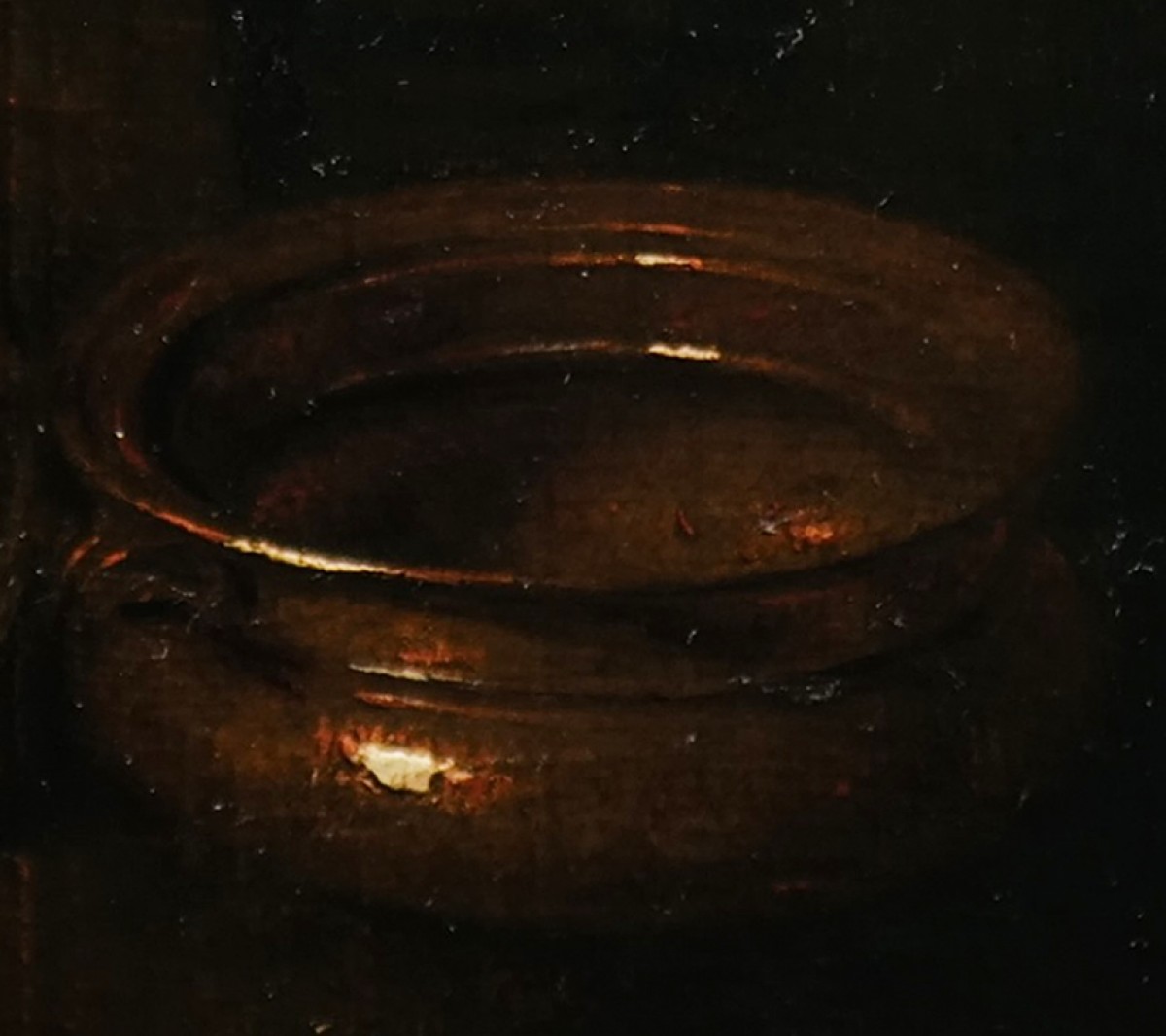
The composition features an elegant arrangement of everyday objects: a large glazed vase, an upturned copper basin, a ewer, a blown-glass bottle, a copper cauldron, and, at the center, a remarkable blue earthenware vase resting on a light-colored drape. The artist arranges these elements in a carefully studied composition where the volumes interact with great harmony, while the light successively reveals the metallic sheen of the copper, the transparency of the glass, and the satin-like surfaces of the ceramics.
The understated color palette contributes fully to the work’s atmosphere. The deep browns, velvety blacks, and warm ochres are suddenly brought to life by the brilliance of the blue vase, the true focal point of the composition. This chromatic contrast is characteristic of Valentino, who favors these luminous accents designed to add rhythm to his serene interiors.
The influence of Flemish painting is clearly evident in the artist’s penchant for depicting everyday objects with almost tactile precision. However, far from being a mere decorative arrangement, each element is carefully arranged to create an architecture of forms and light that lends the whole a remarkable nobility.
Cabinet Turquin has confirmed the attribution to Giovanni Domenico Valentino, of whom this work is a particularly captivating example. With its intimate format, excellent decorative balance, and state of preservation, it perfectly illustrates the master’s most sought-after work.
The work is further enhanced by its carved wooden frame from the Louis XIV period, of fine craftsmanship, whose foliage and floral motifs harmonize perfectly with the composition’s discreet elegance. This antique frame, which has been preserved with the painting for many generations, further enhances its historical and decorative value.
Condition: the paint layer is in good condition; there are two slight lifts between the canvas and the panel (approx. 2 cm each)
A late Baroque Italian painter, Giovanni Domenico Valentino —also known as Gian Domenico Valentino or by his monogram G.D.V.— was likely born in Rome before spending most of his career in Emilia-Romagna, particularly in Imola, where he is documented between 1661 and 1681. He likely died around 1708.
A specialist in interior still lifes, he developed a highly personal style centered on kitchens, pantries, apothecaries, and alchemists’ laboratories. Unlike the great Flemish masters, who often favored fruit, game, or lavish compositions, Valentino focused primarily on domestic utensils: copper cauldrons, basins, pots, earthenware, blown-glass bottles, amphorae, mortars, and glazed vases.
His painting is distinguished by a deliberately subdued palette, dominated by browns, ochres, and deep blacks, from which a few luminous accents emerge—a blue earthenware piece, a metallic reflection, or a glass object—that give structure to the composition. This quiet, intimate aesthetic has earned him a unique place among the finest Italian still-life painters of the second half of the 17th century.
Although he remained relatively obscure for a long time, Valentino is now the subject of a reassessment by art historians, as several paintings formerly attributed to Lombard or Flemish painters have been reattributed to him over the past few decades.
Museums and Public Collections
The works of Giovanni Domenico Valentino are now held in several major institutions:
Fesch Museum – The Alchemist in His Laboratory (also known as La Botica), signed G.D.V.
Grenoble Museum of Fine Arts – Kitchen Interior, signed G.D.V.
Nancy Museum of Fine Arts—Kitchen Interior with a Female Figure.
Musei Civici di Lecco—several Kitchen Interiors, including a pair recently reattributed to Valentino.
Museo Nazionale di Palazzo Reale—Utensili di cucina (Ceci Collection).
CREDEM Collection—a major Italian collection holding several works by the artist.